

Central Role of IL-23 and IL-17 Producing Eosinophils as Immunomodulatory Effector Cells in Acute Pulmonary Aspergillosis and Allergic Asthma
Open accessThe DOI matches its Crossref record; 69 of the 69 references it cites were found in a registry or an index.
Abstract
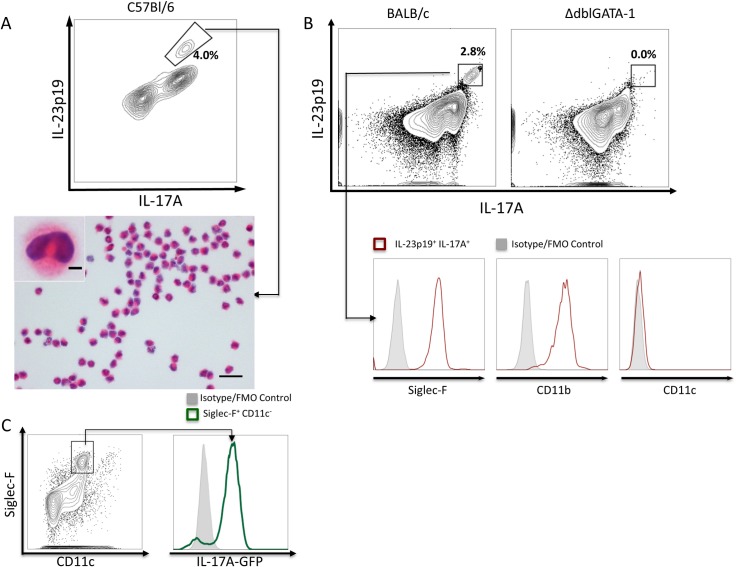
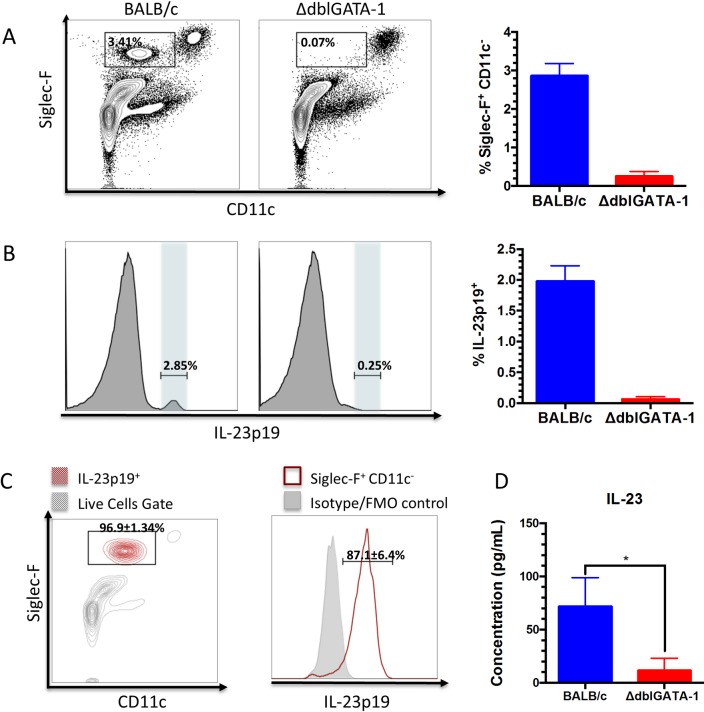
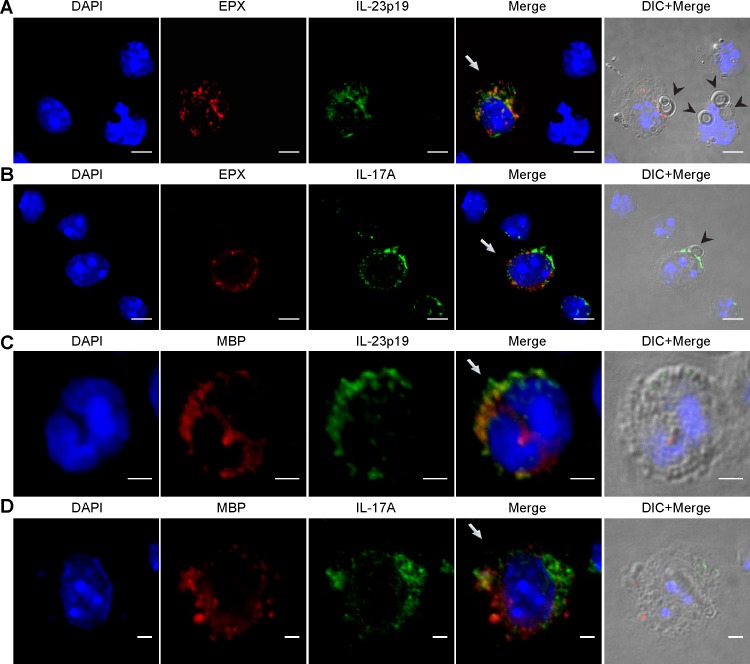
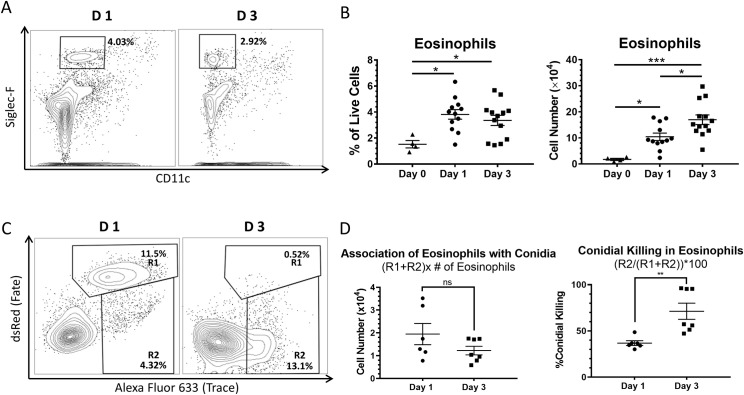
Aspergillus fumigatus causes invasive pulmonary disease in immunocompromised hosts and allergic asthma in atopic individuals. We studied the contribution of lung eosinophils to these fungal diseases. By in vivo intracellular cytokine staining and confocal microscopy, we observed that eosinophils act as local sources of IL-23 and IL-17. Remarkably, mice lacking eosinophils had a >95% reduction in the percentage of lung IL-23p19+ cells as well as markedly reduced IL-23 heterodimer in lung lavage fluid. Eosinophils killed A. fumigatus conidia in vivo. Eosinopenic mice had higher mortality rates, decreased recruitment of inflammatory monocytes, and decreased expansion of lung macrophages after challenge with conidia. All of these functions underscore a potential protective role for eosinophils in acute aspergillosis. Given the postulated role for IL-17 in asthma pathogenesis, we assessed whether eosinophils could act as sources of IL-23 and IL-17 in models where mice were sensitized to either A. fumigatus antigens or ovalbumin (OVA). We found IL-23p19+ IL-17AF+ eosinophils in both allergic models. Moreover, close to 95% of IL-23p19+ cells and >90% of IL-17AF+ cells were identified as eosinophils. These data establish a new paradigm in acute and allergic aspergillosis whereby eosinophils act not only as effector cells but also as immunomodulatory cells driving the IL-23/IL-17 axis and contributing to inflammatory cell recruitment.
Overview
The claims and statistics of this paper haven’t been checked yet.
Free: it reads the open-access text and checks the first 5 claims that cite a source we can check. Create a free account to check every claim.
Integrity signals
Registry
Cites
Statistics
Figures
Verification
Claims the paper makes
The claims and statistics of this paper haven’t been checked yet.
Free: it reads the open-access text and checks the first 5 claims that cite a source we can check. Create a free account to check every claim.
Claims other papers make about this one
Each is checked against this paper’s own text: does it say what the citing paper says it does?
The cited source says what the claim attributes to it.
In the citing paper
“Eosinophils also contribute to immunity against Aspergillus by exerting direct antifungal killing properties and by regulating IL-23/IL-17 inflammatory cytokine responses in the lungs (295, 296).”
From Aspergillus fumigatus and Aspergillosis in 2019 (2019) · cites this paper as [295]
Self-check
Percentages, sums and reported differences re-computed from the paper’s own numbers.
The self-check needs the paper’s full text.
Citations
Cites
Monocyte and macrophage heterogeneity
Gordon, S., & Taylor, P. R. (2005) · Nature Reviews Immunology · doi:10.1038/nri1733 · Cited by 5,190 · cited 1×
“These data suggest that lack of eosinophils disrupts inflammatory monocyte recruitment, which then hampers lung macrophage expansion as inflammatory monocytes differentiate into macrophages and DCs at sites of inflammation [28,29].”
BackgroundHidden Killers: Human Fungal Infections
Brown, G. D., Denning, D. W., Gow, N. A. R., Levitz, S. M., Netea, M. G., & White, T. C. (2012) · Science Translational Medicine · doi:10.1126/scitranslmed.3004404 · Cited by 4,284 · cited 1×
“It is estimated that >200,000 people develop life-threatening IA annually [4].”
BackgroundSelf-citationAspergillus fumigatus and Aspergillosis
Latgé, J.-P. (1999) · Clinical Microbiology Reviews · doi:10.1128/cmr.12.2.310 · Cited by 2,307 · cited 1×
“It is estimated that on average, individuals inhale hundreds of conidia a day [3].”
BackgroundLambrecht, B. N., & Hammad, H. (2015) · Nature Immunology · doi:10.1038/ni.3049 · Cited by 1,673 · cited 1×
“High levels of IL-17 have also been correlated with symptom severity in allergic asthma [17].”
BackgroundThe IL-23-IL-17 immune axis: from mechanisms to therapeutic testing
Gaffen, S. L., Jain, R., Garg, A. V., & Cua, D. J. (2014) · Nature reviews. Immunology · doi:10.1038/nri3707 · Cited by 1,585 · cited 2×
“Remarkably, whereas dendritic cells and macrophages are thought to be the primary sources of IL-23 in tissue [45,46]; in our aspergillosis models we found eosinophils were the major cell type in the lungs producing IL-23.”
BackgroundInnate IL-17-producing cells: the sentinels of the immune system
Cua, D. J., & Tato, C. M. (2010) · Nature Reviews Immunology · doi:10.1038/nri2800 · Cited by 1,578 · cited 1×
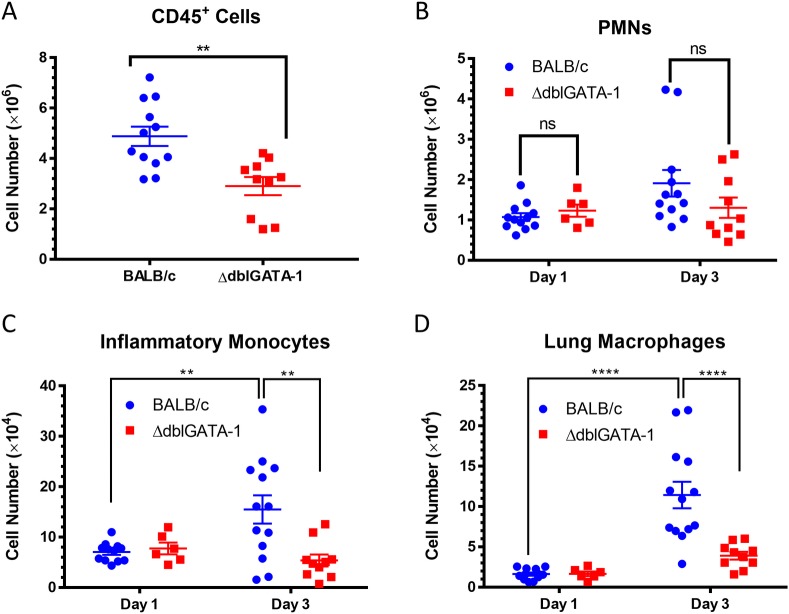
“Considering that eosinophils were found to be sources of IL-23 and IL-17 in acute aspergillosis (Figs 1 and 2) and as these cytokines play a significant role in the recruitment of neutrophils [27], we evaluated the degree of lung neutrophilia one and three days post-infection in BALB/c and ΔdblGATA-1 mice.”
BackgroundFunctional Specialization of Interleukin-17 Family Members
Iwakura, Y., Ishigame, H., Saijo, S., & Nakae, S. (2011) · Immunity · doi:10.1016/j.immuni.2011.02.012 · Cited by 1,289 · cited 7×
“IL-17A also forms a disulfide-linked heterodimer with IL-17F [11,12].”
BackgroundInfluentialThe IL-23/IL-17 axis in inflammation
Iwakura, Y. (2006) · Journal of Clinical Investigation · doi:10.1172/jci28508 · Cited by 1,046
Eosinophils: changing perspectives in health and disease
Rosenberg, H. F., Dyer, K. D., & Foster, P. S. (2013) · Nature Reviews Immunology · doi:10.1038/nri3341 · Cited by 989 · cited 2×
“As eosinophils have been reported to express IL-23R [40], this suggests an autocrine amplification loop may be occurring whereby eosinophils release IL-23 which directly feeds back on itself via IL-23R to enhance IL-17 production.”
BackgroundInflammatory subtypes in asthma: Assessment and identification using induced sputum
SIMPSON, J. L., SCOTT, R., BOYLE, M. J., & GIBSON, P. G. (2006) · Respirology · doi:10.1111/j.1440-1843.2006.00784.x · Cited by 955 · cited 2×
“Stratification based on the predominant cellular infiltrate found in induced sputum has delineated four distinct types of asthma: eosinophilic, neutrophilic, mixed granulocytic and paucigranulocytic [55].”
Background
Cited by
Aspergillus fumigatus and Aspergillosis in 2019
Latgé, J.-P., & Chamilos, G. (2019) · Clinical Microbiology Reviews · doi:10.1128/cmr.00140-18 · Cited by 1,400
IL-17 receptor–based signaling and implications for disease
Li, X., Bechara, R., Zhao, J., McGeachy, M. J., & Gaffen, S. L. (2019) · Nature Immunology · doi:10.1038/s41590-019-0514-y · Cited by 548
Functions of tissue-resident eosinophils
Weller, P. F., & Spencer, L. A. (2017) · Nature Reviews Immunology · doi:10.1038/nri.2017.95 · Cited by 480
Eosinophils from Physiology to Disease: A Comprehensive Review
Ramirez, G. A., Yacoub, M.-R., Ripa, M., Mannina, D., Cariddi, A., Saporiti, N., Ciceri, F., Castagna, A., Colombo, G., & Dagna, L. (2018) · BioMed Research International · doi:10.1155/2018/9095275 · Cited by 316
“However, in patients with ABPA, a nonresolving and excessive immune response leads also to tissue damage [132].”
BackgroundHost Control of Fungal Infections: Lessons from Basic Studies and Human Cohorts
Lionakis, M. S., & Levitz, S. M. (2018) · Annual Review of Immunology · doi:10.1146/annurev-immunol-042617-053318 · Cited by 209
Self-citationBiology of Interleukin-17 and Its Pathophysiological Significance in Sepsis
Ge, Y., Huang, M., & Yao, Y.-M. (2020) · Frontiers in Immunology · doi:10.3389/fimmu.2020.01558 · Cited by 179
Lionakis, M. S., Iliev, I. D., & Hohl, T. M. (2017) · JCI Insight · doi:10.1172/jci.insight.93156 · Cited by 153
Jacobsen, E. A., Jackson, D. J., Heffler, E. M., Mathur, S. K., Bredenoord, A. J., Pavord, I. D., Akuthota, P., Roufosse, F. E., & Rothenberg, M. E. (2021) · Annual Review of Immunology · doi:10.1146/annurev-immunol-093019-125918 · Cited by 150
“Eosinophils either suppress or promote Th1/Th17 responses depending on the antigen— ovalbumin (86) or Aspergillus fumigatus (50, 53, 54), respectively—in mouse allergic respiratory in!ammation models.”
BackgroundIL-17–high asthma with features of a psoriasis immunophenotype
Östling, J., van Geest, M., Schofield, J. P. R., Jevnikar, Z., Wilson, S. J., Ward, J., Lutter, R., Shaw, D. E., Bakke, P. S., Caruso, M., et al. (2019) · Journal of Allergy and Clinical Immunology · doi:10.1016/j.jaci.2019.03.027 · Cited by 136
“The source of IL-17 in the lungs could be T cells, lung gd T cells, or, according to a recent study, also eosinophils.(41) Together with our finding of coexpression of IL-5 and IL-17 in peripheral blood, this suggests the need to revisit the concept of eosinophilic asthma being purely a T2 disease.”
BackgroundMatsuzaki, G., & Umemura, M. (2018) · Microbiology and Immunology · doi:10.1111/1348-0421.12560 · Cited by 121
Archer, N. K., Jo, J.-H., Lee, S. K., Kim, D., Smith, B., Ortines, R. V., Wang, Y., Marchitto, M. C., Ravipati, A., Cai, S. S., et al. (2019) · Journal of Allergy and Clinical Immunology · doi:10.1016/j.jaci.2018.08.042 · Cited by 82
“It is also possible that the observed IL-17A production by eosinophils contributed to the skin inflammation in ft/ft mice because IL-17(1) eosinophils were involved in lung inflammation in mouse models of asthma.(63) This will be a subject of our future work, but the increased number of eosinophils was not always asso…”
Lung Epithelial Cells Coordinate Innate Lymphocytes and Immunity against Pulmonary Fungal Infection
Hernández-Santos, N., Wiesner, D. L., Fites, J. S., McDermott, A. J., Warner, T., Wüthrich, M., & Klein, B. S. (2018) · Cell Host & Microbe · doi:10.1016/j.chom.2018.02.011 · Cited by 71
“…now been described (Gaffen et al., 2014): TCRαβ cells, TCRγδ cells, innate lymphoid cells type 3 (ILC3), invariant natural killer T (iNKT) cells, mucosal associated invariant T cells (MAIT) cells (Rahimpour et al., 2015), neutrophils (Taylor et al., 2014), and eosinophils (Guerra et al., 2017).”
BackgroundAlternative Splicing of FOXP3—Virtue and Vice
Mailer, R. K. (2018) · Frontiers in Immunology · doi:10.3389/fimmu.2018.00530 · Cited by 76
Yin and yang of interleukin-17 in host immunity to infection
Das, S., & Khader, S. A. (2017) · F1000Research · doi:10.12688/f1000research.10862.1 · Cited by 78
“IL-17 plays an immunologically important host protective role against fungal pathogens such as Candida albicans 118 , Cryptococcus neoformans 119 , Pneumocystis carinii 120 , and Aspergillus fumigatus 121 in both humans and mice.”
BackgroundActivation of DR3 signaling causes loss of ILC3s and exacerbates intestinal inflammation
Li, J., Shi, W., Sun, H., Ji, Y., Chen, Y., Guo, X., Sheng, H., Shu, J., Zhou, L., Cai, T., et al. (2019) · Nature Communications · doi:10.1038/s41467-019-11304-8 · Cited by 63
Heung, L. J., & Hohl, T. M. (2019) · PLoS Pathogens · doi:10.1371/journal.ppat.1007627 · Cited by 69
Bastos, R. W., Valero, C., Silva, L. P., Schoen, T., Drott, M., Brauer, V., Silva-Rocha, R., Lind, A., Steenwyk, J. L., Rokas, A., et al. (2020) · mSphere · doi:10.1128/msphere.00153-20 · Cited by 60
“Briefly, after manual dechorionation of embryos, 3 nL of inoculum or PBS-control were injected into the hindbrain ventricle via the optic vesicle (~50 conidia) in anesthetized larvae at approximately 36 h post fertilization.”
InfluentialInnate Cells: The Alternative Source of IL-17 in Axial and Peripheral Spondyloarthritis?
Rosine, N., & Miceli‐Richard, C. (2021) · Frontiers in Immunology · doi:10.3389/fimmu.2020.553742 · Cited by 57
“Other groups showed that eosinophils were able to produce IL-17A in response to Aspergillus fugimatus together with IL-23, thus contributing directly to the modulation of the IL23/IL17 axis (82, 83).”
BackgroundChenuet, P., Fauconnier, L., Madouri, F., Marchiol, T., Rouxel, N., Ledru, A., Mauny, P., Lory, R., Uttenhove, C., Snick, J. V., et al. (2017) · Clinical Science · doi:10.1042/cs20171034 · Cited by 52
Pharmacological Rationale for Targeting IL-17 in Asthma
Rahmawati, S. F., Velde, M. T., Kerstjens, H. A. M., Dömling, A. S. S., Groves, M. R., & Gosens, R. (2021) · Frontiers in Allergy · doi:10.3389/falgy.2021.694514 · Cited by 55
“Interleukin−17 exerts a variety of effects, including the attraction of immune cells and activation of inflammatory signaling in airway structural cells (22, 23).”
BackgroundPalmieri, F., Koutsokera, A., Bernasconi, E., Junier, P., von Garnier, C., & Ubags, N. D. J. (2022) · Frontiers in Medicine · doi:10.3389/fmed.2022.832510 · Cited by 66
“The IL-17 and IL23 -producing cells were identified by the authors as eosinophils (125).”
BackgroundEosinophils in Eosinophilic Esophagitis: The Road to Fibrostenosis is Paved With Good Intentions
Doyle, A. D., Masuda, M. Y., Kita, H., & Wright, B. L. (2020) · Frontiers in Immunology · doi:10.3389/fimmu.2020.603295 · Cited by 43
Ravipati, A., Nolan, S. J., Alphonse, M. P., Dikeman, D. A., Youn, C., Wang, Y., Orlando, N., Patrick, G. J., Lee, S., Ortines, R. V., et al. (2021) · Journal of Investigative Dermatology · doi:10.1016/j.jid.2021.09.012 · Cited by 50
Song, J., Qian, B., Pan, C., Lv, F., Wang, H., Gao, Y., & Zhou, Y. (2019) · Journal of Food Biochemistry · doi:10.1111/jfbc.12973 · Cited by 44
Eosinophil-Associated Innate IL-17 Response Promotes Aspergillus fumigatus Lung Pathology
Malacco, N. L. S. D. O., Rachid, M. A., Gurgel, I. L. D. S., Moura, T. R., Sucupira, P. H. F., Sousa, L. P., Souza, D. G., Russo, R. C., Teixeira, M. M., & Soriani, F. M. (2019) · Frontiers in Cellular and Infection Microbiology · doi:10.3389/fcimb.2018.00453 · Cited by 39
Eosinophils as Major Player in Type 2 Inflammation: Autoimmunity and Beyond
Folci, M., Ramponi, G., Arcari, I., Zumbo, A., & Brunetta, E. (2021) · Advances in experimental medicine and biology · doi:10.1007/5584_2021_640 · Cited by 46
Masterson, J. C., Menard-Katcher, C. D., Larsen, L. D., Furuta, G. T., & Spencer, L. A. (2021) · Cells · doi:10.3390/cells10020426 · Cited by 39
“Of note, it remains unclear if the so-called “inflammatory” eosinophils uniformly promote inflammatory outcomes, as immunomodulatory functions have also been attributed to allergen-recruited eosinophils in murine models allergic airway diseases [28,57].”
BackgroundImmune responses to invasive aspergillosis: new understanding and therapeutic opportunities
Hohl, T. M. (2017) · Current Opinion in Infectious Diseases · doi:10.1097/qco.0000000000000381 · Cited by 35
Significance and Potential Role of Eosinophils in Non-Cystic Fibrosis Bronchiectasis
Guan, W., Oscullo, G., He, M., Xu, D., Gómez-Olivas, J. D., & Martínez‐García, M. Á. (2022) · The Journal of Allergy and Clinical Immunology In Practice · doi:10.1016/j.jaip.2022.10.027 · Cited by 39
Kim, H. J., Roh, J. Y., & Jung, Y. (2018) · Journal of Investigative Dermatology · doi:10.1016/j.jid.2018.03.1509 · Cited by 33
Teschner, D., Cholaszczyńska, A., Ries, F., Beckert, H., Theobald, M., Grabbe, S., Radsak, M. P., & Bros, M. (2019) · Frontiers in Immunology · doi:10.3389/fimmu.2019.00123 · Cited by 32
“Furthermore, eosinophils were demonstrated to generate both IL-17 and the CD4 T helper cell type (Th)17 inducing cytokine IL-23 (11).”
BackgroundInfluentialDietschmann, A., Schruefer, S., Krappmann, S., & Voehringer, D. (2020) · European Journal of Immunology · doi:10.1002/eji.201948411 · Cited by 36
Initiation and Pathogenesis of Severe Asthma with Fungal Sensitization
Tiwary, M., & Samarasinghe, A. E. (2021) · Cells · doi:10.3390/cells10040913 · Cited by 33
Saunders, S. P., Floudas, A., Moran, T., Byrne, C., Rooney, M. D., Fahy, C. M. R., Geoghegan, J. A., Iwakura, Y., Fallon, P. G., & Schwartz, C. (2020) · Allergy · doi:10.1111/all.14488 · Cited by 28
Interleukin-17A: A Potential Therapeutic Target in Chronic Lung Diseases
Shaikh, S. B., Prabhu, A., & Bhandary, Y. P. (2019) · Endocrine Metabolic & Immune Disorders - Drug Targets · doi:10.2174/1871530319666190116115226 · Cited by 24
Eosinophil: A central player in modulating pathological complexity in asthma
Pritam, P., Manna, S., Sahu, A., Swain, S. S., Ramchandani, S., Bissoyi, S., Panda, M. K., Sing, Y. D., Mohanta, Y. K., Behera, R. K., et al. (2021) · Allergologia et Immunopathologia · doi:10.15586/aei.v49i2.50 · Cited by 26
Reuveni, D., Brezis, M. R., Brazowski, E., Vinestock, P., Leung, P. S. C., Thakker, P., Gershwin, M. E., & Zigmond, E. (2021) · Frontiers in Immunology · doi:10.3389/fimmu.2021.718841 · Cited by 21
Novel Biological Functions of the NsdC Transcription Factor in Aspergillus fumigatus
de Castro, P. A., Valero, C., Chiaratto, J., Colabardini, A. C., Pardeshi, L. A., Silva, L. P., Almeida, F. B. D. R., Rocha, M. C., Silva, R. N., Malavazi, I., et al. (2021) · mBio · doi:10.1128/mbio.03102-20 · Cited by 26
Dietschmann, A., Schruefer, S., Westermann, S., Henkel, F. D. R., Castiglione, K., Willebrand, R., Adam, J., Ruland, J., Lang, R., Sheppard, D. C., et al. (2022) · mBio · doi:10.1128/mbio.01239-22 · Cited by 20
“challenged mice express IL-17A as revealed by intracellular staining (29, 34, 35).”
BackgroundYang, Y., Chen, Y., Yu, L., Zhang, X., Shang, J., Fan, J., Zhang, R., Ren, J., & Duan, X. (2022) · Inflammation Research · doi:10.1007/s00011-022-01674-z · Cited by 21
Lee, C. K., Oliveira, L. V. N., Akalin, A., Specht, C. A., Lourenco, D., Gomez, C. L., Ramirez‐Ortiz, Z. G., Wang, J. P., & Levitz, S. M. (2023) · mBio · doi:10.1128/mbio.01633-23 · Cited by 21
“In the final sets of experiments, we used fluorescent Aspergillus reporter (FLARE) conidia (18, 22, 23) combined with flow cytometry analysis to examine leukocyte recruitment to the lungs as well as fungal uptake and killing by phagocytic cells.”
BackgroundMethodSelf-citationFeng, Y., Zheng, C., Zhou, Z., Xiong, H., Feng, F., Xie, F., & Wu, Z. (2019) · Experimental Cell Research · doi:10.1016/j.yexcr.2019.111554 · Cited by 20
NLRC4 Inflammasome-Mediated Regulation of Eosinophilic Functions
Akkaya, I., Oylumlu, E., Ozel, I., Uzel, G., Durmus, L., & Çıracı, C. (2021) · Immune Network · doi:10.4110/in.2021.21.e42 · Cited by 20
“NLRC4 induction regulates eosinophilic protein expression in human EoL-1 cells In addition to their well studied roles in defense against extracellular parasites and in the generation of Th2 responses, numerous studies have reported that eosinophils also have immunoregulatory functions in the gastrointestinal tract (8…”
BackgroundThe Metabolic Cytokine Adiponectin Inhibits Inflammatory Lung Pathology in Invasive Aspergillosis
Amarsaikhan, N., Tsoggerel, A., Hug, C., & Templeton, S. P. (2019) · The Journal of Immunology · doi:10.4049/jimmunol.1900174 · Cited by 17
“5E); these cytokines may be produced directly by eosinophils (53, 54).”
BackgroundVahsen, T., Zapata, L., Guabiraba, R., Melloul, É., Cordonnier, N., Botterel, F., Guillot, J., Arné, P., & Risco‐Castillo, V. (2020) · Medical Mycology · doi:10.1093/mmy/myaa069 · Cited by 17
Yadav, B., Specht, C. A., Lee, C. K., Pokrovskii, M. V., Huh, J. R., Littman, D. R., & Levitz, S. M. (2021) · PLoS Pathogens · doi:10.1371/journal.ppat.1009891 · Cited by 15
“fumigatus crude protein extracts produce IL-17 [8, 9].”
BackgroundResultInfluentialSelf-citationHaist, M., Ries, F., Gunzer, M., Bednarczyk, M., Siegel, E., Kuske, M., Grabbe, S., Radsak, M. P., Bros, M., & Teschner, D. (2022) · Frontiers in Immunology · doi:10.3389/fimmu.2022.823121 · Cited by 15
“other immune cells implicated in IPA-resolution, such as DC (94), macrophages, lymphocytes or eosinophils (95, 96).”
BackgroundRubusoside alleviates the ovalbumin‐induced mice allergic asthma by modulating the NF‐κB activation
Wang, C., Tang, J., Qian, B., Zeng, Z., Gao, Y., & Song, J. (2020) · Journal of Food Biochemistry · doi:10.1111/jfbc.13187 · Cited by 20
Wang, S., Jiang, Z., Li, L., Zhang, J., Zhang, C., & Shao, C. (2021) · Respiratory Research · doi:10.1186/s12931-021-01770-4 · Cited by 14
“Importantly, IL-17 plays a key role in recruiting neutrophils to the inflammatory site [33].”
BackgroundLeal-Silva, T., Lopes, C. D. A., Vieira-Santos, F., Oliveira, F. M. S., Kraemer, L. R., Padrão, L. D. L. S., Amorim, C. C. O., Souza, J. L. N., Russo, R. C., Fujiwara, R. T., et al. (2022) · Frontiers in Immunology · doi:10.3389/fimmu.2022.864632 · Cited by 14
“Although classically described the importance of CD4+ and CD8+ T lymphocytes, γδ T lymphocytes and NK cells in the expression of IL-17, studies have shown that eosinophils and neutrophils can produce large amounts of IL-17 in the lung, which is related to inflammation lung disease in allergic models and in infections…”
BackgroundTargeting type 2 inflammation in bullous pemphigoid: current and emerging therapeutic approaches
Toh, W. H., Lee, H.-E., & Chen, C. (2023) · Frontiers in Medicine · doi:10.3389/fmed.2023.1196946 · Cited by 14
“IL-23 is an important cytokine that promotes the expression of IL-17, thereby facilitating eosinophilia and contributing to inflammatory cell recruitment (123, 124).”
BackgroundBullous pemphigoid—What do we know about the most recent therapies?
Zeng, F. A. P., & Murrell, D. F. (2022) · Frontiers in Medicine · doi:10.3389/fmed.2022.1057096 · Cited by 16
“The relationship between IL-23 and IL-17A is well described in allergic asthma, the paradigm of IgE-mediated disease (73, 74).”
BackgroundKinetic Host Defense of the Mice Infected with Aspergillus Fumigatus
Su, H., Li, C., Wang, Y., Li, Y., Dong, L., Li, L., Zhu, J., Zhang, Q., Liu, G., Xu, J., et al. (2019) · Future Microbiology · doi:10.2217/fmb-2019-0043 · Cited by 13
Cytokine Diversity in Human Peripheral Blood Eosinophils: Profound Variability of IL-16
Ma, M., Percopo, C. M., Sturdevant, D. E., Sek, A. C., Komarow, H. D., & Rosenberg, H. F. (2019) · The Journal of Immunology · doi:10.4049/jimmunol.1900101 · Cited by 14
Malacco, N. L. S. D. O., Souza, J. A. M., Mendes, A. C., Rachid, M. A., Kraemer, L. R., Mattos, M. S., Lima, G. N., Sousa, L. P., Souza, D. G., Pinho, V., et al. (2019) · Future Microbiology · doi:10.2217/fmb-2019-0214 · Cited by 17
Strickland, A. B., Sun, D., Sun, P., Chen, Y., Liu, G., & Shi, M. (2022) · ImmunoHorizons · doi:10.4049/immunohorizons.2100117 · Cited by 13
Amarsaikhan, N., O’Dea, E. M., Tsoggerel, A., & Templeton, S. P. (2017) · Microbes and Infection · doi:10.1016/j.micinf.2017.05.001 · Cited by 12
Nasiri-Jahrodi, A., Barati, M., Ahmadabad, H. N., Badali, H., & Morovati, H. (2024) · Human Immunology · doi:10.1016/j.humimm.2024.110763 · Cited by 12
Usefulness of animal models of aspergillosis in studying immunity against Aspergillus infections
Mirkov, I. I., Aleksandrov, A. P., Lazovic, B., Glamočlija, J., & Kataranovski, M. V. (2019) · Journal de Mycologie Médicale · doi:10.1016/j.mycmed.2019.01.006 · Cited by 10
Lundquist, P., Hagforsen, E., Wagner, M. S., Alimohammadi, M., Melo, F. R., Pejler, G., Artursson, P., Carlson, M., Rollman, O., & Lampinen, M. (2024) · Biochimica et Biophysica Acta (BBA) - Molecular Basis of Disease · doi:10.1016/j.bbadis.2024.167634 · Cited by 11
“IL-17 A, a major effector cytokine in psoriasis, is not only produced by Th17-type CD4 + T-cells, but also by innate immune cells such as neutrophils, mast cells and eosinophils [56,57].”
Zhang, N., Peng, Y., Li, R., Nie, Y., Li, J., Yang, X., Zhang, J., Wang, Y., Luo, Q., Zhou, J., et al. (2025) · Clinical and Experimental Medicine · doi:10.1007/s10238-025-01741-9 · Cited by 9
“They release cytokines like IL-23/IL-17 to promote inflammation [11], chemokines like CCL9/CCL10 to induce chemotaxis of DCs and effector T cells [12], and IL-13 and TGF-β to contribute to local tissue fibrosis [13].”
Leitner, M., Heck, S., Nguyen, K., Nguyen, P. Q., Harfoush, S. A., Rosenkranz, E., Bals, R., & Dinh, Q. T. (2022) · Cell and Tissue Research · doi:10.1007/s00441-021-03538-0 · Cited by 10
“2004), and more recently by eosinophil granulocytes (Guerra et al. 2017) and bronchial epithelial cells (Lee et al.”
BackgroundAntifungal chemotherapies and immunotherapies for the future
Armstrong-James, D. P. H. (2022) · Parasite Immunology · doi:10.1111/pim.12960 · Cited by 10
“Immunomodulating therapies are also incrementally important in the context of allergic fungal diseases such as allergic bronchopulmonary aspergillosis, which is characterized by eosinophilic inflammation and TH2/17 responses.(65) A number of monoclonal antibody therapies targeting IgE (such as omalizumab) or eosinophi…”
BackgroundEosinophils are dispensable for the regulation of IgA and Th17 responses in Giardia muris infection
Yordanova, I. A., Lamatsch, M., Kühl, A. A., Hartmann, S., & Rausch, S. (2020) · Parasite Immunology · doi:10.1111/pim.12791 · Cited by 8
Izati, A. F., Shukri, N. D. M., Ghazali, W. S. W., Hussin, C. M. C., & Wong, K. K. (2021) · Frontiers in Immunology · doi:10.3389/fimmu.2021.690908 · Cited by 8
“IL-23 is produced by macrophages and dendritic cells to promote the expansion and survival of Th17 cells for the production of IL-17 (6).”
BackgroundEspinoza, L. C., Valarezo, E., Fábrega, M.-J., Rodríguez-Lagunas, M. J., Sosa, L., Calpena, A. C., & Mallandrich, M. (2022) · Plants · doi:10.3390/plants11223104 · Cited by 8
“Macrophages and dendritic cells mainly synthesize IL-23 acting on T cells, causing the maintenance of IL-17-producing T cells, and it increases in the induction of chronic intestinal inflammation, in autoimmune diseases, cancer, and psoriasis [31].”
BackgroundLiu, H., Lin, J., Phan, Q. T., Bruno, V. M., & Filler, S. G. (2024) · mBio · doi:10.1128/mbio.02671-24 · Cited by 9
“These pathways included tumor necrosis factor alpha, CSF2 (granulocyte-macrophage colony-stimulating factor [GM-CSF]), interleukin-1α (IL-1α), IL-1β, STAT3, IFN-γ, and IL-17A (20–25).”
Future Directions for Clinical Respiratory Fungal Research
Armstrong-James, D. P. H. (2021) · Mycopathologia · doi:10.1007/s11046-021-00579-5 · Cited by 7
Lin, C., Li, Y., Kor, C., Lin, S., Ji, B.-C., Lin, M., & Chai, W.-H. (2022) · Biomedicines · doi:10.3390/biomedicines10061452 · Cited by 6
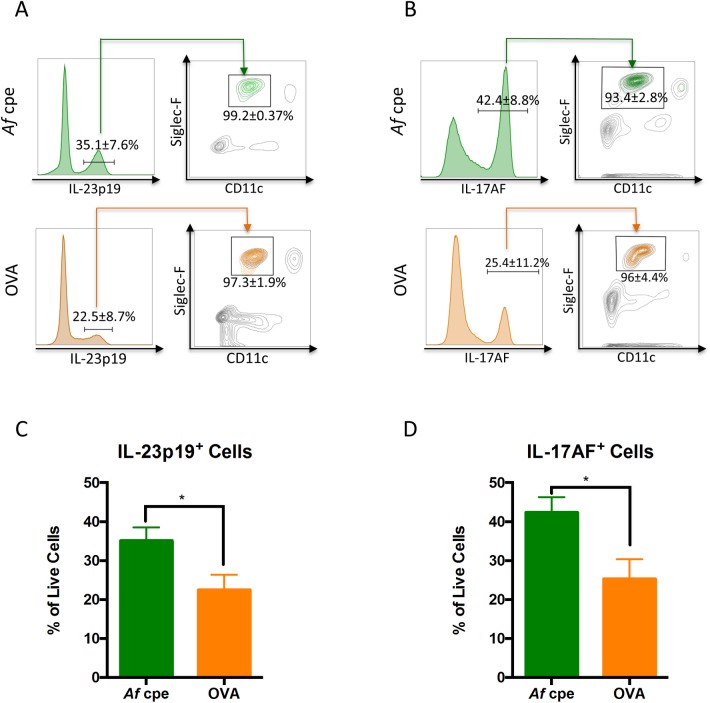
“fumigatus cpe also elicited a higher percentage of IL-17AF+ eosinophil cells compared with OVA sensitization [12].”
BackgroundTSLP and IL25 variants are related to asthma and atopy
Lima, L. C., Cruz, Á. A., Costa, R. D. S., Silva, H. D. S., Coelho, R. S., Teixeira, H. M. P., Oliveira, P. R. S., Barnes, K. C., Figueiredo, C. A., & Carneiro, V. L. (2022) · Gene Reports · doi:10.1016/j.genrep.2022.101727 · Cited by 5
Contributions of innate lymphocytes to allergic responses
Inclan-Rico, J. M., Ponessa, J. J., & Siracusa, M. C. (2019) · Current Opinion in Allergy and Clinical Immunology · doi:10.1097/aci.0000000000000515 · Cited by 5
Communication between immune system and mycobiota impacts health and disease
Sachdeva, G., & Das, A. (2022) · Proceedings of the Indian National Science Academy · doi:10.1007/s43538-022-00082-5 · Cited by 6
Real-World Experience of Guselkumab in the Elderly Population
Fratton, Z., Bighetti, S., Bettolini, L., Maione, V., Rossi, M., Venturini, M., Mazzoletti, V., Zelin, E., Stinco, G., & Errichetti, E. (2025) · Psoriasis Targets and Therapy · doi:10.2147/ptt.s549502 · Cited by 3
“28,29 Other works have shown a correlation between severe psoriasis and lower peripheral blood lymphocytes counts, 30 further contributing to increase ELR in patients with more severe psoriasis, thus strengthening the hypothesis of ELR as a possible marker of psoriasis severity.”
Non-antibiotic Treatments for Pneumonia: Host-Directed Therapies, Next-Steps and Future Directions
García, J. P., Chung, C. J., Flowers, R. C., Evans, S. E., & Wu, B. G. (2026) · Clinics in Chest Medicine · doi:10.1016/j.ccm.2025.12.018 · Cited by 3
Aghajani, M., Rafiei, A., Ghaffari, J., Valadan, R., Kardan, M., Soltani, M., & Tahaghoghi-Hajghorbani, S. (2019) · Research in Molecular Medicine · doi:10.18502/rmm.v6i1.3926 · Cited by 4
“They showed that depletion of eosinophils correlates with decreased airway hypersensitivity and mucus production (38).”
BackgroundSignaling events driving Aspergillus fumigatus-induced eosinophil activation
Adam, J., Graf, L.-M., Westermann, S., Voehringer, D., & Krappmann, S. (2024) · International Journal of Medical Microbiology · doi:10.1016/j.ijmm.2024.151641 · Cited by 4
Yoshikawa, F. S. Y., Yabe, R., Torigoe, S., Yamasaki, S., & Saijo, S. (2025) · Frontiers in Immunology · doi:10.3389/fimmu.2025.1639400 · Cited by 3
Microbial Signatures of Obesity-Aggravated Psoriasis: Insights from an Imiquimod-Based Mouse Model
Constantin, C., Dobre, E.-G., Istvan, P., Munteanu, A. N., Surcel, M., Isvoranu, G., & Neagu, M. T. (2025) · International Journal of Molecular Sciences · doi:10.3390/ijms26167697 · Cited by 3
“Besides Th17-type CD4, IL-17A is produced by various cells, such as inflammatory cells, neutrophils, mast cells, eosinophils [19,20], γδ T cells [21], group 3 innate lymphoid cells (ILC3) [22], and mucosal-associated invariant T (MAIT) cells [23], IL-20 is produced by monocyte-derived macrophages…”
Ali, E. M., Alfwuaires, M. A., & Badr, G. M. (2022) · Asian Pacific Journal of Tropical Biomedicine · doi:10.4103/2221-1691.345516 · Cited by 2
Host Immune Responses to Pathogenic Fungi and Contemporary Therapeutic Strategies
Shallal, A. F., Razaq, C. H., Ahmed, A. S., Ahmed, S. S., Eyüpoğlu, V., & Salman, R. S. (2026) · Journal of Mycology and Truffle · doi:10.65999/mycotruffle.2026.26 · Cited by 1
Ação imunomoduladora de vesículas extracelulares produzidas por Aspergillus flavus
Brauer, V. S. (2020) · Digital Library of Theses and Dissertations (Universidade de São Paulo) · doi:10.11606/t.17.2020.tde-07092020-102302 · Cited by 1
Interaction between the opportunistic pathogen Aspergillus fumigatus and its host
Keizer, E. (2021) · Utrecht University Repository (Utrecht University) · doi:10.33540/632
Fehervari, Z. T. (2017) · Nature Immunology · doi:10.1038/ni.3697
Kariyawasam, H. H. (2021) · Elsevier eBooks · doi:10.1016/b978-0-08-102723-3.00192-x
Santos, M. S., da Silva, R. A., de Souza, L. N., Victorino, N. R., Pereira, R. C. B., Xavier, J. G., da Silva, R. A., Pérez, E. C., Alvares-Saraiva, A. M., & Lallo, M. A. (2024) · bioRxiv (Cold Spring Harbor Laboratory) · doi:10.1101/2024.04.04.588046
Interstitial pneumonia via the oropharyngeal route of infection with Encephalitozoon cuniculi
Santos, M. S., da Silva, R. A., de Souza, L. N., Victorino, N. R., Pereira, R. C. B., Xavier, J. G., de Araújo, R. S., Pérez, E. C., Alvares-Saraiva, A. M., & Lallo, M. A. (2025) · PLoS neglected tropical diseases · doi:10.1371/journal.pntd.0012130
Nayak, B. B., Rajesh, R., Teppan, J., Gogg, T., & Böhm, E. (2026) · Frontiers in Pharmacology · doi:10.3389/fphar.2026.1784434
Hosoki, K., Govindhan, A., Knight, J. M., & Sur, S. (2026) · Journal of Allergy and Clinical Immunology Global · doi:10.1016/j.jacig.2026.100726
“…Heart, Lung, and Blood Institute (grants 5R01HL145477-02 and 3R01HL145477-01S1) to S.S., and Nancy Chang Chair, Biology of Inflammation Center, Baylor College of Medicine to S.S. Disclosure of potential conflict of interest: The authors declare that they have no relevant conflicts of interest.”
Metadata
- Authors
- Guerra, E. S., Lee, C. K., Specht, C. A., Yadav, B., Huang, H., Akalin, A., Huh, J. R., Mueller, C., & Levitz, S. M.
- Affiliations
- University of Massachusetts Chan Medical School (US)
- Corresponding author
- Levitz, Stuart M.
- ORCID
- Venue
- PLOS Pathogens
- Publisher
- Public Library of Science (PLoS)
- Published
- 2017-01-17
- Volume
- 13
- Issue
- 1
- Pages
- e1006175
- ISSN
- 1553-7366 (ISSN-L)
- 1553-7374
- PMC
- PMC5271415
- OpenAlex
- W2573473508
- Cited by
- 88
- References
- 69
- Citations by year
- 2026: 4 · 2025: 5 · 2024: 5 · 2023: 2 · 2022: 15 · 2021: 17 · 2020: 9 · 2019: 17 · 2018: 5 · 2017: 9
- FWCI
- 8.10
- Type
- journal article
- Language
- en
- Update notices
- new_version (2017-01-27)
- Open access
- gold
- doi.org
- Licence
- Locations
- PLoS Pathogens (publishedVersion, cc-by)
- PubMed Central (publishedVersion, cc-by)
- PubMed (publishedVersion)
- eScholarship@UMassChan (submittedVersion, cc-by)
- DOAJ (DOAJ: Directory of Open Access Journals) (submittedVersion, cc-by-sa)
- Figshare (submittedVersion, cc-by)
- Funders
- National Institute of Allergy and Infectious Diseases (F31AI112282, T32AI095213, RO1AI025780, RO1AI102618, RO1AI125045)
- National Heart, Lung, and Blood Institute (RO1HL112671)
- Topics
- Health Sciences › Medicine › Pulmonary and Respiratory Medicine › Asthma and respiratory diseases
- Life Sciences › Immunology and Microbiology › Immunology › IL-33, ST2, and ILC Pathways
- Health Sciences › Medicine › Infectious Diseases › Antifungal resistance and susceptibility
- Keywords
- eosinophils, IL-23, IL-17, allergic asthma, Aspergillus fumigatus, IL-23p19, eosinopenia, lung macrophages, ovalbumin sensitization, immunomodulation, eosinophil-deficient mice
- MeSH terms
- Animals, Aspergillus fumigatus, Asthma, Cell Separation, Disease Models, Animal, Eosinophils, Flow Cytometry, Hypersensitivity, Mice, Inbred BALB C, Mice, Inbred C57BL, Microscopy, Confocal, Interleukin-17, Mice, Interleukin-23, Pulmonary Aspergillosis
About these checks
Registry, retraction, Cites and statistics results are computed, not judged, with one exception: a printed reference that no index lists is read once by a model before it counts as a citation error. Claims are extracted by a model and kept only when their quote appears verbatim in the text; each cited source is then checked, with a model’s help, for whether it says what the claim relies on. Those verdicts can be wrong — read the claim’s quote and the cited source before relying on one.
Statistics and arithmetic are recomputed, not judged.
Confidence bands are shown only for fields calibrated on our annotated test set. None is calibrated yet, so no band is shown.
What counts as a claim ›How we measure confidence ›How we check this ›
Are you an author, or do you see a problem with this page? Request a review
Data sources
Bibliographic data: Semantic Scholar, OpenAlex, Crossref.
Contains information from the Semantic Scholar Academic Graph Datasets, made available under the ODC Attribution License (ODC-BY 1.0).
Semantic Scholar’s data is described in: Kinney, R., et al. (2023). The Semantic Scholar Open Data Platform. arXiv:2301.10140.
