

Central Role of IL-23 and IL-17 Producing Eosinophils as Immunomodulatory Effector Cells in Acute Pulmonary Aspergillosis and Allergic Asthma
Open accessThe DOI matches its Crossref record; 69 of the 69 references it cites were found in a registry or an index.
Abstract
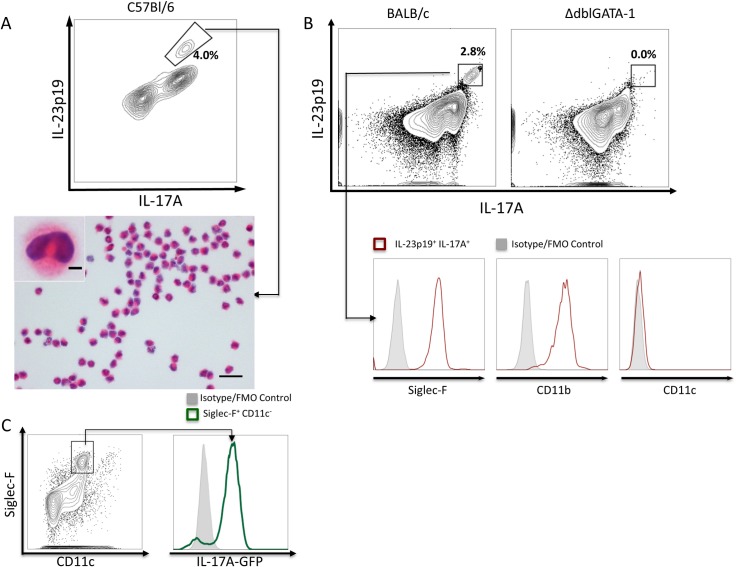
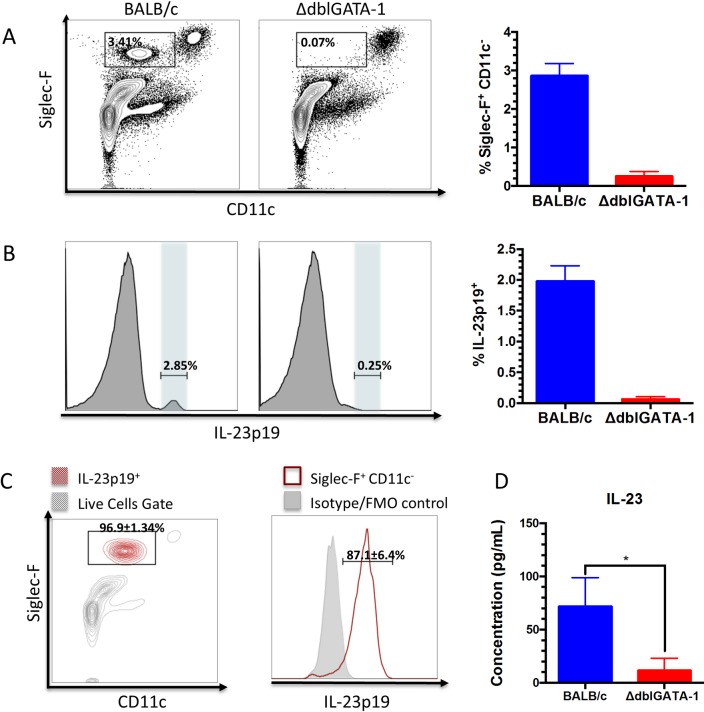
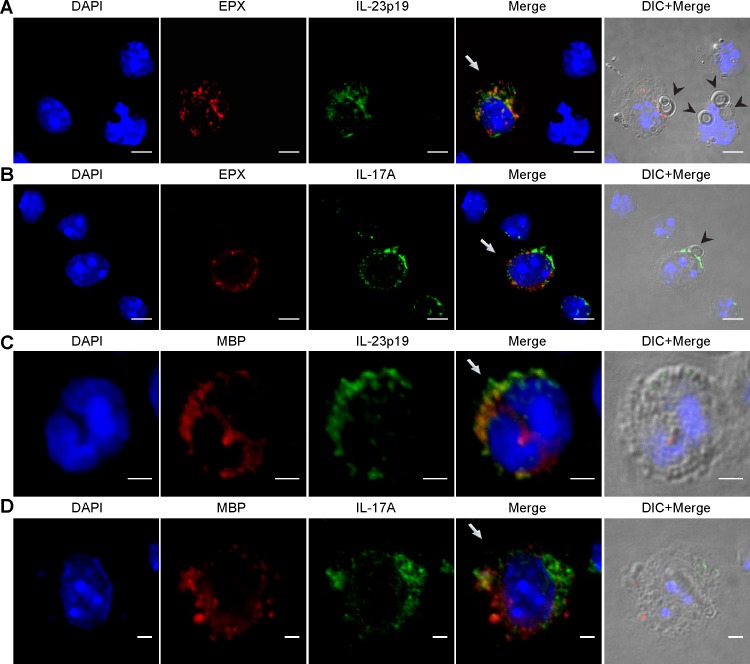
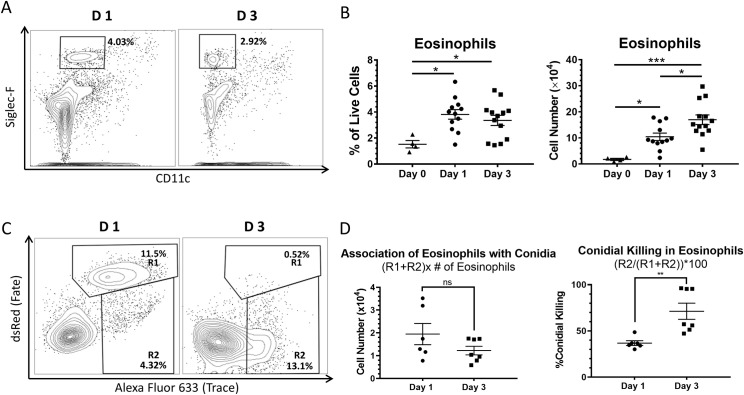
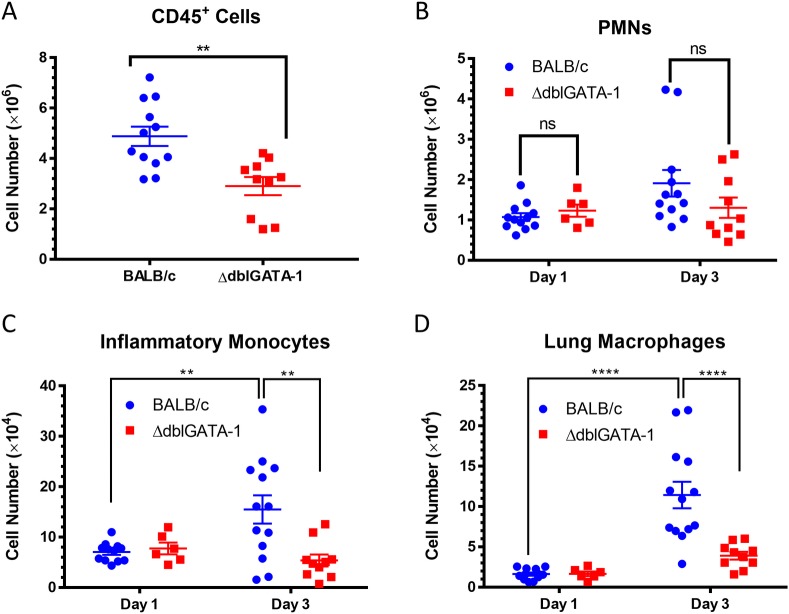
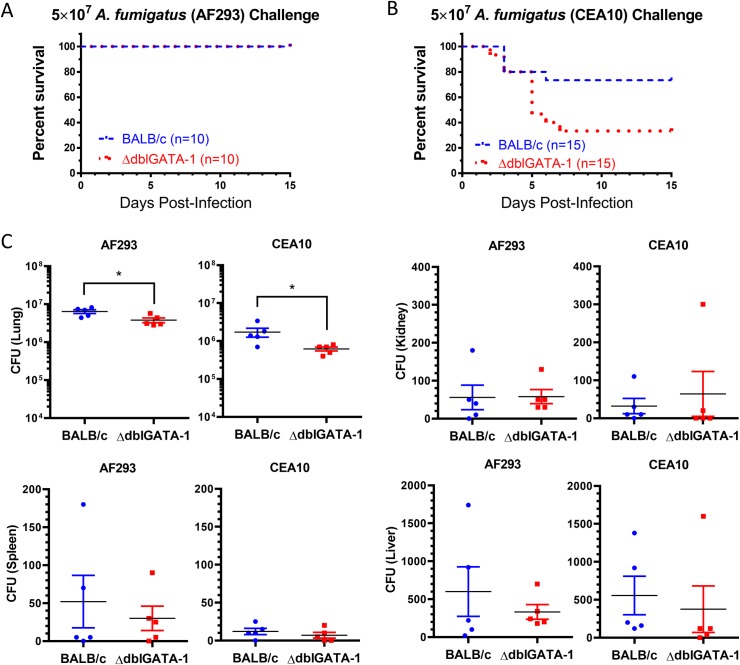
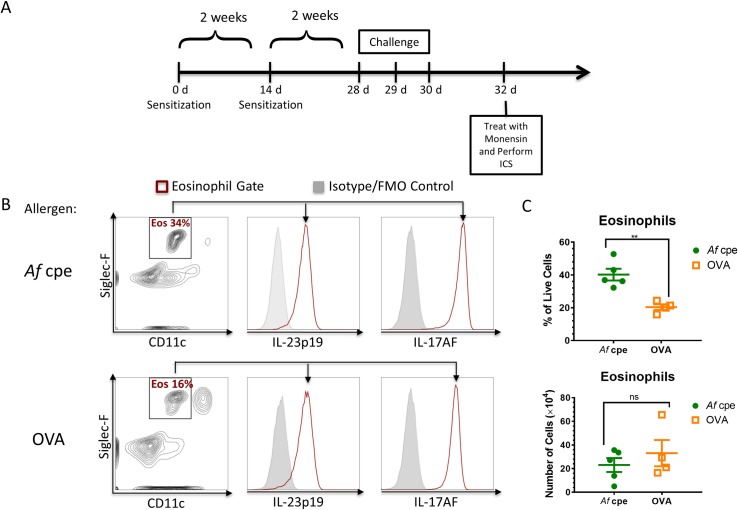
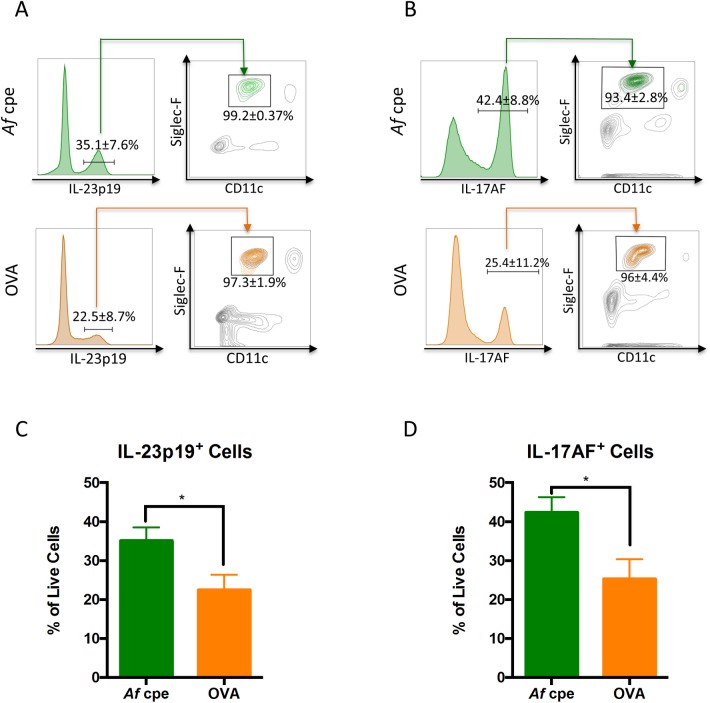
Aspergillus fumigatus causes invasive pulmonary disease in immunocompromised hosts and allergic asthma in atopic individuals. We studied the contribution of lung eosinophils to these fungal diseases. By in vivo intracellular cytokine staining and confocal microscopy, we observed that eosinophils act as local sources of IL-23 and IL-17. Remarkably, mice lacking eosinophils had a >95% reduction in the percentage of lung IL-23p19+ cells as well as markedly reduced IL-23 heterodimer in lung lavage fluid. Eosinophils killed A. fumigatus conidia in vivo. Eosinopenic mice had higher mortality rates, decreased recruitment of inflammatory monocytes, and decreased expansion of lung macrophages after challenge with conidia. All of these functions underscore a potential protective role for eosinophils in acute aspergillosis. Given the postulated role for IL-17 in asthma pathogenesis, we assessed whether eosinophils could act as sources of IL-23 and IL-17 in models where mice were sensitized to either A. fumigatus antigens or ovalbumin (OVA). We found IL-23p19+ IL-17AF+ eosinophils in both allergic models. Moreover, close to 95% of IL-23p19+ cells and >90% of IL-17AF+ cells were identified as eosinophils. These data establish a new paradigm in acute and allergic aspergillosis whereby eosinophils act not only as effector cells but also as immunomodulatory cells driving the IL-23/IL-17 axis and contributing to inflammatory cell recruitment.
Overview
The claims and statistics of this paper haven’t been checked yet.
Free: it reads the open-access text and checks the first 5 claims that cite a source we can check. Create a free account to check every claim.
Integrity signals
Registry
Cites
Statistics
Figures
Verification
Claims the paper makes
The claims and statistics of this paper haven’t been checked yet.
Free: it reads the open-access text and checks the first 5 claims that cite a source we can check. Create a free account to check every claim.
Claims other papers make about this one
Each is checked against this paper’s own text: does it say what the citing paper says it does?
The cited source says what the claim attributes to it.
In the citing paper
“Eosinophils also contribute to immunity against Aspergillus by exerting direct antifungal killing properties and by regulating IL-23/IL-17 inflammatory cytokine responses in the lungs (295, 296).”
From Aspergillus fumigatus and Aspergillosis in 2019 (2019) · cites this paper as [295]
Self-check
Percentages, sums and reported differences re-computed from the paper’s own numbers.
The self-check needs the paper’s full text.
Citations
Cites
Monocyte and macrophage heterogeneity
Gordon, S., & Taylor, P. R. (2005) · Nature Reviews Immunology · doi:10.1038/nri1733 · Cited by 5,190 · cited 1×
“These data suggest that lack of eosinophils disrupts inflammatory monocyte recruitment, which then hampers lung macrophage expansion as inflammatory monocytes differentiate into macrophages and DCs at sites of inflammation [28,29].”
BackgroundHidden Killers: Human Fungal Infections
Brown, G. D., Denning, D. W., Gow, N. A. R., Levitz, S. M., Netea, M. G., & White, T. C. (2012) · Science Translational Medicine · doi:10.1126/scitranslmed.3004404 · Cited by 4,284 · cited 1×
“It is estimated that >200,000 people develop life-threatening IA annually [4].”
BackgroundSelf-citationAspergillus fumigatus and Aspergillosis
Latgé, J.-P. (1999) · Clinical Microbiology Reviews · doi:10.1128/cmr.12.2.310 · Cited by 2,307 · cited 1×
“It is estimated that on average, individuals inhale hundreds of conidia a day [3].”
BackgroundLambrecht, B. N., & Hammad, H. (2015) · Nature Immunology · doi:10.1038/ni.3049 · Cited by 1,673 · cited 1×
“High levels of IL-17 have also been correlated with symptom severity in allergic asthma [17].”
BackgroundThe IL-23-IL-17 immune axis: from mechanisms to therapeutic testing
Gaffen, S. L., Jain, R., Garg, A. V., & Cua, D. J. (2014) · Nature reviews. Immunology · doi:10.1038/nri3707 · Cited by 1,585 · cited 2×
“Remarkably, whereas dendritic cells and macrophages are thought to be the primary sources of IL-23 in tissue [45,46]; in our aspergillosis models we found eosinophils were the major cell type in the lungs producing IL-23.”
BackgroundInnate IL-17-producing cells: the sentinels of the immune system
Cua, D. J., & Tato, C. M. (2010) · Nature Reviews Immunology · doi:10.1038/nri2800 · Cited by 1,578 · cited 1×
“Considering that eosinophils were found to be sources of IL-23 and IL-17 in acute aspergillosis (Figs 1 and 2) and as these cytokines play a significant role in the recruitment of neutrophils [27], we evaluated the degree of lung neutrophilia one and three days post-infection in BALB/c and ΔdblGATA-1 mice.”
BackgroundFunctional Specialization of Interleukin-17 Family Members
Iwakura, Y., Ishigame, H., Saijo, S., & Nakae, S. (2011) · Immunity · doi:10.1016/j.immuni.2011.02.012 · Cited by 1,289 · cited 7×
“IL-17A also forms a disulfide-linked heterodimer with IL-17F [11,12].”
BackgroundInfluentialThe IL-23/IL-17 axis in inflammation
Iwakura, Y. (2006) · Journal of Clinical Investigation · doi:10.1172/jci28508 · Cited by 1,046
Eosinophils: changing perspectives in health and disease
Rosenberg, H. F., Dyer, K. D., & Foster, P. S. (2013) · Nature Reviews Immunology · doi:10.1038/nri3341 · Cited by 989 · cited 2×
“As eosinophils have been reported to express IL-23R [40], this suggests an autocrine amplification loop may be occurring whereby eosinophils release IL-23 which directly feeds back on itself via IL-23R to enhance IL-17 production.”
BackgroundInflammatory subtypes in asthma: Assessment and identification using induced sputum
SIMPSON, J. L., SCOTT, R., BOYLE, M. J., & GIBSON, P. G. (2006) · Respirology · doi:10.1111/j.1440-1843.2006.00784.x · Cited by 955 · cited 2×
“Stratification based on the predominant cellular infiltrate found in induced sputum has delineated four distinct types of asthma: eosinophilic, neutrophilic, mixed granulocytic and paucigranulocytic [55].”
Background
Cited by
Aspergillus fumigatus and Aspergillosis in 2019
Latgé, J.-P., & Chamilos, G. (2019) · Clinical Microbiology Reviews · doi:10.1128/cmr.00140-18 · Cited by 1,400
IL-17 receptor–based signaling and implications for disease
Li, X., Bechara, R., Zhao, J., McGeachy, M. J., & Gaffen, S. L. (2019) · Nature Immunology · doi:10.1038/s41590-019-0514-y · Cited by 548
Functions of tissue-resident eosinophils
Weller, P. F., & Spencer, L. A. (2017) · Nature Reviews Immunology · doi:10.1038/nri.2017.95 · Cited by 480
Eosinophils from Physiology to Disease: A Comprehensive Review
Ramirez, G. A., Yacoub, M.-R., Ripa, M., Mannina, D., Cariddi, A., Saporiti, N., Ciceri, F., Castagna, A., Colombo, G., & Dagna, L. (2018) · BioMed Research International · doi:10.1155/2018/9095275 · Cited by 316
“However, in patients with ABPA, a nonresolving and excessive immune response leads also to tissue damage [132].”
BackgroundHost Control of Fungal Infections: Lessons from Basic Studies and Human Cohorts
Lionakis, M. S., & Levitz, S. M. (2018) · Annual Review of Immunology · doi:10.1146/annurev-immunol-042617-053318 · Cited by 209
Self-citation
Metadata
- Authors
- Guerra, E. S., Lee, C. K., Specht, C. A., Yadav, B., Huang, H., Akalin, A., Huh, J. R., Mueller, C., & Levitz, S. M.
- Affiliations
- University of Massachusetts Chan Medical School (US)
- Corresponding author
- Levitz, Stuart M.
- ORCID
- Venue
- PLOS Pathogens
- Publisher
- Public Library of Science (PLoS)
- Published
- 2017-01-17
- Volume
- 13
- Issue
- 1
- Pages
- e1006175
- ISSN
- 1553-7366 (ISSN-L)
- 1553-7374
- PMC
- PMC5271415
- OpenAlex
- W2573473508
- Cited by
- 88
- References
- 69
- Citations by year
- 2026: 4 · 2025: 5 · 2024: 5 · 2023: 2 · 2022: 15 · 2021: 17 · 2020: 9 · 2019: 17 · 2018: 5 · 2017: 9
- FWCI
- 8.10
- Type
- journal article
- Language
- en
- Update notices
- new_version (2017-01-27)
- Open access
- gold
- doi.org
- Licence
- Locations
- PLoS Pathogens (publishedVersion, cc-by)
- PubMed Central (publishedVersion, cc-by)
- PubMed (publishedVersion)
- eScholarship@UMassChan (submittedVersion, cc-by)
- DOAJ (DOAJ: Directory of Open Access Journals) (submittedVersion, cc-by-sa)
- Figshare (submittedVersion, cc-by)
- Funders
- National Institute of Allergy and Infectious Diseases (F31AI112282, T32AI095213, RO1AI025780, RO1AI102618, RO1AI125045)
- National Heart, Lung, and Blood Institute (RO1HL112671)
- Topics
- Health Sciences › Medicine › Pulmonary and Respiratory Medicine › Asthma and respiratory diseases
- Life Sciences › Immunology and Microbiology › Immunology › IL-33, ST2, and ILC Pathways
- Health Sciences › Medicine › Infectious Diseases › Antifungal resistance and susceptibility
- Keywords
- eosinophils, IL-23, IL-17, allergic asthma, Aspergillus fumigatus, IL-23p19, eosinopenia, lung macrophages, ovalbumin sensitization, immunomodulation, eosinophil-deficient mice
- MeSH terms
- Animals, Aspergillus fumigatus, Asthma, Cell Separation, Disease Models, Animal, Eosinophils, Flow Cytometry, Hypersensitivity, Mice, Inbred BALB C, Mice, Inbred C57BL, Microscopy, Confocal, Interleukin-17, Mice, Interleukin-23, Pulmonary Aspergillosis
About these checks
Registry, retraction, Cites and statistics results are computed, not judged, with one exception: a printed reference that no index lists is read once by a model before it counts as a citation error. Claims are extracted by a model and kept only when their quote appears verbatim in the text; each cited source is then checked, with a model’s help, for whether it says what the claim relies on. Those verdicts can be wrong — read the claim’s quote and the cited source before relying on one.
Statistics and arithmetic are recomputed, not judged.
Confidence bands are shown only for fields calibrated on our annotated test set. None is calibrated yet, so no band is shown.
What counts as a claim ›How we measure confidence ›How we check this ›
Are you an author, or do you see a problem with this page? Request a review
Data sources
Bibliographic data: Semantic Scholar, OpenAlex, Crossref.
Contains information from the Semantic Scholar Academic Graph Datasets, made available under the ODC Attribution License (ODC-BY 1.0).
Semantic Scholar’s data is described in: Kinney, R., et al. (2023). The Semantic Scholar Open Data Platform. arXiv:2301.10140.
