

Central Role of IL-23 and IL-17 Producing Eosinophils as Immunomodulatory Effector Cells in Acute Pulmonary Aspergillosis and Allergic Asthma
Open accessThe DOI matches its Crossref record; 69 of the 69 references it cites were found in a registry or an index.
Abstract
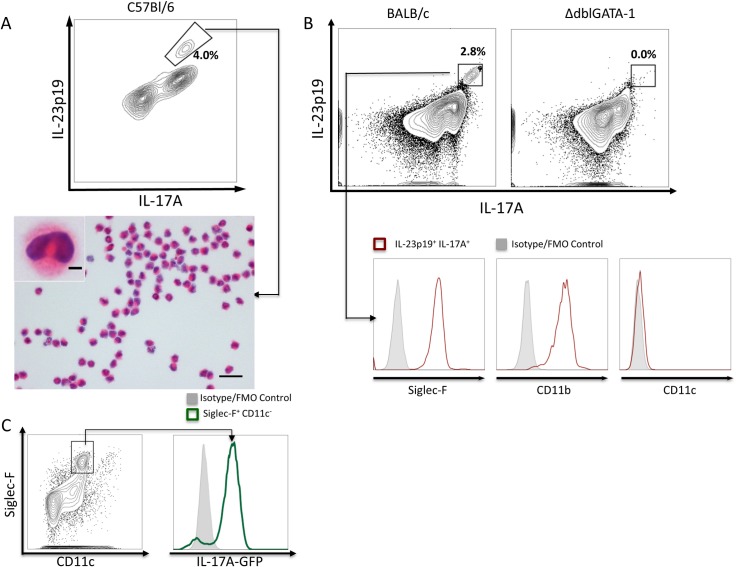
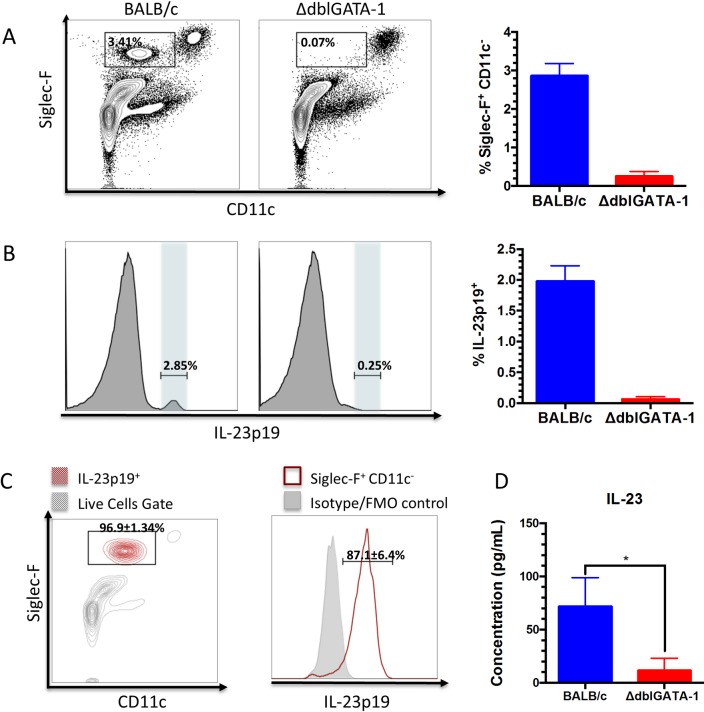
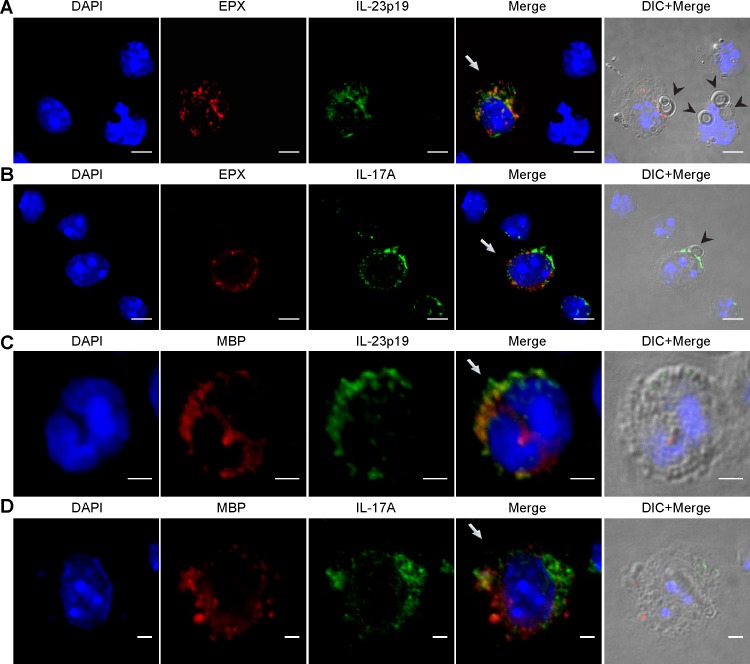
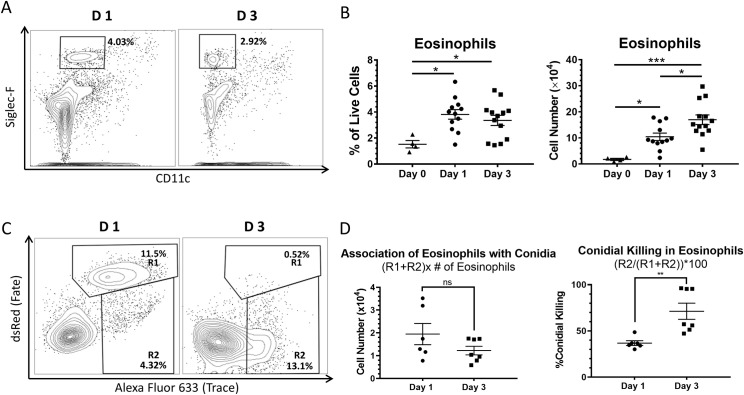
Aspergillus fumigatus causes invasive pulmonary disease in immunocompromised hosts and allergic asthma in atopic individuals. We studied the contribution of lung eosinophils to these fungal diseases. By in vivo intracellular cytokine staining and confocal microscopy, we observed that eosinophils act as local sources of IL-23 and IL-17. Remarkably, mice lacking eosinophils had a >95% reduction in the percentage of lung IL-23p19+ cells as well as markedly reduced IL-23 heterodimer in lung lavage fluid. Eosinophils killed A. fumigatus conidia in vivo. Eosinopenic mice had higher mortality rates, decreased recruitment of inflammatory monocytes, and decreased expansion of lung macrophages after challenge with conidia. All of these functions underscore a potential protective role for eosinophils in acute aspergillosis. Given the postulated role for IL-17 in asthma pathogenesis, we assessed whether eosinophils could act as sources of IL-23 and IL-17 in models where mice were sensitized to either A. fumigatus antigens or ovalbumin (OVA). We found IL-23p19+ IL-17AF+ eosinophils in both allergic models. Moreover, close to 95% of IL-23p19+ cells and >90% of IL-17AF+ cells were identified as eosinophils. These data establish a new paradigm in acute and allergic aspergillosis whereby eosinophils act not only as effector cells but also as immunomodulatory cells driving the IL-23/IL-17 axis and contributing to inflammatory cell recruitment.
Overview
The claims and statistics of this paper haven’t been checked yet.
Free: it reads the open-access text and checks the first 5 claims that cite a source we can check. Create a free account to check every claim.
Integrity signals
Registry
Cites
Statistics
Figures
Verification
Claims the paper makes
The claims and statistics of this paper haven’t been checked yet.
Free: it reads the open-access text and checks the first 5 claims that cite a source we can check. Create a free account to check every claim.
Claims other papers make about this one
Each is checked against this paper’s own text: does it say what the citing paper says it does?
The cited source says what the claim attributes to it.
In the citing paper
“Eosinophils also contribute to immunity against Aspergillus by exerting direct antifungal killing properties and by regulating IL-23/IL-17 inflammatory cytokine responses in the lungs (295, 296).”
From Aspergillus fumigatus and Aspergillosis in 2019 (2019) · cites this paper as [295]
Self-check
Percentages, sums and reported differences re-computed from the paper’s own numbers.
The self-check needs the paper’s full text.
Citations
Cites
Monocyte and macrophage heterogeneity
Gordon, S., & Taylor, P. R. (2005) · Nature Reviews Immunology · doi:10.1038/nri1733 · Cited by 5,190 · cited 1×
“These data suggest that lack of eosinophils disrupts inflammatory monocyte recruitment, which then hampers lung macrophage expansion as inflammatory monocytes differentiate into macrophages and DCs at sites of inflammation [28,29].”
BackgroundHidden Killers: Human Fungal Infections
Brown, G. D., Denning, D. W., Gow, N. A. R., Levitz, S. M., Netea, M. G., & White, T. C. (2012) · Science Translational Medicine · doi:10.1126/scitranslmed.3004404 · Cited by 4,284 · cited 1×
“It is estimated that >200,000 people develop life-threatening IA annually [4].”
BackgroundSelf-citationAspergillus fumigatus and Aspergillosis
Latgé, J.-P. (1999) · Clinical Microbiology Reviews · doi:10.1128/cmr.12.2.310 · Cited by 2,307 · cited 1×
“It is estimated that on average, individuals inhale hundreds of conidia a day [3].”
BackgroundLambrecht, B. N., & Hammad, H. (2015) · Nature Immunology · doi:10.1038/ni.3049 · Cited by 1,673 · cited 1×
“High levels of IL-17 have also been correlated with symptom severity in allergic asthma [17].”
BackgroundThe IL-23-IL-17 immune axis: from mechanisms to therapeutic testing
Gaffen, S. L., Jain, R., Garg, A. V., & Cua, D. J. (2014) · Nature reviews. Immunology · doi:10.1038/nri3707 · Cited by 1,585 · cited 2×
“Remarkably, whereas dendritic cells and macrophages are thought to be the primary sources of IL-23 in tissue [45,46]; in our aspergillosis models we found eosinophils were the major cell type in the lungs producing IL-23.”
BackgroundInnate IL-17-producing cells: the sentinels of the immune system
Cua, D. J., & Tato, C. M. (2010) · Nature Reviews Immunology · doi:10.1038/nri2800 · Cited by 1,578 · cited 1×
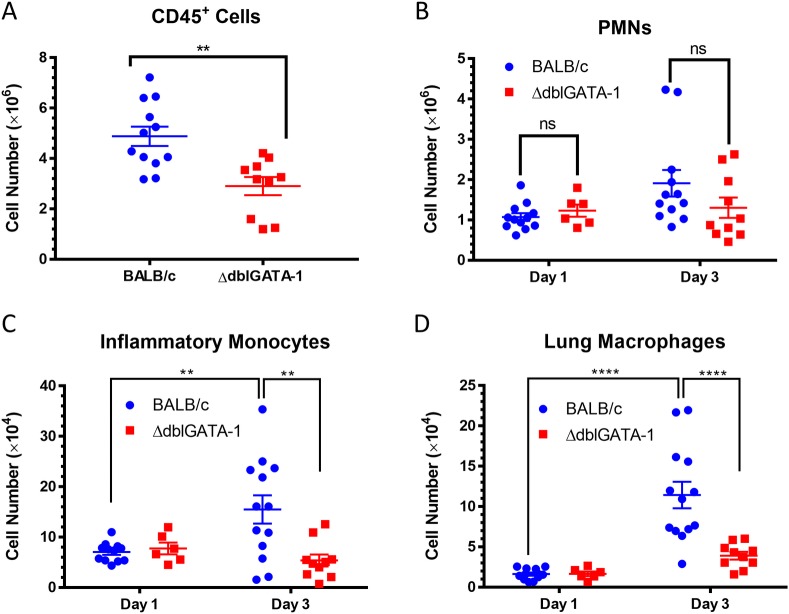
“Considering that eosinophils were found to be sources of IL-23 and IL-17 in acute aspergillosis (Figs 1 and 2) and as these cytokines play a significant role in the recruitment of neutrophils [27], we evaluated the degree of lung neutrophilia one and three days post-infection in BALB/c and ΔdblGATA-1 mice.”
BackgroundFunctional Specialization of Interleukin-17 Family Members
Iwakura, Y., Ishigame, H., Saijo, S., & Nakae, S. (2011) · Immunity · doi:10.1016/j.immuni.2011.02.012 · Cited by 1,289 · cited 7×
“IL-17A also forms a disulfide-linked heterodimer with IL-17F [11,12].”
BackgroundInfluentialThe IL-23/IL-17 axis in inflammation
Iwakura, Y. (2006) · Journal of Clinical Investigation · doi:10.1172/jci28508 · Cited by 1,046
Eosinophils: changing perspectives in health and disease
Rosenberg, H. F., Dyer, K. D., & Foster, P. S. (2013) · Nature Reviews Immunology · doi:10.1038/nri3341 · Cited by 989 · cited 2×
“As eosinophils have been reported to express IL-23R [40], this suggests an autocrine amplification loop may be occurring whereby eosinophils release IL-23 which directly feeds back on itself via IL-23R to enhance IL-17 production.”
BackgroundInflammatory subtypes in asthma: Assessment and identification using induced sputum
SIMPSON, J. L., SCOTT, R., BOYLE, M. J., & GIBSON, P. G. (2006) · Respirology · doi:10.1111/j.1440-1843.2006.00784.x · Cited by 955 · cited 2×
“Stratification based on the predominant cellular infiltrate found in induced sputum has delineated four distinct types of asthma: eosinophilic, neutrophilic, mixed granulocytic and paucigranulocytic [55].”
BackgroundIL-17 is increased in asthmatic airways and induces human bronchial fibroblasts to produce cytokines
Molet, S., Hamid, Q., Davoineb, F., Nutku, E., Tahaa, R., Pagé, N., Olivenstein, R., Elias, J., & Chakir, J. (2001) · Journal of Allergy and Clinical Immunology · doi:10.1067/mai.2001.117929 · Cited by 953 · cited 2×
“[42], it could be of use to better stratifying asthma type, as heterogeneity in this disease has prevented the success of some targeted asthma therapies [48,52].”
BackgroundTeng, M. W. L., Bowman, E. P., McElwee, J. J., Smyth, M. J., Casanova, J.-L., Cooper, A. M., & Cua, D. J. (2015) · Nature Medicine · doi:10.1038/nm.3895 · Cited by 873 · cited 3×
“For the subset of these diseases in which eosinophilia is seen, our data suggest that targeting eosinophils could have therapeutic efficacy while avoiding potential toxicities such as impaired host defenses to infections that could occur following global inhibition of the IL-23/ IL-17 axis [46].”
BackgroundThe link between fungi and severe asthma: A summary of the evidence
Denning, D. W., O'Driscoll, B. R., Hogaboam, C. M., Bowyer, P., & Niven, R. M. (2006) · European Respiratory Journal · doi:10.1183/09031936.06.00074705 · Cited by 824 · cited 1×
“Although eosinophilia is a hallmark of several allergic diseases including ABPA and severe asthma with fungal sensitization (SAFS) [7,8], comparatively less is known about the involvement of eosinophils in acute aspergillosis.”
BackgroundThe damage-response framework of microbial pathogenesis
Casadevall, A., & Pirofski, L.-A. (2003) · Nature Reviews Microbiology · doi:10.1038/nrmicro732 · Cited by 658 · cited 1×
“In the context of the damage-response framework of microbial pathogenesis [58], we posit that eosinophils and eosinophilic production of IL-23 and IL-17 are beneficial in invasive aspergillosis but detrimental in allergic disease.”
BackgroundLung-resident eosinophils represent a distinct regulatory eosinophil subset
Mesnil, C., Raulier, S., Paulissen, G., Xiao, X., Birrell, M. A., Pirottin, D., Janss, T., Starkl, P., Ramery, E., Henket, M., et al. (2016) · Journal of Clinical Investigation · doi:10.1172/jci85664 · Cited by 554
Denning, D. W., Pleuvry, A., & Cole, D. C. (2013) · Medical Mycology · doi:10.3109/13693786.2012.738312 · Cited by 495 · cited 3×
“Although eosinophilia is a hallmark of several allergic diseases including ABPA and severe asthma with fungal sensitization (SAFS) [7,8], comparatively less is known about the involvement of eosinophils in acute aspergillosis.”
BackgroundFungi and allergic lower respiratory tract diseases
Knutsen, A. P., Bush, R. K., Demain, J. G., Denning, D. W., Dixit, A., Fairs, A., Greenberger, P. A., Kariuki, B., Kita, H., Kurup, V. P., et al. (2012) · Journal of Allergy and Clinical Immunology · doi:10.1016/j.jaci.2011.12.970 · Cited by 482 · cited 1×
“Although eosinophilia is a hallmark of several allergic diseases including ABPA and severe asthma with fungal sensitization (SAFS) [7,8], comparatively less is known about the involvement of eosinophils in acute aspergillosis.”
BackgroundBasic biology and role of interleukin‐17 in immunity and inflammation
Zenobia, C., & Hajishengallis, G. (2015) · Periodontology 2000 · doi:10.1111/prd.12083 · Cited by 470 · cited 6×
“Although recognized primarily for the induction of neutrophilia, pro-inflammatory cytokines such as IL-6 and IL-1β, and the up-regulation of antimicrobial peptides [15], IL-17 has been reported to induce the recruitment of eosinophils in a model of chronic aspergillosis [16].”
BackgroundInfluentialInterpreting flow cytometry data: a guide for the perplexed
Herzenberg, L. A., Tung, J., Moore, W. A., Herzenberg, L. A., & Parks, D. R. (2006) · Nature Immunology · doi:10.1038/ni0706-681 · Cited by 464 · cited 1×
“Gating was established using FMO controls containing isotype control mAb conjugated with the fluorophore corresponding to the missing antibody as described [68].”
MethodAspergillus fumigatus—What Makes the Species a Ubiquitous Human Fungal Pathogen?
Kwon-Chung, K. J., & Sugui, J. A. (2013) · PLoS Pathogens · doi:10.1371/journal.ppat.1003743 · Cited by 432 · cited 1×
“5– 3 μm in diameter) and readily airborne [1].”
BackgroundMouse models of allergic asthma: acute and chronic allergen challenge
Nials, A. T., & Uddin, S. (2008) · Disease Models & Mechanisms · doi:10.1242/dmm.000323 · Cited by 426 · cited 10×
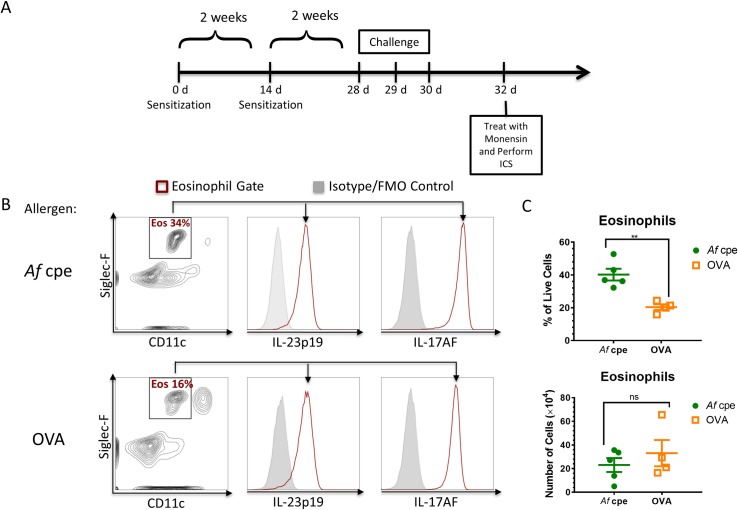
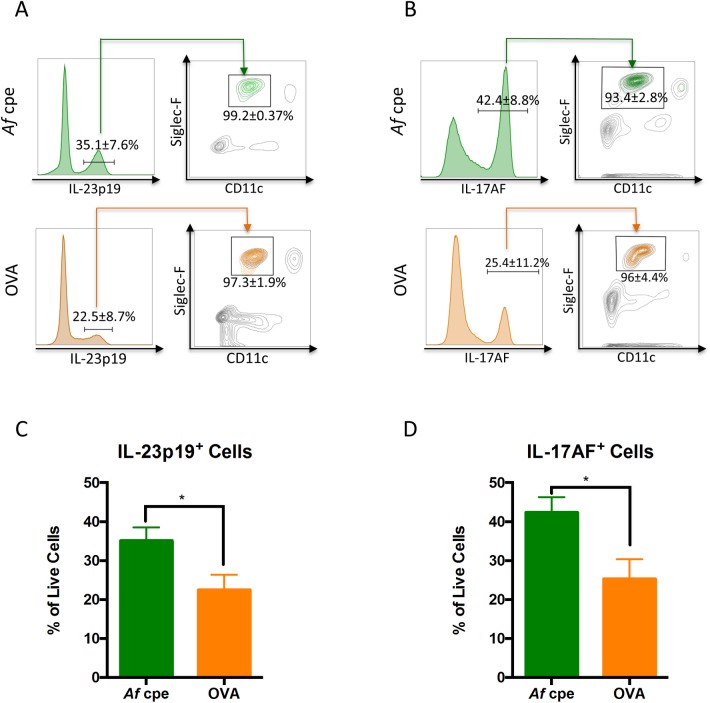
“In Af cpe sensitized and challenged mice, a significantly higher proportion of lung leukocytes were identified as eosinophils when compared to the OVA asthma model.”
MethodInfluentialRequisite Role for the Dectin-1 β-Glucan Receptor in Pulmonary Defense against Aspergillus fumigatus
Werner, J. L., Metz, A. E., Horn, D., Schoeb, T. R., Hewitt, M. M., Schwiebert, L. M., Faro-Trindade, I., Brown, G. D., & Steele, C. (2009) · The Journal of Immunology · doi:10.4049/jimmunol.0804250 · Cited by 412
Taylor, P. R., Roy, S., Leal, S. M., Sun, Y., Howell, S. J., Cobb, B. A., Li, X., & Pearlman, E. (2014) · Nature Immunology · doi:10.1038/ni.2797 · Cited by 410
IL-17 in Severe Asthma. Where Do We Stand?
Chesné, J., Braza, F., Mahay, G., Brouard, S., Aronica, M., & Magnan, A. (2014) · American Journal of Respiratory and Critical Care Medicine · doi:10.1164/rccm.201405-0859pp · Cited by 377
IL-17-Producing Alveolar Macrophages Mediate Allergic Lung Inflammation Related to Asthma
Song, C., Luo, L., Lei, Z., Li, B., Liang, Z., Liu, G., Li, D., Zhang, G., Huang, B., & Feng, Z.-H. (2008) · The Journal of Immunology · doi:10.4049/jimmunol.181.9.6117 · Cited by 301 · cited 6×
“Other IL-23-producing cell types, including alveolar macrophages, have been found to produce IL17 under defined conditions [20,41].”
BackgroundInfluentialDyer, K. D., Moser, J. M., Czapiga, M., Siegel, S. J., Percopo, C. M., & Rosenberg, H. F. (2008) · The Journal of Immunology · doi:10.4049/jimmunol.181.6.4004 · Cited by 248 · cited 1×
“Bone marrow cells were isolated from murine femurs and differentiated as described previously [64].”
MethodDevelopment of the CRISPR/Cas9 System for Targeted Gene Disruption in Aspergillus fumigatus
Fuller, K. K., Chen, S., Loros, J. J., & Dunlap, J. C. (2015) · Eukaryotic Cell · doi:10.1128/ec.00107-15 · Cited by 244
Vermaelen, K., & Pauwels, R. (2004) · Cytometry Part A · doi:10.1002/cyto.a.20064 · Cited by 243 · cited 1×
“Due to the autofluorescence exhibited by eosinophils and alveolar macrophages in the channel used to detect GFP signal [23,24], we stained cells with a monoclonal antibody against GFP conjugated to Alexa Fluor 647.”
MethodInnate Immunity to Aspergillus Species
Park, S. J., & Mehrad, B. (2009) · Clinical Microbiology Reviews · doi:10.1128/cmr.00014-09 · Cited by 220 · cited 5×
“Although eosinophilia is a hallmark of several allergic diseases including ABPA and severe asthma with fungal sensitization (SAFS) [7,8], comparatively less is known about the involvement of eosinophils in acute aspergillosis.”
BackgroundInfluentialWiesner, D. L., Specht, C. A., Lee, C. K., Smith, K. D., Mukaremera, L., Lee, S. T., Lee, C. G., Elias, J. A., Nielsen, J. N., Boulware, D. R., et al. (2015) · PLOS Pathogens · doi:10.1371/journal.ppat.1004701 · Cited by 214 · cited 1×
“Single-cell suspensions were enriched for leukocytes using a Percoll (GE Healthcare) gradient [67].”
MethodSelf-citationEosinophils and Th2 immunity: contemporary insights
Spencer, L. A., & Weller, P. F. (2010) · Immunology & Cell Biology · doi:10.1038/icb.2009.115 · Cited by 213 · cited 2×
“For example, in the small intestine, eosinophils constitutively secrete IL-1 receptor antagonist which downregulates TH17 cells [38] whereas in response to parasite challenge eosinophils promote TH2 immunity [39].”
BackgroundEosinophils in mucosal immune responses
Travers, J., & Rothenberg, M. E. (2015) · Mucosal Immunology · doi:10.1038/mi.2015.2 · Cited by 205 · cited 1×
“While eosinophils act as drivers of inflammation and tissue remodeling in asthma [39,52, 56], they play a protective role in models of acute pulmonary aspergillosis.”
BackgroundLee, J. J., Jacobsen, E. A., Ochkur, S. I., McGarry, M. P., Condjella, R. M., Doyle, A. D., Luo, H., Zellner, K. R., Protheroe, C. A., Willetts, L., et al. (2012) · Journal of Allergy and Clinical Immunology · doi:10.1016/j.jaci.2012.07.025 · Cited by 201
Biosynthesis and function of gliotoxin in Aspergillus fumigatus
Scharf, D. H., Heinekamp, T., Remme, N., Hortschansky, P., Brakhage, A. A., & Hertweck, C. (2012) · Applied Microbiology and Biotechnology · doi:10.1007/s00253-011-3689-1 · Cited by 199 · cited 1×
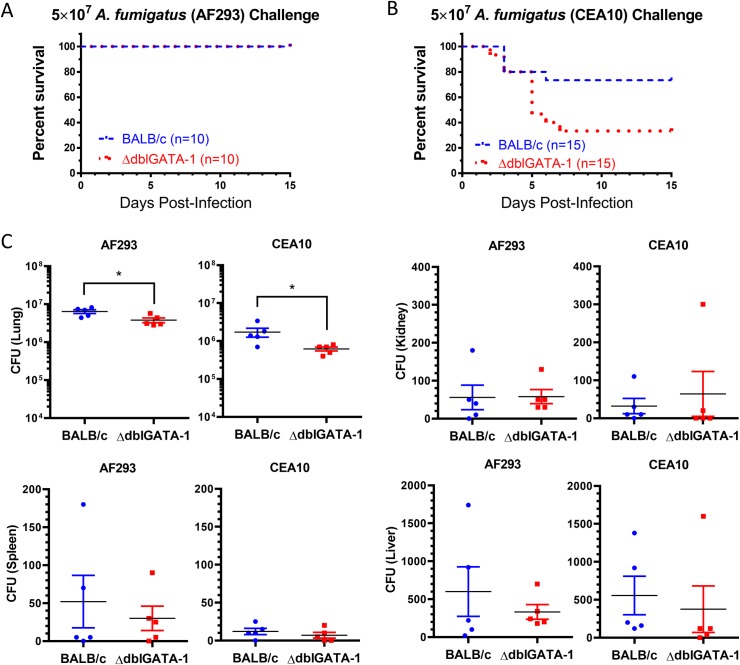
“However, after infection with the same inoculum of the CEA10 strain, which has been shown to be a more virulent strain in mouse models of acute aspergillosis [30,31,32,33,34], ΔdblGATA-1 mice had significantly higher mortality compared with BALB/c mice (Fig 6B).”
Levitz, S. M., Selsted, M. E., Ganz, T., Lehrer, R. I., & Diamond, R. D. (1986) · Journal of Infectious Diseases · doi:10.1093/infdis/154.3.483 · Cited by 195
Self-citationPivotal Roles of T-Helper 17-Related Cytokines, IL-17, IL-22, and IL-23, in Inflammatory Diseases
Qu, N., Xu, M., Mizoguchi, I., Furusawa, J.-I., Kaneko, K., Watanabe, K., Mizuguchi, J., Itoh, M., Kawakami, Y., & Yoshimoto, T. (2013) · Clinical and Developmental Immunology · doi:10.1155/2013/968549 · Cited by 191 · cited 1×
“Other IL-23-producing cell types, including alveolar macrophages, have been found to produce IL17 under defined conditions [20,41].”
BackgroundInflammatory Monocytes Orchestrate Innate Antifungal Immunity in the Lung
Espinosa, V., Jhingran, A., Dutta, O., Kasahara, S., Donnelly, R., Du, P., Rosenfeld, J., Leiner, I., Chen, C.-C., Ron, Y., et al. (2014) · PLoS Pathogens · doi:10.1371/journal.ppat.1003940 · Cited by 169 · cited 1×
“These data suggest that lack of eosinophils disrupts inflammatory monocyte recruitment, which then hampers lung macrophage expansion as inflammatory monocytes differentiate into macrophages and DCs at sites of inflammation [28,29].”
BackgroundLoures, F. V., Röhm, M., Lee, C. K., Santos, E., Wang, J. P., Specht, C. A., Calich, V. L. G., Urban, C. F., & Levitz, S. M. (2015) · PLOS Pathogens · doi:10.1371/journal.ppat.1004643 · Cited by 165 · cited 1×
“AF293 was grown from frozen stocks on Sabouraud-dextrose agar (Remel) slants [59,60].”
BackgroundSelf-citationPasqualotto, A. C. (2009) · Medical Mycology · doi:10.1080/13693780802247702 · Cited by 159 · cited 1×
“However, after infection with the same inoculum of the CEA10 strain, which has been shown to be a more virulent strain in mouse models of acute aspergillosis [30,31,32,33,34], ΔdblGATA-1 mice had significantly higher mortality compared with BALB/c mice (Fig 6B).”
Detection and quantitation of eosinophils in the murine respiratory tract by flow cytometry
Stevens, W. W., Kim, T. S., Pujanauski, L. M., Hao, X., & Braciale, T. J. (2007) · Journal of Immunological Methods · doi:10.1016/j.jim.2007.07.011 · Cited by 135 · cited 1×
“This pattern of surface marker expression has been shown to accurately define eosinophils in the murine lungs [22].”
BackgroundAntiviral CD8+ T cell effector activities in situ are regulated by target cell type
Hufford, M. M., Kim, T. S., Sun, J., & Braciale, T. J. (2011) · Journal of Experimental Medicine · doi:10.1084/jem.20101850 · Cited by 134 · cited 1×
“Intracellular cytokine staining, sorting and flow cytometry ICS was performed as previously described [66].”
MethodImmune Interactions with Pathogenic and Commensal Fungi: A Two-Way Street
Underhill, D. M., & Pearlman, E. (2015) · Immunity · doi:10.1016/j.immuni.2015.10.023 · Cited by 130
Jhingran, A., Mar, K. B., Kumasaka, D. K., Knoblaugh, S. E., Ngo, L. Y., Segal, B. H., Iwakura, Y., Lowell, C. A., Hamerman, J. A., Lin, X., et al. (2012) · Cell Reports · doi:10.1016/j.celrep.2012.10.026 · Cited by 123 · cited 1×
“Fluorescent Aspergillus Reporter (FLARE) conidia FLARE conidia were created as described [26,65].”
MethodRamirez-Ortiz, Z. G., Lee, C. K., Wang, J. P., Boon, L., Specht, C. A., & Levitz, S. M. (2011) · Cell Host & Microbe · doi:10.1016/j.chom.2011.04.007 · Cited by 121 · cited 1×
“AF293 was grown from frozen stocks on Sabouraud-dextrose agar (Remel) slants [59,60].”
BackgroundSelf-citationWeil, G., & Chused, T. M. (1981) · Blood · doi:10.1182/blood.v57.6.1099.1099 · Cited by 119
Small intestinal eosinophils regulate Th17 cells by producing IL-1 receptor antagonist
Sugawara, R., Lee, E., Jang, M. S., Jeun, E.-J., Hong, C., Kim, J.-H., Park, A., Yun, C. H., Hong, S., Kim, Y., et al. (2016) · The Journal of Experimental Medicine · doi:10.1084/jem.20141388 · Cited by 117
Multi-Country Estimate of Different Manifestations of Aspergillosis in Cystic Fibrosis
Armstead, J., Morris, J., & Denning, D. W. (2014) · PLoS ONE · doi:10.1371/journal.pone.0098502 · Cited by 115 · cited 4×
“Although eosinophilia is a hallmark of several allergic diseases including ABPA and severe asthma with fungal sensitization (SAFS) [7,8], comparatively less is known about the involvement of eosinophils in acute aspergillosis.”
BackgroundInfluentialJhingran, A., Kasahara, S., Shepardson, K. M., Junecko, B. A. F., Heung, L. J., Kumasaka, D. K., Knoblaugh, S. E., Lin, X., Kazmierczak, B. I., Reinhart, T. A., et al. (2015) · PLOS Pathogens · doi:10.1371/journal.ppat.1004589 · Cited by 108 · cited 1×
“Fluorescent Aspergillus Reporter (FLARE) conidia FLARE conidia were created as described [26,65].”
MethodTH17 cells in asthma and inflammation
Aujla, S. J., & Alcorn, J. F. (2011) · Biochimica et Biophysica Acta (BBA) - General Subjects · doi:10.1016/j.bbagen.2011.02.002 · Cited by 104 · cited 4×
“[42], it could be of use to better stratifying asthma type, as heterogeneity in this disease has prevented the success of some targeted asthma therapies [48,52].”
BackgroundInfluentialAsthma phenotypes and endotypes
Lin, T.-Y., Poon, A. H., & Hamid, Q. (2013) · Current Opinion in Pulmonary Medicine · doi:10.1097/mcp.0b013e32835b10ec · Cited by 93
Changing roles of eosinophils in health and disease
Furuta, G. T., Atkins, F., Lee, N. A., & Lee, J. J. (2014) · Annals of Allergy Asthma & Immunology · doi:10.1016/j.anai.2014.04.002 · Cited by 89 · cited 2×
“[42], it could be of use to better stratifying asthma type, as heterogeneity in this disease has prevented the success of some targeted asthma therapies [48,52].”
BackgroundEosinophil Deficiency Compromises Lung Defense against Aspergillus fumigatus
Lilly, L. M., Scopel, M., Nelson, M. P., Burg, A. R., Dunaway, C. W., & Steele, C. (2014) · Infection and Immunity · doi:10.1128/iai.01172-13 · Cited by 89 · cited 5×
“These studies also linked eosinopenia to lower levels of IL-17A two days post-infection [10].”
BackgroundInfluentialInsights into human antifungal immunity from primary immunodeficiencies
Vinh, D. C. (2011) · The Lancet Infectious Diseases · doi:10.1016/s1473-3099(11)70217-1 · Cited by 87 · cited 1×
“IL-23 is among a group of cytokines that activate signal transducer and activator of transcription (STAT)-3 [13].”
BackgroundMurdock, B. J., Falkowski, N. R., Shreiner, A. B., Sadighi Akha, A. A., McDonald, R. A., White, E. S., Toews, G. B., & Huffnagle, G. B. (2012) · Infection and Immunity · doi:10.1128/iai.05529-11 · Cited by 87 · cited 1×
“Although recognized primarily for the induction of neutrophilia, pro-inflammatory cytokines such as IL-6 and IL-1β, and the up-regulation of antimicrobial peptides [15], IL-17 has been reported to induce the recruitment of eosinophils in a model of chronic aspergillosis [16].”
BackgroundKobayashi, T., Kouzaki, H., & Kita, H. (2010) · The Journal of Immunology · doi:10.4049/jimmunol.0902673 · Cited by 87 · cited 1×
“detected IL-17 in the supernatants of human eosinophils stimulated with monosodium urate crystals [44].”
BackgroundSpecht, C. A., Lee, C. K., Huang, H., Tipper, D. J., Shen, Z. T., Lodge, J. K., Leszyk, J., Ostroff, G. R., & Levitz, S. M. (2015) · mBio · doi:10.1128/mbio.01905-15 · Cited by 85 · cited 1×
“Organ CFUs were enumerated as in our previous studies [62,63] except the resected organs were homogenized and diluted in PBS containing 0.”
MethodSelf-citationStrain Dependent Variation of Immune Responses to A. fumigatus: Definition of Pathogenic Species
Rizzetto, L., Giovannini, G., Bromley, M., Bowyer, P., Romani, L., & Cavalieri, D. (2013) · PLoS ONE · doi:10.1371/journal.pone.0056651 · Cited by 79 · cited 1×
“However, after infection with the same inoculum of the CEA10 strain, which has been shown to be a more virulent strain in mouse models of acute aspergillosis [30,31,32,33,34], ΔdblGATA-1 mice had significantly higher mortality compared with BALB/c mice (Fig 6B).”
Shepardson, K. M., Jhingran, A., Caffrey, A., Obar, J. J., Suratt, B. T., Berwin, B. L., Hohl, T. M., & Cramer, R. A. (2014) · PLoS Pathogens · doi:10.1371/journal.ppat.1004378 · Cited by 79 · cited 1×
“The CEA10 strain was a generous gift from Robert Cramer (Geisel School of Medicine, Hanover, NH) and grown as described [61].”
MethodAsthma phenotypes and endotypes: a personalized approach to treatment
Skloot, G. S. (2015) · Current Opinion in Pulmonary Medicine · doi:10.1097/mcp.0000000000000225 · Cited by 74
O'Dea, E. M., Amarsaikhan, N., Li, H., Downey, J., Steele, E., Van Dyken, S. J., Locksley, R. M., & Templeton, S. P. (2014) · Infection and Immunity · doi:10.1128/iai.01990-14 · Cited by 72 · cited 1×
“containing high cell wall chitin, decreases in fungal burden and mortality were observed in ΔdblGATA-1 mice [9].”
BackgroundRe‐defining the unique roles for eosinophils in allergic respiratory inflammation
Jacobsen, E. A., Lee, N. A., & Lee, J. J. (2014) · Clinical & Experimental Allergy · doi:10.1111/cea.12358 · Cited by 70 · cited 1×
“In mouse models of asthma, the absence of eosinophils correlates with decreased airway hyperresponsiveness (AHR) and decreased mucus production [47]; these findings are also found in mice lacking IL-17 signaling [48,49].”
BackgroundChesné, J., Braza, F., Chadeuf, G., Mahay, G., Cheminant, M., Loy, J., Brouard, S., Sauzeau, V., Loirand, G., & Magnan, A. (2015) · Journal of Allergy and Clinical Immunology · doi:10.1016/j.jaci.2014.12.1872 · Cited by 67 · cited 1×
“In mouse models of asthma, the absence of eosinophils correlates with decreased airway hyperresponsiveness (AHR) and decreased mucus production [47]; these findings are also found in mice lacking IL-17 signaling [48,49].”
BackgroundShimizu, S., Kouzaki, H., Ogawa, T., Takezawa, K., Tojima, I., & Shimizu, T. (2014) · American Journal of Rhinology and Allergy · doi:10.2500/ajra.2014.28.4018 · Cited by 56 · cited 1×
“Another example of functional overlap is the finding that IL-17 signaling and eosinophil co-culture with epithelial cells have each been shown to up-regulate Mucin 5AC, a mucin protein produced by bronchial airway goblet cells [48,50,51].”
BackgroundWang, J. P., Lee, C. K., Akalin, A., Finberg, R. W., & Levitz, S. M. (2011) · PLoS ONE · doi:10.1371/journal.pone.0026232 · Cited by 49 · cited 1×
“Organ CFUs were enumerated as in our previous studies [62,63] except the resected organs were homogenized and diluted in PBS containing 0.”
MethodSelf-citationOptimal Management of Severe/Refractory Asthma
Pakhale, S. S., Mulpuru, S., & Boyd, M. (2011) · Clinical Medicine Insights Circulatory Respiratory and Pulmonary Medicine · doi:10.4137/ccrpm.s5535 · Cited by 42 · cited 1×
“Individualizing therapy based on the immunological drivers has the potential to improve therapeutic outcome, which is relevant considering many patients fail to respond to standard treatment [53,54].”
BackgroundOno, N., Kusunoki, T., & Ikeda, K. (2012) · Allergy & Rhinology · doi:10.2500/ar.2012.3.0030 · Cited by 29 · cited 1×
“Another example of functional overlap is the finding that IL-17 signaling and eosinophil co-culture with epithelial cells have each been shown to up-regulate Mucin 5AC, a mucin protein produced by bronchial airway goblet cells [48,50,51].”
BackgroundPotential role of myeloid cell/eosinophil-derived IL-17 in LPS-induced endotoxin shock
Shimura, E., Shibui, A., Narushima, S., Nambu, A., Yamaguchi, S., Akitsu, A., Leonard, W. J., Iwakura, Y., Matsumoto, K., Suto, H., et al. (2014) · Biochemical and Biophysical Research Communications · doi:10.1016/j.bbrc.2014.09.004 · Cited by 23 · cited 1×
“peritoneum 6 hours following an IP LPS injection [43].”
Wiederhold, N. P., Najvar, L. K., Vallor, A. C., Kirkpatrick, W. R., Bocanegra, R. A., Molina, D. K., Olivo, M., Graybill, J. R., & Patterson, T. F. (2007) · Antimicrobial Agents and Chemotherapy · doi:10.1128/aac.01425-07 · Cited by 21
Mueller, C., Keeler, A. M., Braag, S. A., Menz, T., Tang, Q., & Flotte, T. R. (2009) · Molecular Therapy · doi:10.1038/mt.2009.264 · Cited by 11 · cited 2×
“25% Af cpe in saline respectively for 20 minutes as described [36].”
MethodSelf-citation
Cited by
Aspergillus fumigatus and Aspergillosis in 2019
Latgé, J.-P., & Chamilos, G. (2019) · Clinical Microbiology Reviews · doi:10.1128/cmr.00140-18 · Cited by 1,400
IL-17 receptor–based signaling and implications for disease
Li, X., Bechara, R., Zhao, J., McGeachy, M. J., & Gaffen, S. L. (2019) · Nature Immunology · doi:10.1038/s41590-019-0514-y · Cited by 548
Functions of tissue-resident eosinophils
Weller, P. F., & Spencer, L. A. (2017) · Nature Reviews Immunology · doi:10.1038/nri.2017.95 · Cited by 480
Eosinophils from Physiology to Disease: A Comprehensive Review
Ramirez, G. A., Yacoub, M.-R., Ripa, M., Mannina, D., Cariddi, A., Saporiti, N., Ciceri, F., Castagna, A., Colombo, G., & Dagna, L. (2018) · BioMed Research International · doi:10.1155/2018/9095275 · Cited by 316
“However, in patients with ABPA, a nonresolving and excessive immune response leads also to tissue damage [132].”
BackgroundHost Control of Fungal Infections: Lessons from Basic Studies and Human Cohorts
Lionakis, M. S., & Levitz, S. M. (2018) · Annual Review of Immunology · doi:10.1146/annurev-immunol-042617-053318 · Cited by 209
Self-citation
Metadata
- Authors
- Guerra, E. S., Lee, C. K., Specht, C. A., Yadav, B., Huang, H., Akalin, A., Huh, J. R., Mueller, C., & Levitz, S. M.
- Affiliations
- University of Massachusetts Chan Medical School (US)
- Corresponding author
- Levitz, Stuart M.
- ORCID
- Venue
- PLOS Pathogens
- Publisher
- Public Library of Science (PLoS)
- Published
- 2017-01-17
- Volume
- 13
- Issue
- 1
- Pages
- e1006175
- ISSN
- 1553-7366 (ISSN-L)
- 1553-7374
- PMC
- PMC5271415
- OpenAlex
- W2573473508
- Cited by
- 88
- References
- 69
- Citations by year
- 2026: 4 · 2025: 5 · 2024: 5 · 2023: 2 · 2022: 15 · 2021: 17 · 2020: 9 · 2019: 17 · 2018: 5 · 2017: 9
- FWCI
- 8.10
- Type
- journal article
- Language
- en
- Update notices
- new_version (2017-01-27)
- Open access
- gold
- doi.org
- Licence
- Locations
- PLoS Pathogens (publishedVersion, cc-by)
- PubMed Central (publishedVersion, cc-by)
- PubMed (publishedVersion)
- eScholarship@UMassChan (submittedVersion, cc-by)
- DOAJ (DOAJ: Directory of Open Access Journals) (submittedVersion, cc-by-sa)
- Figshare (submittedVersion, cc-by)
- Funders
- National Institute of Allergy and Infectious Diseases (F31AI112282, T32AI095213, RO1AI025780, RO1AI102618, RO1AI125045)
- National Heart, Lung, and Blood Institute (RO1HL112671)
- Topics
- Health Sciences › Medicine › Pulmonary and Respiratory Medicine › Asthma and respiratory diseases
- Life Sciences › Immunology and Microbiology › Immunology › IL-33, ST2, and ILC Pathways
- Health Sciences › Medicine › Infectious Diseases › Antifungal resistance and susceptibility
- Keywords
- eosinophils, IL-23, IL-17, allergic asthma, Aspergillus fumigatus, IL-23p19, eosinopenia, lung macrophages, ovalbumin sensitization, immunomodulation, eosinophil-deficient mice
- MeSH terms
- Animals, Aspergillus fumigatus, Asthma, Cell Separation, Disease Models, Animal, Eosinophils, Flow Cytometry, Hypersensitivity, Mice, Inbred BALB C, Mice, Inbred C57BL, Microscopy, Confocal, Interleukin-17, Mice, Interleukin-23, Pulmonary Aspergillosis
About these checks
Registry, retraction, Cites and statistics results are computed, not judged, with one exception: a printed reference that no index lists is read once by a model before it counts as a citation error. Claims are extracted by a model and kept only when their quote appears verbatim in the text; each cited source is then checked, with a model’s help, for whether it says what the claim relies on. Those verdicts can be wrong — read the claim’s quote and the cited source before relying on one.
Statistics and arithmetic are recomputed, not judged.
Confidence bands are shown only for fields calibrated on our annotated test set. None is calibrated yet, so no band is shown.
What counts as a claim ›How we measure confidence ›How we check this ›
Are you an author, or do you see a problem with this page? Request a review
Data sources
Bibliographic data: Semantic Scholar, OpenAlex, Crossref.
Contains information from the Semantic Scholar Academic Graph Datasets, made available under the ODC Attribution License (ODC-BY 1.0).
Semantic Scholar’s data is described in: Kinney, R., et al. (2023). The Semantic Scholar Open Data Platform. arXiv:2301.10140.
