

Inflammatory Bowel Disease and Patients With Mental Disorders: What Do We Know?
Open accessThe DOI matches its Crossref record; 72 of the 74 references it cites were found in a registry or an index, and 2 are not checked yet.
Abstract
Inflammatory bowel disease (IBD) is a multisystemic disease with a wide range of extraintestinal manifestations in both ulcerative colitis and Crohn's disease, while increasing evidence supports the interaction between gut and central nervous system, described as "gut-brain axis". According to epidemiological studies, it seems that patients with IBD present more frequently with impaired mental status compared to the general population, leading to diagnostic and management problems in this group of patients. The association between IBD and mental disorders, such as dementia and autism spectrum disorders, has not been fully clarified; genetic factors and the gut-brain axis seem to be involved. The purpose of this review is to present and analyze the epidemiological data about this issue, describe the possible pathogenetic mechanisms and discuss some considerations about the management of patients with IBD and impaired mental status.
Overview
The claims and statistics of this paper haven’t been checked yet.
Free: it reads the open-access text and checks the first 5 claims that cite a source we can check. Create a free account to check every claim.
Integrity signals
Registry
Cites
Statistics
Figures
Verification
Claims the paper makes
The claims and statistics of this paper haven’t been checked yet.
Free: it reads the open-access text and checks the first 5 claims that cite a source we can check. Create a free account to check every claim.
Claims other papers make about this one
Each is checked against this paper’s own text: does it say what the citing paper says it does?
The source backs part of the claim, not all of it — or backs it for a different population, condition or comparison.
In the citing paper
“Жінки, які страждають на ЗЗК у післяпологовому періоді, піддаються підвищеному ризику виникнення нового психіатричного діагнозу [18].”
From PSYCHO-EMOTIONAL STATUS IN PATIENTS WITH INFLAMMATORY BOWEL DISEASE (2024) · cites this paper as [18]
Experimental — accuracy not yet measured
Self-check
Percentages, sums and reported differences re-computed from the paper’s own numbers.
The self-check needs the paper’s full text.
Citations
Cites
Lai, M.-C., Lombardo, M. V., & Baron-Cohen, S. (2014) · The Lancet · doi:10.1016/s0140-6736(13)61539-1 · Cited by 2,371
Gut microbiota and IBD: causation or correlation?
Ni, J., Wu, G. D., Albenberg, L., & Tomov, V. T. (2017) · Nature Reviews Gastroenterology & Hepatology · doi:10.1038/nrgastro.2017.88 · Cited by 1,778 · cited 1×
“Furthermore, dysbiosis of the gut microbiome seems to be present in patients with IBD [54] and many studies have suggested that dysregulation of the gut microbiota may play a role in the progression of dementia through alterations of the gut barrier, production of microbial neurotoxic metabolites in systemic circulati…”
BackgroundNeuroinflammation in Alzheimer's disease: current evidence and future directions
Calsolaro, V., & Edison, P. (2016) · Alzheimer's & Dementia · doi:10.1016/j.jalz.2016.02.010 · Cited by 1,726 · cited 1×
“Several studies have suggested that systemic chronic inflammation may accelerate the progression of Alzheimer’s disease via alterations of the blood-brain barrier and the microglial activation [49], indicating that IBD as a chronic inflammatory condition may contribute to Alzheimer’s disease progression.”
BackgroundCytokine-Associated Emotional and Cognitive Disturbances in Humans
Reichenberg, A., Yirmiya, R., Schuld, A., Kraus, T., Haack, M., Morag, A., & Pollmächer, T. (2001) · Archives of General Psychiatry · doi:10.1001/archpsyc.58.5.445 · Cited by 1,365
Alzheimer’s disease: pathogenesis, diagnostics, and therapeutics
Tiwari, S., Atluri, V., Kaushik, A., Yndart, A., & Nair, M. (2019) · International Journal of Nanomedicine · doi:10.2147/ijn.s200490 · Cited by 1,308 · cited 1×
“In particular, Alzheimer’s disease is the most frequent cause of dementia and the major pathogenetic mechanisms include the development of amyloid β plaques and neurofibrillary tangles [48].”
BackgroundO'Brien, J. T., & Thomas, A. (2015) · The Lancet · doi:10.1016/s0140-6736(15)00463-8 · Cited by 1,136
Autism spectrum disorder: Definition, epidemiology, causes, and clinical evaluation
Hodges, H., Fealko, C., & Soares, N. (2020) · Translational Pediatrics · doi:10.21037/tp.2019.09.09 · Cited by 1,127 · cited 1×
“opmental dis order not otherwise specified [29].”
Extraintestinal Manifestations of Inflammatory Bowel Disease
Vavricka, S. R., Schoepfer, A., Scharl, M., Lakatos, P. L., Navarini, A., & Rogler, G. (2015) · Inflammatory Bowel Diseases · doi:10.1097/mib.0000000000000392 · Cited by 909
ACG Clinical Guideline: Management of Irritable Bowel Syndrome
Lacy, B. E., Pimentel, M., Brenner, D. M., Chey, W. D., Keefer, L. A., Long, M. D., & Moshiree, B. (2021) · American Journal of Gastroenterology · doi:10.14309/ajg.0000000000001036 · Cited by 893 · cited 1×
“Patients with IBS report at least once weekly abdominal pain in association with a change in stool form, frequency and/or abdominal pain related to defecation, while IBS diagnosis requires exclusion of disorders, such as IBD and celiac disease [69].”
BackgroundGastrointestinal Symptoms in Autism Spectrum Disorder: A Meta-analysis
McElhanon, B. O., McCracken, C., Karpen, S., & Sharp, W. G. (2014) · Pediatrics · doi:10.1542/peds.2013-3995 · Cited by 831
Gale, S. A., Acar, D., & Daffner, K. R. (2018) · The American Journal of Medicine · doi:10.1016/j.amjmed.2018.01.022 · Cited by 680
Depression and sickness behavior are Janus-faced responses to shared inflammatory pathways
Maes, M., Berk, M., Goehler, L., Song, C., Anderson, G., Gałecki, P., & Leonard, B. (2012) · BMC Medicine · doi:10.1186/1741-7015-10-66 · Cited by 629
Psychiatric Adverse Effects of Corticosteroids
Warrington, T. P., & Bostwick, J. M. (2006) · Mayo Clinic Proceedings · doi:10.4065/81.10.1361 · Cited by 611 · cited 1×
“The estimated prevalence of psychiatric side effects ranges from 1% to 10%, while dosage and duration of corticosteroids administration are directly related to the frequency of adverse effects [57, 58].”
BackgroundEmerging Roles for the Gut Microbiome in Autism Spectrum Disorder
Vuong, H. E., & Hsiao, E. Y. (2017) · Biological Psychiatry · doi:10.1016/j.biopsych.2016.08.024 · Cited by 595 · cited 1×
“In addition, gut microbiome may participate in association between IBD and ASD, as individuals with ASD seem to have an altered gut microbiota [46] and microbiota dysbiosis may contribute to IBD development [47].”
BackgroundMikocka-Walus, A., Knowles, S. R., Keefer, L., & Graff, L. (2016) · Inflammatory Bowel Diseases · doi:10.1097/mib.0000000000000620 · Cited by 567 · cited 2×
“4%), while the rates seem to be higher when the disease is active [7].”
BackgroundThe Co-Morbidity Burden of Children and Young Adults with Autism Spectrum Disorders
Kohane, I. S., McMurry, A., Weber, G., MacFadden, D., Rappaport, L., Kunkel, L., Bickel, J., Wattanasin, N., Spence, S., Murphy, S., et al. (2012) · PLoS ONE · doi:10.1371/journal.pone.0033224 · Cited by 562 · cited 1×
“In patients with IBD, several studies have described an increased frequency of various mental disorders, ranging from mild depression to severe form of schizophrenia and serious dementia, while the prevalence of mental disorders depends on the study (Table 1) [7-21].”
BackgroundGastrointestinal Problems in Children with Autism, Developmental Delays or Typical Development
Chaidez, V., Hansen, R. L., & Hertz-Picciotto, I. (2014) · Journal of Autism and Developmental Disorders · doi:10.1007/s10803-013-1973-x · Cited by 528 · cited 1×
“from gastrointestinal symptoms, such as diarrhea, constipation, abdominal pain or gaseousness, mainly children with ASD and increased problem behaviors, such as social withdrawal, sleep problems and self-injuries [30, 31].”
BackgroundIntestinal infection triggers Parkinson's disease-like symptoms in Pink1(-/-) mice
Matheoud, D., Cannon, T., Voisin, A., Penttinen, A.-M., Ramet, L., Fahmy, A. M., Ducrot, C., Laplante, A., Bourque, M.-J., Zhu, L., et al. (2019) · Nature · doi:10.1038/s41586-019-1405-y · Cited by 496 · cited 1×
“Furthermore, gutbrain axis may contribute to Parkinson’s disease development in patients with IBD, as animal studies have suggested that alterations of gut microbiota may trigger Parkinson’s disease [52], while a recent study demonstrated that gastrointestinal infections are associated with a higher risk of Parkinson’…”
BackgroundWalker, J. R., Ediger, J. P., Graff, L. A., Greenfeld, J. M., Clara, I., Lix, L., Rawsthorne, P., Miller, N., Rogala, L., McPhail, C. M., et al. (2008) · The American Journal of Gastroenterology · doi:10.1111/j.1572-0241.2008.01980.x · Cited by 437
Critical role of mast cells in inflammatory diseases and the effect of acute stress
Theoharides, T. C., & Cochrane, D. E. (2004) · Journal of Neuroimmunology · doi:10.1016/j.jneuroim.2003.10.041 · Cited by 436 · cited 1×
“which the course of IBD may be influenced [42, 43].”
BackgroundHui, K. Y., Fernandez-Hernandez, H., Hu, J., Schaffner, A., Pankratz, N., Hsu, N.-Y., Chuang, L.-S., Carmi, S., Villaverde, N., Li, X., et al. (2018) · Science Translational Medicine · doi:10.1126/scitranslmed.aai7795 · Cited by 384 · cited 1×
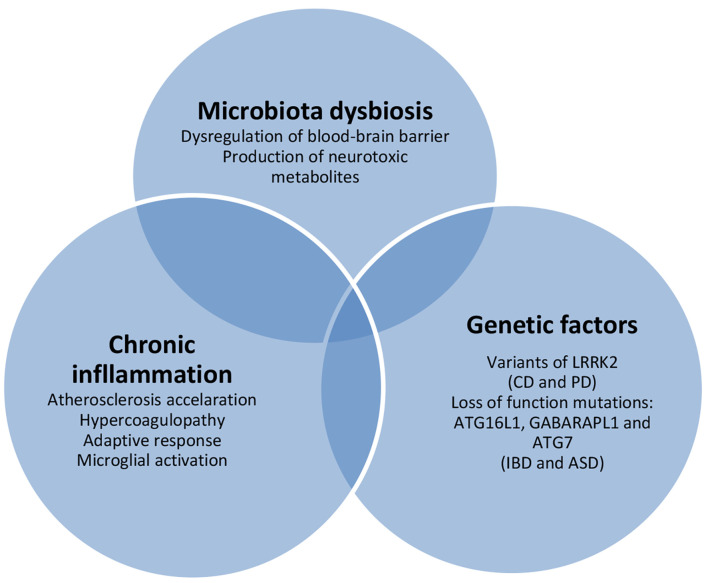
“Regarding Parkinson’s disease, mutations of leucine-rich repeat kinase 2 (LRRK-2) seem to cause disrupted autophagy and participate in Parkinson’s disease development [50], as a recent study identified shared genetic variants of LRRK-2 between Parkinson’s disease and CD [51].”
BackgroundLRRK2 kinase in Parkinson's disease
Alessi, D. R., & Sammler, E. (2018) · Science · doi:10.1126/science.aar5683 · Cited by 345 · cited 1×
“Regarding Parkinson’s disease, mutations of leucine-rich repeat kinase 2 (LRRK-2) seem to cause disrupted autophagy and participate in Parkinson’s disease development [50], as a recent study identified shared genetic variants of LRRK-2 between Parkinson’s disease and CD [51].”
BackgroundInflammatory bowel disease is associated with higher dementia risk: a nationwide longitudinal study
Zhang, B., Wang, H. E., Bai, Y.-M., Tsai, S.-J., Su, T.-P., Chen, T.-J., Wang, Y.-P., & Chen, M.-H. (2021) · Gut · doi:10.1136/gutjnl-2020-320789 · Cited by 292 · cited 2×
“Furthermore, the risk for dementia was associated with the chronicity of IBD diagnosis and dementia risk seems to accelerate over time correlating with the chronicity of IBD diagnosis, while no significant differences in the risk for dementia were demonstrated between patients with UC and CD [14].”
BackgroundPsychiatric complications of treatment with corticosteroids: Review with case report
Kenna, H. A., Poon, A. W., de los Angeles, C. P., & Koran, L. M. (2011) · Psychiatry and Clinical Neurosciences · doi:10.1111/j.1440-1819.2011.02260.x · Cited by 291 · cited 1×
“The estimated prevalence of psychiatric side effects ranges from 1% to 10%, while dosage and duration of corticosteroids administration are directly related to the frequency of adverse effects [57, 58].”
BackgroundHuman gut microbiota: the links with dementia development
Alkasir, R., Li, J., Li, X., Jin, M., & Zhu, B. (2017) · Protein & Cell · doi:10.1007/s13238-016-0338-6 · Cited by 285 · cited 1×
“Furthermore, dysbiosis of the gut microbiome seems to be present in patients with IBD [54] and many studies have suggested that dysregulation of the gut microbiota may play a role in the progression of dementia through alterations of the gut barrier, production of microbial neurotoxic metabolites in systemic circulati…”
BackgroundIncreased burden of psychiatric disorders in inflammatory bowel disease
Bernstein, C. N., Hitchon, C. A., Walld, R., Bolton, J. M., Sareen, J., Walker, J. R., Graff, L. A., Patten, S. B., Singer, A., Lix, L. M., et al. (2019) · Inflammatory Bowel Diseases · doi:10.1093/ibd/izy235 · Cited by 274 · cited 1×
“In patients with IBD, several studies have described an increased frequency of various mental disorders, ranging from mild depression to severe form of schizophrenia and serious dementia, while the prevalence of mental disorders depends on the study (Table 1) [7-21].”
BackgroundAutoimmune diseases, bipolar disorder, and non-affective psychosis
Eaton, W. W., Pedersen, M. G., Nielsen, P. R., & Mortensen, P. B. (2010) · Bipolar Disorders · doi:10.1111/j.1399-5618.2010.00853.x · Cited by 262 · cited 1×
“In patients with IBD, several studies have described an increased frequency of various mental disorders, ranging from mild depression to severe form of schizophrenia and serious dementia, while the prevalence of mental disorders depends on the study (Table 1) [7-21].”
BackgroundPsychological issues in inflammatory bowel disease: an overview
Sajadinejad, M. S., Asgari, K., Molavi, H., Kalantari, M., & Adibi, P. (2012) · Gastroenterology Research and Practice · doi:10.1155/2012/106502 · Cited by 242 · cited 1×
“Many studies have described that IBD patients often suffer from anxiety and depression that may influence the course of disease through the gut-brain axis [22].”
BackgroundDose-dependent effects of endotoxin on neurobehavioral functions in humans
Grigoleit, J.-S., Kullmann, J. S., Wolf, O. T., Hammes, F., Wegner, A., Jablonowski, S., Engler, H., Gizewski, E., Oberbeck, R., & Schedlowski, M. (2011) · PLoS ONE · doi:10.1371/journal.pone.0028330 · Cited by 241
Risk factors of anxiety and depression in inflammatory bowel disease
Nahon, S., Lahmek, P., Durance, C., Olympie, A., Lesgourgues, B., Colombel, J.-F., & Gendre, J.-P. (2012) · Inflammatory Bowel Diseases · doi:10.1002/ibd.22888 · Cited by 201 · cited 1×
“Risk factors of depression among patients with IBD seem to be age, severe disease, flares, disable or unemployed status, socioeconomic deprivation [23] and coronavirus disease 2019 (COVID-19) lockdown [24].”
BackgroundMaunder, R., & Levenstein, S. (2008) · Current Molecular Medicine · doi:10.2174/156652408784533832 · Cited by 198
Fadgyas-Stanculete, M., Buga, A.-M., Popa-Wagner, A., & Dumitrascu, D. L. (2014) · Journal of Molecular Psychiatry · doi:10.1186/2049-9256-2-4 · Cited by 197 · cited 4×
“In addition, because of high prevalence of irritable bowel syndrome (IBS) in patients with psychiatric disorders and ASDs [68], clinicians should distinguish IBD from IBS.”
BackgroundInfluentialDementia in Parkinson's disease
Hanagasi, H. A., Tüfekçıoğlu, Z., & Emre, M. (2017) · Journal of the Neurological Sciences · doi:10.1016/j.jns.2017.01.012 · Cited by 194
Abautret-Daly, Á., Dempsey, E., Parra-Blanco, A., Medina, C., & Harkin, A. (2018) · Acta Neuropsychiatrica · doi:10.1017/neu.2017.3 · Cited by 180 · cited 1×
“as the nucleus accumbens, amygdale and hippocampus [39].”
BackgroundAnanthakrishnan, A. N., Shi, H. Y., Tang, W., Law, C. C. Y., Sung, J. J. Y., Chan, F. K. L., & Ng, S. C. (2016) · Journal of Crohn's and Colitis · doi:10.1093/ecco-jcc/jjw054 · Cited by 168 · cited 1×
“Elderly patients may have less complicated clinical course; however, they have higher or similar rates of surgery [65].”
BackgroundMeta-Analysis on Intervention Effects of Physical Activities on Children and Adolescents with Autism
Huang, J., Du, C., Liu, J., & Tan, G. (2020) · International Journal of Environmental Research and Public Health · doi:10.3390/ijerph17061950 · Cited by 155 · cited 1×
“Patients with IBD should be encouraged to exercise because physical activity may improve psychological well-being, reducing anxiety and depression, as well as having a preventative or mitigated role against Alzheimer’s disease [70], Parkinson’s disease [71] and ASD [72].”
BackgroundInflammatory bowel disease and Parkinson’s disease: common pathophysiological links
Lee, H.-S., Lobbestael, E., Vermeire, S., Sabino, J., & Cleynen, I. (2021) · Gut · doi:10.1136/gutjnl-2020-322429 · Cited by 151
Inflammatory bowel diseases and Parkinson's disease
Brudek, T. (2019) · Journal of Parkinson’s Disease · doi:10.3233/jpd-191729 · Cited by 139 · cited 1×
“Concerning Parkinson disease, dementia occurs in 30% of patients with Parkinson’s disease [15], while several epidemiological studies have demonstrated an association between Parkinson’s disease and IBD [34].”
The risk of Parkinson’s disease in inflammatory bowel disease: A systematic review and meta-analysis
Zhu, F., Li, C., Gong, J., Zhu, W., Gu, L., & Li, N. (2019) · Digestive and Liver Disease · doi:10.1016/j.dld.2018.09.017 · Cited by 136 · cited 1×
“In patients with IBD, several studies have described an increased frequency of various mental disorders, ranging from mild depression to severe form of schizophrenia and serious dementia, while the prevalence of mental disorders depends on the study (Table 1) [7-21].”
BackgroundRestrepo, B., Angkustsiri, K., Taylor, S. L., Rogers, S. J., Cabral, J., Heath, B., Hechtman, A., Solomon, M., Ashwood, P., Amaral, D. G., et al. (2020) · Autism Research · doi:10.1002/aur.2354 · Cited by 120 · cited 1×
“from gastrointestinal symptoms, such as diarrhea, constipation, abdominal pain or gaseousness, mainly children with ASD and increased problem behaviors, such as social withdrawal, sleep problems and self-injuries [30, 31].”
BackgroundManagement of Inflammatory Bowel Disease in the Elderly Patient: Challenges and Opportunities
Ananthakrishnan, A. N., Donaldson, T., Lasch, K. L., & Yajnik, V. (2017) · Inflammatory Bowel Diseases · doi:10.1097/mib.0000000000001099 · Cited by 116 · cited 1×
“IBD patients with diabetes may have an increased risk of flare and IBD-related hospitalization [66], while anti-TNF agents are contraindicated in patients with severe heart failure [67].”
BackgroundInflammatory bowel disease and risk of Parkinson's disease in Medicare beneficiaries
Camacho-Soto, A., Gross, A., Searles Nielsen, S., Dey, N., & Racette, B. A. (2018) · Parkinsonism & Related Disorders · doi:10.1016/j.parkreldis.2018.02.008 · Cited by 101 · cited 1×
“patients with Parkinson’s disease seem to have no higher risk for either CD or UC [36].”
BackgroundInflammatory bowel disease: An increased risk factor for neurologic complications
Morís, G. (2014) · World Journal of Gastroenterology · doi:10.3748/wjg.v20.i5.1228 · Cited by 97 · cited 1×
“IBD has been associated with various neurological manifestations, such as cerebrovascular disease, demyelinating central nervous system disorder and peripheral neuropathy, indicating a gut-brain interaction in IBD [2].”
BackgroundAssociation of Autism Spectrum Disorders and Inflammatory Bowel Disease
Lee, M., Krishnamurthy, J., Susi, A., Sullivan, C. A., Gorman, G. H., Hisle-Gorman, E. J., Erdie-Lalena, C. R., & Nylund, C. M. (2017) · Journal of Autism and Developmental Disorders · doi:10.1007/s10803-017-3409-5 · Cited by 96 · cited 2×
“The second explanation is that children with ASD due to their behavior present less compliance and adherence to oral and intravenous treatment, making subcutaneous treatment more feasible [12].”
BackgroundInflammatory Bowel Disease and Eating Disorders: A systematized review of comorbidity
Ilzarbe, L., Fàbrega, M., Quintero, R., Bastidas, A., Pintor, L., García-Campayo, J., Gomollón, F., & Ilzarbe, D. (2017) · Journal of Psychosomatic Research · doi:10.1016/j.jpsychores.2017.09.006 · Cited by 94
Saji, N., Murotani, K., Hisada, T., Kunihiro, T., Tsuduki, T., Sugimoto, T., Kimura, A., Niida, S., Toba, K., & Sakurai, T. (2020) · Scientific Reports · doi:10.1038/s41598-020-65196-6 · Cited by 90
Integrating Mental Health and Addiction Treatment Into General Medical Care: The Role of Policy
McGinty, E. E., & Daumit, G. L. (2020) · Psychiatric Services · doi:10.1176/appi.ps.202000183 · Cited by 88 · cited 1×
“It is worth noting that the estimated prevalence of mental disorders among adults in the United States is approximately 20% [5], while the worldwide prevalence of autism spectrum disorders is about 1% [6].”
BackgroundQi, Y., Wu, H., Yang, Z., Zhou, Y., Jin, L., Yang, M., & Wang, F. (2021) · Digestive Diseases and Sciences · doi:10.1007/s10620-021-06837-2 · Cited by 72 · cited 1×
“In addition, gut microbiome may participate in association between IBD and ASD, as individuals with ASD seem to have an altered gut microbiota [46] and microbiota dysbiosis may contribute to IBD development [47].”
BackgroundInflammatory bowel diseases and brain-gut axis.
Hollander, D. (2003) · PubMed · Cited by 62
WEST, J., LOGAN, R. F., HUBBARD, R. B., & CARD, T. R. (2006) · Alimentary Pharmacology & Therapeutics · doi:10.1111/j.1365-2036.2006.02720.x · Cited by 57 · cited 1×
“1) in comparison with the general population [27].”
BackgroundPrevalence of Inflammatory Bowel Disease Among Patients with Autism Spectrum Disorders
Doshi-Velez, F., Avillach, P., Palmer, N., Bousvaros, A., Ge, Y., Fox, K., Steinberg, G., Spettell, C., Juster, I., & Kohane, I. (2015) · Inflammatory Bowel Diseases · doi:10.1097/mib.0000000000000502 · Cited by 56 · cited 2×
“Recently, four case-control study populations have documented higher prevalence of IBD among patients with ASD than that of their respective controls [11].”
BackgroundWalker, S. J., Fortunato, J., Gonzalez, L. G., & Krigsman, A. (2013) · PLoS ONE · doi:10.1371/journal.pone.0058058 · Cited by 56 · cited 1×
“Furthermore, identification of an overlap gene expression in gastrointestinal tissue in pediatric patients with IBD and in children with ASD has been described [45].”
BackgroundGI infections are associated with an increased risk of Parkinson’s disease
Nerius, M., Doblhammer, G., & Tamgüney, G. (2020) · Gut · doi:10.1136/gutjnl-2019-318822 · Cited by 56 · cited 1×
“Furthermore, gutbrain axis may contribute to Parkinson’s disease development in patients with IBD, as animal studies have suggested that alterations of gut microbiota may trigger Parkinson’s disease [52], while a recent study demonstrated that gastrointestinal infections are associated with a higher risk of Parkinson’…”
BackgroundThe Effect of Physical Activity in Parkinson’s Disease: A Mini-Review
Fayyaz, M., Jaffery, S. S., Anwar, F., Zil‐E‐Ali, A., & Anjum, I. (2018) · Cureus · doi:10.7759/cureus.2995 · Cited by 56 · cited 1×
“Patients with IBD should be encouraged to exercise because physical activity may improve psychological well-being, reducing anxiety and depression, as well as having a preventative or mitigated role against Alzheimer’s disease [70], Parkinson’s disease [71] and ASD [72].”
BackgroundRac1 inhibition negatively regulates transcriptional activity of the amyloid precursor protein gene
Wang, P., Niidome, T., Akaike, A., Kihara, T., & Sugimoto, H. (2009) · Journal of Neuroscience Research · doi:10.1002/jnr.22039 · Cited by 52 · cited 1×
“Thiopurines seem to inhibit the Ras-related C3 botulinum substrate (Rac 1), which has been implicated in Alzheimer’s disease development via increased amyloid precursor protein [62].”
BackgroundNowakowski, J., Chrobak, A., & Dudek, D. (2016) · Psychiatria Polska · doi:10.12740/pp/62382 · Cited by 49 · cited 1×
“In recent decade, many studies have documented a possible association between IBD and mental disorders, such as dementia, autism spectrum disorders (ASDs) and psychiatric diseases [3].”
BackgroundPhysical Activity and Alzheimer’s Disease: A Narrative Review
Gronek, P., Balkó, Š., Gronek, J., Zając, A., Maszczyk, A., Celka, R., Doberska, A., Czarny, W., Podstawski, R., Clark, C. C. T., et al. (2019) · Aging and Disease · doi:10.14336/ad.2019.0226 · Cited by 47 · cited 1×
“Patients with IBD should be encouraged to exercise because physical activity may improve psychological well-being, reducing anxiety and depression, as well as having a preventative or mitigated role against Alzheimer’s disease [70], Parkinson’s disease [71] and ASD [72].”
BackgroundCerebral arterial infarction in inflammatory bowel diseases
Katsanos, A. H., Kosmidou, M. S., Giannopoulos, S., Katsanos, K. H., Tsivgoulis, G. K., Kyritsis, A. P., & Tsianos, E. V. (2013) · European Journal of Internal Medicine · doi:10.1016/j.ejim.2013.08.702 · Cited by 42 · cited 2×
“In addition, IBD has been associated with a higher risk of thromboembolic events and stroke development due to thrombocytosis, coagulation abnormalities, hyperlipidemia and hyperhomocysteinemia [20], thus contributing to the development of vascular dementia.”
BackgroundSelf-citationAlcohol and narcotics use in inflammatory bowel disease
Mantzouranis, G., Fafliora, E., Saridi, M., Tatsioni, A., Glanztounis, G., Albani, E., Katsanos, K. H., & Christodoulou, D. K. (2018) · Annals of Gastroenterology · doi:10.20524/aog.2018.0302 · Cited by 42 · cited 1×
“Also, IBD patients should avoid alcohol consumption and narcotics use that have been correlated with comorbid mental illnesses and worsening of IBD course [73].”
BackgroundInflammatory bowel disease and bipolar disorder: A population-based cross-sectional study
Kao, L.-T., Lin, H.-C., & Lee, H.-C. (2019) · Journal of Affective Disorders · doi:10.1016/j.jad.2019.01.014 · Cited by 36 · cited 1×
“In patients with IBD, several studies have described an increased frequency of various mental disorders, ranging from mild depression to severe form of schizophrenia and serious dementia, while the prevalence of mental disorders depends on the study (Table 1) [7-21].”
BackgroundKumar, A., Teslova, T., Taub, E. M., Miller, J. D., & Lukin, D. J. (2020) · Digestive Diseases and Sciences · doi:10.1007/s10620-020-06439-4 · Cited by 31 · cited 1×
“IBD patients with diabetes may have an increased risk of flare and IBD-related hospitalization [66], while anti-TNF agents are contraindicated in patients with severe heart failure [67].”
BackgroundOu, G., Bressler, B., Galorport, C., Lam, E., Ko, H. H., Enns, R., Telford, J., Schaffer, N., Lee, T., & Rosenfeld, G. (2018) · Journal of the Canadian Association of Gastroenterology · doi:10.1093/jcag/gwy023 · Cited by 28
Mental disorder: Are we moving away from distress and disability?
Telles‐Correia, D. (2018) · Journal of Evaluation in Clinical Practice · doi:10.1111/jep.12871 · Cited by 26 · cited 1×
“Diagnostic and Statistical Manual of Mental Disorders, 5th edition, characterizes as mental disorder, a clinical significant disturbance in an individual’s cognition, emotion regulation or behavior that reflects a dysfunction in the psychological, biological or developmental processes underlying mental functioning, re…”
BackgroundSutton, S. S., Magagnoli, J., Cummings, T. H., & Hardin, J. W. (2019) · Alzheimer s & Dementia Translational Research & Clinical Interventions · doi:10.1016/j.trci.2019.10.002 · Cited by 17 · cited 1×
“989) for comorbidities and medications [63].”
Budesonide MMX: efficacy and safety profile in the treatment of ulcerative colitis
Salice, M., Rizzello, F., Calabrese, C., Hrustemovic, H. P., & Gionchetti, P. (2019) · Expert Review of Gastroenterology & Hepatology · doi:10.1080/17474124.2019.1621745 · Cited by 17 · cited 1×
“often used in UC and CD treatment and have been associated with high efficacy, presenting fewer adverse events through their low systemic bioavailability and approximately 90% first-pass metabolism in liver [60].”
BackgroundSomekh, J., Peleg, M., Eran, A., Koren, I., Feiglin, A., Demishtein, A., Shiloh, R., Heiner, M., Kong, S. W., Elazar, Z., et al. (2016) · Journal of Biomedical Informatics · doi:10.1016/j.jbi.2016.08.008 · Cited by 16 · cited 1×
“A study demonstrated that two losses of function mutations previously implicated in IBD on the autophagy pathway (ATG16L1 and GABARAPL1) may play a role in ASD development, while one ASD-associated loss of function mutation (ATG7) may contribute to IBD [44].”
BackgroundJain, A., Marrie, R. A., Shafer, L. A., Graff, L. A., Patten, S. B., El-Gabalawy, R., Sareen, J., Bolton, J. M., Fisk, J. D., & Bernstein, C. N. (2020) · Crohn's & Colitis 360 · doi:10.1093/crocol/otz053 · Cited by 16 · cited 1×
“On the other hand, according to available data, treatment with biological agents does not seem to be associated with an increased risk of anxiety, depression, suicidality and psychosis [61].”
BackgroundGilbert‐Barness, E., Fox, T., Morrow, G., Luquette, M. H., & Pomerance, H. H. (2004) · Fetal and Pediatric Pathology · doi:10.1080/15227950490423016 · Cited by 13 · cited 2×
“In patients with IBD, several studies have described an increased frequency of various mental disorders, ranging from mild depression to severe form of schizophrenia and serious dementia, while the prevalence of mental disorders depends on the study (Table 1) [7-21].”
BackgroundSempere, L., Bernabeu, P., Cameo, J. I., Gutiérrez, A., Laveda, R., García, M. F., Aguas, M., Zapater, P., Jover, R., Ruiz‐Cantero, M. T., et al. (2021) · Gastroenterología y Hepatología · doi:10.1016/j.gastrohep.2021.03.004 · Cited by 10
Down's syndrome and inflammatory bowel disease: is there a real link?
Souto-Rodríguez, R., Acosta, M. B., & Domínguez‐Muñoz, J. E. (2014) · PubMed · Cited by 9
Association of Autism Spectrum Disorders and Inflammatory Bowel Disease
Lee, M., Krishnamurthy, J., Susi, A., Sullivan, C. A., & Nylund, C. M. (2017) · Gastroenterology · doi:10.1016/s0016-5085(17)33240-7 · Cited by 9
Turner Syndrome with Ulcerative Colitis
Hyodo, H., Tomita, Y., Hirai, K., Hirakawa, H., Ueno, S., & Ishiguro, H. (2009) · Clinical Pediatric Endocrinology · doi:10.1297/cpe.18.101 · Cited by 6 · cited 2×
“In patients with IBD, several studies have described an increased frequency of various mental disorders, ranging from mild depression to severe form of schizophrenia and serious dementia, while the prevalence of mental disorders depends on the study (Table 1) [7-21].”
BackgroundLetter: suicide risk among adult inflammatory bowel disease patients
Sánta, A., Szántó, K. J., Sarlós, P., Miheller, P., Farkas, K., & Molnár, T. (2020) · Alimentary Pharmacology & Therapeutics · doi:10.1111/apt.15708 · Cited by 5
Sutton, S. S., Magagnoli, J., Cummings, T. H., Hardin, J. W., & Love, B. L. (2020) · Journal of Psychopharmacology · doi:10.1177/0269881120908898 · Cited by 3 · cited 1×
“805) compared to IBD patients without thiopurine exposure [64].”
Result
Cited by
iPSC-derived organ-on-a-chip models for personalized human genetics and pharmacogenomics studies
Palasantzas, V. E. J. M., Tamargo-Rubio, I., Le, K., Slager, J., Wijmenga, C., Jonkers, I. H., Kumar, V., Fu, J., & Withoff, S. (2023) · Trends in Genetics · doi:10.1016/j.tig.2023.01.002 · Cited by 86
Inflammatory Bowel Disease and Neurodegenerative Diseases
Kim, J. S., Chen, M., Wang, H. E., Lu, C., Wang, Y., & Zhang, B. (2023) · Gut and Liver · doi:10.5009/gnl220523 · Cited by 57
“Increased risk of VTEs associated with chronic inflammation accompanying IBD may contribute to the unidirectional association between IBD patients and dementia via heightened risk for vascular dementia. https://doi.org/10.5009/gnl 501 While the phenotypes, clinical management and sequelae differ greatly among these ch…”
BackgroundInfluentialPrajapati, S. K., Shah, R., Alford, N., Mishra, S. P., Jain, S., HANSEN, B. C., Sanberg, P. R., Molina, A. J. A., & Yadav, H. (2023) · The Journals of Gerontology Series A · doi:10.1093/gerona/glad226 · Cited by 43
Feng, J., Wu, Y., Meng, M., Zeng, R., Ma, Y., Luo, D., Zhang, L., Zhang, Y., Li, Y., Huang, W., et al. (2024) · International Journal of Surgery · doi:10.1097/js9.0000000000001831 · Cited by 21
Vahedi‐Mazdabadi, Y., Shahinfar, H., Toushih, M., & Shidfar, F. (2023) · Phytotherapy Research · doi:10.1002/ptr.7998 · Cited by 18
“cancer (Fousekis et al., 2021; Ganz, 2019; Hirano, 2021).”
Metadata
- Authors
- Fousekis, F. S., Katsanos, A. H., Kourtis, G., Saridi, M., Albani, E., Katsanos, K. H., & Christodoulou, D. K.
- Affiliations
- University of Ioannina (GR)
- McMaster University (CA)
- Sotiria General Hospital (GR)
- University of Thessaly (GR)
- University of Patras (GR)
- Corresponding author
- Christodoulou, Dimitrios K.
- ORCID
- Venue
- Journal of Clinical Medicine Research
- Publisher
- Elmer Press, Inc.
- Published
- 2021-09
- Volume
- 13
- Issue
- 9
- Pages
- 466-473
- ISSN
- 1918-3003 (ISSN-L)
- 1918-3011
- PMC
- PMC8510650
- OpenAlex
- W3204586045
- Cited by
- 28
- References
- 39
- Citations by year
- 2026: 6 · 2025: 4 · 2024: 8 · 2023: 9 · 2022: 1
- FWCI
- 0.66
- Type
- journal article
- Language
- en
- Open access
- diamond
- doi.org
- Licence
- Locations
- Journal of Clinical Medicine Research (publishedVersion, cc-by-nc)
- PubMed Central (publishedVersion, cc-by-nc)
- PubMed (publishedVersion)
- University of Thessaly Institutional Repository (University of Thessaly) (submittedVersion, cc-by-nc)
- Topics
- Health Sciences › Medicine › Gastroenterology › Inflammatory Bowel Disease
- Life Sciences › Biochemistry, Genetics and Molecular Biology › Molecular Biology › Gut microbiota and health
- Life Sciences › Neuroscience › Biological Psychiatry › Tryptophan and brain disorders
- Keywords
- inflammatory bowel disease, Crohn's disease, ulcerative colitis, mental illness, dementia, autism spectrum disorder, gut-brain axis, extraintestinal manifestations, genetic factors, pathogenesis
About these checks
Registry, retraction, Cites and statistics results are computed, not judged, with one exception: a printed reference that no index lists is read once by a model before it counts as a citation error. Claims are extracted by a model and kept only when their quote appears verbatim in the text; each cited source is then checked, with a model’s help, for whether it says what the claim relies on. Those verdicts can be wrong — read the claim’s quote and the cited source before relying on one.
Statistics and arithmetic are recomputed, not judged.
Confidence bands are shown only for fields calibrated on our annotated test set. None is calibrated yet, so no band is shown.
What counts as a claim ›How we measure confidence ›How we check this ›
Are you an author, or do you see a problem with this page? Request a review
Data sources
Bibliographic data: Semantic Scholar, OpenAlex, Crossref.
Contains information from the Semantic Scholar Academic Graph Datasets, made available under the ODC Attribution License (ODC-BY 1.0).
Semantic Scholar’s data is described in: Kinney, R., et al. (2023). The Semantic Scholar Open Data Platform. arXiv:2301.10140.
