

60 YEARS OF NEUROENDOCRINOLOGY: Glucocorticoid dynamics: insights from mathematical, experimental and clinical studies
Open accessThe DOI matches its Crossref record; 85 of the 85 references it cites were found in a registry or an index.
Abstract
A pulsatile pattern of secretion is a characteristic of many hormonal systems, including the glucocorticoid-producing hypothalamic-pituitary-adrenal (HPA) axis. Despite recent evidence supporting its importance for behavioral, neuroendocrine and transcriptional effects of glucocorticoids, there has been a paucity of information regarding the origin of glucocorticoid pulsatility. In this review we discuss the mechanisms regulating pulsatile dynamics of the HPA axis, and how these dynamics become disrupted in disease. Our recent mathematical, experimental and clinical studies show that glucocorticoid pulsatility can be generated and maintained by dynamic processes at the level of the pituitary-adrenal axis, and that an intra-adrenal negative feedback may contribute to these dynamics.
Overview
The claims and statistics of this paper haven’t been checked yet.
Free: it reads the open-access text and checks the first 5 claims that cite a source we can check. Create a free account to check every claim.
Integrity signals
Registry
Cites
Statistics
Figures
Verification
Claims the paper makes
The claims and statistics of this paper haven’t been checked yet.
Free: it reads the open-access text and checks the first 5 claims that cite a source we can check. Create a free account to check every claim.
Claims other papers make about this one
Each is checked against this paper’s own text: does it say what the citing paper says it does?
The source backs part of the claim, not all of it — or backs it for a different population, condition or comparison.
In the citing paper
“In all healthy individuals, fluctuations are organised rhythmically [8].”
From Mathematical Modelling of Endocrine Systems (2019) · cites this paper as [8]
Experimental — accuracy not yet measuredThe source backs part of the claim, not all of it — or backs it for a different population, condition or comparison.
In the citing paper
“The dynamics of CORT was modelled as ultradian oscillations (75 min period) with circadian modulated amplitude and baseline reaching a maximum CORT awakening response at 7 am ( 41 )”
From Dynamic modulation of glucose utilisation by glucocorticoid rhythms in health and disease (2020) · cites this paper as [41]
Experimental — accuracy not yet measured
Self-check
Percentages, sums and reported differences re-computed from the paper’s own numbers.
The self-check needs the paper’s full text.
Citations
Cites
Neural regulation of endocrine and autonomic stress responses
Ulrich-Lai, Y. M., & Herman, J. P. (2009) · Nature Reviews Neuroscience · doi:10.1038/nrn2647 · Cited by 3,318 · cited 1×
“To investigate this hypothesis further, in Walker et al. (2015) we considered the evidence for four candidate mechanisms of adrenal CORT production by studying their ability to reproduce the dynamics of the system in three experimental paradigms: i) administration of an ultradian ACTH pulse; ii) constant infusion of C…”
BackgroundBelchetz, P. E., Plant, T. M., Nakai, Y., Keogh, E. J., & Knobil, E. (1978) · Science · doi:10.1126/science.100883 · Cited by 1,385
Mountjoy, K. G. (1994) · Molecular Endocrinology · doi:10.1210/me.8.10.1298 · Cited by 1,156
Role of steroidogenic acute regulatory protein in adrenal and gonadal steroidogenesis
Lin, D., Sugawara, T., Strauss, J. F., Clark, B. J., Stocco, D. M., Saenger, P., Rogol, A., & Miller, W. L. (1995) · Science · doi:10.1126/science.7892608 · Cited by 1,030
CLARKE, I. J., & CUMMINS, J. T. (1982) · Endocrinology · doi:10.1210/endo-111-5-1737 · Cited by 917
Regulation of ACTH Secretion: Variations on a Theme of B
DALLMAN, M. F., AKANA, S. F., CASCIO, C. S., DARLINGTON, D. N., JACOBSON, L., & LEVIN, N. (1987) · Proceedings of the 1986 Laurentian Hormone Conference · doi:10.1016/b978-0-12-571143-2.50010-1 · Cited by 655
Plotsky, P. M., & Vale, W. (1985) · Science · doi:10.1126/science.2864742 · Cited by 538
Kraemer, F. B., & Shen, W.-J. (2002) · Journal of Lipid Research · doi:10.1194/jlr.r200009-jlr200 · Cited by 511
Reduced Cortisol Metabolism during Critical Illness
Boonen, E., Vervenne, H., Meersseman, P., Andrew, R., Mortier, L., Declercq, P. E., Vanwijngaerden, Y.-M., Spriet, I., Wouters, P. J., Vander Perre, S., et al. (2013) · New England Journal of Medicine · doi:10.1056/nejmoa1214969 · Cited by 477 · cited 2×
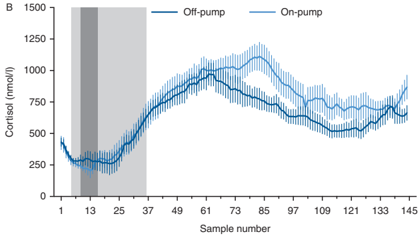
“This hypothesis is further supported by recent data from Boonen et al. (2014), showing that patients with sustained critical illness also have elevated levels of CORT; interestingly, the same study shows that there is a positive correlation between high levels of cytokines and high levels of CORT in these patients.”
BackgroundResultMetherell, L. A., Chapple, J. P., Cooray, S., David, A., Becker, C., Rüschendorf, F., Naville, D., Begeot, M., Khoo, B., Nürnberg, P., et al. (2005) · Nature Genetics · doi:10.1038/ng1501 · Cited by 437
Circadian rhythms in the hypothalamo-pituitary-adrenal (HPA) axis
Kalsbeek, A., van der Spek, R., Lei, J., Endert, E., Buijs, R. M., & Fliers, E. (2012) · Molecular and Cellular Endocrinology · doi:10.1016/j.mce.2011.06.042 · Cited by 380 · cited 1×
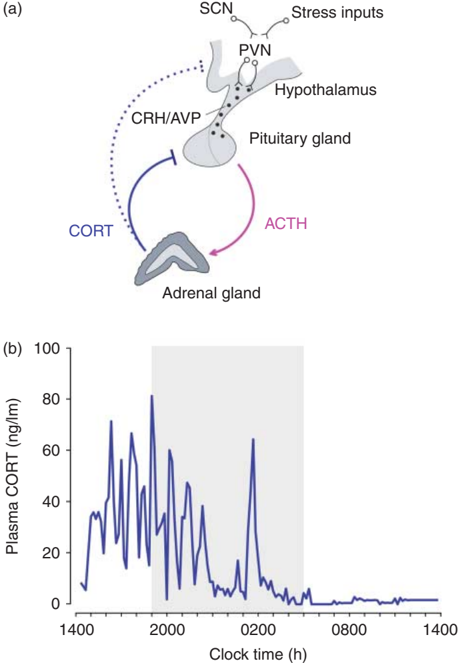
“The circadian rhythm of the HPA axis is under the control of the suprachiasmatic nucleus (SCN), which directly regulates the pattern of CRH and AVP release from the PVN, and in addition modulates the responsiveness of the adrenal gland to ACTH via the autonomic nervous system and splanchnic nerve (reviewed in Kalsbeek…”
BackgroundUltradian hormone stimulation induces glucocorticoid receptor-mediated pulses of gene transcription
Stavreva, D. A., Wiench, M., John, S., Conway-Campbell, B. L., McKenna, M. A., Pooley, J. R., Johnson, T. A., Voss, T. C., Lightman, S. L., & Hager, G. L. (2009) · Nature Cell Biology · doi:10.1038/ncb1922 · Cited by 375 · cited 1×
“Given that pulsatility of CORT is important for maintaining optimal transcription of glucocorticoid regulated genes (Stavreva et al. 2009), we decided to investigate whether pulsatile ACTH is important for optimal transcription of ACTH-responsive”
BackgroundSelf-citationWindle, R. J., Wood, S. A., Shanks, N., Lightman, S. L., & Ingram, C. D. (1998) · Endocrinology · doi:10.1210/en.139.2.443 · Cited by 276 · cited 2×
“In addition to this, studies in several species, including the rat and human, have revealed that CORT is released dynamically from the adrenal gland (Jasper & Engeland 1991, 1994), resulting in an ultradian pulsatile rhythm in the blood (Windle et al. 1998), as well as in target tissues, such as the brain (Droste et a…”
BackgroundSelf-citationSpiga, F., Walker, J. J., Terry, J. R., & Lightman, S. L. (2014) · Comprehensive Physiology · doi:10.1002/cphy.c140003 · Cited by 267
Self-citationCaron, K. M., Ikeda, Y., Soo, S.-C., Stocco, D. M., Parker, K. L., & Clark, B. J. (1997) · Molecular Endocrinology · doi:10.1210/mend.11.2.9880 · Cited by 243 · cited 1×
“In addition to StAR, several transcription factors involved in StAR’s transcriptional regulation, including the positive regulators steroidogenic factor 1 (SF-1; Caron et al. 1997) and Nur77”
BackgroundOrigin of ultradian pulsatility in the hypothalamic–pituitary–adrenal axis
Walker, J. J., Terry, J. R., & Lightman, S. L. (2010) · Proceedings of the Royal Society B: Biological Sciences · doi:10.1098/rspb.2009.2148 · Cited by 239 · cited 3×
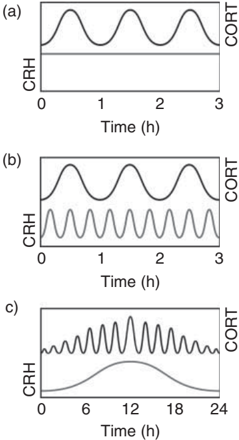
“To investigate the dynamic interaction between the pituitary and the adrenal gland, we developed a mathematical model of differential equations incorporating CRH acting on the pituitary, the time taken for CORT to be synthesized and secreted by the adrenal gland in response to ACTH stimulus, and the rapid CORTmediated…”
BackgroundMethodInfluentialSelf-citationThe origin of glucocorticoid hormone oscillations
Walker, J. J., Spiga, F., Waite, E., Zhao, Z., Kershaw, Y., Terry, J. R., & Lightman, S. L. (2012) · PLoS Biology · doi:10.1371/journal.pbio.1001341 · Cited by 189 · cited 1×
“behaving male rats (Walker et al. 2012).”
Self-citationJasper, M. S., & Engeland, W. C. (1994) · Neuroendocrinology · doi:10.1159/000126645 · Cited by 161
Davis, I. J., & Lau, L. F. (1994) · Molecular and Cellular Biology · doi:10.1128/mcb.14.5.3469 · Cited by 156
Martin, L. J., Boucher, N., Brousseau, C., & Tremblay, J. J. (2008) · Molecular Endocrinology · doi:10.1210/me.2007-0370 · Cited by 141
Zacharowski, K., Zacharowski, P. A., Koch, A., Baban, A., Tran, N., Berkels, R., Papewalis, C., Schulze-Osthoff, K., Knuefermann, P., Zähringer, U., et al. (2006) · Proceedings of the National Academy of Sciences · doi:10.1073/pnas.0601527103 · Cited by 134
Rapid Non-Genomic Feedback Effects of Glucocorticoids on CRF-Induced ACTH Secretion in Rats
Hinz, B., & Hirschelmann, R. (2000) · Pharmaceutical Research · doi:10.1023/a:1026499604848 · Cited by 132
DYNAMICS AND MECHANICS OF CORTICOSTEROID FEEDBACK AT THE HYPOTHALAMUS AND ANTERIOR PITUITARY GLAND
JONES, M. T., HILLHOUSE, E. W., & BURDEN, J. L. (1977) · Journal of Endocrinology · doi:10.1677/joe.0.0730405 · Cited by 129 · cited 1×
“anterior pituitary (Jones et al. 1977), and inhibition of”
Characterization of Corticosterone Feedback Regulation of ACTH Secretiona
DALLMAN, M. F., AKANA, S. F., JACOBSON, L., LEVIN, N., CASCIO, C. S., & SHINSAKO, J. (1987) · Annals of the New York Academy of Sciences · doi:10.1111/j.1749-6632.1987.tb24976.x · Cited by 129
Henley, D. E., Russell, G. M., Douthwaite, J. A., Wood, S. A., Buchanan, F., Gibson, R., Woltersdorf, W. W., Catterall, J. R., & Lightman, S. L. (2009) · The Journal of Clinical Endocrinology & Metabolism · doi:10.1210/jc.2009-1174 · Cited by 128
Self-citationChurchill, P. F., & Kimura, T. (1979) · Journal of Biological Chemistry · doi:10.1016/s0021-9258(19)86728-5 · Cited by 117
Xu, B., Yang, W.-H., Gerin, I., Hu, C.-D., Hammer, G. D., & Koenig, R. J. (2009) · Molecular and Cellular Biology · doi:10.1128/mcb.01010-08 · Cited by 117 · cited 1×
“In contrast to this, it has been shown that, when overexpressed in vitro, DAX-1 can enhance steroidogenic gene expression (Xu et al. 2009), and a more recent study has shown that prolonged incubation of the human adrenocortical cell line H295R with dexamethasone can indeed increase both StAR transcription and CORT pro…”
BackgroundGummow, B. M., Scheys, J. O., Cancelli, V. R., & Hammer, G. D. (2006) · Molecular Endocrinology · doi:10.1210/me.2005-0461 · Cited by 114 · cited 1×
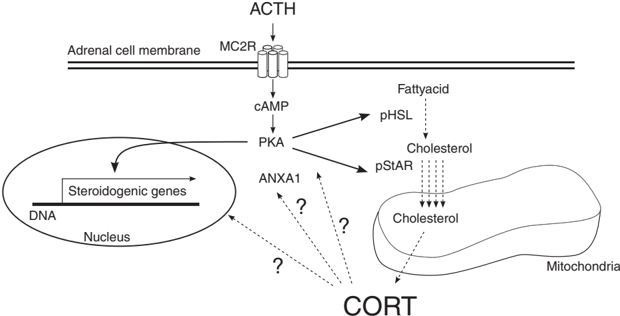
“The molecular mechanism underlying CORTmediated inhibition of steroidogenesis is not clear, but there is evidence that the synthetic glucocorticoid dexamethasone can inhibit the transcription of steroidogenic genes through a mechanism that involves GR (Gummow et al. 2006).”
BackgroundCHARACTERISTICS OF FAST FEEDBACK CONTROL OF CORTICOTROPHIN RELEASE BY CORTICOSTEROIDS
JONES, M. T., BRUSH, F. R., & NEAME, R. L. B. (1972) · Journal of Endocrinology · doi:10.1677/joe.0.0550489 · Cited by 113
Russell, G. M., Henley, D. E., Leendertz, J., Douthwaite, J. A., Wood, S. A., Stevens, A., Woltersdorf, W. W., Peeters, B. W. M. M., Ruigt, G. S. F., White, A., et al. (2010) · The Journal of Neuroscience · doi:10.1523/jneurosci.5332-09.2010 · Cited by 111
Self-citationWindle, R. J., Wood, S. A., Kershaw, Y. M., Lightman, S. L., Ingram, C. D., & Harbuz, M. S. (2001) · Journal of Neuroendocrinology · doi:10.1046/j.1365-2826.2001.00715.x · Cited by 110
Self-citationQian, X., Droste, S. K., Lightman, S. L., Reul, J. M. H. M., & Linthorst, A. C. E. (2012) · Endocrinology · doi:10.1210/en.2012-1484 · Cited by 110 · cited 1×
“2009), and in subcutaneous tissue (Qian et al. 2012).”
Self-citationSynchronous ultradian rhythms in adrenocortical secretion detected by microdialysis in awake rats
Jasper, M. S., & Engeland, W. C. (1991) · American Journal of Physiology-Regulatory, Integrative and Comparative Physiology · doi:10.1152/ajpregu.1991.261.5.r1257 · Cited by 109
Watts, A. G., Tanimura, S., & Sanchez-Watts, G. (2004) · Endocrinology · doi:10.1210/en.2003-0394 · Cited by 109 · cited 1×
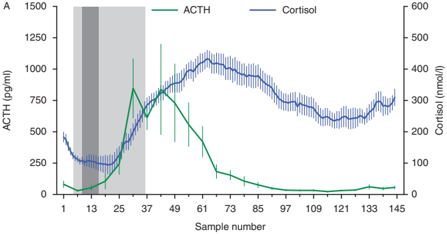
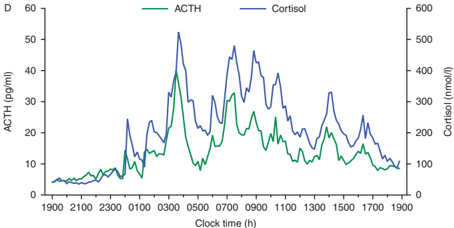
“3D), with the ACTH pulse amplitude increasing throughout the day as result of the circadian input from the SCN, via regulation of circadian secretion of CRH (Watts et al. 2004).”
BackgroundWIDMAIER, E. P., & DALLMAN, M. F. (1984) · Endocrinology · doi:10.1210/endo-115-6-2368 · Cited by 108
Development of an automated blood sampling system for use in humans
Henley, D. E., Leendertz, J. A., Russell, G. M., Wood, S. A., Taheri, S., Woltersdorf, W. W., & Lightman, S. L. (2009) · Journal of Medical Engineering & Technology · doi:10.1080/03091900802185970 · Cited by 108
Self-citationJUDD, A. M., CALL, G. B., BARNEY, M., McILMOIL, C. J., BALLS, A. G., ADAMS, A., & OLIVEIRA, G. K. (2000) · Annals of the New York Academy of Sciences · doi:10.1111/j.1749-6632.2000.tb05428.x · Cited by 104
ACTH-Dependent Ultradian Rhythm of Corticosterone Secretion
Spiga, F., Waite, E. J., Liu, Y., Kershaw, Y. M., Aguilera, G., & Lightman, S. L. (2011) · Endocrinology · doi:10.1210/en.2010-1209 · Cited by 97
Self-citationUltradian corticosterone secretion is maintained in the absence of circadian cues
Waite, E. J., McKenna, M., Kershaw, Y., Walker, J. J., Cho, K., Piggins, H. D., & Lightman, S. L. (2012) · European Journal of Neuroscience · doi:10.1111/j.1460-9568.2012.08213.x · Cited by 96 · cited 1×
“A recent study from our group has demonstrated that while the circadian rhythm of ACTH and CORT is lost in rats in which SCN activity has been disrupted, the ultradian CORT pattern is maintained (Waite et al. 2012), providing strong evidence for a CORT ultradian pulse”
BackgroundSelf-citationSong, K.-H., Park, Y.-Y., Park, K. C., Hong, C. Y., Park, J. H., Shong, M., Lee, K., & Choi, H.-S. (2004) · Molecular Endocrinology · doi:10.1210/me.2004-0043 · Cited by 93
Roth-Isigkeit, A., Borstel, T. V., Seyfarth, M., & Schmucker, P. (2001) · Clinical and Experimental Immunology · doi:10.1046/j.1365-2249.1999.01050.x · Cited by 90
LOOSE, D. S., DO, Y. S., CHEN, T. L., & FELDMAN, D. (1980) · Endocrinology · doi:10.1210/endo-107-1-137 · Cited by 88
Dynamic Pituitary-Adrenal Interactions in Response to Cardiac Surgery*
Gibbison, B., Spiga, F., Walker, J. J., Russell, G. M., Stevenson, K., Kershaw, Y., Zhao, Z., Henley, D., Angelini, G. D., & Lightman, S. L. (2015) · Critical Care Medicine · doi:10.1097/ccm.0000000000000773 · Cited by 87 · cited 2×
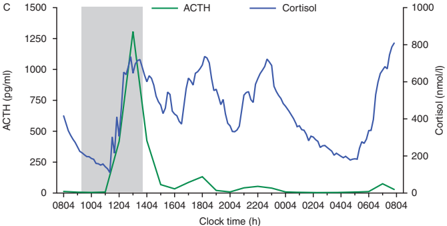
“3A–C) (Gibbison et al. 2015).”
ResultSelf-citationGibbison, B., Angelini, G. D., & Lightman, S. L. (2013) · British Journal of Anaesthesia · doi:10.1093/bja/aet077 · Cited by 87 · cited 1×
“and critical illness (reviewed in Gibbison et al. (2013)).”
Self-citationJONES, M. T., TIPTAFT, E. M., BRUSH, F. R., FERGUSSON, D. A. N., & NEAME, R. L. B. (1974) · Journal of Endocrinology · doi:10.1677/joe.0.0600223 · Cited by 79
Dynamics of adrenal glucocorticoid steroidogenesis in health and disease
Spiga, F., & Lightman, S. L. (2015) · Molecular and Cellular Endocrinology · doi:10.1016/j.mce.2015.02.005 · Cited by 78
Self-citationde Mendonça-Filho, H. T. F., Pereira, K. C., Fontes, M., Vieira, D. A. D. S. A., de Mendonça, M. L. A. F., Campos, L. A. D. A., & Castro-Faria-Neto, H. C. (2006) · Critical Care · doi:10.1186/cc4857 · Cited by 76
Impact of Duration of Critical Illness on the Adrenal Glands of Human Intensive Care Patients
Boonen, E., Langouche, L., Janssens, T., Meersseman, P., Vervenne, H., De Samblanx, E., Pironet, Z., Van Dijck, L., Vander Perre, S., Derese, I., et al. (2014) · The Journal of Clinical Endocrinology & Metabolism · doi:10.1210/jc.2014-2429 · Cited by 75 · cited 1×
“Furthermore, the same investigators have observed that patients with prolonged critical illness have low levels of ACTH, presumably as a result of increased negative feedback induced by elevated cortisol levels, and this is also associated with alterations in the adrenal steroidogenic pathway including cholesterol-est…”
BackgroundMartin, L. J., & Tremblay, J. J. (2008) · Journal of Molecular Endocrinology · doi:10.1677/jme-07-0145 · Cited by 73
PÉRON, F. G., MONCLOA, F., DORFMAN, R. I., DUCLOS, R., & DUCLOS, T. (1960) · Endocrinology · doi:10.1210/endo-67-3-379 · Cited by 72
LAHAT, N., ZLOTNICK, A. Y., SHTILLER, R., BAR, I., & MERIN, G. (2008) · Clinical and Experimental Immunology · doi:10.1111/j.1365-2249.1992.tb06941.x · Cited by 70
Rapid intra-adrenal feedback regulation of glucocorticoid synthesis
Walker, J. J., Spiga, F., Gupta, R., Zhao, Z., Lightman, S. L., & Terry, J. R. (2015) · Journal of The Royal Society Interface · doi:10.1098/rsif.2014.0875 · Cited by 70
Self-citationEvidence of a corticotropin-releasing hormone pulse generator in the macaque hypothalamus
Mershon, J. L., Sehlhorst, C. S., Rebar, R. W., & Liu, J. H. (1992) · Endocrinology · doi:10.1210/endo.130.5.1572307 · Cited by 70
Engström, L., Rosén, K., Angel, A., Fyrberg, A., Mackerlova, L., Konsman, J. P., Engblom, D., & Blomqvist, A. (2008) · Endocrinology · doi:10.1210/en.2007-1456 · Cited by 69
Ragazzon, B., Lefrançois-Martinez, A.-M., Val, P., Sahut-Barnola, I., Tournaire, C., Chambon, C., Gachancard-Bouya, J.-L., Begue, R.-J., Veyssière, G., & Martinez, A. (2006) · Endocrinology · doi:10.1210/en.2005-1279 · Cited by 67
Caraty, A., Grino, M., Locatelli, A., & Oliver, C. (1988) · Biochemical and Biophysical Research Communications · doi:10.1016/s0006-291x(88)80572-2 · Cited by 67
Constant light disrupts the circadian rhythm of steroidogenic proteins in the rat adrenal gland
Park, S. Y., Walker, J. J., Johnson, N. W., Zhao, Z., Lightman, S. L., & Spiga, F. (2012) · Molecular and Cellular Endocrinology · doi:10.1016/j.mce.2012.11.010 · Cited by 65
Self-citationPulsatile ACTH secretion: Variation with time of day and relationship to cortisol
Carnes, M., Kalin, N. H., Lent, S. J., Barksdale, C. M., & Brownfield, M. S. (1988) · Peptides · doi:10.1016/0196-9781(88)90268-9 · Cited by 63
Acute Self-Suppression of Corticosteroidogenesis in Isolated Adrenocortical Cells*
CARSIA, R. V., & MALAMED, S. (1979) · Endocrinology · doi:10.1210/endo-105-4-911 · Cited by 62
Droste, S. K., De Groote, L., Lightman, S. L., Reul, J. M. H. M., & Linthorst, A. C. E. (2009) · Journal of Neuroendocrinology · doi:10.1111/j.1365-2826.2008.01811.x · Cited by 61 · cited 1×
“1998), as well as in target tissues, such as the brain (Droste et al. 2009), and in subcutaneous tissue (Qian et al.”
BackgroundSelf-citationENGLER, D., PHAM, T., LIU, J.-P., FULLERTON, M. J., CLARKE, I. J., & FUNDER, J. W. (1990) · Endocrinology · doi:10.1210/endo-127-4-1956 · Cited by 61 · cited 1×
“For example, studies in the sheep have shown that ultradian rhythms of ACTH and CORT are maintained even after the hypothalamus has been surgically disconnected from the pituitary (Engler et al. 1990), suggesting there must be a hypothalamic-independent pulse generator.”
BackgroundSpiga, F., Harrison, L. R., Wood, S. A., Atkinson, H. C., MacSweeney, C. P., Thomson, F., Craighead, M., Grassie, M., & Lightman, S. L. (2007) · Journal of Neuroendocrinology · doi:10.1111/j.1365-2826.2007.01605.x · Cited by 53 · cited 1×
“Furthermore, changes in CORT-mediated signaling at the level of the anterior pituitary can also affect CORT pulsatility, and chronic administration of a GR antagonist leads to changes in the ultradian rhythm of CORT with an increase in the number, height and frequency of CORT pulses, resulting in an overall increase i…”
BackgroundSelf-citationInterleukins 1α and 1β as regulators of steroidogenesis in human NCI-H295R adrenocortical cells
Tkachenko, I. V., Jääskeläinen, T., Jääskeläinen, J., Palvimo, J. J., & Voutilainen, R. (2011) · Steroids · doi:10.1016/j.steroids.2011.04.018 · Cited by 52
Spiga, F., Liu, Y., Aguilera, G., & Lightman, S. L. (2011) · Journal of Neuroendocrinology · doi:10.1111/j.1365-2826.2010.02096.x · Cited by 50
Self-citationBriassoulis, G., Damjanovic, S., Xekouki, P., Lefebvre, H., & Stratakis, C. A. (2011) · Endocrine Practice · doi:10.4158/ep11061.ra · Cited by 48 · cited 1×
“1980) and humans (Briassoulis et al. 2011), it is plausible to hypothesize that CORT may affect its own synthesis by a local feedback mechanism within the adrenal itself.”
BackgroundIxart, G., Barbanel, G., Nouguier-Soul�, J., & Assenmacher, I. (1991) · Experimental Brain Research · doi:10.1007/bf00228516 · Cited by 48 · cited 1×
“Further supporting this idea is the observation that in the rat there is a mismatch between the frequency of CRH pulses (w3 pulses/h) (Ixart et al. 1991) and the near-hourly frequency of ACTH and CORT oscillations (Carnes et al.”
BackgroundJo, Y., & Stocco, D. M. (2004) · Endocrinology · doi:10.1210/en.2004-0941 · Cited by 45
Engler, D., Pham, T., Fullerton, M. J., Clarke, I. J., & Funder, J. W. (2008) · Neuroendocrinology · doi:10.1159/000125139 · Cited by 44
Episodic secretion of ACTH in rats
Carnes, M., Brownfield, M. S., Kalin, N. H., Lent, S., & Barksdale, C. M. (1986) · Peptides · doi:10.1016/0196-9781(86)90216-0 · Cited by 42 · cited 1×
“Model based on data from Carnes et al. (1988a), Spiga et al.”
MethodTaylor, A. D., Loxley, H. D., Flower, R. J., & Buckingham, J. C. (1995) · Neuroendocrinology · doi:10.1159/000126984 · Cited by 42 · cited 1×
“Rapid non-genomic effects of CORT at the anterior pituitary have been shown to involve annexin 1 (ANXA1), a protein that, upon CORT stimulation, is able to translocate from the cytoplasm to the outer cell surface where it exerts its regulatory effects, including inhibition of ACTH secretion from intracellular vesicles…”
BackgroundDephosphorylation of TORC initiates expression of the StAR gene
Takemori, H., Kanematsu, M., Kajimura, J., Hatano, O., Katoh, Y., Lin, X., Li, M., Yamazaki, T., Doi, J., & Okamoto, M. (2007) · Molecular and Cellular Endocrinology · doi:10.1016/j.mce.2006.12.020 · Cited by 39 · cited 1×
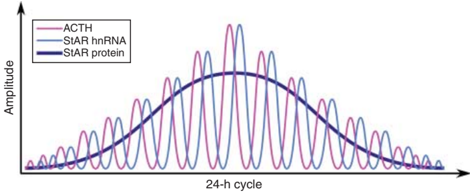
“Consistent with this, we found that the dynamic transcriptional activation of StAR in response to a pulse of ACTH was associated with rapid and transient phosphorylation of CREB and rapid dephosphorylation and nuclear translocation of the CREB co-activator, transducer of regulated CREB activity 2 (TORC2, also called C…”
BackgroundTranscriptional regulation of episodic glucocorticoid secretion
Liu, Y., Smith, L. I., Huang, V., Poon, V., Coello, A., Olah, M., Spiga, F., Lightman, S. L., & Aguilera, G. (2013) · Molecular and Cellular Endocrinology · doi:10.1016/j.mce.2012.10.011 · Cited by 38
Self-citationROTSZTEJN, W. H., NORMAND, M., LALONDE, J., & FORTIER, C. (1975) · Endocrinology · doi:10.1210/endo-97-1-223 · Cited by 33
Jones, M. T., & Stockham, M. A. (1966) · The Journal of Physiology · doi:10.1113/jphysiol.1966.sp007945 · Cited by 30
Asser, L., Hescot, S., Viengchareun, S., Delemer, B., Trabado, S., & Lombès, M. (2014) · Molecular and Cellular Endocrinology · doi:10.1016/j.mce.2014.07.012 · Cited by 30 · cited 1×
“2009), and a more recent study has shown that prolonged incubation of the human adrenocortical cell line H295R with dexamethasone can indeed increase both StAR transcription and CORT production (Asser et al. 2014).”
BackgroundMahmoud, S. N., Scaccianoce, S., Scraggs, P. R., Nicholson, S. A., Gillham, B., & Jones, M. T. (1984) · Journal of Endocrinology · doi:10.1677/joe.0.1020033 · Cited by 26
Coincident plasma ACTH and corticosterone time series: Comparisons between young and old rats
Carnes, M. L., Goodman, B., Lent, S. J., Vo, H., & Jaeckels, R. (1994) · Experimental Gerontology · doi:10.1016/0531-5565(94)90075-2 · Cited by 23
Karpac, J., Czyzewska, K., Kern, A., Brush, R. S., Anderson, R. E., & Hochgeschwender, U. (2008) · American Journal of Physiology-Endocrinology and Metabolism · doi:10.1152/ajpendo.00762.2007 · Cited by 23
Apostolakis, E. M. (1992) · Endocrinology · doi:10.1210/en.130.5.2571 · Cited by 22 · cited 1×
“1986, 1988a,b), sheep (Apostolakis et al. 1992) and human (Henley et al.”
BackgroundIXART, G., Siaud, P., Mekaouche, M., Barbanel, G., Givalois, L., & ASSENMACHER, I. (1994) · Brain Research · doi:10.1016/s0006-8993(09)90025-7 · Cited by 16
(1957) · PubMed · Cited by 15
Davies, E., Omer, S., Buckingham, J. C., Morris, J. F., & Christian, H. (2006) · Endocrinology · doi:10.1210/en.2006-0732 · Cited by 15 · cited 1×
“Interestingly, ANXA1 is also expressed in the adrenal cortex, and as observed in other tissue, its expression and activity is regulated by CORT (Davies et al. 2007).”
BackgroundChanges in mean plasma acth reflect changes in amplitude and frequency of secretory pulses
Carnes, M. L., Lent, S. J., Erisman, S., & Feyzi, J. M. (1988) · Life Sciences · doi:10.1016/0024-3205(88)90277-9 · Cited by 12
Rotsztejn, W., Lalonde, J., Normand, M., & Fortier, C. (1975) · Canadian Journal of Physiology and Pharmacology · doi:10.1139/y75-067 · Cited by 11
DIE HEMMUNG DER CORTICOTROPIN-SEKRETION DURCH STEROIDE
Langecker, H., & Lurie, R. (1957) · Acta Endocrinologica · doi:10.1530/acta.0.0250054 · Cited by 11
Cited by
de Kloet, E. R., Meijer, O. C., de Nicola, A. F., de Rijk, R. H., & Joëls, M. (2018) · Frontiers in Neuroendocrinology · doi:10.1016/j.yfrne.2018.02.003 · Cited by 278
“This important medical need likely will be met by mimicking the ultradian cortisol cycle (Spiga et al., 2015).”
Top‐down and bottom‐up control of stress‐coping
de Kloet, E. R., de Kloet, S. F., de Kloet, C. S., & de Kloet, A. D. (2019) · Journal of Neuroendocrinology · doi:10.1111/jne.12675 · Cited by 136
Mathematical Modelling of Endocrine Systems
Zavala, E., Wedgwood, K. C. A., Voliotis, M., Tabak, J., Spiga, F., Lightman, S. L., & Tsaneva-Atanasova, K. (2019) · Trends in Endocrinology & Metabolism · doi:10.1016/j.tem.2019.01.008 · Cited by 81
Self-citationKalviša, A., Siersbæk, M. S., Præstholm, S. M., Christensen, L. J. L., Nielsen, R., Stöhr, O., Vettorazzi, S., Tuckermann, J. P., White, M. F., Mandrup, S., et al. (2018) · PLoS Biology · doi:10.1371/journal.pbio.2006249 · Cited by 67
Circadian rhythms and the HPA axis: A systems view
Androulakis, I. P. (2021) · WIREs Mechanisms of Disease · doi:10.1002/wsbm.1518 · Cited by 55
Metadata
- Authors
- Spiga, F., Walker, J. J., Gupta, R., Terry, J. R., & Lightman, S. L.
- Affiliations
- University of Exeter (GB)
- Venue
- Journal of Endocrinology
- Publisher
- Bioscientifica
- Published
- 2015-06-11
- Volume
- 226
- Issue
- 2
- Pages
- T55-T66
- ISSN
- 0022-0795 (ISSN-L)
- 1479-6805
- OpenAlex
- W2153825312
- Cited by
- 48
- References
- 85
- Citations by year
- 2026: 2 · 2025: 1 · 2024: 1 · 2023: 2 · 2022: 4 · 2021: 2 · 2020: 6 · 2019: 5 · 2018: 13 · 2017: 5 · 2016: 6 · 2015: 1
- FWCI
- 0.67
- Type
- journal article
- Language
- en
- Open access
- hybrid
- doi.org
- Licence
- cc-by
- Locations
- Journal of Endocrinology (publishedVersion, cc-by)
- PubMed (publishedVersion)
- Explore Bristol Research (submittedVersion, other-oa)
- Figshare (submittedVersion)
- Open Research Exeter (University of Exeter) (submittedVersion)
- University of Birmingham Research Portal (University of Birmingham) (submittedVersion)
- Funders
- British Heart Foundation
- Medical Research Council (MR/J008893/1)
- Topics
- Life Sciences › Neuroscience › Behavioral Neuroscience › Stress Responses and Cortisol
- Health Sciences › Medicine › Endocrinology, Diabetes and Metabolism › Adrenal Hormones and Disorders
- Health Sciences › Medicine › Reproductive Medicine › Hypothalamic control of reproductive hormones
- Keywords
- hypothalamic-pituitary-adrenal axis, pulsatile hormone secretion, negative feedback
- MeSH terms
- Glucocorticoids, Humans, Hypothalamo-Hypophyseal System, Neuroendocrinology, Pituitary-Adrenal System, Stress, Physiological, Feedback, Physiological
About these checks
Registry, retraction, Cites and statistics results are computed, not judged, with one exception: a printed reference that no index lists is read once by a model before it counts as a citation error. Claims are extracted by a model and kept only when their quote appears verbatim in the text; each cited source is then checked, with a model’s help, for whether it says what the claim relies on. Those verdicts can be wrong — read the claim’s quote and the cited source before relying on one.
Statistics and arithmetic are recomputed, not judged.
Confidence bands are shown only for fields calibrated on our annotated test set. None is calibrated yet, so no band is shown.
What counts as a claim ›How we measure confidence ›How we check this ›
Are you an author, or do you see a problem with this page? Request a review
Data sources
Bibliographic data: Semantic Scholar, OpenAlex, Crossref.
Contains information from the Semantic Scholar Academic Graph Datasets, made available under the ODC Attribution License (ODC-BY 1.0).
Semantic Scholar’s data is described in: Kinney, R., et al. (2023). The Semantic Scholar Open Data Platform. arXiv:2301.10140.
