

Assessing the Accuracy and Reliability of AI-Generated Medical Responses: An Evaluation of the Chat-GPT Model
Open accessThe DOI matches its Crossref record; 12 of the 12 references it cites were found in a registry or an index.
Abstract
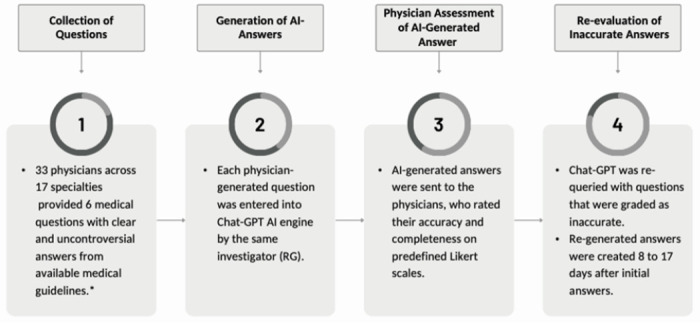
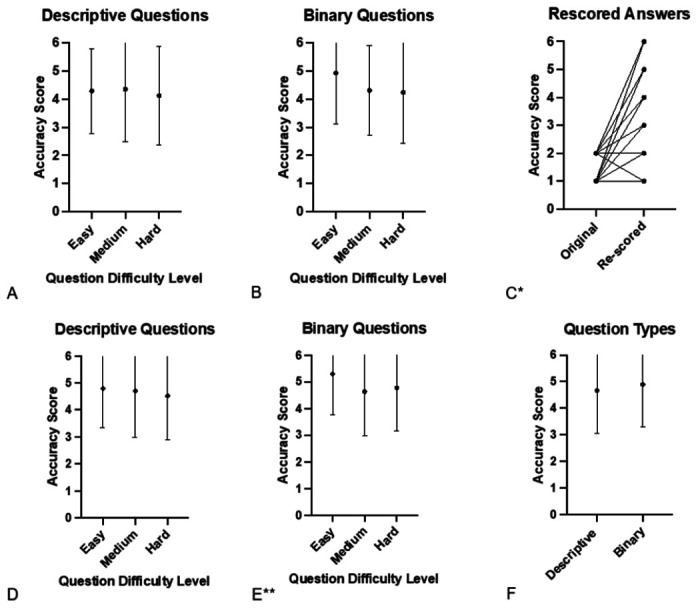
Background: Natural language processing models such as ChatGPT can generate text-based content and are poised to become a major information source in medicine and beyond. The accuracy and completeness of ChatGPT for medical queries is not known. Methods: Thirty-three physicians across 17 specialties generated 284 medical questions that they subjectively classified as easy, medium, or hard with either binary (yes/no) or descriptive answers. The physicians then graded ChatGPT-generated answers to these questions for accuracy (6-point Likert scale; range 1 – completely incorrect to 6 – completely correct) and completeness (3-point Likert scale; range 1 – incomplete to 3 - complete plus additional context). Scores were summarized with descriptive statistics and compared using Mann-Whitney U or Kruskal-Wallis testing. Results: Across all questions (n=284), median accuracy score was 5.5 (between almost completely and completely correct) with mean score of 4.8 (between mostly and almost completely correct). Median completeness score was 3 (complete and comprehensive) with mean score of 2.5. For questions rated easy, medium, and hard, median accuracy scores were 6, 5.5, and 5 (mean 5.0, 4.7, and 4.6; p=0.05). Accuracy scores for binary and descriptive questions were similar (median 6 vs. 5; mean 4.9 vs. 4.7; p=0.07). Of 36 questions with scores of 1-2, 34 were re-queried/re-graded 8-17 days later with substantial improvement (median 2 vs. 4; p<0.01). Conclusions: ChatGPT generated largely accurate information to diverse medical queries as judged by academic physician specialists although with important limitations. Further research and model development are needed to correct inaccuracies and for validation.
Overview
The claims and statistics of this paper haven’t been checked yet.
Free: it reads the open-access text and checks the first 5 claims that cite a source we can check. Create a free account to check every claim.
Integrity signals
Registry
Cites
Statistics
Figures
Verification
Claims the paper makes
The claims and statistics of this paper haven’t been checked yet.
Free: it reads the open-access text and checks the first 5 claims that cite a source we can check. Create a free account to check every claim.
Claims other papers make about this one
Each is checked against this paper’s own text: does it say what the citing paper says it does?
The source backs part of the claim, not all of it — or backs it for a different population, condition or comparison.
In the citing paper
“The same study reported that median accuracy scores were higher than mean scores in data analysis and that ChatGPT had a margin of error [29].”
From Is there any room for ChatGPT AI bot in speech-language pathology? (2025) · cites this paper as [29]
Experimental — accuracy not yet measuredThe source backs part of the claim, not all of it — or backs it for a different population, condition or comparison.
In the citing paper
“The output generated by Chat GPT is dependent on the complexity and clarity of the input, continuous evaluation of generated output will be required to ensure safe implementation in clinical settings [32, 33].”
From Artificial Intelligence (AI) – Powered Documentation Systems in Healthcare: A Systematic Review (2025) · cites this paper as [33]
Experimental — accuracy not yet measuredThe cited source says what the claim attributes to it.
In the citing paper
“it was found that more than 50% of ChatGPT responses to 180 questions created by 33 physicians had a high level of accuracy and comprehensiveness.”
From Is there any room for ChatGPT AI bot in speech-language pathology? (2025) · cites this paper as [29]
The cited source says what the claim attributes to it.
In the citing paper
“Despite some limited validation efforts, ChatGPT still requires further error correction [74].”
From Ethical Considerations of Using ChatGPT in Health Care (2023) · cites this paper as [74]
In the citing paper
“Overall, findings call into question previous claims that ChatGPT “has promise for providing accurate and comprehensive medical information” (18), and has “potential to provide first aid to young adults struggling with mental health issues” (19).”
From ChatGPT is not ready yet for use in providing mental health assessment and interventions (2024) · cites this paper as [18]
1 more claim about this paper
Create a free account to see every claim other papers make about this one.
Self-check
Percentages, sums and reported differences re-computed from the paper’s own numbers.
The self-check needs the paper’s full text.
Citations
Cites
Language Models are Few-Shot Learners
Brown, T. B., Mann, B., Ryder, N., Subbiah, M., Kaplan, J., Dhariwal, P., Neelakantan, A., Shyam, P., Sastry, G., Askell, A., et al. (2020) · arXiv · doi:10.48550/arxiv.2005.14165 · Cited by 23,372 · cited 2×
“5), an LLM with over 175 billion parameters (2).”
BackgroundAdvances in neural information processing systems 7
Cios, K., & Shields, M. (1997) · Neurocomputing · doi:10.1016/s0925-2312(97)90018-7 · Cited by 22,059
Kaugeranna, R., Kaugeranna, E., & Aion, (. S. 4. 6. (2023) · DROPS (Schloss Dagstuhl – Leibniz Center for Informatics) · doi:10.4230/lipics.giscience.2023.43 · Cited by 13,690
Kung, T. H., Cheatham, M., ChatGPT, Medenilla, A., Sillos, C., De Leon, L., Elepaño, C., Madriaga, M., Aggabao, R., Diaz-Candido, G., et al. (2022) · doi:10.1101/2022.12.19.22283643 · Cited by 4,115
Kung, T. H., Cheatham, M., Medenilla, A., Sillos, C., De Leon, L., Elepaño, C., Madriaga, M., Aggabao, R., Diaz-Candido, G., Maningo, J., et al. (2023) · PLOS Digital Health · doi:10.1371/journal.pdig.0000198 · Cited by 4,115 · cited 3×
“ChatGPT performed at or near the passing threshold for United States Medical Licensing Exam (USMLE) without any specialized training, suggesting its potential for medical education and clinical decision support (4, 5).”
BackgroundChatGPT is fun, but not an author
Thorp, H. H. (2023) · Science · doi:10.1126/science.adg7879 · Cited by 1,437
Deep reinforcement learning from human preferences
Christiano, P., Leike, J., Brown, T. B., Martic, M., Legg, S., & Amodei, D. (2017) · arXiv · doi:10.48550/arxiv.1706.03741 · Cited by 1,058
ChatGPT and other large language models are double-edged swords
Shen, Y., Heacock, L., Elias, J., Hentel, K. D., Reig, B., Shih, G., & Moy, L. (2023) · Radiology · doi:10.1148/radiol.230163 · Cited by 1,008 · cited 2×
“Compared to traditional supervised deep learning models, large language models can learn from data more e ciently with a two-stage training process, starting with self-supervised learning on vast amounts of unannotated data, then ne-tuned on smaller, task-speci c, annotated datasets so they can perform on end-user-spe…”
BackgroundChatGPT listed as author on research papers: many scientists disapprove
Stokel-Walker, C. (2023) · Nature · doi:10.1038/d41586-023-00107-z · Cited by 868
Flanagin, A., Bibbins-Domingo, K., Berkwits, M., & Christiansen, S. L. (2023) · JAMA · doi:10.1001/jama.2023.1344 · Cited by 420
Research works printed but not linked: 2
- [5]Gilson A, Safranek C, Huang T, Socrates V, Chi L, Taylor RA, How Well Does ChatGPT Do When Taking the Medical Licensing Exams? The Implications of Large Language Models for Medical Education and Knowledge Assessment. medRxiv. 2022: 2022.12. 23.22283901.
- [6]Shen Y, Heacock L, Elias J, Hentel KD, Reig B, Shih G, ChatGPT and Other Large Language Models Are Double-edged Swords. Radiology. 2023: 230163. 36700838
Cited by
Items 401–500 of 681
Peng, Q., Luo, X., Yuan, Y., Gu, F., Shen, H., & Huang, Z. (2025) · International Journal of Machine Learning and Cybernetics · doi:10.1007/s13042-025-02760-4 · Cited by 5
“For instance, in the field of medicine, ChatGPT has been used to assist doctors in explaining complex diagnostic results, providing patient-friendly explanations, and offering higher-quality medical advice [12].”
Large language models for autism: evaluating theory of mind tasks in a gamified environment
Poglitsch, C., Reiss, A., Wriessnegger, S. C., & Pirker, J. (2025) · Scientific Reports · doi:10.1038/s41598-025-18608-4 · Cited by 5
“In addition, LLM have shown to provide mostly accurate responses to a variety of medical questions, as evaluated by academic physician specialists 26 , suggesting greater utility in clinical support roles.”
Pereira, R. A. D. C., Lima, R. R., Gomes, A. C. A., Saldanha, F. A. S., Schwingel, D., Schwingel, P. A., & Gambassi, B. B. (2025) · Scientifica · doi:10.1155/sci5/2632410 · Cited by 4
“Te 50% approval rate in our study is comparable to the ∼ 58% of “correct” or “almost completely correct” responses found by Johnson et al. [19], reinforcing the notion that while promising, these tools are not yet infallible.”
Kim, S. H., Shin, J.-S., Lee, H., Shin, S. Y., Kang, K. M., & Song, S. Y. (2025) · Orthopaedic Journal of Sports Medicine · doi:10.1177/23259671251385127 · Cited by 4
“15,23,28 Over the past few decades, high tibial osteotomy (HTO) has gained popularity for the treatment of medial compartment osteoarthritis of the knee, particularly in young and active patients with varus deformity.”
Moise, A., Tatar, L., Sela, N., da Silva, S. D., Kouz, J., Tamilia, M., Hier, M. P., Forest, V., & Payne, R. J. (2025) · Journal of Otolaryngology - Head and Neck Surgery · doi:10.1177/19160216251387617 · Cited by 5
“3,5,6 However, to date, the accuracy of ChatGPT in processing medical data is sub-optimal because it has been found to exhibit biases in selecting academic references and lacks medical nuance in its response.”
Eroğlu, A., Akyüz, İ. E., Yılmaz, E., & Düzgün, S. (2026) · Odontology · doi:10.1007/s10266-026-01339-x · Cited by 5
El-Sobkey, S. B., ElKholy, M., Abdallah, M., Mohamed, D. A.-A., & Abdeldayem, T. S. (2026) · Journal of Taibah University Medical Sciences · doi:10.1016/j.jtumed.2026.01.006 · Cited by 5
Brundage, D. (2026) · Frontiers in Veterinary Science · doi:10.3389/fvets.2026.1761038 · Cited by 6
Akyaz, D. Y., Esim, D., Çakır, G. N., Basüt, E. A., Tufekci, S., Konyar, M., Yaman, Ö., Mor, E., Musaoglu, S., Karaman, O., et al. (2026) · Journal of Clinical Nursing · doi:10.1111/jocn.70267 · Cited by 4
Can LLMs Use Linguistic Uncertainty Markers to Reliably Reflect Intrinsic Confidence?
Liu, G., & Cohan, A. (2026) · Conference on Empirical Methods in Natural Language Processing (EMNLP) · doi:10.18653/2026.emnlp-main.2529 · Cited by 4
Addressing Semantic Variability in Clinical Outcome Reporting Using Large Language Models
Shah-Mohammadi, F., & Finkelstein, J. (2024) · BioMedInformatics · doi:10.3390/biomedinformatics4040116 · Cited by 4
“Answer: Yes, “mortality” and “death” are semantically the same.”
Munguía‐Realpozo, P., Pinto, C. M., Etchegaray‐Morales, I., Ramírez‐Lara, E., Solís-Poblano, J. C., Méndez‐Martínez, S., Vértiz, L. S., & Ayón-Aguilar, J. (2025) · Lupus · doi:10.1177/09612033251324501 · Cited by 4
Murthy, A. B., Palaniappan, V., Radhakrishnan, S., Rajaa, S., & Karthikeyan, K. (2025) · Indian Dermatology Online Journal · doi:10.4103/idoj.idoj_221_24 · Cited by 5
“(2023) [10] • Across all questions ( n =284), the median accuracy score was 5.5 (between almost completely and completely correct) with a mean score of 4.8 (between mostly and almost completely correct) (on a Likert scale between 1 and 6, with 6 being completely correct) • For questions rated easy,…”
InfluentialAssessing Information Provided by ChatGPT: Heart Failure Versus Patent Ductus Arteriosus
Bhupathi, M., Kareem, J. M., Mediboina, A., & Janapareddy, K. (2025) · Cureus · doi:10.7759/cureus.86365 · Cited by 4
“These results are comparable to Johnson et al.’s findings, which reported a median accuracy score of 5.5 across 284 questions [11].”
InfluentialChatGPT and Medicine: Fears, Fantasy, and the Future of Physicians
Peterson, C. (2023) · The Southwest Respiratory and Critical Care Chronicles · doi:10.12746/swrccc.v11i48.1193 · Cited by 4
Shah-Mohammadi, F., & Finkelstein, J. (2023) · IEEE International Conference on Bioinformatics and Biomedicine (BIBM) · doi:10.1109/bibm58861.2023.10385329 · Cited by 4
“Authors in [13] evaluated accuracy and comprehensiveness of GPT responses on medical questions.”
BackgroundAssessing the quality of artificial intelligence–generated patient counseling for rhinosinusitis
Hill, G. S., Fischer, J. L., Watson, N. L., Riley, C. A., & Tolisano, A. M. (2024) · International Forum of Allergy & Rhinology · doi:10.1002/alr.23387 · Cited by 5
Evaluating Patient-Oriented Echocardiogram Reports Augmented by Artificial Intelligence
Martin, J. A., Hill, T., Sarić, M., Vainrib, A., Bamira, D. G., Bernard, S., Ro, R., Zhang, H., Austrian, J. S., Aphinyanaphongs, Y., et al. (2024) · JACC. Cardiovascular imaging · doi:10.1016/j.jcmg.2024.05.021 · Cited by 4
Felipe, A. L., Eleazar, M., Aragoncillo, A., Azuela, L., Azuela, H. P., Ricafort, R., & Khwakhali, U. S. (2024) · International Conference on Innovation and Intelligence for Informatics, Computing, and Technologies (3ICT) · doi:10.1109/3ict64318.2024.10824500 · Cited by 6
“[12] raised concerns about the reliability and accuracy of ChatGPT-generated responses, particularly in fields where factual accuracy is critical, such as science and history.”
Jois, S. M., Rangalakshmi, S., Iyengar, S. M. J., Mahesh, C., Devi, L. D., & Namachivayam, A. K. (2025) · Journal of Anaesthesiology Clinical Pharmacology · doi:10.4103/joacp.joacp_151_24 · Cited by 4
“[13] In the present study, Chat GPT with prompt showed better agreement with the collective assessment of anesthesiologists responses.”
Comparative performance analysis of global and chinese-domain large language models for myopia
Jiang, Z., Xu, Y., Lim, Z. W., Wang, Z., Han, Y., Yew, S. M. E., Pan, Z., Wang, Q., Wu, G., Wong, T. Y., et al. (2025) · Eye · doi:10.1038/s41433-025-03775-5 · Cited by 4
Performance analysis of an emergency triage system in ophthalmology using a customized CHATBOT
Schumacher, I., Desideri, L. F., Bühler, V., Sagurski, N., Subhi, Y., Bhardwaj, G., Roth, J., & Anguita, R. (2025) · Digital Health · doi:10.1177/20552076251320298 · Cited by 4
ChatGPT's potential in the deep exploration of Islamic manuscripts
Elsawy, E. S., Elseadawy, Y., & Attia, S. (2025) · IFLA Journal · doi:10.1177/03400352251342331 · Cited by 5
Starovoitenko, O., Slyusarevskyy, M., & Чорна, Л. (2025) · Insight the psychological dimensions of society · doi:10.32999/2663-970x/2025-13-20 · Cited by 4
Evaluating the Application of ChatGPT in Outpatient Triage Guidance: A Comparative Study
Liu, D., Han, Y., Wang, X., Tan, X., Liu, D., Qian, G., Li, K., Pu, D., & Yin, R. (2025) · Springer series in design and innovation · doi:10.1007/978-981-95-0211-0_36 · Cited by 4
Balancing Language Brilliance with User Privacy: A Call for Ethical Data Handling in ChatGPT
Boina, R., & Achanta, A. (2023) · International Journal of Science and Research (IJSR) · doi:10.21275/sr23903065711 · Cited by 5
Koester, S. W., Catapano, J. S., Hartke, J. N., Rudy, R. F., Cole, T. S., Naik, A., Winkler, E. A., Graffeo, C. S., Srinivasan, V. M., Jadhav, A. P., et al. (2024) · Journal of NeuroInterventional Surgery · doi:10.1136/jnis-2024-021480 · Cited by 4
“A study by Johnson et al 4 tasked ChatGPT with physician-generated questions of varying difficulty across multiple specialties and found the overall responses unreliable.”
MethodRevolutionizing Medical Education: ChatGPT3.5 Ability to Behave as a Virtual Patient
Karam, G. A. (2024) · Medical Science Educator · doi:10.1007/s40670-024-02121-w · Cited by 4
“Generalized weakness: I have been feeling a general sense of weakness and reduced strength, making it harder to perform everyday tasks 9.”
Patil, D. (2024) · SSRN Electronic Journal · doi:10.2139/ssrn.5021248 · Cited by 4
Patil, D. (2025) · SSRN Electronic Journal · doi:10.2139/ssrn.5057428 · Cited by 5
Fildor, D., & Bach, M. P. (2023) · Proceedings of the ENTRENOVA - Enterprise Research Innovation Conference · doi:10.54820/entrenova-2023-0010 · Cited by 3
“The research aimed to compare the categorisations made by the AI model with the modalities assigned by medical experts, thus evaluating the AI model's capability and potential in supporting healthcare decision-making (Johnson et al., 2023).”
Arıbaş, Y. K., & Aribas, A. B. T. (2025) · International Ophthalmology · doi:10.1007/s10792-025-03711-2 · Cited by 3
“In line with our findings, earlier studies using Likert scales have evaluated the accuracy and completeness of ChatGPT’s responses [28–30].”
Fiedler, B., Ghilzai, U. M., Ghali, A. N., Goldman, P., Coello, P., Gottschalk, M. B., Wagner, E. R., & Ahmed, A. S. (2025) · Shoulder & Elbow · doi:10.1177/17585732251365178 · Cited by 3
“12 Furthermore, accuracy and completeness of ChatGPT responses have not been assessed for speci fi c orthopedic conditions, such as common elbow pathology.”
Cammaroto, G., Mira, F. A., Favier, V., Nunes, H. D. S. S., de Castro, J. V., Carsuzaa, F., Lechien, J. R., Chiesa-Estomba, C. M., Iannella, G., Vaira, L. A., et al. (2025) · European Archives of Oto-Rhino-Laryngology · doi:10.1007/s00405-025-09785-z · Cited by 3
Bostan, E., Uçar, M. T., & Dönmez, E. (2025) · Turkish Journal of Dermatology · doi:10.4274/tjd.galenos.2025.06977 · Cited by 3
Mensah, E. A., & Swortzel, K. A. (2026) · Journal of Agricultural Education · doi:10.5032/jae.v67i1.3289 · Cited by 3
Mushtaq, S., & Veningston, K. (2026) · International Journal of Data Science and Analytics · doi:10.1007/s41060-025-00956-z · Cited by 7
“In biomedical contexts, where maintaining the precise meaning of terms is essential, extractive summarization is valuable for preserving factual accuracy [67].”
Elkersh, N. M., Saif, N., Samir, W., Hussein, G. B. A., & Mohamed, H. (2026) · European Journal Of Dental Education · doi:10.1111/eje.70104 · Cited by 3
Tuncer, C., Tekin, R. T., Uludağ, V., Kılıç, G., & Taskesen, A. (2026) · European Spine Journal · doi:10.1007/s00586-026-09795-3 · Cited by 3
Şahin, A. T., Balta, M. G., Kölükçü, V., Genç, A., Karaman, S., Karaman, T., & Tapar, H. (2026) · Journal of Clinical Medicine · doi:10.3390/jcm15062197 · Cited by 5
“Prior literature has noted that while LLMs often capture the core elements of a question accurately, they may omit secondary considerations such as adverse effects, alternative approaches, or procedural risks [13].”
Exploring the Future of AI in Clinical Collaboration: A Study on Tumor Board Case Preparation
Li, J., Hall, A. K., Zhong, R., Everett, S., Unell, A., Xu, H., Blondeel, M., Carlson, J. M., Claveau, K., Jose, T., et al. (2026) · CHI Conference on Human Factors in Computing Systems · doi:10.1145/3772318.3790448 · Cited by 4
“…as the same general-purpose model demonstrated promise across a wide variety of clinical and healthcare tasks [16, 56, 59, 85], such as clinical documentation [12, 30], medical questions Q&A [49, 107], and decision-making [82], lowering the barrier to entry and enabling broad experimentation.”
A large comprehensive comparison of large language models on ophthalmology board exams
Galindo, A. M., Saadi, R., Kerman, T., Schwartzman, D., Pasternak, D., Kinori, M., & Loewenstein, A. (2026) · Graefe s Archive for Clinical and Experimental Ophthalmology · doi:10.1007/s00417-026-07264-7 · Cited by 3
Özüdoğru, S., & Kaplan, T. T. (2026) · BMC Anesthesiology · doi:10.1186/s12871-026-03934-5 · Cited by 4
“These findings are consistent with the literature which emphasizes that artificial intelligence must undergo expert review before being used as a clinical decision support mechanism [35].”
RESEARCH AND ANALYSIS OF CHATBOT CAPABILITIES WITH ARTIFICIAL INTELLIGENCE CHATGPT
Марчук, Г. В., Levkivskyi, V., Марчук, Д. К., & Mukovoz, V. (2023) · Scientific notes of Taurida National V I Vernadsky University Series Technical Sciences · doi:10.32782/2663-5941/2023.4/12 · Cited by 3
Les Printemps de la Médecine Interne : l’intelligence artificielle face aux experts internistes
Albaladejo, A., Lorleac’h, A., & Allain, J. (2024) · La Revue de Médecine Interne · doi:10.1016/j.revmed.2024.01.012 · Cited by 6
ChatGPT in the resolution of a math exam: Results obtained in Portuguese and in English language
Barros, C. (2024) · Atlantis highlights in social sciences, education and humanities/Atlantis Highlights in Social Sciences, Education and Humanities · doi:10.2991/978-94-6463-380-1_5 · Cited by 3
A Comprehensive Examination of ChatGPT's Contribution to the Healthcare Sector and Hepatology
Kumari, K., Pahuja, S. K., & Kumar, K. S. (2024) · Digestive Diseases and Sciences · doi:10.1007/s10620-024-08659-4 · Cited by 3
“ChatGPT can enhance the quality and efficiency of medical documents by acting as a language assistant or providing templates [77].”
Tariq, D., Kaur, A., Jadhav, P., & Thappar, K. S. (2025) · Journal of Public Health · doi:10.1007/s10389-024-02373-1 · Cited by 3
“The results showed that ChatGPT provided largely accurate information to multiple medical questions, as judged by academic physician specialists (Johnson et al. 2023).”
Comparative Evaluation of GPT Models in FHIR Proficiency
Pope, T., & Patooghy, A. (2025) · ACM Transactions on Intelligent Systems and Technology · doi:10.1145/3718095 · Cited by 3
“Additionally, physicians utilizing ChatGPT for medical queries across specialties found responses largely accurate and complete, suggesting potential reliability as a medical information tool [27].”
Singh, N., Neubronner, S., Kanayan, S., Illanes, S. E., Choolani, M. A., & Kemp, M. W. (2025) · Singapore Medical Journal · doi:10.4103/singaporemedj.smj-2024-173 · Cited by 3
Ghatak, T., & Mani, U. A. (2025) · Indian Journal of Critical Care Medicine · doi:10.5005/jp-journals-10071-25047 · Cited by 5
Can ChatGPT be my Dermatologist?
Rau, A., & Kerr, H. A. (2023) · Archives of Dermatological Research · doi:10.1007/s00403-023-02762-8 · Cited by 3
Venosa, M., Calvisi, V., Iademarco, G., Romanini, E., Ciminello, E., Cerciello, S., & Logroscino, G. (2024) · Prosthesis · doi:10.3390/prosthesis6040066 · Cited by 4
McDarby, M., Mroz, E. L., Hahne, J., Malling, C. D., Carpenter, B. D., & Parker, P. A. (2024) · Journal of Palliative Medicine · doi:10.1089/jpm.2024.0256 · Cited by 3
The Wildcard XAI: from a Necessity, to a Resource, to a Dangerous Decoy
Carli, R., & Calvaresi, D. (2024) · Lecture notes in computer science · doi:10.1007/978-3-031-70074-3_13 · Cited by 3
Kharitonova, K., Pérez‐Fernández, D., Gutiérrez-Hernando, J., Gutiérrez-Fandiño, A., Callejas, Z., & Griol, D. (2024) · Lecture notes in computer science · doi:10.1007/978-3-031-74186-9_12 · Cited by 5
Identifying the Source of Generation for Large Language Models
Park, B., & Choi, J. (2025) · Lecture notes in computer science · doi:10.1007/978-981-97-8705-0_7 · Cited by 4
Stone, M., AlDhaen, E. S., Mahmood, M., & AlDhaen, F. S. (2025) · Emerald Group Publishing Limited eBooks · doi:10.1108/978-1-83608-036-720251001 · Cited by 4
Artificial Intelligence Chatbots in Pediatric Emergencies: A Reliable Lifeline or a Risk?
Kular, S., & Kumar, V. (2025) · Cureus · doi:10.7759/cureus.89234 · Cited by 3
“The study highlighted multiple instances where the chatbot came to a totally mistaken conclusion, which was delivered authoritatively and convincingly [4].”
Ekizer, E., Demirsoy, K. K., Büyük, S. K., Canpolat, S. S., & Bilirer, A. (2025) · The Cleft Palate-Craniofacial Journal · doi:10.1177/10556656251378591 · Cited by 3
Bera, K., Gupta, A. B., Jiang, S., Berlin, S. C., Faraji, N., Tippareddy, C., Chiong, I., Jones, R., Nemer, O. P., Nayate, A. P., et al. (2024) · medRxiv · doi:10.1101/2024.01.12.24301222 · Cited by 4
“Since multiple studies have reported doubts with reproducibility of ChatGPT responses 12,27 , we used a separate ChatGPT plus account to re-enter all the questions after the first run.”
MethodSpeer, J. E., Parker, S. M., & Williams, B. L. (2024) · medRxiv · doi:10.1101/2024.06.11.24308786 · Cited by 4
Li, L. T. (2024) · Arthroscopy The Journal of Arthroscopic and Related Surgery · doi:10.1016/j.arthro.2024.06.027 · Cited by 4
Ruan, E., Alkattan, A., Elhadad, N., & Rossetti, S. C. (2024) · medRxiv · doi:10.1101/2024.07.29.24311177 · Cited by 9
“Recent advancements in Generative Artificial Intelligence (AI) hold significant promise for transforming healthcare through streamlining clinical workflows such as documentation, supporting empathetic and personalized patient care, and improving access to accurate medical information 1-3 .”
BackgroundBal, C., Aksoy, M., Topsakal, K. G., & Görgülü, S. (2024) · Research Square · doi:10.21203/rs.3.rs-4917284/v1 · Cited by 3
أحمد, د. ع. ح. (2023) · مجلة كلية التربية جامعة بنها · doi:10.21608/jfeb.2023.246785.1781 · Cited by 2
Marwala, T. (2024) · Springer eBooks · doi:10.1007/978-981-97-9251-1_5 · Cited by 4
Sánchez‐Tena, M. Á., Alvarez-Peregrina, C. C., & Martínez-Pérez, C. (2025) · Ophthalmic and Physiological Optics · doi:10.1111/opo.13451 · Cited by 3
“The mean years of professional experience for students in the Master programme was 3.0 ± 1.0 years, with a median of 3 years [2–3].”
InfluentialSa-Ngiamwibool, P., & Laohawetwanit, T. (2025) · Siriraj Medical Journal/San Sirirat · doi:10.33192/smj.v77i2.271596 · Cited by 2
“22 In a comparative study between ChatGPT and pathologists regarding histopathology diagnosis and collaborative potential, ChatGPT’s contributions were deemed somewhat helpful but their effectiveness varied, contingent on the pathologists’ prompts.”
Management of lower extremity traumas: Comparing appropriate use criteria ChatGPT recommendations
Lu, S., Nietsch, K. S., Duey, A. H., Zaidat, B., Ndjonko, L. C. M., Shrestha, N., Kim, J., & Cho, S. K.-W. (2025) · The American Journal of Surgery · doi:10.1016/j.amjsurg.2025.116229 · Cited by 2
Large Language Models in Healthcare: A Review of Current Applications
Shi, Y. (2025) · Applied and Computational Engineering · doi:10.54254/2755-2721/2025.kl22365 · Cited by 2
Dal, İ. (2025) · Journal of Health Sciences and Medicine · doi:10.32322/jhsm.1660603 · Cited by 2
Exploring chatbot applications in pancreatic disease treatment: potential and pitfalls
Balduzzi, A., Pastena, M. D., Tondato, S., Gronchi, F., Dall’Olio, T., Malleo, G., Pea, A., Paiella, S., & Salvia, R. (2025) · Artificial Intelligence Surgery · doi:10.20517/ais.2025.11 · Cited by 2
Günay, Ş., Sığırlı, D., Durak, V. A., Alak, Ç., & Kan, İ. İ. (2025) · Uludağ Üniversitesi Tıp Fakültesi Dergisi · doi:10.32708/uutfd.1718121 · Cited by 2
Alsudays, A. M., Almanea, K. A., Alhajlah, A., & Alroqi, A. S. (2025) · Journal of Craniofacial Surgery · doi:10.1097/scs.0000000000011922 · Cited by 2
Whitehouse, K. R., Heslin, R. T., Desir, A. D., Raghunathan, R. S., Islam, A. K., Lallky, S., Philip, P., Reedy, N., Mehta, A., Parmer, M., et al. (2025) · Surgery · doi:10.1016/j.surg.2025.109700 · Cited by 2
Quality assessment of patient-facing urologic telesurgery content using validated tools
Davuluri, T. S., Gabriel, P., Wainstein, M. D., & Ekwenna, O. (2025) · Journal of Robotic Surgery · doi:10.1007/s11701-025-02871-8 · Cited by 2
Shusas, E., & Forte, A. (2025) · Companion Publication of the 2025 Conference on Computer-Supported Cooperative Work and Social Computing · doi:10.1145/3715070.3749239 · Cited by 1
A Review of Artificial Intelligence Applications in Stock Market Prediction
Cao, P. (2025) · Journal of innovation and development · doi:10.54097/rvf2hc29 · Cited by 2
Artificial Intelligence and Medical Education (2013-2024): A Scopus-Based Bibliometric Analysis
Mulakoli, F., & Misava, E. (2025) · East African Health Research Journal · doi:10.24248/eahrj.v9i1.817 · Cited by 2
Kim, J., Kim, U., Bae, J. K., Kim, M., Ham, J. Y., Lim, J., Kim, J. H., Seo, S., Kang, S., Park, S., et al. (2025) · BMC Health Services Research · doi:10.1186/s12913-025-13668-8 · Cited by 2
“There were also studies examined the accuracy or reliability of LLMs in generating adequate answers to medical questions from general medicine to expert specialties, but those questions were primarily focused on confirming the level of relevant knowledge of LLMs with multiple sentences [15–17].”
Blinded evaluation of GPT-4 and physician responses to patient inquiries across multiple specialties
Sallabi, A., Hrvoj, H., & Štajduhar, A. (2025) · Digital Health · doi:10.1177/20552076251390001 · Cited by 3
“4,5 This result highlights the model ’ s consistency in generating empathetic responses to patient questions.”
ChatGPT as a Postoperative Tool Following Lower Lid Blepharoplasty
Hofer, L. K., Hofer, L. K., Nakasian, N. W., Schwind, W. N., Dimopoulos, A. D., Cahill, K. V., & Foster, J. A. (2025) · Ophthalmic Plastic and Reconstructive Surgery · doi:10.1097/iop.0000000000003156 · Cited by 2
Abadam-Eremeev, D., Seng, R. P., Srinivasan, J., Knouna, K., Bogaudo, J., Nuez, P. A. R. D. L., & Podcheko, A. (2025) · Cureus · doi:10.7759/cureus.100508 · Cited by 2
“Evidence has established that artificial intelligence, such as ChatGPT (OpenAI, San Francisco, CA), is a useful tool that has sparked research in every scientific field due to its vast database of knowledge [7,8].”
Pushing the Boundaries of Health Self-Management With Conversational AI
Qama, E. (2026) · International Journal of Public Health · doi:10.3389/ijph.2026.1608975 · Cited by 3
Vaira, L. A., RIU, G. D., Salzano, G., Chiesa-Estomba, C. M., Consorti, G., Cirignaco, G., Maglitto, F., Maniaci, A., Mayo‐Yáñez, M., Petrocelli, M., et al. (2026) · Otorhinolaryngology · doi:10.23736/s2724-6302.25.02603-9 · Cited by 2
Yin, C., Sun, X., Dai, A., Ye, X., Lu, Y., Wang, W., Chen, Y., Jiang, H., Yu, J., Chong, S., et al. (2026) · APL Bioengineering · doi:10.1063/5.0299327 · Cited by 2
Santos, J. M. R. C. A., & Fernandes, G. (2026) · Procedia Computer Science · doi:10.1016/j.procs.2026.03.136 · Cited by 2
Evaluation of Artificial Intelligence-Generated Information About Abdominal Ultrasonography
Şalbaş, A., TEKEL, G. M., Büyüktoka, A. D., Büyüktoka, R. E., Koç, A. M., & Çilengir, A. H. (2026) · Istanbul Medical Journal · doi:10.4274/imj.galenos.2026.95826 · Cited by 2
Crowder, C. A., Sztraicher, D., Brueseke, T. J., Mogab, S., Ihara, C., & Moskowitz, D. (2025) · Urogynecology · doi:10.1097/spv.0000000000001722 · Cited by 2
Doran, M. (2026) · Healthcare · doi:10.3390/healthcare14111563 · Cited by 2
“Furthermore, these responses should be assessed not only in terms of accuracy but also in terms of readability and patient-centered appropriateness [6,13].”
Lamb, N. (2026) · Frontiers in Digital Health · doi:10.3389/fdgth.2026.1771051 · Cited by 2
“…omission of important context, propagation of errors at scale, depersonalization of care with reduced human interaction and empathy, privacy violations where identifiable information is processed by third-party systems, and biased or unfair communication across demographic groups (15, 16, 23).”
Lee, S. J., Na, H. G., Choi, Y. S., Song, S., Kim, Y., & Bae, C. H. (2023) · Korean Journal of Otorhinolaryngology - Head and Neck Surgery · doi:10.3342/kjorl-hns.2023.00248 · Cited by 2
Artificial Intelligence and Cerebrovascular Diseases: ChatGPT Model
Altunışık, E. (2023) · Cerebrovascular Diseases · doi:10.1159/000533967 · Cited by 2
“ChatGPT uses a variety of Internet sources as training data, including books, articles, and Websites [5].”
BackgroundSurvey of dental students’ perception of chatbots as learning companions
Su, N., & Yu, C. (2024) · Journal of Dental Sciences · doi:10.1016/j.jds.2024.02.002 · Cited by 2
Untangling Emotional Threads: Hallucination Networks of Large Language Models
Goodarzi, M., Venkatakrishnan, R., & Canbaz, M. A. (2024) · Studies in computational intelligence · doi:10.1007/978-3-031-53468-3_17 · Cited by 2
ChatGPT for skin cancer prevention: High patients' satisfaction to educational material
Luca, E. D., Cappilli, S., Coscarella, G., Chiricozzi, A., & Peris, K. (2024) · JEADV Clinical Practice · doi:10.1002/jvc2.383 · Cited by 2
Artificial intelligence in practice: measuring its medical accuracy in oculoplastics consultations
Neuhouser, A. J., Kamboj, A., Mokhtarzadeh, A., & Harrison, A. R. (2024) · Modeling and Artificial Intelligence in Ophthalmology · doi:10.35119/maio.v6i1.137 · Cited by 2
Large Language Models for Binary Health-Related Question Answering: A Zero- and Few-Shot Evaluation
Fernández-Pichel, M., Losada, D. E., & Pichel, J. C. (2024) · Lecture notes in computer science · doi:10.1007/978-3-031-63772-8_29 · Cited by 4
Artificial Intelligence in Newborn Medicine
Huisman, T. A. G. M., & Huisman, T. A. G. M. (2024) · Newborn · doi:10.5005/jp-journals-11002-0095 · Cited by 2
Metadata
- Authors
- Johnson, D., Goodman, R., Patrinely, J., Stone, C., Zimmerman, E., Donald, R., Chang, S., Berkowitz, S., Finn, A., Jahangir, E., Scoville, E., Reese, T., Friedman, D., Bastarache, J., Heijden, Y. V. D., Wright, J., Carter, N., Alexander, M., Choe, J., Chastain, C., Zic, J., Horst, S., Turker, I., Agarwal, R., Osmundson, E., Idrees, K., Kiernan, C., Padmanabhan, C., Bailey, C., Schlegel, C., Chambless, L., Gibson, M., Osterman, T., & Wheless, L.
- Affiliations
- Vanderbilt University Medical Center (US)
- Vanderbilt University (US)
- Vanderbilt University Medical Center
- Corresponding author
- Johnson, Douglas
- ORCID
- Johnson, Douglas
- Goodman, Rachel
- Patrinely, J
- Stone, Cosby
- Donald, Rebecca
- Chang, Sam
- Berkowitz, Sean
- Finn, Avni
- Jahangir, Eiman
- Scoville, Elizabeth
- Reese, Tyler
- Friedman, Debra
- Bastarache, Julie
- Alexander, Matthew
- Choe, Jennifer
- Chastain, Cody
- Horst, Sara
- Turker, Isik
- Idrees, Kamran
- Padmanabhan, Chandrasekhar
- Bailey, Christina
- Schlegel, Cameron
- Chambless, Lola
- Osterman, Travis
- Wheless, Lee
- Venue
- Research Square
- Published
- 2023-02-28
- PMC
- PMC10002821
- OpenAlex
- W4322622443
- Cited by
- 598
- References
- 8
- Citations by year
- 2026: 63 · 2025: 185 · 2024: 249 · 2023: 100
- Type
- posted content
- Language
- en
- Open access
- green
- doi.org
- Locations
- Research Square (acceptedVersion, cc-by)
- PubMed (publishedVersion)
- PubMed Central (submittedVersion, cc-by)
- Funders
- National Heart, Lung, and Blood Institute (R01HL151523, U01HL156620)
- National Cancer Institute (UG3CA265846, R01CA225005, UG3CA260318, R01CA240093, R01CA227481, K12CA090625, P30CA068485, U54CA163072)
- National Institute of Diabetes and Digestive and Kidney Diseases (K08DK133691)
- Topics
- Health Sciences › Medicine › Health Informatics › Artificial Intelligence in Healthcare and Education
- Health Sciences › Health Professions › Health Information Management › Artificial Intelligence in Healthcare
- Physical Sciences › Computer Science › Information Systems › Information Retrieval and Search Behavior
- Keywords
- ChatGPT, large language models, medical question answering, AI-generated medical information, accuracy assessment
About these checks
Registry, retraction, Cites and statistics results are computed, not judged, with one exception: a printed reference that no index lists is read once by a model before it counts as a citation error. Claims are extracted by a model and kept only when their quote appears verbatim in the text; each cited source is then checked, with a model’s help, for whether it says what the claim relies on. Those verdicts can be wrong — read the claim’s quote and the cited source before relying on one.
Statistics and arithmetic are recomputed, not judged.
Confidence bands are shown only for fields calibrated on our annotated test set. None is calibrated yet, so no band is shown.
What counts as a claim ›How we measure confidence ›How we check this ›
Are you an author, or do you see a problem with this page? Request a review
Data sources
Bibliographic data: Semantic Scholar, OpenAlex, Crossref.
Contains information from the Semantic Scholar Academic Graph Datasets, made available under the ODC Attribution License (ODC-BY 1.0).
Semantic Scholar’s data is described in: Kinney, R., et al. (2023). The Semantic Scholar Open Data Platform. arXiv:2301.10140.
