

Assessing the Accuracy and Reliability of AI-Generated Medical Responses: An Evaluation of the Chat-GPT Model
Open accessThe DOI matches its Crossref record; 12 of the 12 references it cites were found in a registry or an index.
Abstract
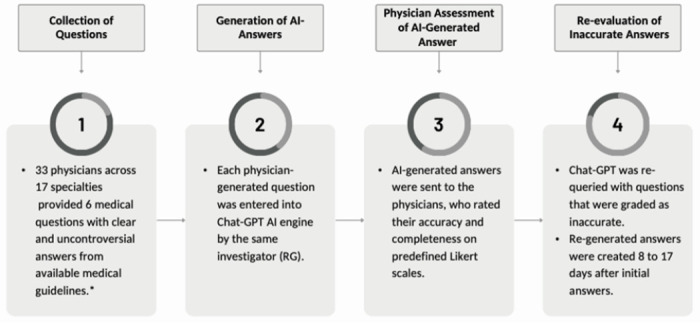
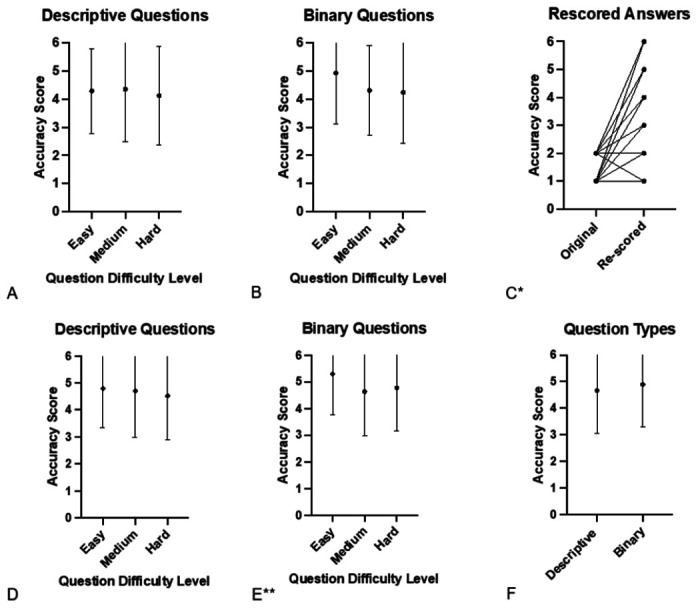
Background: Natural language processing models such as ChatGPT can generate text-based content and are poised to become a major information source in medicine and beyond. The accuracy and completeness of ChatGPT for medical queries is not known. Methods: Thirty-three physicians across 17 specialties generated 284 medical questions that they subjectively classified as easy, medium, or hard with either binary (yes/no) or descriptive answers. The physicians then graded ChatGPT-generated answers to these questions for accuracy (6-point Likert scale; range 1 – completely incorrect to 6 – completely correct) and completeness (3-point Likert scale; range 1 – incomplete to 3 - complete plus additional context). Scores were summarized with descriptive statistics and compared using Mann-Whitney U or Kruskal-Wallis testing. Results: Across all questions (n=284), median accuracy score was 5.5 (between almost completely and completely correct) with mean score of 4.8 (between mostly and almost completely correct). Median completeness score was 3 (complete and comprehensive) with mean score of 2.5. For questions rated easy, medium, and hard, median accuracy scores were 6, 5.5, and 5 (mean 5.0, 4.7, and 4.6; p=0.05). Accuracy scores for binary and descriptive questions were similar (median 6 vs. 5; mean 4.9 vs. 4.7; p=0.07). Of 36 questions with scores of 1-2, 34 were re-queried/re-graded 8-17 days later with substantial improvement (median 2 vs. 4; p<0.01). Conclusions: ChatGPT generated largely accurate information to diverse medical queries as judged by academic physician specialists although with important limitations. Further research and model development are needed to correct inaccuracies and for validation.
Overview
The claims and statistics of this paper haven’t been checked yet.
Free: it reads the open-access text and checks the first 5 claims that cite a source we can check. Create a free account to check every claim.
Integrity signals
Registry
Cites
Statistics
Figures
Verification
Claims the paper makes
The claims and statistics of this paper haven’t been checked yet.
Free: it reads the open-access text and checks the first 5 claims that cite a source we can check. Create a free account to check every claim.
Claims other papers make about this one
Each is checked against this paper’s own text: does it say what the citing paper says it does?
The source backs part of the claim, not all of it — or backs it for a different population, condition or comparison.
In the citing paper
“The same study reported that median accuracy scores were higher than mean scores in data analysis and that ChatGPT had a margin of error [29].”
From Is there any room for ChatGPT AI bot in speech-language pathology? (2025) · cites this paper as [29]
Experimental — accuracy not yet measuredThe source backs part of the claim, not all of it — or backs it for a different population, condition or comparison.
In the citing paper
“The output generated by Chat GPT is dependent on the complexity and clarity of the input, continuous evaluation of generated output will be required to ensure safe implementation in clinical settings [32, 33].”
From Artificial Intelligence (AI) – Powered Documentation Systems in Healthcare: A Systematic Review (2025) · cites this paper as [33]
Experimental — accuracy not yet measuredThe cited source says what the claim attributes to it.
In the citing paper
“it was found that more than 50% of ChatGPT responses to 180 questions created by 33 physicians had a high level of accuracy and comprehensiveness.”
From Is there any room for ChatGPT AI bot in speech-language pathology? (2025) · cites this paper as [29]
The cited source says what the claim attributes to it.
In the citing paper
“Despite some limited validation efforts, ChatGPT still requires further error correction [74].”
From Ethical Considerations of Using ChatGPT in Health Care (2023) · cites this paper as [74]
In the citing paper
“Overall, findings call into question previous claims that ChatGPT “has promise for providing accurate and comprehensive medical information” (18), and has “potential to provide first aid to young adults struggling with mental health issues” (19).”
From ChatGPT is not ready yet for use in providing mental health assessment and interventions (2024) · cites this paper as [18]
1 more claim about this paper
Create a free account to see every claim other papers make about this one.
Self-check
Percentages, sums and reported differences re-computed from the paper’s own numbers.
The self-check needs the paper’s full text.
Citations
Cites
Language Models are Few-Shot Learners
Brown, T. B., Mann, B., Ryder, N., Subbiah, M., Kaplan, J., Dhariwal, P., Neelakantan, A., Shyam, P., Sastry, G., Askell, A., et al. (2020) · arXiv · doi:10.48550/arxiv.2005.14165 · Cited by 23,372 · cited 2×
“5), an LLM with over 175 billion parameters (2).”
BackgroundAdvances in neural information processing systems 7
Cios, K., & Shields, M. (1997) · Neurocomputing · doi:10.1016/s0925-2312(97)90018-7 · Cited by 22,059
Kaugeranna, R., Kaugeranna, E., & Aion, (. S. 4. 6. (2023) · DROPS (Schloss Dagstuhl – Leibniz Center for Informatics) · doi:10.4230/lipics.giscience.2023.43 · Cited by 13,690
Kung, T. H., Cheatham, M., ChatGPT, Medenilla, A., Sillos, C., De Leon, L., Elepaño, C., Madriaga, M., Aggabao, R., Diaz-Candido, G., et al. (2022) · doi:10.1101/2022.12.19.22283643 · Cited by 4,115
Kung, T. H., Cheatham, M., Medenilla, A., Sillos, C., De Leon, L., Elepaño, C., Madriaga, M., Aggabao, R., Diaz-Candido, G., Maningo, J., et al. (2023) · PLOS Digital Health · doi:10.1371/journal.pdig.0000198 · Cited by 4,115 · cited 3×
“ChatGPT performed at or near the passing threshold for United States Medical Licensing Exam (USMLE) without any specialized training, suggesting its potential for medical education and clinical decision support (4, 5).”
BackgroundChatGPT is fun, but not an author
Thorp, H. H. (2023) · Science · doi:10.1126/science.adg7879 · Cited by 1,437
Deep reinforcement learning from human preferences
Christiano, P., Leike, J., Brown, T. B., Martic, M., Legg, S., & Amodei, D. (2017) · arXiv · doi:10.48550/arxiv.1706.03741 · Cited by 1,058
ChatGPT and other large language models are double-edged swords
Shen, Y., Heacock, L., Elias, J., Hentel, K. D., Reig, B., Shih, G., & Moy, L. (2023) · Radiology · doi:10.1148/radiol.230163 · Cited by 1,008 · cited 2×
“Compared to traditional supervised deep learning models, large language models can learn from data more e ciently with a two-stage training process, starting with self-supervised learning on vast amounts of unannotated data, then ne-tuned on smaller, task-speci c, annotated datasets so they can perform on end-user-spe…”
BackgroundChatGPT listed as author on research papers: many scientists disapprove
Stokel-Walker, C. (2023) · Nature · doi:10.1038/d41586-023-00107-z · Cited by 868
Flanagin, A., Bibbins-Domingo, K., Berkwits, M., & Christiansen, S. L. (2023) · JAMA · doi:10.1001/jama.2023.1344 · Cited by 420
Research works printed but not linked: 2
- [5]Gilson A, Safranek C, Huang T, Socrates V, Chi L, Taylor RA, How Well Does ChatGPT Do When Taking the Medical Licensing Exams? The Implications of Large Language Models for Medical Education and Knowledge Assessment. medRxiv. 2022: 2022.12. 23.22283901.
- [6]Shen Y, Heacock L, Elias J, Hentel KD, Reig B, Shih G, ChatGPT and Other Large Language Models Are Double-edged Swords. Radiology. 2023: 230163. 36700838
Cited by
A Survey on Evaluation of Large Language Models
Chang, Y., Wang, X., Wang, J., Wu, Y., Yang, L., Zhu, K., Chen, H., Yi, X., Wang, C., Wang, Y., et al. (2024) · ACM Transactions on Intelligent Systems and Technology · doi:10.1145/3641289 · Cited by 4,254
“, 2023), and many other QA situations (Hamidi and Roberts, 2023; Johnson et al., 2023).”
BackgroundA Survey on Evaluation of Large Language Models
Chang, Y., Wang, X., Wang, J., Wu, Y., Yang, L., Zhu, K., Chen, H., Yi, X., Wang, C., Wang, Y., et al. (2023) · arXiv · doi:10.48550/arxiv.2307.03109 · Cited by 3,159
The Role of AI in Hospitals and Clinics: Transforming Healthcare in the 21st Century
Maleki Varnosfaderani, S., & Forouzanfar, M. (2024) · Bioengineering · doi:10.3390/bioengineering11040337 · Cited by 931
“AI in radiology is not only about detecting abnormalities; it also helps in quantifying disease progression [96], assessing response to treatment [97], and predicting patient outcomes [98].”
BackgroundEthical Considerations of Using ChatGPT in Health Care
Wang, C., Liu, S., Yang, H., Guo, J., Wu, Y., & Liu, J. (2023) · Journal of Medical Internet Research · doi:10.2196/48009 · Cited by 541
“Despite some limited validation efforts, ChatGPT still requires further error correction [74].”
ChatGPT in healthcare: A taxonomy and systematic review
Li, J., Dada, A., Puladi, B., Kleesiek, J., & Egger, J. (2024) · Computer Methods and Programs in Biomedicine · doi:10.1016/j.cmpb.2024.108013 · Cited by 452
Lim, Z. W., Pushpanathan, K., Yew, S. M. E., Lai, Y., Sun, C.-H., Lam, J. S. H., Chen, D. Z., Goh, J. H. L., Tan, M. C. J., Sheng, B., et al. (2023) · eBioMedicine · doi:10.1016/j.ebiom.2023.104770 · Cited by 310
Zaretsky, J., Kim, J. M., Baskharoun, S., Zhao, Y., Austrian, J., Aphinyanaphongs, Y., Gupta, R., Blecker, S. B., & Feldman, J. (2024) · JAMA Network Open · doi:10.1001/jamanetworkopen.2024.0357 · Cited by 303
Large Language Models for Chatbot Health Advice Studies: A Systematic Review
Huo, B., Boyle, A., Marfo, N., Tangamornsuksan, W., Steen, J. P., McKechnie, T., Lee, Y., Mayol, J., Antoniou, S. A., Thirunavukarasu, A. J., et al. (2025) · JAMA Network Open · doi:10.1001/jamanetworkopen.2024.57879 · Cited by 283
Look Before You Leap: An Exploratory Study of Uncertainty Analysis for Large Language Models
Huang, Y., Song, J., Wang, Z., Zhao, S., Chen, H., Juefei-Xu, F., & Ma, L. (2025) · IEEE Transactions on Software Engineering · doi:10.1109/tse.2024.3519464 · Cited by 339
“However, these responses are often presented in a natural human-like tone [11], [12].”
Assessment of Artificial Intelligence Chatbot Responses to Top Searched Queries About Cancer
Pan, A., Musheyev, D., Bockelman, D., Loeb, S., & Kabarriti, A. E. (2023) · JAMA Oncology · doi:10.1001/jamaoncol.2023.2947 · Cited by 271
The Role of Large Language Models in Medical Education: Applications and Implications
Safranek, C. W., Sidamon-Eristoff, A. E., Gilson, A., & Chartash, D. (2023) · JMIR Medical Education · doi:10.2196/50945 · Cited by 233
“A vanguard of this technology is ChatGPT, which has demonstrated promise beyond specific medical question-answering tasks, responding to questions in domains such as knowledge retrieval, clinical decision support, and patient triage [21].”
BackgroundEvaluation of ChatGPT-generated medical responses: A systematic review and meta-analysis
Wei, Q., Yao, Z., Cui, Y., Wei, B., Jin, Z., & Xu, X. (2024) · Journal of Biomedical Informatics · doi:10.1016/j.jbi.2024.104620 · Cited by 201
ChatGPT is a Remarkable Tool—For Experts
Azaria, A., Azoulay, R., & Reches, S. (2024) · Data Intelligence · doi:10.1162/dint_a_00235 · Cited by 130
“, [40] 33 physicians across 17 specialties generated 284 medical questions and graded ChatGPT-generated answers to these questions for accuracy.”
BackgroundChatGPT: promise and challenges for deployment in low- and middle-income countries
Wang, X., Sanders, H. M., Liu, Y., Seang, K., Tran, B. X., Atanasov, A. G., Qiu, Y., Tang, S., Car, J., Wang, Y. X., et al. (2023) · The Lancet Regional Health - Western Pacific · doi:10.1016/j.lanwpc.2023.100905 · Cited by 138
ChatGPT in Dentistry: A Comprehensive Review
Alhaidry, H. M., Fatani, B., Alrayes, J. O., Almana, A. M., & Alfhaed, N. K. (2023) · Cureus · doi:10.7759/cureus.38317 · Cited by 126
“In the upcoming years, AI is highly likely to have a significant effect on several different aspects of the medical and dental fields [2,64].”
BackgroundTripathi, S., Sukumaran, R., & Cook, T. S. (2024) · Journal of the American Medical Informatics Association · doi:10.1093/jamia/ocad258 · Cited by 135
He, K., Mao, R., Lin, Q., Ruan, Y., Lan, X., Feng, M., & Cambria, E. (2025) · Information Fusion · doi:10.1016/j.inffus.2025.102963 · Cited by 147
Large Language Models for Therapy Recommendations Across 3 Clinical Specialties: Comparative Study
Wilhelm, T. I., Roos, J., & Kaczmarczyk, R. (2023) · Journal of Medical Internet Research · doi:10.2196/49324 · Cited by 133
“Through an internal validation process, questions that received lower ratings were subjected to retesting after a period of 8 to 17 days, resulting in a significant enhancement of answer quality [11].”
Wang, S., Hu, T., Huang, X., Li, Y., Zhang, C., Ning, H., Zhu, R., Li, Z., & Ye, X. (2024) · International Journal of Digital Earth · doi:10.1080/17538947.2024.2353122 · Cited by 161
Technological evolution in tourism: a Horizon 2050 perspective
Chon, K., & Hao, F. (2024) · Tourism Review · doi:10.1108/tr-10-2023-0753 · Cited by 148
MEDEC: A Benchmark for Medical Error Detection and Correction in Clinical Notes
Abacha, A. B., Yim, W.-W., Fu, Y., Sun, Z., Yetişgen, M., Xia, F., & Lin, T. (2025) · Findings of the Association for Computational Linguistics: ACL (Findings of ACL) · doi:10.18653/v1/2025.findings-acl.1159 · Cited by 179
Önder, Ç. E., Koç, G., Gökbulut, P., Taşkaldıran, I., & Kuşkonmaz, Ş. M. (2024) · Scientific Reports · doi:10.1038/s41598-023-50884-w · Cited by 142
Vaira, L. A., Lechien, J. R., Abbate, V., Allevi, F., Audino, G., Beltramini, G. A., Bergonzani, M., Bolzoni, A., Committeri, U., Crimi, S., et al. (2024) · Otolaryngology–Head and Neck Surgery · doi:10.1002/ohn.489 · Cited by 122
“23 Additionally, there is a noticeable absence of research addressing the role of ChatGPT in head and neck pathology.”
BackgroundMethodThe Potential of ChatGPT as a Self-Diagnostic Tool in Common Orthopedic Diseases: Exploratory Study
Kuroiwa, T., Sarcon, A., Ibara, T., Yamada, E., Yamamoto, A., Tsukamoto, K., & Fujita, K. (2023) · Journal of Medical Internet Research · doi:10.2196/47621 · Cited by 129
“Johnson et al [22] conducted an extensive inquiry with ChatGPT posing numerous medical questions and showed that the median accuracy of answers was fairly high.”
Is ChatGPT accurate and reliable in answering questions regarding head and neck cancer?
Kuşcu, O., Pamuk, A. E., Sütay Süslü, N., & Hosal, S. (2023) · Frontiers in Oncology · doi:10.3389/fonc.2023.1256459 · Cited by 117
Black Box Warning: Large Language Models and the Future of Infectious Diseases Consultation
Schwartz, I. S., Link, K. E., Daneshjou, R., & Cortés-Penfield, N. (2024) · Clinical Infectious Diseases · doi:10.1093/cid/ciad633 · Cited by 131
“Johnson et al [11] tested GPT-3.”
Hallucination Detection: Robustly Discerning Reliable Answers in Large Language Models
Chen, Y., Fu, Q., Yuan, Y., Wen, Z., Fan, G., Liu, D., Zhang, D., Li, Z., & Xiao, Y. (2023) · Proceedings of the 32nd ACM International Conference on Information and Knowledge Management · doi:10.1145/3583780.3614905 · Cited by 94
ChatGPT is not ready yet for use in providing mental health assessment and interventions
Dergaa, I., Fekih-Romdhane, F., Hallit, S., Loch, A. A., Glenn, J. M., Fessi, M. S., Ben Aissa, M., Souissi, N., Guelmami, N., Swed, S., et al. (2024) · Frontiers in Psychiatry · doi:10.3389/fpsyt.2023.1277756 · Cited by 125
Information and Media Literacy in the Age of AI: Options for the Future
Tiernan, P., Costello, E., Donlon, E., Parysz, M., & Scriney, M. (2023) · Education Sciences · doi:10.3390/educsci13090906 · Cited by 140
“We need only look at the volume of debate, media attention, and scholarly output that has ensued following the realization that ChatGPT could have far-reaching implications for assessment at third-level institutions [45–47].”
BackgroundChatGPT interactive medical simulations for early clinical education: Case study
Scherr, R., Halaseh, F. F., Spina, A., Andalib, S., & Rivera, R. (2023) · JMIR Medical Education · doi:10.2196/49877 · Cited by 122
“One study found that ChatGPT generated between “mostly and almost completely correct” responses to discrete medical questions written by physicians, which is not sufficient for an educational tool [16].”
BackgroundKernberg, A., Gold, J. A., & Mohan, V. (2024) · Journal of Medical Internet Research · doi:10.2196/54419 · Cited by 120
“In the realm of ChatGPT-4, the study conducted by Johnson et al [15] delved into its performance in giving precise and comprehensive medical information.”
Srivastav, S., Chandrakar, R., Gupta, S., Babhulkar, V., Agrawal, S., Jaiswal, A., Prasad, R., & Wanjari, M. B. (2023) · Cureus · doi:10.7759/cureus.41435 · Cited by 103
“This can reduce the risk of adverse drug reactions and improve patient safety [1,14].”
BackgroundInfluentialLarge Language Model–Based Responses to Patients’ In-Basket Messages
Small, W. R., Wiesenfeld, B., Brandfield-Harvey, B., Jonassen, Z., Mandal, S., Stevens, E. R., Major, V. J., Lostraglio, E., Szerencsy, A., Jones, S., et al. (2024) · JAMA Network Open · doi:10.1001/jamanetworkopen.2024.22399 · Cited by 106
Mathis, W. S., Zhao, S., Pratt, N., Weleff, J., & Paoli, S. D. (2024) · Computer Methods and Programs in Biomedicine · doi:10.1016/j.cmpb.2024.108356 · Cited by 131
Artificial Intelligence (AI) – Powered Documentation Systems in Healthcare: A Systematic Review
Bracken, A., Reilly, C., Feeley, A., Sheehan, E., Merghani, K., & Feeley, I. (2025) · Journal of Medical Systems · doi:10.1007/s10916-025-02157-4 · Cited by 113
“The output generated by Chat GPT is dependent on the complexity and clarity of the input, continuous evaluation of generated output will be required to ensure safe implementation in clinical settings [32, 33].”
Chiesa-Estomba, C. M., Lechien, J. R., Vaira, L. A., Brunet, A., Cammaroto, G., Mayo‐Yáñez, M., Barrueco, Á. S., & Saga-Gutiérrez, C. (2023) · European Archives of Oto-Rhino-Laryngology · doi:10.1007/s00405-023-08104-8 · Cited by 125
“Due to the widespread availability of chatbots, there has been a growing number of preliminary studies exploring the use of Chat-GPT in clinical decision-making [8–11].”
Herrmann-Werner, A., Festl-Wietek, T., Holderried, F., Herschbach, L., Griewatz, J., Masters, K., Zipfel, S., & Mahling, M. (2024) · Journal of Medical Internet Research · doi:10.2196/52113 · Cited by 96
“In a recent study, Johnson et al [33] evaluated ChatGPT for its accuracy in providing medical information.”
Vaira, L. A., Lechien, J. R., Abbate, V., Allevi, F., Audino, G., Beltramini, G. A., Bergonzani, M., Boscolo‐Rizzo, P., Califano, G., Cammaroto, G., et al. (2024) · European Archives of Oto-Rhino-Laryngology · doi:10.1007/s00405-024-08710-0 · Cited by 115
The role of large language models in medical image processing: a narrative review
Tian, D., Jiang, S., Zhang, L., Lu, X., & Xu, Y. (2024) · Quantitative Imaging in Medicine and Surgery · doi:10.21037/qims-23-892 · Cited by 95
“Therefore, future research must improve the model’s anti-interference ability and generalization performance to ensure stability and reliability in actual applications (41).”
Can artificial intelligence models serve as patient information consultants in orthodontics?
Dursun, D., & Geçer, R. B. (2024) · BMC Medical Informatics and Decision Making · doi:10.1186/s12911-024-02619-8 · Cited by 113
“5, ChatGPT-4, Gemini, and Copilot For accuracy, a five-point Likert scale was employed [16, 17].”
MethodHatia, A., Doldo, T., Parrini, S., Chisci, E., Cipriani, L., Montagna, L., Laganà, G., Guenza, G., Agosta, E., Vinjolli, F., et al. (2024) · Journal of Clinical Medicine · doi:10.3390/jcm13030735 · Cited by 112
“As described by Johnson et al. [21], the researchers assessed the accuracy and completeness of the open-ended answers and the clinical scenarios using two predefined scales.”
MethodThe application of Chat Generative Pre-trained Transformer in nursing education
Liu, J., Liu, F., Fang, J., & Liu, S. (2023) · Nursing Outlook · doi:10.1016/j.outlook.2023.102064 · Cited by 103
Lahat, A., Shachar, E., Avidan, B., Glicksberg, B., & Klang, E. (2023) · Diagnostics · doi:10.3390/diagnostics13111950 · Cited by 92
“[22] discovered that its responses were largely accurate across a wide range of medical questions.”
BackgroundYau, J. Y.-S., Saadat, S., Hsu, E., Murphy, L. S.-L., Roh, J., Suchard, J. R., Tapia, A., Wiechmann, W. F., & Langdorf, M. I. (2024) · Journal of Medical Internet Research · doi:10.2196/60291 · Cited by 108
“However, the researchers noted that the chatbot would sometimes be “spectacularly and surprisingly wrong” [16].”
Nasra, M., Jaffri, R., Pavlin‐Premrl, D., Kok, H. K., Khabaza, A., Barras, C. D., Slater, L., Yazdabadi, A., Moore, J. M., Russell, J. H., et al. (2024) · Internal Medicine Journal · doi:10.1111/imj.16607 · Cited by 103
“Author Key fi ndings Johnson et al .”
InfluentialAyo-Ajibola, O., Davis, R. J., Lin, M. E., Riddell, J., & Kravitz, R. L. (2024) · Journal of Medical Internet Research · doi:10.2196/55138 · Cited by 95
“Another study highlighted the LLM’s competency in providing predominantly accurate information for health queries spanning over 17 specialties [13].”
Saban, M., & Dubovi, I. (2025) · Journal of Advanced Nursing · doi:10.1111/jan.16101 · Cited by 87
Beaulieu-Jones, B. R., Berrigan, M. T., Shah, S., Marwaha, J. S., Lai, S.-L., & Brat, G. A. (2024) · Surgery · doi:10.1016/j.surg.2023.12.014 · Cited by 83
“27 Moreover, ChatGPT has shown promise as a clinical decision support tool in radiology, 28 pathology, 29 and orthodontics.”
Gödde, D., Nöhl, S., Wolf, C., Rupert, Y., Rimkus, L., Ehlers, J., Breuckmann, F., & Sellmann, T. (2023) · Journal of Medical Internet Research · doi:10.2196/49368 · Cited by 69
“Among the most prevalently cited weaknesses were limited abilities [12,13], lack of accuracy/correctness [14,15], citation problems [16,17], and the need for verification [18,19].”
Authorship and ChatGPT: a Conservative View
van Woudenberg, R., Ranalli, C., & Bracker, D. (2024) · Philosophy & Technology · doi:10.1007/s13347-024-00715-1 · Cited by 90
“For example, a preliminary study found that Chat-GPT provides mostly accurate responses to diverse medical questions (Johnson et al., 2023).”
BackgroundChatGPT and Physicians’ Malpractice Risk
Mello, M. M., & Guha, N. (2023) · JAMA Health Forum · doi:10.1001/jamahealthforum.2023.1938 · Cited by 80
Zhang, J., Sun, K., Jagadeesh, A., Falakaflaki, P., Kayayan, E., Tao, G., Haghighat Ghahfarokhi, M., Gupta, D., Gupta, A., Gupta, V., et al. (2024) · Journal of the American Medical Informatics Association · doi:10.1093/jamia/ocae184 · Cited by 70
A systematic review and meta-analysis on ChatGPT and its utilization in medical and dental research
Bagde, H., Dhopte, A., Alam, M. K., & Basri, R. (2023) · Heliyon · doi:10.1016/j.heliyon.2023.e23050 · Cited by 66
“Johnson et al. [32] evaluated ChatGPT ’ s accuracy in answering medical queries across 17 different specialties and reported a 39.4 % accuracy for perfect answers and 18.3 % accuracy for near-perfect answers.”
BackgroundInfluentialSaihi, A., Ben-Daya, M., Hariga, M., & As'ad, R. (2024) · Computers and Education: Artificial Intelligence · doi:10.1016/j.caeai.2024.100274 · Cited by 75
Chow, J. C. L., & Li, K. (2024) · JMIR Bioinformatics and Biotechnology · doi:10.2196/64406 · Cited by 75
Chu, C. P. (2024) · Frontiers in Veterinary Science · doi:10.3389/fvets.2024.1395934 · Cited by 83
Ganjavi, C., Eppler, M., O’Brien, D., Ramacciotti, L. S., Ghauri, M. S., Anderson, I., Choi, J., Dwyer, D., Stephens, C., Shi, V., et al. (2024) · PLOS Digital Health · doi:10.1371/journal.pdig.0000596 · Cited by 73
“Over half of survey respondents have used ChatGPT for medical school-related tasks (ie, access to information, assistance in academic writing/editing), tasks reported in previous studies [18,19].”
Mondal, H., Marndi, G., Behera, J. K., & Mondal, S. (2023) · Indian Journal of Vascular and Endovascular Surgery · doi:10.4103/ijves.ijves_37_23 · Cited by 73
Evaluating Generative AI in Mental Health: Systematic Review of Capabilities and Limitations
Wang, L., Bhanushali, T., Huang, Z., Yang, J., Badami, S., & Hightow-Weidman, L. (2025) · JMIR Mental Health · doi:10.2196/70014 · Cited by 73
Agarwal, M., Sharma, P., & Goswami, A. (2023) · Cureus · doi:10.7759/cureus.40977 · Cited by 72
“According to the assessment of 33 physicians spanning 17 specialties, ChatGPT mostly generated accurate and complete information in response to 284 varied medical questions [18].”
Guillen-Grima, F., Guillen-Aguinaga, S., Guillen-Aguinaga, L., Alas-Brun, R., Onambele, L., Ortega, W., Montejo, R., Aguinaga-Ontoso, E., Barach, P., & Aguinaga-Ontoso, I. (2023) · Clinics and Practice · doi:10.3390/clinpract13060130 · Cited by 72
“ChatGPT has shown promise in various medical fields, including allergology, dermatology, and radiology [32,35,36], and in a pool of questions formulated by physicians of seventeen specialties [37].”
BackgroundNia, M. F., Ahmadi, M., & Irankhah, E. (2025) · Frontiers in Dental Medicine · doi:10.3389/fdmed.2024.1456208 · Cited by 82
He, K., Mao, R., Lin, Q., Ruan, Y., Lan, X., Feng, M., & Cambria, E. (2024) · doi:10.2139/ssrn.4809363 · Cited by 69
ChatGPT and Other Large Language Models in Medical Education — Scoping Literature Review
Aster, A., Laupichler, M. C., Rockwell-Kollmann, T., Masala, G., Bala, E., & Raupach, T. (2024) · Medical Science Educator · doi:10.1007/s40670-024-02206-6 · Cited by 75
Lyu, W., Zhang, S., Chung, T., Sun, Y., & Zhang, Y. (2025) · Computers and Education: Artificial Intelligence · doi:10.1016/j.caeai.2025.100383 · Cited by 68
“On the other hand, recent work has also highlighted issues of the use of GenAI in higher education [60], such as accuracy [58], reliability [58, 115], and plagiarism [57].”
Can ChatGPT evaluate research quality?
Thelwall, M. (2024) · Journal of Data and Information Science · doi:10.2478/jdis-2024-0013 · Cited by 68
“Nevertheless, since LLMs can produce misleadingly plausible incorrect (Nazir & Wang, 2023) or incomplete (Johnson et al., 2023) answers, careful accuracy testing is needed.”
Coşkun, B. N., Yağız, B., Ocakoğlu, G., Dalkılıç, E., & Pehlivan, Y. (2023) · Rheumatology International · doi:10.1007/s00296-023-05473-5 · Cited by 73
Gomez-Cabello, C. A., Borna, S., Pressman, S. M., Haider, S. A., & Forte, A. J. (2024) · Medicina · doi:10.3390/medicina60060957 · Cited by 73
“In a study assessing ChatGPT’s medical accuracy and comprehensiveness, the model got >57% of the questions at least nearly all correct and 79% at least adequate [3].”
BackgroundRahimzadeh, V., Kostick-Quenet, K., Blumenthal Barby, J., & McGuire, A. L. (2023) · The American Journal of Bioethics · doi:10.1080/15265161.2023.2233358 · Cited by 66
Artificial intelligence chatbots for the nutrition management of diabetes and the metabolic syndrome
Naja, F., Taktouk, M., Matbouli, D., Khaleel, S., Maher, A., Uzun, B., Alameddine, M., & Nasreddine, L. (2024) · European Journal of Clinical Nutrition · doi:10.1038/s41430-024-01476-y · Cited by 70
Li, L. T., Sinkler, M. A., Adelstein, J. M., Voos, J. E., & Calcei, J. G. (2023) · Arthroscopy The Journal of Arthroscopic and Related Surgery · doi:10.1016/j.arthro.2023.12.009 · Cited by 64
Assessing Ability for ChatGPT to Answer Total Knee Arthroplasty-Related Questions
Magruder, M. L., Rodriguez, A. N., Wong, J., Erez, O., Piuzzi, N. S., Scuderi, G. R., Slover, J. D., Oh, J. H., Schwarzkopf, R. M., Chen, A. F., et al. (2024) · The Journal of Arthroplasty · doi:10.1016/j.arth.2024.02.023 · Cited by 64
Perceptions of ChatGPT in healthcare: usefulness, trust, and risk
Chen, S.-Y., Kuo, H. Y., & Chang, S.-H. (2024) · Frontiers in Public Health · doi:10.3389/fpubh.2024.1457131 · Cited by 41
“Evaluations by major medical institutions suggest that while ChatGPT can enhance decision-making and efficiency, medical professionals must be aware of its capabilities and limitations, advocating for cautious use in clinical settings (5, 7).”
BackgroundSelf-citationUppalapati, V. K., & Nag, D. S. (2024) · Cureus · doi:10.7759/cureus.52485 · Cited by 72
Wang, C., Li, S., Lin, N., Zhang, X., Han, Y., Wang, X., Liu, D., Tan, X., Pu, D., Li, K., et al. (2025) · Journal of Medical Internet Research · doi:10.2196/59435 · Cited by 70
“Subsequently, clinical accuracy is also a concern [44].”
ChatGPT vs. web search for patient questions: what does ChatGPT do better?
Shen, S. A., Perez-Heydrich, C. A., Xie, D. X., & Nellis, J. C. (2024) · European Archives of Oto-Rhino-Laryngology · doi:10.1007/s00405-024-08524-0 · Cited by 52
“The scoring was completed using an ordinal three-point scale [18].”
Rizzo, M. G., Cai, N., & Constantinescu, D. S. (2023) · Journal of Orthopaedics · doi:10.1016/j.jor.2023.11.056 · Cited by 61
Impact of Large Language Models on Medical Education and Teaching Adaptations
Zhui, L., Yhap, N., Liping, L., Wang, Z., Zhonghao, X., Xiaoshu, Y., Hong, C., Liu, X., & Wei, R. (2024) · JMIR Medical Informatics · doi:10.2196/55933 · Cited by 63
“A detailed evaluation of 180 questions answered by the ChatGPT, which was conducted by 33 doctors from 17 medical specialties, revealed that while some responses were highly accurate, significant errors occurred in response to more complex questions [42].”
How well do large language model-based chatbots perform in oral and maxillofacial radiology?
Jeong, H., Han, S., Yu, Y., Kim, S., & Jeon, K. J. (2024) · Dentomaxillofacial Radiology · doi:10.1093/dmfr/twae021 · Cited by 60
Xu, R., & Wang, Z. (2024) · Heliyon · doi:10.1016/j.heliyon.2024.e32364 · Cited by 65
“Newly emerging studies begin to discuss the utility of ChatGPT [46,47], the accuracy and reliability of ChatGPT responses [48], the feasibility of ChatGPT [19], applicability of ChatGPT [49], the robustness of ChatGPT [50], when applied ChatGPT to healthcare.”
BackgroundThe Influence of AI Chatbots in Fintech Services on Customer Loyalty within the Banking Industry
El-Shihy, D. A. M., Abdelraouf, M., Hegazy, M., & Hassan, N. (2024) · Future of Business Administration · doi:10.33422/fba.v3i1.644 · Cited by 69
“The study defines nine AI chatbot service quality dimensions: (1) accuracy of response (provides accurate and relevant information) (Johnson et al .”
BackgroundBushuven, S., Bentele, M., Bentele, S., Gerber, B., Bansbach, J., Ganter, J., Trifunovic-Koenig, M., & Ranisch, R. (2023) · Journal of Medical Systems · doi:10.1007/s10916-023-02019-x · Cited by 47
“Altogether 132 core cases were analysed.”
Is ChatGPT a trusted source of information for total hip and knee arthroplasty patients?
Wright, B. M., Bodnar, M. S., Moore, A. D., Maseda, M., Kucharik, M. P., Diaz, C. C., Schmidt, C. M., & Mir, H. R. (2024) · Bone & Joint Open · doi:10.1302/2633-1462.52.bjo-2023-0113.r1 · Cited by 54
“Johnson et al 10 evaluated 284 questions pertaining to 17 specialties.”
BackgroundOmar, M., Agbareia, R., Glicksberg, B. S., Nadkarni, G. N., & Klang, E. (2025) · JMIR Medical Informatics · doi:10.2196/66917 · Cited by 53
“For instance, LLMs, such as GPT, have shown promise in providing diagnostic assistance and answering medical queries [5,7-9].”
Assessing AI-Powered Patient Education: A Case Study in Radiology
Kuckelman, I. J., Yi, P. H., Bui, M., Onuh, I., Anderson, J. A., & Ross, A. B. (2024) · Academic Radiology · doi:10.1016/j.acra.2023.08.020 · Cited by 46
Analyzing evaluation methods for large language models in the medical field: a scoping review
Lee, J., Park, S., Shin, J., & Cho, B. (2024) · BMC Medical Informatics and Decision Making · doi:10.1186/s12911-024-02709-7 · Cited by 52
Artificial intelligence in age-related macular degeneration: state of the art and recent updates
Crincoli, E., Sacconi, R., Querques, L., & Querques, G. (2024) · BMC Ophthalmology · doi:10.1186/s12886-024-03381-1 · Cited by 52
“In a recent study, Johnson et al. showed how Chat-Generative Pre-Trained Transformer(Chat-GTP) generated responses that were judged with a mean score of “almost completely correct” and a mean score of “complete and comprehensive” as concerns respectively accuracy and completeness [39].”
BackgroundTiller, N. B., Marcon, A. R., Zenone, M. A., Kidd, K. E., Jeukendrup, A. E., Master, Z., & Caulfield, T. (2026) · BMJ Open · doi:10.1136/bmjopen-2025-112695 · Cited by 59
Potential Use of ChatGPT for Patient Information in Periodontology: A Descriptive Pilot Study
Babayiğit, O., Tastan Eroglu, Z., Ozkan Sen, D., & Ucan Yarkac, F. (2023) · Cureus · doi:10.7759/cureus.48518 · Cited by 42
“The mean accuracy score for all questions in the study (n=284) was 5.5, which was between almost completely and completely correct, and the median completeness score was three, which was complete and comprehensive [7].”
BackgroundMethodInfluentialLong, C., Subburam, D., Lowe, K., dos Santos, A., Zhang, J., Hwang, S., Saduka, N., Horev, Y., Su, T., Côté, D. W. J., et al. (2024) · Otolaryngology–Head and Neck Surgery · doi:10.1002/ohn.864 · Cited by 46
“23 For otolaryngology — head and neck surgery (OHNS), in particular, ChatGPT was assessed as an informational resource for OHNS patients for safety, accuracy, and comprehensiveness, as well as on the Royal College of Physicians and Surgeons of Canada's OHNS board exam based on concordance,…”
Mohapatra, D. P., Thiruvoth, F. M., Tripathy, S., Rajan, S., Vathulya, M., Lakshmi, P., Singh, V. K., & Haq, A. (2023) · Indian Journal of Plastic Surgery · doi:10.1055/s-0043-1772704 · Cited by 47
Li, Y., Viswaroopan, D., He, W., Li, J., Zuo, X., Xu, H., & Tao, C. (2025) · Journal of Biomedical Informatics · doi:10.1016/j.jbi.2025.104789 · Cited by 49
Kee, T., Kuys, B., & King, R. B. (2024) · Journal of Artificial Intelligence in Architecture · doi:10.24002/jarina.v3i1.8347 · Cited by 46
Sciberras, M., Farrugia, Y., Gordon, H., Furfaro, F., Allocca, M., Torres, J., Arebi, N., Fiorino, G., Iacucci, M., Verstockt, B., et al. (2024) · Journal of Crohn's and Colitis · doi:10.1093/ecco-jcc/jjae040 · Cited by 45
Chat GPT for the management of obstructive sleep apnea: do we have a polar star?
Mira, F. A., Favier, V., Nunes, H. D. S. S., de Castro, J. V., Carsuzaa, F., Meccariello, G., Vicini, C., Vito, A. D., Lechien, J. R., Chiesa-Estomba, C. M., et al. (2023) · European Archives of Oto-Rhino-Laryngology · doi:10.1007/s00405-023-08270-9 · Cited by 51
“This Chatbot extracts a wealth of information from diverse online sources, including books, articles, and websites, and refines its text generation capabilities through human feedback [3].”
BackgroundLarge language models and medical education: a paradigm shift in educator roles
Zhui, L., Li, F., Fu, Q., Wang, X., Liu, H., Zhao, Y., & Wei, R. (2024) · Smart Learning Environments · doi:10.1186/s40561-024-00313-w · Cited by 51
“Research indicates that ChatGPT may yield incorrect responses when handling complex medical queries, and its precision varies across different medical sub-specialties (Alkaissi & McFarlane, 2023; Johnson et al., 2023).”
BackgroundLiu, I., Liu, F., Xiao, Y., Huang, Y., Wu, S., & Ni, S. (2025) · International Journal of Human–Computer Interaction · doi:10.1080/10447318.2023.2300015 · Cited by 44
“Nevertheless, consistent with several studies that have confirmed the accuracy of GPT-generated outputs (Johnson et al., 2023), our exhaustive analysis of all chatbot-user dialogues recorded in this study did not reveal any inappropriate responses.”
Penerapan Media Chat GPT pada Pembelajaran Manajemen Pendidikan terhadap Kemandirian Mahasiswa
Murcahyanto, H. (2023) · EDUMATIC Jurnal Pendidikan Informatika · doi:10.29408/edumatic.v7i1.14073 · Cited by 60
A descriptive study based on the comparison of ChatGPT and evidence-based neurosurgeons
Liu, J., Zheng, J., Cai, X., Wu, D., & Yin, C. (2023) · iScience · doi:10.1016/j.isci.2023.107590 · Cited by 44
“In recent years, researchers have explored the practical application value of ChatGPT in many aspects, such as medical education,(4) clinical management,(5) healthcare practice,(6) scientific writing,(7) clinical decision-making,(8) and medical information acquisition.(9) Clinical decision support system (CDSS) provid…”
BackgroundPassmore, J., & Tee, D. (2023) · Journal of Work-Applied Management · doi:10.1108/jwam-06-2023-0057 · Cited by 50
Metadata
- Authors
- Johnson, D., Goodman, R., Patrinely, J., Stone, C., Zimmerman, E., Donald, R., Chang, S., Berkowitz, S., Finn, A., Jahangir, E., Scoville, E., Reese, T., Friedman, D., Bastarache, J., Heijden, Y. V. D., Wright, J., Carter, N., Alexander, M., Choe, J., Chastain, C., Zic, J., Horst, S., Turker, I., Agarwal, R., Osmundson, E., Idrees, K., Kiernan, C., Padmanabhan, C., Bailey, C., Schlegel, C., Chambless, L., Gibson, M., Osterman, T., & Wheless, L.
- Affiliations
- Vanderbilt University Medical Center (US)
- Vanderbilt University (US)
- Vanderbilt University Medical Center
- Corresponding author
- Johnson, Douglas
- ORCID
- Johnson, Douglas
- Goodman, Rachel
- Patrinely, J
- Stone, Cosby
- Donald, Rebecca
- Chang, Sam
- Berkowitz, Sean
- Finn, Avni
- Jahangir, Eiman
- Scoville, Elizabeth
- Reese, Tyler
- Friedman, Debra
- Bastarache, Julie
- Alexander, Matthew
- Choe, Jennifer
- Chastain, Cody
- Horst, Sara
- Turker, Isik
- Idrees, Kamran
- Padmanabhan, Chandrasekhar
- Bailey, Christina
- Schlegel, Cameron
- Chambless, Lola
- Osterman, Travis
- Wheless, Lee
- Venue
- Research Square
- Published
- 2023-02-28
- PMC
- PMC10002821
- OpenAlex
- W4322622443
- Cited by
- 598
- References
- 8
- Citations by year
- 2026: 63 · 2025: 185 · 2024: 249 · 2023: 100
- Type
- posted content
- Language
- en
- Open access
- green
- doi.org
- Locations
- Research Square (acceptedVersion, cc-by)
- PubMed (publishedVersion)
- PubMed Central (submittedVersion, cc-by)
- Funders
- National Heart, Lung, and Blood Institute (R01HL151523, U01HL156620)
- National Cancer Institute (UG3CA265846, R01CA225005, UG3CA260318, R01CA240093, R01CA227481, K12CA090625, P30CA068485, U54CA163072)
- National Institute of Diabetes and Digestive and Kidney Diseases (K08DK133691)
- Topics
- Health Sciences › Medicine › Health Informatics › Artificial Intelligence in Healthcare and Education
- Health Sciences › Health Professions › Health Information Management › Artificial Intelligence in Healthcare
- Physical Sciences › Computer Science › Information Systems › Information Retrieval and Search Behavior
- Keywords
- ChatGPT, large language models, medical question answering, AI-generated medical information, accuracy assessment
About these checks
Registry, retraction, Cites and statistics results are computed, not judged, with one exception: a printed reference that no index lists is read once by a model before it counts as a citation error. Claims are extracted by a model and kept only when their quote appears verbatim in the text; each cited source is then checked, with a model’s help, for whether it says what the claim relies on. Those verdicts can be wrong — read the claim’s quote and the cited source before relying on one.
Statistics and arithmetic are recomputed, not judged.
Confidence bands are shown only for fields calibrated on our annotated test set. None is calibrated yet, so no band is shown.
What counts as a claim ›How we measure confidence ›How we check this ›
Are you an author, or do you see a problem with this page? Request a review
Data sources
Bibliographic data: Semantic Scholar, OpenAlex, Crossref.
Contains information from the Semantic Scholar Academic Graph Datasets, made available under the ODC Attribution License (ODC-BY 1.0).
Semantic Scholar’s data is described in: Kinney, R., et al. (2023). The Semantic Scholar Open Data Platform. arXiv:2301.10140.
