

Assessing the Accuracy and Reliability of AI-Generated Medical Responses: An Evaluation of the Chat-GPT Model
Open accessThe DOI matches its Crossref record; 12 of the 12 references it cites were found in a registry or an index.
Abstract
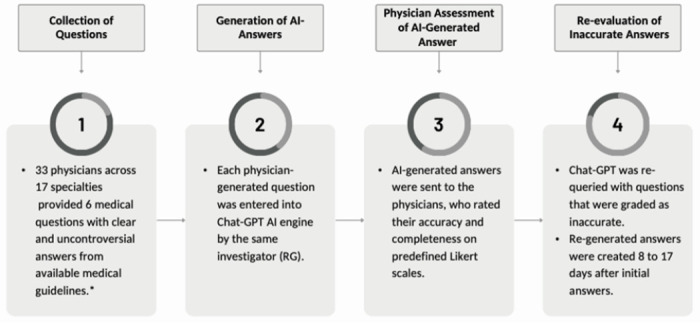
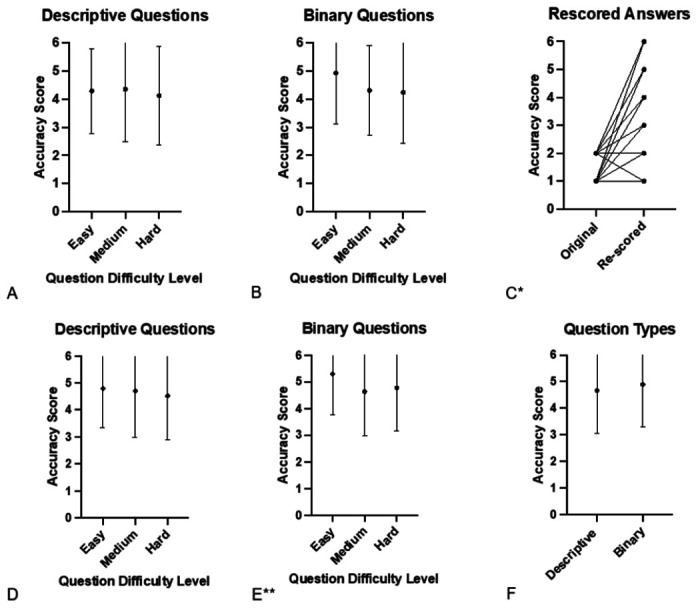
Background: Natural language processing models such as ChatGPT can generate text-based content and are poised to become a major information source in medicine and beyond. The accuracy and completeness of ChatGPT for medical queries is not known. Methods: Thirty-three physicians across 17 specialties generated 284 medical questions that they subjectively classified as easy, medium, or hard with either binary (yes/no) or descriptive answers. The physicians then graded ChatGPT-generated answers to these questions for accuracy (6-point Likert scale; range 1 – completely incorrect to 6 – completely correct) and completeness (3-point Likert scale; range 1 – incomplete to 3 - complete plus additional context). Scores were summarized with descriptive statistics and compared using Mann-Whitney U or Kruskal-Wallis testing. Results: Across all questions (n=284), median accuracy score was 5.5 (between almost completely and completely correct) with mean score of 4.8 (between mostly and almost completely correct). Median completeness score was 3 (complete and comprehensive) with mean score of 2.5. For questions rated easy, medium, and hard, median accuracy scores were 6, 5.5, and 5 (mean 5.0, 4.7, and 4.6; p=0.05). Accuracy scores for binary and descriptive questions were similar (median 6 vs. 5; mean 4.9 vs. 4.7; p=0.07). Of 36 questions with scores of 1-2, 34 were re-queried/re-graded 8-17 days later with substantial improvement (median 2 vs. 4; p<0.01). Conclusions: ChatGPT generated largely accurate information to diverse medical queries as judged by academic physician specialists although with important limitations. Further research and model development are needed to correct inaccuracies and for validation.
Overview
The claims and statistics of this paper haven’t been checked yet.
Free: it reads the open-access text and checks the first 5 claims that cite a source we can check. Create a free account to check every claim.
Integrity signals
Registry
Cites
Statistics
Figures
Verification
Claims the paper makes
The claims and statistics of this paper haven’t been checked yet.
Free: it reads the open-access text and checks the first 5 claims that cite a source we can check. Create a free account to check every claim.
Claims other papers make about this one
Each is checked against this paper’s own text: does it say what the citing paper says it does?
The source backs part of the claim, not all of it — or backs it for a different population, condition or comparison.
In the citing paper
“The same study reported that median accuracy scores were higher than mean scores in data analysis and that ChatGPT had a margin of error [29].”
From Is there any room for ChatGPT AI bot in speech-language pathology? (2025) · cites this paper as [29]
Experimental — accuracy not yet measuredThe source backs part of the claim, not all of it — or backs it for a different population, condition or comparison.
In the citing paper
“The output generated by Chat GPT is dependent on the complexity and clarity of the input, continuous evaluation of generated output will be required to ensure safe implementation in clinical settings [32, 33].”
From Artificial Intelligence (AI) – Powered Documentation Systems in Healthcare: A Systematic Review (2025) · cites this paper as [33]
Experimental — accuracy not yet measuredThe cited source says what the claim attributes to it.
In the citing paper
“it was found that more than 50% of ChatGPT responses to 180 questions created by 33 physicians had a high level of accuracy and comprehensiveness.”
From Is there any room for ChatGPT AI bot in speech-language pathology? (2025) · cites this paper as [29]
The cited source says what the claim attributes to it.
In the citing paper
“Despite some limited validation efforts, ChatGPT still requires further error correction [74].”
From Ethical Considerations of Using ChatGPT in Health Care (2023) · cites this paper as [74]
In the citing paper
“Overall, findings call into question previous claims that ChatGPT “has promise for providing accurate and comprehensive medical information” (18), and has “potential to provide first aid to young adults struggling with mental health issues” (19).”
From ChatGPT is not ready yet for use in providing mental health assessment and interventions (2024) · cites this paper as [18]
1 more claim about this paper
Create a free account to see every claim other papers make about this one.
Self-check
Percentages, sums and reported differences re-computed from the paper’s own numbers.
The self-check needs the paper’s full text.
Citations
Cites
Language Models are Few-Shot Learners
Brown, T. B., Mann, B., Ryder, N., Subbiah, M., Kaplan, J., Dhariwal, P., Neelakantan, A., Shyam, P., Sastry, G., Askell, A., et al. (2020) · arXiv · doi:10.48550/arxiv.2005.14165 · Cited by 23,372 · cited 2×
“5), an LLM with over 175 billion parameters (2).”
BackgroundAdvances in neural information processing systems 7
Cios, K., & Shields, M. (1997) · Neurocomputing · doi:10.1016/s0925-2312(97)90018-7 · Cited by 22,059
Kaugeranna, R., Kaugeranna, E., & Aion, (. S. 4. 6. (2023) · DROPS (Schloss Dagstuhl – Leibniz Center for Informatics) · doi:10.4230/lipics.giscience.2023.43 · Cited by 13,690
Kung, T. H., Cheatham, M., ChatGPT, Medenilla, A., Sillos, C., De Leon, L., Elepaño, C., Madriaga, M., Aggabao, R., Diaz-Candido, G., et al. (2022) · doi:10.1101/2022.12.19.22283643 · Cited by 4,115
Kung, T. H., Cheatham, M., Medenilla, A., Sillos, C., De Leon, L., Elepaño, C., Madriaga, M., Aggabao, R., Diaz-Candido, G., Maningo, J., et al. (2023) · PLOS Digital Health · doi:10.1371/journal.pdig.0000198 · Cited by 4,115 · cited 3×
“ChatGPT performed at or near the passing threshold for United States Medical Licensing Exam (USMLE) without any specialized training, suggesting its potential for medical education and clinical decision support (4, 5).”
BackgroundChatGPT is fun, but not an author
Thorp, H. H. (2023) · Science · doi:10.1126/science.adg7879 · Cited by 1,437
Deep reinforcement learning from human preferences
Christiano, P., Leike, J., Brown, T. B., Martic, M., Legg, S., & Amodei, D. (2017) · arXiv · doi:10.48550/arxiv.1706.03741 · Cited by 1,058
ChatGPT and other large language models are double-edged swords
Shen, Y., Heacock, L., Elias, J., Hentel, K. D., Reig, B., Shih, G., & Moy, L. (2023) · Radiology · doi:10.1148/radiol.230163 · Cited by 1,008 · cited 2×
“Compared to traditional supervised deep learning models, large language models can learn from data more e ciently with a two-stage training process, starting with self-supervised learning on vast amounts of unannotated data, then ne-tuned on smaller, task-speci c, annotated datasets so they can perform on end-user-spe…”
BackgroundChatGPT listed as author on research papers: many scientists disapprove
Stokel-Walker, C. (2023) · Nature · doi:10.1038/d41586-023-00107-z · Cited by 868
Flanagin, A., Bibbins-Domingo, K., Berkwits, M., & Christiansen, S. L. (2023) · JAMA · doi:10.1001/jama.2023.1344 · Cited by 420
Research works printed but not linked: 2
- [5]Gilson A, Safranek C, Huang T, Socrates V, Chi L, Taylor RA, How Well Does ChatGPT Do When Taking the Medical Licensing Exams? The Implications of Large Language Models for Medical Education and Knowledge Assessment. medRxiv. 2022: 2022.12. 23.22283901.
- [6]Shen Y, Heacock L, Elias J, Hentel KD, Reig B, Shih G, ChatGPT and Other Large Language Models Are Double-edged Swords. Radiology. 2023: 230163. 36700838
Cited by
Items 301–400 of 681
Li, A., Shrestha, R., Jegatheeswaran, T., Chan, H. O., Hong, C., & Joshi, R. (2024) · medRxiv · doi:10.1101/2024.09.27.24314506 · Cited by 15
Ko, S., & Woo, H. (2025) · JMIR mhealth and uhealth · doi:10.2196/64622 · Cited by 10
“Users are increasingly interested in utilizing AI chatbots that provide convenient access to medical information without relying solely on health care providers [40].”
Siepmann, R. M., Schneider, C. V., von der Stück, M. S., Amygdalos, I., Große, K., Schneider, K. M., Pollmanns, M. R., Murad, M., Joy, J., Kabak, E., et al. (2025) · Liver International · doi:10.1111/liv.70324 · Cited by 10
“In the past year, many studies indicated the high potential of LLMs in healthcare applications, ranging from automating routine tasks [18, 19] over patient education [20, 21] to support in clinical decision-making [22–24].”
Alnsour, M. M., Al-Ghannam, W., Alraheam, I. A., Sabrah, A. H. A., Oweis, Y. G., & AL-Omiri, M. K. (2025) · BMC Oral Health · doi:10.1186/s12903-025-07281-8 · Cited by 9
Chen, K., Rogers, K., Haberkorn, W. J., Lew, M., Kanegan, J., Nam, H., Chantra, J., Asch, S. M., & Lee, G. M. (2026) · BMJ Quality & Safety · doi:10.1136/bmjqs-2025-019495 · Cited by 9
Rammohan, R., Joy, M. V., Magam, S. G., Natt, D., Magam, S. R., Pannikodu, L. E., Desai, J., Akande, O., Bunting, S., Yost, R. M., et al. (2024) · Cureus · doi:10.7759/cureus.51848 · Cited by 9
The Role of Artificial Intelligence in Patient Education: A Bladder Cancer Consultation with ChatGPT
Guo, A. A., Razi, B., Kim, P., Canagasingham, A., Vass, J., Chalasani, V., Rasiah, K., & Chung, A. S. J. (2024) · Société Internationale d’Urologie Journal · doi:10.3390/siuj5030032 · Cited by 10
Han, K. D., Jaafar, M. A., Moin, K., Hoopes, P. C., & Moshirfar, M. (2024) · Cureus · doi:10.7759/cureus.71447 · Cited by 9
“These findings are consistent with previous studies that have demonstrated AI models' ability to generate accurate medical information, although with certain limitations [20,21].”
Keating, M., Bollard, S. M., & Potter, S. (2024) · Cureus · doi:10.7759/cureus.73874 · Cited by 15
Chatbots vs andrologists: Testing 25 clinical cases
Perrot, O., Schirmann, A., Vidart, A., Guillot‐Tantay, C., Izard, V., Lebrét, T., Boillot, B., Mesnard, B., Lebacle, C. M., & Madec, F.-X. (2024) · The French Journal of Urology · doi:10.1016/j.fjurol.2024.102636 · Cited by 9
A Use Case for Generative AI in Medical Education
Sekhar, T. C., Nayak, Y., & Abdoler, E. A. (2024) · JMIR Medical Education · doi:10.2196/56117 · Cited by 9
ChatGPT for Generating Questions and Assessments based on Accreditations
Aboalela, R. (2023) · International Conference on Artificial Intelligence, Soft Computing and Applications (AIAPP) · doi:10.5121/csit.2023.132207 · Cited by 8
Evaluating the Quality of Cardiovascular Disease Information From AI Chatbots: A Comparative Study
Singavarapu, J., Khemlani, A., Jacobs, M. M., Berglas, E., Lazar, J., & Kabarriti, A. E. (2025) · Cureus · doi:10.7759/cureus.88085 · Cited by 8
Ghehsareh, M. M., Asri, N., Looha, M. A., Sadeghi, A., Ciacci, C., & Rostami‐Nejad, M. (2025) · Scientific Reports · doi:10.1038/s41598-025-15898-6 · Cited by 8
He, Z., Zhao, L., Li, G., Wang, J., Cai, S., Tu, P., Chen, J., Wu, J., Zhang, J., Chen, R., et al. (2025) · Frontiers in Digital Health · doi:10.3389/fdgth.2025.1670510 · Cited by 8
Effectiveness of Generative AI Tools in Computer Science and Engineering Education
Waqas, M., Hasan, S., & Ali, A. (2025) · International Journal of Artificial Intelligence in Education · doi:10.1007/s40593-025-00525-2 · Cited by 9
“Another study evaluating ChatGPT’s responses to 284 medical questions across 17 specialties showed high accuracy and completeness, though it emphasized the need for continued refinement (Johnson et al., 2023 ).”
Kairat, M., Adilmetova, G., Ibraimova, I., Gaipov, A., Varol, H. A., & Chan, M. (2025) · Journal of Clinical Medicine · doi:10.3390/jcm14228033 · Cited by 8
“While helpful, these extra steps demand that users or clinicians already possess a certain level of knowledge to guide the AI effectively, mirroring the practical dilemmas that Johnson et al. highlight about users potentially misunderstanding or misapplying AI advice [52].”
(How) ChatGPT—Artificial Intelligence Thinks It Can Help/Harm Physiatry
Jačiško, J., Veselý, V., Chang, K. C., & Özçakar, L. (2023) · American Journal of Physical Medicine & Rehabilitation · doi:10.1097/phm.0000000000002370 · Cited by 9
Muntean, G. A., Marginean, A. N., Groza, A. P., Damian, I., Roman, S. A., Hapca, M. C., Sere, A. M., Manoiu, R., Muntean, M. V., & Nicoară, S. (2024) · Diagnostics · doi:10.3390/diagnostics14141468 · Cited by 10
TrachGPT : Appraisal of tracheostomy care recommendations from an artificial intelligent Chatbot
Ayo‐Ajibola, O., Davis, R. J., Lin, M. E., Vukkadala, N., O'Dell, K. D., Swanson, M. S., Johns, M. M. E., & Shuman, E. A. (2024) · Laryngoscope Investigative Otolaryngology · doi:10.1002/lio2.1300 · Cited by 9
“19,40 However, in its present form, the model is not yet perfect at conveying clinically appropriate, accurate, and high-quality responses for every inquiry.”
BackgroundBeyoğlu, M. M., Kaya, E., & Karabulut, E. (2024) · Universal Access in the Information Society · doi:10.1007/s10209-024-01155-6 · Cited by 11
“Therefore, there are several studies conducted to assess Chat GPT generated information for reliability, accuracy and readability [18, 19].”
Is Artificial Intelligence a Useful Tool for Clinical Practice of Oral and Maxillofacial Surgery?
Işık, G., Gürbüz, İ. A. K., Elgün, F., Kara, R. U., Berber, B., Özgül, S., & Günbay, T. (2024) · Journal of Craniofacial Surgery · doi:10.1097/scs.0000000000010686 · Cited by 8
“Johnson et al 22 reported the accuracy scores of the questions subjectively categorized as easy, medium, and hard level.”
Comparison of Large Language Models in Diagnosis and Management of Challenging Clinical Cases
Shanmugam, S. K., & Browning, D. J. (2024) · Clinical ophthalmology · doi:10.2147/opth.s488232 · Cited by 8
Insights Gained from Using AI to Produce Cases for Problem-Based Learning
Abouzeid, E., & Harris, P. (2025) · Online Workshop on Adaptive Education: Harnessing AI for Academic Progress · doi:10.3390/proceedings2025114005 · Cited by 9
ChatGPT delivers satisfactory responses to the most frequent questions on meniscus surgery
Winden, F., Bormann, M., Gilbert, F., Holzapfel, B. M., & Berthold, D. P. (2025) · The Knee · doi:10.1016/j.knee.2025.05.018 · Cited by 10
ChatGPT and other artificial intelligence chatbots and biomedical writing
Gurha, P., Ishaq, N., & Marian, A. J. (2023) · The Journal of Cardiovascular Aging · doi:10.20517/jca.2023.13 · Cited by 10
Embracing AI: Using Cat-GPT to Encourage Classroom Discussion
Joyce, A. W. (2023) · College Teaching · doi:10.1080/87567555.2023.2251074 · Cited by 10
Generative AI: Impactful Considerations to Responsible Data Practices in Business Execution
Osmëni, T., & Ali, M. (2023) · International Conference on Computing, Networking, Telecommunications & Engineering Sciences Applications (CoNTESA) · doi:10.1109/contesa61248.2023.10384863 · Cited by 12
“This concern is also raised in the medical field [52], asking for caution before full clinical integration.”
BackgroundChatGPT in maternal-fetal medicine practice: a primer for clinicians
Horgan, R., Martins, J. G., Saade, G. R., Abuhamad, A., & Kawakita, T. (2024) · American Journal of Obstetrics & Gynecology MFM · doi:10.1016/j.ajogmf.2024.101302 · Cited by 8
Student’s Perception of Chat GPT
Singh, P., Phutela, N., Grover, P., Sinha, D., & Sinha, S. (2023) · International Conference on Electrical, Communication, and Computer Engineering (ICECCE) · doi:10.1109/icecce61019.2023.10442033 · Cited by 9
“Hence, the information cannot be considered as fully reliable or authentic [36] [37].”
BackgroundMoving Forward: Evaluation of Artificial Intelligence Chatbots in Vascular Diseases
Lareyre, F., Poggi, E., & Raffort, J. (2023) · European Journal of Vascular and Endovascular Surgery · doi:10.1016/j.ejvs.2023.11.044 · Cited by 8
Tondo, P., Palmiotti, G. A., D’Alagni, G., Campanino, T., Scioscia, G., Inglese, F., Giua, R., Monteleone, L., Colanardi, M. C., Ciliberti, G. L., et al. (2025) · Respirology · doi:10.1111/resp.70104 · Cited by 7
Al-Marridi, A. Z., Said, A. B., Ulde, S. M., & Khwaileh, T. (2025) · Systematic Reviews · doi:10.1186/s13643-025-02895-z · Cited by 8
“Since 2022, LLMs have rapidly gained prominence as the fastest-growing consumer software applications [26, 27].”
Kılınç, E. A., & Çelik, N. Ç. (2025) · Clinical Rheumatology · doi:10.1007/s10067-025-07648-w · Cited by 7
“To ensure the accuracy and integrity of the content, the scoring system created by Johnson et al. for the ChatGPT study was used [8].”
Perception vs reality: a multi-level framework for analyzing user perceptions of LLM-based chatbots
Liu, Y., & Rau, P. P. (2025) · Information Technology and People · doi:10.1108/itp-03-2024-0403 · Cited by 9
Application of Large Language Models in Complex Clinical Cases: Cross-Sectional Evaluation Study
Huang, Y., Yang, G., Shen, Y., Chen, H. D., Wu, W., Li, X., Wu, Y., Zhang, K., Xu, J., & Zhang, J. (2025) · JMIR Medical Informatics · doi:10.2196/73941 · Cited by 7
“Additionally, research teams tested the GPT-4 ability to make accurate diagnoses from medical records [9], and the results showed that the generative AI GPT-4 chose the correct diagnosis as the primary diagnosis in nearly 40% of cases and provided the correct potential diagnosis in 64% of…”
Artificial intelligence (AI) in nutrition: A case‐based comparison of generative AI models
Hurt, R. T., Mundi, M. S., Bonnes, S. L. R., Salonen, B. R., Muthusamy, K., Stephenson, C. R., Croghan, I. T., Fokken, S. C., & Varayil, J. E. (2025) · Nutrition in Clinical Practice · doi:10.1002/ncp.70062 · Cited by 8
“19 22 The extent to which these tools can provide evidence ‐ based and clinically sound recommendations, particularly in specialized fields such as CN, has yet to be systematically evaluated.”
Heinz, M., Hakam, H. T., Salzmann, M., Prill, R., & Ramadanov, N. (2025) · Medicina · doi:10.3390/medicina61122080 · Cited by 9
“Offering natural, conversational responses, ChatGPT has achieved accuracy rates between 52.1% and 92%, depending on specialty and question complexity [11,12].”
InfluentialGoogle Trends Analysis of Peripheral Nerve Disease and Surgery
Orlando, N., Qiu, C. S., ElNemer, W. G., & TUFFAHA, S. H. (2023) · World Neurosurgery · doi:10.1016/j.wneu.2023.09.006 · Cited by 7
Oruçoğlu, N., & Kılınç, E. A. (2023) · Journal of Surgery and Medicine · doi:10.28982/josam.7977 · Cited by 9
Chatbots: An Overview of Current Issues and Challenges
Fritsch, T. (2024) · Lecture notes in networks and systems · doi:10.1007/978-3-031-53960-2_7 · Cited by 8
Mukti, M. A. P., Maulana, M. T., Rohmah, K. N., Abqoriyyah, F. H., & Saehu, A. (2024) · Journal of English Education Forum (JEEF) · doi:10.29303/jeef.v4i2.683 · Cited by 8
GPT for Pediatric Stroke Research: A Pilot Study
Fiedler, A. K., Zhang, K., Lal, T., Jiang, X., & Fraser, S. (2024) · Pediatric Neurology · doi:10.1016/j.pediatrneurol.2024.07.001 · Cited by 7
Herbert, D. N., Westendorf, J., Farmer, M., & Reeder, B. (2025) · Journal of Studies on Alcohol and Drugs · doi:10.15288/jsad.24-00319 · Cited by 7
Using Large Language Models to Embed Relational Cues in the Dialogue of Collaborating Digital Twins
Salman, S., & Richards, D. (2025) · Systems · doi:10.3390/systems13050353 · Cited by 7
Öztürk, O., Ergül, M., Çağır, Y., Atay, A., Acun, K. C., Çoşkun, O., Tenlik, İ., Durak, M. B., & Yüksel, İ. (2025) · Journal of Clinical Medicine · doi:10.3390/jcm14134599 · Cited by 7
“ChatGPT employs training based on extensive textual corpora to interpret natural language and generate context-based responses using an algorithm that imitates human cognition [3].”
Türe, N., Tahir, E., & Enver, N. (2025) · European Archives of Oto-Rhino-Laryngology · doi:10.1007/s00405-025-09628-x · Cited by 7
Ghaffar, R. S. A., Malik, R., Amjad, M., Nadeem, R., Admani, M. S., Sanaullah, A., Altamash, S., Ahmed, N., Heboyan, A., & Jouhar, R. (2025) · Scientific Reports · doi:10.1038/s41598-025-33704-1 · Cited by 7
“The findings are well supported by other studies that indicated satisfactory performance of ChatGPT when handling complex commands 27,28 .”
Hirpara, M., Amin, L., Aloyan, T., Shilleh, N., & Lewis, P. G. (2024) · Annals of Plastic Surgery · doi:10.1097/sap.0000000000003797 · Cited by 7
Artificial intelligence derived large language model in decision-making process in uveitis
Schumacher, I., Bühler, V., Jaggi, D., & Roth, J. (2024) · International Journal of Retina and Vitreous · doi:10.1186/s40942-024-00581-1 · Cited by 7
“This making-up of references has been already described with the previous versions of ChatGPT as well as in other LLMs and is well known under the term of AI-hallucinations, which are defined as ‘inven-tions’ of some information by the chatbot [11, 12].”
MethodHamilton, Z., Aseem, A., Chen, Z., Naffakh, N., Reizine, N. M., Weinberg, F. D., Jain, S., Kessler, L. G., Gadi, V. K., Bun, C., et al. (2024) · JCO Clinical Cancer Informatics · doi:10.1200/cci.24.00123 · Cited by 9
Meter, A. V., Wheaton, M. G., Cosgrove, V. E., Andreadis, K., & Robertson, R. E. (2025) · PLOS Digital Health · doi:10.1371/journal.pdig.0000711 · Cited by 8
Assessing the spatial accuracy of geocoding flood-related imagery using Vision Language Models
Schmidt, S., Fragachan, E. D., Arifi, D., Hanny, D., & Resch, B. (2025) · Spatial Information Research · doi:10.1007/s41324-025-00609-0 · Cited by 9
“So far, many studies have focused on the semantic correctness of the model outputs of strictly textual models and VLMs (e.g. Johnson et al. [3]).”
Can ChatGPT assist with the initial triage? A case study of stroke in young females
Rosen, S., & Saban, M. (2023) · International Emergency Nursing · doi:10.1016/j.ienj.2023.101340 · Cited by 7
The Role of Large Language Models in Medical Education: Applications and Implications (Preprint)Preprint
Safranek, C. W., Sidamon‐Eristoff, A. E., Gilson, A., & Chartash, D. (2023) · doi:10.2196/preprints.50945 · Cited by 7
Lim, J. S., & Hong, N. (2025) · Health & New Media Research · doi:10.22720/hnmr.2025.00115 · Cited by 6
Radulesco, T., Ebode, D., Maniaci, A., Gargula, S., Saibene, A. M., Chiesa-Estomba, C. M., Gengler, I. M., Vaira, L. A., Vishnumurthy, P., Lechien, J. R., et al. (2025) · Aesthetic Plastic Surgery · doi:10.1007/s00266-025-05010-8 · Cited by 6
“2) allowed for a nuanced evaluation of performance across critical domains, including product selection, injection strategies, and safety [21–23].”
Aliyeva, A., Azizli, E., Snyder, V., Muradova, A., Ahmadov, N., Müderris, T., Hashimli, R., Erbek, S. S., Hepkarşı, S., & Dalğıç, A. (2026) · Journal of Clinical Medicine · doi:10.3390/jcm15041590 · Cited by 9
Tuttle, J. J., Moshirfar, M., Garcia, J., Altaf, A. W., Omidvarnia, S., & Hoopes, P. C. (2024) · Cureus · doi:10.7759/cureus.64768 · Cited by 7
“5 has demonstrated expertise across diverse medical specialties and performed near the passing threshold for all three parts of the United States Medical Licensing Exam (USMLE) [4-8].”
BackgroundParan, M., Almog, A., Dreznik, Y., Nesher, N., & Kravarušić, D. (2024) · Journal of Pediatric Surgery · doi:10.1016/j.jpedsurg.2024.161894 · Cited by 6
Mak, G., Siriwardena, C., Haxhimolla, H. Z., Chan, R., Hart, K., Maré, A., Kahloon, M., McCredie, S., & Gilbourd, D. (2024) · Société Internationale d’Urologie Journal · doi:10.3390/siuj5060064 · Cited by 6
The False Sense of Achievement: Navigating Academic Integrity and Assessment Challenges of GenAI
Kostanek, E., & Li, F. (2025) · Advances in Educational Marketing, Administration, and Leadership · doi:10.4018/979-8-3693-6351-5.ch002 · Cited by 6
Lau, J., Bisht, S., Horton, R., Crisan, A., Jones, J. H., Gantotti, S., & DeSantis, E. R. H. (2025) · JMIR AI · doi:10.2196/55277 · Cited by 6
“The use of LLMs like GPT presented known challenges for paraphrasing medical text, such as generative AI issues of “hallucination,” lack of transparency, bias, and privacy concerns [18].”
Langdon, C., Haag, O., Vigliano, M., Levorato, M., Leon-Ulate, J., & Adroher, M. (2025) · International Journal of Pediatric Otorhinolaryngology · doi:10.1016/j.ijporl.2025.112275 · Cited by 8
Aziz, F., Li, C., & Khan, A. U. (2025) · Information Development · doi:10.1177/02666669251336560 · Cited by 7
Multilingual capabilities of GPT: A study of structural ambiguity
Yoo, M. H., Kim, J.-S., & Song, S. (2025) · PLoS ONE · doi:10.1371/journal.pone.0326943 · Cited by 11
Hajdari, S., Farooq, M., Habib, A., Siddiqui, A. A., Sarfraz, L., Habib, S. M., Mirza, U. A., Boshara, M., & Fadlalla, M. B. A. (2025) · Journal of Clinical Neuroscience · doi:10.1016/j.jocn.2025.111597 · Cited by 6
Validation of an Artificial Intelligence-Powered Virtual Assistant for Emergency Triage in Neurology
Alessandro, L., Crema, S., Castiglione, J. I., Dossi, D., Eberbach, F., Köhler, A., Laffue, A., Marone, A., Nagel, V., Rueda, J. M. P., et al. (2025) · The Neurologist · doi:10.1097/nrl.0000000000000594 · Cited by 7
“25 In the last year, ChatGPT ’ s performance in addressing medical problems, like resolving questions from different specialties, 26 and diagnosing various pathologies based on simulated or literature-extracted clinical cases, 27,28 has been evaluated.”
Artificial intelligence chatbots as sources for patient education material on child abuse
Nguyen, L., Tran, V. H., Li, J., Baughn, D. L., Shotwell, J., Gushanas, K. L., Hasan, S., Falls, L., & Zhong, R. (2025) · Child Protection and Practice · doi:10.1016/j.chipro.2025.100167 · Cited by 6
Network of AI and trustworthy: response to Simion and Kelp’s account of trustworthy AI
Song, F. (2023) · Asian Journal of Philosophy · doi:10.1007/s44204-023-00108-9 · Cited by 6
“For example, current generative AI, such as openAI ChatGPT, cannot be considered trustworthy since it may provide inaccurate information due to data limitations in law and science (Shen et al., 2023), despite its largely accurate results for clinical decision-making (Johnson et al., 2023).”
AI-Powered Social Determinants of Health Extraction from Patient Records: A GPT-Based Investigation
Shah-Mohammadi, F., & Finkelstein, J. (2024) · IEEE International Conference on Artificial Intelligence for Medicine, Health and Care (AIMHC) · doi:10.1109/aimhc59811.2024.00028 · Cited by 6
Adaption BERT for Medical Information Processing with ChatGPT and Contrastive Learning
Min, L., Fan, Z., Dou, F., Sun, J., Luo, C., & Lv, Q. (2024) · Electronics · doi:10.3390/electronics13132431 · Cited by 8
“Semantic similarity computation of medical information finds essential applications in various areas, including medical information modeling [5], semantic retrieval [6], intelligent decision support [7], and medical knowledge graph construction [8].”
BackgroundEmbracing artificial intelligence in medical writing: A new era of efficiency and collaboration
Bergstrand, S., Heddle, C., Sabaté, M., Más, M., & Bezuidenhout, N. (2023) · Medical Writing · doi:10.56012/iamc1709 · Cited by 6
Assessing adult sinusitis guidelines: A comparative analysis of AAO-HNS and AI Chatbots
Edalati, S., Sharma, S., Guda, R., Vasan, V., Mohamed, S., Gidumal, S. S., Govindaraj, S., & Iloreta, A. M. (2025) · American Journal of Otolaryngology · doi:10.1016/j.amjoto.2024.104563 · Cited by 5
Lahat, R., Berick, N., Hajouj, M., Teitelbaum, T., & Shochat, I. (2025) · BMJ Health & Care Informatics · doi:10.1136/bmjhci-2024-101244 · Cited by 5
Manzella, R., Immordino, A., Galletti, C., Indaco, F. G., Stilo, G., Messina, G., Lorusso, F., Gargano, R., Frangipane, S., Giunta, G., et al. (2025) · Journal of Clinical Medicine · doi:10.3390/jcm14134501 · Cited by 6
“Now in its fourth version, the model can process natural language queries and generate structured, contextualized responses that align with current scientific evidence [1].”
Sallam, M., Snygg, J., Hamdan, A. M., Allam, D., Kassem, R., & Damani, M. (2025) · Research and Advances in Education · doi:10.63593/rae.2788-7057.2025.05.005 · Cited by 5
Artificial intelligence in medicine: Current applications in cardiology, oncology, and radiology
Metin, İ., & Özdemır, Ö. (2025) · World Journal of Methodology · doi:10.5662/wjm.v15.i4.106854 · Cited by 7
Umman, V., Tosun, B., Uygur, A., & Emre, S. (2025) · Transplantation Proceedings · doi:10.1016/j.transproceed.2025.07.001 · Cited by 7
Yetişensoy, O. (2025) · Journal of Pedagogical Research · doi:10.33902/jpr.202535435 · Cited by 8
Critical Engagement: The Value of Transparency of AI in Healthcare
Lim, J., Schaefer, G. O., & Savulescu, J. (2025) · Philosophy & Technology · doi:10.1007/s13347-025-01009-w · Cited by 6
Wen, R., Assalif, A., Lee, A. S.-H., Kamadod, R., Behdinan, A., Carshon-Marsh, R., Meh, C., Ng, T. K. S., Brown, P., Jha, P. N., et al. (2025) · BMC Medicine · doi:10.1186/s12916-025-04584-z · Cited by 5
“Thus, GPT models were inherently non-deterministic, as identical outputs across runs were not guaranteed [68–70].”
Bianco, G. L., Thérond, A., D'angelo, F. P., Kapural, L., Diwan, S. A., Staats, P. S., Li, S., Christo, P. J., Deer, T., & Robinson, C. L. (2026) · Journal of Pain Research · doi:10.2147/jpr.s559514 · Cited by 5
“4,6,7 Nevertheless, the suggestions may include hallucinations, plausible sounding yet fabricated information, an issue occurring even in curated systems, and must therefore be weighed cautiously by clinicians.”
Paik, J. E., Choung, H., & Yang, Q. (2026) · Health Communication · doi:10.1080/10410236.2026.2620497 · Cited by 5
Taşkaldıran, I., Önder, Ç. E., Gökbulut, P., Koç, G., & Kuşkonmaz, Ş. M. (2024) · Digital Health · doi:10.1177/20552076241278692 · Cited by 5
“5 However, in another study investigating the performances of ChatGPT-3 and ChatGPT-4 in gastroenterology self-assessment tests, the researchers reported that both models failed the test, and therefore they did not recommend their current use in gastroenterology medical education.”
BackgroundCan ChatGPT Support Clinical Coding Using the ICD-10-CM/PCS?
Teixeira, B. N., Leitão, A. E., do Nascimento, G., Fernandes, A. C., & Cercas, F. (2024) · Informatics · doi:10.3390/informatics11040084 · Cited by 5
Zare, S., Vafaeian, S., Amini, M., Farhadi, K., Vali, M., & Golestani, A. (2024) · Scientific Reports · doi:10.1038/s41598-024-79335-w · Cited by 7
Yeter, I. H., & Ferrand, H. L. (2024) · Journal of Bionic Engineering · doi:10.1007/s42235-024-00606-3 · Cited by 5
“However, ChatGPT has also limitations such as inconsistencies, potential bias, superficial understanding, inability to differentiate between fact and opinion, and hallucinations in complex and ambiguous tasks [ 33, 34 ].”
Chou, H., Chen, Y. H., Lin, C.-T., Chang, H.-T., Wu, A.-C., Tsai, J., Chen, H., Hsu, C. H., Liu, S., & Lee, J. T. (2025) · Supportive Care in Cancer · doi:10.1007/s00520-025-09389-7 · Cited by 10
Frank, J., Merseburger, A. S., Landmesser, J., Brozat-Essen, S., Schramm, P., Freimann, L., Kleehaus, A., & Elsner, C. (2024) · Aktuelle Urologie · doi:10.1055/a-2281-8015 · Cited by 5
Avinç, G. M., & Yıldız, A. (2024) · HBRC Journal · doi:10.1080/16874048.2024.2363722 · Cited by 5
“Turobov, Coyle & Harding [43,44,45,46,47] examine the use of the GPT model for initial coding in qualitative thematic analysis of a UN policy document.”
Assessing ChatGPT Responses to Common Patient Questions on Knee Osteoarthritis
Gilmore, N., Kushner, J. N., Redden, A. R., Hansen, A. W., Hansen, P. Y., & Martinez, L. C. (2024) · Journal of Orthopaedic Experience & Innovation · doi:10.60118/001c.121815 · Cited by 5
Generative artificial intelligence ChatGPT in clinical nutrition — Advances and challenges
Román, D. D. L. (2025) · Nutrición Hospitalaria · doi:10.20960/nh.05692 · Cited by 9
Milanese, G. C., Peikos, G., Pasi, G., & Viviani, M. (2025) · Lecture notes in computer science · doi:10.1007/978-3-031-88714-7_17 · Cited by 9
Lee, J. W., Park, K.-S., Jun, Y.-J., & Eom, S.-H. (2025) · International Journal of Air-Conditioning and Refrigeration · doi:10.1007/s44189-025-00077-z · Cited by 5
“1 Energy simulation process medical domain [18].”
Li, Y., Song, Z., & Li, W. (2024) · Research Square · doi:10.21203/rs.3.rs-3858549/v1 · Cited by 6
Yang, S., Luo, Y., Fotedar, N., Jiao, M., Rao, V. R., Ju, X., Wu, S., Xian, X., Sun, H., Karakis, I., et al. (2024) · medRxiv · doi:10.1101/2024.05.26.24307955 · Cited by 9
“However, several previous studies have raised various concerns about the responses from LLM, which may include incorrect or limited information [13, 14], given the limited data sources in specific and highly professional domain.”
BackgroundPatil, D. (2025) · SSRN Electronic Journal · doi:10.2139/ssrn.5057426 · Cited by 6
Accuracy and Readability of ChatGPT Responses to Patient-Centric Strabismus Questions
Gary, A. A., Lai, J. M., Locatelli, E. V. T., Falcone, M. M., & Cavuoto, K. M. (2025) · Journal of Pediatric Ophthalmology & Strabismus · doi:10.3928/01913913-20250110-02 · Cited by 4
Beil, J., Aggarwal, I., & Devarapalli, M. R. (2025) · Cureus · doi:10.7759/cureus.88591 · Cited by 4
Metadata
- Authors
- Johnson, D., Goodman, R., Patrinely, J., Stone, C., Zimmerman, E., Donald, R., Chang, S., Berkowitz, S., Finn, A., Jahangir, E., Scoville, E., Reese, T., Friedman, D., Bastarache, J., Heijden, Y. V. D., Wright, J., Carter, N., Alexander, M., Choe, J., Chastain, C., Zic, J., Horst, S., Turker, I., Agarwal, R., Osmundson, E., Idrees, K., Kiernan, C., Padmanabhan, C., Bailey, C., Schlegel, C., Chambless, L., Gibson, M., Osterman, T., & Wheless, L.
- Affiliations
- Vanderbilt University Medical Center (US)
- Vanderbilt University (US)
- Vanderbilt University Medical Center
- Corresponding author
- Johnson, Douglas
- ORCID
- Johnson, Douglas
- Goodman, Rachel
- Patrinely, J
- Stone, Cosby
- Donald, Rebecca
- Chang, Sam
- Berkowitz, Sean
- Finn, Avni
- Jahangir, Eiman
- Scoville, Elizabeth
- Reese, Tyler
- Friedman, Debra
- Bastarache, Julie
- Alexander, Matthew
- Choe, Jennifer
- Chastain, Cody
- Horst, Sara
- Turker, Isik
- Idrees, Kamran
- Padmanabhan, Chandrasekhar
- Bailey, Christina
- Schlegel, Cameron
- Chambless, Lola
- Osterman, Travis
- Wheless, Lee
- Venue
- Research Square
- Published
- 2023-02-28
- PMC
- PMC10002821
- OpenAlex
- W4322622443
- Cited by
- 598
- References
- 8
- Citations by year
- 2026: 63 · 2025: 185 · 2024: 249 · 2023: 100
- Type
- posted content
- Language
- en
- Open access
- green
- doi.org
- Locations
- Research Square (acceptedVersion, cc-by)
- PubMed (publishedVersion)
- PubMed Central (submittedVersion, cc-by)
- Funders
- National Heart, Lung, and Blood Institute (R01HL151523, U01HL156620)
- National Cancer Institute (UG3CA265846, R01CA225005, UG3CA260318, R01CA240093, R01CA227481, K12CA090625, P30CA068485, U54CA163072)
- National Institute of Diabetes and Digestive and Kidney Diseases (K08DK133691)
- Topics
- Health Sciences › Medicine › Health Informatics › Artificial Intelligence in Healthcare and Education
- Health Sciences › Health Professions › Health Information Management › Artificial Intelligence in Healthcare
- Physical Sciences › Computer Science › Information Systems › Information Retrieval and Search Behavior
- Keywords
- ChatGPT, large language models, medical question answering, AI-generated medical information, accuracy assessment
About these checks
Registry, retraction, Cites and statistics results are computed, not judged, with one exception: a printed reference that no index lists is read once by a model before it counts as a citation error. Claims are extracted by a model and kept only when their quote appears verbatim in the text; each cited source is then checked, with a model’s help, for whether it says what the claim relies on. Those verdicts can be wrong — read the claim’s quote and the cited source before relying on one.
Statistics and arithmetic are recomputed, not judged.
Confidence bands are shown only for fields calibrated on our annotated test set. None is calibrated yet, so no band is shown.
What counts as a claim ›How we measure confidence ›How we check this ›
Are you an author, or do you see a problem with this page? Request a review
Data sources
Bibliographic data: Semantic Scholar, OpenAlex, Crossref.
Contains information from the Semantic Scholar Academic Graph Datasets, made available under the ODC Attribution License (ODC-BY 1.0).
Semantic Scholar’s data is described in: Kinney, R., et al. (2023). The Semantic Scholar Open Data Platform. arXiv:2301.10140.
