

Assessing the Accuracy and Reliability of AI-Generated Medical Responses: An Evaluation of the Chat-GPT Model
Open accessThe DOI matches its Crossref record; 12 of the 12 references it cites were found in a registry or an index.
Abstract
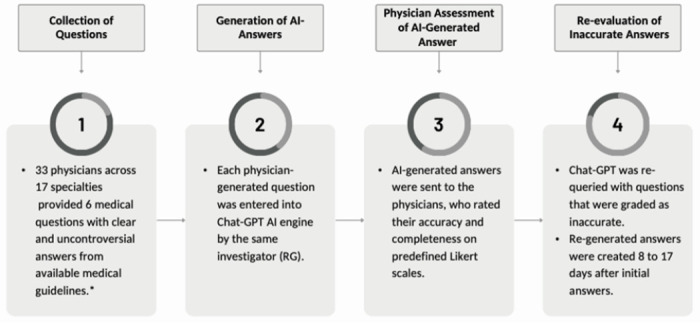
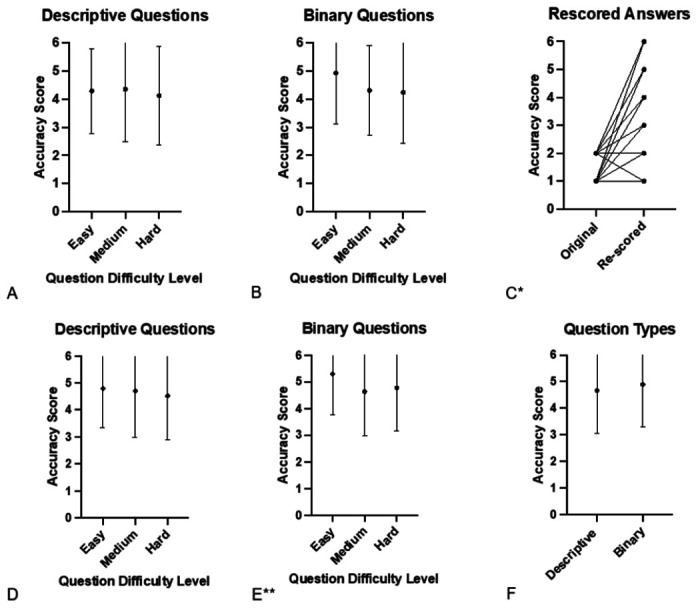
Background: Natural language processing models such as ChatGPT can generate text-based content and are poised to become a major information source in medicine and beyond. The accuracy and completeness of ChatGPT for medical queries is not known. Methods: Thirty-three physicians across 17 specialties generated 284 medical questions that they subjectively classified as easy, medium, or hard with either binary (yes/no) or descriptive answers. The physicians then graded ChatGPT-generated answers to these questions for accuracy (6-point Likert scale; range 1 – completely incorrect to 6 – completely correct) and completeness (3-point Likert scale; range 1 – incomplete to 3 - complete plus additional context). Scores were summarized with descriptive statistics and compared using Mann-Whitney U or Kruskal-Wallis testing. Results: Across all questions (n=284), median accuracy score was 5.5 (between almost completely and completely correct) with mean score of 4.8 (between mostly and almost completely correct). Median completeness score was 3 (complete and comprehensive) with mean score of 2.5. For questions rated easy, medium, and hard, median accuracy scores were 6, 5.5, and 5 (mean 5.0, 4.7, and 4.6; p=0.05). Accuracy scores for binary and descriptive questions were similar (median 6 vs. 5; mean 4.9 vs. 4.7; p=0.07). Of 36 questions with scores of 1-2, 34 were re-queried/re-graded 8-17 days later with substantial improvement (median 2 vs. 4; p<0.01). Conclusions: ChatGPT generated largely accurate information to diverse medical queries as judged by academic physician specialists although with important limitations. Further research and model development are needed to correct inaccuracies and for validation.
Overview
The claims and statistics of this paper haven’t been checked yet.
Free: it reads the open-access text and checks the first 5 claims that cite a source we can check. Create a free account to check every claim.
Integrity signals
Registry
Cites
Statistics
Figures
Verification
Claims the paper makes
The claims and statistics of this paper haven’t been checked yet.
Free: it reads the open-access text and checks the first 5 claims that cite a source we can check. Create a free account to check every claim.
Claims other papers make about this one
Each is checked against this paper’s own text: does it say what the citing paper says it does?
The source backs part of the claim, not all of it — or backs it for a different population, condition or comparison.
In the citing paper
“The same study reported that median accuracy scores were higher than mean scores in data analysis and that ChatGPT had a margin of error [29].”
From Is there any room for ChatGPT AI bot in speech-language pathology? (2025) · cites this paper as [29]
Experimental — accuracy not yet measuredThe source backs part of the claim, not all of it — or backs it for a different population, condition or comparison.
In the citing paper
“The output generated by Chat GPT is dependent on the complexity and clarity of the input, continuous evaluation of generated output will be required to ensure safe implementation in clinical settings [32, 33].”
From Artificial Intelligence (AI) – Powered Documentation Systems in Healthcare: A Systematic Review (2025) · cites this paper as [33]
Experimental — accuracy not yet measuredThe cited source says what the claim attributes to it.
In the citing paper
“it was found that more than 50% of ChatGPT responses to 180 questions created by 33 physicians had a high level of accuracy and comprehensiveness.”
From Is there any room for ChatGPT AI bot in speech-language pathology? (2025) · cites this paper as [29]
The cited source says what the claim attributes to it.
In the citing paper
“Despite some limited validation efforts, ChatGPT still requires further error correction [74].”
From Ethical Considerations of Using ChatGPT in Health Care (2023) · cites this paper as [74]
In the citing paper
“Overall, findings call into question previous claims that ChatGPT “has promise for providing accurate and comprehensive medical information” (18), and has “potential to provide first aid to young adults struggling with mental health issues” (19).”
From ChatGPT is not ready yet for use in providing mental health assessment and interventions (2024) · cites this paper as [18]
1 more claim about this paper
Create a free account to see every claim other papers make about this one.
Self-check
Percentages, sums and reported differences re-computed from the paper’s own numbers.
The self-check needs the paper’s full text.
Citations
Cites
Language Models are Few-Shot Learners
Brown, T. B., Mann, B., Ryder, N., Subbiah, M., Kaplan, J., Dhariwal, P., Neelakantan, A., Shyam, P., Sastry, G., Askell, A., et al. (2020) · arXiv · doi:10.48550/arxiv.2005.14165 · Cited by 23,372 · cited 2×
“5), an LLM with over 175 billion parameters (2).”
BackgroundAdvances in neural information processing systems 7
Cios, K., & Shields, M. (1997) · Neurocomputing · doi:10.1016/s0925-2312(97)90018-7 · Cited by 22,059
Kaugeranna, R., Kaugeranna, E., & Aion, (. S. 4. 6. (2023) · DROPS (Schloss Dagstuhl – Leibniz Center for Informatics) · doi:10.4230/lipics.giscience.2023.43 · Cited by 13,690
Kung, T. H., Cheatham, M., ChatGPT, Medenilla, A., Sillos, C., De Leon, L., Elepaño, C., Madriaga, M., Aggabao, R., Diaz-Candido, G., et al. (2022) · doi:10.1101/2022.12.19.22283643 · Cited by 4,115
Kung, T. H., Cheatham, M., Medenilla, A., Sillos, C., De Leon, L., Elepaño, C., Madriaga, M., Aggabao, R., Diaz-Candido, G., Maningo, J., et al. (2023) · PLOS Digital Health · doi:10.1371/journal.pdig.0000198 · Cited by 4,115 · cited 3×
“ChatGPT performed at or near the passing threshold for United States Medical Licensing Exam (USMLE) without any specialized training, suggesting its potential for medical education and clinical decision support (4, 5).”
BackgroundChatGPT is fun, but not an author
Thorp, H. H. (2023) · Science · doi:10.1126/science.adg7879 · Cited by 1,437
Deep reinforcement learning from human preferences
Christiano, P., Leike, J., Brown, T. B., Martic, M., Legg, S., & Amodei, D. (2017) · arXiv · doi:10.48550/arxiv.1706.03741 · Cited by 1,058
ChatGPT and other large language models are double-edged swords
Shen, Y., Heacock, L., Elias, J., Hentel, K. D., Reig, B., Shih, G., & Moy, L. (2023) · Radiology · doi:10.1148/radiol.230163 · Cited by 1,008 · cited 2×
“Compared to traditional supervised deep learning models, large language models can learn from data more e ciently with a two-stage training process, starting with self-supervised learning on vast amounts of unannotated data, then ne-tuned on smaller, task-speci c, annotated datasets so they can perform on end-user-spe…”
BackgroundChatGPT listed as author on research papers: many scientists disapprove
Stokel-Walker, C. (2023) · Nature · doi:10.1038/d41586-023-00107-z · Cited by 868
Flanagin, A., Bibbins-Domingo, K., Berkwits, M., & Christiansen, S. L. (2023) · JAMA · doi:10.1001/jama.2023.1344 · Cited by 420
Research works printed but not linked: 2
- [5]Gilson A, Safranek C, Huang T, Socrates V, Chi L, Taylor RA, How Well Does ChatGPT Do When Taking the Medical Licensing Exams? The Implications of Large Language Models for Medical Education and Knowledge Assessment. medRxiv. 2022: 2022.12. 23.22283901.
- [6]Shen Y, Heacock L, Elias J, Hentel KD, Reig B, Shih G, ChatGPT and Other Large Language Models Are Double-edged Swords. Radiology. 2023: 230163. 36700838
Cited by
Items 101–200 of 681
Yun, J. Y., Kim, D. J., Lee, N., & Kim, E. K. (2023) · International Journal of Medical Informatics · doi:10.1016/j.ijmedinf.2023.105219 · Cited by 43
Oon, M. L., Syn, N. L., Tan, C. L., Tan, K., & Ng, S. (2024) · Histopathology · doi:10.1111/his.15100 · Cited by 40
“Regarding ChatGPT’s performance on standardised medical exams, these typically involve questions that have clear and uncontroversial answers, 12 rather than those that require complex decision-making processes.”
BackgroundThe AI Future of Emergency Medicine
Petrella, R. J. (2024) · Annals of Emergency Medicine · doi:10.1016/j.annemergmed.2024.01.031 · Cited by 43
Canagasuriam, D., & Lukacik, E. (2024) · International Journal of Selection and Assessment · doi:10.1111/ijsa.12491 · Cited by 48
Sauder, M., Tritsch, T., Rajput, V., Schwartz, G., & Shoja, M. M. (2024) · Cureus · doi:10.7759/cureus.51961 · Cited by 41
A comparative evaluation of ChatGPT 3.5 and ChatGPT 4 in responses to selected genetics questions
McGrath, S., Kozel, B. A., Graceffo, S., Sutherland, N., Danford, C. J., & Walton, N. (2024) · Journal of the American Medical Informatics Association · doi:10.1093/jamia/ocae128 · Cited by 46
Is ChatGPT an Accurate and Readable Patient Aid for Third Molar Extractions?
Jacobs, T., Shaari, A. L., Gazonas, C. B., & Ziccardi, V. B. (2024) · Journal of Oral and Maxillofacial Surgery · doi:10.1016/j.joms.2024.06.177 · Cited by 44
Evaluation of Oropharyngeal Cancer Information from Revolutionary Artificial Intelligence Chatbot
Davis, R. J., Ayo‐Ajibola, O., Lin, M. E., Swanson, M. S., Chambers, T. N., Kwon, D. I., & Kokot, N. (2023) · The Laryngoscope · doi:10.1002/lary.31191 · Cited by 41
Unleashing the transformers: NLP models detect AI writing in education
Campino, J. (2024) · Journal of Computers in Education · doi:10.1007/s40692-024-00325-y · Cited by 51
“However, there are fragilities in the technology (Mathew, 2023) and the model still needs improvement has it still provides biased and wrong answers which can compromise its overall accuracy (Johnson, et al., 2023).”
THE POTENTIAL IMPACT OF USING CHAT GPT ON EFL STUDENTS' WRITING: EFL TEACHERS' PERSPECTIVE
Rahma, A., & Fithriani, R. (2024) · Indonesian EFL Journal · doi:10.25134/ieflj.v10i1.9222 · Cited by 50
Roldan‐Vasquez, E., Mitri, S., Bhasin, S., Bharani, T., Capasso, K., Haslinger, M. L., Sharma, R., & James, T. A. (2024) · Journal of Surgical Oncology · doi:10.1002/jso.27715 · Cited by 40
StuGPTViz: A Visual Analytics Approach to Understand Student-ChatGPT Interactions
Chen, Z., Wang, J., Xia, M., Shigyo, K., Liu, D., Zhang, R., & Qu, H. (2024) · IEEE Transactions on Visualization and Computer Graphics · doi:10.1109/tvcg.2024.3456363 · Cited by 45
“Through our literature review, common metrics for evaluating ChatGPT’s responses include response relevance, length, and correctness [28,42,43], all recognized as important by our experts.”
BackgroundUppal, K., & Hajian, S. (2024) · European Journal of Educational Research · doi:10.12973/eu-jer.14.1.199 · Cited by 36
Use and Application of Large Language Models for Patient Questions Following Total Knee Arthroplasty
Bains, S. S., Dubin, J. A., Hameed, D., Sax, O. C., Douglas, S., Mont, M. A., Nace, J., & Delanois, R. E. (2024) · The Journal of Arthroplasty · doi:10.1016/j.arth.2024.03.017 · Cited by 36
The opportunities and challenges of adopting ChatGPT in medical research
Alsadhan, A., Al-Anezi, F., Almohanna, A., Alnaim, N., Alzahrani, H., Shinawi, R., AboAlsamh, H., Bakhshwain, A., Alenazy, M., Arif, W., et al. (2023) · Frontiers in Medicine · doi:10.3389/fmed.2023.1259640 · Cited by 31
“Studies (11, 12) have shown that ChatGPT can provide accurate and relevant answers to a wide range of questions, outperforming previous models in terms of accuracy and efficiency.”
BackgroundAdvancing health coaching: A comparative study of large language model and health coaches
Ong, Q. C., Ang, C., Chee, D. Z. Y., Lawate, A., Sundram, F., Dalakoti, M., Pasalic, L., To, D., Fox, T. E., Bojić, I., et al. (2024) · Artificial Intelligence in Medicine · doi:10.1016/j.artmed.2024.103004 · Cited by 45
Utilization of Generative AI-drafted Responses for Managing Patient-Provider Communication
Mandal, S., Wiesenfeld, B. M., Szerencsy, A. C., Small, W. R., Major, V. J., Richardson, S. I., Schoenthaler, A., Mann, D., & Nov, O. (2025) · npj Digital Medicine · doi:10.1038/s41746-025-01972-w · Cited by 40
“Studies evaluating GenAI-drafted responses to patient messages have found them comparable to human responses in acceptability, accuracy, and empathy by both patients and providers 14,23 – 26 .”
Hurvitz, N., & Ilan, Y. (2023) · Clinics and Practice · doi:10.3390/clinpract13040089 · Cited by 37
Niño, A. P., Perez, V. G., Secco, S., Nunzio, C. D., Lombardo, R., Tikkinen, K. A. O., & Elterman, D. (2024) · Prostate Cancer and Prostatic Diseases · doi:10.1038/s41391-024-00847-7 · Cited by 36
“The integration of AI into medical practice is an evolving and innovative initiative that has gained attention for its potential to enhance information availability, guide decision-making processes, and optimize executive operations within healthcare [1, 15].”
Short-term learning effect of ChatGPT on pharmacy students' learning
Svendsen, K., Askar, M., Umer, D., & Halvorsen, K. H. (2024) · Exploratory Research in Clinical and Social Pharmacy · doi:10.1016/j.rcsop.2024.100478 · Cited by 28
Gavira Durón, N., & Jiménez-Preciado, A. L. (2026) · The TQM Journal · doi:10.1108/tqm-10-2024-0376 · Cited by 23
Evaluating search engines and large language models for answering health questions
Fernández-Pichel, M., Pichel, J. C., & Losada, D. E. (2025) · npj Digital Medicine · doi:10.1038/s41746-025-01546-w · Cited by 33
“The results clearly showed that users prefer to search for medical information using traditional search engines.”
Valentini, M., Szkandera, J., Smolle, M. A., Scheipl, S., Leithner, A., & Andreou, D. (2024) · Frontiers in Public Health · doi:10.3389/fpubh.2024.1303319 · Cited by 36
Sezgın, E., Kocaballi, A. B., Dolcé, M., Skeens, M. A., Militello, L. K., Huang, Y., Stevens, J. H., & Kemper, A. R. (2024) · JMIR Human Factors · doi:10.2196/57114 · Cited by 39
“Although the current chatbot conversational flow was designed to be rule based, transformer-based large language models and artificial intelligence (AI)–enabled conversational agents are alternative approaches to delegate a variety of tasks [66,67].”
Brondani, M., Alves, C. M. C., Ribeiro, C. C. C., Braga, M. M., Garcia, R. C. M. R., Ardenghi, T. M., & Pattanaporn, K. (2024) · Journal of Dental Education · doi:10.1002/jdd.13663 · Cited by 67
“30 All things considered, there is an effectiveness and potential use for ChatGPT in dental education, as shown herein.”
Multiknowledge and LLM-Inspired Heterogeneous Graph Neural Network for Fake News Detection
Xie, B., Ma, X., Xue, S., Beheshti, A., Yang, J. Y., Fan, H., & Wu, J. X. (2024) · IEEE Transactions on Computational Social Systems · doi:10.1109/tcss.2024.3488191 · Cited by 40
“There are several excellent existing LLMs in academia and industry such as ChatGPT [23], LLaMa [19], and PaLM [24].”
Yan, Z., Liu, J., Fan, Y., Lu, S., Xu, D., Yang, Y., Wang, H., Mao, J., Tseng, H.-C., Chang, T.-H., et al. (2025) · Journal of Medical Internet Research · doi:10.2196/62857 · Cited by 36
“Large-scale AI language models possess the capability for improvement and learning, rendering similar research findings potentially outdated in a short span of time [9,10,40].”
Karimov, Z., Allahverdiyev, I., Yağız, Ö., Demir, D., & Almuradova, E. (2024) · European Archives of Oto-Rhino-Laryngology · doi:10.1007/s00405-023-08423-w · Cited by 35
Levin, C., Kagan, T., Rosen, S., & Saban, M. (2024) · International Journal of Nursing Studies · doi:10.1016/j.ijnurstu.2024.104771 · Cited by 34
Stengel, F. C., Stienen, M. N., Ivanov, M., Gandía-González, M. L., Raffa, G., Ganau, M., Whitfield, P. C., & Motov, S. (2024) · Brain and Spine · doi:10.1016/j.bas.2024.102765 · Cited by 33
“The complexity of questions and the SBA type might even present a certain limitation for current AI models as they are designed with conversational interfaces more capable of providing context and content to open questions (Johnson et al., 2023; Gilson et al., 2023).”
BackgroundResultVassis, S., Powell, H., Petersen, E., Barkmann, A., Noeldeke, B., Kristensen, K. D., & Stoustrup, P. B. (2024) · Cureus · doi:10.7759/cureus.68085 · Cited by 32
ChatGPT and Patients With Heart Failure
Dimitriadis, F., Alkagiet, S., Tsigkriki, L., Kleitsioti, P., Sidiropoulos, G., Efstratiou, D., Askalidi, T., Tsaousidis, A., Siarkos, M., Giannakopoulou, P., et al. (2024) · Angiology · doi:10.1177/00033197241238403 · Cited by 33
Innovations in Medicine: Exploring ChatGPT’s Impact on Rare Disorder Management
Zampatti, S., Peconi, C., Megalizzi, D., Calvino, G., Trastulli, G., Cascella, R., Strafella, C., Caltagirone, C., & Giardina, E. (2024) · Genes · doi:10.3390/genes15040421 · Cited by 37
“There were no significant differences according to the difficulty level of questions, except for completeness scores that reached a median of 2.5/3 (mean 2.4, SD 0.7) for complex answers [68].”
BackgroundMethodInfluentialPark, G. W., Panda, P., Tankelevitch, L., & Rintel, S. (2024) · Designing Interactive Systems Conference · doi:10.1145/3643834.3661507 · Cited by 39
“Overall implementation: We implemented CoExplorer using Unity and the GPT-3.”
MethodLevin, C., Suliman, M., Naimi, E., & Saban, M. (2024) · Journal of Clinical Nursing · doi:10.1111/jocn.17384 · Cited by 33
“…by ICUs, echoing suggestions from the literature that GenAI may help address clinician shortages if used judiciously (Barash et al., 2023; Johnson et al., 2023 ; Rosen & Saban, 2023b ; Tam et al., 2023 Our research, which draws upon the principles of the Turing Test, serves as a unique…”
Artificial intelligence-assisted chatbot: impact on breastfeeding outcomes and maternal anxiety
Yıldız, G. K., Türk, R., & Çoktay, Z. (2025) · BMC Pregnancy and Childbirth · doi:10.1186/s12884-025-07753-3 · Cited by 35
“ChatGPT draws information from diverse online sources, such as books, articles, and websites, and refines its text-generation capabilities through human feed-back [23].”
Barker, L. A., Moore, J. D., & Cook, H. A. (2024) · Nutrients · doi:10.3390/nu16070914 · Cited by 34
“Until now, there has been considerable effort and expense relating to the development of VSPs [ However, the release of large language models to the public, for example, ChatGPT, shows great promise for mobilising arti fi cial intelligence in VSP applications in education [17].”
BackgroundKamminga, N. C. W., Kievits, J. E. C., Plaisier, P. W., Burgers, J. S., van der Veldt, A. A. M., van den Brand, J. A. G. J., Mulder, M., Wakkee, M., Lugtenberg, M., & Nijsten, T. E. C. (2024) · British Journal of Dermatology · doi:10.1093/bjd/ljae377 · Cited by 32
Akpınar, H. (2025) · BMC Oral Health · doi:10.1186/s12903-025-06294-7 · Cited by 32
“When combined with other AI-powered tools, these technologies may play a transformative role in experiential learning and clinical competency development, particularly in equipping inexperienced dentists to manage complex procedures effectively [4, 9, 20].”
The Quality of CLP-Related Information for Patients Provided by ChatGPT
Duran, G. S., Yurdakurban, E., & Topsakal, K. G. (2023) · The Cleft Palate-Craniofacial Journal · doi:10.1177/10556656231222387 · Cited by 31
“13-15 These NLP models are quickly becoming common in modern society and have the ability to provide patients with CLP and their families with information through interactive dialogues about topics of interest.”
Buldur, M., & Sezer, B. (2024) · BMC Oral Health · doi:10.1186/s12903-024-04358-8 · Cited by 30
Mediboina, A., Badam, R. K., & Chodavarapu, S. (2024) · Cureus · doi:10.7759/cureus.51544 · Cited by 29
Kirwan, A. (2024) · Irish Educational Studies · doi:10.1080/03323315.2023.2284901 · Cited by 29
“Suggested positive uses have included possible AI assisted potential uses in medicine (Ayers et al. 2023; Johnson et al. 2023).”
Radha Krishnan, R. P., Hung, E. H., Ashford, M., Edillo, C. E., Gardner, C., Hatrick, H. B., Kim, B., Lai, A. W. Y., Li, X., Zhao, Y. X., et al. (2024) · British Journal of Clinical Pharmacology · doi:10.1111/bcp.16275 · Cited by 29
Peled, T., Sela, H. Y., Weiss, A., Grisaru‐Granovsky, S., Agrawal, S., & Rottenstreich, M. (2024) · International Journal of Gynecology & Obstetrics · doi:10.1002/ijgo.15501 · Cited by 31
“7,9 Pregnancy by nature is a state of anxiety and concerns for the health of the fetus and the mother.”
Evaluating the quality of responses generated by ChatGPT
Mandić, D., Miščević, G., & Bujišić, L. (2024) · Metodicka praksa · doi:10.5937/metpra27-51446 · Cited by 31
Ben-Haim, G., Saban, M., Barash, Y., Cirulnik, D., Shaham, A., Eisenman, B., Burshtein, L., Mymon, O., & Klang, E. (2024) · Journal of Clinical Nursing · doi:10.1111/jocn.17490 · Cited by 29
THE ROLE OF CHATGPT AND HIGHER-ORDER THINKING SKILLS AS PREDICTORS OF PHYSICS INQUIRY
Fadillah, M. A., Usmeldi, U., & Asrizal, A. (2024) · Journal of Baltic Science Education · doi:10.33225/jbse/24.23.1178 · Cited by 32
Hassoulas, A., Powell, N., Roberts, L., Umla-Runge, K., Gray, L., & Coffey, M. J. (2023) · Journal of Applied Learning and Teaching · doi:10.37074/jalt.2023.6.2.13 · Cited by 28
Kasthuri, V. S., Glueck, J., Pham, H., Daher, M., Balmaceno-Criss, M., McDonald, C. L., Diebo, B. G., & Daniels, A. H. (2024) · Journal of Bone and Joint Surgery · doi:10.2106/jbjs.23.00914 · Cited by 29
ChatGPT in Occupational Medicine: A Comparative Study with Human Experts
Padovan, M., Cosci, B., Petillo, A., Nerli, G., Porciatti, F., Scarinci, S., Carlucci, F., Dell’Amico, L., Meliani, N., Necciari, G., et al. (2024) · Bioengineering · doi:10.3390/bioengineering11010057 · Cited by 31
“In another study, Johnson D. et al. [37] assessed the accuracy and comprehensiveness of medical queries generated by healthcare professionals using ChatGPT.”
MethodXu, J., Lu, L., Peng, X., Pang, J., Ding, J., Yang, L., Song, H., Li, K., Sun, X., & Zhang, S. (2024) · JMIR Medical Informatics · doi:10.2196/57674 · Cited by 30
“Recent evaluations have been mainly based on automatic metrics [8-10] (eg, bilingual evaluation understudy, Recall-Oriented Understudy for Gisting Evaluation, and accuracy) in popular applications such as machine translation and text summarization.”
MethodEffect of ChatGPT's Answering Style on Users ' Acceptance in a Trip Planning Context
Kim, J., Shin, S., Kim, J. Y., & Koo, C. (2024) · International Journal of Tourism Research · doi:10.1002/jtr.2746 · Cited by 28
Etaiwi, W., & Alhijawi, B. (2025) · Array · doi:10.1016/j.array.2025.100478 · Cited by 31
“Johnson et al. [21] assessed the accuracy and completeness of ChatGPT in responding to 284 medical questions created by 33 physicians across 17 specialties.”
Evaluation of ChatGPT pathology knowledge using board-style questions
Geetha, S. D., Khan, A., Khan, A. I., Kannadath, B. S., & Vitkovski, T. (2023) · American Journal of Clinical Pathology · doi:10.1093/ajcp/aqad158 · Cited by 29
Ocakoğlu, S. R., & Coşkun, B. (2024) · Medical Principles and Practice · doi:10.1159/000538538 · Cited by 29
“Evaluation Metrics of the outputs was gauged using a scale proposed by Johnson et al. [18] as follows: 1 = completely incorrect; 2 = more incorrect than correct; 3 = approximately equal parts correct and incorrect; 4 = more correct than incorrect; 5 = nearly all correct; 6 = correct.”
MethodInfluentialAtiyah, A. G., Faris, N. N., Rexhepi, G., & Qasim, A. J. (2023) · Lecture notes in networks and systems · doi:10.1007/978-3-031-51716-7_9 · Cited by 28
Usefulness of Generative Artificial Intelligence (AI) Tools in Pediatric Dentistry
Kusaka, S., Akitomo, T., Hamada, M., Asao, Y., Iwamoto, Y., Tachikake, M., Mitsuhata, C., & Nomura, R. (2024) · Diagnostics · doi:10.3390/diagnostics14242818 · Cited by 29
Dynamic fog computing for enhanced LLM execution in medical applications
Zagar, P., Ravi, V., Aalami, L. R., Krusche, S., Aalami, O., & Schmiedmayer, P. (2025) · Smart Health · doi:10.1016/j.smhl.2025.100577 · Cited by 29
Can Patients Rely on ChatGPT to Answer Hand Pathology–Related Medical Questions?
Jagiella‐Lodise, O., Suh, N., & Zelenski, N. A. (2024) · Hand · doi:10.1177/15589447241247246 · Cited by 26
Jaleel, A., Aziz, U., Farid, G., Zahid Bashir, M., Mirza, T. R., Khizar Abbas, S. M., Aslam, S., & Sikander, R. M. H. (2025) · JMIR Medical Education · doi:10.2196/68070 · Cited by 25
“However, some studies have highlighted the efficacy of artificial cognitive empathy, which highlights the growth of AI in the “soft skills” department, that is, empathy, ethics, and judgment, of clinical practice [3,4].”
Artificial intelligence in Ayurveda: Current concepts and prospects
Ranade, M. A. (2024) · Journal of Indian System of Medicine · doi:10.4103/jism.jism_60_23 · Cited by 45
Revolutionizing Personalized Protein Energy Malnutrition Treatment: Harnessing the Power of Chat GPT
Khan, U. (2023) · Annals of Biomedical Engineering · doi:10.1007/s10439-023-03331-w · Cited by 25
A Quantitative Assessment of ChatGPT as a Neurosurgical Triaging Tool
Ward, M., Unadkat, P., Toscano, D., Kashanian, A., Lynch, D. G., Horn, A. C., D’Amico, R. S., Mittler, M. A., & Baum, G. R. (2024) · Neurosurgery · doi:10.1227/neu.0000000000002867 · Cited by 26
An analysis of ChatGPT recommendations for the diagnosis and treatment of cervical radiculopathy
Hoang, T. J., Liou, L., Rosenberg, A. M., Zaidat, B., Duey, A. H., Shrestha, N., Ahmed, W., Tang, J. E., Kim, J., & Cho, S. K.-W. (2024) · Journal of Neurosurgery Spine · doi:10.3171/2024.4.spine231148 · Cited by 28
Alanezi, F. (2025) · Nutrition and Health · doi:10.1177/02601060241244563 · Cited by 24
“There is no enough evidence to generalize the reliability of ChatGPT in healthcare services such as cancer management, as studies have indicated varying levels of accuracy and reliability of ChatGPT ’ s information (Johnson et al., 2023; Yeo et al., 2023).”
Large language models in physical therapy: time to adapt and adept
Naqvi, W. M., Shaikh, S. Z., & Mishra, G. V. (2024) · Frontiers in Public Health · doi:10.3389/fpubh.2024.1364660 · Cited by 24
Advantages and Limitations of ChatGPT in Healthcare: A Scoping Review
Ghasemi, S. F., Amiri, P., & Galavi, Z. (2025) · Health Science Reports · doi:10.1002/hsr2.71219 · Cited by 26
Quantitative evaluation of ChatGPT versus Bard responses to anaesthesia-related queries
Patnaik, S. S., & Hoffmann, U. (2023) · British Journal of Anaesthesia · doi:10.1016/j.bja.2023.09.030 · Cited by 27
Dubin, J. A., Bains, S. S., DeRogatis, M. J., Moore, M. C., Hameed, D., Mont, M. A., Nace, J., & Delanois, R. E. (2024) · The Journal of Arthroplasty · doi:10.1016/j.arth.2024.04.020 · Cited by 24
An assessment of ChatGPT’s responses to frequently asked questions about cervical and breast cancer
Ye, Z., Zhang, B., Zhang, K., González, M. J., Yan, H., Wu, T., Qu, Y., Jiang, Y., Xue, P., & Qiao, Y. (2024) · BMC Women s Health · doi:10.1186/s12905-024-03320-8 · Cited by 26
Educating patients on osteoporosis and bone health: Can “ChatGPT” provide high-quality content?
Ghanem, D., Shu, H., Bergstein, V., Marrache, M., Love, A., Hughes, A., Sotsky, R., & Shafiq, B. (2024) · European Journal of Orthopaedic Surgery & Traumatology · doi:10.1007/s00590-024-03990-y · Cited by 23
“This language model, developed by OpenAI, utilizes 175 billion parameters to answer user questions in a rapid and informed manner [1].”
Bonfitto, G. R., Roletto, A., Savardi, M., Fasulo, S. V., Catania, D., & Signoroni, A. (2024) · Radiography · doi:10.1016/j.radi.2024.02.015 · Cited by 24
Wang, S., Wang, Y., Jiang, L., Chang, Y., Zhang, S., Zhao, K., Chen, L., & Gao, C. (2025) · European journal of medical research · doi:10.1186/s40001-025-02296-x · Cited by 27
“Chat-GPT’s content is updated much more frequently than hospital patient information leaflets and other traditional sources, as shown by Johnson et al. [26].”
Ciubotaru, B.-I. (2025) · Proceedings of the... International Conference on Virtual Learning · doi:10.58503/icvl-v20y202503 · Cited by 23
Stability Analysis of ChatGPT-Based Sentiment Analysis in AI Quality Assurance
Ouyang, T., MaungMaung, A., Konishi, K., Seo, Y., & Echizen, I. (2024) · Electronics · doi:10.3390/electronics13245043 · Cited by 27
Fazilat, A. Z., Brenac, C., Kawamoto-Duran, D., Berry, C. E., Alyono, J. C., Chang, M. T., Liu, D. T., Patel, Z. M., Tringali, S., Wan, D. C., et al. (2024) · European Archives of Oto-Rhino-Laryngology · doi:10.1007/s00405-024-09180-0 · Cited by 23
Large Language Model Evaluation Criteria Framework in Healthcare: Fuzzy MCDM Approach
Alabool, H. M. (2025) · SN Computer Science · doi:10.1007/s42979-024-03533-6 · Cited by 23
Marshall, R. F., Mallem, K., Xu, H., Thorne, J. E., Burkholder, B. M., Chaon, B., Liberman, P., & Berkenstock, M. (2024) · Ocular Immunology and Inflammation · doi:10.1080/09273948.2024.2317417 · Cited by 23
Berry, C. E., Fazilat, A. Z., Lavin, C. V., Lintel, H. A., Cole, N. A., Stingl, C. S., Valencia, C., Morgan, A. G., Momeni, A., & Wan, D. C. (2024) · Journal of Reconstructive Microsurgery · doi:10.1055/a-2273-4163 · Cited by 23
“17 In terms of creating readable information, one study asked ChatGPT to explain radiology reports in “ laymen ’ s terms, ” which resulted in reports sim-pli fi ed to below an eighth-grade reading level.”
Evaluation of ChatGPT for Pelvic Floor Surgery Counseling
Johnson, C. M., Bradley, C. S., Kenne, K. A., Rabice, S. R., Takacs, E. B., Vollstedt, A. J., & Kowalski, J. T. (2024) · Urogynecology · doi:10.1097/spv.0000000000001459 · Cited by 23
Huo, B., Marfo, N. Y. A., Sylla, P. A., Calabrese, E., Kumar, S. S., Slater, B. J., Walsh, D. S., & Vosburg, R. W. (2024) · Surgical Endoscopy · doi:10.1007/s00464-024-11155-5 · Cited by 24
“A major barrier to their acceptance in clinical practice is the clinical accuracy of their responses [4].”
Bayram, H. M., & OZTURKCAN, A. (2024) · British Food Journal · doi:10.1108/bfj-02-2024-0158 · Cited by 22
Rakin, S., Shibly, M. A. R., Hossain, Z. M., Akbar, M. M., & Khan, Z. (2025) · Advances in intelligent systems and computing · doi:10.1007/978-3-031-89063-5_42 · Cited by 26
Barclay, K. S., You, J. Y., Coleman, M. J., Mathews, P. M., Ray, V., Riaz, K. M., Rojas, J. O. D., Wang, A. S., Watson, S. H., Koo, E. H., et al. (2023) · Cornea · doi:10.1097/ico.0000000000003439 · Cited by 22
Zaimah, N. R., Hartanto, E. B., & Zahro, F. (2023) · Mantiqu Tayr Journal of Arabic Language · doi:10.25217/mantiqutayr.v4i1.3951 · Cited by 33
Talukder, M. B., & Kumar, S. (2024) · Advances in information security, privacy, and ethics book series · doi:10.4018/979-8-3693-1511-8.ch005 · Cited by 23
Quantitative Comparison of Chatbots on Common Rhinology Pathologies
Bellinger, J. R., Kwak, M. W., Ramos, G. A., Mella, J. S., & Mattos, J. L. (2024) · The Laryngoscope · doi:10.1002/lary.31470 · Cited by 21
“The results are unsurprisingly variable across studies, 23,24,26,41 – 44 with most results demonstrating responses that are appropriate or mostly accurate.”
Using large language models for safety-related table summarization in clinical study reports
Landman, R., Healey, S. P., Loprinzo, V., Kochendoerfer, U., Winnier, A. R., Henstock, P. V., Lin, W., Chen, A., Rajendran, A., Penshanwar, S., et al. (2024) · JAMIA Open · doi:10.1093/jamiaopen/ooae043 · Cited by 23
Lee, A. V. Y. (2024) · Asia Pacific Journal of Education · doi:10.1080/02188791.2024.2305171 · Cited by 20
“…as concerns about ensuring proper and ethical use of generative AI (Lund & Wang, 2023), doubtful accuracy and unreliable outcomes from the model (Johnson et al., 2023), whether there are inherent or systemic biases in the models (Lucy & Bamman, 2021), and insufficient explainability of AI use…”
BackgroundAkbasli, I. T., Bırbılen, A. Z., & Tekşam, Ö. (2025) · BMC Medical Informatics and Decision Making · doi:10.1186/s12911-025-02871-6 · Cited by 22
Othman, A. A., Sharqawi, A. J., MohammedAziz, A. A., Ali, W. A., Alatiyyah, A. A., & Mirah, M. A. (2025) · Healthcare · doi:10.3390/healthcare13172144 · Cited by 23
Evaluating ChatGPT on Orbital and Oculofacial Disorders: Accuracy and Readability Insights
Balas, M., Janic, A., Daigle, P., Nijhawan, N., Hussain, A., Gill, H., Luna, G. M. L., Belliveau, M. J., Crawford, S. A., Arjmand, P., et al. (2023) · Ophthalmic Plastic and Reconstructive Surgery · doi:10.1097/iop.0000000000002552 · Cited by 21
“7 Furthermore, its proficiency has been demonstrated in medical licensure examinations such as the USMLE, 8,9 and its capacity to process and generate a vast array of data has been recognized in various academic settings.”
BackgroundAccuracy of a chatbot in answering questions that patients should ask before taking a new medication
Cornelison, B. R., Erstad, B. L., & Edwards, C. J. (2024) · Journal of the American Pharmacists Association · doi:10.1016/j.japh.2024.102110 · Cited by 23
Alzyoudi, M., & Almazroui, K. M. (2024) · Online Journal of Communication and Media Technologies · doi:10.30935/ojcmt/14617 · Cited by 22
Comparing ChatGPT vs Surgeon-Generated Informed Consent Documentation for Plastic Surgery Procedures
Patel, I. S., Om, A., Cuzzone, D. A., & Nores, G. G. (2024) · Aesthetic Surgery Journal Open Forum · doi:10.1093/asjof/ojae092 · Cited by 22
Applications and Future Prospects of Medical LLMs: A Survey Based on the M-KAT Conceptual Framework
Chang, Y., Yin, J., Li, J., Liu, C., Cao, L., & Lin, S. (2024) · Journal of Medical Systems · doi:10.1007/s10916-024-02132-5 · Cited by 23
“Apart from the accuracy of clinical diagnosis, some researchers also evaluate ChatGPT’s medical critical thinking abilities [142], answer completeness [143], and factual consistency in summary generation [144].”
Wang, S., Ouyang, Q., & Wang, B. (2024) · Research Square · doi:10.21203/rs.3.rs-3987793/v1 · Cited by 76
Private Yet Social: How LLM Chatbots Support and Challenge Eating Disorder Recovery
Choi, R., Kim, T., Park, S., Kim, J. G., & Lee, S.-J. (2025) · Proceedings of the 2025 CHI Conference on Human Factors in Computing Systems · doi:10.1145/3706598.3713485 · Cited by 19
“Additionally, principled metrics are needed to rig-orously evaluate the safety and effectiveness of these LLMs [67], ensuring they provide meaningful support.”
Artificial intelligence in respiratory care: perspectives on critical opportunities and challenges
Drummond, D., Adejumo, I., Hansen, K., Poberezhets, V., Slabaugh, G., & Hui, C. Y. (2024) · Breathe · doi:10.1183/20734735.0189-2023 · Cited by 22
Metadata
- Authors
- Johnson, D., Goodman, R., Patrinely, J., Stone, C., Zimmerman, E., Donald, R., Chang, S., Berkowitz, S., Finn, A., Jahangir, E., Scoville, E., Reese, T., Friedman, D., Bastarache, J., Heijden, Y. V. D., Wright, J., Carter, N., Alexander, M., Choe, J., Chastain, C., Zic, J., Horst, S., Turker, I., Agarwal, R., Osmundson, E., Idrees, K., Kiernan, C., Padmanabhan, C., Bailey, C., Schlegel, C., Chambless, L., Gibson, M., Osterman, T., & Wheless, L.
- Affiliations
- Vanderbilt University Medical Center (US)
- Vanderbilt University (US)
- Vanderbilt University Medical Center
- Corresponding author
- Johnson, Douglas
- ORCID
- Johnson, Douglas
- Goodman, Rachel
- Patrinely, J
- Stone, Cosby
- Donald, Rebecca
- Chang, Sam
- Berkowitz, Sean
- Finn, Avni
- Jahangir, Eiman
- Scoville, Elizabeth
- Reese, Tyler
- Friedman, Debra
- Bastarache, Julie
- Alexander, Matthew
- Choe, Jennifer
- Chastain, Cody
- Horst, Sara
- Turker, Isik
- Idrees, Kamran
- Padmanabhan, Chandrasekhar
- Bailey, Christina
- Schlegel, Cameron
- Chambless, Lola
- Osterman, Travis
- Wheless, Lee
- Venue
- Research Square
- Published
- 2023-02-28
- PMC
- PMC10002821
- OpenAlex
- W4322622443
- Cited by
- 598
- References
- 8
- Citations by year
- 2026: 63 · 2025: 185 · 2024: 249 · 2023: 100
- Type
- posted content
- Language
- en
- Open access
- green
- doi.org
- Locations
- Research Square (acceptedVersion, cc-by)
- PubMed (publishedVersion)
- PubMed Central (submittedVersion, cc-by)
- Funders
- National Heart, Lung, and Blood Institute (R01HL151523, U01HL156620)
- National Cancer Institute (UG3CA265846, R01CA225005, UG3CA260318, R01CA240093, R01CA227481, K12CA090625, P30CA068485, U54CA163072)
- National Institute of Diabetes and Digestive and Kidney Diseases (K08DK133691)
- Topics
- Health Sciences › Medicine › Health Informatics › Artificial Intelligence in Healthcare and Education
- Health Sciences › Health Professions › Health Information Management › Artificial Intelligence in Healthcare
- Physical Sciences › Computer Science › Information Systems › Information Retrieval and Search Behavior
- Keywords
- ChatGPT, large language models, medical question answering, AI-generated medical information, accuracy assessment
About these checks
Registry, retraction, Cites and statistics results are computed, not judged, with one exception: a printed reference that no index lists is read once by a model before it counts as a citation error. Claims are extracted by a model and kept only when their quote appears verbatim in the text; each cited source is then checked, with a model’s help, for whether it says what the claim relies on. Those verdicts can be wrong — read the claim’s quote and the cited source before relying on one.
Statistics and arithmetic are recomputed, not judged.
Confidence bands are shown only for fields calibrated on our annotated test set. None is calibrated yet, so no band is shown.
What counts as a claim ›How we measure confidence ›How we check this ›
Are you an author, or do you see a problem with this page? Request a review
Data sources
Bibliographic data: Semantic Scholar, OpenAlex, Crossref.
Contains information from the Semantic Scholar Academic Graph Datasets, made available under the ODC Attribution License (ODC-BY 1.0).
Semantic Scholar’s data is described in: Kinney, R., et al. (2023). The Semantic Scholar Open Data Platform. arXiv:2301.10140.
