

Assessing the Accuracy and Reliability of AI-Generated Medical Responses: An Evaluation of the Chat-GPT Model
Open accessThe DOI matches its Crossref record; 12 of the 12 references it cites were found in a registry or an index.
Abstract
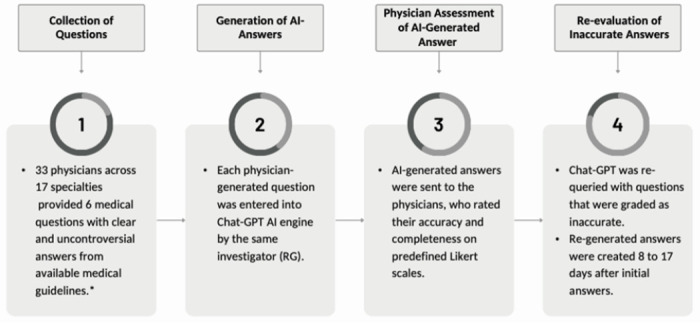
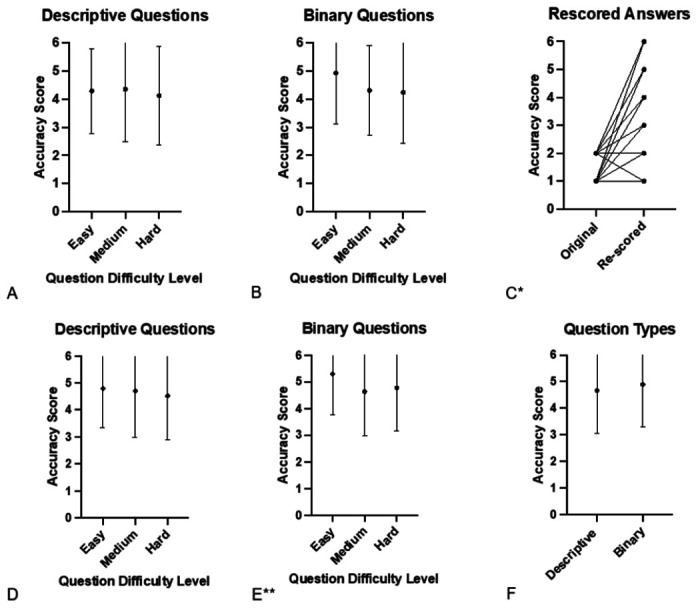
Background: Natural language processing models such as ChatGPT can generate text-based content and are poised to become a major information source in medicine and beyond. The accuracy and completeness of ChatGPT for medical queries is not known. Methods: Thirty-three physicians across 17 specialties generated 284 medical questions that they subjectively classified as easy, medium, or hard with either binary (yes/no) or descriptive answers. The physicians then graded ChatGPT-generated answers to these questions for accuracy (6-point Likert scale; range 1 – completely incorrect to 6 – completely correct) and completeness (3-point Likert scale; range 1 – incomplete to 3 - complete plus additional context). Scores were summarized with descriptive statistics and compared using Mann-Whitney U or Kruskal-Wallis testing. Results: Across all questions (n=284), median accuracy score was 5.5 (between almost completely and completely correct) with mean score of 4.8 (between mostly and almost completely correct). Median completeness score was 3 (complete and comprehensive) with mean score of 2.5. For questions rated easy, medium, and hard, median accuracy scores were 6, 5.5, and 5 (mean 5.0, 4.7, and 4.6; p=0.05). Accuracy scores for binary and descriptive questions were similar (median 6 vs. 5; mean 4.9 vs. 4.7; p=0.07). Of 36 questions with scores of 1-2, 34 were re-queried/re-graded 8-17 days later with substantial improvement (median 2 vs. 4; p<0.01). Conclusions: ChatGPT generated largely accurate information to diverse medical queries as judged by academic physician specialists although with important limitations. Further research and model development are needed to correct inaccuracies and for validation.
Overview
The claims and statistics of this paper haven’t been checked yet.
Free: it reads the open-access text and checks the first 5 claims that cite a source we can check. Create a free account to check every claim.
Integrity signals
Registry
Cites
Statistics
Figures
Verification
Claims the paper makes
The claims and statistics of this paper haven’t been checked yet.
Free: it reads the open-access text and checks the first 5 claims that cite a source we can check. Create a free account to check every claim.
Claims other papers make about this one
Each is checked against this paper’s own text: does it say what the citing paper says it does?
The source backs part of the claim, not all of it — or backs it for a different population, condition or comparison.
In the citing paper
“The same study reported that median accuracy scores were higher than mean scores in data analysis and that ChatGPT had a margin of error [29].”
From Is there any room for ChatGPT AI bot in speech-language pathology? (2025) · cites this paper as [29]
Experimental — accuracy not yet measuredThe source backs part of the claim, not all of it — or backs it for a different population, condition or comparison.
In the citing paper
“The output generated by Chat GPT is dependent on the complexity and clarity of the input, continuous evaluation of generated output will be required to ensure safe implementation in clinical settings [32, 33].”
From Artificial Intelligence (AI) – Powered Documentation Systems in Healthcare: A Systematic Review (2025) · cites this paper as [33]
Experimental — accuracy not yet measuredThe cited source says what the claim attributes to it.
In the citing paper
“it was found that more than 50% of ChatGPT responses to 180 questions created by 33 physicians had a high level of accuracy and comprehensiveness.”
From Is there any room for ChatGPT AI bot in speech-language pathology? (2025) · cites this paper as [29]
The cited source says what the claim attributes to it.
In the citing paper
“Despite some limited validation efforts, ChatGPT still requires further error correction [74].”
From Ethical Considerations of Using ChatGPT in Health Care (2023) · cites this paper as [74]
In the citing paper
“Overall, findings call into question previous claims that ChatGPT “has promise for providing accurate and comprehensive medical information” (18), and has “potential to provide first aid to young adults struggling with mental health issues” (19).”
From ChatGPT is not ready yet for use in providing mental health assessment and interventions (2024) · cites this paper as [18]
1 more claim about this paper
Create a free account to see every claim other papers make about this one.
Self-check
Percentages, sums and reported differences re-computed from the paper’s own numbers.
The self-check needs the paper’s full text.
Citations
Cites
Language Models are Few-Shot Learners
Brown, T. B., Mann, B., Ryder, N., Subbiah, M., Kaplan, J., Dhariwal, P., Neelakantan, A., Shyam, P., Sastry, G., Askell, A., et al. (2020) · arXiv · doi:10.48550/arxiv.2005.14165 · Cited by 23,372 · cited 2×
“5), an LLM with over 175 billion parameters (2).”
BackgroundAdvances in neural information processing systems 7
Cios, K., & Shields, M. (1997) · Neurocomputing · doi:10.1016/s0925-2312(97)90018-7 · Cited by 22,059
Kaugeranna, R., Kaugeranna, E., & Aion, (. S. 4. 6. (2023) · DROPS (Schloss Dagstuhl – Leibniz Center for Informatics) · doi:10.4230/lipics.giscience.2023.43 · Cited by 13,690
Kung, T. H., Cheatham, M., ChatGPT, Medenilla, A., Sillos, C., De Leon, L., Elepaño, C., Madriaga, M., Aggabao, R., Diaz-Candido, G., et al. (2022) · doi:10.1101/2022.12.19.22283643 · Cited by 4,115
Kung, T. H., Cheatham, M., Medenilla, A., Sillos, C., De Leon, L., Elepaño, C., Madriaga, M., Aggabao, R., Diaz-Candido, G., Maningo, J., et al. (2023) · PLOS Digital Health · doi:10.1371/journal.pdig.0000198 · Cited by 4,115 · cited 3×
“ChatGPT performed at or near the passing threshold for United States Medical Licensing Exam (USMLE) without any specialized training, suggesting its potential for medical education and clinical decision support (4, 5).”
BackgroundChatGPT is fun, but not an author
Thorp, H. H. (2023) · Science · doi:10.1126/science.adg7879 · Cited by 1,437
Deep reinforcement learning from human preferences
Christiano, P., Leike, J., Brown, T. B., Martic, M., Legg, S., & Amodei, D. (2017) · arXiv · doi:10.48550/arxiv.1706.03741 · Cited by 1,058
ChatGPT and other large language models are double-edged swords
Shen, Y., Heacock, L., Elias, J., Hentel, K. D., Reig, B., Shih, G., & Moy, L. (2023) · Radiology · doi:10.1148/radiol.230163 · Cited by 1,008 · cited 2×
“Compared to traditional supervised deep learning models, large language models can learn from data more e ciently with a two-stage training process, starting with self-supervised learning on vast amounts of unannotated data, then ne-tuned on smaller, task-speci c, annotated datasets so they can perform on end-user-spe…”
BackgroundChatGPT listed as author on research papers: many scientists disapprove
Stokel-Walker, C. (2023) · Nature · doi:10.1038/d41586-023-00107-z · Cited by 868
Flanagin, A., Bibbins-Domingo, K., Berkwits, M., & Christiansen, S. L. (2023) · JAMA · doi:10.1001/jama.2023.1344 · Cited by 420
Research works printed but not linked: 2
- [5]Gilson A, Safranek C, Huang T, Socrates V, Chi L, Taylor RA, How Well Does ChatGPT Do When Taking the Medical Licensing Exams? The Implications of Large Language Models for Medical Education and Knowledge Assessment. medRxiv. 2022: 2022.12. 23.22283901.
- [6]Shen Y, Heacock L, Elias J, Hentel KD, Reig B, Shih G, ChatGPT and Other Large Language Models Are Double-edged Swords. Radiology. 2023: 230163. 36700838
Cited by
Items 201–300 of 681
Çıracıoğlu, A. M., & Erdoğan, S. D. (2025) · European Journal of Orthopaedic Surgery & Traumatology · doi:10.1007/s00590-025-04198-4 · Cited by 19
“They stated that the model provided accurate and reliable answers [14].”
Ji, H., Wang, X., Sia, C., Yap, J. J. L., Lim, S. T., Djohan, A. H., Chang, Y., Zhang, N., Guo, M., Li, F., et al. (2025) · Communications Medicine · doi:10.1038/s43856-025-00802-0 · Cited by 24
“Our fi ndings were consistent with Johnson et. al . paper 34 , whichreportedasigni fi cantimprovementinaccuracy scoresovera 2-weekperiodbetweenevaluations.”
Raja, K. V., Siddharth, R., Yuvaraj, S., & Kumar, K. A. (2023) · Journal of Engineering Research · doi:10.1016/j.jer.2023.09.019 · Cited by 22
ChatGPT: a tool for scientific writing or a threat to integrity?
Silva, T. P., Ocampo, T. S. C., Alencar‐Palha, C., Oliveira‐Santos, C., Takeshita, W. M., & Oliveira, M. L. (2023) · British Journal of Radiology · doi:10.1259/bjr.20230430 · Cited by 27
Chatbot Performance in Defining and Differentiating Palliative Care, Supportive Care, Hospice Care
Kim, M. J., Admane, S., Chang, Y. K., Shih, K. K., Reddy, A. S., Tang, M. J., de la Cruz, M., Taylor, T. P., Bruera, E. D., & Hui, D. (2024) · Journal of Pain and Symptom Management · doi:10.1016/j.jpainsymman.2024.01.008 · Cited by 20
Chat Generative Pretraining Transformer Answers Patient-focused Questions in Cervical Spine Surgery
Subramanian, T., Araghi, K., Amen, T. B., Kaidi, A. C., Sosa, B. R., Shahi, P., Qureshi, S. A., & Iyer, S. (2024) · Clinical Spine Surgery A Spine Publication · doi:10.1097/bsd.0000000000001600 · Cited by 19
Hacking the perfect score on high-stakes personality assessments with generative AI
Phillips, J., & Robie, C. (2024) · Personality and Individual Differences · doi:10.1016/j.paid.2024.112840 · Cited by 21
Quality of Chatbot Information Related to Benign Prostatic Hyperplasia
Warren, C. J., Payne, N. G., Edmonds, V. S., Voleti, S. S., Choudry, M. M., Punjani, N., Muhsin, H. A., & Humphreys, M. R. (2024) · The Prostate · doi:10.1002/pros.24814 · Cited by 19
“However, these scales have been used in previous studies, and we further attempted to validate them by having three reviewers evaluate each question and using the appropriate measure of central tendency of each score [14].”
Unmoderated Usability Studies Evolved: Can GPT Ask Useful Follow-up Questions?
Kuric, E., Demcak, P., & Krajcovic, M. (2024) · International Journal of Human-Computer Interaction · doi:10.1080/10447318.2024.2427978 · Cited by 21
“…impacted by introduction of ChatGPT, including: news (Goyal et al., 2023), medicine (Antaki et al., 2023; Carlbring et al., 2023; Farhat, 2024; Johnson et al., 2023; Nori et al., 2023), law (Bommarito & Katz, 2022; Perlman, 2022), finance (Dowling & Lucey, 2023), education (Kung et al., 2023;…”
Waaler, P. N., Hussain, M., Molchanov, I., Bongo, L. A., & Elvevåg, B. (2025) · JMIR AI · doi:10.2196/69820 · Cited by 24
“Indeed, they have been observed to give wildly inaccurate answers in an authoritative manner even on topics in which they are generally quite accurate [8].”
Ramlogan, S., Raman, V., & Ramlogan, S. (2025) · BMC Medical Education · doi:10.1186/s12909-025-07195-7 · Cited by 20
“Errors at the discipline speciality level by Chat GPT were also previously reported in the literature [6].”
Bhate, N. J., Mittal, A., He, Z., & Luo, X. (2023) · 2023 IEEE International Conference on Big Data (BigData) · doi:10.1109/bigdata59044.2023.10386811 · Cited by 18
“The recent publications have already shown that GPT models can be adapted to various clinical information extraction [1], clinical question and answering [8], and clinical education and recommendations [4], etc.”
BackgroundCan Gpt-4o Accurately Diagnose Trauma X-Rays? A Comparative Study with Expert Evaluations
Öztürk, A., Günay, S., Ateş, S., & Yigit), Y. Y. (. (2025) · Journal of Emergency Medicine · doi:10.1016/j.jemermed.2024.12.010 · Cited by 18
Ayo‐Ajibola, O., Julien, C., Lin, M. E., Riddell, J., Duan, N., & Kravitz, R. L. (2025) · Journal of General Internal Medicine · doi:10.1007/s11606-025-09406-9 · Cited by 20
Ali, S. A., AlDehlawi, H., Jazzar, A., Ashi, H. M., Abuzinadah, N. E., Alotaibi, M. A. H., Algarni, A., Alqahtani, H. S., Akeel, S. K., & Almazrooa, S. A. (2025) · JMIR AI · doi:10.2196/70566 · Cited by 18
“Furthermore, Johnson et al [8] found that ChatGPT consistently provided accurate and comprehensive responses to a variety of questions in the medical field.”
Mariñas, K. A., Saflor, C. S., Alvarado, P., Uminga, J. M., & Verde, N. A. (2025) · Computers and Education Artificial Intelligence · doi:10.1016/j.caeai.2025.100435 · Cited by 22
Kim, R., Margolis, A., Barile, J., Han, K., Kalash, S., Papaioannou, H., Krevskaya, A., & Milanaik, R. L. (2024) · Journal of Developmental & Behavioral Pediatrics · doi:10.1097/dbp.0000000000001255 · Cited by 19
“This result also mirrors work previously performed by Johnson et al, 13 who found a mean completeness score of 2.5 out of a 1 to 3 Likert scale.”
BackgroundResultInfluentialQuestion Answering for Electronic Health Records: Scoping Review of Datasets and Models
Bardhan, J., Roberts, K. E., & Wang, D. Z. (2024) · Journal of Medical Internet Research · doi:10.2196/53636 · Cited by 33
“These studies are critical for establishing their usefulness in real-world settings [87].”
Dobbins, N. J. (2025) · Research Synthesis Methods · doi:10.1017/rsm.2025.9 · Cited by 24
Utilization of Artificial Intelligence in Education: A Perspective on Learning Strategies
Yalçınalp, S., Türkoğlu, H., Koç, S. E., & Ersoy, H. (2024) · Artificial intelligence · doi:10.5772/intechopen.1005086 · Cited by 19
Decook, R., Muffly, B. T., Mahmood, S., Holland, C. T., Ayeni, A. M., Ast, M. P., Bolognese, M. P., Guild, G. N., Sheth, N. P., Pean, C. A., et al. (2024) · Arthroplasty Today · doi:10.1016/j.artd.2024.101412 · Cited by 17
“While in this study, ChatGPT was able to generate accurate and relevant content that, in the aggregate, surpassed those of surgeons completing subspecialty fellowship training, the [8].”
Open E-survey on the Use and Perception of Chatbots in Vascular Surgery
Lareyre, F., D’Oria, M., Caradu, C., Jongkind, V., Lorenzo, G. D., Smeds, M. R., Nasr, B., Raffort, J., Enzmann, F., de Borst, G. J., et al. (2024) · EJVES Vascular Forum · doi:10.1016/j.ejvsvf.2024.07.037 · Cited by 18
Psilopatis, I., Bader, S., Krückel, A., Kehl, S., Beckmann, M. W., & Emons, J. (2024) · Archives of Gynecology and Obstetrics · doi:10.1007/s00404-024-07667-z · Cited by 17
Mantzou, N., Ediaroglou, V., Drakonaki, E. E., Syggelos, S. A., Karageorgos, F. F., & Totlis, T. (2024) · Surgical and Radiologic Anatomy · doi:10.1007/s00276-024-03477-9 · Cited by 17
“A possible explanation is the fact that the quality and quantity of the dataset utilized to train ChatGPT is unknown; this entails a crucial limitation: possible lack of access to specific and detailed anatomical information [7, 15].”
Large language model answers medical questions about standard pathology reports
Wang, A., Zhou, J., Zhang, P., Cao, H., Xin, H., Xu, X., & Zhou, H. (2024) · Frontiers in Medicine · doi:10.3389/fmed.2024.1402457 · Cited by 19
A Comparative Analysis of Three Large Language Models on Bruxism Knowledge
Camargo, E. S., Quadras, I. C. C., Garanhani, R. R., de Araújo, C. M., & Stuginski‐Barbosa, J. (2025) · Journal of Oral Rehabilitation · doi:10.1111/joor.13948 · Cited by 17
Accuracy of large language models in answering ophthalmology board-style questions: A meta-analysis
Wu, J.-H., Nishida, T., & Liu, T. Y. A. (2024) · Asia-Pacific Journal of Ophthalmology · doi:10.1016/j.apjo.2024.100106 · Cited by 16
Natural language generation in healthcare: A review of methods and applications
Lyu, M., Li, X., Chen, Z., Pan, J., Peng, C., Talankar, S., & Wu, Y. (2026) · Journal of Biomedical Informatics · doi:10.1016/j.jbi.2026.104997 · Cited by 19
Albehairi, S. A., Alsahli, O. M., Bander, L. F., Albilasi, T. M., & Aljardan, E. S. (2024) · Journal of Craniofacial Surgery · doi:10.1097/scs.0000000000010678 · Cited by 17
“9 Duey et al 10 also analyzed ChatGPT recommendations in venous thromboembolism (VTE) prophylaxis and found that even though chatGPT could reasonably accurately answer inquiries about VTE prevention in spine surgery, it frequently offered recommendations when the NASS guidelines determined that…”
Is ChatGPT-4 a Reliable Tool in Autoimmune Hepatitis?
Colapietro, F., Piovani, D., Pugliese, N., Aghemo, A., Ronca, V., & Lleò, A. (2024) · The American Journal of Gastroenterology · doi:10.14309/ajg.0000000000003179 · Cited by 16
Schwartzman, J. D., Shaath, M. K., Kerr, M. S., Green, C. C., & Haidukewych, G. J. (2025) · Advances in Orthopedics · doi:10.1155/aort/5534704 · Cited by 16
“Medical researchers must be aware that there remains a need to externally validate all information and sources provided by ChatGPT [11–13].”
Salah, M., Abdelfattah, F., Halbusi, H. A., Jassem, S., Mohammed, M., Ismail, M. M., & Balghouni, A. A. (2025) · Social Sciences & Humanities Open · doi:10.1016/j.ssaho.2025.101698 · Cited by 17
Two artificial intelligence models underperform on examinations in a veterinary curriculum
Coleman, M. C., & Moore, J. N. (2024) · Journal of the American Veterinary Medical Association · doi:10.2460/javma.23.12.0666 · Cited by 65
Large Language Models in Neurological Practice: Real-World Study
Maiorana, N. V., Marceglia, S. R. F., Treddenti, M., Tosi, M., Guidetti, M., Creta, M. F., Bocci, T., Oliveri, S., Boneschi, F. M., & Priori, A. (2025) · Journal of Medical Internet Research · doi:10.2196/73212 · Cited by 16
“Another point regards the excessive reliance on these tools that could lead to reduced human oversight and critical thinking, which are of fundamental importance for medical decision-making [12].”
Sun, X., Ma, R., Wei, S., Cesar, P. S., Bosch, J. A., & Ali, A. E. (2025) · International Journal of Human-Computer Studies · doi:10.1016/j.ijhcs.2025.103714 · Cited by 17
Experimenting With the New Frontier: Artificial Intelligence–Powered Chat Bots in Hand Surgery
Rawi, Z. A., Kirby, B. J., Albrecht, P. A., Nuelle, J. A. V., & London, D. A. (2024) · Hand · doi:10.1177/15589447241238372 · Cited by 15
Economic impact of river tourism: evidence of Bangladesh
Mohammad, B. T., & Kaiser, F. (2023) · i-manager’s Journal on Management · doi:10.26634/jmgt.18.2.20235 · Cited by 15
Zhu, L., Rong, Y., McGee, L. A., Rwigema, J. M., & Patel, S. H. (2024) · Cancers · doi:10.3390/cancers16132311 · Cited by 17
“Similar evaluation metrics have been utilized in previous studies [23,40,41].”
ResultChoi, J.-S., Oh, A. R., Park, J., Kang, R., Yoo, S. Y., Lee, D. J., & Yang, K. (2024) · Frontiers in Medicine · doi:10.3389/fmed.2024.1400153 · Cited by 15
“In studies assessing the reliability of ChatGPT in providing medical information, the model demonstrated accuracy in general medicine (21).”
BackgroundPavon, J. M., Schlientz, D., Maciejewski, M. L., Economou-Zavlanos, N., & Lee, R. (2025) · Diabetes Care · doi:10.2337/dci24-0079 · Cited by 19
Torres, L. M. D. M., de Morais, É. F., Almeida, D. R. D. M. F., Pagotto, L. E. C., & Santos, T. D. S. (2025) · British Journal of Oral and Maxillofacial Surgery · doi:10.1016/j.bjoms.2025.03.006 · Cited by 15
Cao, H., Hao, C., Zhang, T., Zheng, X., Gao, Z., Wu, J., Gan, L., Liu, Y., Zeng, X., & Wang, W. (2025) · Frontiers in Public Health · doi:10.3389/fpubh.2025.1605908 · Cited by 15
Huang, K. T., Mehta, N. H., Gupta, S., See, A. P., & Arnaout, O. M. (2024) · Journal of Clinical Neuroscience · doi:10.1016/j.jocn.2024.03.021 · Cited by 16
Trusting the Search: Unraveling Human Trust in Health Information from Google and ChatGPT
Sun, X., Ma, R., Zhao, X., Li, Z., Lindqvist, J., Ali, A. E., & Bosch, J. A. (2024) · arXiv · doi:10.48550/arxiv.2403.09987 · Cited by 14
“Human-like AI might mislead people and spread incorrect information [42, 61].”
BackgroundSun, X., Liu, Y., Bosch, J. A., & Li, Z. (2025) · Proceedings of the ACM on Human-Computer Interaction · doi:10.1145/3711014 · Cited by 19
Nelson, H. C., Beauchamp, M. T., & Pace, A. A. (2025) · Cureus · doi:10.7759/cureus.86543 · Cited by 16
“However, their outputs are not always grounded in evidence-based medicine, are frequently incomplete or inaccurate, and often lack clear sourcing, potentially amplifying the risks associated with misinformation [5,6].”
Ozturk, N., Yakak, I., Ağ, M. B., & Aksoy, N. (2024) · Currents in Pharmacy Teaching and Learning · doi:10.1016/j.cptl.2024.04.017 · Cited by 15
McNulty, A., Valluri, H. G., Gajjar, A. A., Custozzo, A. J., Field, N. C., & Paúl, A. (2025) · Journal of Clinical Neuroscience · doi:10.1016/j.jocn.2025.111097 · Cited by 14
The double-edged sword of generative AI: surpassing an expert or a deceptive “false friend”?
Altorfer, F. C. S., Kelly, M., Avrumova, F., Rohatgi, V., Zhu, J., Bono, C. M., & Lebl, D. R. (2025) · The Spine Journal · doi:10.1016/j.spinee.2025.02.010 · Cited by 15
Luna, D. S., Broer, I., Bilandzić, H., Taddicken, M., Schuller, B. W., & Bürger, M. (2025) · Public Understanding of Science · doi:10.1177/09636625251328854 · Cited by 18
“Second, we explored quality in ComAI with queries such as ‘artificial intelligence’ OR ‘AI’ AND (‘quality’ OR ‘benchmarks’ OR ‘best practices’ OR ‘evaluation’) , consulting both peer-reviewed studies and preprints (e.g. Bang et al., 2023; Johnson et al., 2023).”
Yu, L., Alégroth, E., Chatzipetrou, P., & Gorschek, T. (2025) · Information and Software Technology · doi:10.1016/j.infsof.2025.107802 · Cited by 35
Potential Benefits and Perils of Incorporating ChatGPT to the Movement Disorders Clinic
Deik, A. (2023) · Journal of Movement Disorders · doi:10.14802/jmd.23072 · Cited by 15
“12”
The use of ChatGPT in medical research: do we need a reporting guideline?
Luo, X., Estill, J. A. M., & Chen, Y. (2023) · International Journal of Surgery · doi:10.1097/js9.0000000000000737 · Cited by 14
Abate, N., Visone, F., Sileo, M., Danese, M., Amodio, A. M., Lasaponara, R., & Masini, N. (2023) · Heritage · doi:10.3390/heritage6120402 · Cited by 15
“The evaluation also took into account the level of previous competence and the type of language used by the user to assess how the user and machine balance each other in achieving a result [149–151].”
MethodEvaluation of Large Language Models: Review of Metrics, Applications, and MethodologiesPreprint
Joshi, S. (2025) · Preprints.org · doi:10.20944/preprints202504.0369.v2 · Cited by 14
Ozdag, Y., Hayes, D. S., Makar, G. S., Manzar, S., Foster, B. K., Shultz, M. J., Klena, J. C., & Grandizio, L. C. (2023) · Journal of Hand Surgery Global Online · doi:10.1016/j.jhsg.2023.10.013 · Cited by 13
“17 Furthermore, ChatGPT was able to pass the United States Medical Licensing Examination step 1.”
Labrague, L. J. (2024) · Journal of Nursing Education · doi:10.3928/01484834-20240426-01 · Cited by 13
Using ChatGPT to Provide Patient-Specific Answers to Parental Questions in the PICU
Hunter, R. B., Thammasitboon, S., Rahman, S. S., Fainberg, N. A., Renuart, A. J., Kumar, S., Jain, P., Rissmiller, B., Sur, M., & Mehta, S. D. (2024) · PEDIATRICS · doi:10.1542/peds.2024-066615 · Cited by 15
da Silva, J. B., Driusso, P., Ferreira, E. A. G., & de Abreu, R. M. (2024) · Neurourology and Urodynamics · doi:10.1002/nau.25603 · Cited by 13
“The present study is similar to previous studies that applied comparable tools while evaluating the accuracy and readability of the ChatGPT answers in different fields [6, 7, 31].”
Abhari, S., Afshari, Y., Fatehi, F., Salmani, H., Garavand, A., Chumachenko, D., Zakerabasali, S., & Morita, P. P. (2024) · Annals of Medicine and Surgery · doi:10.1097/ms9.0000000000002716 · Cited by 13
“It includes data from clinical consultations at a tertiary hospital [37] , questions generated by physicians across multiple specialties [21] , and patient queries curated from various sources such as bariatric surgery support groups and medical encyclopedias [46] .”
InfluentialMegafu, M. N., Guerrero, O., Yendluri, A., Parsons, B. O., Galatz, L. M., Li, X., Kelly, J. D. A., & Parisien, R. L. (2025) · Arthroscopy The Journal of Arthroscopic and Related Surgery · doi:10.1016/j.arthro.2025.01.039 · Cited by 15
Mathes, S., Seurig, S., Bluhme, F., Beyer, K., Heizmann, F., Wagner, M., Neugärtner, I., Biedermann, T., & Darsow, U. (2025) · The Journal of Allergy and Clinical Immunology In Practice · doi:10.1016/j.jaip.2025.03.030 · Cited by 13
Large language models (LLMs) as research Subjects: Status, opportunities and challenges
Zhao, C., Habule, M., & Zhang, W. (2025) · New Ideas in Psychology · doi:10.1016/j.newideapsych.2025.101167 · Cited by 16
Alnsour, M. M., Alenezi, R., Barakat, M., & AL-Omiri, M. K. (2025) · BMC Oral Health · doi:10.1186/s12903-025-06377-5 · Cited by 13
Zhang, J., Sun, K., Jagadeesh, A., Ghahfarokhi, M. H., Gupta, D., Gupta, A. K., Gupta, V., & Guo, Y. (2023) · arXiv (Cornell University) · doi:10.48550/arxiv.2307.08152 · Cited by 16
Is there any room for ChatGPT AI bot in speech-language pathology?
Birol, N. Y., Çiftci, H. B., Yılmaz, A., Çağlayan, A., & Alkan, F. (2025) · European Archives of Oto-Rhino-Laryngology · doi:10.1007/s00405-025-09295-y · Cited by 12
“It is thought that comprehen-siveness may have been low because ChatGPT 4.0 could in data analysis and that ChatGPT had a margin of error [29 ].”
InfluentialSireci, F., Lorusso, F., Immordino, A., Centineo, M., Gerardi, I., Patti, G., Rusignuolo, S., Manzella, R., Gallina, S., & Dispenza, F. (2024) · Journal of Personalized Medicine · doi:10.3390/jpm14060563 · Cited by 12
“Released by OpenAI in November 2022, this chatbot extracts information from diverse online sources, refining its text generation through human feedback [2].”
MethodLi, L. T., Adelstein, J. M., Sinkler, M. A., & Mistovich, R. J. (2024) · Journal of the American Academy of Orthopaedic Surgeons · doi:10.5435/jaaos-d-24-00297 · Cited by 12
“41 Within the orthopaedic literature, studies have been conducted chatbot responses to questions about hip arthroplasty and average PGY-1 orthopaedic resident.”
Hand, C., Bohn, C., Tannir, S., Ulrich, M. N., Saniei, S., Girod-Hoffman, M. M., Lu, Y., & Forsythe, B. (2025) · Journal of ISAKOS Joint Disorders & Orthopaedic Sports Medicine · doi:10.1016/j.jisako.2025.100841 · Cited by 12
Testing ChatGPT's Ability to Provide Patient and Physician Information on Aortic Aneurysm
Bertges, D. J., Beck, A. W., Schermerhorn, M. L., Eskandari, M. K., Eldrup-Jørgensen, J., Liebscher, S. C., Guinto, R. K., Ferris, M. B., Stanley, A. C., Steinthorsson, G., et al. (2025) · Journal of Surgical Research · doi:10.1016/j.jss.2025.01.015 · Cited by 12
Viveros-Muñoz, R., Carrasco-Sáez, J. L., Contreras-Saavedra, C., San-Martín-Quiroga, S., & Contreras-Saavedra, C. E. (2025) · Applied Sciences · doi:10.3390/app15073882 · Cited by 15
“The dependent variables were scored according to the criteria ranging from 1 to 6, as used in previous studies [27,28].”
Dehelean, D.-C., Maier, S. H., Altay-Langguth, A., Nitschmann, A., Schmeling, M., Fleischmann, D. F., Rogowski, P., Trapp, C., Corradini, S., Belka, C., et al. (2025) · Radiation Oncology · doi:10.1186/s13014-025-02671-2 · Cited by 13
“Many studies have attempted to assess the accuracy of medical information provided by ChatGPT to understand the extent to which it may pose a safety concern [2–4].”
Pelletier, A. R., Ramirez, J., Adam, I., Sankar, B. S., Steinecke, D., Bui, A. A. T., Wang, W. W., & Ping, P. (2025) · Journal of Molecular and Cellular Cardiology Plus · doi:10.1016/j.jmccpl.2025.100436 · Cited by 13
Sousa, S. A., Bukhari, S. S. U. H., Steagall, P. V. M., Bęczkowski, P. M., Giuliano, A., & Flay, K. J. (2025) · Frontiers in Veterinary Science · doi:10.3389/fvets.2025.1616566 · Cited by 15
Sahabudin, A. (2023) · Jurnal e-bussiness Institut Teknologi dan Bisnis Muhammadiyah Polewali Mandar · doi:10.59903/ebussiness.v3i1.63 · Cited by 26
“Misalnya, sebuah studi yang dilakukan oleh (Johnson et al. 2023) menemukan bahwa mahasiswa yang menggunakan ChatGPT mengalami peningkatan dalam pemahaman konsep dan kemampuan memecahkan masalah.”
BackgroundApplications of machine learning in familial hypercholesterolemia
Luo, R.-F., Wang, J., Hu, L., Fu, Q., Zhang, S., & Jiang, L. (2023) · Frontiers in Cardiovascular Medicine · doi:10.3389/fcvm.2023.1237258 · Cited by 14
“Recently, a chat tool named chat generative pretrained transformer (Chat-GPT), which is based on natural language models, has been developed to integrate rich medical data to provide “complete and accurate” medical information in medical queries (50).”
Spatial intelligence and contextual relevance in AI-driven health information retrieval
Yiannakoulias, N. (2024) · Applied Geography · doi:10.1016/j.apgeog.2024.103392 · Cited by 12
Benchmarking the Confidence of Large Language Models in Clinical Questions
Omar, M., Agbareia, R., Glicksberg, B. S., Nadkarni, G. N., & Klang, E. (2024) · doi:10.1101/2024.08.11.24311810 · Cited by 10
Hofmann, H. L., & Vairavamurthy, J. P. (2024) · CVIR Endovascular · doi:10.1186/s42155-024-00477-z · Cited by 11
Enhancing perinatal health patient information through ChatGPT – An accuracy study
de Vries, P. L. M., Baud, D., Baggio, S., Ceulemans, M., Favre, G., Gerbier, E., Legardeur, H., Maisonneuve, É., Pena-Reyes, C., Pomar, L., et al. (2025) · PEC Innovation · doi:10.1016/j.pecinn.2025.100381 · Cited by 16
“It may offer potential benefits in patient information compared to classic patient information such as easy and immediate availability [22].”
Performance of ChatGPT in dentistry: a cross-sectional, multi-specialty and multi-centric study
Shrivastava, P. K., Rai, A., Injety, R. J., Singh, S., Jain, A. R., Mahuli, A. V., Parushetti, A. D., Sharma, A., Sivakumar, A., Narang, B., et al. (2025) · Brazilian journal of oral sciences/Brazilian Journal of Oral Sciences · doi:10.20396/bjos.v24i00.8674954 · Cited by 14
“The scales used in the present study were adapted from a previously conducted study of a similar design 7 .”
Critical Appraisal Tools for Evaluating Artificial Intelligence in Clinical Studies: Scoping Review
Cabello, J. B., García, V. R., Torralba, M., Fernandez, M. M., Ubeda, M., Ansuategi, E., Ramos-Ruperto, L., Emparanza, J. I., Urreta, I., Iglesias, M. T., et al. (2025) · Journal of Medical Internet Research · doi:10.2196/77110 · Cited by 14
“With respect to the study design, in 3 cases, the objective was to assess chatbot performance [77,78,80], in 2 cases, the aim was to compare performance between different chat-bots [81,82], and in the above-mentioned study involving clinicians, the aim was the exploration of changes in clinical…”
ETHICS of AI Adoption and Deployment in Health Care: Progress, Challenges, and Next Steps
Oleribe, O. O., Taylor-Robinson, A. W., Chimezie, C., & Taylor-Robinson, S. D. (2025) · JMIR AI · doi:10.2196/67626 · Cited by 12
“Inconsistent outputs (stochasticity and reproducibility) [50-52] • Include culturally diverse datasets and annotations.”
Artificial Intelligence-Supported Systems in Anesthesiology and Its Standpoint to Date—A Review
Pham, F. M. P. (2023) · Open Journal of Anesthesiology · doi:10.4236/ojanes.2023.137014 · Cited by 14
Decoding ChatGPT: A primer on large language models for clinicians
Hunter, R. B., Mehta, S. D., Limon, A., & Chang, A. C. (2023) · Intelligence-Based Medicine · doi:10.1016/j.ibmed.2023.100114 · Cited by 11
Mishra, V., Jafri, F., Kareem, N. A., Aboobacker, R., & Noora, F. (2024) · F1000Research · doi:10.12688/f1000research.142428.1 · Cited by 12
GPT-based chatbot tools are still unreliable in the management of prosthetic joint infections
Bortoli, M., Fiore, M., Tedeschi, S., Oliveira, V. C. C., de Sousa, R. J. G., Bruschi, A., Campanacci, D. A., Viale, P., PAOLIS, M. D., & Sambri, A. (2024) · MUSCULOSKELETAL SURGERY · doi:10.1007/s12306-024-00846-w · Cited by 11
“Several previous studies have shown that the performance of the ChatGPT tends to decrease with increasing question complexity [11, 28].”
Pimentel, J. V., Malaluan, K. D., Daluperi, F. N. M., Vera, J. L. S. D., Sunga, J. E. T. A., Marin, A. J. B., Aguilar, J. M. D., Valdez, E. J. T., & Limos-Galay, J. A. (2024) · International Journal of Research Studies in Educational Technology · doi:10.5861/ijrset.2024.8036 · Cited by 11
Manian, F. A., Garland, K., & Ding, J. (2024) · Southern Medical Journal · doi:10.14423/smj.0000000000001715 · Cited by 12
Li, Q., Zeng, Z., Li, T., & Sun, S. (2024) · Journal of Information Science · doi:10.1177/01655515241281491 · Cited by 15
Can We Trust AI Chatbots’ Answers about Disease Diagnosis and Patient Care?
Huh, S. (2023) · Journal of the Korean Medical Association · doi:10.5124/jkma.2023.66.4.218 · Cited by 10
Battle of the Bots: Solving Clinical Cases in Osteoarticular Infections With Large Language Models
Borgonovo, F., Matsuo, T., Petri, F., Amin Alavi, S. M., Mazudie Ndjonko, L. C., Gori, A., & Berbari, E. F. (2025) · Mayo Clinic Proceedings: Digital Health · doi:10.1016/j.mcpdig.2025.100230 · Cited by 10
AI-based Clinical Decision Support for Primary Care: A Real-World Study
Korom, R., Kiptinness, S., Adan, N., Said, K., Ithuli, C., Rotich, O., Kimani, B., King'ori, I., Kamau, S., Atemba, E., et al. (2025) · arXiv · doi:10.48550/arxiv.2507.16947 · Cited by 10
Ramasubramanian, S., Balaji, S., Kannan, T., Jeyaraman, N., Sharma, S., Migliorini, F., Balasubramaniam, S., & Jeyaraman, M. (2024) · World Journal of Methodology · doi:10.5662/wjm.v14.i4.92802 · Cited by 11
Qamar, K., Butt, S. A., Abaid, M., Rashid, A., Tahira, R., & Iqbal, A. S. (2024) · Journal of the Pakistan Medical Association · doi:10.47391/jpma.11053 · Cited by 10
Almulla, A. A., & Khasawneh, M. A. S. (2025) · Psychiatric Quarterly · doi:10.1007/s11126-025-10243-6 · Cited by 11
Painter, J. L., Mahaux, O., Vanini, M., Kara, V., Roshan, C., Karwowski, M., Chalamalasetti, V. R., & Bate, A. (2023) · International Conference on Computational Science and Computational Intelligence (CSCI) · doi:10.1109/csci62032.2023.00015 · Cited by 11
“Likert rating scales are commonly employed to evaluate the performance of natural language processing models, including LLMs [26] [27] [28].”
BackgroundChatGPT in orthodontics: limitations and possibilities
Lima, N. G. M., Costa, L., & dos Santos, P. B. D. (2024) · Australasian Orthodontic Journal · doi:10.2478/aoj-2024-0018 · Cited by 10
Palanisamy, B., Chakrabarti, A., Singh, A., Hassija, V., Chalapathi, G., & Singh, A. R. (2024) · IEEE Access · doi:10.1109/access.2024.3521596 · Cited by 11
Pandya, S., Bonetti, M. A., Liu, H. Y., Jeong, T., Ziembicki, J. A., & Egro, F. M. (2025) · Journal of Burn Care & Research · doi:10.1093/jbcr/irae211 · Cited by 11
Metadata
- Authors
- Johnson, D., Goodman, R., Patrinely, J., Stone, C., Zimmerman, E., Donald, R., Chang, S., Berkowitz, S., Finn, A., Jahangir, E., Scoville, E., Reese, T., Friedman, D., Bastarache, J., Heijden, Y. V. D., Wright, J., Carter, N., Alexander, M., Choe, J., Chastain, C., Zic, J., Horst, S., Turker, I., Agarwal, R., Osmundson, E., Idrees, K., Kiernan, C., Padmanabhan, C., Bailey, C., Schlegel, C., Chambless, L., Gibson, M., Osterman, T., & Wheless, L.
- Affiliations
- Vanderbilt University Medical Center (US)
- Vanderbilt University (US)
- Vanderbilt University Medical Center
- Corresponding author
- Johnson, Douglas
- ORCID
- Johnson, Douglas
- Goodman, Rachel
- Patrinely, J
- Stone, Cosby
- Donald, Rebecca
- Chang, Sam
- Berkowitz, Sean
- Finn, Avni
- Jahangir, Eiman
- Scoville, Elizabeth
- Reese, Tyler
- Friedman, Debra
- Bastarache, Julie
- Alexander, Matthew
- Choe, Jennifer
- Chastain, Cody
- Horst, Sara
- Turker, Isik
- Idrees, Kamran
- Padmanabhan, Chandrasekhar
- Bailey, Christina
- Schlegel, Cameron
- Chambless, Lola
- Osterman, Travis
- Wheless, Lee
- Venue
- Research Square
- Published
- 2023-02-28
- PMC
- PMC10002821
- OpenAlex
- W4322622443
- Cited by
- 598
- References
- 8
- Citations by year
- 2026: 63 · 2025: 185 · 2024: 249 · 2023: 100
- Type
- posted content
- Language
- en
- Open access
- green
- doi.org
- Locations
- Research Square (acceptedVersion, cc-by)
- PubMed (publishedVersion)
- PubMed Central (submittedVersion, cc-by)
- Funders
- National Heart, Lung, and Blood Institute (R01HL151523, U01HL156620)
- National Cancer Institute (UG3CA265846, R01CA225005, UG3CA260318, R01CA240093, R01CA227481, K12CA090625, P30CA068485, U54CA163072)
- National Institute of Diabetes and Digestive and Kidney Diseases (K08DK133691)
- Topics
- Health Sciences › Medicine › Health Informatics › Artificial Intelligence in Healthcare and Education
- Health Sciences › Health Professions › Health Information Management › Artificial Intelligence in Healthcare
- Physical Sciences › Computer Science › Information Systems › Information Retrieval and Search Behavior
- Keywords
- ChatGPT, large language models, medical question answering, AI-generated medical information, accuracy assessment
About these checks
Registry, retraction, Cites and statistics results are computed, not judged, with one exception: a printed reference that no index lists is read once by a model before it counts as a citation error. Claims are extracted by a model and kept only when their quote appears verbatim in the text; each cited source is then checked, with a model’s help, for whether it says what the claim relies on. Those verdicts can be wrong — read the claim’s quote and the cited source before relying on one.
Statistics and arithmetic are recomputed, not judged.
Confidence bands are shown only for fields calibrated on our annotated test set. None is calibrated yet, so no band is shown.
What counts as a claim ›How we measure confidence ›How we check this ›
Are you an author, or do you see a problem with this page? Request a review
Data sources
Bibliographic data: Semantic Scholar, OpenAlex, Crossref.
Contains information from the Semantic Scholar Academic Graph Datasets, made available under the ODC Attribution License (ODC-BY 1.0).
Semantic Scholar’s data is described in: Kinney, R., et al. (2023). The Semantic Scholar Open Data Platform. arXiv:2301.10140.
