

Recent Development of Multifunctional Agents as Potential Drug Candidates for the Treatment of Alzheimer’s Disease
Open accessThe DOI matches its Crossref record; 240 of the 240 references it cites were found in a registry or an index.
Abstract
Alzheimer's disease (AD) is a complex and progressive neurodegenerative disorder. The available therapy is limited to the symptomatic treatment and its efficacy remains unsatisfactory. In view of the prevalence and expected increase in the incidence of AD, the development of an effective therapy is crucial for public health. Due to the multifactorial aetiology of this disease, the multi-target-directed ligand (MTDL) approach is a promising method in search for new drugs for AD. This review updates information on the development of multifunctional potential anti-AD agents published within the last three years. The majority of the recently reported structures are acetylcholinesterase inhibitors, often endowed with some additional properties. These properties enrich the pharmacological profile of the compounds giving hope for not only symptomatic but also causal treatment of the disease. Among these advantageous properties, the most often reported are an amyloid-β antiaggregation activity, inhibition of β-secretase and monoamine oxidase, an antioxidant and metal chelating activity, NOreleasing ability and interaction with cannabinoid, NMDA or histamine H3 receptors. The majority of novel molecules possess heterodimeric structures, able to interact with multiple targets by combining different pharmacophores, original or derived from natural products or existing therapeutics (tacrine, donepezil, galantamine, memantine). Among the described compounds, several seem to be promising drug candidates, while others may serve as a valuable inspiration in the search for new effective therapies for AD.
Overview
The claims and statistics of this paper haven’t been checked yet.
Free: it reads the open-access text and checks the first 5 claims that cite a source we can check. Create a free account to check every claim.
Integrity signals
Registry
Cites
Statistics
Figures
Verification
Claims the paper makes
The claims and statistics of this paper haven’t been checked yet.
Free: it reads the open-access text and checks the first 5 claims that cite a source we can check. Create a free account to check every claim.
Self-check
Percentages, sums and reported differences re-computed from the paper’s own numbers.
The self-check needs the paper’s full text.
Citations
Cites
1 retracted
Chu, J., & Praticò, D. (2011) · American Journal Of Pathology · doi:10.1016/j.ajpath.2010.12.032 · Cited by 84 · cited 1×
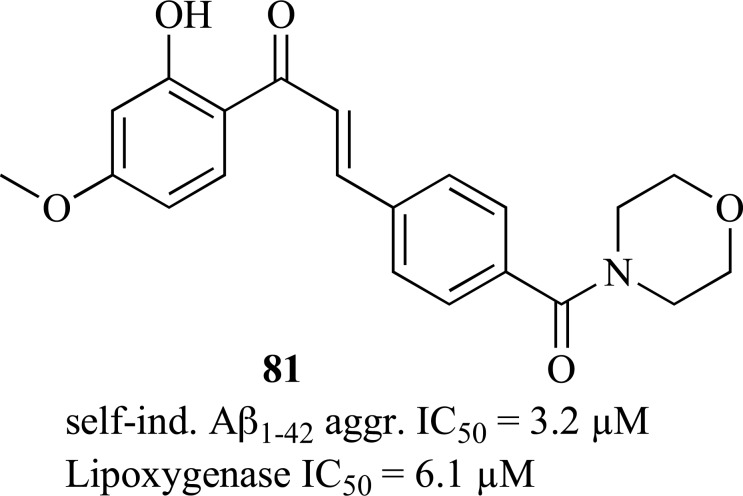
“It has been proven that 5-lipoxygenase (5-LO) is connected with A aggregation [228, 229] and its inhibition can reduce the formation of amyloid plaques in the brain [230].”
BackgroundRetractedA new and rapid colorimetric determination of acetylcholinesterase activity
Ellman, G. L., Courtney, K. D., Andres, V., & Featherstone, R. M. (1961) · Biochemical Pharmacology · doi:10.1016/0006-2952(61)90145-9 · Cited by 27,126 · cited 1×
“The results of Ellman’s test [80] showed that the newly synthesized hybrids were EeAChE inhibitors with IC50 values in the nanomolar range, from 3.”
BackgroundThe cholinergic hypothesis of geriatric memory dysfunction
Bartus, R. T., Dean, R. L., Beer, B., & Lippa, A. S. (1982) · Science · doi:10.1126/science.7046051 · Cited by 5,545 · cited 1×
“This hypothesis assumes that in AD the level of acetylcholine (ACh) is reduced due to the loss of the cholinergic neurons and decreased synthesis of ACh [5, 6].”
BackgroundQuerfurth, H. W., & LaFerla, F. M. (2010) · New England Journal of Medicine · doi:10.1056/nejmra0909142 · Cited by 4,569
Hearing loss and cognitive decline in older adults
Lin, F. R., Yaffe, K., Xia, J., Xue, Q.-L., Harris, T. B., Purchase-Helzner, E., Satterfield, S., Ayonayon, H. N., Ferrucci, L., Simonsick, E. M., et al. (2013) · JAMA Internal Medicine · doi:10.1001/jamainternmed.2013.1868 · Cited by 4,017
Therapeutic potential of resveratrol: the in vivo evidence
Baur, J. A., & Sinclair, D. A. (2006) · Nature Reviews Drug Discovery · doi:10.1038/nrd2060 · Cited by 3,958 · cited 1×
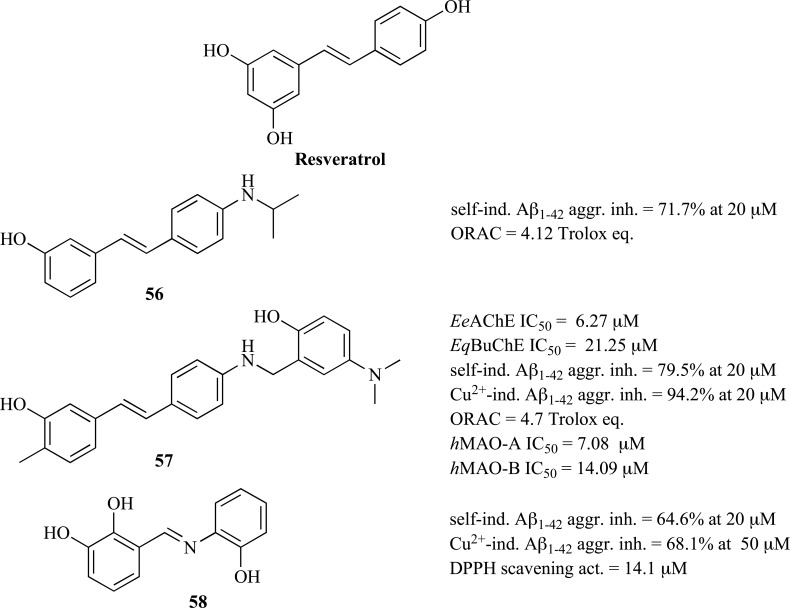
“In recent years, resveratrol (3,5,4’-trihydroxystilbene) has been extensively investigated as a cardioprotective, anticancer and anti-aging compound [185-187].”
BackgroundAmyloid deposition as the central event in the aetiology of Alzheimer’s disease
Hardy, J., & Allsop, D. (1991) · Trends in Pharmacological Sciences · doi:10.1016/0165-6147(91)90609-v · Cited by 2,538 · cited 1×
“The symptomatic therapeutic targets include mostly receptors whereas the disease-modifying targets are closely connected to A , tau production and neuroprotection [15, 16].”
BackgroundOxidative stress hypothesis in Alzheimer’s disease
Markesbery, W. R. (1997) · Free Radical Biology and Medicine · doi:10.1016/s0891-5849(96)00629-6 · Cited by 2,383
Levine, H. (1993) · Protein Science · doi:10.1002/pro.5560020312 · Cited by 2,264
DPPH antioxidant assay revisited
Sharma, O. P., & Bhat, T. K. (2009) · Food Chemistry · doi:10.1016/j.foodchem.2008.08.008 · Cited by 1,969 · cited 1×
“Interestingly, these two compounds showed an antioxidant activity in the (di(phenyl)-(2,4,6trinitrophenyl)iminoazanium) (DPPH) free radical scavenging assay [121] with IC50 values of 42.”
Background
Cited by
Items 201–300 of 364
Kılıç, B., Erdoğan, M., Gülcan, H. O., Aksakal, F., Örüklü, N., Bağrıaçık, E. Ü., & Doğruer, D. S. (2018) · Medicinal Chemistry · doi:10.2174/1573406414666180524073241 · Cited by 16
Jahan, I., & Nayeem, S. M. (2021) · New Journal of Chemistry · doi:10.1039/d1nj04453b · Cited by 13
Grigoriev, V. V., Махаева, Г. Ф., Proshin, A. N., Ковалева, Н. В., Рудакова, Е. В., Boltneva, N. P., ́yan, A. V. G., Lednev, B. V., & Бачурин, С. О. (2017) · Russian Chemical Bulletin · doi:10.1007/s11172-017-1890-9 · Cited by 13
Minovski, N., Saçan, M. T., Eminoğlu, E. M., Erdem, S. S., & Novič, M. (2018) · Ecotoxicology and Environmental Safety · doi:10.1016/j.ecoenv.2018.11.099 · Cited by 15
Piscitelli, F., Coccurello, R., Totaro, A., Leuti, A., Giacovazzo, G., Verde, R., Rossi, E., Vulpiani, M. P., Ferri, N., Stuffler, R. G., et al. (2019) · European Journal of Lipid Science and Technology · doi:10.1002/ejlt.201900015 · Cited by 13
Du, D. X., Khang, N. H. D., Tri, N. H., Nam, P. C., & Thong, N. M. (2023) · ACS Omega · doi:10.1021/acsomega.2c08014 · Cited by 13
Li, B., Li, J., Hao, Y., Xie, P., Yue, S., Wang, S., Zhang, J., & Zhang, Y. (2023) · Journal of Ethnopharmacology · doi:10.1016/j.jep.2023.116393 · Cited by 13
Dakhlaoui, I., Bernard, P. J., Pietrzak, D., Simakov, A., Maj, M., Refouvelet, B., Béduneau, A., Cornu, R., Jóźwiak, K., Chabchoub, F., et al. (2023) · International Journal of Molecular Sciences · doi:10.3390/ijms24119742 · Cited by 13
Bernard, P. J., Bellili, D., & Ismaïli, L. (2023) · Expert Opinion on Drug Discovery · doi:10.1080/17460441.2023.2266994 · Cited by 12
Villamizar, M. C. O., Galvis, C. E. P., Méndez, L. Y. V., & Kouznetsov, V. V. (2017) · Elsevier eBooks · doi:10.1016/b978-0-12-809593-5.00005-7 · Cited by 15
Acylguanidine-BACE1 complex: Insights of intermolecular interactions and dynamics
Kandasamy, S., & Kumaradhas, P. (2018) · Journal of Theoretical Biology · doi:10.1016/j.jtbi.2018.12.020 · Cited by 12
Heo, H. J., Park, S. Y., Lee, Y. S., Shin, H. K., Hong, K. W., & Kim, C. D. (2020) · Korean Journal of Physiology and Pharmacology · doi:10.4196/kjpp.2020.24.4.299 · Cited by 12
“At present time, only five prescription drugs are approved by the US FDA for the symptomatic treatment of AD [30].”
BackgroundMoreira, J., Saraiva, L., Pinto, M. M. M., & Cidade, H. M. (2022) · Molecules · doi:10.3390/molecules27196340 · Cited by 11
“Targeting AChE and BChE may be one of the most promising approaches for treating AD [67,68].”
BackgroundCurrent Diagnostic and Treatment Methods of Alzheimer’s Disease: A Narrative Review
Dafre, R., & Wasnik, P. (2023) · Cureus · doi:10.7759/cureus.45649 · Cited by 13
“Further prospective population-based studies found that older adults who took non-steroidal anti-inflammatory drugs (NSAIDs) had a 71% decreased chance of dying from AD [35].”
BackgroundImpact of GSK-3β and CK-1δ on Wnt signaling pathway in alzheimer disease: A dual target approach
Sharma, V., Sharma, P. C., Reang, J., Yadav, V., Tonk, R. K., Majeed, J., & Sharma, K. (2024) · Bioorganic Chemistry · doi:10.1016/j.bioorg.2024.107378 · Cited by 12
Lye, S., Aust, C. E., Griffiths, L. R., & Fernandez, F. (2021) · Journal of the Neurological Sciences · doi:10.1016/j.jns.2021.117332 · Cited by 11
Xi, M., Feng, C., Du, K., Lv, W., Du, C., Shen, R., & Sun, H. (2022) · Bioorganic & Medicinal Chemistry Letters · doi:10.1016/j.bmcl.2022.128602 · Cited by 11
Simmons, D. A., Belichenko, N. P., & Longo, F. M. (2023) · Journal of Huntington s Disease · doi:10.3233/jhd-230589 · Cited by 11
“Recent drug development approaches have suggested that multi-target therapies may be more effective than monotherapies, particularly if they involve multiple targets with functional synergy or affect multiple cell types [27, 75].”
Kandasamy, S., Sivanandam, M., Hunday, G., Pavan, M. S., & Kumaradhas, P. (2019) · Journal of Molecular Graphics and Modelling · doi:10.1016/j.jmgm.2019.07.019 · Cited by 11
Remya, C., Dileep, K. V., Variyar, E. J., Zhang, K. Y. J., Omkumar, R. V., & Sadasivan, C. (2021) · International Journal of Biological Macromolecules · doi:10.1016/j.ijbiomac.2021.01.148 · Cited by 11
Combating multiple aetiologies of Alzheimer's disease to rescue behavioural deficits
Ramesh, M., Balachandra, C., Kumar, A., Samanta, S., & Govindaraju, T. (2025) · Chemical Science · doi:10.1039/d4sc08585j · Cited by 10
Chun, Y. S., Zhang, L., Li, H., Park, Y., Chung, S., & Yang, H. O. (2018) · Molecular Neurobiology · doi:10.1007/s12035-018-1023-y · Cited by 10
Mphahlele, M. J., Agbo, E. N., More, G. K., & Gildenhuys, S. (2021) · Antioxidants · doi:10.3390/antiox10050647 · Cited by 11
“It is envisioned that the treatment of AD would benefit from the use of multipotent drugs that target at least two or more key pathophysiological processes linked to AD, such as cholinesterases (AChE and/or BChE) and β-secretase activities as well oxidative stress [9,10].”
BackgroundChaudhary, J., Jain, A., Dhingra, A. K., Chopra, B., Sharma, V., Gupta, J., & Kaushik, A. (2023) · Current Topics in Medicinal Chemistry · doi:10.2174/1568026623666230719124850 · Cited by 10
Medicinal Chemistry of Hybrids for Neurodegenerative Diseases
Uliassi, E., Prati, F., Bongarzone, S., & Bolognesi, M. L. (2017) · Elsevier eBooks · doi:10.1016/b978-0-08-101011-2.00010-6 · Cited by 15
Determination of anticancer and antibacterial activities of disubstituted tacrine derivatives
Ökten, S., AYDIN, A., & Tutar, A. (2019) · Sakarya University Journal of Science · doi:10.16984/saufenbilder.469273 · Cited by 13
Staszewski, M., Iwan, M., Werner, T., Bajda, M., Godyń, J., Latacz, G., Korga-Plewko, A., Kubik, J., Szałaj, N., Stark, H., et al. (2023) · Pharmaceuticals · doi:10.3390/ph16050675 · Cited by 9
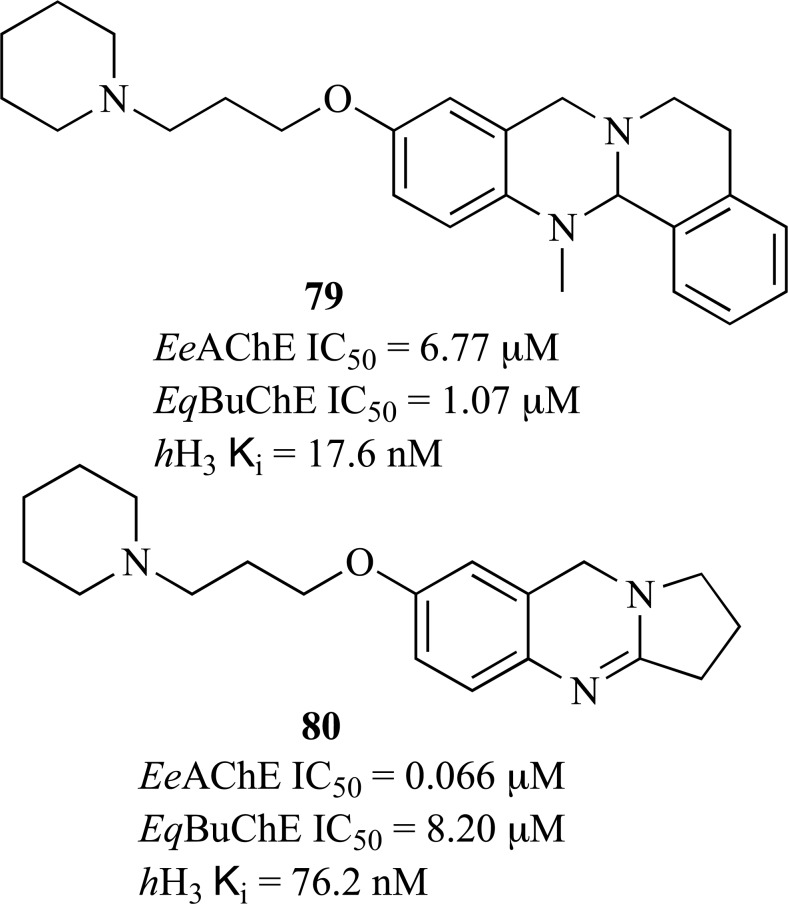
“An MTDL designed by the fusion of an H3R antagonist and an AChE/BuChE inhibi or in a single mol cule might improve cognitive functi ns in AD [23].”
Self-citationNie, R., Zhang, S.-S., Yan, X.-K., Feng, K., Lao, Y.-J., & Bao, Y.-R. (2023) · International Journal of Biological Macromolecules · doi:10.1016/j.ijbiomac.2023.127002 · Cited by 9
Osman, W., Mohamed, T., Sit, V. M.-S., Vasefi, M., Beazely, M. A., & Rao, P. P. N. (2016) · Chemical Biology & Drug Design · doi:10.1111/cbdd.12800 · Cited by 9
Murayama, M. A. (2023) · EXPERIMENTAL ANIMALS · doi:10.1538/expanim.22-0164 · Cited by 10
Zhu, X., Lv, Y., Fan, M., Guo, J., Zhang, Y., Gao, B., Zhang, C., & Xie, Y. (2023) · Bioorganic Chemistry · doi:10.1016/j.bioorg.2023.106817 · Cited by 9
Xu, J., Ji, F., Cao, X., Ma, J., Ohizumi, Y., Lee, D., & Guo, Y. (2016) · Journal of Functional Foods · doi:10.1016/j.jff.2016.01.012 · Cited by 9
Shi, D., Tang, Z.-M., Liu, Y., Harjani, J. R., Zhu, H., Ma, X., Song, X., Liu, W. W., Lu, C. H., Yang, W., et al. (2017) · ChemistrySelect · doi:10.1002/slct.201702087 · Cited by 9
Wang, X., Ma, M., Feng, Y., Li, J., & Wang, G. (2025) · Molecules · doi:10.3390/molecules30173489 · Cited by 8
“And encouraging results have been reported by several research groups [39–41].”
Remya, R. S., Ramalakshmi, N., Nalini, C. N., Niraimathi, V., & Amuthalakshmi, S. (2022) · Current Computer - Aided Drug Design · doi:10.2174/1573409918666220804153754 · Cited by 8
Rammohan, A., Bhaskar, B. V., & Zyryanov, G. V. (2022) · Elsevier eBooks · doi:10.1016/b978-0-323-91221-1.00009-9 · Cited by 8
Pachón-Angona, I., Bernard, P. J., Simakov, A., Maj, M., Jóźwiak, K., Novotna, A., Lemke, C., Gütschow, M., Martin, H., Oset‐Gasque, M. J., et al. (2024) · Pharmaceutics · doi:10.3390/pharmaceutics16010121 · Cited by 8
Grosjean, S., Pachón-Angona, I., Dawra, M., Refouvelet, B., & Ismaïli, L. (2022) · Future Medicinal Chemistry · doi:10.4155/fmc-2022-0170 · Cited by 8
8‐Aminomethyl‐7‐hydroxy‐4‐methylcoumarins as Multitarget Leads for Alzheimer's Disease
Domínguez, J. L., Fernández‐Nieto, F., Brea, J. M., Catto, M., Paleo, M. R., Porto, S., Sardina, F. J., Castro, M., Pisani, L., Carotti, A., et al. (2016) · ChemistrySelect · doi:10.1002/slct.201600735 · Cited by 8
Tan, C., Dong, Y., Wang, J., & Yang, X. (2019) · New Journal of Chemistry · doi:10.1039/c9nj00820a · Cited by 8
Moreira, P., Macedo, J., Matos, P., Bicker, J., Fortuna, A. C., Figueirinha, A., Salgueiro, L., Batista, M. T., da Silva, A. P., Silva, S., et al. (2024) · Biomedicine & Pharmacotherapy · doi:10.1016/j.biopha.2024.117652 · Cited by 7
Synthesis of Anti‐Alzheimer Molecules: Bridging Chemical Approaches to Pharmaceuticals
Abbas, H., Noor, F., Khalid, S., Ahmad, M., Rasool, N., Malik, A. I., & Imran, M. (2025) · ChemistrySelect · doi:10.1002/slct.202405965 · Cited by 7
Kotova, M. M., Stewart, A., Grigoryan, A., Shariff, S., Mirzaei, F., Kantawala, B., Dilbaryan, K., de Abreu, M. S., Galstryan, D. S., Cui, J., et al. (2025) · Journal of Neurochemistry · doi:10.1111/jnc.70090 · Cited by 8
“Current treatment for AD includes acetylcholinesterase (AChE) inhibitors and N - methyl d-aspartate (NMDA) receptor antagonists, thought to preserve cholinergic neurotransmission (Guzior et al. 2015; Shenoy et al. 2022).”
The Unveiling of Therapeutic Targets for Alzheimer’s Disease: An Integrative Review
Madar, P. R., Nagalapur, P. P., Chaudhari, S. Y., Sharma, D., Koparde, A. A., Buchade, R. S., Kshirsagar, S. S., Uttekar, P. S., Jadhav, S. B., & Chaudhari, P. (2024) · Current Topics in Medicinal Chemistry · doi:10.2174/0115680266282492240220101049 · Cited by 7
Biologically Active Secondary Metabolites from Endophytic Alternaria Species
Saxena, S. (2021) · Springer eBooks · doi:10.1007/978-981-15-9371-0_1 · Cited by 7
“Thus, inhibiting this enzyme would help in restoring the acetylcholine levels in brain, hence acetylcholine esterase is a promising drug target (Guizior et al. 2015).”
BackgroundXanthene and citrinin derivatives from the endophytic fungus Penicillium sp. T2-11
Li, H.-T., Sun, Y. L., Xie, F., Wang, M., Chen, J., Zhou, H., & Ding, Z. (2021) · Tetrahedron Letters · doi:10.1016/j.tetlet.2021.153626 · Cited by 7
Shtaiwi, M., Aljaar, N., Al‐Najjar, L., Malakar, C. C., Shtaiwi, A., Abu‐Sini, M., & Al‐Refai, M. (2022) · Polycyclic aromatic compounds · doi:10.1080/10406638.2022.2144911 · Cited by 7
Ковалева, Н. В., Proshin, A. N., Рудакова, Е. В., Boltneva, N. P., Serkov, I. V., & Махаева, Г. Ф. (2018) · Biomedical Chemistry Research and Methods · doi:10.18097/bmcrm00027 · Cited by 7
Махаева, Г. Ф., Boltneva, N. P., Ковалева, Н. В., Рудакова, Е. В., Lushchekina, S. V., Aksinenko, A. Y., & Sokolov, V. B. (2018) · Russian Chemical Bulletin · doi:10.1007/s11172-018-2282-5 · Cited by 7
Raka, S. C., Ahamed, R., Rahman, A., & Momen, A. Z. M. R. (2019) · Oriental Pharmacy and Experimental Medicine · doi:10.1007/s13596-019-00407-8 · Cited by 7
Bozkır, İ., İbişoğlu, M. S., Bozkır, İ. K., & Güler, H. İ. (2026) · Journal of Computer-Aided Molecular Design · doi:10.1007/s10822-025-00757-3 · Cited by 7
“Similarly, in Guzior et al. [20], several multifunctional anti-Alzheimer’s scaffolds demonstrated promising docking affinities but lacked systematic ADMET validation, a gap directly addressed in the present work.”
InfluentialKumar, A., Mondal, T., Ramesh, M., Bhoi, J., Samanta, S., & Govindaraju, T. (2026) · ACS Chemical Neuroscience · doi:10.1021/acschemneuro.5c00998 · Cited by 7
Advances in copper homeostasis and copper dysregulation in diseases
Tang, M., Zhang, J., & Yu, M. (2025) · Journal of Trace Elements in Medicine and Biology · doi:10.1016/j.jtemb.2025.127727 · Cited by 6
Clinical Biomarkers and Novel Drug Targets to Cut Gordian Knots of Alzheimer's Disease
Mir, R. H., Masoodi, M. H., Shah, A. J., Mohi-ud-din, R., Sabreen, S., Wani, T. U., Jan, R., Javed, M. N., & Mir, P. A. (2022) · Current Molecular Pharmacology · doi:10.2174/1874467215666220903095837 · Cited by 6
Adeowo, F. Y., Lawal, M. M., & Kumalo, H. M. (2020) · ChemistrySelect · doi:10.1002/slct.202003573 · Cited by 6
Multifunctional Ligand Approach: Search for Effective Therapy Against Alzheimer’s Disease
Pasieka, A., Panek, D., & Malawska, B. (2020) · Exon Publications eBooks · doi:10.36255/exonpublications.alzheimersdisease.2020.ch11 · Cited by 8
Self-citationNeuroprotective Strategies for Alzheimer’s Disease Prevention and Therapy
Simmons, D. A., Yang, T., Massa, S. M., & Longo, F. M. (2016) · Elsevier eBooks · doi:10.1016/b978-0-12-802173-6.00016-2 · Cited by 6
The Role of Vitamin E in Aging and Alzheimer’s Disease
Eckert, G. P. (2019) · Springer eBooks · doi:10.1007/978-3-030-05315-4_24 · Cited by 7
Jung, J., Kim, Y., Cirunduzi, A. C., Yoon, S., Bang, S., & Yang, S. (2026) · CNS Neuroscience & Therapeutics · doi:10.1002/cns.70919 · Cited by 5
“To simultaneously target the diverse causes of AD, the development of multi-targeting ligands (MTDLs) is actively being utilized [29, 30].”
Grishchenko, M. V., Махаева, Г. Ф., Burgart, Y. V., Boltneva, N. P., Рудакова, Е. В., Zhilina, E. F., Shchegolkov, E. V., Ковалева, Н. В., Serebryakova, O. G., Салоутин, В. И., et al. (2023) · Russian Chemical Bulletin · doi:10.1007/s11172-023-4111-8 · Cited by 5
Tacrine modulates Kv2.1 channel gene expression and cell proliferation
Hu, X.-M., Ren, S., Li, K., & Li, X. (2019) · International Journal of Neuroscience · doi:10.1080/00207454.2019.1705811 · Cited by 5
“Since AD is a multifactorial disease, the multi-target-directed ligand (MTDL) approach is hopeful for the development of effective new drugs [8].”
BackgroundNazam, N., Farhana, A., & Shaikh, S. (2021) · Springer eBooks · doi:10.1007/978-981-16-4558-7_8 · Cited by 6
Krunić, M. J., Penjišević, J. Z., Suručić, R. V., Šegan, S. B., Kostić‐Rajačić, S., & Jevtić, I. I. (2022) · Journal of Molecular Structure · doi:10.1016/j.molstruc.2022.134809 · Cited by 5
Махаева, Г. Ф., Рудакова, Е. В., Ковалева, Н. В., Boltneva, N. P., Lushchekina, S. V., Proshin, A. N., Serkov, I. V., & Бачурин, С. О. (2023) · Russian Chemical Bulletin · doi:10.1007/s11172-023-4080-y · Cited by 5
Malek, R. S., Sałat, K., Totoson, P., Karcz, T. P., Refouvelet, B., Skrzypczak-Wiercioch, A., Maj, M., Simakov, A., Martin, H., Siwek, A., et al. (2024) · ACS Chemical Neuroscience · doi:10.1021/acschemneuro.4c00341 · Cited by 5
Self-citationPachón-Angona, I., Maj, M., Wnorowski, A., Martin, H., Jóźwiak, K., & Ismaïli, L. (2021) · Future Medicinal Chemistry · doi:10.4155/fmc-2021-0176 · Cited by 5
Liu, C., Sang, Z., Pan, H., Wu, Q., Qiu, Y. L., & Shi, J. (2022) · Frontiers in Aging Neuroscience · doi:10.3389/fnagi.2022.922650 · Cited by 6
“Therefore, the MTDLs aiming at several underlying causes of neurodegenerative disease in parallel presents an opportunity for successful AD treatment (Guzior et al., 2015; Savelieff et al., 2019).”
Atmaca, U., Aksoy, M., & Öztekіn, A. (2022) · Journal of Biomolecular Structure and Dynamics · doi:10.1080/07391102.2022.2134209 · Cited by 5
“Administration (FDA) as AChE inhibitors, and these drugs are only known to improve cognitive function symptoms in AD patients, which do not cure the disease or any reverse to its progression (Fern�andez-Bachiller et al., 2012; Guzior et al., 2015).”
BackgroundУстинов, А. К., Serkov, I. V., Proshin, A. N., Ковалева, Н. В., Boltneva, N. P., Махаева, Г. Ф., & Бачурин, С. О. (2016) · Russian Chemical Bulletin · doi:10.1007/s11172-016-1641-3 · Cited by 5
Katsoti, V., Ofrydopoulou, A., & Τσούπρας, Α. (2025) · Sclerosis · doi:10.3390/sclerosis3040033 · Cited by 4
“Therefore, reducing the accumulation of Ab1-42 is a potential therapeutic strategy for treating AD [50].”
InfluentialWang, X., Lu, X., Jin, W., Tan, X., & Wang, G. (2026) · Molecules · doi:10.3390/molecules31040595 · Cited by 6
Effect of caffeine on the aggregation of amyloid-β–A 3D RISM study
Dey, P., & Biswas, P. (2024) · The Journal of Chemical Physics · doi:10.1063/5.0202636 · Cited by 4
Махаева, Г. Ф., Фисенко, В. П., & Бачурин, С. О. (2025) · Russian Chemical Bulletin · doi:10.1007/s11172-025-4715-2 · Cited by 4
Djafarou, S., Khodja, I. A., & Boulebd, H. (2021) · Journal of Biomolecular Structure and Dynamics · doi:10.1080/07391102.2021.2004232 · Cited by 4
Deng, Y., Jiang, Y., Zhao, X., & Wang, J. (2016) · Journal of Biosciences and Medicines · doi:10.4236/jbm.2016.41014 · Cited by 4
Sever, B., Altıntop, M. D., & Temel, H. E. (2020) · Turkish Journal of Biochemistry · doi:10.1515/tjb-2019-0356 · Cited by 4
de Moura, F. C., Xavier, M. K. F., Rodrigues, F. E. L., Pinheiro, M. F. D. S., Machado, E. C. L., Moura, C. B. C. D., de Moraes, W. M. A. M., Prestes, J., & Chaves, E. M. C. (2019) · World Scientific Research · doi:10.20448/journal.510.2019.61.5.13 · Cited by 5
“Thus, new therapeutic approaches have been proposed for the treatment of this disease, from selective serotonin reuptake inhibitors (SSRIs), antiepileptic drugs, antihypertensives, anti-inflammatories, among other substances, as well as the combination of one or more treatments [9, 10].”
BackgroundBorah, P., & Mattaparthi, V. S. K. (2022) · Current Chemical Biology · doi:10.2174/2212796817666221221151713 · Cited by 4
Special Issue: “Molecules against Alzheimer”
Decker, M. W., & Muñoz‐Torrero, D. (2016) · Molecules · doi:10.3390/molecules21121736 · Cited by 5
Kim, T. K., Hong, J., Cho, Y., Jeon, Y., Cho, H., Lee, J., Kim, J., Kim, K. H., Kim, I., Han, S. J., et al. (2025) · Molecules · doi:10.3390/molecules30092030 · Cited by 3
Computer-Aided Multi-Target Management of Emergent Alzheimer’s Disease
Kim, H., & Han, H. W. (2018) · Bioinformation · doi:10.6026/97320630014167 · Cited by 3
Borota, A., Halip, L., Curpan, R. F., Bora, A., Avram, S. I., Mracec, M., & Mracec, M. (2021) · Structural Chemistry · doi:10.1007/s11224-020-01711-9 · Cited by 3
Al-Mosawi, S. K., Al-Hazam, H. A., Abbas, A. F., Nasif, Z. N., Saeed, B. A., & Al-Masoudi, N. A. (2022) · Russian Journal of Bioorganic Chemistry · doi:10.1134/s1068162022040045 · Cited by 3
Piccialli, I., Greco, F., Roviello, G. N., Sisalli, M. J., Tedeschi, V., Mola, A. D., Borbone, N., Oliviero, G., Feo, V. D., Secondo, A., et al. (2023) · Biomedicine & Pharmacotherapy · doi:10.1016/j.biopha.2023.115745 · Cited by 3
Exploration of Lycorine and Copper(II)’s Association with the N-Terminal Domain of Amyloid β
Kola, A., Vigni, G., & Valensin, D. (2023) · Inorganics · doi:10.3390/inorganics11110443 · Cited by 3
Mella, J., Vega-Muñoz, A., Soto, M., Moraga, D., Campanini-Salinas, J., Sandoval-Obando, E., Contreras-Barraza, N., Salazar-Sepúlveda, G., Salas, N., Carabantes-Silva, R., et al. (2026) · Pharmaceuticals · doi:10.3390/ph19071024 · Cited by 2
Nakamura, T., Fujikoshi, S., Funai, J., & Matsumura, T. (2017) · Neurology and Clinical Neuroscience · doi:10.1111/ncn3.12140 · Cited by 2
Wei, B.-B., Du, W.-R., Guo, X.-Y., Lan, Y. J., Shang, P.-P., Wang, X., & Ma, Z.-Y. (2024) · ChemistrySelect · doi:10.1002/slct.202400790 · Cited by 2
Иванович, В. В., Chuklovin, A. B., & Shabanov, P. D. (2024) · Психофармакология и биологическая наркология · doi:10.17816/phbn641854 · Cited by 2
Махаева, Г. Ф., Трофимова, Т. П., Boltneva, N. P., Serebryakova, O. G., Рудакова, Е. В., Proshin, A. N., & Бачурин, С. О. (2016) · Russian Chemical Bulletin · doi:10.1007/s11172-016-1459-z · Cited by 2
Shi, D., Tang, Z.-M., Ma, X., Min, W., Xu, X., Liu, Y., Song, X., Liu, W., & Song, M. (2017) · Journal of Chemical Research · doi:10.3184/174751917x15045169836217 · Cited by 2
Regenerative nanomedicine applications for neurodegenerative diseases of central nervous system
Alkhalifa, H., Alshebber, E., & Taurin, S. (2020) · Elsevier eBooks · doi:10.1016/b978-0-12-820466-5.00012-0 · Cited by 2
Grishchenko, M. V., Elkina, N. А., Махаева, Г. Ф., Burgart, Y. V., Boltneva, N. P., Рудакова, Е. В., Shchegolkov, E. V., Ковалева, Н. В., Serebryakova, O. G., & Салоутин, В. И. (2022) · Russian Journal of General Chemistry · doi:10.1134/s1070363222110093 · Cited by 2
Shakeri, A. (2017) · UWSpace (University of Waterloo) · Cited by 2
Lopes, F. B., Werner, T., Bagatin, I. A., Stark, H., & Fernandes, J. P. S. (2026) · ACS Chemical Neuroscience · doi:10.1021/acschemneuro.5c00803 · Cited by 1
Flavonoids in Transgenic Alzheimer's Disease Mouse Models
Sabogal-Guáqueta, A. M., Osorio, E., & Cardona‐Gómez, G. P. (2017) · Wiley eBooks · doi:10.1002/9781119155195.ch2 · Cited by 1
ПЕРСПЕКТИВЫ ФАРМАКОТЕРАПИИ БОЛЕЗНИ АЛЬЦГЕЙМЕРА, "Успехи физиологических наук"
Zuev, V. A., Дятлова, А. С., Linkova, N. S., & Кветной, И. М. (2018) · Успехи физиологических наук · doi:10.7868/s0301179818040045 · Cited by 1
Yang, H., Han, W., & Li, H. (2020) · Pakistan Journal of Pharmaceutical Sciences · doi:10.36721/pjps.2020.33.3.sp.1349-1354.1 · Cited by 1
Alzheimer’s Disease: Molecular Biology, Pathophysiology and Biomarkers
Mishra, Y., Singh, S., & Yadav, N. (2022) · BENTHAM SCIENCE PUBLISHERS eBooks · doi:10.2174/9789815040913122010008 · Cited by 2
Maurya, N. S., Gaddam, M., & Sharma, A. (2024) · Journal of Computational Biophysics and Chemistry · doi:10.1142/s2737416523500667 · Cited by 1
Metadata
- Authors
- Guzior, N., Wi.eckowska, A., Panek, D., & Malawska, B.
- Affiliations
- Jagiellonian University (PL)
- Corresponding author
- Malawska, Barbara
- Venue
- Current Medicinal Chemistry
- Publisher
- Bentham Science Publishers Ltd.
- Published
- 2014-12-19
- Volume
- 22
- Issue
- 3
- Pages
- 373-404
- ISSN
- 0929-8673 (ISSN-L)
- PMC
- PMC4435057
- OpenAlex
- W2160250661
- Semantic Scholar
- 87a6c33067fc70ae159bdff4778e5de3fc139c1a
- Cited by
- 323
- References
- 239
- Citations by year
- 2026: 10 · 2025: 10 · 2024: 20 · 2023: 24 · 2022: 28 · 2021: 29 · 2020: 26 · 2019: 40 · 2018: 46 · 2017: 41 · 2016: 36 · 2015: 12
- FWCI
- 4.00
- Type
- journal article
- Language
- en
- Open access
- bronze
- doi.org
- Locations
- Current Medicinal Chemistry (publishedVersion)
- PubMed Central (publishedVersion, cc-by-nc)
- PubMed (publishedVersion)
- Homo Politicus (Academy of Humanities and Economics in Lodz) (submittedVersion)
- Jagiellonian University Repository (Jagiellonian University) (submittedVersion, other-oa)
- Jagiellonian University Repository (Jagiellonian University) (submittedVersion, cc-by-nc-nd)
- Homo Politicus (Academy of Humanities and Economics in Lodz) (submittedVersion, cc-by-nc-nd)
- Funders
- Narodowym Centrum Nauki
- Topics
- Health Sciences › Medicine › Pharmacology (medical) › Cholinesterase and Neurodegenerative Diseases
- Life Sciences › Neuroscience › Cellular and Molecular Neuroscience › Alzheimer's disease research and treatments
- Health Sciences › Medicine › Psychiatry and Mental health › Dementia and Cognitive Impairment Research
- Keywords
- Alzheimer's disease, multi-target-directed ligands, acetylcholinesterase inhibitors, beta-secretase inhibition, monoamine oxidase inhibition, antioxidant activity, metal chelation, nitric oxide release, cannabinoid receptors, NMDA receptor, histamine H3 receptor, tacrine, donepezil, galantamine, memantine, drug candidates
- MeSH terms
- Alzheimer Disease, Animals, Enzyme Inhibitors, Humans, Amyloid beta-Peptides, Neuroprotective Agents, Drug Discovery, Protein Aggregates
About these checks
Registry, retraction, Cites and statistics results are computed, not judged, with one exception: a printed reference that no index lists is read once by a model before it counts as a citation error. Claims are extracted by a model and kept only when their quote appears verbatim in the text; each cited source is then checked, with a model’s help, for whether it says what the claim relies on. Those verdicts can be wrong — read the claim’s quote and the cited source before relying on one.
Statistics and arithmetic are recomputed, not judged.
Confidence bands are shown only for fields calibrated on our annotated test set. None is calibrated yet, so no band is shown.
What counts as a claim ›How we measure confidence ›How we check this ›
Are you an author, or do you see a problem with this page? Request a review
Data sources
Bibliographic data: Semantic Scholar, OpenAlex, Crossref.
Contains information from the Semantic Scholar Academic Graph Datasets, made available under the ODC Attribution License (ODC-BY 1.0).
Semantic Scholar’s data is described in: Kinney, R., et al. (2023). The Semantic Scholar Open Data Platform. arXiv:2301.10140.
