

Recent Development of Multifunctional Agents as Potential Drug Candidates for the Treatment of Alzheimer’s Disease
Open accessThe DOI matches its Crossref record; 240 of the 240 references it cites were found in a registry or an index.
Abstract
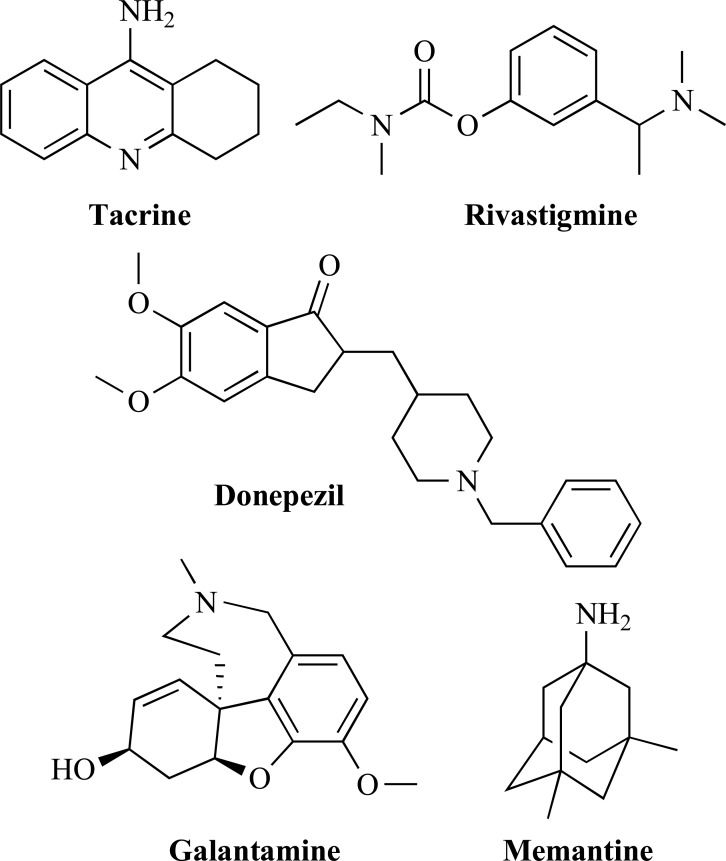
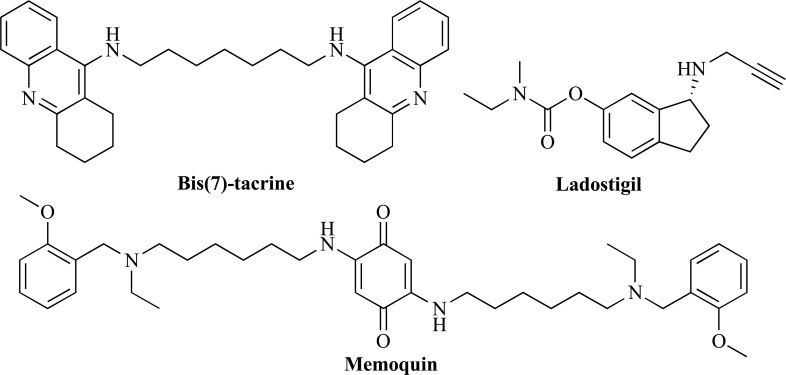
Alzheimer's disease (AD) is a complex and progressive neurodegenerative disorder. The available therapy is limited to the symptomatic treatment and its efficacy remains unsatisfactory. In view of the prevalence and expected increase in the incidence of AD, the development of an effective therapy is crucial for public health. Due to the multifactorial aetiology of this disease, the multi-target-directed ligand (MTDL) approach is a promising method in search for new drugs for AD. This review updates information on the development of multifunctional potential anti-AD agents published within the last three years. The majority of the recently reported structures are acetylcholinesterase inhibitors, often endowed with some additional properties. These properties enrich the pharmacological profile of the compounds giving hope for not only symptomatic but also causal treatment of the disease. Among these advantageous properties, the most often reported are an amyloid-β antiaggregation activity, inhibition of β-secretase and monoamine oxidase, an antioxidant and metal chelating activity, NOreleasing ability and interaction with cannabinoid, NMDA or histamine H3 receptors. The majority of novel molecules possess heterodimeric structures, able to interact with multiple targets by combining different pharmacophores, original or derived from natural products or existing therapeutics (tacrine, donepezil, galantamine, memantine). Among the described compounds, several seem to be promising drug candidates, while others may serve as a valuable inspiration in the search for new effective therapies for AD.
Overview
The claims and statistics of this paper haven’t been checked yet.
Free: it reads the open-access text and checks the first 5 claims that cite a source we can check. Create a free account to check every claim.
Integrity signals
Registry
Cites
Statistics
Figures
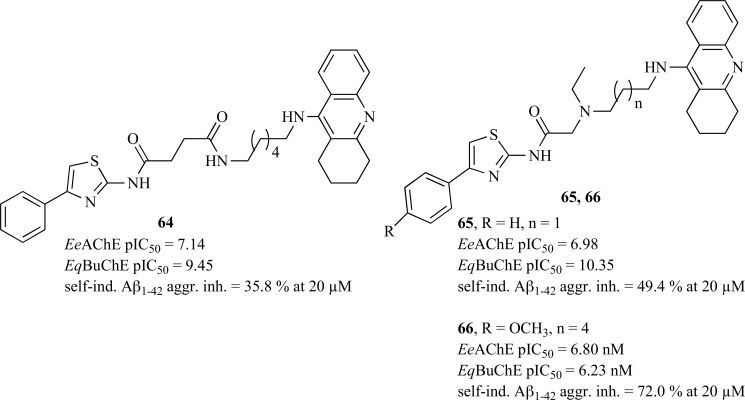
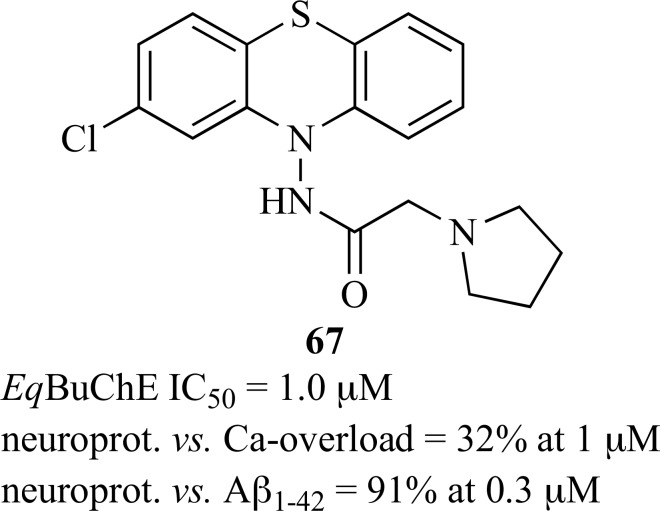
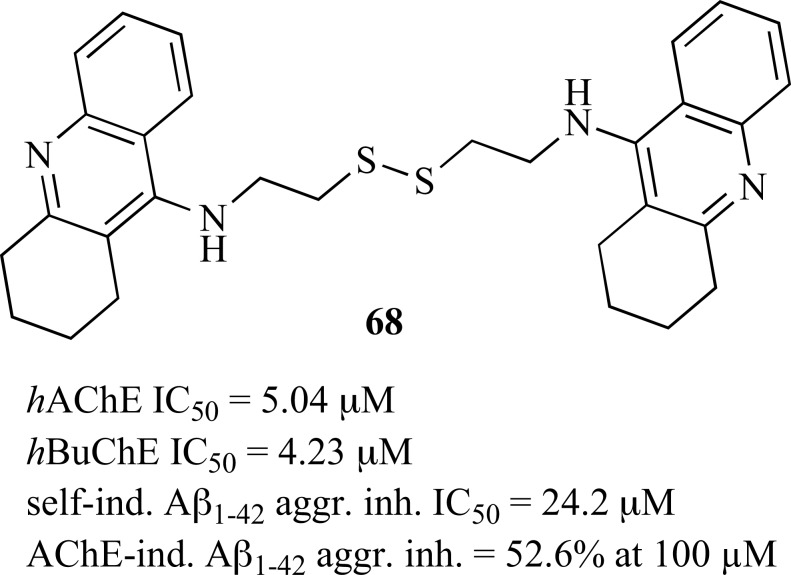
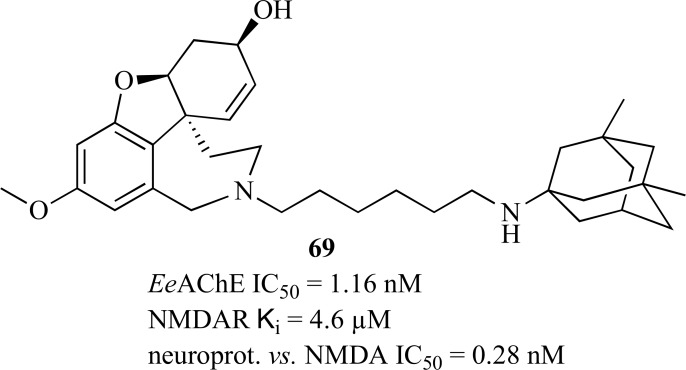
Verification
Claims the paper makes
The claims and statistics of this paper haven’t been checked yet.
Free: it reads the open-access text and checks the first 5 claims that cite a source we can check. Create a free account to check every claim.
Self-check
Percentages, sums and reported differences re-computed from the paper’s own numbers.
The self-check needs the paper’s full text.
Citations
Cites
1 retracted
Chu, J., & Praticò, D. (2011) · American Journal Of Pathology · doi:10.1016/j.ajpath.2010.12.032 · Cited by 84 · cited 1×
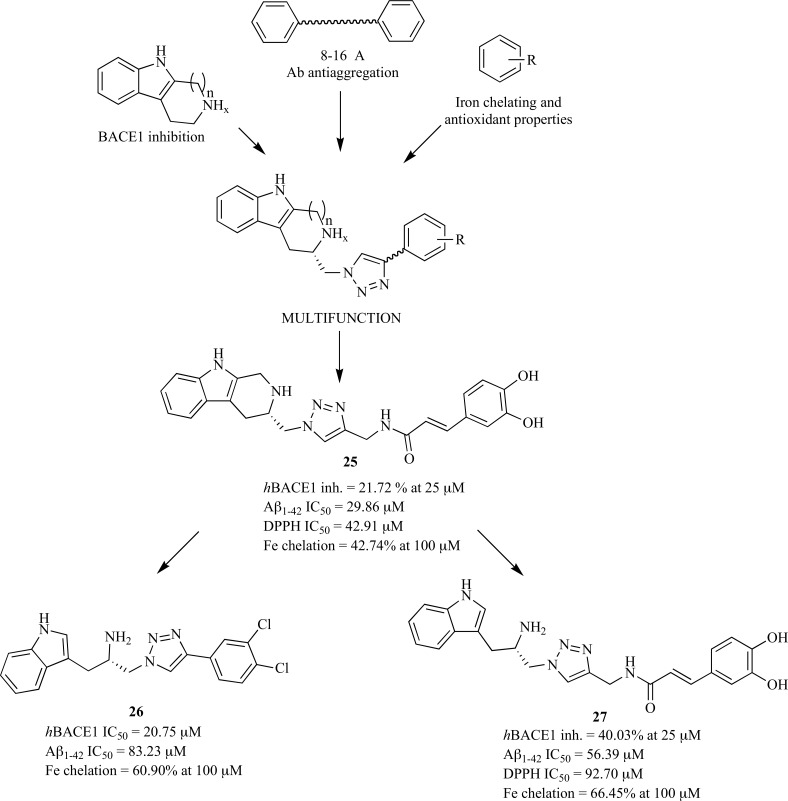
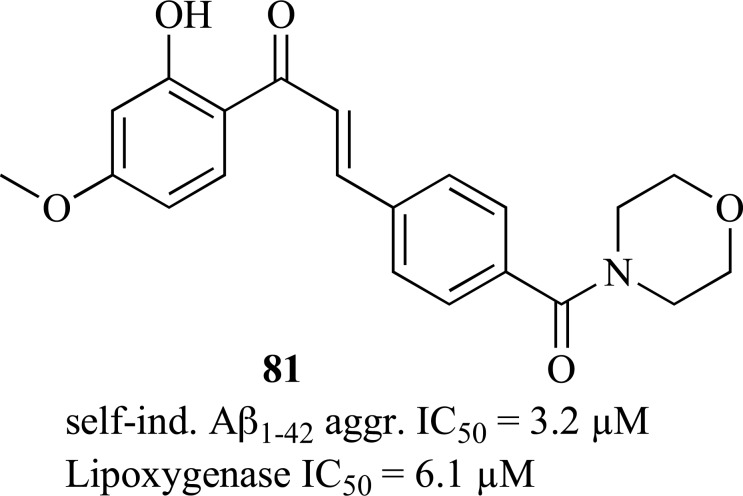
“It has been proven that 5-lipoxygenase (5-LO) is connected with A aggregation [228, 229] and its inhibition can reduce the formation of amyloid plaques in the brain [230].”
BackgroundRetractedA new and rapid colorimetric determination of acetylcholinesterase activity
Ellman, G. L., Courtney, K. D., Andres, V., & Featherstone, R. M. (1961) · Biochemical Pharmacology · doi:10.1016/0006-2952(61)90145-9 · Cited by 27,126 · cited 1×
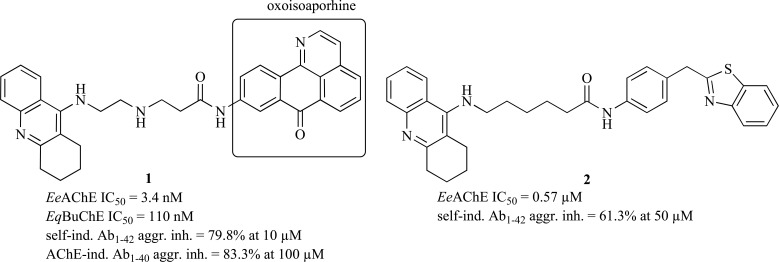
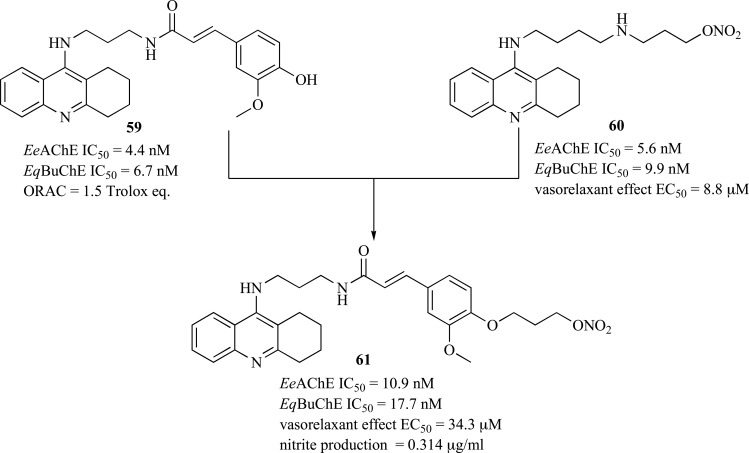
“The results of Ellman’s test [80] showed that the newly synthesized hybrids were EeAChE inhibitors with IC50 values in the nanomolar range, from 3.”
BackgroundThe cholinergic hypothesis of geriatric memory dysfunction
Bartus, R. T., Dean, R. L., Beer, B., & Lippa, A. S. (1982) · Science · doi:10.1126/science.7046051 · Cited by 5,545 · cited 1×
“This hypothesis assumes that in AD the level of acetylcholine (ACh) is reduced due to the loss of the cholinergic neurons and decreased synthesis of ACh [5, 6].”
BackgroundQuerfurth, H. W., & LaFerla, F. M. (2010) · New England Journal of Medicine · doi:10.1056/nejmra0909142 · Cited by 4,569
Hearing loss and cognitive decline in older adults
Lin, F. R., Yaffe, K., Xia, J., Xue, Q.-L., Harris, T. B., Purchase-Helzner, E., Satterfield, S., Ayonayon, H. N., Ferrucci, L., Simonsick, E. M., et al. (2013) · JAMA Internal Medicine · doi:10.1001/jamainternmed.2013.1868 · Cited by 4,017
Therapeutic potential of resveratrol: the in vivo evidence
Baur, J. A., & Sinclair, D. A. (2006) · Nature Reviews Drug Discovery · doi:10.1038/nrd2060 · Cited by 3,958 · cited 1×
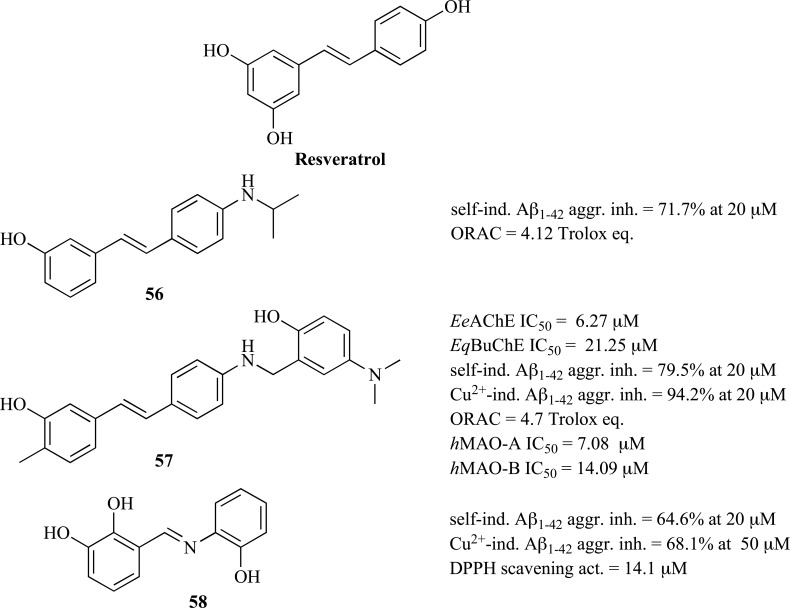
“In recent years, resveratrol (3,5,4’-trihydroxystilbene) has been extensively investigated as a cardioprotective, anticancer and anti-aging compound [185-187].”
BackgroundAmyloid deposition as the central event in the aetiology of Alzheimer’s disease
Hardy, J., & Allsop, D. (1991) · Trends in Pharmacological Sciences · doi:10.1016/0165-6147(91)90609-v · Cited by 2,538 · cited 1×
“The symptomatic therapeutic targets include mostly receptors whereas the disease-modifying targets are closely connected to A , tau production and neuroprotection [15, 16].”
BackgroundOxidative stress hypothesis in Alzheimer’s disease
Markesbery, W. R. (1997) · Free Radical Biology and Medicine · doi:10.1016/s0891-5849(96)00629-6 · Cited by 2,383
Levine, H. (1993) · Protein Science · doi:10.1002/pro.5560020312 · Cited by 2,264
DPPH antioxidant assay revisited
Sharma, O. P., & Bhat, T. K. (2009) · Food Chemistry · doi:10.1016/j.foodchem.2008.08.008 · Cited by 1,969 · cited 1×
“Interestingly, these two compounds showed an antioxidant activity in the (di(phenyl)-(2,4,6trinitrophenyl)iminoazanium) (DPPH) free radical scavenging assay [121] with IC50 values of 42.”
Background
Cited by
Items 301–364 of 364
Quelantes bifuncionais para o tratamento de neurodisfunções associadas ao ferro
de Carvalho, R. S. M. (2019) · Digital Library of Theses and Dissertations (Universidade de São Paulo) · doi:10.11606/t.46.2019.tde-02082019-081346 · Cited by 2
Ordoñez, W. O. C. (2017) · Digital Library of Theses and Dissertations (Universidade de São Paulo) · doi:10.11606/t.17.2017.tde-06062017-164343
Махаева, Г. Ф., Трофимова, Т. П., Boltneva, N. P., Рудакова, Е. В., Serebryakova, O. G., Lushchekina, S. V., Proshin, A. N., & Bachurina, S. O. (2017) · Russian Chemical Bulletin · doi:10.1007/s11172-017-1964-8
Effects and Possible Mechanisms of Some Phytochemicals on Drosophila Models of Alzheimer’s Disease
왕설 (2016) · Seoul National University Open Repository (Seoul National University)
Design and development of multi-target agents for neurodegenerative diseases
Benfeito, E. S. T. (2018) · Portuguese National Funding Agency for Science, Research and Technology (RCAAP Project by FCT) · doi:10.34626/20vw-jv73
Synthèse et évaluation biologique de ligands multi-cibles dirigés contre le système sérotoninergique
Hatat, B. (2019) · theses.fr (ABES) · doi:10.70675/50eb6d10z22edz4734za36bzc4a1894bd494
González, P., & González, E. A. P. (2020)
Marques, R. B. (2021) · Digital Library of Theses and Dissertations (Universidade de São Paulo) · doi:10.11606/d.17.2021.tde-06122021-121359 · Cited by 1
(2019) · PeerJ · doi:10.7287/peerj.6716v0.2/reviews/3
“To date, only three acetylcholinesterase inhibitors (donepezil, galantamine, and rivastigmine) and one noncompetitive N-methyl-D-aspartate receptor antagonist (memantine) have been approved by the US Food and Drug Administration (FDA) as treatments for AD (Guzior et al., 2015).”
BackgroundOoi, L., Tang, K. S., Tan, J. B. L., & Yeong, K. Y. (2024) · ChemistrySelect · doi:10.1002/slct.202400695
Loc, L. D., Thong, N. M., Vo, Q. V., Bay, M. V., Mechler, Á., Hieu, D. T., Tac, D. V., & Nam, P. C. (2024) · International Conference on Applying New Technology in Green Buildings (ATiGB) · doi:10.1109/atigb63471.2024.10717759
Werner, T., Añazco, T., Osses-Mendoza, P., Castro‐Álvarez, A., Salas, C. O., Bridi, R., Stark, H., & Espinosa‐Bustos, C. (2024) · Antioxidants · doi:10.3390/antiox13111345 · Cited by 1
“Neurodegenerative diseases like Alzheimer’s and Parkinson’s are characterized by progressive, irreversible neuronal loss, leading to a decrease in neurotransmitter levels and the formation of protein aggregates [1,2].”
de Sucre, U., & Pájaro-Castro, N. (2024) · Revista Vitae · doi:10.17533/udea.vitae.v31n3a354271
Liu, P., Li, R., Wang, X., Li, H., Hu, H., Shen, A., Zhu, W., Pan, J., Xing, Y., Xia, W., et al. (2025) · Advanced Science · doi:10.1002/advs.202417124
Conte‐Daban, A. (2017) · theses.fr (ABES) · doi:10.70675/77c5d103zebd9z49dcza4fcz7c76f7c64d1b
“Figure from ref.6 It is not well defined whether the gender is a risk factor of AD.7 Indeed, estrogen seems to play a neuroprotective role, with an unknown mechanism.7 After the menopause, woman serum contains less estrogen than man serum, the latter should have more neuroprotectors than woman serum.”
Influentialda Silva, O. (2021) · theses.fr (ABES) · doi:10.70675/a8a4b304z6671z4be8z99c7z37a223c3b001 · Cited by 2
Ismeurt, C. (2021) · theses.fr (ABES) · doi:10.70675/159d4638zb5f8z4580zb26fzd0419dba4d37 · Cited by 1
Kim, J., Ku, D., Park, I., Ye, S., Cho, I., Park, M., Seo, W., Lee, S., Kim, H. R., Kim, I., et al. (2026) · Alzheimer s Research & Therapy · doi:10.1186/s13195-026-02113-5
Copper Homeostasis and Cuproptosis in Neurodegenerative Diseases
Liu, B., Zhang, L., Lv, B., Xu, C., Han, L., Yan, Q., & Wang, X. (2026) · Cells · doi:10.3390/cells15141238
Махаева, Г. Ф., Astakhova, T. Y., Grishchenko, M. V., Skornyakova, T. S., Ковалева, Н. В., Boltneva, N. P., Рудакова, Е. В., Pronkin, P. G., Timokhina, E. N., Radchenko, E. V., et al. (2026) · ChemMedChem · doi:10.1002/cmdc.70392
“The most energetically favorable binding poses of the conjugates 9 and 10 with the N -acylalkylene spacer are shown in Figure 4b.”
InfluentialKumar, S., Sharma, V., Happy, & Verma, K. K. (2026) · Current Pharmaceutical Research · doi:10.63785/cpr.2026.2.2.292310
“The tacrine–chromene hybrid is designed to inhibit acetylcholinesterase, β-secretase, and monoamine oxidase-B while reducing amyloid-β aggregation, thereby offering enhanced neuroprotective and disease-modifying therapeutic potential [38].”
Review, A. M. A. R. (2026) · Annual Methodological Archive Research Review · doi:10.5281/zenodo.22807376
Kavitha, J., S., S. K., George, M., Francis, D., & Abi, T. G. (2026) · Journal of Biomolecular Structure and Dynamics · doi:10.1080/07391102.2026.2736169
Grishchenko, M. V., Shteinberg, T. S., Ковалева, Н. В., Рудакова, Е. В., Boltneva, N. P., Shchegolkov, E. V., Astakhova, T. Y., Timokhina, E. N., Махаева, Г. Ф., Burgart, Y. V., et al. (2026) · Russian Chemical Bulletin · doi:10.1007/s11172-026-5077-0
BindingDB (2021) · UC San Diego · doi:10.7270/q279486d
BindingDB (2024) · UC San Diego · doi:10.7270/q2tt4w9n
BindingDB (2020) · UC San Diego · doi:10.7270/q2vm4fxk
BindingDB Entry 50008743: Sulfonamide derivatives as multi-target agents for complex diseases.
BindingDB (2021) · UC San Diego · doi:10.7270/q2ht2srp
BindingDB Entry 50009190: Indazolylketones as new multitarget cannabinoid drugs.
BindingDB (2021) · UC San Diego · doi:10.7270/q2vq363k
Metadata
- Authors
- Guzior, N., Wi.eckowska, A., Panek, D., & Malawska, B.
- Affiliations
- Jagiellonian University (PL)
- Corresponding author
- Malawska, Barbara
- Venue
- Current Medicinal Chemistry
- Publisher
- Bentham Science Publishers Ltd.
- Published
- 2014-12-19
- Volume
- 22
- Issue
- 3
- Pages
- 373-404
- ISSN
- 0929-8673 (ISSN-L)
- PMC
- PMC4435057
- OpenAlex
- W2160250661
- Semantic Scholar
- 87a6c33067fc70ae159bdff4778e5de3fc139c1a
- Cited by
- 323
- References
- 239
- Citations by year
- 2026: 10 · 2025: 10 · 2024: 20 · 2023: 24 · 2022: 28 · 2021: 29 · 2020: 26 · 2019: 40 · 2018: 46 · 2017: 41 · 2016: 36 · 2015: 12
- FWCI
- 4.00
- Type
- journal article
- Language
- en
- Open access
- bronze
- doi.org
- Locations
- Current Medicinal Chemistry (publishedVersion)
- PubMed Central (publishedVersion, cc-by-nc)
- PubMed (publishedVersion)
- Homo Politicus (Academy of Humanities and Economics in Lodz) (submittedVersion)
- Jagiellonian University Repository (Jagiellonian University) (submittedVersion, other-oa)
- Jagiellonian University Repository (Jagiellonian University) (submittedVersion, cc-by-nc-nd)
- Homo Politicus (Academy of Humanities and Economics in Lodz) (submittedVersion, cc-by-nc-nd)
- Funders
- Narodowym Centrum Nauki
- Topics
- Health Sciences › Medicine › Pharmacology (medical) › Cholinesterase and Neurodegenerative Diseases
- Life Sciences › Neuroscience › Cellular and Molecular Neuroscience › Alzheimer's disease research and treatments
- Health Sciences › Medicine › Psychiatry and Mental health › Dementia and Cognitive Impairment Research
- Keywords
- Alzheimer's disease, multi-target-directed ligands, acetylcholinesterase inhibitors, beta-secretase inhibition, monoamine oxidase inhibition, antioxidant activity, metal chelation, nitric oxide release, cannabinoid receptors, NMDA receptor, histamine H3 receptor, tacrine, donepezil, galantamine, memantine, drug candidates
- MeSH terms
- Alzheimer Disease, Animals, Enzyme Inhibitors, Humans, Amyloid beta-Peptides, Neuroprotective Agents, Drug Discovery, Protein Aggregates
About these checks
Registry, retraction, Cites and statistics results are computed, not judged, with one exception: a printed reference that no index lists is read once by a model before it counts as a citation error. Claims are extracted by a model and kept only when their quote appears verbatim in the text; each cited source is then checked, with a model’s help, for whether it says what the claim relies on. Those verdicts can be wrong — read the claim’s quote and the cited source before relying on one.
Statistics and arithmetic are recomputed, not judged.
Confidence bands are shown only for fields calibrated on our annotated test set. None is calibrated yet, so no band is shown.
What counts as a claim ›How we measure confidence ›How we check this ›
Are you an author, or do you see a problem with this page? Request a review
Data sources
Bibliographic data: Semantic Scholar, OpenAlex, Crossref.
Contains information from the Semantic Scholar Academic Graph Datasets, made available under the ODC Attribution License (ODC-BY 1.0).
Semantic Scholar’s data is described in: Kinney, R., et al. (2023). The Semantic Scholar Open Data Platform. arXiv:2301.10140.
