

Role of Advanced Glycation End Products in Carcinogenesis and their Therapeutic Implications
Open accessThe DOI matches its Crossref record; 102 of the 102 references it cites were found in a registry or an index.
Abstract
Aging is one of the biggest risk factors for the major prevalent diseases such as cardiovascular diseases, neurodegeneration and cancer, but due to the complex and multifactorial nature of the aging process, the molecular mechanisms underlying age-related diseases are not yet fully understood. Research has been intensive in the last years aiming to characterize the pathophysiology of aging and develop therapies to fight age-related diseases. In this context advanced glycation end products (AGEs) have received attention. AGEs, when accumulated in tissues, significantly increase the level of inflammation in the body which has long been associated with the development of cancer. Here we discuss the classical settings promoting AGE formation, as well as reduction strategies, occurrence and relevance of AGEs in cancer tissues and the role of AGE-interaction with the receptor for advanced glycation end products (RAGE) in cancer initiation and progression.
Overview
The claims and statistics of this paper haven’t been checked yet.
Free: it reads the open-access text and checks the first 5 claims that cite a source we can check. Create a free account to check every claim.
Integrity signals
Registry
Cites
Statistics
Figures
Verification
Claims the paper makes
The claims and statistics of this paper haven’t been checked yet.
Free: it reads the open-access text and checks the first 5 claims that cite a source we can check. Create a free account to check every claim.
Self-check
Percentages, sums and reported differences re-computed from the paper’s own numbers.
The self-check needs the paper’s full text.
Citations
Cites
Siegel, R. L., Miller, K. D., & Jemal, A. (2018) · CA: A Cancer Journal for Clinicians · doi:10.3322/caac.21442 · Cited by 16,579
Inflammation and cancer: back to Virchow?
Balkwill, F., & Mantovani, A. (2001) · The Lancet · doi:10.1016/s0140-6736(00)04046-0 · Cited by 7,746
Nuclear factor-κB in cancer development and progression
Karin, M. (2006) · Nature · doi:10.1038/nature04870 · Cited by 3,519
Advanced glycation end-products: A review
Singh, R., Barden, A., Mori, T., & Beilin, L. (2001) · Diabetologia · doi:10.1007/s001250051591 · Cited by 2,597
Advanced Glycation End Products and Diabetic Complications
Singh, V. P., Bali, A., Singh, N., & Jaggi, A. S. (2014) · The Korean Journal of Physiology & Pharmacology · doi:10.4196/kjpp.2014.18.1.1 · Cited by 1,518
Nishida, N., Yano, H., Nishida, T., Kamura, T., & Kojiro, M. (2006) · Vascular Health and Risk Management · doi:10.2147/vhrm.2006.2.3.213 · Cited by 1,434
Advanced protein glycosylation in diabetes and aging
Brownlee, M. D. (1995) · Annual Review of Medicine · doi:10.1146/annurev.med.46.1.223 · Cited by 1,312
Yan, S. D., Schmidt, A. M., Anderson, G. M., Zhang, J., Brett, J., Zou, Y. S., Pinsky, D., & Stern, D. (1994) · Journal of Biological Chemistry · doi:10.1016/s0021-9258(17)36966-1 · Cited by 1,306
Advanced glycation end products in foods and a practical guide to their reduction in the diet
Uribarri, J., Woodruff, S., Goodman, S., Cai, W., Chen, X., Pyzik, R., Yong, A., Striker, G. E., & Vlassara, H. (2010) · Journal of the American Dietetic Association · doi:10.1016/j.jada.2010.03.018 · Cited by 1,289
Wolff, S. P., & Dean, R. T. (1987) · Biochemical Journal · doi:10.1042/bj2450243 · Cited by 1,271
Cited by
Redox Signaling and Advanced Glycation Endproducts (AGEs) in Diet-Related Diseases
Cepas, V., Collino, M., Mayo, J. C., & Sainz, R. M. (2020) · Antioxidants · doi:10.3390/antiox9020142 · Cited by 202
Ramteke, P. L., Deb, A., Shepal, V., & Bhat, M. K. (2019) · Cancers · doi:10.3390/cancers11091402 · Cited by 178
“Avoiding sweetened foods and drinks is often recommended for inhibiting glycation product formation and accumulation, thereby highlighting the role of hyperglycemia in DNA damage [24].”
BackgroundA Role for Advanced Glycation End Products in Molecular Ageing
Zgutka, K., Tkacz, M., Tomasiak, P., & Tarnowski, M. (2023) · International Journal of Molecular Sciences · doi:10.3390/ijms24129881 · Cited by 175
Toxicity of advanced glycation end products (Review)
Kuzan, A. (2021) · Biomedical Reports · doi:10.3892/br.2021.1422 · Cited by 151
“Other types of cancer CML, CEL, and AGEs, via binding to RAGEs, result in sustained (17,18)”
Yap, K. M., Sekar, M., Fuloria, S., Wu, Y. S., Gan, S. H., Rani, N. N. I. M., Subramaniyan, V., Kokare, C., Lum, P. T., Begum, M. Y., et al. (2021) · International Journal of Nanomedicine · doi:10.2147/ijn.s328135 · Cited by 132
“Bombesin (BBN; a 14-amino acid peptide) is a natural ligand for gastrin-releasing peptide receptor, which is a G-protein coupled receptor that is overexpressed in various cancers, including BC.274 The same research group thus further conjugated EGCG-SLNs with BBN to achieve active BC cell targeting.275 In the study, i…”
BackgroundInfluentialThe role of phosphatidylserine on the membrane in immunity and blood coagulation
Wang, J., Yu, C., Zhuang, J., Qi, W., Jiang, J., Liu, X., Zhao, W., Cao, Y., Wu, H., Qi, J., et al. (2022) · Biomarker Research · doi:10.1186/s40364-021-00346-0 · Cited by 114
Sha, J., Li, J., Zhou, Y., Yang, J., Liu, W., Jiang, S., Wang, Y., Zhang, R., Di, P., & Li, W. (2021) · Phytotherapy Research · doi:10.1002/ptr.7142 · Cited by 112
Olatunde, A., Nigam, M., SINGH, R. K., Panwar, A. S., Lasisi, A., Alhumaydhi, F. A., Kumar, V., Mishra, A. P., & Sharifi‐Rad, J. (2021) · Cancer Cell International · doi:10.1186/s12935-021-02202-5 · Cited by 105
RAGE and its ligands: from pathogenesis to therapeutics
Jangde, N., Ray, R., & Rai, V. (2020) · Critical Reviews in Biochemistry and Molecular Biology · doi:10.1080/10409238.2020.1819194 · Cited by 88
Chromatin as a key consumer in the metabolite economy
Diehl, K. L., & Muir, T. W. (2020) · Nature Chemical Biology · doi:10.1038/s41589-020-0517-x · Cited by 77
Diabetes and Pancreatic Cancer—A Dangerous Liaison Relying on Carbonyl Stress
Menini, S., Iacobini, C., Vitale, M., Pesce, C. M., & Pugliese, G. (2021) · Cancers · doi:10.3390/cancers13020313 · Cited by 87
Glycosylation Modulates the Structure and Functions of Collagen: A Review
Tvaroška, I. (2024) · Molecules · doi:10.3390/molecules29071417 · Cited by 65
Cross, K., Vetter, S. W., Alam, Y., Hasan, M. Z., Nath, A. D., & Leclerc, E. (2024) · Biomolecules · doi:10.3390/biom14121550 · Cited by 52
Leveling Up the Controversial Role of Neutrophils in Cancer: When the Complexity Becomes Entangled
Sionov, R. V. (2021) · Cells · doi:10.3390/cells10092486 · Cited by 50
“Advanced glycation end products (AGEs) have been found to be expressed in several types of cancer [129] and promote growth, invasion and migration of prostate and breast cancer [365].”
BackgroundKatsi, V. K., Papakonstantinou, I. P., & Tsioufis, K. P. (2023) · International Journal of Molecular Sciences · doi:10.3390/ijms241411786 · Cited by 47
The role of glycans in the mechanobiology of cancer
Purushothaman, A., Mohajeri, M., & Lele, T. P. (2023) · Journal of Biological Chemistry · doi:10.1016/j.jbc.2023.102935 · Cited by 43
Diabetes and further risk of cancer: a nationwide population-based study
Chang, W., Hsieh, T., Hsu, W., Chang, F.-L., Tsai, H., & He, M.-S. (2024) · BMC Medicine · doi:10.1186/s12916-024-03430-y · Cited by 41
Waqas, K., Muller, M., Koedam, M., el Kadi, Y., Zillikens, M. C., & van der Eerden, B. C. J. (2022) · Bone · doi:10.1016/j.bone.2022.116526 · Cited by 42
Effects of Baking and Frying on the Protein Oxidation of Wheat Dough
Liu, R., Yang, Y., Cui, X., Mwabulili, F., & Xie, Y. (2023) · Foods · doi:10.3390/foods12244479 · Cited by 40
Network-Based Analysis of Fatal Comorbidities of COVID-19 and Potential Therapeutics
Chakrabarty, B., Das, D., Bulusu, G., & Roy, A. (2021) · IEEE Transactions on Computational Biology and Bioinformatics · doi:10.1109/tcbb.2021.3075299 · Cited by 38
“The increased levels of these highly reactive AGEs induce persistent inflammation and oxidative stress, which lead to cancer (Turner, 2015; Schröter and Höhn, 2018).”
BackgroundProtein glycation in diabetes mellitus
Shin, A., Connolly, S. M., & Kabytaev, K. (2023) · Advances in clinical chemistry · doi:10.1016/bs.acc.2022.11.003 · Cited by 38
Food-Related Carbonyl Stress in Cardiometabolic and Cancer Risk Linked to Unhealthy Modern Diet
Iacobini, C., Vitale, M., Haxhi, J., Pesce, C. M., Pugliese, G., & Menini, S. (2022) · Nutrients · doi:10.3390/nu14051061 · Cited by 34
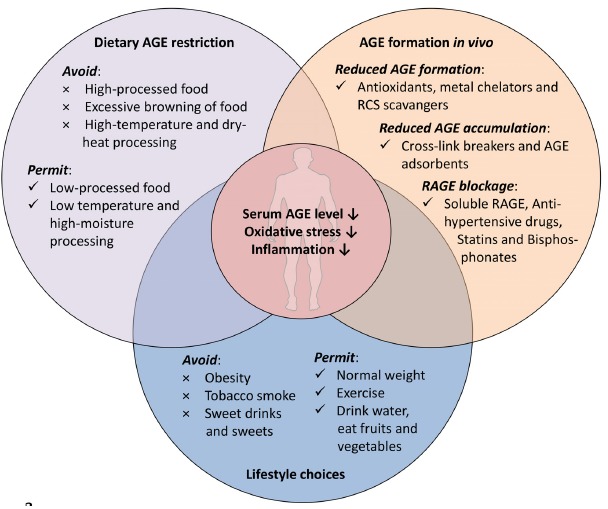
“According to numerous cross-sectional and intervention studies, circulating AGE levels are influenced by the AGE content of the diet (Figure 4), and a reduction in the consumption of foods with a high content of AGEs, as measured by food records, offers health benefits [100,102,110,111].”
BackgroundThe multifaceted roles of sulfane sulfur species in cancer-associated processes
Zuhra, K., Tomé, C. S., Forte, E., Vicente, J. B., & Giuffrè, A. (2020) · Biochimica et Biophysica Acta (BBA) - Bioenergetics · doi:10.1016/j.bbabio.2020.148338 · Cited by 34
Xu, H., Liu, Q., Song, X., Wang, C., Wang, X., Ma, S., Wang, X., Feng, Y., Meng, X., Liu, X., et al. (2020) · Analytical Chemistry · doi:10.1021/acs.analchem.0c02447 · Cited by 31
Flore, G., Deledda, A., Lombardo, M., Armani, A., & Velluzzi, F. (2023) · Antioxidants · doi:10.3390/antiox12101845 · Cited by 31
“AGEs can play a role in the initiation and progression of cancer, and restricting their intake may help prevent and support cancer therapy [231].”
BackgroundRahmani, A. H., Anwar, S., Raut, R., Almatroudi, A., Babiker, A. Y., Khan, A. A., Alsahli, M. A., & Almatroodi, S. A. (2022) · Applied Sciences · doi:10.3390/app12189175 · Cited by 30
“The ultimate objective is to predict bound conformations and binding affinity [28].”
BackgroundAGE/Non-AGE Glycation: An Important Event in Rheumatoid Arthritis Pathophysiology
Monu, M., Agnihotri, P., & Biswas, S. (2021) · Inflammation · doi:10.1007/s10753-021-01589-7 · Cited by 28
“Collectively, the glycated proteins and reactive carbonyl species analyses in cellular and cell-free systems have therapeutic implications [167, 168], that may serve as an additional diagnostic tool for RA pathogenesis evaluation.”
BackgroundPotential Mechanisms by which Glucocorticoids Induce Breast Carcinogenesis through Nrf2 Inhibition
Giudice, A., Aliberti, S. M., Barbieri, A., Pentangelo, P., Bisogno, I., D'Arena, G. F., Cianciola, E., Caraglia, M., & Capunzo, M. (2022) · Frontiers in Bioscience-Landmark · doi:10.31083/j.fbl2707223 · Cited by 28
Demirbolat, İ., Ekinci, C., Nuhoğlu, F., Kartal, M., Yıldız, P., & Geçer, M. Ö. (2019) · Molecules · doi:10.3390/molecules24224069 · Cited by 28
“Hyperglycemia is highly associated with increasing protein glycation and accumulation of AGEs in body tissues [41–43] which significantly increases the level of inflammation, and it has long been associated with the development of cancer [44].”
BackgroundPetriv, N., Neubert, L., Vatashchuk, M., Timrott, K., Suo, H., Hochnadel, I., Huber, R., Petzold, C., Hrushchenko, A. O., Yatsenko, A. S., et al. (2021) · OncoImmunology · doi:10.1080/2162402x.2021.1874159 · Cited by 25
Alsahli, M. A., Anwar, S., Alzahrani, F., Almatroudi, A., Alfheeaid, H. A., Khan, A. A., Allemailem, K. S., Almatroodi, S. A., & Rahmani, A. H. (2021) · Applied Sciences · doi:10.3390/app11198819 · Cited by 24
“Chronic inflammation is an important cause of the development of cancer [16].”
BackgroundType-2 diabetes mellitus-associated cancer risk: In pursuit of understanding the possible link
Vulichi, S. R., Runthala, A., Nagaraju, B., Kumar, R., Chunduri, V. R., Kapur, S., Chippada, A. R., & Sistla, D. S. M. (2022) · Diabetes & Metabolic Syndrome Clinical Research & Reviews · doi:10.1016/j.dsx.2022.102591 · Cited by 24
Biomarkers of tumor invasiveness in proteomics (Review)
Pouliquen, D., Boissard, A., Coqueret, O., & Guette, C. (2020) · International Journal of Oncology · doi:10.3892/ijo.2020.5075 · Cited by 24
“The role of RAGE in cancer initiation and progression is now well recognized and underpins therapeutic strategies aimed at reducing AGE levels (322).”
BackgroundCelep, İ. K., Zheleva‐Dimitrova, D., Gevrenova, R., Uba, A. İ., Zengin, G., Yıldıztugay, E., Picot-Allain, C. M. N., Lorenzo, J. M., Mahomoodally, M. F., & Montesano, D. (2022) · Antioxidants · doi:10.3390/antiox11071377 · Cited by 24
“The current study revealed that cancer progression, metastasis, cell proliferation, and invasion can be prevented by inhibiting the ROS-driven AGE/RAGE signaling pathway in the HT-29 colorectal cancer cell line with P. auriculata extracts.”
BackgroundInfluentialSenavirathna, L. K., Ma, C., Chen, R., & Pan, S. (2021) · Cells · doi:10.3390/cells10051005 · Cited by 23
“These AGEs accumulate in our body either exogenously or endogenously [12,13].”
BackgroundRAGE pathways play an important role in regulation of organ fibrosis
Liu, J., Jin, Z., Wang, X., Jakoš, T., Zhu, J., & Yuan, Y. (2023) · Life Sciences · doi:10.1016/j.lfs.2023.121713 · Cited by 22
Pathophysiological Characteristics Linking Type 2 Diabetes Mellitus and Colorectal Neoplasia
Grega, T., Vojtěchová, G., Gregová, M., Zavoral, M., & Suchánek, Š. (2021) · Physiological Research · doi:10.33549/physiolres.934631 · Cited by 21
Sruthi, C. R., & Raghu, K. G. (2022) · Journal of Cellular Biochemistry · doi:10.1002/jcb.30215 · Cited by 21
Age-related neuronal damage by advanced glycation end products through altered proteostasis
Addi, U. R., Jakhotia, S., Reddy, S. S., & Reddy, G. B. (2022) · Chemico-Biological Interactions · doi:10.1016/j.cbi.2022.109840 · Cited by 22
Cherkaoui, M., Tessier, D., Lollier, V., Larré, C., Brossard, C., Dijk, W., & Rogniaux, H. (2022) · Food Chemistry · doi:10.1016/j.foodchem.2022.133624 · Cited by 21
De Masi, R., & Orlando, S. (2022) · International Journal of Molecular Sciences · doi:10.3390/ijms23137373 · Cited by 20
“Thus, some of the exogenous AGEs are carcinogenic, for example acrylamide or heterocyclic amines [198].”
BackgroundHighly selective detection and imaging of glyoxal through a novel fluorescent probe
Wu, H. Y., Gong, X.-L., Tian, Y., Zheng, J., Tan, R., Peng, Y., & Wang, Y. (2024) · Sensors and Actuators B Chemical · doi:10.1016/j.snb.2024.135362 · Cited by 18
Wang, W., Chen, J., Ma, H., Xing, W., Lv, N., Zhang, B., Xu, H., Wang, W., & Lou, K. (2021) · Chemical Communications · doi:10.1039/d1cc01859k · Cited by 18
Structures of Toxic Advanced Glycation End-Products Derived from Glyceraldehyde, A Sugar Metabolite
Sakai, A., Takeda, K., Suzuki, H., & Takeuchi, M. (2024) · Biomolecules · doi:10.3390/biom14020202 · Cited by 17
“AGEs exogenously or endogenously accumulate in the body [5–7].”
BackgroundNon-Genomic Hallmarks of Aging—The Review
Holmannová, D., Borský, P., Kovaříková, H., Štveráková, T., Vošmik, M., Hruška, L., Fiala, Z., & Borská, L. (2023) · International Journal of Molecular Sciences · doi:10.3390/ijms242015468 · Cited by 16
“Cancer cells show a higher expression of RAGEs and AGEs [67,68].”
BackgroundRAGE and its ligands in breast cancer progression and metastasis
Coser, M., Neamtu, B. M., Pop, B., Cipăian, C. R., & Crişan, M. (2025) · Oncology Reviews · doi:10.3389/or.2024.1507942 · Cited by 16
Ohira, H., Tsuruya, A., Oikawa, D., Nakagawa, W., Mamoto, R., Hattori, M., Waki, T., Takahashi, S., Fujioka, Y., & Nakayama, T. (2021) · PLoS ONE · doi:10.1371/journal.pone.0246580 · Cited by 16
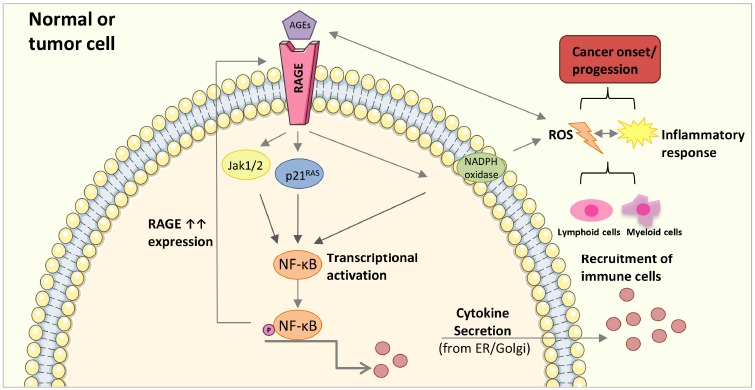
“On binding of AGEs to RAGE, multiple signaling pathways are activated to cause multiple pathological effects associated with oxidative stress and inflammation [13, 14].”
BackgroundInfluentialImprovement in Redox Homeostasis after Cytoreductive Surgery in Colorectal Adenocarcinoma
Salehi, S. S., Mirmiranpour, H., Rabizadeh, S., Esteghamati, A., Tomasello, G., Alibakhshi, A., Najafi, N., Rajab, A., & Nakhjavani, M. (2021) · Oxidative Medicine and Cellular Longevity · doi:10.1155/2021/8864905 · Cited by 16
Hu, Y., Guo, H.-Z., Wang, H., Yang, Y., Tu, Z., & Huang, T. (2020) · Food Chemistry · doi:10.1016/j.foodchem.2020.128340 · Cited by 15
Celep, İ. K., Zengin, G., Celep, E., Dall’Acqua, S., Sut, S., Ferrase, I., Ak, G., Uba, A. İ., Polat, R., Canlı, D., et al. (2022) · Food Bioscience · doi:10.1016/j.fbio.2022.102194 · Cited by 14
Integration and Intersection of Cancer Metabolism with Epigenetic Pathways in Gliomas
Natarajan, S. K., Pun, M. J., Haggerty-Skeans, J., & Venneti, S. (2025) · Annual Review of Pathology Mechanisms of Disease · doi:10.1146/annurev-pathmechdis-111523-023424 · Cited by 13
Forces exerted and transduced by cancer‐associated fibroblasts during cancer progression
Bates, M. E., Libring, S., & Reinhart‐King, C. A. (2023) · Biology of the Cell · doi:10.1111/boc.202200104 · Cited by 13
“In general, AGE accumulation is correlated with increased cancer incidence and mortality; (Schröter & Höhn, 2019) however, whether this is a function of tumor stiffness or increased activation of AGE receptors has yet to be fully parsed apart.”
BackgroundVasilj, M., Goñi, L., Gayoso, L., Razquín, C., Sesma, M. T., Etxeberría, U., & Ruiz‐Canela, M. (2023) · Nutrition Metabolism and Cardiovascular Diseases · doi:10.1016/j.numecd.2023.05.022 · Cited by 13
Jahromi, M. K., Tehrani, A. N., Farhadnejad, H., Emamat, H., Ahmadirad, H., Teymoori, F., Heidari, Z., Saber, N., Rashidkhani, B., & Mirmiran, P. (2023) · BMC Cancer · doi:10.1186/s12885-023-11462-5 · Cited by 13
Pascual‐Morena, C., Garrido‐Miguel, M., Martínez‐García, I., Lucerón‐Lucas‐Torres, M., Rodríguez‐Gutiérrez, E., Berlanga‐Macías, C., Fernández‐Bravo‐Rodrigo, J., & Patiño‐Cardona, S. (2025) · Nutrients · doi:10.3390/nu17101638 · Cited by 12
Dietary and serum advanced glycation end-products and clinical outcomes in breast cancer
Peterson, L. L., & Ligibel, J. A. (2023) · Biochimica et Biophysica Acta (BBA) - Reviews on Cancer · doi:10.1016/j.bbcan.2023.188995 · Cited by 12
Glyoxalase System in Breast and Ovarian Cancers: Role of MEK/ERK/SMAD1 Pathway
Alhujaily, M. M. (2024) · Biomolecules · doi:10.3390/biom14050584 · Cited by 12
“The intricate interplay between GO and pathways associated with cancer is evident through the association of RAGE expression with tumor development, highlighting the potential involvement of GO in carcinogenesis [36,37].”
BackgroundSamur, D. N., Yıldırım, S., Maytalman, E., Kalay, M., Tanrıöver, G., & Özbey, G. (2025) · Neuropharmacology · doi:10.1016/j.neuropharm.2025.110385 · Cited by 11
Yang, Y., Xie, Y., Liu, R., Cui, X., Cui, C., Cheng, Q., Li, P., & Zhao, R. (2026) · Current Research in Food Science · doi:10.1016/j.crfs.2026.101357 · Cited by 11
“…and chronic inflammation (Tovbin et al., 2002), which are associated with accelerated aging and the development of age-related diseases such as diabetes (Schr ¨ oter and H ¨ ohn, 2018), Alzheimer's disease (Butterfield and Lauderback, 2002), Parkinson's disease (Butterfield and Kanski, 2001).”
El-Sayed, N. N. E., Al-Otaibi, T. M., Barakat, A., Almarhoon, Z. M., Hassan, M. Z., Al‐Zaben, M. I., Krayem, N., Masand, V. H., & Bacha, A. G. B. (2023) · Pharmaceuticals · doi:10.3390/ph16101392 · Cited by 11
Skin autofluorescence and cause-specific mortality in a population-based cohort
Boersma, H. E., Smit, A. J., Paterson, A. D., Wolffenbuttel, B. H. R., & van der Klauw, M. M. (2024) · Scientific Reports · doi:10.1038/s41598-024-71037-7 · Cited by 11
“There is evidence that AGEs may play a role in cancer development and progression 22 .”
BackgroundAdipose-Derived Stromal/Stem Cell Response to Tumors and Wounds: Evaluation of Patient Age
Hamel, K. M., Liimatta, K. Q., Belgodere, J. A., Bunnell, B. A., Gimble, J. M., & Martin, E. C. (2022) · Stem Cells and Development · doi:10.1089/scd.2021.0280 · Cited by 12
“Not only is glycation involved in pathologies such as diabetes, renal failure, inflammation, and cancer, but it is also an endogenous aging mechanism that induces injury to the ECM and contributes to aging and aging-related diseases [46,47].”
Quantitatively Assessing the Respiratory Burst in Innate Immune Cells
Sargent, A. L., Leedberg, J. A., Burress, J. E., Dalwadi, P. S., O’Fallon, K. S., Gaffney‐Stomberg, E., & Gaines, P. C. W. (2022) · Methods in molecular biology · doi:10.1007/978-1-0716-2914-7_4 · Cited by 11
Chen, J., Lin, Y., Xing, W., Zhang, X., Xu, H., Wang, W., & Lou, K. (2022) · RSC Advances · doi:10.1039/d2ra00741j · Cited by 10
Feng, Q., Xie, Z., Liang, H., Ding, C., & Yan, Y. (2023) · Food Chemistry · doi:10.1016/j.foodchem.2023.135562 · Cited by 10
Pavlatovská, B., Machálková, M., Brisudová, P., Pruška, A., Štěpka, K., Michálek, J., Nečasová, T., Beneš, P., Šmarda, J., Preisler, J., et al. (2020) · Frontiers in Oncology · doi:10.3389/fonc.2020.581365 · Cited by 9
“Collagen glycation results in its stiffening, significantly altering its biological properties and was previously associated with cancer progression (57, 58).”
BackgroundChandrakar, N., Kaur, J., & Banerjee, M. (2024) · International Journal of Food Science & Technology · doi:10.1111/ijfs.17588 · Cited by 9
Dorf, J., Pryczynicz, A., Matowicka-Karna, J., Zaręba, K. P., Żukowski, P., Zalewska, A., & Maciejczyk, M. (2023) · Frontiers in Oncology · doi:10.3389/fonc.2023.1213802 · Cited by 9
“Tumours present with an increased glucose uptake and a high rate of glycolysis (55).”
BackgroundLi, N., Wu, X., Liu, H., Xie, D., Hao, S., Lu, Z., Quan, W., Chen, J., Xu, H., & Li, M. (2023) · Food Research International · doi:10.1016/j.foodres.2023.113628 · Cited by 8
Skulsky, S. L., Koutoukidis, D. A., Carter, J. L., Piernas, C., Jebb, S. A., Gao, M., & Astbury, N. M. (2024) · Cancer Epidemiology Biomarkers & Prevention · doi:10.1158/1055-9965.epi-24-0048 · Cited by 8
“Sustained inflammation, which is known to be carcinogenic, is promoted by certain advanced glycation end products (43, 44).”
BackgroundRecent Perspectives on Meat Consumption and Cancer Proliferation
Momal, U., Naeem, H., Aslam, F., Shahbaz, M., Imran, M. A., Hussain, M., Ahmad, A., Memon, A. G., Mujtaba, A., Atif, M., et al. (2025) · Journal of Food Processing and Preservation · doi:10.1155/jfpp/6567543 · Cited by 9
Garlic Extract: Inhibition of Biochemical and Biophysical Changes in Glycated HSA
Khan, M. W. A., Otaibi, A. A., Alhumaid, A. F. M., Alsukaibi, A. K. D., Alshamari, A. K., Alshammari, E. M., Al‐Zahrani, S. A., Almudyani, A. Y. M., & Sherwani, S. (2021) · Applied Sciences · doi:10.3390/app112211028 · Cited by 8
Audat, S. A., Al-Balas, Q. A., Al-Oudat, B. A., Athamneh, M. J., & Bryant-Friedrich, A. (2022) · Drug Design Development and Therapy · doi:10.2147/dddt.s356621 · Cited by 8
Circulating free methylglyoxal as a metabolic tumor biomarker in a rat colon adenocarcinoma model
Irigaray, P., & Belpomme, D. (2020) · Molecular and Clinical Oncology · doi:10.3892/mco.2020.2000 · Cited by 8
“Although it has been established that cancer development may be associated with the increased formation of MG-derived intracellular advanced glycation end-products (AGE) (15,16), only one publication was specifically devoted to the measurement of MG in cancer animals (17); and more recently, only one in cancer patient…”
BackgroundLu, C. H., Liu, J., Chen, Z., Guo, B.-T., Dong, C.-S., Yu, H., Tang, X.-M., Liu, J., Ji, C., Tao, K., et al. (2025) · Cell & Bioscience · doi:10.1186/s13578-025-01474-y · Cited by 7
“Evidences have shown that AGEs are concerned with various types of cancers including PC [151, 154, 157].”
Last Five Years Development In Food Safety Perception of n-Carboxymethyl Lysine
Golchinfar, Z., Farshi, P., Mahmoudzadeh, M., Mohammadi, M., Tabibiazar, M., & Smith, J. S. (2021) · Food Reviews International · doi:10.1080/87559129.2021.2011909 · Cited by 7
“[10,11] CML is one of the non-cross-linked amino acid products that can be categorized as non-fluorescent products in the form of free CML and/or protein-bound CML.”
BackgroundGlycation at the Crossroads of Disease Pathogenesis: Mechanistic Insights and Therapeutic Frontiers
Krishnamoorthi, S., Saravanakumar, R., & Kumar, V. (2026) · Diseases · doi:10.3390/diseases14040137 · Cited by 6
“Their accumulation reflects both metabolic dysregulation and environmental exposure, including dietary intake of AGE-rich foods and reactive sugar metabolites [66].”
Rossi, G. R., Jensen, A., Ng, S., Yin, Z., Li, A., Misra, A., Hoff, D. D. V., Gruber, L., Gruber, M., & Han, H. (2023) · Scientific Reports · doi:10.1038/s41598-023-44211-6 · Cited by 6
“Although they have shown some promising activity in clinical trials for diabetic cardiovascular disease, these molecules were found to cause significant side effects and have yet to demonstrate meaningful clinical benefits in cancer 21,23 .”
BackgroundPathak, C., Vaidya, F. U., Waghela, B. N., Chhipa, A. S., Tiwari, B. S., & Ranjan, K. (2021) · Springer eBooks · doi:10.1007/978-981-15-4501-6_44-1 · Cited by 6
1-Amino-1-deoxy-d-fructose (“fructosamine”) and its derivatives: An update
Mossine, V. V., & Mawhinney, T. P. (2023) · Advances in carbohydrate chemistry and biochemistry · doi:10.1016/bs.accb.2023.10.001 · Cited by 6
Pathak, C., Vaidya, F. U., Waghela, B. N., Chhipa, A. S., Tiwari, B. S., & Ranjan, K. (2022) · Springer eBooks · doi:10.1007/978-981-15-9411-3_44 · Cited by 6
Lu, Y., Jiang, Y., Sun, M., Dong, L., Xing, X., Zhang, Y., & Wang, S. (2025) · Food Control · doi:10.1016/j.foodcont.2025.111315 · Cited by 5
Santos, A. C., Otsuka, F. A. M., Santos, R. B., Trindade, D. D. J., & Matos, H. R. (2022) · Natural Product Research · doi:10.1080/14786419.2022.2116700 · Cited by 5
Xu, Y., Huang, M., Chen, Y., Yu, L., Wu, M., Kang, S., Lin, Q., Zhang, Q., Han, L., Lin, H., et al. (2024) · Journal of Pharmaceutical and Biomedical Analysis · doi:10.1016/j.jpba.2024.116035 · Cited by 5
Tong, Y., Ko, J. K. Y., Lam, K. S. L., Tam, S., Lee, V. C. Y., Ho, P. C., Ng, E. H. Y., & Li, R. (2023) · Reproductive Biology and Endocrinology · doi:10.1186/s12958-023-01093-7 · Cited by 5
“An increased serum level of AGEs has been found in patients with various diseases including chronic renal disease [6], rheumatoid arthritis [7], malignancy [8] and ageing [9].”
BackgroundLee, G. H., Kim, Y.-H., Woo, S. M., Lee, W. J., Han, S.-S., Park, S.-J., Price, S., Tembo, P., Hébert, J. R., & Kim, M. K. (2024) · Nutrients · doi:10.3390/nu16223941 · Cited by 4
Ezzatvar, Y., Arancibia, J. E. O., Páez‐Herrera, J., Yáñez-Sepúlveda, R., & Caballero, Ó. (2026) · Journal of Clinical Medicine · doi:10.3390/jcm15020538 · Cited by 4
“Furthermore, abnormalities in glucose metabolism alter energy production, as cancer cells shift from oxidative phosphorylation to glycolysis (the Warburg effect), providing a growth advantage [50].”
Ahmed, D. A. M., Abdel-Shafy, E. A., Mohammed, E. A. A., Alnour, H. E. A. B., Ismail, A. M., Cacciatore, S., & Zerbini, L. F. (2024) · Journal of Circulating Biomarkers · doi:10.33393/jcb.2024.3146 · Cited by 4
“This pathway might increase the severity of inflammatory diseases, and the initiation and progression of malignant tumors (50).”
Zenner, M. L., Helou, Y. B., Deaton, R., Sverdlov, M. S., Wang, H., Kajdacsy‐Balla, A., Macias, V., Voisine, C., Murray, M., Abdulkadir, S. A., et al. (2021) · The Prostate · doi:10.1002/pros.24273 · Cited by 4
“Additionally, the RAGE gene (AGER) is a direct target of NF‐kB, creating a positive feedback loop and proinflammatory state upon the initial RAGE activation.(9)”
BackgroundInfluentialLung cancer and diabetes: A role for advanced glycation end‐products?
Rigalleau, V., Foussard, N., Bertrand, A., Monlun, M., Blanco, L., & Mohammedi, K. (2020) · European Journal of Clinical Investigation · doi:10.1111/eci.13389 · Cited by 4
Mechanisms and Pathogenesis of Diabetic Cognitive Impairment: A Comprehensive Review
Qi, C., Qin, M., Wang, Y., Li, C., Yan, H., Feng, L., & Li, M. (2025) · Aging and Disease · doi:10.14336/ad.2025.0769 · Cited by 3
“AGEs are a varied group of compounds that form when macromolecules like proteins, lipids, or nucleic acids react with reducing sugars [46].”
Song, B., Yue, D., Yan, H., Feng, L., & Li, M. (2025) · Drug Design Development and Therapy · doi:10.2147/dddt.s531909 · Cited by 3
“144,145 The primary mechanism mechanism by which AGEs induce IR and diabetic complications involves their binding to the RAGE (receptor for advanced glycation end) products, which subsequently initiates a series of pathological effects.”
salih1, D. A., & Abdoulrahman, K. (2023) · Journal of Kufa for Chemical Sciences · doi:10.36329/jkcm/2023/v2.i10.13365 · Cited by 3
Sharifi‐Zahabi, E., Soltani, S., Hajizadeh‐Sharafabad, F., & Abdollahzad, H. (2024) · Food Science & Nutrition · doi:10.1002/fsn3.4396 · Cited by 3
“In other words, RAGE signaling serves as a vital connection between the accumulated AGEs and cancer via its ability to stimulate the NF-κ B pathway (Schröter & Höhn, 2018).”
BackgroundMethodInfluentialToxic AGEs (TAGE) Cause Lifestyle-Related Diseases
Takeuchi, M. (2024) · Antioxidants · doi:10.3390/antiox13111372 · Cited by 3
Redox Regulation and Cancer Therapy
Yalçın, A. S., & Karademir-Yilmaz, B. (2019) · Current Pharmaceutical Design · doi:10.2174/138161282444190329154841 · Cited by 3
Increased skin autofluorescence predicts future cancer development
Boersma, H. E., Sidorenkov, G. A., Smit, A. J., Paterson, A. D., van der Vegt, B., Wolffenbuttel, B. H. R., van der Klauw, M. M., & de Bock, G. H. (2025) · BMC Cancer · doi:10.1186/s12885-025-14801-w · Cited by 2
Glycation Enhances Protein Association with Lipid Bilayer Membranes
Barletti, B., Paracini, N., Fragneto, G., Alcaraz, J., Nelson, A. R. J., Vilgrain, I., Martin, D. K., & Maccarini, M. (2025) · Langmuir · doi:10.1021/acs.langmuir.5c03975 · Cited by 2
Nguyen, D. H., Howsam, M., Boulanger, É., & Tessier, F. J. (2026) · Critical Reviews in Clinical Laboratory Sciences · doi:10.1080/10408363.2026.2651310 · Cited by 2
Erdal, G. Ş., Yaman, M., Servi, E. Y., Uğur, H., Kasapoğlu, P., Çikot, M., & Işıksaçan, N. (2021) · Nutrition and Cancer · doi:10.1080/01635581.2021.1938148 · Cited by 2
Metadata
- Authors
- Schröter, D., & Höhn, A.
- Affiliations
- German Institute of Human Nutrition (DE)
- Corresponding author
- Höhn, Annika
- Venue
- Current Pharmaceutical Design
- Publisher
- Bentham Science Publishers Ltd.
- Published
- 2019-03-29
- Volume
- 24
- Issue
- 44
- Pages
- 5245-5251
- ISSN
- 1381-6128 (ISSN-L)
- PMC
- PMC6635609
- OpenAlex
- W2913046669
- Semantic Scholar
- e4e2a73d78162e14c5abc152a1e5430aa6e8a68d
- Cited by
- 126
- References
- 101
- Citations by year
- 2026: 12 · 2025: 12 · 2024: 20 · 2023: 24 · 2022: 21 · 2021: 22 · 2020: 10 · 2019: 5
- FWCI
- 1.89
- Type
- journal article
- Language
- en
- Open access
- hybrid
- doi.org
- Locations
- Current Pharmaceutical Design (publishedVersion, cc-by)
- Europe PMC (PubMed Central) (publishedVersion, cc-by-nc)
- PubMed Central (publishedVersion, cc-by-nc)
- PubMed (publishedVersion)
- Funders
- German Ministry of Education and Research (82DZD00302)
- Topics
- Life Sciences › Biochemistry, Genetics and Molecular Biology › Clinical Biochemistry › Advanced Glycation End Products research
- Life Sciences › Agricultural and Biological Sciences › Food Science › Potato Plant Research
- Life Sciences › Immunology and Microbiology › Immunology › Galectins and Cancer Biology
- Keywords
- advanced glycation end products, carcinogenesis, receptor for advanced glycation end products, RAGE, aging, inflammation, AGE formation, tumor progression, tumor initiation, age-related diseases
- MeSH terms
- Receptor for Advanced Glycation End Products, Animals, Humans, Inflammation, Neoplasms, Glycation End Products, Advanced, Carcinogenesis
About these checks
Registry, retraction, Cites and statistics results are computed, not judged, with one exception: a printed reference that no index lists is read once by a model before it counts as a citation error. Claims are extracted by a model and kept only when their quote appears verbatim in the text; each cited source is then checked, with a model’s help, for whether it says what the claim relies on. Those verdicts can be wrong — read the claim’s quote and the cited source before relying on one.
Statistics and arithmetic are recomputed, not judged.
Confidence bands are shown only for fields calibrated on our annotated test set. None is calibrated yet, so no band is shown.
What counts as a claim ›How we measure confidence ›How we check this ›
Are you an author, or do you see a problem with this page? Request a review
Data sources
Bibliographic data: Semantic Scholar, OpenAlex, Crossref.
Contains information from the Semantic Scholar Academic Graph Datasets, made available under the ODC Attribution License (ODC-BY 1.0).
Semantic Scholar’s data is described in: Kinney, R., et al. (2023). The Semantic Scholar Open Data Platform. arXiv:2301.10140.
