

Role of Advanced Glycation End Products in Carcinogenesis and their Therapeutic Implications
Open accessThe DOI matches its Crossref record; 102 of the 102 references it cites were found in a registry or an index.
Abstract
Aging is one of the biggest risk factors for the major prevalent diseases such as cardiovascular diseases, neurodegeneration and cancer, but due to the complex and multifactorial nature of the aging process, the molecular mechanisms underlying age-related diseases are not yet fully understood. Research has been intensive in the last years aiming to characterize the pathophysiology of aging and develop therapies to fight age-related diseases. In this context advanced glycation end products (AGEs) have received attention. AGEs, when accumulated in tissues, significantly increase the level of inflammation in the body which has long been associated with the development of cancer. Here we discuss the classical settings promoting AGE formation, as well as reduction strategies, occurrence and relevance of AGEs in cancer tissues and the role of AGE-interaction with the receptor for advanced glycation end products (RAGE) in cancer initiation and progression.
Overview
The claims and statistics of this paper haven’t been checked yet.
Free: it reads the open-access text and checks the first 5 claims that cite a source we can check. Create a free account to check every claim.
Integrity signals
Registry
Cites
Statistics
Figures
Verification
Claims the paper makes
The claims and statistics of this paper haven’t been checked yet.
Free: it reads the open-access text and checks the first 5 claims that cite a source we can check. Create a free account to check every claim.
Self-check
Percentages, sums and reported differences re-computed from the paper’s own numbers.
The self-check needs the paper’s full text.
Citations
Cites
Siegel, R. L., Miller, K. D., & Jemal, A. (2018) · CA: A Cancer Journal for Clinicians · doi:10.3322/caac.21442 · Cited by 16,579
Inflammation and cancer: back to Virchow?
Balkwill, F., & Mantovani, A. (2001) · The Lancet · doi:10.1016/s0140-6736(00)04046-0 · Cited by 7,746
Nuclear factor-κB in cancer development and progression
Karin, M. (2006) · Nature · doi:10.1038/nature04870 · Cited by 3,519
Advanced glycation end-products: A review
Singh, R., Barden, A., Mori, T., & Beilin, L. (2001) · Diabetologia · doi:10.1007/s001250051591 · Cited by 2,597
Advanced Glycation End Products and Diabetic Complications
Singh, V. P., Bali, A., Singh, N., & Jaggi, A. S. (2014) · The Korean Journal of Physiology & Pharmacology · doi:10.4196/kjpp.2014.18.1.1 · Cited by 1,518
Nishida, N., Yano, H., Nishida, T., Kamura, T., & Kojiro, M. (2006) · Vascular Health and Risk Management · doi:10.2147/vhrm.2006.2.3.213 · Cited by 1,434
Advanced protein glycosylation in diabetes and aging
Brownlee, M. D. (1995) · Annual Review of Medicine · doi:10.1146/annurev.med.46.1.223 · Cited by 1,312
Yan, S. D., Schmidt, A. M., Anderson, G. M., Zhang, J., Brett, J., Zou, Y. S., Pinsky, D., & Stern, D. (1994) · Journal of Biological Chemistry · doi:10.1016/s0021-9258(17)36966-1 · Cited by 1,306
Advanced glycation end products in foods and a practical guide to their reduction in the diet
Uribarri, J., Woodruff, S., Goodman, S., Cai, W., Chen, X., Pyzik, R., Yong, A., Striker, G. E., & Vlassara, H. (2010) · Journal of the American Dietetic Association · doi:10.1016/j.jada.2010.03.018 · Cited by 1,289
Wolff, S. P., & Dean, R. T. (1987) · Biochemical Journal · doi:10.1042/bj2450243 · Cited by 1,271
The multiligand receptor RAGE as a progression factor amplifying immune and inflammatory responses
Schmidt, A. M., Yan, S. D., Yan, S. F., & Stern, D. M. (2001) · Journal of Clinical Investigation · doi:10.1172/jci14002 · Cited by 1,253 · cited 1×
“RAGE is a multiligand single transmembrane receptor and a member of the immunoglobulin superfamily of cell surface molecules [56], binding in addition to AGEs several other molecules such as β-amyloid peptides and β-sheet fibrils, high-mobility group box 1 (HMGB1), several members of the S100 protein family, and prion…”
BackgroundRole of advanced glycation end products in cellular signaling
Ott, C., Jacobs, K., Haucke, E., Navarrete Santos, A., Grune, T., & Simm, A. (2014) · Redox Biology · doi:10.1016/j.redox.2013.12.016 · Cited by 1,150
Advanced Glycation End Products and Oxidative Stress in Type 2 Diabetes Mellitus
Nowotny, K., Jung, T., Höhn, A., Weber, D., & Grune, T. (2015) · Biomolecules · doi:10.3390/biom5010194 · Cited by 1,095
Self-citationActivation of NADPH oxidase by AGE links oxidant stress to altered gene expression via RAGE
Wautier, M.-P., Chappey, O., Corda, S., Stern, D. M., Schmidt, A. M., & Wautier, J.-L. (2001) · American Journal of Physiology-Endocrinology and Metabolism · doi:10.1152/ajpendo.2001.280.5.e685 · Cited by 1,072
The multiligand receptor RAGE as a progression factor amplifying immune and inflammatory responses
Schmidt, A. M., Yan, S. D., Yan, S. F., et al. (2001) · Journal of Clinical Investigation · doi:10.1172/jci200114002 · Cited by 1,039
The Metabolism of Carcinoma Cells
Warburg, O. (1925) · The Journal of Cancer Research · doi:10.1158/jcr.1925.148 · Cited by 941
Proteotoxic stress and inducible chaperone networks in neurodegenerative disease and aging
Morimoto, R. I. (2008) · Genes & Development · doi:10.1101/gad.1657108 · Cited by 872
Polyphenols and Human Health: Prevention of Disease and Mechanisms of Action
Vauzour, D., Rodriguez-Mateos, A., Corona, G., Oruna-Concha, M. J., & Spencer, J. P. E. (2010) · Nutrients · doi:10.3390/nu2111106 · Cited by 855
Vistoli, G., De Maddis, D., Cipak, A., Zarkovic, N., Carini, M., & Aldini, G. (2013) · Free Radical Research · doi:10.3109/10715762.2013.815348 · Cited by 823
Koschinsky, T., He, C.-J., Mitsuhashi, T., Bucala, R., Liu, C., Buenting, C., Heitmann, K., & Vlassara, H. (1997) · Proceedings of the National Academy of Sciences · doi:10.1073/pnas.94.12.6474 · Cited by 792
Advanced glycoxidation end products in commonly consumed foods
Goldberg, T., Cai, W., Peppa, M., Dardaine, V., Baliga, B. S., Uribarri, J., & Vlassara, H. (2004) · Journal of the American Dietetic Association · doi:10.1016/j.jada.2004.05.214 · Cited by 744
The cognitive ability of an incident cohort of Parkinson’s patients in the UK. The CamPaIGN study
Foltynie, T., Brayne, C. E. G., Robbins, T. W., & Barker, R. A. (2004) · Brain · doi:10.1093/brain/awh067 · Cited by 688 · cited 1×
“Aging is a complex and multifactorial process characterized by a progressive accumulation of damage to an organism over time and is considered as one of the biggest single risk factors for the development of a multitude of diseases such as type-II diabetes [1, 2], neurodegenerative diseases [3, 4], and cancer [5, 6].”
BackgroundDiabetes mellitus and risk of pancreatic cancer: A meta-analysis of cohort studies
Ben, Q., Xu, M., Ning, X., Liu, J., Hong, S., Huang, W., Zhang, H., & Li, Z. (2011) · European Journal of Cancer · doi:10.1016/j.ejca.2011.03.003 · Cited by 685
Vlassara, H., Cai, W., Crandall, J., Goldberg, T., Oberstein, R., Dardaine, V., Peppa, M., & Rayfield, E. J. (2002) · Proceedings of the National Academy of Sciences · doi:10.1073/pnas.242407999 · Cited by 668
Negre‐Salvayre, A., Coatrieux, C., Ingueneau, C., & Salvayre, R. (2008) · British Journal of Pharmacology · doi:10.1038/sj.bjp.0707395 · Cited by 641
Thornalley, P. J. (1996) · General Pharmacology: The Vascular System · doi:10.1016/0306-3623(95)02054-3 · Cited by 591
Lipid advanced glycosylation: pathway for lipid oxidation in vivo.
Bucala, R., Makita, Z., Koschinsky, T., Cerami, A., & Vlassara, H. (1993) · Proceedings of the National Academy of Sciences · doi:10.1073/pnas.90.14.6434 · Cited by 571
Uribarri, J., Cai, W., Peppa, M., Goodman, S., Ferrucci, L., Striker, G., & Vlassara, H. (2007) · The Journals of Gerontology Series A: Biological Sciences and Medical Sciences · doi:10.1093/gerona/62.4.427 · Cited by 570
Genetic influence on human lifespan and longevity
Hjelmborg, J. V., Iachine, I., Skytthe, A., Vaupel, J. W., McGue, M., Koskenvuo, M., Kaprio, J., Pedersen, N. L., & Christensen, K. (2006) · Human Genetics · doi:10.1007/s00439-006-0144-y · Cited by 495
Inflammation and oncogenesis: a vicious connection
Grivennikov, S. I., & Karin, M. (2010) · Current Opinion in Genetics & Development · doi:10.1016/j.gde.2009.11.004 · Cited by 456
Pathways connecting inflammation and cancer
Allavena, P., Garlanda, C., Borrello, M. G., Sica, A., & Mantovani, A. (2008) · Current Opinion in Genetics & Development · doi:10.1016/j.gde.2008.01.003 · Cited by 437
Vlassara, H., Li, Y. M., Imani, F., Wojciechowicz, D., Yang, Z., Liu, F.-T., & Cerami, A. (1995) · Molecular Medicine · doi:10.1007/bf03401604 · Cited by 421
Hyperglycemia and Glycation in Diabetic Complications
Negre-Salvayre, A., Salvayre, R., Augé, N., Pamplona, R., & Portero-Otín, M. (2009) · Antioxidants & Redox Signaling · doi:10.1089/ars.2009.2484 · Cited by 421 · cited 2×
“Urribarri and coworkers found that about 30% of ingested AGEs accumulate in the human body [46], while Koschinsky et al.”
BackgroundDietary Advanced Glycation End Products and Aging
Luevano-Contreras, C., & Chapman-Novakofski, K. (2010) · Nutrients · doi:10.3390/nu2121247 · Cited by 396
The Biology of Aging and Cancer: A Brief Overview of Shared and Divergent Molecular Hallmarks
Aunan, J. R., Cho, W. C., & Søreide, K. (2017) · Aging and disease · doi:10.14336/ad.2017.0103 · Cited by 373
Immune cells as mediators of solid tumor metastasis
DeNardo, D. G., Johansson, M., & Coussens, L. M. (2008) · Cancer and Metastasis Reviews · doi:10.1007/s10555-007-9100-0 · Cited by 372
Hudson, B. I., Kalea, A. Z., del Mar Arriero, M., Harja, E., Boulanger, E., D'Agati, V., & Schmidt, A. M. (2008) · Journal of Biological Chemistry · doi:10.1074/jbc.m801465200 · Cited by 358
Dicarbonyl stress in cell and tissue dysfunction contributing to ageing and disease
Rabbani, N., & Thornalley, P. J. (2015) · Biochemical and Biophysical Research Communications · doi:10.1016/j.bbrc.2015.01.140 · Cited by 353
Age-related accumulation of Maillard reaction products in human articular cartilage collagen
Verzijl, N., DeGroot, J., OLDEHINKEL, E., Bank, R. A., Thorpe, S. R., Baynes, J., Bayliss, M. T., Bijlsma, J. W. J., Lafeber, F. P. J. G., & TeKoppele, J. M. (2000) · Biochemical Journal · doi:10.1042/0264-6021:3500381 · Cited by 345
Scheijen, J. L. J. M., Clevers, E., Engelen, L., Dagnelie, P. C., Brouns, F., Stehouwer, C. D. A., & Schalkwijk, C. G. (2016) · Food Chemistry · doi:10.1016/j.foodchem.2015.06.049 · Cited by 343
Uribarri, J., Peppa, M., Cai, W., Goldberg, T., Lu, M., He, C., & Vlassara, H. (2003) · Journal of the American Society of Nephrology · doi:10.1097/01.asn.0000051593.41395.b9 · Cited by 331
Namiki, M. (1988) · Advances in Food Research · doi:10.1016/s0065-2628(08)60287-6 · Cited by 275
Protein oxidation in aging and the removal of oxidized proteins
Höhn, A., König, J., & Grune, T. (2013) · Journal of Proteomics · doi:10.1016/j.jprot.2013.01.004 · Cited by 238
Self-citationHuang, J.-S., Guh, J.-Y., Chen, H.-C., Hung, W.-C., Lai, Y.-H., & Chuang, L.-Y. (2001) · Journal of Cellular Biochemistry · doi:10.1002/1097-4644(20010401)81:1<102::aid-jcb1027>3.0.co;2-y · Cited by 225
McLellan, A. C., Phillips, S. A., & Thornalley, P. J. (1992) · Analytical Biochemistry · doi:10.1016/s0003-2697(05)80005-3 · Cited by 220 · cited 1×
“Human studies show that baseline levels of MGO and GO range from upper nanomolar to lower micromolar, depending on the analytical set-up [40-43].”
BackgroundIshiguro, H., Nakaigawa, N., Miyoshi, Y., Fujinami, K., Kubota, Y., & Uemura, H. (2005) · The Prostate · doi:10.1002/pros.20219 · Cited by 211
Origlia, N., Righi, M., Capsoni, S., Cattaneo, A., Fang, F., Stern, D. M., Chen, J. X., Schmidt, A. M., Arancio, O., Yan, S. D., et al. (2008) · The Journal of Neuroscience · doi:10.1523/jneurosci.0204-08.2008 · Cited by 202
Ishihara, K., Tsutsumi, K., Kawane, S., Nakajima, M., & Kasaoka, T. (2003) · FEBS Letters · doi:10.1016/s0014-5793(03)00846-9 · Cited by 201
RAGE signaling in inflammation and arterial aging
Lin, L. (2009) · Frontiers in Bioscience · doi:10.2741/3315 · Cited by 192
Hodge, J. E., & Rist, C. E. (1953) · Journal of the American Chemical Society · doi:10.1021/ja01098a019 · Cited by 192
Ageing, genes, environment and epigenetics: what twin studies tell us now, and in the future
Steves, C. J., Spector, T. D., & Jackson, S. H. D. (2012) · Age and Ageing · doi:10.1093/ageing/afs097 · Cited by 189
Pathways of the Maillard reaction under physiological conditions
Henning, C., & Glomb, M. A. (2016) · Glycoconjugate Journal · doi:10.1007/s10719-016-9694-y · Cited by 189
AGEs in foods: do they play a role in uremia?
Henle, T. (2003) · Kidney International · doi:10.1046/j.1523-1755.63.s84.16.x · Cited by 184 · cited 2×
“The overall daily intake of food-derived AGEs from a conventional diet is estimated to be between 25-75 mg [45].”
BackgroundEvidence of high levels of methylglyoxal in cultured Chinese hamster ovary cells
Chaplen, F. W. R., Fahl, W. E., & Cameron, D. C. (1998) · Proceedings of the National Academy of Sciences · doi:10.1073/pnas.95.10.5533 · Cited by 180
Studies on Absorption and Elimination of Dietary Maillard Reaction Products
FÖRSTER, A., KÜHNE, Y., & HENLE, T. O. (2005) · Annals of the New York Academy of Sciences · doi:10.1196/annals.1333.054 · Cited by 180
Hamada, Y., Araki, N., Koh, N., Nakamura, J., Horiuchi, S., & Hotta, N. (1996) · Biochemical and Biophysical Research Communications · doi:10.1006/bbrc.1996.1695 · Cited by 169
Advanced glycation end products and the progressive course of renal disease
Heidland, A., Sebekova, K., & Schinzel, R. (2001) · American Journal of Kidney Diseases · doi:10.1053/ajkd.2001.27414 · Cited by 168
Kang, R., Loux, T., Tang, D., Schapiro, N. E., Vernon, P., Livesey, K. M., Krasinskas, A., Lotze, M. T., & Zeh, H. J. (2012) · Proceedings of the National Academy of Sciences · doi:10.1073/pnas.1113865109 · Cited by 163
Aldini, G., Vistoli, G., Stefek, M., Chondrogianni, N., Grune, T., Sereikaite, J., Sadowska-Bartosz, I., & Bartosz, G. (2013) · Free Radical Research · doi:10.3109/10715762.2013.792926 · Cited by 150
The Maillard Hypothesis on Aging: Time to Focus on DNA
BAYNES, J. W. (2002) · Annals of the New York Academy of Sciences · doi:10.1111/j.1749-6632.2002.tb02107.x · Cited by 149
Vlassara, H., Cai, W., Tripp, E., Pyzik, R., Yee, K., Goldberg, L., Tansman, L., Chen, X., Mani, V., Fayad, Z. A., et al. (2016) · Diabetologia · doi:10.1007/s00125-016-4053-x · Cited by 143
Yamagishi, S.-I., Nakamura, K., Matsui, T., Ueda, S., Fukami, K., & Okuda, S. (2008) · Expert Opinion on Investigational Drugs · doi:10.1517/13543784.17.7.983 · Cited by 137
Cancer and Aging - the Inflammatory Connection
Zinger, A., Cho, W. C., & Ben-Yehuda, A. (2017) · Aging and disease · doi:10.14336/ad.2016.1230 · Cited by 136
VAN HEIJST, J. W. J., NIESSEN, H. W. M., HOEKMAN, K., & SCHALKWIJK, C. G. (2005) · Annals of the New York Academy of Sciences · doi:10.1196/annals.1333.084 · Cited by 127
Münch, G. W., Schicktanz, D., Behme, A., Gerlach, M., Riederer, P. F., Palm, D., & Schinzel, R. (1999) · Nature Biotechnology · doi:10.1038/13704 · Cited by 123
Sharaf, H., Matou‐Nasri, S., Wang, Q., Rabhan, Z., Al‐Eidi, H., Abdulrahman, A. A., & Ahmed, N. (2014) · Biochimica et Biophysica Acta (BBA) - Molecular Basis of Disease · doi:10.1016/j.bbadis.2014.12.009 · Cited by 122
Yamagishi, S.-I., Ueda, S., & Okuda, S. (2007) · Current Pharmaceutical Design · doi:10.2174/138161207781757051 · Cited by 119
Zimmerman, G. A., Meistrell, M. E., Bloom, O., Cockroft, K. M., Bianchi, M., Risucci, D. A., Broome, J., Farmer, P., Cerami, A., & Vlassara, H. (1995) · Proceedings of the National Academy of Sciences · doi:10.1073/pnas.92.9.3744 · Cited by 117
Tantalaki, E., Piperi, C., Livadas, S., Κόλλιας, Α., Adamopoulos, C., Koulouri, A., Christakou, C. D., & Diamanti‐Kandarakis, E. (2014) · HORMONES · doi:10.1007/bf03401321 · Cited by 109
Turner, D. P. (2015) · Cancer Research · doi:10.1158/0008-5472.can-15-0169 · Cited by 109
Niquet‐Léridon, C., & Tessier, F. J. (2010) · Food Chemistry · doi:10.1016/j.foodchem.2010.10.111 · Cited by 106
Posttranslationally Modified Proteins as Mediators of Sustained Intestinal Inflammation
Andrassy, M., Igwe, J. C., Autschbach, F., Volz, C., Remppis, A., Neurath, M. F., Schleicher, E. D., Humpert, P. M., Wendt, T., Liliensiek, B., et al. (2006) · American Journal Of Pathology · doi:10.2353/ajpath.2006.050713 · Cited by 103
Advanced glycation endproducts: A biomarker for age as an outcome predictor after cardiac surgery?
Simm, A., Wagner, J., Gursinsky, T., Naß, N., Friedrich, I., Schinzel, R., Czeslick, E. G., Silber, R.-E., & Scheubel, R. J. (2007) · Experimental Gerontology · doi:10.1016/j.exger.2007.03.006 · Cited by 94
Methylglyoxal, protein binding and biological samples: Are we getting the true measure?
Dhar, A., Desai, K. M., Liu, J., & Wu, L. (2009) · Journal of Chromatography B · doi:10.1016/j.jchromb.2009.02.055 · Cited by 92
Rojas, A., Delgado‐López, F., González, I., Pérez-Castro, R., Romero, J. A., & Rojas, I. (2012) · Cellular Signalling · doi:10.1016/j.cellsig.2012.11.022 · Cited by 91
Grimm, S., Ott, C., Hörlacher, M., Weber, D., Höhn, A., & Grune, T. (2012) · Biochemical Journal · doi:10.1042/bj20120298 · Cited by 87
Self-citationTransport of Free and Peptide-Bound Pyrraline at Intestinal and Renal Epithelial Cells
Hellwig, M., Geissler, S., Peto, A., Knütter, I., Brandsch, M., & Henle, T. (2009) · Journal of Agricultural and Food Chemistry · doi:10.1021/jf901224p · Cited by 83
Harris, C. S., Cuerrier, A., Lamont, E. V., Haddad, P. S., Arnason, J. T., Bennett, S. A. L., & Johns, T. (2014) · Plant Foods for Human Nutrition · doi:10.1007/s11130-014-0403-3 · Cited by 81
Role of the AGE crosslink breaker, alagebrium, as a renoprotective agent in diabetes
Coughlan, M. T., Forbes, J. M., & Cooper, M. E. (2007) · Kidney International · doi:10.1038/sj.ki.5002387 · Cited by 76
Perrone, L., & Grant, W. B. (2015) · Journal of Alzheimer's Disease · doi:10.3233/jad-140720 · Cited by 74
Protein glycation — Between tissue aging and protection
Simm, A., Müller, B., Naß, N., Hofmann, B., Bushnaq, H. S., Silber, R., & Bartling, B. (2014) · Experimental Gerontology · doi:10.1016/j.exger.2014.12.013 · Cited by 74
Diamanti-Kandarakis, E., Palimeri, S., & Palioura, E. (2015) · Diabetes, Metabolic Syndrome and Obesity: Targets and Therapy · doi:10.2147/dmso.s63089 · Cited by 73 · cited 1×
“theaflavin and genistein)) as already reviewed in detail [89-91].”
BackgroundPeritoneal Accumulation of Age and Peritoneal Membrane Permeability
Park, M. S., Lee, H. A., Chu, W. S., Yang, D. H., & Hwang, S. D. (2000) · Peritoneal Dialysis International · doi:10.1177/089686080002000413 · Cited by 65
Oral Adsorbent AST-120 Decreases Serum Levels of AGEs in Patients with Chronic Renal Failure
Ueda, S., Yamagishi, S., Takeuchi, M., Kohno, K., Shibata, R., Matsumoto, Y., Kaneyuki, U., Fujimura, T., Hayashida, A., & Okuda, S. (2006) · Molecular Medicine · doi:10.2119/2005-00034.ueda · Cited by 59
Menini, S., Iacobini, C., de Latouliere, L., Manni, I., Ionta, V., Blasetti Fantauzzi, C., Pesce, C., Cappello, P., Novelli, F., Piaggio, G., et al. (2018) · The Journal of Pathology · doi:10.1002/path.5072 · Cited by 58
Lapolla, A., Reitano, R., Seraglia, R., Sartore, G., Ragazzi, E., & Traldi, P. (2005) · Molecular Nutrition & Food Research · doi:10.1002/mnfr.200400093 · Cited by 54
Nankali, M., Karimi, J., Goodarzi, M. T., Saidijam, M., Khodadadi, I., Razavi, A. N. E., & Rahimi, F. (2016) · Oncology Research and Treatment · doi:10.1159/000449326 · Cited by 53
Rodriguez‐Teja, M., Gronau, J. H., Breit, C., Zhang, Y. Z., Minamidate, A., Caley, M. P., McCarthy, A., Cox, T. R., Erler, J. T., Gaughan, L., et al. (2015) · The Journal of Pathology · doi:10.1002/path.4485 · Cited by 49
Lopez‐Moreno, J., Quintana‐Navarro, G. M., Delgado‐Lista, J., Garcia‐Rios, A., Delgado‐Casado, N., Camargo, A., Perez‐Martinez, P., Striker, G. E., Tinahones, F. J., Perez‐Jimenez, F., et al. (2016) · Journal of the American Geriatrics Society · doi:10.1111/jgs.14062 · Cited by 48 · cited 1×
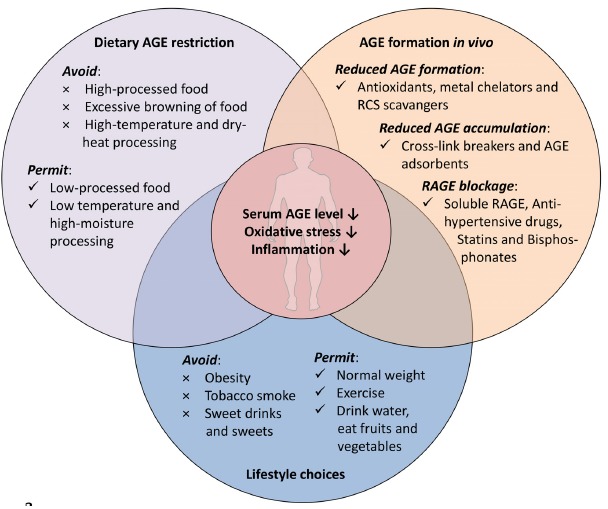
“diet) was shown to positively impact on oxidative stress and inflammatory diseases by decreasing AGE formation in food and in vivo [87, 88].”
BackgroundNGUYEN, A. H., DETTY, S. Q., & AGRAWAL, D. K. (2017) · Anticancer Research · doi:10.21873/anticanres.11282 · Cited by 48
Kong, S. Y., Takeuchi, M., Hyogo, H., McKeown-Eyssen, G., Yamagishi, S.-I., Chayama, K., O'Brien, P. J., Ferrari, P., Overvad, K., Olsen, A., et al. (2015) · Cancer Epidemiology, Biomarkers & Prevention · doi:10.1158/1055-9965.epi-15-0422 · Cited by 40
Overexpression of receptor for advanced glycation end products (RAGE) in ovarian cancer
Rahimi, F., Karimi, J., Goodarzi, M. T., Saidijam, M., Khodadadi, I., Razavi, À. E., & Nankali, M. (2016) · Cancer Biomarkers · doi:10.3233/cbm-160674 · Cited by 38
Effect of Aging on Carbohydrate Metabolism
Andres, R., Pozefsky, T., Swerdloff, R. S., & Tobin, J. D. (1970) · Elsevier eBooks · doi:10.1016/b978-0-12-027361-4.50041-7 · Cited by 36 · cited 1×
“Aging is a complex and multifactorial process characterized by a progressive accumulation of damage to an organism over time and is considered as one of the biggest single risk factors for the development of a multitude of diseases such as type-II diabetes [1, 2], neurodegenerative diseases [3, 4], and cancer [5, 6].”
BackgroundTakino, J.-I., Nagamine, K., Hori, T., Sakasai-Sakai, A., & Takeuchi, M. (2015) · World Journal of Hepatology · doi:10.4254/wjh.v7.i23.2459 · Cited by 35
Piroddi, M., Palazzetti, I., Quintaliani, G., Pilolli, F., Montaldi, M., Viola, V., Libetta, C., & Galli, F. (2010) · Journal of Renal Nutrition · doi:10.1053/j.jrn.2010.06.024 · Cited by 34
Impact of diabetes type II and chronic inflammation on pancreatic cancer
Zechner, D., Radecke, T., Amme, J., Bürtin, F., Albert, A.-C., Partecke, L. I., & Vollmar, B. (2015) · BMC Cancer · doi:10.1186/s12885-015-1047-x · Cited by 29
Accumulation of Maillard Reaction Products in Skin Collagen in Diabetes and Aginga
Dyer, D. G., Dunn, J. A., Thorpe, S. R., Lyons, T. J., McCance, D. R., & Baynes, J. (1992) · Annals of the New York Academy of Sciences · doi:10.1111/j.1749-6632.1992.tb38687.x · Cited by 27
RAGE and its ligands in cancer – culprits, biomarkers, or therapeutic targets?
Tesařová, P., Čabiňaková, M., Mikulová, V., Zima, T., & Kalousová, M. (2015) · Neoplasma · doi:10.4149/neo_2015_061 · Cited by 27
Environmental factors in aging and mortality
Strehler, B. L. (1967) · Environmental Research · doi:10.1016/0013-9351(67)90005-9 · Cited by 22
Chen, Y., Filipov, N. M., & Guo, T. L. (2018) · Molecular Nutrition & Food Research · doi:10.1002/mnfr.201700641 · Cited by 20
Zhao, D., Lü, H., & Huang, Z.-H. (2015) · PubMed · Cited by 16
Nguyen, A. H., Bhavsar, S., Riley, E., Caponetti, G. C., & Agrawal, D. K. (2016) · Współczesna Onkologia · doi:10.5114/wo.2016.65600 · Cited by 6 · cited 1×
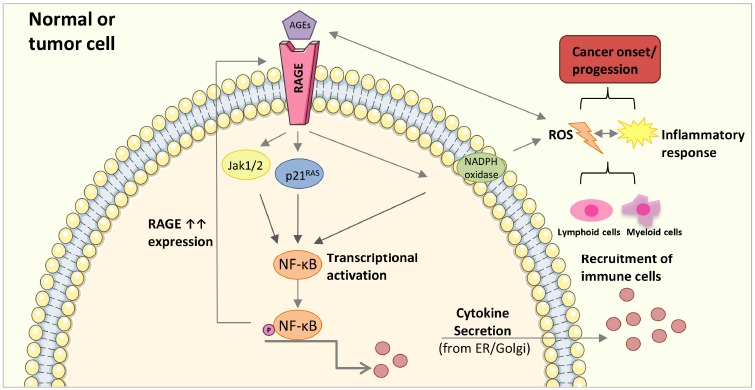
“Through its ability to activate NF-κB, RAGE signaling and up-regulation provides a critical link between the accumulation of AGEs and cancer, and has been implicated in the development of many cancers [74-78].”
Background
Cited by
Redox Signaling and Advanced Glycation Endproducts (AGEs) in Diet-Related Diseases
Cepas, V., Collino, M., Mayo, J. C., & Sainz, R. M. (2020) · Antioxidants · doi:10.3390/antiox9020142 · Cited by 202
Ramteke, P. L., Deb, A., Shepal, V., & Bhat, M. K. (2019) · Cancers · doi:10.3390/cancers11091402 · Cited by 178
“Avoiding sweetened foods and drinks is often recommended for inhibiting glycation product formation and accumulation, thereby highlighting the role of hyperglycemia in DNA damage [24].”
BackgroundA Role for Advanced Glycation End Products in Molecular Ageing
Zgutka, K., Tkacz, M., Tomasiak, P., & Tarnowski, M. (2023) · International Journal of Molecular Sciences · doi:10.3390/ijms24129881 · Cited by 175
Toxicity of advanced glycation end products (Review)
Kuzan, A. (2021) · Biomedical Reports · doi:10.3892/br.2021.1422 · Cited by 151
“Other types of cancer CML, CEL, and AGEs, via binding to RAGEs, result in sustained (17,18)”
Yap, K. M., Sekar, M., Fuloria, S., Wu, Y. S., Gan, S. H., Rani, N. N. I. M., Subramaniyan, V., Kokare, C., Lum, P. T., Begum, M. Y., et al. (2021) · International Journal of Nanomedicine · doi:10.2147/ijn.s328135 · Cited by 132
“Bombesin (BBN; a 14-amino acid peptide) is a natural ligand for gastrin-releasing peptide receptor, which is a G-protein coupled receptor that is overexpressed in various cancers, including BC.274 The same research group thus further conjugated EGCG-SLNs with BBN to achieve active BC cell targeting.275 In the study, i…”
BackgroundInfluential
Metadata
- Authors
- Schröter, D., & Höhn, A.
- Affiliations
- German Institute of Human Nutrition (DE)
- Corresponding author
- Höhn, Annika
- Venue
- Current Pharmaceutical Design
- Publisher
- Bentham Science Publishers Ltd.
- Published
- 2019-03-29
- Volume
- 24
- Issue
- 44
- Pages
- 5245-5251
- ISSN
- 1381-6128 (ISSN-L)
- PMC
- PMC6635609
- OpenAlex
- W2913046669
- Semantic Scholar
- e4e2a73d78162e14c5abc152a1e5430aa6e8a68d
- Cited by
- 126
- References
- 101
- Citations by year
- 2026: 12 · 2025: 12 · 2024: 20 · 2023: 24 · 2022: 21 · 2021: 22 · 2020: 10 · 2019: 5
- FWCI
- 1.89
- Type
- journal article
- Language
- en
- Open access
- hybrid
- doi.org
- Locations
- Current Pharmaceutical Design (publishedVersion, cc-by)
- Europe PMC (PubMed Central) (publishedVersion, cc-by-nc)
- PubMed Central (publishedVersion, cc-by-nc)
- PubMed (publishedVersion)
- Funders
- German Ministry of Education and Research (82DZD00302)
- Topics
- Life Sciences › Biochemistry, Genetics and Molecular Biology › Clinical Biochemistry › Advanced Glycation End Products research
- Life Sciences › Agricultural and Biological Sciences › Food Science › Potato Plant Research
- Life Sciences › Immunology and Microbiology › Immunology › Galectins and Cancer Biology
- Keywords
- advanced glycation end products, carcinogenesis, receptor for advanced glycation end products, RAGE, aging, inflammation, AGE formation, tumor progression, tumor initiation, age-related diseases
- MeSH terms
- Receptor for Advanced Glycation End Products, Animals, Humans, Inflammation, Neoplasms, Glycation End Products, Advanced, Carcinogenesis
About these checks
Registry, retraction, Cites and statistics results are computed, not judged, with one exception: a printed reference that no index lists is read once by a model before it counts as a citation error. Claims are extracted by a model and kept only when their quote appears verbatim in the text; each cited source is then checked, with a model’s help, for whether it says what the claim relies on. Those verdicts can be wrong — read the claim’s quote and the cited source before relying on one.
Statistics and arithmetic are recomputed, not judged.
Confidence bands are shown only for fields calibrated on our annotated test set. None is calibrated yet, so no band is shown.
What counts as a claim ›How we measure confidence ›How we check this ›
Are you an author, or do you see a problem with this page? Request a review
Data sources
Bibliographic data: Semantic Scholar, OpenAlex, Crossref.
Contains information from the Semantic Scholar Academic Graph Datasets, made available under the ODC Attribution License (ODC-BY 1.0).
Semantic Scholar’s data is described in: Kinney, R., et al. (2023). The Semantic Scholar Open Data Platform. arXiv:2301.10140.
