

Tet-On Systems For Doxycycline-inducible Gene Expression
Open accessThe DOI matches its Crossref record; 90 of the 90 references it cites were found in a registry or an index; 31 of the 64 sources its claims cite were checked for support.
Abstract
The tetracycline-controlled Tet-Off and Tet-On gene expression systems are used to regulate the activity of genes in eukaryotic cells in diverse settings, varying from basic biological research to biotechnology and gene therapy applications. These systems are based on regulatory elements that control the activity of the tetracycline-resistance operon in bacteria. The Tet-Off system allows silencing of gene expression by administration of tetracycline (Tc) or tetracycline-derivatives like doxycycline (dox), whereas the Tet-On system allows activation of gene expression by dox. Since the initial design and construction of the original Tet-system, these bacterium-derived systems have been significantly improved for their function in eukaryotic cells. We here review how a dox-controlled HIV-1 variant was designed and used to greatly improve the activity and dox-sensitivity of the rtTA transcriptional activator component of the Tet-On system. These optimized rtTA variants require less dox for activation, which will reduce side effects and allow gene control in tissues where a relatively low dox level can be reached, such as the brain.
Overview
CoChat Summary
TL;DR
This review describes how a doxycycline-controlled HIV-1 variant was used to evolve and improve the rtTA component of the Tet-On system, yielding rtTA variants with greater activity and dox sensitivity. It compares optimized variants (M2, V10, V16) and discusses when each is preferable in vitro and in vivo.
Key findings
- Viral evolution of HIV-rtTA selected tetO-LTR deletions (6 of 8 tetO elements deleted, plus a 14–15 nt spacer deletion) and rtTA mutations including F86Y; F86Y increased transcriptional activity and dox sensitivity without affecting background activity, whereas A209T had no effect.
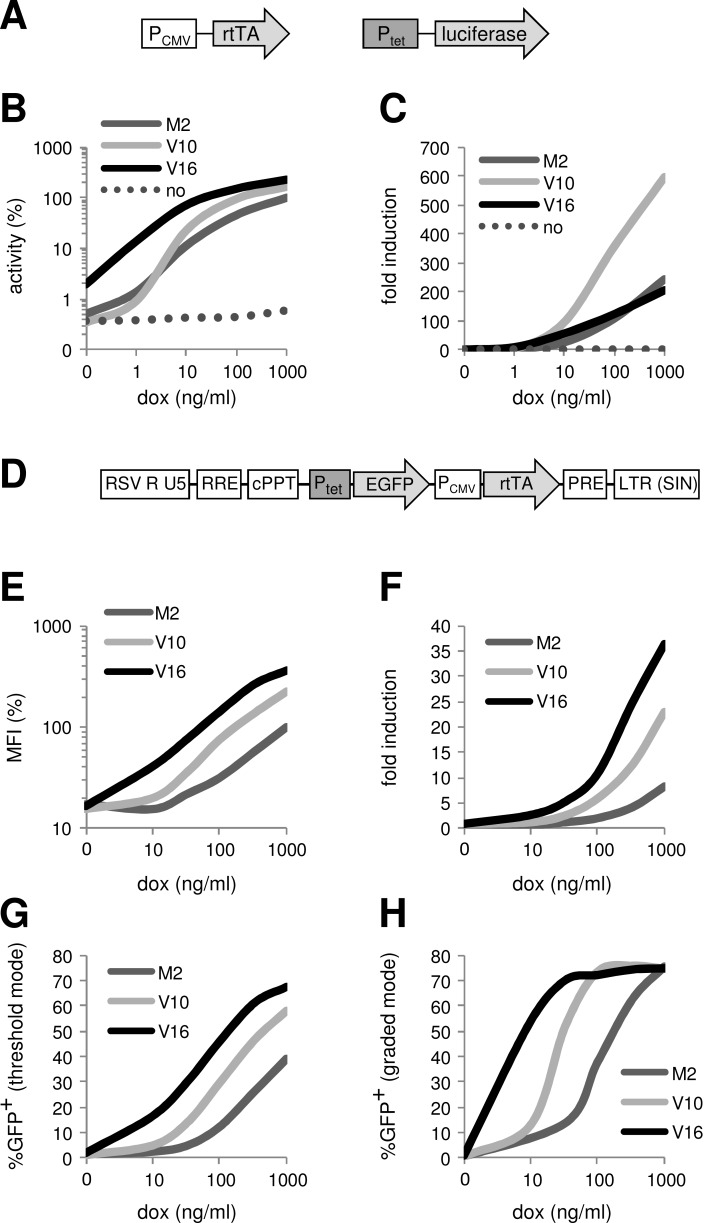
- rtTA3 (S12G+F86Y+A209T) was 5-fold more active at high dox and required 25-fold less dox than rtTA2S-S2; V16 was 7-fold more active at high dox and 100-fold more sensitive than rtTA2S-S2, with no activity without dox in integrated pTet-reporter assays.
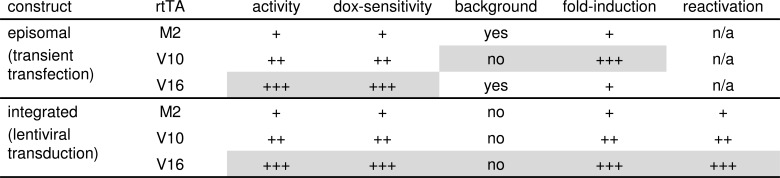
- In transient transfection, V16 had highest dox-induced activity but low detectable background; V10 had no background and superior fold-induction, making V10 optimal for most transient/episomal applications, while V16 is preferred when high activity at low dox is needed.
- In stably transduced cells, V16 showed highest dox-induced activity, fold-induction, and reactivation after dox withdrawal; V16 outperformed M2 for AAV-delivered GDNF in rat brain at clinically-approved sub-antimicrobial dox doses.
Methods
- Narrative review of Tet-Off/Tet-On systems, focusing on optimization of rtTA via a dox-controlled HIV-1 variant (HIV-rtTA) and comparison of rtTA variants.
- Data/sample: synthesis of referenced in vitro, ex vivo, animal, and clinical/preclinical studies; includes comparison of M2, V10, and V16 in transiently transfected and lentivirally transduced cells.
- Main analysis: qualitative synthesis and comparison of dox sensitivity, activity, background, fold-induction, and in vivo applicability; no new primary experimental methods are reported for the review itself.
Limitations
- Stated: direct comparison of new Tet-On systems was limited to in vitro cell culture; optimal rtTA for complex in vivo situations is unknown and may depend on cell/tissue type.
- Stated: in vivo use can be complicated by immune responses against rtTA in rodents and non-human primates, and toxic side effects of tTA/rtTA in transgenic mice; more dox-sensitive rtTA like V16 may show prolonged activity after dox withdrawal.
- Stated: whether S12G and V9I DBD mutations affect rtTA interaction with cellular promoter regions and cellular gene expression remains to be determined. Evident: as a review, it relies on prior studies and includes some unpublished data, so conclusions about variant superiority are context-dependent.
Model-written summary. Check it against the paper before relying on it.
Integrity signals
Registry
Cites
Statistics
Figures
Verification
Claims the paper makes
22 Valid · 0 Not valid · 15 Not checked · 21 Own results and interpretations
The cited sources support only part of this claim — read each source’s verdict below.
In the paper
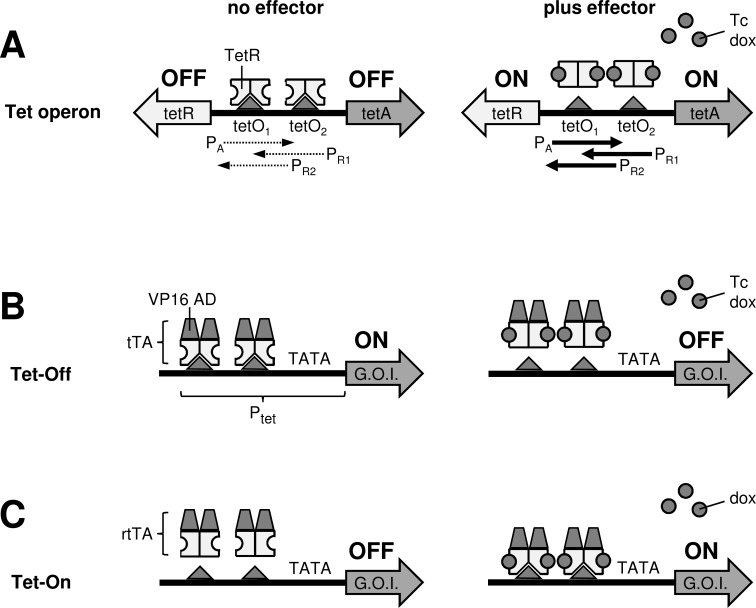
“The Tet-Off and Tet-On systems are based on the Tet repressor protein (TetR) and tet operator (tetO) DNA elements that control the Tn10-encoded tetracycline resistance operon of Escherichia coli.”
- Also stated in: § The Bacterial Tet Operon · plain
“In the Tn10-encoded Tet operon, the tetA and tetR genes are oriented in opposite direction and their expression is regulated at the transcription level by a shared regulatory region (Fig. 1A).”
§ Tet-On Systems For Doxycycline-inducible Gene Expression > Introduction
What the sources say
- Partly supportedcites [7] Bertram R. Hillen W. The application of Tet repressor in prokaryotic gene regulation and expression. Microb. Biotechnol. 2008 1 1 2 16 21261817 PMC3864427 sourceExperimental — accuracy not yet measured
The ‘Origin of tet regulation’ section (page unavailable) describes TetR binding tetO to regulate the Tn10 tetracycline-resistance genes, supporting the claim about the underlying components. Our copy does not establish that the specifically named Tet-Off and Tet-On systems are based on those components. (LLM, conf=0.82)
- Partly supportedcites [8] Meier I. Wray L.V. Hillen W. Differential regulation of the Tn10-encoded tetracycline resistance genes tetA and tetR by the tandem tet operators O1 and O2. EMBO J. 1988 7 2 567 572 2835235 PMC454355 sourceExperimental — accuracy not yet measured
The Abstract reports that Tet repressor binds the Tn10 tet operators and regulates expression of the tetracycline-resistance gene tetA. Our copy does not discuss Tet-Off or Tet-On systems or establish that they are based on these elements. (LLM, conf=0.86)
plainstates a cause- Asserted: passes — The authors put it forward as true.
- Checkable: passes — It can be checked against evidence.
- Load-bearing: unclear — It is unclear whether the paper’s conclusions depend on it.
- Based: passes — The paper gives a reason why it holds.
- Also stated in: § The Bacterial Tet Operon · plain
The sources with a verdict support this claim; the rest weren’t checked yet, have no full text we could read, or their verdicts aren’t rated yet.
In the paper
“The pTet promoter has been optimized through systematic modification, which resulted in novel promoter configurations that minimized intrinsic background activity while maintaining high induced expression [13, 14].”
§ Tet-On Systems For Doxycycline-inducible Gene Expression > Introduction > Improvements of the TET-On system
What the sources say
- Supportedcites [13] Loew R. Heinz N. Hampf M. Bujard H. Gossen M. Improved Tet-responsive promoters with minimized background expression. BMC Biotechnol. 2010 10 81 10.1186/1472-6750-10-81 21106052 PMC3002914 source
The Background describes stepwise modifications of Ptet-1 to create novel promoter variants with low intrinsic background activity and high induced expression. It reports that several variants had lower off-state background than Ptet-1 and Ptet-14 while retaining high activation potential. (LLM, conf=0.94)
- Not checked — no full text of the sourcecites [14] Agha-Mohammadi S. OMalley M. Etemad A. Wang Z. Xiao X. Lotze M.T. Second-generation tetracycline-regulatable promoter: repositioned tet operator elements optimize transactivator synergy while shorter minimal promoter offers tight basal leakiness. J. Gene Med. 2004 6 7 817 828 10.1002/jgm.566 15241789 source
plainstates a cause- Asserted: passes — The authors put it forward as true.
- Checkable: passes — It can be checked against evidence.
- Load-bearing: unclear — It is unclear whether the paper’s conclusions depend on it.
- Based: passes — The paper gives a reason why it holds.
- Supported
Every source the paper cites for this claim was checked and supports it.
In the paper
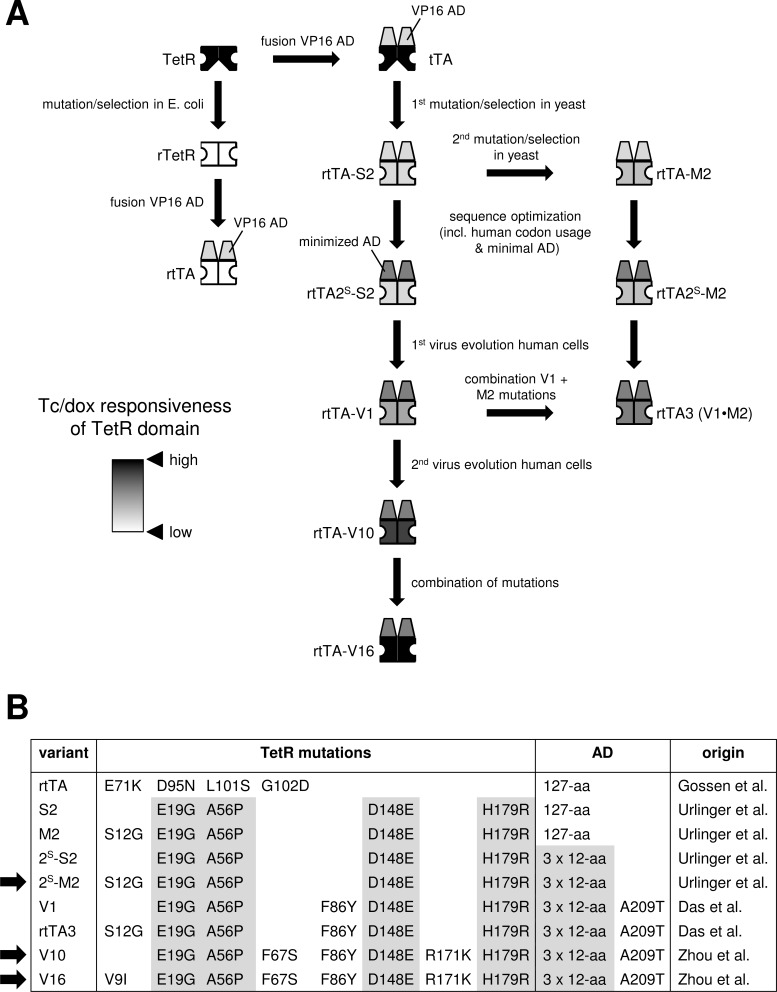
“A second round of mutagenesis and screening in S. cerevisiae yielded an additional DBD mutation (S12G) that increased the activity of rtTA-S2, in particular at low dox concentrations.”
§ Tet-On Systems For Doxycycline-inducible Gene Expression > Introduction > Improvements of the TET-On system
What the sources say
- Supportedcites [15] Urlinger S. Baron U. Thellmann M. Hasan M.T. Bujard H. Hillen W. Exploring the sequence space for tetracycline-dependent transcriptional activators: novel mutations yield expanded range and sensitivity. Proc. Natl. Acad. Sci. USA 2000 97 14 7963 7968 10.1073/pnas.130192197 10859354 PMC16653 source
The Results (page not provided) say a second round of mutagenesis and screening in S. cerevisiae identified a serine-to-glycine change at position 12 in the DNA reading head. The screened variant was rtTA-19/56, derived from rtTA-S2; restoring rtTA-S2’s other two mutations produced rtTA-M2. The Discussion (page not provided) reports that rtTA2S-M2 is fully induced at about a tenfold lower Dox concentration than rtTA2S-S2. (LLM, conf=0.88)
plainstates a cause- Asserted: passes — The authors put it forward as true.
- Checkable: passes — It can be checked against evidence.
- Load-bearing: unclear — It is unclear whether the paper’s conclusions depend on it.
- Based: passes — The paper gives a reason why it holds.
- Supported
Every source the paper cites for this claim was checked and supports it.
In the paper
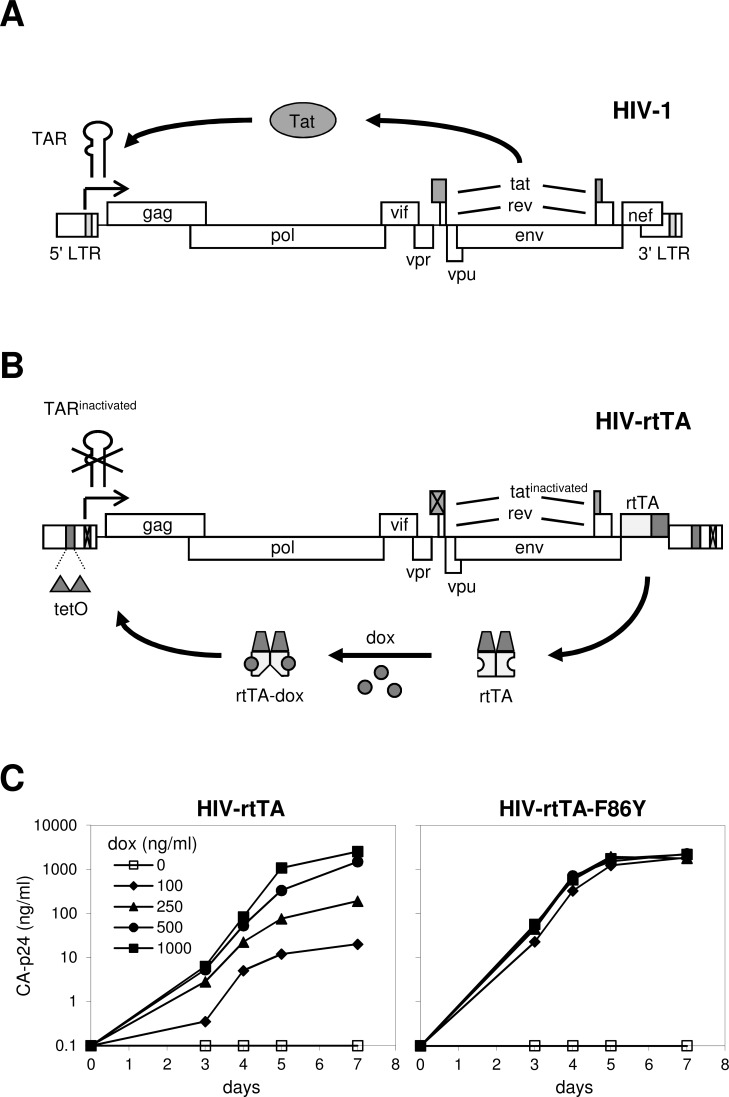
“We used the Tet-On system to generate an HIV-1 variant that replicates exclusively in the presence of dox [42].”
§ Tet-On Systems For Doxycycline-inducible Gene Expression > A dox-controlled HIV-1 variant as a tool to improve the TET-On system
What the sources say
- Supportedcites [42] Verhoef K. Marzio G. Hillen W. Bujard H. Berkhout B. Strict control of human immunodeficiency virus type 1 replication by a genetic switch: Tet for Tat. J. Virol. 2001 75 2 979 987 10.1128/JVI.75.2.979-987.2001 11134311 PMC113994 source
The Abstract describes HIV-rtTA variants made by replacing the Tat-TAR system with the Tet system and says they replicate exclusively upon addition of doxycycline. The Results section reports no replication without dox, supporting the claim's “exclusively” qualifier. (LLM, conf=0.94)
plainstates a cause- Asserted: passes — The authors put it forward as true.
- Checkable: passes — It can be checked against evidence.
- Load-bearing: passes — The paper’s conclusions depend on it.
- Based: passes — The paper gives a reason why it holds.
- Supported
The cited sources support only part of this claim — read each source’s verdict below.
In the paper
“Recent studies successfully applied V16 to control transgene expression in mice [85, 86] and non-human primates [62, 87].”
§ Tet-On Systems For Doxycycline-inducible Gene Expression > Optimal TET-On system for in vivo applications
What the sources say
- Supportedcites [85] Sooksawate T. Isa K. Matsui R. Kato S. Kinoshita M. Kobayashi K. Watanabe D. Kobayashi K. Isa T. Viral vector-mediated selective and reversible blockade of the pathway for visual orienting in mice. Front. Neural Circuits 2013 7 162 10.3389/fncir.2013.00162 24130520 PMC3795302 source
This citation is attached to the mouse portion of the sentence, not the non-human-primate portion. The Methods identify rtTAV16 as the switch controlling the transgene construct, and the Results (Histological analysis; page unavailable) show doxycycline-dependent GFP expression in the mice. (LLM, conf=0.93)
- Not checked — no full text of the sourcecites [86] Tian X. Wang G. Xu Y. Wang P. Chen S. Yang H. Gao F. Xu A. Cao F. Jin X. Manyande A. Tian Y. An improved tet-on system for gene expression in neurons delivered by a single lentiviral vector. Hum. Gene Ther. 2009 20 2 113 123 10.1089/hum.2008.018 20377365 source
- Partly supportedcites [62] Manoussaka M.S. Berry N. Ferguson D. Stebbings R. Robinson M. Ham C. Page M. Li B. Das A.T. Berkhout B. Almond N. Cranage M.P. Conditionally-live attenuated SIV upregulates global T effector memory cell frequency under replication permissive conditions. Retrovirology 2013 10 1 59 10.1186/1742-4690-10-59 23738926 PMC3706341 sourceExperimental — accuracy not yet measured
The Methods (Animals and viruses; page unavailable) identify rtTA-V16 in the doxycycline-dependent SIV used to infect rhesus macaques. The Results (Differential localisation of SIV-rtTAΔnef and SIVΔnef in tissues; page unavailable) report viral transcripts in sampled tissues of doxycycline-treated macaques but not in those from which doxycycline was withdrawn. This supports V16-associated control of viral expression in non-human primates, but the paper does not demonstrate control of a separate transgene; the mice portion is attributed to other citations. (LLM, conf=0.83)
- Not checked — no full text of the sourcecites [87] Kinoshita M. Matsui R. Kato S. Hasegawa T. Kasahara H. Isa K. Watakabe A. Yamamori T. Nishimura Y. Alstermark B. Watanabe D. Kobayashi K. Isa T. Genetic dissection of the circuit for hand dexterity in primates. Nature 2012 487 7406 235 238 10.1038/nature11206 22722837 source
plainstates a cause- Asserted: passes — The authors put it forward as true.
- Checkable: passes — It can be checked against evidence.
- Load-bearing: passes — The paper’s conclusions depend on it.
- Based: passes — The paper gives a reason why it holds.
- Supported
20 more claims · 2 with their cited sources checked
Create a free account to see all 58 claims and to verify the 3 references still open.
- It may state two separate claims as one. 31
- The quote only partly states this claim. 1
- Probably not a substantial claim. 2
Citations
Cites
Tight control of gene expression in mammalian cells by tetracycline-responsive promoters.
Gossen, M., & Bujard, H. (1992) · Proceedings of the National Academy of Sciences · doi:10.1073/pnas.89.12.5547 · Cited by 4,943 · cited 2×
“1B), the 127-amino acid (127-aa) transcription activation domain (AD) of the herpes simplex virus VP16 protein was fused to the 207-aa TetR, which resulted in the tetracyclinecontrolled transcriptional activator (tTA) [11].”
BackgroundMethodChopra, I., & Roberts, M. (2001) · Microbiology and Molecular Biology Reviews · doi:10.1128/mmbr.65.2.232-260.2001 · Cited by 4,517 · cited 6×
“In Gram-negative bacteria, tetracycline resistance is mostly mediated by efflux of the drug by the membrane protein TetA [6, 7] and the TetA level is controlled by the tetracycline-responsive repressor protein TetR.”
BackgroundInfluentialTranscriptional Activation by Tetracyclines in Mammalian Cells
Gossen, M., Freundlieb, S., Bender, G., Müller, G., Hillen, W., & Bujard, H. (1995) · Science · doi:10.1126/science.7792603 · Cited by 2,488 · cited 2×
“Subsequent fusion of the VP16 activation domain resulted in a reverse-tTA (rtTA) that binds Ptet and activates transcription exclusively in the presence of dox [12].”
BackgroundUpdate on acquired tetracycline resistance genes
Roberts, M. C. (2005) · FEMS Microbiology Letters · doi:10.1016/j.femsle.2005.02.034 · Cited by 1,010 · cited 1×
“nl tetracycline resistance: tetracycline efflux, ribosome protection and tetracycline modification [5].”
Urlinger, S., Baron, U., Thellmann, M., Hasan, M. T., Bujard, H., & Hillen, W. (2000) · Proceedings of the National Academy of Sciences · doi:10.1073/pnas.130192197 · Cited by 928 · cited 2×
“Furthermore, the rtTA coding sequence was optimized for human codon usage and putative toxic mRNA elements were removed: splice donor and acceptor sites, motifs for endonuclease cleavage sites and sequences inducing hairpin structures [15].”
BackgroundMethodRandomized, double-blind trial of glial cell line-derived neurotrophic factor (GDNF) in PD
Nutt, J. G., Burchiel, K. J., Comella, C. L., Jankovic, J., Lang, A. E., Laws, E. R., Lozano, A. M., Penn, R. D., Simpson, R. K., Stacy, M., et al. (2003) · Neurology · doi:10.1212/wnl.60.1.69 · Cited by 824 · cited 1×
“Because adverse effects of uncontrolled delivery of neurotrophic factors have been described [22-24], the ability to modulate transgene expression is crucial for these applications [25, 26].”
BackgroundMarks, W. J., Bartus, R. T., Siffert, J., Davis, C. S., Lozano, A., Boulis, N., Vitek, J., Stacy, M., Turner, D., Verhagen, L., et al. (2010) · The Lancet Neurology · doi:10.1016/s1474-4422(10)70254-4 · Cited by 684 · cited 1×
“Parkinson’s disease patients using an AAV vector [19].”
BackgroundMECHANISMS UNDERLYING EXPRESSION OF TN 10 ENCODED TETRACYCLINE RESISTANCE
Hillen, W., & Berens, C. (1994) · Annual Review of Microbiology · doi:10.1146/annurev.mi.48.100194.002021 · Cited by 511 · cited 1×
“The TetR proteins form dimers that recognize and bind the tetO elements, thus suppressing the activity of the PA and PR promoters and shutting off TetA and TetR production [9].”
BackgroundPathogenicity of Live, Attenuated SIV After Mucosal Infection of Neonatal Macaques
Baba, T. W., Jeong, Y. S., Pennick, D., Bronson, R., Greene, M. F., & Ruprecht, R. M. (1995) · Science · doi:10.1126/science.7892606 · Cited by 489 · cited 1×
“Evolution of the vaccine virus to a pathogenic variant did indeed cause disease in a minority of the vaccinated animals [46-49].”
BackgroundMoullan, N., Mouchiroud, L., Wang, X., Ryu, D., Williams, E. G., Mottis, A., Jovaisaite, V., Frochaux, M. V., Quiros, P. M., Deplancke, B., et al. (2015) · Cell Reports · doi:10.1016/j.celrep.2015.02.034 · Cited by 470 · cited 1×
“For example, rtTAs with an increased dox-sensitivity will require less dox, which will avoid cellular side effects due to the inhibitory effect of high tetracycline levels on mitochondrial translation [17].”
Background
Cited by
Yang, B., Li, M., Tang, W., Liu, W., Zhang, S., Chen, L., & Xia, J. (2018) · Nature Communications · doi:10.1038/s41467-018-03024-2 · Cited by 243
Comprehensive Overview of Bottom-Up Proteomics Using Mass Spectrometry
Jiang, Y., Rex, D. A. B., Schuster, D., Neely, B. A., Rosano, G. L., Volkmar, N., Momenzadeh, A., Peters-Clarke, T. M., Egbert, S. B., Kreimer, S., et al. (2024) · ACS Measurement Science Au · doi:10.1021/acsmeasuresciau.3c00068 · Cited by 190
Recording development with single cell dynamic lineage tracing
McKenna, A., & Gagnon, J. A. (2019) · Development · doi:10.1242/dev.169730 · Cited by 169
“Alternatively, environmental stimuli can be used to drive expression by coupling recorder components to drug- or heatinducible promoters (Das et al., 2016; Raj et al., 2018).”
BackgroundAn evolving view of copy number variants
Lauer, S. L., & Gresham, D. (2019) · Current Genetics · doi:10.1007/s00294-019-00980-0 · Cited by 151
Next-generation AAV vectors—Do not judge a virus (only) by its cover
Domenger, C., & Grimm, D. (2019) · Human Molecular Genetics · doi:10.1093/hmg/ddz148 · Cited by 147
In vivo CRISPRa decreases seizures and rescues cognitive deficits in a rodent model of epilepsy
Colasante, G., Qiu, Y., Massimino, L., Di Berardino, C., Cornford, J. H., Snowball, A., Weston, M., Jones, S. P., Giannelli, S., Lieb, A., et al. (2020) · Brain · doi:10.1093/brain/awaa045 · Cited by 134
“consideration for clinical translation (Das et al., 2016; Kundert et al., 2019).”
Reversible, Spatial and Temporal Control over Protein Activity Using Light
Hoorens, M. W. H., & Szymański, W. (2018) · Trends in Biochemical Sciences · doi:10.1016/j.tibs.2018.05.004 · Cited by 147
Liu, S., Sandner, B., Schackel, T., Nicholson, L., Chtarto, A., Tenenbaum, L., Puttagunta, R., Müller, R., Weidner, N., & Blesch, A. (2017) · Acta Biomaterialia · doi:10.1016/j.actbio.2017.07.024 · Cited by 140
“Tetracycline-regulated expression systems containing a tetracycline (Tet)-responsive promoter and transactivator have been used extensively to stringently control the expression of target genes [32,33].”
MethodSelf-citationHuck, I., Gunewardena, S., Espanol‐Suner, R., Willenbring, H., & Apte, U. (2019) · Hepatology · doi:10.1002/hep.30405 · Cited by 103
“We used a Tet-On-HNF4α transgenic mouse system(24) to overexpress HNF4α in hepatocytes to test”
MethodAdvances in promoter engineering: Novel applications and predefined transcriptional control
Cazier, A. P., & Blazeck, J. (2021) · Biotechnology Journal · doi:10.1002/biot.202100239 · Cited by 122
Zhong, F., & Jiang, Y. (2019) · Frontiers in Endocrinology · doi:10.3389/fendo.2019.00101 · Cited by 108
Enhancing the safety of CAR-T cell therapy: Synthetic genetic switch for spatiotemporal control
Lu, L., Xie, M., Yang, B., Zhao, W., & Cao, J. (2024) · Science Advances · doi:10.1126/sciadv.adj6251 · Cited by 129
A neuroscientist’s guide to transgenic mice and other genetic tools
Navabpour, S., Kwapis, J. L., & Jarome, T. J. (2019) · Neuroscience & Biobehavioral Reviews · doi:10.1016/j.neubiorev.2019.12.013 · Cited by 118
Transcriptional Programming of Human Mechanosensory Neuron Subtypes from Pluripotent Stem Cells
Nickolls, A. R., Lee, M. M., Espinoza, D. F., Szczot, M., Lam, R. M., Wang, Q., Beers, J. K., Zou, J., Nguyen, M. Q., Solinski, H. J., et al. (2020) · Cell Reports · doi:10.1016/j.celrep.2019.12.062 · Cited by 81
“This strategy enables equimolar and regulated expression of both factors in tandem (Das et al., 2016; Liu et al., 2017).”
BackgroundDeep flanking sequence engineering for efficient promoter design using DeepSEED
Zhang, P., Wang, H., Xu, H., Wei, L., Liu, L., Hu, Z., & Wang, X. (2023) · Nature Communications · doi:10.1038/s41467-023-41899-y · Cited by 87
Progress and Perspectives in the Development of Lentiviral Vector Producer Cells
Ferreira, M. V., Cabral, E. T., & Coroadinha, A. S. (2020) · Biotechnology Journal · doi:10.1002/biot.202000017 · Cited by 93
Aptamer-based and aptazyme-based riboswitches in mammalian cells
Yokobayashi, Y. (2019) · Current Opinion in Chemical Biology · doi:10.1016/j.cbpa.2019.05.018 · Cited by 89
“However, there are a number of drawbacks of TF-based gene switches as generally applicable switches for mammalian and biomedical applications [2] [3] [4] : (i) adapting an engineered TF to respond to a new compound is challenging, (ii) expression of engineered TFs can trigger immunogenicity, (iii) genetic size and exp…”
BackgroundBirocchi, F., Cusimano, M., Rossari, F., Beretta, S., Rancoita, P. M. V., Ranghetti, A., Colombo, S., Costa, B., Angel, P. E., Sanvito, F., et al. (2022) · Science Translational Medicine · doi:10.1126/scitranslmed.abl4106 · Cited by 81
Wang, M., Li, H., Yang, Y., Yuan, K., Zhou, F., Liu, H., Zhou, Q., Yang, S., & Tang, T. (2020) · Bioactive Materials · doi:10.1016/j.bioactmat.2020.10.022 · Cited by 91
“The Tet-on system is a commonly used gene-control system [23,24], where gene expression is regulated by doxycycline (DOX).”
BackgroundPatel, M. N., Tiwari, S., Wang, Y., O’Neill, S., Wu, J., Omo‐Lamai, S., Espy, C. L., Chase, L. S., Majumder, A., Hoffman, E. T., et al. (2025) · Nature Biotechnology · doi:10.1038/s41587-025-02556-5 · Cited by 121
Engineering approaches for RNA-based and cell-based osteoarthritis therapies
DeJulius, C. R., Walton, B. L., Colazo, J. M., d’Arcy, R., Francini, N., Brunger, J. M., & Duvall, C. L. (2024) · Nature Reviews Rheumatology · doi:10.1038/s41584-023-01067-4 · Cited by 93
Light Control of the Tet Gene Expression System in Mammalian Cells
Yamada, M., Suzuki, Y., Nagasaki, S. C., Okuno, H., & Imayoshi, I. (2018) · Cell Reports · doi:10.1016/j.celrep.2018.09.026 · Cited by 84
“We applied these reverse phenotype mutations, rtTA (E71K, D95N, L101S, G102D), S2 (E19G, A56P, D148E, H179R), M2 (S12G, E19G, A56P, D148E, H179R), V10 (E19G, A56P, F67S, F86Y, D148E, R171K, H179R), or V16 (V9I, E19G, A56P, F67S, F86Y, D148E, R171K, H179R) (Das et al., 2016) to the PA-Tet-OFF, and validated their Dox-d…”
BackgroundMethodAn, Y., Crewe, C., Asterholm, I. W., Sun, K., Chen, S., Zhang, F., Shao, M., Funcke, J., Zhang, Z., Straub, L. G., et al. (2019) · Nature Metabolism · doi:10.1038/s42255-019-0149-1 · Cited by 69
Feasibility of controlling CD38-CAR T cell activity with a Tet-on inducible CAR design
Drent, E., Poels, R., Mulders, M., van de Donk, N. W. C. J., Themeli, M., Lokhorst, H. M., & Mutis, T. (2018) · PLoS ONE · doi:10.1371/journal.pone.0197349 · Cited by 79
Expansion and persistence of antibiotic-specific resistance genes following antibiotic treatment
Kang, K., Imamovic, L., Misiakou, M.-A., Sørensen, M. B., Heshiki, Y., Ni, Y., Zheng, T., Li, J., Ellabaan, M. M. H., Colomer-Lluch, M., et al. (2021) · Gut Microbes · doi:10.1080/19490976.2021.1900995 · Cited by 62
“The induction of tetracycline resistance genes by 470 doxycycline has been observed before and is in fact utilized for fine-tuning the expression of 471 specific genes in eukaryotic cells [22].”
BackgroundTime-tagged ticker tapes for intracellular recordings
Lin, D., Li, X., Moult, E. M., Park, P., Tang, B., Shen, H., Grimm, J. B., Falco, N., Jia, B., Baker, D. A., et al. (2023) · Nature Biotechnology · doi:10.1038/s41587-022-01524-7 · Cited by 63
Genetically encoded tools for measuring and manipulating metabolism
Choe, M., & Titov, D. V. (2022) · Nature Chemical Biology · doi:10.1038/s41589-022-01012-8 · Cited by 70
Restoring the p53 ‘Guardian’ Phenotype in p53-Deficient Tumor Cells with CRISPR/Cas9
Chira, S., Gulei, D., Hajitou, A., & Berindan-Neagoe, I. (2018) · Trends in Biotechnology · doi:10.1016/j.tibtech.2018.01.014 · Cited by 56
“A more detailed description of the Tet-ON system has been reviewed previously [27].”
BackgroundA novel tetracycline-responsive transgenic mouse strain for skeletal muscle-specific gene expression
Iwata, M., Englund, D. A., Wen, Y., Dungan, C. M., Murach, K. A., Vechetti, I. J., Mobley, C. B., Peterson, C. A., & McCarthy, J. J. (2018) · Skeletal Muscle · doi:10.1186/s13395-018-0181-y · Cited by 51
Extragonadal Actions of FSH: A Critical Need for Novel Genetic Models
Kumar, T. R. (2017) · Endocrinology · doi:10.1210/en.2017-03118 · Cited by 55
“In a secondmodel, a human FSHB transgene is targeted to pituitary gonadotropes and expressed using a tetracycline-inducible system (48, 49) and on a Fshb null genetic background.”
Dalhoff, A. (2020) · Infection · doi:10.1007/s15010-020-01536-y · Cited by 64
Palmitoylation alters LDHA activity and pancreatic cancer response to chemotherapy
Chen, L., Xing, X., Zhu, Y., Chen, Y., Pei, H., Song, Q., Li, J., & Zhang, P. (2024) · Cancer Letters · doi:10.1016/j.canlet.2024.216696 · Cited by 63
Adipose Tissue: An Emerging Target for Adeno-associated Viral Vectors
Bates, R., Huang, W., & Cao, L. (2020) · Molecular Therapy — Methods & Clinical Development · doi:10.1016/j.omtm.2020.09.009 · Cited by 55
Timed GDNF gene therapy using an immune-evasive gene switch promotes long distance axon regeneration
Eggers, R., de Winter, F., Hoyng, S. A., Hoeben, R. C., Malessy, M. J. A., Tannemaat, M. R., & Verhaagen, J. (2019) · Brain · doi:10.1093/brain/awy340 · Cited by 51
Robust and flexible platform for directed evolution of yeast genetic switches
Tominaga, M., Nozaki, K., Umeno, D., Ishii, J., & Kondo, A. (2021) · Nature Communications · doi:10.1038/s41467-021-22134-y · Cited by 46
Strategies for gene disruption and expression in filamentous fungi
Mei, Y., Zhu, Y.-L., Huang, P., Yang, Q., & Dai, C. (2019) · Applied Microbiology and Biotechnology · doi:10.1007/s00253-019-09953-2 · Cited by 54
A most formidable arsenal: genetic technologies for building a better mouse
Clark, J. F., Dinsmore, C. J., & Soriano, P. M. (2020) · Genes & Development · doi:10.1101/gad.342089.120 · Cited by 46
Image-Based Profiling of Synaptic Connectivity in Primary Neuronal Cell Culture
Verstraelen, P., Dyck, M. V., Verschuuren, M., Kashikar, N. D., Nuydens, R., Timmermans, J., & Vos, W. H. D. (2018) · Frontiers in Neuroscience · doi:10.3389/fnins.2018.00389 · Cited by 54
Qin, Y. H., Li, A., Liu, B., Jiang, W., Gao, M., Tian, X., & Gong, G. (2019) · The FASEB Journal · doi:10.1096/fj.201901671r · Cited by 47
A Scalable, Multiplexed Assay for Decoding GPCR-Ligand Interactions with RNA Sequencing
Jones, E. M., Jajoo, R., Cancilla, D., Lubock, N. B., Wang, J., Satyadi, M., Chong, R., de March, C. A., Bloom, J. S., Matsunami, H., et al. (2019) · Cell Systems · doi:10.1016/j.cels.2019.02.009 · Cited by 46
“Lentiviral Transduction-Stable m2rtTA Expression The pM2rtTA lentivirus was a gift from the lab of Donald Kohnd(Das et al., 2016).”
MethodXu, M., Sun, M., Meng, X., Zhang, W., Shen, Y., & Liu, W. (2022) · ACS Synthetic Biology · doi:10.1021/acssynbio.2c00507 · Cited by 45
How will the field of gene therapy survive its success?
Kaemmerer, W. F. (2018) · Bioengineering & Translational Medicine · doi:10.1002/btm2.10090 · Cited by 44
Parvalbumin Role in Epilepsy and Psychiatric Comorbidities: From Mechanism to Intervention
Godoy, L. D., Prizon, T., Rossignoli, M. T., Leite, J. P., & Liberato, J. L. (2022) · Frontiers in Integrative Neuroscience · doi:10.3389/fnint.2022.765324 · Cited by 49
Status quo of tet regulation in bacteria
Bertram, R., Neumann, B., & Schuster, C. F. (2021) · Microbial Biotechnology · doi:10.1111/1751-7915.13926 · Cited by 40
Tickner, Z. J., & Farzan, M. (2021) · Pharmaceuticals · doi:10.3390/ph14060554 · Cited by 45
Nookala, A. R., Schwartz, D. C., Chaudhari, N. S., Glazyrin, A., Stephens, E. B., Berman, N. E. J., & Kumar, A. (2018) · Brain Behavior and Immunity · doi:10.1016/j.bbi.2018.04.018 · Cited by 44
Optogenetic regulation of transcription
Polesskaya, O., Baranova, A. V., Bui, S., Kondratev, N., Kananykhina, E. Y., Nazarenko, O., Shapiro, T., Nardia, F. B., Корниенко, В. Ю., Chandhoke, V., et al. (2018) · BMC Neuroscience · doi:10.1186/s12868-018-0411-6 · Cited by 44
“A typical Tet-OFF system uses a TetRDNA binding protein and a VP16 TA domain from Herpes simplex virus fused to its operator site [56, 57].”
Maywood, E. S., Elliott, T. S., Patton, A. P., Krogager, T. P., Chesham, J. E., Ernst, R. J., Beránek, V., Brancaccio, M., Chin, J. W., & Hastings, M. H. (2018) · Proceedings of the National Academy of Sciences · doi:10.1073/pnas.1811438115 · Cited by 37
“More sophisticated, temporally specific control of transcription has been achieved using versions of the ligand-binding domain of the estrogen receptor (ER) to drive recombinase activity following the delivery of synthetic steroid, while truly reversible inducible approaches have been developed using the tetracycline…”
Ohishi, H., Shimada, S., Uchino, S., Li, J., Sato, Y., Shintani, M., Owada, H., Ohkawa, Y., Pertsinidis, A., Yamamoto, T., et al. (2022) · Nature Communications · doi:10.1038/s41467-022-35286-2 · Cited by 43
“Third, since the current system uses the TetO/TetR system, tet-inducible expression system (such as Tet-ON and Tet-OFF) 51 cannot be applied.”
Confounding factors from inducible systems for spatiotemporal gene expression regulation
Wüst, R. C. I., Houtkooper, R. H., & Auwerx, J. H. (2020) · The Journal of Cell Biology · doi:10.1083/jcb.202003031 · Cited by 44
Light-mediated control of Gene expression in mammalian cells
Yamada, M., Nagasaki, S. C., Ozawa, T., & Imayoshi, I. (2020) · Neuroscience Research · doi:10.1016/j.neures.2019.12.018 · Cited by 43
Scaling up complexity in synthetic developmental biology
Martínez-Ara, G., Stapornwongkul, K. S., & Ebisuya, M. (2022) · Science · doi:10.1126/science.add9666 · Cited by 38
Experimental approaches for manipulating choroid plexus epithelial cells
Jang, A., & Lehtinen, M. K. (2022) · Fluids and Barriers of the CNS · doi:10.1186/s12987-022-00330-2 · Cited by 36
Odé, Z., Condori, J., Peterson, N. B., Zhou, S., & Krenciute, G. (2020) · Cancers · doi:10.3390/cancers12061704 · Cited by 47
Programming mammalian cell behaviors by physical cues
Huang, J., & Fussenegger, M. (2024) · Trends in biotechnology · doi:10.1016/j.tibtech.2024.07.014 · Cited by 45
Multiplexed Gene Expression Tuning with Orthogonal Synthetic Gene Circuits
Szenk, M., Yim, T., & Balázsi, G. (2020) · ACS Synthetic Biology · doi:10.1021/acssynbio.9b00534 · Cited by 36
Engineering a synthetic gene circuit for high-performance inducible expression in mammalian systems
Carluccio, G. D., Fusco, V., & di Bernardo, D. (2024) · Nature Communications · doi:10.1038/s41467-024-47592-y · Cited by 48
Lian, X., Lin, Y., Kozono, S., Herbert, M. K., Li, X., Yuan, X., Guo, J., Guo, Y., Tang, M., Lin, J. L., et al. (2018) · Journal of Hematology & Oncology · doi:10.1186/s13045-018-0611-7 · Cited by 34
Díaz‐Vegas, A., Madsen, S., Cooke, K. C., Carroll, L., Khor, J. X. Y., Turner, N. A., Lim, X. Y., Astore, M. A., Morris, J. C., Don, A. S., et al. (2023) · eLife · doi:10.7554/elife.87340 · Cited by 83
“To achieve this, we employed doxycycline- Tet- On-inducible ( Das et al., 2016 ) overexpression of a mitochondrial-targeted sphingo-myelin phosphodiesterase 5 (mtSMPD5) in GLUT4- HA-L6 cells (GLUT4- HA- L6-mtSMPD5) ( Figure 2A ).”
MethodSabatini, P. V., Wang, J., Rupp, A. C., Affinati, A. H., Flak, J. N., Li, C., Olson, D. P., & Myers, M. G. (2021) · eLife · doi:10.7554/elife.66835 · Cited by 31
Peng, B., Ortega, J., Gu, L., Chang, Z., & Li, G. (2019) · Journal of Biological Chemistry · doi:10.1074/jbc.ra119.007897 · Cited by 33
Activity-based directed evolution of a membrane editor in mammalian cells
Tei, R., Bagde, S. R., Fromme, J. C., & Baskin, J. M. (2023) · Nature Chemistry · doi:10.1038/s41557-023-01214-0 · Cited by 27
Reichenbach, P., Attianese, G. M. P. G., Ouchen, K., Cribioli, E., Triboulet, M. M., Ash, S., Saillard, M., de Silly, R. V., Coukos, G., & Irving, M. B. (2023) · Nature Biomedical Engineering · doi:10.1038/s41551-023-01013-5 · Cited by 33
Light-induced targeting enables proteomics on endogenous condensates
Lee, C., Quintana, A., Suppanz, I., Gomez‐Auli, A., Mittler, G., & Cissé, I. I. (2024) · Cell · doi:10.1016/j.cell.2024.09.040 · Cited by 35
“For control of Cargo-SunTag expression, we utilize a doxycycline-inducible system 49 (Figure S2A).”
MethodProteomic elucidation of the targets and primary functions of the picornavirus 2A protease
Serganov, A. A., Udi, Y., Stein, M. E., Patel, V., Fridy, P. C., Rice, C. M., Saeed, M., Jacobs, E. Y., Chait, B. T., & Rout, M. P. (2022) · Journal of Biological Chemistry · doi:10.1016/j.jbc.2022.101882 · Cited by 28
Generation of H11-albumin-rtTA Transgenic Mice: A Tool for Inducible Gene Expression in the Liver
Li, Y., Meng, R.-R., Chen, X., Shang, C.-L., Li, H., Zhang, T.-J., Long, H.-Y., Li, H., Wang, Y., & Wang, F. (2018) · G3 Genes Genomes Genetics · doi:10.1534/g3.118.200963 · Cited by 27
“…urinary protein promoter, albumin promoter for liver-specific expression (Gandhi et al. 2015)) to achieve both temporal and spatial control of the expression of genesof-interest for functional studies in various stages of embryonic development and adulthood (Chen et al. 2011; Gandhi et al. 2015).”
BackgroundOmelina, E. S., Yushkova, A. A., Motorina, D. M., Volegov, G. A., Kozhevnikova, E. N., & Pindyurin, A. V. (2022) · International Journal of Molecular Sciences · doi:10.3390/ijms23031737 · Cited by 35
Zhang, F., Meng, X., Townsend, M. B., Satheshkumar, P. S., & Xiang, Y. (2019) · Journal of Virology · doi:10.1128/jvi.00225-19 · Cited by 26
Producing multiple chemicals through biological upcycling of waste poly(ethylene terephthalate)
Diao, J., Tian, Y., Hu, Y., & Moon, T. S. (2024) · Trends in biotechnology · doi:10.1016/j.tibtech.2024.10.018 · Cited by 31
Reconstructing cell histories in space with image-readable base editor recordingPreprint
Chadly, D. M., Frieda, K. L., Gui, C., Klock, L., Tran, M., Sui, M. Y., Takei, Y., Bouckaert, R., Lois, C., Cai, L., et al. (2024) · bioRxiv (Cold Spring Harbor Laboratory) · doi:10.1101/2024.01.03.573434 · Cited by 33
“…under doxycycline (dox) control using the Tet-ON system, by stably integrating the reverse tetracycline-controlled transactivator (rtTA) ( Methods ) 25 . gRNAs were also made Wnt-inducible by expressing them from the 3’ UTR of an mTurquoise reporter gene under the control of a Wnt-responsive…”
MethodSimion, V., Henriet, E., Jurić, V., Aquino, R., Loussouarn, C., Laurent, Y., Martín, F., Midoux, P., Garcion, E., Pichon, C., et al. (2020) · Journal of Controlled Release · doi:10.1016/j.jconrel.2020.08.028 · Cited by 31
“Similar to the Cumate operon, the Tet R tetracycline operon works through the binding of a transcriptional Tet R repressor protein on operator sequences (Tet O) to regulate transgene expression [48].”
BackgroundCheng, S., Tereshchenko, J., Zimmer, V., Vachey, G., Pythoud, C., Rey, M. J., Liefhebber, J. M. P., Raina, A., Streit, F., Mazur, A., et al. (2018) · Experimental Neurology · doi:10.1016/j.expneurol.2018.07.017 · Cited by 28
“Several such gene transfer systems are available, and especially tetracycline-controlled gene expression has been developed into very advanced systems (Das et al., 2016), but none has advanced into clinical applicability yet (Manfredsson et al.”
Engineering a Rapid Insulin Release System Controlled By Oral Drug Administration
Mahameed, M., Xue, S., Stefanov, B., Hamri, G. C., & Fussenegger, M. (2022) · Advanced Science · doi:10.1002/advs.202105619 · Cited by 29
Global knockdown of glutamate decarboxylase 67 elicits emotional abnormality in mice
Miyata, S., Kakizaki, T., Fujihara, K., Obinata, H., Hirano, T., Nakai, J., Tanaka, M., Itohara, S., Watanabe, M., Tanaka, K. F., et al. (2021) · Molecular Brain · doi:10.1186/s13041-020-00713-2 · Cited by 25
Dnmt3b ablation impairs fracture repair through upregulation of Notch pathway
Ying, J., Xu, T., Wang, C., Jin, H., Tong, P., Guan, J., Abu‐Amer, Y., O’Keefe, R. J., & Shen, J. (2020) · JCI Insight · doi:10.1172/jci.insight.131816 · Cited by 25
Pinto, R., Hansen, L. H., Hintze, J., Almeida, R., Larsen, S., Coskun, M., Davidsen, J., Mitchelmore, C., David, L., Troelsen, J. T., et al. (2017) · Nucleic Acids Research · doi:10.1093/nar/gkx371 · Cited by 27
Genetic circuits in synthetic biology: broadening the toolbox of regulatory devices
Müller, M. M., Arndt, K. M., & Hoffmann, S. A. (2025) · Frontiers in Synthetic Biology · doi:10.3389/fsybi.2025.1548572 · Cited by 38
“This has been done for the lac repressor (Labow et al., 1990), but more commonly used are systems based on the tetracycline repressor (TetR), typically employing doxycycline as effector [reviewed in (Das et al., 2016)].”
Nguyen, D.-H., You, S.-H., Vo, A.-T. N., Ngo, H. T.-T., Nguyen, K. V., Duong, M. T.-Q., Choy, H. E., Song, M., Hong, Y., & Min, J. (2021) · Molecular Imaging and Biology · doi:10.1007/s11307-021-01624-x · Cited by 22
A guide to the design of synthetic gene networks in mammalian cells
Verbič, A., Praznik, A., & Jerala, R. (2020) · FEBS Journal · doi:10.1111/febs.15652 · Cited by 27
Miyata, Y., Tokumoto, S., Sogame, Y., Deviatiiarov, R. M., Okada, J., Cornette, R., Gusev, O., Shagimardanova, E. I., Sakurai, M., & Kikawada, T. (2019) · Scientific Reports · doi:10.1038/s41598-019-43441-x · Cited by 20
Small-molecule inducible transcriptional control in mammalian cells
Doshi, A., Sadeghi, F., Varadarajan, N., & Cirino, P. C. (2020) · Critical Reviews in Biotechnology · doi:10.1080/07388551.2020.1808583 · Cited by 23
Jiang, M. H., Vanan, S., Tu, H., Zhang, W., Zhang, Z.-W., Chia, S., Jang, S. E., Zeng, X., Yu, W., Xu, J., et al. (2020) · Neurobiology of Aging · doi:10.1016/j.neurobiolaging.2020.07.031 · Cited by 20
Synthetic immunity by remote control
Gamboa, L., Zamat, A. H., & Kwong, G. A. (2020) · Theranostics · doi:10.7150/thno.41305 · Cited by 22
“rtTA) have been optimized to increase sensitivity to tetracycline, reducing the potential for drug-associated side effects and expanding control to tissues characterized by poor drug delivery profiles [44].”
MethodLoss of the PTH/PTHrP receptor along the osteoblast lineage limits the anabolic response to exercise
Gardinier, J. D., Daly‐Seiler, C. S., Rostami, N., Kundal, S., & Zhang, C. (2019) · PLoS ONE · doi:10.1371/journal.pone.0211076 · Cited by 23
A synthetic chronogenetic gene circuit for programmed circadian drug delivery
Pferdehirt, L., Damato, A. R., Lenz, K. L., Gonzalez-Aponte, M. F., Palmer, D., Meng, Q., Herzog, E. D., & Guilak, F. (2025) · Nature Communications · doi:10.1038/s41467-025-56584-5 · Cited by 26
An optimized Tet-On system for conditional control of gene expression in sea urchins
Khor, J. M., & Ettensohn, C. A. (2023) · Development · doi:10.1242/dev.201373 · Cited by 14
Recording morphogen signals reveals origins of gastruloid symmetry breakingPreprint
McNamara, H. M., Solley, S. C., Adamson, B., et al. (2023) · bioRxiv (Cold Spring Harbor Laboratory) · doi:10.1101/2023.06.02.543474 · Cited by 20
Park, S. B., Uchida, T., Tilson, S. G., Hu, Z., Ma, C. D., Leek, M., Eichner, M., Hong, S. G., & Liang, T. J. (2022) · Molecular Therapy — Nucleic Acids · doi:10.1016/j.omtn.2022.04.013 · Cited by 27
Transposable elements: a jump toward the future of expression vectors
Palazzo, A., & Marsano, R. M. (2021) · Critical Reviews in Biotechnology · doi:10.1080/07388551.2021.1888067 · Cited by 23
“A widely used repression system is based on the tetracycline operator (tetO) which has been modified and improved for its function in eukaryotic cells [38].”
Rad, S. M. A. H., Poudel, A., Tan, G. M. Y., & McLellan, A. D. (2020) · Scientific Reports · doi:10.1038/s41598-020-70022-0 · Cited by 21
Destabilizing Domains Enable Long-Term and Inert Regulation of GDNF Expression in the Brain
Quintino, L., Namislo, A., Davidsson, M., Breger, L. S., Kavanagh, P., Avallone, M., Wettergren, E. E., Isaksson, C., & Lundberg, C. (2018) · Molecular Therapy — Methods & Clinical Development · doi:10.1016/j.omtm.2018.08.008 · Cited by 18
Goegan, B., Terzi, F., Bolze, F., Cambridge, S. B., & Specht, A. (2018) · ChemBioChem · doi:10.1002/cbic.201700628 · Cited by 26
Riboswitch-controlled IL-12 gene therapy reduces hepatocellular cancer in mice
Duechs, M. J., Kratzer, R. F., Vieyra-Garcia, P. A., Strobel, B., Schönberger, T., Groß, P., Aljayyoussi, G., Gupta, A., Lang, I., Klein, H., et al. (2024) · Frontiers in Immunology · doi:10.3389/fimmu.2024.1360063 · Cited by 20
“…transcriptional control systems, including the Rheoswitch system, Mifepristone, and classic Tet-ON/OFF promoter systems, suffer from a unifying drawback: They require the expression of DNA-binding proteins that enable transcription after being activated by their cognate ligands (8, 11, 53 – 55).”
BackgroundCerebellar granule cell signaling is indispensable for normal motor performance
Lee, J.-H., Khan, M. N., Stark, A. P., Seo, S., Norton, A., Yao, Z., Chen, C. H., & Regehr, W. G. (2023) · Cell Reports · doi:10.1016/j.celrep.2023.112429 · Cited by 16
Guo, C., Tsai, S. J., Ai, Y., Li, M., Pekosz, A. S., Cox, A., Atai, N. A., & Gould, S. J. (2022) · Science Advances · doi:10.1126/sciadv.ade5085 · Cited by 31
Gutierrez-Alvarez, F. J., Honrubia, J. M., Sanz‐Bravo, A., González-Miranda, E., Fernández‐Delgado, R., Rejas, M. T., Zúñiga, S., Sola, I., & Enjuanes, L. (2021) · Proceedings of the National Academy of Sciences · doi:10.1073/pnas.2111075118 · Cited by 19
“1-EMERS-CoV plasmid (64) and an inducible expression system based on a plasmid containing a Tetracycline promoter (TREAuto-rtTA-V10-2T-E-MERS-CoV), which included a positive feedback loop (70).”
MethodHarnessing a T1 Phage-Derived Spanin for Developing Phage-Based Antimicrobial Development
Yamashita, W., Ojima, S., Tamura, A., Azam, A. H., Kondo, K., Zhang, Y., Cui, L., Shintani, M., Suzuki, M., Takahashi, Y., et al. (2024) · BioDesign Research · doi:10.34133/bdr.0028 · Cited by 18
“In the tetracycline-induced system, the Tet repressor binds to the operator sequence and represses the expression of downstream genes [20].”
BackgroundHyperactivating p53 in Human Papillomavirus-Driven Cancers: A Potential Therapeutic Intervention
Idres, Y. M., McMillan, N. A. J., & Idris, A. (2022) · Molecular Diagnosis & Therapy · doi:10.1007/s40291-022-00583-5 · Cited by 20
Chironomid midges (Diptera) provide insights into genome evolution in extreme environments
Shaikhutdinov, N., & Gusev, O. (2022) · Current Opinion in Insect Science · doi:10.1016/j.cois.2021.12.009 · Cited by 16
Construction of a human hTERT RPE-1 cell line with inducible Cre for editing of endogenous genes
Hindul, N. L., Jhita, A., Oprea, D. G., Hussain, T. A., Gonchar, O., Campillo, M. A. M., O'Regan, L., Kanemaki, M. T., Fry, A. M., Hirota, K., et al. (2022) · Biology Open · doi:10.1242/bio.059056 · Cited by 12
Metadata
- Authors
- T. Das, A., Tenenbaum, L., & Berkhout, B.
- Venue
- Current Gene Therapy
- Publisher
- Bentham Science Publishers Ltd.
- Published
- 2016-06-16
- Volume
- 16
- Issue
- 3
- Pages
- 156-167
- ISSN
- 1566-5232 (ISSN-L)
- PMC
- PMC5070417
- OpenAlex
- W2398436462
- Semantic Scholar
- ffbde4a36ba34ebae05eda94718ed907e033d2d7
- Cited by
- 434
- References
- 89
- Citations by year
- 2026: 41 · 2025: 58 · 2024: 67 · 2023: 81 · 2022: 57 · 2021: 39 · 2020: 38 · 2019: 22 · 2018: 27 · 2017: 3
- FWCI
- 13.96
- Type
- journal article
- Language
- en
- Open access
- green
- www.ncbi.nlm.nih.gov
- Licence
- cc-by-nc
- Locations
- Current Gene Therapy (publishedVersion)
- PubMed Central (publishedVersion, cc-by-nc)
- PubMed (publishedVersion)
- Pure Amsterdam UMC (publishedVersion)
- SERVAL (Université de Lausanne) (publishedVersion, other-oa)
- Data Archiving and Networked Services (DANS) (submittedVersion)
- IRIS (submittedVersion)
- Funders
- Stichting voor de Technische Wetenschappen
- Topics
- Life Sciences › Biochemistry, Genetics and Molecular Biology › Genetics › Virus-based gene therapy research
- Life Sciences › Biochemistry, Genetics and Molecular Biology › Molecular Biology › CRISPR and Genetic Engineering
- Life Sciences › Biochemistry, Genetics and Molecular Biology › Molecular Biology › Gene Regulatory Network Analysis
- Keywords
- Tet-On system, Tet-off system, doxycycline-inducible expression, gene therapy vectors
- MeSH terms
- Bacterial Proteins, Carrier Proteins, Doxycycline, Escherichia coli, Gene Expression Regulation, Humans, Operon, Promoter Regions, Genetic, Tetracycline, Transfection, Vaccines, Attenuated, Genetic Therapy, HIV-1, AIDS Vaccines
About these checks
Registry, retraction, Cites and statistics results are computed, not judged, with one exception: a printed reference that no index lists is read once by a model before it counts as a citation error. Claims are extracted by a model and kept only when their quote appears verbatim in the text; each cited source is then checked, with a model’s help, for whether it says what the claim relies on. Those verdicts can be wrong — read the claim’s quote and the cited source before relying on one.
The claim verdicts this report counts are experimental: their accuracy is not yet measured.
A language model drew the claims from the paper on 2026-09-30, under version 3 of the claim definition (model deepseek-v4.1-flash, prompt extract-v3).
A second model labelled each claim on 2026-09-30 (model jev-1.13-20260917, definition revision gold-guideline-v0.2).
Cited sources are checked with a language model’s help (gpt-6-sol).
Statistics and arithmetic are recomputed, not judged.
Confidence bands are shown only for fields calibrated on our annotated test set. None is calibrated yet, so no band is shown.
What counts as a claim ›How we measure confidence ›How we check this ›
Are you an author, or do you see a problem with this page? Request a review
Data sources
Bibliographic data: Semantic Scholar, OpenAlex, Crossref.
Contains information from the Semantic Scholar Academic Graph Datasets, made available under the ODC Attribution License (ODC-BY 1.0).
Semantic Scholar’s data is described in: Kinney, R., et al. (2023). The Semantic Scholar Open Data Platform. arXiv:2301.10140.
