

The DOI matches its Crossref record; 48 of the 49 references it cites were found in a registry or an index.
A Speech Recognition-based Solution for the Automatic Detection of Mild Cognitive Impairment from Spontaneous Speech
Open accessAbstract
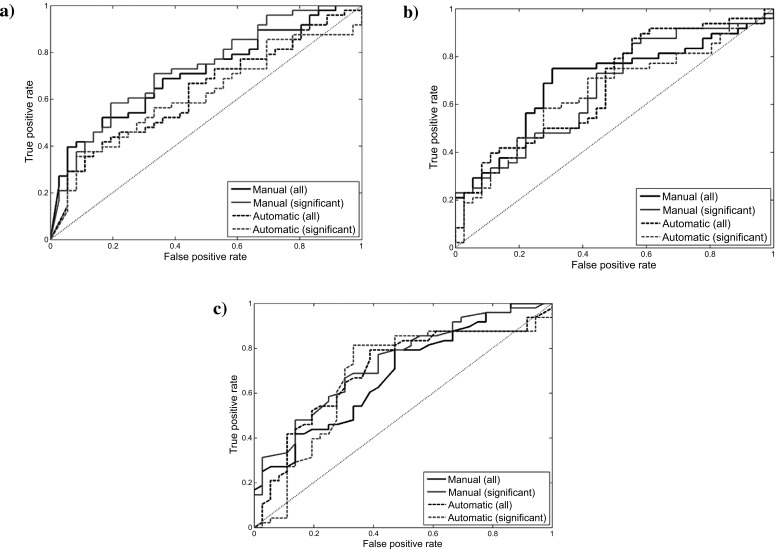
Background: Even today the reliable diagnosis of the prodromal stages of Alzheimer's disease (AD) remains a great challenge. Our research focuses on the earliest detectable indicators of cognitive decline in mild cognitive impairment (MCI). Since the presence of language impairment has been reported even in the mild stage of AD, the aim of this study is to develop a sensitive neuropsychological screening method which is based on the analysis of spontaneous speech production during performing a memory task. In the future, this can form the basis of an Internet-based interactive screening software for the recognition of MCI. Methods: Participants were 38 healthy controls and 48 clinically diagnosed MCI patients. The provoked spontaneous speech by asking the patients to recall the content of 2 short black and white films (one direct, one delayed), and by answering one question. Acoustic parameters (hesitation ratio, speech tempo, length and number of silent and filled pauses, length of utterance) were extracted from the recorded speech signals, first manually (using the Praat software), and then automatically, with an automatic speech recognition (ASR) based tool. First, the extracted parameters were statistically analyzed. Then we applied machine learning algorithms to see whether the MCI and the control group can be discriminated automatically based on the acoustic features. Results: The statistical analysis showed significant differences for most of the acoustic parameters (speech tempo, articulation rate, silent pause, hesitation ratio, length of utterance, pause-per-utterance ratio). The most significant differences between the two groups were found in the speech tempo in the delayed recall task, and in the number of pauses for the question-answering task. The fully automated version of the analysis process – that is, using the ASR-based features in combination with machine learning - was able to separate the two classes with an F1-score of 78.8%. Conclusion: The temporal analysis of spontaneous speech can be exploited in implementing a new, automatic detection-based tool for screening MCI for the community.
Overview
The claims and statistics of this paper haven’t been checked yet.
Run the check — free, no account needed. It reads the open-access text and checks the sources it cites.
Integrity signals
Registry
Cites
Statistics
Figures
Verification
Claims the paper makes
The claims and statistics of this paper haven’t been checked yet.
Run the check — free, no account needed. It reads the open-access text and checks the sources it cites.
Claims other papers make about this one
Each is checked against this paper’s own text: does it say what the citing paper says it does?
In the citing paper
“They were able to achieve over 80% classification accuracy by selecting LIWC categories that best represented the difference in the MCI and healthy control datasets.”
From A Review of Automated Speech and Language Features for Assessment of Cognitive and Thought Disorders (2020) · cites this paper as [7]
In the citing paper
“It is clear from the literature that first-order lexeme-level features, i.e. those related to lexical diversity and density, are useful biomarkers for detecting the presence or predicting the onset of a variety of conditions, such as MCI, AD, CTE, and potentially several others.”
From A Review of Automated Speech and Language Features for Assessment of Cognitive and Thought Disorders (2020) · cites this paper as [7]
Self-check
Percentages, sums and reported differences re-computed from the paper’s own numbers.
The self-check needs the paper’s full text.
Citations
Cites
Folstein, M. F., Folstein, S. E., & McHugh, P. R. (1975) · Journal of Psychiatric Research · doi:10.1016/0022-3956(75)90026-6 · Cited by 88,282
Hirono, N., Mori, E., Ikejiri, Y., Imamura, T., Shimomura, T., Hashimoto, M., Yamashita, H., & Ikeda, M. (1997) · PubMed · Cited by 21,012
Kok, J. S., Berg, I. J., & Scherder, E. J. A. (2013) · Dementia and Geriatric Cognitive Disorders Extra · doi:10.1159/000353441 · Cited by 20,589
Older Adults' Reasons for Using Technology while Aging in Place
Peek, S. T. M., Luijkx, K. G., Rijnaard, M. D., Nieboer, M. E., van der Voort, C. S., Aarts, S., van Hoof, J., Vrijhoef, H. J., & Wouters, E. (2015) · Gerontology · doi:10.1159/000430949 · Cited by 19,852
Sensitivity and False Alarm Rate of a Fall Sensor in Long-Term Fall Detection in the Elderly
Kangas, M., Korpelainen, R., Vikman, I., Nyberg, L., & Jämsä, T. J. (2014) · Gerontology · doi:10.1159/000362720 · Cited by 19,007
The Elements of Statistical Learning: Data Mining, Inference, and Prediction
Lu, Z. Q. J. (2010) · Journal of the Royal Statistical Society Series A (Statistics in Society) · doi:10.1111/j.1467-985x.2010.00646_6.x · Cited by 12,916
Estimating the Support of a High-Dimensional Distribution
Schölkopf, B., Platt, J. C., Shawe-Taylor, J., Smola, A. J., & Williamson, R. C. (2001) · Neural Computation · doi:10.1162/089976601750264965 · Cited by 6,168
Praat, a system for doing phonetics by computer
Boersma, P. (2002) · UvA-DARE (University of Amsterdam) · Cited by 4,417
A new rating scale for Alzheimer's disease
(1984) · American Journal of Psychiatry · doi:10.1176/ajp.141.11.1356 · Cited by 4,175
Naive (Bayes) at forty: The independence assumption in information retrieval
Lewis, D. D. (1998) · Lecture notes in computer science · doi:10.1007/bfb0026666 · Cited by 2,140
Research works printed but not linked: 3
- [36]Hall M. Frank E. Holmes G. Pfahringer B. Reutemann P. Witten I. The WEKA data mining software: an update. ACM SIGKDD Explorations Newsletter 2009 11 1 10 18
- [37]Freedman M.I. Leach L. Kaplan E. Winocur G. Shulman K.J. Delis D.C. Clock drawing. Oxford Oxford University Press 1994
- [44]Szabó L. Tarján B. Mihajlik P. Fegyó T. Speeding up error correction in a Hungarian dictation system (in Hungarian Proceedings of MSZNY 182 91 2015
Cited by
Sorted by citations
García, S. D. L. F., Ritchie, C. W., & Luz, S. F. (2020) · arXiv (Cornell University) · doi:10.48550/arxiv.2010.06047 · Cited by 265
Voice for Health: The Use of Vocal Biomarkers from Research to Clinical Practice
Fagherazzi, G., Fischer, A., Ismael, M., & Despotović, V. (2021) · Digital Biomarkers · doi:10.1159/000515346 · Cited by 249
Graham, S. A., Lee, E., Jeste, D. V., Patten, R. V., Twamley, E. W., Nebeker, C., Yamada, Y., Kim, H., & Depp, C. A. (2019) · Psychiatry Research · doi:10.1016/j.psychres.2019.112732 · Cited by 238
Haider, F., García, S. D. L. F., & Luz, S. F. (2019) · IEEE Journal of Selected Topics in Signal Processing · doi:10.1109/jstsp.2019.2955022 · Cited by 204
Predicting mild cognitive impairment from spontaneous spoken utterances
Asgari, M., Kaye, J., & Dodge, H. (2017) · Alzheimer's & Dementia: Translational Research & Clinical Interventions · doi:10.1016/j.trci.2017.01.006 · Cited by 185
Martínez‐Nicolás, I., Llorente, T. E., Martínez‐Sánchez, F., & Meilán, J. J. G. (2021) · Frontiers in Psychology · doi:10.3389/fpsyg.2021.620251 · Cited by 187
A systematic literature review of automatic Alzheimer’s disease detection from speech and language
Petti, U., Baker, S., & Korhonen, A. (2020) · Journal of the American Medical Informatics Association · doi:10.1093/jamia/ocaa174 · Cited by 168
Evaluation of Speech-Based Digital Biomarkers: Review and Recommendations
Robin, J., Harrison, J., Kaufman, L. D., Rudzicz, F., Simpson, W. S., & Yancheva, M. (2020) · Digital Biomarkers · doi:10.1159/000510820 · Cited by 181
Alzheimer's disease and automatic speech analysis: A review
Pulido, M. L. B., Hernández, J. B. A., Ballester, M. Á. F., González, C. M. T., Mekyska, J., & Smékal, Z. (2020) · Expert Systems with Applications · doi:10.1016/j.eswa.2020.113213 · Cited by 120
English speech recognition based on deep learning with multiple features
Song, Z. (2019) · Computing · doi:10.1007/s00607-019-00753-0 · Cited by 119
Khatun, S., Morshed, B. I., & Bidelman, G. M. (2019) · IEEE Transactions on Neural Systems and Rehabilitation Engineering · doi:10.1109/tnsre.2019.2911970 · Cited by 109
Deep learning-based speech analysis for Alzheimer’s disease detection: a literature review
Yang, Q., Li, X., Ding, X., Xu, F., & Ling, Z.-H. (2022) · Alzheimer s Research & Therapy · doi:10.1186/s13195-022-01131-3 · Cited by 122
Predicting MCI Status From Multimodal Language Data Using Cascaded Classifiers
Fraser, K., Fors, K. L., Eckerström, M., Öhman, F., & Kokkinakis, D. (2019) · Frontiers in Aging Neuroscience · doi:10.3389/fnagi.2019.00205 · Cited by 99
A Review of Automated Speech and Language Features for Assessment of Cognitive and Thought Disorders
Voleti, R., Liss, J. M., & Berisha, V. (2020) · IEEE Journal of Selected Topics in Signal Processing · doi:10.1109/jstsp.2019.2952087 · Cited by 96
Filiou, R.-P., Bier, N., Slegers, A., Houzé, B., Belchior, P. D. C., & Brambati, S. M. (2019) · Aphasiology · doi:10.1080/02687038.2019.1608502 · Cited by 100
Yeung, A., Iaboni, A., Rochon, E. A., Lavoie, M., Santiago, C., Yancheva, M., Novikova, J., Xu, M., Robin, J., Kaufman, L. D., et al. (2021) · Alzheimer s Research & Therapy · doi:10.1186/s13195-021-00848-x · Cited by 90
Linguistic features and automatic classifiers for identifying mild cognitive impairment and dementia
Calzà, L., Gagliardi, G., Favretti, R. R., & Tamburini, F. (2020) · Computer Speech & Language · doi:10.1016/j.csl.2020.101113 · Cited by 107
Javed, A. R., Saadia, A., Mughal, H., Gadekallu, T. R., Rizwan, M., Maddikunta, P. K. R., Mahmud, M., Liyanage, M., & Hussain, A. (2023) · Cognitive Computation · doi:10.1007/s12559-023-10153-4 · Cited by 99
Detection of COVID-19 from voice, cough and breathing patterns: Dataset and preliminary results
Despotović, V., Ismael, M., Cornil, M., Call, R. M., & Fagherazzi, G. (2021) · Computers in Biology and Medicine · doi:10.1016/j.compbiomed.2021.104944 · Cited by 84
Speech- and language-based classification of Alzheimer's disease: a systematic review
Vigo, I., Coelho, L., & Reis, S. (2022) · Bioengineering · doi:10.3390/bioengineering9010027 · Cited by 83
Idrisoglu, A., Dallora, A. L., Anderberg, P., & Berglund, J. S. (2023) · Journal of Medical Internet Research · doi:10.2196/46105 · Cited by 93
Hecker, P., Steckhan, N., Eyben, F., Schuller, B. W., & Arnrich, B. (2022) · Frontiers in Digital Health · doi:10.3389/fdgth.2022.842301 · Cited by 78
Fully Automatic Speech-Based Analysis of the Semantic Verbal Fluency Task
König, A., Linz, N., Tröger, J., Wolters, M., Alexandersson, J., & Robert, P. (2018) · Dementia and Geriatric Cognitive Disorders · doi:10.1159/000487852 · Cited by 77
Multimodal Inductive Transfer Learning for Detection of Alzheimer’s Dementia and its Severity
Sarawgi, U., Zulfikar, W. D., Soliman, N., & Maes, P. (2020) · Interspeech (USB) · doi:10.21437/interspeech.2020-3137 · Cited by 89
Using Digital Speech Assessments to Detect Early Signs of Cognitive Impairment
Robin, J., Xu, M., Kaufman, L. D., & Simpson, W. S. (2021) · Frontiers in Digital Health · doi:10.3389/fdgth.2021.749758 · Cited by 72
Hajjar, I. M., Okafor, M. O., Choi, J. D., Moore, E., Abrol, A., Calhoun, V. D., & Goldstein, F. C. (2023) · Alzheimer s & Dementia Diagnosis Assessment & Disease Monitoring · doi:10.1002/dad2.12393 · Cited by 74
Bazarbekov, I., Razaque, A., Ipalakova, M., Yoo, J., Assipova, Z., & Almisreb, A. A. (2024) · Biomedical Signal Processing and Control · doi:10.1016/j.bspc.2024.106023 · Cited by 71
An automatic Alzheimer’s disease classifier based on spontaneous spoken English
Bertini, F., Allevi, D., Lutero, G., Calzà, L., & Montesi, D. (2022) · Computer Speech & Language · doi:10.1016/j.csl.2021.101298 · Cited by 66
Introduction to large language models (LLMs) for dementia care and research
Treder, M. S., Lee, S., & Tsvetanov, K. A. (2024) · Frontiers in Dementia · doi:10.3389/frdem.2024.1385303 · Cited by 63
Chien, Y.-W., Hong, S.-Y., Cheah, W.-T., Yao, L.-H., Chang, Y., & Fu, L. (2019) · Scientific Reports · doi:10.1038/s41598-019-56020-x · Cited by 61
Exploring Deep Transfer Learning Techniques for Alzheimer's Dementia Detection
Zhu, Y., Liang, X., Batsis, J. A., & Roth, R. M. (2021) · Frontiers in Computer Science · doi:10.3389/fcomp.2021.624683 · Cited by 61
Yamada, Y., Shinkawa, K., Kobayashi, M., Caggiano, V., Nemoto, M., Nemoto, K., & Arai, T. (2021) · Journal of Alzheimer s Disease · doi:10.3233/jad-210684 · Cited by 58
Learning Language and Acoustic Models for Identifying Alzheimer’s Dementia From Speech
Shah, Z., Sawalha, J., Tasnim, M., Qi, S.-A., Stroulia, E., & Greiner, R. (2021) · Frontiers in Computer Science · doi:10.3389/fcomp.2021.624659 · Cited by 56
Martinc, M., Haider, F., Pollak, S., & Luz, S. (2021) · Frontiers in Aging Neuroscience · doi:10.3389/fnagi.2021.642647 · Cited by 55
“Toth et al. (2018), for instance, found that filled pauses (sounds like “hmmm,” etc.) could not be reliably detected by human annotators, and that detection improved by using ASR-generated transcriptions.”
InfluentialGuess What We Can Hear—Novel Voice Biomarkers for the Remote Detection of Disease
Sara, J. D. S., Orbelo, D. M., Maor, E., Lerman, L. O., & Lerman, A. (2023) · Mayo Clinic Proceedings · doi:10.1016/j.mayocp.2023.03.007 · Cited by 54
Çokal, D., Zimmerer, V. C., Turkington, D., Ferrier, N., Varley, R. A., Watson, S., & Hinzen, W. (2019) · PLoS ONE · doi:10.1371/journal.pone.0217404 · Cited by 52
Automatic Speech Classifier for Mild Cognitive Impairment and Early Dementia
Bertini, F., Allevi, D., Lutero, G., Montesi, D., & Calzà, L. (2021) · ACM Transactions on Computing for Healthcare · doi:10.1145/3469089 · Cited by 52
Meilán, J. J. G., Martínez‐Sánchez, F., Martínez‐Nicolás, I., Llorente, T. E., & Carro, J. (2020) · Behavioural Neurology · doi:10.1155/2020/4683573 · Cited by 49
Geng, M., Xie, X., Ye, Z., Wang, T., Li, G., Hu, S., Liu, X., & Meng, H. (2022) · IEEE/ACM Transactions on Audio Speech and Language Processing · doi:10.1109/taslp.2022.3195113 · Cited by 48
Internet of Things and Machine Learning for Healthy Ageing: Identifying the Early Signs of Dementia
Ahamed, F., Shahrestani, S. A., & Cheung, H. (2020) · Sensors · doi:10.3390/s20216031 · Cited by 45
Kobayashi, M., Kosugi, A., Takagi, H., Nemoto, M., Nemoto, K., Arai, T., & Yamada, Y. (2019) · Lecture Notes in Computer Science · doi:10.1007/978-3-030-29390-1_4 · Cited by 45
Personalized Adversarial Data Augmentation for Dysarthric and Elderly Speech Recognition
Jin, Z., Geng, M., Deng, J., Wang, T., Hu, S., Li, G., & Liu, X. (2023) · IEEE/ACM Transactions on Audio Speech and Language Processing · doi:10.1109/taslp.2023.3323888 · Cited by 52
Automatic Detection of Alzheimer’s Disease Using Spontaneous Speech Only
Chen, J., Ye, J., Tang, F., & Zhou, J. (2021) · Interspeech (USB) · doi:10.21437/interspeech.2021-2002 · Cited by 44
Speech pause distribution as an early marker for Alzheimer’s disease
Pastoriza-Domínguez, P., Torre, I. G., Diéguez-Vide, F., Gómez‐Ruiz, I., Geladó, S., López, J. B., Ávila, A., Matías‐Guiu, J. A., Pytel, V., & Hernández-Fernändez, A. (2021) · Speech Communication · doi:10.1016/j.specom.2021.11.009 · Cited by 53
Zolnoori, M., Zolnour, A., & Topaz, M. (2023) · Artificial Intelligence in Medicine · doi:10.1016/j.artmed.2023.102624 · Cited by 43
Self-Supervised ASR Models and Features for Dysarthric and Elderly Speech Recognition
Hu, S., Xie, X., Geng, M., Jin, Z., Deng, J., Li, G., Wang, Y., Cui, M., Wang, T., Meng, H. M. L., et al. (2024) · IEEE/ACM Transactions on Audio Speech and Language Processing · doi:10.1109/taslp.2024.3422839 · Cited by 40
Al-Hameed, S., Benaissa, M., Christensen, H., Mirheidari, B., Blackburn, D., & Reuber, M. (2019) · PLOS ONE · doi:10.1371/journal.pone.0217388 · Cited by 37
Voice biomarkers as indicators of cognitive changes in middle and later adulthood
Mahon, E., & Lachman, M. E. (2022) · Neurobiology of Aging · doi:10.1016/j.neurobiolaging.2022.06.010 · Cited by 39
García‐Gutiérrez, F., Marquié, M., Muñoz, N., Alegret, M., Cano, A. C., de Rojas, I., García‐González, P., Olivé, C., Puerta, R., Orellana, A., et al. (2023) · Frontiers in Neuroscience · doi:10.3389/fnins.2023.1221401 · Cited by 40
Speech-based detection of multi-class Alzheimer’s disease classification using machine learning
Tripathi, T., & Kumar, R. (2023) · International Journal of Data Science and Analytics · doi:10.1007/s41060-023-00475-9 · Cited by 37
Ye, Z., Hu, S., Li, J., Xie, X., Geng, M., Yu, J., Xu, J., Xue, B., Liu, S., Liu, X., et al. (2021) · IEEE International Conference on Acoustics Speech and Signal Processing · doi:10.1109/icassp39728.2021.9413634 · Cited by 36
The paradigm and future value of the metaverse for the intervention of cognitive decline
Zhou, H., Gao, J.-Y., & Chen, Y. (2022) · Frontiers in Public Health · doi:10.3389/fpubh.2022.1016680 · Cited by 35
Qiao, Y., Xie, X., Lin, G., Zou, Y., Chen, S., Ren, R., & Wang, G. (2020) · Journal of Alzheimer s Disease · doi:10.3233/jad-191056 · Cited by 37
Jang, H., Soroski, T., Rizzo, M., Barral, O., Harisinghani, A., Newton‐Mason, S. M., Granby, S., Vasco, T. D. C., Lewis, C., Tutt, P., et al. (2021) · Frontiers in Human Neuroscience · doi:10.3389/fnhum.2021.716670 · Cited by 42
Ivanova, O., Meilán, J. J. G., Martínez‐Sánchez, F., Martínez‐Nicolás, I., Llorente, T. E., & Carcavilla-González, N. (2021) · Computer Speech & Language · doi:10.1016/j.csl.2021.101341 · Cited by 35
Automatic Detection of Cognitive Impairments through Acoustic Analysis of Speech
Nagumo, R., Zhang, Y., Ogawa, Y., Hosokawa, M., Abe, K., Ukeda, T., Sumi, S., Kurita, S., Nakakubo, S., Lee, S., et al. (2020) · Current Alzheimer Research · doi:10.2174/1567205017666200213094513 · Cited by 33
Gutz, S. E., Stipancic, K. L., Yunusova, Y., Berry, J. D., & Green, J. R. (2022) · Journal of Speech Language and Hearing Research · doi:10.1044/2022_jslhr-21-00589 · Cited by 33
Biosensors toward behavior detection in diagnosis of alzheimer’s disease
Sun, X., Sun, X., Wang, Q., Wang, X., Feng, L., Yang, Y., Jing, Y., Yang, C., & Zhang, S. (2022) · Frontiers in Bioengineering and Biotechnology · doi:10.3389/fbioe.2022.1031833 · Cited by 33
Technology as Infrastructure for Dehumanization:
Oviatt, S. L. (2021) · INTERNATIONAL CONFERENCE ON MULTIMODAL INTERACTION · doi:10.1145/3462244.3482855 · Cited by 35
Yamada, Y., Shinkawa, K., Nemoto, M., Nemoto, K., & Arai, T. (2023) · Computer Speech & Language · doi:10.1016/j.csl.2023.101514 · Cited by 34
Alkenani, A. H., Li, Y., Xu, Y., & Zhang, Q. (2021) · Journal of Biomedical Informatics · doi:10.1016/j.jbi.2021.103803 · Cited by 30
Advances in Multimodal Behavioral Analytics for Early Dementia Diagnosis: A Review
Guruge, C. J. P., Oviatt, S. L., Haghighi, P. D., & Pritchard, E. (2021) · INTERNATIONAL CONFERENCE ON MULTIMODAL INTERACTION · doi:10.1145/3462244.3479933 · Cited by 31
Speech patterns during memory recall relates to early tau burden across adulthood
Young, C. B., Smith, V., Karjadi, C., Grogan, S., Ang, T. F. A., Insel, P. S., Henderson, V. W., Sumner, M., Poston, K. L., Au, R., et al. (2024) · Alzheimer's & Dementia · doi:10.1002/alz.13731 · Cited by 27
Vincze, V., Szatlóczki, G., Tóth, L., Gosztolya, G., Pákáski, M., Hoffmann, I., & Kálmán, J. (2020) · Clinical Linguistics & Phonetics · doi:10.1080/02699206.2020.1827043 · Cited by 31
Self-citationAutomated assessment of speech production and prediction of MCI in older adults
Sanborn, V. E., Ostrand, R., Ciesla, J. A., & Gunstad, J. (2020) · Applied Neuropsychology Adult · doi:10.1080/23279095.2020.1864733 · Cited by 28
Wang, H.-L., Tang, R., Ren, R., Dammer, E. B., Guo, Q., Peng, G., Cui, H., Zhang, Y.-M., Wang, J., Xie, X., et al. (2022) · BMC Medicine · doi:10.1186/s12916-022-02584-x · Cited by 28
Technical Challenges for Smooth Interaction With Seniors With Dementia: Lessons From Humanitude™
Sumioka, H., Shiomi, M., 本田, 美., & Nakazawa, A. (2021) · Frontiers in Robotics and AI · doi:10.3389/frobt.2021.650906 · Cited by 26
AI-Atroshi, C., Beulah, J. R., Singamaneni, K. K., Cyril, C. P. D., Neelakandan, S., & Velmurugan, S. (2022) · International Journal of Healthcare Management · doi:10.1080/20479700.2022.2097764 · Cited by 26
RetractedAn Evaluation on Information Composition in Dementia Detection Based on Speech
Zheng, C., Bouazizi, M., & Ohtsuki, T. O. (2022) · IEEE Access · doi:10.1109/access.2022.3203068 · Cited by 26
The Internet-Based Cognitive Assessment Tool: System Design and Feasibility Study
Hafiz, P., Miskowiak, K. W., Kessing, L. V., Jespersen, A. E., Obenhausen, K., Gulyas, L., Żukowska, K., & Bardram, J. E. (2019) · JMIR Formative Research · doi:10.2196/13898 · Cited by 25
Luz, S. F., Haider, F., Fromm, D., Lazarou, I., Kompatsiaris, I. Y., & MacWhinney, B. (2024) · IEEE Open Journal of Signal Processing · doi:10.1109/ojsp.2024.3378595 · Cited by 26
Identification of Mild Cognitive Impairment Among Chinese Based on Multiple Spoken Tasks
Wang, T., Hong, Y., Wang, Q., Su, R., Ng, M. L., Xu, J. L., Wang, L., & Yan, N. (2021) · Journal of Alzheimer s Disease · doi:10.3233/jad-201387 · Cited by 24
Nahar, J. K., & López-Jiménez, F. A. (2022) · Heart Failure Clinics · doi:10.1016/j.hfc.2021.11.006 · Cited by 23
Jonell, P., Moëll, B., Håkansson, K., Henter, G. E., Kucherenko, T., Mikheeva, O., Hagman, G., Holleman, J., Kivipelto, M., Kjellström, H., et al. (2021) · Frontiers in Computer Science · doi:10.3389/fcomp.2021.642633 · Cited by 26
Parsapoor, M., Alam, M. R., & Mihailidis, A. (2023) · BMC Medical Informatics and Decision Making · doi:10.1186/s12911-023-02122-6 · Cited by 26
Wu, R., Li, A., Xue, C., Chai, J., Qiang, Y., Zhao, J., & Wang, L. (2023) · Brain Sciences · doi:10.3390/brainsci13081222 · Cited by 22
Bloom, P. P., Fisher, C., Tedesco, N., Kamdar, N. S., Garrido-Trevino, L., Robin, J., Asrani, S. K., & Lok, A. S.-F. (2024) · Hepatology · doi:10.1097/hep.0000000000001086 · Cited by 21
Screening for early Alzheimer’s disease: enhancing diagnosis with linguistic features and biomarkers
Chou, C., Chang, C.-T., Chang, Y., Lee, C., Chuang, Y., Chiu, Y., Liang, W.-L., Fan, Y.-M., & Liu, Y. (2024) · Frontiers in Aging Neuroscience · doi:10.3389/fnagi.2024.1451326 · Cited by 25
Looze, C. D., Dehsarvi, A., Crosby, L., Vourdanou, A., Coen, R. F., LAWLOR, B. A., & Reilly, R. B. (2021) · Frontiers in Aging Neuroscience · doi:10.3389/fnagi.2021.637404 · Cited by 24
A rapid, non-invasive method for fatigue detection based on voice information
Gao, X., Ma, K., Yang, H., Wang, K., Fu, B., Zhu, Y., She, X., & Cui, B. (2022) · Frontiers in Cell and Developmental Biology · doi:10.3389/fcell.2022.994001 · Cited by 23
Al-Hammadi, M., Fleyeh, H. A., Åberg, A. C., Halvorsen, K., & Thomas, I. (2024) · Journal of Alzheimer s Disease · doi:10.3233/jad-231459 · Cited by 23
Ding, H., Lister, A., Karjadi, C., Au, R., Lin, H., Bischoff, B., & Hwang, P. H. (2024) · JMIR Aging · doi:10.2196/55126 · Cited by 23
Ambrosini, E., Giangregorio, C., Lomurno, E., Moccia, S., Milis, M., Loizou, C. P., Azzolino, D., Cesari, M., Gala, M. C., de Isla, C. G., et al. (2024) · JMIR Aging · doi:10.2196/50537 · Cited by 21
Jafari, Z., Andrew, M. K., & Rockwood, K. J. (2025) · Age and Ageing · doi:10.1093/ageing/afaf316 · Cited by 20
A novel speech analysis algorithm to detect cognitive impairment in a Spanish population
Kaser, A. N., Lacritz, L. H., Winiarski, H. R., Gabirondo, P., Schaffert, J., Coca, A. J., Jiménez-Raboso, J., Rojo, T., Zaldua, C., Honorato, I., et al. (2024) · Frontiers in Neurology · doi:10.3389/fneur.2024.1342907 · Cited by 18
Svindt, V., Bóna, J., & Hoffmann, I. (2019) · Clinical Linguistics & Phonetics · doi:10.1080/02699206.2019.1645885 · Cited by 18
Self-citationGosztolya, G., Balogh, R., Imre, N., Egas-López, J. V., Hoffmann, I., Vincze, V., Tóth, L., Devanand, D. P., Pákáski, M., & Kálmán, J. (2021) · Computer Speech & Language · doi:10.1016/j.csl.2021.101215 · Cited by 17
Self-citationDeep Neural Network Embeddings for the Estimation of the Degree of Sleepiness
Egas-López, J. V., & Gosztolya, G. (2021) · IEEE International Conference on Acoustics Speech and Signal Processing · doi:10.1109/icassp39728.2021.9413589 · Cited by 17
Self-citationFavaro, A., Motley, C., Cao, T., Iglesias, M., Butala, A., Oh, E. S., Stevens, R. D., Villalba, J., Dehak, N., & Moro-Velázquez, L. (2023) · IEEE Spoken Language Technology Workshop (SLT) · doi:10.1109/slt54892.2023.10022435 · Cited by 19
Silva, U. D., Madanian, S., Olsen, S., Templeton, J. M., Poellabauer, C., Schneider, S. L., Narayanan, A., & Rubaiat, R. (2025) · Journal of Medical Internet Research · doi:10.2196/63004 · Cited by 20
Larsen, E., Murton, O. M., Song, X., Joachim, D., Watts, D., Kapczinski, F. P., Venesky, L. G., & Hurowitz, G. (2024) · Frontiers in Psychiatry · doi:10.3389/fpsyt.2024.1342835 · Cited by 18
Identifying Schizophrenia Based on Temporal Parameters in Spontaneous Speech
Gosztolya, G., Bagi, A., Szalóki, S., Szendi, I., & Hoffmann, I. (2018) · Interspeech (USB) · doi:10.21437/interspeech.2018-1079 · Cited by 17
Self-citationChien, Y.-W., Hong, S.-Y., Cheah, W.-T., Fu, L.-C., & Chang, Y.-L. (2018) · 2018 IEEE International Conference on Systems, Man, and Cybernetics (SMC) · doi:10.1109/smc.2018.00557 · Cited by 15
AI‐based assessments of speech and language impairments in dementia
Parsapoor, M. (2023) · Alzheimer s & Dementia · doi:10.1002/alz.13395 · Cited by 15
Asgari, M., Gale, R. C., Wild, K. V., Dodge, H. H., & Kaye, J. A. (2020) · Current Alzheimer Research · doi:10.2174/1567205017666201008110854 · Cited by 14
Deep Learning Based Gait Analysis for Contactless Dementia Detection System from Video Camera
Zhang, Z., Jiang, Y., Cao, X., Yang, X., Zhu, C., Li, Y., & Liu, Y. (2021) · IEEE International Symposium on Circuits and Systems proceedings · doi:10.1109/iscas51556.2021.9401596 · Cited by 15
Yoshii, K., Kimura, D., Kosugi, A., Shinkawa, K., Takase, T., Kobayashi, M., Yamada, Y., Nemoto, M., Watanabe, R., Ota, M., et al. (2022) · JMIR Formative Research · doi:10.2196/42792 · Cited by 14
Martínez‐Nicolás, I., Martínez‐Sánchez, F., Ivanova, O., & Meilán, J. J. G. (2023) · Scientific Reports · doi:10.1038/s41598-023-36804-y · Cited by 14
Clinical classification of memory and cognitive impairment with multimodal digital biomarkers
Banks, R., Higgins, C., Greene, B. R., Jannati, A., Gomes‐Osman, J., Tobyne, S. M., Bates, D. W., & Pascual‐Leone, Á. (2024) · Alzheimer s & Dementia Diagnosis Assessment & Disease Monitoring · doi:10.1002/dad2.12557 · Cited by 14
Zolnoori, M., Zolnour, A., Vergez, S., Sridharan, S., Spens, I., Topaz, M., Noble, J. M., Henry, S. B., Hirschberg, J., Bowles, K. H., et al. (2024) · Journal of the American Medical Informatics Association · doi:10.1093/jamia/ocae300 · Cited by 14
Metadata
- Authors
- Toth, L., Hoffmann, I., Gosztolya, G., Vincze, V., Szatloczki, G., Banreti, Z., Pakaski, M., & Kalman, J.
- Affiliations
- MTA-SZTE Research Group on Artificial Intelligence, Szeged, Hungary
- Linguistics Department, University of Szeged, Szeged, Hungary
- MTA-SZTE Research Group on Artificial Intelligence (HU)
- Department of Psychiatry, University of Szeged, Szeged, Hungary
- Research Institute for Linguistics, Hungarian Academy of Sciences, Budapest, Hungary
- ORCID
- Vincze, Veronika
- Venue
- Current Alzheimer Research
- Publisher
- Bentham Science Publishers Ltd.
- Published
- 2018-01-03
- Volume
- 15
- Issue
- 2
- Pages
- 130-138
- ISSN
- 1567-2050 (ISSN-L)
- PMC
- PMC5815089
- OpenAlex
- W2770604845
- Cited by
- 290
- References
- 49
- Citations by year
- 2026: 39 · 2025: 37 · 2024: 42 · 2023: 46 · 2022: 31 · 2021: 44 · 2020: 26 · 2019: 19 · 2018: 3
- FWCI
- 11.22
- Type
- journal article
- Language
- en
- Open access
- bronze
- doi.org
- Locations
- Current Alzheimer Research (publishedVersion)
- Europe PMC (PubMed Central) (publishedVersion, cc-by-nc)
- PubMed Central (publishedVersion, cc-by-nc)
- PubMed (publishedVersion)
- SZTE Publicatio Repozitórium (University of Szeged) (acceptedVersion, other-oa)
- Repository of the Academy's Library (Library of the Hungarian Academy of Sciences) (acceptedVersion)
- Funders
- Magyar Tudományos Akadémia
- Topics
- Health Sciences › Medicine › Psychiatry and Mental health › Dementia and Cognitive Impairment Research
- Physical Sciences › Computer Science › Artificial Intelligence › Speech Recognition and Synthesis
- Health Sciences › Health Professions › Speech and Hearing › Voice and Speech Disorders
- Keywords
- mild cognitive impairment, Alzheimer's disease, spontaneous speech, speech tempo, acoustic features, speech hesitations, pauses, neuropsychological screening, automated detection, memory retrieval
- MeSH terms
- Machine Learning, Aged, Aged, 80 and over, Diagnosis, Computer-Assisted, Female, Humans, Male, Memory, Middle Aged, Neuropsychological Tests, Pattern Recognition, Automated, ROC Curve, Speech, Speech Production Measurement, Models, Statistical, Internet, Speech Recognition Software, Cognitive Dysfunction
About these checks
Registry, retraction, Cites and statistics results are computed, not judged, with one exception: a printed reference that no index lists is read once by a model before it counts as a citation error. Claims are extracted by a model and kept only when their quote appears verbatim in the text; each cited source is then checked, with a model’s help, for whether it says what the claim relies on. Those verdicts can be wrong — read the claim’s quote and the cited source before relying on one.
Statistics and arithmetic are recomputed, not judged.
Confidence bands are shown only for fields calibrated on our annotated test set. None is calibrated yet, so no band is shown.
What counts as a claim ›How we measure confidence ›How we check this ›
Are you an author, or do you see a problem with this page? Request a review
