

Public Attitudes Toward Guided Internet-Based Therapies: Web-Based Survey Study
Open accessPublished version of a preprint
The DOI matches its Crossref record; 86 of the 87 references it cites were found in a registry or an index.
Abstract
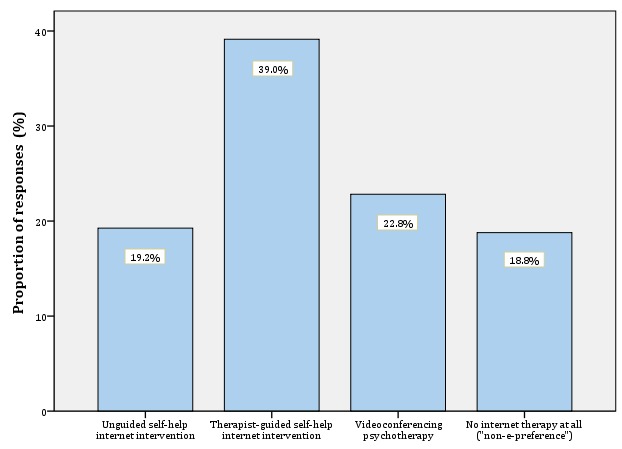
BACKGROUND Internet interventions have been proposed to improve the accessibility and use of evidence-based psychological treatments. However, little is known about attitudes toward such treatments, which can be an important barrier to their use. OBJECTIVE This study aimed to (1) determine attitudes toward guided internet interventions, (2) assess its acceptability compared with other internet-based formats, and (3) explore predictors of acceptance. METHODS A convenience-sample Web-based survey (N=646) assessed attitudes toward guided internet therapies (ie, perceived usefulness and helpfulness, and advantage relative to face-to-face therapy), preferences for delivery modes (ie, e-preference: guided internet interventions, unguided internet interventions, or videoconferencing psychotherapy), and potential predictors of attitudes and preferences: sociodemographics, help-seeking–related variables, attachment style, and perceived stress. RESULTS Although most participants perceived internet interventions as useful or helpful (426/646, 65.9%), a few indicated their advantage relative to face-to-face therapy (56/646, 8.7%). Most participants preferred guided internet interventions (252/646, 39.0%) over videoconferencing psychotherapy (147/646, 22.8%), unguided internet interventions (124/646, 19.2%), and not using internet interventions (121/646, 18.8%; missing data: 1/646, 0.2%). Attachment avoidance and stress were related to e-preference (all P<.05). Moreover, preference for therapist-guided internet interventions was higher for individuals who were aware of internet-based treatment (χ26=12.8; P=.046). CONCLUSIONS Participants assessed therapist-guided internet interventions as helpful, but not equivalent to face-to-face therapies. The vast majority (523/646, 81.0%) of the participants were potentially willing to use internet-based approaches. In lieu of providing patients with only one specific low-intensity treatment, implementation concepts should offer several options, including guided internet interventions, but not limited to them. Conversely, our results also indicate that efforts should focus on increasing public knowledge about internet interventions, including information about their effectiveness, to promote acceptance and uptake.
Overview
The claims and statistics of this paper haven’t been checked yet.
Free: it reads the open-access text and checks the first 5 claims that cite a source we can check. Create a free account to check every claim.
Integrity signals
Registry
Cites
Statistics
Figures
Verification
Claims the paper makes
The claims and statistics of this paper haven’t been checked yet.
Free: it reads the open-access text and checks the first 5 claims that cite a source we can check. Create a free account to check every claim.
Claims other papers make about this one
Each is checked against this paper’s own text: does it say what the citing paper says it does?
The source backs part of the claim, not all of it — or backs it for a different population, condition or comparison.
In the citing paper
“Similar to the findings in Apolinário-Hagen et al. (53), our study identified that having prior experience with a specific treatment mode positively predicted the preference for this mode among participants.”
From Mental health services for German university students: acceptance of intervention targets and preference for delivery modes (2024) · cites this paper as [53]
Experimental — accuracy not yet measuredThe cited source says what the claim attributes to it.
In the citing paper
“Public attitudes toward internet interventions are variable and acceptability of such interventions can be obscured by misinformation regarding their effectiveness (Apolinário-Hagen et al., 2018).”
From Internet-based cognitive behavioural therapy for tinnitus in Spanish: a global feasibility trial. (2022) · cites this paper as Apolinário-Hagen et al., 2018
The cited source says what the claim attributes to it.
In the citing paper
“This preference may be due partly to the common public view that online therapies are not as effective as face-to-face therapy [11].”
Self-check
Percentages, sums and reported differences re-computed from the paper’s own numbers.
The self-check needs the paper’s full text.
Citations
Cites
The theory of planned behavior
Ajzen, I. (1991) · Organizational Behavior and Human Decision Processes · doi:10.1016/0749-5978(91)90020-t · Cited by 134,657
User Acceptance of Information Technology: Toward A Unified View1
Venkatesh, V., Morris, M. G., Davis, G. B., & Davis, F. D. (2003) · MIS Quarterly · doi:10.2307/30036540 · Cited by 45,035 · cited 1×
“In accordance with the unified theory of acceptance and use of technology [38], performance expectancy (ie, how useful an individual perceives an intervention to be for reaching a specific goal) might thus play an important role in the adoption and acceptance of internet interventions [39,40] and provide a guideline i…”
Bundesgesundheitsblatt - Gesundheitsforschung - Gesundheitsschutz
(2013) · Bundesgesundheitsblatt - Gesundheitsforschung - Gesundheitsschutz · doi:10.1007/103.1437-1588 · Cited by 11,796
Whiteford, H. A., Degenhardt, L., Rehm, J., Baxter, A. J., Ferrari, A. J., Erskine, H. E., Charlson, F. J., Norman, R. E., Flaxman, A. D., Johns, N., et al. (2013) · The Lancet · doi:10.1016/s0140-6736(13)61611-6 · Cited by 6,006
Nature and Operation of Attitudes
Ajzen, I. (2001) · Annual Review of Psychology · doi:10.1146/annurev.psych.52.1.27 · Cited by 4,321 · cited 1×
“Generally, attitudes can be characterized as an aggregate of subjective assessments about an object, ranging, for example, from harmful to helpful [36].”
BackgroundClement, S., Schauman, O., Graham, T., Maggioni, F., Evans-Lacko, S., Bezborodovs, N., Morgan, C., Rüsch, N., Brown, J. S. L., & Thornicroft, G. (2015) · Psychological Medicine · doi:10.1017/s0033291714000129 · Cited by 3,152 · cited 1×
“Additionally, attitudinal barriers, such as personal stigma [9] or preferring to solve problems on one’s own, may be decisive in explaining insufficient treatment rates [10].”
BackgroundThe use of analogue scales in rating subjective feelings
BOND, A., & LADER, M. (1974) · British Journal of Medical Psychology · doi:10.1111/j.2044-8341.1974.tb02285.x · Cited by 1,972 · cited 1×
“Current Stress Level We used a visual analog scale [62] to assess current perceived stress level on a scale with 2 end points: 0 (“not at all”) and 10 (“maximum”).”
MethodThe global burden of mental disorders: An update from the WHO World Mental Health (WMH) surveys
Kessler, R. C., Aguilar-Gaxiola, S., Alonso, J., Chatterji, S., Lee, S., Ormel, J., Üstün, T. B., & Wang, P. S. (2009) · Epidemiologia e Psichiatria Sociale · doi:10.1017/s1121189x00001421 · Cited by 1,895 · cited 2×
“1% [1], mental health disorders are widespread.”
BackgroundTreatment gap in mental health care.
Abramowitz, M. Z., Greenberg, D., & Levav, I. (2008) · PubMed · Cited by 1,484
Computer-based psychological treatments for depression: A systematic review and meta-analysis
Richards, D., & Richardson, T. (2012) · Clinical Psychology Review · doi:10.1016/j.cpr.2012.02.004 · Cited by 1,442 · cited 1×
“In recent years, a large number of randomized controlled trials have shown that internet interventions can effectively treat various mental health disorders, such as depression [13,14], anxiety [15-17], insomnia [18], alcohol use disorder [19], comorbid mental health problems in chronic somatic diseases [20,21], and p…”
Background
Research works printed but not linked: 2
- Bowlby J Attachment and Loss 1980 New York, NY Basic Books
- Ebert D Van Daele T Nordgreen T Karekla M Compare T Zarbo C Brugnera A Oeverland S Trebbi G Jensen K Kaehlke F on behalf of the EFPA E-Health Taskforce Baumeister H Internet and mobile-based psychological interventions: applications, efficacy and potential for improving mental health: a report of the EFPA e-health taskforce Eur Psychol 2018 (forthcoming)
Cited by
Malhi, G. S., Bell, E., Bassett, D., Boyce, P., Bryant, R., Hazell, P., Hopwood, M., Lyndon, B., Mulder, R., Porter, R., et al. (2021) · Australian & New Zealand Journal of Psychiatry · doi:10.1177/0004867420979353 · Cited by 614
“In the treatment of major depression, online therapies (when delivered with some human support, such as emails with a coach) can be as effective as face-to-face management and are highly acceptable to patients (Apolinário-Hagen et al., 2018) (see Table 6).”
BackgroundBarriers to older adults’ uptake of mobile-based mental health interventions
Pywell, J., Vijaykumar, S., Dodd, A., & Coventry, L. (2020) · DIGITAL HEALTH · doi:10.1177/2055207620905422 · Cited by 152
Apolinário-Hagen, J., Drüge, M., & Fritsche, L. (2020) · Advances in Experimental Medicine and Biology · doi:10.1007/978-981-32-9705-0_17 · Cited by 100
Reins, J. A., Buntrock, C., Zimmermann, J., Grund, S., Harrer, M., Lehr, D., Baumeister, H., Weisel, K., Domhardt, M., Imamura, K., et al. (2021) · Psychotherapy and Psychosomatics · doi:10.1159/000507819 · Cited by 98
Preferences for e-mental health interventions in Germany: a discrete choice experiment
Phillips, E. A., Himmler, S. F., & Schreyögg, J. (2021) · Value in Health · doi:10.1016/j.jval.2020.09.018 · Cited by 88
“Our results are in concordance with those of previous research, in which participants disagreed that guided internet interventions were comparable to face-to-face psychotherapy in effectiveness and the ability to develop a good therapeutic relationship.(16,19) Musiat et al.”
ResultChanges in Provision of Psychotherapy in the Early Weeks of the COVID-19 Lockdown in Austria
Probst, T., Stippl, P., & Pieh, C. (2020) · International Journal of Environmental Research and Public Health · doi:10.3390/ijerph17113815 · Cited by 99
“However, at least some patients might prefer to pause sessions until after COVID-19 as the general population does not consider remote psychotherapy as equivalent to psychotherapy in personal contact [27].”
BackgroundLinardon, J., Messer, M., Lee, S., & Rosato, J. (2021) · Eating and Weight Disorders - Studies on Anorexia Bulimia and Obesity · doi:10.1007/s40519-020-01005-3 · Cited by 76
Ebert, D. D., Harrer, M., Apolinário-Hagen, J., & Baumeister, H. (2019) · Advances in Experimental Medicine and Biology · doi:10.1007/978-981-32-9721-0_29 · Cited by 76
(2019) · Europe PMC (PubMed Central)
Mayer, G., Gronewold, N., Alvarez, S., Bruns, B., Hilbel, T., & Schultz, J.-H. (2019) · JMIR Mental Health · doi:10.2196/14018 · Cited by 71
“Internet interventions, in general, were rated as helpful, while guided programs or videoconferencing were preferred over unguided self-help programs [16].”
BackgroundBruhns, A., Lüdtke, T., Moritz, S., & Bücker, L. (2021) · JMIR mHealth and uHealth · doi:10.2196/26498 · Cited by 68
“In Germany, younger people report a more negative attitude toward internet- and mobile-based interventions than older people [69].”
Determinant Factors of Public Acceptance of Stress Management Apps: Survey Study
Apolinário-Hagen, J., Hennemann, S., Fritsche, L., Drüge, M., & Breil, B. (2019) · JMIR Mental Health · doi:10.2196/15373 · Cited by 63
“A comprehensive understanding of user characteristics, as described in the behavior change model for internet interventions [31] (eg, demographic and health-related variables as well as attitudes and beliefs), represents an essential first step to create persuasive digital interventions [31-33].”
InfluentialSelf-citationLinardon, J., Shatte, A., Tepper, H., & Fuller‐Tyszkiewicz, M. (2020) · International Journal of Eating Disorders · doi:10.1002/eat.23268 · Cited by 61
Understanding Mental Health App Use Among Community College Students: Web-Based Survey Study
Borghouts, J. W., Eikey, E. V., Mark, G. J., Leon, C. D., Schueller, S. M., Schneider, M. L., Stadnick, N. A., Zheng, K., Mukamel, D. B., & Sorkin, D. H. (2021) · Journal of Medical Internet Research · doi:10.2196/27745 · Cited by 70
“A strength of technology is its availability [44] and the ability to access it anytime.”
Jardine, J., Nadal, C., Robinson, S., Enrique, Á., Hanratty, M., & Doherty, G. J. (2024) · ACM Transactions on Computer-Human Interaction · doi:10.1145/3635472 · Cited by 76
Khalili-Mahani, N., Smyrnova, A., & Kakinami, L. (2019) · Journal of Medical Internet Research · doi:10.2196/11485 · Cited by 52
“However, for the digital health applications (also known as telemedicine or eHealth) to be effective, they must first disambiguate and address the growing concerns about potential risks of screen addiction [10-12].”
BackgroundRenfrew, M. E., Morton, D. P., Morton, J. K., Hinze, J. S., Beamish, P., Przybylko, G., & Craig, B. A. (2020) · Journal of Medical Internet Research · doi:10.2196/15592 · Cited by 56
“Furthermore, up to 80% of potential users are “e-preferers” [31].”
Ervasti, M., Kallio, J., Määttänen, I., Mäntyjärvi, J., & Jokela, M. (2019) · JMIR Mental Health · doi:10.2196/10039 · Cited by 50
“In addition, people’s attitudes toward mobile phones as monitoring and self-management tools for mental health have been shown to be positive [49,50].”
Digital Interventions for Treating Post-COVID or Long-COVID Symptoms: Scoping Review
Rinn, R., Gao, L., Schoeneich, S., Dahmen, A., Anand-Kumar, V., Becker, P., & Lippke, S. (2023) · Journal of Medical Internet Research · doi:10.2196/45711 · Cited by 60
“The findings demonstrate the value and feasibility of digital tools for managing post-COVID/long-COVID symptoms, as fatigue is one of the most common symptoms [23,30,31] and digital interventions are generally accepted by society [14].”
Mental Health Apps in Psychiatric Treatment: A Patient Perspective on Real World Technology Usage
Chiauzzi, E., & Newell, A. (2019) · JMIR Mental Health · doi:10.2196/12292 · Cited by 46
The Feasibility and Effectiveness of Web-Based Advance Care Planning Programs: Scoping Review
van der Smissen, D., Overbeek, A., van Dulmen, S., van Gemert‐Pijnen, J. E. W. C., van der Heide, A., Rietjens, J. A. C., & Korfage, I. J. (2020) · Journal of Medical Internet Research · doi:10.2196/15578 · Cited by 51
“Patients perceive Web-based health programs usually to be useful and helpful [19].”
BackgroundProbst, T., Humer, E. C., Stippl, P., & Pieh, C. (2020) · Frontiers in Psychology · doi:10.3389/fpsyg.2020.559100 · Cited by 55
Nixon, P., Boß, L., Heber, E., Ebert, D. D., & Lehr, D. (2021) · BMC Public Health · doi:10.1186/s12889-021-11504-2 · Cited by 43
More Light? Opportunities and Pitfalls in Digitalized Psychotherapy Process Research
Domhardt, M., Cuijpers, P., Ebert, D. D., & Baumeister, H. (2021) · Frontiers in Psychology · doi:10.3389/fpsyg.2021.544129 · Cited by 41
Self-citationLeuchtenberg, S., Gromer, D., & Käthner, I. (2022) · Counselling and Psychotherapy Research · doi:10.1002/capr.12538 · Cited by 50
Topooco, N., Fowler, L. A., Fitzsimmons‐Craft, E. E., DePietro, B., Vázquez, M. M., Firebaugh, M., Ceglarek, P. J. D., Monterubio, G. E., Newman, M. G., Eisenberg, D., et al. (2022) · Internet Interventions · doi:10.1016/j.invent.2022.100528 · Cited by 69
The development of a self‐report scale to assess therapists' acceptance of telepsychotherapy
Békés, V., Doorn, K. A., McCollum, J. K., Prout, T. A., & Hoffman, L. (2021) · Journal of Clinical Psychology · doi:10.1002/jclp.23289 · Cited by 41
Paslakis, G., Fischer-Jacobs, J., Pape, L., Schiffer, M., Gertges, R., Tegtbur, U., Zimmermann, T., Nöhre, M., & de Zwaan, M. (2019) · Journal of Medical Internet Research · doi:10.2196/12416 · Cited by 31
“Apolinário-Hagen et al [42] performed a Web-based study in a convenience sample (N=646) examining general preferences with reference to internet-based therapy and found similar rates of interesting in psychotherapy by means of videoconference (22.8% compared to 20.3% in our cohort).”
InfluentialBraun, P., Drüge, M., Hennemann, S., Nitsch, F. J., Staeck, R., & Apolinário-Hagen, J. (2022) · Frontiers in Digital Health · doi:10.3389/fdgth.2022.840869 · Cited by 27
“From the perspective of potential clients, individuals seem to generally prefer these therapist-guided internet interventions such as iCBT over videoconferencing and unguided internet interventions when they have to choose between different EMH services (25) as well as blended delivery modes combining online or teleph…”
BackgroundBatterham, P. J., Calear, A. L., Sunderland, M., Kay-Lambkin, F., Farrer, L. M., & Gulliver, A. (2019) · Contemporary Clinical Trials · doi:10.1016/j.cct.2019.01.015 · Cited by 21
Apolinário-Hagen, J., Hennemann, S., Kück, C., Wodner, A., Geibel, D., Riebschläger, M., Zeißler, M., & Breil, B. (2020) · Health Services Insights · doi:10.1177/1178632920911061 · Cited by 26
Digital systemic practices in Europe: a survey before the Covid‐19 pandemic
Borcsa, M., Pomini, V., & Saint‐Mont, U. (2020) · Journal of Family Therapy · doi:10.1111/1467-6427.12308 · Cited by 25
Kumpasoğlu, G. B., Campbell, C., Saunders, R., & Fonagy, P. (2024) · Psychotherapy Research · doi:10.1080/10503307.2023.2298000 · Cited by 32
Benjet, C., Wittenborn, A., Gutierrez-García, R. A., Albor, Y. C., Contreras, E. V., Hernández, S. C., Valdés-García, K. P., Monroy, I. R., Peláez Cedrés, A. J., Hernández Uribe, P. C., et al. (2020) · Journal of Adolescent Health · doi:10.1016/j.jadohealth.2020.01.025 · Cited by 21
Özer, Ö., Köksal, B., & Altınok, A. (2024) · Internet Interventions · doi:10.1016/j.invent.2024.100722 · Cited by 32
“The scale developed by Apolin ´ ario-Hagen et al. (2018) and adapted to Turkish by ( ¨ et al., In press) with the final version consisting of 16 items after one item was eliminated through confirmatory factor analysis to improve the scale's fit.”
MethodPeynenburg, V. A., Mehta, S., & Hadjistavropoulos, H. D. (2020) · Canadian Journal of Behavioural Science/Revue canadienne des sciences du comportement · doi:10.1037/cbs0000165 · Cited by 30
Provision of Remote Psychotherapy during the COVID-19 Pandemic
Humer, E. C., & Probst, T. (2020) · Digital Psychology · doi:10.24989/dp.v1i2.1868 · Cited by 23
“However, some psychotherapists and their patients have reservations about the use of remote psychotherapy, as the personal contact is often considered as an essential part of the therapy (Apolinário-Hagen et al., 2018; Connolly et al., 2020).”
BackgroundWuthrich, V. M., Dickson, S. J., Pehlivan, M., Chen, J. T.-H., Zagic, D., Ghai, I., Neelakandan, A., & Johnco, C. J. (2023) · Journal of Affective Disorders · doi:10.1016/j.jad.2023.10.093 · Cited by 27
Aemissegger, V., López‐Alcalde, J., Witt, C. M., & Barth, J. (2022) · Journal of Medical Internet Research · doi:10.2196/36978 · Cited by 21
“In fact, surveys suggest that iCBT guided by therapists could become a preferred option for patients over in-person CBT or medication [39].”
BackgroundGulliver, A., Calear, A. L., Sunderland, M., KAY‐LAMBKIN, F. J., Farrer, L. M., Banfield, M., & Batterham, P. J. (2020) · JMIR Formative Research · doi:10.2196/22528 · Cited by 23
“Factors such as awareness of e–mental health programs and community views on the effectiveness of web-based versus face-to-face therapy could be fueling this lack of uptake [13].”
BackgroundKählke, F., Hasking, P., Küchler, A.-M., & Baumeister, H. (2024) · Frontiers in Digital Health · doi:10.3389/fdgth.2024.1284661 · Cited by 18
Geiger, S., Steinbach, J., Skoda, E., Jahre, L. M., Rentrop, V., Kocol, D., Jansen, C., Schüren, L. C., Niedergethmann, M., Teufel, M., et al. (2022) · Obesity Facts · doi:10.1159/000527914 · Cited by 19
Braun, P., Atik, E., Guthardt, L., Apolinário-Hagen, J., & Schückes, M. (2023) · JMIR Formative Research · doi:10.2196/45970 · Cited by 17
“Both guided and unguided iCBT programs normally follow a standardized course content protocol that does not leave much room for individualization according to personal needs [14], and this could be associated with patients’ relatively low willingness to use iCBT programs compared with face-to-face interventions [23,24…”
BackgroundPatient preferences for health information technologies: a systematic review
Crossnohere, N. L., Weiss, B., Hyman, S. R., & Bridges, J. F. P. (2021) · Journal of Hospital Management and Health Policy · doi:10.21037/jhmhp-20-105 · Cited by 18
Jagemann, I., Stegemann, M., von Brachel, R., & Hirschfeld, G. H. F. (2024) · BMC Psychiatry · doi:10.1186/s12888-024-06134-y · Cited by 21
“Lincke et al. [24] found that men have a greater likelihood of engaging in online therapy, while Musiat et al. [25] and Apolinário-Hagen et al. [23] did not find significant associations in their online surveys between gender and the willingness to use internet-based therapies.”
BackgroundMethodResultInfluentialApolinário-Hagen, J., Fritsche, L., Wopperer, J., Wals, F., Harrer, M., Lehr, D., Ebert, D. D., & Salewski, C. (2021) · Frontiers in Psychology · doi:10.3389/fpsyg.2021.738950 · Cited by 20
Boß, L., Angerer, P., Dragano, N., Ebert, D. D., Engels, M., Heber, E., Kuhlmann, R., Ruhle, S. A., Schwens, C., Wulf, I. C., et al. (2021) · BMC Public Health · doi:10.1186/s12889-021-12229-y · Cited by 14
“In psychotherapy, surveys suggest that people prefer traditional over digital care [76], but little is known about employees’ preferences regarding SMT.”
BackgroundBatterham, P. J., Gulliver, A., Sunderland, M., Farrer, L. M., KAY‐LAMBKIN, F. J., Trias, A., & Calear, A. L. (2023) · Journal of Medical Internet Research · doi:10.2196/41663 · Cited by 17
Do, R., Lee, S. Y., Kim, J.-S., Cho, M., Shin, H., Jang, M., & Shin, M. (2020) · Journal of Affective Disorders · doi:10.1016/j.jad.2020.12.177 · Cited by 18
Bruhns, A., Baumeister, A., Demeroutis, G., Jahn, H., Willenborg, B., Shaffy, A., Moritz, S., & Bücker, L. (2023) · Psychotherapy Research · doi:10.1080/10503307.2022.2157226 · Cited by 16
“However, in some countries, the acceptance of such interventions is still not very high (Apolinário-Hagen et al., 2018; Hennemann et al., 2016; Topooco et al., 2017).”
Braun, P., Schwientek, A.-K., Angerer, P., Guthardt, L., Icks, A., Loerbroks, A., & Apolinário-Hagen, J. (2023) · Digital Health · doi:10.1177/20552076231173568 · Cited by 15
“Despite the stated reasons for educating future HCPs on dMHSs and initial positive findings on the usefulness of AFIs in improving the acceptance of dMHSs, there is insufficient research on their needs and preferences regarding how and about what they wish to be informed as potential users of dMHSs.(16,51,53) Most res…”
BackgroundParkinson, B., Lawrence, M., McElhinney, E., & Booth, J. (2022) · Journal of Holistic Nursing · doi:10.1177/08980101221135723 · Cited by 14
“(Apolinário-Hagen et al., 2018).”
Staeck, R., Drüge, M., Albisser, S., & Watzke, B. (2022) · Internet Interventions · doi:10.1016/j.invent.2022.100555 · Cited by 13
Armaou, M. (2024) · Social Sciences · doi:10.3390/socsci13020114 · Cited by 15
Vowels, L. M., Vowels, M. J., Sweeney, S. K., Hatch, S., & Darwiche, J. (2025) · PLOS mental health. · doi:10.1371/journal.pmen.0000411 · Cited by 18
“[35].”
Størksen, H. T., Haga, S. M., Slinning, K., & Drozd, F. (2020) · JMIR Mental Health · doi:10.2196/15149 · Cited by 10
Klein, J. P., Knaevelsrud, C., Bohus, M., Ebert, D. D., Gerlinger, G., Günther, K., Jacobi, C., Löbner, M., Riedel-Heller, S. G., Sander, J., et al. (2019) · Fortschritte der Neurologie · Psychiatrie · doi:10.1055/a-0849-9902 · Cited by 12
Woodford, J., Månberg, J., Cajander, Å., Enebrink, P., Harila‐Saari, A. H., Hagström, J., Karlsson, M., Solimena, H. P., & von Essén, L. (2021) · BMJ Open · doi:10.1136/bmjopen-2020-041350 · Cited by 14
Apolinário-Hagen, J., Harrer, M., Dederichs, M., Fritsche, L., Wopperer, J., Wals, F., Loerbroks, A., Lehr, D., Salewski, C., Angerer, P., et al. (2021) · PLoS ONE · doi:10.1371/journal.pone.0252012 · Cited by 13
“Accordingly, comparisons between effect sizes of outcome measures regarding attitudes towards eMHSs for stress coping (short scale) versus online therapies (ETAM and APOI) at post-intervention were not performed (H2-sub-hypotheses, research question).”
BackgroundMethodResultInfluentialApolinário-Hagen, J., Harrer, M., Salewski, C., Lehr, D., & Ebert, D. D. (2023) · Prävention und Gesundheitsförderung · doi:10.1007/s11553-022-00945-1 · Cited by 9
“Da die unterschiedlichen Informationen keinen Einfluss auf die Nutzungsabsichten bei der Post-Messung zwischen den vier Versuchsgruppen aufwiesen (F[3,447] = 1,45, p= 0,227,ŋp(2) = 0,01), wurden diese in der Sekundäranalyse nicht näher betrachtet.”
BackgroundSelf-citationEffectiveness of digital interventions for eight mental disorders: A meta-analytic synthesis
Harrer, M., Miguel, C., Tong, L., Kuper, P., Sprenger, A. A., Furukawa, Y., Wang, Y., van Ballegooijen, W., Čihařová, M., Panagiotopoulou, O. M., et al. (2025) · Internet Interventions · doi:10.1016/j.invent.2025.100860 · Cited by 13
Fujita, J., Yano, Y., Shinoda, S., Sho, N., Otsuki, M., Suda, A., Takayama, M., Moroga, T., Yamaguchi, H., Ishii, M., et al. (2025) · JMIRx Med · doi:10.2196/70960 · Cited by 14
“In addition, patients with severe symptoms or their families often prefer in-person consultations over digital interventions, perceiving in-person care as more reliable and suitable for managing serious symptoms [33].”
Linardon, J., Westrupp, E. M., Macdonald, J. A., Mikocka‐Walus, A. A., Stokes, M. A., Greenwood, C. J., Youssef, G. J., Teague, S. J., Hutchinson, D. M., Sciberras, E., et al. (2021) · Australian & New Zealand Journal of Psychiatry · doi:10.1177/00048674211065985 · Cited by 10
“While these figures are broadly consistent with digital intervention preference data from prior studies (Apolinário-Hagen et al., 2018; Batterham and Calear, 2017; Linardon et al., 2020a), the present study offered unique insights by exploring shifting preferences over time and in response to…”
BackgroundResultInfluentialTeles, S., Ferreira, A., & Paúl, C. (2020) · Health & Social Care in the Community · doi:10.1111/hsc.13227 · Cited by 10
Breil, B., Dederichs, M., Kremer, L., Richter, D., Angerer, P., & Apolinário-Hagen, J. (2021) · Das Gesundheitswesen · doi:10.1055/a-1335-4245 · Cited by 14
“Bei nicht-bevölkerungsrepräsentativen Befragungen in der deutschsprachigen Allgemeinbevölkerung mit demselben Item im Zeitraum von Frühjahr 2015 bis Mitte 2017 (Gesamtstichprobenzahl der sechs Studien, n = 8800) zeigte sich bei unterschiedlichen Stichproben und trotz überwiegender Online-Rekrutierung eine starke Varia…”
BackgroundInternet-based cognitive behavioural therapy for tinnitus in Spanish: a global feasibility trial.
Beukes, E. W., Munzo, M. F., Andersson, G., & Manchaiah, V. (2022) · International Journal of Audiology · doi:10.1080/14992027.2021.1971780 · Cited by 8
Baringer, K., Lopez, J., & Souders, D. J. (2024) · Future Transportation · doi:10.3390/futuretransp4010016 · Cited by 7
“These results are promising for the scalability of information dissemination for SAV stakeholders and potential riders.”
BackgroundAye, L. M., Tan, M., Schaefer, A., Thurairajasingam, S., Geldsetzer, P., Soon, L.-K., Reininghaus, U., Bärnighausen, T., & Su, T. T. (2024) · Digital Health · doi:10.1177/20552076241278313 · Cited by 26
“29,32 This aligns with the study by Apolinário-Hagen et al., 46 though they noted these are not equivalent to face-to-face therapies.”
Resultvon der Groeben, S., Czaplicki, A., Hegerl, U., & Reich, H. (2023) · Internet Interventions · doi:10.1016/j.invent.2023.100622 · Cited by 8
“One proposal is to create and disseminate informational videos to facilitate acceptance of e-health services (Apolinário-Hagen et al., 2018).”
Teles, S., Ferreira, A., & Paúl, C. (2022) · Behavior and Information Technology · doi:10.1080/0144929x.2021.2021285 · Cited by 7
“interventions might be unsuitable for internet-delivered ones, professional guidance, by opposing to self-guidance, was previously reported as a user preference (Apolinário-Hagen et al. 2018; Casey, Joy, and Clough 2013; Musiat, Goldstone, and Tarrier 2014).”
BackgroundInfluentialSteubl, L., Büscher, R., Sander, L., Baumel, A., Barck, K., Sachser, C., Fegert, J. M., Brähler, E., Baumeister, H., & Domhardt, M. (2025) · Clinical Psychology in Europe · doi:10.32872/cpe.15233 · Cited by 6
“In particular, even recruitment for studies focusing on the general population was often convenience-and web-based and took place through digital advertisements (Apolinário-Hagen et al., 2018; Apolinário-Hagen, Vehreschild, et al., 2017) potentially leading to biased findings of prior research.”
InfluentialProbst, T., Haid, B., Schimböck, W., Stippl, P., & Humer, E. C. (2021) · Psychotherapie Forum · doi:10.1007/s00729-021-00168-3 · Cited by 5
Vowels, L. M., Sweeney, S. K., & Vowels, M. J. (2025) · Computers in Human Behavior Artificial Humans · doi:10.1016/j.chbah.2025.100141 · Cited by 14
Online psychotherapy during COVID-19 pandemic - experiences of psychotherapists. Research review.
Konieczny, K. (2021) · Archives of Psychiatry and Psychotherapy · doi:10.12740/app/143999 · Cited by 5
“It is noticeable among patients [8] and professionals.”
BackgroundVowels, L. M., & Sever, Z. (2023) · Journal of Sex & Marital Therapy · doi:10.1080/0092623x.2023.2243266 · Cited by 8
“Indeed, Apolinário-Hagen et al. (2018) found similar barriers to guided internet-based therapies.”
BackgroundMethodInfluentialEinfluss akzeptanzfördernder Interventionen auf die Nutzung einer Online-Selbsthilfe
Kreis, A., Becker, J., Beutel, M., & Zwerenz, R. (2021) · Psychotherapeut (Berlin) · doi:10.1007/s00278-021-00530-5 · Cited by 5
Web-based exercise therapy for the treatment of depression: Perspectives from sports science
Haller, N. (2022) · Sports Psychiatry · doi:10.1024/2674-0052/a000016 · Cited by 5
Xing, J.-C.-A., Aw, C., Pei, N.-O., Samsuri, K. B., & Dhaliwal, S. (2023) · Journal of Evidence-Based Social Work · doi:10.1080/26408066.2023.2228791 · Cited by 4
Navigating relationships with GenAI chatbots: User attitudes, acceptability, and potential
Vowels, L. M., Francois‐Walcott, R. R. R., Grandjean, M., Darwiche, J., & Vowels, M. J. (2025) · Computers in Human Behavior Artificial Humans · doi:10.1016/j.chbah.2025.100183 · Cited by 7
Romero, D., Johansson, M., Hermansson, U., & Lindner, P. (2021) · Frontiers in Psychiatry · doi:10.3389/fpsyt.2021.730153 · Cited by 7
“Several studies have investigated the general public’s (25, 26), stakeholders’ (27), clinicians’ (28–30) and different patient populations’ (31, 32) attitudes toward internet interventions, yet only a handful of studies have investigated whether users’ attitudes at treatment entry affect outcome.”
BackgroundGeležėlytė, O., Guogaitė, G., Nomeikaitė, A., Bisson, J. I., Lewis, C., & Kazlauskas, E. (2024) · BMC Psychiatry · doi:10.1186/s12888-024-06097-0 · Cited by 6
“Matthews et al. [24] found that clients’ higher treatment expectations were associated with greater reductions in PTSD symptoms after trauma-focused CBT. Nonetheless, it is also noted that people see therapist-guided internet interventions as not as equally helpful as face-to-face therapies [25].”
BackgroundGeiger, S., Aufderlandwehr, J., Esser, A. J., Schadendorf, T., Muehlbauer, T., Skoda, E., Teufel, M., & Bäuerle, A. (2024) · Frontiers in Sports and Active Living · doi:10.3389/fspor.2024.1416045 · Cited by 6
Employee Preference and Use of Employee Mental Health Programs: Mixed Methods Study
Sevov, B., Huettemann, R., Zinner, M., Meister, S., & Fehring, L. (2025) · JMIR Human Factors · doi:10.2196/65750 · Cited by 5
“However, these studies focused on interventions treating existing mental health issues, for which many do not think that digital programs can replace traditional in-person psychotherapy adequately [77-79].”
Potential pitfalls and lessons learned
KAY‐LAMBKIN, F. J., Heinsch, M., & Sampson, D. L. (2022) · Elsevier eBooks · doi:10.1016/b978-0-323-90045-4.00013-7 · Cited by 2
Landry, C. A., Beahm, J. D., McCall, H. C., & Hadjistavropoulos, H. D. (2023) · International Journal of Environmental Research and Public Health · doi:10.3390/ijerph20085592 · Cited by 7
Klein, J. P., Berger, T., Hautzinger, M., Lutz, W., Rose, M., Späth, C., Schröder, J., Hohagen, F., & Moritz, S. (2019) · Fortschritte der Neurologie · Psychiatrie · doi:10.1055/a-0849-9838 · Cited by 5
Breast Cancer Survivors’ Attitudes toward eMental Health: A Cross-Sectional Study
Mendes-Santos, C., Campos, T., Ferreira, D., Weiderpass, E., Santana, R. M., & Andersson, G. (2023) · Healthcare · doi:10.3390/healthcare11131920 · Cited by 2
Harrington, K., Eres, R., & Lim, M. H. (2020) · JMIR Research Protocols · doi:10.2196/21307 · Cited by 5
Golzarifard, A., Nasab, P. A., Loripoor, M., & Sayadi, A. R. (2022) · Iranian Journal of Breast Disease · doi:10.30699/ijbd.15.3.4 · Cited by 2
Soroko, E., Borzyszkowski, M., Kleka, P., Chmielak, K., Pawlak, Z., & Skory, M. (2023) · PsyArXiv (OSF Preprints) · doi:10.31234/osf.io/dmgsc · Cited by 5
ВИКОРИСТАННЯ ШТУЧНОГО ІНТЕЛЕКТУ В ДІАГНОСТИЦІ ПСИХОЛОГІЧНОГО СТАНУ
ОСАДЧИЙ, О. (2023) · INFORMATION TECHNOLOGY AND SOCIETY · doi:10.32689/maup.it.2023.1.8 · Cited by 2
Atmarno, T. W. S. (2021) · Didaktika · doi:10.17509/didaktika.v1i3.40991 · Cited by 4
“Beberapa sekolah saat ini mendukung berbagai pembelajaran online yang dibantu oleh teknologi baik instruksi penuh maupun sebagian (Apolinario-Hagen et al., 2018).”
BackgroundChen, Q., Bao, J., & Zang, Y. (2024) · Internet Interventions · doi:10.1016/j.invent.2024.100755 · Cited by 3
“Similarly, a randomized controlled trial found that providing psychoeducational information about i-MHS improved attitudes toward these services within the general population (Apolin ´ ario-Hagen et al., 2018b).”
BackgroundResultInfluentialKalon, L., Boß, L., Wiencke, C., Zarski, A., & Lehr, D. (2026) · Frontiers in Digital Health · doi:10.3389/fdgth.2026.1680033 · Cited by 1
Ünkazan, S., Bıdık, N. Ü., Turan, Z., Akduran, F., & Adadıoğlu, Ö. (2026) · Seminars in Oncology Nursing · doi:10.1016/j.soncn.2026.152150 · Cited by 1
Wesołowski, A., Skawińska, J., & Soroko, E. (2023) · Frontiers in Psychology · doi:10.3389/fpsyg.2023.1141856 · Cited by 1
Størksen, H. T., Nielsen, B., Haga, S. M., & Drozd, F. (2023) · Children and Youth Services Review · doi:10.1016/j.childyouth.2023.107253 · Cited by 1
D'Hulst, A., Bootsma, E., Kiekens, G., Auerbach, R. P., Cuijpers, P. J., Demyttenaere, K., Ebert, D. D., Green, J. G., Kessler, R. C., Mortier, P., et al. (2022) · JGZ Tijdschrift voor jeugdgezondheidszorg · doi:10.1007/s12452-021-00265-4 · Cited by 2
The Use of Telehealth in Behavioral Health and Educational Contexts during COVID ‐19 and Beyond
Clements‐Hickman, A. L., Hollan, J., Drew, C. M., Hinton, V., & Reese, R. J. (2021) · Wiley eBooks · doi:10.1002/9781119751809.ch9 · Cited by 1
Gulliver, A., Calear, A. L., Sunderland, M., KAY‐LAMBKIN, F. J., Farrer, L. M., Banfield, M., & Batterham, P. J. (2019) · doi:10.2196/preprints.16107 · Cited by 1
Metadata
- Authors
- Apolinário-Hagen, J., Harrer, M., Kählke, F., Fritsche, L., Salewski, C., & Ebert, D. D.
- Affiliations
- FernUniversität in Hagen (DE)
- Friedrich-Alexander-Universität Erlangen-Nürnberg (DE)
- Corresponding author
- Apolinário-Hagen, Jennifer
- ORCID
- Venue
- JMIR Mental Health
- Publisher
- JMIR Publications Inc.
- Published
- 2018-05-15
- Volume
- 5
- Issue
- 2
- Pages
- e10735
- ISSN
- 2368-7959 (ISSN-L)
- PMC
- PMC5974457
- OpenAlex
- W2802805333
- Cited by
- 123
- References
- 87
- Citations by year
- 2026: 10 · 2025: 13 · 2024: 13 · 2023: 17 · 2022: 14 · 2021: 23 · 2020: 20 · 2019: 13
- FWCI
- 17.66
- Type
- journal article
- Language
- en
- Open access
- gold
- doi.org
- Licence
- cc-by
- Locations
- JMIR Mental Health (publishedVersion, cc-by)
- PubMed Central (publishedVersion, cc-by)
- PubMed (publishedVersion)
- Topics
- Social Sciences › Psychology › Applied Psychology › Digital Mental Health Interventions
- Health Sciences › Medicine › Public Health, Environmental and Occupational Health › Telemedicine and Telehealth Implementation
- Health Sciences › Medicine › Psychiatry and Mental health › Mental Health Treatment and Access
- Keywords
- online therapy, public attitudes, acceptability, help-seeking, attachment avoidance, perceived stress, perceived usefulness, barriers to treatment uptake
About these checks
Registry, retraction, Cites and statistics results are computed, not judged, with one exception: a printed reference that no index lists is read once by a model before it counts as a citation error. Claims are extracted by a model and kept only when their quote appears verbatim in the text; each cited source is then checked, with a model’s help, for whether it says what the claim relies on. Those verdicts can be wrong — read the claim’s quote and the cited source before relying on one.
Statistics and arithmetic are recomputed, not judged.
Confidence bands are shown only for fields calibrated on our annotated test set. None is calibrated yet, so no band is shown.
What counts as a claim ›How we measure confidence ›How we check this ›
Are you an author, or do you see a problem with this page? Request a review
Data sources
Bibliographic data: Semantic Scholar, OpenAlex, Crossref.
Contains information from the Semantic Scholar Academic Graph Datasets, made available under the ODC Attribution License (ODC-BY 1.0).
Semantic Scholar’s data is described in: Kinney, R., et al. (2023). The Semantic Scholar Open Data Platform. arXiv:2301.10140.
