

Public Attitudes Toward Guided Internet-Based Therapies: Web-Based Survey Study
Open accessPublished version of a preprint
The DOI matches its Crossref record; 86 of the 87 references it cites were found in a registry or an index.
Abstract
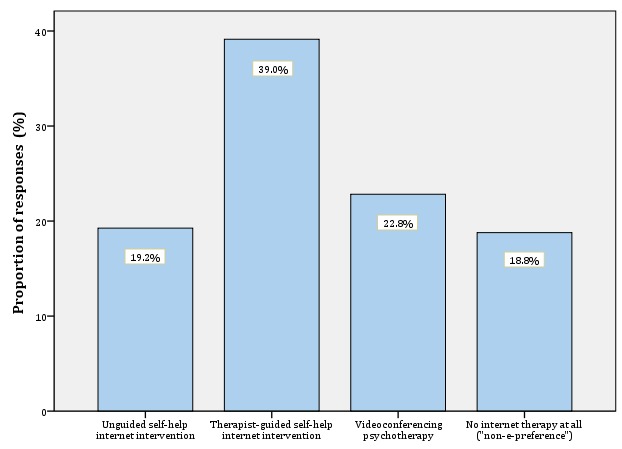
BACKGROUND Internet interventions have been proposed to improve the accessibility and use of evidence-based psychological treatments. However, little is known about attitudes toward such treatments, which can be an important barrier to their use. OBJECTIVE This study aimed to (1) determine attitudes toward guided internet interventions, (2) assess its acceptability compared with other internet-based formats, and (3) explore predictors of acceptance. METHODS A convenience-sample Web-based survey (N=646) assessed attitudes toward guided internet therapies (ie, perceived usefulness and helpfulness, and advantage relative to face-to-face therapy), preferences for delivery modes (ie, e-preference: guided internet interventions, unguided internet interventions, or videoconferencing psychotherapy), and potential predictors of attitudes and preferences: sociodemographics, help-seeking–related variables, attachment style, and perceived stress. RESULTS Although most participants perceived internet interventions as useful or helpful (426/646, 65.9%), a few indicated their advantage relative to face-to-face therapy (56/646, 8.7%). Most participants preferred guided internet interventions (252/646, 39.0%) over videoconferencing psychotherapy (147/646, 22.8%), unguided internet interventions (124/646, 19.2%), and not using internet interventions (121/646, 18.8%; missing data: 1/646, 0.2%). Attachment avoidance and stress were related to e-preference (all P<.05). Moreover, preference for therapist-guided internet interventions was higher for individuals who were aware of internet-based treatment (χ26=12.8; P=.046). CONCLUSIONS Participants assessed therapist-guided internet interventions as helpful, but not equivalent to face-to-face therapies. The vast majority (523/646, 81.0%) of the participants were potentially willing to use internet-based approaches. In lieu of providing patients with only one specific low-intensity treatment, implementation concepts should offer several options, including guided internet interventions, but not limited to them. Conversely, our results also indicate that efforts should focus on increasing public knowledge about internet interventions, including information about their effectiveness, to promote acceptance and uptake.
Overview
The claims and statistics of this paper haven’t been checked yet.
Free: it reads the open-access text and checks the first 5 claims that cite a source we can check. Create a free account to check every claim.
Integrity signals
Registry
Cites
Statistics
Figures
Verification
Claims the paper makes
The claims and statistics of this paper haven’t been checked yet.
Free: it reads the open-access text and checks the first 5 claims that cite a source we can check. Create a free account to check every claim.
Claims other papers make about this one
Each is checked against this paper’s own text: does it say what the citing paper says it does?
The source backs part of the claim, not all of it — or backs it for a different population, condition or comparison.
In the citing paper
“Similar to the findings in Apolinário-Hagen et al. (53), our study identified that having prior experience with a specific treatment mode positively predicted the preference for this mode among participants.”
From Mental health services for German university students: acceptance of intervention targets and preference for delivery modes (2024) · cites this paper as [53]
Experimental — accuracy not yet measuredThe cited source says what the claim attributes to it.
In the citing paper
“Public attitudes toward internet interventions are variable and acceptability of such interventions can be obscured by misinformation regarding their effectiveness (Apolinário-Hagen et al., 2018).”
From Internet-based cognitive behavioural therapy for tinnitus in Spanish: a global feasibility trial. (2022) · cites this paper as Apolinário-Hagen et al., 2018
The cited source says what the claim attributes to it.
In the citing paper
“This preference may be due partly to the common public view that online therapies are not as effective as face-to-face therapy [11].”
Self-check
Percentages, sums and reported differences re-computed from the paper’s own numbers.
The self-check needs the paper’s full text.
Citations
Cites
The theory of planned behavior
Ajzen, I. (1991) · Organizational Behavior and Human Decision Processes · doi:10.1016/0749-5978(91)90020-t · Cited by 134,657
User Acceptance of Information Technology: Toward A Unified View1
Venkatesh, V., Morris, M. G., Davis, G. B., & Davis, F. D. (2003) · MIS Quarterly · doi:10.2307/30036540 · Cited by 45,035 · cited 1×
“In accordance with the unified theory of acceptance and use of technology [38], performance expectancy (ie, how useful an individual perceives an intervention to be for reaching a specific goal) might thus play an important role in the adoption and acceptance of internet interventions [39,40] and provide a guideline i…”
Bundesgesundheitsblatt - Gesundheitsforschung - Gesundheitsschutz
(2013) · Bundesgesundheitsblatt - Gesundheitsforschung - Gesundheitsschutz · doi:10.1007/103.1437-1588 · Cited by 11,796
Whiteford, H. A., Degenhardt, L., Rehm, J., Baxter, A. J., Ferrari, A. J., Erskine, H. E., Charlson, F. J., Norman, R. E., Flaxman, A. D., Johns, N., et al. (2013) · The Lancet · doi:10.1016/s0140-6736(13)61611-6 · Cited by 6,006
Nature and Operation of Attitudes
Ajzen, I. (2001) · Annual Review of Psychology · doi:10.1146/annurev.psych.52.1.27 · Cited by 4,321 · cited 1×
“Generally, attitudes can be characterized as an aggregate of subjective assessments about an object, ranging, for example, from harmful to helpful [36].”
BackgroundClement, S., Schauman, O., Graham, T., Maggioni, F., Evans-Lacko, S., Bezborodovs, N., Morgan, C., Rüsch, N., Brown, J. S. L., & Thornicroft, G. (2015) · Psychological Medicine · doi:10.1017/s0033291714000129 · Cited by 3,152 · cited 1×
“Additionally, attitudinal barriers, such as personal stigma [9] or preferring to solve problems on one’s own, may be decisive in explaining insufficient treatment rates [10].”
BackgroundThe use of analogue scales in rating subjective feelings
BOND, A., & LADER, M. (1974) · British Journal of Medical Psychology · doi:10.1111/j.2044-8341.1974.tb02285.x · Cited by 1,972 · cited 1×
“Current Stress Level We used a visual analog scale [62] to assess current perceived stress level on a scale with 2 end points: 0 (“not at all”) and 10 (“maximum”).”
MethodThe global burden of mental disorders: An update from the WHO World Mental Health (WMH) surveys
Kessler, R. C., Aguilar-Gaxiola, S., Alonso, J., Chatterji, S., Lee, S., Ormel, J., Üstün, T. B., & Wang, P. S. (2009) · Epidemiologia e Psichiatria Sociale · doi:10.1017/s1121189x00001421 · Cited by 1,895 · cited 2×
“1% [1], mental health disorders are widespread.”
BackgroundTreatment gap in mental health care.
Abramowitz, M. Z., Greenberg, D., & Levav, I. (2008) · PubMed · Cited by 1,484
Computer-based psychological treatments for depression: A systematic review and meta-analysis
Richards, D., & Richardson, T. (2012) · Clinical Psychology Review · doi:10.1016/j.cpr.2012.02.004 · Cited by 1,442 · cited 1×
“In recent years, a large number of randomized controlled trials have shown that internet interventions can effectively treat various mental health disorders, such as depression [13,14], anxiety [15-17], insomnia [18], alcohol use disorder [19], comorbid mental health problems in chronic somatic diseases [20,21], and p…”
BackgroundThe treatment gap in mental health care.
(2004) · Europe PMC (PubMed Central) · Cited by 1,419
Barriers to mental health treatment: results from the WHO World Mental Health surveys
Andrade, L. H., Alonso, J., Mneimneh, Z., Wells, J. E., Al-Hamzawi, A., Borges, G., Bromet, E., Bruffaerts, R., de Girolamo, G., de Graaf, R., et al. (2014) · Psychological Medicine · doi:10.1017/s0033291713001943 · Cited by 1,289 · cited 2×
“Perceived stigma and a preference for managing mental health problems on one’s own are known barriers to seeking synchronous treatment [10], and personal characteristics such as attachment style may contribute [57,58].”
BackgroundCarlbring, P., Andersson, G., Cuijpers, P., Riper, H., & Hedman-Lagerlöf, E. (2018) · Cognitive Behaviour Therapy · doi:10.1080/16506073.2017.1401115 · Cited by 1,232 · cited 2×
“Thus, with evidence showing guided interventions to be comparable with face-to-face psychotherapy, for example for depression and anxiety [17,85], and with large effect sizes of guided formats when delivered under routine care conditions [25,86-88], preference should be given at the moment, whenever possible, to guide…”
BackgroundFraley, R. C., Heffernan, M. E., Vicary, A. M., & Brumbaugh, C. C. (2011) · Psychological Assessment · doi:10.1037/a0022898 · Cited by 1,198 · cited 1×
“We measured adult attachment using the Experiences in Close Relationships-Relationship Structures questionnaire [59] 9-item global version to assess attachment anxiety and avoidance [60].”
MethodAndersson, G., Cuijpers, P., Carlbring, P., Riper, H., & Hedman, E. (2014) · World Psychiatry · doi:10.1002/wps.20151 · Cited by 1,077 · cited 3×
“The largest evidence base exists for the effectiveness of guided interventions [22,23], and research has shown that such approaches can be effective when delivered under routine care conditions [24-26].”
BackgroundThe impact of guidance on Internet-based mental health interventions — A systematic review
Baumeister, H., Reichler, L., Munzinger, M., & Lin, J. (2014) · Internet Interventions · doi:10.1016/j.invent.2014.08.003 · Cited by 1,037 · cited 1×
“The largest evidence base exists for the effectiveness of guided interventions [22,23], and research has shown that such approaches can be effective when delivered under routine care conditions [24-26].”
BackgroundAndrews, G., Basu, A., Cuijpers, P., Craske, M. G., McEvoy, P., English, C. L., & Newby, J. M. (2018) · Journal of Anxiety Disorders · doi:10.1016/j.janxdis.2018.01.001 · Cited by 922 · cited 1×
“This discussion has since predominately focused on potential differences in adherence, effects, and costs [22,81-83].”
BackgroundExcess mortality in depression: a meta-analysis of community studies
Cuijpers, P., & Smit, F. (2002) · Journal of Affective Disorders · doi:10.1016/s0165-0327(01)00413-x · Cited by 775 · cited 2×
“Mental health disorders constitute one of the leading causes of disability [2] and are associated with low quality of life, increased risk of developing chronic physical conditions and related mortality [3,4], and an immense economic burden leading to productivity losses and substantial societal costs [5,6].”
BackgroundZachariae, R., Lyby, M. S., Ritterband, L. M., & O'Toole, M. S. (2016) · Sleep Medicine Reviews · doi:10.1016/j.smrv.2015.10.004 · Cited by 704 · cited 1×
“In recent years, a large number of randomized controlled trials have shown that internet interventions can effectively treat various mental health disorders, such as depression [13,14], anxiety [15-17], insomnia [18], alcohol use disorder [19], comorbid mental health problems in chronic somatic diseases [20,21], and p…”
BackgroundKaryotaki, E., Riper, H., Twisk, J., Hoogendoorn, A., Kleiboer, A., Mira, A., Mackinnon, A., Meyer, B., Botella, C., Littlewood, E., et al. (2017) · JAMA Psychiatry · doi:10.1001/jamapsychiatry.2017.0044 · Cited by 691
Hedman, E., Ljótsson, B., & Lindefors, N. (2012) · Expert Review of Pharmacoeconomics & Outcomes Research · doi:10.1586/erp.12.67 · Cited by 672 · cited 1×
“In recent years, a large number of randomized controlled trials have shown that internet interventions can effectively treat various mental health disorders, such as depression [13,14], anxiety [15-17], insomnia [18], alcohol use disorder [19], comorbid mental health problems in chronic somatic diseases [20,21], and p…”
BackgroundVideoconferencing psychotherapy: a systematic review
Backhaus, A., Agha, Z., Maglione, M. L., Repp, A., Ross, B., Zuest, D., Rice-Thorp, N. M., Lohr, J., & Thorp, S. R. (2012) · Psychological Services · doi:10.1037/a0027924 · Cited by 586 · cited 2×
“In addition to guided or unguided internet interventions, videoconferencing psychotherapy (VCP) is considered as a further option to overcome regional barriers for a variety of patient populations [27].”
BackgroundEbert, D. D., Zarski, A.-C., Christensen, H., Stikkelbroek, Y., Cuijpers, P., Berking, M., & Riper, H. (2015) · PLOS ONE · doi:10.1371/journal.pone.0119895 · Cited by 533
Self-citationHeber, E., Ebert, D. D., Lehr, D., Cuijpers, P., Berking, M., Nobis, S., & Riper, H. (2017) · Journal of Medical Internet Research · doi:10.2196/jmir.5774 · Cited by 408 · cited 2×
“Such an assumption is supported by studies that found high proportions of first-time help seekers in internet-based stress management programs [75-79].”
BackgroundResultSelf-citationTherapist-supported Internet cognitive behavioural therapy for anxiety disorders in adults
Olthuis, J. V., Watt, M. C., Bailey, K., Hayden, J. A., & Stewart, S. H. (2016) · Cochrane Database of Systematic Reviews · doi:10.1002/14651858.cd011565.pub2 · Cited by 390
(2006) · PubMed · Cited by 387
Attachment and Psychosomatic Medicine: Developmental Contributions to Stress and Disease
Maunder, R. G., & Hunter, J. J. (2001) · Psychosomatic Medicine · doi:10.1097/00006842-200107000-00006 · Cited by 381 · cited 1×
“While a secure attachment style (low attachment anxiety and avoidance; ie, positive models of the self and others) is associated with functional coping strategies, insecure attachment styles were identified as a global vulnerability factor for mental health [55,56] and are related to altered stress responses, symptom…”
BackgroundImpact of psychiatric disorders on health-related quality of life: general population survey
Saarni, S. I., Suvisaari, J., Sintonen, H., Pirkola, S., Koskinen, S., Aromaa, A., & Lönnqvist, J. (2007) · British Journal of Psychiatry · doi:10.1192/bjp.bp.106.025106 · Cited by 370 · cited 2×
“Mental health disorders constitute one of the leading causes of disability [2] and are associated with low quality of life, increased risk of developing chronic physical conditions and related mortality [3,4], and an immense economic burden leading to productivity losses and substantial societal costs [5,6].”
BackgroundAttachment Theory: A Model for Health Care Utilization and Somatization
Ciechanowski, P. S., Walker, E. A., Katon, W. J., & Russo, J. E. (2002) · Psychosomatic Medicine · doi:10.1097/00006842-200207000-00016 · Cited by 365 · cited 3×
“Perceived stigma and a preference for managing mental health problems on one’s own are known barriers to seeking synchronous treatment [10], and personal characteristics such as attachment style may contribute [57,58].”
BackgroundVogel, D. L., & Wei, M. (2005) · Journal of Counseling Psychology · doi:10.1037/0022-0167.52.3.347 · Cited by 361 · cited 3×
“Attachment Style We considered attachment style as a potential determinant of the acceptance of guided internet interventions, since previous work indicated a connection between individual needs for interpersonal proximity versus distance in case of emotional problems and help-seeking intentions (cf, [54]).”
BackgroundMethodJosephine, K., Josefine, L., Philipp, D., David, E., & Harald, B. (2017) · Journal of Affective Disorders · doi:10.1016/j.jad.2017.07.021 · Cited by 341 · cited 2×
“In recent years, a large number of randomized controlled trials have shown that internet interventions can effectively treat various mental health disorders, such as depression [13,14], anxiety [15-17], insomnia [18], alcohol use disorder [19], comorbid mental health problems in chronic somatic diseases [20,21], and p…”
BackgroundStepped care treatment delivery for depression: a systematic review and meta-analysis
van Straten, A., Hill, J., Richards, D. A., & Cuijpers, P. (2015) · Psychological Medicine · doi:10.1017/s0033291714000701 · Cited by 288 · cited 1×
“Matched-care models have been proposed before (cf, [80]), allocating internet-based or face-to-face treatment based on symptom severity; findings in this study, however, pointed out that various asynchronous as well as synchronous treatment formats should be provided simultaneously to reach as many individuals affecte…”
BackgroundMusiat, P., Goldstone, P., & Tarrier, N. (2014) · BMC Psychiatry · doi:10.1186/1471-244x-14-109 · Cited by 273
Validierung des “Perceived Stress Questionnaire“ (PSQ) an einer deutschen Stichprobe
Fliege, H., Rose, M., Arck, P., Levenstein, S., & Klapp, B. F. (2001) · Diagnostica · doi:10.1026//0012-1924.47.3.142 · Cited by 272 · cited 6×
“There was a significant positive correlation between attitudes toward guided internet interventions and perceived stress on the PSQ-20 (ρ(643)=.092, P=.020).”
MethodInfluentialEbert, D. D., Berking, M., Cuijpers, P., Lehr, D., Pörtner, M., & Baumeister, H. (2015) · Journal of Affective Disorders · doi:10.1016/j.jad.2015.01.056 · Cited by 268 · cited 2×
“However, although more patients could potentially be treated for the same costs using unguided self-help, a basic prerequisite to exploiting the potential of any effective treatment is that affected individuals are willing to use it [84].”
BackgroundSelf-citationRiper, H., Blankers, M., Hadiwijaya, H., Cunningham, J., Clarke, S., Wiers, R., Ebert, D., & Cuijpers, P. (2014) · PLoS ONE · doi:10.1371/journal.pone.0099912 · Cited by 265
Self-citationAttitudes towards digital treatment for depression: A European stakeholder survey
Topooco, N., Riper, H., Araya, R., Berking, M., Brunn, M., Chevreul, K., Cieslak, R., Ebert, D. D., Etchmendy, E., Herrero, R., et al. (2017) · Internet Interventions · doi:10.1016/j.invent.2017.01.001 · Cited by 262 · cited 8×
“This education is necessary to get access to a college or university. fMost of the subgroup of non-Germany residents indicated they lived in Austria (35/646, 5.5%).”
BackgroundInfluentialSelf-citationKuester, A., Niemeyer, H., & Knaevelsrud, C. (2016) · Clinical Psychology Review · doi:10.1016/j.cpr.2015.11.004 · Cited by 261 · cited 1×
“Replication of this finding might indicate that the often-reported overrepresentation of woman and highly educated participants in randomized controlled trials evaluating internet interventions [13,67-72] might not be due to lower acceptance of digital health interventions in general, but due to other relevant barrier…”
BackgroundRyan, M. L., Shochet, I. M., & Stallman, H. M. (2010) · Advances in Mental Health · doi:10.5172/jamh.9.1.73 · Cited by 252
Online randomized controlled trial of brief and full cognitive behaviour therapy for depression
CHRISTENSEN, H., GRIFFITHS, K. M., MACKINNON, A. J., & BRITTLIFFE, K. (2006) · Psychological Medicine · doi:10.1017/s0033291706008695 · Cited by 249 · cited 1×
“This discussion has since predominately focused on potential differences in adherence, effects, and costs [22,81-83].”
BackgroundUsing evidence-based internet interventions to reduce health disparities worldwide.
Muñoz, R. F. (2010) · Journal of Medical Internet Research · doi:10.2196/jmir.1463 · Cited by 242 · cited 1×
“This discussion has since predominately focused on potential differences in adherence, effects, and costs [22,81-83].”
BackgroundHedman, E., Ljótsson, B., Kaldo, V., Hesser, H., El Alaoui, S., Kraepelien, M., Andersson, E., Rück, C., Svanborg, C., Andersson, G., et al. (2014) · Journal of Affective Disorders · doi:10.1016/j.jad.2013.10.023 · Cited by 224 · cited 2×
“The largest evidence base exists for the effectiveness of guided interventions [22,23], and research has shown that such approaches can be effective when delivered under routine care conditions [24-26].”
BackgroundHarrer, M., Adam, S. H., Fleischmann, R. J., Baumeister, H., Auerbach, R., Bruffaerts, R., Cuijpers, P., Kessler, R. C., Berking, M., Lehr, D., et al. (2018) · Journal of Medical Internet Research · doi:10.2196/jmir.9293 · Cited by 216
Self-citationHealth Information–Seeking Behaviors, Health Indicators, and Health Risks
Weaver, J. B., Mays, D., Weaver, S. S., Hopkins, G. L., Eroğlu, D., & Bernhardt, J. M. (2010) · American Journal of Public Health · doi:10.2105/ajph.2009.180521 · Cited by 213 · cited 1×
“Regarding health-related and help-seeking variables, using the internet for mental health information [45,51], previous use of eMHSs [31], a history of mental illness and help-seeking experience such as undergoing psychotherapy [29], knowledge about eMHSs or awareness of electronic therapies (“e-awareness”) [33,41,42]…”
MethodWeb-Based and Mobile Stress Management Intervention for Employees: A Randomized Controlled Trial
Heber, E., Lehr, D., Ebert, D. D., Berking, M., & Riper, H. (2016) · Journal of Medical Internet Research · doi:10.2196/jmir.5112 · Cited by 213
Self-citationWeb-Based Depression Treatment for Type 1 and Type 2 Diabetic Patients
van Bastelaar, K. M. P., Pouwer, F., Cuijpers, P., Riper, H., & Snoek, F. J. (2011) · Diabetes Care · doi:10.2337/dc10-1248 · Cited by 209
A Solution-Focused Research Approach to Achieve an Implementable Revolution in Digital Mental Health
Mohr, D. C., Riper, H., & Schueller, S. M. (2018) · JAMA Psychiatry · doi:10.1001/jamapsychiatry.2017.3838 · Cited by 204 · cited 1×
“However, the poor adoption of eMHSs worldwide indicates that low acceptability and intention to use might constitute a barrier in reaching the full potential of internet-based approaches (cf, [28-32]).”
BackgroundMusiat, P., & Tarrier, N. (2014) · Psychological Medicine · doi:10.1017/s0033291714000245 · Cited by 188 · cited 2×
“Our findings are, furthermore, consistent with earlier research with respect to a general preference for face-to-face therapies over internet interventions [28,29,44], data security concerns [64,65], and perceived higher compatibility of internet interventions with everyday life [11,29].”
BackgroundResultTitov, N., Dear, B. F., Staples, L. G., Bennett-Levy, J., Klein, B., Rapee, R. M., Shann, C., Richards, D., Andersson, G., Ritterband, L., et al. (2015) · Psychiatric Services · doi:10.1176/appi.ps.201400477 · Cited by 181
Ebert, D. D., Heber, E., Berking, M., Riper, H., Cuijpers, P., Funk, B., & Lehr, D. (2016) · Occupational and Environmental Medicine · doi:10.1136/oemed-2015-103269 · Cited by 176 · cited 1×
“Such an assumption is supported by studies that found high proportions of first-time help seekers in internet-based stress management programs [75-79].”
ResultSelf-citationEhrenthal, J., Dinger, U., Lamla, A., Funken, B., & Schauenburg, H. (2009) · PPmP - Psychotherapie · Psychosomatik · Medizinische Psychologie · doi:10.1055/s-2008-1067425 · Cited by 168
The economic burden of depression in the US: societal and patient perspectives
Greenberg, P. E., & Birnbaum, H. G. (2005) · Expert Opinion on Pharmacotherapy · doi:10.1517/14656566.6.3.369 · Cited by 166 · cited 1×
“Mental health disorders constitute one of the leading causes of disability [2] and are associated with low quality of life, increased risk of developing chronic physical conditions and related mortality [3,4], and an immense economic burden leading to productivity losses and substantial societal costs [5,6].”
BackgroundAttitudes Toward e-Mental Health Services in a Community Sample of Adults: Online Survey
March, S., Day, J., Ritchie, G., Rowe, A., Gough, J., Hall, T., Yuen, C. Y. J., Donovan, C. L., & Ireland, M. (2018) · Journal of Medical Internet Research · doi:10.2196/jmir.9109 · Cited by 158 · cited 1×
“Yet there are indicators commonly discussed as influential for help-seeking intentions and acceptance of eMHSs, such as attitudes [33-35] and “e-preferences” [28].”
BackgroundThe internet as a mental health advisor in Germany—results of a national survey
Eichenberg, C., Wolters, C., & Brähler, E. (2013) · PLoS ONE · doi:10.1371/journal.pone.0079206 · Cited by 157
Mohr, D. C., Siddique, J., Ho, J., Duffecy, J., Jin, L., & Fokuo, J. K. (2010) · Annals of Behavioral Medicine · doi:10.1007/s12160-010-9203-7 · Cited by 154 · cited 1×
“Some studies identified a preference for traditional (face-to-face) over internet-based treatment (eg, [28,29,31,44-47]) and for therapist-guided over unguided eMHSs (eg, [28,29,33]).”
BackgroundTherapist-supported Internet cognitive behavioural therapy for anxiety disorders in adults
Olthuis, J. V., Watt, M. C., Bailey, K., Hayden, J. A., & Stewart, S. H. (2015) · Cochrane Database of Systematic Reviews · doi:10.1002/14651858.cd011565 · Cited by 150
Reducing eating disorder symptoms and risk factors using the internet: A meta‐analytic review
Melioli, T., Bauer, S., Franko, D. L., Moessner, M., Ozer, F., Chabrol, H., & Rodgers, R. F. (2016) · International Journal of Eating Disorders · doi:10.1002/eat.22477 · Cited by 147 · cited 1×
“Replication of this finding might indicate that the often-reported overrepresentation of woman and highly educated participants in randomized controlled trials evaluating internet interventions [13,67-72] might not be due to lower acceptance of digital health interventions in general, but due to other relevant barrier…”
BackgroundHedman, E., Ljótsson, B., Rück, C., Bergström, J., Andersson, G., Kaldo, V., Jansson, L., Andersson, E., Andersson, E., Blom, K., et al. (2013) · Acta Psychiatrica Scandinavica · doi:10.1111/acps.12079 · Cited by 144 · cited 1×
“The largest evidence base exists for the effectiveness of guided interventions [22,23], and research has shown that such approaches can be effective when delivered under routine care conditions [24-26].”
BackgroundWallin, E. E. K., Mattsson, S., & Olsson, E. M. G. (2016) · JMIR Mental Health · doi:10.2196/mental.5324 · Cited by 136
Online Mental Health Treatment: Concerns and Considerations
Wells, M., Mitchell, K. J., Finkelhor, D., & Becker-Blease, K. A. (2007) · CyberPsychology & Behavior · doi:10.1089/cpb.2006.9933 · Cited by 126 · cited 1×
“Determinants of Attitudes Toward and Preferences for Internet-Based Therapies Potential determinants of attitudes and preferences for eMHS include sociodemographics such as age, region [45], or professional background [48-50].”
BackgroundBaumeister, H., Nowoczin, L., Lin, J., Seifferth, H., Seufert, J., Laubner, K., & Ebert, D. D. (2014) · Diabetes Research and Clinical Practice · doi:10.1016/j.diabres.2014.04.031 · Cited by 125 · cited 2×
“Acceptance-facilitating interventions using brief, highly scalable educational videos have been shown to be a valid strategy to enhance the acceptability of internet interventions in clinical practice [66,71,84].”
BackgroundBaumeister, H., Seifferth, H., Lin, J., Nowoczin, L., Lüking, M., & Ebert, D. (2015) · The Clinical Journal of Pain · doi:10.1097/ajp.0000000000000118 · Cited by 124 · cited 2×
“These results are in line with a study on the acceptance of internet-based interventions in chronic pain [66].”
BackgroundResultAssessing patterns of adult attachment in medical patients
Maunder, R., & Hunter, J. (2008) · General Hospital Psychiatry · doi:10.1016/j.genhosppsych.2008.10.007 · Cited by 124 · cited 3×
“Perceived stigma and a preference for managing mental health problems on one’s own are known barriers to seeking synchronous treatment [10], and personal characteristics such as attachment style may contribute [57,58].”
BackgroundHennemann, S., Beutel, M. E., & Zwerenz, R. (2016) · Journal of Medical Internet Research · doi:10.2196/jmir.6003 · Cited by 121 · cited 2×
“E-Preference Technology acceptance of eMHS can be operationalized by intentions to use these services [39], which can be affected by the individual preference for a specific delivery mode [28].”
BackgroundPreferences for e-mental health services amongst an online Australian sample?
Klein, B., & Cook, S. (2010) · E-Journal of Applied Psychology · doi:10.7790/ejap.v6i1.184 · Cited by 117 · cited 7×
“Our findings are, furthermore, consistent with earlier research with respect to a general preference for face-to-face therapies over internet interventions [28,29,44], data security concerns [64,65], and perceived higher compatibility of internet interventions with everyday life [11,29].”
BackgroundMethodResultInfluentialWahbeh, H., Svalina, M. N., & Oken, B. S. (2014) · Open Medicine Journal · doi:10.2174/1874220301401010066 · Cited by 116
Newby, J. M., Mewton, L. R., Williams, A. D., & Andrews, G. (2014) · Journal of Affective Disorders · doi:10.1016/j.jad.2014.04.037 · Cited by 107 · cited 1×
“Thus, with evidence showing guided interventions to be comparable with face-to-face psychotherapy, for example for depression and anxiety [17,85], and with large effect sizes of guided formats when delivered under routine care conditions [25,86-88], preference should be given at the moment, whenever possible, to guide…”
BackgroundEbert, D. D., Nobis, S., Lehr, D., Baumeister, H., Riper, H., Auerbach, R. P., Snoek, F., Cuijpers, P., & Berking, M. (2017) · Diabetic Medicine · doi:10.1111/dme.13173 · Cited by 101 · cited 1×
“In recent years, a large number of randomized controlled trials have shown that internet interventions can effectively treat various mental health disorders, such as depression [13,14], anxiety [15-17], insomnia [18], alcohol use disorder [19], comorbid mental health problems in chronic somatic diseases [20,21], and p…”
BackgroundSelf-citationWangberg, S. C., Gammon, D., & Spitznogle, K. (2007) · CyberPsychology & Behavior · doi:10.1089/cpb.2006.9937 · Cited by 99 · cited 1×
“Determinants of Attitudes Toward and Preferences for Internet-Based Therapies Potential determinants of attitudes and preferences for eMHS include sociodemographics such as age, region [45], or professional background [48-50].”
BackgroundApolinário-Hagen, J., Kemper, J., & Stürmer, C. (2017) · JMIR Mental Health · doi:10.2196/mental.6186 · Cited by 98 · cited 4×
“Preference for Specific Delivery Formats This study identified a clear preference for guided over unguided internet interventions, which only few studies have investigated before [34].”
BackgroundInfluentialSelf-citationApolinário-Hagen, J., Vehreschild, V., & Alkoudmani, R. M. (2017) · JMIR Mental Health · doi:10.2196/mental.6375 · Cited by 90 · cited 16×
“Analysis of attitudes toward guided internet interventions indicated an overall moderate acceptance (ETAM overall mean score, Table 3).”
BackgroundMethodResultInfluentialSelf-citationEbert, D. D., Lehr, D., Smit, F., Zarski, A.-C., Riper, H., Heber, E., Cuijpers, P., & Berking, M. (2014) · BMC Public Health · doi:10.1186/1471-2458-14-807 · Cited by 82 · cited 1×
“Such an assumption is supported by studies that found high proportions of first-time help seekers in internet-based stress management programs [75-79].”
ResultSelf-citationThe Impact of Information on Attitudes Toward E-Mental Health Services
Casey, L. M., Joy, A., & Clough, B. A. (2013) · Cyberpsychology, Behavior, and Social Networking · doi:10.1089/cyber.2012.0515 · Cited by 76 · cited 3×
“Regarding health-related and help-seeking variables, using the internet for mental health information [45,51], previous use of eMHSs [31], a history of mental illness and help-seeking experience such as undergoing psychotherapy [29], knowledge about eMHSs or awareness of electronic therapies (“e-awareness”) [33,41,42]…”
BackgroundMethodWilliams, R., Farquharson, L., Palmer, L., Bassett, P., Clarke, J., Clark, D. M., & Crawford, M. J. (2016) · BMC Psychiatry · doi:10.1186/s12888-015-0702-8 · Cited by 76
Choi, I., Sharpe, L., Li, S., & Hunt, C. (2015) · Social Psychiatry and Psychiatric Epidemiology · doi:10.1007/s00127-014-0921-1 · Cited by 64 · cited 1×
“Some studies identified a preference for traditional (face-to-face) over internet-based treatment (eg, [28,29,31,44-47]) and for therapist-guided over unguided eMHSs (eg, [28,29,33]).”
BackgroundKayrouz, R., Dear, B. F., Johnston, L., Keyrouz, L., Nehme, E., Laube, R., & Titov, N. (2015) · International Journal of Social Psychiatry · doi:10.1177/0020764014553004 · Cited by 62 · cited 2×
“Our findings are, furthermore, consistent with earlier research with respect to a general preference for face-to-face therapies over internet interventions [28,29,44], data security concerns [64,65], and perceived higher compatibility of internet interventions with everyday life [11,29].”
BackgroundResultApolinário-Hagen, J., Fritsche, L., Bierhals, C., & Salewski, C. (2018) · Internet Interventions · doi:10.1016/j.invent.2017.12.002 · Cited by 58
Self-citationNordgreen, T., Gjestad, R., Andersson, G., Carlbring, P., & Havik, O. E. (2018) · Cognitive Behaviour Therapy · doi:10.1080/16506073.2017.1348389 · Cited by 48 · cited 1×
“Thus, with evidence showing guided interventions to be comparable with face-to-face psychotherapy, for example for depression and anxiety [17,85], and with large effect sizes of guided formats when delivered under routine care conditions [25,86-88], preference should be given at the moment, whenever possible, to guide…”
BackgroundBaumeister, H., Lin, J., & Ebert, D. D. (2017) · Bundesgesundheitsblatt - Gesundheitsforschung - Gesundheitsschutz · doi:10.1007/s00103-017-2518-9 · Cited by 44 · cited 7×
“This education is necessary to get access to a college or university. fMost of the subgroup of non-Germany residents indicated they lived in Austria (35/646, 5.5%).”
BackgroundInfluentialEl Alaoui, S., Hedman, E., Ljótsson, B., & Lindefors, N. (2015) · BMJ Open · doi:10.1136/bmjopen-2015-007902 · Cited by 30
Apolinário-Hagen, J., Groenewold, S. D., Fritsche, L., Kemper, J., Krings, L., & Salewski, C. (2017) · Prävention und Gesundheitsförderung · doi:10.1007/s11553-017-0620-3 · Cited by 25
Späth, C., Hapke, U., Maske, U., Schröder, J., Moritz, S., Berger, T., Meyer, B., Rose, M., Nolte, S., & Klein, J. P. (2017) · Internet Interventions · doi:10.1016/j.invent.2017.05.003 · Cited by 23 · cited 1×
“Replication of this finding might indicate that the often-reported overrepresentation of woman and highly educated participants in randomized controlled trials evaluating internet interventions [13,67-72] might not be due to lower acceptance of digital health interventions in general, but due to other relevant barrier…”
BackgroundInternetbasierte Gesundheitsinterventionen
Gieselmann, A., Böckermann, M., & Pietrowsky, R. (2015) · Psychotherapeut · doi:10.1007/s00278-015-0038-3 · Cited by 15
Dockweiler, C., Kupitz, A., & Hornberg, C. (2018) · Das Gesundheitswesen · doi:10.1055/s-0043-119287 · Cited by 12
Wulf, M., Apolinário, J. M., & Tress, W. (2012) · Zeitschrift für psychosomatische Medizin und Psychotherapie · doi:10.13109/zptm.2012.58.4.374 · Cited by 7
Apolinário-Hagen, J., Dugo, A., Anhorn, L., Holsten, B., Werner, V., & Krebs, S. (2016) · DOAJ (DOAJ: Directory of Open Access Journals) · doi:10.19204/2016/xplr24 · Cited by 7 · cited 6×
“Adult attachment style can play a role in preferences and attitudes toward seeking help in the context of emotionally relevant relationships, such as in mental health care [52,54].”
BackgroundMethodInfluential
Research works printed but not linked: 2
- Bowlby J Attachment and Loss 1980 New York, NY Basic Books
- Ebert D Van Daele T Nordgreen T Karekla M Compare T Zarbo C Brugnera A Oeverland S Trebbi G Jensen K Kaehlke F on behalf of the EFPA E-Health Taskforce Baumeister H Internet and mobile-based psychological interventions: applications, efficacy and potential for improving mental health: a report of the EFPA e-health taskforce Eur Psychol 2018 (forthcoming)
Cited by
Malhi, G. S., Bell, E., Bassett, D., Boyce, P., Bryant, R., Hazell, P., Hopwood, M., Lyndon, B., Mulder, R., Porter, R., et al. (2021) · Australian & New Zealand Journal of Psychiatry · doi:10.1177/0004867420979353 · Cited by 614
“In the treatment of major depression, online therapies (when delivered with some human support, such as emails with a coach) can be as effective as face-to-face management and are highly acceptable to patients (Apolinário-Hagen et al., 2018) (see Table 6).”
BackgroundBarriers to older adults’ uptake of mobile-based mental health interventions
Pywell, J., Vijaykumar, S., Dodd, A., & Coventry, L. (2020) · DIGITAL HEALTH · doi:10.1177/2055207620905422 · Cited by 152
Apolinário-Hagen, J., Drüge, M., & Fritsche, L. (2020) · Advances in Experimental Medicine and Biology · doi:10.1007/978-981-32-9705-0_17 · Cited by 100
Reins, J. A., Buntrock, C., Zimmermann, J., Grund, S., Harrer, M., Lehr, D., Baumeister, H., Weisel, K., Domhardt, M., Imamura, K., et al. (2021) · Psychotherapy and Psychosomatics · doi:10.1159/000507819 · Cited by 98
Preferences for e-mental health interventions in Germany: a discrete choice experiment
Phillips, E. A., Himmler, S. F., & Schreyögg, J. (2021) · Value in Health · doi:10.1016/j.jval.2020.09.018 · Cited by 88
“Our results are in concordance with those of previous research, in which participants disagreed that guided internet interventions were comparable to face-to-face psychotherapy in effectiveness and the ability to develop a good therapeutic relationship.(16,19) Musiat et al.”
Result
Metadata
- Authors
- Apolinário-Hagen, J., Harrer, M., Kählke, F., Fritsche, L., Salewski, C., & Ebert, D. D.
- Affiliations
- FernUniversität in Hagen (DE)
- Friedrich-Alexander-Universität Erlangen-Nürnberg (DE)
- Corresponding author
- Apolinário-Hagen, Jennifer
- ORCID
- Venue
- JMIR Mental Health
- Publisher
- JMIR Publications Inc.
- Published
- 2018-05-15
- Volume
- 5
- Issue
- 2
- Pages
- e10735
- ISSN
- 2368-7959 (ISSN-L)
- PMC
- PMC5974457
- OpenAlex
- W2802805333
- Cited by
- 123
- References
- 87
- Citations by year
- 2026: 10 · 2025: 13 · 2024: 13 · 2023: 17 · 2022: 14 · 2021: 23 · 2020: 20 · 2019: 13
- FWCI
- 17.66
- Type
- journal article
- Language
- en
- Open access
- gold
- doi.org
- Licence
- cc-by
- Locations
- JMIR Mental Health (publishedVersion, cc-by)
- PubMed Central (publishedVersion, cc-by)
- PubMed (publishedVersion)
- Topics
- Social Sciences › Psychology › Applied Psychology › Digital Mental Health Interventions
- Health Sciences › Medicine › Public Health, Environmental and Occupational Health › Telemedicine and Telehealth Implementation
- Health Sciences › Medicine › Psychiatry and Mental health › Mental Health Treatment and Access
- Keywords
- online therapy, public attitudes, acceptability, help-seeking, attachment avoidance, perceived stress, perceived usefulness, barriers to treatment uptake
About these checks
Registry, retraction, Cites and statistics results are computed, not judged, with one exception: a printed reference that no index lists is read once by a model before it counts as a citation error. Claims are extracted by a model and kept only when their quote appears verbatim in the text; each cited source is then checked, with a model’s help, for whether it says what the claim relies on. Those verdicts can be wrong — read the claim’s quote and the cited source before relying on one.
Statistics and arithmetic are recomputed, not judged.
Confidence bands are shown only for fields calibrated on our annotated test set. None is calibrated yet, so no band is shown.
What counts as a claim ›How we measure confidence ›How we check this ›
Are you an author, or do you see a problem with this page? Request a review
Data sources
Bibliographic data: Semantic Scholar, OpenAlex, Crossref.
Contains information from the Semantic Scholar Academic Graph Datasets, made available under the ODC Attribution License (ODC-BY 1.0).
Semantic Scholar’s data is described in: Kinney, R., et al. (2023). The Semantic Scholar Open Data Platform. arXiv:2301.10140.
