

Colletotrichum – current status and future directions
Open accessThe DOI matches its Crossref record; 189 of the 293 references it cites were found in a registry or an index, and 99 are not checked yet.
Abstract
A review is provided of the current state of understanding of Colletotrichum systematics, focusing on species-level data and the major clades. The taxonomic placement of the genus is discussed, and the evolution of our approach to species concepts and anamorph-teleomorph relationships is described. The application of multilocus technologies to phylogenetic analysis of Colletotrichum is reviewed, and selection of potential genes/loci for barcoding purposes is discussed. Host specificity and its relation to speciation and taxonomy is briefly addressed. A short review is presented of the current status of classification of the species clusters that are currently without comprehensive multilocus analyses, emphasising the orbiculare and destructivum aggregates. The future for Colletotrichum biology will be reliant on consensus classification and robust identification tools. In support of these goals, a Subcommission on Colletotrichum has been formed under the auspices of the International Commission on Taxonomy of Fungi, which will administer a carefully curated barcode database for sequence-based identification of species within the BioloMICS web environment.
Overview
The claims and statistics of this paper haven’t been checked yet.
Free: it reads the open-access text and checks the first 5 claims that cite a source we can check. Create a free account to check every claim.
Integrity signals
Registry
Cites
Statistics
Figures
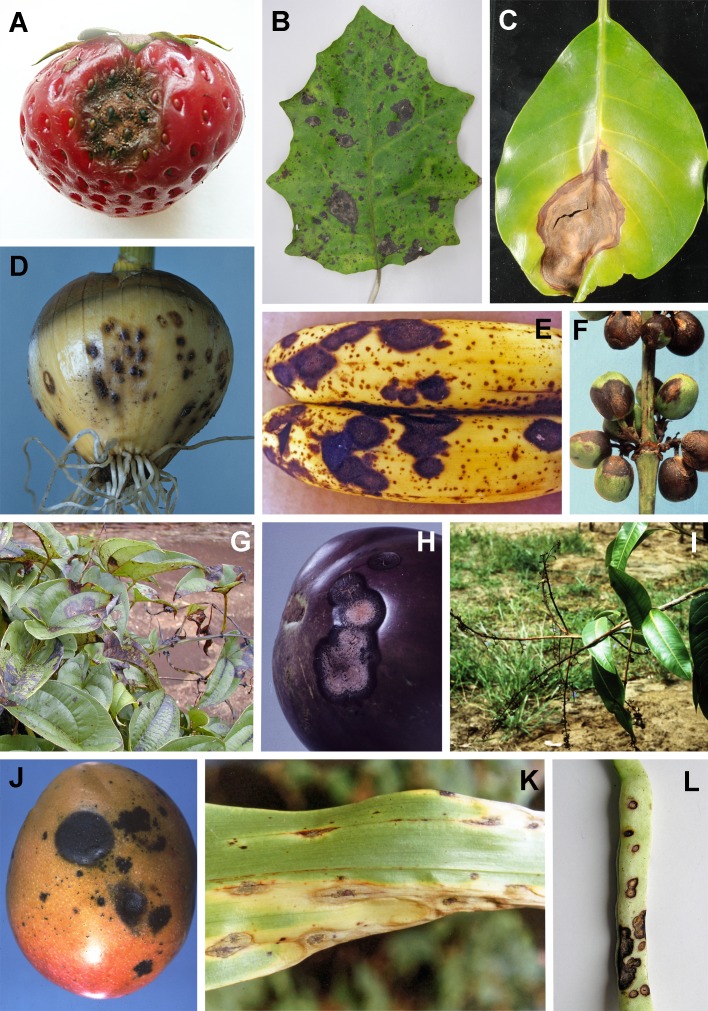
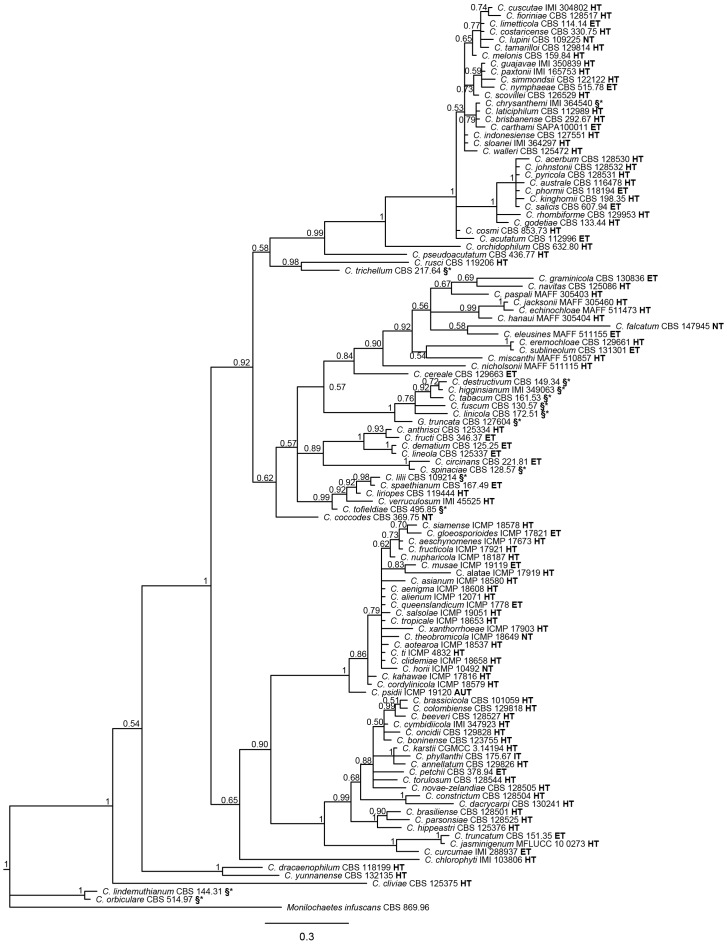
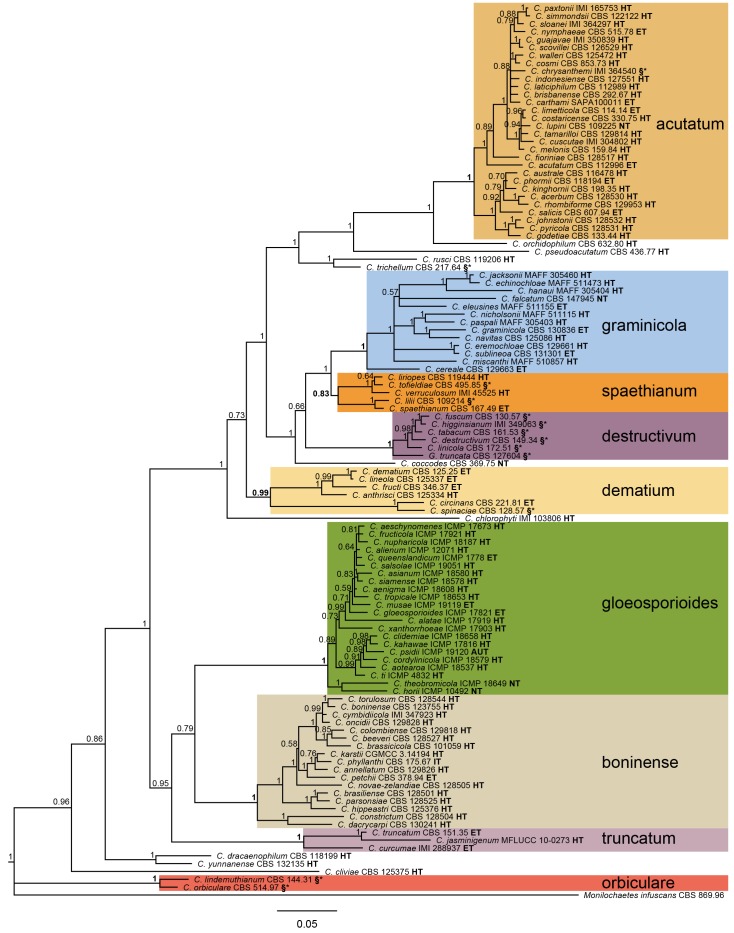
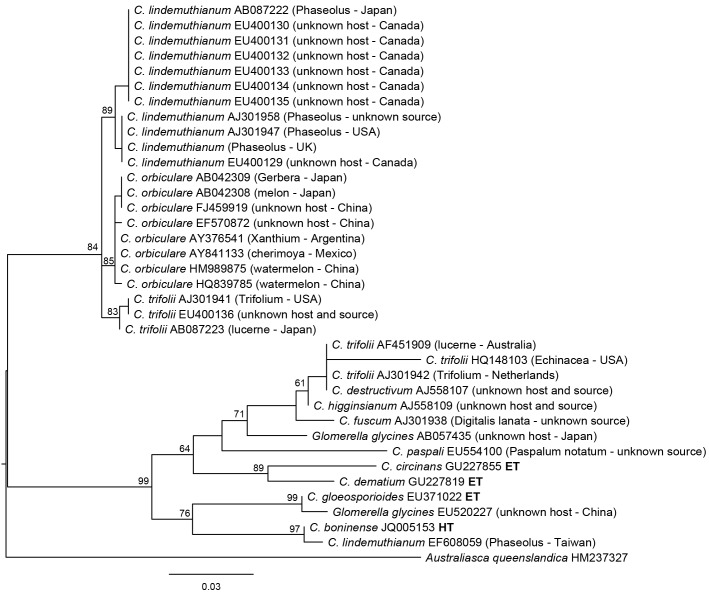
Verification
Claims the paper makes
The claims and statistics of this paper haven’t been checked yet.
Free: it reads the open-access text and checks the first 5 claims that cite a source we can check. Create a free account to check every claim.
Claims other papers make about this one
Each is checked against this paper’s own text: does it say what the citing paper says it does?
The source backs part of the claim, not all of it — or backs it for a different population, condition or comparison.
In the citing paper
“Lifestyle patterns in Colletotrichum can be broadly categorised as endophytic, hemibiotrophic, necrotrophic, latent or quiescent (Perfect et al. 1999, Peres et al. 2005, Cannon et al. 2012, Barimani et al. 2013, de Silva et al. 2017).”
From Colletotrichum: lifestyles, biology, morpho-species, species complexes and accepted species (2021) · cites this paper as Cannon et al. 2012
Experimental — accuracy not yet measuredThe source backs part of the claim, not all of it — or backs it for a different population, condition or comparison.
In the citing paper
“Currently, species delimitation in Colletotrichum relies solely on the use of multi locus phylogenetic analyses (Cannon et al. 2012, Hyde et al. 2014, Jayawardena et al. 2020).”
From Colletotrichum: lifestyles, biology, morpho-species, species complexes and accepted species (2021) · cites this paper as Cannon et al. 2012
Experimental — accuracy not yet measuredThe source backs part of the claim, not all of it — or backs it for a different population, condition or comparison.
In the citing paper
“Species of Colletotrichum have asexual and sexual morphs in their life cycle, which occur on the host plant or plant debris (Sutton 1992, Cannon et al. 2012, Jayawardena et al. 2016a).”
From Colletotrichum: lifestyles, biology, morpho-species, species complexes and accepted species (2021) · cites this paper as Cannon et al. 2012
Experimental — accuracy not yet measuredThe source backs part of the claim, not all of it — or backs it for a different population, condition or comparison.
In the citing paper
“This complex can be distinguished by their curved conidia with truncate base and acute, more strongly curved apex (Damm et al. 2009, Cannon et al. 2012, Jayawardena et al. 2016a).”
From Colletotrichum: lifestyles, biology, morpho-species, species complexes and accepted species (2021) · cites this paper as Cannon et al. 2012
Experimental — accuracy not yet measuredThe source backs part of the claim, not all of it — or backs it for a different population, condition or comparison.
In the citing paper
“From work in the intergenic regions of apn2 and MAT1-2-1 (ApMat) genes, 22 phenotypes (Supplementary Table S1) have been identified (Cannon et al., 2012), and four distinct phylogenies (C. fructicola, C. frgariae sensu stricto, C. melanocaulon and C. jasmine-sambac) within the complex described (Doyle et al., 2013).”
From Mango anthracnose disease: the current situation and direction for future research (2023) · cites this paper as Cannon et al., 2012
Experimental — accuracy not yet measured
12 more claims about this paper
Create a free account to see every claim other papers make about this one.
Self-check
Percentages, sums and reported differences re-computed from the paper’s own numbers.
The self-check needs the paper’s full text.
Citations
Cites
Schoch, C. L., Seifert, K. A., Huhndorf, S., Robert, V., Spouge, J. L., Levesque, C. A., Chen, W., Fungal Barcoding Consortium, Fungal Barcoding Consortium Author List, Bolchacova, E., et al. (2012) · Proceedings of the National Academy of Sciences · doi:10.1073/pnas.1117018109 · Cited by 5,120 · cited 1×
“This is of some concern, as the ITS region is widely used for species definition in the Fungi ( e.g. Begerow et al. 2010, Druzhinina et al. 2005, Eberhardt 2010, Kelly et al. 2011), and has recently been proposed as a universal barcode sequence (Schoch et al. 2011, 2012).”
BackgroundSelf-citationThe Top 10 fungal pathogens in molecular plant pathology
DEAN, R., VAN KAN, J. A. L., PRETORIUS, Z. A., HAMMOND‐KOSACK, K. E., DI PIETRO, A., SPANU, P. D., RUDD, J. J., DICKMAN, M., KAHMANN, R., ELLIS, J., et al. (2012) · Molecular Plant Pathology · doi:10.1111/j.1364-3703.2011.00783.x · Cited by 4,692 · cited 1×
“The genus was recently voted the eighth most important group of plant pathogenic fungi in the world, based on perceived scientific and economic importance (Dean et al .”
BackgroundReconstructing the early evolution of Fungi using a six-gene phylogeny
James, T. Y., Kauff, F., Schoch, C. L., Matheny, P. B., Hofstetter, V., Cox, C. J., Celio, G., Gueidan, C., Fraker, E., Miadlikowska, J., et al. (2006) · Nature · doi:10.1038/nature05110 · Cited by 1,815 · cited 1×
“Several widely used markers, including TUB2 and TEF1, were not included within their list of best-performing genes, and are probably unsuitable as universal fungal markers due to the presence of paralogs (James et al. 2006, Walker et al .”
MethodThe Colletotrichum gloeosporioides species complex
Weir, B. S., Johnston, P. R., & Damm, U. (2012) · Studies in Mycology · doi:10.3114/sim0011 · Cited by 1,646 · cited 8×
“2011, Weir et al .”
BackgroundInfluentialSelf-citationKõljalg, U., Larsson, K., Abarenkov, K., Nilsson, R. H., Alexander, I. J., Eberhardt, U., Erland, S., Høiland, K., Kjøller, R., Larsson, E., et al. (2005) · New Phytologist · doi:10.1111/j.1469-8137.2005.01376.x · Cited by 1,173 · cited 1×
“There is also evidence that ITS sequences alone can constitute useful barcode markers for some groups of the Basidiomycota ( e.g. Kõljalg et al .”
BackgroundAinsworth & Bisby'sdictionary of the fungi.
Ainsworth. (1961) · Cited by 1,145
The Coelomycetes. Fungi imperfecti with pycnidia, acervuli and stromata.
Sutton, B. C. (1980) · Commonwealth Mycological Institute eBooks · Cited by 1,080
O'Connell, R. J., Thon, M. R., Hacquard, S., Amyotte, S. G., Kleemann, J., Torres, M. F., Damm, U., Buiate, E. A., Epstein, L., Alkan, N., et al. (2012) · Nature Genetics · doi:10.1038/ng.2372 · Cited by 1,047 · cited 10×
“2012), but the strains studied (from lentil ( Lens culinaris ) in Canada) belong to the destructivum rather than the truncatum clade (Damm et al. 2009; O’Connell et al. 2012; Figs 2, 3).”
BackgroundInfluentialSelf-citationDIVERSITY AND HOST RANGE OF FOLIAR FUNGAL ENDOPHYTES: ARE TROPICAL LEAVES BIODIVERSITY HOTSPOTS?
Arnold, A. E., & Lutzoni, F. (2007) · Ecology · doi:10.1890/05-1459 · Cited by 1,033 · cited 1×
“(2004) and Arnold & Lutzoni (2007) that the commonest tropical endophytes appear to be host generalists.”
BackgroundFUSARIUM-ID v. 1.0: A DNA Sequence Database for Identifying Fusarium
Geiser, D. M., del Mar Jiménez-Gasco, M., Kang, S., Makalowska, I., Veeraraghavan, N., Ward, T. J., Zhang, N., Kuldau, G. A., & O'donnell, K. (2004) · European Journal of Plant Pathology · doi:10.1023/b:ejpp.0000032386.75915.a0 · Cited by 1,030 · cited 1×
“…for diagnostic purposes in the Fungi , especially beta-tubulin (TUB2) and calmodulin ( e.g. for Aspergillus and Penicillium ; Samson et al. 2007, Peterson 2008, Houbraken et al. 2011), TEF1 (for Fusarium ; Geiser et al. 2004, O’Donnell et al. 2009) and COX1 (for Penicillium ; Seifert et al. 2007).”
Background
Research works printed but not linked: 29
- Agrios GN (2005). Plant Pathology. 5th edn Academic Press, New York
- Arx JA von (1957a). Revision der zu Gloeosporium gestellten Pilze. Verhandligen des Koninklijke Nederlandse Akadademie van Wetenschappen, Afd. Natuurkunde, 2, 51(3): 153 pp
- Arx JA von (1957b). Die Arten der Gattung Colletotrichum Cda. Phytopathologische Zeitschrift 29: 413– 468
- Barrus MF (1918). Varietal susceptability of beans to strains of Colletotrichum lindemuthianum (Sacc. & Magn.) B. & C. Phytopathology 8: 589– 605
- Berlese AN (1893). Icones Fungorum Omnium hucusque Cognitorum. Pergola, Avellino vol. 1: 91– 118
- Chadefaud M (1960). Les Végétaux non Vasculaires. Cryptogamie. In: Traité de Botanique Systématique (Chadefaud M Emberger L, eds). Masson, Paris vol. 1: 1018 pp
- Corda ACI (1831). Die Pilze Deutschlands. In: Deutschlands Flora in Abbildungen nach der Natur mit Beschreibungen (Sturm J, ed.). Sturm, Nürnberg vol. 3, Abt. 12: 33– 64, tab. 21–32
- Corda ACI (1837). Icones Fungorum hucusque cognitorum vol. 1 Calve, Prague
- Corda ACI (1840). Icones Fungorum hucusque cognitorum vol. 4 Calve, Prague
- Edgerton CW (1912). Plus and minus strains in an ascomycete. Science 35: 151
- Hennings P (1898). Die in den Gewächshäusern des Berliner Botanischen Gartens beobachteten Pilze. Verhandlungen des Botanischen Vereins der Provinz Brandenburg 40: 109– 177
- Hyde KD Cai L McKenzie EHC Yang YL Zhang JZ (2009b). Colletotrichum: a catalogue of confusion. Fungal Diversity 39: 1– 17
- Krüger F (1913). Beiträge zur Kenntnis einiger Gloeosporien. Arbeiten aus der Kaiserlichen Biologischen Anstalt für Land- und Forstwirtschaft. 9: 233– 323
- Leahy R Schubert T Strandberg J Stamps B Norman D (1995). Anthracnose of leatherleaf fern. Plant Pathology Circular 372: 4 pp
- Lehman SG Wolf FA (1926). Soybean anthracnose. Journal of Agricultural Research Washington 33: 381– 390
- Montagne C (1849). Sixième centurie des plantes cellulaires nouvelles tant indigènes qu’exotiques. Annales des Sciences Naturelles. Botanique Série 3, 12: 285– 320
- Palarpawar MY Ghurde VR (1988). Some new hosts of Colletotrichum curcumae. Indian Journal of Mycology and Plant Pathology 18: 220– 221
- Petrak F (1924). Über die phylogenetischen Beziehungen der Gattung Phyllachora und ihre Bedeutung für das System der dothidealean Pilze. Annales Mycologici 22: 1– 10
- Phuong THN Pettersson OV Olsson P Nguyen PTH (2010). Identification of Colletotrichum species associated with anthracnose disease of coffee in Vietnam. European Journal of Plant Pathology 127: 73– 87 · DOI
- Prihastuti H Cai L Chen H McKenzie EHC Hyde KD (2009). Characterization of Colletotrichum species associated with coffee berries in northern Thailand. Fungal Diversity 39: 89– 109
- Prusky D Freeman S Dickman MB (eds) (2000). Colletotrichum. Host Specificity, Pathology and Host-Pathogen Interaction. APS Press, St Paul, USA
- Ramos AP Merali Z Talhinhas P Sreenivasaprasad S Oliveira H (2006). Molecular and morphological characterisation of Colletotrichum species involved in citrus anthracnose in Portugal. Bulletin OILB/SROP 29: 317– 326
- Schoch C Seifert K Crous P (2011). Progress on DNA barcoding of Fungi. IMA Fungus 2: (5).
- Shivas RG Tan YP (2009). A taxonomic reassessment of Colletotrichum acututum, introducing C. fioriniae comb. et stat. nov. and C. simmondsii sp. nov. Fungal Diversity 39: 111– 122
- Sydow H (1928). Fungi Chilenses a cl. E. Werdermann lecti. Pars prima. Annales Mycologici 26: 100– 126
- Theissen F Sydow H (1915). Die Dothideales. Kritische-systematische Originaluntersuchungen. Annales Mycologici 13: 147– 746
- Vaillancourt L Wang J Hanau R (2000). Genetic regulation of sexual compatibility in Glomerella graminicola. In: Colletotrichum. Host Specificity, Pathology and Host-Pathogen Interaction (Prusky D Freeman S Dickman MB, eds). APS Press, St Paul, USA: 29– 44
- Wheeler HE (1954). Genetics and evolution of heterothallism in Glomerella. Phytopathology 44: 342– 345
- Yang YL Liu ZY Cai L Hyde KD Zu ZN McKenzie EHC (2009). Colletotrichum anthracnose of Amaryllidaceae. Fungal Diversity 39: 123– 146
Cited by
Items 901–1,000 of 1,002
Indrayanti, R., Zahratunnisa, H., Destyana, N., ., A., Sukmawati, D., & Desnurvia, R. (2024) · Pakistan Journal of Phytopathology · doi:10.33866/phytopathol.036.02.1047 · Cited by 1
Lozano, E., & Holland, L. A. (2026) · Plant Disease · doi:10.1094/pdis-01-25-0218-re · Cited by 1
Hariya, A., Maeda, K., Osaka, M., Iwao, E., Imano, S., Asano, S., Kubo, Y., & Iida, Y. (2026) · European Journal of Plant Pathology · doi:10.1007/s10658-026-03190-w · Cited by 1
“Partial DNA fragments of actin ( ACT ), chitin synthase I ( CHS ) and β-tubulin ( TUB2 ) genes for Colle-totrichum isolates (Cannon et al., 2012; Jiang et al., 2023), and glyceraldehyde-3-phosphate dehydrogenase ( GAPDH ), Alternaria major allergen gene ( Alt a 1 ), endopolygalacturonase ( EndoPG )…”
Morphology and phylogeny of three Colletotrichum species causing cacao anthracnose in Peru
Huamán-Pilco, A. F., Huamán-Pilco, J., Gaslac-Zumaeta, E., Fernández, Y., Hernández-Diaz, E., Aguilar-Rafael, V., Ramos-Carrasco, T. A., la Cruz, M. T.-D., Zamorano, A., & Díaz‐Valderrama, J. R. (2026) · Journal of Plant Pathology · doi:10.1007/s42161-026-02126-x · Cited by 2
First Report of Colletotrichum gloeosporioides Causing Anthracnose on Magnolia liliiflora in China
Pan, H., Qi, W., Ma, Y., Li, T., Li, Y., & Wang, C. (2026) · Journal of Phytopathology · doi:10.1111/jph.70281 · Cited by 1
Bustamante, M. I., Fernández, Y., Osorio-Navarro, C., Cardenas, C. S., Bourret, T. B., Eşkalen, A., & Henríquez-Sáez, J. L. (2026) · Phytopathologia Mediterranea · doi:10.36253/phyto-16790 · Cited by 1
Li, S., Wu, Y., Zhang, M., & Tian, C. (2026) · Mycologia · doi:10.1080/00275514.2026.2619063 · Cited by 1
“It occurs across tropical, subtropical, and temperate regions and is best known as the causal agent of anthrac-nose disease, which affects a wide range of economically significant crops and forest trees (Hyde et al. 2009; Cannon et al. 2012; Talhinhas and Baroncelli 2023).”
InfluentialChen, W., Wu, C., Ma, H., Wu, R., Zheng, Y., Qiao, Z., Qaisar, M. H., Zhang, R., Sun, G., Zhu, M., et al. (2026) · Plant Disease · doi:10.1094/pdis-12-25-2469-re · Cited by 1
França, K. R. D. S., Nunes, J. T. F., Ferro, M. M. D. M., Netto, M. D. S. B., da Silva, S. J. C., Assunção, I. P., Lima, G. S. D. A., & Leal, G. A. (2026) · Physiological and Molecular Plant Pathology · doi:10.1016/j.pmpp.2026.103279 · Cited by 1
Occurrence and identification of Colletotrichum species in mangrove-associated anthracnose
Ye, Z., Cheng, D., Yang, H., Qin, C., Feng, J., Tian, L., & Xu, J. (2026) · PeerJ · doi:10.7717/peerj.21307 · Cited by 1
“As hemibiotrophic phytopathogens, species of the fungal genus Colletotrichum are now recognized as the predominant causative agents of anthracnose in plants ( Cannon, Damm & Johnston, 2012 ).”
Silva, F. R., Vilela, M. L., & Xavier, K. V. (2026) · Plant Disease · doi:10.1094/pdis-11-25-2222-re · Cited by 1
Hamada, N. A., Xavier, N. C., Zeviani, W. M., Duarte, H. D. S. S., & Mio, L. L. M. D. (2026) · Journal of Phytopathology · doi:10.1111/jph.70357 · Cited by 1
Campos, L. T. (2022) · doi:10.22533/at.ed.5362206129 · Cited by 1
Vasić, T., Krnjaja, V. S., Jevremović, D., Stankоvić, S., Terzić, D., Milenković, J., & Marković, J. (2016) · Genetika · doi:10.2298/gensr1601187v · Cited by 2
Dávila, M. F., Chaves-Acuña, W., & Yánez, J. (2018) · Revista Ecuatoriana de Medicina y Ciencias Biológicas · doi:10.26807/remcb.v39i1.561 · Cited by 3
Infection structure development and pathogenesis of Colletotrichum orbiculare
Kubo, Y. (2018) · Journal of General Plant Pathology · doi:10.1007/s10327-018-0811-6 · Cited by 1
Ecology, Population Biology and Management of Chilli Anthracnose
Rai, P., Kashyap, P. L., Kumar, S., Srivastava, A. K., & Trivedi, M. (2018) · Sustainable agriculture reviews · doi:10.1007/978-3-319-94232-2_6 · Cited by 3
Biocontrol of anthracnose on yellow passion fruits by antagonic bacteria to plant pathogens
Bulhões, C. C., de Melo, I. S., & Shiomi, H. F. (2019) · Scientific Electronic Archives · doi:10.36560/1242019733 · Cited by 1
“…Colletotrichum representa um dos mais importantes grupos de patógenos de plantas em todo o mundo, os quais são responsáveis pela ocorrência de doenças em uma grande variedade de espécies de plantas, tanto lenhosas quanto herbáceas, especialmente as frutíferas em pós colheita (CANNON et al., 2012).”
Zakaria, L. (2020) · Malaysian Journal of Microbiology · doi:10.21161/mjm.190668 · Cited by 2
“…the multiple gene phylogeny approach, it is now established that the genus Colletotrichum consists of a number of complexes, namely, C. acutatum, C. boninense, C. dematium, C. destructivum, C. gloeosporioides, C. graminicola, C. orbiculare, C. spaethianum and C. truncatum (Cannon et al., 2012).”
BackgroundCross-pathogenicity of Colletotrichum isolates on tropical fruit species in Brazil
Cruz, A. F., Barka, G. D., & Blum, L. E. B. (2020) · Archives of Phytopathology and Plant Protection · doi:10.1080/03235408.2020.1829439 · Cited by 1
“It has been argued that host specificity for many Colletotrichum species is unlikely amid several emerging cross-pathogenicity reports in fruit and ornamental crops (Cannon et al. 2012; Ara ujo et al. 2016; Keuete et al. 2018).”
BackgroundJúnior, L. F. G. D. O., Oliveira, A. P., Fontes, P. T. N., Oliveira, L. F. M., Santos, M. C., Gagliardi, P. R., & Carnelossi, M. A. G. (2020) · Research Society and Development · doi:10.33448/rsd-v9i11.10623 · Cited by 1
Rasiukevičiūtė, N., Brazaitytė, A., Valiuškaitė, A., & Vaštakaitė‐Kairienė, V. (2021) · Acta Horticulturae · doi:10.17660/actahortic.2021.1309.102 · Cited by 1
López, A. M. Q., & Lucas, J. A. (2021) · Revista Brasileira de Fruticultura · doi:10.1590/0100-29452021701 · Cited by 1
Hattori, Y., Nakashima, C., Kitabata, S., Naito, K., Hieno, A., Alvarez, L. V., & Motohashi, K. (2021) · Plant & fungal research · doi:10.30546/2664-5297.2021.1.49 · Cited by 4
Anthracnose of asparagus caused by Colletotrichum spaethianum in Japan
Moriwaki, J., & Watanabe, S. (2021) · 日本植物病理學會報 · doi:10.3186/jjphytopath.87.146 · Cited by 1
Cheon, W., Kim, Y. S., Balaraju, K., Lee, Y., Kwon, H. T., Jeon, J., & Jeon, Y. (2021) · Frontiers in Microbiology · doi:10.3389/fmicb.2021.743776 · Cited by 2
Guarnaccia, V., Martino, I., Gilardi, G., Garibaldi, A., & Gullino, M. L. (2021) · Acta Horticulturae · doi:10.17660/actahortic.2021.1331.39 · Cited by 1
Morais, M. D. S., Herculano, P. N., de Medeiros, É. V., Moreira, K. A., & de Oliveira, N. T. (2021) · Summa Phytopathologica · doi:10.1590/0100-5405/252325 · Cited by 1
Gomes, N. F., Júnior, M. L. L., Filho, A. J. C., Santos, L. D. S., Silva, L. C. N., & Filho, E. R. (2022) · Records of Natural Products · doi:10.25135/rnp.340.2202.2352 · Cited by 1
“They cause anthracnose in plants [6,7] and can act as biological control agents [8-10].”
BackgroundThe Role of Melanin in Fungal Disease
Baker, R. P., Casadevall, A., Camacho, E., Cordero, R. J. B., Waghmode, A., Liporagi-Lopes, L., Liu, A. W. K., Mattoon, E. R., Mudrak, N. J., & Smith, D. F. Q. (2023) · Springer eBooks · doi:10.1007/978-3-031-27799-3_2 · Cited by 2
Dentika, P., Blazy, J., Alleyne, A. T., Pétro, D., Eversley, A., & Penet, L. (2023) · Journal of Fungi · doi:10.3390/jof9060619 · Cited by 1
“Current classification trends are building on bar-code-like sequence approaches to systematic [1,14,15], and identified species are reformulated progressively and their total number is increasing back (currently within the hundreds) [16].”
BackgroundOfertas tecnológicas para el manejo de trips y antracnosis en mango (Mangifera indica L.).
Baquero, P. V. S., Devia, É. H. V., Polanco, L. R., Alferes, E. B. P., Zambrano, E. D. R., Lemus, É. P. M., & Hio, J. C. (2023) · Corporación Colombiana de Investigación Agropecuaria (Agrosavia) eBooks · doi:10.21930/agrosavia.nbook.7406375 · Cited by 1
ANÁLISE E MAPEAMENTO DO USO E OCUPAÇÃO DO SOLO DE NOVO HORIZONTE DO NORTE – MT DE 1986 A 2020
Vendramini, W. J. (2023) · doi:10.22533/at.ed.11823181214 · Cited by 1
Pachón, E. M., Riascos-Ortiz, D. H., Rojas‐Tapias, D. F., Moreno-Velandia, C. A., Estrada-Bonilla, G. A., Herrera, W. F. B., Zuluaga, P., Manrique, L. F. R., Gelvez, A. V., Flórez, L. F. V., et al. (2023) · Corporación Colombiana de Investigación Agropecuaria (Agrosavia) eBooks · doi:10.21930/agrosavia.analisis.7406931 · Cited by 2
Hieu, N. C., Ha, T. D., Thao, H. T. B., & Nguyen, D. T. (2023) · Archives of Phytopathology and Plant Protection · doi:10.1080/03235408.2024.2319959 · Cited by 1
“Colletotrichum is a widely encountered plant pathogen known for causing diseases in the aboveground parts of various plants, leading to substantial losses in crop production (Cannon et al. 2012).”
BackgroundConsiderações sobre o gênero Colletotrichum
Faria, C. M. X., & Inácio, C. A. (2023) · Revisão Anual de Patologia de Plantas · doi:10.31976/0104-038321v290006 · Cited by 8
Colletotrichum species cause severe anthracnose on Aucuba japonica in China
Sun, C., Peng, X., Wang, Q., & Zhou, X. (2025) · Crop Protection · doi:10.1016/j.cropro.2025.107201 · Cited by 1
Ankomah-Boamah, F., Abdulai, M., Adomako, J., Yükselbaba, U., Asante, S., Santo, K. G., & Larbi-Koranteng, S. (2025) · Indian Phytopathology · doi:10.1007/s42360-025-00872-z · Cited by 1
“Previous research primarily utilized the ITS section of rDNA to distinguish Colletotrichum spp. (Freeman et al. 2000), but ITS alone was inadequate for separating closely linked Colletotrichum spp. ( Cannon et al. 2012; Weir et al. 2012;).”
Colletotrichum species associated with anthracnose of cashew tree
Comé, M. J. (2014) · LA Referencia (Red Federada de Repositorios Institucionales de Publicaciones Científicas) · Cited by 1
Armijos‐Jaramillo, V. (2014) · Gredos (University of Salamanca) · doi:10.14201/gredos.127301 · Cited by 3
“En cultivos tan importantes como banana, café, aguacate, caña de azúcar, manzana, pepino, nabo, sorgo o maíz (Figura 1) las especies de este género pueden producir pérdidas sustanciales (Bailey et al. 1992; Dickman 2000; Cannon et al. 2012).”
BackgroundInfluentialThe role of strigolactones and the fungal microbiome in rice during drought adaptation
Andreo‐Jiménez, B. (2017) · doi:10.18174/423203 · Cited by 1
Colletotrichum coccodes (black dot of potato)
Mattupalli, C. (2020) · CABI Compendium · doi:10.1079/cabicompendium.14894 · Cited by 1
Ettinger, C. L., Eisen, J. A., & Stajich, J. (2024) · bioRxiv (Cold Spring Harbor Laboratory) · doi:10.1101/2024.12.17.629027 · Cited by 1
“While some Colleotrichum species have high host specificity, including one-84 to-one associations, others can infect a wide variety of plant hosts [2,4–7].”
Etude des mécanismes de régulation du métabolisme secondaire chez Botrytis cinerea.
Porquier, A. (2016) · theses.fr (ABES) · doi:10.70675/156b639az7366z4792z9c1dz5796019dd0db · Cited by 2
“Des espèces particulièrement étudiées de champignons hémibiotrophes sont Leptosphaeria maculans (qui induit la nécrose du collet sur des Brassicacea dont le colza ; Rouxel et Balesdent, 2005), Magnaporthe oryzae (qui est responsable de la pyriculariose notamment sur le riz ; Talbot, 2003) ou encore différentes espèces…”
BackgroundTriastuti, A. (2018) · theses.fr (ABES) · doi:10.70675/55165762z619dz4c79za42bza8dfefc9f2f4 · Cited by 1
Warale, R. (2015) · HARVEST (University of Saskatchewan)
Rondon, M. N. (2013) · Portuguese National Funding Agency for Science, Research and Technology (RCAAP Project by FCT)
d'Ivoir, C., & d'Ivoi, C. (2014)
Velho, A. C. (2015) · LA Referencia (Red Federada de Repositorios Institucionales de Publicaciones Científicas)
Dynamics of infection-related morphogenesis and pathogenesis in Colletotrichum orbiculare.
Kubo, Y., & Takano, Y. (2014) · 日本植物病理學會報 · doi:10.3186/jjphytopath.80.s65
Aguiar, F. M. (2015) · RIUnB Institutional Repository (University of Brasília) · doi:10.26512/2015.5.t.20391
Etiologia e variabilidade do agente causal da antracnose da soja no Brasil
Rogério, F. (2015) · Digital Library of Theses and Dissertations (Universidade de São Paulo) · doi:10.11606/d.11.2015.tde-25052015-171405
BARCODING QUARANTINE FUNGI: LESSONS FROM THE EUROPEAN QBOL PROJECT AND Q-BANK DATABASE
Zacharias, J., Groenewald, J. Z., van Raak, M., Damm, U., Edema, M., Pedro, & Crous, W. (2015) · KNAW Research Portal (The Royal Netherlands Academy of Arts and Sciences)
Self-citationAhmad, S. (2017) · Journal of Bacteriology & Mycology Open Access · doi:10.15406/jbmoa.2017.05.00129 · Cited by 1
Potencial metabólico de fungos endofíticos de plantas do gênero Anthurium da Ilha de Alcatrazes
Sartori, S. B. (2016) · Digital Library of Theses and Dissertations (Universidade de São Paulo) · doi:10.11606/t.11.2016.tde-29112016-141525 · Cited by 1
Kaewduangta, W., Sutthisa, W., Nakornriab, M., & Rermkratog, P. (2017) · Journal of Pure and Applied Microbiology · doi:10.22207/jpam.11.3.12
Fungal Pathogens of Wasabi in British Columbia
MacDonald, J. L. (2017) · Summit (Simon Fraser University) · Cited by 2
Xác định tác nhân gây bệnh thối khô cuống trái cam soàn (Citrus sinensis L.) tại Đồng Tháp
Nữ, N. T. H., Ngà, N. T. T., Kỳ, H., Tiên, Đ. T. K., Giang, V. Q., & Trí, M. N. M. (2018) · Can Tho University Journal of Science · doi:10.22144/ctu.jvn.2018.075 · Cited by 1
Rust and leaf spot diseases on American elderberry plants
Hensel, K. (2017) · MOspace Institutional Repository (University of Missouri) · doi:10.32469/10355/63371 · Cited by 1
Bravo, O., & Cristina, D. (2018) · Universidad Politécnica Salesiana Repositorio Digital (Universidad Politécnica Salesiana) · Cited by 1
2008~2010年に北海道内の各種果樹類で発生したColletotrichum 属菌による病害の病徴および分離菌の諸特性
知央, 三., & 佐藤, 豊. (2013) · 北日本病害虫研究会報 · doi:10.11455/kitanihon.2013.64_99
Colletotrichum chrysanthemi によるシュンギク炭疽病の北海道における発生
知央, 三., & 堀田, 治. (2017) · 北日本病害虫研究会報 · doi:10.11455/kitanihon.2017.68_13
Brito, R. (2019) · Digital Library of Theses and Dissertations (Universidade de São Paulo) · doi:10.11606/t.11.2019.tde-29072019-101853
Population genetics of Colletotrichum truncatum associated with soybean anthracnose
Rogério, F. (2019) · Digital Library of Theses and Dissertations (Universidade de São Paulo) · doi:10.11606/t.11.2019.tde-04092019-100526 · Cited by 1
“Further, it could also be spread by wind and rain and could survive at least 48 months on infected debris in the soil (Cannon et al. 2012; Ranathunge, Mongkolporn, and Ford 2012).”
BackgroundInfluentialMolecular Technology Confirms Identification of Cantaloupe Anthracnose Caused by Colletotrichum sp.
Khalil, A. A., El-Abbasi, I., & El-Wakil, A.-E. F. (2018) · Egyptian Journal of Phytopathology · doi:10.21608/ejp.2018.87750
“J. Phytopathol., Vol. 46, No. 1 (2018) mango and banana (Cannon et al., 2012).”
Balendres, M. A., & Cueva, F. M. D. (2020) · Preprints.org · doi:10.20944/preprints202007.0355.v1
“However, many temperate crops can also be infected (Cannon et al., 2012).”
BackgroundMethodInfluentialKumar, P. A., & Nand, R. A. (2020) · Journal of Experimental Biology and Agricultural Sciences · doi:10.18006/2020.8(4).500.507
“Genus Colletotrichum was first reported by Tode (1790) as the genus Vermicularia, while its current name was established by Corda (1831) for C. lineola (Cannon et al., 2012).”
BackgroundВелиева, С. С. (2020) · Естественные и Технические Науки · doi:10.37882/2223-2966.2020.08-2.05
The Essential Oils of Thyme, Sage and Peppermint against Strawberry Anthracnose
Morkeliūnė, A., Rasiukevičiūtė, N., & Valiuškaitė, A. (2020) · International Electronic Conference on Plant Science (IECPS) · doi:10.3390/iecps2020-08613
Gonzalez, O. (2020) · DigitalCommons - CalPoly (California State Polytechnic University) · doi:10.15368/theses.2020.118 · Cited by 1
“In recent years, the use of molecular phylogenetic methods as well as morphology have helped to define species within the genus (Cannon et al., 2012).”
BackgroundTyugai, Z., Ivanov, A. V., & Shvarov, A. P. (2024) · International Conference Process Management and Scientific Developments · doi:10.34660/inf.2021.47.91.020
Boufleur, T. R. (2021) · Digital Library of Theses and Dissertations (Universidade de São Paulo) · doi:10.11606/t.11.2021.tde-28052021-115408
Bilenki, V., Auer, C. G., & Wolf, N. I. (2021) · BIOFIX Scientific Journal · doi:10.5380/biofix.v6i2.78851
Agila, A. Y. C. (2021) · AXIOMA · doi:10.26621/ra.v1i24.688
“C. gloeosporiodes and C. acutatum are both categorized as species complexes, and contain a diverse array of species (Cannon et al. 2012).”
BackgroundSpecies identification of blackcurrant anthracnose agent Colletotrichum floriniae Marcelino & Gouli
Евгеньевич, Г. С., Сазонов, Ф. Ф., Kopina, M. B., & Kharitonova, E. V. (2021) · Horticulture and viticulture · doi:10.31676/0235-2591-2021-4-57-63
Furuya, H., Sato, Y. S., Nara, C., Fuji, S., & Toda, T. (2021) · PhytoFrontiers™ · doi:10.1094/phytofr-09-21-0060-r
First report of Colletotrichum agaves causing anthracnose in Agave angustifolia in Brazil
Araújo, E. R. M. C., Oliveira, K. F. B., Sousa, E. S., Barguil, B. M., Matos, K. D. S., & Beserra, J. E. A. (2021) · New Disease Reports · doi:10.1002/ndr2.12047
Rech, G. E. (2014) · Gredos (University of Salamanca) · doi:10.14201/gredos.124203
“Anthracnose disease symptoms consist mainly of necrotic lesions affecting leaves, stems, flowers and fruit, but may also have an impact on stem rots and seedlings (Agrios 2005; Cannon et al. 2012) (Figure 5).”
BackgroundInfluentialSaharan, G. S., Mehta, N. K., & Meena, P. D. (2021) · Springer eBooks · doi:10.1007/978-981-16-0862-9_1
A SURVEY ON A PLANT DISEASE, RED ROT OF SUGARCANE (Collectotricum Falcatum) ON BAITADI DISTRICT
Malla, S., & Bist, L. (2021) · Tropical Agroecosystems · doi:10.26480/taec.02.2021.70.73
Padaruth, O. (2021) · Plant Pathology & Quarantine · doi:10.5943/ppq/11/1/5
Евгеньевич, Г. С., & Kharitonova, E. V. (2022) · Horticulture and viticulture · doi:10.31676/0235-2591-2022-1-31-37
Mazucato, V. D. S. (2021) · Digital Library of Theses and Dissertations (Universidade de São Paulo) · doi:10.11606/d.60.2021.tde-22032022-092001
(2014) · Elsevier eBooks · doi:10.1016/b978-0-12-387731-4.00024-4
Fauzi, S., Priyananda, D. B., Firdausy, Z. A., Anggraini, N. T., & Azizah, N. (2022) · Preprints.org · doi:10.20944/preprints202207.0047.v1
Molecular genetic studies on interactions between Colletotrichum fungi and plants
Takano, Y. (2022) · 日本植物病理學會報 · doi:10.3186/jjphytopath.88.154
CRESCIMENTO VEGETATIVO DE TRÊS ESPÉCIES FLORESTAIS EM ÁREA DE REFLORESTAMENTO NO SUDESTE DA AMAZÔNIA
Sousa, L. G. D. S. D. O., Ferreira, G. S., Siqueira, R. S., Mariano, D. D. C., Ebling, Â. A., & Okumura, R. S. (2022) · doi:10.22533/at.ed.75422160914
PROSPECÇÃO CIENTÍFICA E TECNOLÓGICA DE QUEIJOS PETIT SUISSE COM A UTILIZAÇÃO DE ESPÉCIES VEGETAIS
de Souza, J. S. P., de Lucena, M. K. S. P., Marques, L. E., Bezerra, M. E. D. M., & Ramalho, H. M. M. (2022) · doi:10.22533/at.ed.75422160926
THE CULTURE OF HELICONIA ASSOCIATED WITH ANTHRACNOSIS AND CHEMICAL MANAGEMENT
Lima, T. S., Costa, J. F. D. O., da Silva, J. L., Ramirez, C. H., da Silva, M. J. D. S., dos Santos, T. F., Lima, G. S. D. A., & Assunção, I. P. (2022) · doi:10.22533/at.ed.75422160928
EFICIÊNCIA DO USO DA ÁGUA DE IRRIGAÇÃO NA CULTURA DO CAFÉ CONILON, EM CAMPOS DOS GOYTACAZES, RJ
Mendonça, J. C., de Almeida, C. M., Garcia, R. F., & Lazzarini, L. M. (2022) · doi:10.22533/at.ed.75422160918
EFECTO DE FITOVITA EN EL DESARROLLO DE RAÍZ EN MAÍZ Y CAÑA DE AZÚCAR
Hernández, A. V., Mireles, H. C., Prado, A. D., Isaac, M. M., & Gómez, A. A. (2022) · doi:10.22533/at.ed.75422160915
AGRICULTURA URBANA E PERIURBANA: UM ESTUDO DE CASO NO MUNICÍPIO DE ARAGARÇAS-GO
de Oliveira, J. C., Corioletti, N. S. D., de Matos, L. G. T., Morais, M. A. V., Maia, A. H., Binde, D. R., de Moura, G. B., Taveira, J. H. D. S., Lima, D. A. L. L., & Cardoso, R. L. (2022) · doi:10.22533/at.ed.7542216093
Carnaúba, J. P., Carvalho, T. D. S., da Silva, J. A. C., de Cristo, C. C. N., de Melo, L. H. V., Silva, I. O., & Amorim, E. P. D. R. (2022) · doi:10.22533/at.ed.75422160917
A IMPORTÂNCIA DA BIOTECNOLOGIA AGRÍCOLA NA PRODUÇÃO DE ALIMENTOS
Barros, D. D. M., de Moura, D. F., do Monte, Z. S., Rodrigues, T. H. G., da Silva, H. M. L., Ribeiro, A. N. D. S., Lima, T. V. D. O., da Silva, A. S., Campos, M. I. X., Silva, J. T. A., et al. (2022) · doi:10.22533/at.ed.7542216091
EXTENSIÓN AGROECOLÓGICA CON UNA COMUNIDAD MAPUCHE HUILLICHE DEL SUR DE CHILE
Martínez-Lagos, J. (2022) · doi:10.22533/at.ed.75422160919 · Cited by 3
LEGITIMAÇÃO DE POSSE SOBRE TERRAS DEVOLUTAS
Moreira, L. S., & de Lima, R. R. (2022) · doi:10.22533/at.ed.75422160922
Ribeiro, P. R. C. D. C., Pires, F. R., Viana, D. G., Filho, F. B. E., & Cruz, L. B. S. (2022) · doi:10.22533/at.ed.75422160927
CLÍNICA ENTOMOLÓGICA: UMA AÇÃO DE EXTENSÃO UNIVERSITÁRIA
Costa, G. G., & de Azevedo, F. R. (2022) · doi:10.22533/at.ed.75422160912
Metadata
- Authors
- Cannon, P. F., Damm, U., Johnston, P. R., & Weir, B. S.
- Affiliations
- Royal Botanic Gardens, Kew (GB)
- Westerdijk Fungal Biodiversity Institute (NL)
- Manaaki Whenua – Landcare Research (NZ)
- Corresponding author
- Cannon, P.F.
- Venue
- Studies in Mycology
- Published
- 2012-09
- Volume
- 73
- Issue
- 1
- Pages
- 181-213
- ISSN
- 0166-0616 (ISSN-L)
- PMC
- PMC3458418
- OpenAlex
- W2088771820
- Semantic Scholar
- 039edab571c722f3c6449b273124da3f0f2c6ac5
- Cited by
- 1,105
- References
- 293
- Citations by year
- 2026: 61 · 2025: 85 · 2024: 109 · 2023: 131 · 2022: 146 · 2021: 102 · 2020: 98 · 2019: 66 · 2018: 70 · 2017: 58 · 2016: 61 · 2015: 36 · 2014: 49 · 2013: 26 · 2012: 6
- FWCI
- 17.74
- Type
- journal article
- Language
- en
- Open access
- hybrid
- doi.org
- Licence
- cc-by-nc-nd
- www.elsevier.com/tdm/userlicense/1.0/ (tdm)
- creativecommons.org/licenses/by-nc-nd/3.0/ (vor, 633 d)
- Locations
- Studies in Mycology (publishedVersion, cc-by-nc-nd)
- Europe PMC (PubMed Central) (publishedVersion, cc-by-nc-nd)
- PubMed Central (publishedVersion, cc-by-nc-nd)
- PubMed (publishedVersion)
- KNAW research portal (Royal Academy of Art and Sciences (KNAW)) (publishedVersion)
- Data Archiving and Networked Services (DANS) (submittedVersion)
- Topics
- Life Sciences › Agricultural and Biological Sciences › Plant Science › Plant Pathogens and Fungal Diseases
- Life Sciences › Immunology and Microbiology › Microbiology › Yeasts and Rust Fungi Studies
- Life Sciences › Agricultural and Biological Sciences › Plant Science › Fungal Plant Pathogen Control
- Keywords
- Colletotrichum, fungal taxonomy, species concept, anamorph-teleomorph relationship, multilocus phylogeny, DNA barcoding, host specificity, speciation, species clusters
About these checks
Registry, retraction, Cites and statistics results are computed, not judged, with one exception: a printed reference that no index lists is read once by a model before it counts as a citation error. Claims are extracted by a model and kept only when their quote appears verbatim in the text; each cited source is then checked, with a model’s help, for whether it says what the claim relies on. Those verdicts can be wrong — read the claim’s quote and the cited source before relying on one.
Statistics and arithmetic are recomputed, not judged.
Confidence bands are shown only for fields calibrated on our annotated test set. None is calibrated yet, so no band is shown.
What counts as a claim ›How we measure confidence ›How we check this ›
Are you an author, or do you see a problem with this page? Request a review
Data sources
Bibliographic data: Semantic Scholar, OpenAlex, Crossref.
Contains information from the Semantic Scholar Academic Graph Datasets, made available under the ODC Attribution License (ODC-BY 1.0).
Semantic Scholar’s data is described in: Kinney, R., et al. (2023). The Semantic Scholar Open Data Platform. arXiv:2301.10140.
