

Colletotrichum – current status and future directions
Open accessThe DOI matches its Crossref record; 189 of the 293 references it cites were found in a registry or an index, and 99 are not checked yet.
Abstract
A review is provided of the current state of understanding of Colletotrichum systematics, focusing on species-level data and the major clades. The taxonomic placement of the genus is discussed, and the evolution of our approach to species concepts and anamorph-teleomorph relationships is described. The application of multilocus technologies to phylogenetic analysis of Colletotrichum is reviewed, and selection of potential genes/loci for barcoding purposes is discussed. Host specificity and its relation to speciation and taxonomy is briefly addressed. A short review is presented of the current status of classification of the species clusters that are currently without comprehensive multilocus analyses, emphasising the orbiculare and destructivum aggregates. The future for Colletotrichum biology will be reliant on consensus classification and robust identification tools. In support of these goals, a Subcommission on Colletotrichum has been formed under the auspices of the International Commission on Taxonomy of Fungi, which will administer a carefully curated barcode database for sequence-based identification of species within the BioloMICS web environment.
Overview
The claims and statistics of this paper haven’t been checked yet.
Free: it reads the open-access text and checks the first 5 claims that cite a source we can check. Create a free account to check every claim.
Integrity signals
Registry
Cites
Statistics
Figures
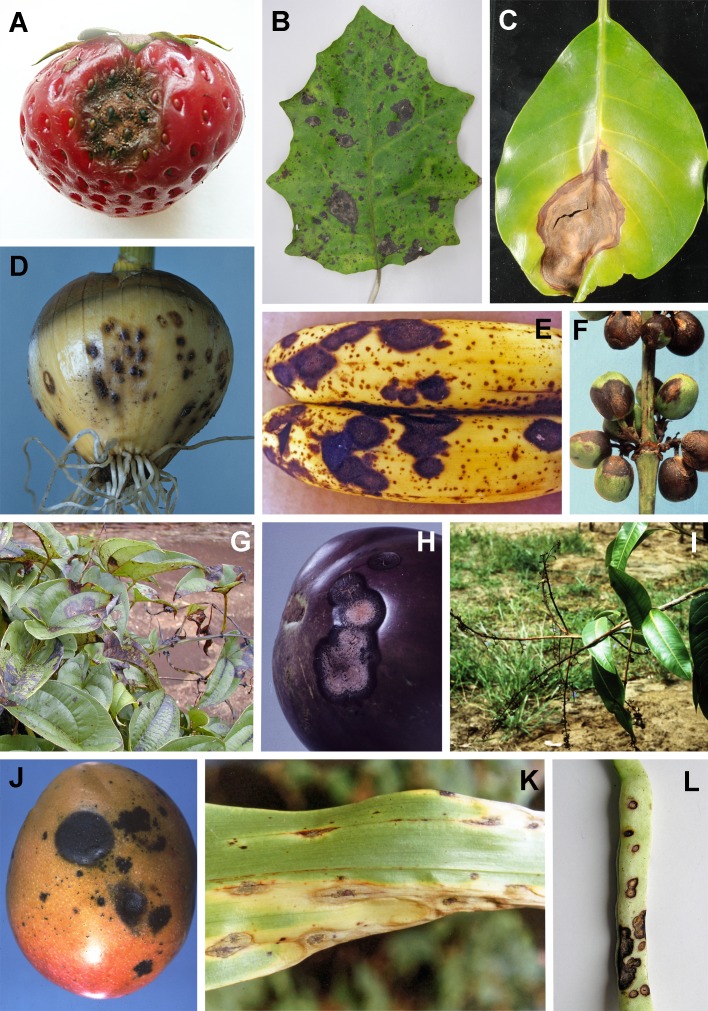
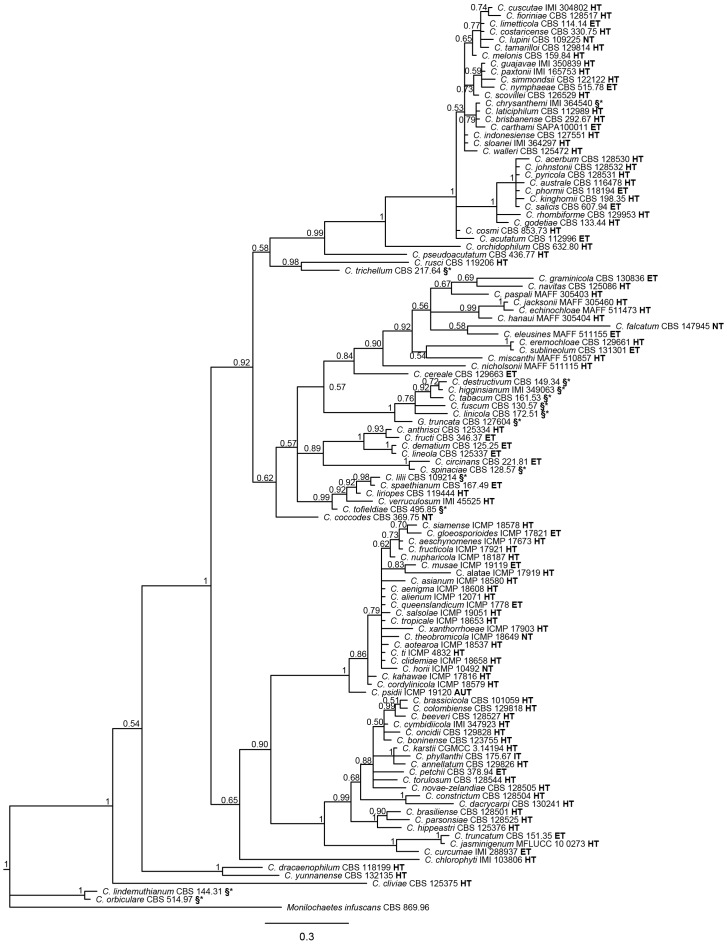
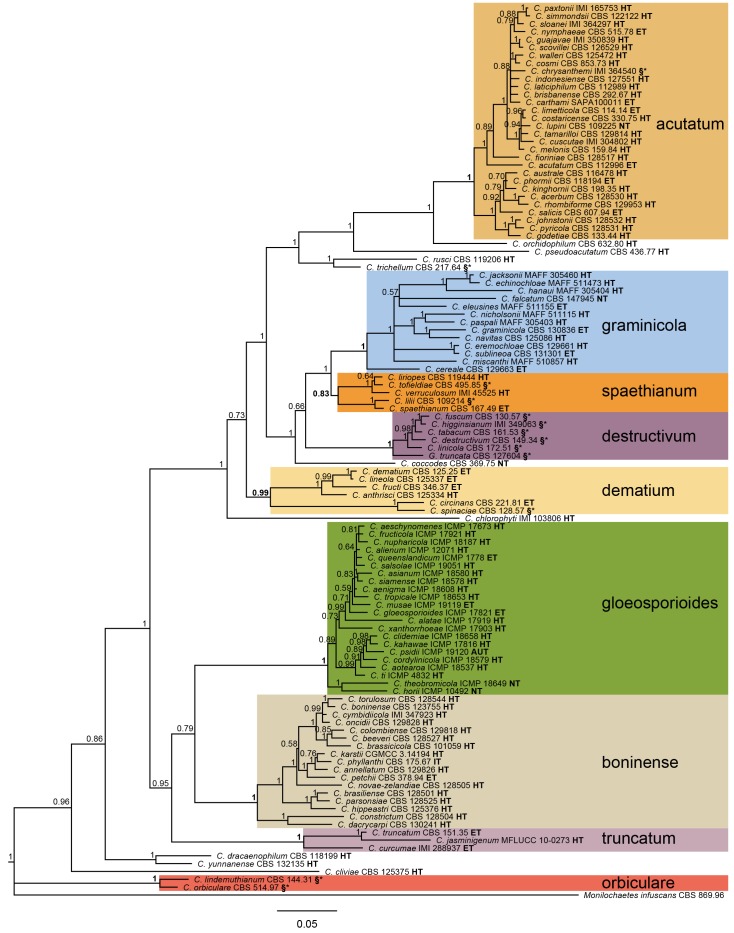
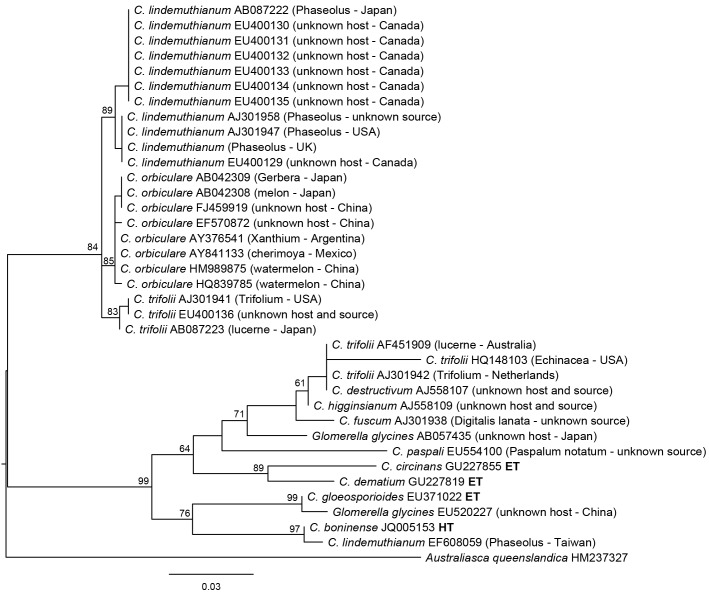
Verification
Claims the paper makes
The claims and statistics of this paper haven’t been checked yet.
Free: it reads the open-access text and checks the first 5 claims that cite a source we can check. Create a free account to check every claim.
Claims other papers make about this one
Each is checked against this paper’s own text: does it say what the citing paper says it does?
The source backs part of the claim, not all of it — or backs it for a different population, condition or comparison.
In the citing paper
“Lifestyle patterns in Colletotrichum can be broadly categorised as endophytic, hemibiotrophic, necrotrophic, latent or quiescent (Perfect et al. 1999, Peres et al. 2005, Cannon et al. 2012, Barimani et al. 2013, de Silva et al. 2017).”
From Colletotrichum: lifestyles, biology, morpho-species, species complexes and accepted species (2021) · cites this paper as Cannon et al. 2012
Experimental — accuracy not yet measuredThe source backs part of the claim, not all of it — or backs it for a different population, condition or comparison.
In the citing paper
“Currently, species delimitation in Colletotrichum relies solely on the use of multi locus phylogenetic analyses (Cannon et al. 2012, Hyde et al. 2014, Jayawardena et al. 2020).”
From Colletotrichum: lifestyles, biology, morpho-species, species complexes and accepted species (2021) · cites this paper as Cannon et al. 2012
Experimental — accuracy not yet measuredThe source backs part of the claim, not all of it — or backs it for a different population, condition or comparison.
In the citing paper
“Species of Colletotrichum have asexual and sexual morphs in their life cycle, which occur on the host plant or plant debris (Sutton 1992, Cannon et al. 2012, Jayawardena et al. 2016a).”
From Colletotrichum: lifestyles, biology, morpho-species, species complexes and accepted species (2021) · cites this paper as Cannon et al. 2012
Experimental — accuracy not yet measuredThe source backs part of the claim, not all of it — or backs it for a different population, condition or comparison.
In the citing paper
“This complex can be distinguished by their curved conidia with truncate base and acute, more strongly curved apex (Damm et al. 2009, Cannon et al. 2012, Jayawardena et al. 2016a).”
From Colletotrichum: lifestyles, biology, morpho-species, species complexes and accepted species (2021) · cites this paper as Cannon et al. 2012
Experimental — accuracy not yet measuredThe source backs part of the claim, not all of it — or backs it for a different population, condition or comparison.
In the citing paper
“From work in the intergenic regions of apn2 and MAT1-2-1 (ApMat) genes, 22 phenotypes (Supplementary Table S1) have been identified (Cannon et al., 2012), and four distinct phylogenies (C. fructicola, C. frgariae sensu stricto, C. melanocaulon and C. jasmine-sambac) within the complex described (Doyle et al., 2013).”
From Mango anthracnose disease: the current situation and direction for future research (2023) · cites this paper as Cannon et al., 2012
Experimental — accuracy not yet measured
12 more claims about this paper
Create a free account to see every claim other papers make about this one.
Self-check
Percentages, sums and reported differences re-computed from the paper’s own numbers.
The self-check needs the paper’s full text.
Citations
Cites
Schoch, C. L., Seifert, K. A., Huhndorf, S., Robert, V., Spouge, J. L., Levesque, C. A., Chen, W., Fungal Barcoding Consortium, Fungal Barcoding Consortium Author List, Bolchacova, E., et al. (2012) · Proceedings of the National Academy of Sciences · doi:10.1073/pnas.1117018109 · Cited by 5,120 · cited 1×
“This is of some concern, as the ITS region is widely used for species definition in the Fungi ( e.g. Begerow et al. 2010, Druzhinina et al. 2005, Eberhardt 2010, Kelly et al. 2011), and has recently been proposed as a universal barcode sequence (Schoch et al. 2011, 2012).”
BackgroundSelf-citationThe Top 10 fungal pathogens in molecular plant pathology
DEAN, R., VAN KAN, J. A. L., PRETORIUS, Z. A., HAMMOND‐KOSACK, K. E., DI PIETRO, A., SPANU, P. D., RUDD, J. J., DICKMAN, M., KAHMANN, R., ELLIS, J., et al. (2012) · Molecular Plant Pathology · doi:10.1111/j.1364-3703.2011.00783.x · Cited by 4,692 · cited 1×
“The genus was recently voted the eighth most important group of plant pathogenic fungi in the world, based on perceived scientific and economic importance (Dean et al .”
BackgroundReconstructing the early evolution of Fungi using a six-gene phylogeny
James, T. Y., Kauff, F., Schoch, C. L., Matheny, P. B., Hofstetter, V., Cox, C. J., Celio, G., Gueidan, C., Fraker, E., Miadlikowska, J., et al. (2006) · Nature · doi:10.1038/nature05110 · Cited by 1,815 · cited 1×
“Several widely used markers, including TUB2 and TEF1, were not included within their list of best-performing genes, and are probably unsuitable as universal fungal markers due to the presence of paralogs (James et al. 2006, Walker et al .”
MethodThe Colletotrichum gloeosporioides species complex
Weir, B. S., Johnston, P. R., & Damm, U. (2012) · Studies in Mycology · doi:10.3114/sim0011 · Cited by 1,646 · cited 8×
“2011, Weir et al .”
BackgroundInfluentialSelf-citationKõljalg, U., Larsson, K., Abarenkov, K., Nilsson, R. H., Alexander, I. J., Eberhardt, U., Erland, S., Høiland, K., Kjøller, R., Larsson, E., et al. (2005) · New Phytologist · doi:10.1111/j.1469-8137.2005.01376.x · Cited by 1,173 · cited 1×
“There is also evidence that ITS sequences alone can constitute useful barcode markers for some groups of the Basidiomycota ( e.g. Kõljalg et al .”
BackgroundAinsworth & Bisby'sdictionary of the fungi.
Ainsworth. (1961) · Cited by 1,145
The Coelomycetes. Fungi imperfecti with pycnidia, acervuli and stromata.
Sutton, B. C. (1980) · Commonwealth Mycological Institute eBooks · Cited by 1,080
O'Connell, R. J., Thon, M. R., Hacquard, S., Amyotte, S. G., Kleemann, J., Torres, M. F., Damm, U., Buiate, E. A., Epstein, L., Alkan, N., et al. (2012) · Nature Genetics · doi:10.1038/ng.2372 · Cited by 1,047 · cited 10×
“2012), but the strains studied (from lentil ( Lens culinaris ) in Canada) belong to the destructivum rather than the truncatum clade (Damm et al. 2009; O’Connell et al. 2012; Figs 2, 3).”
BackgroundInfluentialSelf-citationDIVERSITY AND HOST RANGE OF FOLIAR FUNGAL ENDOPHYTES: ARE TROPICAL LEAVES BIODIVERSITY HOTSPOTS?
Arnold, A. E., & Lutzoni, F. (2007) · Ecology · doi:10.1890/05-1459 · Cited by 1,033 · cited 1×
“(2004) and Arnold & Lutzoni (2007) that the commonest tropical endophytes appear to be host generalists.”
BackgroundFUSARIUM-ID v. 1.0: A DNA Sequence Database for Identifying Fusarium
Geiser, D. M., del Mar Jiménez-Gasco, M., Kang, S., Makalowska, I., Veeraraghavan, N., Ward, T. J., Zhang, N., Kuldau, G. A., & O'donnell, K. (2004) · European Journal of Plant Pathology · doi:10.1023/b:ejpp.0000032386.75915.a0 · Cited by 1,030 · cited 1×
“…for diagnostic purposes in the Fungi , especially beta-tubulin (TUB2) and calmodulin ( e.g. for Aspergillus and Penicillium ; Samson et al. 2007, Peterson 2008, Houbraken et al. 2011), TEF1 (for Fusarium ; Geiser et al. 2004, O’Donnell et al. 2009) and COX1 (for Penicillium ; Seifert et al. 2007).”
Background
Research works printed but not linked: 29
- Agrios GN (2005). Plant Pathology. 5th edn Academic Press, New York
- Arx JA von (1957a). Revision der zu Gloeosporium gestellten Pilze. Verhandligen des Koninklijke Nederlandse Akadademie van Wetenschappen, Afd. Natuurkunde, 2, 51(3): 153 pp
- Arx JA von (1957b). Die Arten der Gattung Colletotrichum Cda. Phytopathologische Zeitschrift 29: 413– 468
- Barrus MF (1918). Varietal susceptability of beans to strains of Colletotrichum lindemuthianum (Sacc. & Magn.) B. & C. Phytopathology 8: 589– 605
- Berlese AN (1893). Icones Fungorum Omnium hucusque Cognitorum. Pergola, Avellino vol. 1: 91– 118
- Chadefaud M (1960). Les Végétaux non Vasculaires. Cryptogamie. In: Traité de Botanique Systématique (Chadefaud M Emberger L, eds). Masson, Paris vol. 1: 1018 pp
- Corda ACI (1831). Die Pilze Deutschlands. In: Deutschlands Flora in Abbildungen nach der Natur mit Beschreibungen (Sturm J, ed.). Sturm, Nürnberg vol. 3, Abt. 12: 33– 64, tab. 21–32
- Corda ACI (1837). Icones Fungorum hucusque cognitorum vol. 1 Calve, Prague
- Corda ACI (1840). Icones Fungorum hucusque cognitorum vol. 4 Calve, Prague
- Edgerton CW (1912). Plus and minus strains in an ascomycete. Science 35: 151
- Hennings P (1898). Die in den Gewächshäusern des Berliner Botanischen Gartens beobachteten Pilze. Verhandlungen des Botanischen Vereins der Provinz Brandenburg 40: 109– 177
- Hyde KD Cai L McKenzie EHC Yang YL Zhang JZ (2009b). Colletotrichum: a catalogue of confusion. Fungal Diversity 39: 1– 17
- Krüger F (1913). Beiträge zur Kenntnis einiger Gloeosporien. Arbeiten aus der Kaiserlichen Biologischen Anstalt für Land- und Forstwirtschaft. 9: 233– 323
- Leahy R Schubert T Strandberg J Stamps B Norman D (1995). Anthracnose of leatherleaf fern. Plant Pathology Circular 372: 4 pp
- Lehman SG Wolf FA (1926). Soybean anthracnose. Journal of Agricultural Research Washington 33: 381– 390
- Montagne C (1849). Sixième centurie des plantes cellulaires nouvelles tant indigènes qu’exotiques. Annales des Sciences Naturelles. Botanique Série 3, 12: 285– 320
- Palarpawar MY Ghurde VR (1988). Some new hosts of Colletotrichum curcumae. Indian Journal of Mycology and Plant Pathology 18: 220– 221
- Petrak F (1924). Über die phylogenetischen Beziehungen der Gattung Phyllachora und ihre Bedeutung für das System der dothidealean Pilze. Annales Mycologici 22: 1– 10
- Phuong THN Pettersson OV Olsson P Nguyen PTH (2010). Identification of Colletotrichum species associated with anthracnose disease of coffee in Vietnam. European Journal of Plant Pathology 127: 73– 87 · DOI
- Prihastuti H Cai L Chen H McKenzie EHC Hyde KD (2009). Characterization of Colletotrichum species associated with coffee berries in northern Thailand. Fungal Diversity 39: 89– 109
- Prusky D Freeman S Dickman MB (eds) (2000). Colletotrichum. Host Specificity, Pathology and Host-Pathogen Interaction. APS Press, St Paul, USA
- Ramos AP Merali Z Talhinhas P Sreenivasaprasad S Oliveira H (2006). Molecular and morphological characterisation of Colletotrichum species involved in citrus anthracnose in Portugal. Bulletin OILB/SROP 29: 317– 326
- Schoch C Seifert K Crous P (2011). Progress on DNA barcoding of Fungi. IMA Fungus 2: (5).
- Shivas RG Tan YP (2009). A taxonomic reassessment of Colletotrichum acututum, introducing C. fioriniae comb. et stat. nov. and C. simmondsii sp. nov. Fungal Diversity 39: 111– 122
- Sydow H (1928). Fungi Chilenses a cl. E. Werdermann lecti. Pars prima. Annales Mycologici 26: 100– 126
- Theissen F Sydow H (1915). Die Dothideales. Kritische-systematische Originaluntersuchungen. Annales Mycologici 13: 147– 746
- Vaillancourt L Wang J Hanau R (2000). Genetic regulation of sexual compatibility in Glomerella graminicola. In: Colletotrichum. Host Specificity, Pathology and Host-Pathogen Interaction (Prusky D Freeman S Dickman MB, eds). APS Press, St Paul, USA: 29– 44
- Wheeler HE (1954). Genetics and evolution of heterothallism in Glomerella. Phytopathology 44: 342– 345
- Yang YL Liu ZY Cai L Hyde KD Zu ZN McKenzie EHC (2009). Colletotrichum anthracnose of Amaryllidaceae. Fungal Diversity 39: 123– 146
Cited by
Items 401–500 of 1,002
Mahmodi, F., Kadir, J., & Puteh, A. (2013) · Journal of Phytopathology · doi:10.1111/jph.12213 · Cited by 21
Arzanlou, M., Bakhshi, M., Karimi, K., & Torbati, M. (2015) · Journal of Plant Protection Research · doi:10.1515/jppr-2015-0027 · Cited by 21
“Since the description of the genus, taxonomy of Colletotrichum has been clouded in controversy (Cannon et al. 2012; Damm et al. 2010, 2012; Weir et al. 2012).”
BackgroundInfluentialJayawardena, R. S. (2016) · Mycosphere · doi:10.5943/mycosphere/si/2c/7 · Cited by 25
“are widely known as pathogens of economical crops worldwide (Cannon et al. 2012).”
BackgroundInfluentialLentil anthracnose: epidemiology, fungicide decision support system, resistance and pathogen races
Buchwaldt, L., Dzananovic, E., & Durkin, J. (2018) · Canadian Journal of Plant Pathology · doi:10.1080/07060661.2018.1441185 · Cited by 18
“…related to race structure It is well known that Colletotrichum and many other fungal species can be differentiated at the genomic level by polymorphisms in certain genes as well as the intergenic spacer (IGS) and internal transcribed spacer (ITS) regions of ribosomal DNA (Cannon et al., 2012).”
BackgroundInfluentialDiversity of pathogenic and endophytic Colletotrichum isolates from Licania tomentosa in Brazil
Lisboa, D. O., Silva, M. A., Pinho, D. B., Pereira, O. L., & Furtado, G. Q. (2018) · Forest Pathology · doi:10.1111/efp.12448 · Cited by 20
Microsatellite mining in the genus Colletotrichum
Bhat, N. N., Mahiya-Farooq, Padder, B. A., Shah, M. D., Dar, M. S., Nabi, A., Banoo, A., Rasool, R. S., & Sana-Surma (2018) · Gene Reports · doi:10.1016/j.genrep.2018.09.001 · Cited by 18
Guo, J. K., Zhu, J. Z., Zhou, X. Y., Zhong, J., Li, C. H., Zhang, Z. G., & Zhu, H. J. (2019) · Archives of Virology · doi:10.1007/s00705-019-04346-2 · Cited by 18
Zhang, W., Damm, U., Crous, P. W., Groenewald, J. Z., Niu, X., Lin, J., & Li, Y. (2020) · Plant Disease · doi:10.1094/pdis-10-19-2183-re · Cited by 20
Self-citationOliveira, M. S., Wang, N., & Peres, N. A. (2021) · Phytopathology · doi:10.1094/phyto-04-20-0151-r · Cited by 19
Zhang, R., Isozumi, N., Mori, M., Okuta, R., Singkaravanit‐Ogawa, S., Imamura, T., Kurita, J.-I., Gan, P., Shirasu, K., Ohki, S., et al. (2021) · Journal of Biological Chemistry · doi:10.1016/j.jbc.2021.101370 · Cited by 19
Yang, J., Duan, K., Liu, Y., Song, L., & Gao, Q. (2022) · Journal of Phytopathology · doi:10.1111/jph.13082 · Cited by 19
Fu, T., Shin, J., Lee, N.-H., Lee, K. H., & Kim, K. S. (2022) · Frontiers in Microbiology · doi:10.3389/fmicb.2022.770119 · Cited by 21
Wang, J., Xie, X., Li, B., Yang, L., Song, F., Zhou, Y., & Jiang, M. (2025) · Microbiology Spectrum · doi:10.1128/spectrum.02685-24 · Cited by 24
“Besides mangoes, C. gloesporioides can also infect a variety of fruits, such as bananas, longan, apples, papayas, and citrus (4, 5).”
Assessing Rate-Reducing Foliar Resistance to Anthracnose Crown Rot and Fruit Rot in Strawberry
Jacobs, R. L., Adhikari, T. B., Pattison, J. A., Yencho, G. C., Fernandez, G. E., & Louws, F. J. (2019) · Plant Disease · doi:10.1094/pdis-04-19-0687-re · Cited by 19
Mu, T., Zhang, Z., Liu, R., Liu, S., Li, Z., Zhang, X.-G., & Xia, J.-W. (2021) · MycoKeys · doi:10.3897/mycokeys.85.75944 · Cited by 22
“gloeosporioides species complex and related concepts of species (Cannon et al. 2012; Damm et al. 2012; Weir et al. 2012).”
BackgroundGenomic analysis of Colletotrichum camelliae responsible for tea brown blight disease
Kong, L., Chen, J., Dong, K., Shafik, K., & Xu, W. (2023) · BMC Genomics · doi:10.1186/s12864-023-09598-6 · Cited by 17
“The genus Colletotrichum (Family Glomerellaceae, Asco-mycota) has significant and varied groups, such as sap-rophytes and endophytes in addition to plant pathogens that infect a range of plant hosts [1–4].”
BackgroundHu, Y., GY, G. W., Wen, J., Chang, L., Chen, Y., Wang, Y., & Nizamani, M. M. (2024) · Current Research in Environmental & Applied Mycology · doi:10.5943/cream/14/1/1 · Cited by 17
“…(Ding et al. 2017, Marsberg et al. 2017) Can exist as an endophyte in numerous plant species (Smith et al. 1996, Xiao et Known for causing anthracnose diseases in many plant species (Cannon et al. 2012) Can exist as endophytes, particularly in medicinal plants (Rai et al. 2014) Diaporthe spp.”
BackgroundChowdappa, P., Chethana, C. S., Pant, R. P., & Bridge, P. D. (2014) · Journal of Plant Pathology · doi:10.4454/jpp.v96i2.045 · Cited by 23
“Recent multilocus phylogenetic studies (Cannon et al., 2012; Damm et al., 2012; Weir et al., 2012) have transformed the taxonomic status of Colletotrichum species.”
BackgroundWang, W., Liang, X., Zhang, R., Gleason, M. L., & Sun, G. (2017) · Australasian Plant Pathology · doi:10.1007/s13313-017-0490-3 · Cited by 17
“Colletotrichum spp. include many phytopathogens that cause diseases on a wide range of fruits, vegetables, and ornamental plants in temperate, tropical, and subtropical areas (Cannon et al. 2012; Lenné 2002).”
Colletotrichum atractylodicola sp. nov.: the anthracnose pathogen of Atractylodes chinensis in China
Xu, H., Zhou, R., Fu, J., Yuan, Y., Ge, X., & Damm, U. (2017) · Mycological Progress · doi:10.1007/s11557-017-1359-0 · Cited by 19
“The genus is relevant worldwide and its species cause disease symptoms commonly known as anthracnose on a wide range of important crops, fruits, and ornamental and medical plants (Cannon et al. 2012).”
BackgroundSelf-citationGiacomin, R. M., Ruas, C. D. F., Baba, V. Y., de Godoy, S. M., Sudré, C. P., Bento, C. D. S., Cunha, M. D., Geronimo, I. G. D. C., Rodrigues, R., & Gonçalves, L. S. A. (2021) · PeerJ · doi:10.7717/peerj.10782 · Cited by 21
“Several studies have used an association of phenotypic traits with the application of a multilocus phylogenetic analysis (Sharma et al., 2005; Cai et al., 2009; Hyde et al., 2009; Cannon et al., 2012; Noireung et al., 2012; Weir, Johnston & Damm, 2012; Marin-Felix et al., 2017; Mongkolporn & Taylor, 2018).”
Grano-Maldonado, M. I., Ramos‐Payán, R., Rivera-Chaparro, F., Aguilar‐Medina, M., Romero-Quintana, J. G., Rodríguez-Santiago, M. A., & Nieves-Soto, M. (2021) · The Plant Pathology Journal · doi:10.5423/ppj.oa.03.2021.0048 · Cited by 17
“Anthracnose is caused by Colletotrichum Corda, 1831 and Fusarium sp., among the most common and important genera of plant pathogenic fungi (Cai et al., 2009; Cannon et al., 2012; Weir et al., 2012).”
BackgroundMeans, motive and opportunity for biological invasions: Genetic introgression in a fungal pathogen
Rogério, F., van Oosterhout, C., Ciampi‐Guillardi, M., Correr, F. H., Hosaka, G. K., Cros‐Arteil, S., Margarido, G. R. A., Júnior, N. S. M., & Gladieux, P. (2022) · Molecular Ecology · doi:10.1111/mec.16366 · Cited by 19
Yang, C., Wu, P., Cao, Y., Yang, B., Liu, L., Chen, J., Zhuo, R., & Yao, X. (2022) · Frontiers in Plant Science · doi:10.3389/fpls.2022.1038467 · Cited by 18
“As a plant pathogen, it can cause a variety of woody and herbaceous plant diseases (Cannon et al., 2007; Liu et al., 2022a).”
BackgroundSquissato, V., Yücel, Y. H., Richardson, S. E., Alkhotani, A., Wong, D. T., Nijhawan, N., & Chan, C. C. (2015) · Medical Mycology Case Reports · doi:10.1016/j.mmcr.2015.06.001 · Cited by 17
“sequenced, increases the reliability of distinguishing individual species in this genus [9].”
BackgroundGonçalves, A. E., Velho, A. C., & Stadnik, M. J. (2016) · European Journal of Plant Pathology · doi:10.1007/s10658-016-0934-6 · Cited by 17
“Colletotrichum is one of the most important plant pathogenic genera of fungus infecting fruits and leaves of a broad range of hosts, mainly in the tropics and subtropics (Cannon et al. 2012).”
BackgroundNotes, outline, systematics and phylogeny of hyaline-spored hyphomycetes
Lin, C., Hyde, K. D., Feng, Y., Xiao, Y.-P., Liu, N.-G., Lu, Y.-Z., Luo, Z.-L., & Liu, J.-K. (2025) · Fungal Diversity · doi:10.1007/s13225-025-00561-2 · Cited by 20
First Report of Anthracnose on Arctium lappa Caused by Colletotrichum orchidearum in China
Xu, H. J., Zhou, R., Fu, J. F., Zhao, J., & Liu, L. (2015) · Plant Disease · doi:10.1094/pdis-08-15-0945-pdn · Cited by 16
Diversity of Pathogenic Fungi in Agricultural Crops
MAHADEVAKUMAR, S., & Sridhar, K. R. (2021) · Rhizosphere biology · doi:10.1007/978-981-16-3364-5_6 · Cited by 19
Genomic Designing for Breeding Biotic Stress Resistant Pepper Crop
Islam, K., Kumar, N., Yadava, S. K., Momo, J., & Ramchiary, N. (2022) · Springer eBooks · doi:10.1007/978-3-030-97785-6_3 · Cited by 17
Comparative genomics provides new insights into the evolution of Colletotrichum
Chen, Y., Wu, T., Tian, W., Ilyukhin, E., Hyde, K., & Maharachchikumbura, S. S. N. (2023) · Mycosphere · doi:10.5943/mycosphere/si/1f/5 · Cited by 24
“The ITS and multi-locus phylogenies indicated that the genus could be subclassified into many clades, and these clades were assigned a formal nomenclature system termed a “complex” (also called “aggregate”) by Cannon et al. (2012).”
BackgroundArmand, A., & Jayawardena, R. S. (2023) · Plant Pathology · doi:10.1111/ppa.13792 · Cited by 16
Li, H., Liao, Y.-C.-Z., Wan, Y., Li, D., & Zhu, L. (2023) · Journal of Fungi · doi:10.3390/jof9090882 · Cited by 16
Thao, L. D., Choi, H., Choi, Y., Mageswari, A., Lee, D., Kim, D.-H., Shin, H., Choi, H.-W., Ju, H.-J., & Hong, S. (2024) · The Plant Pathology Journal · doi:10.5423/ppj.oa.09.2023.0133 · Cited by 17
Putra, I. P., Rahayu, G., & Hidayat, I. (2015) · HAYATI Journal of Biosciences · doi:10.4308/hjb.22.4.157 · Cited by 16
The genera Colletotrichum : an incitant of numerous new plant diseases in India
Gautam, A. K. (2014) · Cited by 16
Keratitis by a rare pathogen Colletotrichum gloeosporioides: A case report
Pote, S. T., Chakraborty, A., Lahiri, K., Patole, M. S., Deshmukh, R. A., & Shah, S. R. (2017) · Journal de Mycologie Médicale · doi:10.1016/j.mycmed.2017.04.009 · Cited by 16
Multi-approach analysis of the diversity in Colletotrichum cliviae sensu lato
Douanla‐Meli, C., Unger, J.-G., & Langer, E. J. (2017) · Antonie van Leeuwenhoek · doi:10.1007/s10482-017-0965-9 · Cited by 25
“Concerning C. orchidearum, phylogenetic characterization is lacking due to the unavailability of reference living culture and sequences (Cannon et al. 2008, 2012).”
BackgroundEfficacy of citronella essential oil for the management of chilli anthracnose
Cueva, F. M. D., & Balendres, M. A. (2018) · European Journal of Plant Pathology · doi:10.1007/s10658-018-1491-y · Cited by 17
“Anthracnose is a devastating disease of various crops worldwide (Cannon et al. 2012).”
BackgroundGuginski-Piva, C. A., Bogo, A., Gomes, B. R., Menon, J. K., Nodari, R. O., & Welter, L. J. (2018) · Journal of Plant Diseases and Protection · doi:10.1007/s41348-018-0176-2 · Cited by 18
Genetic Diversity of Fungi Producing Mycotoxins in Stored Crops
Eltariki, F. E. M., Tiwari, K., Ariffin, I. A., & Alhoot, M. A. (2018) · Journal of Pure and Applied Microbiology · doi:10.22207/jpam.12.4.15 · Cited by 16
Machenahalli, S., Jingade, P., Ranjini, A. P., Giri, M. S., Huded, A. K. C., Sudha, M., Daivasikamani, S., & Mishra, M. K. (2021) · Physiological and Molecular Plant Pathology · doi:10.1016/j.pmpp.2021.101600 · Cited by 17
Li, C., Sun, W., Cao, S., Hou, R., Li, X., Ming, L., Kan, J., Zhao, Y., & Liu, F. (2022) · Journal of Fungi · doi:10.3390/jof8010077 · Cited by 18
“The occurrence of disease begins with spores landing on plant surfaces and germinating to form germ tubes and appressorium, followed by turgor-driven penetration of the cuticle and invasive growth in plant tissue [10].”
BackgroundAmaral, A. D. O., Ferreira, A. F. T. A. F. E., & Bentes, J. L. D. S. (2022) · Brazilian Journal of Microbiology · doi:10.1007/s42770-022-00709-1 · Cited by 16
Identifikasi Colletotrichum spp. Asal Tanaman Pepaya
Rangkuti, E. E., Wiyono, S., & Widodo, W. (2018) · Jurnal Fitopatologi Indonesia/Jurnal Fitopatologi · doi:10.14692/jfi.13.5.175 · Cited by 21
Antimicrobial Activity of Fungal Endophytes from Vaccinium dunalianum var. urophyllum
Tong, X., Shen, X., & Hou, C. (2018) · Sains Malaysiana · doi:10.17576/jsm-2018-4708-07 · Cited by 16
“The species from Colletotrichum play important roles in plant diseases, which are generally regarded as anthracnoses and appear worldwide (Cannon et al. 2012; Hyde et al. 2009).”
BackgroundLiang, X., Peng, Y., Zou, L., Wang, M., Yang, Y., & Zhang, Y. (2020) · European Journal of Plant Pathology · doi:10.1007/s10658-020-02130-6 · Cited by 17
Toporek, S. M., & Keinath, A. P. (2020) · Plant Disease · doi:10.1094/pdis-08-20-1656-pdn · Cited by 16
Caracterização de isolados de Colletotrichum spp. associados às frutíferas no Estado de São Paulo
Júnior, H. J. T., Firmino, A. C., Fischer, I. H., Furtado, E. L., & Júnior, N. S. M. (2015) · Summa Phytopathologica · doi:10.1590/0100-5405/2021 · Cited by 16
The dark side of avocados: a review of anthracnose and stem-end rot in postharvest fruit
Bernal, V. V., Boeckman, N. J., Aćimović, S. G., & Khodadadi, F. (2025) · Frontiers in Microbiology · doi:10.3389/fmicb.2025.1644061 · Cited by 18
“The genus Colletotrichum includes over 250 species grouped into 15 species complexes (Talhinhas and Baroncelli, 2021), distinguished by molecular sequence analyses and morphological aspects (Cannon et al., 2012; Damm et al., 2010, 2012a, 2012b, 2013, 2019).”
Abbas, A. M., Novak, S. J., Fictor, M., Mostafa, Y. S., Alamri, S., Alrumman, S. A., Taher, M. A., Hashem, M., & Khalaphallah, R. (2022) · Agriculture · doi:10.3390/agriculture12081152 · Cited by 17
Neto, J. A. D. S., Ambrósio, M. M. D. Q., Araújo, M. B. M., da Silva, R. M., PINTO, P. S. L., & Holanda, I. S. A. (2022) · Revista Caatinga · doi:10.1590/1983-21252022v35n302rc · Cited by 18
Beyond observation: genomic traits and machine learning algorithms for predicting fungal lifestyles
Chen, Y., Su, P., Stadler, M., Xiang, R., Hyde, K., Tian, W., & Maharachchikumbura, S. S. N. (2023) · Mycosphere · doi:10.5943/mycosphere/14/1/17 · Cited by 15
“Cannon et al. (2012) and Liu et al. (2022) demonstrated that endophytic fungi can switch to a pathogenic lifestyle and cause disease symptoms.”
BackgroundHu, S., Zhang, S., Xiao, W., Liu, Y., Yu, H. J., & Zhang, C. (2023) · Agronomy · doi:10.3390/agronomy13112824 · Cited by 19
Soares, W. R. D. O., Vieira, W. A. D. S., Reis, A., Miller, R. G., dos Santos, M. D. D. M., Costa, É. D. C., Câmara, M. P. S., & Café‐Filho, A. C. (2024) · Plant Pathology · doi:10.1111/ppa.13879 · Cited by 15
Seo, H.-H., Park, A. R., Lee, H.-H., Park, S., Han, Y., Hoang, Q. T. N., Choi, G. J., Kim, J., Kim, Y. S., & Kim, J. (2017) · Molecular Plant-Microbe Interactions · doi:10.1094/mpmi-11-17-0266-r · Cited by 16
Kumakura, N., Ueno, A. M., & Shirasu, K. (2018) · Molecular Plant Pathology · doi:10.1111/mpp.12766 · Cited by 17
Colletotrichum siamense : A novel leaf pathogen of Sterculia nobilis Smith detected in China
Zhang, Y., Shen, R., Mo, Y., QiQin, L., Lin, W., & Yuan, G. (2020) · Forest Pathology · doi:10.1111/efp.12575 · Cited by 16
The Many Questions about Mini Chromosomes in Colletotrichum spp.
Plaumann, P.-L., & Koch, C. (2020) · Plants · doi:10.3390/plants9050641 · Cited by 18
“To date, more than 100 Colletotrichum species have been described [40].”
BackgroundFlury, J. M., Haas, A., Brown, R. M., Das, I., Pui, Y. M., Boon-Hee, K., Scheidt, U., Iskandar, D. T., Jankowski, A., & Hertwig, S. T. (2021) · Molecular Phylogenetics and Evolution · doi:10.1016/j.ympev.2021.107210 · Cited by 23
Hsieh, D., Chuang, S.-C., Chen, C., Chao, Y., Lu, M. J., Shih, M.-C., & Mh, L. (2022) · Frontiers in Microbiology · doi:10.3389/fmicb.2022.818291 · Cited by 18
“Multi-Locus Phylogenetic Analysis The DNA sequences of five marker genes (ACT1, CHS1, GAPDH, ITS, and TUB2) were used for phylogenetic analyses (Cannon et al., 2012).”
BackgroundMethodKennedy, A. H., Schoch, C. L., Marrero, G., Brover, V. V., & Robbertse, B. (2022) · Plant Disease · doi:10.1094/pdis-09-21-2083-sr · Cited by 18
Zhu, H., & He, C. (2023) · Forests · doi:10.3390/f14051030 · Cited by 16
Zapata, M. A., Rodríguez‐Serrano, E., Castro, J. F., Santelices, C., Carrasco-Fernández, J., Damm, U., & Palfner, G. (2024) · Mycological Progress · doi:10.1007/s11557-024-01956-2 · Cited by 16
“Consequently, the research on Colletotrichum has focused mainly on commercial crops, while wild plants in natural habitats have received less attention (Cannon et al. 2012).”
Self-citationUysal, A., & Kurt, Ş. (2017) · European Journal of Plant Pathology · doi:10.1007/s10658-017-1249-y · Cited by 16
“As plant pathogens, Colletotrichum species are primarily described as causing anthracnose diseases (Cannon et al. 2012).”
BackgroundInfluentialA plant pathogen causes extensive mortality in an invasive insect herbivore
Graziosi, I., & Rieske, L. K. (2015) · Agricultural and Forest Entomology · doi:10.1111/afe.12116 · Cited by 15
“…caused by Colletotrichum graminicola (Vaillancourt & Hanau, 1992), whereas Co. acutatum, Colletotrichum gloeosporioides, Colletotrichum musae and Colletotrichum fragariae are major post-harvest diseases affecting fruits (Freeman et al., 1998; Wharton & Diéguez-Uribeondo, 2004; Cannon et al., 2012).”
BackgroundChethana, C. S., Chowdappa, P., Biju, C. N., Praveena, R., & Sujatha, A. M. (2016) · European Journal of Plant Pathology · doi:10.1007/s10658-016-0931-9 · Cited by 14
“…was epitypified by Cannon et al. (2008) and it has been possible to compare strains of Colletotrichum with that of the epitype, using multi-locus analysis (Cannon et al. 2012; Damm et al. 2012a, b; Weir et al. 2012; Doyle et al. 2013; Sharma et al. 2013; Hyde et al. 2014; Yan et al. 2014).”
BackgroundMethodInfluentialColletotrichum kakivorum sp. nov., a new leaf spot pathogen of persimmon in Korea
Lee, S.-Y., & Jung, H.-Y. (2018) · Mycological Progress · doi:10.1007/s11557-018-1424-3 · Cited by 14
He, J., Sun, M., Li, D., Zhu, L., Ye, J., & Huang, L. (2022) · Pest Management Science · doi:10.1002/ps.7260 · Cited by 16
Cytochrome b Gene-Based Assay for Monitoring the Resistance of Colletotrichum spp. to Pyraclostrobin
Isa, D. A., & Kim, H. T. (2022) · The Plant Pathology Journal · doi:10.5423/ppj.oa.06.2022.0081 · Cited by 14
“Colletotrichum species are considered as one of the major destructive fungal pathogens caus - ing anthracnose of fruits in the tropical regions (Agrios, 2005; Cannon et al., 2012; Noireung et al., 2012).”
BackgroundPlant diseases caused by fungi in the Philippines
Balendres, M. A. (2023) · Elsevier eBooks · doi:10.1016/b978-0-323-99489-7.00014-7 · Cited by 20
Diversity and Pathogenicity of Colletotrichum Species Causing Coffee Anthracnose in China
Lu, Y., Zhang, W., Hu, X., He, C., Liang, Y., Huang, X., Yi, K., & Wu, W. (2025) · Microorganisms · doi:10.3390/microorganisms13030512 · Cited by 19
“Although morphological characteristics alone are insufficient to distinguish Col-letotrichum species at the individual species level, they remain important taxonomic tools for identifying species within broader species complexes [16].”
Cueva, F. M. D., Torres, R. L. D., de Castro, A., Mendoza, J.-V. S., & Balendres, M. A. (2019) · Journal of Plant Pathology · doi:10.1007/s42161-019-00253-2 · Cited by 14
CgHog1 controls the adaptation to both sorbitol and fludioxonil in Colletotrichum gloeosporioides
Li, Y., He, P., Tian, C., & Wang, Y. (2019) · Fungal Genetics and Biology · doi:10.1016/j.fgb.2019.103289 · Cited by 15
Chen, D., Nie, X., Feng, Q., Zhang, Y., Wang, Y., Wang, Q., Huang, L., Huang, S., & Liao, S. (2021) · Angewandte Chemie · doi:10.1002/ange.202112118 · Cited by 14
First report of anthracnose caused by Colletotrichum karsti in lentil (Lablab purpureus)
Luo, M., & Jiang, Y. (2022) · Crop Protection · doi:10.1016/j.cropro.2021.105903 · Cited by 14
Characterization of Colletotrichum Isolates Causing Colletotrichum Dieback of Citrus in California
Camiletti, B. X., Lichtemberg, P. S. F., Paredes, J. A., Carraro, T. D. A., Velascos, J., & Michailides, T. J. (2022) · Phytopathology · doi:10.1094/phyto-10-21-0434-r · Cited by 15
Diversity and pathogenicity of Colletotrichum species causing anthracnose on Cunninghamia lanceolata
He, J., Li, D., Zhu, Y., Si, Y., Huang, J., Zhu, L., Ye, J., & Huang, L. (2022) · Plant Pathology · doi:10.1111/ppa.13611 · Cited by 18
Status of Phytotoxins Isolated from Necrotrophic Fungi Causing Diseases on Grain Legumes
Agudo-Jurado, F. J., Reveglia, P., Rubiales, D., Evidente, A., & Barilli, E. (2023) · International Journal of Molecular Sciences · doi:10.3390/ijms24065116 · Cited by 14
“In the stem, the first lesions appear in its base from where they progress upwards [109].”
BackgroundMAHADEVAKUMAR, S., Chandana, C. R., & Janardhana, G. R. (2018) · Crop Protection · doi:10.1016/j.cropro.2018.12.006 · Cited by 14
Liu, L., Zhang, L., Wang, Y., Zhan, H., Yang, J., Peng, L., Yang, L., He, B., Lu, B. H., Wang, Y., et al. (2020) · Crop Protection · doi:10.1016/j.cropro.2020.105265 · Cited by 16
Evidences of Colletotrichum fructicola Causing Anthracnose on Passiflora edulis Sims in China
Li, W., Ran, F., Long, Y., Mo, F., Ran, S., & Yin, X. (2021) · Pathogens · doi:10.3390/pathogens11010006 · Cited by 15
“flowers, and fruit, as well as crown and stem rots and seedling blight [14].”
BackgroundColletotrichum species (Glomerellales, Glomerellaceae) causing walnut anthracnose in China
Zhang, L., Zhao, L.-L., Chen, L., Yu, L., & Zhang, Y. (2024) · MycoKeys · doi:10.3897/mycokeys.108.127734 · Cited by 14
Mekonen, M., Tesfaye, K., Mengiste, T. D., Chala, A., Nida, H., Mekonnen, T., Abreha, K. B., & Geleta, M. (2024) · Frontiers in Microbiology · doi:10.3389/fmicb.2024.1458450 · Cited by 13
“Variation in virulence could be found within a C. sublineola population (Erpelding, 2011) in addition to the morphological variation, which could help to understand variation among isolates of the same species (Cannon et al., 2012).”
BackgroundFigtree, M. C., Weeks, K., Chan, L., Leyton, A., Bowes, A., Giuffrè, B., Sullivan, M., & Hudson, B. J. (2013) · Medical Mycology Case Reports · doi:10.1016/j.mmcr.2013.01.003 · Cited by 13
Species of Colletotrichum on bamboos from China
Wang, Q., Liu, F., Hou, C., & Cai, L. (2021) · Mycologia · doi:10.1080/00275514.2020.1837567 · Cited by 16
“Colletotrichum is one of the most important plant pathogenic genera, causing diseases in a variety of plants (Cannon et al. 2012), including dicotyledons, such as tea, citrus, chili, and pear (Liu et al. 2015; Diao et al. 2017; Guarnaccia et al. 2017; Fu et al. 2019), and monocotyledons, such as…”
BackgroundRevisiting the Colletotrichum species causing anthracnose of almond in Australia
de Silva, D. D., Mann, R. C., Kaur, J. K., Ekanayake, P. N., Sawbridge, T., McKay, S. F., Taylor, P. W. J., & Edwards, J. (2021) · Australasian Plant Pathology · doi:10.1007/s13313-020-00765-x · Cited by 14
Mangwende, E., Truter, M., Aveling, T. A. S., & Chirwa, P. W. (2021) · Australasian Plant Pathology · doi:10.1007/s13313-021-00807-y · Cited by 13
Fu, M., Bai, Q., Zhang, H., Guo, Y., YuHong, P., Zhang, P., Shen, L., Hóng, N., Xú, W., & Wang, G. (2022) · Frontiers in Plant Science · doi:10.3389/fpls.2022.761133 · Cited by 16
Suharto, A. R., Jirakkakul, J., Eusebio-Cope, A., & Salaipeth, L. (2022) · Viruses · doi:10.3390/v14091921 · Cited by 13
“Colletotrichum gloeosporioides, the causal agent of anthracnose disease, is one of the most devastating diseases around the world, infecting more than 400 varieties of fruits and vegetable crops [1,2].”
BackgroundChang, J., Zhai, F. Y., Zhang, Y., Wang, D., Shu, J., & Yao, X. (2022) · Frontiers in Plant Science · doi:10.3389/fpls.2022.1043750 · Cited by 13
“Traditional classification methods do not effectively distinguish between the relatively complex Colletotrichum species because of their relatively high levels of genetic variability (Cai et al., 2009; Hyde et al., 2009; Rojas et al., 2010; Cannon et al., 2012; Damm et al., 2012a; Damm et al., 2012b).”
Shi, M., Xue, S., Zhang, M., Li, S.-P., Huang, B., Huang, Q., Liu, Q.-B., Liao, X.-L., & Li, Y. (2022) · Pathogens · doi:10.3390/pathogens11121463 · Cited by 17
“The combination of molecular diagnostic tools, along with morphological techniques, is therefore the best approach for studying Colletotrichum species complexes [34].”
BackgroundRe-identification of Colletotrichum acutatum Species Complex in Korea and Their Host Plants
Thao, L. D., Choi, H., Choi, Y., Mageswari, A., Lee, D., & Hong, S. (2023) · The Plant Pathology Journal · doi:10.5423/ppj.oa.05.2023.0078 · Cited by 15
“…diseases and infected economically important crops such as apple, strawberry, pepper, citrus, peach, mango, avocado, banana, coffee and cereals (Cannon et al., 2012; Crouch and Beirn, 2009; González et al., 2006; Kim et al., 2008; Lenné, 2002; Nguyen et al., 2010; Oo et al., 2018; Peres et…”
Zhang, L., Yin, Y.-Q., Zhao, L.-L., Xie, Y.-Q., Han, J., & Zhang, Y. (2023) · MycoKeys · doi:10.3897/mycokeys.99.106812 · Cited by 16
“comprised important plant pathogens, while others are endophytes or saprobes (Cannon et al. 2012; Hyde et al. 2014; Jayawardena et al. 2016).”
BackgroundVasić, T., Vojinović, U. D., Žujović-Jovanović, S., Krnjaja, V. S., Živković, S., Marković, J., & Stević, M. Ž. (2019) · Journal of Environmental Science and Health Part B · doi:10.1080/03601234.2019.1653735 · Cited by 17
First report of anthracnose on Hosta ventricosa caused by Colletotrichum spaethianum in China
Sun, H., Sun, L., Hong, Y., & Liang, Y. (2020) · Crop Protection · doi:10.1016/j.cropro.2020.105104 · Cited by 13
Xue, L., Zhang, Y., Duan, T., Li, M., White, J. F., Liu, Y., & Li, C. (2020) · Plant Disease · doi:10.1094/pdis-09-19-1952-re · Cited by 15
Zhafarina, S., Wibowo, A., & Widiastuti, A. (2021) · Pakistan Journal of Biological Sciences · doi:10.3923/pjbs.2021.53.65 · Cited by 14
First Report of Anthracnose Caused by Colletotrichum gloeosporioides on Akebia trifoliata in China
Pan, H., Deng, L., Feng, D. D., Zhong, C., & Li, L. (2020) · Plant Disease · doi:10.1094/pdis-07-20-1525-pdn · Cited by 14
Ahmadpour, S. A. (2017) · Mycosphere · doi:10.5943/mycosphere/8/7/3 · Cited by 13
Metadata
- Authors
- Cannon, P. F., Damm, U., Johnston, P. R., & Weir, B. S.
- Affiliations
- Royal Botanic Gardens, Kew (GB)
- Westerdijk Fungal Biodiversity Institute (NL)
- Manaaki Whenua – Landcare Research (NZ)
- Corresponding author
- Cannon, P.F.
- Venue
- Studies in Mycology
- Published
- 2012-09
- Volume
- 73
- Issue
- 1
- Pages
- 181-213
- ISSN
- 0166-0616 (ISSN-L)
- PMC
- PMC3458418
- OpenAlex
- W2088771820
- Semantic Scholar
- 039edab571c722f3c6449b273124da3f0f2c6ac5
- Cited by
- 1,105
- References
- 293
- Citations by year
- 2026: 61 · 2025: 85 · 2024: 109 · 2023: 131 · 2022: 146 · 2021: 102 · 2020: 98 · 2019: 66 · 2018: 70 · 2017: 58 · 2016: 61 · 2015: 36 · 2014: 49 · 2013: 26 · 2012: 6
- FWCI
- 17.74
- Type
- journal article
- Language
- en
- Open access
- hybrid
- doi.org
- Licence
- cc-by-nc-nd
- www.elsevier.com/tdm/userlicense/1.0/ (tdm)
- creativecommons.org/licenses/by-nc-nd/3.0/ (vor, 633 d)
- Locations
- Studies in Mycology (publishedVersion, cc-by-nc-nd)
- Europe PMC (PubMed Central) (publishedVersion, cc-by-nc-nd)
- PubMed Central (publishedVersion, cc-by-nc-nd)
- PubMed (publishedVersion)
- KNAW research portal (Royal Academy of Art and Sciences (KNAW)) (publishedVersion)
- Data Archiving and Networked Services (DANS) (submittedVersion)
- Topics
- Life Sciences › Agricultural and Biological Sciences › Plant Science › Plant Pathogens and Fungal Diseases
- Life Sciences › Immunology and Microbiology › Microbiology › Yeasts and Rust Fungi Studies
- Life Sciences › Agricultural and Biological Sciences › Plant Science › Fungal Plant Pathogen Control
- Keywords
- Colletotrichum, fungal taxonomy, species concept, anamorph-teleomorph relationship, multilocus phylogeny, DNA barcoding, host specificity, speciation, species clusters
About these checks
Registry, retraction, Cites and statistics results are computed, not judged, with one exception: a printed reference that no index lists is read once by a model before it counts as a citation error. Claims are extracted by a model and kept only when their quote appears verbatim in the text; each cited source is then checked, with a model’s help, for whether it says what the claim relies on. Those verdicts can be wrong — read the claim’s quote and the cited source before relying on one.
Statistics and arithmetic are recomputed, not judged.
Confidence bands are shown only for fields calibrated on our annotated test set. None is calibrated yet, so no band is shown.
What counts as a claim ›How we measure confidence ›How we check this ›
Are you an author, or do you see a problem with this page? Request a review
Data sources
Bibliographic data: Semantic Scholar, OpenAlex, Crossref.
Contains information from the Semantic Scholar Academic Graph Datasets, made available under the ODC Attribution License (ODC-BY 1.0).
Semantic Scholar’s data is described in: Kinney, R., et al. (2023). The Semantic Scholar Open Data Platform. arXiv:2301.10140.
