

Colletotrichum – current status and future directions
Open accessThe DOI matches its Crossref record; 189 of the 293 references it cites were found in a registry or an index, and 99 are not checked yet.
Abstract
A review is provided of the current state of understanding of Colletotrichum systematics, focusing on species-level data and the major clades. The taxonomic placement of the genus is discussed, and the evolution of our approach to species concepts and anamorph-teleomorph relationships is described. The application of multilocus technologies to phylogenetic analysis of Colletotrichum is reviewed, and selection of potential genes/loci for barcoding purposes is discussed. Host specificity and its relation to speciation and taxonomy is briefly addressed. A short review is presented of the current status of classification of the species clusters that are currently without comprehensive multilocus analyses, emphasising the orbiculare and destructivum aggregates. The future for Colletotrichum biology will be reliant on consensus classification and robust identification tools. In support of these goals, a Subcommission on Colletotrichum has been formed under the auspices of the International Commission on Taxonomy of Fungi, which will administer a carefully curated barcode database for sequence-based identification of species within the BioloMICS web environment.
Overview
The claims and statistics of this paper haven’t been checked yet.
Free: it reads the open-access text and checks the first 5 claims that cite a source we can check. Create a free account to check every claim.
Integrity signals
Registry
Cites
Statistics
Figures
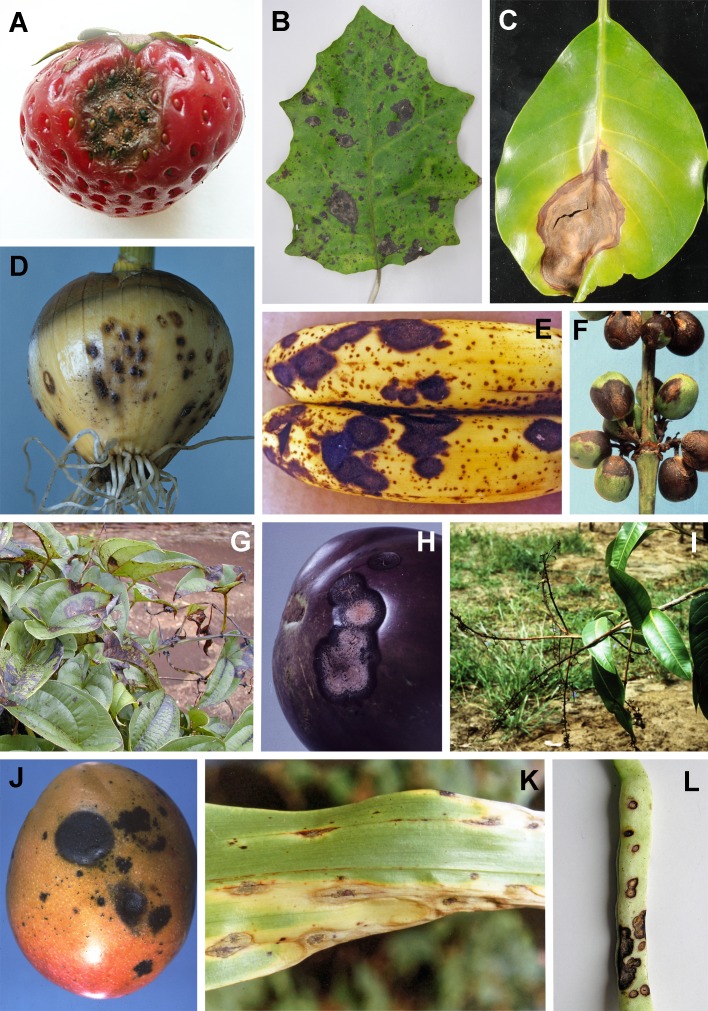
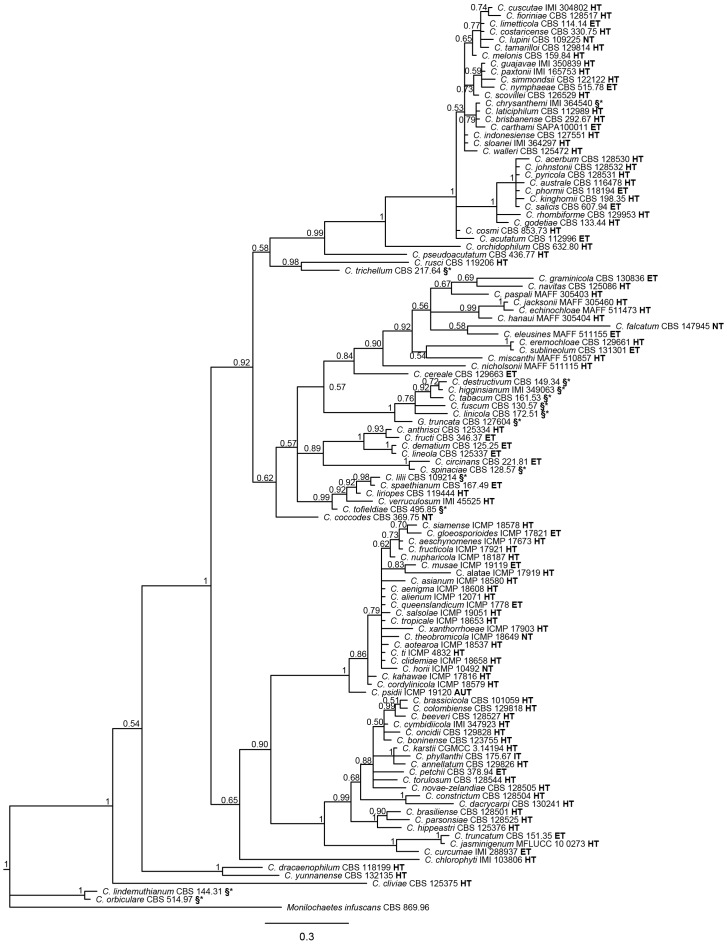
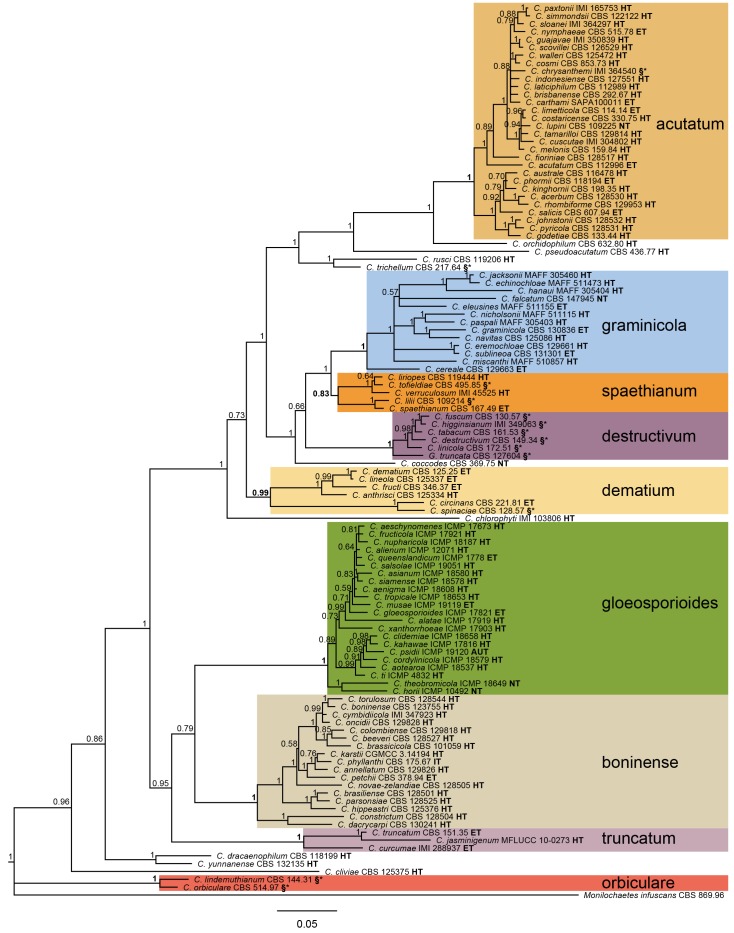
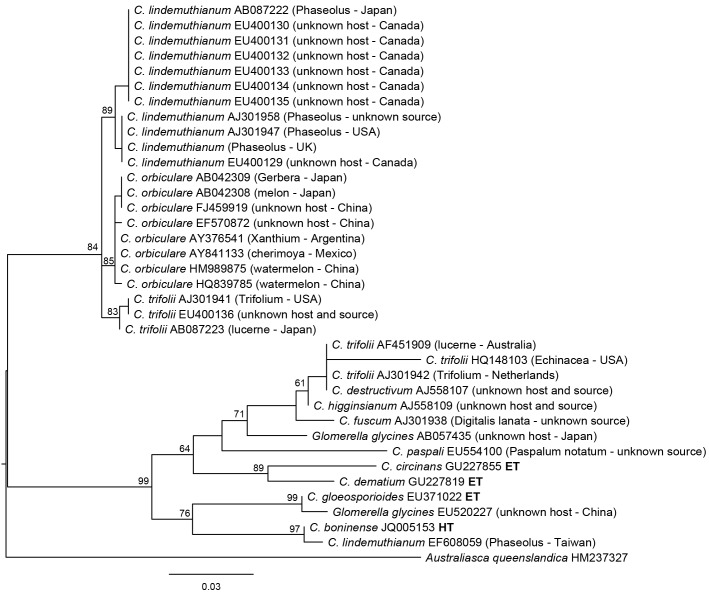
Verification
Claims the paper makes
The claims and statistics of this paper haven’t been checked yet.
Free: it reads the open-access text and checks the first 5 claims that cite a source we can check. Create a free account to check every claim.
Claims other papers make about this one
Each is checked against this paper’s own text: does it say what the citing paper says it does?
The source backs part of the claim, not all of it — or backs it for a different population, condition or comparison.
In the citing paper
“Lifestyle patterns in Colletotrichum can be broadly categorised as endophytic, hemibiotrophic, necrotrophic, latent or quiescent (Perfect et al. 1999, Peres et al. 2005, Cannon et al. 2012, Barimani et al. 2013, de Silva et al. 2017).”
From Colletotrichum: lifestyles, biology, morpho-species, species complexes and accepted species (2021) · cites this paper as Cannon et al. 2012
Experimental — accuracy not yet measuredThe source backs part of the claim, not all of it — or backs it for a different population, condition or comparison.
In the citing paper
“Currently, species delimitation in Colletotrichum relies solely on the use of multi locus phylogenetic analyses (Cannon et al. 2012, Hyde et al. 2014, Jayawardena et al. 2020).”
From Colletotrichum: lifestyles, biology, morpho-species, species complexes and accepted species (2021) · cites this paper as Cannon et al. 2012
Experimental — accuracy not yet measuredThe source backs part of the claim, not all of it — or backs it for a different population, condition or comparison.
In the citing paper
“Species of Colletotrichum have asexual and sexual morphs in their life cycle, which occur on the host plant or plant debris (Sutton 1992, Cannon et al. 2012, Jayawardena et al. 2016a).”
From Colletotrichum: lifestyles, biology, morpho-species, species complexes and accepted species (2021) · cites this paper as Cannon et al. 2012
Experimental — accuracy not yet measuredThe source backs part of the claim, not all of it — or backs it for a different population, condition or comparison.
In the citing paper
“This complex can be distinguished by their curved conidia with truncate base and acute, more strongly curved apex (Damm et al. 2009, Cannon et al. 2012, Jayawardena et al. 2016a).”
From Colletotrichum: lifestyles, biology, morpho-species, species complexes and accepted species (2021) · cites this paper as Cannon et al. 2012
Experimental — accuracy not yet measuredThe source backs part of the claim, not all of it — or backs it for a different population, condition or comparison.
In the citing paper
“From work in the intergenic regions of apn2 and MAT1-2-1 (ApMat) genes, 22 phenotypes (Supplementary Table S1) have been identified (Cannon et al., 2012), and four distinct phylogenies (C. fructicola, C. frgariae sensu stricto, C. melanocaulon and C. jasmine-sambac) within the complex described (Doyle et al., 2013).”
From Mango anthracnose disease: the current situation and direction for future research (2023) · cites this paper as Cannon et al., 2012
Experimental — accuracy not yet measured
12 more claims about this paper
Create a free account to see every claim other papers make about this one.
Self-check
Percentages, sums and reported differences re-computed from the paper’s own numbers.
The self-check needs the paper’s full text.
Citations
Cites
Schoch, C. L., Seifert, K. A., Huhndorf, S., Robert, V., Spouge, J. L., Levesque, C. A., Chen, W., Fungal Barcoding Consortium, Fungal Barcoding Consortium Author List, Bolchacova, E., et al. (2012) · Proceedings of the National Academy of Sciences · doi:10.1073/pnas.1117018109 · Cited by 5,120 · cited 1×
“This is of some concern, as the ITS region is widely used for species definition in the Fungi ( e.g. Begerow et al. 2010, Druzhinina et al. 2005, Eberhardt 2010, Kelly et al. 2011), and has recently been proposed as a universal barcode sequence (Schoch et al. 2011, 2012).”
BackgroundSelf-citationThe Top 10 fungal pathogens in molecular plant pathology
DEAN, R., VAN KAN, J. A. L., PRETORIUS, Z. A., HAMMOND‐KOSACK, K. E., DI PIETRO, A., SPANU, P. D., RUDD, J. J., DICKMAN, M., KAHMANN, R., ELLIS, J., et al. (2012) · Molecular Plant Pathology · doi:10.1111/j.1364-3703.2011.00783.x · Cited by 4,692 · cited 1×
“The genus was recently voted the eighth most important group of plant pathogenic fungi in the world, based on perceived scientific and economic importance (Dean et al .”
BackgroundReconstructing the early evolution of Fungi using a six-gene phylogeny
James, T. Y., Kauff, F., Schoch, C. L., Matheny, P. B., Hofstetter, V., Cox, C. J., Celio, G., Gueidan, C., Fraker, E., Miadlikowska, J., et al. (2006) · Nature · doi:10.1038/nature05110 · Cited by 1,815 · cited 1×
“Several widely used markers, including TUB2 and TEF1, were not included within their list of best-performing genes, and are probably unsuitable as universal fungal markers due to the presence of paralogs (James et al. 2006, Walker et al .”
MethodThe Colletotrichum gloeosporioides species complex
Weir, B. S., Johnston, P. R., & Damm, U. (2012) · Studies in Mycology · doi:10.3114/sim0011 · Cited by 1,646 · cited 8×
“2011, Weir et al .”
BackgroundInfluentialSelf-citationKõljalg, U., Larsson, K., Abarenkov, K., Nilsson, R. H., Alexander, I. J., Eberhardt, U., Erland, S., Høiland, K., Kjøller, R., Larsson, E., et al. (2005) · New Phytologist · doi:10.1111/j.1469-8137.2005.01376.x · Cited by 1,173 · cited 1×
“There is also evidence that ITS sequences alone can constitute useful barcode markers for some groups of the Basidiomycota ( e.g. Kõljalg et al .”
BackgroundAinsworth & Bisby'sdictionary of the fungi.
Ainsworth. (1961) · Cited by 1,145
The Coelomycetes. Fungi imperfecti with pycnidia, acervuli and stromata.
Sutton, B. C. (1980) · Commonwealth Mycological Institute eBooks · Cited by 1,080
O'Connell, R. J., Thon, M. R., Hacquard, S., Amyotte, S. G., Kleemann, J., Torres, M. F., Damm, U., Buiate, E. A., Epstein, L., Alkan, N., et al. (2012) · Nature Genetics · doi:10.1038/ng.2372 · Cited by 1,047 · cited 10×
“2012), but the strains studied (from lentil ( Lens culinaris ) in Canada) belong to the destructivum rather than the truncatum clade (Damm et al. 2009; O’Connell et al. 2012; Figs 2, 3).”
BackgroundInfluentialSelf-citationDIVERSITY AND HOST RANGE OF FOLIAR FUNGAL ENDOPHYTES: ARE TROPICAL LEAVES BIODIVERSITY HOTSPOTS?
Arnold, A. E., & Lutzoni, F. (2007) · Ecology · doi:10.1890/05-1459 · Cited by 1,033 · cited 1×
“(2004) and Arnold & Lutzoni (2007) that the commonest tropical endophytes appear to be host generalists.”
BackgroundFUSARIUM-ID v. 1.0: A DNA Sequence Database for Identifying Fusarium
Geiser, D. M., del Mar Jiménez-Gasco, M., Kang, S., Makalowska, I., Veeraraghavan, N., Ward, T. J., Zhang, N., Kuldau, G. A., & O'donnell, K. (2004) · European Journal of Plant Pathology · doi:10.1023/b:ejpp.0000032386.75915.a0 · Cited by 1,030 · cited 1×
“…for diagnostic purposes in the Fungi , especially beta-tubulin (TUB2) and calmodulin ( e.g. for Aspergillus and Penicillium ; Samson et al. 2007, Peterson 2008, Houbraken et al. 2011), TEF1 (for Fusarium ; Geiser et al. 2004, O’Donnell et al. 2009) and COX1 (for Penicillium ; Seifert et al. 2007).”
Background
Research works printed but not linked: 29
- Agrios GN (2005). Plant Pathology. 5th edn Academic Press, New York
- Arx JA von (1957a). Revision der zu Gloeosporium gestellten Pilze. Verhandligen des Koninklijke Nederlandse Akadademie van Wetenschappen, Afd. Natuurkunde, 2, 51(3): 153 pp
- Arx JA von (1957b). Die Arten der Gattung Colletotrichum Cda. Phytopathologische Zeitschrift 29: 413– 468
- Barrus MF (1918). Varietal susceptability of beans to strains of Colletotrichum lindemuthianum (Sacc. & Magn.) B. & C. Phytopathology 8: 589– 605
- Berlese AN (1893). Icones Fungorum Omnium hucusque Cognitorum. Pergola, Avellino vol. 1: 91– 118
- Chadefaud M (1960). Les Végétaux non Vasculaires. Cryptogamie. In: Traité de Botanique Systématique (Chadefaud M Emberger L, eds). Masson, Paris vol. 1: 1018 pp
- Corda ACI (1831). Die Pilze Deutschlands. In: Deutschlands Flora in Abbildungen nach der Natur mit Beschreibungen (Sturm J, ed.). Sturm, Nürnberg vol. 3, Abt. 12: 33– 64, tab. 21–32
- Corda ACI (1837). Icones Fungorum hucusque cognitorum vol. 1 Calve, Prague
- Corda ACI (1840). Icones Fungorum hucusque cognitorum vol. 4 Calve, Prague
- Edgerton CW (1912). Plus and minus strains in an ascomycete. Science 35: 151
- Hennings P (1898). Die in den Gewächshäusern des Berliner Botanischen Gartens beobachteten Pilze. Verhandlungen des Botanischen Vereins der Provinz Brandenburg 40: 109– 177
- Hyde KD Cai L McKenzie EHC Yang YL Zhang JZ (2009b). Colletotrichum: a catalogue of confusion. Fungal Diversity 39: 1– 17
- Krüger F (1913). Beiträge zur Kenntnis einiger Gloeosporien. Arbeiten aus der Kaiserlichen Biologischen Anstalt für Land- und Forstwirtschaft. 9: 233– 323
- Leahy R Schubert T Strandberg J Stamps B Norman D (1995). Anthracnose of leatherleaf fern. Plant Pathology Circular 372: 4 pp
- Lehman SG Wolf FA (1926). Soybean anthracnose. Journal of Agricultural Research Washington 33: 381– 390
- Montagne C (1849). Sixième centurie des plantes cellulaires nouvelles tant indigènes qu’exotiques. Annales des Sciences Naturelles. Botanique Série 3, 12: 285– 320
- Palarpawar MY Ghurde VR (1988). Some new hosts of Colletotrichum curcumae. Indian Journal of Mycology and Plant Pathology 18: 220– 221
- Petrak F (1924). Über die phylogenetischen Beziehungen der Gattung Phyllachora und ihre Bedeutung für das System der dothidealean Pilze. Annales Mycologici 22: 1– 10
- Phuong THN Pettersson OV Olsson P Nguyen PTH (2010). Identification of Colletotrichum species associated with anthracnose disease of coffee in Vietnam. European Journal of Plant Pathology 127: 73– 87 · DOI
- Prihastuti H Cai L Chen H McKenzie EHC Hyde KD (2009). Characterization of Colletotrichum species associated with coffee berries in northern Thailand. Fungal Diversity 39: 89– 109
- Prusky D Freeman S Dickman MB (eds) (2000). Colletotrichum. Host Specificity, Pathology and Host-Pathogen Interaction. APS Press, St Paul, USA
- Ramos AP Merali Z Talhinhas P Sreenivasaprasad S Oliveira H (2006). Molecular and morphological characterisation of Colletotrichum species involved in citrus anthracnose in Portugal. Bulletin OILB/SROP 29: 317– 326
- Schoch C Seifert K Crous P (2011). Progress on DNA barcoding of Fungi. IMA Fungus 2: (5).
- Shivas RG Tan YP (2009). A taxonomic reassessment of Colletotrichum acututum, introducing C. fioriniae comb. et stat. nov. and C. simmondsii sp. nov. Fungal Diversity 39: 111– 122
- Sydow H (1928). Fungi Chilenses a cl. E. Werdermann lecti. Pars prima. Annales Mycologici 26: 100– 126
- Theissen F Sydow H (1915). Die Dothideales. Kritische-systematische Originaluntersuchungen. Annales Mycologici 13: 147– 746
- Vaillancourt L Wang J Hanau R (2000). Genetic regulation of sexual compatibility in Glomerella graminicola. In: Colletotrichum. Host Specificity, Pathology and Host-Pathogen Interaction (Prusky D Freeman S Dickman MB, eds). APS Press, St Paul, USA: 29– 44
- Wheeler HE (1954). Genetics and evolution of heterothallism in Glomerella. Phytopathology 44: 342– 345
- Yang YL Liu ZY Cai L Hyde KD Zu ZN McKenzie EHC (2009). Colletotrichum anthracnose of Amaryllidaceae. Fungal Diversity 39: 123– 146
Cited by
Items 201–300 of 1,002
Scariot, F. J., Foresti, L., Delamare, A. P. L., & Echeverrigaray, A. P. L. S. (2020) · Pesticide Biochemistry and Physiology · doi:10.1016/j.pestbp.2020.104698 · Cited by 45
Colletotrichum spp. causing anthracnose on ornamental plants in northern Italy
Guarnaccia, V., Martino, I., Gilardi, G., Garibaldi, A., & Gullino, M. L. (2020) · Journal of Plant Pathology · doi:10.1007/s42161-020-00684-2 · Cited by 48
Choub, V., Maung, C. E. H., Won, S., Moon, J., Kim, K. Y., Han, Y. S., Cho, J., & Ahn, Y. S. (2021) · Pathogens · doi:10.3390/pathogens10020209 · Cited by 45
“Their spores can be dispersed through water splashing and by wind [33,34].”
BackgroundDiao, Y., Zhang, C., Xu, J., Lin, D., Liu, L., Mtung'e, O. G., & Liu, X. (2014) · Evolutionary Applications · doi:10.1111/eva.12233 · Cited by 54
“The genetic differentiation was positively correlated with geographic distance, with the southern and northern China populations grouped in two distinct clusters.”
BackgroundWang, J., Shi, D., Wei, L., Chen, W., Ma, W., Chen, C., & Wang, K. (2020) · Pest Management Science · doi:10.1002/ps.5964 · Cited by 42
Zhai, L., Zhang, M., Hóng, N., Xiao, F., Fu, M., Xiang, J., & Wang, G. (2018) · Frontiers in Microbiology · doi:10.3389/fmicb.2018.00754 · Cited by 40
“Fungi of genus Colletotrichum are considered to be a highly economically significant pathogen and causes anthracnose disease in a variety of commercial crops (Cannon et al., 2012).”
BackgroundPan, J., Tan, J., Wang, Y., Zheng, X., Owens, K., Li, D., Li, Y., & Weng, Y. (2018) · Theoretical and Applied Genetics · doi:10.1007/s00122-018-3099-1 · Cited by 43
Prasannath, K., Galea, V. J., & Akinsanmi, O. A. (2020) · European Journal of Plant Pathology · doi:10.1007/s10658-020-01962-6 · Cited by 43
Maize Anthracnose Stalk Rot in the Genomic Era
Belisário, R., Robertson, A. E., & Vaillancourt, L. J. (2022) · Plant Disease · doi:10.1094/pdis-10-21-2147-fe · Cited by 43
Ramdial, H., & Rampersad, S. N. (2014) · Phytoparasitica · doi:10.1007/s12600-014-0428-z · Cited by 50
“ITS and β-tubulin sequences of all isolates were compared with cognate sequences of epitype strains of C. truncatum and C. gloeosporioides (Cannon et al. 2008, 2012).”
BackgroundMethodResultInfluentialDiversity and pathogenicity of Colletotrichum species isolated from soursop in Colombia
Álvarez, E., Gañán-Betancur, L., Triviño, A. R., Mejía, J. F., Llano, G. A., & González, A. (2014) · European Journal of Plant Pathology · doi:10.1007/s10658-014-0388-7 · Cited by 45
“…present study were recently accepted for genetic delimitation of species in the genus Colletotrichum (Weir et al. 2012; Damm et al. 2012a; 2012b; Cannon et al. 2012) and are also used for molecular identification in the Colletotrichum database of the CBS-KNAW Fungal Biodiversity Centre (http://…”
BackgroundTriple-Smart Eco-Friendly Chili Anthracnose Control Agro-Nanocarrier
Sharma, S., Singh, B., Bindra, P., Panneerselvam, P., Dwivedi, N., Senapati, A., Adholeya, A., & Shanmugam, V. (2021) · ACS Applied Materials & Interfaces · doi:10.1021/acsami.0c18797 · Cited by 39
Douanla‐Meli, C., & Unger, J.-G. (2017) · Fungal Biology · doi:10.1016/j.funbio.2017.06.003 · Cited by 41
ITS-based diversity of Colletotrichum from India
Sharma, G. (2013) · Current Research in Environmental & Applied Mycology · doi:10.5943/cream/3/2/3 · Cited by 45
“At present there are 143 accepted species names under the genus Colletotrichum (Cannon et al. 2012, Noireung et al. 2012, Rakotoniriana et al. 2012, Barimani et al. 2013, Doyle et al. 2013, Huang et al. 2013, Liu et al. 2013b, Manamgoda et al. 2013, Peng et al. 2013, Tao et al. 2013, Udayanga et…”
BackgroundMethodInfluentialChitosan and Chitooligosaccharides: Antifungal Potential and Structural Insights
Azevedo, M. I. G., Souza, P. F. N., Monteiro-Júnior, J. E., & Grangeiro, T. B. (2024) · Chemistry & Biodiversity · doi:10.1002/cbdv.202400044 · Cited by 39
Mahmodi, F., Kadir, J., Puteh, A. B., Pourdad, S. S., Nasehi, A., & Soleimani, N. (2014) · The Plant Pathology Journal · doi:10.5423/ppj.oa.05.2013.0054 · Cited by 46
“to establish if they are correctly named (Cannon et al., 2012; Crouch et al., 2009; Damm et al., 2009; Hyde et al., 2009a; Hyde et al., 2009b).”
BackgroundTree Endophytes: Cryptic Drivers of Tropical Forest Diversity
Griffin, E. A., & Carson, W. P. (2018) · Forestry sciences · doi:10.1007/978-3-319-89833-9_4 · Cited by 44
Lu, Q., Wang, Y., Xiong, F., Hao, X., Zhang, X., Li, N., Wang, L., Zeng, J., Yang, Y., & Wang, X. (2020) · Scientific Reports · doi:10.1038/s41598-020-69729-x · Cited by 42
The Microbiome of Leonardo da Vinci’s Drawings: A Bio-Archive of Their History
Piñar, G., Sclocchi, M. C., Pinzari, F., Colaizzi, P., Graf, A. B., Sebastiani, M. L., & Sterflinger, K. (2020) · Frontiers in Microbiology · doi:10.3389/fmicb.2020.593401 · Cited by 41
Anthracnose of Onion (Allium cepa L.): A Twister Disease
Dutta, R., Jayalakshmi, K., Nadig, S. M., Manjunathagowda, D. C., Gurav, V. S., & Singh, M. (2022) · Pathogens · doi:10.3390/pathogens11080884 · Cited by 48
Cao, Y., Song, X., Xu, G., Zhang, X., Yan, H., Feng, J., Ma, Z., Liu, X., & Wang, Y. (2023) · Journal of Agricultural and Food Chemistry · doi:10.1021/acs.jafc.3c05154 · Cited by 38
Yx, Z., Chen, J., Manawasinghe, I. S., Lin, Y., Jayawardena, R. S., McKenzie, E. H. C., Hyde, K., & Xiang, M. (2023) · Mycosphere · doi:10.5943/mycosphere/14/si2/5 · Cited by 39
Karim, M. M., Usman, H. M., Tan, Q., Hu, J., Fan, F., Hussain, R., & Luo, C. (2024) · Pesticide Biochemistry and Physiology · doi:10.1016/j.pestbp.2024.106006 · Cited by 44
Species diversity of Colletotrichum infecting Annona spp. in Brazil
Costa, J. F. O., Kamei, S. H., Silva-Cabral, J. R. A., Miranda, A. R. G. D. S., Netto, M. D. S. B., da Silva, S. J. C., Correia, K. C., Lima, G. S. D. A., & Assunção, I. P. (2018) · European Journal of Plant Pathology · doi:10.1007/s10658-018-01630-w · Cited by 44
Xavier, K. V., KC, A. N., Peres, N. A., Deng, Z., Castle, W. S., Lovett, W., & Vallad, G. E. (2019) · Plant Disease · doi:10.1094/pdis-03-19-0598-re · Cited by 42
He, S., Chen, H., Wei, Y., An, T., & Liu, S. (2020) · Plant Methods · doi:10.1186/s13007-020-00564-x · Cited by 41
Díaz-González, S., Marín, P., Sánchez, R. S., Arribas, C., Kruse, J. S., González‐Melendi, P., Brunner, F., & Sacristán, S. (2020) · Agronomy · doi:10.3390/agronomy10101493 · Cited by 43
“The genus Colletotrichum (ascomycete teleomorph Glomerella) is a large and widespread group, with around 40 recognized species and species aggregates, many of them plurivorous, from a wide range of host plants [34].”
BackgroundSilva, A. O., Savi, D. C., Gomes, F. B., Gos, F. M. W. R., da Silva, G. J., & Glienke, C. (2016) · European Journal of Plant Pathology · doi:10.1007/s10658-016-1038-z · Cited by 41
“Further studies are necessary to clarify this relationship, including data from populations affecting different hosts as well as studies on the interaction and pathogenic effects (Cannon et al. 2012).”
BackgroundLelwala, R. V., Korhonen, P. K., Young, N. D., Scott, J. B., Ades, P. K., Gasser, R. B., & Taylor, P. W. J. (2019) · PLOS ONE · doi:10.1371/journal.pone.0212248 · Cited by 36
“Many Colletotrichum species are known to cause major economic losses globally, and have been extensively used in the study of the molecular and cellular bases of fungal pathogenicity [4].”
BackgroundJian, Y., Li, Y., Tang, G., Zheng, X., Khaskheli, M. I., & Gong, G. (2021) · Plant Disease · doi:10.1094/pdis-10-20-2114-re · Cited by 38
Application of plant natural products for the management of postharvest diseases in fruits
Wan, C. C., Kahramanoğlu, İ., & Okatan, V. (2021) · Folia Horticulturae · doi:10.2478/fhort-2021-0016 · Cited by 42
Endophytic Colletotrichum Species from Aquatic Plants in Southwest China
Zheng, H., Yu, Z., Jiang, X., Fang, L., & Qiao, M. (2022) · Journal of Fungi · doi:10.3390/jof8010087 · Cited by 43
“Many Colletotrichum species could exist in living plant tissues without causing disease [31,44,99].”
BackgroundWalnut anthracnose caused by Colletotrichum siamense in China
Wang, Q., Fan, K., Li, D., Shan-guang, N., Hou, L.-Q., & Wu, X. (2017) · Australasian Plant Pathology · doi:10.1007/s13313-017-0525-9 · Cited by 40
“Many crops of cereals, fruits, vegetables and ornamentals were affected by Colletotrichum spp. (Cannon et al. 2012; Damm et al. 2010; Honger et al. 2016) and the yield and quality were seriously reduced.”
BackgroundEverett, K. R., Pushparajah, I. P. S., Timudo-Torrevilla, O. E., Chee, A. A., Scheper, R. W. A., Shaw, P. W., Spiers, T. M., Taylor, J. T., Wallis, D. R., & Wood, P. N. (2018) · European Journal of Plant Pathology · doi:10.1007/s10658-018-1481-0 · Cited by 45
“Recently, the Colletotrichum group of fungi has undergone extensive taxonomic revision (Cannon et al. 2012).”
BackgroundEndophytes from Wild Rubber Trees as Antagonists of the Pathogen Corynespora cassiicola
Pujade‐Renaud, V., Déon, M., Gazis, R. O., Ribeiro, S., Dessailly, F., Granet, F., & Chaverri-Echandi, P. (2019) · Phytopathology · doi:10.1094/phyto-03-19-0093-r · Cited by 38
The Use of Essential Oils from Thyme, Sage and Peppermint against Colletotrichum acutatum
Morkeliūnė, A., Rasiukevičiūtė, N., Šernaitė, L., & Valiuškaitė, A. (2021) · Plants · doi:10.3390/plants10010114 · Cited by 37
Shetty, K. G., Rivadeneira, D. V., Jayachandran, K., & Walker, D. M. (2016) · Mycological Progress · doi:10.1007/s11557-016-1219-3 · Cited by 41
“has led to unsatisfactory results (Cannon et al. 2012).”
Mycosphere Essay 6: Why is it important to correctly name Colletotrichum species?
Jayawardena, R. S. (2016) · Mycosphere · doi:10.5943/mycosphere/si/2c/1 · Cited by 62
Niu, X., Gao, H., Qi, J., Chen, M., Tao, A., Xu, J., Dai, Z., & Su, J. (2016) · Scientific Reports · doi:10.1038/srep25179 · Cited by 34
Lin, T., Xu, X. F., Dai, D. J., Shi, H. J., Wang, H. D., & Zhang, C. Q. (2016) · Australasian Plant Pathology · doi:10.1007/s13313-016-0413-8 · Cited by 34
“Colletotrichum crown rot is caused by two species, C. gloeosporioides or C. fragariae, which may be conspecific (Cannon et al. 2012).”
BackgroundLi, X., Liu, Y., He, L., Gao, Y., Mu, W., Zhang, P., Li, B., & Liu, F. (2020) · Journal of Agricultural and Food Chemistry · doi:10.1021/acs.jafc.9b05141 · Cited by 34
Eaton, M. J., Edwards, S., Inocencio, H. A., Machado, F. J., Nuckles, E. M., FARMAN, M. L., Gauthier, N. A. W., & Vaillancourt, L. J. (2020) · Plant Disease · doi:10.1094/pdis-06-20-1273-re · Cited by 40
Two Newly Identified Colletotrichum Species Associated with Mango Anthracnose in Central Thailand
Rattanakreetakul, C., Keawmanee, P., Bincader, S., Mongkolporn, O., Phuntumart, V., Chiba, S., & Pongpisutta, R. (2023) · Plants · doi:10.3390/plants12051130 · Cited by 39
“Leaf lesions usually remain small, however, under disease-favorable conditions, the lesions can enlarge and fuse together to form irregular patches [2,4,5,14].”
BackgroundBaroncelli, R., Sarrocco, S., Zapparata, A., Tavarini, S., Angelini, L. G., & Vannacci, G. (2014) · Plant Pathology · doi:10.1111/ppa.12268 · Cited by 39
“A preliminary multilocus analysis (Cannon et al., 2012) suggested that C. chrysanthemi might not be a synonym of C. carthami, as stated by Uematsu et al. (2012).”
BackgroundHe, Y., Chen, Q., Shu, C., Yang, M., & Zhou, E. (2016) · Tropical Plant Pathology · doi:10.1007/s40858-016-0086-4 · Cited by 34
“The combination of molecular diagnostic tools along with morphological techniques is the best approach for studying Colletotrichum species complexes (Cannon et al. 2000; Cannon et al. 2012).”
Alaniz, S., Hernández, L., & Mondino, P. (2015) · Tropical Plant Pathology · doi:10.1007/s40858-015-0025-9 · Cited by 38
“Although ITS region is considered the official barcoding gene for fungi, it may be useful for placing Colletotrichum species in a species complex, but not for discriminating among phylogenetically closely related species (Cannon et al. 2012).”
Zhu, J. Z., Qiu, Z. L., Gao, B. D., Li, X. G., & Zhong, J. (2024) · mBio · doi:10.1128/mbio.02530-23 · Cited by 35
“Based on their scientific and economic importance, Colletotrichum spp. have been ranked as the eighth most important plant pathogenic fungus in the world (1, 2) and have also been used as models to study the infection mechanism of hemiotrophic pathogenic fungi (3).”
BackgroundPreparation of Multifunctional Nano‐Protectants for High‐Efficiency Green Control of Anthracnose
Yin, J., Zhao, J., Wang, Z., Fang, Z., Guo, H., Cheng, H., Li, J., Shen, J., Yin, M., Su, X., et al. (2024) · Advanced Science · doi:10.1002/advs.202410585 · Cited by 35
Moreira, R. R., Hamada, N. A., Peres, N. A., & Mio, L. L. M. D. (2019) · Plant Disease · doi:10.1094/pdis-07-18-1144-re · Cited by 38
Iseolides A–C, antifungal macrolides from a coral-derived actinomycete of the genus Streptomyces
Zhang, Z., Zhou, T., Harunari, E., Oku, N., & Igarashi, Y. (2020) · The Journal of Antibiotics · doi:10.1038/s41429-020-0304-7 · Cited by 33
Fu, T., Han, J.-H., Shin, J., Song, H., Ko, J., Lee, Y., Kim, K., & Kim, K. S. (2021) · mBio · doi:10.1128/mbio.01620-21 · Cited by 37
“quality of fruits in affected plants (5).”
Tsushima, A., Narusaka, M., Gan, P., Kumakura, N., Hiroyama, R., Kato, N., Takahashi, S., Takano, Y., Narusaka, Y., & Shirasu, K. (2021) · Frontiers in Microbiology · doi:10.3389/fmicb.2021.682155 · Cited by 35
Fungal diversity notes 1919–2016: taxonomic and phylogenetic contributions to fungal taxa
Cao, B., Phurbu, D., Ralaiveloarisoa, A. B., Liimatainen, K., Niskanen, T., Ramírez-Cruz, V., Bradshaw, A. J., Dentinger, B. T. M., Ramírez-Guillén, F., Cortés-Pérez, A., et al. (2025) · Fungal Diversity · doi:10.1007/s13225-025-00556-z · Cited by 37
Prasanth, C. N., Viswanathan, R., Krishna, N., Malathi, P., Sundar, A. R., & Tiwari, T. (2017) · Sugar Tech · doi:10.1007/s12355-017-0529-3 · Cited by 34
“The Colletotrichum spp. are economically important plant pathogens, causing diseases on a wide range of crops and significantly affecting crop yields (Damm et al. 2010; Cannon et al. 2012; McDowell 2013).”
BackgroundLahkar, J., Goswami, D., Deka, S., & Ahmed, G. (2017) · European Journal of Plant Pathology · doi:10.1007/s10658-017-1252-3 · Cited by 34
“Colletotrichum infection can be air or seed borne and is very damaging to many important food crops including chilli which is grown by subsistence farmers in developing countries throughout the tropics and subtropics (Cannon et al. 2012).”
BackgroundSangpueak, R., Phansak, P., & Buensanteai, N. (2017) · Journal of Phytopathology · doi:10.1111/jph.12669 · Cited by 40
A Review on Colletotrichum spp. Virulence mechanism against host plant defensive factors
Joshi, R. (2018) · Journal of Medicinal Plants Studies · doi:10.22271/plants.2018.v6.i6b.02 · Cited by 32
Garcia‐Hermoso, D., Valenzuela-López, N., Rivero-Menéndez, O., Alastruey‐Izquierdo, A., Guarro, J., Cano, J., Stchigel, A. M., & the French Mycoses Study Group (2019) · Fungal Biology · doi:10.1016/j.funbio.2019.02.001 · Cited by 34
Colletotrichum species associated with Camellia anthracnose in China
Peng, X., Wang, Q., Zhang, S., Guo, K., & Zhou, X. (2023) · Mycosphere · doi:10.5943/mycosphere/14/si2/3 · Cited by 36
“Taxonomy of Colletotrichum species was confusing as their morphology is similar and there was a lack of comprehensive study using a polyphasic approach to identify the species (Cannon et al. 2014, Talhinhas & Baroncelli 2021).”
Baroncelli, R., Cobo-Díaz, J. F., Benocci, T., Peng, M., Battaglia, E., Haridas, S., Andreopoulos, W., LaButti, K. M., Pangilinan, J. L., Lipzen, A., et al. (2024) · GigaScience · doi:10.1093/gigascience/giae036 · Cited by 34
Fungal Keratitis Caused by Colletotrichum dematium: Case Study and Review
Buchta, V., Nekolová, J., Jirásková, N., Bolehovská, R., Wipler, J., & Hubka, V. (2019) · Mycopathologia · doi:10.1007/s11046-019-00335-w · Cited by 31
Xue, L., Zhang, L., Yang, X., Huang, X., Wu, W., Zhou, X., White, J. F., Liu, Y., & Li, C. (2019) · Plant Disease · doi:10.1094/pdis-06-18-0938-re · Cited by 37
“However, many investigations have shown that it is difficult to accurately identify Colletotrichum species only by morphological and cultural features (Baroncelli et al. 2015; Cai et al. 2009; Cannon et al. 2000, 2012; Damm et al. 2009; Faedda et al. 2011).”
BackgroundYu, Z., Jiang, X., Zheng, H., Zhang, H., & Qiao, M. (2022) · Journal of Fungi · doi:10.3390/jof8020185 · Cited by 34
“Indeed, Colletotrichum species are among the most commonly occurring pathogens and foliar endophytes of terrestrial plants [33,34].”
BackgroundColletotrichum truncatum Causing Anthracnose of Tomato (Solanum lycopersicum L.) in Malaysia
Shahriar, S. A., Husna, A., Paul, T. T., Eaty, M. N. K., Quamruzzaman, M., Siddique, A., Rahim, A., Ahmmed, A. N. F., Uddain, J., & Siddiquee, S. (2023) · Microorganisms · doi:10.3390/microorganisms11010226 · Cited by 37
“truncatum isolates and has increased the understanding of its taxonomy [2,9].”
BackgroundHsieh, T.-F., Shen, Y., Huang, J.-H., Tsai, J., Lu, M.-T., & Lin, C. P. (2023) · Plants · doi:10.3390/plants12152873 · Cited by 36
“Colletotrichum, recognized for its role in causing ripe rot in grapes and for affecting many other plants, is ranked among the top ten plant fungal pathogens [2,17,18].”
BackgroundTrail of decryption of molecular research on Botryosphaeriaceae in woody plants
Chethana, K. W. T., Li, X., Zhang, W., Hyde, K. D., & Yan, J. (2016) · DOAJ (DOAJ: Directory of Open Access Journals) · doi:10.14601/phytopathol_mediterr-16230 · Cited by 39
“…studies involving important phytopathogenic genera such as Alternaria (Woudenberg et al., 2014), Bipolaris Shoemaker (Manamgoda et al., 2014), Colletotrichum Corda (Cannon et al., 2012) and many other genera (Zhang et al., 2012; Wikee et al., 2013; Ariyawansa et al., 2015; Liu et al., 2015).”
BackgroundCui, S., Zhou, L., Fang, Q., Xiao, H., Jin, D., & Liu, Y. (2024) · The Science of The Total Environment · doi:10.1016/j.scitotenv.2024.175334 · Cited by 30
Naqvi, S. A. H., Abbas, A., Hasnain, A., Bilal, Z., Hakim, F., Shabbir, M., Amin, A., & Iqbal, M. U. (2025) · Archives of Microbiology · doi:10.1007/s00203-025-04392-2 · Cited by 32
Cacciola, S. O., Gilardi, G., Faedda, R., Schena, L., Pane, A., Garibaldi, A., & Gullino, M. L. (2020) · Plants · doi:10.3390/plants9050654 · Cited by 32
Ji, T., Salotti, I., Dong, C., Li, M., & Rossi, V. (2021) · Plants · doi:10.3390/plants10112288 · Cited by 33
“However, recent taxonomic revisions based on molecular analysis rearranged the genus, and both species are now considered to be species complexes [7,8,57].”
BackgroundGañán-Betancur, L., Álvarez, E., & Zapata, J. C. (2015) · Revista de la Academia Colombiana de Ciencias Exactas Físicas y Naturales · doi:10.18257/raccefyn.192 · Cited by 43
Colletotrichum species complexes associated with crops in northern South America: a review
Guevara-Suarez, M., Cárdenas, M., Jiménez, P., Afanador-Kafuri, L., & Restrepo, S. (2022) · Agronomy · doi:10.3390/agronomy12030548 · Cited by 29
Тркуља, В., Čojić, B., Trkulja, N., Tomić, A., Matić, S., Ikanović, J., & Popović, T. (2024) · Journal of Fungi · doi:10.3390/jof10090660 · Cited by 31
“However, differentiation at lower levels within the complex requires multigene sequencing [2].”
BackgroundMethodZhang, L., Li, X., Zhou, Y., Tan, G., & Zhang, L. (2020) · Plant Disease · doi:10.1094/pdis-11-20-2335-re · Cited by 31
Manova, V. I., Stoyanova, Z., Rodeva, R., Boycheva, I., Korpelainen, H., Vesterinen, E. J., Wirta, H., & Bonchev, G. (2022) · Journal of Fungi · doi:10.3390/jof8111123 · Cited by 30
“The misidentification of Colletotrichum species and delineating taxa is a mistake frequently made, due to high sequence homogeneity, morphological uniformity within the genus, and the fact that there are few distinctive morphological characters available for identification [1].”
BackgroundFungalpedia, an illustrated compendium of the fungi and fungus-like taxa
Hyde, K., Amuhenage, T., Apurillo, C. C. S., Asghari, R., Aumentado, H. D., Bahkali, A. H., Bera, I., Bhunjun, C. S., Calabon, M. S., Chandrasiri, S., et al. (2023) · Mycosphere · doi:10.5943/mycosphere/14/1/22 · Cited by 47
Zhang, X., Harrington, T. C., Batzer, J. C., Kubota, R., Peres, N. A., & Gleason, M. L. (2016) · Plant Disease · doi:10.1094/pdis-09-15-1013-re · Cited by 29
Fungal diversity in oil palm leaves showing symptoms of Fatal Yellowing disease
Costa, O. Y. A., Tupinambá, D. D., Bergmann, J. C., Barreto, C. C., & Quirino, B. F. (2018) · PLoS ONE · doi:10.1371/journal.pone.0191884 · Cited by 29
Gan, P., Tsushima, A., Narusaka, M., Narusaka, Y., Takano, Y., Kubo, Y., & Shirasu, K. (2019) · Molecular Plant-Microbe Interactions · doi:10.1094/mpmi-12-18-0352-a · Cited by 33
Fu, F., Hao, Z., Wang, P., Lu, Y., Xue, L., Wei, G., Tian, Y., Hu, B., Xu, H., Shi, J., et al. (2020) · Phytopathology · doi:10.1094/phyto-12-19-0452-r · Cited by 37
Lee, D. M., Hassan, O., & Chang, T. (2020) · Mycobiology · doi:10.1080/12298093.2020.1763116 · Cited by 33
Colletotrichum systematics: Past, present and prospects
Sharma, G. (2016) · Mycosphere · doi:10.5943/mycosphere/si/2c/2 · Cited by 28
“However, these numbers are high as compared to the current number of the accepted species names under Colletotrichum (Cannon et al. 2012).”
BackgroundMethodInfluentialEffects of anthracnose disease on avocado production in Kenya
Kimaru, K. S., Muchemi, K. P., & Mwangi, J. W. (2020) · Cogent Food & Agriculture · doi:10.1080/23311932.2020.1799531 · Cited by 28
“& Sacc. is an asexual stage (anamorph imperfect) parasite, which belongs to the family of Phyllachoraceae of the division Ascomycota is the most distributed worldwide (Cannon et al., 2012).”
BackgroundIdentification of Colletotrichum Species Associated with Blueberry Anthracnose in Sichuan, China
Liu, X., Zheng, X., Khaskheli, M. I., Sun, X., Chang, X., & Gong, G. (2020) · Pathogens · doi:10.3390/pathogens9090718 · Cited by 31
Endophytic fungi in green manure crops; friends or foe?
Abeywickrama, P. D., Qian, N., Jayawardena, R. S., Li, Y., Zhang, W., Guo, K., Zhang, L., Zhang, G., Yan, J., Li, X., et al. (2023) · Mycosphere · doi:10.5943/mycosphere/14/1/1 · Cited by 34
Cgr1, a ripe rot resistance QTL in Vitis amurensis ‘Shuang Hong’ grapevine
Fu, P., Tian, Q., Lai, G., Li, R., Song, S., & Lu, J. (2019) · Horticulture Research · doi:10.1038/s41438-019-0148-0 · Cited by 30
Kolainis, S., Koletti, A., Lykogianni, M., Karamanou, D. A., Gkizi, D., Tjamos, S. E., Paraskeuopoulos, A., & Aliferis, K. A. (2020) · PLoS ONE · doi:10.1371/journal.pone.0233916 · Cited by 31
“Although there has been an effort towards the improvement of its taxonomy, to date, it still remains inconclusive, with DNA sequencing being the main employed technology [27, 48].”
BackgroundInfluentialDifferentiation of species complexes in Phyllosticta enables better species resolution
Norphanphoun, C. (2020) · Mycosphere · doi:10.5943/mycosphere/11/1/16 · Cited by 33
Chen, B., Wei, Y., Yu, K., Liang, Y., Yu, X., Liao, Z., Qin, Z., Xu, L., & Bao, Z. (2024) · Applied and Environmental Microbiology · doi:10.1128/aem.01939-23 · Cited by 27
“Colletotrichum is recognized as one of the top 10 fungal plant pathogens that can cause anthracnose spots and blights in aerial plants and food crops (97–100).”
BackgroundRogério, F., Gladieux, P., Júnior, N. S. M., & Ciampi‐Guillardi, M. (2018) · Phytopathology · doi:10.1094/phyto-08-18-0321-r · Cited by 37
Applications of Next-Generation Sequencing for Large-Scale Pathogen Diagnoses in Soybean
Díaz-Cruz, G. A., Smith, C. M., Wiebe, K. F., Villanueva, S. M. P., Klonowski, A. R., & Cassone, B. J. (2019) · Plant Disease · doi:10.1094/pdis-05-18-0905-re · Cited by 28
Balendres, M. A., Mendoza, J.-V. S., & Cueva, F. M. D. (2019) · Indian Phytopathology · doi:10.1007/s42360-019-00178-x · Cited by 32
Uysal, A., Kurt, Ş., & Guarnaccia, V. (2022) · European Journal of Plant Pathology · doi:10.1007/s10658-022-02462-5 · Cited by 27
“Colletotrichum species complexes consist of a great number of identified new species (Cannon et al., 2012; Phoulivong et al., 2012; De Silva et al., 2016; Talhinhas & Baroncelli, 2021).”
BackgroundInfluentialWang, S., Chen, S., Wang, B., Li, Q., Zu, J., Yu, J., Ding, Z., & Zhou, F. (2022) · Folia Microbiologica · doi:10.1007/s12223-022-00995-0 · Cited by 27
“It causes plant withering, fruit rot and seedling death without overt symptoms, and even results in severe economic losses (Cannon et al. 2012; Boufleur et al. 2021).”
BackgroundIdentification and virulence of Colletotrichum species causing anthracnose on mango
Lin, W., Duan, C.-H., & Wang, C. (2022) · Plant Pathology · doi:10.1111/ppa.13682 · Cited by 30
Anthracnose Resistance in Legumes for Cropping System Diversification
Pandey, A. K., Kumar, A., Mbeyagala, E. K., Barbetti, M. J., Basandrai, A. K., Basandrai, D., Nair, R. M., & Lamichhane, J. R. (2023) · Critical Reviews in Plant Sciences · doi:10.1080/07352689.2023.2228122 · Cited by 31
“All species, including C. truncatum, C. lentis, C. lupini, and C. lindemuthianum, infect and colonize leaf and/or stem surfaces in a similar manner (Khan, 1992; Cannon et al., 2012; Rao et al., 2020).”
BackgroundInfluentialOtaka, J., Seo, S., & Nishimura, M. (2016) · Molecules · doi:10.3390/molecules21080980 · Cited by 28
“miyabeanus is necrotrophic; these pathogens kill host cells at a certain point during infection [8,13].”
Marulanda, M. L., López, A. M., Isaza, L., & López, P. (2014) · Genetics and Molecular Research · doi:10.4238/2014.september.26.5 · Cited by 27
“gloeosporioides is a broad-range pathogen, also affecting soursop (Annona muricata), tree tomato (Cyphomandra betaceae), and mango (Mangifera indica), among other species (Cannon et al., 2012).”
BackgroundDiversity, Prevalence, and Virulence of Colletotrichum Species Associated with Lima Bean in Brazil
Cavalcante, G. R. S., Barguil, B. M., Vieira, W. A. S., Lima, W. G., Michereff, S. J., Doyle, V. P., & Câmara, M. P. S. (2019) · Plant Disease · doi:10.1094/pdis-11-18-2002-re · Cited by 26
Luo, Q., Schoeneberg, A., & Hu, M. (2020) · Plant Disease · doi:10.1094/pdis-09-20-2048-re · Cited by 27
Metadata
- Authors
- Cannon, P. F., Damm, U., Johnston, P. R., & Weir, B. S.
- Affiliations
- Royal Botanic Gardens, Kew (GB)
- Westerdijk Fungal Biodiversity Institute (NL)
- Manaaki Whenua – Landcare Research (NZ)
- Corresponding author
- Cannon, P.F.
- Venue
- Studies in Mycology
- Published
- 2012-09
- Volume
- 73
- Issue
- 1
- Pages
- 181-213
- ISSN
- 0166-0616 (ISSN-L)
- PMC
- PMC3458418
- OpenAlex
- W2088771820
- Semantic Scholar
- 039edab571c722f3c6449b273124da3f0f2c6ac5
- Cited by
- 1,105
- References
- 293
- Citations by year
- 2026: 61 · 2025: 85 · 2024: 109 · 2023: 131 · 2022: 146 · 2021: 102 · 2020: 98 · 2019: 66 · 2018: 70 · 2017: 58 · 2016: 61 · 2015: 36 · 2014: 49 · 2013: 26 · 2012: 6
- FWCI
- 17.74
- Type
- journal article
- Language
- en
- Open access
- hybrid
- doi.org
- Licence
- cc-by-nc-nd
- www.elsevier.com/tdm/userlicense/1.0/ (tdm)
- creativecommons.org/licenses/by-nc-nd/3.0/ (vor, 633 d)
- Locations
- Studies in Mycology (publishedVersion, cc-by-nc-nd)
- Europe PMC (PubMed Central) (publishedVersion, cc-by-nc-nd)
- PubMed Central (publishedVersion, cc-by-nc-nd)
- PubMed (publishedVersion)
- KNAW research portal (Royal Academy of Art and Sciences (KNAW)) (publishedVersion)
- Data Archiving and Networked Services (DANS) (submittedVersion)
- Topics
- Life Sciences › Agricultural and Biological Sciences › Plant Science › Plant Pathogens and Fungal Diseases
- Life Sciences › Immunology and Microbiology › Microbiology › Yeasts and Rust Fungi Studies
- Life Sciences › Agricultural and Biological Sciences › Plant Science › Fungal Plant Pathogen Control
- Keywords
- Colletotrichum, fungal taxonomy, species concept, anamorph-teleomorph relationship, multilocus phylogeny, DNA barcoding, host specificity, speciation, species clusters
About these checks
Registry, retraction, Cites and statistics results are computed, not judged, with one exception: a printed reference that no index lists is read once by a model before it counts as a citation error. Claims are extracted by a model and kept only when their quote appears verbatim in the text; each cited source is then checked, with a model’s help, for whether it says what the claim relies on. Those verdicts can be wrong — read the claim’s quote and the cited source before relying on one.
Statistics and arithmetic are recomputed, not judged.
Confidence bands are shown only for fields calibrated on our annotated test set. None is calibrated yet, so no band is shown.
What counts as a claim ›How we measure confidence ›How we check this ›
Are you an author, or do you see a problem with this page? Request a review
Data sources
Bibliographic data: Semantic Scholar, OpenAlex, Crossref.
Contains information from the Semantic Scholar Academic Graph Datasets, made available under the ODC Attribution License (ODC-BY 1.0).
Semantic Scholar’s data is described in: Kinney, R., et al. (2023). The Semantic Scholar Open Data Platform. arXiv:2301.10140.
