

Colletotrichum – current status and future directions
Open accessThe DOI matches its Crossref record; 189 of the 293 references it cites were found in a registry or an index, and 99 are not checked yet.
Abstract
A review is provided of the current state of understanding of Colletotrichum systematics, focusing on species-level data and the major clades. The taxonomic placement of the genus is discussed, and the evolution of our approach to species concepts and anamorph-teleomorph relationships is described. The application of multilocus technologies to phylogenetic analysis of Colletotrichum is reviewed, and selection of potential genes/loci for barcoding purposes is discussed. Host specificity and its relation to speciation and taxonomy is briefly addressed. A short review is presented of the current status of classification of the species clusters that are currently without comprehensive multilocus analyses, emphasising the orbiculare and destructivum aggregates. The future for Colletotrichum biology will be reliant on consensus classification and robust identification tools. In support of these goals, a Subcommission on Colletotrichum has been formed under the auspices of the International Commission on Taxonomy of Fungi, which will administer a carefully curated barcode database for sequence-based identification of species within the BioloMICS web environment.
Overview
The claims and statistics of this paper haven’t been checked yet.
Free: it reads the open-access text and checks the first 5 claims that cite a source we can check. Create a free account to check every claim.
Integrity signals
Registry
Cites
Statistics
Figures
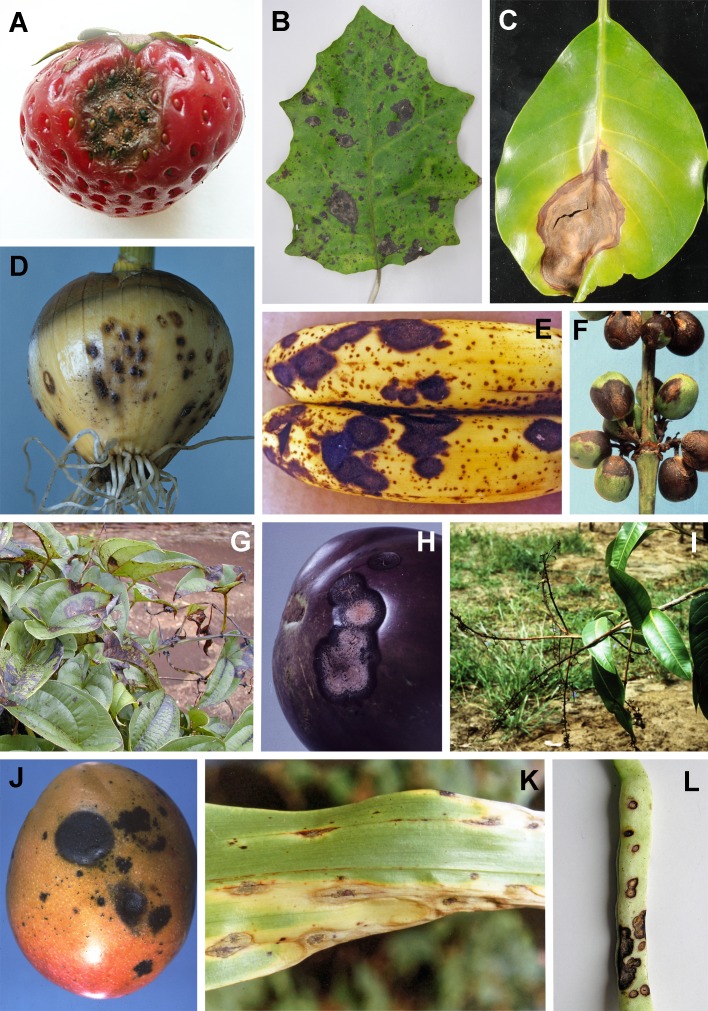
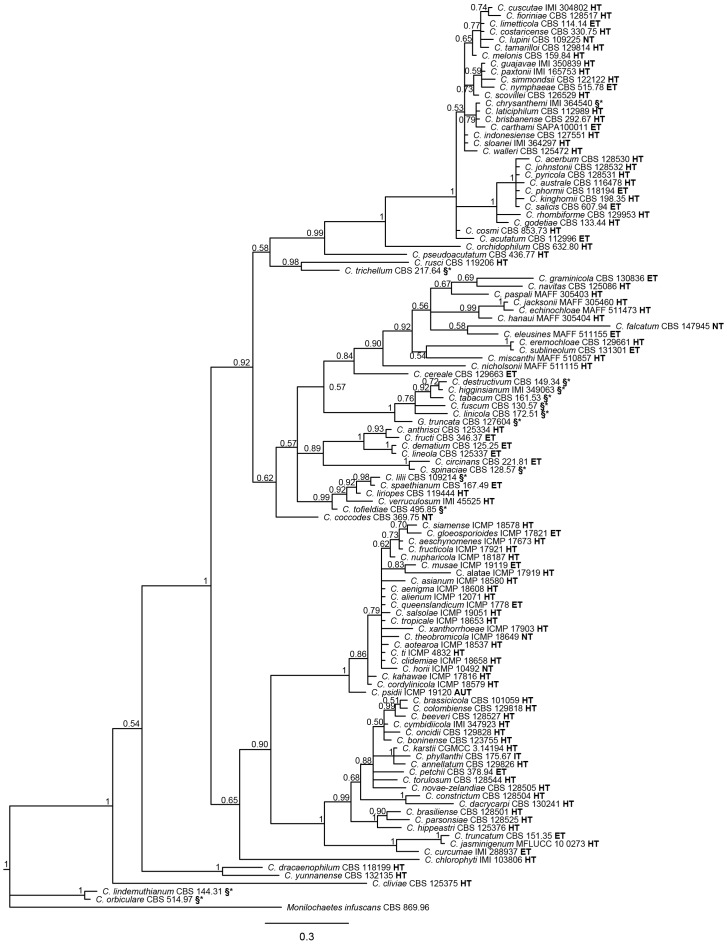
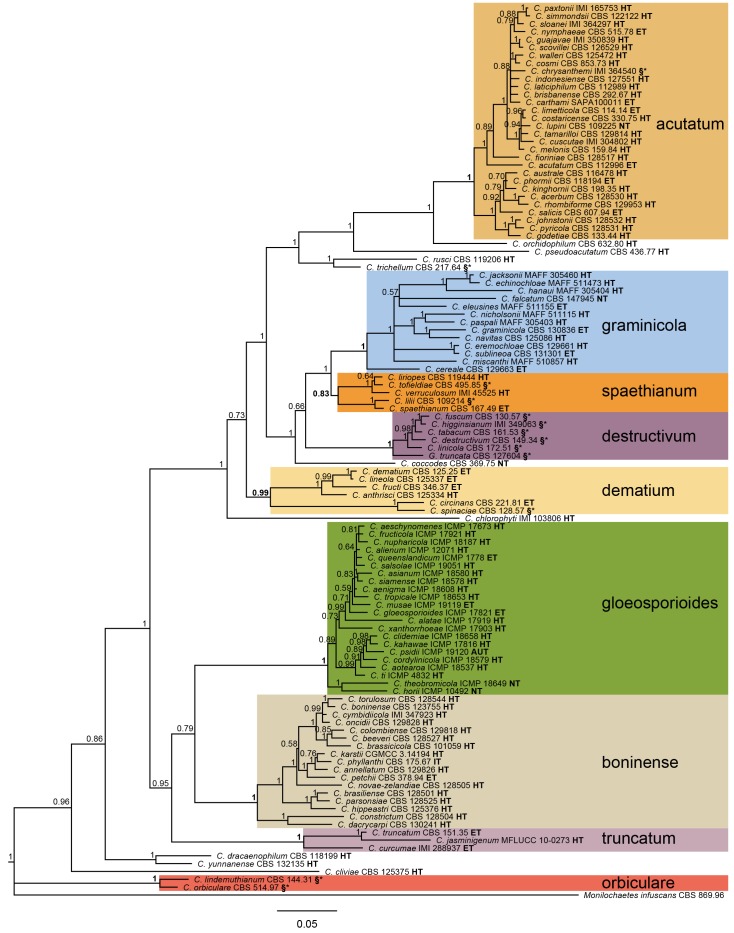
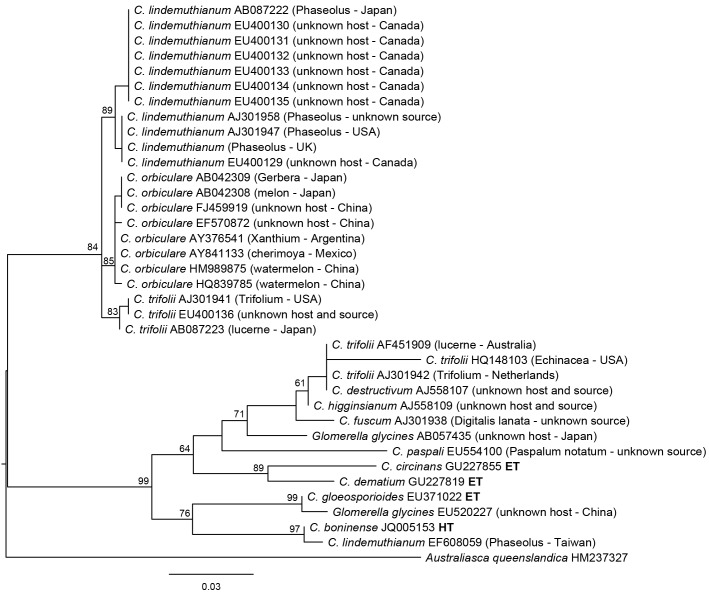
Verification
Claims the paper makes
The claims and statistics of this paper haven’t been checked yet.
Free: it reads the open-access text and checks the first 5 claims that cite a source we can check. Create a free account to check every claim.
Claims other papers make about this one
Each is checked against this paper’s own text: does it say what the citing paper says it does?
The source backs part of the claim, not all of it — or backs it for a different population, condition or comparison.
In the citing paper
“Lifestyle patterns in Colletotrichum can be broadly categorised as endophytic, hemibiotrophic, necrotrophic, latent or quiescent (Perfect et al. 1999, Peres et al. 2005, Cannon et al. 2012, Barimani et al. 2013, de Silva et al. 2017).”
From Colletotrichum: lifestyles, biology, morpho-species, species complexes and accepted species (2021) · cites this paper as Cannon et al. 2012
Experimental — accuracy not yet measuredThe source backs part of the claim, not all of it — or backs it for a different population, condition or comparison.
In the citing paper
“Currently, species delimitation in Colletotrichum relies solely on the use of multi locus phylogenetic analyses (Cannon et al. 2012, Hyde et al. 2014, Jayawardena et al. 2020).”
From Colletotrichum: lifestyles, biology, morpho-species, species complexes and accepted species (2021) · cites this paper as Cannon et al. 2012
Experimental — accuracy not yet measuredThe source backs part of the claim, not all of it — or backs it for a different population, condition or comparison.
In the citing paper
“Species of Colletotrichum have asexual and sexual morphs in their life cycle, which occur on the host plant or plant debris (Sutton 1992, Cannon et al. 2012, Jayawardena et al. 2016a).”
From Colletotrichum: lifestyles, biology, morpho-species, species complexes and accepted species (2021) · cites this paper as Cannon et al. 2012
Experimental — accuracy not yet measuredThe source backs part of the claim, not all of it — or backs it for a different population, condition or comparison.
In the citing paper
“This complex can be distinguished by their curved conidia with truncate base and acute, more strongly curved apex (Damm et al. 2009, Cannon et al. 2012, Jayawardena et al. 2016a).”
From Colletotrichum: lifestyles, biology, morpho-species, species complexes and accepted species (2021) · cites this paper as Cannon et al. 2012
Experimental — accuracy not yet measuredThe source backs part of the claim, not all of it — or backs it for a different population, condition or comparison.
In the citing paper
“From work in the intergenic regions of apn2 and MAT1-2-1 (ApMat) genes, 22 phenotypes (Supplementary Table S1) have been identified (Cannon et al., 2012), and four distinct phylogenies (C. fructicola, C. frgariae sensu stricto, C. melanocaulon and C. jasmine-sambac) within the complex described (Doyle et al., 2013).”
From Mango anthracnose disease: the current situation and direction for future research (2023) · cites this paper as Cannon et al., 2012
Experimental — accuracy not yet measured
12 more claims about this paper
Create a free account to see every claim other papers make about this one.
Self-check
Percentages, sums and reported differences re-computed from the paper’s own numbers.
The self-check needs the paper’s full text.
Citations
Cites
Schoch, C. L., Seifert, K. A., Huhndorf, S., Robert, V., Spouge, J. L., Levesque, C. A., Chen, W., Fungal Barcoding Consortium, Fungal Barcoding Consortium Author List, Bolchacova, E., et al. (2012) · Proceedings of the National Academy of Sciences · doi:10.1073/pnas.1117018109 · Cited by 5,120 · cited 1×
“This is of some concern, as the ITS region is widely used for species definition in the Fungi ( e.g. Begerow et al. 2010, Druzhinina et al. 2005, Eberhardt 2010, Kelly et al. 2011), and has recently been proposed as a universal barcode sequence (Schoch et al. 2011, 2012).”
BackgroundSelf-citationThe Top 10 fungal pathogens in molecular plant pathology
DEAN, R., VAN KAN, J. A. L., PRETORIUS, Z. A., HAMMOND‐KOSACK, K. E., DI PIETRO, A., SPANU, P. D., RUDD, J. J., DICKMAN, M., KAHMANN, R., ELLIS, J., et al. (2012) · Molecular Plant Pathology · doi:10.1111/j.1364-3703.2011.00783.x · Cited by 4,692 · cited 1×
“The genus was recently voted the eighth most important group of plant pathogenic fungi in the world, based on perceived scientific and economic importance (Dean et al .”
BackgroundReconstructing the early evolution of Fungi using a six-gene phylogeny
James, T. Y., Kauff, F., Schoch, C. L., Matheny, P. B., Hofstetter, V., Cox, C. J., Celio, G., Gueidan, C., Fraker, E., Miadlikowska, J., et al. (2006) · Nature · doi:10.1038/nature05110 · Cited by 1,815 · cited 1×
“Several widely used markers, including TUB2 and TEF1, were not included within their list of best-performing genes, and are probably unsuitable as universal fungal markers due to the presence of paralogs (James et al. 2006, Walker et al .”
MethodThe Colletotrichum gloeosporioides species complex
Weir, B. S., Johnston, P. R., & Damm, U. (2012) · Studies in Mycology · doi:10.3114/sim0011 · Cited by 1,646 · cited 8×
“2011, Weir et al .”
BackgroundInfluentialSelf-citationKõljalg, U., Larsson, K., Abarenkov, K., Nilsson, R. H., Alexander, I. J., Eberhardt, U., Erland, S., Høiland, K., Kjøller, R., Larsson, E., et al. (2005) · New Phytologist · doi:10.1111/j.1469-8137.2005.01376.x · Cited by 1,173 · cited 1×
“There is also evidence that ITS sequences alone can constitute useful barcode markers for some groups of the Basidiomycota ( e.g. Kõljalg et al .”
BackgroundAinsworth & Bisby'sdictionary of the fungi.
Ainsworth. (1961) · Cited by 1,145
The Coelomycetes. Fungi imperfecti with pycnidia, acervuli and stromata.
Sutton, B. C. (1980) · Commonwealth Mycological Institute eBooks · Cited by 1,080
O'Connell, R. J., Thon, M. R., Hacquard, S., Amyotte, S. G., Kleemann, J., Torres, M. F., Damm, U., Buiate, E. A., Epstein, L., Alkan, N., et al. (2012) · Nature Genetics · doi:10.1038/ng.2372 · Cited by 1,047 · cited 10×
“2012), but the strains studied (from lentil ( Lens culinaris ) in Canada) belong to the destructivum rather than the truncatum clade (Damm et al. 2009; O’Connell et al. 2012; Figs 2, 3).”
BackgroundInfluentialSelf-citationDIVERSITY AND HOST RANGE OF FOLIAR FUNGAL ENDOPHYTES: ARE TROPICAL LEAVES BIODIVERSITY HOTSPOTS?
Arnold, A. E., & Lutzoni, F. (2007) · Ecology · doi:10.1890/05-1459 · Cited by 1,033 · cited 1×
“(2004) and Arnold & Lutzoni (2007) that the commonest tropical endophytes appear to be host generalists.”
BackgroundFUSARIUM-ID v. 1.0: A DNA Sequence Database for Identifying Fusarium
Geiser, D. M., del Mar Jiménez-Gasco, M., Kang, S., Makalowska, I., Veeraraghavan, N., Ward, T. J., Zhang, N., Kuldau, G. A., & O'donnell, K. (2004) · European Journal of Plant Pathology · doi:10.1023/b:ejpp.0000032386.75915.a0 · Cited by 1,030 · cited 1×
“…for diagnostic purposes in the Fungi , especially beta-tubulin (TUB2) and calmodulin ( e.g. for Aspergillus and Penicillium ; Samson et al. 2007, Peterson 2008, Houbraken et al. 2011), TEF1 (for Fusarium ; Geiser et al. 2004, O’Donnell et al. 2009) and COX1 (for Penicillium ; Seifert et al. 2007).”
Background
Research works printed but not linked: 29
- Agrios GN (2005). Plant Pathology. 5th edn Academic Press, New York
- Arx JA von (1957a). Revision der zu Gloeosporium gestellten Pilze. Verhandligen des Koninklijke Nederlandse Akadademie van Wetenschappen, Afd. Natuurkunde, 2, 51(3): 153 pp
- Arx JA von (1957b). Die Arten der Gattung Colletotrichum Cda. Phytopathologische Zeitschrift 29: 413– 468
- Barrus MF (1918). Varietal susceptability of beans to strains of Colletotrichum lindemuthianum (Sacc. & Magn.) B. & C. Phytopathology 8: 589– 605
- Berlese AN (1893). Icones Fungorum Omnium hucusque Cognitorum. Pergola, Avellino vol. 1: 91– 118
- Chadefaud M (1960). Les Végétaux non Vasculaires. Cryptogamie. In: Traité de Botanique Systématique (Chadefaud M Emberger L, eds). Masson, Paris vol. 1: 1018 pp
- Corda ACI (1831). Die Pilze Deutschlands. In: Deutschlands Flora in Abbildungen nach der Natur mit Beschreibungen (Sturm J, ed.). Sturm, Nürnberg vol. 3, Abt. 12: 33– 64, tab. 21–32
- Corda ACI (1837). Icones Fungorum hucusque cognitorum vol. 1 Calve, Prague
- Corda ACI (1840). Icones Fungorum hucusque cognitorum vol. 4 Calve, Prague
- Edgerton CW (1912). Plus and minus strains in an ascomycete. Science 35: 151
- Hennings P (1898). Die in den Gewächshäusern des Berliner Botanischen Gartens beobachteten Pilze. Verhandlungen des Botanischen Vereins der Provinz Brandenburg 40: 109– 177
- Hyde KD Cai L McKenzie EHC Yang YL Zhang JZ (2009b). Colletotrichum: a catalogue of confusion. Fungal Diversity 39: 1– 17
- Krüger F (1913). Beiträge zur Kenntnis einiger Gloeosporien. Arbeiten aus der Kaiserlichen Biologischen Anstalt für Land- und Forstwirtschaft. 9: 233– 323
- Leahy R Schubert T Strandberg J Stamps B Norman D (1995). Anthracnose of leatherleaf fern. Plant Pathology Circular 372: 4 pp
- Lehman SG Wolf FA (1926). Soybean anthracnose. Journal of Agricultural Research Washington 33: 381– 390
- Montagne C (1849). Sixième centurie des plantes cellulaires nouvelles tant indigènes qu’exotiques. Annales des Sciences Naturelles. Botanique Série 3, 12: 285– 320
- Palarpawar MY Ghurde VR (1988). Some new hosts of Colletotrichum curcumae. Indian Journal of Mycology and Plant Pathology 18: 220– 221
- Petrak F (1924). Über die phylogenetischen Beziehungen der Gattung Phyllachora und ihre Bedeutung für das System der dothidealean Pilze. Annales Mycologici 22: 1– 10
- Phuong THN Pettersson OV Olsson P Nguyen PTH (2010). Identification of Colletotrichum species associated with anthracnose disease of coffee in Vietnam. European Journal of Plant Pathology 127: 73– 87 · DOI
- Prihastuti H Cai L Chen H McKenzie EHC Hyde KD (2009). Characterization of Colletotrichum species associated with coffee berries in northern Thailand. Fungal Diversity 39: 89– 109
- Prusky D Freeman S Dickman MB (eds) (2000). Colletotrichum. Host Specificity, Pathology and Host-Pathogen Interaction. APS Press, St Paul, USA
- Ramos AP Merali Z Talhinhas P Sreenivasaprasad S Oliveira H (2006). Molecular and morphological characterisation of Colletotrichum species involved in citrus anthracnose in Portugal. Bulletin OILB/SROP 29: 317– 326
- Schoch C Seifert K Crous P (2011). Progress on DNA barcoding of Fungi. IMA Fungus 2: (5).
- Shivas RG Tan YP (2009). A taxonomic reassessment of Colletotrichum acututum, introducing C. fioriniae comb. et stat. nov. and C. simmondsii sp. nov. Fungal Diversity 39: 111– 122
- Sydow H (1928). Fungi Chilenses a cl. E. Werdermann lecti. Pars prima. Annales Mycologici 26: 100– 126
- Theissen F Sydow H (1915). Die Dothideales. Kritische-systematische Originaluntersuchungen. Annales Mycologici 13: 147– 746
- Vaillancourt L Wang J Hanau R (2000). Genetic regulation of sexual compatibility in Glomerella graminicola. In: Colletotrichum. Host Specificity, Pathology and Host-Pathogen Interaction (Prusky D Freeman S Dickman MB, eds). APS Press, St Paul, USA: 29– 44
- Wheeler HE (1954). Genetics and evolution of heterothallism in Glomerella. Phytopathology 44: 342– 345
- Yang YL Liu ZY Cai L Hyde KD Zu ZN McKenzie EHC (2009). Colletotrichum anthracnose of Amaryllidaceae. Fungal Diversity 39: 123– 146
Cited by
Items 601–700 of 1,002
Capsicum Endophytic Bacterial Strain LY7 and Prochloraz Synergistically Control Chilli Anthracnose
Ren, L., Qin, N., Ning, J., Hui, Y., Lü, H., & Zhao, X. (2024) · Journal of Fungi · doi:10.3390/jof10030169 · Cited by 9
Bozoğlu, T., Türkkan, M., Özer, G., Güney, İ. G., & Derviş, S. (2024) · Physiological and Molecular Plant Pathology · doi:10.1016/j.pmpp.2024.102454 · Cited by 9
Chinthalapudi, D. P. M., Narayana, N. K., Nekkalapudi, L., Sinha, N., & Shanmugam, S. G. (2026) · The Science of The Total Environment · doi:10.1016/j.scitotenv.2026.181365 · Cited by 10
The 50 most researched fungal and oomycete plant pathogens
Maharachchikumbura, S. S. N., MAHADEVAKUMAR, S., Hyde, K. D., Al-Sadi, A. M., Chalasani, D., Chandranayaka, S., Dissanayake, L. S., Faraj, T. K., Fernando, W. G. D., Gunasinghe, N., et al. (2026) · Fungal Diversity · doi:10.65390/fdiv.2026.136004 · Cited by 9
Sousa, E. S., Carvalho, G. D. S., Barguil, B. M., Matos, K. D. S., & Beserra, J. E. A. (2021) · Journal of Plant Diseases and Protection · doi:10.1007/s41348-021-00449-8 · Cited by 8
“Anthracnose can be caused by one to several species of Colletotrichum (Cannon et al.”
BackgroundInfluentialDentika, P., Gumbau, M., Ozier‐Lafontaine, H., & Penet, L. (2023) · Journal of Fungi · doi:10.3390/jof9030296 · Cited by 8
“, fo lowing single interactions airs—a pathogenic pecies associated to a plant sp cies), s metimes i duci g t xonomic confusions [31], then transiently interpreted via th length of orphospecies c mplexes [40], but today interpreted as having broa host species range within species c plexes [30].”
BackgroundInfluentialColletotrichum siamense Strain LVY 9 Causing Spot Anthracnose on Winterberry Holly in China
Feng, L., Zhang, Y., Chen, W., & Mao, B. (2023) · Microorganisms · doi:10.3390/microorganisms11040976 · Cited by 8
Zhang, C., Zhou, Z., Guo, T., Huang, X., Peng, C., Lin, Z., Chen, M., & Liu, W. (2023) · Genes · doi:10.3390/genes14122235 · Cited by 8
“Colletotrichum spp. are considered one of the ten most important pathogenic fungi in the world [5,6].”
BackgroundThe Need and Opportunity to Update the Inventory of Plant Pathogenic Fungi and Oomycetes in Mexico
Tovar‐Pedraza, J. M., Solano‐Báez, A. R., Leyva‐Mir, S. G., Tlapal-Bolaños, B., Camacho-Tapía, M., García‐León, E., Ayala‐Escobar, V., Nava-Díaz, C., Quezada-Salinas, A., Santiago-Santiago, V., et al. (2024) · Journal of Fungi · doi:10.3390/jof10060395 · Cited by 8
Wesche, J., Wu, P., Luo, C., Faust, J. E., & Schnabel, G. (2024) · Phytopathology · doi:10.1094/phyto-03-24-0090-r · Cited by 8
Blaser, S., Hoelling, D., Ruffner, B., Brockerhoff, E. G., Marazzi, C., Mattei, G., Meier, M., & Beenken, L. (2024) · BioInvasions Records · doi:10.3391/bir.2024.13.3.05 · Cited by 8
Mercado, A. F. Q., Dangon-Bernier, F., & Páez-Redondo, A. (2019) · Revista de la Academia Colombiana de Ciencias Exactas Físicas y Naturales · doi:10.18257/raccefyn.788 · Cited by 9
VOCs profile of Colletotrichum spp. as a potential tool for quality control of açaí pulp
Lima, T. D. C., Santos, R. S. D., Silva, S. Y. S., Santos, D. D. A., Silva, S. D. C., Gomes, A. A., de Oliveira, M. D. C. F., Alves, K. F., Pinto, L., & Oliveira, M. N. (2021) · Food Chemistry · doi:10.1016/j.foodchem.2021.130150 · Cited by 9
Huda‐Shakirah, A. R., & Mohd, M. H. (2023) · Tropical Plant Pathology · doi:10.1007/s40858-023-00561-0 · Cited by 8
“With advances in molecular approaches involving DNA sequencing and multigene phylogenetic analysis, the morphological identification of Colletotrichum isolates has been supported, as suggested in many studies (Farr et al. 2006; Than et al. 2008; Cai et al. 2009; Damm et al. 2009; Prihastuti et al. 2009; Cannon et al.…”
BackgroundBiodiversity of Colletotrichum spp. on Several Wild and Cultivated Plants
Kazartsev, I. A., Gomzhina, M. M., Gasich, E. L., Khlopunova, L. B., & Gannibal, P. B. (2023) · Biology Bulletin Reviews · doi:10.1134/s2079086423070071 · Cited by 8
“The damage caused by fungi of this genus extends to cereals, legumes, vegetables, fruit and berry crops, orna-mental and other crops (Cannon et al., 2012).”
Ortiz-Álvarez, J., Becerra, S., Baroncelli, R., Hernández, G., Sukno, S. A., & Thon, M. R. (2024) · BMC Genomics · doi:10.1186/s12864-023-09858-5 · Cited by 9
Fungal arthritis secondary to Colletotrichum gloeosporioides
Cho, J. C., Sharma, R. S., Sutton, D. A., Wiederhold, N. P., Sanders, C. J., Wickes, B. L., & Estrada, S. J. (2015) · JMM Case Reports · doi:10.1099/jmmcr.0.000012 · Cited by 8
“are common plant-pathogenic fungi, usually occurring as asymptomatic endophytes on aerial organs of the host plants (Hyde et al., 2009; Cannon et al., 2012).”
BackgroundPedras, M. S. C., & Thapa, C. (2019) · Phytochemistry · doi:10.1016/j.phytochem.2019.112188 · Cited by 8
Liu, L., Wang, Y., Qiu, P., Zhang, B., Zhang, L., Wang, N., Li, Y., Gao, J., & Hsiang, T. (2020) · Mycological Progress · doi:10.1007/s11557-020-01614-3 · Cited by 10
“Colletotrichum spp. cause disease symptoms that are generally known as anthracnose on a wide range of host plants, serious economic losses and disease on leaves, stems, flowers and fruits of many plants (Cannon et al. 2012).”
BackgroundMethodVithanage, I. S. K., Yakandawala, D., Maharachchikumbura, S. S. N., Jayasinghe, L., & Adikaram, N. K. B. (2021) · European Journal of Plant Pathology · doi:10.1007/s10658-021-02366-w · Cited by 9
Colletotrichum pereskiae sp. nov. causing anthracnose on Pereskia aculeata in Brazil
Custódio, F. A., Brommonschenkel, T. D. C., Silva, A. D. A., & Pereira, O. L. (2021) · Mycological Progress · doi:10.1007/s11557-021-01758-w · Cited by 8
“The genus Colletotrichum includes plant pathogenic species causing anthracnose in a wide range of hosts, and produces symptoms such as leaf spots, post-harvest rot and others (Bailey et al. 1992; Cannon et al. 2012).”
BackgroundMartínez-Pacheco, L., Berrouet, K. M. V., Yepes, M. S., Sánchez, P. A. G., & Montoya, M. M. (2014) · Acta Agronómica · doi:10.15446/acag.v63n4.42035 · Cited by 8
“Colletotrichum lindemuthianum es parte de un complejo de especies cercanas que incluyen a C. orbiculare (Berk. y Mont.) Arx y C. trifolii Bain (Liu et al., 2007) cuya relación filogenética fue recientemente confirmada por Cannon et al. (2012).”
BackgroundIrieda, H., & Takano, Y. (2016) · Physiological and Molecular Plant Pathology · doi:10.1016/j.pmpp.2016.01.006 · Cited by 8
Karimi, K., Khodaei, S., Rota‐Stabelli, O., Arzanlou, M., & Pertot, I. (2016) · Journal of Phytopathology · doi:10.1111/jph.12528 · Cited by 10
Li, J., Sun, K., Ma, Q., Chen, J., Wang, L., Yang, D., Chen, X., & Li, X. (2017) · Frontiers in Microbiology · doi:10.3389/fmicb.2017.02089 · Cited by 9
“It causes anthracnose in plants which results in falling of leaves, deterioration of fruits and vegetables, as well as adverse effects on the yield and quality of agricultural products (Cannon et al., 2012).”
BackgroundColletotrichum acutatum M11 can suppress the defence response in strawberry plants
Tomas‐Grau, R. H., Peto, P. D. L. Á. D., Chalfoun, N. R., Bournonville, C. F. G., Martos, G. G., Debes, M. A., Arias, M. E., & Ricci, J. C. D. (2019) · Planta · doi:10.1007/s00425-019-03203-5 · Cited by 8
Cao, X., Zhu, Z., Che, H., West, J. S., Lin, Y., Luo, D., & Xu, X. (2021) · Plant Pathology · doi:10.1111/ppa.13361 · Cited by 8
Recent approaches on the genomic analysis of the phytopathogenic fungus Colletotrichum spp.
Carbú, M., Moraga, J., Cantoral, J. M., Collado, I. G., & Garrido, C. (2020) · Phytochemistry Reviews · doi:10.1007/s11101-019-09608-0 · Cited by 7
Adhikari, T. B., Muzhinji, N., Philbrick, A. N., & Louws, F. J. (2025) · Frontiers in Microbiology · doi:10.3389/fmicb.2025.1515894 · Cited by 7
Avocado diseases affecting fruit quality
Everett, K. R. (2020) · CABI Reviews · doi:10.1079/pavsnnr202015016 · Cited by 7
Feng, W.-K., Wang, C.-H., Ju, Y., Chen, Z.-X., Wu, X., & Fang, D. (2024) · Forests · doi:10.3390/f15010117 · Cited by 7
Khodadadi, F., Luciano‐Rosario, D., Gottschalk, C., Jurick, W. M., & Aćimović, S. G. (2024) · Journal of Fungi · doi:10.3390/jof10070493 · Cited by 8
“More than 200 species of the fungal genus Colletotrichum devastatingly affect a wide array of agricultural crops including vegetables, fruits, forest trees, cereals, and legumes by causing anthracnose, fruit rot, and blights [1–3].”
BackgroundJiang, K., Li, Z., Zeng, X., Chen, X., Liang, S., & Zhang, W. (2025) · MycoKeys · doi:10.3897/mycokeys.115.144522 · Cited by 8
“This genus is characterised by its ubiquity and severity (Cannon et al. 2012; Guarnaccia et al. 2017; Fu et al. 2019).”
Marroquín, N. G., Bustamante, S., Gutiérrez, Y. A. P., & Hurtado, G. B. (2016) · Revista Colombiana de Biotecnología · doi:10.15446/rev.colomb.biote.v18n1.57720 · Cited by 7
Evolutionary Analysis of Pectin Lyases of the Genus Colletotrichum
Lara-Márquez, A., Oyama, K., Zavala-Páramo, M. G., Villa-Rivera, M. G., Conejo-Saucedo, U., & Cano-Camacho, H. (2017) · Journal of Molecular Evolution · doi:10.1007/s00239-017-9812-x · Cited by 7
“The phylogenetic analysis of Colletotrichum species to the taxonomic level resulted in nine clades (Cannon et al. 2012).”
BackgroundCara, M., Mincuzzi, A., Merkuri, J., Vrapi, H., Cara, O., Ippolito, A. M., Baroncelli, R., & Sanzani, S. M. (2020) · Crop Protection · doi:10.1016/j.cropro.2020.105291 · Cited by 7
López-Zapata, S. P., & Castaño-Zapata, J. (2020) · Revista de la Academia Colombiana de Ciencias Exactas Físicas y Naturales · doi:10.18257/raccefyn.1139 · Cited by 7
Theerawitaya, C., Kyaw, M. M. M., Samphumphuang, T., Pinruan, U., Wiriyathanawudhiwong, N., & Cha–um, S. (2021) · In Vitro Cellular & Developmental Biology - Plant · doi:10.1007/s11627-021-10207-y · Cited by 7
Laurel, N. R., Magdalita, P. M., & Cueva, F. M. D. (2021) · Journal of Phytopathology · doi:10.1111/jph.13039 · Cited by 9
Bincader, S., Pongpisutta, R., & Rattanakreetakul, C. (2021) · Indian Journal of Agricultural Research · doi:10.18805/ijare.af-691 · Cited by 7
Evallo, E., Taguiam, J. D., Bengoa, J., Maghirang, R. G., & Balendres, M. A. (2022) · International Journal of Pest Management · doi:10.1080/09670874.2022.2027551 · Cited by 12
“…a housekeeping gene encoding for the glyceraldehyde-3-phosphate (GAPDH) enzyme, and the β-tubulin (TUB2) protein-coding gene (Perfect et al. 1999 ; Cannon et al. 2012; Jayawardena et al. 2016) revealed that isolate MBDF0025b is C. tropicale, as supported by the constructed phylogenetic trees.”
InfluentialHe, J., Li, D., Bian, J., Zhu, L., & Huang, L. (2022) · Plant Disease · doi:10.1094/pdis-04-22-0810-re · Cited by 8
Wang, C., Jiang, N., Xue, H., Piao, C., & Li, Y. (2022) · MycoKeys · doi:10.3897/mycokeys.93.89209 · Cited by 8
“Although morphological characters may not prove taxonomically informative for species differentiation within species complex, they are considered as a basis to taxonomic segregation for distinguishing species between different species complexes (Cannon et al. 2012; Liu et al. 2022).”
BackgroundInfluentialAsharo, R. K., Indrayanti, R., Damayanti, A. P., Putri, H. A. E., Nabilah, S., & Pasaribu, P. O. (2022) · Jurnal Ilmiah Biologi Eksperimen dan Keanekaragaman Hayati (J-BEKH) · doi:10.23960/jbekh.v9i2.269 · Cited by 7
Crop improvement against Colletotrichum truncatum using molecular breeding approaches
Nataraj, V., Rajput, L. S., Shivakumar, M., Kumawat, G., Kumar, S., Maheshwari, H. S., Gupta, S. M., Amrate, P. K., Tripathi, R., Agrawal, N., et al. (2022) · Elsevier eBooks · doi:10.1016/b978-0-323-85243-2.00004-0 · Cited by 10
Mango Anthracnose: Global Status and the Way Forward for Disease Management
Iqbal, S., Khan, M. A., Atiq, M., Rajput, N. A., Usman, M., Nawaz, A. A., Kachelo, G. A., Akram, A., & Ahmad, H. (2022) · Journal of Innovative Sciences · doi:10.17582/journal.jis/2022/8.2.222.235 · Cited by 13
Zeng, Z.-Y., Yang, Z.-P., Yang, A.-L., Li, Y., & Zhang, H. (2023) · Microbial Ecology · doi:10.1007/s00248-023-02237-3 · Cited by 7
“Colletotrichum species are regarded as the most commonly occurring pathogens and foliar endophytes in terrestrial plant [20, 21].”
BackgroundIdentification of fungal species associated with chilli fruit disease in North-Central Vietnam
Nguyen, V. Q. H., Tran, T. T., Tran, L. T., Nguyen, T. T. T., Pham, T., Quảng, H. T., & Pham, T. T. D. (2023) · Journal of Plant Pathology · doi:10.1007/s42161-023-01551-6 · Cited by 10
“Recently, chili peppers fruits in Vietnam have been found to be infected by several species of Colletotrichum , including C. nigrum , C. siamense , C. C. aeschynomenes, C. gloeosporioides , and C. truncatum (Cannon et al. 2012; Oo and Oh 2016; Ly et al. 2020).”
Marin, V. R., Zamunér, C. F. C., dos Santos, E. A., Ferreira, H., & Sass, D. C. (2024) · Journal of Essential Oil Bearing Plants · doi:10.1080/0972060x.2024.2368629 · Cited by 8
Xu, L., Xu, Z., Liu, J., Cui, H., Long, J., Xue, L., & Li, C. (2024) · Plant Disease · doi:10.1094/pdis-01-24-0206-re · Cited by 7
Sharma, K., Goss, E. M., & van Bruggen, A. H. C. (2014) · HortScience · doi:10.21273/hortsci.49.7.911 · Cited by 7
Anthracnose on Southern Highbush Blueberry
Phillips, D. A., Velez-Climent, M., Harmon, P. F., & Muńoz, P. (2018) · EDIS · doi:10.32473/edis-pp337-2018 · Cited by 7
First Report of Colletotrichum sublineola Causing Anthracnose on Sorghum bicolor in South Korea
Choi, H.-W., Hong, S. K., Lee, Y., & Yoon, Y.-N. (2021) · Plant Disease · doi:10.1094/pdis-03-20-0637-pdn · Cited by 7
Shin, J., Kim, H.-Y., Fu, T., Lee, K.-H., & Kim, K. S. (2022) · Frontiers in Cellular and Infection Microbiology · doi:10.3389/fcimb.2022.861915 · Cited by 7
“The number of species within the genus ranges from 29 to more than 700, depending on taxonomic interpretation (Cannon et al., 2007; Dean et al., 2012).”
BackgroundOkon, N. I., Markson, A. A., Okon, E. I., Ita, E. E., Uyoh, E. A., Ene-Obong, E.-O. E., & Ntui, V. O. (2022) · PLoS ONE · doi:10.1371/journal.pone.0270601 · Cited by 9
“Colletotrichum is the only genus of the family, Glomerellaceae and consists of some saprobes and endophytes [38] but dominated by pathogens causing diseases of virtually all categories of plant forms from fruits and vegetables [39–41] through cereals (grasses), pulses to root and tuber crops [10, 20, 42–44] in both tr…”
BackgroundShahrtash, M., & Brown, S. P. (2023) · Archives of Phytopathology and Plant Protection · doi:10.1080/03235408.2023.2178055 · Cited by 7
“Among the genera used for these additional analyses, Colletotrichum (Sun et al. 2006; Cannon et al. 2012; Chakraborty et al. 2019), Fusarium (Sampaio et al. 2020), Phoma (Kim and Chen 2019; Deb et al. 2020), Alternaria (Bankina et al. 2021), Nigrospora (Deepika et al. 2021) and Microsphaeropsis…”
Souza, E. S., do Vale, H. M. M., Pereira–Carvalho, R. C., Soares, W. R. D. O., Miller, R. G., & Dianese, J. C. (2017) · Mycological Progress · doi:10.1007/s11557-017-1338-5 · Cited by 7
“(Cannon et al. 2012), which include endophytic, epiphytic, saprophytic and pathogenic species.”
InfluentialZhao, W.-T., Liu, Q., Chen, H., Zhao, W. M., Gao, Y., & Yang, X. (2020) · Fitoterapia · doi:10.1016/j.fitote.2020.104474 · Cited by 8
Meng, Y., Yihua, R., Wang, W., Gleason, M. L., Zhang, R., & Sun, G. (2020) · Plant Disease · doi:10.1094/pdis-01-20-0034-a · Cited by 7
Pszczółkowska, A., Androsiuk, P., Jastrzebski, J., Paukszto, Ł., & Okorski, A. (2020) · Genes · doi:10.3390/genes11050552 · Cited by 9
“boninense species complexes comprising at least 28, 22, and 17 species, respectively [5].”
BackgroundColletotrichum asianum: A Novel Phytopathogen Causing Human Infection—A Case Report
Ghorpade, A., Venugopal, A., & Ravindran, M. (2022) · Cornea · doi:10.1097/ico.0000000000003051 · Cited by 6
Yang, R., Li, Y., Zhao, H., Sun, X., Chen, W., Li, P., Li, X., Wu, C., Ma, M., & Gong, G. (2024) · Journal of Fungi · doi:10.3390/jof10110799 · Cited by 7
Zhang, R., Inoue, Y., Singkaravanit‐Ogawa, S., Ogawa, T., Mise, K., Mine, A., & Takano, Y. (2025) · New Phytologist · doi:10.1111/nph.20426 · Cited by 6
“The ascomycete genus Col-letotrichum contains > 190 accepted species and causes anthrac-nose disease in a wide variety of plants, including numerous economically important crops (Cannon et al ., 2012; Dean et al ., 2012; O’Connell et al ., 2012; Jayawardena et al ., 2021).”
Samaradiwakara, N. P., Perera, R. H., Tennakoon, D. S., Aluthmuhandiram, J. V. S., Bhat, D. J., Senarathna, M., de Farias, A. R. G., Bhunjun, C. S., Suwannarach, N., Al-Otibi, F. O., et al. (2025) · Fungal Diversity · doi:10.1007/s13225-025-00562-1 · Cited by 8
Conejo-Saucedo, U., Cano-Camacho, H., Villa-Rivera, M. G., Lara-Márquez, A., López-Romero, E., & Zavala-Páramo, M. G. (2017) · Mycological Progress · doi:10.1007/s11557-017-1291-3 · Cited by 9
“7), which is the nearest species according to a phylogenetic analysis of Colletotrichum sp. (Cannon et al. 2012; O’Connell and Bailey 1988).”
BackgroundMa, J., Wang, X., & Guo, M. A. (2019) · Plant Disease · doi:10.1094/pdis-09-19-1859-pdn · Cited by 7
Arizpe, A. S., Cepeda, M. E. G., Arispe-Vázquez, J. L., Velázquez, R. G., Badillo, M. E. V., & Bautista, A. A. (2021) · Australian Journal of Crop Science · doi:10.21475/ajcs.21.15.08.p3347 · Cited by 6
Utami, Y. D., & Hiruma, K. (2022) · PhytoFrontiers™ · doi:10.1094/phytofr-12-21-0082-a · Cited by 7
dos Santos, G. R., de Moraes, A. J. G., Cavalcante, A. D. P. D. S., & da Silva, G. B. (2022) · Journal of General Plant Pathology · doi:10.1007/s10327-022-01059-4 · Cited by 8
“The genus Colletotrichum and its teleomorph Glomerella has been reported to infect over 3,200 species of herbaceous and woody plants in tropical, subtropical, and temperate areas (Cannon et al. 2012; Castro et al. 2017; Damm et al. 2010; Huang et al. 2016; Manire et al. 2002; O’Connell et al. 2012; Vieira et al. 2017;…”
BackgroundTan, X., Zhao, J., Qiao, G., Liu, J., Hsiang, T., Yu, Z., & Qin, W. (2022) · Plant Pathology · doi:10.1111/ppa.13681 · Cited by 7
Rohma, M., & Wahyuni, W. S. (2022) · Berkala Ilmiah Pertanian · doi:10.19184/bip.v5i2.28856 · Cited by 6
Kurera, W. M. S., Adikaram, N. K. B., Yakandawala, D., Maharachchikumbura, S. S. N., Jayasinghe, L., & Samarakoon, K. (2023) · Journal of the National Science Foundation of Sri Lanka · doi:10.4038/jnsfsr.v51i2.11217 · Cited by 12
Diversity of Colletotrichum species associated with torch ginger anthracnose
Duarte, I. G., Amaral, A. G. G., Vieira, W. A. D. S., Veloso, J. S., da Silva, A. C., da Silva, C. D. F. B., Balbino, V. D. Q., Castlebury, L. A., & Câmara, M. P. S. (2023) · Mycologia · doi:10.1080/00275514.2023.2227747 · Cited by 7
First Report of Anthracnose Fruit Rot of Papaya Caused by Colletotrichum gigasporum in China
He, Y., Cui, J., Sun, J., Li, M., Zhao, J., Gong, D., & Hu, M. (2023) · Plant Disease · doi:10.1094/pdis-10-23-2162-pdn · Cited by 6
Takata, Y., Komine, M., Uchikawa, K., Nozawa, S., & Watanabe, K. (2024) · Journal of General Plant Pathology · doi:10.1007/s10327-023-01160-2 · Cited by 7
“Many of these species are economically important agricultural pathogens (Cannon et al. 2012); others are endophytes.”
Huang, S., Yang, H., He, J., Liu, J., & Feng, T. (2024) · Journal of Agricultural and Food Chemistry · doi:10.1021/acs.jafc.4c02028 · Cited by 6
Colletotrichum species associated with loquat anthracnose in Kagawa and Tokushima prefectures, Japan
Poti, T., Kisaki, G., Arita, K., & Akimitsu, K. (2024) · Journal of General Plant Pathology · doi:10.1007/s10327-024-01185-1 · Cited by 7
Yang, J., Liu, Q., Liu, K., Wang, S., & Gu, H. (2024) · Applied Soil Ecology · doi:10.1016/j.apsoil.2024.105826 · Cited by 6
Sato, T. (2016) · Journal of General Plant Pathology · doi:10.1007/s10327-016-0677-4 · Cited by 8
“Cannon et al. (2012) made public a molecular phylogenetic tree of the genus, consisting of 106 members belonging to 9 species complexes and 9 isolated species.”
BackgroundDevelopment of SNP-Based Markers to Identify Colletotrichum gossypii in Upland Cotton
Nawaz, H. H., Anam, U., Rajaofera, M. J. N., He, Q., Liu, W., & Miao, W. (2018) · Plant Disease · doi:10.1094/pdis-10-17-1672-re · Cited by 6
Detection of Colletotrichum gloeosporioides in native cashew species in Brazil
dos Santos, G. R., Chagas, J. F. R., Rodrigues‐Silva, N., Sarmento, R. A., Leão, E. U., da Silva, R. S., & Picanço, M. C. (2019) · Brazilian Journal of Microbiology · doi:10.1007/s42770-019-00142-x · Cited by 7
Ahmad, H., & Matsubara, Y.-I. (2020) · The Horticulture Journal · doi:10.2503/hortj.utd-165 · Cited by 7
“The organisms belonging to the genus Colletotrichum are important plant pathogens that cause anthracnose in a wide range of plants worldwide (Cannon et al., 2012).”
BackgroundOliveira, J. A. D. S., Ferreira, A. P., Polli, A. D., da Silva, A. A., Ribeiro, A. D. S., de Azevedo, J. L., & Pamphile, J. A. (2021) · Acta Scientiarum. Technology/Acta scientiarum. Technology · doi:10.4025/actascitechnol.v43i1.55457 · Cited by 9
“Although the genus Colletotrichum has been commonly described as an agricultural important phytopathogen (Cannon et al., 2012), these fungi have also had their endophyte role successfully reported in different plant species (Bongiorno et al., 2016; Ribeiro et al., 2018; Santos et al., 2019; Golias…”
BackgroundDayarathne, M. C., Thambugala, K. M., Daranagama, D. A., Mridha, A. U., Dissanayake, A. J., Dissanayake, L. S., Maharachchikumbura, S. S. N., Rathnayake, R. M. P. P., Lumyong, S., & Hongsanan, S. (2023) · Chiang Mai Journal of Science · doi:10.12982/cmjs.2023.039 · Cited by 6
Leonardi, G. R., Aiello, D., CAMILLERI, G., Piattino, V., Polizzi, G., & Guarnaccia, V. (2023) · Phytopathologia Mediterranea · doi:10.36253/phyto-14544 · Cited by 9
Colletotrichum truncatum and C. fructicola causing anthracnose on chilli in Karnataka state of India
Chethana, C. S., Chowdappa, P., & Pavani, K. (2015) · Indian Phytopathology · Cited by 8
Sánchez, P. A. G., Yepes, M. S., Álzate, J. F., Berrouet, K. M. V., & Montoya, M. M. (2014) · Tropical Plant Pathology · doi:10.1590/s1982-56762014000400002 · Cited by 8
Chi, H. K., Cuong, L. H., Hằng, T. T. N., Luyen, N. D., Ha, T. T. H., & Le, M. H. (2016) · Vietnam Journal of Biotechnology · doi:10.15625/1811-4989/14/1/9305 · Cited by 6
“In comparing to published data (Cannon et al., 2012), C.”
ResultYesuf, M., Maina, S., Moges, A. D., Ghimire, S. R., Belew, D., & Admassu, B. (2017) · Journal of Plant Pathology & Microbiology · doi:10.4172/2157-7471.1000425 · Cited by 6
“The fungus comprises Colletotrichum as anamorph or asexual state while Glomerella as sexual or teleomorph state [42,62].”
Backgroundda Silva, L. L., Pestana, K. N., Ferreira, C. F., & Olveira, S. A. S. (2018) · Tropical Plant Pathology · doi:10.1007/s40858-018-0218-0 · Cited by 6
“The regions that showed a greater discriminatory power due to the number of groups were TUB2 (Supplementary Fig.”
InfluentialIdentification and characterization of Colletotrichum destructivum causing anthracnose on sunflower
Sun, H., Tian, J., Steinkellner, S., & Liang, Y. (2020) · Archives of Microbiology · doi:10.1007/s00203-020-01861-8 · Cited by 7
Conyza bonariensis as an alternative host for Colletotrichum species in Argentina
Bonacci, M. M., Formento, Á. N., Morales, M. C., Orlando, J., Ibáñez, F., Sartori, M., Etcheverry, M., Nesci, A., & Barros, G. G. (2020) · Journal of Applied Microbiology · doi:10.1111/jam.14879 · Cited by 7
“The genus Colletotrichum includes an extensive list of pathogenic species of different crops, cereals, vegetables and fruits (Agrios 2005; Cannon et al. 2012).”
BackgroundInfluentialBorges, R. C. F., Rossato, M., dos Santos, M. D. D. M., Macedo, M. A., Fonseca, M. E. N., Boiteux, L. S., & Reis, A. (2021) · Journal of Plant Diseases and Protection · doi:10.1007/s41348-020-00406-x · Cited by 6
Wimalasena, M. K., Wijayawardene, N. N., Bamunuarachchige, T. C., Zhang, G., Jayalal, U., Bhat, D. J., Dawoud, T. M. S., Zoysa, H. K. S. D., & Dai, D.-Q. (2025) · Frontiers in Cellular and Infection Microbiology · doi:10.3389/fcimb.2024.1475114 · Cited by 5
Rodríguez-Velázquez, N. D., la Cruz, I. G.-D., López‐Guillén, G., Chávez‐Ramírez, B., & Santos, P. E. L. (2025) · Journal of Fungi · doi:10.3390/jof11040312 · Cited by 5
“It has been mentioned that the pathogenicity can be variable depending on the strain analyzed [41,42], given different factors such as the quick evolution of the pathogenicity genes in Colletotrichum [43,44].”
Li, H., Pang, Q., Wang, Z., Jiang, C., Sun, X., Liu, Z., Zhou, M., Chen, Y., & Bian, Q. (2025) · Agronomy · doi:10.3390/agronomy15061331 · Cited by 6
Yin, X., Yuan, L., Wang, C., Ji, T., Zhang, Z., Jiang, X., Han, X., & Wei, Y. (2025) · Plant Disease · doi:10.1094/pdis-02-25-0415-re · Cited by 7
Norphanphoun, C., Wang, J.-P., Wang, X.-C., Aumentado, H. D., Liu, F., & Wang, Y. (2025) · MycoKeys · doi:10.3897/mycokeys.122.161091 · Cited by 5
“…C. boninense complex are associated with a wide variety of hosts and are often involved in anthracnose diseases that can af-312 fect economically important crops such as citrus, avocado, tea, watermelon, and ornamentals (Cannon et al. 2012; Schena et al. 2014; Hyde et al. 2014; Guo et al. 2022).”
Gómez-Caro, S., Mendoza-Vargas, L. A., Ramírez‐Gil, J. G., David, D. M. B., Suárez, M. S., & Melgarejo, L. M. (2022) · Plant Disease · doi:10.1094/pdis-08-21-1774-re · Cited by 5
Gupta, C., Salgotra, R. K., Damm, U., & Rajeshkumar, K. C. (2022) · 3 Biotech · doi:10.1007/s13205-022-03216-0 · Cited by 6
“Though ITS sequences can resolve major clades, but within many species complexes, the resolution is too low to differentiate species (Cannon et al. 2012).”
BackgroundSelf-citation
Metadata
- Authors
- Cannon, P. F., Damm, U., Johnston, P. R., & Weir, B. S.
- Affiliations
- Royal Botanic Gardens, Kew (GB)
- Westerdijk Fungal Biodiversity Institute (NL)
- Manaaki Whenua – Landcare Research (NZ)
- Corresponding author
- Cannon, P.F.
- Venue
- Studies in Mycology
- Published
- 2012-09
- Volume
- 73
- Issue
- 1
- Pages
- 181-213
- ISSN
- 0166-0616 (ISSN-L)
- PMC
- PMC3458418
- OpenAlex
- W2088771820
- Semantic Scholar
- 039edab571c722f3c6449b273124da3f0f2c6ac5
- Cited by
- 1,105
- References
- 293
- Citations by year
- 2026: 61 · 2025: 85 · 2024: 109 · 2023: 131 · 2022: 146 · 2021: 102 · 2020: 98 · 2019: 66 · 2018: 70 · 2017: 58 · 2016: 61 · 2015: 36 · 2014: 49 · 2013: 26 · 2012: 6
- FWCI
- 17.74
- Type
- journal article
- Language
- en
- Open access
- hybrid
- doi.org
- Licence
- cc-by-nc-nd
- www.elsevier.com/tdm/userlicense/1.0/ (tdm)
- creativecommons.org/licenses/by-nc-nd/3.0/ (vor, 633 d)
- Locations
- Studies in Mycology (publishedVersion, cc-by-nc-nd)
- Europe PMC (PubMed Central) (publishedVersion, cc-by-nc-nd)
- PubMed Central (publishedVersion, cc-by-nc-nd)
- PubMed (publishedVersion)
- KNAW research portal (Royal Academy of Art and Sciences (KNAW)) (publishedVersion)
- Data Archiving and Networked Services (DANS) (submittedVersion)
- Topics
- Life Sciences › Agricultural and Biological Sciences › Plant Science › Plant Pathogens and Fungal Diseases
- Life Sciences › Immunology and Microbiology › Microbiology › Yeasts and Rust Fungi Studies
- Life Sciences › Agricultural and Biological Sciences › Plant Science › Fungal Plant Pathogen Control
- Keywords
- Colletotrichum, fungal taxonomy, species concept, anamorph-teleomorph relationship, multilocus phylogeny, DNA barcoding, host specificity, speciation, species clusters
About these checks
Registry, retraction, Cites and statistics results are computed, not judged, with one exception: a printed reference that no index lists is read once by a model before it counts as a citation error. Claims are extracted by a model and kept only when their quote appears verbatim in the text; each cited source is then checked, with a model’s help, for whether it says what the claim relies on. Those verdicts can be wrong — read the claim’s quote and the cited source before relying on one.
Statistics and arithmetic are recomputed, not judged.
Confidence bands are shown only for fields calibrated on our annotated test set. None is calibrated yet, so no band is shown.
What counts as a claim ›How we measure confidence ›How we check this ›
Are you an author, or do you see a problem with this page? Request a review
Data sources
Bibliographic data: Semantic Scholar, OpenAlex, Crossref.
Contains information from the Semantic Scholar Academic Graph Datasets, made available under the ODC Attribution License (ODC-BY 1.0).
Semantic Scholar’s data is described in: Kinney, R., et al. (2023). The Semantic Scholar Open Data Platform. arXiv:2301.10140.
