

Colletotrichum – current status and future directions
Open accessThe DOI matches its Crossref record; 189 of the 293 references it cites were found in a registry or an index, and 99 are not checked yet.
Abstract
A review is provided of the current state of understanding of Colletotrichum systematics, focusing on species-level data and the major clades. The taxonomic placement of the genus is discussed, and the evolution of our approach to species concepts and anamorph-teleomorph relationships is described. The application of multilocus technologies to phylogenetic analysis of Colletotrichum is reviewed, and selection of potential genes/loci for barcoding purposes is discussed. Host specificity and its relation to speciation and taxonomy is briefly addressed. A short review is presented of the current status of classification of the species clusters that are currently without comprehensive multilocus analyses, emphasising the orbiculare and destructivum aggregates. The future for Colletotrichum biology will be reliant on consensus classification and robust identification tools. In support of these goals, a Subcommission on Colletotrichum has been formed under the auspices of the International Commission on Taxonomy of Fungi, which will administer a carefully curated barcode database for sequence-based identification of species within the BioloMICS web environment.
Overview
The claims and statistics of this paper haven’t been checked yet.
Free: it reads the open-access text and checks the first 5 claims that cite a source we can check. Create a free account to check every claim.
Integrity signals
Registry
Cites
Statistics
Figures
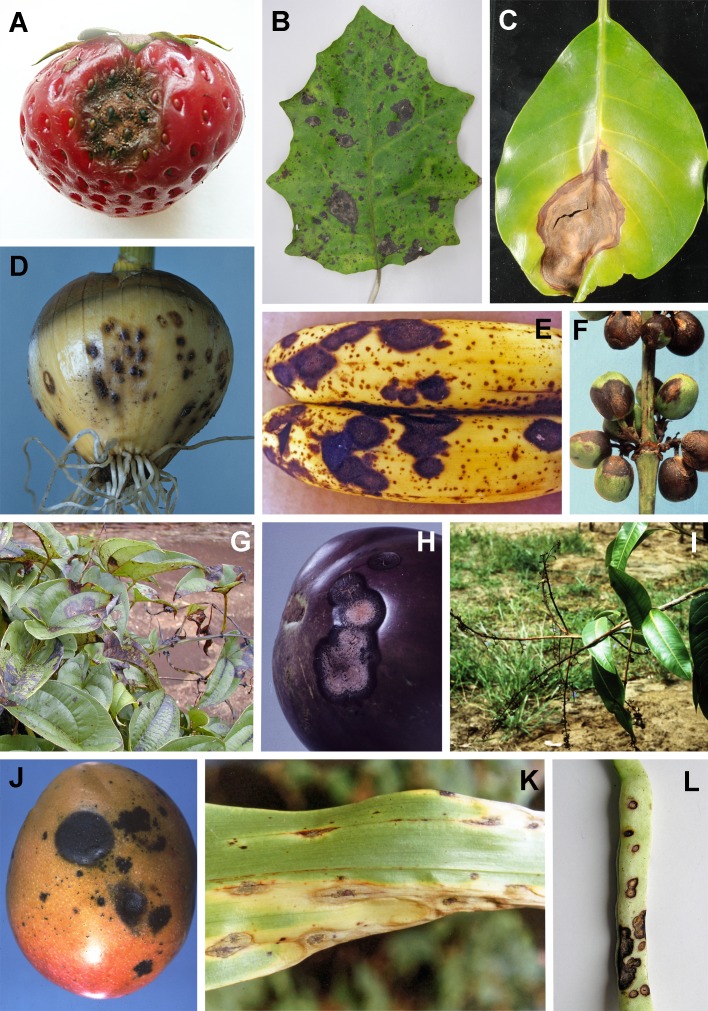
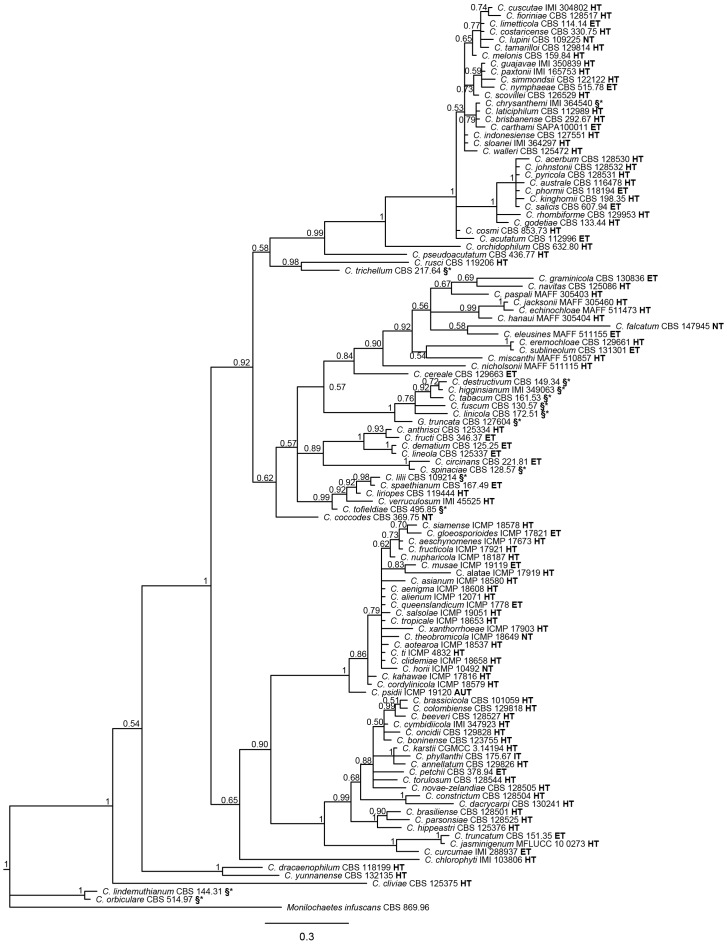
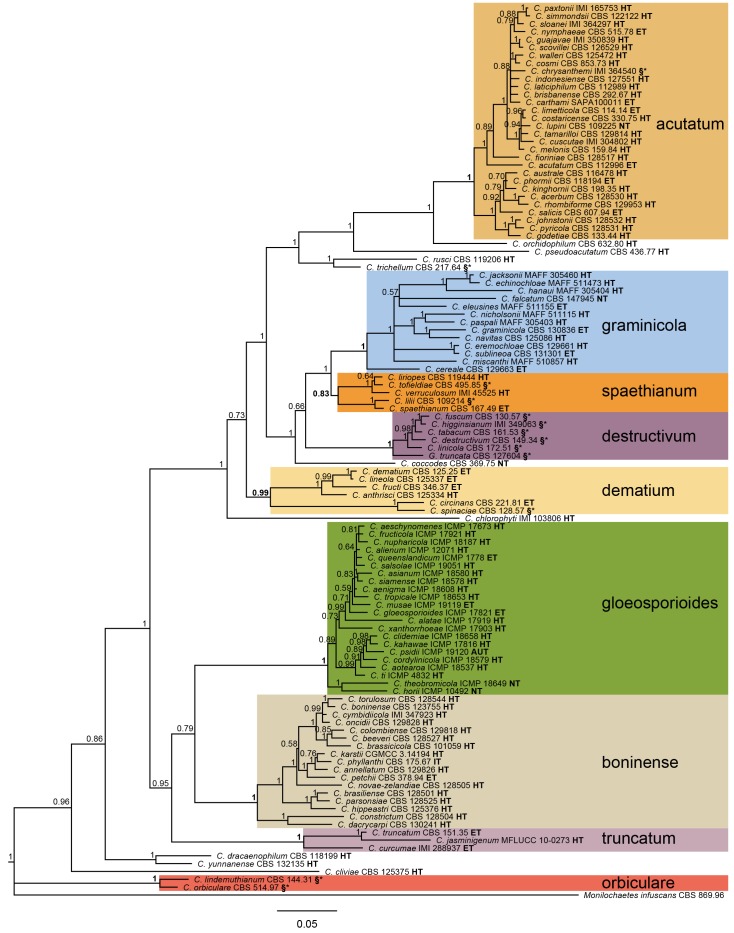
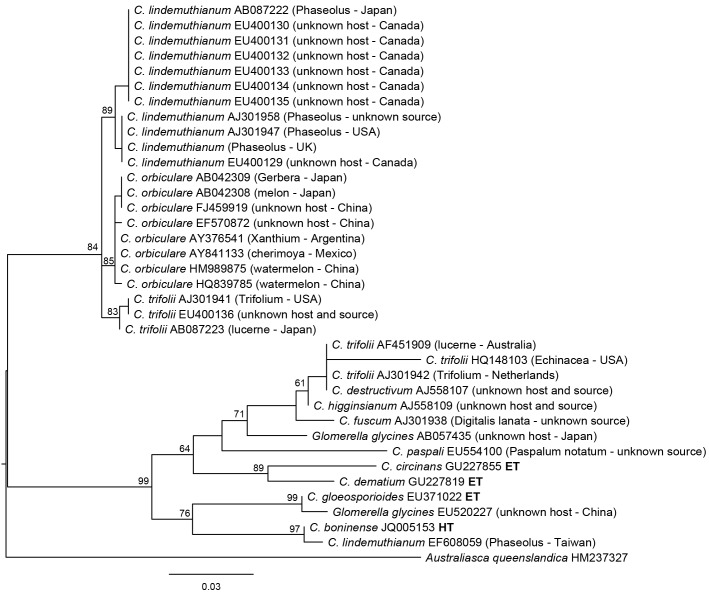
Verification
Claims the paper makes
The claims and statistics of this paper haven’t been checked yet.
Free: it reads the open-access text and checks the first 5 claims that cite a source we can check. Create a free account to check every claim.
Claims other papers make about this one
Each is checked against this paper’s own text: does it say what the citing paper says it does?
The source backs part of the claim, not all of it — or backs it for a different population, condition or comparison.
In the citing paper
“Lifestyle patterns in Colletotrichum can be broadly categorised as endophytic, hemibiotrophic, necrotrophic, latent or quiescent (Perfect et al. 1999, Peres et al. 2005, Cannon et al. 2012, Barimani et al. 2013, de Silva et al. 2017).”
From Colletotrichum: lifestyles, biology, morpho-species, species complexes and accepted species (2021) · cites this paper as Cannon et al. 2012
Experimental — accuracy not yet measuredThe source backs part of the claim, not all of it — or backs it for a different population, condition or comparison.
In the citing paper
“Currently, species delimitation in Colletotrichum relies solely on the use of multi locus phylogenetic analyses (Cannon et al. 2012, Hyde et al. 2014, Jayawardena et al. 2020).”
From Colletotrichum: lifestyles, biology, morpho-species, species complexes and accepted species (2021) · cites this paper as Cannon et al. 2012
Experimental — accuracy not yet measuredThe source backs part of the claim, not all of it — or backs it for a different population, condition or comparison.
In the citing paper
“Species of Colletotrichum have asexual and sexual morphs in their life cycle, which occur on the host plant or plant debris (Sutton 1992, Cannon et al. 2012, Jayawardena et al. 2016a).”
From Colletotrichum: lifestyles, biology, morpho-species, species complexes and accepted species (2021) · cites this paper as Cannon et al. 2012
Experimental — accuracy not yet measuredThe source backs part of the claim, not all of it — or backs it for a different population, condition or comparison.
In the citing paper
“This complex can be distinguished by their curved conidia with truncate base and acute, more strongly curved apex (Damm et al. 2009, Cannon et al. 2012, Jayawardena et al. 2016a).”
From Colletotrichum: lifestyles, biology, morpho-species, species complexes and accepted species (2021) · cites this paper as Cannon et al. 2012
Experimental — accuracy not yet measuredThe source backs part of the claim, not all of it — or backs it for a different population, condition or comparison.
In the citing paper
“From work in the intergenic regions of apn2 and MAT1-2-1 (ApMat) genes, 22 phenotypes (Supplementary Table S1) have been identified (Cannon et al., 2012), and four distinct phylogenies (C. fructicola, C. frgariae sensu stricto, C. melanocaulon and C. jasmine-sambac) within the complex described (Doyle et al., 2013).”
From Mango anthracnose disease: the current situation and direction for future research (2023) · cites this paper as Cannon et al., 2012
Experimental — accuracy not yet measured
12 more claims about this paper
Create a free account to see every claim other papers make about this one.
Self-check
Percentages, sums and reported differences re-computed from the paper’s own numbers.
The self-check needs the paper’s full text.
Citations
Cites
Schoch, C. L., Seifert, K. A., Huhndorf, S., Robert, V., Spouge, J. L., Levesque, C. A., Chen, W., Fungal Barcoding Consortium, Fungal Barcoding Consortium Author List, Bolchacova, E., et al. (2012) · Proceedings of the National Academy of Sciences · doi:10.1073/pnas.1117018109 · Cited by 5,120 · cited 1×
“This is of some concern, as the ITS region is widely used for species definition in the Fungi ( e.g. Begerow et al. 2010, Druzhinina et al. 2005, Eberhardt 2010, Kelly et al. 2011), and has recently been proposed as a universal barcode sequence (Schoch et al. 2011, 2012).”
BackgroundSelf-citationThe Top 10 fungal pathogens in molecular plant pathology
DEAN, R., VAN KAN, J. A. L., PRETORIUS, Z. A., HAMMOND‐KOSACK, K. E., DI PIETRO, A., SPANU, P. D., RUDD, J. J., DICKMAN, M., KAHMANN, R., ELLIS, J., et al. (2012) · Molecular Plant Pathology · doi:10.1111/j.1364-3703.2011.00783.x · Cited by 4,692 · cited 1×
“The genus was recently voted the eighth most important group of plant pathogenic fungi in the world, based on perceived scientific and economic importance (Dean et al .”
BackgroundReconstructing the early evolution of Fungi using a six-gene phylogeny
James, T. Y., Kauff, F., Schoch, C. L., Matheny, P. B., Hofstetter, V., Cox, C. J., Celio, G., Gueidan, C., Fraker, E., Miadlikowska, J., et al. (2006) · Nature · doi:10.1038/nature05110 · Cited by 1,815 · cited 1×
“Several widely used markers, including TUB2 and TEF1, were not included within their list of best-performing genes, and are probably unsuitable as universal fungal markers due to the presence of paralogs (James et al. 2006, Walker et al .”
MethodThe Colletotrichum gloeosporioides species complex
Weir, B. S., Johnston, P. R., & Damm, U. (2012) · Studies in Mycology · doi:10.3114/sim0011 · Cited by 1,646 · cited 8×
“2011, Weir et al .”
BackgroundInfluentialSelf-citationKõljalg, U., Larsson, K., Abarenkov, K., Nilsson, R. H., Alexander, I. J., Eberhardt, U., Erland, S., Høiland, K., Kjøller, R., Larsson, E., et al. (2005) · New Phytologist · doi:10.1111/j.1469-8137.2005.01376.x · Cited by 1,173 · cited 1×
“There is also evidence that ITS sequences alone can constitute useful barcode markers for some groups of the Basidiomycota ( e.g. Kõljalg et al .”
BackgroundAinsworth & Bisby'sdictionary of the fungi.
Ainsworth. (1961) · Cited by 1,145
The Coelomycetes. Fungi imperfecti with pycnidia, acervuli and stromata.
Sutton, B. C. (1980) · Commonwealth Mycological Institute eBooks · Cited by 1,080
O'Connell, R. J., Thon, M. R., Hacquard, S., Amyotte, S. G., Kleemann, J., Torres, M. F., Damm, U., Buiate, E. A., Epstein, L., Alkan, N., et al. (2012) · Nature Genetics · doi:10.1038/ng.2372 · Cited by 1,047 · cited 10×
“2012), but the strains studied (from lentil ( Lens culinaris ) in Canada) belong to the destructivum rather than the truncatum clade (Damm et al. 2009; O’Connell et al. 2012; Figs 2, 3).”
BackgroundInfluentialSelf-citationDIVERSITY AND HOST RANGE OF FOLIAR FUNGAL ENDOPHYTES: ARE TROPICAL LEAVES BIODIVERSITY HOTSPOTS?
Arnold, A. E., & Lutzoni, F. (2007) · Ecology · doi:10.1890/05-1459 · Cited by 1,033 · cited 1×
“(2004) and Arnold & Lutzoni (2007) that the commonest tropical endophytes appear to be host generalists.”
BackgroundFUSARIUM-ID v. 1.0: A DNA Sequence Database for Identifying Fusarium
Geiser, D. M., del Mar Jiménez-Gasco, M., Kang, S., Makalowska, I., Veeraraghavan, N., Ward, T. J., Zhang, N., Kuldau, G. A., & O'donnell, K. (2004) · European Journal of Plant Pathology · doi:10.1023/b:ejpp.0000032386.75915.a0 · Cited by 1,030 · cited 1×
“…for diagnostic purposes in the Fungi , especially beta-tubulin (TUB2) and calmodulin ( e.g. for Aspergillus and Penicillium ; Samson et al. 2007, Peterson 2008, Houbraken et al. 2011), TEF1 (for Fusarium ; Geiser et al. 2004, O’Donnell et al. 2009) and COX1 (for Penicillium ; Seifert et al. 2007).”
Background
Research works printed but not linked: 29
- Agrios GN (2005). Plant Pathology. 5th edn Academic Press, New York
- Arx JA von (1957a). Revision der zu Gloeosporium gestellten Pilze. Verhandligen des Koninklijke Nederlandse Akadademie van Wetenschappen, Afd. Natuurkunde, 2, 51(3): 153 pp
- Arx JA von (1957b). Die Arten der Gattung Colletotrichum Cda. Phytopathologische Zeitschrift 29: 413– 468
- Barrus MF (1918). Varietal susceptability of beans to strains of Colletotrichum lindemuthianum (Sacc. & Magn.) B. & C. Phytopathology 8: 589– 605
- Berlese AN (1893). Icones Fungorum Omnium hucusque Cognitorum. Pergola, Avellino vol. 1: 91– 118
- Chadefaud M (1960). Les Végétaux non Vasculaires. Cryptogamie. In: Traité de Botanique Systématique (Chadefaud M Emberger L, eds). Masson, Paris vol. 1: 1018 pp
- Corda ACI (1831). Die Pilze Deutschlands. In: Deutschlands Flora in Abbildungen nach der Natur mit Beschreibungen (Sturm J, ed.). Sturm, Nürnberg vol. 3, Abt. 12: 33– 64, tab. 21–32
- Corda ACI (1837). Icones Fungorum hucusque cognitorum vol. 1 Calve, Prague
- Corda ACI (1840). Icones Fungorum hucusque cognitorum vol. 4 Calve, Prague
- Edgerton CW (1912). Plus and minus strains in an ascomycete. Science 35: 151
- Hennings P (1898). Die in den Gewächshäusern des Berliner Botanischen Gartens beobachteten Pilze. Verhandlungen des Botanischen Vereins der Provinz Brandenburg 40: 109– 177
- Hyde KD Cai L McKenzie EHC Yang YL Zhang JZ (2009b). Colletotrichum: a catalogue of confusion. Fungal Diversity 39: 1– 17
- Krüger F (1913). Beiträge zur Kenntnis einiger Gloeosporien. Arbeiten aus der Kaiserlichen Biologischen Anstalt für Land- und Forstwirtschaft. 9: 233– 323
- Leahy R Schubert T Strandberg J Stamps B Norman D (1995). Anthracnose of leatherleaf fern. Plant Pathology Circular 372: 4 pp
- Lehman SG Wolf FA (1926). Soybean anthracnose. Journal of Agricultural Research Washington 33: 381– 390
- Montagne C (1849). Sixième centurie des plantes cellulaires nouvelles tant indigènes qu’exotiques. Annales des Sciences Naturelles. Botanique Série 3, 12: 285– 320
- Palarpawar MY Ghurde VR (1988). Some new hosts of Colletotrichum curcumae. Indian Journal of Mycology and Plant Pathology 18: 220– 221
- Petrak F (1924). Über die phylogenetischen Beziehungen der Gattung Phyllachora und ihre Bedeutung für das System der dothidealean Pilze. Annales Mycologici 22: 1– 10
- Phuong THN Pettersson OV Olsson P Nguyen PTH (2010). Identification of Colletotrichum species associated with anthracnose disease of coffee in Vietnam. European Journal of Plant Pathology 127: 73– 87 · DOI
- Prihastuti H Cai L Chen H McKenzie EHC Hyde KD (2009). Characterization of Colletotrichum species associated with coffee berries in northern Thailand. Fungal Diversity 39: 89– 109
- Prusky D Freeman S Dickman MB (eds) (2000). Colletotrichum. Host Specificity, Pathology and Host-Pathogen Interaction. APS Press, St Paul, USA
- Ramos AP Merali Z Talhinhas P Sreenivasaprasad S Oliveira H (2006). Molecular and morphological characterisation of Colletotrichum species involved in citrus anthracnose in Portugal. Bulletin OILB/SROP 29: 317– 326
- Schoch C Seifert K Crous P (2011). Progress on DNA barcoding of Fungi. IMA Fungus 2: (5).
- Shivas RG Tan YP (2009). A taxonomic reassessment of Colletotrichum acututum, introducing C. fioriniae comb. et stat. nov. and C. simmondsii sp. nov. Fungal Diversity 39: 111– 122
- Sydow H (1928). Fungi Chilenses a cl. E. Werdermann lecti. Pars prima. Annales Mycologici 26: 100– 126
- Theissen F Sydow H (1915). Die Dothideales. Kritische-systematische Originaluntersuchungen. Annales Mycologici 13: 147– 746
- Vaillancourt L Wang J Hanau R (2000). Genetic regulation of sexual compatibility in Glomerella graminicola. In: Colletotrichum. Host Specificity, Pathology and Host-Pathogen Interaction (Prusky D Freeman S Dickman MB, eds). APS Press, St Paul, USA: 29– 44
- Wheeler HE (1954). Genetics and evolution of heterothallism in Glomerella. Phytopathology 44: 342– 345
- Yang YL Liu ZY Cai L Hyde KD Zu ZN McKenzie EHC (2009). Colletotrichum anthracnose of Amaryllidaceae. Fungal Diversity 39: 123– 146
Cited by
Items 301–400 of 1,002
Genetic Mapping of the Root Mycobiota in Rice and its Role in Drought Tolerance
Andreo‐Jiménez, B., Beest, D. E. T., Kruijer, W., Vannier, N., Kadam, N. N., Melandri, G., Jagadish, S. V. K., van der Linden, G., Ruyter-Spira, C. P., Vandenkoornhuyse, P., et al. (2023) · Rice · doi:10.1186/s12284-023-00641-4 · Cited by 26
Shoot Blight on Chinese Fir (Cunninghamia lanceolata) is Caused byBipolaris oryzae
Huang, L., Zhu, Y., Yang, J., Li, D., Li, Y., Bian, L., & Ye, J. (2017) · Plant Disease · doi:10.1094/pdis-07-17-1032-re · Cited by 32
Neuroprotective Compound from an Endophytic Fungus, Colletotrichum sp. JS-0367
Song, J. H., Lee, C., Lee, D. Y., Kim, S., Bang, S., Shin, M., Lee, J. H., Kang, K. S., & Shim, S. H. (2018) · Journal of Natural Products · doi:10.1021/acs.jnatprod.8b00033 · Cited by 26
Moreira, R. R., Zielinski, E. C., Castellar, C., Filho, A. B., & Mio, L. L. M. D. (2020) · European Journal of Plant Pathology · doi:10.1007/s10658-020-02138-y · Cited by 34
Dela Cueva, F. M., Mendoza, J. S., & Balendres, M. A. (2018) · Crop Protection · doi:10.1016/j.cropro.2018.06.011 · Cited by 25
Babaahmadi, G., Mehrabi‐Koushki, M., & Hayati, J. (2017) · Mycological Progress · doi:10.1007/s11557-017-1360-7 · Cited by 25
“2012), Colletotrichum (Cannon et al. 2012; Jayawardena et al. 2016), Phyllosticta (Wikee et al.”
BackgroundColletotrichum species associated with cassava anthracnose in China
Liu, X., Shi, T., Li, B., Cai, J., Li, C., & Guixiu, H. (2018) · Journal of Phytopathology · doi:10.1111/jph.12765 · Cited by 29
A New Colletotrichum Species Associated with Brown Blight Disease on Camellia sinensis
Wan, Y., Zou, L., Zeng, L., Tong, H., & Chen, Y. (2020) · Plant Disease · doi:10.1094/pdis-09-20-1912-re · Cited by 27
Pest categorisation of Colletotrichum fructicola
(PLH), E. P. O. P. H., Bragard, C., Dehnen‐Schmutz, K., Serio, F. D., Gonthier, P., Jacques, M., Miret, J. A. J., Justesen, A. F., MacLeod, A., Magnusson, C. S., et al. (2021) · EFSA Journal · doi:10.2903/j.efsa.2021.6803 · Cited by 28
“fructicola has been reported to cause anthracnose, bitter rot and leaf spotting diseases on a wide range of woody or herbaceous plants growing in tropical, subtropical and temperate climates worldwide (Damm et al., 2010; Cannon et al., 2012; Weir et al., 2012; Fu et al., 2019).”
BackgroundInfluentialMycoherbicides for the Noxious Meddlesome: Can Colletotrichum be a Budding Candidate?
Chakraborty, A., & Ray, P. (2021) · Frontiers in Microbiology · doi:10.3389/fmicb.2021.754048 · Cited by 29
Colletotrichum Spp. Diversity Between Leaf Anthracnose and Crown Rot From the Same Strawberry Plant
Hu, S., Zhang, Y.-T. Y., Yu, H. J., Zhou, J., Hu, M., Liu, A., Wu, J., Wang, H., & Zhang, C. (2022) · Frontiers in Microbiology · doi:10.3389/fmicb.2022.860694 · Cited by 30
Riolo, M., Pane, A., Santilli, E., Moricca, S., & Cacciola, S. O. (2022) · Plant Pathology · doi:10.1111/ppa.13652 · Cited by 27
The evolution of mini-chromosomes in the fungal genus Colletotrichum
Wang, H., Huang, R., Ren, J., Tang, L., Huang, S., Chen, X., Fan, J., Li, B., Wang, Q., Hsiang, T., et al. (2023) · mBio · doi:10.1128/mbio.00629-23 · Cited by 30
Won, S., Kim, C. W., Moon, J., Choi, S., Ajuna, H. B., Choub, V., Yun, J., & Ahn, Y. S. (2023) · Biological Control · doi:10.1016/j.biocontrol.2023.105405 · Cited by 25
Dias, M. D., Fonseca, M. E. N., Dias-Neto, J. J., dos Santos, M. D. D. M., Pandolfo, G. M., Boiteux, L. S., & Café‐Filho, A. C. (2018) · Tropical Plant Pathology · doi:10.1007/s40858-018-0249-6 · Cited by 25
Perkins, M. L., Joyce, D. C., & Coates, L. M. (2018) · Scientia Horticulturae · doi:10.1016/j.scienta.2018.11.012 · Cited by 25
Colletotrichum Species Associated with Japanese Plum (Prunus salicina) Anthracnose in South Korea
Hassan, O., Lee, Y.-S., & Chang, T. (2019) · Scientific Reports · doi:10.1038/s41598-019-48108-1 · Cited by 28
Olivé, M., & Campo, S. (2020) · Archives of Microbiology · doi:10.1007/s00203-020-02030-7 · Cited by 25
“The genus Colletotrichum comprises an important number of plant pathogens causing anthracnose diseases on numerous monocot and dicot plant species worldwide (Cannon et al. 2012).”
BackgroundVitale, A., Alfenas, A. C., de Siqueira, D. L., Magistà, D., Perrone, G., & Polizzi, G. (2020) · Plants · doi:10.3390/plants9020182 · Cited by 24
Macedo, D. M., Pereira, O. L., Hora Júnior, B. T., Weir, B. S., & Barreto, R. W. (2016) · Australasian Plant Pathology · doi:10.1007/s13313-015-0388-x · Cited by 24
“riograndense is a member of the Bspaethianum clade^ of the Colletotrichum genus (Cannon et al. 2012), along with other falcate-spored species, this clade is distinct from superficially morphologically similar species such as C.”
BackgroundSelf-citationIMPROVING THE MANAGEMENT OF THE REGION’S SOCIAL ECONOMIC DEVELOPMENT BASED ON RISK MANAGEMENT
Ревовна, А. Э., Gavrilova, O. A., & Karlina, E. P. (2024) · International Conference Process Management and Scientific Developments · doi:10.34660/inf.2021.43.49.001 · Cited by 24
Phookamsak, R., Liu, J., Chukeatirote, E., McKenzie, E. H. C., & Hyde, K. D. (2013) · Cryptogamie Mycologie · doi:10.7872/crym.v34.iss4.2013.303 · Cited by 27
Jang, Y. J., Seo, M., Hersh, C. P., Rhee, S., Kim, Y., & Lee, G. P. (2018) · Theoretical and Applied Genetics · doi:10.1007/s00122-018-3235-y · Cited by 26
First report of fruit and leaf anthracnose caused by Colletotrichum karstii on avocado in Turkey
Uysal, A., & Kurt, Ş. (2020) · Crop Protection · doi:10.1016/j.cropro.2020.105145 · Cited by 25
Inoue, Y., Vy, T. T. P., Singkaravanit‐Ogawa, S., Zhang, R., Yamada, K., Ogawa, T., Ishizuka, J., Narusaka, Y., & Takano, Y. (2023) · New Phytologist · doi:10.1111/nph.18790 · Cited by 33
Salotti, I., Liang, Y.-J., Ji, T., & Rossi, V. (2023) · Frontiers in Plant Science · doi:10.3389/fpls.2023.1069092 · Cited by 25
“Species within a clade are closely related to each other (Cannon et al., 2012; Vieira et al., 2020; Talhinhas and Baroncelli, 2021) and have similar temperature requirements (Salotti et al.”
BackgroundAlhudaib, K. A., Ismail, A. M., & Magistà, D. (2023) · Journal of Fungi · doi:10.3390/jof9070705 · Cited by 26
de Queiroz, C. B., Correia, H. L. N., Menicucci, R. P., Vidigal, P. M. P., & de Queiroz, M. V. (2017) · Genome Announcements · doi:10.1128/genomea.00214-17 · Cited by 24
Veloso, J. S., Lima, W. G., Reis, A., Doyle, V. P., Michereff, S. J., & Câmara, M. P. S. (2020) · Plant Pathology · doi:10.1111/ppa.13276 · Cited by 30
Anthracnose of Mango Incited by Colletotrichum gloeosporioides : A Comprehensive Review
Kumari, P. (2017) · International Journal of Pure & Applied Bioscience · doi:10.18782/2320-7051.2478 · Cited by 25
Genetic diversity of Colletotrichum lupini and its virulence on white and Andean lupin
Alkemade, J., Messmer, M., Voegele, R. T., Finckh, M. R., & Hohmann, P. (2021) · Scientific Reports · doi:10.1038/s41598-021-92953-y · Cited by 24
Hypovirulence caused by mycovirus in Colletotrichum fructicola
Guo, J., Zhou, X., Xie, F., Cao, J., Liu, S., Zhong, J., & Zhu, H. (2022) · Frontiers in Plant Science · doi:10.3389/fpls.2022.1038781 · Cited by 23
“Colletotrichum is a class of pathogenic fungi that can cause great economic loss and infect almost all field crops (Cannon et al., 2007).”
BackgroundFirst Record of Colletotrichum anthrisci Causing Anthracnose on Avocado Fruits in Chile
Bustamante, M. I., Osorio-Navarro, C., Fernández, Y., Bourret, T. B., Zamorano, A., & Henríquez-Sáez, J. L. (2022) · Pathogens · doi:10.3390/pathogens11101204 · Cited by 23
“A multi-locus data set consisting of sequences of six loci (act, chs-1, gapdh, his3, ITS, and tub2) of Colletotrichum species was retrieved from the NCBI database and assembled along with the corresponding sequences of the Chilean isolates, with C. gloeosporioides (type strain CBS 112999) and C. karsti (type strain CB…”
BackgroundResultInfluentialDraft Genome Assembly of Colletotrichum chlorophyti , a Pathogen of Herbaceous Plants
Gan, P., Narusaka, M., Tsushima, A., Narusaka, Y., Takano, Y., & Shirasu, K. (2017) · Genome Announcements · doi:10.1128/genomea.01733-16 · Cited by 25
Colletotrichum acidae sp. nov. from northern Thailand and a new record of C. dematium on Iris sp.
Samarakoon, M. C. (2018) · Mycosphere · doi:10.5943/mycosphere/9/3/9 · Cited by 27
“They also occur as symptomless endophytes in living plants and as saprobes of dead plant material in aquatic and terrestrial habitats (Hyde et al. 2009a, Wikee et al. 2011, Cannon et al. 2012, Jayawardena et al. 2016a, Wijayawardene et al. 2017).”
BackgroundInfluentialMayorquin, J. S., Nouri, M. T., Peacock, B. B., Trouillas, F. P., Douhan, G. W., Kallsen, C. E., & Eşkalen, A. (2019) · Plant Disease · doi:10.1094/pdis-08-18-1425-re · Cited by 28
Genome Sequence Resource of the Wide-Host-Range Anthracnose Pathogen Colletotrichum siamense
Meng, Y., Gleason, M. L., Zhang, R., & Sun, G. (2019) · Molecular Plant-Microbe Interactions · doi:10.1094/mpmi-01-19-0010-a · Cited by 29
Grammen, A., Campenhout, J. V., Geeraerd, A. H., & Keulemans, W. (2019) · European Journal of Plant Pathology · doi:10.1007/s10658-019-01812-0 · Cited by 25
Diseases caused by fungi and oomycetes
Batuman, Ö., Ritenour, M. A., Civera, A. V., Li, H., Hyun, J.-W., Catara, V., Ma, H., & Cano, L. M. (2020) · Elsevier eBooks · doi:10.1016/b978-0-12-812163-4.00017-6 · Cited by 27
Colletotrichum keratitis: A rare yet important fungal infection of human eyes
Hung, N., Hsiao, C., Yang, C., Lin, H., Yeh, L., Fan, Y., & Sun, P. (2020) · Mycoses · doi:10.1111/myc.13058 · Cited by 28
“Four patients who had a history of farming were injured by a twig (2), dirty water (1) and soil (1), respectively.”
BackgroundLi, C., Tang, B., Cao, S., Bao, Y., Sun, W., Zhao, Y., & Liu, F. (2020) · Pest Management Science · doi:10.1002/ps.6122 · Cited by 25
Carneiro, G. A., & Baric, S. (2021) · Plant Disease · doi:10.1094/pdis-11-20-2482-re · Cited by 25
Liang, X., Yao, L., Hao, X., Li, B., Kong, Y., Lin, Y., Cao, M., Dong, Q., Zhang, R., Rollins, J. A., et al. (2021) · Applied and Environmental Microbiology · doi:10.1128/aem.00474-21 · Cited by 25
“The Colletotrichum genus encompasses a wide range of plant pathogens that collectively damage more than 3,000 plants (3).”
BackgroundRather, R. A., Bano, H., Perveen, K., Bukhari, N. A. W., Padder, S. A., Baba, T. R., Qureshi, A., Khan, N. A., Khan, A. H., & Samaraweera, H. (2022) · Journal of King Saud University - Science · doi:10.1016/j.jksus.2022.101876 · Cited by 23
Katoch, A., Sharma, P., & Sharma, P. N. (2016) · Journal of Plant Biochemistry and Biotechnology · doi:10.1007/s13562-016-0384-4 · Cited by 26
“The identification of above species was facilitated by the release of validated sequences for all accepted Colletotrichum species (Cannon et al. 2012; Damm et al. 2012a, b; Weir et al. 2012).”
BackgroundMethodInfluentialMorkeliūnė, A., Rasiukevičiūtė, N., & Valiuškaitė, A. (2021) · Agriculture · doi:10.3390/agriculture11010080 · Cited by 24
Liang, C., Zhang, B., Zhou, Y., Yin, H., An, B., Lin, D., He, C., & Luo, H. (2021) · Frontiers in Microbiology · doi:10.3389/fmicb.2021.629387 · Cited by 25
Singkaravanit‐Ogawa, S., Kosaka, A., Kitakura, S., Uchida, K., Nishiuchi, T., Ono, E., Fukunaga, S., & Takano, Y. (2021) · The Plant Journal · doi:10.1111/tpj.15488 · Cited by 25
Astolfi, P., Velho, A. C., Moreira, V., Mondino, P., Alaniz, S., & Stadnik, M. J. (2022) · Phytopathology · doi:10.1094/phyto-12-21-0527-sc · Cited by 24
Tibpromma, S., Karunarathna, S. C., Bhat, J. D., Suwannarach, N., Stephenson, S. L., Elgorban, A. M., Al-Rejaie, S. S., Xu, J., & Mortimer, P. E. (2022) · Diversity · doi:10.3390/d14040287 · Cited by 25
Koima, I. N., Kilalo, D. C., Orek, C., Wagacha, J. M., & Nyaboga, E. N. (2023) · Journal of Fungi · doi:10.3390/jof9010100 · Cited by 25
“Morphological characteristics alone cannot identify Colletotrichum species [51,52] due to morphological uniformity within the genus and the fact that there are few distinctive morphological characters available for identification [18].”
The Potential Fungal Pathogens of Euonymus japonicus in Beijing, China
Lin, L., Pan, M., Hong, G., Tian, C., & Fan, X. (2023) · Journal of Fungi · doi:10.3390/jof9020271 · Cited by 23
“Internal transcribed spacer region (ITS) is always used to assign Colletotrichum species to species complexes [16,17].”
BackgroundSam-on, M. F. S., Mustafa, S., Yusof, M. T., Hashim, A. M., & Aizuddin, K. N. A. K. (2024) · Saudi Journal of Biological Sciences · doi:10.1016/j.sjbs.2024.104046 · Cited by 26
“Three major Chili anthracnose species commonly reported in Southeast Asia which are C. truncatum , C. siamense and C. scovillei (Weir et al., 2012; Cannon et al., 2012).”
BackgroundRocha, S. L., Jorge, V. L., Lúcia, T. M. C. D., Barreto, R. W., Evans, H. C., & Elliot, S. L. (2014) · Arthropod-Plant Interactions · doi:10.1007/s11829-014-9329-9 · Cited by 22
“…cingulata—Colletotrichum gloeosporioides is now the preferred name for this fungus as we move towards a unified nomenclatural system for the Fungi (Cannon et al. 2012)— and found that the ants are able to free a significant proportion of the leaves from contamination by epiphytic fungal spores…”
BackgroundInfluentialQiu, M.-M., Ke-fu, C., Liu, Q., Miao, W.-N., Liu, B., & Xu, L. F. (2021) · CrystEngComm · doi:10.1039/d1ce01256h · Cited by 22
Phylogenomics and adaptive evolution of the Colletotrichum gloeosporioides species complex
Ma, Z., Liu, F., Tsui, C. K. M., & Cai, L. (2025) · Communications Biology · doi:10.1038/s42003-025-08024-9 · Cited by 25
“However, the genome-wide evolutionary processes among asexual and host-speci fi c CGSCs, such as C. camelliae , C. kahawae , and C. musae 2,11,23,32 , remain largely unknown.”
Es-Soufi, R., Tahiri, H., Azaroual, L., Oualkadi, A. E., Martin, P., Badoc, A., & Lamarti, A. (2020) · Agricultural Sciences · doi:10.4236/as.2020.113017 · Cited by 27
Paniz‐Mondolfi, A., Agemy, S. A., Cañete-Gibas, C. F., Gitman, M., Iacob, C. E., Necula, I., Wang, C., Noguera, L. A. D., Sanders, C. J., Wiederhold, N. P., et al. (2021) · Medical Mycology Case Reports · doi:10.1016/j.mmcr.2021.04.002 · Cited by 21
“C. chlorophyti is a pathogen of common herbaceous plants [8] including crops such as tomato, soybean [13] and legumes [14].”
InfluentialFirst report of anthracnose caused by Colletotrichum fructicola on Brassica parachinensis in China
Yu, L., Lan, G., Yang, Y., Tang, Y., Li, Z., She, X., & He, Z. (2021) · Crop Protection · doi:10.1016/j.cropro.2021.105842 · Cited by 22
Manjunatha, N., Sharma, J., Pokhare, S. S., Agarrwal, R., Patil, P. G., Sirsat, J. D., Chakranarayan, M. G., Bicchal, A., Ukale, A. S., & Marathe, R. A. (2022) · Journal of Fungi · doi:10.3390/jof8101040 · Cited by 22
Kabir, M. Y., & Hossain, S. K. (2024) · New Zealand Journal of Crop and Horticultural Science · doi:10.1080/01140671.2024.2348137 · Cited by 21
“A high temperature hastens the ripening process through increasing respiration (Cannon et al. 2012).”
Colletotrichum plurivorum, the Causal Agent of Anthracnose Fruit Rot of Papaya in Taiwan
Sun, Y. C., Damm, U., & Huang, C. (2019) · Plant Disease · doi:10.1094/pdis-08-18-1423-pdn · Cited by 26
Self-citationBedding Plant Production and the Challenge of Fungal Diseases
Guarnaccia, V., Hand, F. P., Garibaldi, A., & Gullino, M. L. (2020) · Plant Disease · doi:10.1094/pdis-09-20-1955-fe · Cited by 21
Barthélémy, M., Guérineau, V., Genta‐Jouve, G., Roy, M., Chave, J., Guillot, R., Pellissier, L., Wolfender, J., Stien, D., Éparvier, V., et al. (2020) · Scientific Reports · doi:10.1038/s41598-020-74852-w · Cited by 23
Diversity of Colletotrichum species causing onion anthracnose in Brazil
Lopes, L. H. R., Boiteux, L. S., Rossato, M., Aguiar, F. M., Fonseca, M. E. N., Oliveira, V. R., & Reis, A. (2021) · European Journal of Plant Pathology · doi:10.1007/s10658-020-02166-8 · Cited by 23
Guerrero, J. M., Sierra, B. E. G., & Alvarez, J. (2021) · Frontiers in Bioengineering and Biotechnology · doi:10.3389/fbioe.2021.650351 · Cited by 21
Hossain, M. I., Ahmad, K., Vadamalai, G., Siddiqui, Y., Saad, N., Ahmed, O. H., Hata, E. M., Adzmi, F., Rashed, O., Rahman, M. Z., et al. (2021) · Biology · doi:10.3390/biology10090862 · Cited by 27
Salustiano, M. E., Rondon, M. N., Abreu, L. M., Costa, S. D. S., Machado, J. D. C., & Pfenning, L. H. (2014) · Tropical Plant Pathology · doi:10.1590/s1982-56762014000500002 · Cited by 23
“All 21 strains of Colletotrichum associated with the ramulosis of cotton formed a single phylogenetic lineage within the recently delimited C. theobromicola clade of the C. gloeosporioides species complex (Rojas et al., 2010; Weir et al., 2012).”
BackgroundResultInfluentialSato, T., Moriwaki, J., & Kaneko, S. (2015) · Japan Agricultural Research Quarterly JARQ · doi:10.6090/jarq.49.351 · Cited by 21
Fungal Endophyte Communities in Begonia Species from the Brazilian Atlantic Rainforest
Correia, A. M. L., de Lira, S. P., Assis, M. A., & Rodrigues, A. L. (2017) · Current Microbiology · doi:10.1007/s00284-017-1400-1 · Cited by 22
Lin, S.-R., Lin, Y.-H., Ariyawansa, H. A., Chang, Y.-C., Yu, S.-Y., Tsai, I., Chung, C., & Hung, T. (2022) · Plant Disease · doi:10.1094/pdis-03-22-0509-re · Cited by 22
Disease-Causing Agents in Cashew: A Review in a Tropical Cash Crop
Monteiro, F., Romeiras, M. M., Barnabé, J., Catarino, S., Batista, D., & Sebastiana, M. (2022) · Agronomy · doi:10.3390/agronomy12102553 · Cited by 26
“gloeosporioides is considered as the most challenging species complex to resolve and is frequently regarded as a dumping taxon for diverse Colletotrichum fungi; in this sense, the species name is of little practical use [57].”
BackgroundArmand, A., Hyde, K., Huanraluek, N., Wang, Y., & Jayawardena, R. S. (2023) · Mycosphere · doi:10.5943/mycosphere/14/si2/2 · Cited by 23
Norphanphoun, C., & Hyde, K. D. (2023) · Pathogens · doi:10.3390/pathogens12121436 · Cited by 23
“Given its economic significance, Colletotrichum causes substantial losses in crop yield and quality globally, affecting major plants like mango, banana, Citrus , pepper, coffee, and strawberry [18–21].”
BackgroundSato, T., & Moriwaki, J. (2013) · 日本微生物資源学会誌 · Cited by 26
Sharma, G., Pinnaka, A. K., & Shenoy, B. D. (2014) · Archives of Phytopathology and Plant Protection · doi:10.1080/03235408.2014.880577 · Cited by 28
“…acutatum, C. gloeosporioides and C. truncatum, as delimited traditionally, are now regarded as species complexes based on multigene sequence analysis (Damm et al. 2009; Cannon et al. 2012; Damm, Cannon, Woudenberg, Crous 2012; Damm, Cannon, Woudenberg, Johnston, et al. 2012; Weir et al. 2012).”
InfluentialCoelomycete Fungi in the Clinical Lab
Stchigel, A. M., & Sutton, D. A. (2013) · Current Fungal Infection Reports · doi:10.1007/s12281-013-0139-9 · Cited by 20
Tugizimana, F., Djami‐Tchatchou, A. T., Fahrmann, J. F., Steenkamp, P. A., Piater, L. A., & Dubery, I. A. (2019) · Scientific Reports · doi:10.1038/s41598-019-38692-7 · Cited by 21
Zhu, J. Z., Guo, J., Zhao, H., Zhang, X. T., Li, X. G., & Zhong, J. (2021) · Frontiers in Microbiology · doi:10.3389/fmicb.2021.653809 · Cited by 21
Colletotrichum karstii: causal agent of anthracnose ofDendrobium nobilein Mexico
Fernández-Herrera, E., Rentería-Martínez, M. E., Ramírez-Bustos, I. I., Moreno-Salazar, S. F., Meza, A. O., & Guillén-Sánchez, D. (2020) · Canadian Journal of Plant Pathology · doi:10.1080/07060661.2020.1731711 · Cited by 20
Evangelista-Martínez, Z., Ek-Cen, A., Torres-Calzada, C., & Uc-Várguez, A. (2022) · Journal of Plant Pathology · doi:10.1007/s42161-022-01104-3 · Cited by 23
“Anthracnose is a cosmopolitan fungal disease that affects many tropical and subtropical plants (Cannon et al. 2012).”
Chung, P.-C., Wu, H., Chen, Y.-C., Hung, T., & Chung, C. (2022) · PLoS ONE · doi:10.1371/journal.pone.0270687 · Cited by 21
“Colletotrichum is a fungal genus containing important plant pathogens causing anthracnose diseases of various economically valuable crops [3].”
BackgroundLaevens, G. C. S., Dolson, W. C., Drapeau, M. M., Telhig, S., Ruffell, S. E., Rose, D. M., Glick, B. R., & Stegelmeier, A. A. (2024) · Biology · doi:10.3390/biology13121014 · Cited by 22
Newfeld, J., Ujimatsu, R., & Hiruma, K. (2025) · Microorganisms · doi:10.3390/microorganisms13020428 · Cited by 19
“C. tofieldiae is a species of Colletotrichum belonging to the Spaethianum species complex, causing anthracnose in Agapanthus , Lupinus , Semele , and Tofieldia species [81,104].”
Influence of Host and Geographic Locale on the Distribution of Colletotrichum cereale Lineages
Beirn, L. A., Clarke, B. B., & Crouch, J. A. (2014) · PLoS ONE · doi:10.1371/journal.pone.0097706 · Cited by 19
“The development of similar assays for other Colletotrichum species where species concepts are currently in a state of flux [20], may prove useful for typification, species delineation, and the examination of temporal changes in these organisms.”
MethodCiampi‐Guillardi, M., Baldauf, C., de Souza, A. P., da Silva, G. J., & Amorim, L. (2014) · Phytopathology · doi:10.1094/phyto-06-13-0165-r · Cited by 19
Hunupolagama, D. M. (2015) · Plant Pathology & Quarantine · doi:10.5943/ppq/5/2/10 · Cited by 21
“Introduction Anthracnose is a common disease of tropical fruits, vegetables and leafy vegetables (Cannon et al. 2012).”
BackgroundEtiology of Cyclocarya paliurus Anthracnose in Jiangsu Province, China
Zheng, X.-R., Zhang, M.-J., Shang, X., Fang, S., & Chen, F. (2021) · Frontiers in Plant Science · doi:10.3389/fpls.2020.613499 · Cited by 21
Xiong, Q., Xu, J., Zhao, Y., & Wang, K. (2015) · Annals of Applied Biology · doi:10.1111/aab.12209 · Cited by 21
“) (Bhadauria et al., 2011; Cannon et al., 2012).”
Xu, S., Christensen, M. J., & Li, Y. (2017) · European Journal of Plant Pathology · doi:10.1007/s10658-017-1221-x · Cited by 19
“The concatenated dataset was composed of 20 Colletotrichum species (Table 1), each with 1929 characters (nucleotides and gaps), including ITS region (555) + ACT region (263) + TUB2 gene (511) + GAPDH region (210) + HIS3 gene (390).”
BackgroundInfluentialFungal pathogens associated with pre‐ And postharvest fruit rots of mango in southern Iran
Goudarzi, A., Samavi, S., Mazraie, M. A., & Majidi, Z. (2021) · Journal of Phytopathology · doi:10.1111/jph.13027 · Cited by 19
Ma, T., Yang, C., Cai, F., & Chen, Z. (2022) · Microbial Pathogenesis · doi:10.1016/j.micpath.2022.105537 · Cited by 23
Chen, X., Chen, X., Tan, Q., Mo, X., Liu, J., & Zhou, G. (2022) · Frontiers in Microbiology · doi:10.3389/fmicb.2022.918339 · Cited by 22
“Therefore, the pathogenic mechanism of anthracnose has always been a research hotspot (Hyde et al., 2009; Cannon et al., 2012).”
BackgroundGu, Q., Chu, S., Huang, Q., Chen, A., Li, L., & Li, R. (2023) · Plants · doi:10.3390/plants12030421 · Cited by 19
“As previously described [47,48,68,69], the internal transcribed spacer region (ITS), superoxide dismutase 2 (Sod2), DNA lyase gene (Apn2), and mating type protein (Mat1) were amplified by pairs ITS1/4, SOD625F/R, Apn1W1F/Apn1W1R, Mat1M72F/Mat1M72R, respectively.”
BackgroundArmand, A., Hyde, K. D., & Jayawardena, R. S. (2023) · Plants · doi:10.3390/plants12040971 · Cited by 21
“Colletotrichum species have a wide host range and geographical distribution worldwide [16,44].”
BackgroundKhodadadi, F., Santander, R. D., McHenry, D. J., Jurick, W. M., & Aćimović, S. G. (2023) · Plant Disease · doi:10.1094/pdis-12-22-2947-re · Cited by 19
Wang, L., Zhu, Y.-L., Zheng, T., Zhu, Z., Peng, Y., Wu, Y., Chen, J., Liu, S., & Wen, H. (2023) · Dalton Transactions · doi:10.1039/d3dt01057k · Cited by 18
Aumentado, H. D., Armand, A., Phukhamsakda, C., Hyde, K. D., Jones, E. B. G., & Jayawardena, R. S. (2024) · European Journal of Plant Pathology · doi:10.1007/s10658-024-02819-y · Cited by 19
“Colletotrichum species are important plant pathogens causing anthracnose on various plant species worldwide (Cannon et al., 2012; Jayawardena et al., 2016, 2021a, 2021b; Talhinhas & Baroncelli, 2021).”
Morphological and molecular identification of fungi isolated from spoilt apples in Ota metropolis
Olumuyiwa, E. O., AJETUNMOBI, M. T., Adeniji, O. F., & Ogunyemi, A. K. (2025) · BMC Microbiology · doi:10.1186/s12866-025-04079-0 · Cited by 23
“These symptoms align with fungal diseases documented in tropical fruits [16] and are consistent with recent reports of postharvest apple spoilage caused by Penicillium , Alternaria , and Lasiodiplodia spp. [2].”
Harnessing nature’s arsenal: sustainable plant-based strategies for phytopathogen control
Calefi, G. G., Silva, N. B. S., Alhatlani, B. Y., Abdallah, E. M., & Martins, C. H. G. (2025) · Frontiers in Microbiology · doi:10.3389/fmicb.2025.1588462 · Cited by 20
Metadata
- Authors
- Cannon, P. F., Damm, U., Johnston, P. R., & Weir, B. S.
- Affiliations
- Royal Botanic Gardens, Kew (GB)
- Westerdijk Fungal Biodiversity Institute (NL)
- Manaaki Whenua – Landcare Research (NZ)
- Corresponding author
- Cannon, P.F.
- Venue
- Studies in Mycology
- Published
- 2012-09
- Volume
- 73
- Issue
- 1
- Pages
- 181-213
- ISSN
- 0166-0616 (ISSN-L)
- PMC
- PMC3458418
- OpenAlex
- W2088771820
- Semantic Scholar
- 039edab571c722f3c6449b273124da3f0f2c6ac5
- Cited by
- 1,105
- References
- 293
- Citations by year
- 2026: 61 · 2025: 85 · 2024: 109 · 2023: 131 · 2022: 146 · 2021: 102 · 2020: 98 · 2019: 66 · 2018: 70 · 2017: 58 · 2016: 61 · 2015: 36 · 2014: 49 · 2013: 26 · 2012: 6
- FWCI
- 17.74
- Type
- journal article
- Language
- en
- Open access
- hybrid
- doi.org
- Licence
- cc-by-nc-nd
- www.elsevier.com/tdm/userlicense/1.0/ (tdm)
- creativecommons.org/licenses/by-nc-nd/3.0/ (vor, 633 d)
- Locations
- Studies in Mycology (publishedVersion, cc-by-nc-nd)
- Europe PMC (PubMed Central) (publishedVersion, cc-by-nc-nd)
- PubMed Central (publishedVersion, cc-by-nc-nd)
- PubMed (publishedVersion)
- KNAW research portal (Royal Academy of Art and Sciences (KNAW)) (publishedVersion)
- Data Archiving and Networked Services (DANS) (submittedVersion)
- Topics
- Life Sciences › Agricultural and Biological Sciences › Plant Science › Plant Pathogens and Fungal Diseases
- Life Sciences › Immunology and Microbiology › Microbiology › Yeasts and Rust Fungi Studies
- Life Sciences › Agricultural and Biological Sciences › Plant Science › Fungal Plant Pathogen Control
- Keywords
- Colletotrichum, fungal taxonomy, species concept, anamorph-teleomorph relationship, multilocus phylogeny, DNA barcoding, host specificity, speciation, species clusters
About these checks
Registry, retraction, Cites and statistics results are computed, not judged, with one exception: a printed reference that no index lists is read once by a model before it counts as a citation error. Claims are extracted by a model and kept only when their quote appears verbatim in the text; each cited source is then checked, with a model’s help, for whether it says what the claim relies on. Those verdicts can be wrong — read the claim’s quote and the cited source before relying on one.
Statistics and arithmetic are recomputed, not judged.
Confidence bands are shown only for fields calibrated on our annotated test set. None is calibrated yet, so no band is shown.
What counts as a claim ›How we measure confidence ›How we check this ›
Are you an author, or do you see a problem with this page? Request a review
Data sources
Bibliographic data: Semantic Scholar, OpenAlex, Crossref.
Contains information from the Semantic Scholar Academic Graph Datasets, made available under the ODC Attribution License (ODC-BY 1.0).
Semantic Scholar’s data is described in: Kinney, R., et al. (2023). The Semantic Scholar Open Data Platform. arXiv:2301.10140.
