

The DOI matches its Crossref record; 251 of the 251 references it cites were found in a registry or an index.
Neural systems underlying approach and avoidance in anxiety disorders
Open accessAbstract
Approach-avoidance conflict is an important psychological concept that has been used extensively to better understand cognition and emotion. This review focuses on neural systems involved in approach, avoidance, and conflict decision making, and how these systems overlap with implicated neural substrates of anxiety disorders. In particular, the role of amygdala, insula, ventral striatal, and prefrontal regions are discussed with respect to approach and avoidance behaviors. Three specific hypotheses underlying the dysfunction in anxiety disorders are proposed, including: (i) over-representation of avoidance valuation related to limbic overactivation; (ii) under- or over-representation of approach valuation related to attenuated or exaggerated striatal activation respectively; and (iii) insufficient integration and arbitration of approach and avoidance valuations related to attenuated orbitofrontal cortex activation. These dysfunctions can be examined experimentally using versions of existing decision-making paradigms, but may also require new translational and innovative approaches to probe approach-avoidance conflict and related neural systems in anxiety disorders.
Overview
The claims and statistics of this paper haven’t been checked yet.
Run the check — free, no account needed. It reads the open-access text and checks the sources it cites.
Integrity signals
Registry
Cites
Statistics
Figures
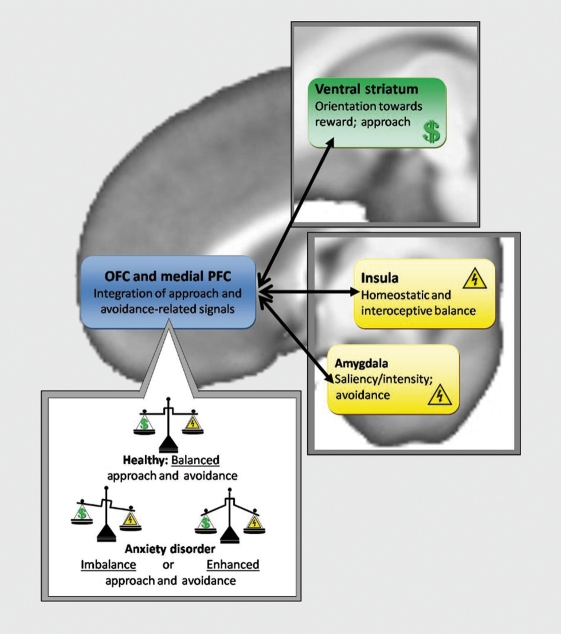
Verification
Claims the paper makes
The claims and statistics of this paper haven’t been checked yet.
Run the check — free, no account needed. It reads the open-access text and checks the sources it cites.
Claims other papers make about this one
Each is checked against this paper’s own text: does it say what the citing paper says it does?
The source backs part of the claim, not all of it — or backs it for a different population, condition or comparison.
In the citing paper
“The PFC likely regulates play in a multifactorial manner, contributing to expression of the behavior through its roles in suppressing aggression, monitoring approach/avoid conflict, and modulating the stress response via its projections to the MeA and other stress-modulatory nodes (Aupperle & Paulus, 2010; McEwen & Morrison, 2013; Takahashi et al., 2014).”
From Developmental origins of sex differences in the neural circuitry of play (2020) · cites this paper as Aupperle & Paulus, 2010
Experimental — accuracy not yet measuredIn the citing paper
“For example, anxiety disorders and mood disorders share hyperactive amygdala responses to negatively valenced stimuli [2,3]”
From Reward circuitry dysfunction in psychiatric and neurodevelopmental disorders and genetic syndromes: animal models and clinical findings (2012) · cites this paper as [2]
Self-check
Percentages, sums and reported differences re-computed from the paper’s own numbers.
The self-check needs the paper’s full text.
Citations
Cites
LeDoux, J. E. (2000) · Annual Review of Neuroscience · doi:10.1146/annurev.neuro.23.1.155 · Cited by 8,444
Carver, C. S., & White, T. L. (1994) · Journal of Personality and Social Psychology · doi:10.1037/0022-3514.67.2.319 · Cited by 7,306 · cited 1×
“have been developed in attempts to further characterize animal and human conflict behavior and its relationship to psychopathology.(3,9-12) Avoidance has been implicated as a cardinal symptom of anxiety disorders(13) and is thought to be an underlying mechanism maintaining anxiety.”
How do you feel — now? The anterior insula and human awareness
(Bud) Craig, A. D. (2009) · Nature Reviews Neuroscience · doi:10.1038/nrn2555 · Cited by 6,657
How do you feel? Interoception: The sense of the physiological condition of the body
Craig, A. D. (2002) · Nature Reviews Neuroscience · doi:10.1038/nrn894 · Cited by 6,006
Emotional processing of fear: Exposure to corrective information.
Foa, E. B., & Kozak, M. J. (1986) · Psychological Bulletin · doi:10.1037/0033-2909.99.1.20 · Cited by 5,396 · cited 1×
“The majority of psychotherapies used to treat anxiety (eg, cognitive-behavioral and exposure-based therapies) aim to decrease such avoidance behavior.(14,15) Importantly, avoidance is an active choice process, ie, a decision that is made to sacrifice potential rewards in order to avoid potential negative outcomes.”
Meeting of minds: the medial frontal cortex and social cognition
Amodio, D. M., & Frith, C. D. (2006) · Nature Reviews Neuroscience · doi:10.1038/nrn1884 · Cited by 3,782
The reward circuit: linking primate anatomy and human imaging
Haber, S. N., & Knutson, B. (2010) · Neuropsychopharmacology · doi:10.1038/npp.2009.129 · Cited by 3,718
Functional neuroanatomy of emotion: A meta-analysis of emotion activation studies in PET and fMRI
Phan, K. L., Wager, T., Taylor, S. F., & Liberzon, I. (2002) · NeuroImage · doi:10.1006/nimg.2002.1087 · Cited by 3,502
Neural systems supporting interoceptive awareness
Critchley, H. D., Wiens, S., Rotshtein, P., Öhman, A., & Dolan, R. J. (2004) · Nature Neuroscience · doi:10.1038/nn1176 · Cited by 3,406
Etkin, A., & Wager, T. D. (2007) · American Journal of Psychiatry · doi:10.1176/appi.ajp.2007.07030504 · Cited by 3,391 · cited 5×
“The anxiety disorders literature provides evidence that the amygdala may be dysfunctional in signaling fear-related stimuli, but there is also initial evidence that this dysfunction may extend to salient stimuli in general.(47,79) Although the amygdala has not been the focus of neuroimaging research related to decisio…”
Influential
Research works printed but not linked: 4
- American Psychiatric Association.Diagnostic and Statistical Manual of Mental Disorders. 4th ed, Text Revision. Washington, DC: American Psychiatric Association;2000
- BarlowDH.Anxiety and its Disorders: the Nature and Treatment of Anxiety and Panic. New York, NY: Guilford Press; 2002
- SavageCR.The role of emotion in strategic behavior: insights from psychopathology. In: Barrett LF, Salovey P, Mayer J, eds.The Wisdom in Feeling: Psychological Processes in Emotional Intelligence. New York, NY: Guilford Press; 2002211236
- 10.1002/1520-6394(2000)12:1 <69::AID-DA9>3.0.CO;2-K · DOI
Cited by
Sorted by citations
Uncertainty and anticipation in anxiety: an integrated neurobiological and psychological perspective
Grupe, D. W., & Nitschke, J. B. (2013) · Nature Reviews Neuroscience · doi:10.1038/nrn3524 · Cited by 2,007
Emotion Regulation and Psychopathology
Sheppes, G., Suri, G., & Gross, J. J. (2015) · Annual Review of Clinical Psychology · doi:10.1146/annurev-clinpsy-032814-112739 · Cited by 1,214
Executive function and PTSD: disengaging from trauma.
Aupperle, R. L., Melrose, A. J., Stein, M. B., & Paulus, M. P. (2012) · Neuropharmacology · doi:10.1016/j.neuropharm.2011.02.008 · Cited by 657
“digms therefore offer a useful framework for teasing apart PFC dysfunction in PTSD and other anxiety disorders (Aupperle and Paulus, 2010).”
Self-citationThe GABA system in anxiety and depression and its therapeutic potential
Möhler, H. (2011) · Neuropharmacology · doi:10.1016/j.neuropharm.2011.08.040 · Cited by 627
“An enhanced amygdala activation and a hypoactivation of the orbitofrontal (OFC) and medial prefrontal cortex (mPFC) was frequently reported in patients during processing of negative emotional stimuli, in particular in SAD and PTSD but also in GAD (Aupperle and Paulus, 2010; Elman et al., 2009; Goldin et al., 2009; New…”
A Corticostriatal Path Targeting Striosomes Controls Decision-Making under Conflict
Friedman, A., Homma, D., Gibb, L. G., Amemori, K.-I., Rubin, S. J., Hood, A. S., Riad, M. H., & Graybiel, A. M. (2015) · Cell · doi:10.1016/j.cell.2015.04.049 · Cited by 309
“A uthor M anuscript A uthor M anuscript A uthor M anuscript A uthor M anuscript function remain largely unknown (Aupperle and Paulus, 2010).”
Dichter, G. S., Damiano, C. A., & Allen, J. A. (2012) · Journal of Neurodevelopmental Disorders · doi:10.1186/1866-1955-4-19 · Cited by 299
“For example, anxiety disorders and mood disorders share hyperactive amygdala responses to negatively valenced stimuli [2,3] and schizophrenia and post-traumatic stress disorder are both characterized by prefrontal dysfunction during tasks that require sustained attention [4,5].”
Neural correlates of personality: An integrative review
Kennis, M., Rademaker, A. R., & Geuze, E. (2012) · Neuroscience & Biobehavioral Reviews · doi:10.1016/j.neubiorev.2012.10.012 · Cited by 264
A lifespan view of anxiety disorders
Lenze, E. J., & Wetherell, J. L. (2011) · Dialogues in Clinical Neuroscience · doi:10.31887/dcns.2011.13.4/elenze · Cited by 227
“We conceptualize pathological anxiety as potentially due to a functional disconnect between amygdala (and possibly insula) and frontal areas (including anterior cingulate cortex, dorsolateral and ventromedial prefrontal cortex), impairing natural fear extinction and thus converting fears or worries into chronic pathol…”
Prefrontal dysfunction during emotion regulation in generalized anxiety and panic disorders
Ball, T. M., Ramsawh, H. J., Campbell-Sills, L., Paulus, M. P., & Stein, M. B. (2013) · Psychological Medicine · doi:10.1017/s0033291712002383 · Cited by 212
“Conceptual models have highlighted the role of anxious arousal and negative affectivity as predisposing factors (Clark &Watson, 1991), and avoidance as a key maintaining factor (Reddy et al. 2006 ; Aupperle & Paulus, 2010).”
Self-citationPascual, M., Baliño, P., Aragón, C. M. G., & Guerri, C. (2014) · Neuropharmacology · doi:10.1016/j.neuropharm.2014.10.014 · Cited by 210
Neural substrates of approach‐avoidance conflict decision‐making
Aupperle, R. L., Melrose, A. J., Francisco, A. J., Paulus, M. P., & Stein, M. B. (2014) · Human Brain Mapping · doi:10.1002/hbm.22639 · Cited by 209
“…for comparing the value of available options because individuals must integrate information concerning the value of potential rewards and punishments, as well as the likelihood and magnitude of those potential outcomes [Aupperle and Paulus, 2010; Quartz, 2009; Rolls and Grabenhorst, 2008].”
Chronic Stress Alters Striosome-Circuit Dynamics, Leading to Aberrant Decision-Making
Friedman, A., Homma, D., Bloem, B., Gibb, L. G., Amemori, K.-I., Hu, D., Delcasso, S., Truong, T. F., Yang, J., Hood, A. S., et al. (2017) · Cell · doi:10.1016/j.cell.2017.10.017 · Cited by 162
“, 2011) and is related to cortical regions that in humans are affected in individuals suffering from anxiety, depression, and related problems (Aupperle and Paulus, 2010).”
InfluentialHuman Hippocampus Arbitrates Approach-Avoidance Conflict
Bach, D. R., Guitart‐Masip, M., Packard, P. A., Miró, J., Falip, M., Fuentemilla, L., & Dolan, R. J. (2014) · Current Biology · doi:10.1016/j.cub.2014.01.046 · Cited by 186
“Efforts to translate these approaches to clinical contexts [7, 8] are hampered by the fact that it is not knownwhether humansmanifest analogous approach-avoidance dispositions and, if so, whether they share a homologous neurobiological substrate [9].”
Animal to human translational paradigms relevant for approach avoidance conflict decision making
Kirlić, N., Young, J. W., & Aupperle, R. L. (2017) · Behaviour Research and Therapy · doi:10.1016/j.brat.2017.04.010 · Cited by 140
Autistic-Like Syndrome in Mu Opioid Receptor Null Mice is Relieved by Facilitated mGluR4 Activity
Becker, J. A. J., Clesse, D., Spiegelhalter, C., Schwab, Y., Merrer, J. L., & Kieffer, B. L. (2014) · Neuropsychopharmacology · doi:10.1038/npp.2014.59 · Cited by 128
“Oprm1 / mice thus show increased conflict anxiety, which involves widespread neuronal activation (Aupperle and Paulus, 2010).”
InfluentialA reverse translational approach to quantify approach-avoidance conflict in humans
Aupperle, R. L., Sullivan, S., Melrose, A. J., Paulus, M. P., & Stein, M. B. (2011) · Behavioural Brain Research · doi:10.1016/j.bbr.2011.08.003 · Cited by 134
“It could be theorized that both of these systems would be engaged during approach-avoidance conflict and that an imbalance in these systems could relate to over-reliance on either approach or avoidance behaviors [8].”
Heeren, A., Billieux, J., Philippot, P., Raedt, R. D., Baeken, C., de Timary, P., Maurage, P., & Vanderhasselt, M. (2016) · Social Cognitive and Affective Neuroscience · doi:10.1093/scan/nsw119 · Cited by 111
“Moreover, because dlPFC may initiate control over emotions by inhibition of the amygdala (Pessoa, 2008, 2010; Aupperle and Paulus, 2010), this boost of attentional selectivity for external non-threat cues may also be attributable to a tightening of the hyperactivity of the amygdala during anodal…”
Rincón‐Cortés, M., & Sullivan, R. M. (2016) · Translational Psychiatry · doi:10.1038/tp.2016.205 · Cited by 108
Neural Basis of Emotional Decision Making in Trait Anxiety
Xu, P., Gu, R., Broster, L. S., Wu, R., Dam, N. T. V., Jiang, Y., Fan, J., & Luo, Y. (2013) · Journal of Neuroscience · doi:10.1523/jneurosci.1253-13.2013 · Cited by 96
“, 2010) but also increased urges to obtain rewards (Aupperle and Paulus, 2010).”
InfluentialSchlund, M. W., Brewer, A. T., Magee, S. K., Richman, D. M., Solomon, S., Ludlum, M., & Dymond, S. (2016) · NeuroImage · doi:10.1016/j.neuroimage.2016.04.070 · Cited by 97
“…Braver, 2015), aswell as how impaired arbitration of reward and threat information may serve as a mechanism for observed decreases in approach behavior in depression and increases in avoidance behavior in anxiety (Stein and Paulus, 2009; Aupperle and Martin, 2010; Trew, 2011; Dillon et al., 2014).”
Meirsman, A. C., Merrer, J. L., Pellissier, L. P., Díaz, J., Clesse, D., Kieffer, B. L., & Becker, J. A. J. (2015) · Biological Psychiatry · doi:10.1016/j.biopsych.2015.05.020 · Cited by 92
“Gpr88 expression, however, is also detectable in several brain regions involved in regulating anxiety and approach (30), including ventral striatum (NAc and olfactory tubercles), anterior BNST and lateral septum.”
THE BREATHING CONUNDRUM-INTEROCEPTIVE SENSITIVITY AND ANXIETY: Review: The Breathing Conundrum
Paulus, M. P. (2013) · Depression and Anxiety · doi:10.1002/da.22076 · Cited by 94
“ANXIETY AND BREATHING—THE INTEROCEPTIVE CONNECTION Anxiety is an emotional state associated with a (1) cognitive component of increased attentional focus on threat to the integrity of the individual,[1] (2) a complex sympathetic arousal response,[2] and (3) behaviors aimed to avoid stimuli or contexts predictive of th…”
Baur, V., Brühl, A. B., Herwig, U., Eberle, T., Rufer, M., Delsignore, A., Jäncke, L., & Hänggi, J. (2011) · Human Brain Mapping · doi:10.1002/hbm.21447 · Cited by 88
“Furthermore, they may underlie approach and avoidance behavior [Aupperle and Paulus, 2010].”
Smith, R. S., Kirlić, N., Stewart, J. L., Touthang, J., Kuplicki, R., Khalsa, S. S., Feinstein, J. S., Paulus, M. P., & Aupperle, R. L. (2021) · Journal of Psychiatry and Neuroscience · doi:10.1503/jpn.200032 · Cited by 86
“E76 J Psychiatry Neurosci 2021;46(1) and cognitive functioning.”
InfluentialConnectome-based individualized prediction of temperament trait scores
Jiang, R., Calhoun, V. D., Zuo, N., Lin, D., Li, J., Fan, L., Qi, S., Sun, H., Fu, Z., Song, M., et al. (2018) · NeuroImage · doi:10.1016/j.neuroimage.2018.08.038 · Cited by 82
“cognitive-behavioral and exposure-based therapies) aim to reduce such avoidance behaviors (Aupperle and Paulus, 2010).”
Becker, J. A. J., Kieffer, B. L., & Le Merrer, J. (2017) · Addiction Biology · doi:10.1111/adb.12405 · Cited by 77
“In the novelty-suppressed feeding (NSF) test (Exp. 2), a conflict test challenging approach/avoidance behavior (Aupperle & Paulus 2010), mice abstinent from chronic morphine, nicotine, THC and alcohol, but not cocaine, showed higher latencies to reach and eat food pellets in the center of the arena.”
Prefrontal modulation of anxiety through a lens of noradrenergic signaling
Bouras, N. N., Mack, N. R., & Gao, W. (2023) · Frontiers in Systems Neuroscience · doi:10.3389/fnsys.2023.1173326 · Cited by 88
“, 2007), avoidance behavior (Aupperle and Paulus, 2010; Aupperle et al., 2015; LeBlanc et al., 2020), and action initiation (Porter et al.”
Understanding anxiety symptoms as aberrant defensive responding along the threat imminence continuum
Abend, R. (2023) · Neuroscience & Biobehavioral Reviews · doi:10.1016/j.neubiorev.2023.105305 · Cited by 82
Anxiety, Avoidance, and Sequential Evaluation
Zorowitz, S., Momennejad, I., & Daw, N. D. (2020) · Computational Psychiatry · doi:10.1162/cpsy_a_00026 · Cited by 75
Kent, M., Davis, M. C., Stark, S. L., & Stewart, L. A. (2011) · Journal of Traumatic Stress · doi:10.1002/jts.20685 · Cited by 73
“At a neural level, the circuitry of fear and avoidance remains hyperactive long past trauma exposure and is relatively unmodulated by higher level cortical activity (Aupperle & Paulus, 2010; Walter, Palmieri, & Gunstad, 2010).”
Dugre, J. R., Raduà, J., Carignan-Allard, M., Dumais, A., Rubia, K., & Potvin, S. (2020) · Neuroscience & Biobehavioral Reviews · doi:10.1016/j.neubiorev.2020.09.013 · Cited by 75
Harms, M. B., Zayas, V., Meltzoff, A. N., & Carlson, S. M. (2014) · Frontiers in Psychology · doi:10.3389/fpsyg.2014.00331 · Cited by 82
A Neurology of the Conservative-Liberal Dimension of Political Ideology
Mendez, M. F. (2017) · Journal of Neuropsychiatry · doi:10.1176/appi.neuropsych.16030051 · Cited by 70
Rolle, C. E., Pedersen, M. L., Johnson, N. D., Amemori, K., Ironside, M., Graybiel, A. M., Pizzagalli, D. A., & Etkin, A. (2021) · Cerebral Cortex · doi:10.1093/cercor/bhab292 · Cited by 68
Alvares, G. A., Balleine, B. W., & Guastella, A. J. (2014) · PLoS ONE · doi:10.1371/journal.pone.0094778 · Cited by 63
“Such arguments are consistent with approach-avoidance models [39], that suggest that anxiety or stress is associated with an inhibition of approach towards potentially rewarding outcomes, and a bias towards potentially aversive consequences.”
Pedersen, M. L., Ironside, M., Amemori, K., McGrath, C. L., Kang, M. S., Graybiel, A. M., Pizzagalli, D. A., & Frank, M. J. (2021) · PLoS Computational Biology · doi:10.1371/journal.pcbi.1008955 · Cited by 66
Neural correlates of a computerized attention modification program in anxious subjects
Taylor, C. T., Aupperle, R. L., Flagan, T., Simmons, A. N., Amir, N., Stein, M. B., & Paulus, M. P. (2013) · Social Cognitive and Affective Neuroscience · doi:10.1093/scan/nst128 · Cited by 65
“…2010) as well as reduced insula-prefrontal functional connectivity (Klumpp et al., 2012) during the processing of emotional stimuli, suggesting that the insula comprises part of an overactive emotion processing neural circuit characteristic of anxiety (Aupperle and Paulus, 2010; Etkin, 2010).”
InfluentialEnax, L., Krapp, V., Piehl, A., & Weber, B. (2015) · Frontiers in Behavioral Neuroscience · doi:10.3389/fnbeh.2015.00247 · Cited by 70
Approach, avoidance, and the detection of conflict in the development of behavioral inhibition
Barker, T. V., Buzzell, G. A., & Fox, N. A. (2018) · New Ideas in Psychology · doi:10.1016/j.newideapsych.2018.07.001 · Cited by 66
Erbin in Amygdala Parvalbumin-Positive Neurons Modulates Anxiety-like Behaviors
Luo, Z.-Y., Huang, L., Lin, S., Yin, Y., Jie, W., Hu, N.-Y., Hu, Y.-Y., Guan, Y., Liu, J., You, Q.-L., et al. (2019) · Biological Psychiatry · doi:10.1016/j.biopsych.2019.10.021 · Cited by 57
Abivardi, A., Khemka, S., & Bach, D. R. (2020) · Journal of Neuroscience · doi:10.1523/jneurosci.2732-19.2020 · Cited by 52
“A standard laboratory model of this situation is provided by approach–avoidance conflict (AAC) tests, for example, open-field test and elevated plus-maze (Calhoon and Tye, 2015), which are thought to reflect aspects of human clinical anxiety disorders (Aupperle and Paulus, 2010).”
Caulfield, M. D., Zhu, D. C., McAuley, J. D., & Servatius, R. J. (2015) · Brain Structure and Function · doi:10.1007/s00429-015-1088-6 · Cited by 50
“Additionally, the dorsolateral prefrontal cortical region has been indicated as important in processing novelty in the environment (Berns et al. 1997) as well as in avoidant behaviors (Aupperle and Paulus 2010; Spielberg et al. 2012, 2011).”
Striatopallidal neurons control avoidance behavior in exploratory tasks
LeBlanc, K. H., London, T. D., Szczot, I., Bocarsly, M. E., Friend, D. M., Nguyen, K. P., Mengesha, M. M., Rubinstein, M., Alvarez, V. A., & Kravitz, A. V. (2018) · Molecular Psychiatry · doi:10.1038/s41380-018-0051-3 · Cited by 46
Ludwig, V. U., Nüsser, C., Goschke, T., Wittfoth, D., Wiers, C. E., Erk, S., Schott, B. H., & Walter, H. (2015) · Frontiers in Behavioral Neuroscience · doi:10.3389/fnbeh.2015.00280 · Cited by 50
“More generally, psychiatric disorders involving anxiety or depression have been associated with altered reward processing (Elman et al., 2005; Tremblay et al., 2005; Hopper et al., 2008; Sailer et al., 2008; Aupperle and Paulus, 2010).”
Advancing emotion regulation perspectives on psychopathology: the challenge of distress disorders
Mennin, D. S., & Fresco, D. M. (2015) · Psychological Inquiry · doi:10.1080/1047840x.2015.969624 · Cited by 46
“Drawing upon models of motivation balancing (Aupperle & Paulus, 2010; Carver et al., 2008), individuals with anxiety and mood disorders likely struggle to overcome motivational conflicts because they possess one or more of the following deficits: (a) an overrepresentation of security valuation, (b)…”
InfluentialMotivational Deficits and Negative Symptoms in Schizophrenia: Concepts and Assessments
Reddy, L. F., Horan, W. P., & Green, M. F. (2015) · Current topics in behavioral neurosciences · doi:10.1007/7854_2015_379 · Cited by 48
“Neurophysiological research in animals implicates corticolimbic circuitry including amygdala, insula, and prefrontal cortex in avoidance responses and corticostriatal circuitry (including ventral striatum and nucleus accumbens) in approach motivation (Aupperle and Paulus 2010).”
Smith, R. S., Kirlić, N., Stewart, J. L., Touthang, J., Kuplicki, R., McDermott, T. J., Taylor, S., Khalsa, S. S., Paulus, M. P., & Aupperle, R. L. (2021) · Scientific Reports · doi:10.1038/s41598-021-91308-x · Cited by 45
Neural correlates and determinants of approach–avoidance conflict in the prelimbic prefrontal cortex
Fernández-León, J. A., Engelke, D. S., Aquino-Miranda, G., Goodson, A., Rasheed, M. N., & Monte, F. H. D. (2021) · eLife · doi:10.7554/elife.74950 · Cited by 39
“response selection and adaptive behaviors, and may have clinical relevance to many 768 psychiatric disorders (Aupperle and Paulus, 2010; Kirlic et al., 2017).”
Pregabalin effects on neural response to emotional faces
Aupperle, R. L., Tankersley, D., Ravindran, L. N., Flagan, T., Stein, N. R., Stein, M. B., & Paulus, M. P. (2012) · Frontiers in Human Neuroscience · doi:10.3389/fnhum.2012.00042 · Cited by 44
“In anxiety disorders, prefrontal regions are theorized to play a role in the regulation of limbic (e.g., amygdala) activation and in determining the cognitive and behavioral responses to emotional stimuli (Aupperle and Paulus, 2010; Hofmann et al., 2011; Kim et al., 2011).”
Avoidance of learnt fear: Models, potential mechanisms, and future directions
Wong, A. H. K., Wirth, F. M., & Pittig, A. (2022) · Behaviour Research and Therapy · doi:10.1016/j.brat.2022.104056 · Cited by 43
Brown, V. M., Price, R. B., & Dombrovski, A. Y. (2023) · Cognitive Affective & Behavioral Neuroscience · doi:10.3758/s13415-023-01080-w · Cited by 51
“Altered activation of regions that control uncertainty signals, including prefrontal cortex and hippocampus, in anxiety (Aupperle & Paulus, 2010; Marin et al., 2017, 2020; Sun et al., 2020) lead to impaired regulation of these uncertainty signals.”
Olfactory abnormalities in anxiety disorders
Clepce, M., Reich, K., Gossler, A., Kornhuber, J., & Thuerauf, N. (2012) · Neuroscience Letters · doi:10.1016/j.neulet.2012.01.034 · Cited by 40
GPR88 in A2AR Neurons Enhances Anxiety-Like Behaviors
Meirsman, A. C., Robé, A., d’Exaerde, A. D. K., & Kieffer, B. L. (2016) · eNeuro · doi:10.1523/eneuro.0202-16.2016 · Cited by 42
“In these ethological anxiety tests, the tendency to avoid threatening stimuli (bright light/exposed arms) is confronted with the inner drive toward exploration, and this conflict is thought to inhibit exploration (Crawley, 2000; Sousa et al., 2006; Bailey and Crawley, 2009; Aupperle and Paulus, 2010).”
InfluentialTaylor, C. T., Pearlstein, S. L., & Stein, M. B. (2020) · Journal of Affective Disorders · doi:10.1016/j.jad.2020.01.041 · Cited by 38
Computational perspectives on human fear and anxiety
Yamamori, Y., & Robinson, O. J. (2022) · Neuroscience & Biobehavioral Reviews · doi:10.1016/j.neubiorev.2022.104959 · Cited by 46
“Excessive or consistent avoidance in situations of approach-avoidance conflict entails giving up reward in order to avoid potential threat, which reflects maladaptive avoidance in pathological fear/anxiety (Aupperle and Paulus, 2010; Loijen et al., 2020) where important things in life may be sacrificed in order to avo…”
Genetically driven brain serotonin deficiency facilitates panic-like escape behavior in mice
Waider, J., Popp, S., Lange, M. D., Kern, R., Kolter, J. F., Kobler, J. M., Donner, N. C., Lowe, K. R., Malzbender, J. H., Brazell, C. J., et al. (2017) · Translational Psychiatry · doi:10.1038/tp.2017.209 · Cited by 37
Orphan Receptor GPR88 as an Emerging Neurotherapeutic Target
Ye, N., Li, B., Mao, Q., Wold, E. A., Tian, S., Allen, J., & Zhou, J. (2018) · ACS Chemical Neuroscience · doi:10.1021/acschemneuro.8b00572 · Cited by 38
Biased Saccadic Responses to Emotional Stimuli in Anxiety: An Antisaccade Study
Chen, N. T. M., Clarke, P., Watson, T., MacLeod, C., & Guastella, A. J. (2014) · PLoS ONE · doi:10.1371/journal.pone.0086474 · Cited by 37
“Hence, the amygdala may function to initially deploy attention automatically to salient emotional stimuli [20].”
Sheynin, J., Moustafa, A. A., Beck, K. D., Servatius, R. J., & Myers, C. E. (2015) · Behavioural Brain Research · doi:10.1016/j.bbr.2015.01.033 · Cited by 36
“…different levels of sex hormones (e.g., testosterone; van Honk et al. 2004), as well as other forms of sexual dimorphisms, such as distinct neural activity in brain areas such as amygdala, insula, ventral striatum, prefrontal cortex and/or hippocampus (Aupperle and Paulus 2010; Bach et al. 2014).”
Wallis, C. U., Cockcroft, G. J., Cardinal, R. N., Roberts, A. C., & Clarke, H. F. (2019) · Cerebral Cortex · doi:10.1093/cercor/bhz015 · Cited by 30
Developmental origins of sex differences in the neural circuitry of play
VanRyzin, J. W., Marquardt, A. E., & McCarthy, M. M. (2020) · International Journal of Play · doi:10.1080/21594937.2020.1723370 · Cited by 34
“…behavior through its roles in suppressing aggression, monitoring approach/avoid conflict, and modulating the stress response via its projections to the MeA and other stress-modulatory nodes (Aupperle & Paulus, 2010; McEwen & Morrison, 2013; Takahashi, Nagayasu, Nishitani, Kaneko, & Koide, 2014).”
Oxytocin attenuates social and non-social avoidance: Re-thinking the social specificity of Oxytocin
Harari-Dahan, O., & Bernstein, A. (2017) · Psychoneuroendocrinology · doi:10.1016/j.psyneuen.2017.04.005 · Cited by 34
“…research may be pursued among persons suffering from behavioral disorders mediated by approach-avoidance dysregulation broadly defined, such as anxiety-related disorders (e.g., Aupperle and Paulus, 2010); as opposed more socially-circumscribed mental disorders (e.g., Guastella et al., 2009).”
Hecht, E. E., Kukekova, A. V., Gutman, D. A., Acland, G. M., Preuss, T. M., & Trut, L. N. (2021) · Journal of Neuroscience · doi:10.1523/jneurosci.3114-20.2021 · Cited by 37
Bloem, B., Huda, R., Amemori, K., Abate, A., Krishna, G., Wilson, A. L., Carter, C. W., Sur, M., & Graybiel, A. M. (2022) · Nature Communications · doi:10.1038/s41467-022-28983-5 · Cited by 33
Relief learning is distinguished from safety learning by the requirement of the nucleus accumbens.
Mohammadi, M., Bergado-Acosta, J. R., & Fendt, M. (2014) · Behavioural Brain Research · doi:10.1016/j.bbr.2014.06.053 · Cited by 35
Christian, C., & Levinson, C. A. (2022) · New Ideas in Psychology · doi:10.1016/j.newideapsych.2022.100964 · Cited by 33
Letkiewicz, A. M., Kottler, H. C., Shankman, S. A., & Cochran, A. L. (2023) · Neuroscience & Biobehavioral Reviews · doi:10.1016/j.neubiorev.2023.105103 · Cited by 37
Common and dissociable effects of oxytocin and lorazepam on the neurocircuitry of fear
Kreuder, A., Scheele, D., Schultz, J., Hennig, J., Marsh, N., Dellert, T., Ettinger, U., Philipsen, A., Babasiz, M., Herscheid, A., et al. (2020) · Proceedings of the National Academy of Sciences · doi:10.1073/pnas.1920147117 · Cited by 27
Unraveling the interplay between math anxiety and math achievement
Lau, N. T. T., Ansari, D., & Sokolowski, H. M. (2024) · Trends in Cognitive Sciences · doi:10.1016/j.tics.2024.07.006 · Cited by 31
Mizumoto, T., Ikei, H., Hagiwara, K., Matsubara, T., Higuchi, F., Kobayashi, M., Yamashina, T., Sasaki, J., Yamada, N., Higuchi, N., et al. (2024) · Journal of Affective Disorders · doi:10.1016/j.jad.2024.04.025 · Cited by 30
Blay, Y., Keshet, H., Friedman, L., & Gilboa‐Schechtman, E. (2020) · Personality and Individual Differences · doi:10.1016/j.paid.2020.110449 · Cited by 30
Frontostriatal Projections Regulate Innate Avoidance Behavior
Loewke, A. C., Minerva, A. R., Nelson, A., Kreitzer, A. C., & Gunaydin, L. A. (2021) · Journal of Neuroscience · doi:10.1523/jneurosci.2581-20.2021 · Cited by 40
“, 2007), and several types of avoidance behavior (Green et al., 1967; Rothman and Glick, 1976; Aupperle and Martin, 2010; Aupperle et al., 2015; LeBlanc et al., 2018).”
Frederick, A. L., Saborido, T. P., & Stanwood, G. D. (2012) · Frontiers in Behavioral Neuroscience · doi:10.3389/fnbeh.2012.00029 · Cited by 28
“…the neural circuits underlying these disorders are not completely understood, dysfunctions in the amygdala, hippocampus, basal ganglia, and prefrontal cortex are commonly implicated (Clark et al., 2009; Aupperle and Paulus, 2010; Clark and Beck, 2010; Harro et al., 2011; McEwen et al., 2012).”
Chrysikou, E. G., Gorey, C. M., & Aupperle, R. L. (2016) · Social Cognitive and Affective Neuroscience · doi:10.1093/scan/nsw140 · Cited by 33
“…AAC decision-making may have important consequences for the conceptualization and treatment of anxiety disorders (Stein and Paulus, 2009; Aupperle and Paulus, 2010), which typically entail avoidance of short-term emotional discomfort, even at the cost of substantial long-term rewards…”
InfluentialDelta Opioid Receptors: Learning and Motivation
Pellissier, L. P., Pujol, C., Becker, J. A. J., & Merrer, J. L. (2016) · Handbook of experimental pharmacology · doi:10.1007/164_2016_89 · Cited by 30
“We propose that, in these animals, high levels of anxiety (avoidance) compete with high motivation for food (approach) to drive behavior(Aupperle and Paulus 2010; Montgomery 1955;Powell et al. 2004).”
Reilly, E. E., Whitton, A. E., Pizzagalli, D. A., Rutherford, A. V., Stein, M. B., Paulus, M. P., & Taylor, C. T. (2020) · Depression and Anxiety · doi:10.1002/da.23081 · Cited by 28
“Traditionally, anxiety disorders have been characterized by alterations in negative valence systems, with a relative neglect of the positive valence systems (Aupperle & Paulus, 2010; Insel et al., 2010).”
Ben‐Zion, Z., Shany, O., Admon, R., Keynan, J. N., Avisdris, N., Balter, S. R., Shalev, A. Y., Liberzon, I., & Hendler, T. (2021) · Biological Psychiatry Cognitive Neuroscience and Neuroimaging · doi:10.1016/j.bpsc.2021.09.001 · Cited by 28
Neural Correlates of Deficits in Humor Appreciation in Gelotophobics
Chan, Y. (2016) · Scientific Reports · doi:10.1038/srep34580 · Cited by 30
Aberg, K. C., Doell, K. C., & Schwartz, S. (2016) · PLoS ONE · doi:10.1371/journal.pone.0166675 · Cited by 28
Santiago, J., Akeman, E., Kirlić, N., Clausen, A. N., Cosgrove, K. T., McDermott, T. J., Mathis, B. K., Paulus, M. P., Craske, M. G., Abelson, J. L., et al. (2020) · Trials · doi:10.1186/s13063-019-3802-9 · Cited by 26
McDermott, T. J., Kirlić, N., Akeman, E., Touthang, J., Clausen, A. N., Kuplicki, R., & Aupperle, R. L. (2021) · Human Brain Mapping · doi:10.1002/hbm.25371 · Cited by 24
“Behavioral and neural responses during approach-avoidance conflict are important factors contributing to psychiatric disorders with pronounced affective disturbance (Aupperle & Paulus, 2010).”
Hillert, L., Jovanovic, H., Åhs, F., & Savic, I. (2013) · PLoS ONE · doi:10.1371/journal.pone.0054781 · Cited by 25
“The ACC is said to be primarily involved in signaling the presence of conflict, [12,13] and may, thus, very well show an enhanced activation when subjects with MCS condition were exposed to odors.”
Labrenz, F., Woud, M., Elsenbruch, S., & Icenhour, A. (2022) · Frontiers in Psychiatry · doi:10.3389/fpsyt.2022.841734 · Cited by 22
“Psychosomatic disorders are characterized by approach-avoidance conflicts following a continuum between the subjectively perceived threat and associated costs (156).”
Butterfield, R. D., Siegle, G. J., Lee, K. H., Ladouceur, C. D., Forbes, E. E., Dahl, R. E., Ryan, N. D., Sheeber, L., & Silk, J. S. (2019) · Developmental Science · doi:10.1111/desc.12812 · Cited by 22
“Adolescent disengaged coping was opera‐ tionalized to include avoidance and distraction strategies because both of these strategies are known to contribute to the maintenance of anxiety (Aupperle & Paulus, 2010; Wright, Banerjee, Hoek, Rieffe, & Novin, 2010).”
Amemori, S., Graybiel, A. M., & Amemori, K. (2021) · Frontiers in Neuroscience · doi:10.3389/fnins.2021.649167 · Cited by 20
Impaired probabilistic reversal learning in anxiety: Evidence from behavioral and ERP findings
Xia, L., Xu, P., Yang, Z., Gu, R., & Zhang, D. (2021) · NeuroImage Clinical · doi:10.1016/j.nicl.2021.102751 · Cited by 18
“…these two regions have been considered to play important roles in the etiology of anxiety disorders (Grupe & Nitschke, 2013; Tovote et al., 2015) as well as in the relationship between anxiety and decision-making behavior (Amemori & Graybiel, 2012; Aupperle & Paulus, 2010; Krain et al., 2008).”
Association between reward-related functional connectivity and tri-level mood and anxiety symptoms
Anderson, Z. G., Damme, K. S. F., Carroll, A., Chat, I. K.-Y., Young, K. S., Craske, M. G., Bookheimer, S. Y., Zinbarg, R. E., & Nusslock, R. (2023) · NeuroImage Clinical · doi:10.1016/j.nicl.2023.103335 · Cited by 26
“Anxiety related findings are less consistent, but similar reductions in vS responses to rewarding stimuli have been noted (Auerbach et al., 2022; Robin and Martin, 2010).”
InfluentialGe, R., Zhang, S., & Zhao, H. P. (2022) · Information Technology and People · doi:10.1108/itp-12-2021-0927 · Cited by 22
Chowkase, A. A., Parra-Martínez, F. A., Ghahremani, M., Bernstein, Z. L., Finora, G., & Sternberg, R. J. (2024) · Frontiers in Psychology · doi:10.3389/fpsyg.2024.1376195 · Cited by 20
Neuroscientific Insights Into Management Development
McDonald, P., & Tang, Y. (2014) · Group & Organization Management · doi:10.1177/1059601114550712 · Cited by 20
Vignon, A., Dudon, G., Oliva, G., Thirard, S., Alenda, U. G., Brugoux, A., Cazevieille, C., Imbert, J., Bellières, C., Lehmann, S., et al. (2025) · Journal of Hazardous Materials · doi:10.1016/j.jhazmat.2025.138640 · Cited by 22
Martínez-Rivera, F. J., Pérez-Torres, J., Velázquez-Díaz, C. D., Sanchez-Navarro, M. J., Huertas-Pérez, C. I., Diehl, M. M., Phillips, M. L., Haber, S. N., & Quirk, G. J. (2022) · Biological Psychiatry · doi:10.1016/j.biopsych.2022.02.008 · Cited by 18
“…highlighted the role of the insular/orbital cortex in fi ne-tuning avoidance-based decisions in animals (12 – 16) and humans (including patients with OCD) (17 – 20), little is known about the in fl uence of the insular/ orbital cortex on prefrontal and limbic areas that modulate persistent avoidance.”
Smith, R. S., Lavalley, C. A., Taylor, S., Stewart, J. L., Khalsa, S. S., Berg, H. E., Ironside, M., Paulus, M. P., & Aupperle, R. L. (2023) · Journal of Psychiatry and Neuroscience · doi:10.1503/jpn.220226 · Cited by 19
Konishi, J. S., Asami, T., Hayano, F., Yoshimi, A., Hayasaka, S., Fukushima, H., Whitford, T. J., Inoue, T., & Hirayasu, Y. (2014) · PLoS ONE · doi:10.1371/journal.pone.0092862 · Cited by 21
“Thus, the OFG integrates approach- and avoidance-valuations [22].”
Interrupting behaviour: Minimizing decision costs via temporal commitment and low-level interrupts
Lloyd, K., & Dayan, P. (2018) · PLoS Computational Biology · doi:10.1371/journal.pcbi.1005916 · Cited by 22
Rattel, J. A., Miedl, S. F., Liedlgruber, M., Blechert, J., Seidl, E., & Wilhelm, F. H. (2020) · Behaviour Research and Therapy · doi:10.1016/j.brat.2020.103761 · Cited by 18
Patt, V. M., Hunsberger, R., Jones, D. A., Keane, M. M., & Verfaellie, M. H. (2021) · PLoS ONE · doi:10.1371/journal.pone.0251480 · Cited by 19
Prepubertal gonadectomy reveals sex differences in approach-avoidance behavior in adult mice
Delevich, K. M., Hall, C. D., Boivin, J. R., Piekarski, D. J., Zhang, Y., & Wilbrecht, L. (2019) · Hormones and Behavior · doi:10.1016/j.yhbeh.2019.104641 · Cited by 18
Bashford‐Largo, J., Aloi, J. M., Zhang, R., Bajaj, S., Carollo, E., Elowsky, J., Schwartz, A., Dobbertin, M. D., Blair, J., & Blair, K. S. (2021) · Depression and Anxiety · doi:10.1002/da.23150 · Cited by 18
“On the basis of suggestions that disrupted computations related to approach‐ avoidance decision‐making are implicated in the pathophysiology of GAD (Aupperle & Paulus, 2010), we hypothesized atypical recruitment of regions implicated in avoidance responses (e.g., dorsomedial frontal and anterior…”
InfluentialMcDermott, T. J., Berg, H. E., Touthang, J., Akeman, E., Cannon, M. J., Santiago, J., Cosgrove, K. T., Clausen, A. N., Kirlić, N., Smith, R. S., et al. (2022) · Journal of Psychiatry and Neuroscience · doi:10.1503/jpn.220083 · Cited by 16
Metadata
- Authors
- Robin L., A., & Martin, P. P.
- Affiliations
- Department of Psychiatry, University of California, San Diego (UCSD), California, USA
- Psychiatry Service, Veterans Affairs San Diego Health Care System, San Diego, California, USA
- Venue
- Dialogues in Clinical Neuroscience
- Publisher
- Informa UK Limited
- Published
- 2010-12-31
- Volume
- 12
- Issue
- 4
- Pages
- 517-531
- ISSN
- 1294-8322 (ISSN-L)
- 1958-5969
- PMC
- PMC3181993
- OpenAlex
- W1574357942
- Cited by
- 227
- References
- 251
- Citations by year
- 2026: 17 · 2025: 18 · 2024: 18 · 2023: 22 · 2022: 25 · 2021: 18 · 2020: 21 · 2019: 8 · 2018: 7 · 2017: 11 · 2016: 15 · 2015: 12 · 2014: 14 · 2013: 8 · 2012: 7
- FWCI
- 8.66
- Type
- journal article
- Language
- en
- Open access
- diamond
- doi.org
- Licence
- Locations
- Dialogues in Clinical Neuroscience (publishedVersion, cc-by-nc-nd)
- Europe PMC (PubMed Central) (publishedVersion, cc-by-nc-nd)
- PubMed Central (publishedVersion, cc-by-nc-nd)
- PubMed (publishedVersion)
- Topics
- Social Sciences › Psychology › Experimental and Cognitive Psychology › Anxiety, Depression, Psychometrics, Treatment, Cognitive Processes
- Life Sciences › Neuroscience › Cognitive Neuroscience › Neural and Behavioral Psychology Studies
- Life Sciences › Neuroscience › Cognitive Neuroscience › Memory and Neural Mechanisms
- Keywords
- approach-avoidance conflict, anxiety disorders, decision-making, amygdala, insula, ventral striatum, orbitofrontal cortex
- MeSH terms
- Anxiety Disorders, Avoidance Learning, Brain, Decision Making, Emotions, Humans, Models, Biological, Social Behavior
About these checks
Registry, retraction, Cites and statistics results are computed, not judged, with one exception: a printed reference that no index lists is read once by a model before it counts as a citation error. Claims are extracted by a model and kept only when their quote appears verbatim in the text; each cited source is then checked, with a model’s help, for whether it says what the claim relies on. Those verdicts can be wrong — read the claim’s quote and the cited source before relying on one.
Statistics and arithmetic are recomputed, not judged.
Confidence bands are shown only for fields calibrated on our annotated test set. None is calibrated yet, so no band is shown.
What counts as a claim ›How we measure confidence ›How we check this ›
Are you an author, or do you see a problem with this page? Request a review
