

ProVIA-Kids - outcomes of an uncontrolled study on smartphone-based behaviour analysis for challenging behaviour in children with intellectual and developmental disabilities or autism spectrum disorder
Open accessThe DOI matches its Crossref record; 78 of the 80 references it cites were found in a registry or an index; 16 of the 104 sources its claims cite were checked for support.
Abstract
Introduction: Challenging behaviour (CB) is a common issue among children with autism spectrum disorder or intellectual and developmental disability. Mental health applications are low-threshold cost-effective tools to address the lack of resources for caregivers. This pre-post study evaluated the feasibility and preliminary effectiveness of the smartphone app ProVIA-Kids using algorithm-based behaviour analysis to identify causes of CB and provide individualized practical guidance to manage and prevent CB. Methods: A total of 18 caregivers (M = 38.9 ± 5.0) of children with a diagnosis of autism spectrum disorder (44%), intellectual and developmental disabilities (33%) or both (22%) aged 4–11 years (M = 7.6 ± 1.8) were included. Assessments were performed before and after an 8-week intervention period. The primary outcome was the change in parental stress. Caregiver stress experience due to CB was also rated daily via ecological momentary assessments within the app. Secondary outcomes included the intensity of the child's CB, dysfunctional parenting, feelings of parental competency as well as caregivers' mood (rated daily in the app) and feedback on the app collected via the Mobile Application Rating Scale. Results: We observed increases in parental stress in terms of conscious feelings of incompetence. However, we also saw improvements in parental stress experience due to CB and overreactive parenting, and descriptive improvements in CB intensity and caregiver mood. Discussion: ProVIA-Kids pioneers behaviour analysis in a digital and automated format, with participants reporting high acceptance. Pilot results highlight the potential of the ProVIA-Kids app to positively influence child behaviour and caregiver mental health over a longer intervention period. Registration: The study was registered at https://www.drks.de (ID = DRKS00029039) on May 31, 2022. 2024 Meerson, Buchholz, Kammerer, Göster, Schobel, Ratz, Pryss, Taurines, Romanos, Gamer and Geissler.
Overview
CoChat Summary
TL;DR
This uncontrolled 8-week pre-post study tested the smartphone app ProVIA-Kids for caregivers of children with ASD and/or IDD who showed challenging behaviour. The app had high acceptance and showed mixed effects: EMA-based stress due to CB decreased, but questionnaire-based parental stress increased in the ITT analysis.
Key findings
- Among 23 enrolled families, 18 caregivers formed the final analysis sample; children were aged 4–11 years (mean 7.6 ± 1.8), and caregivers were all female (mean age 38.9 ± 5.0).
- App use was substantial: 213 behaviour analyses were completed, averaging 10.7 ± 11.1 per participant; 113 ratings were submitted on 37 knowledge chapters.
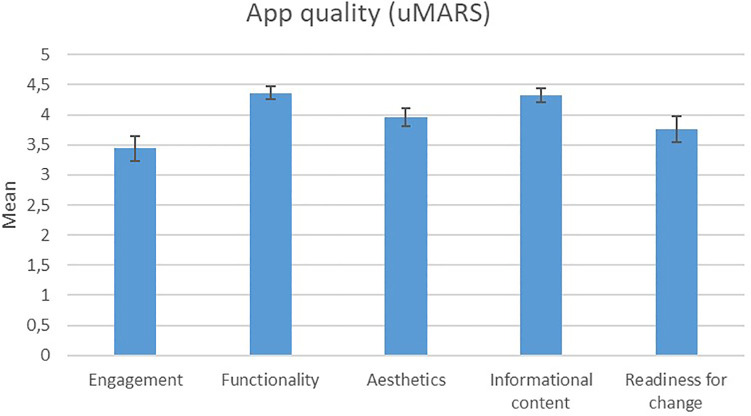
- User satisfaction was positive: mean treatment satisfaction was 3.1 ± 0.8; app quality was rated high for functionality (4.4 ± 0.1), aesthetics (4.0 ± 0.2), and information content (4.3 ± 0.1).
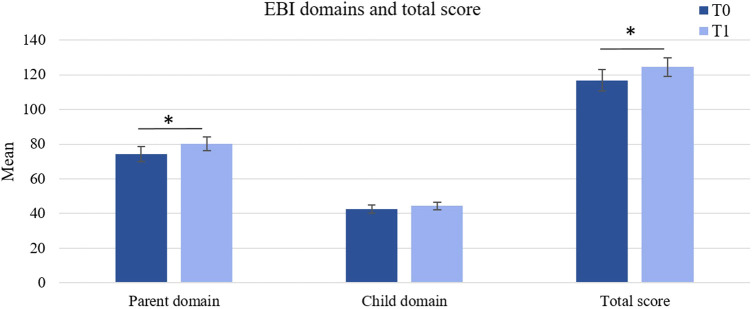
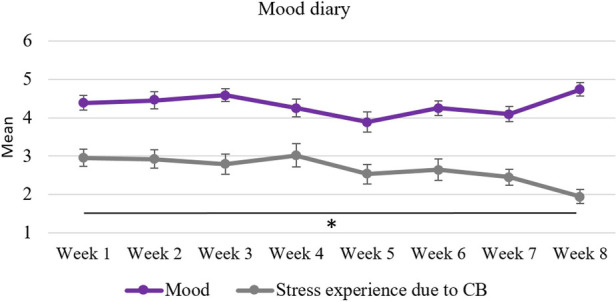
- Outcomes were mixed: ITT analysis showed a significant increase in total parental stress (EBI, t(17) = −2.19, p = .021, d = 0.52) and parent-domain stress (t(17) = −3.07, p = .003, d = 0.73), but EMA-based stress experience due to CB decreased from 2.8 ± 0.9 to 2.0 ± 0.8 (t(12) = 3.29, p = .003, d = 0.91); parenting overreactivity also declined (t(16) = 1.92, p = .036, d = 0.47).
Methods
- Design: Pre-post study without a control group, with assessments at baseline (T0) and after 8 weeks of app use (T1); follow-up data were ongoing.
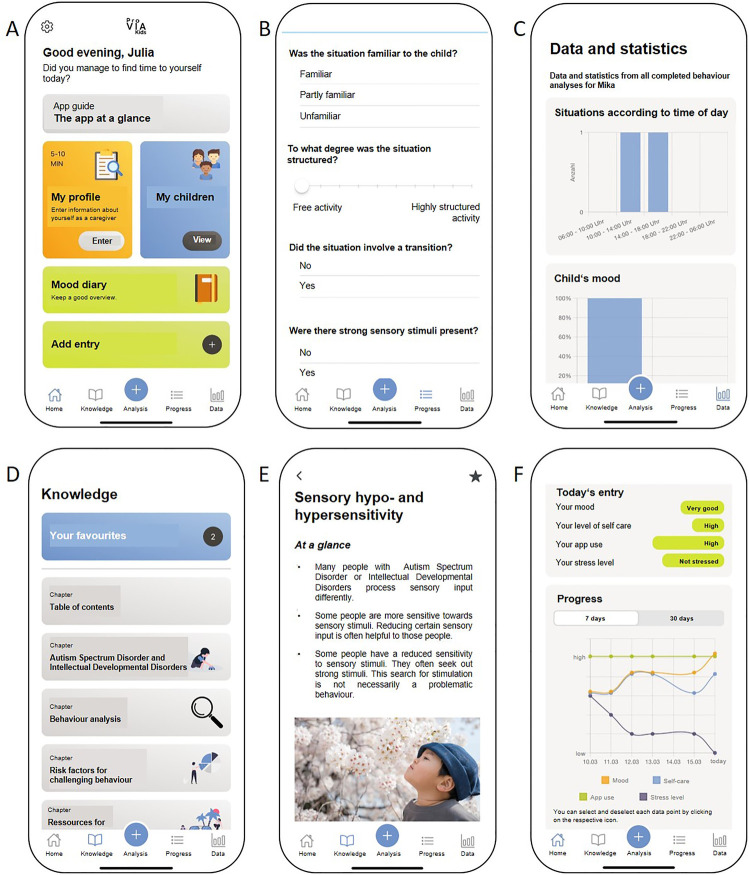
- Sample/intervention: 18 caregivers of children with ASD (44%), IDD (33%), or both (22%), aged 4–11 years, used the iOS/Android ProVIA-Kids app, which combines behaviour analysis, psychoeducation, and CBT-based recommendations.
- Analysis: The paper reports ITT and PP analyses; paired t-tests, Wilcoxon sign-rank tests or sign tests were used as applicable, with Pearson correlations for EMA variables and Cohen’s d / η² effect sizes.
Limitations
- The paper states that the sample size was relatively small, limiting power to detect small to medium effects, and that there were no subgroup analyses by child diagnosis or age group.
- The absence of a control group means changes cannot be attributed solely to the intervention; the authors note possible influences such as natural variation or child maturation.
- The paper states that outcomes relied on caregiver report; evident from the text, this raises risk of single-informant bias and limits generalizability. Also evident: the sample included only female caregivers, which the authors note limits representation of male caregivers.
Model-written summary. Check it against the paper before relying on it.
Integrity signals
Registry
Cites
Statistics
Figures
Verification
Claims the paper makes
14 Valid · 1 Not valid · 42 Not checked · 108 Own results and interpretations
The cited sources support only part of this claim — read each source’s verdict below.
In the paper
“Research has identified CB as the best predictor of parental stress (5, 9–11).”
§ ProVIA-Kids - outcomes of an uncontrolled study on smartphone-based behaviour analysis for challenging behaviour in children with intellectual and developmental disabilities or autism spectrum disorder > Introduction
What the sources say
- Partly supportedcites [5] Baker BL Blacher J Olsson MB. Preschool children with and without developmental delay: behaviour problems, parents’ optimism and well-being. J Intellect Disabil Res. (2005) 49(Pt 8): 575– 90. 10.1111/j.1365-2788.2005.00691.x 16011551 sourceExperimental — accuracy not yet measured
The Discussion reports that maladaptive behaviour was the best predictor of family stress in a study of children aged 3–10 within two disability groups. The Parents’ well-being section also says behaviour problems related to parenting stress more than disability type did. These passages support the importance of challenging behaviour, but not the unqualified claim that it is the best predictor of parental stress generally. (LLM, conf=0.83)
- Not checked — no full text of the sourcecites [9] Beck A Daley D Hastings RP Stevenson J. Mothers’ expressed emotion towards children with and without intellectual disabilities. J Intellect Disabil Res. (2004) 48(7): 628– 38. 10.1111/j.1365-2788.2003.00564.x 15357682 source
- Not checked — no full text of the sourcecites [10] Bonis S. Stress and parents of children with autism: a review of literature. Issues Ment Health Nurs. (2016) 37(3): 153– 63. 10.3109/01612840.2015.1116030 27028741 source
- Not checked — no full text of the sourcecites [11] Fidler DJ Hodapp RM Dykens EM. Stress in families of young children with down syndrome, williams syndrome, and smith-magenis syndrome. Early Educ Dev. (2000) 11(4): 395– 406. 10.1207/s15566935eed1104_2 source
plainstates an association- Asserted: passes — The authors put it forward as true.
- Checkable: passes — It can be checked against evidence.
- Load-bearing: unclear — It is unclear whether the paper’s conclusions depend on it.
- Based: passes — The paper gives a reason why it holds.
- Partly supported
Every source the paper cites for this claim was checked and supports it.
In the paper
“Given the bidirectional relationship between CB and parental stress, interventions that aim to reduce parental stress can also lead to positive changes in child's CB (39).”
§ ProVIA-Kids - outcomes of an uncontrolled study on smartphone-based behaviour analysis for challenging behaviour in children with intellectual and developmental disabilities or autism spectrum disorder > Introduction
What the sources say
- Supportedcites [39] Neece CL Green SA Baker BL. Parenting stress and child behavior problems: a transactional relationship across time. Am J Intellect Dev Disabil. (2012) 117(1): 48– 66. 10.1352/1944-7558-117.1.48 22264112 PMC4861150 source
The Discussion reports a bidirectional relationship between parenting stress and child behavior problems. It also suggests that reducing parenting stress through an intervention has the potential to reduce behavior problems, while explicitly noting that effects of such interventions on child behavior are unknown. The claim’s “can” expresses that possibility rather than a demonstrated intervention effect. (LLM, conf=0.91)
plainstates a cause- Asserted: passes — The authors put it forward as true.
- Checkable: passes — It can be checked against evidence.
- Load-bearing: passes — The paper’s conclusions depend on it.
- Based: passes — The paper gives a reason why it holds.
- Supported
The cited sources support only part of this claim — read each source’s verdict below.
In the paper
“Behavioural interventions can be effective in reducing CB in individuals with ASD and/or IDD (32, 33).”
§ ProVIA-Kids - outcomes of an uncontrolled study on smartphone-based behaviour analysis for challenging behaviour in children with intellectual and developmental disabilities or autism spectrum disorder > Introduction
What the sources say
- Not checked — no full text of the sourcecites [32] Harvey ST Boer D Meyer LH Evans IM. Updating a meta-analysis of intervention research with challenging behaviour: treatment validity and standards of practice. J Intellect Dev Disabil. (2009) 34(1): 67– 80. 10.1080/13668250802690922 19234980 source
- Partly supportedcites [33] Heyvaert M Maes B Onghena P. A meta-analysis of intervention effects on challenging behaviour among persons with intellectual disabilities. J Intellect Disabil Res. (2010) 54(7): 634– 49. 10.1111/j.1365-2788.2010.01291.x 20492347 sourceExperimental — accuracy not yet measured
The Description of primary studies and participants identifies behavioural interventions among the treatments reviewed, and the Discussion reports evidence that psychotherapeutic interventions can reduce challenging behaviour in people with intellectual disabilities. The paper does not establish that finding for people with autism spectrum disorder who do not also have intellectual disabilities, so it supports the IDD portion but not the full stated population. (LLM, conf=0.84)
plainstates a cause- Asserted: passes — The authors put it forward as true.
- Checkable: passes — It can be checked against evidence.
- Load-bearing: passes — The paper’s conclusions depend on it.
- Based: passes — The paper gives a reason why it holds.
The sources with a verdict support this claim; the rest weren’t checked yet, have no full text we could read, or their verdicts aren’t rated yet.
In the paper
“This also holds true for studies on self-directed interventions for parents of children displaying CB (68, 69, 75, 79).”
§ ProVIA-Kids - outcomes of an uncontrolled study on smartphone-based behaviour analysis for challenging behaviour in children with intellectual and developmental disabilities or autism spectrum disorder > Discussion
What the sources say
- Not checked — no full text of the sourcecites [68] Kierfeld F Ise E Hanisch C Gortz-Dorten A Dopfner M. Effectiveness of telephone-assisted parent-administered behavioural family intervention for preschool children with externalizing problem behaviour: a randomized controlled trial. Eur Child Adolesc Psychiatry. (2013) 22(9): 553– 65. 10.1007/s00787-013-0397-7 23463180 source
- Not checked — no full text of the sourcecites [69] Sanders MR Baker S Turner KMT. A randomized controlled trial evaluating the efficacy of triple P online with parents of children with early-onset conduct problems. Behav Res Ther. (2012) 50(11): 675– 84. 10.1016/j.brat.2012.07.004 22982082 source
- Not checked — no full text of the sourcecites [75] Markie-Dadds C Sanders MR. Self-Directed triple P (positive parenting program) for mothers with children at-risk of developing conduct problems. Behav Cogn Psychother. (2006) 34(3): 259– 75. 10.1017/S1352465806002797 source
- Supportedcites [79] Piotrowska PJ Tully LA Collins DAJ Sawrikar V Hawes D Kimonis ER Parentworks: evaluation of an online, father-inclusive, universal parenting intervention to reduce child conduct problems. Child Psychiatry Hum Dev. (2020) 51(4): 503– 13. 10.1007/s10578-019-00934-0 31650461 PMC7347669 source
The Discussion describes ParentWorks as an entirely self-directed online intervention. The Results (Intervention Outcomes) report significant pre- to post-intervention reductions in child conduct problems, including among children with higher initial levels of behavioural problems. (LLM, conf=0.92)
plainstates a cause- Asserted: passes — The authors put it forward as true.
- Checkable: passes — It can be checked against evidence.
- Load-bearing: unclear — It is unclear whether the paper’s conclusions depend on it.
- Based: passes — The paper gives a reason why it holds.
A result the paper reports from its own data — it cites no other source for it, so there is none to check. The quote shows it is in the paper.
In the paper
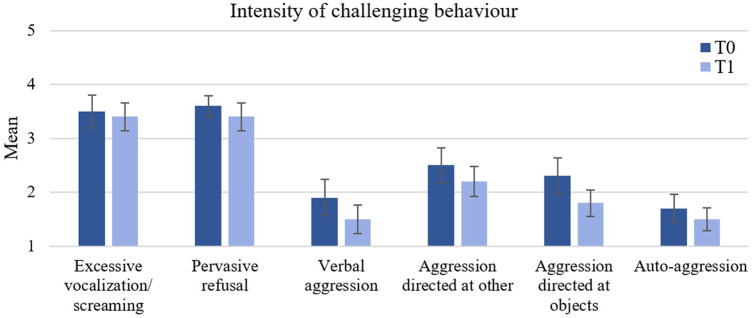
“However, we also saw improvements in parental stress experience due to CB and overreactive parenting, and descriptive improvements in CB intensity and caregiver mood.”
§ ProVIA-Kids - outcomes of an uncontrolled study on smartphone-based behaviour analysis for challenging behaviour in children with intellectual and developmental disabilities or autism spectrum disorder > Abstract > Results
plain- Asserted: passes — The authors put it forward as true.
- Checkable: passes — It can be checked against evidence.
- Load-bearing: passes — The paper’s conclusions depend on it.
- Based: passes — The paper gives a reason why it holds.
64 more claims
Create a free account to see all 165 claims and to verify the 2 references still open.
- Probably not a substantial claim. 63
- It may state two separate claims as one. 48
Statistics that don’t add up
Each reported p-value recomputed from its test statistic and degrees of freedom, each partial η² from its F, and each ratio, mean difference or B printed with a p checked against its own confidence interval.
Rated minor: it would not touch a result — a value no result rests on, a p-value that stays on the same side of the significance level, or a conflict that is clerical, resolved elsewhere in the paper, or outside its own findings.
In the paper
“t(21) = 2.86, p = .005”
§ ProVIA-Kids - outcomes of an uncontrolled study on smartphone-based behaviour analysis for challenging behaviour in children with intellectual and developmental disabilities or autism spectrum disorder > Materials and methods > Sample description
Reported p = .005 · recomputed p = .009
Rated minor: it would not touch a result — a value no result rests on, a p-value that stays on the same side of the significance level, or a conflict that is clerical, resolved elsewhere in the paper, or outside its own findings.
In the paper
“t(17) = −2.14, p = .027”
§ ProVIA-Kids - outcomes of an uncontrolled study on smartphone-based behaviour analysis for challenging behaviour in children with intellectual and developmental disabilities or autism spectrum disorder > Results > Increase in questionnaire-based parental stress
Reported p = .027 · recomputed p = .047
Statistics recomputed
Every reported test result, recomputed from its test statistic and degrees of freedom. A result shows as not adding up only once an independent check has confirmed it.
- Doesn’t add upt(21) = 2.86reported p = .005 · recomputed p = .009
“t(21) = 2.86, p = .005”
- Doesn’t add upt(17) = -2.14reported p = .027 · recomputed p = .047
“t(17) = −2.14, p = .027”
- Not confirmedt(17) = -2.19reported p = .021 · recomputed p = .043
“t(17) = −2.19, p = .021”
- Not confirmedt(12) = -1.28reported p = .112 · recomputed p = .225
“t(12) = −1.28, p = .112”
- Not confirmedt(17) = -3.07reported p = .003 · recomputed p = .007
“t(17) = −3.07, p = .003”
10 more recomputed tests
Create a free account to see every test the Stats check recomputed.
Self-check
Percentages, sums and reported differences re-computed from the paper’s own numbers.
Each contradiction between two passages listed here was confirmed by an independent check.
Rated major: it would touch a result — a value a result rests on, reported and recomputed p-values on opposite sides of the significance level, two passages that conflict with no sign which is right, or a cited work retracted before this paper was published.
In the paper
§ ProVIA-Kids - outcomes of an uncontrolled study on smartphone-based behaviour analysis for challenging behaviour in children with intellectual and developmental disabilities or autism spectrum disorder > Discussion
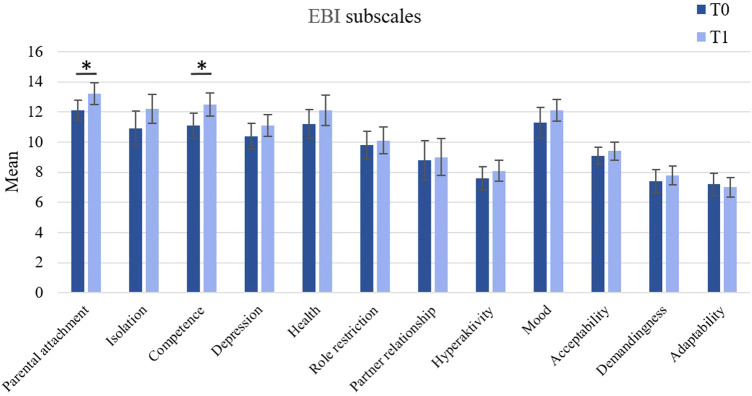
“the increase in parental stress was driven by higher post-treatment scores in the two subscales “isolation” and “competence”.”
§ ProVIA-Kids - outcomes of an uncontrolled study on smartphone-based behaviour analysis for challenging behaviour in children with intellectual and developmental disabilities or autism spectrum disorder > Discussion
“Increases occurred in the parent domain in the subscales “parental attachment” and “competence”.”
Citations
Cites
The PHQ-9: Validity of a brief depression severity measure
Kroenke, K., Spitzer, R. L., & Williams, J. B. W. (2001) · Journal of General Internal Medicine · doi:10.1046/j.1525-1497.2001.016009606.x · Cited by 44,910
(1995) · Cited by 6,909
Depression Anxiety Stress Scales
Lovibond, S. H., & Lovibond, P. F. (2011) · PsycTESTS Dataset · doi:10.1037/t01004-000 · Cited by 2,416
Hayes, S. A., & Watson, S. L. (2013) · Journal of Autism and Developmental Disorders · doi:10.1007/s10803-012-1604-y · Cited by 1,847
The parental stress scale: initial psychometric evidence
Berry, J. O., & Jones, W. H. (1995) · Journal of Social and Personal Relationships · doi:10.1177/0265407595123009 · Cited by 1,510
Parenting stress and child behavior problems: a transactional relationship across time
Neece, C. L., Green, S. A., & Baker, B. L. (2012) · American Journal on Intellectual and Developmental Disabilities · doi:10.1352/1944-7558-117.1.48 · Cited by 953
McClintock, K., Hall, S., & Oliver, C. (2003) · Journal of Intellectual Disability Research · doi:10.1046/j.1365-2788.2003.00517.x · Cited by 675
Eisenhower, A. S., Baker, B. L., & Blacher, J. (2005) · Journal of Intellectual Disability Research · doi:10.1111/j.1365-2788.2005.00699.x · Cited by 620
Parental stress and behaviour problems of children with developmental disability
Hastings, R. P. (2002) · Journal of Intellectual & Developmental Disability · doi:10.1080/1366825021000008657 · Cited by 501
Blacher, J., & McIntyre, L. L. (2006) · Journal of Intellectual Disability Research · doi:10.1111/j.1365-2788.2005.00768.x · Cited by 467
Research works printed but not linked: 11
- Psychiatrists RCo. Challenging Behaviour: A Unified Approach. London, UK: Royal College of Psychiatrists (2007).
- NICE. The Management and Support of Children and Young People on the Autism spectrum. Clinical Guideline no. 170. National Institute for Health and Care Excellence (2013).
- Häßler F Caby F Hoffmann KH Irblich D Mall V Mendes U S2k Praxisleitlinie Intelligenzminderung. AWMF-Register Nr. 028-042. AWMF (2021).
- Päckert J. Stationäre und Ambulante Versorgung von Menschen mit Intelligenzminderung und Psychischen StörUngen in den Kliniken für Kinder- und Jugendpsychiatrie / Psychotherapie in Deutschland. Rostock, Germany: Universität Rostock (2019).
- Riedel A Biscaldi M Tebartz van Elst L. Autismus und Asperger - Welche Rolle spielt der Hausarzt? Der Allgemeinarzt. (2017) 39(14): 44– 7.
- Bachmann C Hoffmann F. Autismus-Spektrum-Störungen in deutschland: diagnoseprävalenz, medizinische versorgung und zeitliche trends. In: Klauber J Günster C Gerste B Robra BP Schmacke N, editors. Versorgungs-Report 2015/2016 Schwerpunkt: Kinder und Jugendliche. Stuttgart: Schattauer (2015). p. 167– 84.
- Kanfer FH Saslow G. Behavioral diagnosis. In: Franks C, editor. Behavior Therapy. Appraisal and status: McGraw-Hill (1969). p. 417–44.
- Tröster H. Eltern-Belastungs-Inventar (EBI). Deutsche Version des Parenting Stress Index (PSI) von R.R. Abidin. Göttingen: Hogrefe (2011).
- Abidin RR. Parenting Stress Index. Professional Manual. Odessa, FL: Psychological Assessment Resources (1995).
- Gorin A Stone A. Recall biases and cognitive errors in retrospective self reports: a call for momentary assessments. Handb Health Psychol. (2001) 23: 405– 13.
- Kanouse D Hanson L. Negativity in evaluations. In: Jones E, editor. Attribution. Perceiving the Causes of Behavior: General Learning Press (1972). p. 1173–84.
Cited by
Kapsi, S. (2026) · Frontiers in Computer Science · doi:10.3389/fcomp.2026.1678653 · Cited by 1
“…(EIBI) (Wan et al., 2022; Bharat et al., 2022; Barbaro and Yaari, 2020; Sanders et al., 2023; Geissler et al., 2022; Dunn et al., 2017; Meerson et al., 2024; Camilleri et al., 2024; Fageeh et al., 2021; Bondioli et al., 2017; Narzisi et al., 2020; Kral et al., 2023; Muhammad et al.,…”
Gerhardt, U., & Kreuzenbeck, C. C. J. (2026) · AI & Society · doi:10.1007/s00146-026-03264-7 · Cited by 1
Xu, P., Shen, Z., Wang, Q., Hu, Y., & Hu, Y. (2026) · Journal of Autism and Developmental Disorders · doi:10.1007/s10803-026-07298-0
Metadata
- Authors
- Meerson, R., Buchholz, H., Kammerer, K., Göster, M., Schobel, J., Ratz, C., Pryss, R., Taurines, R., Romanos, M., Gamer, M., & Geissler, J.
- Affiliations
- University of Vienna (AT)
- Universitätsklinikum Würzburg (DE)
- University of Würzburg (DE)
- Neu-Ulm University of Applied Sciences (DE)
- Corresponding author
- Geissler, Julia
- ORCID
- Venue
- Frontiers in Digital Health
- Publisher
- Frontiers Media SA
- Published
- 2024-09-13
- Volume
- 6
- Pages
- 1462682-1462682
- ISSN
- 2673-253X (ISSN-L)
- PMC
- PMC11440517
- OpenAlex
- W4402528777
- Cited by
- 4
- References
- 78
- Citations by year
- 2026: 4
- FWCI
- 0.97
- Type
- journal article
- Language
- en
- Open access
- gold
- doi.org
- Licence
- Locations
- Frontiers in Digital Health (publishedVersion, cc-by)
- PubMed Central (publishedVersion, cc-by)
- PubMed (publishedVersion)
- DOAJ (DOAJ: Directory of Open Access Journals) (submittedVersion, cc-by-sa)
- Online Publication Service of Würzburg University (Würzburg University) (submittedVersion, cc-by)
- Topics
- Life Sciences › Neuroscience › Cognitive Neuroscience › Autism Spectrum Disorder Research
- Social Sciences › Psychology › Clinical Psychology › Family and Disability Support Research
- Social Sciences › Psychology › Applied Psychology › Digital Mental Health Interventions
- Keywords
- behavioral problems, autism spectrum disorder, intellectual and developmental disabilities, children, mobile application, behavior analysis, parental stress, caregiver stress, dysfunctional parenting, parental competencies, caregiver mood, app acceptance, mobile mental health intervention, ecological momentary assessment
About these checks
Registry, retraction, Cites and statistics results are computed, not judged, with one exception: a printed reference that no index lists is read once by a model before it counts as a citation error. Claims are extracted by a model and kept only when their quote appears verbatim in the text; each cited source is then checked, with a model’s help, for whether it says what the claim relies on. Those verdicts can be wrong — read the claim’s quote and the cited source before relying on one.
The claim verdicts this report counts are experimental: their accuracy is not yet measured.
A language model drew the claims from the paper on 2026-10-11, under version 3 of the claim definition (model deepseek-v4.1-flash, prompt extract-v3).
A second model labelled each claim on 2026-10-11 (model jev-1.13-20260917, definition revision gold-guideline-v0.2).
Cited sources are checked with a language model’s help (gpt-6-sol).
Statistics and arithmetic are recomputed, not judged.
Confidence bands are shown only for fields calibrated on our annotated test set. None is calibrated yet, so no band is shown.
What counts as a claim ›How we measure confidence ›How we check this ›
Are you an author, or do you see a problem with this page? Request a review
Data sources
Bibliographic data: Semantic Scholar, OpenAlex, Crossref.
Contains information from the Semantic Scholar Academic Graph Datasets, made available under the ODC Attribution License (ODC-BY 1.0).
Semantic Scholar’s data is described in: Kinney, R., et al. (2023). The Semantic Scholar Open Data Platform. arXiv:2301.10140.
