

Sarcopenic obesity: epidemiology, pathophysiology, cardiovascular disease, mortality, and management
Open accessThe DOI matches its Crossref record; 99 of the 99 references it cites were found in a registry or an index; 27 of the 114 sources its claims cite were checked for support.
Abstract
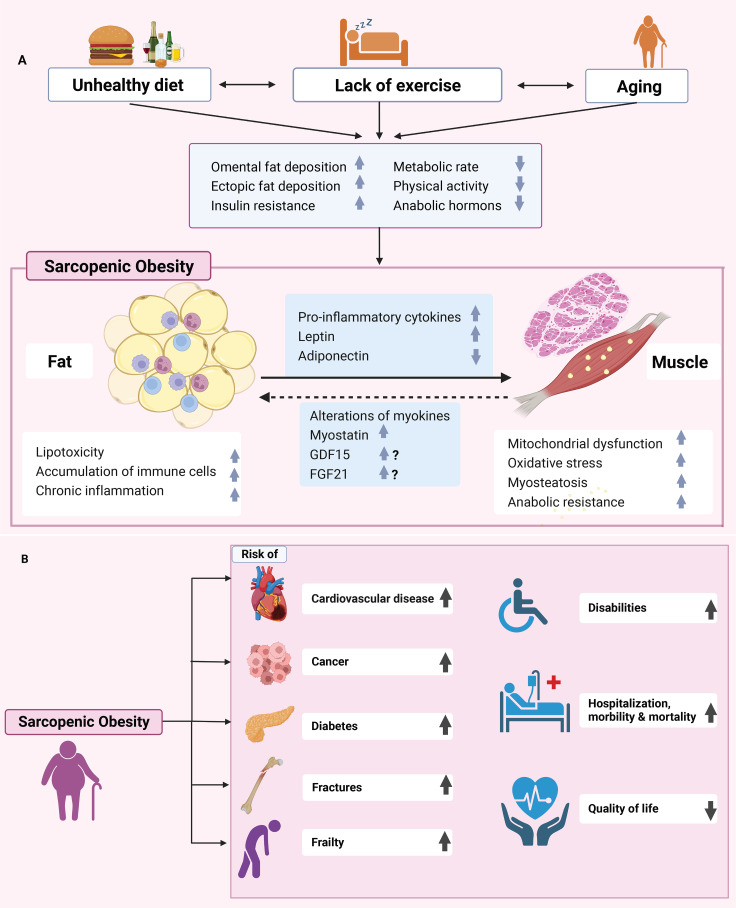
Sarcopenic obesity is defined as the coexistence of sarcopenia and obesity in the same individual, characterized by of the co-presence of body fat accumulation and muscle loss. This condition is currently a major concern as it is associated with frailty and disabilities such as cardiovascular disease, fractures, dementia, cancer, and increased all-cause mortality. Particularly, older individuals remain at risk of sarcopenic obesity. Progress at several levels is needed to improve the global prognostic outlook for this condition, including the elaboration and implementation of a more uniform definition that may favor the identification and specification of prevalence by age group. Furthermore, improvements in the understanding of the pathogenesis of sarcopenic obesity may lead to the development of more specific therapeutic interventions to improve prognosis. We reviewed the knowledge on sarcopenic obesity and its associations with cardiovascular diseases and mortality.
Overview
CoChat Summary
TL;DR
Sarcopenic obesity—coexistence of muscle loss and excess adiposity—is associated with frailty, cardiovascular disease, and increased all-cause mortality, especially in older adults. The review emphasizes that prevalence estimates remain imprecise because no globally accepted diagnostic definition exists, and management still centers on lifestyle modification with limited evidence for pharmacological therapies.
Key findings
- Sarcopenic obesity is linked to frailty, fractures, cardiovascular disease, cancer, dementia, hospitalization, and increased all-cause mortality; the paper states it is associated with a higher risk of cardiovascular events than sarcopenia or obesity alone.
- Prevalence varies widely by definition: a South Korean cohort found 0.8%–22.3% in women and 1.3%–15.4% in men; the Dutch Lifelines cohort found 1.4% in women and 0.9% in men, rising to 16.7% in the 80–89 age group; a meta-analysis of 50 studies including 86,285 people found a global prevalence of 11% in adults aged 60 years.
- Mortality risk is elevated in several studies: NHANES III women HR 1.29 (95% CI 1.03–1.60); British Regional Heart Study men HR 1.72 (95% CI 1.35–2.18); Swedish 75-year-old women HR 3.25 (95% CI 1.2–8.9); UK Biobank men with previous cardiovascular disease HR 1.47 (95% CI 1.30–1.66); and a meta-analysis of 23 studies including 50,866 individuals found pooled HR 1.21 (95% CI 1.10–1.32, p < 0.001, I² = 64.3%).
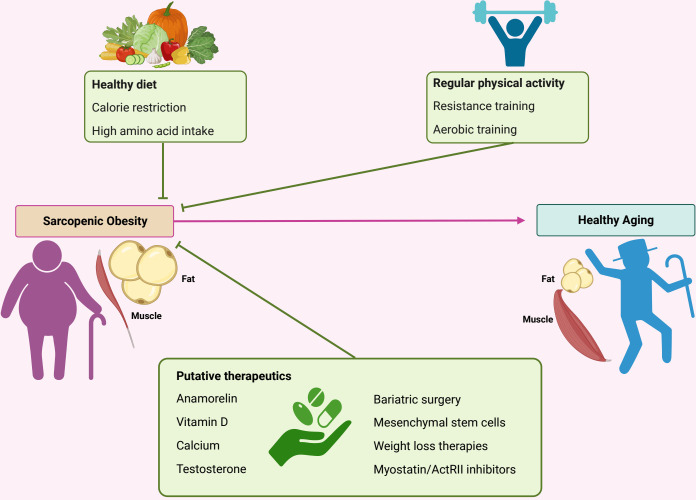
- Management is based mainly on lifestyle modification: caloric restriction (stated as less than 750 kcal/day), high-quality protein intake (1–1.2 g/kg/day), and combined aerobic and resistance exercise; pharmacological options such as testosterone, SARMs, GLP-1 receptor agonists, myostatin/ActRII inhibitors, and anamorelin are discussed but not strongly recommended because of limited evidence.
Methods
- Narrative review of the literature on sarcopenic obesity, covering definition, epidemiology, pathophysiology, cardiovascular disease, mortality, and management.
- Evidence is drawn from cited cohort studies, cross-sectional studies, meta-analyses, and preclinical/clinical trials; no systematic search strategy, inclusion criteria, or formal meta-analysis is described.
- Main analysis is a qualitative synthesis, including a table summarizing mortality results from selected cohort studies and one meta-analysis.
Limitations
- The paper states that the absence of globally adopted common definition criteria for sarcopenic obesity impairs precise epidemiological assessment, proper patient identification, and adapted management.
- The paper states that pathogenesis remains complex, multifactorial, and only partially elucidated; causality is difficult to establish from cross-sectional or cohort designs, and the optimal therapeutic approach remains undetermined because of limited clinical trials.
- Evident from the text: as a narrative review, it reports no systematic search, study-selection process, risk-of-bias assessment, or quantitative synthesis; several management recommendations rely on indirect, preclinical, or non-sarcopenic-obesity-specific evidence.
Model-written summary. Check it against the paper before relying on it.
Integrity signals
Registry
Cites
Statistics
Figures
Verification
Claims the paper makes
18 Valid · 2 Not valid · 61 Not checked · 26 Own results and interpretations
Some cited sources support this claim and some don’t — read each source’s verdict below.
In the paper
“Sarcopenic obesity significantly increases the risk of cardiovascular risk factors including insulin resistance (IR), metabolic syndrome, and adverse glycolipid metabolism (16, 42–44), even in the context of divergent comorbidities such as cancer and peritoneal dialysis (45, 46).”
§ Sarcopenic obesity: epidemiology, pathophysiology, cardiovascular disease, mortality, and management > Sarcopenic obesity and cardiovascular diseases
What the sources say
- Partly supportedcites [16] Ma J Hwang SJ McMahon GM Curhan GC McLean RR Murabito JM. Mid-adulthood cardiometabolic risk factor profiles of sarcopenic obesity. Obes (Silver Spring) (2016) 24: 526–34. doi: 10.1002/oby.21356 26813531 sourceExperimental — accuracy not yet measured
Ma et al. (2016) support the metabolic-syndrome and adverse glycolipid portions: the Abstract Results (p. 1) report that participants with sarcopenic obesity had a higher proportion of hypertension, metabolic syndrome and type 2 diabetes than NSNO or sarcopenia (all P<0.03), with similar patterns 10, 20 and 30 years prior, and Table 1/Table 3 show higher fasting plasma glucose (6.46 vs 5.51/5.64 mmol/L), higher triglycerides, lower HDLc and 37.7% vs 8.5% type 2 diabetes prevalence. However, insulin resistance is not part of this study's measured risk-factor panel (Methods, 'Cardiometabolic risk factor assessment': SBP, DBP, triglycerides, HDLc, LDLc, FPG, creatinine/eGFR only) — every insulin-resistance/HOMA-IR statement in our copy is credited to other works (ref 8's 565-person DXA/CT study, ref 16's 3,132 older men, ref 17's mechanism review) or framed as a 'putative pathway' in Potential mechanisms, so that element is not this source's own finding. The claim's causal 'significantly increases the risk' also overstates an associational design: Strengths and limitations states the cross-sectional and retrospective nature 'limits our ability to infer temporality or causality'. The cancer and peritoneal-dialysis clause is carried by other citations (45, 46) and is not addressed in our copy. (LLM, conf=0.82)
- Not checked yetcites [42] Atkins JL Wannamathee SG. Sarcopenic obesity in ageing: cardiovascular outcomes and mortality. Br J Nutr (2020) 124: 1102–13. doi: 10.1017/S0007114520002172 32616084 source
- Not checked yetcites [43] dos Santos EP Gadelha AB Safons MP Nobrega OT Oliveira RJ Lima RM. Sarcopenia and sarcopenic obesity classifications and cardiometabolic risks in older women. Arch Gerontol Geriatr (2014) 59: 56– 61. doi: 10.1016/j.archger.2014.03.012 24766993 source
- Partly supportedcites [44] Yu PC Hsu CC Lee WJ Liang CK Chou MY Lin MH. Muscle-to-fat ratio identifies functional impairments and cardiometabolic risk and predicts outcomes: biomarkers of sarcopenic obesity. J Cachexia Sarcopenia Muscle (2022) 13: 368–76. doi: 10.1002/jcsm.12877 PMC8818605 34866342 sourceExperimental — accuracy not yet measured
Split into 2 atoms — 0 confirmed, 2 partially supported, 0 disputed, 0 misattributed, 0 unverifiable. Expand the claim to see per-atom verdicts.
- Disputedcites [45] Lee K. Sarcopenic obesity and 10-year cardiovascular disease risk scores in cancer survivors and non-cancer participants using a nationwide survey. Eur J Cancer Care (Engl) (2021) 30: e13365. doi: 10.1111/ecc.13365 33174666 sourceExperimental — accuracy not yet measured
Lee (2021) measures 10-year Framingham CVD risk scores, not insulin resistance, metabolic syndrome or glycolipid metabolism, and in cancer survivors the adjusted analysis found that 'sarcopenic obesity was not associated with ≥10% 10-year CVD risk scores' (Section 3.3), with only sarcopenic non-obesity, non-sarcopenic abdominal obesity and sarcopenic abdominal obesity showing elevated odds (84%, 85%, 3.61-fold). The discussion (Table 2 section) further states explicitly that 'this cross-sectional study cannot state causality between sarcopenic obesity and 10-year CVD risk scores,' contradicting the claim's 'significantly increases risk' framing, and the paper contains nothing on peritoneal dialysis. Hyperinsulinaemia and shared biology appear only as mechanisms credited to Koene et al. (2016), not as this study's findings. (LLM, conf=0.75)
Checked by a reasoning model — may be wrong.
- Partly supportedcites [46] Tabibi H As’habi A Najafi I Hedayati M. Prevalence of dynapenic obesity and sarcopenic obesity and their associations with cardiovascular disease risk factors in peritoneal dialysis patients. Kidney Res Clin Pract (2018) 37: 404–13. doi: 10.23876/j.krcp.18.0064 PMC6312777 30619696 sourceExperimental — accuracy not yet measured
Split into 2 atoms — 0 confirmed, 2 partially supported, 0 disputed, 0 misattributed, 0 unverifiable. Expand the claim to see per-atom verdicts.
boostedstates a cause- Asserted: passes — The authors put it forward as true.
- Checkable: passes — It can be checked against evidence.
- Load-bearing: passes — The paper’s conclusions depend on it.
- Based: passes — The paper gives a reason why it holds.
- Partly supported
The cited sources support only part of this claim — read each source’s verdict below.
In the paper
“In postmenopausal women, the reduction in estradiol and increase in FSH levels promote body composition changes comprising an increase in adipose tissue and a decrease in muscle mass.”
§ Sarcopenic obesity: epidemiology, pathophysiology, cardiovascular disease, mortality, and management > Pathogenesis of sarcopenic obesity
What the sources say
- Partly supportedcites [33] Batsis JA Villareal DT. Sarcopenic obesity in older adults: aetiology, epidemiology and treatment strategies. Nat Rev Endocrinol (2018) 14: 513–37. doi: 10.1038/s41574-018-0062-9 PMC6241236 30065268 sourceExperimental — accuracy not yet measured
The “Sex-specific hormonal changes” section says menopause increases fat mass and reduces fat-free and muscle mass in women, and that oestrogen can attenuate these changes. It does not say that increased FSH promotes those changes; its discussion of FSH in the “Testosterone” section concerns men. Page numbers are not available in our copy. (LLM, conf=0.88)
plainstates a cause- Asserted: passes — The authors put it forward as true.
- Checkable: passes — It can be checked against evidence.
- Load-bearing: unclear — It is unclear whether the paper’s conclusions depend on it.
- Based: passes — The paper gives a reason why it holds.
- Partly supported
Every source the paper cites for this claim was checked and supports it.
In the paper
“These lipids can induce a reduction of GLUT4 translocation via impairment of insulin signaling, thereby leading to a reduction of glucose uptake by skeletal muscle.”
§ Sarcopenic obesity: epidemiology, pathophysiology, cardiovascular disease, mortality, and management > Pathogenesis of sarcopenic obesity
What the sources say
- Supportedcites [22] Shulman GI. Cellular mechanisms of insulin resistance. J Clin Invest (2000) 106: 171–6. doi: 10.1172/JCI10583 PMC314317 10903330 source
The insulin-resistance discussion says fatty acids may impair upstream insulin signaling, decreasing GLUT4 translocation to the plasma membrane. Figure 2 proposes that intracellular fatty-acid metabolites diminish insulin signaling and glucose transport activity in skeletal muscle. The claim’s 'can' is consistent with the paper’s proposed mechanism. (LLM, conf=0.91)
plainstates a cause- Asserted: passes — The authors put it forward as true.
- Checkable: passes — It can be checked against evidence.
- Load-bearing: passes — The paper’s conclusions depend on it.
- Based: passes — The paper gives a reason why it holds.
- Supported
The sources with a verdict support this claim; the rest weren’t checked yet, have no full text we could read, or their verdicts aren’t rated yet.
In the paper
“In the context of obesity, adipose tissue macrophages (ATM) change their phenotype from M2 to M1.”
§ Sarcopenic obesity: epidemiology, pathophysiology, cardiovascular disease, mortality, and management > Pathogenesis of sarcopenic obesity
What the sources say
- Supportedcites [19] Ouchi N Parker JL Lugus JJ Walsh K. Adipokines in inflammation and metabolic disease. Nat Rev Immunol (2011) 11: 85– 97. doi: 10.1038/nri2921 21252989 PMC3518031 source
In the ‘Infiltration of immune cells into adipose tissue’ section, the review describes predominantly M2-associated macrophages in lean mice and M1-associated macrophages in obese mice. Its References section explicitly describes obesity as causing a shift in adipose tissue macrophage polarization from alternatively to classically activated, matching the claim. (LLM, conf=0.91)
- Not checked yetcites [20] Olefsky JM Glass CK. Macrophages, inflammation, and insulin resistance. Annu Rev Physiol (2010) 72: 219–46. doi: 10.1146/annurev-physiol-021909-135846 20148674 source
plainstates a cause- Asserted: passes — The authors put it forward as true.
- Checkable: passes — It can be checked against evidence.
- Load-bearing: passes — The paper’s conclusions depend on it.
- Based: passes — The paper gives a reason why it holds.
- Supported
The cited sources support only part of this claim — read each source’s verdict below.
In the paper
“In addition, this significance persisted in studies that used different criteria to define obesity and sarcopenia (18).”
§ Sarcopenic obesity: epidemiology, pathophysiology, cardiovascular disease, mortality, and management > Mortality related to sarcopenic obesity
What the sources say
- Partly supportedcites [18] Zhang X Xie X Dou Q Liu C Zhang W Yang Y. Association of sarcopenic obesity with the risk of all-cause mortality among adults over a broad range of different settings: a updated meta-analysis. BMC Geriatr (2019) 19: 183. doi: 10.1186/s12877-019-1195-y 31269909 PMC6610788 sourceExperimental — accuracy not yet measured
The Results report significantly higher mortality risk under several definitions of sarcopenia and obesity, including muscle-strength-, waist-circumference-, and BMI-based definitions. But the association was not statistically significant for ALM/BMI-based or fat-mass-based sarcopenic obesity, so significance did not persist across all criteria. (LLM, conf=0.90)
plainstates an association- Asserted: passes — The authors put it forward as true.
- Checkable: passes — It can be checked against evidence.
- Load-bearing: passes — The paper’s conclusions depend on it.
- Based: passes — The paper gives a reason why it holds.
- Partly supported
46 more claims · 4 with their cited sources checked
Create a free account to see all 107 claims and to verify the 87 references still open.
- It may state two separate claims as one. 49
- The quote only partly states this claim. 2
- Probably not a substantial claim. 17
Claims other papers make about this one
Each is checked against this paper’s own text: does it say what the citing paper says it does?
The source backs part of the claim, not all of it — or backs it for a different population, condition or comparison.
In the citing paper
“Men, by contrast, often present with higher visceral adiposity and sarcopenic risk, which may attenuate weight loss and predispose to muscle loss during high-efficacy pharmacotherapy [181].”
From Precision obesity medicine: A phenotype-guided framework for pharmacologic therapy across the lifespan (2025) · cites this paper as [181]
Experimental — accuracy not yet measuredThe source backs part of the claim, not all of it — or backs it for a different population, condition or comparison.
In the citing paper
“These strategies include lifestyle modifications such as moderate caloric restriction, adequate protein intake, and regular resistance training (RT), all of which have shown efficacy in enhancing muscle mass, reducing adiposity, and improving physical function in older adults with SO [2,6,8,9].”
From Efficacy of Power Training on Sarcopenic Obesity in Community-Dwelling Older Women: A 32-Week Randomized Clinical Trial (2025) · cites this paper as [6]
Experimental — accuracy not yet measuredIn the citing paper
“This dual phenotype has detrimental effects on both clinical and patient-centred outcomes, including functional limitations and increased morbidity risk (e.g., type 2 diabetes, fractures), contributing to lower quality of life and survival rates [8].”
From Weighing the risk of GLP-1 treatment in older adults: Should we be concerned about sarcopenic obesity? (2025) · cites this paper as [8]
Self-check
Percentages, sums and reported differences re-computed from the paper’s own numbers.
Each contradiction between two passages listed here was confirmed by an independent check.
Rated major: it would touch a result — a value a result rests on, reported and recomputed p-values on opposite sides of the significance level, two passages that conflict with no sign which is right, or a cited work retracted before this paper was published.
In the paper
§ Sarcopenic obesity: epidemiology, pathophysiology, cardiovascular disease, mortality, and management > Management of sarcopenic obesity
“Presently, a very-low calorie intake must be avoided in older individuals with sarcopenic obesity”
§ Sarcopenic obesity: epidemiology, pathophysiology, cardiovascular disease, mortality, and management > Management of sarcopenic obesity
“Although the precise quantity of kcal per day has not yet been defined, it must be less than 750 kcal per day (70).”
Rated minor: it would not touch a result — a value no result rests on, a p-value that stays on the same side of the significance level, or a conflict that is clerical, resolved elsewhere in the paper, or outside its own findings.
In the paper
§ Sarcopenic obesity: epidemiology, pathophysiology, cardiovascular disease, mortality, and management > Mortality related to sarcopenic obesity
“The British Regional Heart Study examined the risk of all-cause mortality among 4107 men aged between 60-79 years.”
§ Sarcopenic obesity: epidemiology, pathophysiology, cardiovascular disease, mortality, and management > Mortality related to sarcopenic obesity
“| British Regional Heart Study (41) | 4252 |”
Citations
Cites
Sarcopenia: revised European consensus on definition and diagnosis
Cruz-Jentoft, A. J., Bahat, G., Bauer, J., Boirie, Y., Bruyère, O., Cederholm, T., Cooper, C., Landi, F., Rolland, Y., Sayer, A. A., et al. (2019) · Age and Ageing · doi:10.1093/ageing/afy169 · Cited by 13,818 · cited 1×
“Reduced muscle quality and quantity (DXA or alternative tests such as mid-thigh imaging by MRI or psoas muscle measurement with CT) were used to confirm sarcopenia, and poor physical performance was assessed using the Timed Up and Go test or gait speed to determine its severity (3).”
MethodProspective Studies Collaboration (2009) · The Lancet · doi:10.1016/s0140-6736(09)60318-4 · Cited by 4,807
Adipokines in inflammation and metabolic disease
Ouchi, N., Parker, J. L., Lugus, J. J., & Walsh, K. (2011) · Nature Reviews Immunology · doi:10.1038/nri2921 · Cited by 4,625 · cited 1×
“M2 or alternatively activated macrophages induced adipose tissue to exhibit anti-inflammatory properties (19).”
BackgroundCruz-Jentoft, A. J., & Sayer, A. A. (2019) · The Lancet · doi:10.1016/s0140-6736(19)31138-9 · Cited by 3,905
Sarcopenia: revised European consensus on definition and diagnosis
Cruz-Jentoft, A. J., Bahat, G., Bauer, J., Boirie, Y., Bruyère, O., Cederholm, T., Cooper, C., Landi, F., Rolland, Y., Sayer, A. A., et al. (2019) · Age and Ageing · doi:10.1093/ageing/afz046 · Cited by 3,803
Endoplasmic reticulum stress and the inflammatory basis of metabolic disease
Hotamisligil, G. S. (2010) · Cell · doi:10.1016/j.cell.2010.02.034 · Cited by 2,802 · cited 1×
“Oxidative stress can also lead to ER stress, which is characterized by unfolded protein response (UPR) causing dysfunction of proteasomal degradation and autophagy, which reduces protein levels and causes an imbalance in calcium homeostasis that altogether favor a decrease in muscle mass (30, 31).”
BackgroundThe Rag GTPases Bind Raptor and Mediate Amino Acid Signaling to mTORC1
Sancak, Y., Peterson, T. R., Shaul, Y. D., Lindquist, R. A., Thoreen, C. C., Bar-Peled, L., & Sabatini, D. M. (2008) · Science · doi:10.1126/science.1157535 · Cited by 2,773 · cited 1×
“Increased mTORC1 activation induces the formation of muscle cells proteins (26, 27).”
BackgroundMacrophages, inflammation, and insulin resistance
Olefsky, J. M., & Glass, C. K. (2010) · Annual Review of Physiology · doi:10.1146/annurev-physiol-021909-135846 · Cited by 2,733 · cited 1×
“In contrast, M1 ATM secrete proinflammatory molecules, including IL-6, TNF-a, IL-1b, MCP-1, CCR2, and CCR5 (20).”
Cellular mechanisms of insulin resistance
Shulman, G. I. (2000) · Journal of Clinical Investigation · doi:10.1172/jci10583 · Cited by 2,714
Klahr, S., Levey, A. S., Beck, G. J., Caggiula, A. W., Hunsicker, L., Kusek, J. W., & Striker, G. (1994) · New England Journal of Medicine · doi:10.1056/nejm199403313301301 · Cited by 2,328 · cited 1×
“Medical and dietary management are important to establish a food program that allows moderate calorie restriction while optimizing protein intake (72).”
Cited by
Items 101–200 of 367
Michels, G., Rosa, G. M., Renke, G., & Starling-Soares, B. (2024) · Life · doi:10.3390/life14111383 · Cited by 5
Matsumoto, A., Yoshimura, Y., Wakabayashi, H., Nagano, F., Shimazu, S., Kido, Y., Shiraishi, A., Hamada, T., Yoneda, K., Bise, T., et al. (2025) · Annals of Geriatric Medicine and Research · doi:10.4235/agmr.25.0021 · Cited by 5
“7) In stroke patients specifically, a study us-ing ESPEN/EASO criteria reported a 4% prevalence of SO in acute stroke patients.”
Independent association between sarcopenic obesity and knee osteoarthritis: A cross-sectional study
ÖZER, Y. P., Karaduman, D., Karanfil, Y., Çiftçi, E., Şahiner, Z., Balcı, C., Doğu, B. B., Halil, M. G., Korkusuz, F., & Cankurtaran, M. (2025) · Journal of Sports Sciences · doi:10.1080/02640414.2025.2526298 · Cited by 5
“Although age and gender also influence the variability in SO prevalence (Wei et al., 2023), it is estimated to be 5–10% in older adults (Donini et al., 2022; D.-C. Lee et al., 2016).”
Su, S., Wang, K., Yang, Z., Zhou, Y., Ma, R., Chen, S., Zhou, M., & Yang, Y. (2025) · Social Psychiatry and Psychiatric Epidemiology · doi:10.1007/s00127-025-02976-3 · Cited by 5
Mąkosza, K. M., Wierzgoń, J., Muc‐Wierzgoń, M., & Dzięgielewska-Gęsiak, S. (2025) · Cancers · doi:10.3390/cancers17162654 · Cited by 5
Semań, T., Krupa, S., Szczupak, M., Kobak, J., & Widenka, K. (2025) · Nutrients · doi:10.3390/nu17193088 · Cited by 5
“The phenomenon of the coexistence of obesity and sarcopenia, referred to as “sarcopenic obesity”, which can significantly affect the course of the disease, prognosis and effectiveness of treatment, is gaining particular importance [31–33].”
Yin, S., Su, J., Bao, J., Yu, H., Liu, M., & Ji, X. (2025) · Aging Clinical and Experimental Research · doi:10.1007/s40520-025-03215-0 · Cited by 5
Yang, K., Yang, W., Si, S.-C., Liu, J., Ma, Y.-X., & Zhao, H. (2025) · Journal of Clinical Medicine · doi:10.3390/jcm14228148 · Cited by 5
“Compensatory increases in fatty acid oxidation intensify mitochondrial overload, hinder electron transport chain functionality, disturb oxidative phosphorylation, increase reactive oxygen species (ROS) production, and ultimately result in muscular atrophy [48].”
Biological organ ages associate with risk of chronic diseases in a community-based population
Liu, C. S., Yeo, W.-J., Surapaneni, A., Windham, B. G., Oh, H. S., Prizment, A. E., Sedaghat, S., Schlosser, P., Rhee, E. P., Waikar, S. S., et al. (2025) · JCI Insight · doi:10.1172/jci.insight.197304 · Cited by 5
“We did see a strong positive correlation between muscle and adipose age gaps (0.40), a finding that is complementary to studies on sarcopenic obesity suggesting adipokine-and myok-ine-mediated crosstalk between adipose and muscle tissues (31–36).”
InfluentialType 2 diabetes: is obesity for diabetic retinopathy good or bad? A cross-sectional study
Chen, Z., Zhong, X., Lin, R., Liu, S., Cao, H., Chen, H., Cao, B., Tu, M., & Wei, W. (2024) · Nutrition & Metabolism · doi:10.1186/s12986-024-00842-8 · Cited by 5
“Recent studies have demonstrated that sarcopenic obesity (SO), defined as a functional and clinical disorder characterized by a loss of skeletal muscle mass and function coexisting with an excess of adipose tissue [12], represents a specific obesity phenotype.”
Nedelcu, A.-D., Uzun, A.-B., Ciortea, V. M., Irsay, L., Stanciu, L.-E., Iliescu, D., Popa, F. L., & Iliescu, M. G. (2025) · Medicina · doi:10.3390/medicina61050866 · Cited by 5
“Sarcopenic obesity is defined as the coexistence of sarcopenia and obesity in an individual, characterized by the concurrent accumulation of body fat and the loss of muscle mass [7,8].”
The Role of Rehabilitation Program in Managing the Triad of Sarcopenia, Obesity, and Chronic Pain
Vladutu, B. M., Matei, D. V., Genunche-Dumitrescu, A. V., Kamal, C., & Trăistaru, M. R. (2025) · Life · doi:10.3390/life15081174 · Cited by 5
Vîrgolici, B., Dobre, M.-Z., & Stefan, D. C. A. (2024) · Current Issues in Molecular Biology · doi:10.3390/cimb46120800 · Cited by 5
Cândido, L. M., Bae, J. H., Kim, D. Y., Bayartai, M.-E., Abbruzzese, L., Fanari, P., Micheli, R. D., Tringali, G., Danielewicz, A. L., & Sartório, A. (2025) · Journal of Clinical Medicine · doi:10.3390/jcm14093069 · Cited by 5
“When these conditions coexist, the condition is known as sarcopenic obesity (SO) [5], which is considered more severe than experiencing either condition separately [6].”
InfluentialZhang, D., Lam, S., & Zheng, Y. (2025) · PubMed Central · doi:10.14336/ad.2025.0145 · Cited by 5
Pan, Y., An, L., Yuan, Y., Shi, J., Zhang, M., & Wang, Y. (2025) · Diabetology & Metabolic Syndrome · doi:10.1186/s13098-025-01857-8 · Cited by 4
“…skeletal muscles, causing lipotoxicity, inducing oxidative damage, reducing muscle functional value, and leading to other metabolic disorders [27, 31]; 2) Concurrently disrupted glucose and lipid metabolism can lead to excessive release of inflammatory factors, thereby causing chronic…”
Koçak, F. Ö. K., Altın, Z., & Kızıltaş, A. (2025) · Nutrition in Clinical Practice · doi:10.1002/ncp.70086 · Cited by 4
“48,49 Recognizing this dual burden is essential for tailoring interventions that combine resistance exercise, protein optimization, and anti ‐ inflammatory nutrition strategies rather than weight loss alone.”
Lingfang, H., Wang, Z., Hu, Z., Wang, D., & Luo, Y. (2026) · BMC Geriatrics · doi:10.1186/s12877-026-06973-2 · Cited by 4
“…adults, it is recommended that healthcare institutions and official media enhance health education efforts to raise awareness among older adults about the adverse effects of SO (perceived the disease threat) [42], the critical importance of exercise therapy [43], and scientific exercise methods.”
Sarcopenia, Obesity, and Sarcopenic Obesity in Relation to Functional Limitations in Older Adults
Marika, M., Lewandowicz, M., Kaczmarek, B., Deskur-Śmielecka, E., Wieczorowska–Tobis, K., & Krzymińska-Siemaszko, R. (2026) · Journal of Clinical Medicine · doi:10.3390/jcm15031000 · Cited by 5
Song, Y., Dong, T., Fu, Z., Ao, X., Zhao, G., Chen, Y., Du, J., Wang, W., Sun, C., & Tian, Z. (2026) · Journal of Agricultural and Food Chemistry · doi:10.1021/acs.jafc.5c16221 · Cited by 4
Burton, A. N., Gharibzadeh, S., Funnell, M. P., Khunti, K., Watson, E. L., Salisu-Olatunji, S. O., Shojaei, F. S., Naderpour, S., Hassam, K., & Wilkinson, T. J. (2026) · Archives of Gerontology and Geriatrics · doi:10.1016/j.archger.2026.106286 · Cited by 4
Özbek, İ. C., Küçülmez, Ö., & Ahi, E. D. (2026) · Phlebology The Journal of Venous Disease · doi:10.1177/02683555261451570 · Cited by 4
Shiraki, H., Kakuta, S., Kimura, Y., Iwasaki, M., Masaki, C., Wada, T., Matsubayashi, K., Ishimoto, Y., Fujisawa, M., Okumiya, K., et al. (2025) · BMC Geriatrics · doi:10.1186/s12877-025-05842-8 · Cited by 4
“This condition is linked to increased risks of cardiometabolic diseases, cancer, mortality, and reduced quality of life [2, 3].”
Kuo, T.-J., Huang, S.-W., & Lin, H.-W. (2025) · PLoS ONE · doi:10.1371/journal.pone.0325423 · Cited by 4
“This condition also increases patients’ susceptibility to various metabolic disorders, further increasing the risk of all-cause mortality [8–10].”
Wei, S., Zhang, J., Zheng, H., Jiang, W., Yang, J., Wang, Y., Chen, W., & Weiwei, S. (2025) · Calcified Tissue International · doi:10.1007/s00223-025-01389-3 · Cited by 4
Self-citationLi, H., Lin, X., Wu, X., & Huang, R. (2025) · BMC Cardiovascular Disorders · doi:10.1186/s12872-025-05084-x · Cited by 4
“Wei’s study showed abdominal - obese individuals had a 30% higher incidence of cardiovascular events than those with evenly - distributed obesity [12].”
Li, M., Guo, J., Qin, Y., Lao, Y., Kang, S., Huang, K., & Tong, T. (2024) · Food & Function · doi:10.1039/d4fo03648d · Cited by 4
Association between Sarcopenic Obesity and Arterial Stiffness in Korean Adults
Bak, H.-R., Jang, H.-J., Koh, H.-M., Ko, N. G., & Cho, Y. H. (2024) · Journal of Clinical Medicine · doi:10.3390/jcm13206108 · Cited by 4
“Pro-inflammatory cytokines induced by sarcopenic obesity may lead to oxidative stress, which may worsen arterial stiffness, endothelial dysfunction, and microvascular damage, thereby increasing the risk of CVD [32].”
BackgroundSkeletal muscle size and quality in healthy kidney donors, normal range and clinical associations
Druckmann, I., Schwartz, D., Rotem, N., Khawaja, J., Graziani, T., Saban, M., Kastner, J., Sher, R., Goykhman, Y., Raz, M. A., et al. (2024) · Scientific Reports · doi:10.1038/s41598-024-76188-1 · Cited by 4
“…associated with frailty, risk of falls, bone fractures, cardiovascular diseases, reduced independence, elevated morbidity, and increased hospitalization and higher mortality rates 52 , as well as a higher risk of cardiovascular events than those associated with sarcopenia or obesity individually.”
BackgroundLiu, W., Zhu, M., Wei, Z., Chen, N., Han, T., Zhang, T., Weng, Y., Fan, Y., & Hu, Y. (2025) · Clinical Nutrition ESPEN · doi:10.1016/j.clnesp.2025.07.021 · Cited by 4
Wang, X., Shu, X., Pei, W., Yuan, C., Su, X., Xiong, J., Chen, W., Zhang, G., Jie, Z., & Liu, Y. (2025) · Diabetes Metabolic Syndrome and Obesity · doi:10.2147/dmso.s511845 · Cited by 4
“11,12 Consequently, bariatric surgeons are encountering a higher number of patients with SO.”
Pleshchev, I. E., Nikolenko, V. N., Ачкасов, Е. Е., Preobrazhenskiy, Y. I., Александрович, Г. Л., Николаевич, Ш. А., & Tsoller, M. V. (2024) · Бюллетень Восточно-Сибирского научного центра Сибирского отделения Российской академии медицинских наук · doi:10.29413/abs.2024-9.3.2 · Cited by 4
The Interplay of Sarcopenic Obesity and Mental Health: A Complex Relationship
Cheah, L. J., & Cheah, K. J. (2024) · IntechOpen eBooks · doi:10.5772/intechopen.1004582 · Cited by 3
Sheptulina, A. F., Bryk, D. D., Mamutova, E. M., Yafarova, A. A., & Drapkina, O. M. (2024) · Russian Journal of Preventive Medicine · doi:10.17116/profmed202427081114 · Cited by 3
Guandalini, V. R., Tofani, P. S., Lima, S. S., Silveira, L. C., Cochar‐Soares, N., da Silva, T. B. P., de Souza, T. B., Luiz, M. M., Ramírez, P. C., Máximo, R. D. O., et al. (2024) · Aging Clinical and Experimental Research · doi:10.1007/s40520-024-02866-9 · Cited by 3
Jiang, Z., Slee, A., & Weekes, C. E. (2025) · Clinical Nutrition Open Science · doi:10.1016/j.nutos.2025.05.003 · Cited by 3
Larsen, A. T., Melander, S. A., Mohamed, K. E., Petersen, E. A., Benmarce, M., Karsdal, M. A., & Henriksen, K. (2025) · Biomedicine & Pharmacotherapy · doi:10.1016/j.biopha.2025.118388 · Cited by 3
Burton, A. N., Gharibzadeh, S., Funnell, M. P., Khunti, K., Watson, E. L., & Wilkinson, T. J. (2025) · Health Science Reports · doi:10.1002/hsr2.71307 · Cited by 3
Ortiz, G. G. R., Granero, R., Maraver-Capdevila, L., & Aguirre-Quejada, A. (2026) · Nutrients · doi:10.3390/nu18010145 · Cited by 3
“…presence of reduced muscle mass and strength alongside excess adiposity) which is increasingly recognized as a condition that exacerbates health risks beyond those of obesity alone (even among young individuals), including elevated cardiometabolic risk and greater likelihood of disability [49,50].”
Danielewicz, A. L., de Assis, G. F., Cândido, L. M., Mendonça, V. A., Lacerda, A. C. R., Tringali, G., Micheli, R. D., Bondesan, A., de Avelar, N. C. P., & Sartório, A. (2026) · Frontiers in Endocrinology · doi:10.3389/fendo.2025.1727488 · Cited by 3
“Key mechanisms include chronic in fl ammation, insulin resistance, oxidative stress, and age-related hormonal changes (20).”
Prevalence, influencing factors, and dementia outcome of sarcopenic obesity in China
Li, X., Li, Y., Shen, M., Zhou, Z., Liu, S., Li, Y., Zhu, Q., & Xing, X. (2026) · Aging Clinical and Experimental Research · doi:10.1007/s40520-025-03318-8 · Cited by 3
“The current understanding of SO remains limited due to its complex pathogenesis and poorly characterized molec - ular mechanisms, which has impeded the development of effective prevention and treatment strategies [ 14].”
Molero, J., Vidal, J., Mendoza, J. R., Cañizares, S., Caballero, M., Logwin, S., Pané, A., de Hollanda, A., & Flores, L. (2026) · Clinical Nutrition ESPEN · doi:10.1016/j.clnesp.2026.102939 · Cited by 3
Tata, R. K., Rao, A. R., Poonia, Y., Chatterjee, P., Mehta, P. K., & Chakrawarty, A. (2026) · BMC Geriatrics · doi:10.1186/s12877-026-07098-2 · Cited by 3
“Physiological drivers include sedentary lifestyles, chronic low-grade inflammation, insulin resistance, and hormonal shifts, all promoting muscle loss and fat accumulation [4, 12, 13].”
Liu, C., Lu, G., Tian, P., Liu, J., Liu, Y., Li, M., Liu, J., Zhang, Z. T., & ZHANG, P. (2026) · Surgery for Obesity and Related Diseases · doi:10.1016/j.soard.2026.02.020 · Cited by 3
Ndiaye, A., Ngom, N. F., Ndiaye, K., Gaye, A., Diop, E. H. B., Mboup, A., Saou, H., Sy, B., Niang, A., Fall, B., et al. (2024) · World Journal of AIDS · doi:10.4236/wja.2024.141002 · Cited by 3
Wang, Q., Liu, F., Liu, C., Lu, H., Huang, Z., Gong, X., Chen, Q., Li, N., Wu, C., Zhang, H., et al. (2025) · ONCOLOGIE · doi:10.1515/oncologie-2025-0025 · Cited by 3
“Sarcopenic obesity is characterized by the expansion of adipose tissue and loss of muscle, a state that leads to elevated levels of pro-in fl ammatory cytokines, elevated leptin levels, decreased lipocalin levels, and increased intracellular lipid deposition [38].”
Wang, Y., Liu, X., Zhang, X., Fan, P., Zong, Y., Feng, X., & Huang, L. (2025) · European Journal of Surgical Oncology · doi:10.1016/j.ejso.2025.110437 · Cited by 3
Rasool, I., Ali, S., & Khizar, N. A. (2025) · Journal of Drug Delivery and Therapeutics · doi:10.22270/jddt.v15i12.7469 · Cited by 3
Chang, C.-J., Lin, M., Chen, L.-Y., Tseng, S., Hwang, A., Huang, C.-Y., Yen, K.-H., Chen, L., & Peng, L. (2025) · Journal of the Chinese Medical Association · doi:10.1097/jcma.0000000000001229 · Cited by 3
“13 26–28 Notwithstanding the proposal of sarcopenic obesity diagnosis by the ESPEN/EASO, debates surrounding the diagnostic criteria for obesity, sarcopenia, and sarcopenic obesity are ongoing, particularly in the older population.”
Effect of glaucoma and cataract on daily activities in patients with sarcopenic obesity
Tambov Branch of the S. Fyodorov Eye Microsurgery Federal State Institution, T., Kopylov, A. E., Агарков, Н. М., Tambov Branch of the S. Fyodorov Eye Microsurgery Federal State Institution, T., & Алымова, М. В. (2024) · Russian Journal of Clinical Ophthalmology · doi:10.32364/2311-7729-2024-24-1-3 · Cited by 2
Fabrikantov, O. L., Kopylov, A. E., & Агарков, Н. М. (2024) · Ophthalmology in Russia · doi:10.18008/1816-5095-2024-4-749-754 · Cited by 2
The Role of Propolis in Muscle Repair: A Systematic Review
Ayu, P. R., Kusumaningtyas, S., & Sukmawati, D. (2025) · Pakistan BioMedical Journal · doi:10.54393/pbmj.v8i1.1181 · Cited by 2
Resilience of patients with sarcopenic obesity and age-related ocular pathology
Kopylov, A. E., Агарков, Н. М., Popova, N. V., & Неудахин, Е. В. (2025) · Russian Ophthalmological Journal · doi:10.21516/2072-0076-2025-18-2-50-55 · Cited by 2
A Liposomal Strategy for Dual-Action Therapy in Sarcopenia: Co-Delivery of Caffeine and HAMA
Najm, A., Bîrcă, A. C., Niculescu, A.-G., Alberts, A., Grumezescu, A. M., Gălățeanu, B., Beuran, M., Gașpar, B. S., Turculeţ, C. Ş., & Hudiță, A. (2025) · International Journal of Molecular Sciences · doi:10.3390/ijms26136031 · Cited by 2
“These include alterations in muscle architecture, hormonal imbalances, genetic predispositions, chronic illnesses, systemic inflammation, nutritional deficiencies, and physical inactivity (Figure 1) [10–13].”
Association of sarcopenic obesity with cognitive dysfunction: A systematic review and meta-analysis
Wu, Q., Xie, S., & Ying, J. (2025) · Neurosciences · doi:10.17712/nsj.2025.3.20240131 · Cited by 2
“7-10 Human body composition can be measured using various methods.”
Iniushyna, A., Zaverukha, N. V., Grygorieva, N. V., & Процюк, О. В. (2025) · ORTHOPAEDICS TRAUMATOLOGY and PROSTHETICS · doi:10.15674/0030-59872025299-109 · Cited by 2
MEDINA, A. A., Bajawi, M., Perez, E. L., Fernández, S. G., Curtis, D. A. L., Pascual, L. E., Subiela, J. D., Soto, J., Góngora, C. N., Tello, F. G., et al. (2025) · Cancers · doi:10.3390/cancers17162669 · Cited by 2
“…disease and cancer, as well as increased all-cause mortality; these associations are attributable to the underlying deleterious biological mechanisms involved in SO, such as insulin resistance, lipotoxicity, mitochondrial dysfunction, oxidative stress, chronic inflammation, and proteostasis [22].”
Choi, S., Kim, M., Soh, Y., & Won, C. W. (2025) · Medicina · doi:10.3390/medicina61111909 · Cited by 2
“This process promotes the development of sarcopenic obesity, a clinical condition characterized by the coexistence of sarcopenia and obesity [3].”
Guzmán‐Guzmán, I. P., Villafán-Bernal, J. R., Gutiérrez-Pérez, I. A., Falfán‐Valencia, R., Rojas-Delgado, H. U., Alarcón-Paredes, A., Hurtado, A. F. V., Alonso-Silverio, G. A., & Zaragoza-García, Ó. (2025) · Osteoporosis and Sarcopenia · doi:10.1016/j.afos.2025.10.004 · Cited by 2
Kuzmanovski, A., Knap, B., Poljanec, M., BonÄa, T., Poljšak, G., & Lindič, J. (2025) · Clinical Nephrology · doi:10.5414/cnp104s18 · Cited by 2
Baldi, S., Cuffaro, F., Russo, E., Porter, K., Cheung, W., Coman, M. M., García‐Vaquero, M., Lingner, T., Verdenelli, M. C., Barceló‐Coblijn, G., et al. (2025) · Contemporary Clinical Trials · doi:10.1016/j.cct.2025.108170 · Cited by 2
Yang, B., Chen, H., Xu, X., & Yan, W. (2026) · Journal of Diabetes & Metabolic Disorders · doi:10.1007/s40200-026-01886-8 · Cited by 2
Xuekelati, S., Abulitifu, Y., Maimaitiwusiman, Z., Xu, L., Guo, S., Xu, Q., Ke, J., & Wang, H. (2026) · Clinical Interventions in Aging · doi:10.2147/cia.s570497 · Cited by 2
Sarcopenic obesity and metabolic disorders in ageing
Kurmaev, D. P., Bulgakova, S. V., Treneva, E. V., Косарева, О. В., Sharonova, L. A., Dolgikh, Y. A., & Merzlova, P. Y. (2025) · Экспериментальная и клиническая гастроэнтерология · doi:10.31146/1682-8658-ecg-235-3-134-147 · Cited by 2
Feraco, A., Camajani, E., Muscogiuri, G., Barrea, L., Colao, A., & Caprio, M. (2026) · Current Obesity Reports · doi:10.1007/s13679-026-00695-7 · Cited by 2
Unmasking Risk Behind the Obesity-Paradox Signal: Prognostic Value of CONUT Score Combined with BMI
Sumida, R., Arai, R., Ebuchi, Y., Kojima, K., Matsumoto, M., Matsumoto, N., Morikawa, T., Atsumi, W., Tachibana, E., Haruta, H., et al. (2026) · International Heart Journal · doi:10.1536/ihj.25-603 · Cited by 2
Zhe Quan, L. I., Liu, B., Zhou, L., Chen, N., Wang, Y., Yang, S., Fan, X., Wang, Y., & Chen, X. (2026) · Free Radical Biology and Medicine · doi:10.1016/j.freeradbiomed.2026.04.013 · Cited by 2
An Ounce of Prevention and a Pound of Cardiac Rehabilitation
Reed, J., Mullen, K. A., Small, S. L., Moran, C., Mir, H., Tulloch, H. E., Terada, T., Heshmati, J., Harris, J., Coja, M., et al. (2026) · Canadian Journal of Cardiology · doi:10.1016/j.cjca.2026.02.036 · Cited by 2
Relative fat mass (RFM) is linked to testosterone deficiency in adult males
Wu, M., & Wang, Z. (2024) · Steroids · doi:10.1016/j.steroids.2024.109544 · Cited by 2
Sarcopenia as a Risk Factor for Mortality in NAFLD : How Should We Diagnose It?
Stankevicius, C., Davis, R. H., Huynh, D. K., Hatzi, M., Morgillo, S., & Day, A. S. (2024) · Journal of Digestive Diseases · doi:10.1111/1751-2980.13329 · Cited by 2
Mapping the Landscape of Obesity Effects on Male Reproductive Function: A Bibliometric Study
Wei, Y., Liao, M., Lu, Y., Lei, X., Wang, J., Luo, X., & Hu, L. (2024) · Endocrine Metabolic & Immune Disorders - Drug Targets · doi:10.2174/0118715303271117231220072051 · Cited by 2
“Obesity is a growing public health concern worldwide [1-4].”
BackgroundSuper response to liraglutide in people with obesity: A case report and literature review
Medina, S. G., Campayo, E. S., Guadalix, S., & Escalada, J. (2024) · Endocrinología Diabetes y Nutrición · doi:10.1016/j.endinu.2024.05.014 · Cited by 2
Kavano, C. R., da Silva, T. P. R., Silva, T. I. M., & da Silva, A. G. (2025) · Rev Rene · doi:10.36517/2175-6783.20252695361 · Cited by 2
Features of sarcopenic obesity in rheumatoid arthritis patients
Saito, Y., Suzuki, M., Kojima, T., Yamamoto, H., Saito, Y., Terabe, K., Ohashi, Y., Sato, R., Hasegawa, J., Ohno, Y., et al. (2025) · Geriatrics and gerontology international/Geriatrics & gerontology international · doi:10.1111/ggi.70149 · Cited by 2
THE EFFECT OF SARCOPENIC OBESITY AND AGE-ASSOCIATED OPHTHALMOPATHOLOGY ON PATIENTS’ DAILY ACTIVITIES
Агарков, Н. М., Kopylov, A. E., & Османов, Р. Э. (2024) · Успехи геронтологии · doi:10.34922/ae.2023.36.6.014 · Cited by 2
Gunasinghe, D. N., Jayamali, J., Chathurangika, P. H., Nimasha, T., Perera, L., Amarasekara, U., Wickramanayake, R. H., Panditharatne, A., Malavige, G. N., & Jeewandara, C. (2025) · Research Square · doi:10.1101/2025.04.13.25325724 · Cited by 2
THE ASSESSMENT OF NEW ESPEN/EASO CRITERIA FOR SARCOPENIC OBESITY IN GERIATRIC OUTPATIENTS
Öztürk, Y. (2023) · Eskisehir Medical Journal Eskisehir City Hospital · doi:10.48176/esmj.2023.128 · Cited by 1
Super response to liraglutide in people with obesity: A case report and literature review
Medina, S. G., Campayo, E. S., Guadalix, S., & Escalada, J. (2024) · Endocrinología Diabetes y Nutrición (English ed ) · doi:10.1016/j.endien.2024.11.012 · Cited by 1
Khalid, S. I., Massaad, E., & Shin, J. H. (2024) · Journal of Neurosurgery Spine · doi:10.3171/2024.8.spine24722 · Cited by 1
Kopylov, A. E., Fabrikantov, O. L., Агарков, Н. М., & Шмарова, Д. Р. (2024) · Ophthalmology in Russia · doi:10.18008/1816-5095-2024-4-738-743 · Cited by 1
Seow‐En, I., Khoo, C. Y., Zhao, Y. J., Liu, S., Yew, K. X., Tan, I. E., Ang, K. A., Au, M. K. H., & Tan, E. (2025) · Colorectal Disease · doi:10.1111/codi.70192 · Cited by 1
“Several studies have documented an increased likelihood of sarcopenia with lower BMI [35, 36], while others have observed a higher incidence of frailty and sarcopenia in overweight or obese patients [ 37 ], where excess adiposity masks underlying muscle loss, termed ‘sarcopenic obesity’ [38, 39].”
Guo, S., Liu, Y., Chen, X., Wang, D., & Zhang, Y. (2025) · BMC Public Health · doi:10.1186/s12889-025-24243-5 · Cited by 1
“In later decades of life, unintended weight fluctuations are often due to pathological protein deposition, osteoporosis, and sarcopenia, which increase the risk of developing Alzheimer’s disease [23, 27, 28].”
Self-citationNedelcu, A.-D., Stanciu, L.-E., Mitroi, A. F., Petcu, L. C., Oprea, C., Aşchie, M., Cozaru, G. C., & Iliescu, M. G. (2025) · Balneo and PRM Research Journal · doi:10.12680/balneo.2025.856 · Cited by 1
Schrems, E. R., Cabrera, A. R., Jones, R. G., da Silva, F. M., Murach, K. A., Greene, N. P., & Washington, T. A. (2025) · BMC Genomics · doi:10.1186/s12864-025-12080-0 · Cited by 1
“Globally, approximately 11% of the population older than 60 has SO [5]; in the United States, approximately 28.3% of older individuals have SO [14].”
InfluentialResearch trends in nutrition and exercise for sarcopenic obesity: a bibliometric analysis
Zhang, G., Hu, J., Chen, C., Zhu, W., Chen, Y., Cheng, Y., Hu, W. S., & Rao, Z. (2025) · Frontiers in Nutrition · doi:10.3389/fnut.2025.1615101 · Cited by 1
“Given the complexity of SO, the absence of precise and well-established diagnostic criteria has resulted in significant heterogeneity in the prevalence data reported globally, owing to the diverse diagnostic standards and assessment tools employed across different studies (7).”
Osteo-sarcopenic obesity in midlife and older women: a current worldwide public health challenge
Chedraui, P. A., Giannini, A., & Simoncini, T. (2025) · Climacteric · doi:10.1080/13697137.2025.2570765 · Cited by 1
“…healthy life expectancy and health-related costs in developed countries, are the independent but interrelated conditions of sar-copenia and obesity [1]. emerging evidence indicates that these conditions may coexist with bone loss, giving rise to the osteo-sarcopenic obesity (oSo) syndrome, a triad…”
Shi, W., Shi, Y., Park, J., & Wu, S. (2025) · Annals of Medicine · doi:10.1080/07853890.2025.2583749 · Cited by 1
“It contributes to frailty primarily by masking muscle deterioration beneath a higher body mass [23,39].”
Song, T.-W., Cho, G.-H., Heo, Y.-J., Oh, H.-W., Kim, S., Shuai, W., Kim, S.-P., Lee, O., & Choi, S. (2025) · Journal of Functional Foods · doi:10.1016/j.jff.2025.107107 · Cited by 1
Tan, S. Y. T., Wong, J. J., Tan, G. H. M., Tan, R., Gao, F., Teo, L. L., Ewe, S. H., Lim, W. S., Tan, H. C., & Koh, A. S.-M. (2025) · Aging Clinical and Experimental Research · doi:10.1007/s40520-025-03230-1 · Cited by 1
“…not limited to skeletal muscle dysfunction, and individuals with SO have been described to have a significantly higher risk of cardiovascu - lar disease (CVD) due to involvement of cardiac muscle, [ 5] mediated by increased insulin resistance, proinflammatory cytokines, and oxidative stress [ 6].”
Impact of sarcopenia on short- and long-term outcomes following major hepatectomy for malignancy
Özgü, K., Teke, E., Sevinç, M. S., Agaran, G., Çoruh, A. G., & Kırımker, E. O. (2025) · BMC Surgery · doi:10.1186/s12893-025-03415-5 · Cited by 1
“BMI may be misleading because of sarcopenic obesity [17], which is characterized by reduced muscle mass despite a normal or elevated BMI [18].”
Abud, G. F., Ortiz, G. U., Venturini, A. C. R., Travieso, S. G., Fogagnolo, C., Viliod, M. C. D. L., Esteves, G. P., Silva, B. M., da Silva, A. S. R., & de Freitas, E. C. (2025) · Menopause The Journal of The North American Menopause Society · doi:10.1097/gme.0000000000002716 · Cited by 1
Ong, C. F., Cao, K., Lirios, G., Wei, M. Y.-K., Yeung, J., & Yeung, J. M. C. (2025) · ANZ Journal of Surgery · doi:10.1111/ans.70449 · Cited by 1
“The coexistence of low muscle mass and function with excess adipose tissue is also known as sarcopenic obesity, which is strongly associated with frailty, increased risk of cardiovascular events and increased mortality [43].”
Bouziane, J., Hassani, W., Khalfi, S., Soussy, K., Farhane, F. Z., Alami, Z., & Bouhafa, T. (2026) · World Journal of Advanced Research and Reviews · doi:10.30574/wjarr.2026.29.1.4322 · Cited by 1
Li, X., Li, Y., Yin, L., Zhu, Q., Liu, S., Xing, X., & Zhou, Z. (2026) · The journal of nutrition health & aging · doi:10.1016/j.jnha.2026.100779 · Cited by 1
“Of these, 8857 individuals were excluded due to: [1] participation in only one SO assessment or pre-existing SO at baseline ( n = 8235) [2], missing age data or age 45 years ( n = 238), or [3] incomplete covariate information ( n = 384).”
InfluentialMolecular Pathway of Phytochemicals in Preventing Sarcopenia
Sari, D. N., Goenarjo, R. A., & Sianipar, I. R. (2025) · EKSAKTA Berkala Ilmiah Bidang MIPA · doi:10.24036/eksakta/vol26-iss03/621 · Cited by 1
“Sarcopenia frequently coexists with obesity, a condition termed sarcopenic obesity [1].”
Obesity and impaired muscle function in severe asthma: a cross sectional study
Pedroso, A., de Oliveira, J. M., Clark, V. L., McLoughlin, R. F., Furlanetto, K. C., Gibson, P. N., & McDonald, V. M. (2026) · Respiratory Medicine · doi:10.1016/j.rmed.2026.108698 · Cited by 1
Fujii, H., Kodani, E., Kaneko, T., Nakamura, H., Tamura, Y., & Sasabe, H. (2026) · Scientific Reports · doi:10.1038/s41598-026-39383-w · Cited by 1
Chen, Y., Liu, Y., Liu, S., Mu, Y., & Feng, Z. (2026) · Cardiorenal Medicine · doi:10.1159/000550891 · Cited by 1
Xu, H., Hu, Y., Yu, J., Han, X., Qi, C., & Jiang, H. (2026) · European Journal of Surgical Oncology · doi:10.1016/j.ejso.2026.111786 · Cited by 1
Ábel, T., Gellért, D., Csajbókné, É. C., & Mák, E. (2026) · Nutrients · doi:10.3390/nu18081217 · Cited by 2
“Sarcopenic obesity, characterized by reduced skeletal muscle mass and excess adiposity, is strongly associated with insulin resistance, frailty, and cardiovascular risk [126,127].”
Metadata
- Authors
- Wei, S., Nguyen, T. T., Zhang, Y., Ryu, D., & Gariani, K.
- Affiliations
- Sungkyunkwan University (KR)
- Gwangju Institute of Science and Technology (KR)
- University of Geneva (CH)
- Corresponding author
- Gariani, Karim
- Venue
- Frontiers in Endocrinology
- Publisher
- Frontiers Media SA
- Published
- 2023-06-30
- Volume
- 14
- Pages
- 1185221-1185221
- ISSN
- 1664-2392 (ISSN-L)
- PMC
- PMC10344359
- OpenAlex
- W4382788280
- Cited by
- 291
- References
- 98
- Citations by year
- 2026: 100 · 2025: 132 · 2024: 56 · 2023: 3
- FWCI
- 10.36
- Type
- journal article
- Language
- en
- Open access
- gold
- doi.org
- Licence
- Locations
- Frontiers in Endocrinology (publishedVersion, cc-by)
- PubMed Central (publishedVersion, cc-by)
- PubMed (publishedVersion)
- DOAJ (DOAJ: Directory of Open Access Journals) (submittedVersion, cc-by-sa)
- Funders
- National Research Foundation
- National Research Foundation of Korea (2023R1A2C3006220, 2021R1A5A8029876)
- Ministry of Science and ICT, South Korea (2021R1A5A8029876, 2023R1A2C3006220)
- Topics
- Health Sciences › Medicine › Physiology (medical) › Nutrition and Health in Aging
- Health Sciences › Medicine › Physiology (medical) › Body Composition Measurement Techniques
- Health Sciences › Medicine › Geriatrics and Gerontology › Frailty in Older Adults
- Keywords
- sarcopenic obesity, sarcopenia, obesity, frailty, cardiovascular disease, all-cause mortality, pathophysiology, older adults, muscle mass loss, body fat accumulation, therapeutic interventions
- MeSH terms
- Adipose Tissue, Cardiovascular Diseases, Humans, Obesity, Prognosis, Sarcopenia
About these checks
Registry, retraction, Cites and statistics results are computed, not judged, with one exception: a printed reference that no index lists is read once by a model before it counts as a citation error. Claims are extracted by a model and kept only when their quote appears verbatim in the text; each cited source is then checked, with a model’s help, for whether it says what the claim relies on. Those verdicts can be wrong — read the claim’s quote and the cited source before relying on one.
The claim verdicts this report counts are experimental: their accuracy is not yet measured.
A language model drew the claims from the paper on 2026-10-05, under version 3 of the claim definition (model deepseek-v4.1-flash, prompt extract-v3).
A second model labelled each claim on 2026-10-05 (model jev-1.13-20260917, definition revision gold-guideline-v0.2).
Cited sources are checked with a language model’s help (qwen3.8-omni-flash and gpt-6-sol).
Statistics and arithmetic are recomputed, not judged.
Confidence bands are shown only for fields calibrated on our annotated test set. None is calibrated yet, so no band is shown.
What counts as a claim ›How we measure confidence ›How we check this ›
Are you an author, or do you see a problem with this page? Request a review
Data sources
Bibliographic data: Semantic Scholar, OpenAlex, Crossref.
Contains information from the Semantic Scholar Academic Graph Datasets, made available under the ODC Attribution License (ODC-BY 1.0).
Semantic Scholar’s data is described in: Kinney, R., et al. (2023). The Semantic Scholar Open Data Platform. arXiv:2301.10140.
