

Sarcopenic obesity: epidemiology, pathophysiology, cardiovascular disease, mortality, and management
Open accessThe DOI matches its Crossref record; 99 of the 99 references it cites were found in a registry or an index; 27 of the 114 sources its claims cite were checked for support.
Abstract
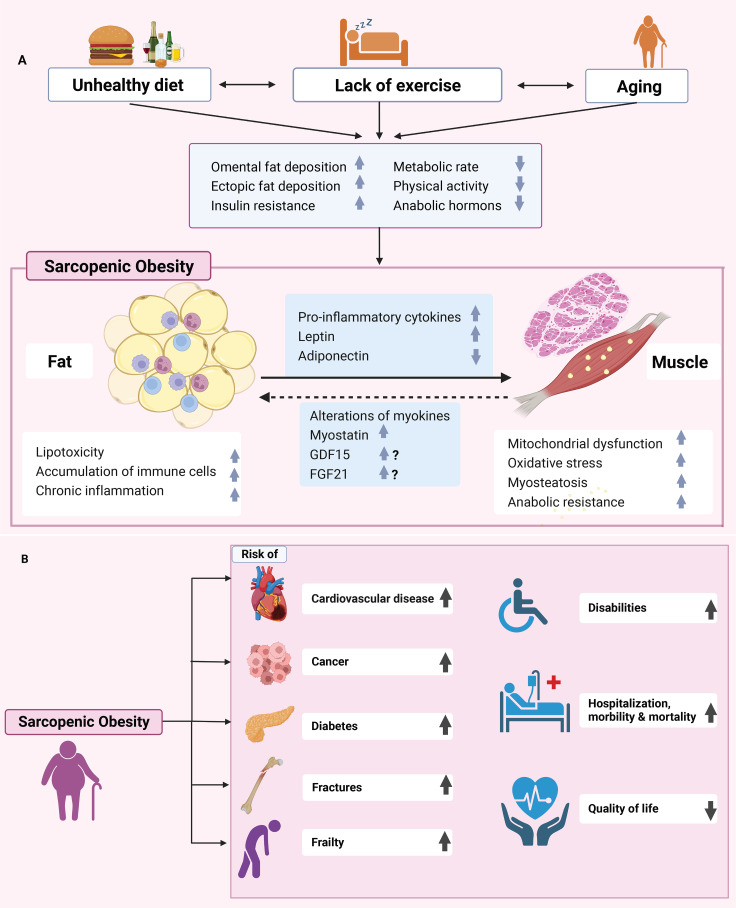
Sarcopenic obesity is defined as the coexistence of sarcopenia and obesity in the same individual, characterized by of the co-presence of body fat accumulation and muscle loss. This condition is currently a major concern as it is associated with frailty and disabilities such as cardiovascular disease, fractures, dementia, cancer, and increased all-cause mortality. Particularly, older individuals remain at risk of sarcopenic obesity. Progress at several levels is needed to improve the global prognostic outlook for this condition, including the elaboration and implementation of a more uniform definition that may favor the identification and specification of prevalence by age group. Furthermore, improvements in the understanding of the pathogenesis of sarcopenic obesity may lead to the development of more specific therapeutic interventions to improve prognosis. We reviewed the knowledge on sarcopenic obesity and its associations with cardiovascular diseases and mortality.
Overview
CoChat Summary
TL;DR
Sarcopenic obesity—coexistence of muscle loss and excess adiposity—is associated with frailty, cardiovascular disease, and increased all-cause mortality, especially in older adults. The review emphasizes that prevalence estimates remain imprecise because no globally accepted diagnostic definition exists, and management still centers on lifestyle modification with limited evidence for pharmacological therapies.
Key findings
- Sarcopenic obesity is linked to frailty, fractures, cardiovascular disease, cancer, dementia, hospitalization, and increased all-cause mortality; the paper states it is associated with a higher risk of cardiovascular events than sarcopenia or obesity alone.
- Prevalence varies widely by definition: a South Korean cohort found 0.8%–22.3% in women and 1.3%–15.4% in men; the Dutch Lifelines cohort found 1.4% in women and 0.9% in men, rising to 16.7% in the 80–89 age group; a meta-analysis of 50 studies including 86,285 people found a global prevalence of 11% in adults aged 60 years.
- Mortality risk is elevated in several studies: NHANES III women HR 1.29 (95% CI 1.03–1.60); British Regional Heart Study men HR 1.72 (95% CI 1.35–2.18); Swedish 75-year-old women HR 3.25 (95% CI 1.2–8.9); UK Biobank men with previous cardiovascular disease HR 1.47 (95% CI 1.30–1.66); and a meta-analysis of 23 studies including 50,866 individuals found pooled HR 1.21 (95% CI 1.10–1.32, p < 0.001, I² = 64.3%).
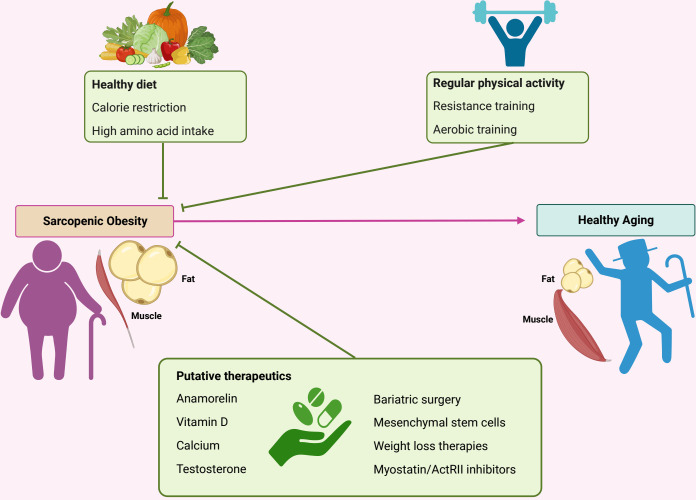
- Management is based mainly on lifestyle modification: caloric restriction (stated as less than 750 kcal/day), high-quality protein intake (1–1.2 g/kg/day), and combined aerobic and resistance exercise; pharmacological options such as testosterone, SARMs, GLP-1 receptor agonists, myostatin/ActRII inhibitors, and anamorelin are discussed but not strongly recommended because of limited evidence.
Methods
- Narrative review of the literature on sarcopenic obesity, covering definition, epidemiology, pathophysiology, cardiovascular disease, mortality, and management.
- Evidence is drawn from cited cohort studies, cross-sectional studies, meta-analyses, and preclinical/clinical trials; no systematic search strategy, inclusion criteria, or formal meta-analysis is described.
- Main analysis is a qualitative synthesis, including a table summarizing mortality results from selected cohort studies and one meta-analysis.
Limitations
- The paper states that the absence of globally adopted common definition criteria for sarcopenic obesity impairs precise epidemiological assessment, proper patient identification, and adapted management.
- The paper states that pathogenesis remains complex, multifactorial, and only partially elucidated; causality is difficult to establish from cross-sectional or cohort designs, and the optimal therapeutic approach remains undetermined because of limited clinical trials.
- Evident from the text: as a narrative review, it reports no systematic search, study-selection process, risk-of-bias assessment, or quantitative synthesis; several management recommendations rely on indirect, preclinical, or non-sarcopenic-obesity-specific evidence.
Model-written summary. Check it against the paper before relying on it.
Integrity signals
Registry
Cites
Statistics
Figures
Verification
Claims the paper makes
18 Valid · 2 Not valid · 61 Not checked · 26 Own results and interpretations
Some cited sources support this claim and some don’t — read each source’s verdict below.
In the paper
“Sarcopenic obesity significantly increases the risk of cardiovascular risk factors including insulin resistance (IR), metabolic syndrome, and adverse glycolipid metabolism (16, 42–44), even in the context of divergent comorbidities such as cancer and peritoneal dialysis (45, 46).”
§ Sarcopenic obesity: epidemiology, pathophysiology, cardiovascular disease, mortality, and management > Sarcopenic obesity and cardiovascular diseases
What the sources say
- Partly supportedcites [16] Ma J Hwang SJ McMahon GM Curhan GC McLean RR Murabito JM. Mid-adulthood cardiometabolic risk factor profiles of sarcopenic obesity. Obes (Silver Spring) (2016) 24: 526–34. doi: 10.1002/oby.21356 26813531 sourceExperimental — accuracy not yet measured
Ma et al. (2016) support the metabolic-syndrome and adverse glycolipid portions: the Abstract Results (p. 1) report that participants with sarcopenic obesity had a higher proportion of hypertension, metabolic syndrome and type 2 diabetes than NSNO or sarcopenia (all P<0.03), with similar patterns 10, 20 and 30 years prior, and Table 1/Table 3 show higher fasting plasma glucose (6.46 vs 5.51/5.64 mmol/L), higher triglycerides, lower HDLc and 37.7% vs 8.5% type 2 diabetes prevalence. However, insulin resistance is not part of this study's measured risk-factor panel (Methods, 'Cardiometabolic risk factor assessment': SBP, DBP, triglycerides, HDLc, LDLc, FPG, creatinine/eGFR only) — every insulin-resistance/HOMA-IR statement in our copy is credited to other works (ref 8's 565-person DXA/CT study, ref 16's 3,132 older men, ref 17's mechanism review) or framed as a 'putative pathway' in Potential mechanisms, so that element is not this source's own finding. The claim's causal 'significantly increases the risk' also overstates an associational design: Strengths and limitations states the cross-sectional and retrospective nature 'limits our ability to infer temporality or causality'. The cancer and peritoneal-dialysis clause is carried by other citations (45, 46) and is not addressed in our copy. (LLM, conf=0.82)
- Not checked yetcites [42] Atkins JL Wannamathee SG. Sarcopenic obesity in ageing: cardiovascular outcomes and mortality. Br J Nutr (2020) 124: 1102–13. doi: 10.1017/S0007114520002172 32616084 source
- Not checked yetcites [43] dos Santos EP Gadelha AB Safons MP Nobrega OT Oliveira RJ Lima RM. Sarcopenia and sarcopenic obesity classifications and cardiometabolic risks in older women. Arch Gerontol Geriatr (2014) 59: 56– 61. doi: 10.1016/j.archger.2014.03.012 24766993 source
- Partly supportedcites [44] Yu PC Hsu CC Lee WJ Liang CK Chou MY Lin MH. Muscle-to-fat ratio identifies functional impairments and cardiometabolic risk and predicts outcomes: biomarkers of sarcopenic obesity. J Cachexia Sarcopenia Muscle (2022) 13: 368–76. doi: 10.1002/jcsm.12877 PMC8818605 34866342 sourceExperimental — accuracy not yet measured
Split into 2 atoms — 0 confirmed, 2 partially supported, 0 disputed, 0 misattributed, 0 unverifiable. Expand the claim to see per-atom verdicts.
- Disputedcites [45] Lee K. Sarcopenic obesity and 10-year cardiovascular disease risk scores in cancer survivors and non-cancer participants using a nationwide survey. Eur J Cancer Care (Engl) (2021) 30: e13365. doi: 10.1111/ecc.13365 33174666 sourceExperimental — accuracy not yet measured
Lee (2021) measures 10-year Framingham CVD risk scores, not insulin resistance, metabolic syndrome or glycolipid metabolism, and in cancer survivors the adjusted analysis found that 'sarcopenic obesity was not associated with ≥10% 10-year CVD risk scores' (Section 3.3), with only sarcopenic non-obesity, non-sarcopenic abdominal obesity and sarcopenic abdominal obesity showing elevated odds (84%, 85%, 3.61-fold). The discussion (Table 2 section) further states explicitly that 'this cross-sectional study cannot state causality between sarcopenic obesity and 10-year CVD risk scores,' contradicting the claim's 'significantly increases risk' framing, and the paper contains nothing on peritoneal dialysis. Hyperinsulinaemia and shared biology appear only as mechanisms credited to Koene et al. (2016), not as this study's findings. (LLM, conf=0.75)
Checked by a reasoning model — may be wrong.
- Partly supportedcites [46] Tabibi H As’habi A Najafi I Hedayati M. Prevalence of dynapenic obesity and sarcopenic obesity and their associations with cardiovascular disease risk factors in peritoneal dialysis patients. Kidney Res Clin Pract (2018) 37: 404–13. doi: 10.23876/j.krcp.18.0064 PMC6312777 30619696 sourceExperimental — accuracy not yet measured
Split into 2 atoms — 0 confirmed, 2 partially supported, 0 disputed, 0 misattributed, 0 unverifiable. Expand the claim to see per-atom verdicts.
boostedstates a cause- Asserted: passes — The authors put it forward as true.
- Checkable: passes — It can be checked against evidence.
- Load-bearing: passes — The paper’s conclusions depend on it.
- Based: passes — The paper gives a reason why it holds.
- Partly supported
The cited sources support only part of this claim — read each source’s verdict below.
In the paper
“In postmenopausal women, the reduction in estradiol and increase in FSH levels promote body composition changes comprising an increase in adipose tissue and a decrease in muscle mass.”
§ Sarcopenic obesity: epidemiology, pathophysiology, cardiovascular disease, mortality, and management > Pathogenesis of sarcopenic obesity
What the sources say
- Partly supportedcites [33] Batsis JA Villareal DT. Sarcopenic obesity in older adults: aetiology, epidemiology and treatment strategies. Nat Rev Endocrinol (2018) 14: 513–37. doi: 10.1038/s41574-018-0062-9 PMC6241236 30065268 sourceExperimental — accuracy not yet measured
The “Sex-specific hormonal changes” section says menopause increases fat mass and reduces fat-free and muscle mass in women, and that oestrogen can attenuate these changes. It does not say that increased FSH promotes those changes; its discussion of FSH in the “Testosterone” section concerns men. Page numbers are not available in our copy. (LLM, conf=0.88)
plainstates a cause- Asserted: passes — The authors put it forward as true.
- Checkable: passes — It can be checked against evidence.
- Load-bearing: unclear — It is unclear whether the paper’s conclusions depend on it.
- Based: passes — The paper gives a reason why it holds.
- Partly supported
Every source the paper cites for this claim was checked and supports it.
In the paper
“These lipids can induce a reduction of GLUT4 translocation via impairment of insulin signaling, thereby leading to a reduction of glucose uptake by skeletal muscle.”
§ Sarcopenic obesity: epidemiology, pathophysiology, cardiovascular disease, mortality, and management > Pathogenesis of sarcopenic obesity
What the sources say
- Supportedcites [22] Shulman GI. Cellular mechanisms of insulin resistance. J Clin Invest (2000) 106: 171–6. doi: 10.1172/JCI10583 PMC314317 10903330 source
The insulin-resistance discussion says fatty acids may impair upstream insulin signaling, decreasing GLUT4 translocation to the plasma membrane. Figure 2 proposes that intracellular fatty-acid metabolites diminish insulin signaling and glucose transport activity in skeletal muscle. The claim’s 'can' is consistent with the paper’s proposed mechanism. (LLM, conf=0.91)
plainstates a cause- Asserted: passes — The authors put it forward as true.
- Checkable: passes — It can be checked against evidence.
- Load-bearing: passes — The paper’s conclusions depend on it.
- Based: passes — The paper gives a reason why it holds.
- Supported
The sources with a verdict support this claim; the rest weren’t checked yet, have no full text we could read, or their verdicts aren’t rated yet.
In the paper
“In the context of obesity, adipose tissue macrophages (ATM) change their phenotype from M2 to M1.”
§ Sarcopenic obesity: epidemiology, pathophysiology, cardiovascular disease, mortality, and management > Pathogenesis of sarcopenic obesity
What the sources say
- Supportedcites [19] Ouchi N Parker JL Lugus JJ Walsh K. Adipokines in inflammation and metabolic disease. Nat Rev Immunol (2011) 11: 85– 97. doi: 10.1038/nri2921 21252989 PMC3518031 source
In the ‘Infiltration of immune cells into adipose tissue’ section, the review describes predominantly M2-associated macrophages in lean mice and M1-associated macrophages in obese mice. Its References section explicitly describes obesity as causing a shift in adipose tissue macrophage polarization from alternatively to classically activated, matching the claim. (LLM, conf=0.91)
- Not checked yetcites [20] Olefsky JM Glass CK. Macrophages, inflammation, and insulin resistance. Annu Rev Physiol (2010) 72: 219–46. doi: 10.1146/annurev-physiol-021909-135846 20148674 source
plainstates a cause- Asserted: passes — The authors put it forward as true.
- Checkable: passes — It can be checked against evidence.
- Load-bearing: passes — The paper’s conclusions depend on it.
- Based: passes — The paper gives a reason why it holds.
- Supported
The cited sources support only part of this claim — read each source’s verdict below.
In the paper
“In addition, this significance persisted in studies that used different criteria to define obesity and sarcopenia (18).”
§ Sarcopenic obesity: epidemiology, pathophysiology, cardiovascular disease, mortality, and management > Mortality related to sarcopenic obesity
What the sources say
- Partly supportedcites [18] Zhang X Xie X Dou Q Liu C Zhang W Yang Y. Association of sarcopenic obesity with the risk of all-cause mortality among adults over a broad range of different settings: a updated meta-analysis. BMC Geriatr (2019) 19: 183. doi: 10.1186/s12877-019-1195-y 31269909 PMC6610788 sourceExperimental — accuracy not yet measured
The Results report significantly higher mortality risk under several definitions of sarcopenia and obesity, including muscle-strength-, waist-circumference-, and BMI-based definitions. But the association was not statistically significant for ALM/BMI-based or fat-mass-based sarcopenic obesity, so significance did not persist across all criteria. (LLM, conf=0.90)
plainstates an association- Asserted: passes — The authors put it forward as true.
- Checkable: passes — It can be checked against evidence.
- Load-bearing: passes — The paper’s conclusions depend on it.
- Based: passes — The paper gives a reason why it holds.
- Partly supported
46 more claims · 4 with their cited sources checked
Create a free account to see all 107 claims and to verify the 87 references still open.
- It may state two separate claims as one. 49
- The quote only partly states this claim. 2
- Probably not a substantial claim. 17
Claims other papers make about this one
Each is checked against this paper’s own text: does it say what the citing paper says it does?
The source backs part of the claim, not all of it — or backs it for a different population, condition or comparison.
In the citing paper
“Men, by contrast, often present with higher visceral adiposity and sarcopenic risk, which may attenuate weight loss and predispose to muscle loss during high-efficacy pharmacotherapy [181].”
From Precision obesity medicine: A phenotype-guided framework for pharmacologic therapy across the lifespan (2025) · cites this paper as [181]
Experimental — accuracy not yet measuredThe source backs part of the claim, not all of it — or backs it for a different population, condition or comparison.
In the citing paper
“These strategies include lifestyle modifications such as moderate caloric restriction, adequate protein intake, and regular resistance training (RT), all of which have shown efficacy in enhancing muscle mass, reducing adiposity, and improving physical function in older adults with SO [2,6,8,9].”
From Efficacy of Power Training on Sarcopenic Obesity in Community-Dwelling Older Women: A 32-Week Randomized Clinical Trial (2025) · cites this paper as [6]
Experimental — accuracy not yet measuredIn the citing paper
“This dual phenotype has detrimental effects on both clinical and patient-centred outcomes, including functional limitations and increased morbidity risk (e.g., type 2 diabetes, fractures), contributing to lower quality of life and survival rates [8].”
From Weighing the risk of GLP-1 treatment in older adults: Should we be concerned about sarcopenic obesity? (2025) · cites this paper as [8]
Self-check
Percentages, sums and reported differences re-computed from the paper’s own numbers.
Each contradiction between two passages listed here was confirmed by an independent check.
Rated major: it would touch a result — a value a result rests on, reported and recomputed p-values on opposite sides of the significance level, two passages that conflict with no sign which is right, or a cited work retracted before this paper was published.
In the paper
§ Sarcopenic obesity: epidemiology, pathophysiology, cardiovascular disease, mortality, and management > Management of sarcopenic obesity
“Presently, a very-low calorie intake must be avoided in older individuals with sarcopenic obesity”
§ Sarcopenic obesity: epidemiology, pathophysiology, cardiovascular disease, mortality, and management > Management of sarcopenic obesity
“Although the precise quantity of kcal per day has not yet been defined, it must be less than 750 kcal per day (70).”
Rated minor: it would not touch a result — a value no result rests on, a p-value that stays on the same side of the significance level, or a conflict that is clerical, resolved elsewhere in the paper, or outside its own findings.
In the paper
§ Sarcopenic obesity: epidemiology, pathophysiology, cardiovascular disease, mortality, and management > Mortality related to sarcopenic obesity
“The British Regional Heart Study examined the risk of all-cause mortality among 4107 men aged between 60-79 years.”
§ Sarcopenic obesity: epidemiology, pathophysiology, cardiovascular disease, mortality, and management > Mortality related to sarcopenic obesity
“| British Regional Heart Study (41) | 4252 |”
Citations
Cites
Sarcopenia: revised European consensus on definition and diagnosis
Cruz-Jentoft, A. J., Bahat, G., Bauer, J., Boirie, Y., Bruyère, O., Cederholm, T., Cooper, C., Landi, F., Rolland, Y., Sayer, A. A., et al. (2019) · Age and Ageing · doi:10.1093/ageing/afy169 · Cited by 13,818 · cited 1×
“Reduced muscle quality and quantity (DXA or alternative tests such as mid-thigh imaging by MRI or psoas muscle measurement with CT) were used to confirm sarcopenia, and poor physical performance was assessed using the Timed Up and Go test or gait speed to determine its severity (3).”
MethodProspective Studies Collaboration (2009) · The Lancet · doi:10.1016/s0140-6736(09)60318-4 · Cited by 4,807
Adipokines in inflammation and metabolic disease
Ouchi, N., Parker, J. L., Lugus, J. J., & Walsh, K. (2011) · Nature Reviews Immunology · doi:10.1038/nri2921 · Cited by 4,625 · cited 1×
“M2 or alternatively activated macrophages induced adipose tissue to exhibit anti-inflammatory properties (19).”
BackgroundCruz-Jentoft, A. J., & Sayer, A. A. (2019) · The Lancet · doi:10.1016/s0140-6736(19)31138-9 · Cited by 3,905
Sarcopenia: revised European consensus on definition and diagnosis
Cruz-Jentoft, A. J., Bahat, G., Bauer, J., Boirie, Y., Bruyère, O., Cederholm, T., Cooper, C., Landi, F., Rolland, Y., Sayer, A. A., et al. (2019) · Age and Ageing · doi:10.1093/ageing/afz046 · Cited by 3,803
Endoplasmic reticulum stress and the inflammatory basis of metabolic disease
Hotamisligil, G. S. (2010) · Cell · doi:10.1016/j.cell.2010.02.034 · Cited by 2,802 · cited 1×
“Oxidative stress can also lead to ER stress, which is characterized by unfolded protein response (UPR) causing dysfunction of proteasomal degradation and autophagy, which reduces protein levels and causes an imbalance in calcium homeostasis that altogether favor a decrease in muscle mass (30, 31).”
BackgroundThe Rag GTPases Bind Raptor and Mediate Amino Acid Signaling to mTORC1
Sancak, Y., Peterson, T. R., Shaul, Y. D., Lindquist, R. A., Thoreen, C. C., Bar-Peled, L., & Sabatini, D. M. (2008) · Science · doi:10.1126/science.1157535 · Cited by 2,773 · cited 1×
“Increased mTORC1 activation induces the formation of muscle cells proteins (26, 27).”
BackgroundMacrophages, inflammation, and insulin resistance
Olefsky, J. M., & Glass, C. K. (2010) · Annual Review of Physiology · doi:10.1146/annurev-physiol-021909-135846 · Cited by 2,733 · cited 1×
“In contrast, M1 ATM secrete proinflammatory molecules, including IL-6, TNF-a, IL-1b, MCP-1, CCR2, and CCR5 (20).”
Cellular mechanisms of insulin resistance
Shulman, G. I. (2000) · Journal of Clinical Investigation · doi:10.1172/jci10583 · Cited by 2,714
Klahr, S., Levey, A. S., Beck, G. J., Caggiula, A. W., Hunsicker, L., Kusek, J. W., & Striker, G. (1994) · New England Journal of Medicine · doi:10.1056/nejm199403313301301 · Cited by 2,328 · cited 1×
“Medical and dietary management are important to establish a food program that allows moderate calorie restriction while optimizing protein intake (72).”
Garvey, W. T., Mechanick, J. I., Brett, E. M., Garber, A. J., Hurley, D. L., Jastreboff, A. M., Nadolsky, K., Pessah-Pollack, R., & Plodkowski, R. (2016) · Endocrine Practice · doi:10.4158/ep161365.gl · Cited by 1,914 · cited 1×
“Currently, various scientific societies such as the Obesity Society or the American Association of Clinical Endocrinologists, do not recommend the administration of testosterone in the management of obesity and/or sarcopenia (89, 90).”
BackgroundLeong, D. P., Teo, K. K., Rangarajan, S., Lopez-Jaramillo, P., Avezum, A., Orlandini, A., Seron, P., Ahmed, S. H., Rosengren, A., Kelishadi, R., et al. (2015) · The Lancet · doi:10.1016/s0140-6736(14)62000-6 · Cited by 1,876
Global prevalence of sarcopenia and severe sarcopenia: a systematic review and meta‐analysis
Petermann‐Rocha, F., Balntzi, V., Gray, S. R., Lara, J., Ho, F. K., Pell, J. P., & Celis‐Morales, C. (2022) · Journal of Cachexia, Sarcopenia and Muscle · doi:10.1002/jcsm.12783 · Cited by 1,499
Sarcopenic obesity in older adults: aetiology, epidemiology and treatment strategies
Batsis, J. A., & Villareal, D. T. (2018) · Nature Reviews Endocrinology · doi:10.1038/s41574-018-0062-9 · Cited by 1,382
Mitchell, W. K., Williams, J., Atherton, P., Larvin, M., Lund, J., & Narici, M. (2012) · Frontiers in Physiology · doi:10.3389/fphys.2012.00260 · Cited by 1,377 · cited 1×
“Sarcopenia more frequently affects older individuals, but the progressive decrease in muscle mass begins once an individual reaches their 40s, and after the age of 50 years, muscle mass decreases yearly by 1%–2% (1).”
BackgroundProtein degradation by the ubiquitin-proteasome pathway in normal and disease states
Lecker, S. H., Goldberg, A. L., & Mitch, W. E. (2006) · Journal of the American Society of Nephrology · doi:10.1681/asn.2006010083 · Cited by 1,234
Calnan, D. R., & Brunet, A. (2008) · Oncogene · doi:10.1038/onc.2008.21 · Cited by 1,170 · cited 1×
“Therefore, the reduced action of insulin in the insulin-resistant state may promote protein degradation of the FoxO family through caspase-3 and the ubiquitin–proteasome proteolytic pathway, ultimately leading to sarcopenia (28, 29).”
BackgroundSarcopenic Obesity Predicts Instrumental Activities of Daily Living Disability in the Elderly
Baumgartner, R. N., Wayne, S. J., Waters, D. L., Janssen, I., Gallagher, D., & Morley, J. E. (2004) · Obesity Research · doi:10.1038/oby.2004.250 · Cited by 937 · cited 12×
“Several cross-sectional studies have indicated that sarcopenic obesity might be independently linked to other CVDs such as myocardial infarction, arrhythmia, and diastolic dysfunction (63, 64).”
BackgroundInfluentialVillareal, D. T., Apovian, C. M., Kushner, R. F., & Klein, S. (2005) · The American Journal of Clinical Nutrition · doi:10.1093/ajcn/82.5.923 · Cited by 880
Resistance exercise for muscular strength in older adults: a meta-analysis
Peterson, M. D., Rhea, M. R., Sen, A., & Gordon, P. M. (2010) · Ageing Research Reviews · doi:10.1016/j.arr.2010.03.004 · Cited by 808
BMI and all-cause mortality in older adults: a meta-analysis
Winter, J. E., MacInnis, R. J., Wattanapenpaiboon, N., & Nowson, C. A. (2014) · The American Journal of Clinical Nutrition · doi:10.3945/ajcn.113.068122 · Cited by 790
Aerobic or Resistance Exercise, or Both, in Dieting Obese Older Adults
Villareal, D. T., Aguirre, L., Gurney, A. B., Waters, D. L., Sinacore, D. R., Colombo, E., Armamento-Villareal, R., & Qualls, C. (2017) · New England Journal of Medicine · doi:10.1056/nejmoa1616338 · Cited by 754 · cited 1×
“A program that includes a combination of resistance and aerobic activities may be more beneficial than either intervention alone (82).”
BackgroundTGF-?1 and angiotensin networking in cardiac remodeling
ROSENKRANZ, S. (2004) · Cardiovascular Research · doi:10.1016/j.cardiores.2004.04.030 · Cited by 683 · cited 1×
“Additionally, the pathological process of sarcopenic obesity may trigger hyperinsulinemia via IR, which drives mTOR-S6K1 signaling (60) and the TGF-b1-SMAD pathway (61) by activating the renin– angiotensin–aldosterone system, eventually leading to activated myocardial fibrosis in conjunction with the inflammatory stat…”
BackgroundTemel, J. S., Abernethy, A. P., Currow, D. C., Friend, J., Duus, E. M., Yan, Y., & Fearon, K. C. (2016) · The Lancet Oncology · doi:10.1016/s1470-2045(15)00558-6 · Cited by 639
Insulin Resistance and Atherosclerosis: Implications for Insulin-Sensitizing Agents
Di Pino, A., & DeFronzo, R. A. (2019) · Endocrine Reviews · doi:10.1210/er.2018-00141 · Cited by 535
Atkins, J. L., Whincup, P. H., Morris, R. W., Lennon, L. T., Papacosta, O., & Wannamethee, S. G. (2014) · Journal of the American Geriatrics Society · doi:10.1111/jgs.12652 · Cited by 509
Insulin resistance causes inflammation in adipose tissue
Shimobayashi, M., Albert, V., Woelnerhanssen, B., Frei, I. C., Weissenberger, D., Meyer-Gerspach, A. C., Clement, N., Moes, S., Colombi, M., Meier, J. A., et al. (2018) · Journal of Clinical Investigation · doi:10.1172/jci96139 · Cited by 480 · cited 2×
“In addition, the proinflammatory status, exacerbated by macrophages infiltrating adipose tissue during the progression of sarcopenic obesity, is another causative factor of atherosclerosis (55).”
BackgroundBatsis, J. A., Mackenzie, T. A., Barre, L. K., Lopez-Jimenez, F., & Bartels, S. J. (2014) · European Journal of Clinical Nutrition · doi:10.1038/ejcn.2014.117 · Cited by 479
Dong, X. C., Copps, K. D., Guo, S., Li, Y., Kollipara, R., DePinho, R. A., & White, M. F. (2008) · Cell Metabolism · doi:10.1016/j.cmet.2008.06.006 · Cited by 463 · cited 1×
“Increased mTORC1 activation induces the formation of muscle cells proteins (26, 27).”
BackgroundAdiposity, Muscle Mass, and Muscle Strength in Relation to Functional Decline in Older Persons
Schaap, L. A., Koster, A., & Visser, M. (2013) · Epidemiologic Reviews · doi:10.1093/epirev/mxs006 · Cited by 423
Kim, T. N., Yang, S. J., Yoo, H. J., Lim, K. I., Kang, H. J., Song, W., Seo, J. A., Kim, S. G., Kim, N. H., Baik, S. H., et al. (2009) · International Journal of Obesity · doi:10.1038/ijo.2009.130 · Cited by 401
Hong, S.-H., & Choi, K. M. (2020) · International Journal of Molecular Sciences · doi:10.3390/ijms21020494 · Cited by 390 · cited 1×
“This state is characterized by insulin resistance (IR), which induces vasodilation lesion and endothelial dysfunction, thus fueling the advancement of atherosclerosis (54).”
BackgroundGlobal prevalence of sarcopenic obesity in older adults: A systematic review and meta-analysis
Gao, Q., Mei, F., Shang, Y., Hu, K., Chen, F., Zhao, L., & Ma, B. (2021) · Clinical Nutrition · doi:10.1016/j.clnu.2021.06.009 · Cited by 376
American Geriatrics Society Workgroup on Vitamin D Supplementation for Older Adults (2014) · Journal of the American Geriatrics Society · doi:10.1111/jgs.12631 · Cited by 313
Lach-Trifilieff, E., Minetti, G. C., Sheppard, K., Ibebunjo, C., Feige, J. N., Hartmann, S., Brachat, S., Rivet, H., Koelbing, C., Morvan, F., et al. (2014) · Molecular and Cellular Biology · doi:10.1128/mcb.01307-13 · Cited by 306 · cited 1×
“Myostatin and Activin receptor type 2 (ActRII) inhibitors have been developed and shown to increase muscle mass and strength and as well as improve insulin sensitivity in vitro (94, 95).”
BackgroundSarcopenic-obesity and cardiovascular disease risk in the elderly
Stephen, W. C., & Janssen, I. (2009) · The Journal of nutrition, health and aging · doi:10.1007/s12603-009-0084-z · Cited by 301 · cited 12×
“Several cross-sectional studies have indicated that sarcopenic obesity might be independently linked to other CVDs such as myocardial infarction, arrhythmia, and diastolic dysfunction (63, 64).”
BackgroundInfluentialAmino acid-dependent control of mTORC1 signaling: a variety of regulatory modes
Takahara, T., Amemiya, Y., Sugiyama, R., Maki, M., & Shibata, H. (2020) · Journal of Biomedical Science · doi:10.1186/s12929-020-00679-2 · Cited by 300
Dickinson, J. M., Fry, C. S., Drummond, M. J., Gundermann, D. M., Walker, D. K., Glynn, E. L., Timmerman, K. L., Dhanani, S., Volpi, E., & Rasmussen, B. B. (2011) · The Journal of Nutrition · doi:10.3945/jn.111.139485 · Cited by 282 · cited 1×
“In mice, the deletion of mTORC1 leads to high muscle atrophy, and in humans, the daily ingestion of 10 g of essential amino acids induces a 60% increase in muscle protein synthesis levels that is absent when mTORC1 inhibitors are simultaneously administered, confirming that mTORC1 is a key regulator of protein synthes…”
BackgroundExercise as a remedy for sarcopenia
Landi, F., Marzetti, E., Martone, A. M., Bernabei, R., & Onder, G. (2013) · Current Opinion in Clinical Nutrition and Metabolic Care · doi:10.1097/mco.0000000000000018 · Cited by 255 · cited 1×
“Aerobic exercise improves cardiovascular function, reduces insulin resistance, enhances skeletal muscle capacity, and reduces mortality in older people (75, 76).”
BackgroundLiu, C., Wong, P. Y., Chung, Y. L., Chow, S. K., Cheung, W. H., Law, S. W., Chan, J. C. N., & Wong, R. M. Y. (2023) · Obesity Reviews · doi:10.1111/obr.13534 · Cited by 247 · cited 1×
“The concept of the “obesity paradox” may apply specifically to older population; therefore, the impact of obesity on cardiovascular disease and mortality remain unclear (9, 10).”
BackgroundSarcopenic obesity: time to meet the challenge
Barazzoni, R., Bischoff, S., Boirie, Y., Busetto, L., Cederholm, T., Dicker, D., Toplak, H., Van Gossum, A., Yumuk, V., & Vettor, R. (2018) · Obesity Facts · doi:10.1159/000490361 · Cited by 244
Allison, D., Zhu, S., Plankey, M., Faith, M., & Heo, M. (2002) · International Journal of Obesity · doi:10.1038/sj.ijo.0801925 · Cited by 221 · cited 1×
“An increased risk is associated with fat mass and, and the mortality risk is negatively associated with muscle mass (12).”
BackgroundZhang, X., Xie, X., Dou, Q., Liu, C., Zhang, W., Yang, Y., Deng, R., & Cheng, A. S. K. (2019) · BMC Geriatrics · doi:10.1186/s12877-019-1195-y · Cited by 209
Ebersbach, G., Edler, D., Kaufhold, O., & Wissel, J. (2008) · Archives of Physical Medicine and Rehabilitation · doi:10.1016/j.apmr.2007.09.031 · Cited by 208 · cited 1×
“Although it could represent a promising treatment, its implementation in routine management requires further assessment because the available evidence remains limited, particularly for the treatment of sarcopenic obesity (96).”
BackgroundAltered mitochondrial function in insulin-deficient and insulin-resistant states
Ruegsegger, G. N., Creo, A. L., Cortes, T. M., Dasari, S., & Nair, K. S. (2018) · Journal of Clinical Investigation · doi:10.1172/jci120843 · Cited by 202 · cited 1×
“In mice, the deletion of mTORC1 leads to high muscle atrophy, and in humans, the daily ingestion of 10 g of essential amino acids induces a 60% increase in muscle protein synthesis levels that is absent when mTORC1 inhibitors are simultaneously administered, confirming that mTORC1 is a key regulator of protein synthes…”
BackgroundSarcopenic obesity in ageing: cardiovascular outcomes and mortality
Atkins, J. L., & Wannamathee, S. G. (2020) · British Journal of Nutrition · doi:10.1017/s0007114520002172 · Cited by 187
Longevity, lipotoxicity and leptin: the adipocyte defense against feasting and famine
Unger, R. H. (2005) · Biochimie · doi:10.1016/j.biochi.2004.11.014 · Cited by 184 · cited 1×
“Furthermore, the secretion of cytokines by fat mass not only affects muscle tissue but also other organs, such as the liver and white adipose tissue, thereby impairing insulin signaling and leading to insulin resistance, cardiovascular diseases, and ultimately an increased risk of mortality (37, 38).”
BackgroundSarcopenia: An Independent Predictor of Mortality in Community-Dwelling Older Korean Men
Kim, J. H., Lim, S., Choi, S. H., Kim, K. M., Yoon, J. W., Kim, K. W., Lim, J.-Y., Park, K. S., Jang, H. C., & Kritchevsky, S. (2014) · The Journals of Gerontology: Series A · doi:10.1093/gerona/glu050 · Cited by 176
Kim, M. K., Baek, K. H., Song, K.-H., Il Kang, M., Park, C. Y., Lee, W. Y., & Oh, K. W. (2011) · The Journal of Clinical Endocrinology & Metabolism · doi:10.1210/jc.2011-1602 · Cited by 171
Kim, T. N., Park, M. S., Lim, K. I., Yang, S. J., Yoo, H. J., Kang, H. J., Song, W., Seo, J. A., Kim, S. G., Kim, N. H., et al. (2011) · Diabetes Research and Clinical Practice · doi:10.1016/j.diabres.2011.06.013 · Cited by 167
Freiberger, E., Goisser, S., Porzel, S., Volkert, D., Kemmler, W., Sieber, C., & Bollheimer, C. (2015) · Clinical Interventions in Aging · doi:10.2147/cia.s82454 · Cited by 162 · cited 1×
“Although the precise quantity of kcal per day has not yet been defined, it must be less than 750 kcal per day (70).”
BackgroundBellanti, F., Romano, A. D., Lo Buglio, A., Castriotta, V., Guglielmi, G., Greco, A., Serviddio, G., & Vendemiale, G. (2018) · Maturitas · doi:10.1016/j.maturitas.2017.12.002 · Cited by 158 · cited 1×
“Conversely, multiple CVDs accompanied by impaired endothelial function may obstruct blood flow and oxygen diffusion to the skeletal muscles, thus playing a determining role in exercise intolerance and the pathogenesis of sarcopenic obesity (65).”
BackgroundStensvold, D., Viken, H., Steinshamn, S. L., Dalen, H., Støylen, A., Loennechen, J. P., Reitlo, L. S., Zisko, N., Bækkerud, F. H., Tari, A. R., et al. (2020) · BMJ · doi:10.1136/bmj.m3485 · Cited by 154
Scott, D., Chandrasekara, S. D., Laslett, L. L., Cicuttini, F., Ebeling, P. R., & Jones, G. (2016) · Calcified Tissue International · doi:10.1007/s00223-016-0123-9 · Cited by 149
Exercise therapy for people with sarcopenic obesity: myokines and adipokines as effective actors
Alizadeh Pahlavani, H. (2022) · Frontiers in Endocrinology · doi:10.3389/fendo.2022.811751 · Cited by 145
Farmer, R. E., Mathur, R., Schmidt, A. F., Bhaskaran, K., Fatemifar, G., Eastwood, S. V., Finan, C., Denaxas, S., Smeeth, L., & Chaturvedi, N. (2019) · Journal of the American Heart Association · doi:10.1161/jaha.118.011638 · Cited by 144 · cited 14×
“Several cross-sectional studies have indicated that sarcopenic obesity might be independently linked to other CVDs such as myocardial infarction, arrhythmia, and diastolic dysfunction (63, 64).”
BackgroundInfluentialMoon, J. S., Goeminne, L. J. E., Kim, J. T., Tian, J. W., Kim, S., Nga, H. T., Kang, S. G., Kang, B. E., Byun, J., Lee, Y., et al. (2020) · Aging Cell · doi:10.1111/acel.13195 · Cited by 141 · cited 1×
“Growth differentiation factor 15 (GDF15) has been implicated in aging, inflammation, mitochondrial dysfunction, cachexia, and sarcopenia (34, 35).”
BackgroundSelf-citationShin, M. J., Jeon, Y. K., & Kim, I. J. (2018) · The World Journal of Men's Health · doi:10.5534/wjmh.180001 · Cited by 134 · cited 1×
“Thus, hypogonadism leads to sarcopenia (32).”
Xia, M.-F., Chen, L.-Y., Wu, L., Ma, H., Li, X.-M., Li, Q., Aleteng, Q., Hu, Y., He, W.-Y., Gao, J., et al. (2021) · Clinical Nutrition · doi:10.1016/j.clnu.2020.06.003 · Cited by 133
Kim, J.-H., Cho, J. J., & Park, Y. S. (2015) · Journal of Korean Medical Science · doi:10.3346/jkms.2015.30.3.264 · Cited by 126
Ng Tang Fui, M., Prendergast, L. A., Dupuis, P., Raval, M., Strauss, B. J., Zajac, J. D., & Grossmann, M. (2016) · BMC Medicine · doi:10.1186/s12916-016-0700-9 · Cited by 124
Huang, S.-W., Ku, J.-W., Lin, L.-F., Liao, C.-D., Chou, L.-C., & Liou, T.-H. (2017) · European Journal of Physical and Rehabilitation Medicine · doi:10.23736/s1973-9087.17.04443-4 · Cited by 120
Modulation of glucose metabolism by the renin-angiotensin-aldosterone system
Favre, G. A., Esnault, V. L. M., & Van Obberghen, E. (2015) · American Journal of Physiology-Endocrinology and Metabolism · doi:10.1152/ajpendo.00391.2014 · Cited by 114 · cited 1×
“Additionally, the pathological process of sarcopenic obesity may trigger hyperinsulinemia via IR, which drives mTOR-S6K1 signaling (60) and the TGF-b1-SMAD pathway (61) by activating the renin– angiotensin–aldosterone system, eventually leading to activated myocardial fibrosis in conjunction with the inflammatory stat…”
BackgroundAggio, D. A., Sartini, C., Papacosta, O., Lennon, L. T., Ash, S., Whincup, P. H., Wannamethee, S. G., & Jefferis, B. J. (2016) · Preventive Medicine · doi:10.1016/j.ypmed.2016.08.040 · Cited by 110 · cited 1×
“A study conducted in the UK including 1286 men aged over 70 years showed an association between sedentary time and a significant risk of sarcopenic obesity, independent of the level of moderate to vigorous physical activity (80).”
BackgroundWagenaar, C. A., Dekker, L. H., & Navis, G. J. (2021) · Clinical Nutrition · doi:10.1016/j.clnu.2021.01.005 · Cited by 105
Lv, Y., Mao, C., Gao, X., Ji, J. S., Kraus, V. B., Yin, Z., Yuan, J., Chen, H., Luo, J., Zhou, J., et al. (2022) · Nature Aging · doi:10.1038/s43587-022-00201-3 · Cited by 102
Aging- and obesity-related peri-muscular adipose tissue accelerates muscle atrophy
Zhu, S., Tian, Z., Torigoe, D., Zhao, J., Xie, P., Sugizaki, T., Sato, M., Horiguchi, H., Terada, K., Kadomatsu, T., et al. (2019) · PLOS ONE · doi:10.1371/journal.pone.0221366 · Cited by 100 · cited 1×
“Frontiers in Endocrinology 05 fiber damage and, ultimately, heart failure (62), with either a reduced or preserved ejection fraction.”
BackgroundO'Connell, M. D. L., Roberts, S. A., Srinivas-Shankar, U., Tajar, A., Connolly, M. J., Adams, J. E., Oldham, J. A., & Wu, F. C. W. (2011) · The Journal of Clinical Endocrinology & Metabolism · doi:10.1210/jc.2010-1167 · Cited by 98 · cited 1×
“Although testosterone supplementation presents a clear physiological rationale, particularly for increasing muscle strength and function, the available data regarding the impact of testosterone administration on muscle function and mass remain limited and conflicting (87, 88).”
BackgroundRen, Q., Chen, S., Chen, X., Niu, S., Yue, L., Pan, X., Li, Z., & Chen, X. (2022) · Drug Design, Development and Therapy · doi:10.2147/dddt.s381546 · Cited by 91 · cited 1×
“Weight-loss therapies such as those using GLP-1 receptor agonists (RA) have shown to be beneficial for sarcopenic obesity, however the data are mainly produced in preclinical studies and proper specific parameters of sarcopenic obesity assessed before and after the introduction of GLP-1 RA are required (92).”
BackgroundGadelha, A. B., Paiva, F. M. L., Gauche, R., de Oliveira, R. J., & Lima, R. M. (2016) · Archives of Gerontology and Geriatrics · doi:10.1016/j.archger.2016.03.017 · Cited by 91
El Hajj, C., Fares, S., Chardigny, J. M., Boirie, Y., & Walrand, S. (2019) · Archives of Osteoporosis · doi:10.1007/s11657-018-0553-2 · Cited by 89
Myostatin: a skeletal muscle chalone
Lee, S.-J. (2023) · Annual Review of Physiology · doi:10.1146/annurev-physiol-012422-112116 · Cited by 84
Porter Starr, K. N., Pieper, C. F., Orenduff, M. C., McDonald, S. R., McClure, L. B., Zhou, R., Payne, M. E., & Bales, C. W. (2016) · The Journals of Gerontology Series A: Biological Sciences and Medical Sciences · doi:10.1093/gerona/glv210 · Cited by 83
The critical role of oxidative stress in sarcopenic obesity
Gonzalez, A., Simon, F., Achiardi, O., Vilos, C., Cabrera, D., & Cabello-Verrugio, C. (2021) · Oxidative Medicine and Cellular Longevity · doi:10.1155/2021/4493817 · Cited by 79 · cited 1×
“Oxidative stress can also lead to ER stress, which is characterized by unfolded protein response (UPR) causing dysfunction of proteasomal degradation and autophagy, which reduces protein levels and causes an imbalance in calcium homeostasis that altogether favor a decrease in muscle mass (30, 31).”
BackgroundBariatric Surgery Outcomes in Sarcopenic Obesity
Mastino, D., Robert, M., Betry, C., Laville, M., Gouillat, C., & Disse, E. (2016) · Obesity Surgery · doi:10.1007/s11695-016-2102-7 · Cited by 79 · cited 1×
“Bariatric surgery induced weight-loss by a malabsorptive and/or restrictive mechanism with a consistent effect on adipose tissue mass, but its benefit for skeletal muscle remain to be determined (93) Myostatin is secreted by the myocytes and inhibits their differentiation and proliferation.”
BackgroundTreatment of cachexia: an overview of recent developments
von Haehling, S., & Anker, S. D. (2014) · Journal of the American Medical Directors Association · doi:10.1016/j.jamda.2014.09.007 · Cited by 79
Vitamin d status modulates mitochondrial oxidative capacities in skeletal muscle: role in sarcopenia
Salles, J., Chanet, A., Guillet, C., Vaes, A. M., Brouwer-Brolsma, E. M., Rocher, C., Giraudet, C., Patrac, V., Meugnier, E., Montaurier, C., et al. (2022) · Communications Biology · doi:10.1038/s42003-022-04246-3 · Cited by 73
Yu, P., Hsu, C., Lee, W., Liang, C., Chou, M., Lin, M., Hsiao, F., Peng, L., & Chen, L. (2022) · Journal of Cachexia, Sarcopenia and Muscle · doi:10.1002/jcsm.12877 · Cited by 70
Overview of growth differentiation factor 15 in metabolic syndrome
Asrih, M., Wei, S., Nguyen, T. T., Yi, H., Ryu, D., & Gariani, K. (2023) · Journal of Cellular and Molecular Medicine · doi:10.1111/jcmm.17725 · Cited by 70 · cited 1×
“Growth differentiation factor 15 (GDF15) has been implicated in aging, inflammation, mitochondrial dysfunction, cachexia, and sarcopenia (34, 35).”
BackgroundSelf-citationSarcopenia and sarcopenic obesity classifications and cardiometabolic risks in older women
dos Santos, E. P., Gadelha, A. B., Safons, M. P., Nóbrega, O. T., Oliveira, R. J., & Lima, R. M. (2014) · Archives of Gerontology and Geriatrics · doi:10.1016/j.archger.2014.03.012 · Cited by 69
Mid-adulthood cardiometabolic risk factor profiles of sarcopenic obesity
Ma, J., Hwang, S., McMahon, G. M., Curhan, G. C., Mclean, R. R., Murabito, J. M., & Fox, C. S. (2016) · Obesity · doi:10.1002/oby.21356 · Cited by 68
Sousa, N., Mendes, R., Silva, A., & Oliveira, J. (2017) · Clinical Rehabilitation · doi:10.1177/0269215516655857 · Cited by 64 · cited 1×
“Aerobic and resistance exercises are safe for individuals at the risk of falling (74).”
Backgroundvon Berens, Å., Obling, S. R., Nydahl, M., Koochek, A., Lissner, L., Skoog, I., Frändin, K., Skoglund, E., Rothenberg, E., & Cederholm, T. (2020) · BMC Geriatrics · doi:10.1186/s12877-020-01578-9 · Cited by 62 · cited 2×
“The Gothenburg H70 Birth Cohort and the Uppsala Longitudinal Study of Adult Men (69) 809 Obesity was defined by any of 3 established definitions: WC 88 cm/ 102 cm for women and men, BMI > 30 kg/ m(2) or fat mass > 30% for men and > 42% for women, and sarcopenia was defined using EWGSOP2 definition.”
MethodEvans, K., Abdelhafiz, D., & Abdelhafiz, A. H. (2021) · Postgraduate Medicine · doi:10.1080/00325481.2021.1942934 · Cited by 61
The role and therapeutic potential of stem cells in skeletal muscle in sarcopenia
Cai, Z., Liu, D., Yang, Y., Xie, W., He, M., Yu, D., Wu, Y., Wang, X., Xiao, W., & Li, Y. (2022) · Stem Cell Research & Therapy · doi:10.1186/s13287-022-02706-5 · Cited by 58 · cited 1×
“Frontiers in Endocrinology 08 their benefits remain limited, and future clinical studies are required to properly understand their mechanism of action in the specific context of sarcopenic obesity (97).”
BackgroundAssociation between serum FGF21 level and sarcopenia in older adults
Jung, H.-W., Park, J. H., Kim, D. A., Jang, I.-Y., Park, S. J., Lee, J. Y., Lee, S., Kim, J. H., Yi, H.-S., Lee, E., et al. (2021) · Bone · doi:10.1016/j.bone.2021.115877 · Cited by 55 · cited 1×
“Increased levels have also been observed in patients with sarcopenia (36).”
BackgroundAssociation between sarcopenia and atherosclerosis in elderly patients with ischemic heart disease
Uchida, S., Kamiya, K., Hamazaki, N., Matsuzawa, R., Nozaki, K., Ichikawa, T., Suzuki, Y., Nakamura, T., Yamashita, M., Kariya, H., et al. (2020) · Heart and Vessels · doi:10.1007/s00380-020-01554-8 · Cited by 52
Korytowski, W., Wawak, K., Pabisz, P., Schmitt, J. C., Chadwick, A. C., Sahoo, D., & Girotti, A. W. (2015) · Arteriosclerosis, Thrombosis, and Vascular Biology · doi:10.1161/atvbaha.115.306210 · Cited by 49
Yoo, J. H., Park, S. W., Jun, J. E., Jin, S., Hur, K. Y., Lee, M., Kang, M., Kim, G., & Kim, J. H. (2020) · Diabetes/Metabolism Research and Reviews · doi:10.1002/dmrr.3363 · Cited by 47 · cited 1×
“Several cross-sectional studies have indicated that sarcopenic obesity might be independently linked to other CVDs such as myocardial infarction, arrhythmia, and diastolic dysfunction (63, 64).”
BackgroundInflammation and metabolism: the role of adiposity in sarcopenic obesity
Lynch, G. M., Murphy, C. H., Castro, E. D. M., & Roche, H. M. (2020) · Proceedings of the Nutrition Society · doi:10.1017/s0029665120007119 · Cited by 41
Sarcopenic obesity is significantly associated with coronary artery calcification
Chung, G. E., Park, H. E., Lee, H., Kim, M. J., Choi, S.-Y., Yim, J. Y., & Yoon, J. W. (2021) · Frontiers in Medicine · doi:10.3389/fmed.2021.651961 · Cited by 39 · cited 1×
“Recent research has revealed an independent correlation between sarcopenic obesity and coronary artery calcification (50), which is typically concomitant with advanced atherosclerosis and has been established as a predictor of impending cardiac events (59).”
BackgroundTabibi, H., As'habi, A., Najafi, I., & Hedayati, M. (2018) · Kidney Research and Clinical Practice · doi:10.23876/j.krcp.18.0064 · Cited by 37 · cited 1×
“Sarcopenic obesity significantly increases the risk of cardiovascular risk factors including insulin resistance (IR), metabolic syndrome, and adverse glycolipid metabolism (16, 42–44), even in the context of divergent comorbidities such as cancer and peritoneal dialysis (45, 46).”
BackgroundYamashita, M., Kamiya, K., Matsunaga, A., Kitamura, T., Hamazaki, N., Matsuzawa, R., Nozaki, K., Tanaka, S., Nakamura, T., Maekawa, E., et al. (2019) · Journal of Cardiology · doi:10.1016/j.jjcc.2019.02.010 · Cited by 34 · cited 1×
“This relationship extends to the point of directly influencing the all-cause mortality of patients after cardiovascular surgery (47).”
Backgroundvan den Broek-Altenburg, E., Atherly, A., & Holladay, E. (2022) · BMC Public Health · doi:10.1186/s12889-022-13176-y · Cited by 27
Additive effect of low skeletal muscle mass and abdominal obesity on coronary artery calcification
Jun, J. E., Kang, M., Jin, S.-M., Kim, K., Hwang, Y.-C., Jeong, I.-K., & Kim, J. H. (2021) · European Journal of Endocrinology · doi:10.1530/eje-20-0885 · Cited by 27
Kreidieh, D., Itani, L., El Masri, D., Tannir, H., & El Ghoch, M. (2020) · Frontiers in Endocrinology · doi:10.3389/fendo.2020.00022 · Cited by 21 · cited 1×
“Another study conducted in adults of both sexes aged 18 years also observed an association between the presence of sarcopenic obesity and lack of physical activity assessed by the number of daily steps (81).”
BackgroundSato, R., Okada, K., Akiyama, E., Konishi, M., Matsuzawa, Y., Nakahashi, H., Minamimoto, Y., Kimura, Y., Maejima, N., Iwahashi, N., et al. (2021) · Atherosclerosis · doi:10.1016/j.atherosclerosis.2021.08.038 · Cited by 19
Lee, K. (2021) · European Journal of Cancer Care · doi:10.1111/ecc.13365 · Cited by 8 · cited 1×
“Sarcopenic obesity significantly increases the risk of cardiovascular risk factors including insulin resistance (IR), metabolic syndrome, and adverse glycolipid metabolism (16, 42–44), even in the context of divergent comorbidities such as cancer and peritoneal dialysis (45, 46).”
BackgroundSARS-CoV-2 INFECTED PATIENTS: FROM A HEMATOLOGIST PERSPECTIVE: COVID-19 and Hematology
Kreidieh, F., & Temraz, S. (2020) · Mediterranean Journal of Hematology and Infectious Diseases · doi:10.4084/mjhid.2020.078 · Cited by 7
Cited by
Efficacy and Safety of GLP-1 Medicines for Type 2 Diabetes and Obesity
Drucker, D. J. (2024) · Diabetes Care · doi:10.2337/dci24-0003 · Cited by 383
López-Pedrosa, J. M., Camprubí-Robles, M., Rolo, G. G., Lopez-Gonzalez, A., García‐Almeida, J. M., Sanz‐París, A., & Rueda, R. (2024) · Nutrients · doi:10.3390/nu16010172 · Cited by 117
Christensen, S., Robinson, K., Thomas, S., & Williams, D. R. (2024) · Obesity Pillars · doi:10.1016/j.obpill.2024.100121 · Cited by 108
“Outside of people with T2DM, sarcopenia in older adults is associated with poor outcomes including poor physical function, poor quality of life, and reduced survival, therefore, adequate protein is emphasized to support muscle health [6,10,39,41].”
BackgroundImpact of Adipose Tissue and Lipids on Skeletal Muscle in Sarcopenia
Jang, S. Y., & Choi, K. M. (2025) · Journal of Cachexia Sarcopenia and Muscle · doi:10.1002/jcsm.70000 · Cited by 93
“Further, SO exhibits more serious health outcomes than sarcopenia or obesity alone [5], which underscores the synergistic effects of a decrease in muscle mass/function and an increase in adiposity.”
Sarcopenia and Cardiogeriatrics: The Links Between Skeletal Muscle Decline and Cardiovascular Aging
Anagnostou, D., Theodorakis, N., Hitas, C., Kreouzi, M., Pantos, I., Vamvakou, G. D., & Nikolaou, M. (2025) · Nutrients · doi:10.3390/nu17020282 · Cited by 60
Metadata
- Authors
- Wei, S., Nguyen, T. T., Zhang, Y., Ryu, D., & Gariani, K.
- Affiliations
- Sungkyunkwan University (KR)
- Gwangju Institute of Science and Technology (KR)
- University of Geneva (CH)
- Corresponding author
- Gariani, Karim
- Venue
- Frontiers in Endocrinology
- Publisher
- Frontiers Media SA
- Published
- 2023-06-30
- Volume
- 14
- Pages
- 1185221-1185221
- ISSN
- 1664-2392 (ISSN-L)
- PMC
- PMC10344359
- OpenAlex
- W4382788280
- Cited by
- 291
- References
- 98
- Citations by year
- 2026: 100 · 2025: 132 · 2024: 56 · 2023: 3
- FWCI
- 10.36
- Type
- journal article
- Language
- en
- Open access
- gold
- doi.org
- Licence
- Locations
- Frontiers in Endocrinology (publishedVersion, cc-by)
- PubMed Central (publishedVersion, cc-by)
- PubMed (publishedVersion)
- DOAJ (DOAJ: Directory of Open Access Journals) (submittedVersion, cc-by-sa)
- Funders
- National Research Foundation
- National Research Foundation of Korea (2023R1A2C3006220, 2021R1A5A8029876)
- Ministry of Science and ICT, South Korea (2021R1A5A8029876, 2023R1A2C3006220)
- Topics
- Health Sciences › Medicine › Physiology (medical) › Nutrition and Health in Aging
- Health Sciences › Medicine › Physiology (medical) › Body Composition Measurement Techniques
- Health Sciences › Medicine › Geriatrics and Gerontology › Frailty in Older Adults
- Keywords
- sarcopenic obesity, sarcopenia, obesity, frailty, cardiovascular disease, all-cause mortality, pathophysiology, older adults, muscle mass loss, body fat accumulation, therapeutic interventions
- MeSH terms
- Adipose Tissue, Cardiovascular Diseases, Humans, Obesity, Prognosis, Sarcopenia
About these checks
Registry, retraction, Cites and statistics results are computed, not judged, with one exception: a printed reference that no index lists is read once by a model before it counts as a citation error. Claims are extracted by a model and kept only when their quote appears verbatim in the text; each cited source is then checked, with a model’s help, for whether it says what the claim relies on. Those verdicts can be wrong — read the claim’s quote and the cited source before relying on one.
The claim verdicts this report counts are experimental: their accuracy is not yet measured.
A language model drew the claims from the paper on 2026-10-05, under version 3 of the claim definition (model deepseek-v4.1-flash, prompt extract-v3).
A second model labelled each claim on 2026-10-05 (model jev-1.13-20260917, definition revision gold-guideline-v0.2).
Cited sources are checked with a language model’s help (qwen3.8-omni-flash and gpt-6-sol).
Statistics and arithmetic are recomputed, not judged.
Confidence bands are shown only for fields calibrated on our annotated test set. None is calibrated yet, so no band is shown.
What counts as a claim ›How we measure confidence ›How we check this ›
Are you an author, or do you see a problem with this page? Request a review
Data sources
Bibliographic data: Semantic Scholar, OpenAlex, Crossref.
Contains information from the Semantic Scholar Academic Graph Datasets, made available under the ODC Attribution License (ODC-BY 1.0).
Semantic Scholar’s data is described in: Kinney, R., et al. (2023). The Semantic Scholar Open Data Platform. arXiv:2301.10140.
