

Sarcopenic obesity: epidemiology, pathophysiology, cardiovascular disease, mortality, and management
Open accessThe DOI matches its Crossref record; 99 of the 99 references it cites were found in a registry or an index; 27 of the 114 sources its claims cite were checked for support.
Abstract
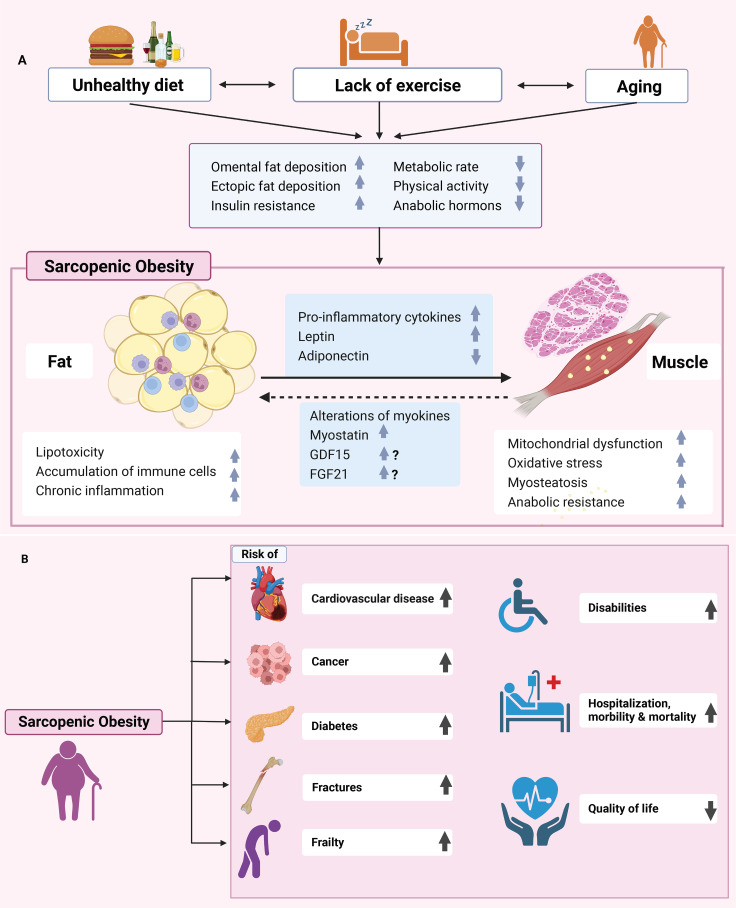
Sarcopenic obesity is defined as the coexistence of sarcopenia and obesity in the same individual, characterized by of the co-presence of body fat accumulation and muscle loss. This condition is currently a major concern as it is associated with frailty and disabilities such as cardiovascular disease, fractures, dementia, cancer, and increased all-cause mortality. Particularly, older individuals remain at risk of sarcopenic obesity. Progress at several levels is needed to improve the global prognostic outlook for this condition, including the elaboration and implementation of a more uniform definition that may favor the identification and specification of prevalence by age group. Furthermore, improvements in the understanding of the pathogenesis of sarcopenic obesity may lead to the development of more specific therapeutic interventions to improve prognosis. We reviewed the knowledge on sarcopenic obesity and its associations with cardiovascular diseases and mortality.
Overview
CoChat Summary
TL;DR
Sarcopenic obesity—coexistence of muscle loss and excess adiposity—is associated with frailty, cardiovascular disease, and increased all-cause mortality, especially in older adults. The review emphasizes that prevalence estimates remain imprecise because no globally accepted diagnostic definition exists, and management still centers on lifestyle modification with limited evidence for pharmacological therapies.
Key findings
- Sarcopenic obesity is linked to frailty, fractures, cardiovascular disease, cancer, dementia, hospitalization, and increased all-cause mortality; the paper states it is associated with a higher risk of cardiovascular events than sarcopenia or obesity alone.
- Prevalence varies widely by definition: a South Korean cohort found 0.8%–22.3% in women and 1.3%–15.4% in men; the Dutch Lifelines cohort found 1.4% in women and 0.9% in men, rising to 16.7% in the 80–89 age group; a meta-analysis of 50 studies including 86,285 people found a global prevalence of 11% in adults aged 60 years.
- Mortality risk is elevated in several studies: NHANES III women HR 1.29 (95% CI 1.03–1.60); British Regional Heart Study men HR 1.72 (95% CI 1.35–2.18); Swedish 75-year-old women HR 3.25 (95% CI 1.2–8.9); UK Biobank men with previous cardiovascular disease HR 1.47 (95% CI 1.30–1.66); and a meta-analysis of 23 studies including 50,866 individuals found pooled HR 1.21 (95% CI 1.10–1.32, p < 0.001, I² = 64.3%).
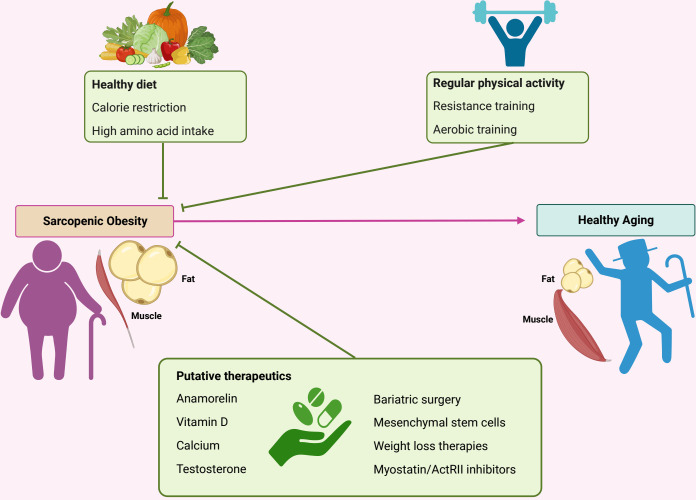
- Management is based mainly on lifestyle modification: caloric restriction (stated as less than 750 kcal/day), high-quality protein intake (1–1.2 g/kg/day), and combined aerobic and resistance exercise; pharmacological options such as testosterone, SARMs, GLP-1 receptor agonists, myostatin/ActRII inhibitors, and anamorelin are discussed but not strongly recommended because of limited evidence.
Methods
- Narrative review of the literature on sarcopenic obesity, covering definition, epidemiology, pathophysiology, cardiovascular disease, mortality, and management.
- Evidence is drawn from cited cohort studies, cross-sectional studies, meta-analyses, and preclinical/clinical trials; no systematic search strategy, inclusion criteria, or formal meta-analysis is described.
- Main analysis is a qualitative synthesis, including a table summarizing mortality results from selected cohort studies and one meta-analysis.
Limitations
- The paper states that the absence of globally adopted common definition criteria for sarcopenic obesity impairs precise epidemiological assessment, proper patient identification, and adapted management.
- The paper states that pathogenesis remains complex, multifactorial, and only partially elucidated; causality is difficult to establish from cross-sectional or cohort designs, and the optimal therapeutic approach remains undetermined because of limited clinical trials.
- Evident from the text: as a narrative review, it reports no systematic search, study-selection process, risk-of-bias assessment, or quantitative synthesis; several management recommendations rely on indirect, preclinical, or non-sarcopenic-obesity-specific evidence.
Model-written summary. Check it against the paper before relying on it.
Integrity signals
Registry
Cites
Statistics
Figures
Verification
Claims the paper makes
18 Valid · 2 Not valid · 61 Not checked · 26 Own results and interpretations
Some cited sources support this claim and some don’t — read each source’s verdict below.
In the paper
“Sarcopenic obesity significantly increases the risk of cardiovascular risk factors including insulin resistance (IR), metabolic syndrome, and adverse glycolipid metabolism (16, 42–44), even in the context of divergent comorbidities such as cancer and peritoneal dialysis (45, 46).”
§ Sarcopenic obesity: epidemiology, pathophysiology, cardiovascular disease, mortality, and management > Sarcopenic obesity and cardiovascular diseases
What the sources say
- Partly supportedcites [16] Ma J Hwang SJ McMahon GM Curhan GC McLean RR Murabito JM. Mid-adulthood cardiometabolic risk factor profiles of sarcopenic obesity. Obes (Silver Spring) (2016) 24: 526–34. doi: 10.1002/oby.21356 26813531 sourceExperimental — accuracy not yet measured
Ma et al. (2016) support the metabolic-syndrome and adverse glycolipid portions: the Abstract Results (p. 1) report that participants with sarcopenic obesity had a higher proportion of hypertension, metabolic syndrome and type 2 diabetes than NSNO or sarcopenia (all P<0.03), with similar patterns 10, 20 and 30 years prior, and Table 1/Table 3 show higher fasting plasma glucose (6.46 vs 5.51/5.64 mmol/L), higher triglycerides, lower HDLc and 37.7% vs 8.5% type 2 diabetes prevalence. However, insulin resistance is not part of this study's measured risk-factor panel (Methods, 'Cardiometabolic risk factor assessment': SBP, DBP, triglycerides, HDLc, LDLc, FPG, creatinine/eGFR only) — every insulin-resistance/HOMA-IR statement in our copy is credited to other works (ref 8's 565-person DXA/CT study, ref 16's 3,132 older men, ref 17's mechanism review) or framed as a 'putative pathway' in Potential mechanisms, so that element is not this source's own finding. The claim's causal 'significantly increases the risk' also overstates an associational design: Strengths and limitations states the cross-sectional and retrospective nature 'limits our ability to infer temporality or causality'. The cancer and peritoneal-dialysis clause is carried by other citations (45, 46) and is not addressed in our copy. (LLM, conf=0.82)
- Not checked yetcites [42] Atkins JL Wannamathee SG. Sarcopenic obesity in ageing: cardiovascular outcomes and mortality. Br J Nutr (2020) 124: 1102–13. doi: 10.1017/S0007114520002172 32616084 source
- Not checked yetcites [43] dos Santos EP Gadelha AB Safons MP Nobrega OT Oliveira RJ Lima RM. Sarcopenia and sarcopenic obesity classifications and cardiometabolic risks in older women. Arch Gerontol Geriatr (2014) 59: 56– 61. doi: 10.1016/j.archger.2014.03.012 24766993 source
- Partly supportedcites [44] Yu PC Hsu CC Lee WJ Liang CK Chou MY Lin MH. Muscle-to-fat ratio identifies functional impairments and cardiometabolic risk and predicts outcomes: biomarkers of sarcopenic obesity. J Cachexia Sarcopenia Muscle (2022) 13: 368–76. doi: 10.1002/jcsm.12877 PMC8818605 34866342 sourceExperimental — accuracy not yet measured
Split into 2 atoms — 0 confirmed, 2 partially supported, 0 disputed, 0 misattributed, 0 unverifiable. Expand the claim to see per-atom verdicts.
- Disputedcites [45] Lee K. Sarcopenic obesity and 10-year cardiovascular disease risk scores in cancer survivors and non-cancer participants using a nationwide survey. Eur J Cancer Care (Engl) (2021) 30: e13365. doi: 10.1111/ecc.13365 33174666 sourceExperimental — accuracy not yet measured
Lee (2021) measures 10-year Framingham CVD risk scores, not insulin resistance, metabolic syndrome or glycolipid metabolism, and in cancer survivors the adjusted analysis found that 'sarcopenic obesity was not associated with ≥10% 10-year CVD risk scores' (Section 3.3), with only sarcopenic non-obesity, non-sarcopenic abdominal obesity and sarcopenic abdominal obesity showing elevated odds (84%, 85%, 3.61-fold). The discussion (Table 2 section) further states explicitly that 'this cross-sectional study cannot state causality between sarcopenic obesity and 10-year CVD risk scores,' contradicting the claim's 'significantly increases risk' framing, and the paper contains nothing on peritoneal dialysis. Hyperinsulinaemia and shared biology appear only as mechanisms credited to Koene et al. (2016), not as this study's findings. (LLM, conf=0.75)
Checked by a reasoning model — may be wrong.
- Partly supportedcites [46] Tabibi H As’habi A Najafi I Hedayati M. Prevalence of dynapenic obesity and sarcopenic obesity and their associations with cardiovascular disease risk factors in peritoneal dialysis patients. Kidney Res Clin Pract (2018) 37: 404–13. doi: 10.23876/j.krcp.18.0064 PMC6312777 30619696 sourceExperimental — accuracy not yet measured
Split into 2 atoms — 0 confirmed, 2 partially supported, 0 disputed, 0 misattributed, 0 unverifiable. Expand the claim to see per-atom verdicts.
boostedstates a cause- Asserted: passes — The authors put it forward as true.
- Checkable: passes — It can be checked against evidence.
- Load-bearing: passes — The paper’s conclusions depend on it.
- Based: passes — The paper gives a reason why it holds.
- Partly supported
The cited sources support only part of this claim — read each source’s verdict below.
In the paper
“In postmenopausal women, the reduction in estradiol and increase in FSH levels promote body composition changes comprising an increase in adipose tissue and a decrease in muscle mass.”
§ Sarcopenic obesity: epidemiology, pathophysiology, cardiovascular disease, mortality, and management > Pathogenesis of sarcopenic obesity
What the sources say
- Partly supportedcites [33] Batsis JA Villareal DT. Sarcopenic obesity in older adults: aetiology, epidemiology and treatment strategies. Nat Rev Endocrinol (2018) 14: 513–37. doi: 10.1038/s41574-018-0062-9 PMC6241236 30065268 sourceExperimental — accuracy not yet measured
The “Sex-specific hormonal changes” section says menopause increases fat mass and reduces fat-free and muscle mass in women, and that oestrogen can attenuate these changes. It does not say that increased FSH promotes those changes; its discussion of FSH in the “Testosterone” section concerns men. Page numbers are not available in our copy. (LLM, conf=0.88)
plainstates a cause- Asserted: passes — The authors put it forward as true.
- Checkable: passes — It can be checked against evidence.
- Load-bearing: unclear — It is unclear whether the paper’s conclusions depend on it.
- Based: passes — The paper gives a reason why it holds.
- Partly supported
Every source the paper cites for this claim was checked and supports it.
In the paper
“These lipids can induce a reduction of GLUT4 translocation via impairment of insulin signaling, thereby leading to a reduction of glucose uptake by skeletal muscle.”
§ Sarcopenic obesity: epidemiology, pathophysiology, cardiovascular disease, mortality, and management > Pathogenesis of sarcopenic obesity
What the sources say
- Supportedcites [22] Shulman GI. Cellular mechanisms of insulin resistance. J Clin Invest (2000) 106: 171–6. doi: 10.1172/JCI10583 PMC314317 10903330 source
The insulin-resistance discussion says fatty acids may impair upstream insulin signaling, decreasing GLUT4 translocation to the plasma membrane. Figure 2 proposes that intracellular fatty-acid metabolites diminish insulin signaling and glucose transport activity in skeletal muscle. The claim’s 'can' is consistent with the paper’s proposed mechanism. (LLM, conf=0.91)
plainstates a cause- Asserted: passes — The authors put it forward as true.
- Checkable: passes — It can be checked against evidence.
- Load-bearing: passes — The paper’s conclusions depend on it.
- Based: passes — The paper gives a reason why it holds.
- Supported
The sources with a verdict support this claim; the rest weren’t checked yet, have no full text we could read, or their verdicts aren’t rated yet.
In the paper
“In the context of obesity, adipose tissue macrophages (ATM) change their phenotype from M2 to M1.”
§ Sarcopenic obesity: epidemiology, pathophysiology, cardiovascular disease, mortality, and management > Pathogenesis of sarcopenic obesity
What the sources say
- Supportedcites [19] Ouchi N Parker JL Lugus JJ Walsh K. Adipokines in inflammation and metabolic disease. Nat Rev Immunol (2011) 11: 85– 97. doi: 10.1038/nri2921 21252989 PMC3518031 source
In the ‘Infiltration of immune cells into adipose tissue’ section, the review describes predominantly M2-associated macrophages in lean mice and M1-associated macrophages in obese mice. Its References section explicitly describes obesity as causing a shift in adipose tissue macrophage polarization from alternatively to classically activated, matching the claim. (LLM, conf=0.91)
- Not checked yetcites [20] Olefsky JM Glass CK. Macrophages, inflammation, and insulin resistance. Annu Rev Physiol (2010) 72: 219–46. doi: 10.1146/annurev-physiol-021909-135846 20148674 source
plainstates a cause- Asserted: passes — The authors put it forward as true.
- Checkable: passes — It can be checked against evidence.
- Load-bearing: passes — The paper’s conclusions depend on it.
- Based: passes — The paper gives a reason why it holds.
- Supported
The cited sources support only part of this claim — read each source’s verdict below.
In the paper
“In addition, this significance persisted in studies that used different criteria to define obesity and sarcopenia (18).”
§ Sarcopenic obesity: epidemiology, pathophysiology, cardiovascular disease, mortality, and management > Mortality related to sarcopenic obesity
What the sources say
- Partly supportedcites [18] Zhang X Xie X Dou Q Liu C Zhang W Yang Y. Association of sarcopenic obesity with the risk of all-cause mortality among adults over a broad range of different settings: a updated meta-analysis. BMC Geriatr (2019) 19: 183. doi: 10.1186/s12877-019-1195-y 31269909 PMC6610788 sourceExperimental — accuracy not yet measured
The Results report significantly higher mortality risk under several definitions of sarcopenia and obesity, including muscle-strength-, waist-circumference-, and BMI-based definitions. But the association was not statistically significant for ALM/BMI-based or fat-mass-based sarcopenic obesity, so significance did not persist across all criteria. (LLM, conf=0.90)
plainstates an association- Asserted: passes — The authors put it forward as true.
- Checkable: passes — It can be checked against evidence.
- Load-bearing: passes — The paper’s conclusions depend on it.
- Based: passes — The paper gives a reason why it holds.
- Partly supported
46 more claims · 4 with their cited sources checked
Create a free account to see all 107 claims and to verify the 87 references still open.
- It may state two separate claims as one. 49
- The quote only partly states this claim. 2
- Probably not a substantial claim. 17
Claims other papers make about this one
Each is checked against this paper’s own text: does it say what the citing paper says it does?
The source backs part of the claim, not all of it — or backs it for a different population, condition or comparison.
In the citing paper
“Men, by contrast, often present with higher visceral adiposity and sarcopenic risk, which may attenuate weight loss and predispose to muscle loss during high-efficacy pharmacotherapy [181].”
From Precision obesity medicine: A phenotype-guided framework for pharmacologic therapy across the lifespan (2025) · cites this paper as [181]
Experimental — accuracy not yet measuredThe source backs part of the claim, not all of it — or backs it for a different population, condition or comparison.
In the citing paper
“These strategies include lifestyle modifications such as moderate caloric restriction, adequate protein intake, and regular resistance training (RT), all of which have shown efficacy in enhancing muscle mass, reducing adiposity, and improving physical function in older adults with SO [2,6,8,9].”
From Efficacy of Power Training on Sarcopenic Obesity in Community-Dwelling Older Women: A 32-Week Randomized Clinical Trial (2025) · cites this paper as [6]
Experimental — accuracy not yet measuredIn the citing paper
“This dual phenotype has detrimental effects on both clinical and patient-centred outcomes, including functional limitations and increased morbidity risk (e.g., type 2 diabetes, fractures), contributing to lower quality of life and survival rates [8].”
From Weighing the risk of GLP-1 treatment in older adults: Should we be concerned about sarcopenic obesity? (2025) · cites this paper as [8]
Self-check
Percentages, sums and reported differences re-computed from the paper’s own numbers.
Each contradiction between two passages listed here was confirmed by an independent check.
Rated major: it would touch a result — a value a result rests on, reported and recomputed p-values on opposite sides of the significance level, two passages that conflict with no sign which is right, or a cited work retracted before this paper was published.
In the paper
§ Sarcopenic obesity: epidemiology, pathophysiology, cardiovascular disease, mortality, and management > Management of sarcopenic obesity
“Presently, a very-low calorie intake must be avoided in older individuals with sarcopenic obesity”
§ Sarcopenic obesity: epidemiology, pathophysiology, cardiovascular disease, mortality, and management > Management of sarcopenic obesity
“Although the precise quantity of kcal per day has not yet been defined, it must be less than 750 kcal per day (70).”
Rated minor: it would not touch a result — a value no result rests on, a p-value that stays on the same side of the significance level, or a conflict that is clerical, resolved elsewhere in the paper, or outside its own findings.
In the paper
§ Sarcopenic obesity: epidemiology, pathophysiology, cardiovascular disease, mortality, and management > Mortality related to sarcopenic obesity
“The British Regional Heart Study examined the risk of all-cause mortality among 4107 men aged between 60-79 years.”
§ Sarcopenic obesity: epidemiology, pathophysiology, cardiovascular disease, mortality, and management > Mortality related to sarcopenic obesity
“| British Regional Heart Study (41) | 4252 |”
Citations
Cites
Sarcopenia: revised European consensus on definition and diagnosis
Cruz-Jentoft, A. J., Bahat, G., Bauer, J., Boirie, Y., Bruyère, O., Cederholm, T., Cooper, C., Landi, F., Rolland, Y., Sayer, A. A., et al. (2019) · Age and Ageing · doi:10.1093/ageing/afy169 · Cited by 13,818 · cited 1×
“Reduced muscle quality and quantity (DXA or alternative tests such as mid-thigh imaging by MRI or psoas muscle measurement with CT) were used to confirm sarcopenia, and poor physical performance was assessed using the Timed Up and Go test or gait speed to determine its severity (3).”
MethodProspective Studies Collaboration (2009) · The Lancet · doi:10.1016/s0140-6736(09)60318-4 · Cited by 4,807
Adipokines in inflammation and metabolic disease
Ouchi, N., Parker, J. L., Lugus, J. J., & Walsh, K. (2011) · Nature Reviews Immunology · doi:10.1038/nri2921 · Cited by 4,625 · cited 1×
“M2 or alternatively activated macrophages induced adipose tissue to exhibit anti-inflammatory properties (19).”
BackgroundCruz-Jentoft, A. J., & Sayer, A. A. (2019) · The Lancet · doi:10.1016/s0140-6736(19)31138-9 · Cited by 3,905
Sarcopenia: revised European consensus on definition and diagnosis
Cruz-Jentoft, A. J., Bahat, G., Bauer, J., Boirie, Y., Bruyère, O., Cederholm, T., Cooper, C., Landi, F., Rolland, Y., Sayer, A. A., et al. (2019) · Age and Ageing · doi:10.1093/ageing/afz046 · Cited by 3,803
Endoplasmic reticulum stress and the inflammatory basis of metabolic disease
Hotamisligil, G. S. (2010) · Cell · doi:10.1016/j.cell.2010.02.034 · Cited by 2,802 · cited 1×
“Oxidative stress can also lead to ER stress, which is characterized by unfolded protein response (UPR) causing dysfunction of proteasomal degradation and autophagy, which reduces protein levels and causes an imbalance in calcium homeostasis that altogether favor a decrease in muscle mass (30, 31).”
BackgroundThe Rag GTPases Bind Raptor and Mediate Amino Acid Signaling to mTORC1
Sancak, Y., Peterson, T. R., Shaul, Y. D., Lindquist, R. A., Thoreen, C. C., Bar-Peled, L., & Sabatini, D. M. (2008) · Science · doi:10.1126/science.1157535 · Cited by 2,773 · cited 1×
“Increased mTORC1 activation induces the formation of muscle cells proteins (26, 27).”
BackgroundMacrophages, inflammation, and insulin resistance
Olefsky, J. M., & Glass, C. K. (2010) · Annual Review of Physiology · doi:10.1146/annurev-physiol-021909-135846 · Cited by 2,733 · cited 1×
“In contrast, M1 ATM secrete proinflammatory molecules, including IL-6, TNF-a, IL-1b, MCP-1, CCR2, and CCR5 (20).”
Cellular mechanisms of insulin resistance
Shulman, G. I. (2000) · Journal of Clinical Investigation · doi:10.1172/jci10583 · Cited by 2,714
Klahr, S., Levey, A. S., Beck, G. J., Caggiula, A. W., Hunsicker, L., Kusek, J. W., & Striker, G. (1994) · New England Journal of Medicine · doi:10.1056/nejm199403313301301 · Cited by 2,328 · cited 1×
“Medical and dietary management are important to establish a food program that allows moderate calorie restriction while optimizing protein intake (72).”
Cited by
Items 201–300 of 367
LORENZO, R. D., Sciorati, C., Avola, A., Versiglia, A., Damanti, S., Locatelli, A., Stefanoni, D., Pagani, A., Pettinato, M., Silvestri, L., et al. (2026) · iScience · doi:10.1016/j.isci.2026.117831 · Cited by 1
Wang, F., Qiao, H., Zhou, H., Zheng, Y. N., Ni, Y., & He, X. (2026) · Frontiers in Nutrition · doi:10.3389/fnut.2026.1818342 · Cited by 1
“Excess adiposity worsens insulin resistance and dyslipidaemia and commonly coexists with age related loss of skeletal muscle mass and function, producing the clinical phenotype termed sarcopenic obesity (4, 5).”
Lin, R., Jiang, W., Wang, D., Xu, L., & Du, Y. (2026) · Frontiers in Nutrition · doi:10.3389/fnut.2026.1784292 · Cited by 1
Pratiwi, I. N., Mudjihartini, N., & Wardhani, W. I. (2026) · SOSIOEDUKASI JURNAL ILMIAH ILMU PENDIDIKAN DAN SOSIAL · doi:10.36526/sosioedukasi.v15i1.7148 · Cited by 1
“This process also contributes to the reduction of muscle mass and, if sustained, may increase the risk of sarcopenic obesity (Argilés et al., 2016; Axelrod et al., 2023; Han et al., 2019; Ji et al., 2022; Wei et al., 2023).”
Söğüt, M. Ü., AHISKALI, M., Mohammadzadeh, M., Çelik, M. N., & Us, N. C. (2026) · Molecular Nutrition & Food Research · doi:10.1002/mnfr.70495 · Cited by 1
Ganamurali, N., Devarajan, M. P., & Sabarathinam, S. (2026) · Geriatric Nursing · doi:10.1016/j.gerinurse.2026.104128 · Cited by 1
Ge, D., Yu, Y., 饶进, Ren, H., Wang, Z., & Zhang, B. (2026) · Endocrine Metabolic & Immune Disorders - Drug Targets · doi:10.2174/0118715303440752251229094023 · Cited by 1
Lutomski, P., Filipiak, K. J., Wachowiak‐Baszyńska, H., Straburzyńska‐Migaj, E., Krasiński, Z., Jemielity, M., Zieliński, J., & Urbanowicz, T. K. (2026) · Journal of Clinical Medicine · doi:10.3390/jcm15135305 · Cited by 1
“Sarcopenic obesity [99,100] is a complex body-composition phenotype characterized by the coexistence of excess adiposity and reduced muscle strength and/or mass.”
Malaguarnera, L. (2026) · Nutrients · doi:10.3390/nu18172787 · Cited by 1
“Although defined by the coexistence of excess adiposity and impaired skeletal muscle mass and function, SO extends far beyond alterations in body composition [11].”
Gu, Z., Mou, C., Chen, F., Zhou, K., Li, Q., Fu, S., ZHENG, S., Li, S., & Peng, R. (2026) · Frontiers in Nutrition · doi:10.3389/fnut.2026.1880656 · Cited by 1
“…may be driven by the complex crosstalk between adipose tissue and skeletal muscle, wherein dysfunctional adipokine signaling, chronic low-grade inflammation, and insulin resistance disrupt anabolic signaling pathways, leading to impaired muscle protein synthesis and enhanced proteolysis (11, 12).”
Chandler, M. (2026) · Journal of Feline Medicine and Surgery · doi:10.1177/1098612x261426765 · Cited by 1
Baabbad, T., Aceves‐Martins, M., Horgan, G. W., Myint, P. K., & de Roos, B. (2026) · Public Health Nutrition · doi:10.1017/s1368980026103267 · Cited by 1
“The occurrence of both sarcopenia and obesity has been defined as sarcopenic obesity (3) .”
Kway, Y. M., Raisi‐Estabragh, Z., Vavilis, G., Antoniades, C. A., Petersen, S. E., Nichols, T. E., Raman, B., Zhang, Q., & Neubauer, S. (2026) · European Heart Journal · doi:10.1093/eurheartj/ehag702 · Cited by 2
Kao, H., Chen, T., Li, T., Li, C.-I., Liu, C.-S., Yang, C., Lin, C., & Lin, C. (2026) · Journal of the Formosan Medical Association · doi:10.1016/j.jfma.2026.08.056 · Cited by 2
Systematic review and meta-analysis of biomarkers of sarcopenia and sarcopenic obesity
Yang, Y., Wang, C., Xu, R., Xuan, W., & Chen, X. (2026) · Medicine · doi:10.1097/md.0000000000050799 · Cited by 1
“[55] Third, vitamin D deficiency may reduce immune, antioxidant, and anti-inflammatory capacities, and affect the ability of adipose tissue to store fatty acids, while FFAs can damage the physiological metabolic environment of peripheral muscle tissue.”
Upaya Preventif Masalah Malnutrisi melalui Evaluasi Status Gizi Lansia di UPTD Sosial Banten
Trisnasari, E., Sulthany, A. I., Darifah, S., Pratiwisitha, M., Wulansari, E. R., & Hermawati, L. (2025) · Jurnal Mandala Pengabdian Masyarakat · Cited by 1
Danielewicz, A. L., Freitas, B. P., Moreira, B. D. S., Lopes, E. C., Rosa, R. A., Lima-Costa, M. F., & de Avelar, N. C. P. (2026) · Ciência & Saúde Coletiva · doi:10.1590/1413-81232026319.19872024 · Cited by 1
Santoso, A. H., Lontoh, S. O., Firmansyah, Y., Yogie, G. S., Goh, D., Syarifah, A. G., Teguh, S. K. M. M., & Khoto, A. E. P. (2024) · Malahayati Nursing Journal · doi:10.33024/mnj.v6i7.13124 · Cited by 1
THE EFFECT OF SARCOPENIC OBESITY AND VISUAL IMPAIRMENT ON BASIC FUNCTIONAL ACTIVITY
Агарков, Н. М., & Kopylov, A. E. (2024) · Vrach · doi:10.29296/25877305-2024-09-10 · Cited by 1
Shevtsova, V. I., Александровна, П. А., Salamatova, V. N., Shevtsov, A. N., & Krasnoruckaya, O. N. (2024) · Medical alphabet · doi:10.33667/2087-5631-2024-54-47-52 · Cited by 1
Espinoza, S. E., Broder, J. C., Wolfe, R. S., Ernst, M. E., Shah, R. C., Orchard, S. G., Woods, R. L., Ryan, J. L., & Murray, A. M. (2025) · GeroScience · doi:10.1007/s11357-025-01598-6 · Cited by 1
Hung, C., Wang, L.-Y., Lin, H., & Yang, C. (2025) · Neuropsychiatric Disease and Treatment · doi:10.2147/ndt.s537505 · Cited by 1
Abughazaleh, N. (2025) · doi:10.11575/prism/48568 · Cited by 1
Ma, X., Sun, G., Liu, C., Yan, X., Liang, W., & Ma, Z. (2026) · Frontiers in Nutrition · doi:10.3389/fnut.2026.1859967
“Nutritional supplementation may also be used as an adjunct to exercise in SO management, but the present review focuses on exercise-based evidence and treats nutrition-only estimates as outside the primary analytic boundary (4, 10).”
Kopylov, A. E. (2024) · Medical and Social Expert Evaluation and Rehabilitation · doi:10.17816/mser624834
Kim, J., Kim, Y., Kang, S., Park, S., Moon, J., Kim, N., & Kim, S. (2024) · Applied Sciences · doi:10.3390/app14041363
Building an in vitro model of sarcopenic obesity
Spinello, Z., Autilio, T. M., Besharat, Z. M., Lucarini, V., Catanzaro, G., Zizzari, I. G., Bimonte, V. M., Migliaccio, S., Donini, L. M., Ferretti, E., et al. (2024) · International Journal of Bone Fragility · doi:10.57582/ijbf.230303.126
“SO is associated with other health-related issues, poor quality of life, and mortality [2,3] , and it is a growing public health challenge [ 3,4 ] .”
BackgroundApplication of rehabilitation programs to patients with chronic heart failure and sarcopenic obesity
Shevtsova, V. I., Александровна, П. А., Krasnorutskaya, O. N., Zarechny, P. B., & Terskaya, A. R. (2025) · Kachestvennaya Klinicheskaya Praktika = Good Clinical Practice · doi:10.37489/2588-0519-2024-4-113-119
Ptak, A., & Szyc, M. (2025) · Journal of Education Health and Sport · doi:10.12775/jehs.2025.77.56778
Sarkopene Adipositas im Alter: Ursachen, Folgen und Behandlungsansätze
Rippl, M., Drey, M., & Schluessel, S. (2025) · Adipositas - Ursachen Folgeerkrankungen Therapie · doi:10.1055/a-2492-9415
“Prevention focuses on regular exercise and a balanced diet, especially in older adults. lität, einem erhöhten Risiko für chronische Erkrankungen, erhöh-ter Mortalität und einer eingeschränkten Lebensqualität [1].”
InfluentialBody Mass Index and outcomes following transcatheter aortic valve replacement: going beyond customs
Marrone, A., & Ielasi, A. (2025) · Minerva Cardiology and Angiology · doi:10.23736/s2724-5683.25.06844-9
Rehabilitation in palliative patients with heart failure and body composition disorders
Shevtsova, V. I., Александровна, П. А., Shevtsov, A. N., Krasnorutskaya, O. N., Kotova, Y. A., & Zarechny, P. B. (2025) · CARDIOVASCULAR THERAPY AND PREVENTION · doi:10.15829/1728-8800-2025-4230
Park, S., Park, M.-J., Kim, E., & Lim, Y.-W. (2025) · 대한한의학회지 · doi:10.13048/jkm.25018
Gamboa, Y. L., & Aparicio, C. (2025) · doi:10.62452/znro4698
E-book Mulheres no climatério: desafios físicos, emocionais e sociais
Rocha, J. S. B., Caldeira, A. P., Rossi-Barbosa, L. A. R., & Maia, L. C. (2025) · Amplamente Cursos e Formação Continuada eBooks · doi:10.47538/ac-2025.14
Özsoy, G., Gedikli, Y., Altunok, M. K., Gedik, B. A., Ertürk, N., & Özsoy, İ. (2025) · Research Square · doi:10.21203/rs.3.rs-7038181/v1
Sarcopaenia as an emerging cardiovascular risk factor: time for recognition?
Sandberg, C., Wikner, A., & Johansson, B. H. (2025) · European Journal of Cardiovascular Nursing · doi:10.1093/eurjcn/zvaf135
Getting to the heart of sarcopenia and cardiovascular disease
Nezafati, P., Saxena, P., Raman, J., Hebbard, L., & McFarlane, C. (2025) · Aging · doi:10.18632/aging.206296
“As increased adiposity is a common comorbidity of sarcopenia, which is referred to as sarcopenic obesity [132], questionnaires alone may be inadequate for screening obese patients for sarcopenia with a more formal diagnostic evaluation required.”
Li, Z., Wu, M., Wang, P., Xie, W., Hua, Y., Shao, G., & Zhu, H. (2025) · PLoS ONE · doi:10.1371/journal.pone.0331173
The effect of sarcopenic obesity on daily activities of patients with cataract and glaucoma
Fabrikantov, O. L., Kopylov, A. E., & Агарков, Н. М. (2025) · Russian Ophthalmological Journal · doi:10.21516/2072-0076-2025-18-3-76-81
Gao, L. (2025) · Research Square · doi:10.21203/rs.3.rs-7423254/v1
Obesidad sarcopénica: más allá del peso, la importancia de la masa muscular
Martínez, A. V. M., & Pérez‐Ramírez, I. F. (2025) · Con Evidencia · doi:10.32870/ce.vi8.258
Prevalence of Sarcopenia and Its Association with Malnutrition in Hospitalized Elderly Patients
Kaçar, M., Uzunlulu, M., Eken, E., & Başçı, S. (2025) · Hitit Medical Journal · doi:10.52827/hititmedj.1604216
Саркопения при сердечно-сосудистых заболеваниях: обзор литературы
Макаренко, Е. В., Пиманов, С. И., & Бондаренко, В. М. (2025) · Кардиология в Беларуси · doi:10.34883/pi.2025.17.5.010
RELATIONSHIP BETWEEN IRON METABOLISM, FERROPTHOSIS AND DIABETES MELLITUS
Shtereva, S., & Georgiev, T. (2025) · Trakia Journal of Sciences · doi:10.15547/tjs.2025.03.013
“This close relationship between iron and glucose levels is exemplified by the link between elevated ferritin levels and the development of type 2 DM (26, 35, 36).”
Wu, Y.-H., Shih, Y.-J., Huang, L.-C., Chen, H., Syu, Y.-F., Kao, Y.-C., Chen, F., & Tsai, Y.-W. (2025) · Research Square · doi:10.21203/rs.3.rs-7879242/v1
Kopylov, A. E. (2025) · Medical and Social Expert Evaluation and Rehabilitation · doi:10.17816/mser680100
Obesidad y sarcopenia: una asociación de alto impacto
Patiño, J. S., & Fernández, C. M. (2025) · Medicina de Familia SEMERGEN · doi:10.1016/j.semerg.2025.102626
Yoshikawa, K., Kayashita, J., Hamamoto, T., Nakamori, M., Mikami, Y., & Takeno, S. (2025) · Journal of Oral Rehabilitation · doi:10.1111/joor.70107
Song, J., Lu, D., Zhang, L., Wang, Y., Wu, Y., & Zhong, S. (2025) · BMC Public Health · doi:10.1186/s12889-025-25509-8
Mendes, C., Carvalho, M., Bravo, J., Martins, S., Zangão, M. O. B., & Raimundo, A. M. D. M. (2025) · Obesity Surgery · doi:10.1007/s11695-025-08326-1
“Recent data indicate that the prevalence of sarcopenia in the general population is approximately 11%, with a range from 3.2 to 26.3% [14, 15].”
InfluentialLeitão, A. E. (2025) · Digital Library of Theses and Dissertations (Universidade de São Paulo) · doi:10.11606/t.39.2025.tde-23102025-153202
Sarcopenic Obesity: Its Importance in Primary Health Care
Özkaya, Y., Çifçi, İ., & Durmaz, B. (2025) · Türk tıp dergisi. · doi:10.70852/tmj.1611899
Awareness Of Sarcopenic Obesity In Older Adults: An Observational Study
Arora, A., & Dedhiya, N. (2025) · INTERNATIONAL JOURNAL OF RESEARCH AND ANALYTICAL REVIEWS · doi:10.56975/ijrar.v12i4.321994
Circulating cytokine profile in patients with obesity depending on the sarcopenia presence
Mamutova, E. M., Sheptulina, A. F., Valeeva, D. L., Yafarova, A. A., Timofeev, J. S., Metelskaya, V. A., & Drapkina, O. M. (2025) · Russian Journal of Preventive Medicine · doi:10.17116/profmed20252811166
Zong, M., Zhao, A., Han, W., Chen, Y., Weng, T., Li, S., Tang, L., & Wu, J. (2024) · Figshare · doi:10.6084/m9.figshare.26743223
Effects of physical exercise on sarcopenia after bariatric surgery: a randomized controlled trial
Mendes, C. S. O. (2025) · Portuguese National Funding Agency for Science, Research and Technology (RCAAP Project by FCT)
Imaging of Musculoskeletal Metabolic Diseases
Gazzotti, S., Sassi, R., Guglielmi, R., Gómez, M. P. A., & Bazzocchi, A. (2025) · Medical radiology · doi:10.1007/174_2025_591
Sarcopenic obesity syndrome in elderly people
Ζηλίδου, Μ. Ε., & Ζηλίδου, Μ. Ε. (2025) · University of Thessaly Institutional Repository (University of Thessaly)
Lukic, I. R., Popović, N., Kalač, A. R., & Radulovic, A. (2025) · BMJ Open · doi:10.1136/bmjopen-2025-107788
Sarcopenia and obesity: Two sides of the same coin. Incretin technologies in addressing the problem
Demidova, T. Y., Толмачева, К. А., & Прилепа, С. А. (2025) · FOCUS Endocrinology · doi:10.62751/2713-0177-2025-6-4-06
Alhaddad, O., Elsabaawy, M., Abedelhai, A., Badra, G., & Elfayoumy, M. (2025) · European Journal of Clinical and Experimental Medicine · doi:10.15584/ejcem.2025.4.4
Einfluss der primären Knieendoprothetik auf den Lauf der Patella früh- und spätpostoperativ
Lambl, A. (2025) · Common Library Network (Der Gemeinsame Bibliotheksverbund) · doi:10.22032/dbt.68762
Komal, M., Jawad, M., Malik, Z. B., Ahmed, S., Shafique, M., Afzal, M., Khan, F., Shahzad, I., & Saeed, M. (2026) · International Journal of Medical and All Body Health Research · doi:10.54660/ijmbhr.2026.7.1.73-79
Investigating myoblast-adipocyte crosstalk; influence on metabolic function and redox homeostasis
Bateman, A. (2026) · e-space (Manchester Metropolitan University) · doi:10.83056/mmu.32557236
Xu, H., Zheng, Y., Li, T., Mei, Y., Yang, M., Chen, C. S., Hua, Z., & Zhao, H. (2026) · Frontiers in Nutrition · doi:10.3389/fnut.2026.1722288
“In this context, the concept of sarcopenic obesity may help explain the apparent paradox whereby patients are not underweight yet exhibit pronounced inflammatory and nutritional impairment (62, 63).”
Aydogan, O. O., Oksuzoglu, A. D., & Turanlı, B. (2026) · Metabolites · doi:10.3390/metabo16020095
“Increased pro-inflammatory cytokines, intramyocellular accumulation of lipids, and macrophage infiltration enhance the muscular atrophy and lipotoxicity mechanisms [22,24,25].”
Shao, H., Wang, Y., Park, Y.-K., & Jung, H. W. (2026) · Nutrients · doi:10.3390/nu18030429
“It mainly affects elderly people who are vulnerable to various metabolic diseases and often causes adverse outcomes such as impaired mobility, frailty, and high risk of falls and even death [2–4].”
Sarcopenic Obesity in Aging Males: Imaging, Metrics, and Multimodal Intervention
Abeeri, H. A., Alshehri2, S. N., Alharbi, F. S., Alanazi, A. J. A., Almaqadi, Z. S. H., Aljohani, S. S., Alanazi, N. A., Alasiri, N. M., Alslobi, L. M. A., Alsmari, N. S. A., et al. (2024) · Saudi Journal of Medicine and Public Health · doi:10.64483/202412616
Ruslim, W. H., Santoso, A. H., Gunaidi, F. C., Pratama, A., Andersan, J., & Haryanto, I. (2025) · Gotong Royong · doi:10.63935/gr.v2i2.166
“( Katsiardanis et al., 2013; Selvaraj et al., 2022; Wei et al., 2023) Pengukuran IMT dan WHR secara rutin pada lansia tidak hanya berguna untuk mengidentifikasi obesitas, tetapi juga sebagai panduan dalam merancang intervensi terkait obesitas seperti pola makan sehat, peningkatan aktivitas fisik,…”
Yi, X., Sun, W., Yang, C., Rooshdi, R. A. W. R. M., Yan, J., Liu, C., Abas, R., & Daut, U. N. (2026) · Research Square · doi:10.21203/rs.3.rs-8554436/v1
Lubis, I. D., & Khairani, P. S. (2026) · JURNAL RISET RUMPUN ILMU KEDOKTERAN · doi:10.55606/jurrike.v5i1.8483
Body Composition in Liver Transplant Patients: Long‐Term Changes and Impact on Recovery Outcomes
Leunis, S., Desloovere, E., Criekinge, H. V., Vandecruys, M., Coudyzer, W., Maris, S., Craenenbroeck, A. H. V., Veronique, Smet, S. D., Bogaerts, S., et al. (2026) · Clinical Transplantation · doi:10.1111/ctr.70476
“Since sarcopenia and obesity share overlapping pathophysiological mechanisms, their combined presence may have a synergistic effect, worsening health outcomes more than either condition individually [ 45–48 ].”
InfluentialMatsumoto, A., Yoshimura, Y., Wakabayashi, H., Nagano, F., Shimazu, S., Kido, Y., Hamada, T., Yoneda, K., Bise, T., & Kuzuhara, A. (2026) · European Geriatric Medicine · doi:10.1007/s41999-026-01419-9
Lubis, I. D., & Khairani, P. S. (2026) · Jurnal Kesehatan Amanah · doi:10.57214/jka.v10i1.1057
Jang, M., Lee, J. Y., Park, J.-Y., Choi, S., & Kim, B.-K. (2026) · Nutrients · doi:10.3390/nu18050715
“Probiotics have emerged as promising modulators of metabolic health by influencing the gut–liver–muscle axis, particularly under HFD-induced metabolic stress [12–15].”
Prevalence of and Factors Associated with Sarcopenic Obesity in People Living with HIV
Noppornpanth, P., Ratanasawan, W., Navanukroh, O., & Homsanit, M. (2026) · THE BANGKOK MEDICAL JOURNAL · doi:10.31524/bkkmedj.2026.11.007
Frailty, sarcopenia, and diabetes: Managing physical decline
Hajam, Y. A., Bhatti, N., Kaur, A., Ahmed, S., & Rai, S. (2026) · Elsevier eBooks · doi:10.1016/b978-0-443-44665-8.00005-5
Kim, T., & Jang, K. (2026) · Research in Gerontological Nursing · doi:10.3928/19404921-20260304-01
Gong, F., Ren, Y., Cao, T., Xu, Y., Wang, K., Li, J., Jin, Z., Wang, A., Li, J., Yang, Y., et al. (2025) · International Journal of Morphology · doi:10.4067/s0717-95022025000602001
Zhang, W., Akhtar, F., & Sun, J. (2026) · Medicine · doi:10.1097/md.0000000000047963
“20] Given that SO arises from the interplay between muscle degeneration, chronic inflammation, and metabolic imbalance, [21] A farnesiana represents a rational candidate for network-based investigation aimed at identifying multi-target mechanisms relevant to myostatin regulation and muscle…”
Energy and Protein Intake in Mild-Moderate COPD Patients
Cullen, R., Nayak, K. J., Singh, D., Beech, A. S., & Vyas, A. (2026) · Lung · doi:10.1007/s00408-026-00876-0
医療費増大の抑制における就労世代のマルチモビディティとメタボリックシンドローム対策の重要性 : 協会けんぽの健診・レセプトデータを活用した全国規模の分析 (本文)
ニシダ, ユ., Nishida, Y., & 西田, 優. (2023) · Institutional Repositories DataBase (IRDB)
Effect of (−)-Epicatechin on Mitochondrial Homeostasis in Skeletal Muscle of Female Obese Rats
Herrera-Cogco, E. D. L. C., Meza, S. H., Martínez‐Meza, Y., Duran, J. P., Ceballos, G. M., Méndez-Bolaina, E., & Nájera, N. (2026) · Molecules · doi:10.3390/molecules31061050
“Various molecular mechanisms contribute to the pathophysiology of sarcopenia, including altered proteostasis, satellite cell damage, and mitochondrial dysfunction [5].”
VARIOUS BODY COMPOSITION DISORDERS IN ELDERLY PATIENTS WITH ATHEROSCLEROSIS OF VASCULAR BEDS
Цыганкова, Д. П., Bazdyrev, E. D., Анатольевич, Ц. Д., Miroshnichenko, S. V., Геннадьевна, Н. А., Каретникова, В. Н., Евгеньевна, К. К., Voronina, E. A., & Barbarash, O. L. (2026) · Complex Issues of Cardiovascular Diseases · doi:10.17802/2306-1278-2025-14-6s-83-93
Expression of matrix metalloproteinases in exosomes in sarcopenia and sarcopenic obesity
Спирина, Л. В., Баркышева, А. А., Kiskidosov, S. V., Svarovsky, D. A., Yunusova, N. V., Шулико, Л. М., Самойлова, Ю. Г., Матвеева, М. В., Ogieuhi, I. J., Shukyurova, M. P., et al. (2026) · Yakut Medical Journal · doi:10.25789/ymj.2026.93.07
Mihuț, R. G., Ghitea, T. C., Morenci, M., Nistor-Cseppento, C. D., Tirla, S., Iovanovici, D. C., Karetka, A. J., Tiboldi, Á., Kovács, R., & Jurca, T. (2026) · Nutrients · doi:10.3390/nu18071140
“Therefore, strategies that simultaneously address adiposity and muscle preservation are essential for healthy aging [4–6].”
Sarcopenia and physical performance among older adults with increased body mass index and falls
Hashim, N. N. A., Mat, S., Myint, P. K., Delibegović, M., Kioh, S. H., Kamaruzzaman, S. B., Hairi, N. N., Khoo, S., & Tan, M. P. (2026) · Scientific Reports · doi:10.1038/s41598-026-49574-0
İstemihan, Z., Gallo, G., Loy, L., Privitera, G., Bezzio, C., Akyüz, F., & Armuzzi, A. (2026) · Journal of Enterocolitis · doi:10.14744/jenterocolitis.2026.95876
“However, this paradox largely reflects the intrinsic limitations of BMI, which fails to distinguish between lean and fat mass. 27,28 29-33 In this context, excess adiposity often masks concomitant muscle mass depletion, resulting in sarcopenic obesity, a phenotype associated with more severe…”
Ramírez-Orozco, R. E., & Pedroza-García, K. A. (2026) · Nutrition Reviews · doi:10.1093/nutrit/nuag056
Current status of research on muscle wasting associated with chronic obstructive pulmonary disease
Zhang, H., Song, Z., Guo, Q., Nie, H., Hou, H., Yao, N., Sichao, D., Yun, C., Zhuo, Q., Li, Y. D., et al. (2026) · European journal of medical research · doi:10.1186/s40001-026-04461-2
“Pro-inflammatory cytokines such as TNF-α and IL-6 secreted by adipose tissue trigger systemic inflammation, in which activation of the NF-κB signaling pathway upregulates key genes of the UPS, thereby promoting skeletal muscle protein degradation in COPD patients [76], [77].”
Dietary and Behavioural Management
Grace, C., Sweeney, M., & Abbott, S. (2026) · Wiley eBooks · doi:10.1002/9781394206148.mdp0068
Climate Change and Sarcopenia: Mechanisms, Vulnerabilities, and Public Health Implications
Qaisar, R., Ahmad, F., & Karim, A. (2026) · Calcified Tissue International · doi:10.1007/s00223-026-01527-5
He, H., Hu, X., Luo, Y., Wu, Y., Gao, Y., Yu, J., Luo, K., & Qian, X. B. (2026) · Diabetology & Metabolic Syndrome · doi:10.1186/s13098-026-02173-5
“Compared to simple obesity and sarcopenia, SO is more frequently associated with cardiovascular diseases, cancer, diabetes, fractures, and frailty, and is often linked to higher rates of hospitalization, disability, and mortality [40].”
ASSOCIAÇÃO ENTRE A OBESIDADE SARCOPÊNICA E A QUALIDADE DA DIETA DE IDOSOS
Cruz, N. Y. P., Nogueira, B. D. S., Freitas, F. M. N. D. O., & Reis, D. S. D. (2026) · Periódicos Brasil Pesquisa Científica · doi:10.36557/2674-9432.2026v5n3p682-703
Unseen and untreated: implementing sarcopenic obesity care in Nordic general practice
Baygi, F., Haastrup, P., Buhl, S. F., Nielsen, J. B., Suetta, C., Rathleff, M. S., & Søndergaard, J. (2026) · Frontiers in Aging · doi:10.3389/fragi.2026.1815247 · Cited by 1
Yao, J., Zhang, Y., Wang, J., Chen, W., Li, X., Wu, G., Zhou, M., Li, Z., Gao, B., & Chen, X. C. (2026) · Frontiers in Nutrition · doi:10.3389/fnut.2026.1851995
Self-citationBody weight variability and mortality in older adults: a nationwide population-based cohort study
Seo, J. Y., Han, Y. M., Lee, H., Park, J. M., Choi, J. M., & Han, K. (2026) · Scientific Reports · doi:10.1038/s41598-026-55150-3
“Instead, this weight gain may reflect underlying pathologic conditions, including fluid retention secondary to heart failure or renal dysfunction, decreased physical activity with functional decline, or increased adiposity accompanied by age-related muscle loss (sarcopenic obesity) 13–15 .”
Metadata
- Authors
- Wei, S., Nguyen, T. T., Zhang, Y., Ryu, D., & Gariani, K.
- Affiliations
- Sungkyunkwan University (KR)
- Gwangju Institute of Science and Technology (KR)
- University of Geneva (CH)
- Corresponding author
- Gariani, Karim
- Venue
- Frontiers in Endocrinology
- Publisher
- Frontiers Media SA
- Published
- 2023-06-30
- Volume
- 14
- Pages
- 1185221-1185221
- ISSN
- 1664-2392 (ISSN-L)
- PMC
- PMC10344359
- OpenAlex
- W4382788280
- Cited by
- 291
- References
- 98
- Citations by year
- 2026: 100 · 2025: 132 · 2024: 56 · 2023: 3
- FWCI
- 10.36
- Type
- journal article
- Language
- en
- Open access
- gold
- doi.org
- Licence
- Locations
- Frontiers in Endocrinology (publishedVersion, cc-by)
- PubMed Central (publishedVersion, cc-by)
- PubMed (publishedVersion)
- DOAJ (DOAJ: Directory of Open Access Journals) (submittedVersion, cc-by-sa)
- Funders
- National Research Foundation
- National Research Foundation of Korea (2023R1A2C3006220, 2021R1A5A8029876)
- Ministry of Science and ICT, South Korea (2021R1A5A8029876, 2023R1A2C3006220)
- Topics
- Health Sciences › Medicine › Physiology (medical) › Nutrition and Health in Aging
- Health Sciences › Medicine › Physiology (medical) › Body Composition Measurement Techniques
- Health Sciences › Medicine › Geriatrics and Gerontology › Frailty in Older Adults
- Keywords
- sarcopenic obesity, sarcopenia, obesity, frailty, cardiovascular disease, all-cause mortality, pathophysiology, older adults, muscle mass loss, body fat accumulation, therapeutic interventions
- MeSH terms
- Adipose Tissue, Cardiovascular Diseases, Humans, Obesity, Prognosis, Sarcopenia
About these checks
Registry, retraction, Cites and statistics results are computed, not judged, with one exception: a printed reference that no index lists is read once by a model before it counts as a citation error. Claims are extracted by a model and kept only when their quote appears verbatim in the text; each cited source is then checked, with a model’s help, for whether it says what the claim relies on. Those verdicts can be wrong — read the claim’s quote and the cited source before relying on one.
The claim verdicts this report counts are experimental: their accuracy is not yet measured.
A language model drew the claims from the paper on 2026-10-05, under version 3 of the claim definition (model deepseek-v4.1-flash, prompt extract-v3).
A second model labelled each claim on 2026-10-05 (model jev-1.13-20260917, definition revision gold-guideline-v0.2).
Cited sources are checked with a language model’s help (qwen3.8-omni-flash and gpt-6-sol).
Statistics and arithmetic are recomputed, not judged.
Confidence bands are shown only for fields calibrated on our annotated test set. None is calibrated yet, so no band is shown.
What counts as a claim ›How we measure confidence ›How we check this ›
Are you an author, or do you see a problem with this page? Request a review
Data sources
Bibliographic data: Semantic Scholar, OpenAlex, Crossref.
Contains information from the Semantic Scholar Academic Graph Datasets, made available under the ODC Attribution License (ODC-BY 1.0).
Semantic Scholar’s data is described in: Kinney, R., et al. (2023). The Semantic Scholar Open Data Platform. arXiv:2301.10140.
