

The DOI matches its Crossref record; 165 of the 165 references it cites were found in a registry or an index.
S100A8/A9 in Inflammation
Open accessAbstract
S100A8 and S100A9 (also known as MRP8 ang MRP14, respectively) are Ca2+ binding proteins belonging to the S100 family. They often exist in the form of heterodimer, while homodimer exists very little because of the stability. S100A8/A9 is constitutively expressed in neutrophils and monocytes as a Ca2+ sensor, participating in cytoskeleton rearrangement and arachidonic acid metabolism. During inflammation, S100A8/A9 is released actively and exerts a critical role in modulating the inflammatory response by stimulating leukocyte recruitment and inducing cytokine secretion. S100A8/A9 serves as a candidate biomarker for diagnosis and follow-up as well as a predictive indicator of therapeutic responses to inflammation-associated diseases. As blockade of S100A8/A9 activity using small-molecule inhibitors or antibodies improves pathological conditions in murine models, the heterodimer has potential as a therapeutic target. In this review, we provide a comprehensive and detailed overview of the distribution and biological functions of S100A8/A9 and highlight its application as a diagnostic and therapeutic target in inflammation-associated diseases.
Overview
The claims and statistics of this paper haven’t been checked yet.
Run the check — free, no account needed. It reads the open-access text and checks the sources it cites.
Integrity signals
Registry
Cites
Statistics
Figures
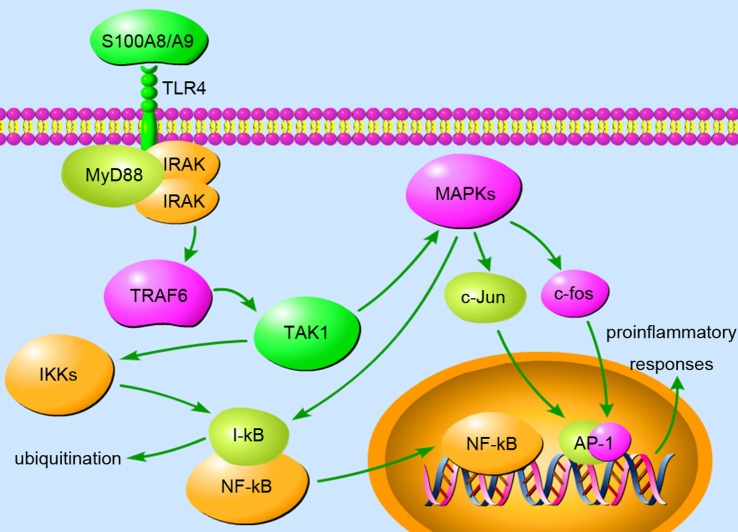
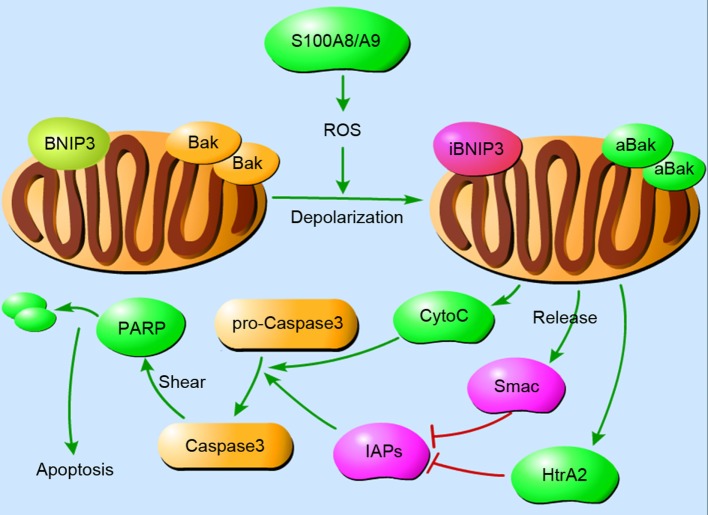
Verification
Claims the paper makes
The claims and statistics of this paper haven’t been checked yet.
Run the check — free, no account needed. It reads the open-access text and checks the sources it cites.
Claims other papers make about this one
Each is checked against this paper’s own text: does it say what the citing paper says it does?
The cited source says what the claim attributes to it.
In the citing paper
“Importantly, S100A8/A9 has been recognized as both a biomarker of colitis and a promoter of inflammation-associated tumorigenesis [16–18].”
From Inhibition of SPI1 by ADAP Regulates S100A8/A9 Signaling in Macrophages to Control the Development of Colitis (2026) · cites this paper as [16]
The cited source says what the claim attributes to it.
In the citing paper
“Moreover, S100A8/A9 has been shown to potentiate NF-κB signaling activation [16].”
From Inhibition of SPI1 by ADAP Regulates S100A8/A9 Signaling in Macrophages to Control the Development of Colitis (2026) · cites this paper as [16]
The cited source says what the claim attributes to it.
In the citing paper
“It is predominantly secreted by monocytes, macrophages, and neutrophils, serving as a key amplifier of inflammatory responses [16].”
From Inhibition of SPI1 by ADAP Regulates S100A8/A9 Signaling in Macrophages to Control the Development of Colitis (2026) · cites this paper as [16]
Self-check
Percentages, sums and reported differences re-computed from the paper’s own numbers.
The self-check needs the paper’s full text.
Citations
Cites
Alzheimer's Disease: Genes, Proteins, and Therapy
Selkoe, D. J. (2001) · Physiological Reviews · doi:10.1152/physrev.2001.81.2.741 · Cited by 6,063
Vogl, T., Tenbrock, K., Ludwig, S., Leukert, N., Ehrhardt, C., van Zoelen, M. A. D., Nacken, W., Foell, D., van der Poll, T., Sorg, C., et al. (2007) · Nature Medicine · doi:10.1038/nm1638 · Cited by 1,418 · cited 2×
“S100A9−/− mice are less sensitive to LPS stimulation and more resistant to LPS-induced septic shock (69).”
BackgroundRyckman, C., Vandal, K., Rouleau, P., Talbot, M., & Tessier, P. A. (2003) · The Journal of Immunology · doi:10.4049/jimmunol.170.6.3233 · Cited by 861
Metal Chelation and Inhibition of Bacterial Growth in Tissue Abscesses
Corbin, B. D., Seeley, E. H., Raab, A., Feldmann, J., Miller, M. R., Torres, V. J., Anderson, K. L., Dattilo, B. M., Dunman, P. M., Gerads, R., et al. (2008) · Science · doi:10.1126/science.1152449 · Cited by 857
Nutritional immunity beyond iron: a role for manganese and zinc
Kehl-Fie, T. E., & Skaar, E. P. (2010) · Current Opinion in Chemical Biology · doi:10.1016/j.cbpa.2009.11.008 · Cited by 634
Adipose Tissue Macrophages Promote Myelopoiesis and Monocytosis in Obesity
Nagareddy, P. R., Kraakman, M. J., Masters, S. L., Stirzaker, R. A., Gorman, D. J., Grant, R. W., Dragoljevic, D., Hong, E. S., Abdel‐Latif, A., Smyth, S. S., et al. (2014) · Cell Metabolism · doi:10.1016/j.cmet.2014.03.029 · Cited by 530
Antimicrobial actions of calcium binding leucocyte L1 protein, calprotectin
Steinbakk, M., Naess-Andresen, C. F., Fagerhol, M. K., Lingaas, E., Dale, I., & Brandtzaeg, P. (1990) · The Lancet · doi:10.1016/0140-6736(90)93237-j · Cited by 512
Inflammation – Cause or Consequence of Heart Failure or Both?
Linthout, S. V., & Tschöpe, C. (2017) · Current Heart Failure Reports · doi:10.1007/s11897-017-0337-9 · Cited by 484
S100A8/A9: From basic science to clinical application
Pruenster, M., Vogl, T., Roth, J., & Sperandio, M. (2016) · Pharmacology & Therapeutics · doi:10.1016/j.pharmthera.2016.07.015 · Cited by 463
Soro-Paavonen, A., Watson, A. M. D., Li, J., Paavonen, K., Koitka, A., Calkin, A. C., Barit, D., Coughlan, M. T., Drew, B. G., Lancaster, G. I., et al. (2008) · Diabetes · doi:10.2337/db07-1808 · Cited by 407
Cited by
Sorted by citations
Elevated Calprotectin and Abnormal Myeloid Cell Subsets Discriminate Severe from Mild COVID-19
Silvin, A., Chapuis, N., Dunsmore, G., Goubet, A.-G., Dubuisson, A., Derosa, L., Almire, C., Hénon, C., Kosmider, O., Droin, N., et al. (2020) · Cell · doi:10.1016/j.cell.2020.08.002 · Cited by 834
Alivernini, S., MacDonald, L., Elmesmari, A., Finlay, S., Tolusso, B., Gigante, M. R., Petricca, L., Di Mario, C., Bui, L., Perniola, S., et al. (2020) · Nature Medicine · doi:10.1038/s41591-020-0939-8 · Cited by 740
Sexual-dimorphism in human immune system aging
Márquez, E. J., Chung, C.-H., Marches, R., Rossi, R. J., Nehar-Belaid, D., Eroglu, A., Mellert, D. J., Kuchel, G. A., Banchereau, J., & Ucar, D. (2020) · Nature Communications · doi:10.1038/s41467-020-14396-9 · Cited by 584
Persistent complement dysregulation with signs of thromboinflammation in active Long Covid
Cervia, C., Brüningk, S. C., Hoch, T., Fan, B., Muzio, G., Thompson, R. C., Ceglarek, L., Meledin, R., Westermann, P., Emmenegger, M., et al. (2024) · Science · doi:10.1126/science.adg7942 · Cited by 437
Microbe-host interplay in atopic dermatitis and psoriasis
Fyhrquist, N., Muirhead, G., Prast‐Nielsen, S., Jeanmougin, M., Oláh, P., Skoog, T., Jules-Clément, G., Feld, M., Barrientos‐Somarribas, M., Sinkko, H., et al. (2019) · Nature Communications · doi:10.1038/s41467-019-12253-y · Cited by 419
Hu, J., Zhang, L., Xia, H., Yan, Y., Zhu, X., Sun, F., Sun, L., Li, S., Li, D., Wang, J., et al. (2023) · Genome Medicine · doi:10.1186/s13073-023-01164-9 · Cited by 410
Role of S100 proteins in health and disease
Gonzalez, L. L., Garrie, K., & Turner, M. D. (2020) · Biochimica et Biophysica Acta (BBA) - Molecular Cell Research · doi:10.1016/j.bbamcr.2020.118677 · Cited by 363
An immune-based biomarker signature is associated with mortality in COVID-19 patients
Abers, M. S., Delmonte, O. M., Ricotta, E., Fintzi, J., Fink, D. L., de Jesus, A. A., Zarember, K. A., Alehashemi, S., Oikonomou, V., Desai, J. V., et al. (2020) · JCI Insight · doi:10.1172/jci.insight.144455 · Cited by 345
Plasma Proteomics Identify Biomarkers and Pathogenesis of COVID-19
Shu, T., Ning, W., Wu, D., Xu, J., Han, Q., Huang, M., Zou, X., Yang, Q., Yuan, Y., Bie, Y., et al. (2020) · Immunity · doi:10.1016/j.immuni.2020.10.008 · Cited by 337
Parisien, M., Lima, L. B. Q., Dagostino, C., El-Hachem, N., Drury, G. L., Grant, A. V., Huising, J., Verma, V., Meloto, C. B., Silva, J. R., et al. (2022) · Science Translational Medicine · doi:10.1126/scitranslmed.abj9954 · Cited by 335
Li, Y., Chen, B., Yang, X., Zhang, C., Yao, J., Li, P., Liu, Y., Li, Z., Qiao, B., Lau, W. B., et al. (2019) · Circulation · doi:10.1161/circulationaha.118.039262 · Cited by 317
Bahr, G., González, L. J., & Vila, A. J. (2021) · Chemical Reviews · doi:10.1021/acs.chemrev.1c00138 · Cited by 288
Guo, Q., Zhao, Y., Li, J., Liu, J., Yang, X., Guo, X., Kuang, M., Xia, H., Zhang, Z., Cao, L., et al. (2020) · Cell Host & Microbe · doi:10.1016/j.chom.2020.12.016 · Cited by 253
Rojahn, T. B., Vorstandlechner, V., Krausgruber, T., Bauer, W. M., Alkon, N., Bangert, C., Thaler, F. M., Sadeghyar, F., Fortelny, N., Fife, V. E. R., et al. (2020) · Journal of Allergy and Clinical Immunology · doi:10.1016/j.jaci.2020.03.041 · Cited by 233
Neutrophils: from IBD to the gut microbiota
Danne, C., Skerniškytė, J., Marteyn, B., & Sokol, H. (2023) · Nature Reviews Gastroenterology & Hepatology · doi:10.1038/s41575-023-00871-3 · Cited by 242
Neutrophils as potential therapeutic targets in hepatocellular carcinoma
Geh, D., Leslie, J., Rumney, R., Reeves, H. L., Bird, T. G., & Mann, D. A. (2022) · Nature Reviews Gastroenterology & Hepatology · doi:10.1038/s41575-021-00568-5 · Cited by 223
Transcriptional and epigenetic decoding of the microglial aging process
Li, X., Li, Y., Jin, Y., Zhang, Y., Wu, J., Xu, Z., Huang, Y., Cai, L., Gao, S., Liu, T., et al. (2023) · Nature Aging · doi:10.1038/s43587-023-00479-x · Cited by 234
COVID-19 is a systemic vascular hemopathy: insight for mechanistic and clinical aspects
Smadja, D. M., Mentzer, S. J., Fontenay, M., Laffan, M., Ackermann, M., Helms, J., Jonigk, D. D., Chocron, R., Pier, G. B., Gendron, N., et al. (2021) · Angiogenesis · doi:10.1007/s10456-021-09805-6 · Cited by 204
Sohn, K. M., Lee, S., Kim, H. J., Cheon, S., Jeong, H., Lee, J.-Y., Kim, I. S., Silwal, P., Kim, Y. J., Paik, S., et al. (2020) · Journal of Korean Medical Science · doi:10.3346/jkms.2020.35.e343 · Cited by 199
The local microenvironment drives activation of neutrophils in human brain tumors
Maas, R. R., Soukup, K., Fournier, N., Massara, M., Galland, S., Kornete, M., Wischnewski, V., Lourenço, J., Croci, D., Álvarez-Prado, Á. F., et al. (2023) · Cell · doi:10.1016/j.cell.2023.08.043 · Cited by 200
Multifunctional Role of S100 Protein Family in the Immune System: An Update
Singh, P., & Ali, S. A. (2022) · Cells · doi:10.3390/cells11152274 · Cited by 204
Transcriptional and proteomic insights into the host response in fatal COVID-19 cases
Wu, M., Chen, Y., Xia, H., Wang, C., Tan, C. Y., Cai, X., Liu, Y., Ji, F., Peng, X., Liu, R., et al. (2020) · Proceedings of the National Academy of Sciences · doi:10.1073/pnas.2018030117 · Cited by 191
Innate immunological pathways in COVID-19 pathogenesis
Paludan, S. R., & Mogensen, T. H. (2022) · Science Immunology · doi:10.1126/sciimmunol.abm5505 · Cited by 188
STING agonist promotes CAR T cell trafficking and persistence in breast cancer
Xu, N., Palmer, D. C., Robeson, A. C., Shou, P., Bommiasamy, H., Laurie, S. J., Willis, C., Dotti, G., Vincent, B. G., Restifo, N. P., et al. (2020) · The Journal of Experimental Medicine · doi:10.1084/jem.20200844 · Cited by 186
Hexokinase 1 cellular localization regulates the metabolic fate of glucose
Jesus, A. D., Keyhani‐Nejad, F., Pusec, C. M., Goodman, L., Geier, J., Stoolman, J. S., Stanczyk, P. J., Nguyen, T., Xu, K., Suresh, K. V., et al. (2022) · Molecular Cell · doi:10.1016/j.molcel.2022.02.028 · Cited by 189
Unterman, A., Sumida, T. S., Nouri, N., Yan, X., Zhao, A., Gasque, V., Schupp, J. C., Asashima, H., Liu, Y., Cosme, C., et al. (2022) · Nature Communications · doi:10.1038/s41467-021-27716-4 · Cited by 181
Self-citationChen, Y., Ouyang, Y., Li, Z., Wang, X., & Ma, J. (2023) · Biochimica et Biophysica Acta (BBA) - Reviews on Cancer · doi:10.1016/j.bbcan.2023.188891 · Cited by 165
Self-citationTheobald, S. J., Simonis, A., Georgomanolis, T., Kreer, C., Zehner, M., Eisfeld, H. S., Albert, M., Chhen, J., Motameny, S., Erger, F., et al. (2021) · EMBO Molecular Medicine · doi:10.15252/emmm.202114150 · Cited by 172
Roles of S100A8 , S100A9 and S100A12 in infection, inflammation and immunity
Xia, P., Ji, X., Li, Y., Lian, S., Chen, Z., & Luo, Y. (2023) · Immunology · doi:10.1111/imm.13722 · Cited by 172
Mikacenic, C. R., Moore, R., Dmyterko, V., West, T. E., Altemeier, W. A., Liles, W. C., & Lood, C. (2018) · Critical Care · doi:10.1186/s13054-018-2290-8 · Cited by 153
Neutrophil calprotectin identifies severe pulmonary disease in COVID-19
Shi, H., Zuo, Y., Yalavarthi, S., Gockman, K., Zuo, M., Madison, J. A., Blair, C., Woodard, W., Lezak, S. P., Lugogo, N. L., et al. (2020) · Journal of Leukocyte Biology · doi:10.1002/jlb.3covcra0720-359r · Cited by 151
Teng, Y., Mu, J., Xu, F., Zhang, X., Sriwastva, M. K., Liu, Q. M., Li, X., Lei, C., Sundaram, K., Hu, X., et al. (2022) · Cell Host & Microbe · doi:10.1016/j.chom.2022.05.005 · Cited by 138
Neutrophils in Tuberculosis-Associated Inflammation and Lung Pathology
Muefong, C. N., & Sutherland, J. S. (2020) · Frontiers in Immunology · doi:10.3389/fimmu.2020.00962 · Cited by 132
Franz, S., Ertel, A., Engel, K. M., Simon, J. C., & Saalbach, A. (2022) · Theranostics · doi:10.7150/thno.67174 · Cited by 129
Yang, L., Fu, J., Han, X., Zhang, C., Xia, L., Zhu, R., Huang, S., Xiao, W., Yu, H., Gao, Y., et al. (2021) · Journal of Allergy and Clinical Immunology · doi:10.1016/j.jaci.2021.11.024 · Cited by 125
Neuroinflammation as an etiological trigger for depression comorbid with inflammatory bowel disease
Craig, C. F., Filippone, R. T., Stavely, R., Bornstein, J. C., Apostolopoulos, V., & Nurgali, K. (2022) · Journal of Neuroinflammation · doi:10.1186/s12974-021-02354-1 · Cited by 124
Jiang, K., Chen, H., Fang, Y., Chen, L., Zhong, C., Bu, T., Dai, S., Pan, X., Fu, D., Qian, Y., et al. (2021) · Journal of Experimental & Clinical Cancer Research · doi:10.1186/s13046-020-01816-3 · Cited by 127
Song, S. G., Kim, S., Koh, J., Yim, J., Han, B., Kim, Y. A., Jeon, Y. K., & Chung, D. H. (2021) · Cancer Immunology Immunotherapy · doi:10.1007/s00262-020-02840-0 · Cited by 125
Regulation of zinc-dependent enzymes by metal carrier proteins
Thompson, M. W. (2022) · BioMetals · doi:10.1007/s10534-022-00373-w · Cited by 130
Mihaila, A. C., Ciortan, L., Macarie, R. D., Vadana, M., Cecoltan, S., Preda, M. B., Hudiță, A., Gan, A., Jakobsson, G., Tucureanu, M. M., et al. (2021) · Frontiers in Immunology · doi:10.3389/fimmu.2021.708770 · Cited by 118
Zheng, Y., Li, S., Li, S., Yu, S., Wang, Q., Zhang, K., Qu, L., Sun, Y., Bi, Y., Tang, F., et al. (2022) · Proceedings of the National Academy of Sciences · doi:10.1073/pnas.2201288119 · Cited by 117
Li, H., Huang, X. Y., Chang, X., Yao, J., He, Q., Shen, Z., Ji, Y., & Wang, K. (2019) · Journal of Cellular and Molecular Medicine · doi:10.1111/jcmm.14642 · Cited by 115
Zhang, S., Huang, W., Ren, L., Ju, X., Gong, M., Rao, J. Y., Sun, L., Li, P., Ding, Q., Wang, J., et al. (2021) · Cell Research · doi:10.1038/s41422-021-00581-y · Cited by 119
Huang, M., Wu, R., Chen, L., Peng, Q., Li, S., Zhang, Y., Zhou, L., & Duan, L. (2019) · Frontiers in Immunology · doi:10.3389/fimmu.2019.02243 · Cited by 113
Zhang, Y., Liu, G., Sun, M., & Lü, X. (2020) · Cancer Biology and Medicine · doi:10.20892/j.issn.2095-3941.2019.0372 · Cited by 113
S100A8/A9 drives the formation of procoagulant platelets through GPIbα
Colicchia, M., Schrottmaier, W. C., Perrella, G., Reyat, J. S., Begum, J., Slater, A., Price, J. M. J., Clark, J. C., Zhi, Z., Simpson, M., et al. (2022) · Blood · doi:10.1182/blood.2021014966 · Cited by 110
Single-cell analysis of skeletal muscle macrophages reveals age-associated functional subpopulations
Krasniewski, L. K., Chakraborty, P., Cui, C., Mazan-Mamczarz, K., Dunn, C., Piao, Y., Fan, J., Shi, C., Wallace, T., Nguyen, C., et al. (2022) · eLife · doi:10.7554/elife.77974 · Cited by 111
S100 family proteins in inflammation and beyond
Sreejit, G., Flynn, M., Patil, M., Krishnamurthy, P., Murphy, A. J., & Nagareddy, P. R. (2020) · Advances in clinical chemistry · doi:10.1016/bs.acc.2020.02.006 · Cited by 110
Hall, B. E., Macdonald, E., Cassidy, M. M., Yun, S., Sapio, M. R., Ray, P. R., Doty, M. E., Nara, P., Burton, M. D., Shiers, S. I., et al. (2022) · Scientific Reports · doi:10.1038/s41598-022-08100-8 · Cited by 107
Neutrophil signaling during myocardial infarction wound repair
Daseke, M. J., Chalise, U., Becirovic‐Agic, M., Salomon, J., Cook, L. M., Case, A. J., & Lindsey, M. L. (2020) · Cellular Signalling · doi:10.1016/j.cellsig.2020.109816 · Cited by 113
S100A8/A9 in COVID-19 pathogenesis: Impact on clinical outcomes
Mellett, L., & Khader, S. A. (2021) · Cytokine & Growth Factor Reviews · doi:10.1016/j.cytogfr.2021.10.004 · Cited by 105
A shift in lung macrophage composition is associated with COVID-19 severity and recovery
Chen, S. T., Park, M. D., Valle, D. M. D., Buckup, M., Tabachnikova, A., Thompson, R. C., Simons, N. W., Mouskas, K., Lee, B. H., Geanon, D., et al. (2022) · Science Translational Medicine · doi:10.1126/scitranslmed.abn5168 · Cited by 106
Yao, R.-Q., Zhao, P., Li, Z., Liu, Y., Zheng, L., Duan, Y., Wang, L., Yang, R., Kang, H., Hao, J.-W., et al. (2023) · Military Medical Research · doi:10.1186/s40779-023-00462-y · Cited by 111
Multifunctional Microgel-Based Cream Hydrogels for Postoperative Abdominal Adhesion Prevention
Liu, B., Kong, Y., Alimi, O. A., Kuss, M. A., Tu, H., Hu, W., Rafay, A., Vikas, K., Shi, W., Lerner, M. L., et al. (2023) · ACS Nano · doi:10.1021/acsnano.2c12104 · Cited by 103
Talley, S., Valiauga, R., Anderson, L., Cannon, A. R., Choudhry, M. A., & Campbell, E. M. (2021) · Journal of Neuroinflammation · doi:10.1186/s12974-021-02317-6 · Cited by 102
Yang, J., Zhu, J., Lu, S., Qin, H., & Zhou, W. (2025) · Journal of Controlled Release · doi:10.1016/j.jconrel.2025.113664 · Cited by 97
Seyedsadr, M., Wang, Y., Elzoheiry, M., Gopal, S. S., Jang, S., Duran, G., Chervoneva, I., Kasimoglu, E., Wrobel, J. A., Hwang, D., et al. (2023) · Proceedings of the National Academy of Sciences · doi:10.1073/pnas.2221007120 · Cited by 92
Kosmider, O., Posseme, C., Templé, M., Corneau, A., Carbone, F., Duroyon, E., Breillat, P., Chirayath, T.-W., Oulès, B., Sohier, P., et al. (2022) · Nature Communications · doi:10.1038/s41467-024-44811-4 · Cited by 111
Zhao, L., Pang, Y., Zhou, Y., Chen, J., Fu, H., Guo, W., Xu, W., Xue, X., Su, G., Sun, L., et al. (2024) · Signal Transduction and Targeted Therapy · doi:10.1038/s41392-024-01853-w · Cited by 91
Self-citationLing, Z., Liu, Y., Wang, Z., Zhang, Z., Chen, B., Yang, J., Zeng, B., Gao, Y., Jiang, C., Huang, Y., et al. (2022) · Frontiers in Cell and Developmental Biology · doi:10.3389/fcell.2021.833420 · Cited by 87
Self-citationMahon, O. R., Kelly, D. J., McCarthy, G., & Dunne, A. (2019) · Osteoarthritis and Cartilage · doi:10.1016/j.joca.2019.10.010 · Cited by 86
Tumino, N., Weber, G., Besi, F., Bufalo, F. D., Bertaina, V., Paci, P., Quatrini, L., Antonucci, L., Sinibaldi, M., Quintarelli, C., et al. (2021) · Journal of Hematology & Oncology · doi:10.1186/s13045-021-01193-0 · Cited by 92
Jakobsson, G., Papareddy, P., Andersson, H., Mulholland, M., Bhongir, R. K. V., Ljungcrantz, I., Engelbertsen, D., Björkbacka, H., Nilsson, J. Å., Manea, A., et al. (2023) · Critical Care · doi:10.1186/s13054-023-04652-x · Cited by 89
Lloréns‐Rico, V., Gregory, A., Weyenbergh, J. V., Jansen, S., Buyten, T. V., Qian, J., Braz, M., Menezes, S. M., Mol, P. V., Vanderbeke, L., et al. (2021) · Nature Communications · doi:10.1038/s41467-021-26500-8 · Cited by 84
Li, J., Shu, X., Xu, J., Su, S. M., Chan, U. I., Mo, L., Liu, J., Zhang, X., Adhav, R., Chen, Q., et al. (2022) · Nature Communications · doi:10.1038/s41467-022-29151-5 · Cited by 90
Lin, J., Dai, Y., Sang, C., Song, G., Xiang, B., Zhang, M., Dong, L., Xia, X., Ma, J., Shen, X., et al. (2022) · Journal for ImmunoTherapy of Cancer · doi:10.1136/jitc-2022-004892 · Cited by 86
Self-citationKai, H., Wang, C., Vagts, C. L., Raguveer, V., Finn, P. W., & Perkins, D. L. (2022) · PLoS ONE · doi:10.1371/journal.pone.0261242 · Cited by 84
Premise and peril of Wnt signaling activation through GSK-3β inhibition
Law, S. M., & Zheng, J. (2022) · iScience · doi:10.1016/j.isci.2022.104159 · Cited by 87
Role of Neutrophils in the Pathogenesis of Nonalcoholic Steatohepatitis
Hwang, S., Yun, H., Moon, S., Cho, Y. E., & Gao, B. (2021) · Frontiers in Endocrinology · doi:10.3389/fendo.2021.751802 · Cited by 84
Zinc Homeostasis in Platelet-Related Diseases
Mammadova‐Bach, E., & Braun, A. (2019) · International Journal of Molecular Sciences · doi:10.3390/ijms20215258 · Cited by 85
Mossel, D. M., Moganti, K., Riabov, V., Weiß, C., Kopf, S., Cordero, J., Dobreva, G. D., Rots, M. G., Klüter, H., Harmsen, M. C., et al. (2020) · Frontiers in Immunology · doi:10.3389/fimmu.2020.01071 · Cited by 82
Caloric Restriction Promotes Immunometabolic Reprogramming Leading to Protection from Tuberculosis
Palma, C., Rocca, C. L., Gigantino, V., Aquino, G., Piccaro, G., Silvestre, D. D., Brambilla, F., Rossi, R., Bonacina, F., Lepore, M. T., et al. (2021) · Cell Metabolism · doi:10.1016/j.cmet.2020.12.016 · Cited by 82
Vanmeerbeek, I., Naulaerts, S., Sprooten, J., Laureano, R. S., Govaerts, J., Trotta, R., Pretto, S., Zhao, S., Cafarello, S. T., Verelst, J., et al. (2024) · Science Advances · doi:10.1126/sciadv.adm8660 · Cited by 80
Christmann, C., Zenker, S., Martens, L., Hübner, J., Loser, K., Vogl, T., & Roth, J. (2021) · Frontiers in Immunology · doi:10.3389/fimmu.2020.599947 · Cited by 81
Zhang, Y.-T. Y., Wu, F., Teng, F., Guo, S., & Li, H. (2023) · International Journal of Molecular Sciences · doi:10.3390/ijms24032112 · Cited by 78
Ponatinib Drives Cardiotoxicity by S100A8/A9-NLRP3-IL-1β Mediated Inflammation
Tousif, S., Singh, A. P., Umbarkar, P., Galindo, C. L., Wheeler, N. D., Cora, A. T., Zhang, Q., Prabhu, S. D., & Lal, H. (2023) · Circulation Research · doi:10.1161/circresaha.122.321504 · Cited by 78
Lv, Y., Cai, F., Zhao, X., Zhu, X., Wei, F., Zheng, Y., Shi, X., & Yang, J. (2024) · Advanced Functional Materials · doi:10.1002/adfm.202314402 · Cited by 77
Lee, R. S. B., Hamlet, S. M., Moon, H., & Ivanovski, S. (2020) · Biomaterials · doi:10.1016/j.biomaterials.2020.120464 · Cited by 75
Kumar, A., Kim, S., Su, Y., Sharma, M., Kumar, P., Singh, S., Lee, J., Furdui, C. M., Singh, R. N., Hsu, F., et al. (2021) · EBioMedicine · doi:10.1016/j.ebiom.2020.103192 · Cited by 74
Li, Y., Hou, G., Zhou, H., Wang, Y., Tun, H. M., Zhu, A., Zhao, J., Xiao, F., Liu, D., Liu, D., et al. (2021) · Signal Transduction and Targeted Therapy · doi:10.1038/s41392-021-00508-4 · Cited by 76
Mitochondria: Insights into Crucial Features to Overcome Cancer Chemoresistance
Genovese, I., Carinci, M., Modesti, L., Aguiari, G., Pinton, P., & Giorgi, C. (2021) · International Journal of Molecular Sciences · doi:10.3390/ijms22094770 · Cited by 77
Wu, F., Zhang, Y.-T. Y., Teng, F., Li, H., & Guo, S. (2023) · International Immunopharmacology · doi:10.1016/j.intimp.2023.109716 · Cited by 75
Senescent immune cells accumulation promotes brown adipose tissue dysfunction during aging
Xu, F., Wang, L., Zhou, R., Zhou, R., Chen, L., Peng, H., Huang, Y., Guo, Q., Luo, X., & Zhou, H. (2023) · Nature Communications · doi:10.1038/s41467-023-38842-6 · Cited by 78
RetractedProteomic landscape of the extracellular matrix in the fibrotic kidney
Li, L., He, M., Tang, X., Huang, J., Li, J., Hong, X., Fu, H., & Liu, Y. (2023) · Kidney International · doi:10.1016/j.kint.2023.01.021 · Cited by 75
Qian, S., Huang, Q., Chen, R., Mo, J., Zhou, L., Zhao, Y., Li, B., & Lai, H. (2021) · Frontiers in Immunology · doi:10.3389/fimmu.2021.711337 · Cited by 73
Characterization of Cellular Heterogeneity and an Immune Subpopulation of Human Megakaryocytes
Liu, C., Wu, D., Xia, M., Li, M., Sun, Z., Shen, B., Liu, Y., Jiang, E., Wang, H., Su, P., et al. (2021) · Advanced Science · doi:10.1002/advs.202100921 · Cited by 72
Lim, W., Ng, B., Widjaja, A. A., Xie, C., Su, L., Ko, N. S. J., Lim, S.-Y., Kwek, X.-Y., Lim, S., Cook, S. A., et al. (2020) · PLoS ONE · doi:10.1371/journal.pone.0227505 · Cited by 78
Tumor-Mediated Neutrophil Polarization and Therapeutic Implications
Raftopoulou, S., Valadez-Cosmes, P., Mihalič, Z. N., Schicho, R., & Kargl, J. (2022) · International Journal of Molecular Sciences · doi:10.3390/ijms23063218 · Cited by 70
Biological Roles of Fibroblasts in Periodontal Diseases
Naruishi, K. (2022) · Cells · doi:10.3390/cells11213345 · Cited by 71
Zhang, L., Ma, X., Shi, R., Zhang, L., Zhao, R., Duan, R., Qin, Y., Gao, S., Li, X., Duan, J., et al. (2022) · British Journal of Pharmacology · doi:10.1111/bph.15983 · Cited by 71
Yoo, R., Kim, J.-H., Moon, H. Y., Park, J. Y., Cheon, S., Shin, H.-S., Han, D., Kim, Y., Park, S., & Choi, S. H. (2025) · Nature Communications · doi:10.1038/s41467-025-58726-1 · Cited by 75
S100 proteins in obesity: liaisons dangereuses
Riuzzi, F., Chiappalupi, S., Arcuri, C., Giambanco, I., Sorci, G., & Donato, R. (2019) · Cellular and Molecular Life Sciences · doi:10.1007/s00018-019-03257-4 · Cited by 70
Hage, C., Michaëlsson, E., Kull, B., Miliotis, T., Svedlund, S., Linde, C. M., Donal, E., Daubert, J., Gan, L., & Lund, L. H. (2020) · ESC Heart Failure · doi:10.1002/ehf2.12700 · Cited by 69
Types of necroinflammation, the effect of cell death modalities on sterile inflammation
Mázló, A., Jenei, V., Sára, B., Molnár, T., Bácsi, A., & Koncz, G. (2022) · Cell Death and Disease · doi:10.1038/s41419-022-04883-w · Cited by 69
Hunt, L. C., Graça, F. A., Pagala, V., Wang, Y., Li, Y., Yuan, Z., Fan, Y., Labelle, M., Peng, J., & Demontis, F. (2021) · Cell Reports · doi:10.1016/j.celrep.2021.109971 · Cited by 74
Islam, T., Rahman, M. R., Aydın, B., Beklen, H., Arğa, K. Y., & Shahjaman, M. (2020) · European Journal of Pharmacology · doi:10.1016/j.ejphar.2020.173594 · Cited by 66
Inoue, K., Qin, Y., Xia, Y., Han, J., Yuan, R., Sun, J., Xu, R., Jiang, J. X., Greenblatt, M. B., & Zhao, B. (2023) · eLife · doi:10.7554/elife.82118 · Cited by 65
Dynamically remodeled hepatic extracellular matrix predicts prognosis of early-stage cirrhosis
Wu, Y., Cao, Y., Xu, K., Zhu, Y., Qiao, Y., Wu, Y., Chen, J., Li, C., Zeng, R., & Ge, G. (2021) · Cell Death and Disease · doi:10.1038/s41419-021-03443-y · Cited by 69
Fischer, N. G., & Aparicio, C. (2022) · Bioactive Materials · doi:10.1016/j.bioactmat.2022.03.019 · Cited by 68
Singh, K., Sinha, M., Pal, D., Tabasum, S., Gnyawali, S. C., Khona, D. K., Sarkar, S., Mohanty, S. K., Gonzalez, F. S., Khanna, S., et al. (2019) · Diabetes · doi:10.2337/db19-0202 · Cited by 65
Metadata
- Authors
- Wang, S., Song, R., Wang, Z., Jing, Z., Wang, S., & Ma, J.
- Affiliations
- Central South University (CN)
- Corresponding author
- Ma, Jian
- Venue
- Frontiers in Immunology
- Publisher
- Frontiers Media SA
- Published
- 2018-06-11
- Volume
- 9
- Pages
- 1298-1298
- ISSN
- 1664-3224 (ISSN-L)
- PMC
- PMC6004386
- OpenAlex
- W2808305854
- Cited by
- 1,450
- References
- 165
- Citations by year
- 2026: 176 · 2025: 217 · 2024: 248 · 2023: 225 · 2022: 236 · 2021: 184 · 2020: 119 · 2019: 40 · 2018: 4
- FWCI
- 8.53
- Type
- journal article
- Language
- en
- Open access
- gold
- doi.org
- Locations
- Frontiers in Immunology (publishedVersion, cc-by)
- Europe PMC (PubMed Central) (publishedVersion, cc-by)
- PubMed Central (publishedVersion, cc-by)
- PubMed (publishedVersion)
- DOAJ (DOAJ: Directory of Open Access Journals) (submittedVersion, cc-by-sa)
- Funders
- National Natural Science Foundation of China (81672889, 81472694)
- Hunan Provincial Science and Technology Department (2016JC2035)
- Topics
- Life Sciences › Biochemistry, Genetics and Molecular Biology › Molecular Biology › S100 Proteins and Annexins
- Life Sciences › Immunology and Microbiology › Immunology › Biomarkers in Disease Mechanisms
- Life Sciences › Immunology and Microbiology › Immunology › Neutrophil, Myeloperoxidase and Oxidative Mechanisms
- Keywords
- S100A8/A9, S-100 protein, heterodimer, calcium-binding proteins, inflammation, neutrophils, monocytes, leukocyte recruitment, cytokine production, arachidonic acid metabolism, biomarkers, therapeutic target, small molecule inhibitors
- MeSH terms
- Animals, Disease Susceptibility, Gene Expression Regulation, Humans, Immunity, Inflammation, Biomarkers, Autoimmunity, Protein Transport, Calgranulin A, Calgranulin B, Host-Pathogen Interactions, Molecular Targeted Therapy
About these checks
Registry, retraction, Cites and statistics results are computed, not judged, with one exception: a printed reference that no index lists is read once by a model before it counts as a citation error. Claims are extracted by a model and kept only when their quote appears verbatim in the text; each cited source is then checked, with a model’s help, for whether it says what the claim relies on. Those verdicts can be wrong — read the claim’s quote and the cited source before relying on one.
Statistics and arithmetic are recomputed, not judged.
Confidence bands are shown only for fields calibrated on our annotated test set. None is calibrated yet, so no band is shown.
What counts as a claim ›How we measure confidence ›How we check this ›
Are you an author, or do you see a problem with this page? Request a review
