

Protective effect of gut microbiota restored by fecal microbiota transplantation in a sepsis model in juvenile mice
Open accessThe DOI matches its Crossref record; 73 of the 73 references it cites were found in a registry or an index.
Abstract
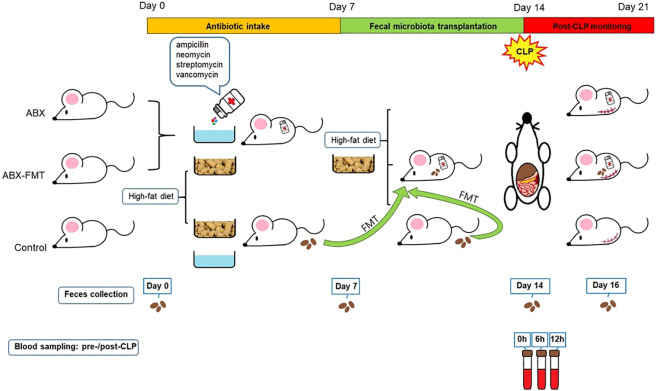
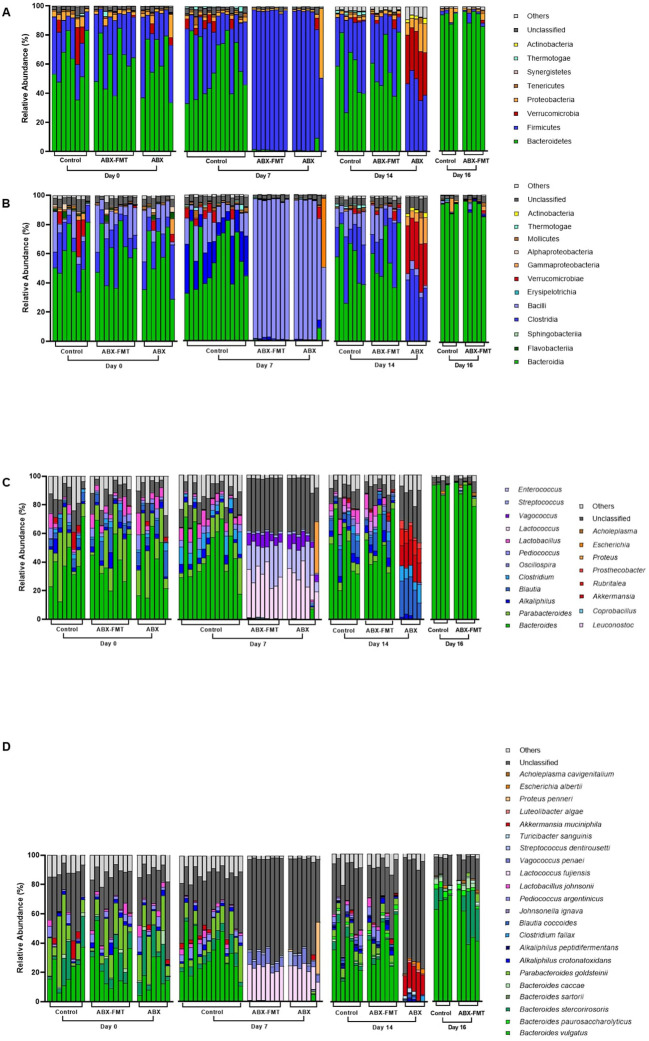
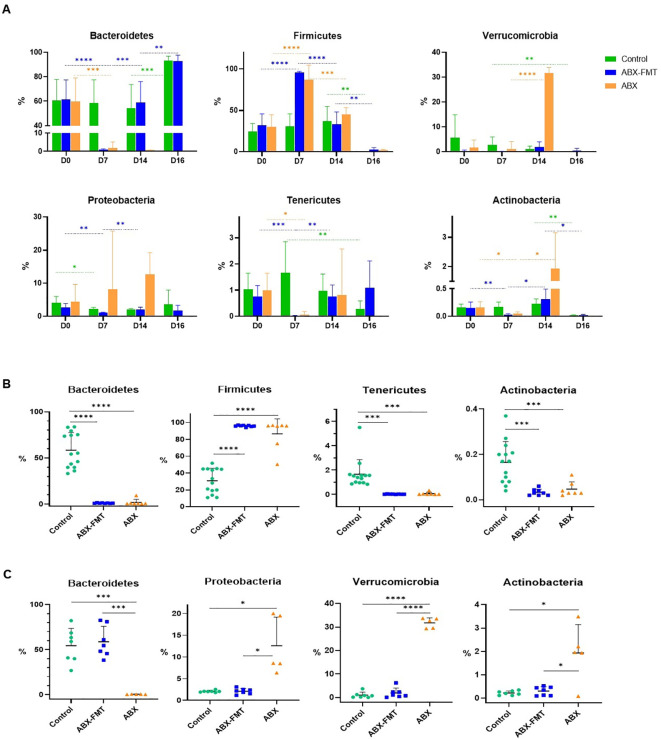
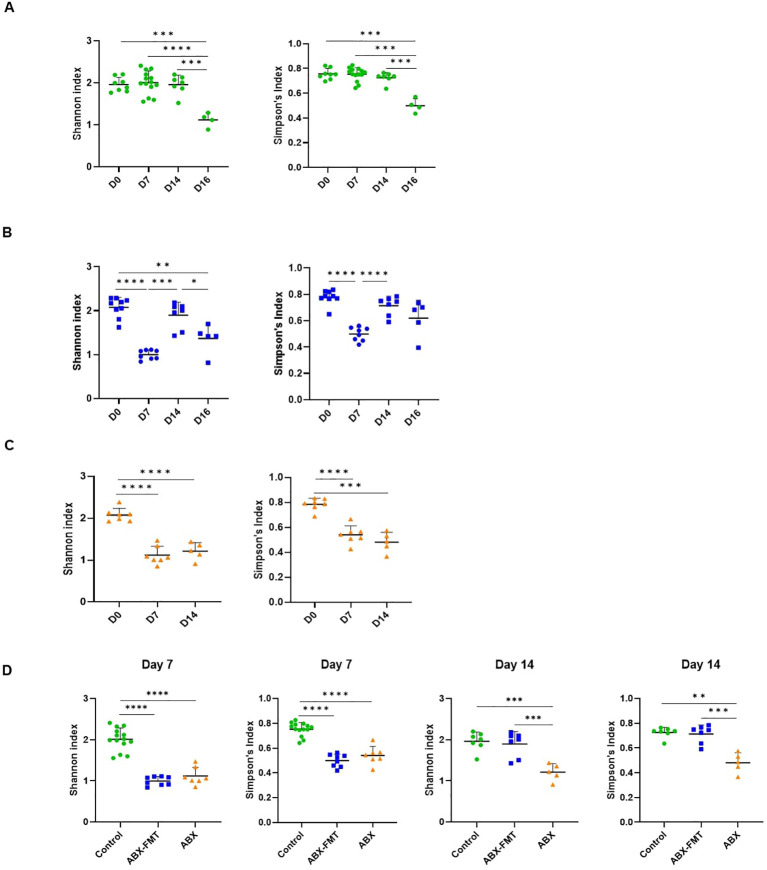
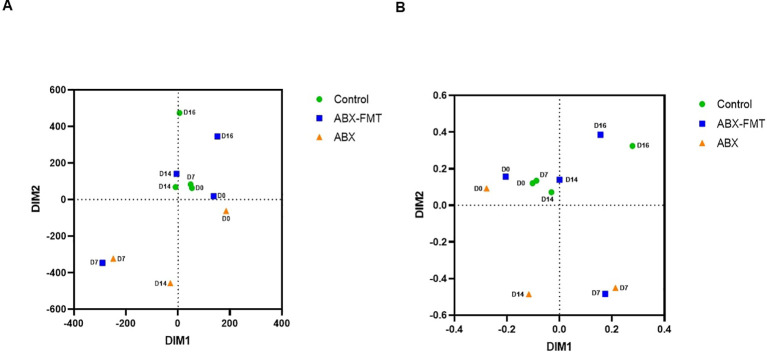
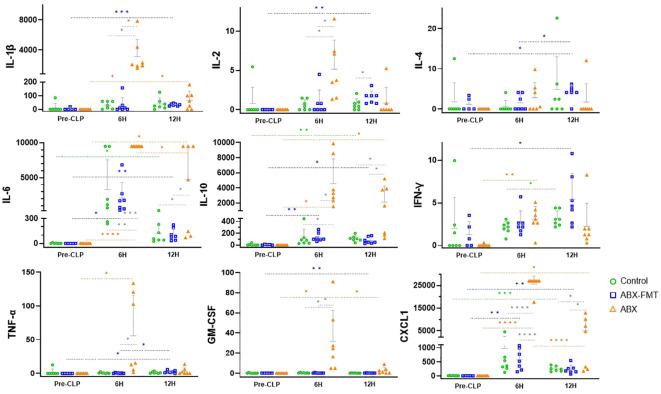
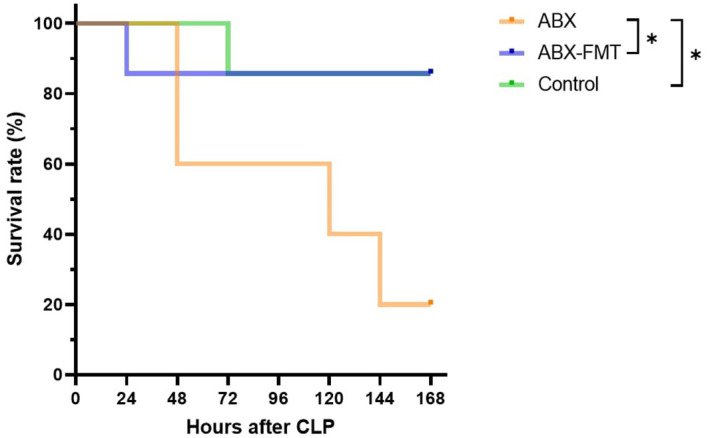
Introduction: Restoring a balanced, healthy gut microbiota through fecal microbiota transplantation (FMT) has the potential to be a treatment option for sepsis, despite the current lack of evidence. This study aimed to investigate the effect of FMT on sepsis in relation to the gut microbiota through a sepsis model in juvenile mice. Methods: Three-week-old male mice were divided into three groups: the antibiotic treatment (ABX), ABX-FMT, and control groups. The ABX and ABX-FMT groups received antibiotics for seven days. FMT was performed through oral gavage in the ABX-FMT group over the subsequent seven days. On day 14, all mice underwent cecal ligation and puncture (CLP) to induce abdominal sepsis. Blood cytokine levels and the composition of fecal microbiota were analyzed, and survival was monitored for seven days post-CLP. Results: Initially, the fecal microbiota was predominantly composed of the phyla Bacteroidetes and Firmicutes. After antibiotic intake, an extreme predominance of the class Bacilli emerged. FMT successfully restored antibiotic-induced fecal dysbiosis. After CLP, the phylum Bacteroidetes became extremely dominant in the ABX-FMT and control groups. Alpha diversity of the microbiota decreased after antibiotic intake, was restored after FMT, and decreased again following CLP. In the ABX group, the concentrations of interleukin-1β (IL-1β), IL-2, IL-6, IL-10, granulocyte macrophage colony-stimulating factor, tumor necrosis factor-α, and C-X-C motif chemokine ligand 1 increased more rapidly and to a higher degree compared to other groups. The survival rate in the ABX group was significantly lower (20.0%) compared to other groups (85.7%). Conclusion: FMT-induced microbiota restoration demonstrated a protective effect against sepsis. This study uniquely validates the effectiveness of FMT in a juvenile mouse sepsis model, offering potential implications for clinical research in critically ill children.
Overview
The claims and statistics of this paper haven’t been checked yet.
Free: it reads the open-access text and checks the first 5 claims that cite a source we can check. Create a free account to check every claim.
Integrity signals
Registry
Cites
Statistics
Figures
Verification
Claims the paper makes
The claims and statistics of this paper haven’t been checked yet.
Free: it reads the open-access text and checks the first 5 claims that cite a source we can check. Create a free account to check every claim.
Claims other papers make about this one
Each is checked against this paper’s own text: does it say what the citing paper says it does?
The cited source doesn’t support the claim as written.
In the citing paper
“For sepsis itself, only preclinical/animal studies exist (Han et al., 2024; Qian et al., 2025).”
From Progress on the correlation between sepsis and gut microbiota: a narrative review (2026) · cites this paper as Han et al., 2024
Checked by a reasoning model — may be wrong.
Experimental — accuracy not yet measuredThe source backs part of the claim, not all of it — or backs it for a different population, condition or comparison.
In the citing paper
“Potential benefit: Restores microbial diversity and SCFA production in animal sepsis models.”
From Progress on the correlation between sepsis and gut microbiota: a narrative review (2026) · cites this paper as Han et al., 2024
Experimental — accuracy not yet measuredThe source backs part of the claim, not all of it — or backs it for a different population, condition or comparison.
In the citing paper
“Challenges include high inter-individual variability, lack of standardized timing/strain/dosing, no consensus on an “ideal microbiota,” and potential risks – especially in immunocompromised patients (Han et al., 2024; Shang et al., 2024).”
From Progress on the correlation between sepsis and gut microbiota: a narrative review (2026) · cites this paper as Han et al., 2024
Experimental — accuracy not yet measured
Self-check
Percentages, sums and reported differences re-computed from the paper’s own numbers.
The self-check needs the paper’s full text.
Citations
Cites
Statistical Power Analysis for the Behavioral Sciences
Muller, K. (1989) · Technometrics · doi:10.1080/00401706.1989.10488618 · Cited by 99,167
The third international consensus definitions for sepsis and septic shock (Sepsis-3).
Singer, M., Deutschman, C. S., Seymour, C. W., Shankar-Hari, M., Annane, D., Bauer, M., Bellomo, R., Bernard, G. R., Chiche, J.-D., Coopersmith, C. M., et al. (2016) · JAMA · doi:10.1001/jama.2016.0287 · Cited by 28,250
Structure, function and diversity of the healthy human microbiome
The Human Microbiome Project Consortium (2012) · Nature · doi:10.1038/nature11234 · Cited by 11,726
A human gut microbial gene catalogue established by metagenomic sequencing
MetaHIT Consortium, Qin, J., Li, R., Raes, J., Arumugam, M., Burgdorf, K. S., Manichanh, C., Nielsen, T., Pons, N., Levenez, F., et al. (2010) · Nature · doi:10.1038/nature08821 · Cited by 11,624 · cited 1×
“Bacteroides vulgatus , the dominant species, is prevalent in human gut microbiota and is generally bene fi cial for colon health (48).”
BackgroundObesity alters gut microbial ecology
Ley, R. E., Bäckhed, F., Turnbaugh, P., Lozupone, C. A., Knight, R. D., & Gordon, J. I. (2005) · Proceedings of the National Academy of Sciences · doi:10.1073/pnas.0504978102 · Cited by 6,176
Severe Sepsis and Septic Shock
Angus, D. C., & van der Poll, T. (2013) · New England Journal of Medicine · doi:10.1056/nejmra1208623 · Cited by 3,961 · cited 1×
“Host immune dysregulation in response to invasive infection is a known mechanism of sepsis (11).”
BackgroundDuodenal Infusion of Donor Feces for Recurrent Clostridium difficile
van Nood, E., Vrieze, A., Nieuwdorp, M., Fuentes, S., Zoetendal, E. G., de Vos, W. M., Visser, C. E., Kuijper, E. J., Bartelsman, J. F. W. M., Tijssen, J. G. P., et al. (2013) · New England Journal of Medicine · doi:10.1056/nejmoa1205037 · Cited by 3,708 · cited 1×
“…prebiotics or probiotics have been suggested as treatments for maintaining or restoring a healthy gut microbiota for a substantial time (17, 18), fecal microbiota transplantation (FMT) appears to offer a more direct acquisition of composition and diversity resembling a healthy gut microbiota (19).”
BackgroundFleischmann, C., Scherag, A., Adhikari, N. K. J., Hartog, C. S., Tsaganos, T., Schlattmann, P., Angus, D. C., & Reinhart, K. (2016) · American Journal of Respiratory and Critical Care Medicine · doi:10.1164/rccm.201504-0781oc · Cited by 3,548 · cited 1×
“Despite imposing a signi fi cant economic burden, sepsis maintains a high fatality rate, causing fi ve million deaths annually worldwide (8, 9).”
BackgroundThe Role of Short-Chain Fatty Acids From Gut Microbiota in Gut-Brain Communication
Silva, Y. P., Bernardi, A., & Frozza, R. L. (2020) · Frontiers in Endocrinology · doi:10.3389/fendo.2020.00025 · Cited by 3,043 · cited 1×
“This destruction results in the loss of obligate anaerobes and a reduction in SCFAs, creating a conducive environment for potential pathogens (58, 59).”
BackgroundSurviving Sepsis Campaign: International Guidelines for Management of Sepsis and Septic Shock 2021.
Evans, L., Rhodes, A., Alhazzani, W., Antonelli, M., Coopersmith, C. M., French, C., Machado, F. R., Mcintyre, L., Ostermann, M., Prescott, H. C., et al. (2021) · Critical Care Medicine · doi:10.1097/ccm.0000000000005337 · Cited by 2,935
The immunopathology of sepsis and potential therapeutic targets
van der Poll, T., van de Veerdonk, F. L., Scicluna, B. P., & Netea, M. G. (2017) · Nature Reviews Immunology · doi:10.1038/nri.2017.36 · Cited by 1,957 · cited 1×
“Although non-clinical studies in immunology have proposed potential treatments for sepsis (16), recent large-scale clinical studies have found many of these approaches broadly ineffective (15).”
BackgroundMen and mice: Relating their ages
Dutta, S., & Sengupta, P. (2016) · Life Sciences · doi:10.1016/j.lfs.2015.10.025 · Cited by 1,710 · cited 1×
“Firstly, some mice may have reached puberty by the conclusion of the study, which could potentially affect the results, although male mice are generally regarded as juveniles until approximately 6 – 8 weeks of age (72).”
BackgroundProteobacteria: A Common Factor in Human Diseases
Rizzatti, G., Lopetuso, L. R., Gibiino, G., Binda, C., & Gasbarrini, A. (2017) · BioMed Research International · doi:10.1155/2017/9351507 · Cited by 1,251 · cited 8×
“Conversely, the relative abundance of p: Verrucomicrobia, p:Proteobacteria p:Actinobacteria, c:Clostridia, g:Rubritalea, g:Prosthecobacter, Akkermansia muciniphila , and Escherichia albertii was higher in the ABX group compared to both the ABX-FMT and control groups on day 14 (Figure 3C and Supplementary Table S5).”
BackgroundInfluentialSepsis: pathophysiology and clinical management
Gotts, J. E., & Matthay, M. A. (2016) · BMJ · doi:10.1136/bmj.i1585 · Cited by 1,243
European consensus conference on faecal microbiota transplantation in clinical practice
Cammarota, G., Ianiro, G., Tilg, H., Rajilić-Stojanović, M., Kump, P., Satokari, R., Sokol, H., Arkkila, P., Pintus, C., Hart, A., et al. (2017) · Gut · doi:10.1136/gutjnl-2016-313017 · Cited by 1,207
Recognition of peptidoglycan from the microbiota by Nod1 enhances systemic innate immunity
Clarke, T. B., Davis, K. M., Lysenko, E. S., Zhou, A. Y., Yu, Y., & Weiser, J. N. (2010) · Nature Medicine · doi:10.1038/nm.2087 · Cited by 1,154 · cited 1×
“MAMPs, including peptidoglycan, can be released into the systemic circulation and prime the innate immune cells to respond ef fi ciently to pathogens (53).”
BackgroundGlobal Epidemiology of Pediatric Severe Sepsis: The Sepsis Prevalence, Outcomes, and Therapies Study
Weiss, S. L., Fitzgerald, J. C., Pappachan, J., Wheeler, D., Jaramillo-Bustamante, J. C., Salloo, A., Singhi, S. C., Erickson, S., Roy, J. A., Bush, J. L., et al. (2015) · American Journal of Respiratory and Critical Care Medicine · doi:10.1164/rccm.201412-2323oc · Cited by 1,043
The Gut Microbiota Plays a Protective Role in the Host Defence Against Pneumococcal Pneumonia
Schuijt, T. J., Lankelma, J. M., Scicluna, B. P., de Sousa e Melo, F., Roelofs, J. J. T. H., de Boer, J. D., Hoogendijk, A. J., de Beer, R., de Vos, A., Belzer, C., et al. (2016) · Gut · doi:10.1136/gutjnl-2015-309728 · Cited by 832 · cited 1×
“In a study inoculating Streptococcus pneumoniae into mouse nasal cavities, the post-antibiotic FMT group, exhibited normalized pulmonary bacterial counts, tumor necrosis factor-a (TNF-a ), and interleukin-10 (IL-10) levels (20).”
BackgroundKao, D., Roach, B., Silva, M., Beck, P., Rioux, K., Kaplan, G. G., Chang, H.-J., Coward, S., Goodman, K. J., Xu, H., et al. (2017) · JAMA · doi:10.1001/jama.2017.17077 · Cited by 615
Gut Microbiota and Colonization Resistance against Bacterial Enteric Infection
Ducarmon, Q. R., Zwittink, R. D., Hornung, B. V. H., van Schaik, W., Young, V. B., & Kuijper, E. J. (2019) · Microbiology and Molecular Biology Reviews · doi:10.1128/mmbr.00007-19 · Cited by 566
Role of cytokines as a double-edged sword in sepsis.
Chaudhry, H. R., Zhou, J., Yin, Z., Ali, M. M., McGuire, F. R., Nagarkatti, P. S., & Nagarkatti, M. (2013) · PubMed · Cited by 526
Cammarota, G., Ianiro, G., Kelly, C. R., Mullish, B. H., Allegretti, J. R., Kassam, Z., Putignani, L., Fischer, M., Keller, J. J., Costello, S. P., et al. (2019) · Gut · doi:10.1136/gutjnl-2019-319548 · Cited by 506
Bacterial Community Mapping of the Mouse Gastrointestinal Tract
Gu, S., Chen, D., Zhang, J.-N., Lv, X., Wang, K., Duan, L.-P., Nie, Y., & Wu, X.-L. (2013) · PLoS ONE · doi:10.1371/journal.pone.0074957 · Cited by 443 · cited 1×
“While previous studies focused on adult mice and the composition of fecal microbiota in healthy mice varies across studies, Bacteroidetes and Firmicutes are consistently dominant phyla, similar to humans, aligning with the composition of the control group ’ s fecal microbiota in this study (44, 45).”
BackgroundRoles of intestinal Parabacteroides in human health and diseases
Cui, Y., Zhang, L., Wang, X., Yi, Y., Shan, Y., Liu, B., Zhou, Y., & Lü, X. (2022) · FEMS Microbiology Letters · doi:10.1093/femsle/fnac072 · Cited by 421 · cited 1×
“Recognized as a bene fi cial commensal bacterium for humans, it demonstrates effects against in fl ammatory conditions, including chronic obstructive pulmonary disease (56, 57).”
BackgroundMattila, E., Uusitalo–Seppälä, R., Wuorela, M., Lehtola, L., Nurmi, H., Ristikankare, M., Moilanen, V., Salminen, K., Seppälä, M., Mattila, P. S., et al. (2012) · Gastroenterology · doi:10.1053/j.gastro.2011.11.037 · Cited by 371
Lai, H.-C., Lin, T.-L., Chen, T.-W., Kuo, Y.-L., Chang, C.-J., Wu, T.-R., Shu, C.-C., Tsai, Y.-H., Swift, S., & Lu, C.-C. (2022) · Gut · doi:10.1136/gutjnl-2020-322599 · Cited by 331 · cited 1×
“Recognized as a bene fi cial commensal bacterium for humans, it demonstrates effects against in fl ammatory conditions, including chronic obstructive pulmonary disease (56, 57).”
BackgroundBacteroides utilization for dietary polysaccharides and their beneficial effects on gut health
Cheng, J., Hu, J., Geng, F., & Nie, S. (2022) · Food Science and Human Wellness · doi:10.1016/j.fshw.2022.04.002 · Cited by 268
Zhou, Y., & Zhi, F. (2016) · BioMed Research International · doi:10.1155/2016/5828959 · Cited by 266 · cited 1×
“The microbiota primarily consists of Bacteroidetes and Bacteroides , known for their anti-in fl ammatory effects, especially on in fl ammatory bowel disease (46, 47).”
BackgroundPotential Role of Gut Microbiota in Induction and Regulation of Innate Immune Memory
Negi, S., Das, D. K., Pahari, S., Nadeem, S., & Agrewala, J. N. (2019) · Frontiers in Immunology · doi:10.3389/fimmu.2019.02441 · Cited by 237
Hospital-related cost of sepsis: A systematic review
Arefian, H., Heublein, S., Scherag, A., Brunkhorst, F. M., Younis, M. Z., Moerer, O., Fischer, D., & Hartmann, M. (2017) · Journal of Infection · doi:10.1016/j.jinf.2016.11.006 · Cited by 222
Cecal Ligation Puncture Procedure
Toscano, M. G., Ganea, D., & Gamero, A. M. (2011) · Journal of Visualized Experiments · doi:10.3791/2860 · Cited by 196 · cited 1×
“After the completion of FMT, on the 15th day of the experiment (day 14), CLP was performed on all mice according to general guidelines (26, 27).”
MethodTranslocation of gut flora and its role in sepsis
Vaishnavi, C. (2013) · Indian Journal of Medical Microbiology · doi:10.4103/0255-0857.118870 · Cited by 177 · cited 2×
“If the integrity of the intestinal mucosa is compromised, translocation of gut microbiota can occur, further contributing to disease development (3).”
BackgroundSepsis modeling in mice: ligation length is a major severity factor in cecal ligation and puncture
Ruiz, S., Bounes, F. V., Merlet, V., Conil, J., Buléon, M., Fourcade, O. A., Tack, I., & Minville, V. (2016) · Intensive Care Medicine Experimental · doi:10.1186/s40635-016-0096-z · Cited by 174 · cited 1×
“After the completion of FMT, on the 15th day of the experiment (day 14), CLP was performed on all mice according to general guidelines (26, 27).”
MethodRausch, P., Basic, M., Batra, A., Bischoff, S. C., Blaut, M., Clavel, T., Gläsner, J., Gopalakrishnan, S., Grassl, G. A., Günther, C., et al. (2016) · International Journal of Medical Microbiology · doi:10.1016/j.ijmm.2016.03.004 · Cited by 172
Therapeutic Potential of the Gut Microbiota in the Prevention and Treatment of Sepsis
Haak, B. W., Prescott, H. C., & Wiersinga, W. J. (2018) · Frontiers in Immunology · doi:10.3389/fimmu.2018.02042 · Cited by 159
Wang, C., Xiao, Y., Yu, L., Tian, F., Zhao, J., Zhang, H., Chen, W., & Zhai, Q. (2021) · Journal of Advanced Research · doi:10.1016/j.jare.2021.06.012 · Cited by 159
Ianiro, G., Masucci, L., Quaranta, G., Simonelli, C., Lopetuso, L. R., Sanguinetti, M., Gasbarrini, A., & Cammarota, G. (2018) · Alimentary Pharmacology & Therapeutics · doi:10.1111/apt.14816 · Cited by 152
Bacteroidetes Species Are Correlated with Disease Activity in Ulcerative Colitis
Nomura, K., Ishikawa, D., Okahara, K., Ito, S., Haga, K., Takahashi, M., Arakawa, A., Shibuya, T., Osada, T., Kuwahara-Arai, K., et al. (2021) · Journal of Clinical Medicine · doi:10.3390/jcm10081749 · Cited by 150 · cited 1×
“The microbiota primarily consists of Bacteroidetes and Bacteroides , known for their anti-in fl ammatory effects, especially on in fl ammatory bowel disease (46, 47).”
BackgroundWei, Y., Yang, J., Wang, J., Yang, Y., Huang, J., Gong, H., Cui, H., & Chen, D. (2016) · Critical Care · doi:10.1186/s13054-016-1491-2 · Cited by 147
Transplantation of human microbiota into conventional mice durably reshapes the gut microbiota
Wrzosek, L., Ciocan, D., Borentain, P., Spatz, M., Puchois, V., Hugot, C., Ferrere, G., Mayeur, C., Perlemuter, G., & Cassard, A.-M. (2018) · Scientific Reports · doi:10.1038/s41598-018-25300-3 · Cited by 142 · cited 1×
“Due to the dif fi culty of inserting a nasoduodenal tube in mice, the upper gastrointestinal approach used oral gavage, in fl uenced by gastric acid and enzymes (39, 40).”
MethodNovel tripeptide RKH derived from Akkermansia muciniphila protects against lethal sepsis
Xie, S., Li, J., Lyu, F., Xiong, Q., Gu, P., Chen, Y., Chen, M., Bao, J., Zhang, X., Wei, R., et al. (2023) · Gut · doi:10.1136/gutjnl-2023-329996 · Cited by 142 · cited 1×
“Akkermansia muciniphila , a mucin-degrading commensal offering anti-in fl ammatory bene fi ts (60, 61), exhibited higher abundance in the higher CLP-mortality group mice, suggesting its potential role in in fl ammation by compromising intestinal mucosal barriers by reducing mucus protein (62).”
BackgroundKim, S. M., DeFazio, J. R., Hyoju, S. K., Sangani, K., Keskey, R., Krezalek, M. A., Khodarev, N. N., Sangwan, N., Christley, S., Harris, K. G., et al. (2020) · Nature Communications · doi:10.1038/s41467-020-15545-w · Cited by 136 · cited 1×
“For lower gastrointestinal access, an enema method under mild anesthesia was employed (41, 42).”
MethodSelf-citationDisruption of the microbiota across multiple body sites in critically ill children
Rogers, M. B., Firek, B., Shi, M., Yeh, A., Brower–Sinning, R., Aveson, V. G., Kohl, B. L., Fabio, A., Carcillo, J. A., & Morowitz, M. J. (2016) · Microbiome · doi:10.1186/s40168-016-0211-0 · Cited by 136
Hintze, K. J., Cox, J. E., Rompato, G., Benninghoff, A. D., Ward, R. E., Broadbent, J., & Lefevre, M. (2014) · Gut Microbes · doi:10.4161/gmic.28403 · Cited by 135
Efficacy of Fecal Microbiota Transplantation for Clostridium difficile Infection in Children
Nicholson, M. R., Mitchell, P. D., Alexander, E., Ballal, S. A., Bartlett, M., Becker, P., Davidovics, Z. H., Docktor, M., Dole, M., Felix, G., et al. (2019) · Clinical Gastroenterology and Hepatology · doi:10.1016/j.cgh.2019.04.037 · Cited by 134
Davidovics, Z. H., Michail, S., Nicholson, M. R., Kociolek, L. K., Pai, N., Hansen, R., Schwerd, T., Maspons, A., Shamir, R., Szajewska, H., et al. (2019) · Journal of Pediatric Gastroenterology and Nutrition · doi:10.1097/mpg.0000000000002205 · Cited by 126
Blood interleukin 10 levels parallel the severity of septic shock
Friedman, G., Jankowski, S., Marchant, A., Goldman, M., Kahn, R. J., & Vincent, J. (1997) · Journal of Critical Care · doi:10.1016/s0883-9441(97)90030-7 · Cited by 120 · cited 1×
“Anti-in fl ammatory cytokines, IL-4 and IL-10, play crucial roles in maintaining the balance of the in fl ammatory response and preventing tissue damage and organ failure due to excessive in fl ammation during sepsis (70, 71).”
BackgroundLi, Q., Wang, C., Tang, C., He, Q., Zhao, X., Li, N., & Li, J. (2015) · Critical Care · doi:10.1186/s13054-015-0738-7 · Cited by 118
Lai, C. Y., Sung, J., Cheng, F., Tang, W., Wong, S. H., Chan, P. K. S., Kamm, M. A., Sung, J. J. Y., Kaplan, G., Chan, F. K. L., et al. (2019) · Alimentary Pharmacology & Therapeutics · doi:10.1111/apt.15116 · Cited by 118
Raftar, S. K. A., Ashrafian, F., Abdollahiyan, S., Yadegar, A., Moradi, H. R., Masoumi, M., Vaziri, F., Moshiri, A., Siadat, S. D., & Zali, M. R. (2022) · Scientific Reports · doi:10.1038/s41598-022-06414-1 · Cited by 109 · cited 1×
“Akkermansia muciniphila , a mucin-degrading commensal offering anti-in fl ammatory bene fi ts (60, 61), exhibited higher abundance in the higher CLP-mortality group mice, suggesting its potential role in in fl ammation by compromising intestinal mucosal barriers by reducing mucus protein (62).”
BackgroundSepsis and the Microbiome: A Vicious Cycle
Miller, W. D., Keskey, R., & Alverdy, J. C. (2021) · The Journal of Infectious Diseases · doi:10.1093/infdis/jiaa682 · Cited by 102 · cited 1×
“This destruction results in the loss of obligate anaerobes and a reduction in SCFAs, creating a conducive environment for potential pathogens (58, 59).”
BackgroundDi Lorenzo, F., Pither, M. D., Martufi, M., Scarinci, I., Guzmán-Caldentey, J., Łakomiec, E., Jachymek, W., Bruijns, S. C. M., Santamaría, S. M., Frick, J.-S., et al. (2020) · ACS Central Science · doi:10.1021/acscentsci.0c00791 · Cited by 101
Chen, L., Li, H., Li, J., Chen, Y., & Yang, Y. (2019) · International Journal of Molecular Medicine · doi:10.3892/ijmm.2019.4050 · Cited by 83
Weiss, S. L., Peters, M. J., Alhazzani, W. A., Agus, M. S. D., Flori, H. R., Inwald, D. P., Nadel, S., Schlapbach, L. J., Tasker, R. C., Argent, A. C., et al. (2020) · Pediatric Critical Care Medicine · doi:10.1097/pcc.0000000000002197 · Cited by 78
Videnska, P., Smerkova, K., Zwinsova, B., Popovici, V., Micenkova, L., Sedlar, K., & Budinska, E. (2019) · Scientific Reports · doi:10.1038/s41598-019-49520-3 · Cited by 72 · cited 11×
“The 16S metagenomic sequencing library was prepared following the Illumina 16S Metagenomic Sequencing Library Preparation protocol (Illumina, San Diego, CA, USA) (29).”
MethodInfluentialHuber-Lang, M. S., Barratt‐Due, A., Pischke, S. E., Sandanger, Ø., Nilsson, P. H., Nunn, M. A., Denk, S., Gaus, W., Espevik, T., & Mollnes, T. E. (2014) · The Journal of Immunology · doi:10.4049/jimmunol.1400341 · Cited by 66
Li, Q., Wang, C., Tang, C., He, Q., Zhao, X., Li, N., & Li, J. (2014) · American Journal of Gastroenterology · doi:10.1038/ajg.2014.299 · Cited by 61 · cited 1×
“However, aside from studies in patients with Clostridium dif fi cile colitis and a limited number of case reports, no large-scale clinical studies have been conducted to date on FMT in critically ill patients (21 – 24).”
BackgroundThe microbiome and nutrition in critical illness
Oami, T., Chihade, D. B., & Coopersmith, C. M. (2019) · Current Opinion in Critical Care · doi:10.1097/mcc.0000000000000582 · Cited by 56
Wurm, P., Spindelboeck, W., Krause, R., Plank, J., Fuchs, G., Bashir, M., Petritsch, W., Halwachs, B., Langner, C., Högenauer, C., et al. (2017) · Critical Care Medicine · doi:10.1097/ccm.0000000000002310 · Cited by 55
Evaluation of the Effects of Different Bacteroides vulgatus Strains against DSS-Induced Colitis
Li, S., Wang, C., Zhang, C., Luo, Y., Cheng, Q., Yu, L., & Sun, Z. (2021) · Journal of Immunology Research · doi:10.1155/2021/9117805 · Cited by 51 · cited 1×
“Studies have shown its role in reducing in fl ammation and intestinal injury, though its impact on human immunity may vary depending on the strain (49 – 51).”
BackgroundHyoju, S. K., Zaborin, A., Keskey, R., Sharma, A., Arnold, W., van den Berg, F., Kim, S. M., Gottel, N., Bethel, C., Charnot-Katsikas, A., et al. (2019) · mBio · doi:10.1128/mbio.00903-19 · Cited by 50
Self-citationFabri, A., Kandara, K., Coudereau, R., Gossez, M., Abraham, P., Monard, C., Cour, M., Rimmelé, T., Argaud, L., Monneret, G., et al. (2021) · Frontiers in Immunology · doi:10.3389/fimmu.2020.615009 · Cited by 42
Early intestinal microbiota changes in aged and adult mice with sepsis
Yuan, Y., Liu, S., Ding, X., Li, Y., Zhang, X., Song, H., Qi, X., Zhang, Z., Guo, K., & Sun, T. (2022) · Frontiers in Cellular and Infection Microbiology · doi:10.3389/fcimb.2022.1061444 · Cited by 38 · cited 1×
“Akkermansia muciniphila , a mucin-degrading commensal offering anti-in fl ammatory bene fi ts (60, 61), exhibited higher abundance in the higher CLP-mortality group mice, suggesting its potential role in in fl ammation by compromising intestinal mucosal barriers by reducing mucus protein (62).”
BackgroundChiotos, K., Blumenthal, J. A., Boguniewicz, J., Palazzi, D. L., Stalets, E. L., Rubens, J. H., Tamma, P. D., Cabler, S. S., Newland, J. G., Crandall, H., et al. (2022) · Clinical Infectious Diseases · doi:10.1093/cid/ciac698 · Cited by 37
Effect of fecal microbiota transplantation on experimental colitis in mice
Zhou, J., Zhou, Z., Ji, P., Ma, M., Guo, J., & Jiang, S. (2019) · Experimental and Therapeutic Medicine · doi:10.3892/etm.2019.7263 · Cited by 37
Patterns of Gram-Stained Fecal Flora as a Quick Diagnostic Marker in Patients with Severe SIRS
Shimizu, K., Ogura, H., Tomono, K., Tasaki, O., Asahara, T., Nomoto, K., Morotomi, M., Matsushima, A., Nakahori, Y., Yamano, S., et al. (2011) · Digestive Diseases and Sciences · doi:10.1007/s10620-010-1486-9 · Cited by 36
Bhatt, S., Egan, M. S., Critelli, B., Kouse, A. B., Kalman, D., & Upreti, C. (2018) · Infection and Immunity · doi:10.1128/iai.00254-18 · Cited by 35 · cited 1×
“Escherichia albertii , a recently discovered species that potentially contributes to infectious diarrhea worldwide (65), appears to be the most pathogenic among the dominant species in this study.”
BackgroundChen, Y., Zhang, F., Ye, X., Hu, J., Yang, X. Y., Yao, L., Zhao, B.-C., Deng, F., & Liu, K. (2022) · Frontiers in Cellular and Infection Microbiology · doi:10.3389/fcimb.2022.857035 · Cited by 31 · cited 1×
“Studies have shown its role in reducing in fl ammation and intestinal injury, though its impact on human immunity may vary depending on the strain (49 – 51).”
BackgroundYamamoto, D., Hernandes, R. T., Liberatore, A. M. A., Abe, C. M., de Souza, R. B., Romão, F. T., Sperandio, V., Koh, I. H. J., & Gomes, T. A. T. (2017) · PLoS ONE · doi:10.1371/journal.pone.0171385 · Cited by 28 · cited 2×
“These components can induce in fl ammation and immune activation, and, if the infection disseminates, may result in systemic effects (66, 67).”
BackgroundConsiderable variability in antibiotic use among US children’s hospitals in 2017–2018
Griffith, H. G., Dantuluri, K. L., Thurm, C. W., Williams, D. J., Banerjee, R., Howard, L. M., & Grijalva, C. G. (2020) · Infection Control and Hospital Epidemiology · doi:10.1017/ice.2019.373 · Cited by 21 · cited 1×
“Among pediatric intensive care unit (PICU) patients, 58 to 74% receive antibiotics (4 – 6).”
BackgroundFrom Gut to Blood: Spatial and Temporal Pathobiome Dynamics during Acute Abdominal Murine Sepsis
Hartwig, C., Drechsler, S., Vainshtein, Y., Maneth, M., Schmitt, T., Ehling‐Schulz, M., Osuchowski, M. F., & Sohn, K. (2023) · Microorganisms · doi:10.3390/microorganisms11030627 · Cited by 12 · cited 1×
“A study on a sepsis model of mice revealed that gut and peritoneal pathogens act as reservoirs for bloodstream infection, with fecal microbiota changes 24 to 48 hours post-CLP re fl ecting those in peritoneal lavage fl uid and blood (68).”
BackgroundLeszczyńska, K., Święcicka, I., Daniluk, T., Lebensztejn, D. M., Chmielewska-Deptuła, S. J., Leszczyńska, D., Gawor, J., & Kliber, M. (2023) · Genes · doi:10.3390/genes14071384 · Cited by 11
Impact and quality of antimicrobial use in a referral pediatric intensive care unit
Nebot, S. S., López-Ramos, M. G., Arnaiz, E. V., Jordán, I., Fortuny, C., & Noguera‐Julián, A. (2022) · Enfermedades infecciosas y microbiologia clinica (English ed ) · doi:10.1016/j.eimce.2021.05.013 · Cited by 4
Research works printed but not linked: 1
- QIAGEN. Qiaamp® DNA stool handbook for DNA purification from stool samples. Version june 2012. (2012). (Germany: QIAGEN).
Cited by
Intestinal Microbiota Dysbiosis Role and Bacterial Translocation as a Factor for Septic Risk
Charitos, I. A., Scacco, S., Cotoia, A., Castellaneta, F., Castellana, G., Pasqualotto, F., Venneri, M. G., Ferrulli, A., Aliani, M., Santacroce, L., et al. (2025) · International Journal of Molecular Sciences · doi:10.3390/ijms26052028 · Cited by 47
“Since the IM becomes dysbiosis during sepsis, this can lead to worsening its course and contribute to MODS [203,204].”
Current state of microbiota clinical applications in neonatal and pediatric bacterial infections
Le, T. T., Hoang, T. N., Huy, D., Nguyen, X., Huynh, C., Dao, H. V., Dat, V. Q., Zengler, K., Gilbert, J. A., Avedissian, S. N., et al. (2025) · Gut Microbes · doi:10.1080/19490976.2025.2529400 · Cited by 12
Guerra, R. R., Fernandes, P. D. S., Lovison, O. V. A., Forni, G. D. R., de Oliveira, G. S., Viana, L. C., Pereira, D. C., Matos, W. L., Moretti, M. M. S., Volpato, F. C. Z., et al. (2025) · Frontiers in Cellular and Infection Microbiology · doi:10.3389/fcimb.2025.1622866 · Cited by 8
Narrative review on microbiota and sepsis: the host’s betrayal?
Guarino, M., Ciaula, A. D., Portincasa, P., & GIORGIO, R. D. (2025) · Internal and Emergency Medicine · doi:10.1007/s11739-025-04215-8 · Cited by 7
Advances and challenges in microbiome transplantation
Sen, P., Kaulmann, D., Youngster, I., Abdeen, S. K., & Elinav, E. (2026) · Cell Host & Microbe · doi:10.1016/j.chom.2026.06.006 · Cited by 5
Metadata
- Authors
- Han, Y. J., Kim, S., Shin, H., Kim, H. W., & Park, J. D.
- Affiliations
- Yonsei University (KR)
- Seoul National University (KR)
- Corresponding author
- Park, June Dong
- Venue
- Frontiers in Immunology
- Publisher
- Frontiers Media SA
- Published
- 2024-10-22
- Volume
- 15
- Pages
- 1451356-1451356
- ISSN
- 1664-3224 (ISSN-L)
- PMC
- PMC11534669
- OpenAlex
- W4403659913
- Semantic Scholar
- aa9103c2fa354ce1d605be16342839ce3fceccdd
- Cited by
- 17
- References
- 73
- Citations by year
- 2026: 11 · 2025: 6
- FWCI
- 2.31
- Type
- journal article
- Language
- en
- Open access
- gold
- doi.org
- Licence
- Locations
- Frontiers in Immunology (publishedVersion, cc-by)
- PubMed Central (publishedVersion, cc-by)
- PubMed (publishedVersion)
- DOAJ (DOAJ: Directory of Open Access Journals) (submittedVersion, cc-by-sa)
- Topics
- Life Sciences › Biochemistry, Genetics and Molecular Biology › Molecular Biology › Gut microbiota and health
- Health Sciences › Medicine › Critical Care and Intensive Care Medicine › Sepsis Diagnosis and Treatment
- Health Sciences › Medicine › Infectious Diseases › Clostridium difficile and Clostridium perfringens research
- Keywords
- fecal microbiota transplantation, sepsis, gut microbiota, antibiotic-induced dysbiosis, cecal ligation and puncture, juvenile mice, cytokines, Bacteroidetes, Firmicutes, survival, critically ill children
- MeSH terms
- Gastrointestinal Microbiome, Fecal Microbiota Transplantation, Animals, Anti-Bacterial Agents, Disease Models, Animal, Feces, Male, Mice, Inbred C57BL, Cytokines, Sepsis, Mice, Dysbiosis
About these checks
Registry, retraction, Cites and statistics results are computed, not judged, with one exception: a printed reference that no index lists is read once by a model before it counts as a citation error. Claims are extracted by a model and kept only when their quote appears verbatim in the text; each cited source is then checked, with a model’s help, for whether it says what the claim relies on. Those verdicts can be wrong — read the claim’s quote and the cited source before relying on one.
Statistics and arithmetic are recomputed, not judged.
Confidence bands are shown only for fields calibrated on our annotated test set. None is calibrated yet, so no band is shown.
What counts as a claim ›How we measure confidence ›How we check this ›
Are you an author, or do you see a problem with this page? Request a review
Data sources
Bibliographic data: Semantic Scholar, OpenAlex, Crossref.
Contains information from the Semantic Scholar Academic Graph Datasets, made available under the ODC Attribution License (ODC-BY 1.0).
Semantic Scholar’s data is described in: Kinney, R., et al. (2023). The Semantic Scholar Open Data Platform. arXiv:2301.10140.
