

Myeloid-derived suppressor cells and regulatory T cells in colorectal cancer: a synergistic immunosuppressive axis and emerging therapeutic opportunities
Open accessThe DOI matches its Crossref record; 177 of the 177 references it cites were found in a registry or an index.
Abstract
Microsatellite-stable (MSS)/proficient mismatch-repair (pMMR) colorectal cancer (CRC) accounts for more than 85% of cases but responds poorly to single-agent immune checkpoint inhibitors (ICIs), with objective response rates remaining below 5%. A principal barrier to effective immunotherapy in these tumors is a durable immunosuppressive axis formed by myeloid-derived suppressor cells (MDSCs) and regulatory T cells (Tregs) within the tumor microenvironment. This axis impedes antitumor immunity through multilayered mechanisms including bidirectional chemotactic recruitment, reciprocal cytokine signaling, metabolic suppression and exosome-mediated communication. CRC is uniquely influenced by the gut microbiota: Fusobacterium nucleatum promotes MDSC/Treg enrichment via TLR4–NF-κB and Fap2–TIGIT pathways; Peptostreptococcus anaerobius acts through integrin–PI3K–NF-κB signaling; and microbial metabolites such as 4-HPA activate JAK2/STAT3–CXCL3 signaling to expand MDSC populations. Concurrently, a hypoxia–lactate–HIF-1α–CD73/A2AR circuit further stabilizes suppressive phenotypes, forming a “microbiota–metabolism–hypoxia–MDSC–Treg” cascade. Emerging clinical and translational data indicate that disrupting this axis can sensitize MSS-CRC to ICIs: for example, Zanzalintinib combined with Atezolizumab reported survival benefit in the STELLAR-303 trial, and dual blockade of novel checkpoints with PD-(L)1 has been associated with enhanced immune activation in solid tumors. Targeting the MDSC–Treg axis therefore represents a promising strategy to overcome immunotherapy resistance in MSS/pMMR CRC.
Overview
The claims and statistics of this paper haven’t been checked yet.
Free: it reads the open-access text and checks the first 5 claims that cite a source we can check. Create a free account to check every claim.
Integrity signals
Registry
Cites
Statistics
Figures
Verification
Claims the paper makes
The claims and statistics of this paper haven’t been checked yet.
Free: it reads the open-access text and checks the first 5 claims that cite a source we can check. Create a free account to check every claim.
Self-check
Percentages, sums and reported differences re-computed from the paper’s own numbers.
The self-check needs the paper’s full text.
Citations
Cites
Bray, F., Laversanne, M., Sung, H., Ferlay, J., Siegel, R. L., Soerjomataram, I., & Jemal, A. (2024) · CA: a cancer journal for clinicians · doi:10.3322/caac.21834 · Cited by 27,064
Regulatory T cells: mechanisms of differentiation and function
Josefowicz, S. Z., Lu, L.-F., & Rudensky, A. Y. (2012) · Annual Review of Immunology · doi:10.1146/annurev.immunol.25.022106.141623 · Cited by 2,866
Rubinstein, M. R., Wang, X., Liu, W., Hao, Y., Cai, G., & Han, Y. W. (2013) · Cell Host & Microbe · doi:10.1016/j.chom.2013.07.012 · Cited by 2,476 · cited 1×
“Its outer-membrane protein Fap2 engages TIGIT or Gal-GalNAc to suppress NK and T-cell cytotoxicity (105), while FadA activates Wnt/ b -catenin signaling in tumor cells, promoting in fl ammatory and immunosuppressive mediators (106).”
Miyara, M., Yoshioka, Y., Kitoh, A., Shima, T., Wing, K., Niwa, A., Parizot, C., Taflin, C., Heike, T., Valeyre, D., et al. (2009) · Immunity · doi:10.1016/j.immuni.2009.03.019 · Cited by 2,291
Noman, M. Z., Desantis, G., Janji, B., Hasmim, M., Karray, S., Dessen, P., Bronte, V., & Chouaib, S. (2014) · Journal of Experimental Medicine · doi:10.1084/jem.20131916 · Cited by 2,166
Overman, M. J., Lonardi, S., Wong, K. Y. M., Lenz, H.-J., Gelsomino, F., Aglietta, M., Morse, M. A., Van Cutsem, E., McDermott, R., Hill, A., et al. (2018) · Journal of Clinical Oncology · doi:10.1200/jco.2017.76.9901 · Cited by 2,079
Myeloid-derived suppressor cells in the era of increasing myeloid cell diversity
Veglia, F., Sanseviero, E., & Gabrilovich, D. I. (2021) · Nature Reviews Immunology · doi:10.1038/s41577-020-00490-y · Cited by 1,940
TGF-β-induced Foxp3 inhibits TH17 cell differentiation by antagonizing RORγt function
Zhou, L., Lopes, J. E., Chong, M. M. W., Ivanov, I. I., Min, R., Victora, G. D., Shen, Y., Du, J., Rubtsov, Y. P., Rudensky, A. Y., et al. (2008) · Nature · doi:10.1038/nature06878 · Cited by 1,863 · cited 1×
“Such transdifferentiation occurs in TGF-b -rich microenvironments, where Th17 cells — originally polarized by IL-6 and IL-23 — downregulate ROR g t and induce FOXP3 expression (44).”
Huang, B., Pan, P.-Y., Li, Q., Sato, A. I., Levy, D. E., Bromberg, J., Divino, C. M., & Chen, S.-H. (2006) · Cancer Research · doi:10.1158/0008-5472.can-05-1299 · Cited by 1,435
Microbiome-derived inosine modulates response to checkpoint inhibitor immunotherapy
Mager, L. F., Burkhard, R., Pett, N., Cooke, N. C. A., Brown, K., Ramay, H., Paik, S., Stagg, J., Groves, R. A., Gallo, M., et al. (2020) · Science · doi:10.1126/science.abc3421 · Cited by 1,407 · cited 2×
“Similarly, inosine, a purine-derived metabolite produced by certain bene fi cial commensal bacteria such as Bi fi dobacterium pseudolongum, exerts context-dependent immunomodulatory effects that can enhance antitumor immunity (121).”
Zhou, X., Bailey-Bucktrout, S. L., Jeker, L. T., Penaranda, C., Martínez-Llordella, M., Ashby, M., Nakayama, M., Rosenthal, W., & Bluestone, J. A. (2009) · Nature Immunology · doi:10.1038/ni.1774 · Cited by 1,370
Zhu, Y., Knolhoff, B. L., Meyer, M. A., Nywening, T. M., West, B. L., Luo, J., Wang-Gillam, A., Goedegebuure, S. P., Linehan, D. C., & DeNardo, D. G. (2014) · Cancer Research · doi:10.1158/0008-5472.can-13-3723 · Cited by 1,324
Park, J., Kim, M., Kang, S. G., Jannasch, A. H., Cooper, B., Patterson, J., & Kim, C. H. (2015) · Mucosal Immunology · doi:10.1038/mi.2014.44 · Cited by 1,307
Corzo, C. A., Condamine, T., Lu, L., Cotter, M. J., Youn, J.-I., Cheng, P., Cho, H.-I., Celis, E., Quiceno, D. G., Padhya, T., et al. (2010) · Journal of Experimental Medicine · doi:10.1084/jem.20100587 · Cited by 1,173
Tosolini, M., Kirilovsky, A., Mlecnik, B., Fredriksen, T., Mauger, S., Bindea, G., Berger, A., Bruneval, P., Fridman, W.-H., Pagès, F., et al. (2011) · Cancer Research · doi:10.1158/0008-5472.can-10-2907 · Cited by 1,146
Regulatory T Cells and Human Disease
Sakaguchi, S., Mikami, N., Wing, J. B., Tanaka, A., Ichiyama, K., & Ohkura, N. (2020) · Annual Review of Immunology · doi:10.1146/annurev-immunol-042718-041717 · Cited by 1,120
TGF-β and immune cells: an important regulatory axis in the tumor microenvironment and progression
Yang, L., Pang, Y., & Moses, H. L. (2010) · Trends in Immunology · doi:10.1016/j.it.2010.04.002 · Cited by 1,023
Self-citationColony-stimulating factor 1 receptor (CSF1R) inhibitors in cancer therapy
Cannarile, M. A., Weisser, M., Jacob, W., Jegg, A.-M., Ries, C. H., & Rüttinger, D. (2017) · Journal for ImmunoTherapy of Cancer · doi:10.1186/s40425-017-0257-y · Cited by 1,020
Myeloid-derived suppressor cells as immunosuppressive regulators and therapeutic targets in cancer
Li, K., Shi, H., Zhang, B., Ou, X., Ma, Q., Chen, Y., Shu, P., Li, D., & Wang, Y. (2021) · Signal Transduction and Targeted Therapy · doi:10.1038/s41392-021-00670-9 · Cited by 988 · cited 1×
“Engagement of PD-1 by PD-L1 on MDSCs further dampens T-cell activation and promotes tolerance (28).”
Li, C., Jiang, P., Wei, S., Xu, X., & Wang, J. (2020) · Molecular Cancer · doi:10.1186/s12943-020-01234-1 · Cited by 921
Lindau, D., Gielen, P., Kroesen, M., Wesseling, P., & Adema, G. J. (2013) · Immunology · doi:10.1111/imm.12036 · Cited by 815
Sharma, M. D., Baban, B., Chandler, P., Hou, D.-Y., Singh, N., Yagita, H., Azuma, M., Blazar, B. R., Mellor, A. L., & Munn, D. H. (2007) · Journal of Clinical Investigation · doi:10.1172/jci31911 · Cited by 792 · cited 1×
“CTLA-4 on Tregs also increases IDO expression in antigen-presenting cells, which keeps this metabolic loop active (63).”
Cell Adhesion Molecules and Their Roles and Regulation in the Immune and Tumor Microenvironment
Harjunpää, H., Llort Asens, M., Guenther, C., & Fagerholm, S. C. (2019) · Frontiers in Immunology · doi:10.3389/fimmu.2019.01078 · Cited by 764 · cited 1×
“…on Tregs competes with CD80/CD86, lowers co-stimulation, induces IDO in antigen-presenting cells, and reduces effector T-cell responses (56, 57). b 2 integrins on both MDSCs and Tregs help them stay in close contact and remain inside the tumor, which forms a “ closed ” immunosuppressive space (58).”
Lenz, H.-J., Van Cutsem, E., Luisa Limon, M., Wong, K. Y. M., Hendlisz, A., Aglietta, M., García-Alfonso, P., Neyns, B., Luppi, G., Cardin, D. B., et al. (2022) · Journal of Clinical Oncology · doi:10.1200/jco.21.01015 · Cited by 728
Serafini, P., Mgebroff, S., Noonan, K., & Borrello, I. (2008) · Cancer Research · doi:10.1158/0008-5472.can-07-6621 · Cited by 673
Yang, R., Sun, L., Li, C.-F., Wang, Y.-H., Yao, J., Li, H., Yan, M., Chang, W.-C., Hsu, J.-M., Cha, J.-H., et al. (2021) · Nature Communications · doi:10.1038/s41467-021-21099-2 · Cited by 632
Wu, P., Wu, D., Ni, C., Ye, J., Chen, W., Hu, G., Wang, Z., Wang, C., Zhang, Z., Xia, W., et al. (2014) · Immunity · doi:10.1016/j.immuni.2014.03.013 · Cited by 608
Synergistic effect of immune checkpoint blockade and anti-angiogenesis in cancer treatment
Yi, M., Jiao, D., Qin, S., Chu, Q., Wu, K., & Li, A. (2019) · Molecular Cancer · doi:10.1186/s12943-019-0974-6 · Cited by 608 · cited 1×
“These combinations likely function by reducing tumor angiogenesis and associated hypoxia, thereby attenuating HIF-1 a -driven immunosuppressive programs (see Sections 3.3 and 4.1), enhancing effector T-cell in fi ltration, and decreasing MDSC/Treg accumulation (139).”
InfluentialKey chemokines direct migration of immune cells in solid tumors
Kohli, K., Pillarisetty, V. G., & Kim, T. S. (2022) · Cancer Gene Therapy · doi:10.1038/s41417-021-00303-x · Cited by 583 · cited 1×
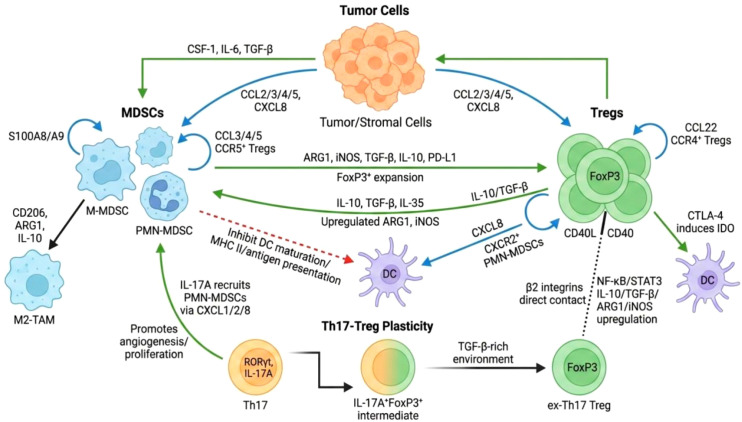
“They do not directly recruit MDSCs, but they secrete CCL22 to support CCR4 + Treg buildup and release IL-10 and TGF-b , which increase CXCL8-driven recruitment of CXCR2 + PMN-MDSCs (22, 23).”
Peptostreptococcus anaerobius promotes colorectal carcinogenesis and modulates tumour immunity
Long, X., Wong, C. C., Tong, L., Chu, E. S. H., Ho Szeto, C., Go, M. Y. Y., Coker, O. O., Chan, A. W. H., Chan, F. K. L., Sung, J. J. Y., et al. (2019) · Nature Microbiology · doi:10.1038/s41564-019-0541-3 · Cited by 557 · cited 1×
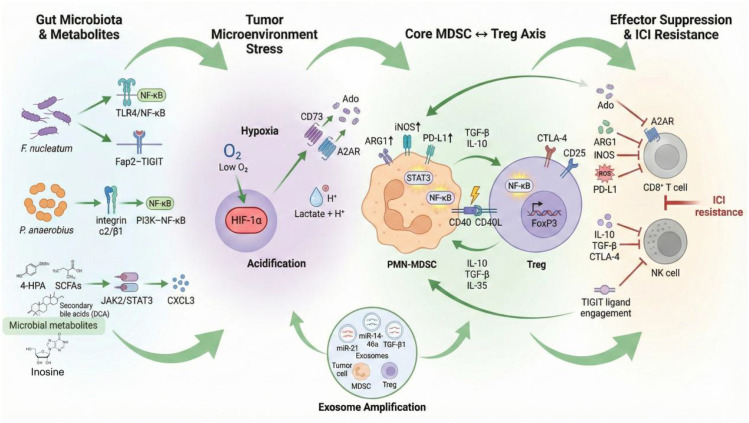
“Its surface protein PCWBR2 binds integrin a 2/ b 1 on tumor epithelium, activating PI3K – Akt – NF-k B signaling and promoting in fl ammatory and suppressive-cell in fi ltration (110).”
Systemic short chain fatty acids limit antitumor effect of CTLA-4 blockade in hosts with cancer
Coutzac, C., Jouniaux, J.-M., Paci, A., Schmidt, J., Mallardo, D., Seck, A., Asvatourian, V., Cassard, L., Saulnier, P., Lacroix, L., et al. (2020) · Nature Communications · doi:10.1038/s41467-020-16079-x · Cited by 513
Chen, D., Jin, D., Huang, S., Wu, J., Xu, M., Liu, T., Dong, W., Liu, X., Wang, S., Zhong, W., et al. (2020) · Cancer Letters · doi:10.1016/j.canlet.2019.11.019 · Cited by 495
Tekguc, M., Wing, J. B., Osaki, M., Long, J., & Sakaguchi, S. (2021) · Proceedings of the National Academy of Sciences · doi:10.1073/pnas.2023739118 · Cited by 490
Gu, J., Zhou, J., Chen, Q., Xu, X., Gao, J., Li, X., Shao, Q., Zhou, B., Zhou, H., Wei, S., et al. (2022) · Cell Reports · doi:10.1016/j.celrep.2022.110986 · Cited by 490
Pan, P.-Y., Ma, G., Weber, K. J., Ozao-Choy, J., Wang, G., Yin, B., Divino, C. M., & Chen, S.-H. (2010) · Cancer Research · doi:10.1158/0008-5472.can-09-1882 · Cited by 467 · cited 1×
“Blockade of CD40 or CD40L has been shown to disrupt this reciprocal reinforcement and restore antitumor T-cell activity in multiple tumor models (25, 35).”
Cho, B. C., Abreu, D. R., Hussein, M., Cobo, M., Patel, A. J., Secen, N., Lee, K. H., Massuti, B., Hiret, S., Yang, J. C. H., et al. (2022) · The Lancet Oncology · doi:10.1016/s1470-2045(22)00226-1 · Cited by 463
Lactic Acid and an Acidic Tumor Microenvironment suppress Anticancer Immunity
Wang, J. X., Choi, S. Y. C., Niu, X., Kang, N., Xue, H., Killam, J., & Wang, Y. (2020) · International Journal of Molecular Sciences · doi:10.3390/ijms21218363 · Cited by 460 · cited 2×
“Lactate helps MDSC expansion and ARG1/iNOS induction, and it also serves as a metabolic source that keeps Treg function stable (64, 94, 96).”
Dong, S., Liang, S., Cheng, Z., Zhang, X., Luo, L., Li, L., Zhang, W., Li, S., Xu, Q., Zhong, M., et al. (2022) · Journal of Experimental & Clinical Cancer Research · doi:10.1186/s13046-021-02229-6 · Cited by 458
Self-citationChiu, D. K.-C., Tse, A. P.-W., Xu, I. M.-J., Di Cui, J., Lai, R. K.-H., Li, L. L., Koh, H.-Y., Tsang, F. H.-C., Wei, L. L., Wong, C.-M., et al. (2017) · Nature Communications · doi:10.1038/s41467-017-00530-7 · Cited by 448
Tsoi, H., Chu, E. S. H., Zhang, X., Sheng, J., Nakatsu, G., Ng, S. C., Chan, A. W. H., Chan, F. K. L., Sung, J. J. Y., & Yu, J. (2017) · Gastroenterology · doi:10.1053/j.gastro.2017.01.009 · Cited by 438
Schlecker, E., Stojanovic, A., Eisen, C., Quack, C., Falk, C. S., Umansky, V., & Cerwenka, A. (2012) · The Journal of Immunology · doi:10.4049/jimmunol.1201018 · Cited by 438
Labadie, B. W., Bao, R., & Luke, J. J. (2019) · Clinical Cancer Research · doi:10.1158/1078-0432.ccr-18-2882 · Cited by 413
Chun, E., Lavoie, S., Michaud, M., Gallini, C. A., Kim, J., Soucy, G., Odze, R., Glickman, J. N., & Garrett, W. S. (2015) · Cell Reports · doi:10.1016/j.celrep.2015.06.024 · Cited by 402
CD39/CD73/A2AR pathway and cancer immunotherapy
Xia, C., Yin, S., To, K. K. W., & Fu, L. (2023) · Molecular Cancer · doi:10.1186/s12943-023-01733-x · Cited by 399 · cited 2×
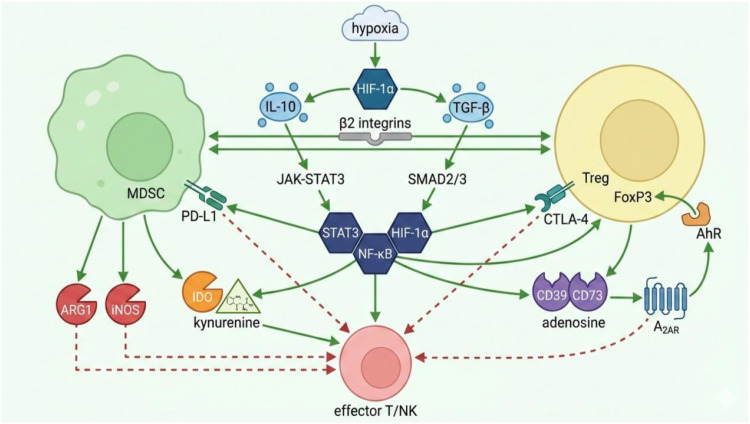
“CD39 turns ATP/ADP into AMP, and CD73 converts AMP into adenosine (65).”
The IL-8/IL-8R Axis: A Double Agent in Tumor Immune Resistance
David, J., Dominguez, C., Hamilton, D., & Palena, C. (2016) · Vaccines · doi:10.3390/vaccines4030022 · Cited by 395 · cited 4×
“MDSCs comprise two primary subsets: polymorphonuclear MDSCs (PMN-MDSCs) and monocytic MDSCs (M-MDSCs) (14).”
InfluentialDual roles and therapeutic targeting of tumor-associated macrophages in tumor microenvironments
Xu, J., Ding, L., Mei, J., Hu, Y., Kong, X., Dai, S., Bu, T., Xiao, Q., & Ding, K. (2025) · Signal Transduction and Targeted Therapy · doi:10.1038/s41392-025-02325-5 · Cited by 389 · cited 1×
“CSF-1R activation drives downstream signaling that promotes myeloid survival while blocking maturation into immunostimulatory dendritic cells (142).”
Lymphocyte-activation gene 3 (LAG3): The next immune checkpoint receptor
Ruffo, E., Wu, R. C., Bruno, T. C., Workman, C. J., & Vignali, D. A. A. (2019) · Seminars in Immunology · doi:10.1016/j.smim.2019.101305 · Cited by 381
Curigliano, G., Gelderblom, H., Mach, N., Doi, T., Tai, D., Forde, P. M., Sarantopoulos, J., Bedard, P. L., Lin, C.-C., Hodi, F. S., et al. (2021) · Clinical Cancer Research · doi:10.1158/1078-0432.ccr-20-4746 · Cited by 362
S100A8/A9 activate key genes and pathways in colon tumor progression
Ichikawa, M., Williams, R., Wang, L., Vogl, T., & Srikrishna, G. (2011) · Molecular Cancer Research · doi:10.1158/1541-7786.mcr-10-0394 · Cited by 346 · cited 1×
“MDSC-derived S100A8/A9 also helps keep MDSCs coming in and affects how other immune cells move (21).”
Lactic acid and lactate: revisiting the physiological roles in the tumor microenvironment
Apostolova, P., & Pearce, E. L. (2022) · Trends in Immunology · doi:10.1016/j.it.2022.10.005 · Cited by 346
The tumor microenvironment as a metabolic barrier to effector T cells and immunotherapy
Lim, A. R., Rathmell, W. K., & Rathmell, J. C. (2020) · eLife · doi:10.7554/elife.55185 · Cited by 327 · cited 1×
“At the same time, glucose loss caused by high lactate use weakens CD8 + T-cell energy metabolism and leads to functional exhaustion (97, 98).”
Wang, B., Zhao, Q., Zhang, Y., Liu, Z., Zheng, Z., Liu, S., Meng, L., Xin, Y., & Jiang, X. (2021) · Journal of Experimental & Clinical Cancer Research · doi:10.1186/s13046-020-01820-7 · Cited by 315 · cited 1×
“Hypoxia, a hallmark of the CRC tumor microenvironment, stabilizes HIF-1 a , which — as detailed in Sections 3.2 and 3.3 — upregulates key immunosuppressive molecules (PD-L1, ARG1, iNOS, CD73) in MDSCs and promotes FoxP3 expression and peripheral Treg differentiation (90 – 93).”
InfluentialSelf-citationCong, J., Liu, P., Han, Z., Ying, W., Li, C., Yang, Y., Wang, S., Yang, J., Cao, F., Shen, J., et al. (2024) · Immunity · doi:10.1016/j.immuni.2024.02.014 · Cited by 303
Haist, M., Stege, H., Grabbe, S., & Bros, M. (2021) · Cancers · doi:10.3390/cancers13020210 · Cited by 295 · cited 3×
“Instead, they form a close “ MDSC – Treg axis ” that depends on mutual recruitment, cytokine signals, metabolic support, and epigenetic changes (6).”
InfluentialIL-10 Potentiates Differentiation of Human Induced Regulatory T Cells via STAT3 and Foxo1
Hsu, P., Santner-Nanan, B., Hu, M., Skarratt, K., Lee, C. H., Stormon, M., Wong, M., Fuller, S. J., & Nanan, R. (2015) · The Journal of Immunology · doi:10.4049/jimmunol.1402898 · Cited by 286 · cited 1×
“IL-10 enhances MDSC suppressive function via the JAK – STAT3 pathway, upregulating ARG1 and iNOS while impairing dendritic cell antigen presentation (26, 27, 49), and simultaneously promotes peripheral Treg induction (50, 51).”
Bunt, S. K., Clements, V. K., Hanson, E. M., Sinha, P., & Ostrand-Rosenberg, S. (2009) · Journal of Leukocyte Biology · doi:10.1189/jlb.0708446 · Cited by 277
The Immune Regulatory Role of Adenosine in the Tumor Microenvironment
Xing, J., Zhang, J., & Wang, J. (2023) · International Journal of Molecular Sciences · doi:10.3390/ijms241914928 · Cited by 277
Liu, Y., Lai, L., Chen, Q., Song, Y., Xu, S., Ma, F., Wang, X., Wang, J., Yu, H., Cao, X., et al. (2012) · The Journal of Immunology · doi:10.4049/jimmunol.1103505 · Cited by 272
Fujiwara, T., Yakoub, M. A., Chandler, A., Christ, A. B., Yang, G., Ouerfelli, O., Rajasekhar, V. K., Yoshida, A., Kondo, H., Hata, T., et al. (2021) · Molecular Cancer Therapeutics · doi:10.1158/1535-7163.mct-20-0591 · Cited by 269
Tumor-derived exosomes, myeloid-derived suppressor cells, and tumor microenvironment
Tian, X., Shen, H., Li, Z., Wang, T., & Wang, S. (2019) · Journal of Hematology & Oncology · doi:10.1186/s13045-019-0772-z · Cited by 264 · cited 1×
“…cells exposed to hypoxia or high lactate release exosomes enriched in miR-21, miR-146a, TGF-b 1, and Galectin-9, which drive the differentiation of bone marrow precursors toward MDSCs and enhance their suppressive capacity, while simultaneously promoting Treg expansion or stabilization (127 – 129).”
TGF-β signaling in the tumor metabolic microenvironment and targeted therapies
Shi, X., Yang, J., Deng, S., Xu, H., Wu, D., Zeng, Q., Wang, S., Hu, T., Wu, F., & Zhou, H. (2022) · Journal of Hematology & Oncology · doi:10.1186/s13045-022-01349-6 · Cited by 262
Song, Y., Fu, Y., Xie, Q., Zhu, B., Wang, J., & Zhang, B. (2020) · Frontiers in Immunology · doi:10.3389/fimmu.2020.01956 · Cited by 261
Regulatory T-cell Modulation Using Cyclophosphamide in Vaccine Approaches: A Current Perspective
Le, D. T., & Jaffee, E. M. (2012) · Cancer Research · doi:10.1158/0008-5472.can-11-3912 · Cited by 240
Wang, D., Yang, L., Yu, W., Wu, Q., Lian, J., Li, F., Liu, S., Li, A., He, Z., Liu, J., et al. (2019) · Journal for ImmunoTherapy of Cancer · doi:10.1186/s40425-019-0701-2 · Cited by 234
Self-citationBhat, A. A., Nisar, S., Singh, M., Ashraf, B., Masoodi, T., Prasad, C. P., Sharma, A., Maacha, S., Karedath, T., Hashem, S., et al. (2022) · Cancer Communications · doi:10.1002/cac2.12295 · Cited by 229
He, S., Zheng, L., & Qi, C. (2025) · Molecular Cancer · doi:10.1186/s12943-024-02208-3 · Cited by 227
Modulation of T cells by tryptophan metabolites in the kynurenine pathway
Stone, T. W., & Williams, R. O. (2023) · Trends in Pharmacological Sciences · doi:10.1016/j.tips.2023.04.006 · Cited by 224 · cited 1×
“Tryptophan breakdown through the IDO – kynurenine pathway activates AhR, increases FoxP3 transcription, and raises peripheral Treg numbers (60 – 62).”
TGF-β in T Cell Biology: Implications for Cancer Immunotherapy
Dahmani, A., & Delisle, J.-S. (2018) · Cancers · doi:10.3390/cancers10060194 · Cited by 214
Limagne, E., Richard, C., Thibaudin, M., Fumet, J.-D., Truntzer, C., Lagrange, A., Favier, L., Coudert, B., & Ghiringhelli, F. (2019) · OncoImmunology · doi:10.1080/2162402x.2018.1564505 · Cited by 201
Targeting of TAMs: can we be more clever than cancer cells?
Kzhyshkowska, J. G., Shen, J., & Larionova, I. (2024) · Cellular and Molecular Immunology · doi:10.1038/s41423-024-01232-z · Cited by 201
Tregs: Where We Are and What Comes Next?
Zhao, H., Liao, X., & Kang, Y. (2017) · Frontiers in Immunology · doi:10.3389/fimmu.2017.01578 · Cited by 196 · cited 1×
“Their secretion of IL-10, TGF-b , and IL-35 activates key pathways in MDSCs and increases ARG1 and iNOS expression, strengthening their ability to suppress effector T cells (32, 33).”
Nail, H. M., Chiu, C.-C., Leung, C.-H., Ahmed, M. M. M., & Wang, H.-M. D. (2023) · Journal of Biomedical Science · doi:10.1186/s12929-023-00964-w · Cited by 195
Regulation of STAT signaling by acetylation
Zhuang, S. (2013) · Cellular Signalling · doi:10.1016/j.cellsig.2013.05.007 · Cited by 195 · cited 1×
“STAT3 also modulates DNA methylation and histone acetylation to stabilize suppressive transcriptional programs in both MDSCs and Tregs (73 – 75).”
OuYang, L.-Y., Wu, X.-J., Ye, S.-B., Zhang, R.-X., Li, Z.-L., Liao, W., Pan, Z.-Z., Zheng, L.-M., Zhang, X.-S., Wang, Z., et al. (2015) · Journal of Translational Medicine · doi:10.1186/s12967-015-0410-7 · Cited by 189
Barsoum, I. B., Hamilton, T. K., Li, X., Cotechini, T., Miles, E. A., Siemens, D. R., & Graham, C. H. (2011) · Cancer Research · doi:10.1158/0008-5472.can-11-2104 · Cited by 188
Wang, F., Jin, Y., Wang, M., Luo, H.-Y., Fang, W.-J., Wang, Y.-N., Chen, Y.-X., Huang, R.-J., Guan, W.-L., Li, J.-B., et al. (2024) · Nature Medicine · doi:10.1038/s41591-024-02813-1 · Cited by 183
Self-citationRegulation of Treg cells by cytokine signaling and co-stimulatory molecules
Zong, Y., Deng, K., & Chong, W. P. (2024) · Frontiers in Immunology · doi:10.3389/fimmu.2024.1387975 · Cited by 183 · cited 1×
“Tregs further weaken antitumor immunity through CD25, CTLA-4, IL-10, and TGF-b (8, 9).”
Park, M.-J., Lee, S., Kim, E., Lee, E., Baek, J.-A., Park, S., Kwok, S., & Cho, M. (2018) · Scientific Reports · doi:10.1038/s41598-018-21856-2 · Cited by 181
Lymphocyte Activation Gene 3 (LAG-3) Modulates the Ability of CD4 T-cells to Be Suppressed In Vivo
Durham, N. M., Nirschl, C. J., Jackson, C. M., Elias, J., Kochel, C. M., Anders, R. A., & Drake, C. G. (2014) · PLoS ONE · doi:10.1371/journal.pone.0109080 · Cited by 178
Downs-Canner, S., Berkey, S., Delgoffe, G. M., Edwards, R. P., Curiel, T., Odunsi, K., Bartlett, D. L., & Obermajer, N. (2017) · Nature Communications · doi:10.1038/ncomms14649 · Cited by 177
Adenosine-A2A Receptor Pathway in Cancer Immunotherapy
Sun, C., Wang, B., & Hao, S. (2022) · Frontiers in Immunology · doi:10.3389/fimmu.2022.837230 · Cited by 174 · cited 1×
“This triggers cAMP – PKA signaling and reduces activation, proliferation, and cytotoxicity in these cells (66, 67).”
Scurr, M., Pembroke, T., Bloom, A., Roberts, D., Thomson, A., Smart, K., Bridgeman, H., Adams, R., Brewster, A., Jones, R., et al. (2017) · Clinical Cancer Research · doi:10.1158/1078-0432.ccr-17-0895 · Cited by 171
NF-κB signaling pathway in tumor microenvironment
Cao, Y., Yi, Y., Han, C., & Shi, B. (2024) · Frontiers in Immunology · doi:10.3389/fimmu.2024.1476030 · Cited by 169 · cited 1×
“NF-k B activation downstream of TLR4 and TNFR2 induces IL-1 b , IL-6, CCL2, and CXCL8, promoting continuous recruitment and activation of MDSCs and Tregs (80, 81).”
Gut microbiome in modulating immune checkpoint inhibitors
Li, X., Zhang, S., Guo, G., Han, J., & Yu, J. (2022) · eBioMedicine · doi:10.1016/j.ebiom.2022.104163 · Cited by 168
Aberrant gene expression in mucosa adjacent to tumor reveals a molecular crosstalk in colon cancer
Sanz-Pamplona, R., Berenguer, A., Cordero, D., Molleví, D. G., Crous-Bou, M., Sole, X., Paré-Brunet, L., Guino, E., Salazar, R., Santos, C., et al. (2014) · Molecular Cancer · doi:10.1186/1476-4598-13-46 · Cited by 166 · cited 1×
“This means the MDSC – Treg axis begins to change local immune balance at the very early stages of tumor formation (36, 37).”
CD4 + CD25 + regulatory T cells in tumor immunity
Chen, X., Du, Y., Lin, X., Qian, Y., Zhou, T., & Huang, Z. (2016) · International Immunopharmacology · doi:10.1016/j.intimp.2016.03.009 · Cited by 163 · cited 1×
“Tregs further weaken antitumor immunity through CD25, CTLA-4, IL-10, and TGF-b (8, 9).”
Toor, S. M., Murshed, K., Al-Dhaheri, M., Khawar, M., Abu Nada, M., & Elkord, E. (2019) · Frontiers in Immunology · doi:10.3389/fimmu.2019.02936 · Cited by 158
Liu, Y., Wong, C. C., Ding, Y., Gao, M., Wen, J., Lau, H. C.-H., Cheung, A. H. K., Huang, D., Huang, H., & Yu, J. Q. (2024) · Nature Microbiology · doi:10.1038/s41564-024-01695-w · Cited by 152
Yaseen, M. M., Abuharfeil, N. M., Darmani, H., & Daoud, A. K. (2020) · Open Biology · doi:10.1098/rsob.200111 · Cited by 152 · cited 1×
“IL-10, TGF-b , PD-L1, and CTLA-4 are the key factors that keep immune tolerance in place (48).”
The therapeutic implications of immunosuppressive tumor aerobic glycolysis
Reinfeld, B. I., Rathmell, W. K., Kim, T. K., & Rathmell, J. C. (2021) · Cellular and Molecular Immunology · doi:10.1038/s41423-021-00727-3 · Cited by 150 · cited 14×
“Other approaches use anti-angiogenic agents together with PD-1/PD-L1 inhibitors.”
InfluentialLi, F., Zhao, Y., Wei, L., Li, S., & Liu, J. (2018) · Cancer Biology & Therapy · doi:10.1080/15384047.2018.1450116 · Cited by 138
Self-citationTranscriptional and posttranslational regulation of Th17/Treg balance in health and disease
Zhang, W., Liu, X., Zhu, Y., Liu, X., Gu, Y., Dai, X., & Li, B. (2021) · European Journal of Immunology · doi:10.1002/eji.202048794 · Cited by 137 · cited 1×
“During CRC progression, Th17/Treg balance is progressively skewed toward Treg dominance through plasticity-driven reprogramming, establishing a self-sustaining suppressive circuit (47).”
Self-citationHu, L., Liu, Y., Kong, X., Wu, R., Peng, Q., Zhang, Y., Zhou, L., & Duan, L. (2021) · Frontiers in Immunology · doi:10.3389/fimmu.2021.658681 · Cited by 136
STAT3: A Target to Enhance Antitumor Immune Response
Lee, H., Pal, S. K., Reckamp, K., Figlin, R. A., & Yu, H. (2010) · Current Topics in Microbiology and Immunology · doi:10.1007/82_2010_51 · Cited by 134 · cited 1×
“Pharmacologic STAT3 inhibition reduces the accumulation of both populations and restores CD8 + T-cell activity (76, 77).”
Lecocq, Q., Keyaerts, M., Devoogdt, N., & Breckpot, K. (2020) · International Journal of Molecular Sciences · doi:10.3390/ijms22010075 · Cited by 133
STAT3, a master regulator of anti-tumor immune response
Rébé, C., & Ghiringhelli, F. (2019) · Cancers · doi:10.3390/cancers11091280 · Cited by 129 · cited 1×
“(71, 72).”
Wang, H., Zhou, F., Qin, W., Yang, Y., Li, X., & Liu, R. (2025) · Theranostics · doi:10.7150/thno.105276 · Cited by 128 · cited 4×
“CD39 turns ATP/ADP into AMP, and CD73 converts AMP into adenosine (65).”
InfluentialRole of TH17 cytokines in the control of colorectal cancer
De Simone, V., Pallone, F., Monteleone, G., & Stolfi, C. (2013) · OncoImmunology · doi:10.4161/onci.26617 · Cited by 126
Myeloid-Derived Suppressor Cells in Colorectal Cancer
Siemińska, I., & Baran, J. (2020) · Frontiers in Immunology · doi:10.3389/fimmu.2020.01526 · Cited by 125 · cited 2×
“MDSCs comprise two primary subsets: polymorphonuclear MDSCs (PMN-MDSCs) and monocytic MDSCs (M-MDSCs) (14).”
STAT3 in Tumor-Associated Myeloid Cells: Multitasking to Disrupt Immunity
Su, Y.-L., Banerjee, S., White, S. V., & Kortylewski, M. (2018) · International Journal of Molecular Sciences · doi:10.3390/ijms19061803 · Cited by 123
Ranjbar, M., Salehi, R., Javanmard, S. H., Rafiee, L., Faraji, H., jafarpor, S., Ferns, G. A., Ghayour‐Mobarhan, M., Manian, M., & Nedaeinia, R. (2021) · Cancer Cell International · doi:10.1186/s12935-021-01886-z · Cited by 119 · cited 1×
“For example, Fusobacterium nucleatum increases MDSC and Treg buildup through TLR4 – NF-k B signaling and the Fap2 – TIGIT pathway (10, 11).”
Therapeutic potential of Clostridium butyricum anticancer effects in colorectal cancer
Xu, H., Luo, H., Zhang, J., Li, K., & Lee, M. (2023) · Gut Microbes · doi:10.1080/19490976.2023.2186114 · Cited by 117 · cited 1×
“Clostridium butyricum enhances anti-PD-1 ef fi cacy in CRC (113) and suppresses tumor development by modulating Wnt signaling and reshaping the microbial community (114).”
Dendritic Cell Vaccines: A Shift from Conventional Approach to New Generations
Lee, K.-W., Yam, J. W. P., & Mao, X. (2023) · Cells · doi:10.3390/cells12172147 · Cited by 117 · cited 2×
“Beyond immune checkpoint blockade, disrupting the MDSC – Treg axis holds promise for improving vaccine-based immunotherapies in MSS/pMMR CRC, where “ cold ” tumors often limit antigen-speci fi c T-cell priming and effector function (169).”
Yin, H., Miao, Z., Wang, L., Su, B., Liu, C., Jin, Y. T., Wu, B., Han, H., & Yuan, X. (2022) · Aging · doi:10.18632/aging.203914 · Cited by 116
Lv, Q., Zhang, Y., Gao, W., Wang, J., Hu, Y., Yang, H., Xie, Y., Lv, Y., Zhang, H., Wu, D., et al. (2024) · Pharmacological Research · doi:10.1016/j.phrs.2024.107126 · Cited by 110
Xie, M., Yuan, K., Zhang, Y., Zhang, Y., Zhang, R., Gao, J., Wei, W., Jiang, L., Li, T., Ding, Y., et al. (2025) · Cancer Cell · doi:10.1016/j.ccell.2025.07.012 · Cited by 98
Bitsch, R., Kurzay, A., Kurt, F. G. Ö., Torre, C. D. L., Lasser, S., Lepper, A., Siebenmorgen, A., Müller, V. A., Altevogt, P., Utikal, J. S., et al. (2022) · Journal for ImmunoTherapy of Cancer · doi:10.1136/jitc-2021-004384 · Cited by 98
TIGIT promotes CD8+T cells exhaustion and predicts poor prognosis of colorectal cancer
Liang, R., Zhu, X., Lan, T., Ding, D., Zheng, Z., Chen, T., Huang, Y. L., Liu, J., Yang, X., Shao, J., et al. (2021) · Cancer Immunology Immunotherapy · doi:10.1007/s00262-021-02886-8 · Cited by 98
Self-citationImmune checkpoint inhibitors in colorectal cancer: limitation and challenges
Yan, S., Wang, W., Feng, Z., Xue, J., Liang, W., Wu, X., Tan, Z., Zhang, X., Zhang, S., Li, X., et al. (2024) · Frontiers in Immunology · doi:10.3389/fimmu.2024.1403533 · Cited by 93
Mechanisms of Immunosuppression in Colorectal Cancer
Zhang, Y., Rajput, A., Jin, N. Y., & Wang, J. (2020) · Cancers · doi:10.3390/cancers12123850 · Cited by 93 · cited 1×
“Long-lasting in fl ammation and continuous IL-6/STAT3 activation push myeloid cells toward suppressive types (12).”
Myeloid derived suppressor cells: Targets for therapy
Waldron, T. J., Quatromoni, J. G., Karakasheva, T. A., Singhal, S. K., & Rustgi, A. K. (2013) · OncoImmunology · doi:10.4161/onci.24117 · Cited by 87 · cited 2×
“IL-10 enhances MDSC suppressive function via the JAK – STAT3 pathway, upregulating ARG1 and iNOS while impairing dendritic cell antigen presentation (26, 27, 49), and simultaneously promotes peripheral Treg induction (50, 51).”
Epigenetic regulation of tumor immunity
Pang, L., Zhou, F., Liu, Y., Ali, H. A., Khan, F., Heimberger, A. B., & Chen, P. (2024) · Journal of Clinical Investigation · doi:10.1172/jci178540 · Cited by 85 · cited 1×
“STAT3 also modulates DNA methylation and histone acetylation to stabilize suppressive transcriptional programs in both MDSCs and Tregs (73 – 75).”
Tumor-Derived Exosomes in Tumor-Induced Immune Suppression
Hao, Q., Wu, Y., Wu, Y., Wang, P., & Vadgama, J. V. (2022) · International Journal of Molecular Sciences · doi:10.3390/ijms23031461 · Cited by 85
Schmitt, E. G., Haribhai, D., Williams, J. B., Aggarwal, P., Jia, S., Charbonnier, L.-M., Yan, K., Lorier, R., Turner, A., Ziegelbauer, J., et al. (2012) · The Journal of Immunology · doi:10.4049/jimmunol.1200936 · Cited by 84
Gomes, S., Rodrigues, A., Pazienza, V., & Preto, A. (2023) · International Journal of Molecular Sciences · doi:10.3390/ijms24065069 · Cited by 83
Voissière, A., Gomez‐Roca, C., Chabaud, S., Rodriguez, C., Nkodia, A., Berthet, J., Montané, L., Bidaux, A.-S., Treilleux, I., Eberst, L., et al. (2024) · Science Translational Medicine · doi:10.1126/scitranslmed.add1834 · Cited by 83
Stone, T. W., & Williams, R. O. (2023) · Cancers · doi:10.3390/cancers15112895 · Cited by 78
The functions and regulatory pathways of S100A8/A9 and its receptors in cancers
Zhou, H., Zhao, C., Shao, R., Xu, Y., & Zhao, W. (2023) · Frontiers in Pharmacology · doi:10.3389/fphar.2023.1187741 · Cited by 76 · cited 1×
“Together with STAT3, NF-k B increases S100A8/A9 and PD-L1 expression, intensifying immune evasion (82 – 84).”
Targeting PD-L1 and TIGIT could restore intratumoral CD8 T cell function in human colorectal cancer
Thibaudin, M., Limagne, E., Hampe, L., Ballot, E., Truntzer, C., & Ghiringhelli, F. (2022) · Cancer Immunology Immunotherapy · doi:10.1007/s00262-022-03182-9 · Cited by 74
Immunotherapy in microsatellite-stable colorectal cancer: Strategies to overcome resistance
Chen, E., & Zhou, W. (2025) · Critical Reviews in Oncology/Hematology · doi:10.1016/j.critrevonc.2025.104775 · Cited by 74 · cited 1×
“Given that the interaction between MDSCs and Tregs in the TME is a main driver of the “ immune desert ” or “ immune-excluded ” states in MSS/pMMR CRC (132, 133), PD-1/PD-L1 blockade alone often has limited effect (134).”
Dadgar-Zankbar, L., Elahi, Z., Shariati, A., Khaledi, A., Razavi, S., & Khoshbayan, A. (2024) · Cell Communication and Signaling · doi:10.1186/s12964-024-01909-y · Cited by 71
Function of reactive oxygen species in myeloid-derived suppressor cells
Huang, J., Zhao, Y., Zhao, K., Yin, K., & Wang, S. (2023) · Frontiers in Immunology · doi:10.3389/fimmu.2023.1226443 · Cited by 70
Overman, M. J., Gelsomino, F., Aglietta, M., Wong, M. K., Mirón, M. L. L., Leonard, G., Alfonso, P. G., Hill, A. G., Gracián, A. C., Cutsem, E. V., et al. (2024) · Journal for ImmunoTherapy of Cancer · doi:10.1136/jitc-2023-008689 · Cited by 69
Clinical Development of Colony-Stimulating Factor 1 Receptor (CSF1R) Inhibitors
Lin, C. (2021) · Journal of Immunotherapy and Precision Oncology · doi:10.36401/jipo-20-32 · Cited by 69 · cited 1×
“Early-phase trials of CSF-1R inhibitors in solid tumors, including CRC, demonstrate manageable safety but modest response rates as monotherapy, reinforcing the view that these agents serve best as platforms for TME reprogramming (147, 148).”
Kullberg, R. F. J., Wikki, I., Haak, B. W., Kauko, A., Galenkamp, H., Sengers, H. P., Butler, J. M., Havulinna, A. S., Palmu, J., McDonald, D. T., et al. (2024) · The Lancet Microbe · doi:10.1016/s2666-5247(24)00079-x · Cited by 68
Review immune response of targeting CD39 in cancer
Liu, Y., Li, Z., Zhao, X., Xiao, J., Bi, J., Li, X.-Y., Chen, G., & Lu, L. (2023) · Biomarker Research · doi:10.1186/s40364-023-00500-w · Cited by 66
Wu, T., Zhang, X., Liu, X., Cai, X., Shen, T., Pan, D., Liang, R., Ding, R., Hu, R., Dong, J., et al. (2023) · BMC Medicine · doi:10.1186/s12916-023-02866-y · Cited by 66
Self-citationTargeting Myeloid-Derived Suppressor Cells for Premetastatic Niche Disruption After Tumor Resection
Tang, F., Tie, Y., Hong, W., Wei, Y., Tu, C., & Wei, X. (2021) · Annals of Surgical Oncology · doi:10.1245/s10434-020-09371-z · Cited by 62 · cited 1×
“Integrating MDSC/Treg-targeted agents (e.g., CXCR2 antagonists, all-trans retinoic acid, or STAT3 inhibitors) with vaccines represents a rational approach to sensitize MSS/pMMR CRC, potentially extending beyond ICI combinations (176, 177).”
Liao, Q., Zhou, X., Wu, L., Yang, Y., Zhu, X., Liao, H., Zhang, Y., Lian, W., Zhang, F., Wang, H., et al. (2025) · Journal of Clinical Investigation · doi:10.1172/jci181243 · Cited by 60
Chen, F., Xu, Y., Chen, Y., & Shan, S. (2020) · Cancer Medicine · doi:10.1002/cam4.2976 · Cited by 58
Insights into CSF-1R Expression in the Tumor Microenvironment
Tomassetti, C., Insinga, G., Gimigliano, F., Morrione, A., Giordano, A., & Giurisato, E. (2024) · Biomedicines · doi:10.3390/biomedicines12102381 · Cited by 58 · cited 6×
“Tumor cells, stromal fi broblasts, and endothelial cells express elevated CSF-1, which recruits and sustains monocytic MDSCs and M2-like TAMs — both major facilitators of Treg in fi ltration, angiogenesis, and cytotoxic T-cell suppression (140, 141).”
InfluentialHecht, J. R., Park, Y. S., Tabernero, J. M., Lee, M. A., Lee, S. H., Manrique, A. C. V., den Eynde, M. V., Fontana, E., Fakih, M., Asghari, G., et al. (2025) · The Lancet · doi:10.1016/s0140-6736(25)02025-2 · Cited by 54
Kim, H. S., Kim, C. G., Kim, W. K., Kim, K.-A., Yoo, J., Min, B. S., Paik, S., Shin, S. J., Lee, H., Lee, K., et al. (2023) · Frontiers in Cellular and Infection Microbiology · doi:10.3389/fcimb.2023.1101291 · Cited by 53
Cao, P., Sun, Z., Zhang, F., Zhang, J., Xiang, Z., Yu, B., Zhao, Y. X., Wang, W., & Wang, W. (2022) · Frontiers in Immunology · doi:10.3389/fimmu.2022.919674 · Cited by 53
Unraveling resistance to immunotherapy in MSI-high colorectal cancer
Heregger, R., Huemer, F., Steiner, M., Gonzalez-Martinez, A., Greil, R., & Weiss, L. (2023) · Cancers · doi:10.3390/cancers15205090 · Cited by 52
JAK/STAT3 represents a therapeutic target for colorectal cancer patients with stromal-rich tumors
Pennel, K. A. F., Hatthakarnkul, P., Wood, C. S., Lian, G., Al-Badran, S. S. F., Quinn, J. A., Legrini, A., Inthagard, J., Alexander, P. G., van Wyk, H., et al. (2024) · Journal of Experimental & Clinical Cancer Research · doi:10.1186/s13046-024-02958-4 · Cited by 52
The Gut Microbiome and Colorectal Cancer: An Integrative Review of the Underlying Mechanisms
Karam, F., Deghel, Y. E., Iratni, R., Dakroub, A. H., & Eid, A. H. (2025) · Cell Biochemistry and Biophysics · doi:10.1007/s12013-025-01683-9 · Cited by 52
Sato, T., Sugiyama, D., Koseki, J., Kojima, Y., Hattori, S., Sone, K., Nishinakamura, H., Ishikawa, T., Ishikawa, Y., Kato, T., et al. (2025) · JCI Insight · doi:10.1172/jci.insight.178146 · Cited by 51
Gneo, L., Rizkalla, N., Hejmadi, R. K., Mussai, F., Santo, C. D., & Middleton, G. (2021) · Cancer Immunology Immunotherapy · doi:10.1007/s00262-021-03081-5 · Cited by 47
Myeloid-Derived Suppressor Cells: A New and Pivotal Player in Colorectal Cancer Progression
Yin, K., Xia, X., Rui, K., Wang, T., & Wang, S. (2020) · Frontiers in Oncology · doi:10.3389/fonc.2020.610104 · Cited by 47
Metabolic advantages of regulatory T cells dictated by cancer cells
Kondo, M., Kumagai, S., & Nishikawa, H. (2023) · International Immunology · doi:10.1093/intimm/dxad035 · Cited by 44 · cited 1×
“Hypoxia in the TME increases CD39/CD73 expression through HIF-1 a and raises adenosine levels even more, which strengthens immunosuppression (69).”
Wang, M., Deng, C., Yang, C. H., Yan, M., Lu, H., Zhang, Y., Liu, H., Tong, Z., Ma, J., Wang, J., et al. (2023) · Journal of Translational Medicine · doi:10.1186/s12967-023-04600-x · Cited by 42
Self-citationCoordinated Regulation of Myeloid-Derived Suppressor Cells by Cytokines and Chemokines
Li, R., Mukherjee, M. B., & Lin, J. (2022) · Cancers · doi:10.3390/cancers14051236 · Cited by 42 · cited 2×
“They produce CCL3, CCL4, and CCL5, which attract CCR5 + Tregs and increase their buildup in the tumor (20).”
Systemic Interleukins’ Profile in Early and Advanced Colorectal Cancer
Czajka‐Francuz, P., Cisoń-Jurek, S., Czajka, A., Kozaczka, M., Wojnar, J., Chudek, J. T., & Francuz, T. (2021) · International Journal of Molecular Sciences · doi:10.3390/ijms23010124 · Cited by 42
Immunomodulatory Properties of Immune Checkpoint Inhibitors—More than Boosting T-Cell Responses?
Kuske, M., Haist, M., Jung, T., Grabbe, S., & Bros, M. (2022) · Cancers · doi:10.3390/cancers14071710 · Cited by 39
Español‐Rego, M., Fernández-Martos, C., Élez, E., Foguet, C., Pedrosa, L., Rodríguez, N., Ruiz‐Casado, A., Pineda, E., Cid, J., Cabezón, R., et al. (2022) · Cancer Immunology Immunotherapy · doi:10.1007/s00262-022-03283-5 · Cited by 36
Baas, F. S., Brusselaers, N., Nagtegaal, I. D., Engstrand, L. G., & Boleij, A. (2024) · Cell Host & Microbe · doi:10.1016/j.chom.2024.07.008 · Cited by 36
Gut microbiota-derived metabolites and colorectal cancer: New insights and updates
Mohseni, A. H., Taghinezhad‐S, S., & Fu, X. (2020) · Microbial Pathogenesis · doi:10.1016/j.micpath.2020.104569 · Cited by 36
Zhu, T., Li, Y., Wang, Y., & Li, D. (2025) · Vaccines · doi:10.3390/vaccines13040337 · Cited by 34
Self-citationEpigenetic Regulations of AhR in the Aspect of Immunomodulation
Wajda, A., Łapczuk-Romańska, J., & Paradowska‐Gorycka, A. (2020) · International Journal of Molecular Sciences · doi:10.3390/ijms21176404 · Cited by 34
Cheng, W., Li, F., & Yang, R. (2024) · Gastro Hep Advances · doi:10.1016/j.gastha.2024.05.012 · Cited by 31
Sathe, A., Ayala, C. I., Bai, X., Grimes, S. M., Lee, B., Kin, C., Shelton, A. A., Poultsides, G. A., & Ji, H. P. (2023) · Genome Medicine · doi:10.1186/s13073-023-01259-3 · Cited by 31
MiR-146a regulates regulatory T cells to suppress heart transplant rejection in mice
Lu, J., Wang, W., Li, P., Wang, X., Gao, C., Zhang, B., Du, X., Liu, Y., Yang, Y., & Qi, F. (2021) · Cell Death Discovery · doi:10.1038/s41420-021-00534-9 · Cited by 30
Cervantes, B., André, T., & Cohen, R. (2024) · Therapeutic Advances in Medical Oncology · doi:10.1177/17588359231170473 · Cited by 29
Interaction Between microRNAs and Myeloid-Derived Suppressor Cells in Tumor Microenvironment
Liang, L., Xu, X., Li, J., & Yang, C. (2022) · Frontiers in Immunology · doi:10.3389/fimmu.2022.883683 · Cited by 27
Wang, X., Zhang, J., Hu, B., & Qian, F. (2022) · Frontiers in Oncology · doi:10.3389/fonc.2022.850767 · Cited by 23 · cited 1×
“Tumor cells, stromal fi broblasts, and endothelial cells express elevated CSF-1, which recruits and sustains monocytic MDSCs and M2-like TAMs — both major facilitators of Treg in fi ltration, angiogenesis, and cytotoxic T-cell suppression (140, 141).”
Davar, D., Eroglu, Z., Milhem, M. M., Becerra, C. R., Gutierrez, M. E., Ribas, A., Pace, B. D., Wang, T., Zhang, H., Ghosh, S., et al. (2025) · Clinical Cancer Research · doi:10.1158/1078-0432.ccr-25-0806 · Cited by 22 · cited 2×
“AMBER et al. Phase I/Ib studies have shown that this combination regimen has controllable safety and observable anti-tumor activity in various solid tumors, but there is still limited publicly available evidence of bene fi ts for MSS-CRC (155, 156).”
Metabolic Challenges in Anticancer CD8 T Cell Functions
Amitrano, A. M., & Kim, M. (2023) · Immune Network · doi:10.4110/in.2023.23.e9 · Cited by 21 · cited 1×
“At the same time, glucose loss caused by high lactate use weakens CD8 + T-cell energy metabolism and leads to functional exhaustion (97, 98).”
Luo, M. (2024) · American Journal of Cancer Research · doi:10.62347/myza2640 · Cited by 21
Li, Q., Luo, W., Li, X., Xu, X., Peng, X., Cheng, L., Zhou, X., & Zheng, X. M. (2025) · Journal of Oral Microbiology · doi:10.1080/20002297.2025.2544169 · Cited by 20 · cited 1×
“For example, Fusobacterium nucleatum increases MDSC and Treg buildup through TLR4 – NF-k B signaling and the Fap2 – TIGIT pathway (10, 11).”
Mehrani, Y., Morovati, S., Keivan, F., Sarmadi, S., Shojaei, S., Forouzanpour, D., Bridle, B. W., & Karimi, K. (2025) · Cells · doi:10.3390/cells14110812 · Cited by 20
Thomas, N. S. B. (2012) · JAK-STAT · doi:10.4161/jkst.22436 · Cited by 20
Davar, D., Eroglu, Z., Pérez, C. L., Pace, B. D., Wang, T., Yanamandra, N., Ghosh, S., Jansen, K., Dhar, A., Borgovan, T., et al. (2025) · Clinical Cancer Research · doi:10.1158/1078-0432.ccr-25-0884 · Cited by 19
Xu, Y., & Zhu, Q. (2023) · International Journal of Molecular Sciences · doi:10.3390/ijms24054820 · Cited by 18 · cited 1×
“By regulating HDACs and KDM3A, HIF-1 a further embeds these suppressive programs through epigenetic mechanisms (88, 89).”
Wan, Y., Mu, X., Zhao, J., Li, L., Xu, W., & Zhang, M. (2024) · Biomedical Reports · doi:10.3892/br.2024.1754 · Cited by 18 · cited 1×
“PD-L1 on MDSCs limits effector T-cell activation through PD-1 and helps Treg expansion grow (55).”
Luo, Y., Cai, X., Yang, B., Lu, F., Cheng, Y., & Wu, G. (2024) · Frontiers in Oncology · doi:10.3389/fonc.2024.1402837 · Cited by 18
Targeting the hypoxia signaling pathway with nanomedicine to reverse immunotherapy resistance
Cheng, X., Wang, P., Lyu, H., Lee, Y., Yoon, J., & Dong, H. (2025) · Cancer Drug Resistance · doi:10.20517/cdr.2025.132 · Cited by 17 · cited 1×
“By regulating HDACs and KDM3A, HIF-1 a further embeds these suppressive programs through epigenetic mechanisms (88, 89).”
Zou, D., Xin, X., Xu, Y., Xu, H., Huang, L., & Xu, T. (2024) · Heliyon · doi:10.1016/j.heliyon.2024.e36446 · Cited by 16
Microphysiological systems as models for immunologically ‘cold’ tumors
Gaebler, D., Hachey, S. J., & Hughes, C. C. W. (2024) · Frontiers in Cell and Developmental Biology · doi:10.3389/fcell.2024.1389012 · Cited by 14
Sabour, S., Koupaei, H. S., Ghasemi, H., Amin, M., & Azimi, T. (2025) · Frontiers in Cellular and Infection Microbiology · doi:10.3389/fcimb.2025.1559001 · Cited by 14
Johnson, B. (2023) · Cancers · doi:10.3390/cancers15225484 · Cited by 14
Nghiem, E., Friedman, B., Srivastava, N., Takchi, A., Mohammadi, M., Dedushi, D., Edelmann, W., Kuang, C., & Bteich, F. (2025) · Pharmaceuticals · doi:10.3390/ph18081160 · Cited by 12
The role of Fusobacterium nucleatum in cancer and its implications for clinical applications
Luo, W., Han, J., Peng, X., Zhou, X., Gong, T., & Zheng, X. M. (2024) · Molecular Oral Microbiology · doi:10.1111/omi.12475 · Cited by 11 · cited 1×
“Its outer-membrane protein Fap2 engages TIGIT or Gal-GalNAc to suppress NK and T-cell cytotoxicity (105), while FadA activates Wnt/ b -catenin signaling in tumor cells, promoting in fl ammatory and immunosuppressive mediators (106).”
(Compl)Ex-Th17–Tregcell inter-relationship
Obermajer, N., & Dahlke, M. H. (2015) · OncoImmunology · doi:10.1080/2162402x.2015.1040217 · Cited by 9 · cited 1×
“A prominent manifestation of Treg plasticity in CRC is the generation of ex-Th17 Tregs, derived from Th17 precursors that acquire a FOXP3 + suppressive pro fi le (41, 42).”
Zhou, X., Qiao, C., Chu, X., Yang, Y., Man, H., Liu, J., Li, Y., Xu, Z., Li, H., Shan, X., et al. (2025) · Cellular Oncology · doi:10.1007/s13402-025-01087-0 · Cited by 8
Self-citationLong, F., Tian, L., Chai, Z., Li, J., Tang, Y., & Liu, M. (2022) · Frontiers in Medicine · doi:10.3389/fmed.2022.881788 · Cited by 8
Yuan, S., Xia, Y., Dai, G., Rao, S., Hu, R., Gao, Y., Qiu, Q., Wu, C., Qiao, S., Xu, Y., et al. (2025) · Journal of Zhejiang University SCIENCE B · doi:10.1631/jzus.b2300679 · Cited by 7
Self-citation
Cited by
Liu, Y., Nie, X., & Gao, X. (2026) · Advanced Science · doi:10.1002/advs.202600027 · Cited by 10
Zhang, H., Liu, W., Zhang, Y., 陈舒晨, & Sun, G. (2026) · Frontiers in Cell and Developmental Biology · doi:10.3389/fcell.2026.1840613 · Cited by 5
“Patients with tumors characterized by high microsatellite instability or deficient mismatch repair may achieve meaningful therapeutic responses, whereas the majority of patients with microsatellite-stable (MSS) CRC derive minimal benefit from ICB monotherapy (Zhang et al., 2026).”
Microbiome and cancer: mechanistic insights, diagnostic potential, and therapeutic strategies
Kumar, V., Chaudhary, A., Gautam, M., Verma, P., & Singh, M. (2026) · Frontiers in Cell and Developmental Biology · doi:10.3389/fcell.2026.1844436 · Cited by 3
“Certain bacterial species, such as F . nucleatum , promote inflammation-driven tumorigenesis by recruiting myeloid-derived suppressor cells (MDSCs) and regulatory T cells (Tregs), both of which suppress anti-tumor immune responses (Li et al., 2025; Zhang et al., 2026).”
Immune Checkpoint-Based Therapies in Colorectal Cancer—Current Approaches and Future Perspectives
Nakielska, K., Plewka, J., & Lenart, M. (2026) · International Journal of Molecular Sciences · doi:10.3390/ijms27104628 · Cited by 2
Wang, D., Wang, Y., & Wang, X. (2026) · Frontiers in Immunology · doi:10.3389/fimmu.2026.1874066 · Cited by 2
“MSS-CRC is therefore better described as an immune-excluded and functionally inactivated state rather than as a static, cell-empty cold tumor (9).”
Influential
Metadata
- Authors
- Zhang, W., Jin, C., Liu, S., Wan, X., Li, Y., Liu, J., Duan, Z., Ma, J., & Gao, Y.
- Affiliations
- Liaoning University of Traditional Chinese Medicine (CN)
- Dalian Medical University (CN)
- Affiliated Hospital of Liaoning University of Traditional Chinese Medicine (CN)
- Department of General Surgery, The First Affiliated Hospital of Dalian Medical University
- First Affiliated Hospital of Dalian Medical University (CN)
- Corresponding author
- Duan, Zhijun
- Ma, Jingyuan
- Gao, Yunhai
- Venue
- Frontiers in Immunology
- Publisher
- Frontiers Media SA
- Published
- 2026-01-29
- Volume
- 17
- Pages
- 1757513-1757513
- ISSN
- 1664-3224 (ISSN-L)
- PMC
- PMC12894373
- OpenAlex
- W7125904396
- Cited by
- 22
- References
- 177
- Citations by year
- 2026: 22
- FWCI
- 20.05
- Type
- journal article
- Language
- en
- Open access
- gold
- doi.org
- Licence
- Locations
- Frontiers in Immunology (publishedVersion, cc-by)
- Europe PMC (PubMed Central) (publishedVersion, cc-by)
- PubMed (publishedVersion)
- PubMed Central (publishedVersion, cc-by)
- Topics
- Health Sciences › Medicine › Oncology › Cancer Immunotherapy and Biomarkers
- Life Sciences › Immunology and Microbiology › Immunology › Immune cells in cancer
- Life Sciences › Immunology and Microbiology › Immunology › Immunotherapy and Immune Responses
- Keywords
- myeloid-derived suppressor cells, regulatory T cells, colorectal cancer, microsatellite stable colorectal cancer, immune checkpoint inhibitors, tumor immunosuppression, gut microbiota, Fusobacterium nucleatum, Peptostreptococcus anaerobius, TLR4/NF-κB signaling, microbial metabolites, 4-hydroxyphenylacetic acid, tumor hypoxia, HIF-1α, immunotherapy resistance, atezolizumab, PD-1/PD-L1 blockade, tumor microenvironment
- MeSH terms
- Gastrointestinal Microbiome, Myeloid-Derived Suppressor Cells, Animals, Humans, Colorectal Neoplasms, Signal Transduction, T-Lymphocytes, Regulatory, Tumor Microenvironment
About these checks
Registry, retraction, Cites and statistics results are computed, not judged, with one exception: a printed reference that no index lists is read once by a model before it counts as a citation error. Claims are extracted by a model and kept only when their quote appears verbatim in the text; each cited source is then checked, with a model’s help, for whether it says what the claim relies on. Those verdicts can be wrong — read the claim’s quote and the cited source before relying on one.
Statistics and arithmetic are recomputed, not judged.
Confidence bands are shown only for fields calibrated on our annotated test set. None is calibrated yet, so no band is shown.
What counts as a claim ›How we measure confidence ›How we check this ›
Are you an author, or do you see a problem with this page? Request a review
Data sources
Bibliographic data: Semantic Scholar, OpenAlex, Crossref.
Contains information from the Semantic Scholar Academic Graph Datasets, made available under the ODC Attribution License (ODC-BY 1.0).
Semantic Scholar’s data is described in: Kinney, R., et al. (2023). The Semantic Scholar Open Data Platform. arXiv:2301.10140.
