

Comparing technology and regulatory landscape of probiotics as food, dietary supplements and live biotherapeutics
Open accessThe DOI matches its Crossref record; 51 of the 51 references it cites were found in a registry or an index.
Abstract
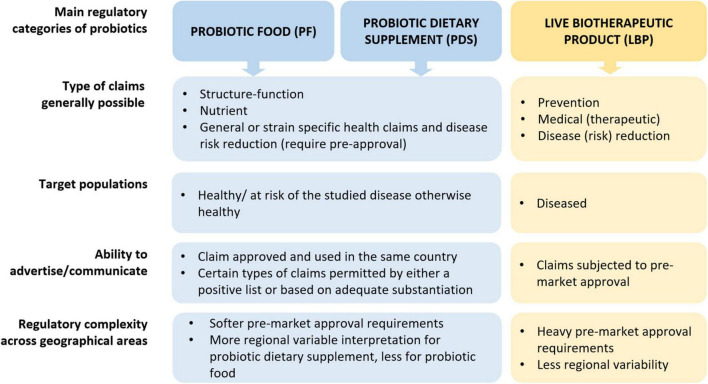
Application of beneficial microorganisms as probiotics targets a broad range of intended uses, from maintaining health and supporting normal bodily functions to curing and preventing diseases. Currently, three main regulatory fields of probiotic products can be defined depending on their intended use: the more similar probiotic foods and probiotic dietary supplements, and live biotherapeutic products. However, it is not always straightforward to classify a probiotic product into one of these categories. The regulatory nuances of developing, manufacturing, investigating and applying each category of probiotic products are not universal, and not always apparent to those unfamiliar with the various global probiotic regulatory guidelines. Various global markets can be significantly different regarding legislation, possible claims, market value and quality requirements for the development and commercialization of probiotic products. Furthermore, different probiotic product categories are also linked with variable costs at different stages of product development. This review outlines the current landscape comparing probiotic foods, probiotic dietary supplements, and live biotherapeutics as probiotic products from a regulatory lens, focusing on product development, manufacturing and production, and clinical research agenda. The aim is to inform and promote a better understanding among stakeholders by outlining the expectations and performance for each probiotic product category, depending on their intended use and targeted geographical region.
Overview
The claims and statistics of this paper haven’t been checked yet.
Free: it reads the open-access text and checks the first 5 claims that cite a source we can check. Create a free account to check every claim.
Integrity signals
Registry
Cites
Statistics
Figures
Verification
Claims the paper makes
The claims and statistics of this paper haven’t been checked yet.
Free: it reads the open-access text and checks the first 5 claims that cite a source we can check. Create a free account to check every claim.
Claims other papers make about this one
Each is checked against this paper’s own text: does it say what the citing paper says it does?
The source backs part of the claim, not all of it — or backs it for a different population, condition or comparison.
In the citing paper
“The European Union lacks dedicated probiotic legislation, though health claims are regulated. Japan, Brazil, and Canada offer more structured frameworks that mandate safety and efficacy evidence.39”
From Safety and efficacy concerns in Indian probiotics: Insights from whole-genome sequencing and in vitro assessment (2026) · cites this paper as [39]
Experimental — accuracy not yet measuredThe cited source says what the claim attributes to it.
In the citing paper
“Probiotics marketed as foods or dietary supplements are subject to food and consumer product safety legislation. In contrast, live biotherapeutic products, intended to treat or prevent diseases, are regulated as biological medicinal products. This means that they must undergo rigorous safety, efficacy, and quality testing similar to that applied to pharmaceuticals [29,30].”
From Current Concepts in Probiotic Safety and Efficacy (2026) · cites this paper as [29]
The cited source says what the claim attributes to it.
In the citing paper
“Regulatory challenges affecting the commercialization of probiotics include the lack of harmonization of regulatory requirements, which can vary by region (e.g., as with drugs or dietary supplements), leading to confusion in interpreting requirements. Efficacy and safety standards also vary, increasing costs and complicating worldwide regulatory compliance, which in turn leads to differences in”
From Current Concepts in Probiotic Safety and Efficacy (2026) · cites this paper as [29]
Self-check
Percentages, sums and reported differences re-computed from the paper’s own numbers.
The self-check needs the paper’s full text.
Citations
Cites
Hill (2014) · doi:10.1038/nrgastro.2014.66 · Cited by 9,592
Innovation in the pharmaceutical industry: New estimates of R&D costs
DiMasi, J. A., Grabowski, H. G., & Hansen, R. W. (2016) · Journal of Health Economics · doi:10.1016/j.jhealeco.2016.01.012 · Cited by 3,359 · cited 1×
“…from synthesis to clinical testing) for drugs is expensive and time-consuming, as it has been reported to average a considerable 31.7 months with inferred out-of-pocket costs of 430 million USD based on 1990– 2013 data on 106 new drugs from 10 biopharmaceutical companies (DiMasi et al., 2016).”
BackgroundInfluentialZheng, J., Wittouck, S., Salvetti, E., Franz, C. M. A. P., Harris, H. M. B., Mattarelli, P., O’Toole, P. W., Pot, B., Vandamme, P., Walter, J., et al. (2020) · International Journal of Systematic and Evolutionary Microbiology · doi:10.1099/ijsem.0.004107 · Cited by 3,313
Clinical development success rates for investigational drugs
Hay, M., Thomas, D. W., Craighead, J. L., Economides, C., & Rosenthal, J. (2014) · Nature Biotechnology · doi:10.1038/nbt.2786 · Cited by 2,536
Better Reporting of Harms in Randomized Trials: An Extension of the CONSORT Statement
Ioannidis, J. P. A., Evans, S. J. W., Gøtzsche, P. C., O'Neill, R. T., Altman, D. G., Schulz, K., Moher, D., & for the CONSORT Group* (2004) · Annals of Internal Medicine · doi:10.7326/0003-4819-141-10-200411160-00009 · Cited by 1,593
Marco, M. L., Sanders, M. E., Gänzle, M., Arrieta, M. C., Cotter, P. D., De Vuyst, L., Hill, C., Holzapfel, W., Lebeer, S., Merenstein, D., et al. (2021) · Nature Reviews Gastroenterology & Hepatology · doi:10.1038/s41575-020-00390-5 · Cited by 937
Probiotics for preventing acute upper respiratory tract infections
Hao, Q., Dong, B. R., & Wu, T. (2015) · Cochrane Database of Systematic Reviews · doi:10.1002/14651858.cd006895.pub3 · Cited by 569
Criteria to Qualify Microorganisms as “Probiotic” in Foods and Dietary Supplements
Binda, S., Hill, C., Johansen, E., Obis, D., Pot, B., Sanders, M. E., Tremblay, A., & Ouwehand, A. C. (2020) · Frontiers in Microbiology · doi:10.3389/fmicb.2020.01662 · Cited by 519
Self-citationEmerging issues in probiotic safety: 2023 perspectives
Merenstein, D., Pot, B., Leyer, G., Ouwehand, A. C., Preidis, G. A., Elkins, C. A., Hill, C., Lewis, Z. T., Shane, A. L., Zmora, N., et al. (2023) · Gut Microbes · doi:10.1080/19490976.2023.2185034 · Cited by 481
Self-citationThe Production and Delivery of Probiotics: A Review of a Practical Approach
Fenster, K., Freeburg, B., Hollard, C., Wong, C., Rønhave Laursen, R., & Ouwehand, A. C. (2019) · Microorganisms · doi:10.3390/microorganisms7030083 · Cited by 405
Self-citation
Research works printed but not linked: 14
- CFI Team (2023). Current Good Manufacturing Practices (CGMPs). Available online at: https://corporatefinanceinstitute.com/resources/valuation/current-good-manufacturing-practices-cgmps/ (accessed October 15, 2023).
- Chieffi D. Fanelli F. Fusco V. (2022). Legislation of probiotic foods and supplements. Probiotics for human nutrition in health and disease. Amsterdam: Elsevier.
- European Commission [EC] (2007). Corrigendum to Regulation (EC) No 1924/2006 of the European Parliament and of the Council of 20 December 2006 on nutrition and health claims made on foods. Official J. Eur. Union 12: 16.
- HealthEcon (2023). Reimbursement of Pharmaceuticals. Available online at: https://www.healthecon.com/reimbursement/index_eng.html (accessed August 04, 2023).
- Health Canada. (2023). Probiotics. Available online at: https://webprod.hc-sc.gc.ca/nhpid-bdipsn/atReq.do?atid=probio (accessed December 01, 2023).
- IPA Europe (2023). Do you know what probiotics are? Available online at: https://www.ipaeurope.org/wp-content/uploads/2023/01/202211Survey-report-1.pdf
- Lumina Intelligence (2021). Explained: The US E-commerce probiotic supplements market. Available online at: https://www.lumina-intelligence.com/probiotics-reports/explained-the-us-e-commerce-probiotics-market/ (accessed December 01, 2023).
- Markel Services Inc (2023). Hazard Analysis and Critical Control Points (HACCP) understanding HACCP food safety standards. Available online at: https://www.markelinsurance.com/resources/hazard-analysis-and-critical-control-points (accessed October 15, 2023).
- Paraskevakos G. (2020). Global overview for probiotics: trends, markets, and harmonization. Regulatory Focus. Available online at: https://www.raps.org/news-and-articles/news-articles/2022/9/global-overview-for-probiotics-trends-markets-and#citation (accessed October 15, 2023).
- The European Directorate for the Quality of Medicines and HealthCare [EDQM] (2019). Live biotherapeutic products for human use 3053 monograph. Eur. Pharmacopoeia 9 6522– 6523.
- United States Food and Drug Administration [FDA] (2016). Early clinical trials with live biotherapeutic products: chemistry, manufacturing, and control information. Guidance for Industry. Silver Spring, MD: FDA.
- United States Food and Drug Administration [FDA] (2021). Facts About the Current Good Manufacturing Practices (CGMPs). Silver Spring, MD: FDA.
- United States Food and Drug Administration [FDA] (2022a). Authorized health claims that meet the Significant Scientific Agreement (SSA) Standard. Silver Spring, MD: FDA.
- United States Food and Drug Administration [FDA] (2022b). Investigational New Drug (IND) application. Silver Spring, MD: FDA.
Cited by
Abouelela, M. E., & Helmy, Y. A. (2024) · Microorganisms · doi:10.3390/microorganisms12030430 · Cited by 238
“The situation in the EU is not currently harmonized, with different member states taking different approaches to the regulation of probiotics [47].”
BackgroundEncapsulation method of probiotic embedded delivery system and its application in food
Bu, W., McClements, D. J., Zhang, Z., Zhang, R., Jin, Z., & Chen, L. (2024) · Food Hydrocolloids · doi:10.1016/j.foodhyd.2024.110625 · Cited by 88
Progress in Probiotic Science: Prospects of Functional Probiotic‐Based Foods and Beverages
Manan, M. A. (2025) · International Journal of Food Science · doi:10.1155/ijfo/5567567 · Cited by 91
“Proving the e ffi cacy of these products through scienti fi c evidence and clinical trials is often intricate and time-consuming [18, 314].”
InfluentialRecent advances in prebiotics: Classification, mechanisms, and health applications
Ali, S., Hamayun, M., Siraj, M., Khan, S. A., Kim, H., & Lee, B. (2025) · Future Foods · doi:10.1016/j.fufo.2025.100680 · Cited by 80
Sachdeva, A., Tomar, T., Malik, T., Bains, A., & Karnwal, A. (2025) · Frontiers in Sustainable Food Systems · doi:10.3389/fsufs.2024.1523678 · Cited by 85
Mafe, A. N., Edo, G. I., Akpoghelie, P. O., Gaaz, T. S., Yousif, E., Zainulabdeen, K., Isoje, E. F., Igbuku, U. A., Opiti, R. A., Garba, Y., et al. (2025) · Probiotics and Antimicrobial Proteins · doi:10.1007/s12602-025-10452-2 · Cited by 72
Psychobiotics and the Microbiota–Gut–Brain Axis: Where Do We Go from Here?
Binda, S., Tremblay, A., Iqbal, U., Kassem, O., Barz, M. L., Thomas, V., Bronner, S., Perrot, T. S., Ismail, N., & Parker, J. A. (2024) · Microorganisms · doi:10.3390/microorganisms12040634 · Cited by 72
“Given the expanding horizon of probiotic research, it is crucial to distinguish probiotics used as food supplements from the LBPs aimed to be used in patients [125,128].”
BackgroundSelf-citationFentie, E. G., Lim, K., Jeong, M., & Shin, J. (2024) · Comprehensive Reviews in Food Science and Food Safety · doi:10.1111/1541-4337.13424 · Cited by 58
Garg, V., Velumani, D., Lin, Y.-C., & Haye, A. (2024) · PharmaNutrition · doi:10.1016/j.phanu.2024.100423 · Cited by 44
Probiotic Development Strategy Centered on Stability and Regulatory Considerations
Kim, H., Haque, M. A., Razzak, M. A., Jang, M. J., Song, S., & Ku, S. (2026) · Comprehensive Reviews in Food Science and Food Safety · doi:10.1111/1541-4337.70320 · Cited by 43
Microbial Contamination of Food: Probiotics and Postbiotics as Potential Biopreservatives
Zavišić, G., Ristić, S., Petricevic, S. M., Janković, D. L., & Petković, B. B. (2024) · Foods · doi:10.3390/foods13162487 · Cited by 57
“They are generally targeted at healthy populations to reduce the risk of disease or dietary management of a disease, and the claim of benefits is subject to different regulatory criteria depending on the jurisdiction [137].”
BackgroundEfficacy of probiotic supplements on Parkinson's disease: A systematic review and meta-analysis
Jin, X., Dong, W., Chang, K., Yan, Y., & Liu, X. (2024) · Complementary Therapies in Medicine · doi:10.1016/j.ctim.2024.103045 · Cited by 40
Type 2 Diabetes and the Multifaceted Gut-X Axes
Guo, H., Pan, L.-T., Wu, Q., Wang, L., Huang, Z., Wang, J., Wang, L., Fang, X., Dong, S., Zhu, Y., et al. (2025) · Nutrients · doi:10.3390/nu17162708 · Cited by 44
Kamath, S., Ariaee, A., Abdelhafez, A., Asif, Z., Chan, N. S. L., Collins, K., Hunter, A., & Joyce, P. M. (2025) · Advanced Drug Delivery Reviews · doi:10.1016/j.addr.2025.115720 · Cited by 41
Lactiplantibacillus plantarum in fermented beverages: Properties, mechanisms, and future prospects
Lin, M., Lin, S., He, H., Yu, Y., Hu, J., & Zhou, L. (2025) · Journal of Functional Foods · doi:10.1016/j.jff.2025.106864 · Cited by 40
Next‐Generation Probiotics: From Traditional Strains to Personalized Therapeutics
Jadhav, N. K., Magdum, A. B., Shinde, K. V., & Nimbalkar, M. S. (2026) · Molecular Nutrition & Food Research · doi:10.1002/mnfr.70339 · Cited by 29
“The lack of clear regulatory frameworks, particularly concerning genetically modified microorganisms (GMMs), complicates matters due to differing regulations in regions such as the EU, United States, and Russia [169, 170].”
Engineered probiotics: a new era in treating inflammatory bowel disease
Duan, S., Wang, Y., Zhan, S., Ye, Z., Luo, T., Zhou, Y., Xu, H., & Huang, H. (2025) · Journal of Translational Medicine · doi:10.1186/s12967-025-07271-y · Cited by 33
“It is necessary to establish a comprehensive standardized framework covering basic research, production processes, and clinical translation [94].”
Mafe, A. N., Sharifi‐Rad, J., Călina, D. C., Ogunyemi, A. J., & Abiola, O. T. (2025) · Food Frontiers · doi:10.1002/fft2.70205 · Cited by 36
Xu, R., Yu, Y., & Chen, T. (2025) · Current Research in Food Science · doi:10.1016/j.crfs.2025.101044 · Cited by 32
“Therefore, regulatory frameworks need to further clarify the distinction between dietary supplement probiotics and medical probiotics, strengthening monitoring of the potential pathogenesis, and exogenous contamination (Spacova et al., 2023).”
Exploring the future of probiotics with innovations in delivery systems and market insights
Ramírez, A., Bermúdez-Luque, A., Román‐Camacho, J. J., Martín-García, F. J., Moreno‐García, J., Güngörmüşler, M., & Ruiz-Castilla, F. J. (2025) · Food Bioscience · doi:10.1016/j.fbio.2025.107029 · Cited by 34
Martelli, A., Mohamed, Y. O. A., Ferrer, G. G., Gentile, P., & Girón‐Hernández, J. (2025) · Biotechnology Advances · doi:10.1016/j.biotechadv.2025.108630 · Cited by 26
Current Concepts in Probiotic Safety and Efficacy
Churin, A. A., Sokolyanskaya, L. O., Lukina, A. P., & Karnachuk, O. V. (2026) · Nutrients · doi:10.3390/nu18040696 · Cited by 31
“This means that they must undergo rigorous safety, efficacy, and quality testing similar to that applied to pharmaceuticals [29,30].”
The utilization of biopolymer hydrogels to encapsulate and protect probiotics in foods
Edo, G. I., Mafe, A. N., Akpoghelie, P. O., Gaaz, T. S., Yousif, E., Yusuf, O. S., Isoje, E. F., Igbuku, U. A., Opiti, R. A., Ayinla, J. L., et al. (2025) · Process Biochemistry · doi:10.1016/j.procbio.2025.03.008 · Cited by 22
Gupta, M. K., & Srivastava, R. (2025) · Probiotics and Antimicrobial Proteins · doi:10.1007/s12602-025-10582-7 · Cited by 25
“C l ea r l a b e li ng w it h C F U c oun t s a nd s t r a i n s p ec i fi c - it y i s e ss e n ti a l f o r t r a n s p a r e n c y [ 173 ] P o t e n t i a l s i d e e ff ec t s a nd s a f e t y r i s k s I n s o m e i nd i v i du a l s , p r ob i o ti c s ca n ca u s e b l o a ti ng , g a s , o…”
Sin, P. Y., Tan, S. H., Asras, M. F. F., Lee, C., Lee, T. C., Karim, M. R., & Ling, N. (2025) · Discover Food · doi:10.1007/s44187-025-00540-1 · Cited by 23
“Regulatory authorities often require comprehensive data on strain compatibility, including evidence of synergistic or additive effects that support the intended health benefits [131].”
Probiotic potential of yogurt: Exploring lactic acid bacteria for health-enhancing benefits
Chakma, S., Acharjee, M. R., Tonni, I. J., Tabassum, F., Das, E., Islam, S., & Faruk, M. S. A. (2025) · Applied Food Research · doi:10.1016/j.afres.2025.101383 · Cited by 21
Biosensors in Microbial Ecology: Revolutionizing Food Safety and Quality
Bodkhe, G. A., Kumar, V., Li, X., Pei, S., Ma, L., & Kim, M. (2025) · Microorganisms · doi:10.3390/microorganisms13071706 · Cited by 26
“Compatibility among co-cultured strains proved essential, as it prevented antagonism and allowed for harmonious fermentation [14].”
Modeel, S., Siwach, S., Dolkar, P., Chaurasia, M., Yadav, P., Atri, A., Yadav, A., Negi, T., & Negi, R. K. (2025) · Cancer Pathogenesis and Therapy · doi:10.1016/j.cpt.2025.06.007 · Cited by 25
Kanimozhi, N. V., & Sukumar, M. (2025) · Food Wellness · doi:10.1016/j.foodw.2025.100018 · Cited by 24
El‐Saadony, M. T., Saad, A. M., Sitohy, M. Z., Alkafaas, S. S., Dladla, M., Ghosh, S., Mohammed, D. M., Ibrahim, E. H., Fahmy, M. A., Elkelish, A., et al. (2026) · Frontiers in Immunology · doi:10.3389/fimmu.2025.1713426 · Cited by 23
(2024) · Pakistan Veterinary Journal · doi:10.29261/pakvetj/2024.180 · Cited by 17
“The probiotics are defined as the feed components that stimulate the growth properties and activate the beneficial microorganisms in the gastrointestinal tract, resulting in valuable health (Spacova et al., 2023; Zhou et al., 2023).”
Zhang, J., Liu, B., Xie, Q., Wang, J., Li, M., Yang, C., Yang, X., Guo, L., Su, Y., & Jiang, Y. (2026) · Trends in Food Science & Technology · doi:10.1016/j.tifs.2026.105621 · Cited by 13
Microbiological insights and dermatological applications of live biotherapeutic products
Locker, J., Serrage, H. J., Ledder, R. G., Deshmukh, S., O’Neill, C. A., & McBain, A. J. (2024) · Journal of Applied Microbiology · doi:10.1093/jambio/lxae181 · Cited by 13
“Because only some countries regulate probiotics as drug products, many have not undergone clinical testing (Paraskevakos, 2022; Spacova et al. , 2023).”
BackgroundPRISTAVU, M. C., DIGUTA, C. F., Aldea, A. C., Badea, F., Cudalbeanu, M. D., Orțan, A., & Matei, F. (2025) · Microorganisms · doi:10.3390/microorganisms13061348 · Cited by 14
Microbiome–mycotoxin interactions and probiotic strategies: implications for gut health and cancer
Mafe, A. N., & Büsselberg, D. (2026) · Frontiers in Nutrition · doi:10.3389/fnut.2026.1783295 · Cited by 14
Inaccurate labelling practices in probiotic products: A regulatory shortfall in Accra, Ghana
Fredua‐Agyeman, M., & Larbi, E. (2025) · PLoS ONE · doi:10.1371/journal.pone.0322194 · Cited by 15
“…where the regulatory framework for probiotics are more developed, for instance Canada, USA, Brazil, Japan, Australia, South Korea, South Africa among others, due to their diverse categorization, some probiotics might still not be subject to the same level of scrutiny as pharmaceutical drugs [8,9].”
From global to local: rethinking the design of probiotic intervention strategies
Vonaesch, P., Garneau, J. R., & Domínguez-Bello, M. G. (2025) · Trends in Microbiology · doi:10.1016/j.tim.2025.11.009 · Cited by 19
Healing with microbial Allies: Exploration of probiotics in wound management
Kadwaikar, M., & Shinde, V. M. (2025) · Microbial Pathogenesis · doi:10.1016/j.micpath.2025.107906 · Cited by 13
Li, P., Wang, X., Wang, Y., Guo, J., & Yang, J. (2025) · Materials Today Bio · doi:10.1016/j.mtbio.2025.102485 · Cited by 11
“The probiotic regulations of Asia-Pacific, United States, and Europe have clearly stipulated that active probiotic health foods must have a live bacterial count of no less than 10 6 CFU within their shelf life [162], indicating that the live bacterial rate is crucial for probiotic products [163].”
Unraveling the gut microbiota-brain axis: Mechanisms, pathophysiology, and therapeutic opportunities
Jiang, C., Nageeb, W. M., Batool, S., Hashish, A., Alkhawagah, S. M., Ibrahim, H. A. A., Zhu, W., Che, C., Li, X., Jin, M., et al. (2026) · iScience · doi:10.1016/j.isci.2026.116224 · Cited by 14
Vinothkanna, A., Shi‐Liang, X., Rajan, D. K., Prathiviraj, R., Sekar, S., Zhang, S., Wang, B., Liu, Z., & Jia, A. (2024) · Food Frontiers · doi:10.1002/fft2.406 · Cited by 8
Mafe, A. N., Obumneme, O. S., Edo, G. I., Akpoghelie, P. O., Gaaz, T. S., Yousif, E., Isoje, E. F., Igbuku, U. A., Ismael, S. A., Essaghah, A. E. A., et al. (2025) · Probiotics and Antimicrobial Proteins · doi:10.1007/s12602-025-10756-3 · Cited by 14
Probiotics as technological innovations in psychiatric disorders: patents and research reviews
de Lima, A. A., Santos, S. S., de Araújo, M. A., Vinderola, G., Villarreal, C. F., & Viana, M. D. M. (2025) · Frontiers in Nutrition · doi:10.3389/fnut.2025.1567097 · Cited by 10
Exploring regional variations in probiotics: Implications for efficacy and application
Abavisani, M., Khoshroo, N., Tafti, P., Moghadam, M. A., Kesharwani, P., & Sahebkar, A. (2025) · Microbial Pathogenesis · doi:10.1016/j.micpath.2025.107963 · Cited by 9
D’Accolti, M., Soffritti, I., Bini, F., Mazziga, E., & Caselli, E. (2024) · Microbial Biotechnology · doi:10.1111/1751-7915.14529 · Cited by 8
“…intended for human consumption are subject to regulatory oversight in many countries, establishing guidelines and standards relative to strain characterization, labelling, manufacturing practices and quality control measures aimed to ensure product safety and efficacy (Spacova et al., 2023).”
BackgroundSlykerman, R. F., Davies, N., & Donohoe, R. (2025) · Nutrition and Health · doi:10.1177/02601060241305682 · Cited by 8
“Regulatory systems around the world classify probiotic products depending on their intended use, and the associated health claims on product labelling (Freedman et al., 2020; Spacova et al., 2023).”
Conventional versus emerging techniques in probiotic enumeration: a comprehensive review
Sun, X., Zhang, J., Chen, J., Yang, L., Pang, X., Fan, Y., Chen, X., Chen, K., Liu, C., Li, X., et al. (2025) · Critical Reviews in Food Science and Nutrition · doi:10.1080/10408398.2025.2527355 · Cited by 9
“…have gradually expanded from the food industry to different sectors, including medicine, healthcare, agriculture and environmental protection, making them essential components in functional food and nutritional supplement markets (Latif et al. 2023; Papademas and Kotsaki 2020; Spacova et al. 2023).”
Engineering advanced bacterial therapy for tumor and inflammatory diseases
Chen, Y., & Han, Q. (2025) · International Journal of Pharmaceutics · doi:10.1016/j.ijpharm.2025.125585 · Cited by 6
Potential health benefits of postbiotics and its utilization as natural food preservatives
Singh, R., Singh, P., Habiba, U., Pandey, V. K., Kaur, S., & Rustagi, S. (2025) · Food and Humanity · doi:10.1016/j.foohum.2025.100726 · Cited by 14
Đanić, M., Pavlović, N., Ostojić, T., Marković, N., Stanimirov, B., Lazarević, S., & Mikov, M. (2025) · Frontiers in Immunology · doi:10.3389/fimmu.2025.1601876 · Cited by 7
Isolation and Characterization of Probiotic Bacteria from Traditional Foods
MubarakAli, D., Mani, A., Kannappan, A., Jagadeesan, A., Kamli, M. R., Kim, J., & Thajuddin, N. (2024) · Applied Biochemistry and Biotechnology · doi:10.1007/s12010-024-05125-9 · Cited by 6
“Products play a crucial role in promoting consumer health, and the global market is seeing significant expansion [5–7].”
Current Advancements of Probiotic Foods and Their Role in Sustainable Food Security
Yaekob, A. T., Gebreslassie, G., Mesele, E., & Semere, T. (2026) · Food Bioengineering · doi:10.1002/fbe2.70046 · Cited by 10
The Hygienic Significance of Microbiota and Probiotics for Human Wellbeing
Todorov, S. D., Tagg, J. R., Algburi, A., Tiwari, S. K., Popov, I. V., Weeks, R. M., Mitrokhin, O. V., Kudryashov, I. A., Александрович, К. Д., & Chikindas, M. L. (2024) · Probiotics and Antimicrobial Proteins · doi:10.1007/s12602-024-10419-9 · Cited by 5
“Numerous laboratory and clinical studies have proven the effectiveness of probiotics, and they can be considered effective additives to drugs and even their potential supplements in some cases [72].”
Probiotic potential of endophytic bacteria in functional foods: Opportunities and challenges
Sheikh, I., Mahajan, P., Kaur, T., Ahmed, N., & Kour, D. (2025) · Food Bioscience · doi:10.1016/j.fbio.2025.107423 · Cited by 5
Alam, A., Kumar, A., Jiji, S., Akhila, K., & Khandelwal, M. (2025) · Materials Today · doi:10.1016/j.mattod.2025.08.015 · Cited by 7
Rahmati, F. (2026) · Bioscience Nanotechnology · doi:10.1186/s44331-026-00017-7 · Cited by 6
“Depending on the jurisdiction and intended use (e.g., food, medical food, drug, live biotherapeutic prod‑ uct), the same probiotic–nanocarrier combination may be subject to different levels of scrutiny [11].”
Guarnieri, A., Falcone, M., Brancazio, N., Mukhtar, F., Worku, A. T., Cutuli, M. A., Iacovino, V. P., Ganassi, S., Cristofaro, A. D., Marco, R. D., et al. (2025) · Frontiers in Cellular and Infection Microbiology · doi:10.3389/fcimb.2025.1681687 · Cited by 5
Nurchalisah Rustan, M., Wahyuni, S., Nafilawati, W. O., Sadimantara, M. S., & Pagala, F. (2026) · Nutrition Research · doi:10.1016/j.nutres.2026.05.008 · Cited by 6
Kanimozhi, N. V., & Sukumar, M. (2025) · Food biomacromolecules. · doi:10.1002/fob2.70030 · Cited by 3
Regulation of Food Supplements and Pharmacists’ Responsibility in Professional Practice: A Review
Niculas, C., Sonia Bianca, B. L. A. J., Cherecheș, M. C., Miron, R., Valea, D. C., & Muntean, D.-L. (2026) · Pharmacy · doi:10.3390/pharmacy14010025 · Cited by 3
“Three of the studies identified [61–63] address the issue of probiotics and their regulation, concluding that there is a wide variety, with large differences between different countries or regions.”
How gut microbiota modulate anesthetic drug response and perioperative outcomes
Wang, D. (2026) · Drug Metabolism Reviews · doi:10.1080/03602532.2026.2630851 · Cited by 4
“…modalities or highly controlled clinical settings to mitigate risk (early clinical trials with live biotherapeutic Products: chemistry et al. 2016; Spacova et al. 2023). complementary to active microbial therapies, a microbiome-sparing model of perioperative care should be pursued; this would…”
de Souza, H. F., Filho, J. G. A. C., Teixeira, R. D., Silva, F. V., Teixeira, F. D., Bell, J. M. L. N. D. M., Rocha, R. S., da Cruz, A. G., Brandi, I. V., & Kamimura, E. S. (2026) · Food Research International · doi:10.1016/j.foodres.2026.118767 · Cited by 3
Bifidobacterial biofilms as next-generation probiotics and their role in intestinal microbiocenosis
Aziz, K., & Zaidi, A. (2024) · Critical Reviews in Microbiology · doi:10.1080/1040841x.2024.2438119 · Cited by 5
“Monitoring and reporting major adverse events should be vital since they promote trust, enhance knowledge, and pave the way for future opportunities and perspectives (Spacova et al. 2023).”
Hassan, A. S. I., Henawy, A. R., Saied, Y. A., Garas, K. A., Shahat, O. M., & Halema, A. A. (2025) · Probiotics and Antimicrobial Proteins · doi:10.1007/s12602-025-10618-y · Cited by 3
“Regulatory frameworks for probiotics in poultry differ across regions, and the approval process can be complex and time-consuming [192–194].”
Naz, S. S., & Zafar, S. (2025) · Archives of Microbiology · doi:10.1007/s00203-025-04536-4 · Cited by 2
Nami, Y., Barghi, A., Sadeghi, M., Farhadi, T., Babaei, S., & Haghshenas, B. (2025) · Apmis · doi:10.1111/apm.70086 · Cited by 2
“Finally, the regulatory status of dietary supplements—not drugs—means that products are subject to less stringent verification of viability, purity, and label accuracy, introducing widespread confounding into clinical research [116, 123, 124].”
Live biotherapeutics: Emerging trends and future directions in microbial therapy
Kandiyal, B., Gupta, M., & Das, B. (2025) · Progress in molecular biology and translational science · doi:10.1016/bs.pmbts.2025.12.001 · Cited by 3
The human reproductive tract microbiome: A novel source of live biotherapeutics
Narendrakumar, L., Dhiman, P., & Das, B. (2026) · Progress in molecular biology and translational science · doi:10.1016/bs.pmbts.2026.01.027 · Cited by 2
The Gut-Brain-Cardiac Axis: How Microbiota Influence Cognitive and Cardiovascular Health
Kumar, V., Singh, B., Ayyagari, A., Chaudhari, D. N., & Ahire, J. J. (2026) · Current Microbiology · doi:10.1007/s00284-026-04857-7 · Cited by 2
Probiotic-fortified functional foods: integrating nutrient delivery and gut health benefits
Alsanie, S. A. (2026) · Frontiers in Nutrition · doi:10.3389/fnut.2026.1815558 · Cited by 4
“The European Food Safety Authority (EFSA) uses a strict set of standards of health claims, and other regions allow more liberal structure–function claims (5, 80).”
Vaaben, T. H., Lützhøft, D. O., Hedin, K. A., Ahonen, L. L., Vazquez-Uribe, R., & Sommer, M. O. A. (2026) · Gut Microbes · doi:10.1080/19490976.2026.2690687 · Cited by 2
Amini, A., & Mousavi, Z. E. (2026) · Food Bioscience · doi:10.1016/j.fbio.2026.109423 · Cited by 1
Probiotic Yeasts and Bacteria: A Complementary Approach to Gut Health
Cicero, A. F. G., Bartoli, C., Lluís-Ganella, C., & Fabrizzi, P. (2026) · Microorganisms · doi:10.3390/microorganisms14081763 · Cited by 2
“…probiotics are regulated in most jurisdictions as food supplements or dietary supplements rather than as pharmaceutical products and are therefore not subject to the same pre-market requirements for demonstrating efficacy against defined clinical endpoints that apply to medicinal products [47,48].”
Microbiota-Targeted Therapies for Colorectal Cancer: Current Challenges and Future Directions
Sadhana, H., Santosh, K. A., Balaji, P. G., & Yadav, A. K. (2025) · Cancer drug discovery and develogment/Cancer drug discovery and development · doi:10.1007/978-3-031-86065-2_17 · Cited by 1
Zhang, D., Guo, J. Y., Song, X., Xia, Y., Wang, G., Song, Z., Xiong, Z., & Ai, L. (2025) · Food Research International · doi:10.1016/j.foodres.2025.117440 · Cited by 1
Stuivenberg, G. A. (2025) · Applied Microbiology · doi:10.3390/applmicrobiol5040107 · Cited by 1
“Initially coined to describe live microorganisms capable of improving host health, the word has been adopted by some companies and has been repackaged as a marketing buzzword [1,2].”
Update in the therapeutic role of Complementary and Alternative Medicine (CAM) in peptic ulcer
Matalqah, L. M., Matalqah, S. M., Tawaha, A. R. M. A., Kozuharova, E., Radaideh, L., Mhaidat, Q., Al-khader, T., Karnwal, A., & Nesterova, N. (2026) · The Egyptian Journal of Internal Medicine · doi:10.1186/s43162-026-00590-6 · Cited by 1
Probiotics, prebiotics, and synbiotics as functional foods
Pandey, S., Dhawan, K., Murali, S., Altaf, A., Rexwal, Y., Gupta, A., Mahato, D. K., Kamle, M., & Kumar, P. (2026) · Elsevier eBooks · doi:10.1016/b978-0-443-33853-3.00011-9 · Cited by 1
Freeze-Drying for Probiotic Encapsulation: Technological Advances and Food Chemistry Insights
Bautista-Sánchez, M. D. L. Á., García‐Curiel, L., Pérez‐Flores, J. G., Contreras‐López, E., González-Olivares, L. G., Trejo-Díaz, G. N., Monroy-Rodríguez, I., & Pérez-Escalante, E. (2026) · ACS Food Science & Technology · doi:10.1021/acsfoodscitech.5c01089 · Cited by 1
Boroumand, B., Jaberi, A., Zamani, G., Zandi, E., Zare, F., Vahedinezhad, M., Abdollahi, E. D., Shayan, S. K., GhazanfarAhari, S., & Sattar, M. (2026) · MicrobiologyOpen · doi:10.1002/mbo3.70294 · Cited by 1
“This regulatory variability contributes to significant differences in product composition, microbial viability, labeling accuracy, and manufacturing practices (Spacova et al. 2023).”
Jach, M. E., Sajnaga, E., Ozimek, E., Serefko, A., & Locatelli, M. (2026) · Nutrients · doi:10.3390/nu18132112 · Cited by 3
Adnane, M., Drillich, M., & Chapwanya, A. (2026) · Frontiers in Cellular and Infection Microbiology · doi:10.3389/fcimb.2026.1848842 · Cited by 1
“…additive vs. biologic vs. environmental amendment) and divergent approval pathways across jurisdictions (EU vs. U.S.) increase development costs and discourage investment (Spacova et al., 2023; Ma ̂ rza et al., 2025) For farmers, any new technology must demonstrate a clear return on investment.”
Tente, I. V., Blanch‐Asensio, M., Eilers, T., Vandenheuvel, D., Lebeer, S., Sankaran, S., & Spacova, I. (2026) · Microbial Biotechnology · doi:10.1111/1751-7915.70405 · Cited by 2
“These strategies are particularly relevant in the light of regulatory constraints, which increasingly restrict the use of antibiotic resistance markers in food-grade and therapeutic microorganisms (Spacova, Binda, et al. 2023).”
Self-citationHealth-directed starter cultures for fermented foods: translating multi-omics into functional design
Moon, J. S., Bang, W. Y., Lee, J., Pyeon, G. N., & Han, N. S. (2026) · Current Opinion in Biotechnology · doi:10.1016/j.copbio.2026.103552 · Cited by 1
Nomiri, S., Yazdani, F., Heidary, H., Sadeghi, A., Tarzemani, S., Sadeghloo, Z., Niasar, M. S., Tillotson, G., Safarpour, H., & Raeisi, H. (2026) · Probiotics and Antimicrobial Proteins · doi:10.1007/s12602-026-11164-x · Cited by 1
Targeting Nrf2 in oxidative liver injury: Expanding the role of gut microbiota and metabolites
Luo, Y., Jiang, Y., & Zhou, T. (2026) · Journal of Advanced Research · doi:10.1016/j.jare.2026.09.006 · Cited by 1
Madhumathi, I., Ramesh, V., Rathakrishnan, B., Abirami, B., Gunasekaran, K., Kumar, T. S., Jeyasankar, P., Raja, G., Selvam, K., Rajendran, S., et al. (2026) · Gut microbes reports · doi:10.1080/29933935.2026.2668863
“39 Given the projected growth of India's probiotic market to US $961.856 million by 2025, regulatory harmonization with global best practices is both urgent and feasible.”
InfluentialNext-generation probiotics: Advancements in fermented dairy products and their health benefits
Ajmal, A., Yang, J., Ajmal, R., & Mahmud, M. Z. A. (2025) · Traditional Medicine and Modern Medicine · doi:10.1142/s2575900025300048
Use of Bacteria in the Dairy Industry: A Review
Ahmed, F., & Saadi, A. M. (2025) · Pharaonic Journal of Science · doi:10.71428/pjs.2025.0102
Çilak, G. Ö., & Krausová, G. (2025) · Czech Journal of Food Sciences · doi:10.17221/36/2025-cjfs · Cited by 2
Guarnieri, A., Venditti, N., Brancazio, N., Mukhtar, F., Falcone, M., Worku, A. T., Naro, M. D., Scapagnini, G., Petronio, G. P., & Marco, R. D. (2026) · BMC Microbiology · doi:10.1186/s12866-026-04808-z
“LAB are generally recognized as safe (GRAS) by the Food and Drug Administration (FDA) and the European Food Safety Authority (EFSA), with a long history of safe use in fermented foods and supplements [9, 10].”
Recent advances of microbial medicine to prevent and treat cardiovascular disease
Mahajan, S., Anagha, N. K., & Banerjee, S. K. (2026) · Progress in molecular biology and translational science · doi:10.1016/bs.pmbts.2026.01.028
ADVANCES IN PROBIOTIC DEVELOPMENT AND PARAMETERS FOR PHASE II CLINICAL TRIALS
ШОРАБАЕВ, Е. Ж., RATNIKOVA, I. A., ORAZYMBET, S. E., MIRALIMOVA, S. M., & Tleubekova, D. (2026) · МИКРОБИОЛОГИЯ ЖӘНЕ ВИРУСОЛОГИЯ · doi:10.53729/mv-as.2026.01.03
Probiotic Intervention in the Management of Urolithiasis: A Pathway to Gut Microbiome Modulation
Roopa Shri, B., Anthony, J., & Sekar, A. K. (2026) · Advanced Gut & Microbiome Research · doi:10.1155/agm3/7334897
Blajman, J. E., Lingua, M. S., Tarchini, M. E., Scarafia, P. M., Pavón, Y. L., Puntillo, M. A., & Zbrun, M. V. (2026) · Journal of Food Measurement & Characterization · doi:10.1007/s11694-026-04366-y
“In the EU, the quali - fied presumption of safety list dictates the microorganisms permitted in the food chain, while the FDA in the United States evaluates microbial strains for Generally Recognized as Safe (GRAS) status based on their intended use and safety data [86].”
Psychobiotic foods and the challenge of reproducible mental health effects
Bonatto, D. (2026) · Journal of Functional Foods · doi:10.1016/j.jff.2026.107307
Probiotics and their implications in cancer management
Syed, S. N., Xavier, A., & Rizvi, F. W. (2026) · Elsevier eBooks · doi:10.1016/b978-0-443-40551-8.00019-6
Probiotics in the Prevention and Management of Antibiotic-Resistant Infections
Marzi, M., & Tunç, A. K. (2026) · Fenerbahçe Üniversitesi Sağlık Bilimleri Dergisi · doi:10.56061/fbujohs.1817657
From dysbiosis to precision medicine: targeting the microbial–metabolic axis in IBD management
Giju, J. K., John, S., Sivadas, A., Prabhakar, M., Krishnakripa, K., Sunilkumar, D., Nair, B. G., Pal, S., & Prakash, V. (2026) · Frontiers in Cellular and Infection Microbiology · doi:10.3389/fcimb.2026.1826972 · Cited by 2
“Overall, the lack of standardized regulatory frameworks and suf fi cient data regarding long-term safety highlights the urgent need for rigorous evaluation and controlled clinical translation of recombinant probiotics (Spacova et al., 2023; Duan et al., 2025).”
Das, A., Singh, D., Behera, R. N., Sarangi, P. P., & Ambatipudi, K. (2026) · Food Chemistry · doi:10.1016/j.foodchem.2026.149831 · Cited by 1
Metadata
- Authors
- Spacova, I., Binda, S., ter Haar, J. A., Henoud, S., Legrain-Raspaud, S., Dekker, J., Espadaler-Mazo, J., Langella, P., Martín, R., Pane, M., & Ouwehand, A. C.
- Affiliations
- University of Antwerp (BE)
- Fonterra (New Zealand) (NZ)
- AgroParisTech (FR)
- Probiotical (Italy) (IT)
- Corresponding author
- Spacova, Irina
- Ouwehand, Arthur C.
- Venue
- Frontiers in Microbiology
- Publisher
- Frontiers Media SA
- Published
- 2023-12-19
- Volume
- 14
- Issue
- 3
- Pages
- 1272754-1272754
- ISSN
- 1664-302X (ISSN-L)
- PMC
- PMC10770255
- OpenAlex
- W4389938247
- Cited by
- 129
- References
- 50
- Citations by year
- 2026: 68 · 2025: 47 · 2024: 14
- FWCI
- 2.98
- Type
- journal article
- Language
- en
- Open access
- gold
- doi.org
- Licence
- Locations
- Frontiers in Microbiology (publishedVersion, cc-by)
- PubMed Central (publishedVersion, cc-by)
- PubMed (publishedVersion)
- HAL (submittedVersion, cc-by-nd)
- DOAJ (DOAJ: Directory of Open Access Journals) (submittedVersion, cc-by-sa)
- Funders
- Fonds Wetenschappelijk Onderzoek (1277222N)
- Vlaamse regering
- Topics
- Life Sciences › Agricultural and Biological Sciences › Food Science › Probiotics and Fermented Foods
- Life Sciences › Agricultural and Biological Sciences › Food Science › Agricultural safety and regulations
- Health Sciences › Medicine › Public Health, Environmental and Occupational Health › Consumer Attitudes and Food Labeling
- Keywords
- probiotics, probiotic foods, live biotherapeutic products, probiotic regulation, regulatory guidelines, product development, clinical research, health claims, commercialization
About these checks
Registry, retraction, Cites and statistics results are computed, not judged, with one exception: a printed reference that no index lists is read once by a model before it counts as a citation error. Claims are extracted by a model and kept only when their quote appears verbatim in the text; each cited source is then checked, with a model’s help, for whether it says what the claim relies on. Those verdicts can be wrong — read the claim’s quote and the cited source before relying on one.
Statistics and arithmetic are recomputed, not judged.
Confidence bands are shown only for fields calibrated on our annotated test set. None is calibrated yet, so no band is shown.
What counts as a claim ›How we measure confidence ›How we check this ›
Are you an author, or do you see a problem with this page? Request a review
Data sources
Bibliographic data: Semantic Scholar, OpenAlex, Crossref.
Contains information from the Semantic Scholar Academic Graph Datasets, made available under the ODC Attribution License (ODC-BY 1.0).
Semantic Scholar’s data is described in: Kinney, R., et al. (2023). The Semantic Scholar Open Data Platform. arXiv:2301.10140.
