

Acetyl-CoA: An interplay between metabolism and epigenetics in cancer
Open accessThe DOI matches its Crossref record; 136 of the 138 references it cites were found in a registry or an index.
Abstract
Due to its high mortality and severe economic burden, cancer has become one of the most difficult medical problems to solve today. As a key node in metabolism and the main producer of energy, acetyl-coenzyme A (acetyl-CoA) plays an important role in the invasion and migration of cancer. In this review, we discuss metabolic pathways involving acetyl-CoA, the targeted therapy of cancer through acetyl-CoA metabolic pathways and the roles of epigenetic modifications in cancer. In particular, we emphasize that the metabolic pathway of acetyl-CoA exerts a great impact in cancer; this process is very different from normal cells due to the “Warburg effect”. The concentration of acetyl-CoA is increased in the mitochondria of cancer cells to provide ATP for survival, hindering the growth of normal cells. Therefore, it may be possible to explore new feasible and more effective treatments through the acetyl-CoA metabolic pathway. In addition, a growing number of studies have shown that abnormal epigenetic modifications have been shown to play contributing roles in cancer formation and development. In most cancers, acetyl-CoA mediated acetylation promotes the growth of cancer cells. Thus, acetylation biomarkers can also be detected and serve as potential cancer prediction and prognostic markers.
Overview
The claims and statistics of this paper haven’t been checked yet.
Free: it reads the open-access text and checks the first 5 claims that cite a source we can check. Create a free account to check every claim.
Integrity signals
Registry
Cites
Statistics
Figures
Verification
Claims the paper makes
The claims and statistics of this paper haven’t been checked yet.
Free: it reads the open-access text and checks the first 5 claims that cite a source we can check. Create a free account to check every claim.
Claims other papers make about this one
Each is checked against this paper’s own text: does it say what the citing paper says it does?
The cited source says what the claim attributes to it.
In the citing paper
“acetylation relies on acetyl-CoA (Box 1, Figure I); a key node in various metabolic pathways which are commonly dysregulated in cancer [1–3].”
From Acetylation: a new target for protein degradation in cancer (2025) · cites this paper as [3]
Self-check
Percentages, sums and reported differences re-computed from the paper’s own numbers.
The self-check needs the paper’s full text.
Citations
Cites
Regulation of chromatin by histone modifications
Bannister, A. J., & Kouzarides, T. (2011) · Cell Research · doi:10.1038/cr.2011.22 · Cited by 6,012 · cited 1×
“Therefore, acetylation can be considered an active labelling method (Bannister and Kouzarides, 2011).”
BackgroundThe Warburg Effect: How Does it Benefit Cancer Cells?
Liberti, M. V., & Locasale, J. W. (2016) · Trends in Biochemical Sciences · doi:10.1016/j.tibs.2015.12.001 · Cited by 5,150 · cited 1×
“In contrast to normal tissue, the Warburg effect in cancer cells leads to the production of large amounts of lactic acid, resulting in glucose deprivation even when there is sufficient oxygen (Liberti and Locasale, 2016).”
BackgroundFatty acid synthase and the lipogenic phenotype in cancer pathogenesis
Menendez, J. A., & Lupu, R. (2007) · Nature Reviews Cancer · doi:10.1038/nrc2222 · Cited by 2,941 · cited 1×
“In addition to the Warburg effect, the most important metabolic feature of cancer is altered de novo lipid synthesis (Menendez and Lupu, 2007).”
BackgroundATP-citrate lyase links cellular metabolism to histone acetylation
Wellen, K. E., Hatzivassiliou, G., Sachdeva, U. M., Bui, T. V., Cross, J. R., & Thompson, C. B. (2009) · Science · doi:10.1126/science.1164097 · Cited by 2,298 · cited 2×
“Previous research has shown that an increase in the acetyl-CoA synthesis rate promotes posttranslational histone acetylation at specific gene sites and accelerates cell division (Wellen et al., 2009; Shi and Tu, 2013).”
BackgroundReductive glutamine metabolism by IDH1 mediates lipogenesis under hypoxia
Metallo, C. M., Gameiro, P. A., Bell, E. L., Mattaini, K. R., Yang, J., Hiller, K., Jewell, C. M., Johnson, Z. R., Irvine, D. J., Guarente, L., et al. (2012) · Nature · doi:10.1038/nature10602 · Cited by 1,791 · cited 1×
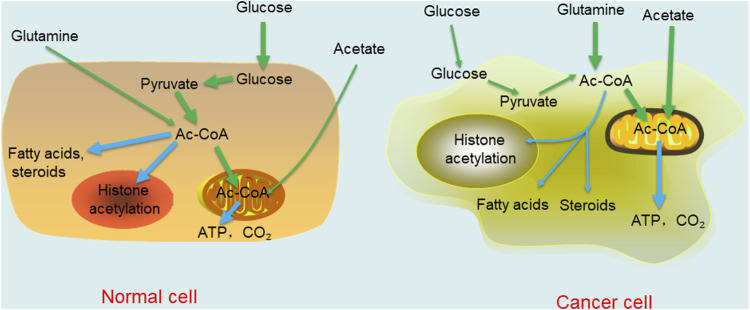
“In cancer, in which hypoxic conditions are caused by the compression of proliferating cancer cells, acetate and glutamine are the main sources of acetyl-CoA (Metallo et al., 2012; Kamphorst et al., 2014) (Figure 2).”
BackgroundBonnet, S., Archer, S. L., Allalunis-Turner, J., Haromy, A., Beaulieu, C., Thompson, R., Lee, C. T., Lopaschuk, G. D., Puttagunta, L., Bonnet, S., et al. (2007) · Cancer Cell · doi:10.1016/j.ccr.2006.10.020 · Cited by 1,530 · cited 1×
“This increases mitochondrial reactive oxygen species generation and induces cancer cell apoptosis (Bonnet et al., 2007).”
BackgroundMattiuzzi, C., & Lippi, G. (2019) · Journal of Epidemiology and Global Health · doi:10.2991/jegh.k.191008.001 · Cited by 1,491 · cited 1×
“cause of death worldwide after ischemic heart diseases (Mattiuzzi and Lippi, 2019).”
BackgroundRegulation of hepatic fatty acid oxidation and ketone body production
McGarry, J. D., & Foster, D. W. (1980) · Annual Review of Biochemistry · doi:10.1146/annurev.bi.49.070180.002143 · Cited by 1,460
Acidity Generated by the Tumor Microenvironment Drives Local Invasion
Estrella, V., Chen, T., Lloyd, M., Wojtkowiak, J., Cornnell, H. H., Ibrahim-Hashim, A., Bailey, K., Balagurunathan, Y., Rothberg, J. M., Sloane, B. F., et al. (2013) · Cancer Research · doi:10.1158/0008-5472.can-12-2796 · Cited by 1,397 · cited 1×
“This results in a decrease in the pH of the tumor microenvironment (Estrella et al., 2013).”
BackgroundTargeting epigenetic regulators for cancer therapy: mechanisms and advances in clinical trials
Cheng, Y., He, C., Wang, M., Ma, X., Mo, F., Yang, S., Han, J., & Wei, X. (2019) · Signal Transduction and Targeted Therapy · doi:10.1038/s41392-019-0095-0 · Cited by 1,097 · cited 1×
“In fact, epigenetic targeted therapy has shown viable therapeutic potential in cancer treatment and is not limited to the regulation of histone acetylation related enzymes, but also the development of new drugs for DNA methylation and histone methylation related enzymes (Cheng et al., 2019).”
BackgroundATP citrate lyase inhibition can suppress tumor cell growth
Hatzivassiliou, G., Zhao, F., Bauer, D. E., Andreadis, C., Shaw, A. N., Dhanak, D., Hingorani, S. R., Tuveson, D. A., & Thompson, C. B. (2005) · Cancer Cell · doi:10.1016/j.ccr.2005.09.008 · Cited by 1,086 · cited 1×
“Later, further cell experiments and animal models showed that SB-204990 had significant proliferation inhibition in lung cancer and prostate cancer (Hatzivassiliou et al., 2005).”
BackgroundHDAC family: What are the cancer relevant targets?
Witt, O., Deubzer, H. E., Milde, T., & Oehme, I. (2009) · Cancer Letters · doi:10.1016/j.canlet.2008.08.016 · Cited by 1,069 · cited 1×
“Among these HDACs, those in categories I, II and IV are known as classic HDACs, which have been recently identified as anticancer drug targets (Witt et al., 2009).”
BackgroundGlutamine reliance in cell metabolism
Yoo, H. C., Yu, Y. C., Sung, Y., & Han, J. M. (2020) · Experimental & Molecular Medicine · doi:10.1038/s12276-020-00504-8 · Cited by 1,021 · cited 1×
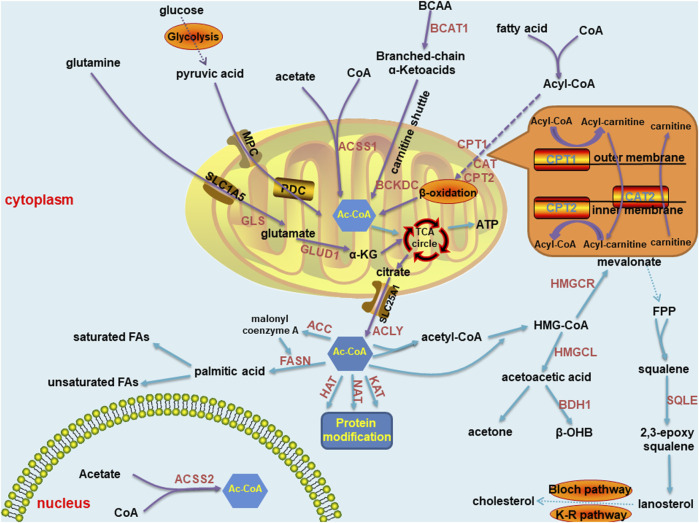
“Then, α-ketoglutarate enters the tricarboxylic acid (TCA) cycle, where it undergoes reductive carboxylation to generate citrate and is transported to the cytoplasm by SLC25A1 (Yoo et al., 2020).”
BackgroundKetone bodies as signaling metabolites
Newman, J. C., & Verdin, E. (2014) · Trends in Endocrinology & Metabolism · doi:10.1016/j.tem.2013.09.002 · Cited by 966 · cited 2×
“Most acetoacetic acid is further metabolized to β-hydroxybutyric acid through β-hydroxybutyrate dehydrogenase (BDH) (Newman and Verdin, 2014).”
BackgroundCholesterol metabolism in cancer: mechanisms and therapeutic opportunities
Huang, B., Song, B.-L., & Xu, C. (2020) · Nature Metabolism · doi:10.1038/s42255-020-0174-0 · Cited by 921 · cited 1×
“Cyclo-oxygenated squalene is cyclized to lanosterol, and enters the Bloch pathway, the Kandutsch-Russell pathway or a mixed pathway to produce cholesterol (Huang et al., 2020).”
BackgroundDiscovery of a selective catalytic p300/CBP inhibitor that targets lineage-specific tumours
Lasko, L. M., Jakob, C. G., Edalji, R. P., Qiu, W., Montgomery, D., Digiammarino, E. L., Hansen, T. M., Risi, R. M., Frey, R., Manaves, V., et al. (2017) · Nature · doi:10.1038/nature24028 · Cited by 858 · cited 1×
“Moreover, recent studies have reported that small-molecule inhibitors can specifically act on the catalytic activity of p300/CBP (two important HAT family members) and show high potency and selectivity (Lasko et al., 2017; Yang et al., 2020c).”
BackgroundSchug, Z. T., Peck, B., Jones, D. T., Zhang, Q., Grosskurth, S., Alam, I. S., Goodwin, L. M., Smethurst, E., Mason, S., Blyth, K., et al. (2015) · Cancer Cell · doi:10.1016/j.ccell.2014.12.002 · Cited by 820 · cited 1×
“ACSS2 Breast cancer An increased number of ACSS2 copies is associated with cancer progression and VY-3-135, an inhibitor of ACSS2, can inhibit tumor growth at a relatively low concentration Cell culture, (Schug et al., 2015; Miller et al., 2021) animal models”
BackgroundThe world of protein acetylation
Drazic, A., Myklebust, L. M., Ree, R., & Arnesen, T. (2016) · Biochimica et Biophysica Acta (BBA) - Proteins and Proteomics · doi:10.1016/j.bbapap.2016.06.007 · Cited by 804 · cited 1×
“Acetyl-CoA in the cytoplasm can be used to conduct protein modification by histone acetyltransferases (HATs), N-acetyltransferases (NATs) and lysine acetyltransferases (KATs) (Drazic et al., 2016).”
BackgroundEpigenetics: Definition, Mechanisms and Clinical Perspective
Dupont, C., Armant, D., & Brenner, C. (2009) · Seminars in Reproductive Medicine · doi:10.1055/s-0029-1237423 · Cited by 799 · cited 1×
“However, genetic functions undergo heritable changes and eventually lead to phenotypic changes (Dupont et al., 2009).”
BackgroundHooked on fat: the role of lipid synthesis in cancer metabolism and tumour development
Baenke, F., Peck, B., Miess, H., & Schulze, A. (2013) · Disease Models & Mechanisms · doi:10.1242/dmm.011338 · Cited by 772 · cited 1×
“In mammalian cells, palmitic acid can be elongated and desaturated to produce various saturated and unsaturated fatty acids (Baenke et al., 2013).”
BackgroundCitric Acid Cycle and Role of its Intermediates in Metabolism
Akram, M. (2014) · Cell Biochemistry and Biophysics · doi:10.1007/s12013-013-9750-1 · Cited by 741 · cited 1×
“The most common pathway of the acetyl-CoA catabolic pathway in circulation is ATP production through the mitochondrial TCA cycle (Akram, 2014).”
BackgroundATP-Citrate Lyase: A Key Player in Cancer Metabolism
Zaidi, N., Swinnen, J. V., & Smans, K. (2012) · Cancer Research · doi:10.1158/0008-5472.can-11-4112 · Cited by 545 · cited 1×
“As a result, acetylCoA is generated from citrate by ATP-citrate lyase (ACLY) (Zaidi et al., 2012).”
ATP citrate lyase is an important component of cell growth and transformation
Bauer, D. E., Hatzivassiliou, G., Zhao, F., Andreadis, C., & Thompson, C. B. (2005) · Oncogene · doi:10.1038/sj.onc.1208773 · Cited by 537 · cited 1×
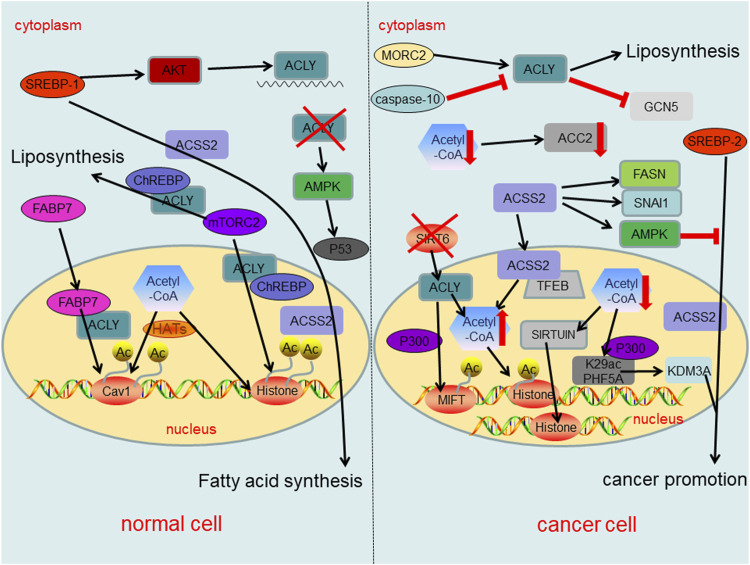
“In normal cells, ACLY expression is mainly regulated by the transcription factor SREBP-1 (sterol regulatory element binding protein-1) which up-regulates ACLY at mRNA level via AKT signaling (Sato et al., 2000; Bauer et al., 2005).”
BackgroundSvensson, R. U., Parker, S. J., Eichner, L. J., Kolar, M. J., Wallace, M., Brun, S. N., Lombardo, P. S., Van Nostrand, J. L., Hutchins, A., Vera, L., et al. (2016) · Nature Medicine · doi:10.1038/nm.4181 · Cited by 536 · cited 1×
“Similarly, two other studies have shown that inhibiting downstream acetyl-CoA carboxylase in the metabolic pathway can effectively prevent the initiation of fatty acid synthesis and increase the mitochondrial oxidation rate to inhibit the growth of nonsmall cell lung cancer (NSCLC) and glioblastoma (Svensson et al., 2…”
BackgroundElsheikh, S. E., Green, A. R., Rakha, E. A., Powe, D. G., Ahmed, R. A., Collins, H. M., Soria, D., Garibaldi, J. M., Paish, C. E., Ammar, A. A., et al. (2009) · Cancer Research · doi:10.1158/0008-5472.can-08-3907 · Cited by 511 · cited 1×
“In one previous study, a low acetylation level of H3K18ac was found to be a separate, potentially important prognostic marker that is inversely proportional to breast cancer grade (Elsheikh et al., 2009).”
BackgroundRegulation of autophagy by cytosolic acetyl-coenzyme A
Mariño, G., Pietrocola, F., Eisenberg, T., Kong, Y., Malik, S. A., Andryushkova, A., Schroeder, S., Pendl, T., Harger, A., Niso-Santano, M., et al. (2014) · Molecular Cell · doi:10.1016/j.molcel.2014.01.016 · Cited by 500 · cited 1×
“In contrast, when cancer cells are cultured in enriched medium, various selective acetyl-CoA metabolic processes can effectively reduce the intracellular acetyl-CoA level (Mariño et al., 2014).”
BackgroundAcetate functions as an epigenetic metabolite to promote lipid synthesis under hypoxia
Gao, X., Lin, S.-H., Ren, F., Li, J.-T., Chen, J.-J., Yao, C.-B., Yang, H.-B., Jiang, S.-X., Yan, G.-Q., Wang, D., et al. (2016) · Nature Communications · doi:10.1038/ncomms11960 · Cited by 480 · cited 2×
“Also, ACSS2 overexpression increased SNAI1 level, H3K27ac and FASN expression (Gao et al., 2016; Yao et al., 2020).”
BackgroundOverview of Histone Modification
Zhang, Y., Sun, Z., Jia, J., Du, T., Zhang, N., Tang, Y., Fang, Y., & Fang, D. (2021) · Advances in Experimental Medicine and Biology · doi:10.1007/978-981-15-8104-5_1 · Cited by 467 · cited 1×
“Epigenetic modifications mainly include histone modification, which includes methylation, acetylation, and phosphorylation, DNA methylation, chromatin remodeling and noncoding RNA regulation (Zhang et al., 2021).”
BackgroundLauffer, B. E. L., Mintzer, R., Fong, R., Mukund, S., Tam, C., Zilberleyb, I., Flicke, B., Ritscher, A., Fedorowicz, G., Vallero, R., et al. (2013) · Journal of Biological Chemistry · doi:10.1074/jbc.m113.490706 · Cited by 429
Targeting epigenetic modifications in cancer therapy: erasing the roadmap to cancer
Mohammad, H. P., Barbash, O., & Creasy, C. L. (2019) · Nature Medicine · doi:10.1038/s41591-019-0376-8 · Cited by 413 · cited 1×
“In many clinical trials, epigenetic regulators developed for mutation or translocation proteins have achieved good efficacy in cancer (Mohammad et al., 2019).”
BackgroundLally, J. S. V., Ghoshal, S., DePeralta, D. K., Moaven, O., Wei, L., Masia, R., Erstad, D. J., Fujiwara, N., Leong, V., Houde, V. P., et al. (2019) · Cell Metabolism · doi:10.1016/j.cmet.2018.08.020 · Cited by 410 · cited 1×
“Recently, ND-654, a novel ACC inhibitor, has been found to inhibit hepatocarcinogenesis by interfering with liver de novo lipogenesis (Lally et al., 2019).”
BackgroundMitochondrial β-oxidation of saturated fatty acids in humans
Adeva-Andany, M. M., Carneiro-Freire, N., Seco-Filgueira, M., Fernández-Fernández, C., & Mouriño-Bayolo, D. (2019) · Mitochondrion · doi:10.1016/j.mito.2018.02.009 · Cited by 374 · cited 1×
“Thus, acyl-CoA is processed through the β-oxidation pathway to form acetyl-CoA (Adeva-Andany et al., 2019).”
BackgroundJin, L., Li, D., Alesi, G. N., Fan, J., Kang, H.-B., Lu, Z., Boggon, T. J., Jin, P., Yi, H., Wright, E. R., et al. (2015) · Cancer Cell · doi:10.1016/j.ccell.2014.12.006 · Cited by 370 · cited 1×
“GLUD1 Lung cancer, breast cancer, and leukemia Targeting GLUD1 with the inhibitor r162 led to imbalanced redox and cancer cell proliferation Cell culture, (Jin et al., 2015) animal models”
BackgroundNucleus-Translocated ACSS2 Promotes Gene Transcription for Lysosomal Biogenesis and Autophagy
Li, X., Yu, W., Qian, X., Xia, Y., Zheng, Y., Lee, J.-H., Li, W., Lyu, J., Rao, G., Zhang, X., et al. (2017) · Molecular Cell · doi:10.1016/j.molcel.2017.04.026 · Cited by 356 · cited 1×
“Another study shows that glucose deprivation results in the binding of transcription factor EB (TFEB) and ACSS2 to the promoter regions of CTSA, GBA, GUSB, and LAMP1 and utilizes the acetate to produce acetyl-CoA locally for histone acetylation (Li et al., 2017).”
BackgroundCorbet, C., Pinto, A., Martherus, R., Santiago de Jesus, J. P., Polet, F., & Feron, O. (2016) · Cell Metabolism · doi:10.1016/j.cmet.2016.07.003 · Cited by 336 · cited 1×
“Dramatic reduction of acetyl-CoA in cancer cells results in sirtuin-mediated histone deacetylation and downregulation of ACC2 (Corbet et al., 2016).”
BackgroundAcetyl-CoA Metabolism Supports Multistep Pancreatic Tumorigenesis
Carrer, A., Trefely, S., Zhao, S., Campbell, S. L., Norgard, R. J., Schultz, K. C., Sidoli, S., Parris, J. L. D., Affronti, H. C., Sivanand, S., et al. (2019) · Cancer Discovery · doi:10.1158/2159-8290.cd-18-0567 · Cited by 313 · cited 1×
“However, by targeting the acetyl-CoAdependent pathway and using combined Bromodomain and extraterminal domain (BET) expression inhibition and statin therapy, scientists have shown that the proliferation of cancer cells and tumor growth can be inhibited (Carrer et al., 2019).”
Inhibitors of histone acetyltransferases KAT6A/B induce senescence and arrest tumour growth
Baell, J. B., Leaver, D. J., Hermans, S. J., Kelly, G. L., Brennan, M. S., Downer, N. L., Nguyen, N., Wichmann, J., McRae, H. M., Yang, Y., et al. (2018) · Nature · doi:10.1038/s41586-018-0387-5 · Cited by 310 · cited 1×
“As inhibitors of kat6a and kat6b (HATs in the MYST family), wm-8014 and wm-1119 induced cell senescence in vitro and in zebrafish hepatocellular carcinoma models and prevented the progression of mouse lymphoma (Baell et al., 2018).”
BackgroundAcetyl-CoA Synthetase 2, a Mitochondrial Matrix Enzyme Involved in the Oxidation of Acetate
Fujino, T., Kondo, J., Ishikawa, M., Morikawa, K., & Yamamoto, T. T. (2001) · Journal of Biological Chemistry · doi:10.1074/jbc.m008782200 · Cited by 298 · cited 1×
“Acetyl-CoA can also be synthesized from acetate and coenzyme A through catalysis mediated by acylCoA short chain synthases (ACSS) in mitochondria (ACSS1) and in both the cytoplasm as well as the nucleus (ACSS2) (Fujino et al., 2001; Wellen et al., 2009; Ariyannur et al., 2010).”
BackgroundFalchook, G., Infante, J., Arkenau, H.-T., Patel, M. R., Dean, E., Borazanci, E., Brenner, A., Cook, N., Lopez, J., Pant, S., et al. (2021) · EClinicalMedicine · doi:10.1016/j.eclinm.2021.100797 · Cited by 296 · cited 3×
“NSCLC, ovarian cancer, and breast cancer For multiple cancers, the disease control rate based on a single FASN inhibitor administered alone reached 42%, and in trials of a FASN inhibitor used in combination with paclitaxel, the rate reached 70% Clinical (Falchook et al., 2021) studies”
BackgroundInhibition of fatty acid synthesis induces programmed cell death in human breast cancer cells.
Pizer, E. S., Jackisch, C., Wood, F. D., Pasternack, G. R., Davidson, N. E., & Kuhajda, F. P. (1996) · PubMed · Cited by 291
Pizer, E. S., Wood, F. D., Heine, H. S., Romantsev, F. E., Pasternack, G. R., & Kuhajda, F. P. (1996) · PubMed · Cited by 277
Histone Acetylation Regulates Intracellular pH
McBrian, M. A., Behbahan, I. S., Ferrari, R., Su, T., Huang, T.-W., Li, K., Hong, C. S., Christofk, H. R., Vogelauer, M., Seligson, D. B., et al. (2013) · Molecular Cell · doi:10.1016/j.molcel.2012.10.025 · Cited by 272 · cited 1×
“Therefore, relatively high intracellular pH maintains the levels of acetylation, which is related to increased cell proliferation and cancer invasiveness, leading to adverse clinical outcomes (McBrian et al., 2013; Liu et al., 2020).”
BackgroundGranchi, C. (2018) · European Journal of Medicinal Chemistry · doi:10.1016/j.ejmech.2018.09.001 · Cited by 245 · cited 1×
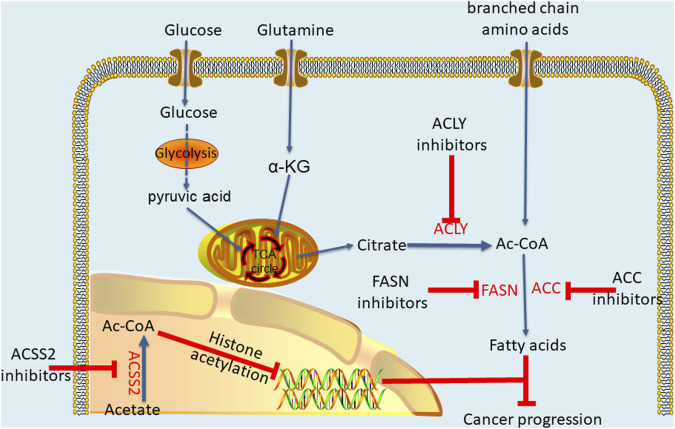
“Interestingly, ACLY inhibitors have been used to treat metabolic disorders, and scientists are now trying to apply these inhibitors to cancer treatment (Granchi, 2018).”
BackgroundKrug, B., De Jay, N., Harutyunyan, A. S., Deshmukh, S., Marchione, D. M., Guilhamon, P., Bertrand, K. C., Mikael, L. G., McConechy, M. K., Chen, C. C. L., et al. (2019) · Cancer Cell · doi:10.1016/j.ccell.2019.04.004 · Cited by 239
Kamphorst, J. J., Chung, M. K., Fan, J., & Rabinowitz, J. D. (2014) · Cancer & Metabolism · doi:10.1186/2049-3002-2-23 · Cited by 227 · cited 1×
“In cancer, in which hypoxic conditions are caused by the compression of proliferating cancer cells, acetate and glutamine are the main sources of acetyl-CoA (Metallo et al., 2012; Kamphorst et al., 2014) (Figure 2).”
BackgroundKondo, A., Yamamoto, S., Nakaki, R., Shimamura, T., Hamakubo, T., Sakai, J., Kodama, T., Yoshida, T., Aburatani, H., & Osawa, T. (2017) · Cell Reports · doi:10.1016/j.celrep.2017.02.006 · Cited by 206
Overview of the Molecular and Biochemical Basis of Branched-Chain Amino Acid Catabolism
Harris, R. A., Joshi, M., Jeoung, N. H., & Obayashi, M. (2005) · The Journal of Nutrition · doi:10.1093/jn/135.6.1527s · Cited by 194 · cited 2×
“Therefore, α-ketoacid undergoes decarboxylation mediated by the branched-chain α-ketoacid dehydrogenase complex (BCKDC) to produce acetyl-CoA and other acylCoAs (Harris et al., 2005).”
BackgroundFatty acid synthase mediates EGFR palmitoylation in EGFR mutated non‐small cell lung cancer
Ali, A., Levantini, E., Teo, J. T., Goggi, J., Clohessy, J. G., Wu, C. S., Chen, L., Yang, H., Krishnan, I., Kocher, O., et al. (2018) · EMBO Molecular Medicine · doi:10.15252/emmm.201708313 · Cited by 187 · cited 1×
“Another well-known drug used to treat obesity, orlistat, can shrink tumors in non-small cell lung cancer and in pancreatic cancer (Sokolowska et al., 2017; Ali et al., 2018), but its progress in clinical trials is hindered by a series of reasons such as high instability, poor gastrointestinal absorption, etc (Zhi et a…”
BackgroundWeichert, W., Denkert, C., Noske, A., Darb-Esfahani, S., Dietel, M., Kalloger, S. E., Huntsman, D. G., & Köbel, M. (2008) · Neoplasia · doi:10.1593/neo.08474 · Cited by 180 · cited 1×
“In endometrioid tissue subtypes, the expression of three class I HDACs has been shown to be an independent prognostic marker (Weichert et al., 2008).”
BackgroundXin, M., Qiao, Z., Li, J., Liu, J., Song, S., Zhao, X., Miao, P., Tang, T., Wang, L., Liu, W., et al. (2016) · Oncotarget · doi:10.18632/oncotarget.10020 · Cited by 177 · cited 1×
“Through the upstream inhibition of miR-22, ACLY expression was downregulated, and more cells in cancer tissues underwent excellent differentiation (Xin et al., 2016).”
BackgroundReview of Limited Systemic Absorption of Orlistat, a Lipase Inhibitor, in Healthy Human Volunteers
Zhi, J., Melia, A. T., Eggers, H., Joly, R., & Patel, I. H. (1995) · The Journal of Clinical Pharmacology · doi:10.1002/j.1552-4604.1995.tb04034.x · Cited by 171 · cited 1×
“, 2018), but its progress in clinical trials is hindered by a series of reasons such as high instability, poor gastrointestinal absorption, etc (Zhi et al., 1995).”
BackgroundCai, L.-Y., Chen, S.-J., Xiao, S.-H., Sun, Q.-J., Ding, C.-H., Zheng, B.-N., Zhu, X.-Y., Liu, S.-Q., Yang, F., Yang, Y.-X., et al. (2021) · Cancer Research · doi:10.1158/0008-5472.can-20-1323 · Cited by 169
Pfister, S., Rea, S., Taipale, M., Mendrzyk, F., Straub, B., Ittrich, C., Thuerigen, O., Sinn, H. P., Akhtar, A., & Lichter, P. (2008) · International Journal of Cancer · doi:10.1002/ijc.23283 · Cited by 167 · cited 1×
“In medulloblastoma, the downregulation of hmof protein expression has been associated with poor survival and may play a role as a prognostic marker (Pfister et al., 2008).”
BackgroundWang, X., Liu, R., Qu, X., Yu, H., Chu, H., Zhang, Y., Zhu, W., Wu, X., Gao, H., Tao, B., et al. (2019) · Molecular Cell · doi:10.1016/j.molcel.2019.07.007 · Cited by 164 · cited 3×
“Similarly, PHF5A, a component of small nuclear ribonucleoprotein, can be acetylated at lysine 29 dependent on p300 and promotes KDM3A protein expression, leading to poor prognosis of cancer (Wang et al., 2019c).”
BackgroundInfluentialFunctional and structural properties of mammalian acyl-coenzyme A thioesterases
Kirkby, B., Roman, N., Kobe, B., Kellie, S., & Forwood, J. K. (2010) · Progress in Lipid Research · doi:10.1016/j.plipres.2010.04.001 · Cited by 163 · cited 1×
“In the cytoplasm of liver cells, acetyl-CoA can also be hydrolyzed by acyl-CoA thioesterase 12 (ACOT12) to coenzyme A and acetate (Suematsu et al., 2001; Kirkby et al., 2010).”
BackgroundGao, Y., Islam, M. S., Tian, J., Lui, V. W. Y., & Xiao, D. (2014) · Cancer Letters · doi:10.1016/j.canlet.2014.03.015 · Cited by 158 · cited 1×
“does not have a significant impact on normal prostate epithelial cells (Gao et al., 2014).”
BackgroundGu, L., Zhu, Y., Lin, X., Tan, X., Lu, B., & Li, Y. (2020) · Oncogene · doi:10.1038/s41388-020-1156-0 · Cited by 156 · cited 1×
“Hepatocellular carcinoma Stabilization of FASN through the ACAT1-GNPAT-FASN axis greatly contributes to the development of hepatocellular carcinoma Cell culture, (Gu et al., 2020) animal models”
BackgroundAlwarawrah, Y., Hughes, P., Loiselle, D., Carlson, D. A., Darr, D. B., Jordan, J. L., Xiong, J., Hunter, L. M., Dubois, L. G., Thompson, J. W., et al. (2016) · Cell Chemical Biology · doi:10.1016/j.chembiol.2016.04.011 · Cited by 156 · cited 1×
“FASN Breast cancer Fasnall, a FASN inhibitor, has shown potential anticancer activity through the induction of apoptosis, especially when combined with carboplatin Cell culture, (Alwarawrah et al., 2016) animal models”
BackgroundLu, M., Zhu, W.-W., Wang, X., Tang, J.-J., Zhang, K.-L., Yu, G.-Y., Shao, W.-Q., Lin, Z.-F., Wang, S.-H., Lu, L., et al. (2019) · Cell Metabolism · doi:10.1016/j.cmet.2018.12.019 · Cited by 152 · cited 1×
“In a recent liver cancer study, gene manipulation through acyl-CoA thioesterase 12 (ACOT12) led to significant changes in H3 acetylation in different HCC cell lines, making it useful as a prognostic marker (Lu et al., 2019).”
BackgroundPotent Dual BET/HDAC Inhibitors for Efficient Treatment of Pancreatic Cancer
He, S., Dong, G., Li, Y., Wu, S., Wang, W., & Sheng, C. (2020) · Angewandte Chemie International Edition · doi:10.1002/anie.201915896 · Cited by 147 · cited 1×
“HDAC inhibitors induce synergistic effects with BETs, and this combination shows a good inhibitory effect on pancreatic cancer (He et al., 2020).”
BackgroundThe role of ATP citrate-lyase in the metabolic regulation of plasma lipids
PEARCE, N. J., YATES, J. W., BERKHOUT, T. A., JACKSON, B., TEW, D., BOYD, H., CAMILLERI, P., SWEENEY, P., GRIBBLE, A. D., SHAW, A., et al. (1998) · Biochemical Journal · doi:10.1042/bj3340113 · Cited by 142 · cited 1×
“As early as the end of the 20th century, SB-204990, a lactone prodrug of ACLY inhibitor SB201076, was proved to have a hypolipidemic effect (Pearce et al., 1998).”
BackgroundSato, R., Okamoto, A., Inoue, J., Miyamoto, W., Sakai, Y., Emoto, N., Shimano, H., & Maeda, M. (2000) · Journal of Biological Chemistry · doi:10.1074/jbc.275.17.12497 · Cited by 141 · cited 1×
“In normal cells, ACLY expression is mainly regulated by the transcription factor SREBP-1 (sterol regulatory element binding protein-1) which up-regulates ACLY at mRNA level via AKT signaling (Sato et al., 2000; Bauer et al., 2005).”
BackgroundShen, Y., Volrath, S., Weatherly, S. C., Elich, T. D., & Tong, L. (2004) · Molecular Cell · doi:10.1016/j.molcel.2004.11.034 · Cited by 139 · cited 1×
“Soraphen A is a natural ACC inhibitor against the biotin carboxylase (BC) domain (Shen et al., 2004).”
BackgroundYang, J., Zhang, Z., Zhang, Y., Ni, X., Zhang, G., Cui, X., Liu, M., Xu, C., Zhang, Q., Zhu, H., et al. (2019) · Gastroenterology · doi:10.1053/j.gastro.2018.10.026 · Cited by 137 · cited 1×
“Pancreatic cancer ACSS2 knockout markedly inhibits cancer cells proliferation and the prolongation of survival in orthotopic mouse models Cell culture, (Zhou et al., 2022) animal models”
BackgroundZheng, Z., Li, Z., Guan, J.-L., Liu, X., Li, J., Chen, Y., Lin, L. C., Kou, J., Lv, J., Zhang, L., et al. (2020) · Cancer Research · doi:10.1158/0008-5472.can-19-3626 · Cited by 133 · cited 1×
“Another study showed that maintaining ACLY levels and regulating acetylCoA levels promote the proliferation, metastasis, and even drug resistance of cancer cells in nasopharyngeal cancer (Zheng et al., 2020).”
BackgroundYang, Y., Zhang, R., Li, Z., Mei, L., Wan, S., Ding, H., Chen, Z., Xing, J., Feng, H., Han, J., et al. (2020) · Journal of Medicinal Chemistry · doi:10.1021/acs.jmedchem.9b01721 · Cited by 132
Shi, L., & Tu, B. P. (2013) · Proceedings of the National Academy of Sciences · doi:10.1073/pnas.1302490110 · Cited by 129 · cited 1×
“Previous research has shown that an increase in the acetyl-CoA synthesis rate promotes posttranslational histone acetylation at specific gene sites and accelerates cell division (Wellen et al., 2009; Shi and Tu, 2013).”
BackgroundJones, J. E. C., Esler, W. P., Patel, R. S., Lanba, A., Vera, N. B., Pfefferkorn, J. A., & Vernochet, C. (2017) · PLoS ONE · doi:10.1371/journal.pone.0169566 · Cited by 128 · cited 1×
“Similarly, two other studies have shown that inhibiting downstream acetyl-CoA carboxylase in the metabolic pathway can effectively prevent the initiation of fatty acid synthesis and increase the mitochondrial oxidation rate to inhibit the growth of nonsmall cell lung cancer (NSCLC) and glioblastoma (Svensson et al., 2…”
BackgroundHistone acetyltransferase inhibitors block neuroblastoma cell growth in vivo
Gajer, J. M., Furdas, S. D., Gründer, A., Gothwal, M., Heinicke, U., Keller, K., Colland, F., Fulda, S., Pahl, H. L., Fichtner, I., et al. (2015) · Oncogenesis · doi:10.1038/oncsis.2014.51 · Cited by 127 · cited 1×
“For example, the panhat inhibitor pu139 showed a significant anticancer effect on neuroblastoma xenografts in vivo (Gajer et al., 2015).”
BackgroundBartling, B., Hofmann, H., Boettger, T., Hansen, G., Burdach, S. E. G., Silber, R., & Simm, A. (2005) · Lung Cancer · doi:10.1016/j.lungcan.2005.02.006 · Cited by 123 · cited 1×
“A previous study showed that although HDAC3 expression varies greatly among individuals with lung cancer, it is significantly upregulated in cancer tissues compared with normal lung tissue (Bartling et al., 2005).”
BackgroundChemical inhibition of acetyl-CoA carboxylase suppresses self-renewal growth of cancer stem cells
Corominas-Faja, B., Cuyàs, E., Gumuzio, J., Bosch-Barrera, J., Leis, O., Martin, Á. G., & Menendez, J. A. (2014) · Oncotarget · doi:10.18632/oncotarget.2059 · Cited by 119
Yang, W., Hsu, C.-C., Hsu, T., Liou, J., Chang, K., Chen, P., Liu, J.-J., Yang, S.-T., Wang, J., Yeh, S.-H., et al. (2020) · Neuro-Oncology · doi:10.1093/neuonc/noaa103 · Cited by 118
Sullivan, A. C., Singh, M. P., Srere, P. A., & Glusker, J. P. (1977) · Journal of Biological Chemistry · doi:10.1016/s0021-9258(17)41006-4 · Cited by 115 · cited 2×
“The most well-known and the first discovered ACLY inhibitor is hydroxycitrate (HCA) (Sullivan et al., 1977).”
BackgroundAngeles, T. S., & Hudkins, R. L. (2016) · Expert Opinion on Drug Discovery · doi:10.1080/17460441.2016.1245286 · Cited by 114 · cited 1×
“, 1996b), but its off-target activities hindered its clinical development (Angeles and Hudkins, 2016).”
BackgroundWang, Z., Yang, X., Liu, C., Li, X., Zhang, B., Wang, B., Zhang, Y., Song, C., Zhang, T., Liu, M., et al. (2019) · Molecular Cell · doi:10.1016/j.molcel.2019.04.009 · Cited by 111
Violante, S. N., IJlst, L., Ruiter, J. P. N., Koster, J., van LENTHE, H., Durán, M., de Almeida, I. T., Wanders, R. J. A., Houten, S. M., & Ventura, F. V. (2013) · Biochimica et Biophysica Acta (BBA) - Molecular Basis of Disease · doi:10.1016/j.bbadis.2013.02.012 · Cited by 109 · cited 1×
“, 2005), which are transported into mitochondria through the carnitine shuttle (Violante et al., 2013).”
BackgroundXu, H., Luo, J., Ma, G., Zhang, X., Yao, D., Li, M., & Loor, J. J. (2017) · Journal of Cellular Physiology · doi:10.1002/jcp.25954 · Cited by 107
Acetyl-CoA Synthetase 2: A Critical Linkage in Obesity-Induced Tumorigenesis in Myeloma
Li, Z., Liu, H., He, J., Wang, Z., Yin, Z., You, G., Wang, Z., Davis, R. E., Lin, P., Bergsagel, P. L., et al. (2021) · Cell Metabolism · doi:10.1016/j.cmet.2020.12.011 · Cited by 107 · cited 2×
“The expression of ACSS2 in myeloma cells of patients with malignant subtypes was significantly higher than that of patients with subtypes of good prognosis (Li et al., 2021).”
BackgroundResultSelf-citationDrug Insight: histone deacetylase inhibitor-based therapies for cutaneous T-cell lymphomas
Khan, O. A., & Thangue, N. B. L. (2008) · Nature Clinical Practice Oncology · doi:10.1038/ncponc1238 · Cited by 104
Dizon, D. S., Blessing, J. A., Penson, R. T., Drake, R. D., Walker, J. L., Johnston, C. M., DiSilvestro, P. A., & Fader, A. N. (2012) · Gynecologic Oncology · doi:10.1016/j.ygyno.2012.02.019 · Cited by 102 · cited 1×
“In another study, the combination of an HDAC inhibitor with carboplatin and paclitaxel achieved good efficacy in pretreated patients with advanced epithelial ovarian cancer, showing an overall response rate of 43% and good tolerance (Dizon et al., 2012).”
BackgroundTargeting ACSS2 with a Transition-State Mimetic Inhibits Triple-Negative Breast Cancer Growth
Miller, K. D., Pniewski, K., Perry, C. E., Papp, S. B., Shaffer, J. D., Velasco-Silva, J. N., Casciano, J. C., Aramburu, T. M., Srikanth, Y. V. V., Cassel, J., et al. (2021) · Cancer Research · doi:10.1158/0008-5472.can-20-1847 · Cited by 98 · cited 4×
“ACSS2 Breast cancer An increased number of ACSS2 copies is associated with cancer progression and VY-3-135, an inhibitor of ACSS2, can inhibit tumor growth at a relatively low concentration Cell culture, (Schug et al., 2015; Miller et al., 2021) animal models”
BackgroundInfluentialHistone acetyltransferases: Rising ancient counterparts to protein kinases
Yuan, H., & Marmorstein, R. (2012) · Biopolymers · doi:10.1002/bip.22128 · Cited by 98 · cited 1×
“The overall structures and catalytic outcomes differ, but the general process involves the transfer of acetyl groups from acetyl-CoA to lysine residues (N-terminus) and the production of CoA (Yuan and Marmorstein, 2013).”
BackgroundDesign and synthesis of emodin derivatives as novel inhibitors of ATP-citrate lyase
Koerner, S. K., Hanai, J., Bai, S., Jernigan, F. E., Oki, M., Komaba, C., Shuto, E., Sukhatme, V. P., & Sun, L. (2016) · European Journal of Medicinal Chemistry · doi:10.1016/j.ejmech.2016.12.018 · Cited by 95
Cloning and expression of a human ATP‐citrate lyase cDNA
ELSHOURBAGY, N. A., NEAR, J. C., KMETZ, P. J., WELLS, T. N. C., GROOT, P. H. E., SAXTY, B. A., HUGHES, S. A., FRANKLIN, M., & GLOGER, I. S. (1992) · European Journal of Biochemistry · doi:10.1111/j.1432-1033.1992.tb16659.x · Cited by 81 · cited 1×
“It resides in the cytoplasm and nucleus and converts citrate and Co-A to acetyl-CoA and oxaloacetic acid (Elshourbagy et al., 1992).”
BackgroundWang, T., Zhang, X., GUO, X.-Y., Xian, S.-L., & Lu, Y. (2015) · Oncology Reports · doi:10.3892/or.2015.4511 · Cited by 80 · cited 1×
“Through intraperitoneal administration, citrate has shown a significant inhibitory effect on gastric cancer (Wang et al., 2016).”
BackgroundFernandez, S., Viola, J. M., Torres, A., Wallace, M., Trefely, S., Zhao, S., Affronti, H. C., Gengatharan, J. M., Guertin, D. A., Snyder, N. W., et al. (2019) · Cell Reports · doi:10.1016/j.celrep.2019.04.112 · Cited by 80 · cited 1×
“Additionally, mTORC2 also promotes acetyl-CoA synthesis from acetate through ACSS2 (Fernandez et al., 2019; Martinez Calejman et al., 2020).”
BackgroundGuo, W., Ma, J., Yang, Y., Guo, S., Zhang, W., Zhao, T., Yi, X., Wang, H., Wang, S., Liu, Y., et al. (2020) · Clinical Cancer Research · doi:10.1158/1078-0432.ccr-19-1359 · Cited by 78
Triacetin‐based acetate supplementation as a chemotherapeutic adjuvant therapy in glioma
Tsen, A. R., Long, P. M., Driscoll, H. E., Davies, M. T., Teasdale, B., Penar, P. L., Pendlebury, W. W., Spees, J. L., Lawler, S. E., Viapiano, M. S., et al. (2013) · International Journal of Cancer · doi:10.1002/ijc.28465 · Cited by 64 · cited 1×
“Moreover, previous studies have shown that glyceryl triacetate (GTA)-mediated acetate supplement is a new therapeutic method to inhibit the growth of glioblastoma, which can provide a safe and effective epigenetic therapy without affecting the proliferation of normal neural stem cells (Long et al., 2013; Tsen et al.,…”
BackgroundNuclear‐cytoplasmic localization of acetyl coenzyme a synthetase‐1 in the rat brain
Ariyannur, P. S., Moffett, J. R., Madhavarao, C. N., Arun, P., Vishnu, N., Jacobowitz, D. M., Hallows, W. C., Denu, J. M., & Namboodiri, A. M. A. (2010) · Journal of Comparative Neurology · doi:10.1002/cne.22373 · Cited by 63 · cited 1×
“Acetyl-CoA can also be synthesized from acetate and coenzyme A through catalysis mediated by acylCoA short chain synthases (ACSS) in mitochondria (ACSS1) and in both the cytoplasm as well as the nucleus (ACSS2) (Fujino et al., 2001; Wellen et al., 2009; Ariyannur et al., 2010).”
BackgroundRinaldi, G., Rossi, M., & Fendt, S. (2018) · WIREs Systems Biology and Medicine · doi:10.1002/wsbm.1397 · Cited by 63 · cited 1×
“To this end, we are looking for cancer markers, many of which can mediate epigenetic modifications and promote the abnormal proliferation of cells and cancer development and maintenance (Rinaldi et al., 2018).”
BackgroundCytosolic functions of MORC2 in lipogenesis and adipogenesis
Sánchez-Solana, B., Li, D.-Q., & Kumar, R. (2014) · Biochimica et Biophysica Acta (BBA) - Molecular Cell Research · doi:10.1016/j.bbamcr.2013.11.012 · Cited by 63
ATP‐citrate lyase regulates cellular senescence via an AMPK‐ and p53‐dependent pathway
Lee, J., Jang, H., Lee, S., Lee, J., Choi, J., Kim, T. W., Cho, E., & Youn, H. (2015) · The FEBS Journal · doi:10.1111/febs.13139 · Cited by 62 · cited 1×
“Meaningfully, the activation of AMPactivated protein kinase (AMPK) under ACLY silencing conditions may lead to cancer suppressor p53 activation, ultimately leading to DNA damage-induced cell death both in primary human cells and cancer cells (Lee et al., 2015).”
BackgroundFerro, S., Azevedo‐Silva, J., Casal, M., Côrte‐Real, M., Baltazar, F., & Preto, A. (2016) · Oncotarget · doi:10.18632/oncotarget.12156 · Cited by 61 · cited 1×
“Therefore, maintaining a specific acetate concentration may be a complementary strategy in the current treatment of colorectal cancer (Ferro et al., 2016; Tran et al., 2021).”
BackgroundKumari, R., Deshmukh, R. S., & Das, S. (2019) · Nature Communications · doi:10.1038/s41467-019-12194-6 · Cited by 60
Guais, A., Baronzio, G., Sanders, E., Campion, F., Mainini, C., Fiorentini, G., Montagnani, F., Behzadi, M., Schwartz, L. H., & Abolhassani, M. (2010) · Investigational New Drugs · doi:10.1007/s10637-010-9552-x · Cited by 59 · cited 1×
“In both lung carcinoma and bladder cancer animal models, HCA and αlipoic acid combination potentiated the efficacy of the tested anticancer drugs in reducing tumor growth and improving survival rate (Guais et al., 2012).”
BackgroundCiraku, L., Bacigalupa, Z. A., Ju, J., Moeller, R. A., Le Minh, G., Lee, R. H., Smith, M. D., Ferrer, C. M., Trefely, S., Izzo, L. T., et al. (2022) · Oncogene · doi:10.1038/s41388-022-02237-6 · Cited by 57 · cited 1×
“Glioblastoma Phosphorylation of ACSS2 on serine 267 stabilizes ACSS2 protein levels and contributes to glioblastoma growth Cell culture (Ciraku et al., 2022)”
BackgroundTargeting de novo lipogenesis as a novel approach in anti-cancer therapy
Stoiber, K., Nagło, O., Pernpeintner, C., Zhang, S., Koeberle, A., Ulrich, M. P., Werz, O., Müller, R., Zahler, S., Lohmüller, T., et al. (2017) · British Journal of Cancer · doi:10.1038/bjc.2017.374 · Cited by 56 · cited 1×
“In breast cancer dissemination and xenograft mice experiments, soraphen A abrogated the formation of lung metastasis whereas control cells disseminate to the lungs (Stoiber et al., 2018).”
BackgroundPKM2 promotes reductive glutamine metabolism
Miao, L., Yuanyuan, W., Yuxia, R., Changsen, B., Li, Q., Yanfen, C., Guoguang, Y., & Binghui, L. (2018) · Cancer Biology and Medicine · doi:10.20892/j.issn.2095-3941.2018.0122 · Cited by 55 · cited 1×
“Research has shown that pyruvate kinase M2 (PKM2) reduces glucose consumption and citrate production in cells, promotes reductive glutamine metabolism to produce acetyl-CoA, and provides the basis for cancer cell proliferation by maintaining proton homeostasis (Liu et al., 2018).”
BackgroundAcetate Supplementation as a Means of Inducing Glioblastoma Stem-Like Cell Growth Arrest
Long, P. M., Tighe, S. W., Driscoll, H. E., Fortner, K. A., Viapiano, M. S., & Jaworski, D. M. (2015) · Journal of Cellular Physiology · doi:10.1002/jcp.24927 · Cited by 54 · cited 1×
“Moreover, previous studies have shown that glyceryl triacetate (GTA)-mediated acetate supplement is a new therapeutic method to inhibit the growth of glioblastoma, which can provide a safe and effective epigenetic therapy without affecting the proliferation of normal neural stem cells (Long et al., 2013; Tsen et al.,…”
BackgroundKAT7 is a genetic vulnerability of acute myeloid leukemias driven by MLL rearrangements
Au, Y. Z., Gu, M., Braekeleer, E. D., Gozdecka, M., Aspris, D., Tarumoto, Y., Cooper, J. L., Yu, J., Ong, S. H., Chen, X. X., et al. (2020) · Leukemia · doi:10.1038/s41375-020-1001-z · Cited by 53 · cited 1×
“Another study showed that the deletion of KAT7 can lead to a decrease in AML cell proliferation and an increase in apoptosis and differentiation, but unfortunately, a relationship between AML cell depletion and AML prognosis has not been proven (Au et al., 2021).”
BackgroundZheng, Y., Zhou, Q., Zhao, C., Li, J., Yu, Z., & Zhu, Q. (2021) · Journal of Cellular and Molecular Medicine · doi:10.1111/jcmm.16235 · Cited by 51
Krug, B., Jay, N. D., Harutyunyan, A. S., Deshmukh, S., Marchione, D. M., Guilhamon, P., Bertrand, K. C., Mikael, L. G., McConechy, M. K., Chen, C. C. L., et al. (2019) · Cancer Cell · doi:10.1016/j.ccell.2019.08.012 · Cited by 51
Jiang, Y., Hu, T., Wang, T., Shi, X. E., Kitano, A., Eagle, K., Hoegenauer, K. A., Konopleva, M. Y., Lin, C. Y., Young, N. L., et al. (2019) · Blood · doi:10.1182/blood.2019001076 · Cited by 50
Intracellular pH Regulates Cancer and Stem Cell Behaviors: A Protein Dynamics Perspective
Liu, Y., White, K. A., & Barber, D. L. (2020) · Frontiers in Oncology · doi:10.3389/fonc.2020.01401 · Cited by 50 · cited 1×
“Therefore, relatively high intracellular pH maintains the levels of acetylation, which is related to increased cell proliferation and cancer invasiveness, leading to adverse clinical outcomes (McBrian et al., 2013; Liu et al., 2020).”
BackgroundLow expression of ACLY associates with favorable prognosis in acute myeloid leukemia
Wang, J., Ye, W., Yan, X., Guo, Q., Ma, Q., Lin, F., Huang, J., & Jin, J. (2019) · Journal of Translational Medicine · doi:10.1186/s12967-019-1884-5 · Cited by 45
Petrova, E. P., Scholz, A., Paul, J., Sturz, A., Haike, K., Siegel, F., Mumberg, D., & Liu, N. (2016) · Oncotarget · doi:10.18632/oncotarget.12650 · Cited by 43 · cited 2×
“…the proliferation of pancreatic cancer cells is slowed in vivo and in vitro, and the growth of pancreatic cancer is suppressed Cell culture, (Petrova et al., 2017) animal models ACSS2 Breast cancer An increased number of ACSS2 copies is associated with cancer progression and VY-3-135, an…”
BackgroundOrlistat Reduces Proliferation and Enhances Apoptosis in Human Pancreatic Cancer Cells (PANC-1)
SOKOLOWSKA, E., Presler, M., Goyke, E., Milczarek, R., Świerczyński, J., & Śledziński, T. (2017) · Anticancer Research · doi:10.21873/anticanres.12083 · Cited by 43 · cited 1×
“Another well-known drug used to treat obesity, orlistat, can shrink tumors in non-small cell lung cancer and in pancreatic cancer (Sokolowska et al., 2017; Ali et al., 2018), but its progress in clinical trials is hindered by a series of reasons such as high instability, poor gastrointestinal absorption, etc (Zhi et a…”
BackgroundChai, X., Guo, J., Dong, R., Yang, X., Deng, C., Wei, C., Xu, J., Han, W., Lu, J., Gao, C., et al. (2021) · Clinical and Translational Medicine · doi:10.1002/ctm2.313 · Cited by 42 · cited 1×
“3K18ac and H4K77ac in HCC patients were significantly related to poorer survival and higher recurrence (Chai et al., 2021).”
BackgroundSIRT7, H3K18ac, and ELK4 Immunohistochemical Expression in Hepatocellular Carcinoma
Lee, H. S., Jung, W., Lee, E. J., Chang, H., Choi, J. H., Kim, H. G., Kim, A., & Kim, B. (2016) · Journal of Pathology and Translational Medicine · doi:10.4132/jptm.2016.05.20 · Cited by 41 · cited 1×
“Low H3K18ac expression is an independent and valuable prognostic factor in HCC patients (Lee et al., 2016).”
BackgroundGalvez, A. F., Huang, L., Magbanua, M. J., Dawson, K., & Rodriguez, R. L. (2011) · Nutrition and Cancer · doi:10.1080/01635581.2011.539312 · Cited by 38 · cited 1×
“…human prostate epithelial cells; Colorectal cancer Lunasin (histone acetylation inhibitor); Suberoylanilide hydroxamic acid (HDAC inhibitor) (Galvez et al., 2011; Alzoubi et al., 2016) H3K4 Endometrial carcinoma RGFP-966 (HDAC3 inhibitor) Chen et al. (2022a) H3K9 Prostate cancer…”
BackgroundYang, D., Peng, M., Hou, Y., Qin, Y., Wan, X., Zhu, P., Liu, S., Yang, L., Zeng, H., Jin, T., et al. (2020) · Cell Death and Disease · doi:10.1038/s41419-020-2714-7 · Cited by 38
Alzoubi, S., Brody, L., Rahman, S., Mahul-Mellier, A.-L., Mercado, N., Ito, K., El-Bahrawy, M., Silver, A., Boobis, A., Bell, J. D., et al. (2016) · Oncotarget · doi:10.18632/oncotarget.9887 · Cited by 37
FABP7 Regulates Acetyl-CoA Metabolism Through the Interaction with ACLY in the Nucleus of Astrocytes
Kagawa, Y., Umaru, B. A., Shima, H., Ito, R., Zama, R., Islam, A., Kanno, S., Yasui, A., Sato, S., Jozaki, K., et al. (2020) · Molecular Neurobiology · doi:10.1007/s12035-020-02057-3 · Cited by 37
Shao, J., Shi, T., Yu, H. T., Ding, Y., Li, L., Wang, X., & Wang, X. (2021) · The EMBO Journal · doi:10.15252/embj.2020107480 · Cited by 35
Molecular cloning and functional expression of rat liver cytosolic acetyl‐CoA hydrolase
Suematsu, N., Okamoto, K., Shibata, K., Nakanishi, Y., & Isohashi, F. (2001) · European Journal of Biochemistry · doi:10.1046/j.1432-1327.2001.02162.x · Cited by 34 · cited 1×
“In the cytoplasm of liver cells, acetyl-CoA can also be hydrolyzed by acyl-CoA thioesterase 12 (ACOT12) to coenzyme A and acetate (Suematsu et al., 2001; Kirkby et al., 2010).”
BackgroundJones, J. G., Sherry, A. D., Jeffrey, F. M. H., Storey, C. J., & Malloy, C. R. (1993) · Biochemistry · doi:10.1021/bi00096a037 · Cited by 33 · cited 1×
“Then, pyruvate is transported into mitochondria through a mitochondrial pyruvate carrier (MPC) and ultimately decarboxylated by the pyruvate dehydrogenase complex (PDC) to acetyl-CoA (Jones et al., 1993).”
BackgroundYao, L., Jiang, L., Zhang, F., Li, M., Yang, B., Zhang, F., & Guo, X. (2020) · Bioscience Reports · doi:10.1042/bsr20200382 · Cited by 32 · cited 1×
“Also, ACSS2 overexpression increased SNAI1 level, H3K27ac and FASN expression (Gao et al., 2016; Yao et al., 2020).”
BackgroundCalhoun, S., Duan, L., & Maki, C. G. (2022) · Translational Oncology · doi:10.1016/j.tranon.2022.101386 · Cited by 31 · cited 1×
“In breast cancer cells with long-term estrogen deprivation, the treatment of ACSS2 inhibitor leads to significant loss of viability and proliferation (Calhoun et al., 2022).”
BackgroundLong, P. M., Tighe, S. W., Driscoll, H. E., Moffett, J. R., Namboodiri, A. M. A., Viapiano, M. S., Lawler, S. E., & Jaworski, D. M. (2013) · PLoS ONE · doi:10.1371/journal.pone.0080714 · Cited by 27 · cited 1×
“Moreover, previous studies have shown that glyceryl triacetate (GTA)-mediated acetate supplement is a new therapeutic method to inhibit the growth of glioblastoma, which can provide a safe and effective epigenetic therapy without affecting the proliferation of normal neural stem cells (Long et al., 2013; Tsen et al.,…”
BackgroundCocco, E., Leo, M., Canzonetta, C., Vito, S. D., Mai, A., Rotili, D., Napoli, A. D., Vecchione, A. M., Nunzio, C. D., Filetici, P., et al. (2018) · Clinical Epigenetics · doi:10.1186/s13148-018-0473-4 · Cited by 27
Acetate decreases PVR/CD155 expression via PI3K/AKT pathway in cancer cells
Tran, N. L., Lee, I. K., Choi, J., Kim, S., & Oh, S. J. (2021) · BMB Reports · doi:10.5483/bmbrep.2021.54.8.060 · Cited by 26 · cited 1×
“Therefore, maintaining a specific acetate concentration may be a complementary strategy in the current treatment of colorectal cancer (Ferro et al., 2016; Tran et al., 2021).”
BackgroundWei, Q., Mei, L., Yang, Y., Ma, H., Chen, H., Zhang, H., & Zhou, J. (2018) · Bioorganic & Medicinal Chemistry · doi:10.1016/j.bmc.2018.03.014 · Cited by 24 · cited 2×
“pancreatic cancer Spiropentacylamide derivatives as ACC inhibitors may suppress tumor growth through increasing mitochondrial oxidation rates Cell (Wei et al., 2018) culture”
BackgroundZhou, J., Zhang, M., Dong, H., Wang, M., Cheng, Y., Wang, S., Ma, W., & Xu, H. (2021) · Journal of Oncology · doi:10.1155/2021/4405697 · Cited by 24 · cited 1×
“3, was significantly elevated in NSCLC tissues and cells, and it may serve as a potential biomarker for the prognosis of NSCLC patients (Zhou et al., 2021).”
BackgroundRodríguez‐Paredes, M., & Esteller, M. (2011) · Cancer Discovery · doi:10.1158/2159-8290.cd-11-0271 · Cited by 23 · cited 5×
“Similarly, two other studies have shown that inhibiting downstream acetyl-CoA carboxylase in the metabolic pathway can effectively prevent the initiation of fatty acid synthesis and increase the mitochondrial oxidation rate to inhibit the growth of nonsmall cell lung cancer (NSCLC) and glioblastoma (Svensson et al., 2…”
BackgroundInfluentialLiang, Y., Yi, L., Deng, P., Wang, L., Yue, Y., Wang, H., Li, T., Xie, J., Chen, M., Luo, Y., et al. (2021) · Ecotoxicology and Environmental Safety · doi:10.1016/j.ecoenv.2021.112626 · Cited by 23 · cited 1×
“Interestingly, another trial showed that rapamycin may also inhibit the growth of breast cancer through ACSS2 target (Liang et al., 2021).”
BackgroundZheng, W., Tasselli, L., Li, T., & Chua, K. F. (2021) · Genes · doi:10.3390/genes12091460 · Cited by 23
Milan, T. M., Eskenazi, A. P. E., Bighetti‐Trevisan, R. L., & Almeida, L. O. (2022) · Archives of Oral Biology · doi:10.1016/j.archoralbio.2022.105468 · Cited by 22
Chen, G., Yan, Q., Liu, L., Wen, X., Zeng, H., & Yin, S. (2022) · Cancers · doi:10.3390/cancers14194718 · Cited by 21 · cited 2×
“…Suberoylanilide hydroxamic acid (HDAC inhibitor) (Galvez et al., 2011; Alzoubi et al., 2016) H3K4 Endometrial carcinoma RGFP-966 (HDAC3 inhibitor) Chen et al. (2022a) H3K9 Prostate cancer Panobinostat (HDAC inhibitor) Chen et al. (2022b) H3K18 Hepatocellular Carcinoma; Breast cancer; Kidney…”
BackgroundMi, L., Zhou, Y., Wu, D., Tao, Q., Wang, X., Zhu, H., Gao, X., Wang, J., Ling, R., Deng, J., et al. (2019) · Molecular Medicine Reports · doi:10.3892/mmr.2019.10735 · Cited by 15
Calejman, C. M., Trefely, S., Entwisle, S. W., Luciano, A. K., Jung, S., Hsiao, W., Torres, A., Hung, C. M., Li, H., Snyder, N. W., et al. (2020) · Nature Communications · doi:10.1038/s41467-020-18510-9 · Cited by 13
Novel Substituted Tetrazoles as ACSS2 Inhibitors for Treating Cancer
Sabnis, R. W. (2021) · ACS Medicinal Chemistry Letters · doi:10.1021/acsmedchemlett.1c00621 · Cited by 12 · cited 1×
“In addition, tetrazole and novel amidesubstituted condensed pyridine derivatives have recently applied for cancer treatment as two new ACSS2 inhibitors (Sabnis, 2021a; Sabnis, 2021b).”
BackgroundPatel, M. R., Infante, J. R., Hoff, D. D. V., Jones, S. F., Burris, H. A., Brenner, A. J., McCulloch, W. F., Zhukova-Harrill, V., Kemble, G. W., & Parsey, M. V. (2015) · Cancer Research · doi:10.1158/1538-7445.am2015-ct203 · Cited by 11
Chen, E., Liu, N., Zhao, Y. F., Tang, M., Ou, L., Wu, X., & Luo, C. (2021) · Gene · doi:10.1016/j.gene.2021.145977 · Cited by 10
Amide-Substituted Condensed Pyridine Derivatives as ACSS2 Inhibitors for Treating Cancer
Sabnis, R. W. (2021) · ACS Medicinal Chemistry Letters · doi:10.1021/acsmedchemlett.1c00571 · Cited by 9 · cited 1×
“In addition, tetrazole and novel amidesubstituted condensed pyridine derivatives have recently applied for cancer treatment as two new ACSS2 inhibitors (Sabnis, 2021a; Sabnis, 2021b).”
BackgroundShao, J., Shi, T., Yu, H., Ding, Y., Li, L., Wang, X., & Wang, X. (2021) · The EMBO Journal · doi:10.15252/embj.2021110306 · Cited by 8 · cited 1×
“Kidney renal clear cell carcinoma (KIRC) GLUD1 is degraded following amino acid deprivation, thus inhibiting RP gene expression and retaining nutrition to maintain cancer cells growth Cell culture, (Shao et al., 2021) animal models”
BackgroundSystematic and Multi-Omics Prognostic Analysis of Lysine Acetylation Regulators in Glioma
Tu, Z., Wu, L., Luo, H., Li, J., Lv, S., Ye, M., Liu, F., Tao, C., Zhu, X., & Huang, K. (2021) · Frontiers in Molecular Biosciences · doi:10.3389/fmolb.2021.587516 · Cited by 7 · cited 1×
“A multiomic prognostic analysis of glioma acetylation regulators showed that lysine acetylation may lead to the malignant progression of glioma, and the observed changes in several lysine acetylation regulators, including HDACs and HATs, showed prognostic value in gliomas (Tu et al., 2021).”
Background
Cited by
Reprogrammed immuno-metabolic environment of cancer: the driving force of ferroptosis resistance
Bhowmick, S., Banerjee, S., Shridhar, V., & Mondal, S. (2025) · Molecular Cancer · doi:10.1186/s12943-025-02337-3 · Cited by 51
“Acetyl-CoA is a precursor molecule of FA synthesis which even though in the long run participates in ferroptosis induction through PUFA generation, is important for cell proliferation and membrane synthesis [98].”
Panda, S. S., Sahoo, R. K., Patra, S. K., Biswal, S., & Biswal, B. K. (2024) · Drug Discovery Today · doi:10.1016/j.drudis.2024.104061 · Cited by 40
Tomar, M. S., Kumar, A., & Shrivastava, A. (2023) · Biochemical and Biophysical Research Communications · doi:10.1016/j.bbrc.2023.149382 · Cited by 22
Acetylation: a new target for protein degradation in cancer
Crawford, C. E. W., & Burslem, G. M. (2025) · Trends in Cancer · doi:10.1016/j.trecan.2025.01.013 · Cited by 20
Chaperone-mediated autophagy as a modulator of aging and longevity
Endicott, S. J. (2024) · Frontiers in Aging · doi:10.3389/fragi.2024.1509400 · Cited by 19
Metadata
- Authors
- Hao, Y., Yi, Q., XiaoWu, X., WeiBo, C., GuangChen, Z., & XueMin, C.
- Affiliations
- The First People's Hospital of Changzhou (CN)
- Corresponding author
- XueMin, Chen
- Venue
- Frontiers in Molecular Medicine
- Publisher
- Frontiers Media SA
- Published
- 2022-11-16
- Volume
- 2
- Pages
- 1044585-1044585
- ISSN
- 2674-0095 (ISSN-L)
- PMC
- PMC11285595
- OpenAlex
- W4309312241
- Cited by
- 26
- References
- 138
- Citations by year
- 2026: 12 · 2025: 6 · 2024: 7 · 2023: 1
- FWCI
- 0.42
- Type
- journal article
- Language
- en
- Open access
- gold
- doi.org
- Licence
- Locations
- Frontiers in Molecular Medicine (publishedVersion, cc-by)
- PubMed Central (publishedVersion, cc-by)
- PubMed (publishedVersion)
- Topics
- Life Sciences › Biochemistry, Genetics and Molecular Biology › Cancer Research › Cancer, Lipids, and Metabolism
- Life Sciences › Biochemistry, Genetics and Molecular Biology › Cancer Research › Cancer, Hypoxia, and Metabolism
- Life Sciences › Biochemistry, Genetics and Molecular Biology › Molecular Biology › Metabolism, Diabetes, and Cancer
- Keywords
- acetyl-CoA, cancer metabolism, epigenetic modifications, Warburg effect, mitochondrial metabolism, acetylation, cancer therapy, prognostic factors
About these checks
Registry, retraction, Cites and statistics results are computed, not judged, with one exception: a printed reference that no index lists is read once by a model before it counts as a citation error. Claims are extracted by a model and kept only when their quote appears verbatim in the text; each cited source is then checked, with a model’s help, for whether it says what the claim relies on. Those verdicts can be wrong — read the claim’s quote and the cited source before relying on one.
Statistics and arithmetic are recomputed, not judged.
Confidence bands are shown only for fields calibrated on our annotated test set. None is calibrated yet, so no band is shown.
What counts as a claim ›How we measure confidence ›How we check this ›
Are you an author, or do you see a problem with this page? Request a review
Data sources
Bibliographic data: Semantic Scholar, OpenAlex, Crossref.
Contains information from the Semantic Scholar Academic Graph Datasets, made available under the ODC Attribution License (ODC-BY 1.0).
Semantic Scholar’s data is described in: Kinney, R., et al. (2023). The Semantic Scholar Open Data Platform. arXiv:2301.10140.
