

Relationship between digital exclusion and cognitive impairment in Chinese adults
Open accessThe DOI matches its Crossref record; 50 of the 52 references it cites were found in a registry or an index.
Abstract
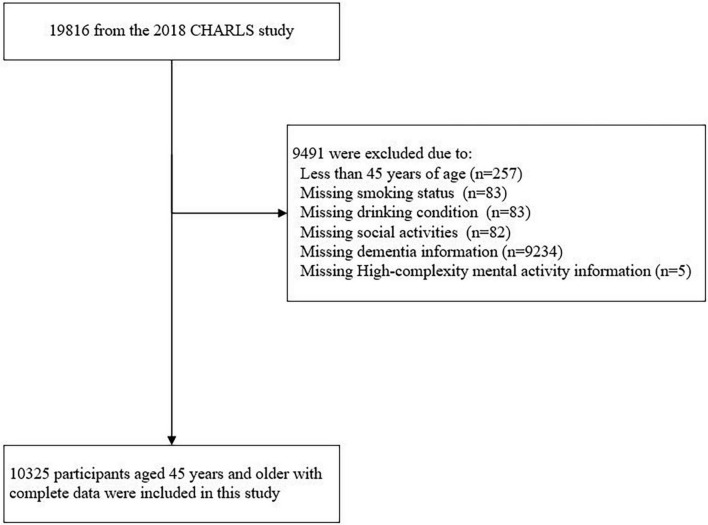
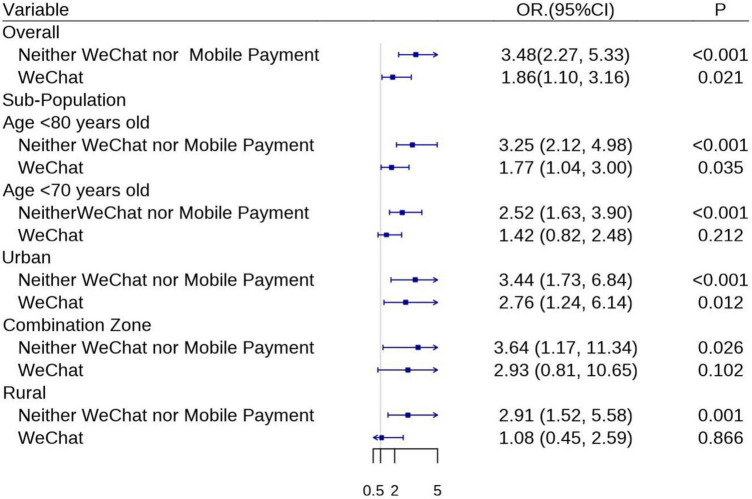
Objective: We aimed to evaluate the relationship between digital exclusion, such as neither mobile payments nor WeChat use, and cognitive impairment in Chinese individuals aged 45 and older. Methods: A population-based cross-sectional study utilizing data from the fourth national survey of the China Health and Retirement Longitudinal Study (CHARLS). In the fourth wave of CHARLS, 10,325 participants aged 45 and older with complete information were included in this analysis. Self-reported mobile payments and WeChat usage constituted our exposure. Cognitive impairment was the primary outcome. Univariate and multivariate logistic regression were used to assess the relationships between cognitive impairment risk and digital exclusion. Results: Data were analyzed from 10,325 participants [mean (SD) age, 60.3 (9.1) years; 44.8% women], including 1,232 individuals with cognitive impairment and 9,093 cognitively normal individuals. The overall proportion of users who did not use either mobile payment or WeChat and those who only used WeChat were 81.3 and 6.7%, for cognitively impaired individuals 95.0 and 3.1%, and for cognitively normal individuals 79.5 and 7.2% [neither WeChat nor mobile payments vs. control unadjusted odds ratio (OR), 8.16; P < 0.001; only WeChat use vs. control unadjusted OR, 2.91; P < 0.001]. Participants who did not use either WeChat or mobile payments had an elevated risk for cognitive impairment after adjusting for a number of covariates (neither WeChat nor mobile payments vs. control adjusted OR, 3.48; P < 0.001; only WeChat use vs. control adjusted OR, 1.86; P = 0.021). Conclusion: Our study reveals a positive correlation between digital exclusion and cognitive impairment in Chinese adults, providing insights for promoting active digital integration among older adults. Further longitudinal research is needed to further validate this hypothesis.
Overview
The claims and statistics of this paper haven’t been checked yet.
Free: it reads the open-access text and checks the first 5 claims that cite a source we can check. Create a free account to check every claim.
Integrity signals
Registry
Cites
Statistics
Figures
Verification
Claims the paper makes
The claims and statistics of this paper haven’t been checked yet.
Free: it reads the open-access text and checks the first 5 claims that cite a source we can check. Create a free account to check every claim.
Claims other papers make about this one
Each is checked against this paper’s own text: does it say what the citing paper says it does?
The source backs part of the claim, not all of it — or backs it for a different population, condition or comparison.
In the citing paper
“Digital exclusion was associated with cognitive impairment and all three dimensions of cognitive impairment, suggesting that it is a potential risk factor for overall healthy functioning in older adults [10].”
From Digital exclusion and cognitive impairment in older people: findings from five longitudinal studies (2024) · cites this paper as [10]
Experimental — accuracy not yet measuredThe source backs part of the claim, not all of it — or backs it for a different population, condition or comparison.
In the citing paper
“Previous studies have suggested that digital exclusion is more strongly associated with cognitive impairment in people over the age of 80 [10]”
From Digital exclusion and cognitive impairment in older people: findings from five longitudinal studies (2024) · cites this paper as [10]
Experimental — accuracy not yet measuredThe source backs part of the claim, not all of it — or backs it for a different population, condition or comparison.
In the citing paper
“Although previous studies have described the relationship between digital exclusion and cognitive impairment [10], this study was only conducted in an elderly Chinese population and does not necessarily apply to older adults globally.”
From Digital exclusion and cognitive impairment in older people: findings from five longitudinal studies (2024) · cites this paper as [10]
Experimental — accuracy not yet measuredThe cited source says what the claim attributes to it.
In the citing paper
“Liu et al. investigated the impact of digital rejection on cognitive impairment in Chinese adults and found a positive correlation between digital rejection and cognitive impairment in Chinese adults [10].”
From Digital exclusion and cognitive impairment in older people: findings from five longitudinal studies (2024) · cites this paper as [10]
Self-check
Percentages, sums and reported differences re-computed from the paper’s own numbers.
The self-check needs the paper’s full text.
Citations
Cites
1 retracted
Dementia prevention, intervention, and care: 2020 report of the Lancet Commission
Livingston, G., Huntley, J., Sommerlad, A., Ames, D., Ballard, C., Banerjee, S., Brayne, C., Burns, A., Cohen-Mansfield, J., Cooper, C., et al. (2020) · The Lancet · doi:10.1016/s0140-6736(20)30367-6 · Cited by 10,430
RetractedVos, T., Barber, R. M., Bell, B., Bertozzi-Villa, A., Biryukov, S., Bolliger, I., Charlson, F., Davis, A., Degenhardt, L., Dicker, D., et al. (2015) · The Lancet · doi:10.1016/s0140-6736(15)60692-4 · Cited by 6,414
Cohort Profile: The China Health and Retirement Longitudinal Study (CHARLS)
Zhao, Y., Hu, Y., Smith, J. P., Strauss, J., & Yang, G. (2014) · International Journal of Epidemiology · doi:10.1093/ije/dys203 · Cited by 5,266 · cited 1×
“The China Health and Retirement Longitudinal Study (CHARLS) is a large-scale, multiwave study of middle-to-old aged individuals that is representative of the country’s population (Zhao et al., 2014).”
BackgroundWhat is cognitive reserve? Theory and research application of the reserve concept
STERN, Y. (2002) · Journal of the International Neuropsychological Society · doi:10.1017/s1355617702813248 · Cited by 3,951 · cited 1×
“Proposed mechanisms suggest participation in social activities could contribute to cognitive reserve and delay the clinical progression of dementia (Stern, 2002; Akbaraly et al., 2009).”
BackgroundThe World report on ageing and health: a policy framework for healthy ageing
Beard, J. R., Officer, A., de Carvalho, I. A., Sadana, R., Pot, A. M., Michel, J.-P., Lloyd-Sherlock, P., Epping-Jordan, J. E., Peeters, G. M. E. E. (., Mahanani, W. R., et al. (2016) · The Lancet · doi:10.1016/s0140-6736(15)00516-4 · Cited by 3,287 · cited 1×
“As the global population ages, cognitive deterioration and its most severe expression, dementia, inevitably increase (Prince et al., 2015; Beard et al., 2016).”
BackgroundPrevalence of mental disorders in China: a cross-sectional epidemiological study
Huang, Y., Wang, Y., Wang, H., Liu, Z., Yu, X., Yan, J., Yu, Y., Kou, C., Xu, X., Lu, J., et al. (2019) · The Lancet Psychiatry · doi:10.1016/s2215-0366(18)30511-x · Cited by 2,335 · cited 11×
“The China Health and Retirement Longitudinal Study (CHARLS) is a large-scale, multiwave study of middle-to-old aged individuals that is representative of the country’s population (Zhao et al., 2014).”
BackgroundInfluentialThe burden of disease in older people and implications for health policy and practice
Prince, M. J., Wu, F., Guo, Y., Gutierrez Robledo, L. M., O'Donnell, M., Sullivan, R., & Yusuf, S. (2015) · The Lancet · doi:10.1016/s0140-6736(14)61347-7 · Cited by 1,989 · cited 1×
“As the global population ages, cognitive deterioration and its most severe expression, dementia, inevitably increase (Prince et al., 2015; Beard et al., 2016).”
BackgroundSofi, F., Abbate, R., Gensini, G. F., & Casini, A. (2010) · The American Journal of Clinical Nutrition · doi:10.3945/ajcn.2010.29673 · Cited by 1,605 · cited 1×
“Non-pharmacological interventions, such as good nutrition, cognitive training, and physical activity, have shown a positive correlation with various cognitive outcomes and could be pivotal in maintaining cognitive health and delaying cognitive decline (Sofi et al., 2010; Psaltopoulou et al., 2013; Singh et al., 2014;…”
BackgroundInfluence of social network on occurrence of dementia: a community-based longitudinal study
Fratiglioni, L., Wang, H.-X., Ericsson, K., Maytan, M., & Winblad, B. (2000) · The Lancet · doi:10.1016/s0140-6736(00)02113-9 · Cited by 1,361 · cited 2×
“…occupation, baseline cognition, and cardiovascular risk factors, protective effects remain significant in cohort studies of older adults that have focused on cognitive complexity in their current lifestyle (Fabrigoule et al., 1995; Fratiglioni et al., 2000; Wang et al., 2002; Wilson et al., 2002).”
BackgroundParticipation in Cognitively Stimulating Activities and Risk of Incident Alzheimer Disease
Wilson, R. S. (2002) · JAMA · doi:10.1001/jama.287.6.742 · Cited by 1,326 · cited 1×
“Even when controlling for education, occupation, baseline cognition, and cardiovascular risk factors, protective effects remain significant in cohort studies of older adults that have focused on cognitive complexity in their current lifestyle (Fabrigoule et al., 1995; Fratiglioni et al., 2000; Wang et al., 2002; Wilso…”
BackgroundKuiper, J. S., Zuidersma, M., Oude Voshaar, R. C., Zuidema, S. U., van den Heuvel, E. R., Stolk, R. P., & Smidt, N. (2015) · Ageing Research Reviews · doi:10.1016/j.arr.2015.04.006 · Cited by 1,090 · cited 1×
“Moreover, our study demonstrated a negative correlation between participating in social activities and cognitive impairment, aligning with previous findings (Kuiper et al., 2015).”
ResultZhang, M., Katzman, R., Salmon, D., Jin, H., Cai, G., Wang, Z., Qu, G., Grant, I., Yu, E., Levy, P., et al. (1990) · Annals of Neurology · doi:10.1002/ana.410270412 · Cited by 1,047 · cited 1×
“We defined cognitive impairment as a MMSE score lower than 17 for an illiterate level individual, lower than 20 for individuals with elementary school, and lower than 24 for individuals with middle school and higher (Zhang, 1990).”
BackgroundWang, H.-X. (2002) · American Journal of Epidemiology · doi:10.1093/aje/155.12.1081 · Cited by 967 · cited 1×
“Even when controlling for education, occupation, baseline cognition, and cardiovascular risk factors, protective effects remain significant in cohort studies of older adults that have focused on cognitive complexity in their current lifestyle (Fabrigoule et al., 1995; Fratiglioni et al., 2000; Wang et al., 2002; Wilso…”
BackgroundDementia in China: epidemiology, clinical management, and research advances
Jia, L., Quan, M., Fu, Y., Zhao, T., Li, Y., Wei, C., Tang, Y., Qin, Q., Wang, F., Qiao, Y., et al. (2020) · The Lancet Neurology · doi:10.1016/s1474-4422(19)30290-x · Cited by 875 · cited 1×
“With China’s aging population on the rise, the prevalence of cognitive impairment is also on the rise (Jia et al., 2020).”
BackgroundMediterranean diet, stroke, cognitive impairment, and depression: A meta‐analysis
Psaltopoulou, T., Sergentanis, T. N., Panagiotakos, D. B., Sergentanis, I. N., Kosti, R., & Scarmeas, N. (2013) · Annals of Neurology · doi:10.1002/ana.23944 · Cited by 793 · cited 1×
“Non-pharmacological interventions, such as good nutrition, cognitive training, and physical activity, have shown a positive correlation with various cognitive outcomes and could be pivotal in maintaining cognitive health and delaying cognitive decline (Sofi et al., 2010; Psaltopoulou et al., 2013; Singh et al., 2014;…”
BackgroundConsidering sex and gender in Alzheimer disease and other dementias
Podcasy, J. L., & Epperson, C. N. (2016) · Dialogues in Clinical Neuroscience · doi:10.31887/dcns.2016.18.4/cepperson · Cited by 707 · cited 2×
“Our observations of a relationship between age and cognitive impairment are consistent with the findings of other studies, which indicated that age had a positive correlation with cognitive impairment (Podcasy and Epperson, 2016; Lucca et al., 2020; Dominguez et al., 2021; Stute et al., 2021).”
BackgroundResultSingh, B., Parsaik, A. K., Mielke, M. M., Erwin, P. J., Knopman, D. S., Petersen, R. C., & Roberts, R. O. (2014) · Journal of Alzheimer's Disease · doi:10.3233/jad-130830 · Cited by 665 · cited 2×
“In our investigation, we discovered a positive correlation between smoking and cognitive impairment, aligning with previous studies (Pinkston et al., 2009; Singh et al., 2014; Cooper et al., 2015; Coelho-Júnior et al., 2021).”
BackgroundResultSingh, N., Sinha, N., & Liébana-Cabanillas, F. J. (2020) · International Journal of Information Management · doi:10.1016/j.ijinfomgt.2019.05.022 · Cited by 598 · cited 1×
“Regarding mobile terminal equipment, mobile payments relate to the acquisition and payment of products and services utilizing wireless communication technology on a cell phone, smartphone, or personal digital assistant (Singh et al., 2020).”
BackgroundCooper, C., Sommerlad, A., Lyketsos, C. G., & Livingston, G. (2015) · American Journal of Psychiatry · doi:10.1176/appi.ajp.2014.14070878 · Cited by 570 · cited 2×
“In our investigation, we discovered a positive correlation between smoking and cognitive impairment, aligning with previous studies (Pinkston et al., 2009; Singh et al., 2014; Cooper et al., 2015; Coelho-Júnior et al., 2021).”
BackgroundResultArevalo-Rodriguez, I., Smailagic, N., Roqué-Figuls, M., Ciapponi, A., Sanchez-Perez, E., Giannakou, A., Pedraza, O. L., Bonfill Cosp, X., & Cullum, S. (2021) · Cochrane Database of Systematic Reviews · doi:10.1002/14651858.cd010783.pub3 · Cited by 461
The prevalence of dementia in urban and rural areas of China
Jia, J., Wang, F., Wei, C., Zhou, A., Jia, X., Li, F., Tang, M., Chu, L., Zhou, Y., Zhou, C., et al. (2014) · Alzheimer's & Dementia · doi:10.1016/j.jalz.2013.01.012 · Cited by 441 · cited 11×
“The China Health and Retirement Longitudinal Study (CHARLS) is a large-scale, multiwave study of middle-to-old aged individuals that is representative of the country’s population (Zhao et al., 2014).”
BackgroundInfluentialDominguez, L. J., Veronese, N., Vernuccio, L., Catanese, G., Inzerillo, F., Salemi, G., & Barbagallo, M. (2021) · Nutrients · doi:10.3390/nu13114080 · Cited by 433 · cited 1×
“Our observations of a relationship between age and cognitive impairment are consistent with the findings of other studies, which indicated that age had a positive correlation with cognitive impairment (Podcasy and Epperson, 2016; Lucca et al., 2020; Dominguez et al., 2021; Stute et al., 2021).”
ResultSocial and Leisure Activities and Risk of Dementia: A Prospective Longitudinal Study
Fabrigoule, C., Letenneur, L., Dartigues, J. F., Zarrouk, M., Commenges, D., & Barberger‐Gateau, P. (1995) · Journal of the American Geriatrics Society · doi:10.1111/j.1532-5415.1995.tb06093.x · Cited by 418 · cited 1×
“Even when controlling for education, occupation, baseline cognition, and cardiovascular risk factors, protective effects remain significant in cohort studies of older adults that have focused on cognitive complexity in their current lifestyle (Fabrigoule et al., 1995; Fratiglioni et al., 2000; Wang et al., 2002; Wilso…”
BackgroundLeisure activities and the risk of dementia in the elderly: Results from the Three-City Study
Akbaraly, T. N., Portet, F., Fustinoni, S., Dartigues, J. F., Artero, S., Rouaud, O., Touchon, J., Ritchie, K., & Berr, C. (2009) · Neurology · doi:10.1212/wnl.0b013e3181b7849b · Cited by 320 · cited 1×
“Proposed mechanisms suggest participation in social activities could contribute to cognitive reserve and delay the clinical progression of dementia (Stern, 2002; Akbaraly et al., 2009).”
BackgroundDoes active leisure protect cognition? Evidence from a national birth cohort.
Richards, M., Hardy, R., & Wadsworth, M. E. J. (2003) · Social Science & Medicine · doi:10.1016/s0277-9536(02)00075-8 · Cited by 264 · cited 1×
“However, these benefits might diminish if activities are not maintained, as indicated by other studies (Richards et al., 2003; Yu et al., 2009).”
ResultThe Digital Exclusion of Older Adults during the COVID-19 Pandemic
Seifert, A. (2020) · Journal of Gerontological Social Work · doi:10.1080/01634372.2020.1764687 · Cited by 233 · cited 1×
“Digital exclusion, defined as the inequity in access and capability to use information and communications technologies (ICTs) such as the internet, may be associated with cognitive impairment, although the relationship is complex and not fully understood (Seifert, 2020; Wilson et al., 2022).”
BackgroundCombined neuropathological pathways account for age‐related risk of dementia
Power, M. C., Mormino, E., Soldan, A., James, B. D., Yu, L., Armstrong, N. M., Bangen, K. J., Delano‐Wood, L., Lamar, M., Lim, Y. Y., et al. (2018) · Annals of Neurology · doi:10.1002/ana.25246 · Cited by 217 · cited 1×
“Currently, no treatments significantly influence dementia’s progression, with degenerative brain changes often preceding clinical symptoms (Power et al., 2018).”
BackgroundCoelho-Júnior, H. J., Trichopoulou, A., & Panza, F. (2021) · Ageing Research Reviews · doi:10.1016/j.arr.2021.101395 · Cited by 216
Early life exposure to China’s 1959–61 famine and midlife cognition
Xu, H., Zhang, Z., Li, L., & Liu, J. (2018) · International Journal of Epidemiology · doi:10.1093/ije/dyx222 · Cited by 103
Feeling Older and the Development of Cognitive Impairment and Dementia
Stéphan, Y., Sutin, A. R., Luchetti, M., & Terracciano, A. (2016) · The Journals of Gerontology Series B · doi:10.1093/geronb/gbw085 · Cited by 79 · cited 1×
“Furthermore, subjective age has been associated with cognitive decline and dementia in middleaged and elderly adults (Stephan et al., 2017; Qiao et al., 2021).”
BackgroundKim, Y. K., & Han, S. H. (2021) · The Gerontologist · doi:10.1093/geront/gnab149 · Cited by 69
Rehman, A. U., Bashir, S., Mahmood, A., Karim, H., & Nawaz, Z. (2022) · PLoS ONE · doi:10.1371/journal.pone.0263652 · Cited by 68 · cited 1×
“Mobile payments relate to any online transaction that is explicitly initiated, granted, registered, and validated via mobile terminal equipment (Lin et al., 2022; Rehman et al., 2022).”
BackgroundSocial health, social reserve and dementia
Sachdev, P. S. (2021) · Current Opinion in Psychiatry · doi:10.1097/yco.0000000000000779 · Cited by 67 · cited 1×
“They may promote cognitive performance, increase brain volume, and alter cerebral plasticity, thereby correlating with a lower incidence of dementia (Jia et al., 2022; Sachdev, 2022).”
BackgroundPinkston, J. B., Alekseeva, N., & González Toledo, E. (2009) · Neurological Research · doi:10.1179/016164109x12445505689643 · Cited by 63 · cited 4×
“In our investigation, we discovered a positive correlation between smoking and cognitive impairment, aligning with previous studies (Pinkston et al., 2009; Singh et al., 2014; Cooper et al., 2015; Coelho-Júnior et al., 2021).”
BackgroundResultInfluentialFactors associated with cognition in adults: The Seattle Longitudinal Study
Yu, F., Ryan, L. H., Schaie, K. W., Willis, S. L., & Kolanowski, A. M. (2009) · Research in Nursing & Health · doi:10.1002/nur.20340 · Cited by 45 · cited 1×
“However, these benefits might diminish if activities are not maintained, as indicated by other studies (Richards et al., 2003; Yu et al., 2009).”
ResultZhu, Y., Liu, H., Lu, X.-L., Zhang, B., Weng, W., Yang, J., Zhang, J., & Dong, M.-J. (2019) · BMC Public Health · doi:10.1186/s12889-019-6840-z · Cited by 42
Lucca, U., Tettamanti, M., Tiraboschi, P., Logroscino, G., Landi, C., Sacco, L., Garrì, M., Ammesso, S., Biotti, A., Gargantini, E., et al. (2020) · Alzheimer's & Dementia · doi:10.1016/j.jalz.2019.09.083 · Cited by 42 · cited 2×
“Our observations of a relationship between age and cognitive impairment are consistent with the findings of other studies, which indicated that age had a positive correlation with cognitive impairment (Podcasy and Epperson, 2016; Lucca et al., 2020; Dominguez et al., 2021; Stute et al., 2021).”
BackgroundResultCognitive health after menopause: Does menopausal hormone therapy affect it?
Stute, P., Wienges, J., Koller, A.-S., Giese, C., Wesemüller, W., Janka, H., & Baumgartner, S. (2021) · Best Practice & Research Clinical Endocrinology & Metabolism · doi:10.1016/j.beem.2021.101565 · Cited by 41 · cited 1×
“Our observations of a relationship between age and cognitive impairment are consistent with the findings of other studies, which indicated that age had a positive correlation with cognitive impairment (Podcasy and Epperson, 2016; Lucca et al., 2020; Dominguez et al., 2021; Stute et al., 2021).”
ResultDementia in China: Current status
Liu, J., Wang, L., & Tan, J. (2013) · Neurology · doi:10.1212/wnl.0b013e3182a4a3cb · Cited by 38 · cited 1×
“China has the largest number of dementia patients, placing a significant strain on the public and healthcare system (Liu et al., 2013).”
BackgroundLin, X., Suanpong, K., Ruangkanjanases, A., Lim, Y.-T., & Chen, S.-C. (2022) · Frontiers in Psychology · doi:10.3389/fpsyg.2021.634911 · Cited by 38 · cited 1×
“Mobile payments relate to any online transaction that is explicitly initiated, granted, registered, and validated via mobile terminal equipment (Lin et al., 2022; Rehman et al., 2022).”
BackgroundPeer support through video meetings: Experiences of people with young onset dementia
Gerritzen, E. V., Kohl, G., Orrell, M. W., & McDermott, O. (2022) · Dementia · doi:10.1177/14713012221140468 · Cited by 38 · cited 1×
“On the other hand, cognitive impairment itself can be a barrier to digital inclusion, as it can make it more difficult for individuals to learn new digital skills and use digital technologies effectively (Anderberg et al., 2019; Gerritzen et al., 2023).”
BackgroundEffects of WeChat use on the subjective health of older adults
Wei, N., Sun, D., & Huang, W. (2022) · Frontiers in Psychology · doi:10.3389/fpsyg.2022.919889 · Cited by 34 · cited 1×
“On the one hand, the use of digital technologies such as WeChat, mobile payments or the Internet has been shown to have cognitive benefits, such as improved memory, attention, and problemsolving skills (Radić et al., 2021; Wei et al., 2022).”
MethodAnderberg, P., Barnestein-Fonseca, P., Guzman-Parra, J., Garolera, M., Quintana, M., Mayoral-Cleries, F., Lemmens, E., & Sanmartin Berglund, J. (2019) · JMIR Research Protocols · doi:10.2196/13711 · Cited by 28 · cited 1×
“On the other hand, cognitive impairment itself can be a barrier to digital inclusion, as it can make it more difficult for individuals to learn new digital skills and use digital technologies effectively (Anderberg et al., 2019; Gerritzen et al., 2023).”
BackgroundQiao, H., Du, X., Li, S., Sun, Y., Feng, W., & Wu, Y. (2021) · Psychiatry Research · doi:10.1016/j.psychres.2021.113807 · Cited by 28 · cited 1×
“Furthermore, subjective age has been associated with cognitive decline and dementia in middleaged and elderly adults (Stephan et al., 2017; Qiao et al., 2021).”
BackgroundStroke Prevention in Older Adults: Recent Advances.
Spence, J. D., Azarpazhooh, M. R., Larsson, S. C., Bogiatzi, C., & Hankey, G. J. (2020) · PubMed · doi:10.1161/strokeaha.120.031707 · Cited by 27 · cited 1×
“Therefore, stroke prevention strategies, including lipid-lowering therapy, a plantbased diet, appropriate blood pressure control, and B vitamins for homocysteine lowering, could significantly decrease the growing burden of stroke and dementia (Spence et al., 2020).”
BackgroundDepression, cognitive reserve markers, and dementia risk in the general population
Jia, F., Wang, J., Wei, N., Sun, D., & Cao, F. (2021) · Aging & Mental Health · doi:10.1080/13607863.2021.1972932 · Cited by 16 · cited 1×
“They may promote cognitive performance, increase brain volume, and alter cerebral plasticity, thereby correlating with a lower incidence of dementia (Jia et al., 2022; Sachdev, 2022).”
BackgroundUsability and acceptability of wearable technology in the early detection of dementia
Wilson, S., Ardle, R. M., Tolley, C. L., & Slight, S. P. (2022) · Alzheimer s & Dementia · doi:10.1002/alz.059820 · Cited by 11
Cunnah, K., Howe, D. M., Thorpe, J., Dunn, R., Platt, R., White, C., Paulson, K., & Wolverson, E. (2019) · Dementia · doi:10.1177/1471301219887592 · Cited by 10 · cited 1×
“For example, people with cognitive impairment may have difficulty dealing with complex interfaces or have difficulty remembering passwords or following online instructions (Cunnah et al., 2021).”
BackgroundInfluentialCould Mental and Physical Exercise Alleviate Alzheimer's Disease?
Radić, P., Blažeković, A., Duraković, D., Jurišić-Kvesić, A., Bilić, E., & Borovečki, F. (2021) · PubMed · Cited by 3
Usability and acceptability of wearable technology in the early detection of dementia
Wilson, S., Ardle, R. M., Tolley, C. L., & Slight, S. P. (2022) · Alzheimer s & Dementia · doi:10.1002/alz.062148 · Cited by 2 · cited 1×
“Digital exclusion, defined as the inequity in access and capability to use information and communications technologies (ICTs) such as the internet, may be associated with cognitive impairment, although the relationship is complex and not fully understood (Seifert, 2020; Wilson et al., 2022).”
Background
Research works printed but not linked: 1
- Zhao Y. Strauss J. Chen X. Wang Y. Gong J. Meng Q. (2020). China Health and Retirement Longitudinal Study Wave 4 User’s Guide. Beijing: Peking University.
Cited by
A meta-analysis of technology use and cognitive aging
Benge, J. F., & Scullin, M. K. (2025) · Nature Human Behaviour · doi:10.1038/s41562-025-02159-9 · Cited by 116
Digital exclusion in older adults: A scoping review
Ge, H., Li, J., Hu, H., Feng, T., & Wu, X. (2025) · International Journal of Nursing Studies · doi:10.1016/j.ijnurstu.2025.105082 · Cited by 100
Digital exclusion and cognitive impairment in older people: findings from five longitudinal studies
Wang, Y., Wu, Z., Duan, L., Liu, S., Chen, R., Sun, T., Wang, J., Zhou, J., Wang, H., & Huang, P. (2024) · BMC Geriatrics · doi:10.1186/s12877-024-05026-w · Cited by 55
“In addition, Liu et al. investigated the impact of digital rejection on cognitive impairment in Chinese adults and found a positive correlation between digital rejection and cognitive impairment in Chinese adults [10].”
BackgroundMethodInfluentialChen, B., Yang, C., Ren, S.-S., Li, P.-G., & Zhao, J. (2024) · Journal of Medical Internet Research · doi:10.2196/57301 · Cited by 40
“The study conducted by Liu et al [43] also suggested that the absence of using mobile social media platforms, such as WeChat and mobile payment systems, may be positively associated with cognitive impairments.”
Duan, S., Chen, D., Wang, J., Paramboor, M. S., Xia, Z., Xu, W., Han, K., Zhu, T., & Jiang, X. (2024) · Journal of Medical Internet Research · doi:10.2196/56636 · Cited by 29
“The methodological limitations of many existing studies encompass varied definitions of cognitive decline [23-25], cross-sectional design [23,24], or geographic limitations [23-25], as well as insufficient analysis of risk factors in developing countries, thus obscuring the actual role of internet…”
Influential
Metadata
- Authors
- Liu, X., Wang, X., Zhang, H., Pei, M., & Li, N.
- Affiliations
- Capital Medical University (CN)
- Peking University Third Hospital (CN)
- Corresponding author
- Li, Nan
- Venue
- Frontiers in Aging Neuroscience
- Publisher
- Frontiers Media SA
- Published
- 2023-07-03
- Volume
- 15
- Pages
- 1194348-1194348
- ISSN
- 1663-4365 (ISSN-L)
- PMC
- PMC10350515
- OpenAlex
- W4382940966
- Cited by
- 16
- References
- 52
- Citations by year
- 2026: 6 · 2025: 5 · 2024: 5
- FWCI
- 9.31
- Type
- journal article
- Language
- en
- Open access
- gold
- doi.org
- Licence
- Locations
- Frontiers in Aging Neuroscience (publishedVersion, cc-by)
- PubMed Central (publishedVersion, cc-by)
- PubMed (publishedVersion)
- DOAJ (DOAJ: Directory of Open Access Journals) (submittedVersion, cc-by-sa)
- Greater South Information System
- Funders
- National Natural Science Foundation of China
- Capital Medical University
- Topics
- Health Sciences › Medicine › Geriatrics and Gerontology › Technology Use by Older Adults
- Health Sciences › Medicine › Psychiatry and Mental health › Dementia and Cognitive Impairment Research
- Social Sciences › Health › Health disparities and outcomes
- Keywords
- digital exclusion, cognitive impairment, mobile payment, WeChat, older adults, digital divide, digital integration, China Health and Retirement Longitudinal Study
About these checks
Registry, retraction, Cites and statistics results are computed, not judged, with one exception: a printed reference that no index lists is read once by a model before it counts as a citation error. Claims are extracted by a model and kept only when their quote appears verbatim in the text; each cited source is then checked, with a model’s help, for whether it says what the claim relies on. Those verdicts can be wrong — read the claim’s quote and the cited source before relying on one.
Statistics and arithmetic are recomputed, not judged.
Confidence bands are shown only for fields calibrated on our annotated test set. None is calibrated yet, so no band is shown.
What counts as a claim ›How we measure confidence ›How we check this ›
Are you an author, or do you see a problem with this page? Request a review
Data sources
Bibliographic data: Semantic Scholar, OpenAlex, Crossref.
Contains information from the Semantic Scholar Academic Graph Datasets, made available under the ODC Attribution License (ODC-BY 1.0).
Semantic Scholar’s data is described in: Kinney, R., et al. (2023). The Semantic Scholar Open Data Platform. arXiv:2301.10140.
