

The DOI matches its Crossref record; 302 of the 305 references it cites were found in a registry or an index.
Putting desire on a budget: dopamine and energy expenditure, reconciling reward and resources
Open accessAbstract
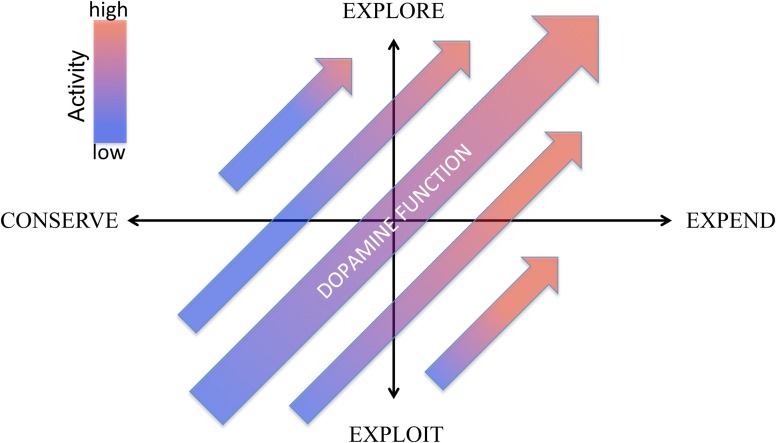
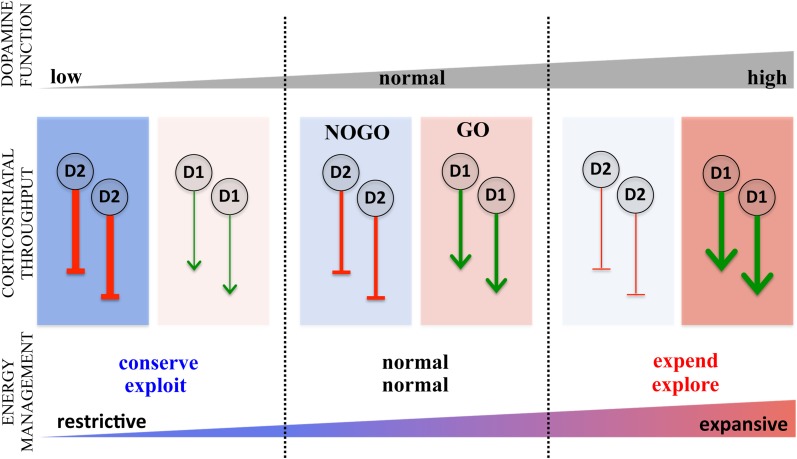
Accumulating evidence indicates integration of dopamine function with metabolic signals, highlighting a potential role for dopamine in energy balance, frequently construed as modulating reward in response to homeostatic state. Though its precise role remains controversial, the reward perspective of dopamine has dominated investigation of motivational disorders, including obesity. In the hypothesis outlined here, we suggest instead that the primary role of dopamine in behavior is to modulate activity to adapt behavioral energy expenditure to the prevailing environmental energy conditions, with the role of dopamine in reward and motivated behaviors derived from its primary role in energy balance. Dopamine has long been known to modulate activity, exemplified by psychostimulants that act via dopamine. More recently, there has been nascent investigation into the role of dopamine in modulating voluntary activity, with some investigators suggesting that dopamine may serve as a final common pathway that couples energy sensing to regulated voluntary energy expenditure. We suggest that interposed between input from both the internal and external world, dopamine modulates behavioral energy expenditure along two axes: a conserve-expend axis that regulates generalized activity and an explore-exploit axes that regulates the degree to which reward value biases the distribution of activity. In this view, increased dopamine does not promote consumption of tasty food. Instead increased dopamine promotes energy expenditure and exploration while decreased dopamine favors energy conservation and exploitation. This hypothesis provides a mechanistic interpretation to an apparent paradox: the well-established role of dopamine in food seeking and the findings that low dopaminergic functions are associated with obesity. Our hypothesis provides an alternative perspective on the role of dopamine in obesity and reinterprets the "reward deficiency hypothesis" as a perceived energy deficit. We propose that dopamine, by facilitating energy expenditure, should be protective against obesity. We suggest the apparent failure of this protective mechanism in Western societies with high prevalence of obesity arises as a consequence of sedentary lifestyles that thwart energy expenditure.
Overview
The claims and statistics of this paper haven’t been checked yet.
Run the check — free, no account needed. It reads the open-access text and checks the sources it cites.
Integrity signals
Registry
Cites
Statistics
Figures
Verification
Claims the paper makes
The claims and statistics of this paper haven’t been checked yet.
Run the check — free, no account needed. It reads the open-access text and checks the sources it cites.
Claims other papers make about this one
Each is checked against this paper’s own text: does it say what the citing paper says it does?
The check wasn’t confident either way, so it gives no verdict — never disputed.
In the citing paper
“While preliminary, these studies appear to demonstrate only modest gains in motor skill performance.”
From Exercise-enhanced neuroplasticity targeting motor and cognitive circuitry in Parkinson's disease (2013) · cites this paper as [49]
Experimental — accuracy not yet measuredIn the citing paper
“Further evidence for exercise effects on neuroplasticity and circuitry involved in automatic motor control is observed in studies utilizing forced cycling 49.”
From Exercise-enhanced neuroplasticity targeting motor and cognitive circuitry in Parkinson's disease (2013) · cites this paper as [49]
In the citing paper
“Only a few studies have examined the effects of aerobic training alone that incorporate limited or no aspects of skill learning 13, 22, 49.”
From Exercise-enhanced neuroplasticity targeting motor and cognitive circuitry in Parkinson's disease (2013) · cites this paper as [49]
Self-check
Percentages, sums and reported differences re-computed from the paper’s own numbers.
The self-check needs the paper’s full text.
Citations
Cites
‘Small Changes' to Diet and Physical Activity Behaviors for Weight Management
Hills, A. P., Byrne, N. M., Lindstrom, R. C., & Hill, J. O. (2013) · Obesity Facts · doi:10.1159/000345030 · Cited by 9,526
A neural substrate of prediction and reward
Schultz, W., Dayan, P., & Montague, P. R. (1997) · Science · doi:10.1126/science.275.5306.1593 · Cited by 9,388
Molecular Mechanisms of Depression: Perspectives on New Treatment Strategies
Lang, U. E., & Borgwardt, S. (2013) · Cellular Physiology and Biochemistry · doi:10.1159/000350094 · Cited by 8,526
Health benefits of physical activity: the evidence
Warburton, D. E. R. (2006) · Canadian Medical Association Journal · doi:10.1503/cmaj.051351 · Cited by 8,007
Genetics of Food Intake Self-Regulation in Childhood: Literature Review and Research Opportunities
Faith, M. S., Carnell, S., & Kral, T. V. E. (2013) · Human Heredity · doi:10.1159/000353879 · Cited by 7,633
The neural basis of drug craving: An incentive-sensitization theory of addiction
Robinson, T. (1993) · Brain Research Reviews · doi:10.1016/0165-0173(93)90013-p · Cited by 7,346
Introduction to Reinforcement Learning
Sutton, R. S., & Barto, A. G. (1998) · The MIT Press eBooks · Cited by 6,855
The functional anatomy of basal ganglia disorders
Albin, R. L., Young, A. B., & Penney, J. B. (1989) · Trends in Neurosciences · doi:10.1016/0166-2236(89)90074-x · Cited by 5,353
Koob, G. F., & Volkow, N. D. (2010) · Neuropsychopharmacology · doi:10.1038/npp.2009.110 · Cited by 5,340
Functional architecture of basal ganglia circuits: neural substrates of parallel processing
Alexander, G. E., & Crutcher, M. D. (1990) · Trends in Neurosciences · doi:10.1016/0166-2236(90)90107-l · Cited by 4,131
Cited by
Sorted by citations
The mysterious motivational functions of mesolimbic dopamine
Salamone, J. D., & Correa, M. (2012) · Neuron · doi:10.1016/j.neuron.2012.10.021 · Cited by 1,418
Berke, J. D. (2018) · Nature Neuroscience · doi:10.1038/s41593-018-0152-y · Cited by 904
Mesolimbic dopamine signals the value of work
Hamid, A., Pettibone, J. R., Mabrouk, O. S., Hetrick, V. L., Schmidt, R., Weele, C. M. V., Kennedy, R. T., Aragona, B. J., & Berke, J. D. (2015) · Nature Neuroscience · doi:10.1038/nn.4173 · Cited by 848
Exercise-enhanced neuroplasticity targeting motor and cognitive circuitry in Parkinson's disease
Petzinger, G. M., Fisher, B. E., McEwen, S., Beeler, J. A., Walsh, J. P., & Jakowec, M. W. (2013) · The Lancet Neurology · doi:10.1016/s1474-4422(13)70123-6 · Cited by 798
Self-citationSalamone, J. D., Yohn, S. E., López-Cruz, L., San Miguel, N., & Correa, M. (2016) · Brain · doi:10.1093/brain/aww050 · Cited by 350
Mitochondrial function in the brain links anxiety with social subordination
Hollis, F., van der Kooij, M. A., Zanoletti, O., Lozano, L., Cantó, C., & Sandi, C. (2015) · Proceedings of the National Academy of Sciences · doi:10.1073/pnas.1512653112 · Cited by 288
Hormonal and neural mechanisms of food reward, eating behaviour and obesity
Murray, S. M., Tulloch, A. J., Gold, M. S., & Avena, N. M. (2014) · Nature Reviews Endocrinology · doi:10.1038/nrendo.2014.91 · Cited by 275
Regulation of dietary choice by the decision-making circuitry
Rangel, A. (2013) · Nature Neuroscience · doi:10.1038/nn.3561 · Cited by 263
A Primer on Foraging and the Explore/Exploit Trade-Off for Psychiatry Research
Addicott, M. A., Pearson, J. M., Sweitzer, M. M., Barack, D. L., & Platt, M. L. (2017) · Neuropsychopharmacology · doi:10.1038/npp.2017.108 · Cited by 219
Mesolimbic Dopamine and the Regulation of Motivated Behavior
Salamone, J. D., Pardo, M., Yohn, S. E., López-Cruz, L., SanMiguel, N., & Correa, M. (2015) · Current Topics in Behavioral Neurosciences · doi:10.1007/7854_2015_383 · Cited by 204
Randall, P. A., Pardo, M., Nunes, E. J., López‐Cruz, L., Vemuri, K. V., Makriyannis, A., Baqi, Y., Müller, C. E., Correa, M., & Salamone, J. D. (2012) · PLoS ONE · doi:10.1371/journal.pone.0047934 · Cited by 204
Individual variation in resisting temptation: Implications for addiction
Saunders, B. T., & Robinson, T. E. (2013) · Neuroscience & Biobehavioral Reviews · doi:10.1016/j.neubiorev.2013.02.008 · Cited by 177
What Is the Relationship between Dopamine and Effort?
Walton, M. E., & Bouret, S. (2018) · Trends in Neurosciences · doi:10.1016/j.tins.2018.10.001 · Cited by 151
Encoding of Aversion by Dopamine and the Nucleus Accumbens
McCutcheon, J. E., Ebner, S. R., Loriaux, A. L., & Roitman, M. F. (2012) · Frontiers in Neuroscience · doi:10.3389/fnins.2012.00137 · Cited by 151
van der Kooij, M. A., Hollis, F., Lozano, L., Zalachoras, I., Abad, S., Zanoletti, O., Grosse, J., Guillot de Suduiraut, I., Canto, C., & Sandi, C. (2018) · Molecular Psychiatry · doi:10.1038/mp.2017.135 · Cited by 127
Dopamine blockade impairs the exploration-exploitation trade-off in rats
Cinotti, F., Fresno, V., Aklil, N., Coutureau, É., Girard, B., Marchand, A. R., & Khamassi, M. (2019) · Scientific Reports · doi:10.1038/s41598-019-43245-z · Cited by 105
Sex differences in learning from exploration
Chen, C. S., Knep, E., Han, A., Ebitz, R. B., & Grissom, N. M. (2021) · eLife · doi:10.7554/elife.69748 · Cited by 105
Beeler, J. A., Faust, R. P., Turkson, S., Ye, H., & Zhuang, X. (2015) · Biological Psychiatry · doi:10.1016/j.biopsych.2015.07.009 · Cited by 100
Self-citationAllostasis, action and affect in depression: Insights from the theory of constructed emotion
Shaffer, C., Westlin, C., Quigley, K. S., Whitfield-Gabrieli, S., & Barrett, L. F. (2022) · Annual Review of Clinical Psychology · doi:10.1146/annurev-clinpsy-081219-115627 · Cited by 94
Smith, R. S., Schwartenbeck, P., Stewart, J. L., Kuplicki, R., Ekhtiari, H., T Investigators, & Paulus, M. P. (2020) · Drug and Alcohol Dependence · doi:10.1016/j.drugalcdep.2020.108208 · Cited by 82
Zhu, X., Ottenheimer, D. J., & Dileone, R. (2016) · Frontiers in Behavioral Neuroscience · doi:10.3389/fnbeh.2016.00066 · Cited by 80
Dopamine and Food Addiction: Lexicon Badly Needed
Salamone, J. D., & Correa, M. (2012) · Biological Psychiatry · doi:10.1016/j.biopsych.2012.09.027 · Cited by 77
Yohn, S. E., López‐Cruz, L., Hutson, P. H., Correa, M., & Salamone, J. D. (2015) · Psychopharmacology · doi:10.1007/s00213-015-4176-7 · Cited by 76
Fuel not fun: Reinterpreting attenuated brain responses to reward in obesity
Kroemer, N. B., & Small, D. M. (2016) · Physiology & Behavior · doi:10.1016/j.physbeh.2016.04.020 · Cited by 74
Correa, M., Pardo, M., Bayarri, P., López‐Cruz, L., Miguel, N. S., Valverde, O., Ledent, C. A., & Salamone, J. D. (2015) · Psychopharmacology · doi:10.1007/s00213-015-4127-3 · Cited by 71
Circadian Clocks as Modulators of Metabolic Comorbidity in Psychiatric Disorders
Barandas, R., Landgraf, D., McCarthy, M. J., & Welsh, D. K. (2015) · Current Psychiatry Reports · doi:10.1007/s11920-015-0637-2 · Cited by 69
Motivation States for Physical Activity and Sedentary Behavior: Desire, Urge, Wanting, and Craving
Stults‐Kolehmainen, M., Blacutt, M. E., Bartholomew, J. B., Gilson, T. A., Ash, G. I., McKee, P. C., & Sinha, R. (2020) · Frontiers in Psychology · doi:10.3389/fpsyg.2020.568390 · Cited by 65
Dopaminergic signaling of uncertainty and the aetiology of gambling addiction
Zack, M. H., George, R. S., & Clark, L. (2019) · Progress in Neuro-Psychopharmacology and Biological Psychiatry · doi:10.1016/j.pnpbp.2019.109853 · Cited by 62
Role of oxytocin in the ventral tegmental area in social reinforcement
Borland, J. M., Grantham, K. N., Aiani, L. M., Frantz, K. J., & Albers, H. E. (2018) · Psychoneuroendocrinology · doi:10.1016/j.psyneuen.2018.05.028 · Cited by 62
L-DOPA reduces model-free control of behavior by attenuating the transfer of value to action
Kroemer, N. B., Lee, Y., Pooseh, S., Eppinger, B., Goschke, T., & Smolka, M. N. (2018) · NeuroImage · doi:10.1016/j.neuroimage.2018.10.075 · Cited by 62
Vulnerable and Resilient Phenotypes in a Mouse Model of Anorexia Nervosa
Beeler, J. A., Mourra, D., Zanca, R. M., Kalmbach, A., Gellman, C., Klein, B., Ravenelle, R., Serrano, P. A., Moore, H. M., Rayport, S., et al. (2020) · Biological Psychiatry · doi:10.1016/j.biopsych.2020.06.030 · Cited by 59
Self-citationPersistent effects of obesity: A neuroplasticity hypothesis
Matikainen‐Ankney, B. A., & Kravitz, A. V. (2018) · Annals of the New York Academy of Sciences · doi:10.1111/nyas.13665 · Cited by 56
FoxO1 in dopaminergic neurons regulates energy homeostasis and targets tyrosine hydroxylase
Doan, K. V., Kinyua, A. W., Yang, D. J., Ko, C. M., Moh, S. H., Shong, K. E., Kim, H., Park, S.-K., Kim, D. H., Kim, I., et al. (2016) · Nature Communications · doi:10.1038/ncomms12733 · Cited by 54
The missing, the short, and the long: Levodopa responses and dopamine actions
Albin, R. L., & Leventhal, D. (2017) · Annals of Neurology · doi:10.1002/ana.24961 · Cited by 51
Meyers, A. M., Mourra, D., & Beeler, J. A. (2017) · PLoS ONE · doi:10.1371/journal.pone.0190206 · Cited by 51
Self-citationHenschen, C. W., Palmiter, R. D., & Darvas, M. (2013) · Endocrinology · doi:10.1210/en.2013-1257 · Cited by 50
Yohn, S. E., Gogoj, A., Haque, A. F., López‐Cruz, L., Haley, A., Huxley, P., Baskin, P. P., Correa, M., & Salamone, J. D. (2016) · Pharmacology Biochemistry and Behavior · doi:10.1016/j.pbb.2016.06.004 · Cited by 48
Fischbach-Weiss, S., Reese, R. M., & Janak, P. H. (2017) · Neuroscience · doi:10.1016/j.neuroscience.2017.12.003 · Cited by 47
Beeler, J. A., & Burghardt, N. S. (2022) · Frontiers in Psychiatry · doi:10.3389/fpsyt.2021.799548 · Cited by 44
Self-citationChakravarthy, V. S., Balasubramani, P. P., Mandali, A., Jahanshahi, M., & Moustafa, A. A. (2018) · Physiology & Behavior · doi:10.1016/j.physbeh.2018.06.032 · Cited by 45
Stimulation of the vagus nerve reduces learning in a go/no-go reinforcement learning task
Kühnel, A., Teckentrup, V., Neuser, M. P., Huys, Q. J. M., Burrasch, C., Walter, M., & Kroemer, N. B. (2020) · European Neuropsychopharmacology · doi:10.1016/j.euroneuro.2020.03.023 · Cited by 43
The motivation for exercise over palatable food is dictated by cannabinoid type-1 receptors
Muguruza, C., Redon, B., Fois, G. R., Hurel, I., Scocard, A., Nguyen, C., Stevens, C. G., Gómez, E. S., Varilh, M., Cannich, A., et al. (2019) · JCI Insight · doi:10.1172/jci.insight.126190 · Cited by 41
A novel operant task to assess social reward and motivation in rodents
Borland, J. M., Frantz, K. J., Aiani, L. M., Grantham, K. N., Song, Z., & Albers, H. E. (2017) · Journal of Neuroscience Methods · doi:10.1016/j.jneumeth.2017.06.003 · Cited by 40
Thorndike's Law 2.0: Dopamine and the Regulation of Thrift
Beeler, J. A. (2012) · Frontiers in Neuroscience · doi:10.3389/fnins.2012.00116 · Cited by 40
Self-citationStults‐Kolehmainen, M., Blacutt, M. E., Fogelman, N., Gilson, T. A., Stanforth, P. R., Divin, A. L., Bartholomew, J. B., Filgueiras, A., McKee, P. C., Ash, G. I., et al. (2021) · Frontiers in Psychology · doi:10.3389/fpsyg.2021.568286 · Cited by 39
Mansur, R. B., Fries, G. R., Subramaniapillai, M., Frangou, S., Felice, F. G. D., Rasgon, N., McEwen, B. S., Brietzke, E. M., & McIntyre, R. S. (2018) · Journal of Psychiatric Research · doi:10.1016/j.jpsychires.2018.10.020 · Cited by 34
What is bipolar disorder? A disease model of dysregulated energy expenditure
Mansur, R. B., Lee, Y. L., McIntyre, R. S., & Brietzke, E. M. (2020) · Neuroscience & Biobehavioral Reviews · doi:10.1016/j.neubiorev.2020.04.006 · Cited by 33
Toward a Unifying Account of Dopamine’s Role in Cost-Benefit Decision Making
Soutschek, A., Jetter, A., & Tobler, P. N. (2022) · Biological Psychiatry Global Open Science · doi:10.1016/j.bpsgos.2022.02.010 · Cited by 33
Parkinson’s disease, dopaminergic drugs and the plant world
Kempster, P. A., & Ma, A. (2022) · Frontiers in Pharmacology · doi:10.3389/fphar.2022.970714 · Cited by 32
Kroemer, N. B., Burrasch, C., & Hellrung, L. (2016) · Progress in brain research · doi:10.1016/bs.pbr.2016.06.009 · Cited by 31
A kinder, gentler dopamine… highlighting dopamine's role in behavioral flexibility
Beeler, J. A., Cools, R., Luciana, M. M., Ostlund, S. B., & Petzinger, G. M. (2014) · Frontiers in Neuroscience · doi:10.3389/fnins.2014.00004 · Cited by 30
Self-citationSlooten, J. C. V., Jahfari, S., & Theeuwes, J. (2019) · Scientific Reports · doi:10.1038/s41598-019-53805-y · Cited by 31
To Do or Not to Do: Dopamine, Affordability and the Economics of Opportunity
Beeler, J. A., & Mourra, D. (2018) · Frontiers in Integrative Neuroscience · doi:10.3389/fnint.2018.00006 · Cited by 28
Self-citationXiu, L., Lin, M., Liu, W., Kong, D., Liu, Z., Zhang, Y., Ouyang, P., Liang, Y., Zhong, S., Chen, C., et al. (2015) · Diabetes Technology & Therapeutics · doi:10.1089/dia.2014.0344 · Cited by 27
Altered reward anticipation: Potential explanation for weight gain in schizophrenia?
Grimm, O., Kaiser, S., Plichta, M. M., & Tobler, P. N. (2017) · Neuroscience & Biobehavioral Reviews · doi:10.1016/j.neubiorev.2017.01.029 · Cited by 26
Aberg, K. C., Kramer, E. E., & Schwartz, S. (2020) · Nature Communications · doi:10.1038/s41467-020-15542-z · Cited by 25
Suboptimal foraging behavior: A new perspective on gambling.
Addicott, M. A., Pearson, J. M., Kaiser, N., Platt, M. L., & McClernon, F. J. (2015) · Behavioral Neuroscience · doi:10.1037/bne0000082 · Cited by 24
Phasic Stimulation of Midbrain Dopamine Neuron Activity Reduces Salt Consumption
Sandhu, E., Fernando, A. B. P., Irvine, E. E., Tossell, K., Kokkinou, M., Glegola, J. A., Smith, M. A., Howes, O. D., Withers, D. J., & Ungless, M. A. (2018) · eNeuro · doi:10.1523/eneuro.0064-18.2018 · Cited by 22
The curious interpretation of novel object recognition tests
Swiercz, A. P., Tsuda, M. C., & Cameron, H. A. (2025) · Trends in Neurosciences · doi:10.1016/j.tins.2025.02.003 · Cited by 21
Yildirim, B. O., & Derksen, J. J. L. (2015) · Psychiatry Research · doi:10.1016/j.psychres.2015.07.005 · Cited by 20
Striatal Dopamine D2 Receptors Regulate Cost Sensitivity and Behavioral Thrift
Mourra, D., Gnazzo, F. G., Cobos, S., & Beeler, J. A. (2019) · Neuroscience · doi:10.1016/j.neuroscience.2019.11.002 · Cited by 19
Self-citationDecreases in Cued Reward Seeking After Reward-Paired Inhibition of Mesolimbic Dopamine
Fischbach-Weiss, S., & Janak, P. H. (2019) · Neuroscience · doi:10.1016/j.neuroscience.2019.04.035 · Cited by 18
Tops, M., Montero‐Marín, J., & Quirin, M. (2016) · Advances in motivation and achievement · doi:10.1108/s0749-742320160000019012 · Cited by 16
Effects of dopamine agonists on calling behavior in the green tree frog, Hyla cinerea
Creighton, A., Satterfield, D. A., & Chu, J. (2013) · Physiology & Behavior · doi:10.1016/j.physbeh.2013.03.012 · Cited by 16
Does openness/intellect predict sensitivity to the reward value of information?
Smillie, L. D., Bennett, D., Tan, N. P., Sutcliffe, K., Fayn, K., Bode, S., & Wacker, J. (2021) · Cognitive Affective & Behavioral Neuroscience · doi:10.3758/s13415-021-00900-1 · Cited by 15
Motivational Vigor in Parkinson's Disease Requires the Short and Long Duration Response to Levodopa
Brissenden, J. A., Scerbak, T., Albin, R. L., & Lee, T. G. (2023) · Movement Disorders · doi:10.1002/mds.29659 · Cited by 12
Thakur, A. K., Chatterjee, S. S., & Kumar, V. (2014) · TANG [HUMANITAS MEDICINE] · doi:10.5667/tang.2014.0001 · Cited by 12
Lee, Y. C. G., Yang, Q., Chi, W., Turkson, S., Du, W. A., Kemkemer, C., Zeng, Z., Long, M., & Zhuang, X. (2017) · Genome Biology and Evolution · doi:10.1093/gbe/evx089 · Cited by 11
Self-citationMacdonald, D. W., & Newman, C. (2022) · doi:10.1093/oso/9780192845368.001.0001 · Cited by 11
Guimarães, A., Guimarães, A. T. B., de Brito, R. R., Gomes, A. R., Freitas, Í. N., Rodrigues, A. S. D. L., Santiago, O. C., da Luz, T. M., de Matos, L. P., de Oliveira, R. F., et al. (2025) · Archives of Environmental Contamination and Toxicology · doi:10.1007/s00244-025-01120-1 · Cited by 10
A temporary deficiency in self‐control: Can heightened motivation overcome this effect?
Kelly, C., Crawford, T. J., Gowen, E., Richardson, K., & Sünram‐Lea, S. I. (2017) · Psychophysiology · doi:10.1111/psyp.12832 · Cited by 10
Piaggi, P., Köroğlu, Ç., Nair, A. K., Sutherland, J. R., Muller, Y. L., Kumar, P., Hsueh, W., Kobes, S., Shuldiner, A. R., Kim, H. I., et al. (2020) · The Journal of Clinical Endocrinology & Metabolism · doi:10.1210/clinem/dgaa548 · Cited by 9
Effort-based decision making varies by smoking status
Addicott, M. A., Wardle, M. C., & Selig, J. P. (2020) · Psychopharmacology · doi:10.1007/s00213-019-05437-3 · Cited by 8
The Thermodynamic Consequences of Parkinson's Disease
Kempster, P. A., & Perju‐Dumbrava, L. (2021) · Frontiers in Neurology · doi:10.3389/fneur.2021.685314 · Cited by 8
Lau, D., Tobin, S. W., Pribiag, H., Nakajima, S., Fisette, A., Matthys, D., Franco-Flores, A. K., Peyot, M., Madiraju, S. R. M., Prentki, M., et al. (2024) · Nature Communications · doi:10.1038/s41467-024-54819-5 · Cited by 7
How the value of the environment controls persistence in visual search
Traner, M., Bromberg-Martin, E. S., & Monosov, I. E. (2021) · PLoS Computational Biology · doi:10.1371/journal.pcbi.1009662 · Cited by 6
Dopamine Supports Reward Prediction to Shape Reward-Pursuit Strategy
Malvaez, M., Suarez, A., Griffin, N. K., Ramírez-Armenta, K., Ostlund, S. B., & Wassum, K. M. (2026) · Journal of Neuroscience · doi:10.1523/jneurosci.1636-25.2026 · Cited by 7
Hamzehpour, L., Bohn, T., Jaspers, L., & Grimm, O. (2023) · European Neuropsychopharmacology · doi:10.1016/j.euroneuro.2023.07.009 · Cited by 5
Mild Parkinsonian Signs, Energy Decline, and Striatal Volume in Community-Dwelling Older Adults
Tian, Q., Ehrenkranz, R. C., Rosso, A. L., Glynn, N. W., Chahine, L. M., Hengenius, J. B., Zhu, X., & Rosano, C. (2021) · The Journals of Gerontology Series A · doi:10.1093/gerona/glab150 · Cited by 5
Zuo, L., Ai, K., Liu, W., Qiu, B., Tang, R., Fu, J., Yang, P., Kong, Z., Song, H., Zhu, X., et al. (2024) · Biological Psychiatry Cognitive Neuroscience and Neuroimaging · doi:10.1016/j.bpsc.2024.05.005 · Cited by 4
Olivares-García, R., López‐Cruz, L., Carratalá‐Ros, C., Matas-Navarro, P., Salamone, J. D., & Correa, M. (2024) · Neuropharmacology · doi:10.1016/j.neuropharm.2024.110197 · Cited by 4
Who Goes There: Friend or Foe?
Macdonald, D. W., & Newman, C. (2022) · Oxford University Press eBooks · doi:10.1093/oso/9780192845368.003.0009 · Cited by 3
Ducrocq, F., Delwel, L., Papavoine, N., Brouwer, E., Kooij, K. L., Wolterink‐Donselaar, I. G., Drost, L., Hak, J., Veendijk, M., Luijendijk, M. C. M., et al. (2025) · Nature Communications · doi:10.1038/s41467-025-67897-w · Cited by 2
Striatal dopamine and skeletal muscle energy metabolism in older adults
Rosano, C., Bohnen, N. I., Lopresti, B. J., Chahine, L. M., Barnes, H. N., Studenski, S. L., Glynn, N. W., Newman, A. B., Marcinek, D. J., Hepple, R. T., et al. (2026) · The Journals of Gerontology Series A · doi:10.1093/gerona/glag039 · Cited by 2
A role of serotonin and the insula in vigor: Tracking environmental and physiological resources
Tops, M., Boksem, M. A. S., Montero‐Marín, J., & van der Linden, D. (2021) · Behavioral and Brain Sciences · doi:10.1017/s0140525x21000261 · Cited by 2
Cerebellar neurons that curb food consumption
Simerly, R. B., & Dileone, R. (2021) · Nature · doi:10.1038/d41586-021-03383-9 · Cited by 2
Jiménez-Rodríguez, A., & Prescott, T. J. (2023) · Lecture notes in computer science · doi:10.1007/978-3-031-39504-8_17 · Cited by 2
Of the Same Stripe, or Not—Exceptions That Prove Rules
Macdonald, D. W., & Newman, C. (2022) · Oxford University Press eBooks · doi:10.1093/oso/9780192845368.003.0019 · Cited by 1
Lizogub, V. G., Sobol, V., Moshkovska, Y. O., & Bondarchuk, O. M. (2014) · Likarska sprava · doi:10.31640/ls-2014-(5-6)-07 · Cited by 1
Motivation States for Physical Activity and Sedentary Behavior: Desire, Urge, Wanting and CravingPreprint
Stults‐Kolehmainen, M., Blacutt, M. E., Bartholomew, J. B., Gilson, T. A., Ash, G. I., McKee, P. C., & Sinha, R. (2020) · doi:10.31236/osf.io/sxvhk · Cited by 1
Individual Variation in the Motivational Properties of Reward Cues.
Saunders, B. T. (2013) · Deep Blue (University of Michigan)
The obese brain: neuroendocrine modulations in the reward system
van den Munkhof, H. E. (2013) · Utrecht University Repository (Utrecht University)
Valuation and Decision-Making in Cortical-Striatal Circuits.
Pettibone, J. R. (2016) · Deep Blue (University of Michigan)
Kelly, C. (2018) · Lancaster EPrints (Lancaster University) · doi:10.17635/lancaster/thesis/258
Nicotine-induced modifications in value-based decision-making
Dongelmans, M. L. (2017) · theses.fr (ABES) · doi:10.70675/95c45d01zb4e0z4416zbb37z7c7d0162f176
Metabolic disorders in patients with arterial hypertension with concomitant obesity
Sobol, V., Lizogub, V. G., Puzanovа, О. G., & Moshkovska, Y. O. (2019) · Ukrainian Therapeutical Journal · doi:10.30978/utj2019-3-34
Metadata of the chapter that will be visualized in SpringerLink
Fass, D. (2017) · Zhytomyr State University Library (Zhytomyr Ivan Franko State University)
Impulse Control Disorders and the Dopamine Dysregulation Syndrome
Djamshidian, A., Pagnier, G. J., Frank, M. J., & Friedman, J. H. (2022) · Cambridge University Press eBooks · doi:10.1017/9781009039291.021
Metadata
- Authors
- Beeler, J. A., Frazier, C. R. M., & Zhuang, X.
- Affiliations
- University of Chicago (US)
- Corresponding author
- Beeler, Jeff A.
- Venue
- Frontiers in Integrative Neuroscience
- Publisher
- Frontiers Media SA
- Published
- 2012
- Volume
- 6
- Pages
- 49-49
- ISSN
- 1662-5145 (ISSN-L)
- PMC
- PMC3400936
- OpenAlex
- W2149878007
- Cited by
- 136
- References
- 301
- Citations by year
- 2026: 7 · 2025: 4 · 2024: 4 · 2023: 4 · 2022: 33 · 2021: 10 · 2020: 11 · 2019: 9 · 2018: 10 · 2017: 10 · 2016: 8 · 2015: 10 · 2014: 4 · 2013: 7 · 2012: 5
- FWCI
- 3.43
- Type
- journal article
- Language
- en
- Open access
- gold
- doi.org
- Licence
- cc-by
- Locations
- Frontiers in Integrative Neuroscience (publishedVersion, cc-by)
- PubMed Central (publishedVersion)
- PubMed (publishedVersion)
- DOAJ (DOAJ: Directory of Open Access Journals) (submittedVersion, cc-by-sa)
- Funders
- National Institute on Drug Abuse (F31DA026802, R01DA25875, R01DA025875)
- National Institute of General Medical Sciences (R01GM100768)
- National Institute of Diabetes and Digestive and Kidney Diseases (R56DK088515)
- Topics
- Life Sciences › Neuroscience › Cellular and Molecular Neuroscience › Neurotransmitter Receptor Influence on Behavior
- Life Sciences › Neuroscience › Endocrine and Autonomic Systems › Regulation of Appetite and Obesity
- Social Sciences › Psychology › Clinical Psychology › Eating Disorders and Behaviors
- Keywords
- dopamine, energy expenditure, energy balance, reward, obesity, energy conservation, food seeking, sedentary lifestyle, metabolic signals, homeostasis, psychostimulants
About these checks
Registry, retraction, Cites and statistics results are computed, not judged, with one exception: a printed reference that no index lists is read once by a model before it counts as a citation error. Claims are extracted by a model and kept only when their quote appears verbatim in the text; each cited source is then checked, with a model’s help, for whether it says what the claim relies on. Those verdicts can be wrong — read the claim’s quote and the cited source before relying on one.
Statistics and arithmetic are recomputed, not judged.
Confidence bands are shown only for fields calibrated on our annotated test set. None is calibrated yet, so no band is shown.
What counts as a claim ›How we measure confidence ›How we check this ›
Are you an author, or do you see a problem with this page? Request a review
