

The DOI matches its Crossref record; 302 of the 305 references it cites were found in a registry or an index.
Putting desire on a budget: dopamine and energy expenditure, reconciling reward and resources
Open accessAbstract
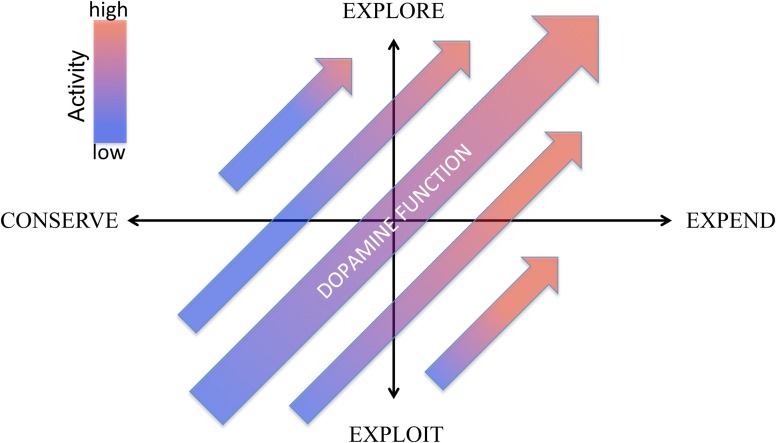
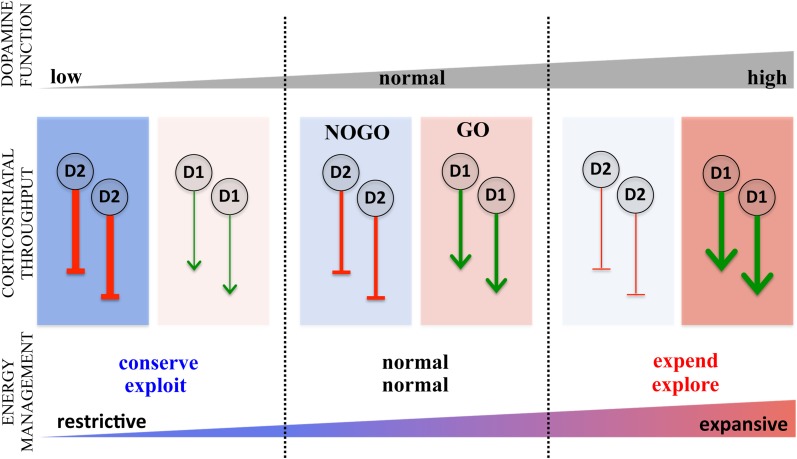
Accumulating evidence indicates integration of dopamine function with metabolic signals, highlighting a potential role for dopamine in energy balance, frequently construed as modulating reward in response to homeostatic state. Though its precise role remains controversial, the reward perspective of dopamine has dominated investigation of motivational disorders, including obesity. In the hypothesis outlined here, we suggest instead that the primary role of dopamine in behavior is to modulate activity to adapt behavioral energy expenditure to the prevailing environmental energy conditions, with the role of dopamine in reward and motivated behaviors derived from its primary role in energy balance. Dopamine has long been known to modulate activity, exemplified by psychostimulants that act via dopamine. More recently, there has been nascent investigation into the role of dopamine in modulating voluntary activity, with some investigators suggesting that dopamine may serve as a final common pathway that couples energy sensing to regulated voluntary energy expenditure. We suggest that interposed between input from both the internal and external world, dopamine modulates behavioral energy expenditure along two axes: a conserve-expend axis that regulates generalized activity and an explore-exploit axes that regulates the degree to which reward value biases the distribution of activity. In this view, increased dopamine does not promote consumption of tasty food. Instead increased dopamine promotes energy expenditure and exploration while decreased dopamine favors energy conservation and exploitation. This hypothesis provides a mechanistic interpretation to an apparent paradox: the well-established role of dopamine in food seeking and the findings that low dopaminergic functions are associated with obesity. Our hypothesis provides an alternative perspective on the role of dopamine in obesity and reinterprets the "reward deficiency hypothesis" as a perceived energy deficit. We propose that dopamine, by facilitating energy expenditure, should be protective against obesity. We suggest the apparent failure of this protective mechanism in Western societies with high prevalence of obesity arises as a consequence of sedentary lifestyles that thwart energy expenditure.
Overview
The claims and statistics of this paper haven’t been checked yet.
Run the check — free, no account needed. It reads the open-access text and checks the sources it cites.
Integrity signals
Registry
Cites
Statistics
Figures
Verification
Claims the paper makes
The claims and statistics of this paper haven’t been checked yet.
Run the check — free, no account needed. It reads the open-access text and checks the sources it cites.
Claims other papers make about this one
Each is checked against this paper’s own text: does it say what the citing paper says it does?
The check wasn’t confident either way, so it gives no verdict — never disputed.
In the citing paper
“While preliminary, these studies appear to demonstrate only modest gains in motor skill performance.”
From Exercise-enhanced neuroplasticity targeting motor and cognitive circuitry in Parkinson's disease (2013) · cites this paper as [49]
Experimental — accuracy not yet measuredIn the citing paper
“Further evidence for exercise effects on neuroplasticity and circuitry involved in automatic motor control is observed in studies utilizing forced cycling 49.”
From Exercise-enhanced neuroplasticity targeting motor and cognitive circuitry in Parkinson's disease (2013) · cites this paper as [49]
In the citing paper
“Only a few studies have examined the effects of aerobic training alone that incorporate limited or no aspects of skill learning 13, 22, 49.”
From Exercise-enhanced neuroplasticity targeting motor and cognitive circuitry in Parkinson's disease (2013) · cites this paper as [49]
Self-check
Percentages, sums and reported differences re-computed from the paper’s own numbers.
The self-check needs the paper’s full text.
Citations
Cites
‘Small Changes' to Diet and Physical Activity Behaviors for Weight Management
Hills, A. P., Byrne, N. M., Lindstrom, R. C., & Hill, J. O. (2013) · Obesity Facts · doi:10.1159/000345030 · Cited by 9,526
A neural substrate of prediction and reward
Schultz, W., Dayan, P., & Montague, P. R. (1997) · Science · doi:10.1126/science.275.5306.1593 · Cited by 9,388
Molecular Mechanisms of Depression: Perspectives on New Treatment Strategies
Lang, U. E., & Borgwardt, S. (2013) · Cellular Physiology and Biochemistry · doi:10.1159/000350094 · Cited by 8,526
Health benefits of physical activity: the evidence
Warburton, D. E. R. (2006) · Canadian Medical Association Journal · doi:10.1503/cmaj.051351 · Cited by 8,007
Genetics of Food Intake Self-Regulation in Childhood: Literature Review and Research Opportunities
Faith, M. S., Carnell, S., & Kral, T. V. E. (2013) · Human Heredity · doi:10.1159/000353879 · Cited by 7,633
The neural basis of drug craving: An incentive-sensitization theory of addiction
Robinson, T. (1993) · Brain Research Reviews · doi:10.1016/0165-0173(93)90013-p · Cited by 7,346
Introduction to Reinforcement Learning
Sutton, R. S., & Barto, A. G. (1998) · The MIT Press eBooks · Cited by 6,855
The functional anatomy of basal ganglia disorders
Albin, R. L., Young, A. B., & Penney, J. B. (1989) · Trends in Neurosciences · doi:10.1016/0166-2236(89)90074-x · Cited by 5,353
Koob, G. F., & Volkow, N. D. (2010) · Neuropsychopharmacology · doi:10.1038/npp.2009.110 · Cited by 5,340
Functional architecture of basal ganglia circuits: neural substrates of parallel processing
Alexander, G. E., & Crutcher, M. D. (1990) · Trends in Neurosciences · doi:10.1016/0166-2236(90)90107-l · Cited by 4,131
Effects of the obese Gene Product on Body Weight Regulation in ob / ob Mice
Pelleymounter, M. A., Cullen, M. J., Baker, M. B., Hecht, R., Winters, D., Boone, T., & Collins, F. (1995) · Science · doi:10.1126/science.7624776 · Cited by 4,017
Neural systems of reinforcement for drug addiction: from actions to habits to compulsion
Everitt, B. J., & Robbins, T. W. (2005) · Nature Neuroscience · doi:10.1038/nn1579 · Cited by 3,785
The reward circuit: linking primate anatomy and human imaging
Haber, S. N., & Knutson, B. (2010) · Neuropsychopharmacology · doi:10.1038/npp.2009.129 · Cited by 3,718
Dopamine, learning and motivation.
Wise, R. A. (2004) · Nature Reviews Neuroscience · doi:10.1038/nrn1406 · Cited by 3,379 · cited 4×
“Substantial evidence supports a role for dopamine in mediating reinforcement learning and corticostriatal plasticity, which will not be reviewed here (Montague et al., 1996; Schultz et al., 1997; Reynolds and Wickens, 2002; Schultz, 2002, 2010; Cannon and Palmiter, 2003; Wise, 2004; Berridge, 2007; Goto et al., 2007;…”
BackgroundInfluentialBardo, M. T., & Hammer, R. P. (1991) · Neuroscience · doi:10.1016/0306-4522(91)90226-e · Cited by 3,229
Physical Activity, All-Cause Mortality, and Longevity of College Alumni
Paffenbarger, R. S., Hyde, R., Wing, A. L., & Hsieh, C.-C. (1986) · New England Journal of Medicine · doi:10.1056/nejm198603063141003 · Cited by 2,742
Getting formal with dopamine and reward
Schultz, W. (2002) · Neuron · doi:10.1016/s0896-6273(02)00967-4 · Cited by 2,574
Daw, N. D., Niv, Y., & Dayan, P. (2005) · Nature Neuroscience · doi:10.1038/nn1560 · Cited by 2,533
Central nervous system control of food intake and body weight
Morton, G. J., Cummings, D. E., Baskin, D. G., Barsh, G. S., & Schwartz, M. W. (2006) · Nature · doi:10.1038/nature05026 · Cited by 2,503
THE BASAL GANGLIA: FOCUSED SELECTION AND INHIBITION OF COMPETING MOTOR PROGRAMS
Mink, J. W. (1996) · Progress in Neurobiology · doi:10.1016/s0301-0082(96)00042-1 · Cited by 2,478
Alexander, G. E., Crutcher, M. D., & DeLong, M. R. (1990) · PubMed · Cited by 2,422
The role of the basal ganglia in habit formation
Yin, H. H., & Knowlton, B. J. (2006) · Nature Reviews Neuroscience · doi:10.1038/nrn1919 · Cited by 2,402
The debate over dopamine’s role in reward: the case for incentive salience
Berridge, K. C. (2007) · Psychopharmacology · doi:10.1007/s00213-006-0578-x · Cited by 2,347
From motivation to action: Functional interface between the limbic system and the motor system
MOGENSON, G., JONES, D., & YIM, C. (1980) · Progress in Neurobiology · doi:10.1016/0301-0082(80)90018-0 · Cited by 2,331
Cortical substrates for exploratory decisions in humans
Daw, N. D., O'Doherty, J. P., Dayan, P., Seymour, B., & Dolan, R. J. (2006) · Nature · doi:10.1038/nature04766 · Cited by 2,224
Obesity and the Environment: Where Do We Go from Here?
Hill, J. O., Wyatt, H. R., Reed, G. W., & Peters, J. C. (2003) · Science · doi:10.1126/science.1079857 · Cited by 2,180
Barto, A. (1998) · IFAC Proceedings Volumes · doi:10.1016/s1474-6670(17)38315-5 · Cited by 2,172
A framework for mesencephalic dopamine systems based on predictive Hebbian learning
Montague, P., Dayan, P., & Sejnowski, T. (1996) · The Journal of Neuroscience · doi:10.1523/jneurosci.16-05-01936.1996 · Cited by 2,066
Learning the value of information in an uncertain world
Behrens, T. E. J., Woolrich, M. W., Walton, M. E., & Rushworth, M. F. S. (2007) · Nature Neuroscience · doi:10.1038/nn1954 · Cited by 2,053
Wang, G.-J., Volkow, N. D., Logan, J., Pappas, N. R., Wong, C. T., Zhu, W., Netusll, N., & Fowler, J. S. (2001) · The Lancet · doi:10.1016/s0140-6736(00)03643-6 · Cited by 1,864
Balleine, B. W., & O'Doherty, J. P. (2010) · Neuropsychopharmacology · doi:10.1038/npp.2009.131 · Cited by 1,775
Physical activity and reduced occurrence of non–insulin-dependent diabetes mellitus
Helmrich, S. P., Ragland, D. R., Leung, R. W., & Paffenbarger, R. S. (1991) · New England Journal of Medicine · doi:10.1056/nejm199107183250302 · Cited by 1,634
Dopamine D2 receptors in addiction-like reward dysfunction and compulsive eating in obese rats
Johnson, P. M., & Kenny, P. J. (2010) · Nature Neuroscience · doi:10.1038/nn.2519 · Cited by 1,495
The primate basal ganglia: Parallel and integrative networks
Haber, S. N. (2003) · Journal of Chemical Neuroanatomy · doi:10.1016/j.jchemneu.2003.10.003 · Cited by 1,479
Incentive-sensitization and addiction
Robinson, T. E., & Berridge, K. C. (2001) · Addiction · doi:10.1046/j.1360-0443.2001.9611038.x · Cited by 1,435
Multiple dopamine functions at different time courses
Schultz, W. (2007) · Annual Review of Neuroscience · doi:10.1146/annurev.neuro.28.061604.135722 · Cited by 1,415
Reward, dopamine and the control of food intake: implications for obesity
Volkow, N. D., Wang, G.-J., & Baler, R. D. (2011) · Trends in Cognitive Sciences · doi:10.1016/j.tics.2010.11.001 · Cited by 1,400
The Role of the Dorsal Striatum in Reward and Decision-Making: Figure 1.
Balleine, B. W., Delgado, M. R., & Hikosaka, O. (2007) · The Journal of Neuroscience · doi:10.1523/jneurosci.1554-07.2007 · Cited by 1,390
Avena, N. M., Rada, P., & Hoebel, B. G. (2008) · Neuroscience & Biobehavioral Reviews · doi:10.1016/j.neubiorev.2007.04.019 · Cited by 1,358
Motivation concepts in behavioral neuroscience
Berridge, K. C. (2004) · Physiology & Behavior · doi:10.1016/j.physbeh.2004.02.004 · Cited by 1,302
Tartaglia, L. A. (1997) · Journal of Biological Chemistry · doi:10.1074/jbc.272.10.6093 · Cited by 1,289
Surmeier, D. J., Ding, J., Day, M., Wang, Z., & Shen, W. (2007) · Trends in Neurosciences · doi:10.1016/j.tins.2007.03.008 · Cited by 1,203
Baxter, M. G., & Murray, E. A. (2002) · Nature Reviews Neuroscience · doi:10.1038/nrn875 · Cited by 1,200
Progressive Ratio as a Measure of Reward Strength
Hodos, W. (1961) · Science · doi:10.1126/science.134.3483.943 · Cited by 1,147
Tonic dopamine: Opportunity costs and the control of response vigor
Niv, Y., Daw, N. D., Joel, D., & Dayan, P. (2007) · Psychopharmacology · doi:10.1007/s00213-006-0502-4 · Cited by 1,133
Saper, C. B., Chou, T. C., & Elmquist, J. K. (2002) · Neuron · doi:10.1016/s0896-6273(02)00969-8 · Cited by 1,120
Subsecond dopamine release promotes cocaine seeking
Phillips, P. E. M., Stuber, G. D., Heien, M. L. A. V., Wightman, R. M., & Carelli, R. M. (2003) · Nature · doi:10.1038/nature01476 · Cited by 1,113
Drug-evoked synaptic plasticity in addiction: from molecular changes to circuit remodeling
Lüscher, C., & Malenka, R. C. (2011) · Neuron · doi:10.1016/j.neuron.2011.01.017 · Cited by 1,105
How can drug addiction help us understand obesity?
Volkow, N. D., & Wise, R. A. (2005) · Nature Neuroscience · doi:10.1038/nn1452 · Cited by 1,089
A selective role for dopamine in stimulus-reward learning
Flagel, S. B., Clark, J. J., Robinson, T. E., Mayo, L., Czuj, A., Willuhn, I., Akers, C. A., Clinton, S. M., Phillips, P. E. M., & Akil, H. (2011) · Nature · doi:10.1038/nature09588 · Cited by 1,026
Effort-related functions of nucleus accumbens dopamine and associated forebrain circuits
Salamone, J. D., Correa, M., Farrar, A., & Mingote, S. M. (2007) · Psychopharmacology · doi:10.1007/s00213-006-0668-9 · Cited by 1,000
Blum, K., Braverman, E. R., Holder, J. M., Lubar, J. F., Monastra, V. J., Miller, D., Lubar, J. O., Chen, T. J. H., & Comings, D. E. (2000) · Journal of Psychoactive Drugs · doi:10.1080/02791072.2000.10736099 · Cited by 998
Cortico-Basal Ganglia Reward Network: Microcircuitry
Sesack, S. R., & Grace, A. A. (2010) · Neuropsychopharmacology · doi:10.1038/npp.2009.93 · Cited by 985
Synaptic organisation of the basal ganglia
Bolam, J. P., Hanley, J. J., Booth, P. A. C., & Bevan, M. D. (2000) · Journal of Anatomy · doi:10.1046/j.1469-7580.2000.19640527.x · Cited by 946
Kelley, A. E. (2004) · Neuroscience & Biobehavioral Reviews · doi:10.1016/j.neubiorev.2003.11.015 · Cited by 942
The primate amygdala represents the positive and negative value of visual stimuli during learning
Paton, J. J., Belova, M. A., Morrison, S. E., & Salzman, C. D. (2006) · Nature · doi:10.1038/nature04490 · Cited by 917 · cited 2×
“The dopamine cells and projection that directly express leptin receptors may play a different role in appetitive learning— associated with the CeN (Holland and Gallagher, 1993; Parkinson et al., 2000; Connor et al., 2001; Baxter and Murray, 2002; Lee et al., 2005; Paton et al., 2006; El-Amamy and Holland, 2007)— an in…”
BackgroundLeptin Receptor Signaling in Midbrain Dopamine Neurons Regulates Feeding
Hommel, J. D., Trinko, R., Sears, R. M., Georgescu, D., Liu, Z.-W., Gao, X.-B., Thurmon, J. J., Marinelli, M., & DiLeone, R. J. (2006) · Neuron · doi:10.1016/j.neuron.2006.08.023 · Cited by 902
A cellular mechanism of reward-related learning
Reynolds, J. N. J., Hyland, B. I., & Wickens, J. R. (2001) · Nature · doi:10.1038/35092560 · Cited by 879
The tempted brain eats: Pleasure and desire circuits in obesity and eating disorders
Berridge, K. C., Ho, C.-Y., Richard, J. M., & DiFeliceantonio, A. G. (2010) · Brain Research · doi:10.1016/j.brainres.2010.04.003 · Cited by 873
Reward, Motivation, and Reinforcement Learning
Dayan, P., & Balleine, B. W. (2002) · Neuron · doi:10.1016/s0896-6273(02)00963-7 · Cited by 855
The role of dopamine in locomotor activity and learning
Beninger, R. J. (1983) · Brain Research Reviews · doi:10.1016/0165-0173(83)90038-3 · Cited by 848
Economic demand and essential value.
Hursh, S. R., & Silberberg, A. M. (2008) · Psychological Review · doi:10.1037/0033-295x.115.1.186 · Cited by 838
Reward mechanisms in obesity: new insights and future directions
Kenny, P. J. (2011) · Neuron · doi:10.1016/j.neuron.2011.02.016 · Cited by 748
Reinforcement learning: The Good, The Bad and The Ugly
Dayan, P., & Niv, Y. (2008) · Current Opinion in Neurobiology · doi:10.1016/j.conb.2008.08.003 · Cited by 733
Dopamine operates as a subsecond modulator of food seeking
Roitman, M. F., Stuber, G. D., Phillips, P. E. M., Wightman, R. M., & Carelli, R. M. (2004) · The Journal of Neuroscience · doi:10.1523/jneurosci.3823-03.2004 · Cited by 718
Waging war on modern chronic diseases: primary prevention through exercise biology
Booth, F. W., Gordon, S. E., Carlson, C. J., & Hamilton, M. T. (2000) · Journal of Applied Physiology · doi:10.1152/jappl.2000.88.2.774 · Cited by 693
Basal Ganglia Output and Cognition: Evidence from Anatomical, Behavioral, and Clinical Studies
Middleton, F. A., & Strick, P. L. (2000) · Brain and Cognition · doi:10.1006/brcg.1999.1099 · Cited by 657
Dopamine signals for reward value and risk: basic and recent data
Schultz, W. (2010) · Behavioral and Brain Functions · doi:10.1186/1744-9081-6-24 · Cited by 653
Leptin Regulation of the Mesoaccumbens Dopamine Pathway
Fulton, S., Pissios, P., Manchon, R. P., Stiles, L., Frank, L., Pothos, E. N., Maratos-Flier, E., & Flier, J. S. (2006) · Neuron · doi:10.1016/j.neuron.2006.09.006 · Cited by 644
Neuroleptic-Induced "Anhedonia" in Rats: Pimozide Blocks Reward Quality of Food
Wise, R. A., Spindler, J., de Wit, H., & Gerberg, G. J. (1978) · Science · doi:10.1126/science.566469 · Cited by 636
Distinct basal ganglia territories are engaged in early and advanced motor sequence learning
Lehéricy, S., Benali, H., Van de Moortele, P.-F., Pélégrini-Issac, M., Waechter, T., Ugurbil, K., & Doyon, J. (2005) · Proceedings of the National Academy of Sciences · doi:10.1073/pnas.0502762102 · Cited by 634
Leptin Regulates Striatal Regions and Human Eating Behavior
Farooqi, I. S., Bullmore, E., Keogh, J., Gillard, J., O'Rahilly, S., & Fletcher, P. C. (2007) · Science · doi:10.1126/science.1144599 · Cited by 622
Homeostatic and hedonic signals interact in the regulation of food intake
Lutter, M., & Nestler, E. J. (2009) · The Journal of Nutrition · doi:10.3945/jn.108.097618 · Cited by 614
Roesch, M. R., Calu, D. J., & Schoenbaum, G. (2007) · Nature Neuroscience · doi:10.1038/nn2013 · Cited by 597
Antipsychotic-induced weight gain: a review of the literature.
Allison, D. B., & Casey, D. E. (2001) · PubMed · Cited by 594
The hypothalamus and the control of energy homeostasis
Williams, G., Bing, C., Cai, X., Harrold, J. A., King, P., & Liu, X. H. (2001) · Physiology & Behavior · doi:10.1016/s0031-9384(01)00612-6 · Cited by 573
Diet-Induced Obesity Causes Severe but Reversible Leptin Resistance in Arcuate Melanocortin Neurons
Enriori, P. J., Evans, A. E., Sinnayah, P., Jobst, E. E., Tonelli-Lemos, L., Billes, S. K., Glavas, M. M., Grayson, B. E., Perello, M., Nillni, E. A., et al. (2007) · Cell Metabolism · doi:10.1016/j.cmet.2007.02.004 · Cited by 552
Hyperdopaminergic mutant mice have higher "wanting" but not "liking" for sweet rewards
Peciña, S., Cagniard, B., Berridge, K. C., Aldridge, J. W., & Zhuang, X. (2003) · The Journal of Neuroscience · doi:10.1523/jneurosci.23-28-09395.2003 · Cited by 551
Self-citationDopamine-dependent plasticity of corticostriatal synapses
Reynolds, J. N. J., & Wickens, J. R. (2002) · Neural Networks · doi:10.1016/s0893-6080(02)00045-x · Cited by 528
Compulsive overeating as an addiction disorder. A review of theory and evidence
Davis, C. A., & Carter, J. C. (2009) · Appetite · doi:10.1016/j.appet.2009.05.018 · Cited by 526
Salamone, J. D., Cousins, M. S., & Snyder, B. J. (1997) · Neuroscience & Biobehavioral Reviews · doi:10.1016/s0149-7634(96)00017-6 · Cited by 522
Wang, G.-J., Volkow, N. D., Thanos, P. K., & Fowler, J. S. (2004) · Journal of Addictive Diseases · doi:10.1300/j069v23n03_04 · Cited by 502
Hyperactivity and impaired response habituation in hyperdopaminergic mice
Zhuang, X., Oosting, R. S., Jones, S. R., Gainetdinov, R. R., Miller, G. W., Caron, M. G., & Hen, R. (2001) · Proceedings of the National Academy of Sciences · doi:10.1073/pnas.98.4.1982 · Cited by 502
Self-citationRoles for nigrostriatal—not just mesocorticolimbic—dopamine in reward and addiction
Wise, R. A. (2009) · Trends in Neurosciences · doi:10.1016/j.tins.2009.06.004 · Cited by 500
The computational neurobiology of learning and reward
Daw, N. D., & Doya, K. (2006) · Current Opinion in Neurobiology · doi:10.1016/j.conb.2006.03.006 · Cited by 492
Neurotransmitter roles in synaptic modulation, plasticity and learning in the dorsal striatum
Lovinger, D. M. (2010) · Neuropharmacology · doi:10.1016/j.neuropharm.2010.01.008 · Cited by 488 · cited 2×
“Substantial evidence supports a role for dopamine in mediating reinforcement learning and corticostriatal plasticity, which will not be reviewed here (Montague et al., 1996; Schultz et al., 1997; Reynolds and Wickens, 2002; Schultz, 2002, 2010; Cannon and Palmiter, 2003; Wise, 2004; Berridge, 2007; Goto et al., 2007;…”
BackgroundFrank, M. J., Doll, B. B., Oas-Terpstra, J., & Moreno, F. (2009) · Nature Neuroscience · doi:10.1038/nn.2342 · Cited by 479
Chakravarthy, M. V., & Booth, F. W. (2004) · Journal of Applied Physiology · doi:10.1152/japplphysiol.00757.2003 · Cited by 477
Leyton, M. (2002) · Neuropsychopharmacology · doi:10.1016/s0893-133x(02)00366-4 · Cited by 476
Is dopamine a physiologically relevant mediator of feeding behavior?
Palmiter, R. D. (2007) · Trends in Neurosciences · doi:10.1016/j.tins.2007.06.004 · Cited by 469
Leptin Receptor Signaling and the Regulation of Mammalian Physiology
Myers, M. G. (2004) · Recent Progress in Hormone Research · doi:10.1210/rp.59.1.287 · Cited by 463
Coppari, R., Ichinose, M., Lee, C. E., Pullen, A. E., Kenny, C. D., McGovern, R. A., Tang, V., Liu, S. M., Ludwig, T., Chua, S. C., et al. (2005) · Cell Metabolism · doi:10.1016/j.cmet.2004.12.004 · Cited by 457
Beyond the reward hypothesis: alternative functions of nucleus accumbens dopamine
Salamone, J. D., Correa, M., Mingote, S., & Weber, S. (2004) · Current Opinion in Pharmacology · doi:10.1016/j.coph.2004.09.004 · Cited by 454
Oral sucrose stimulation increases accumbens dopamine in the rat
Hajnal, A., Smith, G. P., & Norgren, R. (2004) · American Journal of Physiology-Regulatory, Integrative and Comparative Physiology · doi:10.1152/ajpregu.00282.2003 · Cited by 449
Garland, T., Schutz, H., Chappell, M. A., Keeney, B. K., Meek, T. H., Copes, L. E., Acosta, W., Drenowatz, C., Maciel, R. C., van Dijk, G., et al. (2011) · Journal of Experimental Biology · doi:10.1242/jeb.048397 · Cited by 444
The ventral basal ganglia, a selection mechanism at the crossroads of space, strategy, and reward.
Humphries, M. D., & Prescott, T. J. (2009) · Progress in Neurobiology · doi:10.1016/j.pneurobio.2009.11.003 · Cited by 439
Salamone, J. D., Steinpreis, R. E., McCullough, L. D., Smith, P., Grebel, D., & Mahan, K. (1991) · Psychopharmacology · doi:10.1007/bf02245659 · Cited by 436
Food Reward in the Absence of Taste Receptor Signaling
de Araujo, I. E., Oliveira-Maia, A. J., Sotnikova, T. D., Gainetdinov, R. R., Caron, M. G., Nicolelis, M. A. L., & Simon, S. A. (2008) · Neuron · doi:10.1016/j.neuron.2008.01.032 · Cited by 431
Modulation of Brain Reward Circuitry by Leptin
Fulton, S. E., Woodside, B. C., & Shizgal, P. (2000) · Science · doi:10.1126/science.287.5450.125 · Cited by 421
Greenwood, B. N., Foley, T. E., Le, T. V., Strong, P. V., Loughridge, A. B., Day, H. E. W., & Fleshner, M. (2010) · Behavioural Brain Research · doi:10.1016/j.bbr.2010.11.005 · Cited by 416
Yin, H. H., Ostlund, S. B., & Balleine, B. W. (2008) · European Journal of Neuroscience · doi:10.1111/j.1460-9568.2008.06422.x · Cited by 416
A computational substrate for incentive salience
McClure, S. M., Daw, N. D., & Montague, P. R. (2003) · Trends in Neurosciences · doi:10.1016/s0166-2236(03)00177-2 · Cited by 416
Leinninger, G. M., Jo, Y.-H., Leshan, R. L., Louis, G. W., Yang, H., Barrera, J. G., Wilson, H., Opland, D. M., Faouzi, M. A., Gong, Y., et al. (2009) · Cell Metabolism · doi:10.1016/j.cmet.2009.06.011 · Cited by 412
Davis, C. A., Patte, K. A., Levitan, R. D., Reid, C., Tweed, S., & Curtis, C. (2006) · Appetite · doi:10.1016/j.appet.2006.05.016 · Cited by 411
ROSENBAUM, M. S., Sy, M., Pavlovich, K. H., Leibel, R. L., & Joy Hirsch, C. (2008) · Journal of Clinical Investigation · doi:10.1172/jci35055 · Cited by 408
Identifying hypothalamic pathways controlling food intake, body weight, and glucose homeostasis
Elmquist, J. K., Coppari, R., Balthasar, N., Ichinose, M., & Lowell, B. B. (2005) · The Journal of Comparative Neurology · doi:10.1002/cne.20786 · Cited by 406
Deficits of mesolimbic dopamine neurotransmission in rat dietary obesity
Geiger, B. M., Haburcak, M., Avena, N. M., Moyer, M. C., Hoebel, B. G., & Pothos, E. N. (2009) · Neuroscience · doi:10.1016/j.neuroscience.2009.02.007 · Cited by 403
Role of dopamine in drug reinforcement and addiction in humans: results from imaging studies
Volkow, N. D., Fowler, J. S., & Wang, G.-J. (2002) · Behavioural Pharmacology · doi:10.1097/00008877-200209000-00008 · Cited by 398
Sugar and Fat Bingeing Have Notable Differences in Addictive-like Behavior
Avena, N. M., Rada, P., & Hoebel, B. G. (2009) · The Journal of Nutrition · doi:10.3945/jn.108.097584 · Cited by 388
The nucleus accumbens as part of a basal ganglia action selection circuit
Nicola, S. M. (2006) · Psychopharmacology · doi:10.1007/s00213-006-0510-4 · Cited by 383
Liking vs. wanting food: Importance for human appetite control and weight regulation
Finlayson, G., King, N. A., & Blundell, J. E. (2007) · Neuroscience & Biobehavioral Reviews · doi:10.1016/j.neubiorev.2007.03.004 · Cited by 376
Refined food addiction: A classic substance use disorder
Ifland, J., Preuss, H. G., Marcus, M. T., Rourke, K. M., Taylor, W. C., Burau, K. D., Jacobs, W. S., Kadish, W., & Manso, G. (2009) · Medical Hypotheses · doi:10.1016/j.mehy.2008.11.035 · Cited by 375
The functional anatomy of disorders of the basal ganglia
Albin, R. L., Young, A. B., & Penney, J. B. (1995) · Trends in Neurosciences · doi:10.1016/0166-2236(95)80020-3 · Cited by 367
Hall, J., Parkinson, J. A., Connor, T. M., Dickinson, A., & Everitt, B. J. (2001) · European Journal of Neuroscience · doi:10.1046/j.0953-816x.2001.01577.x · Cited by 355
Overfeeding Rapidly Induces Leptin and Insulin Resistance
Wang, J., Obici, S., Morgan, K., Barzilai, N., Feng, Z., & Rossetti, L. (2001) · Diabetes · doi:10.2337/diabetes.50.12.2786 · Cited by 355
Leinninger, G. M., Opland, D. M., Jo, Y., Faouzi, M., Christensen, L., Cappellucci, L., Rhodes, C. J., Gnegy, M. E., Becker, J. B., Pothos, E. N., et al. (2011) · Cell Metabolism · doi:10.1016/j.cmet.2011.06.016 · Cited by 354
The public health burdens of sedentary living habits
Powell, K. E., & Blair, S. N. (1994) · Medicine & Science in Sports & Exercise · doi:10.1249/00005768-199407000-00007 · Cited by 350
A COST‐BENEFIT ANALYSIS OF DEMAND FOR FOOD
Hursh, S. R., Raslear, T. G., Shurtleff, D., Bauman, R. A., & Simmons, L. P. (1988) · Journal of the Experimental Analysis of Behavior · doi:10.1901/jeab.1988.50-419 · Cited by 348
Redish, A. D., Jensen, S., Johnson, A., & Kurth-Nelson, Z. (2007) · Psychological Review · doi:10.1037/0033-295x.114.3.784 · Cited by 346
The Yin and Yang of dopamine release: a new perspective
GOTO, Y., OTANI, S., & GRACE, A. (2007) · Neuropharmacology · doi:10.1016/j.neuropharm.2007.07.007 · Cited by 342
Finlayson, G., King, N. A., & Blundell, J. E. (2006) · Physiology & Behavior · doi:10.1016/j.physbeh.2006.08.020 · Cited by 342
Physical activity and diabetes prevention
LaMonte, M. J., Blair, S. N., & Church, T. S. (2005) · Journal of Applied Physiology · doi:10.1152/japplphysiol.00193.2005 · Cited by 340
van de Wall, E., Leshan, R., Xu, A. W., Balthasar, N., Coppari, R., Liu, S. M., Jo, Y. H., MacKenzie, R. G., Allison, D. B., Dun, N. J., et al. (2008) · Endocrinology · doi:10.1210/en.2007-1132 · Cited by 338
Trpm5 Null Mice Respond to Bitter, Sweet, and Umami Compounds
Damak, S., Rong, M., Yasumatsu, K., Kokrashvili, Z., Pérez, C. A., Shigemura, N., Yoshida, R., Mosinger, B. J., Glendinning, J. I., Ninomiya, Y., et al. (2006) · Chemical Senses · doi:10.1093/chemse/bjj027 · Cited by 334
Xu, M., Hu, X., Cooper, D., Moratalla, R., Graybiel, A. M., White, F. J., & Tonegawa, S. (1994) · Cell · doi:10.1016/0092-8674(94)90026-4 · Cited by 333
Havel, P. J. (2000) · Proceedings of The Nutrition Society · doi:10.1017/s0029665100000410 · Cited by 330
Neural bases of food-seeking: affect, arousal and reward in corticostriatolimbic circuits
BALLEINE, B. (2005) · Physiology & Behavior · doi:10.1016/j.physbeh.2005.08.061 · Cited by 326
Of mice and men: the benefits of caloric restriction, exercise, and mimetics
Mercken, E. M., Carboneau, B. A., Krzysik-Walker, S. M., & de Cabo, R. (2012) · Ageing Research Reviews · doi:10.1016/j.arr.2011.11.005 · Cited by 318
Taylor, J. R., & Robbins, T. W. (1986) · Psychopharmacology · doi:10.1007/bf00179197 · Cited by 317
Davis, J. F., Tracy, A. L., Schurdak, J. D., Tschöp, M. H., Lipton, J. W., Clegg, D. J., & Benoit, S. C. (2008) · Behavioral Neuroscience · doi:10.1037/a0013111 · Cited by 307
Eating Motives and the Controversy over Dieting: Eating Less Than Needed versus Less Than Wanted
Lowe, M. R., & Levine, A. S. (2005) · Obesity Research · doi:10.1038/oby.2005.90 · Cited by 293
Zheng, H., Lenard, N. R., Shin, A. C., & Berthoud, H. R. (2009) · International Journal of Obesity · doi:10.1038/ijo.2009.65 · Cited by 286
Avena, N. M., & Bocarsly, M. E. (2011) · Neuropharmacology · doi:10.1016/j.neuropharm.2011.11.010 · Cited by 285
Cagniard, B., Balsam, P. D., Brunner, D., & Zhuang, X. (2005) · Neuropsychopharmacology · doi:10.1038/sj.npp.1300966 · Cited by 282
Self-citationCannon, C. M., & Palmiter, R. D. (2003) · The Journal of Neuroscience · doi:10.1523/jneurosci.23-34-10827.2003 · Cited by 280
Differential regulation of fronto-executive function by the monoamines and acetylcholine
Robbins, T., & Roberts, A. (2007) · Cerebral Cortex · doi:10.1093/cercor/bhm066 · Cited by 279
Dopamine, behavioral economics, and effort
Salamone, J. D. (2009) · Frontiers in Behavioral Neuroscience · doi:10.3389/neuro.08.013.2009 · Cited by 277
Food reward, hyperphagia, and obesity
Berthoud, H.-R., Lenard, N. R., & Shin, A. C. (2011) · American Journal of Physiology-Regulatory, Integrative and Comparative Physiology · doi:10.1152/ajpregu.00028.2011 · Cited by 275
Dissociable roles of the central and basolateral amygdala in appetitive emotional learning
Parkinson, J. A., Robbins, T. W., & Everitt, B. J. (2000) · European Journal of Neuroscience · doi:10.1046/j.1460-9568.2000.00960.x · Cited by 272
Tindell, A. J., Berridge, K. C., Zhang, J., Peciña, S., & Aldridge, J. W. (2005) · European Journal of Neuroscience · doi:10.1111/j.1460-9568.2005.04411.x · Cited by 268
Aberman, J. E., & Salamone, J. D. (1999) · Neuroscience · doi:10.1016/s0306-4522(99)00004-4 · Cited by 263
Neuroplasticity of Dopamine Circuits After Exercise: Implications for Central Fatigue
Foley, T. E., & Fleshner, M. (2008) · NeuroMolecular Medicine · doi:10.1007/s12017-008-8032-3 · Cited by 261
What is reinforced by phasic dopamine signals?
Redgrave, P., GURNEY, K. N., & Reynolds, J. N. J. (2007) · Brain Research Reviews · doi:10.1016/j.brainresrev.2007.10.007 · Cited by 261
Haase, L., Cerf-Ducastel, B., & Murphy, C. (2008) · NeuroImage · doi:10.1016/j.neuroimage.2008.09.044 · Cited by 259
Sedelis, M., Hofele, K., Auburger, G. W. J., Morgan, S., Huston, J. P., & Schwarting, R. K. W. (2000) · Behavior Genetics · doi:10.1023/a:1001958023096 · Cited by 253
Epidemiology of Obesity in the Western Hemisphere
Ford, E. S., & Mokdad, A. H. (2008) · The Journal of Clinical Endocrinology & Metabolism · doi:10.1210/jc.2008-1356 · Cited by 248
Neurocomputational models of basal ganglia function in learning, memory and choice
Cohen, M. X., & Frank, M. J. (2008) · Behavioural Brain Research · doi:10.1016/j.bbr.2008.09.029 · Cited by 248
Dissociable cost and benefit encoding of future rewards by mesolimbic dopamine
Gan, J. O., Walton, M. E., & Phillips, P. E. M. (2009) · Nature Neuroscience · doi:10.1038/nn.2460 · Cited by 244
Update on models of basal ganglia function and dysfunction
DeLong, M. R., & Wichmann, T. (2009) · Parkinsonism & Related Disorders · doi:10.1016/s1353-8020(09)70822-3 · Cited by 241
Calculating utility: preclinical evidence for cost–benefit analysis by mesolimbic dopamine
Phillips, P. E. M., Walton, M. E., & Jhou, T. C. (2007) · Psychopharmacology · doi:10.1007/s00213-006-0626-6 · Cited by 237
Chapter 1. Neurocircuitry of Addiction
Koob, G. F., & Volkow, N. D. (2021) · American Psychiatric Association Publishing eBooks · doi:10.1176/appi.books.9781615373970.kb01 · Cited by 236
The Nucleus Accumbens and Pavlovian Reward Learning
Day, J. J., & Carelli, R. M. (2007) · The Neuroscientist · doi:10.1177/1073858406295854 · Cited by 235
Striatal dopamine turnover during treadmill running in the rat: Relation to the speed of running
Hattori, S., Naoi, M., & Nishino, H. (1994) · Brain Research Bulletin · doi:10.1016/0361-9230(94)90214-3 · Cited by 234
Fundamental questions about genes, inactivity, and chronic diseases
Booth, F. W., & Lees, S. J. (2006) · Physiological Genomics · doi:10.1152/physiolgenomics.00174.2006 · Cited by 233
Effect of voluntary exercise on longevity of rats
Holloszy, J. O., Smith, E. K., Vining, M., & Adams, S. (1985) · Journal of Applied Physiology · doi:10.1152/jappl.1985.59.3.826 · Cited by 231
Baldo, B. A., Sadeghian, K., Basso, A. M., & Kelley, A. E. (2002) · Behavioural Brain Research · doi:10.1016/s0166-4328(02)00293-0 · Cited by 228
Dopaminergic control of the exploration-exploitation trade-off via the basal ganglia
Humphries, M. D. (2012) · Frontiers in Neuroscience · doi:10.3389/fnins.2012.00009 · Cited by 219
Insulin, leptin, and food reward: update 2008
Figlewicz, D. P., & Benoit, S. C. (2008) · American Journal of Physiology-Regulatory, Integrative and Comparative Physiology · doi:10.1152/ajpregu.90725.2008 · Cited by 205
Coordinated Accumbal Dopamine Release and Neural Activity Drive Goal-Directed Behavior
Cheer, J. F., Aragona, B. J., Heien, M. L., Seipel, A. T., Carelli, R. M., & Wightman, R. M. (2007) · Neuron · doi:10.1016/j.neuron.2007.03.021 · Cited by 202
Salamone, J. D., Wisniecki, A., Carlson, B. B., & Correa, M. (2001) · Neuroscience · doi:10.1016/s0306-4522(01)00249-4 · Cited by 198
Salamone, J. D., Cousins, M. S., McCullough, L. D., Carriero, D. L., & Berkowitz, R. J. (1994) · Pharmacology Biochemistry and Behavior · doi:10.1016/0091-3057(94)90452-9 · Cited by 196
Evidence for defective mesolimbic dopamine exocytosis in obesity‐prone rats
Geiger, B. M., Behr, G. G., Frank, L. E., Caldera-Siu, A. D., Beinfeld, M. C., Kokkotou, E. G., & Pothos, E. N. (2008) · The FASEB Journal · doi:10.1096/fj.08-110759 · Cited by 194
Lifetime Leisure Exercise and Osteoporosis The Rancho Bemardo Study
Greendale, G. A., Barrett-Connor, E. L., Edelstein, S. L., Ingles, S. A., & Haile, R. W. (1995) · American Journal of Epidemiology · doi:10.1093/oxfordjournals.aje.a117362 · Cited by 192
MEEUSEN, R. R., Smolders, I. J., Sarre, S., Meirleir, K. D., KEIZER, H. A., Serneels, M., Ebinger, G., & Michotte, Y. M. (1997) · Acta Physiologica Scandinavica · doi:10.1046/j.1365-201x.1997.00118.x · Cited by 191
Aberman, J., Ward, S. J., & Salamone, J. D. (1998) · Pharmacology Biochemistry and Behavior · doi:10.1016/s0091-3057(98)00112-9 · Cited by 190
Dopamine modulates effort-based decision making in rats.
Bardgett, M. E., Depenbrock, M., Downs, N., Points, M., & Green, L. (2009) · Behavioral Neuroscience · doi:10.1037/a0014625 · Cited by 190
Physical Activity Plays an Important Role in Body Weight Regulation
Chaput, J., Klingenberg, L., Rosenkilde, M., Gilbert, J., Tremblay, A., & Sjödin, A. M. (2010) · Journal of Obesity · doi:10.1155/2011/360257 · Cited by 186
Tonic Dopamine Modulates Exploitation of Reward Learning
Beeler, J. A., Daw, N. D., Frazier, C. R. M., & Zhuang, X. (2010) · Frontiers in Behavioral Neuroscience · doi:10.3389/fnbeh.2010.00170 · Cited by 183
Self-citationChronic food restriction: Enhancing effects on drug reward and striatal cell signaling
Carr, K. D. (2006) · Physiology & Behavior · doi:10.1016/j.physbeh.2006.09.021 · Cited by 182
Mark, G. P., Blander, D. S., & Hoebel, B. G. (1991) · Brain Research · doi:10.1016/0006-8993(91)90946-s · Cited by 181
Gustatory reward and the nucleus accumbens
Norgren, R., Hajnal, A., & Mungarndee, S. S. (2006) · Physiology & Behavior · doi:10.1016/j.physbeh.2006.05.024 · Cited by 181
Brown, H. D., McCutcheon, J. E., Cone, J. J., Ragozzino, M. E., & Roitman, M. F. (2011) · European Journal of Neuroscience · doi:10.1111/j.1460-9568.2011.07914.x · Cited by 179
Running is rewarding and antidepressive
Brené, S., Bjørnebekk, A., Åberg, E., Mathé, A. A., Olson, L., & Werme, M. (2007) · Physiology & Behavior · doi:10.1016/j.physbeh.2007.05.015 · Cited by 176
Symposium overview–food addiction: fact or fiction?
Corwin, R. L., & Grigson, P. S. (2009) · The Journal of Nutrition · doi:10.3945/jn.108.097691 · Cited by 175
Cousins, M. S., & Salamone, J. D. (1994) · Pharmacology Biochemistry and Behavior · doi:10.1016/0091-3057(94)90460-x · Cited by 174
Intraventricular Insulin and Leptin Reverse Place Preference Conditioned With High-Fat Diet in Rats.
Figlewicz, D. P., Bennett, J. L., Evans, S. B., Kaiyala, K. J., Sipols, A. J., & Benoit, S. C. (2004) · Behavioral Neuroscience · doi:10.1037/0735-7044.118.3.479 · Cited by 172
Cousins, M. S., Sokolowski, J. D., & Salamone, J. D. (1993) · Pharmacology Biochemistry and Behavior · doi:10.1016/0091-3057(93)90226-j · Cited by 172
Basal and feeding-evoked dopamine release in the rat nucleus accumbens is depressed by leptin
Krügel, U., Schraft, T., Kittner, H., Kieß, W., & Illés, P. (2003) · European Journal of Pharmacology · doi:10.1016/j.ejphar.2003.09.047 · Cited by 171
Intraventricular insulin and leptin decrease sucrose self-administration in rats
Figlewicz, D. P., Bennett, J. L., Naleid, A. M., Davis, C. D., & Grimm, J. W. (2006) · Physiology & Behavior · doi:10.1016/j.physbeh.2006.07.023 · Cited by 170
Leptin Regulates Energy Balance and Motivation Through Action at Distinct Neural Circuits
Davis, J. F., Choi, D. L., Schurdak, J. D., Fitzgerald, M. F., Clegg, D. J., Lipton, J. W., Figlewicz, D. P., & Benoit, S. C. (2010) · Biological Psychiatry · doi:10.1016/j.biopsych.2010.08.028 · Cited by 169
Basal Ganglia-Thalamocortical Circuits
Alexander, G. E. (1994) · Journal of Clinical Neurophysiology · doi:10.1097/00004691-199407000-00004 · Cited by 169
Phasic Nucleus Accumbens Dopamine Release Encodes Effort- and Delay-Related Costs
Day, J. J., Jones, J. L., Wightman, R. M., & Carelli, R. M. (2010) · Biological Psychiatry · doi:10.1016/j.biopsych.2010.03.026 · Cited by 166
Holland, P. C., & Gallagher, M. (1993) · Behavioral Neuroscience · doi:10.1037/0735-7044.107.2.246 · Cited by 163
Body Weight Changes Associated With Psychopharmacology
Vanina, Y., Podolskaya, A., Sedky, K., Shahab, H., Siddiqui, A., Munshi, F., & Lippmann, S. (2002) · Psychiatric Services · doi:10.1176/appi.ps.53.7.842 · Cited by 162
Pelchat, M. L. (2009) · Journal of Nutrition · doi:10.3945/jn.108.097816 · Cited by 154
Modulation of food reward by adiposity signals
Figlewicz, D. P., Naleid, A. M., & Sipols, A. J. (2006) · Physiology & Behavior · doi:10.1016/j.physbeh.2006.10.008 · Cited by 149
Does the difference between physically active and couch potato lie in the dopamine system?
Knab, A. M., & Lightfoot, J. T. (2010) · International Journal of Biological Sciences · doi:10.7150/ijbs.6.133 · Cited by 148
Samorajski, T., Delaney, C., Durham, L., Ordy, J. M., Johnson, J. A., & Dunlap, W. P. (1985) · Neurobiology of Aging · doi:10.1016/0197-4580(85)90066-1 · Cited by 147
Vucetic, Z., & Reyes, T. M. (2010) · WIREs Systems Biology and Medicine · doi:10.1002/wsbm.77 · Cited by 145
Chronic exercise lowers the defended body weight gain and adiposity in diet-induced obese rats
Levin, B. E., & Dunn-Meynell, A. A. (2004) · American Journal of Physiology-Regulatory, Integrative and Comparative Physiology · doi:10.1152/ajpregu.00650.2003 · Cited by 142
Bi, S., Scott, K. A., Hyun, J., Ladenheim, E. E., & Moran, T. H. (2005) · Endocrinology · doi:10.1210/en.2004-1441 · Cited by 140
Nucleus accumbens neurons encode Pavlovian approach behaviors: evidence from an autoshaping paradigm
Day, J. J., Wheeler, R. A., Roitman, M. F., & Carelli, R. M. (2006) · European Journal of Neuroscience · doi:10.1111/j.1460-9568.2006.04654.x · Cited by 140
David, H., Ansseau, M., & Abraini, J. H. (2005) · Brain Research Reviews · doi:10.1016/j.brainresrev.2005.09.002 · Cited by 139
Belke, T. W., & Wagner, J. P. (2005) · Behavioural Processes · doi:10.1016/j.beproc.2004.12.006 · Cited by 136
Dopamine Scales Performance in the Absence of New Learning
Cagniard, B., Beeler, J. A., Britt, J. P., McGehee, D. S., Marinelli, M., & Zhuang, X. (2006) · Neuron · doi:10.1016/j.neuron.2006.07.026 · Cited by 134
Self-citationIntracerebroventricular infusions of 3-OHB and insulin in a rat model of dietary obesity
Arase, K., Fisler, J. S., Shargill, N. S., York, D. A., & Bray, G. A. (1988) · American Journal of Physiology-Regulatory, Integrative and Comparative Physiology · doi:10.1152/ajpregu.1988.255.6.r974 · Cited by 132
Leptin reverses sucrose-conditioned place preference in food-restricted rats
Figlewicz, D. P., HIGGINS, M., Ng-Evans, S., & Havel, P. J. (2001) · Physiology & Behavior · doi:10.1016/s0031-9384(01)00486-3 · Cited by 132
Nucleus accumbens dopamine and work requirements on interval schedules
Correa, M., Carlson, B. B., Wisniecki, A., & Salamone, J. D. (2002) · Behavioural Brain Research · doi:10.1016/s0166-4328(02)00292-9 · Cited by 130
MacRae, P. G., Spirduso, W. W., Walters, J., Farrar, R. P., & Wilcox, R. E. (1987) · Psychopharmacology · doi:10.1007/bf00177922 · Cited by 129
South, T., & Huang, X. (2007) · Neurochemical Research · doi:10.1007/s11064-007-9483-x · Cited by 129
Cited by
Sorted by citations
The mysterious motivational functions of mesolimbic dopamine
Salamone, J. D., & Correa, M. (2012) · Neuron · doi:10.1016/j.neuron.2012.10.021 · Cited by 1,418
Berke, J. D. (2018) · Nature Neuroscience · doi:10.1038/s41593-018-0152-y · Cited by 904
Mesolimbic dopamine signals the value of work
Hamid, A., Pettibone, J. R., Mabrouk, O. S., Hetrick, V. L., Schmidt, R., Weele, C. M. V., Kennedy, R. T., Aragona, B. J., & Berke, J. D. (2015) · Nature Neuroscience · doi:10.1038/nn.4173 · Cited by 848
Exercise-enhanced neuroplasticity targeting motor and cognitive circuitry in Parkinson's disease
Petzinger, G. M., Fisher, B. E., McEwen, S., Beeler, J. A., Walsh, J. P., & Jakowec, M. W. (2013) · The Lancet Neurology · doi:10.1016/s1474-4422(13)70123-6 · Cited by 798
Self-citationSalamone, J. D., Yohn, S. E., López-Cruz, L., San Miguel, N., & Correa, M. (2016) · Brain · doi:10.1093/brain/aww050 · Cited by 350
Metadata
- Authors
- Beeler, J. A., Frazier, C. R. M., & Zhuang, X.
- Affiliations
- University of Chicago (US)
- Corresponding author
- Beeler, Jeff A.
- Venue
- Frontiers in Integrative Neuroscience
- Publisher
- Frontiers Media SA
- Published
- 2012
- Volume
- 6
- Pages
- 49-49
- ISSN
- 1662-5145 (ISSN-L)
- PMC
- PMC3400936
- OpenAlex
- W2149878007
- Cited by
- 136
- References
- 301
- Citations by year
- 2026: 7 · 2025: 4 · 2024: 4 · 2023: 4 · 2022: 33 · 2021: 10 · 2020: 11 · 2019: 9 · 2018: 10 · 2017: 10 · 2016: 8 · 2015: 10 · 2014: 4 · 2013: 7 · 2012: 5
- FWCI
- 3.43
- Type
- journal article
- Language
- en
- Open access
- gold
- doi.org
- Licence
- cc-by
- Locations
- Frontiers in Integrative Neuroscience (publishedVersion, cc-by)
- PubMed Central (publishedVersion)
- PubMed (publishedVersion)
- DOAJ (DOAJ: Directory of Open Access Journals) (submittedVersion, cc-by-sa)
- Funders
- National Institute on Drug Abuse (F31DA026802, R01DA25875, R01DA025875)
- National Institute of General Medical Sciences (R01GM100768)
- National Institute of Diabetes and Digestive and Kidney Diseases (R56DK088515)
- Topics
- Life Sciences › Neuroscience › Cellular and Molecular Neuroscience › Neurotransmitter Receptor Influence on Behavior
- Life Sciences › Neuroscience › Endocrine and Autonomic Systems › Regulation of Appetite and Obesity
- Social Sciences › Psychology › Clinical Psychology › Eating Disorders and Behaviors
- Keywords
- dopamine, energy expenditure, energy balance, reward, obesity, energy conservation, food seeking, sedentary lifestyle, metabolic signals, homeostasis, psychostimulants
About these checks
Registry, retraction, Cites and statistics results are computed, not judged, with one exception: a printed reference that no index lists is read once by a model before it counts as a citation error. Claims are extracted by a model and kept only when their quote appears verbatim in the text; each cited source is then checked, with a model’s help, for whether it says what the claim relies on. Those verdicts can be wrong — read the claim’s quote and the cited source before relying on one.
Statistics and arithmetic are recomputed, not judged.
Confidence bands are shown only for fields calibrated on our annotated test set. None is calibrated yet, so no band is shown.
What counts as a claim ›How we measure confidence ›How we check this ›
Are you an author, or do you see a problem with this page? Request a review
