

Gene therapy for inherited retinal diseases: exploiting new tools in genome editing and nanotechnology
Open accessThe DOI matches its Crossref record; 84 of the 84 references it cites were found in a registry or an index.
Abstract
Inherited retinal diseases (IRDs) encompass a diverse group of genetic disorders that lead to progressive visual impairment and blindness. Over the years, considerable strides have been made in understanding the underlying molecular mechanisms of IRDs, laying the foundation for novel therapeutic interventions. Gene therapy has emerged as a compelling approach for treating IRDs, with notable advancements achieved through targeted gene augmentation. However, several setbacks and limitations persist, hindering the widespread clinical success of gene therapy for IRDs. One promising avenue of research is the development of new genome editing tools. Cutting-edge technologies such as CRISPR-Cas9 nucleases, base editing and prime editing provide unprecedented precision and efficiency in targeted gene manipulation, offering the potential to overcome existing challenges in gene therapy for IRDs. Furthermore, traditional gene therapy encounters a significant challenge due to immune responses to viral vectors, which remain crucial obstacles in achieving long-lasting therapeutic effects. Nanotechnology has emerged as a valuable ally in the quest to optimize gene therapy outcomes for ocular diseases. Nanoparticles engineered with nanoscale precision offer improved gene delivery to specific retinal cells, allowing for enhanced targeting and reduced immunogenicity. In this review, we discuss recent advancements in gene therapy for IRDs and explore the setbacks that have been encountered in clinical trials. We highlight the technological advances in genome editing for the treatment of IRDs and how integrating nanotechnology into gene delivery strategies could enhance the safety and efficacy of gene therapy, ultimately offering hope for patients with IRDs and potentially paving the way for similar advancements in other ocular disorders.
Overview
The claims and statistics of this paper haven’t been checked yet.
Free: it reads the open-access text and checks the first 5 claims that cite a source we can check. Create a free account to check every claim.
Integrity signals
Registry
Cites
Statistics
Figures
Verification
Claims the paper makes
The claims and statistics of this paper haven’t been checked yet.
Free: it reads the open-access text and checks the first 5 claims that cite a source we can check. Create a free account to check every claim.
Claims other papers make about this one
Each is checked against this paper’s own text: does it say what the citing paper says it does?
The source backs part of the claim, not all of it — or backs it for a different population, condition or comparison.
In the citing paper
“Modulation of surface characteris tics may help to improve transduction and reduce the dose required, thereby reducing the risk of GTAU (Mendes et al., 2022; Carvalho et al., 2023).”
From Gene Therapy-Associated Uveitis (GTAU): Understanding and mitigating the adverse immune response in retinal gene therapy (2025) · cites this paper as Carvalho et al., 2023
Experimental — accuracy not yet measured
Self-check
Percentages, sums and reported differences re-computed from the paper’s own numbers.
The self-check needs the paper’s full text.
Citations
Cites
A Programmable Dual-RNA–Guided DNA Endonuclease in Adaptive Bacterial Immunity
Jinek, M., Chylinski, K., Fonfara, I., Hauer, M., Doudna, J. A., & Charpentier, E. (2012) · Science · doi:10.1126/science.1225829 · Cited by 17,116
Genome engineering using the CRISPR-Cas9 system
Ran, F. A., Hsu, P. D., Wright, J., Agarwala, V., Scott, D. A., & Zhang, F. (2013) · Nature Protocols · doi:10.1038/nprot.2013.143 · Cited by 11,133 · cited 1×
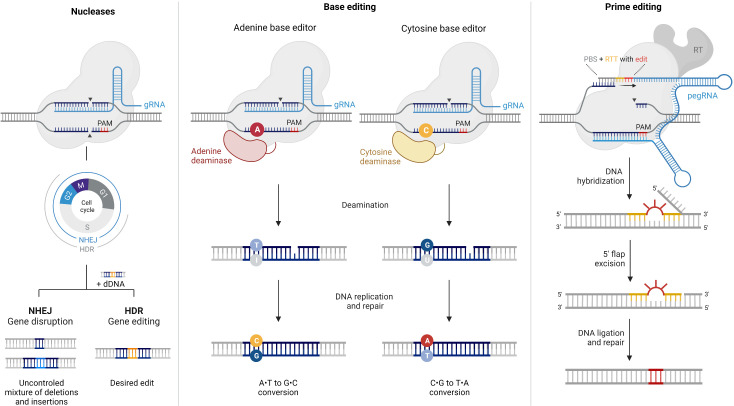
“In contrast, HDR uses a donor DNA template to install a desired sequence at a speci fi c site, resulting in a more precise product (14).”
MethodProgrammable editing of a target base in genomic DNA without double-stranded DNA cleavage
Komor, A. C., Kim, Y. B., Packer, M. S., Zuris, J. A., & Liu, D. R. (2016) · Nature · doi:10.1038/nature17946 · Cited by 5,437
Search-and-replace genome editing without double-strand breaks or donor DNA
Anzalone, A. V., Randolph, P. B., Davis, J. R., Sousa, A. A., Koblan, L. W., Levy, J. M., Chen, P. J., Wilson, C., Newby, G. A., Raguram, A., et al. (2019) · Nature · doi:10.1038/s41586-019-1711-4 · Cited by 4,767 · cited 2×
“Prime editors are the latest addition to the CRISPR/Cas toolbox (54) and consist of two main components: (1) a Cas nickase fused to a modi fi ed reverse transcriptase and (2) a prime editing gRNA (pegRNA) (Figure 1).”
BackgroundProgrammable base editing of A•T to G•C in genomic DNA without DNA cleavage
Gaudelli, N. M., Komor, A. C., Rees, H. A., Packer, M. S., Badran, A. H., Bryson, D. I., & Liu, D. R. (2017) · Nature · doi:10.1038/nature24644 · Cited by 4,184
Russell, S., Bennett, J., Wellman, J. A., Chung, D. C., Yu, Z.-F., Tillman, A., Wittes, J., Pappas, J., Elci, O., McCague, S., et al. (2017) · The Lancet · doi:10.1016/s0140-6736(17)31868-8 · Cited by 1,952
Kosicki, M., Tomberg, K., & Bradley, A. (2018) · Nature Biotechnology · doi:10.1038/nbt.4192 · Cited by 1,883 · cited 1×
“…this problem, an increasing number of reports have disclosed several adverse consequences associated with the generation of DSBs in genomic DNA, including large deletions (31, 32), chromosomal rearrangements (33, 34), chromothripsis (35), viral integration (36), and activation of p53 (37, 38).”
BackgroundCRISPR–Cas9 genome editing induces a p53-mediated DNA damage response
Haapaniemi, E., Botla, S., Persson, J., Schmierer, B., & Taipale, J. (2018) · Nature Medicine · doi:10.1038/s41591-018-0049-z · Cited by 1,264
Regulation of Homologous Recombination in Eukaryotes
Heyer, W.-D., Ehmsen, K. T., & Liu, J. (2010) · Annual Review of Genetics · doi:10.1146/annurev-genet-051710-150955 · Cited by 1,066
Effect of genome size on AAV vector packaging
Wu, Z., Yang, H., & Colosi, P. (2010) · Molecular Therapy · doi:10.1038/mt.2009.255 · Cited by 1,029 · cited 1×
“Besides immunogenicity, another long-standing challenge facing AAVs is their limited cargo capacity ( 5 kb) (65), which hinders the packaging of large transgenes required for CRISPR-based genome editing tools.”
BackgroundEfficient introduction of specific homozygous and heterozygous mutations using CRISPR/Cas9
Paquet, D., Kwart, D., Chen, A., Sproul, A., Jacob, S., Teo, S., Olsen, K. M., Gregg, A., Noggle, S., & Tessier-Lavigne, M. (2016) · Nature · doi:10.1038/nature17664 · Cited by 951
MacLaren, R. E., Groppe, M., Barnard, A. R., Cottriall, C. L., Tolmachova, T., Seymour, L., Clark, K. R., During, M. J., Cremers, F. P. M., Black, G. C. M., et al. (2014) · The Lancet · doi:10.1016/s0140-6736(13)62117-0 · Cited by 796
Self-citationCytosine base editor generates substantial off-target single-nucleotide variants in mouse embryos
Zuo, E., Sun, Y., Wei, W., Yuan, T., Ying, W., Sun, H., Yuan, L., Steinmetz, L. M., Li, Y., & Yang, H. (2019) · Science · doi:10.1126/science.aav9973 · Cited by 782
Long-Term Effect of Gene Therapy on Leber’s Congenital Amaurosis
Bainbridge, J. W. B., Mehat, M. S., Sundaram, V., Robbie, S. J., Barker, S. E., Ripamonti, C., Georgiadis, A., Mowat, F. M., Beattie, S. G., Gardner, P. J., et al. (2015) · New England Journal of Medicine · doi:10.1056/nejmoa1414221 · Cited by 743 · cited 3×
“While some long-term clinical studies of Luxturna show that visual function gains are sustained up to 4 and 7.5 years (7 – 9), other RPE65 gene therapy trials report unabated retinal degeneration and relapse in visual acuity a few years after treatment (10 – 12).”
BackgroundInfluentialMendes, B. B., Conniot, J., Avital, A., Yao, D., Jiang, X., Zhou, X., Sharf-Pauker, N., Xiao, Y., Adir, O., Liang, H., et al. (2022) · Nature Reviews Methods Primers · doi:10.1038/s43586-022-00104-y · Cited by 719 · cited 2×
“Notably, these systems offer remarkable versatility, superior packaging capacity, low immunogenicity, long-term stability, and cost-effective manufacturing at large-scale (76).”
BackgroundDevelopment of a gene-editing approach to restore vision loss in Leber congenital amaurosis type 10
Maeder, M. L., Stefanidakis, M., Wilson, C. J., Baral, R., Barrera, L. A., Bounoutas, G. S., Bumcrot, D., Chao, H., Ciulla, D. M., DaSilva, J. A., et al. (2019) · Nature Medicine · doi:10.1038/s41591-018-0327-9 · Cited by 707
Comparison of nonhomologous end joining and homologous recombination in human cells
MAO, Z., BOZZELLA, M., SELUANOV, A., & GORBUNOVA, V (2008) · DNA Repair · doi:10.1016/j.dnarep.2008.06.018 · Cited by 671
Engineered Virus-like Particles for Efficient in Vivo Delivery of Therapeutic Proteins
Banskota, S., Raguram, A., Suh, S., Du, S. W., Davis, J. R., Choi, E. H., Wang, X., Nielsen, S. C., Newby, G. A., Randolph, P. B., et al. (2022) · Cell · doi:10.1016/j.cell.2021.12.021 · Cited by 668
Transcriptome-wide off-target RNA editing induced by CRISPR-guided DNA base editors
Grünewald, J., Zhou, R., Garcia, S. P., Iyer, S., Lareau, C. A., Aryee, M. J., & Joung, J. K. (2019) · Nature · doi:10.1038/s41586-019-1161-z · Cited by 663 · cited 2×
“Genome-and transcriptome-wide analyses have also revealed substantial off-target mutations in DNA and RNA (51 – 53), posing severe implications for using base editors in research and clinical settings.”
BackgroundPrime editing for precise and highly versatile genome manipulation
Chen, P. J., & Liu, D. R. (2023) · Nature Reviews Genetics · doi:10.1038/s41576-022-00541-1 · Cited by 605 · cited 1×
“Several recent articles review the latest improvements to this system (57, 58), discussing enhanced prime editor effector proteins and pegRNA sequences, as well as strategies to modulate DNA repair mechanisms and improve accessibility of the genomic target site.”
BackgroundThe molecular basis of human retinal and vitreoretinal diseases
Berger, W., Kloeckener-Gruissem, B., & Neidhardt, J. (2010) · Progress in Retinal and Eye Research · doi:10.1016/j.preteyeres.2010.03.004 · Cited by 594
Chromothripsis as an on-target consequence of CRISPR–Cas9 genome editing
Leibowitz, M. L., Papathanasiou, S., Doerfler, P. A., Blaine, L. J., Sun, L., Yao, Y., Zhang, C.-Z., Weiss, M. J., & Pellman, D. (2021) · Nature Genetics · doi:10.1038/s41588-021-00838-7 · Cited by 583
CRISPR C-to-G base editors for inducing targeted DNA transversions in human cells
Kurt, I. C., Zhou, R., Iyer, S., Garcia, S. P., Miller, B. R., Langner, L. M., Grünewald, J., & Joung, J. K. (2021) · Nature Biotechnology · doi:10.1038/s41587-020-0609-x · Cited by 573
Simonelli, F., Maguire, A. M., Testa, F., Pierce, E. A., Mingozzi, F., Bennicelli, J. L., Rossi, S., Marshall, K., Banfi, S., Surace, E. M., et al. (2010) · Molecular Therapy · doi:10.1038/mt.2009.277 · Cited by 553
Therapeutic in vivo delivery of gene editing agents
Raguram, A., Banskota, S., & Liu, D. R. (2022) · Cell · doi:10.1016/j.cell.2022.03.045 · Cited by 522 · cited 1×
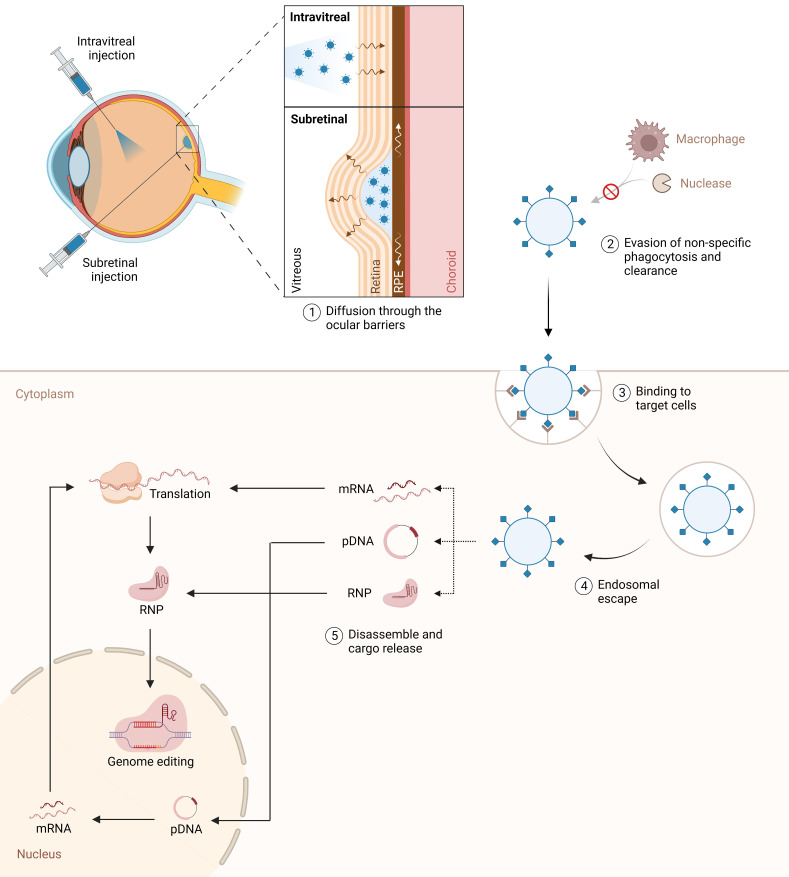
“…cells; ii) encapsulate and protect its cargo from sequestration or elimination prior to cell entry; iii) facilitate cellular uptake in target cell types; iv) promote endosomal escape, and v) disassemble and release its cargo into the appropriate intracellular compartment (Figure 2) (76, 77).”
BackgroundThe clinical landscape for AAV gene therapies
Kuzmin, D. A., Shutova, M. V., Johnston, N. R., Smith, O. P., Fedorin, V. V., Kukushkin, Y. S., van der Loo, J. C. M., & Johnstone, E. C. (2021) · Nature Reviews Drug Discovery · doi:10.1038/d41573-021-00017-7 · Cited by 503
Levy, J. M., Yeh, W.-H., Pendse, N., Davis, J. R., Hennessey, E., Butcher, R., Koblan, L. W., Comander, J., Liu, Q., & Liu, D. R. (2020) · Nature Biomedical Engineering · doi:10.1038/s41551-019-0501-5 · Cited by 477 · cited 2×
“However, CBE delivery to retinal cells resulted in a high frequency of indel mutations in non-base edited alleles, reaching up to 34% (45).”
BackgroundCRISPR-Cas9 genome editing induces megabase-scale chromosomal truncations
Cullot, G., Boutin, J., Toutain, J., Prat, F., Pennamen, P., Rooryck, C., Teichmann, M., Rousseau, E., Lamrissi-Garcia, I., Guyonnet-Duperat, V., et al. (2019) · Nature Communications · doi:10.1038/s41467-019-09006-2 · Cited by 474 · cited 1×
“…this problem, an increasing number of reports have disclosed several adverse consequences associated with the generation of DSBs in genomic DNA, including large deletions (31, 32), chromosomal rearrangements (33, 34), chromothripsis (35), viral integration (36), and activation of p53 (37, 38).”
BackgroundGlycosylase base editors enable C-to-A and C-to-G base changes
Zhao, D., Li, J., Li, S., Xin, X., Hu, M., Price, M. A., Rosser, S. J., Bi, C., & Zhang, X. (2021) · Nature Biotechnology · doi:10.1038/s41587-020-0592-2 · Cited by 460
Cideciyan, A. V., Jacobson, S. G., Beltran, W. A., Sumaroka, A., Swider, M., Iwabe, S., Roman, A. J., Olivares, M. B., Schwartz, S. B., Komáromy, A. M., et al. (2013) · Proceedings of the National Academy of Sciences · doi:10.1073/pnas.1218933110 · Cited by 444
Maguire, A. M., Russell, S., Wellman, J. A., Chung, D. C., Yu, Z.-F., Tillman, A., Wittes, J., Pappas, J., Elci, O., Marshall, K. A., et al. (2019) · Ophthalmology · doi:10.1016/j.ophtha.2019.06.017 · Cited by 409
Improvement and Decline in Vision with Gene Therapy in Childhood Blindness
Jacobson, S. G., Cideciyan, A. V., Roman, A. J., Sumaroka, A., Schwartz, S. B., Heon, E., & Hauswirth, W. W. (2015) · New England Journal of Medicine · doi:10.1056/nejmoa1412965 · Cited by 372
Bakondi, B., Lv, W., Lu, B., Jones, M. K., Tsai, Y., Kim, K. J., Levy, R., Akhtar, A. A., Breunig, J. J., Svendsen, C. N., et al. (2016) · Molecular Therapy · doi:10.1038/mt.2015.220 · Cited by 296
Cas9 activates the p53 pathway and selects for p53-inactivating mutations
Enache, O. M., Rendo, V., Abdusamad, M., Lam, D., Davison, D., Pal, S., Currimjee, N., Hess, J., Pantel, S., Nag, A., et al. (2020) · Nature Genetics · doi:10.1038/s41588-020-0623-4 · Cited by 285
Analysis and minimization of cellular RNA editing by DNA adenine base editors
Rees, H. A., Wilson, C., Doman, J. L., & Liu, D. R. (2019) · Science Advances · doi:10.1126/sciadv.aax5717 · Cited by 282
Nrl knockdown by AAV-delivered CRISPR/Cas9 prevents retinal degeneration in mice
Yu, W., Mookherjee, S., Chaitankar, V., Hiriyanna, S., Kim, J.-W., Brooks, M., Ataeijannati, Y., Sun, X., Dong, L., Li, T., et al. (2017) · Nature Communications · doi:10.1038/ncomms14716 · Cited by 271 · cited 1×
“Another interesting concept that has been proposed is to employ NHEJ-mediated genome editing to reprogram affected cell populations into functionally related cell types that are resistant to disease-causing mutations (24, 25).”
BackgroundLipid nanoparticles for delivery of messenger RNA to the back of the eye
Patel, S., Ryals, R. C., Weller, K. K., Pennesi, M. E., & Sahay, G. (2019) · Journal of Controlled Release · doi:10.1016/j.jconrel.2019.04.015 · Cited by 260 · cited 2×
“First, Patel et al. evaluated eleven LNP formulations for their ability to deliver mRNA to the mouse retina in vivo via subretinal injection (72).”
BackgroundMethodHerrera-Barrera, M., Ryals, R. C., Gautam, M., Jozic, A., Landry, M., Korzun, T., Gupta, M., Acosta, C., Stoddard, J., Reynaga, R., et al. (2023) · Science Advances · doi:10.1126/sciadv.add4623 · Cited by 239 · cited 3×
“Among the assortment of LNPs tested, those containing ionizable lipids of low pKa and unsaturated hydrocarbon chains achieved the highest levels of mRNA expression in the RPE, with the best-performing formulation being an MC3-based LNP. Ryals et al. subsequently extended the work of Patel and colleagues by evaluating…”
BackgroundFrequent loss of heterozygosity in CRISPR-Cas9–edited early human embryos
Alanis-Lobato, G., Zohren, J., McCarthy, A., Fogarty, N. M. E., Kubikova, N., Hardman, E., Greco, M., Wells, D., Turner, J. M. A., & Niakan, K. K. (2021) · Proceedings of the National Academy of Sciences · doi:10.1073/pnas.2004832117 · Cited by 234
In vivo base editing of post-mitotic sensory cells
Yeh, W.-H., Chiang, H., Rees, H. A., Edge, A. S. B., & Liu, D. R. (2018) · Nature Communications · doi:10.1038/s41467-018-04580-3 · Cited by 225
Programmable C:G to G:C genome editing with CRISPR-Cas9-directed base excision repair proteins
Chen, L., Park, J. E., Paa, P., Rajakumar, P. D., Prekop, H.-T., Chew, Y. T., Manivannan, S. N., & Chew, W. L. (2021) · Nature Communications · doi:10.1038/s41467-021-21559-9 · Cited by 195
The effects of PEGylation on LNP based mRNA delivery to the eye
Ryals, R. C., Patel, S., Acosta, C., McKinney, M., Pennesi, M. E., & Sahay, G. (2020) · PLOS ONE · doi:10.1371/journal.pone.0241006 · Cited by 194
Durability of Voretigene Neparvovec for Biallelic RPE65-Mediated Inherited Retinal Disease
Maguire, A. M., Russell, S., Chung, D. C., Yu, Z.-F., Tillman, A., Drack, A. V., Simonelli, F., Leroy, B. P., Reape, K. Z., High, K. A., et al. (2021) · Ophthalmology · doi:10.1016/j.ophtha.2021.03.031 · Cited by 194
Beneficial effects on vision in patients undergoing retinal gene therapy for choroideremia
Xue, K., Jolly, J. K., Barnard, A. R., Rudenko, A., Salvetti, A. P., Patrício, M. I., Edwards, T. L., Groppe, M., Orlans, H. O., Tolmachova, T., et al. (2018) · Nature Medicine · doi:10.1038/s41591-018-0185-5 · Cited by 185
Self-citationJang, H., Jo, D. H., Cho, C. S., Shin, J. H., Seo, J. H., Yu, G., Gopalappa, R., Kim, D., Cho, S.-R., Kim, J. H., et al. (2021) · Nature Biomedical Engineering · doi:10.1038/s41551-021-00788-9 · Cited by 183
Suh, S., Choi, E. H., Leinonen, H., Foik, A. T., Newby, G. A., Yeh, W.-H., Dong, Z., Kiser, P. D., Lyon, D. C., Liu, D. R., et al. (2020) · Nature Biomedical Engineering · doi:10.1038/s41551-020-00632-6 · Cited by 163
Gange, W. S., Sisk, R. A., Besirli, C. G., Lee, T. C., Havunjian, M., Schwartz, H., Borchert, M., Sengillo, J. D., Mendoza, C., Berrocal, A. M., et al. (2022) · Ophthalmology Retina · doi:10.1016/j.oret.2021.03.016 · Cited by 156
Human Retinal Molecular Weight Exclusion Limit and Estimate of Species Variation
Jackson, T. L., Antcliff, R. J., Hillenkamp, J., & Marshall, J. (2003) · Investigative Opthalmology & Visual Science · doi:10.1167/iovs.02-1027 · Cited by 145 · cited 1×
“The physicochemical properties of nanoparticles, including size and surface charge, play a crucial role in overcoming eye anatomical barriers (79, 80).”
BackgroundThe privileged immunity of immune privileged organs: the case of the eye
Benhar, I., London, A., & Schwartz, M. (2012) · Frontiers in Immunology · doi:10.3389/fimmu.2012.00296 · Cited by 142 · cited 1×
“Over the last few decades, gene therapy has emerged as a compelling approach owing to the monogenic nature of most IRDs, their well-established genetic etiology, and the unique advantageous features of the eye, such as easy physical access and immune-privileged status (3).”
BackgroundLiu, X., & Meng, H. (2021) · VIEW · doi:10.1002/viw.20200190 · Cited by 137
Adenine base editors catalyze cytosine conversions in human cells
Kim, H. S., Jeong, Y. K., Hur, J. K., Kim, J., & Bae, S. (2019) · Nature Biotechnology · doi:10.1038/s41587-019-0254-4 · Cited by 129
Giannelli, S. G., Luoni, M., Castoldi, V., Massimino, L., Cabassi, T., Angeloni, D., Demontis, G. C., Leocani, L., Andreazzoli, M., & Broccoli, V. (2018) · Human Molecular Genetics · doi:10.1093/hmg/ddx438 · Cited by 127
Tsai, Y.-T., Wu, W.-H., Lee, T.-T., Wu, W.-P., Xu, C. L., Park, K. S., Cui, X., Justus, S., Lin, C.-S., Jauregui, R., et al. (2018) · Ophthalmology · doi:10.1016/j.ophtha.2018.04.001 · Cited by 119
Li, P., Kleinstiver, B. P., Leon, M. Y., Prew, M. S., Navarro-Gomez, D., Greenwald, S. H., Pierce, E. A., Joung, J. K., & Liu, Q. (2018) · The CRISPR Journal · doi:10.1089/crispr.2017.0009 · Cited by 116
Wang, Y., Shahi, P. K., Xie, R., Zhang, H., Abdeen, A. A., Yodsanit, N., Ma, Z., Saha, K., Pattnaik, B. R., & Gong, S. (2020) · Journal of Controlled Release · doi:10.1016/j.jconrel.2020.04.052 · Cited by 107
Gan, L., Wang, J., Zhao, Y., Chen, D., Zhu, C., Liu, J., & Gan, Y. (2013) · Biomaterials · doi:10.1016/j.biomaterials.2013.04.035 · Cited by 103
Jo, D. H., Song, D. W., Cho, C. S., Kim, U. G., Lee, K. J., Lee, K., Park, S. W., Kim, D., Kim, J. H., Kim, J.-S., et al. (2019) · Science Advances · doi:10.1126/sciadv.aax1210 · Cited by 102 · cited 1×
“However, because HDR activity is restricted to the G2 and S phases of the cell cycle, it is highly inef fi cient in post-mitotic retinal cells and frequently outcompeted by concurrent NHEJ repair (26 – 29).”
BackgroundChoi, E. H., Suh, S., Foik, A. T., Leinonen, H., Newby, G. A., Gao, X. D., Banskota, S., Hoang, T., Du, S. W., Dong, Z., et al. (2022) · Nature Communications · doi:10.1038/s41467-022-29490-3 · Cited by 96
Frequency and mechanisms of LINE-1 retrotransposon insertions at CRISPR/Cas9 sites
Tao, J., Wang, Q., Mendez‐Dorantes, C., Burns, K. H., & Chiarle, R. (2022) · Nature Communications · doi:10.1038/s41467-022-31322-3 · Cited by 96 · cited 1×
“…this problem, an increasing number of reports have disclosed several adverse consequences associated with the generation of DSBs in genomic DNA, including large deletions (31, 32), chromosomal rearrangements (33, 34), chromothripsis (35), viral integration (36), and activation of p53 (37, 38).”
BackgroundHigh-purity production and precise editing of DNA base editing ribonucleoproteins
Jang, H.-K., Jo, D. H., Lee, S.-N., Cho, C. S., Jeong, Y. K., Jung, Y., Yu, J., Kim, J. H., Woo, J.-S., & Bae, S. (2021) · Science Advances · doi:10.1126/sciadv.abg2661 · Cited by 93
Peynshaert, K., Devoldere, J., Minnaert, A.-K., De Smedt, S. C., & Remaut, K. (2019) · Current Eye Research · doi:10.1080/02713683.2019.1565890 · Cited by 92
Evaluating Efficiencies of Dual AAV Approaches for Retinal Targeting
Carvalho, L. S., Turunen, H. T., Wassmer, S. J., Luna-Velez, M. V., Xiao, R., Bennett, J., & Vandenberghe, L. H. (2017) · Frontiers in Neuroscience · doi:10.3389/fnins.2017.00503 · Cited by 86
Cai, Y., Cheng, T., Yao, Y., Li, X., Ma, Y., Li, L., Zhao, H., Bao, J., Zhang, M., Qiu, Z., et al. (2019) · Science Advances · doi:10.1126/sciadv.aav3335 · Cited by 86 · cited 1×
“In an effort to enhance HDR activity in terminally differentiated retinal cells, Cai et al. incorporated bacterial recombinase A (RecA) into the CRISPR/ Cas9 system to catalyze DNA exchange reactions (30).”
BackgroundVision rescue via unconstrained in vivo prime editing in degenerating neural retinas
Qin, H., Zhang, W., Zhang, S., Feng, Y., Xu, W., Qi, J., Zhang, Q., Xu, C., Liu, S., Zhang, J., et al. (2023) · Journal of Experimental Medicine · doi:10.1084/jem.20220776 · Cited by 82
McCullough, K. T., Boye, S. L., Fajardo, D., Calabro, K., Peterson, J. J., Strang, C. E., Chakraborty, D., Gloskowski, S., Haskett, S., Samuelsson, S., et al. (2019) · Human Gene Therapy · doi:10.1089/hum.2018.193 · Cited by 79
Recent trends in vision impairment certifications in England and Wales
Rahman, F., Zekite, A., Bunce, C., Jayaram, H., & Flanagan, D. W. (2020) · Eye · doi:10.1038/s41433-020-0864-6 · Cited by 79
Development of retinal atrophy after subretinal gene therapy with voretigene neparvovec
Reichel, F. F., Seitz, I., Wozar, F., Dimopoulos, S., Jung, R., Kempf, M., Kohl, S., Kortüm, F. C., Ott, S., Pohl, L., et al. (2023) · British Journal of Ophthalmology · doi:10.1136/bjophthalmol-2021-321023 · Cited by 79
Large-Fragment Deletions Induced by Cas9 Cleavage while Not in the BEs System
Song, Y., Liu, Z., Zhang, Y., Chen, M., Sui, T., Lai, L., & Li, Z. (2020) · Molecular Therapy Nucleic Acids · doi:10.1016/j.omtn.2020.06.019 · Cited by 76 · cited 2×
“…this problem, an increasing number of reports have disclosed several adverse consequences associated with the generation of DSBs in genomic DNA, including large deletions (31, 32), chromosomal rearrangements (33, 34), chromothripsis (35), viral integration (36), and activation of p53 (37, 38).”
BackgroundYang, T.-C., Chang, C.-Y., Yarmishyn, A. A., Mao, Y.-S., Yang, Y.-P., Wang, M.-L., Hsu, C.-C., Yang, H.-Y., Hwang, D.-K., Chen, S.-J., et al. (2020) · Acta Biomaterialia · doi:10.1016/j.actbio.2019.10.037 · Cited by 70
Gene therapy for inherited retinal disease: Long-term durability of effect
Leroy, B. P., Fischer, M. D., Flannery, J. G., MacLaren, R. E., Dalkara, D., Scholl, H. P. N., Chung, D. C., Spera, C., Viriato, D., & Banhazi, J. (2023) · Ophthalmic Research · doi:10.1159/000526317 · Cited by 70
Changes in adeno-associated virus-mediated gene delivery in retinal degeneration
Kolstad, K. D., Dalkara, D., Guerin, K., Visel, M., Hoffmann, N., Schaffer, D. V., & Flannery, J. G. (2010) · Human Gene Therapy · doi:10.1089/hum.2009.194 · Cited by 63
Zhu, J., Ming, C., Fu, X., Duan, Y., Hoang, D. A., Rutgard, J., Zhang, R., Wang, W., Hou, R., Zhang, D., et al. (2017) · Cell Research · doi:10.1038/cr.2017.57 · Cited by 62 · cited 2×
“Another interesting concept that has been proposed is to employ NHEJ-mediated genome editing to reprogram affected cell populations into functionally related cell types that are resistant to disease-causing mutations (24, 25).”
BackgroundOcular Barriers and Their Influence on Gene Therapy Products Delivery
Leclercq, B., Mejlachowicz, D., & Béhar‐Cohen, F. (2022) · Pharmaceutics · doi:10.3390/pharmaceutics14050998 · Cited by 62
Chou, S., Yang, P., Ban, Q., Yang, Y., Wang, M., Chien, C., Chen, S., Sun, N., Zhu, Y., Liu, H., et al. (2020) · Advanced Science · doi:10.1002/advs.201903432 · Cited by 61
Deng, C., Zhao, P. Y., Branham, K., Schlegel, D., Fahim, A. T., Jayasundera, T. K., Khan, N., & Besirli, C. G. (2022) · Graefe's Archive for Clinical and Experimental Ophthalmology · doi:10.1007/s00417-021-05508-2 · Cited by 60
Jo, D. H., Jang, H.-K., Cho, C. S., Han, J. H., Ryu, G., Jung, Y., Bae, S., & Kim, J. H. (2023) · Molecular Therapy - Nucleic Acids · doi:10.1016/j.omtn.2022.11.021 · Cited by 59
AAV‐mediated gene delivery in Dp71‐null mouse model with compromised barriers
Vacca, O., Darche, M., Schaffer, D. V., Flannery, J. G., Sahel, J., Rendon, A., & Dalkara, D. (2014) · Glia · doi:10.1002/glia.22617 · Cited by 48 · cited 1×
“The signi fi cance of the ILM barrier in diseased retina remains uncertain, as multiple studies suggest potential disruption during retinal degeneration (82 – 84).”
BackgroundAllele-specific editing ameliorates dominant retinitis pigmentosa in a transgenic mouse model
Patrizi, C., Llado, M., Benati, D., Iodice, C., Marrocco, E., Guarascio, R., Surace, E. M., Cheetham, M. E., Auricchio, A., & Recchia, A. (2021) · The American Journal of Human Genetics · doi:10.1016/j.ajhg.2021.01.006 · Cited by 47
Kessel, L., Christensen, U. C., & Klemp, K. (2022) · Ophthalmology · doi:10.1016/j.ophtha.2022.06.018 · Cited by 46
Huang, X., & Chau, Y. (2020) · Molecular Pharmaceutics · doi:10.1021/acs.molpharmaceut.0c00992 · Cited by 37 · cited 11×
“Huang and Chau have evaluated three differentially charged LNPs for their ability to deliver siRNA to mice via intravitreal administration (71).”
BackgroundInfluentialCRISPR genome surgery in a novel humanized model for autosomal dominant retinitis pigmentosa
Wu, W.-H., Tsai, Y.-T., Huang, I.-W., Cheng, C.-H., Hsu, C., Cui, X., Ryu, J., Quinn, P. M. J., Caruso, S. M., Lin, C., et al. (2022) · Molecular Therapy · doi:10.1016/j.ymthe.2022.02.010 · Cited by 37
Huang, X., & Chau, Y. (2019) · Experimental Eye Research · doi:10.1016/j.exer.2019.107711 · Cited by 35
Devoldere, J., Wels, M., Peynshaert, K., Dewitte, H., Smedt, S. C. D., & Remaut, K. (2019) · European Journal of Pharmaceutics and Biopharmaceutics · doi:10.1016/j.ejpb.2019.05.023 · Cited by 32
Future Perspectives of Prime Editing for the Treatment of Inherited Retinal Diseases
Hansen, S., McClements, M. E., Corydon, T. J., & MacLaren, R. E. (2023) · Cells · doi:10.3390/cells12030440 · Cited by 25
Research works printed but not linked: 1
- Editas Medicine, Inc. Editas medicine announces clinical data demonstrating proof of concept of EDIT-101 from phase 1/2 BRILLIANCE trial [press release]. (Cambridge, Massachusetts, USA). (2022) Cambridge, Massachusetts, USA. Available at: https://ir.editasmedicine.com/node/11341/pdf.
Cited by
Rowe, L. W., & Ciulla, T. A. (2024) · Genes · doi:10.3390/genes15060720 · Cited by 53
Purdy, R., John, M., Bray, A., Clare, A. J., Copland, D. A., Chan, Y. K., Henderson, R. H., Nerinckx, F., Leroy, B. P., Yang, P., et al. (2025) · Progress in Retinal and Eye Research · doi:10.1016/j.preteyeres.2025.101354 · Cited by 24
“Modulation of surface characteristics may help to improve transduction and reduce the dose required, thereby reducing the risk of GTAU (Mendes et al., 2022; Carvalho et al., 2023).”
Panferov, E., Dodina, M., Reshetnikov, V. V., Ryapolova, A., Ivanov, R. A., Karabelsky, A. V., & Minskaia, E. (2025) · International Journal of Molecular Sciences · doi:10.3390/ijms26125617 · Cited by 28
Chen, K.-S., Chan, H.-C., & Chan, C.-M. (2025) · Drugs · doi:10.1007/s40265-025-02237-2 · Cited by 27
“Base editing has been applied successfully in animal models of RPE65 mutations, demonstrating restored visual function with minimal off-target effects [61].”
Baig, M. M. F. A., Chien, W. T., & Chair, S. Y. (2025) · Biomaterials Science · doi:10.1039/d5bm00711a · Cited by 21
Metadata
- Authors
- Carvalho, C., Lemos, L., Antas, P., & Seabra, M. C.
- Affiliations
- Universidade Nova de Lisboa (PT)
- Champalimaud Foundation (PT)
- Corresponding author
- Antas, Pedro
- Seabra, Miguel C.
- Venue
- Frontiers in Ophthalmology
- Publisher
- Frontiers Media SA
- Published
- 2023-09-19
- Volume
- 3
- Pages
- 1270561-1270561
- ISSN
- 2674-0826 (ISSN-L)
- PMC
- PMC11182192
- OpenAlex
- W4386895570
- Cited by
- 21
- References
- 84
- Citations by year
- 2026: 3 · 2025: 12 · 2024: 6
- FWCI
- 0.55
- Type
- journal article
- Language
- en
- Open access
- gold
- doi.org
- Licence
- Locations
- Frontiers in Ophthalmology (publishedVersion, cc-by)
- PubMed Central (publishedVersion, cc-by)
- PubMed (publishedVersion)
- DOAJ (DOAJ: Directory of Open Access Journals) (submittedVersion, cc-by-sa)
- Portuguese National Funding Agency for Science, Research and Technology (RCAAP Project by FCT) (submittedVersion, other-oa)
- Funders
- Fundação Champalimaud
- Fundação para a Ciência e a Tecnologia (EXPL/MED-OUT/0599/2021, CEECIND/03862/2020)
- Topics
- Health Sciences › Medicine › Ophthalmology › Retinal Development and Disorders
- Life Sciences › Biochemistry, Genetics and Molecular Biology › Genetics › Virus-based gene therapy research
- Life Sciences › Biochemistry, Genetics and Molecular Biology › Molecular Biology › RNA Interference and Gene Delivery
- Keywords
- inherited retinal disease, gene therapy, genome editing, CRISPR/Cas9, base editing, prime editing, nanoparticle-mediated gene delivery, ocular gene therapy, blindness
About these checks
Registry, retraction, Cites and statistics results are computed, not judged, with one exception: a printed reference that no index lists is read once by a model before it counts as a citation error. Claims are extracted by a model and kept only when their quote appears verbatim in the text; each cited source is then checked, with a model’s help, for whether it says what the claim relies on. Those verdicts can be wrong — read the claim’s quote and the cited source before relying on one.
Statistics and arithmetic are recomputed, not judged.
Confidence bands are shown only for fields calibrated on our annotated test set. None is calibrated yet, so no band is shown.
What counts as a claim ›How we measure confidence ›How we check this ›
Are you an author, or do you see a problem with this page? Request a review
Data sources
Bibliographic data: Semantic Scholar, OpenAlex, Crossref.
Contains information from the Semantic Scholar Academic Graph Datasets, made available under the ODC Attribution License (ODC-BY 1.0).
Semantic Scholar’s data is described in: Kinney, R., et al. (2023). The Semantic Scholar Open Data Platform. arXiv:2301.10140.
