

The DOI matches its Crossref record; 115 of the 115 references it cites were found in a registry or an index.
NLRP3 inflammasome and its inhibitors: a review
Open accessAbstract
Inflammasomes are newly recognized, vital players in innate immunity. The best characterized is the NLRP3 inflammasome, so-called because the NLRP3 protein in the complex belongs to the family of nucleotide-binding and oligomerization domain-like receptors (NLRs) and is also known as "pyrin domain-containing protein 3". The NLRP3 inflammasome is associated with onset and progression of various diseases, including metabolic disorders, multiple sclerosis, inflammatory bowel disease, cryopyrin-associated periodic fever syndrome, as well as other auto-immune and auto-inflammatory diseases. Several NLRP3 inflammasome inhibitors have been described, some of which show promise in the clinic. The present review will describe the structure and mechanisms of activation of the NLRP3 inflammasome, its association with various auto-immune and auto-inflammatory diseases, and the state of research into NLRP3 inflammasome inhibitors.
Overview
The claims and statistics of this paper haven’t been checked yet.
Run the check — free, no account needed. It reads the open-access text and checks the sources it cites.
Integrity signals
Registry
Cites
Statistics
Figures
Verification
Claims the paper makes
The claims and statistics of this paper haven’t been checked yet.
Run the check — free, no account needed. It reads the open-access text and checks the sources it cites.
Claims other papers make about this one
Each is checked against this paper’s own text: does it say what the citing paper says it does?
In the citing paper
“Additionally, it has been demonstrated that NF‐κB–mediated signaling is also involved in the NLRP3 inflammasome activation by regulating the transcription of inflammasome‐related components, including inactive NLRP3, pro‐IL‐1β, and pro‐IL‐18.46”
From Trimethylamine‐N‐Oxide Induces Vascular Inflammation by Activating the NLRP3 Inflammasome Through the SIRT3‐SOD2‐mtROS Signaling Pathway (2017) · cites this paper as [46]
Self-check
Percentages, sums and reported differences re-computed from the paper’s own numbers.
The self-check needs the paper’s full text.
Citations
Cites
MicroRNAs: Target Recognition and Regulatory Functions
Bartel, D. P. (2009) · Cell · doi:10.1016/j.cell.2009.01.002 · Cited by 20,068 · cited 1×
“These endogenous non-coding RNAs are 20– 23 nt long and bind to the 3′ untranslated region (3′ UTR) of protein-coding mRNAs to regulate their translation (Bartel, 2009; Chen and Sun, 2013).”
Martinon, F., Burns, K., & Tschopp, J. (2002) · Molecular Cell · doi:10.1016/s1097-2765(02)00599-3 · Cited by 6,066 · cited 1×
“A newly identified PRR, first described in detail in 2002, is the inflammasome (Martinon et al., 2002; Gentile et al., 2015; Jorgensen and Miao, 2015; Sanders et al., 2015).”
BackgroundSchroder, K., & Tschopp, J. (2010) · Cell · doi:10.1016/j.cell.2010.01.040 · Cited by 5,475 · cited 3×
“Formation of the inflammasome also triggers a process of inflammation-related cell death termed pyroptosis (Willingham et al., 2009; Schroder and Tschopp, 2010; Zhong et al., 2013a; Jorgensen and Miao, 2015).”
BackgroundMethodInflamm‐aging: An Evolutionary Perspective on Immunosenescence
FRANCESCHI, C., BONAFÈ, M., VALENSIN, S., OLIVIERI, F., DE LUCA, M., OTTAVIANI, E., & DE BENEDICTIS, G. (2000) · Annals of the New York Academy of Sciences · doi:10.1111/j.1749-6632.2000.tb06651.x · Cited by 5,358 · cited 1×
“…protect against disease and death, inappropriate activation of the NLRP3 inflammasome can contribute to the onset and progression of various diseases, particularly age-related diseases such as metabolic disorders and metabolic syndrome (Franceschi et al., 2000; Goldberg and Dixit, 2015).”
BackgroundNLRP3 inflammasomes are required for atherogenesis and activated by cholesterol crystals
Duewell, P., Kono, H., Rayner, K. J., Sirois, C. M., Vladimer, G., Bauernfeind, F. G., Abela, G. S., Franchi, L., Nuñez, G., Schnurr, M., et al. (2010) · Nature · doi:10.1038/nature08938 · Cited by 4,026 · cited 1×
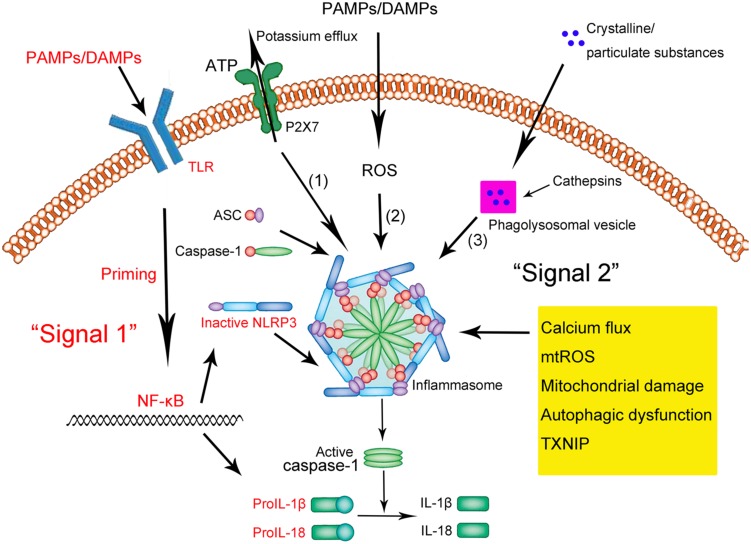
“…in macrophages and animal models have shown that oxidized low-density lipoprotein and cholesterol crystals trigger NLRP3 inflammasome activation (Duewell et al., 2010; Liu et al., Frontiers in Pharmacology | www.frontiersin.org 2 November 2015 | Volume 6 | Article 262 FIGURE 1 | Schematic…”
BackgroundBauernfeind, F. G., Horvath, G. L., Stutz, A., Alnemri, E. S., MacDonald, K. L., Speert, D. P., Fernandes‐Alnemri, T., Wu, J., Monks, B. G., Fitzgerald, K. A., et al. (2009) · The Journal of Immunology · doi:10.4049/jimmunol.0901363 · Cited by 3,087 · cited 1×
“…PAMPs or DAMPs are recognized by TLRs, leading to activation of nuclear factor kappa B (NF-κB)-mediated signaling, which in turn up-regulates transcription of inflammasome-related components, including inactive NLRP3, proIL-1β, and proIL18 (Bauernfeind et al., 2009; Franchi et al., 2012, 2014).”
BackgroundHornung, V., Bauernfeind, F., Halle, A., Samstad, E. O., Kono, H., Rock, K. L., Fitzgerald, K. A., & Latz, E. (2008) · Nature Immunology · doi:10.1038/ni.1631 · Cited by 3,065 · cited 2×
“…damage or dysfunction caused by mitochondrial Ca2+ overload (Iyer et al., 2013; Miao et al., 2014; Zhuang et al., 2015), lysosomal disruption (Hornung et al., 2008; Sheedy et al., 2013; Tseng et al., 2013), autophagic dysfunction (Cho et al., 2014; Shao et al., 2014; Jabir et al., 2015) and…”
BackgroundA small-molecule inhibitor of the NLRP3 inflammasome for the treatment of inflammatory diseases
Coll, R. C., Robertson, A. A. B., Chae, J. J., Higgins, S. C., Muñoz-Planillo, R., Inserra, M. C., Vetter, I., Dungan, L. S., Monks, B. G., Stutz, A., et al. (2015) · Nature Medicine · doi:10.1038/nm.3806 · Cited by 2,849 · cited 3×
“Coll et al. (2015) discovered that MCC950, a diarylsulfonylurea-containing compound known to inhibit caspase-1-dependent processing of IL-1β (Perregaux et al., 2001), also inhibits both canonical and non-canonical activation of the NLRP3 inflammasome.”
BackgroundThe ketone metabolite β-hydroxybutyrate blocks NLRP3 inflammasome-mediated inflammatory disease
Youm, Y.-H., Nguyen, K. Y., Grant, R. W., Goldberg, E. L., Bodogai, M., Kim, D., D'Agostino, D., Planavsky, N., Lupfer, C., Kanneganti, T. D., et al. (2015) · Nature Medicine · doi:10.1038/nm.3804 · Cited by 2,172 · cited 2×
“Youm et al. (2015) discovered that the ketone metabolite β-hydroxybutyrate (BHB), but not acetoacetate or the shortchain fatty acids butyrate and acetate, reduced IL-1β, and IL-18 production by the NLRP3 inflammasome in human monocytes.”
BackgroundNuocytes represent a new innate effector leukocyte that mediates type-2 immunity
Neill, D. R., Wong, S. H., Bellosi, A., Flynn, R. J., Daly, M. G., Langford, T. K. A., Bucks, C. M., Kane, C. M., Fallon, P. G., Pannell, R., et al. (2010) · Nature · doi:10.1038/nature08900 · Cited by 2,079
Regulation of progenitor cell proliferation and granulocyte function by microRNA-223
Johnnidis, J. B., Harris, M. H., Wheeler, R. T., Stehling-Sun, S., Lam, M. H., Kirak, O., Brummelkamp, T. R., Fleming, M. D., & Camargo, F. D. (2008) · Nature · doi:10.1038/nature06607 · Cited by 1,208 · cited 1×
“Deficiency in microRNA-223 leads to neutrophilia, spontaneous lung inflammation, and increased susceptibility to endotoxin Frontiers in Pharmacology | www.frontiersin.org 5 November 2015 | Volume 6 | Article 262 challenge in mice (Johnnidis et al., 2008; Haneklaus et al., 2013).”
BackgroundIntracellular pattern recognition receptors in the host response
Meylan, E., Tschopp, J., & Karin, M. (2006) · Nature · doi:10.1038/nature04946 · Cited by 1,196 · cited 2×
“Type I IFNs are produced by specialized immune cells such as macrophages and DCs in response to extracellular stimuli such as bacteria and virus as well as various environmental irritants (Meylan et al., 2006).”
BackgroundSensing and reacting to microbes through the inflammasomes
Franchi, L., Muñoz-Planillo, R., & Núñez, G. (2012) · Nature Immunology · doi:10.1038/ni.2231 · Cited by 1,046 · cited 1×
“…PAMPs or DAMPs are recognized by TLRs, leading to activation of nuclear factor kappa B (NF-κB)-mediated signaling, which in turn up-regulates transcription of inflammasome-related components, including inactive NLRP3, proIL-1β, and proIL18 (Bauernfeind et al., 2009; Franchi et al., 2012, 2014).”
BackgroundPyroptotic cell death defends against intracellular pathogens
Jorgensen, I., & Miao, E. A. (2015) · Immunological Reviews · doi:10.1111/imr.12287 · Cited by 1,021 · cited 3×
“A newly identified PRR, first described in detail in 2002, is the inflammasome (Martinon et al., 2002; Gentile et al., 2015; Jorgensen and Miao, 2015; Sanders et al., 2015).”
BackgroundMitochondrial Cardiolipin Is Required for Nlrp3 Inflammasome Activation
Iyer, S. S., He, Q., Janczy, J. R., Elliott, E. I., Zhong, Z., Olivier, A. K., Sadler, J. J., Knepper-Adrian, V., Han, R., Qiao, L., et al. (2013) · Immunity · doi:10.1016/j.immuni.2013.08.001 · Cited by 968 · cited 1×
“These include mitochondrial damage or dysfunction caused by mitochondrial Ca2+ overload (Iyer et al., 2013; Miao et al., 2014; Zhuang et al., 2015), lysosomal disruption (Hornung et al., 2008; Sheedy et al., 2013; Tseng et al., 2013), autophagic dysfunction (Cho et al., 2014; Shao et al., 2014;…”
BackgroundKetone bodies as signaling metabolites
Newman, J. C., & Verdin, E. (2014) · Trends in Endocrinology & Metabolism · doi:10.1016/j.tem.2013.09.002 · Cited by 966 · cited 2×
“…studies should examine how innate immunity, particularly the inflammasome, is influenced by ketones and other alternative metabolic fuels during periods of energy deficiency (Shido et al., 1989; Johnson et al., 2007; McGettrick and O’Neill, 2013; Mercken et al., 2013; Newman and Verdin, 2014).”
BackgroundSheedy, F. J., Grebe, A., Rayner, K. J., Kalantari, P., Ramkhelawon, B., Carpenter, S. B., Becker, C. E., Ediriweera, H. N., Mullick, A. E., Golenbock, D. T., et al. (2013) · Nature Immunology · doi:10.1038/ni.2639 · Cited by 935 · cited 1×
“…caused by mitochondrial Ca2+ overload (Iyer et al., 2013; Miao et al., 2014; Zhuang et al., 2015), lysosomal disruption (Hornung et al., 2008; Sheedy et al., 2013; Tseng et al., 2013), autophagic dysfunction (Cho et al., 2014; Shao et al., 2014; Jabir et al., 2015) and the activity of…”
BackgroundType I Interferon Inhibits Interleukin-1 Production and Inflammasome Activation
Guarda, G., Braun, M., Staehli, F., Tardivel, A., Mattmann, C., Förster, I., Farlik, M., Decker, T., Pasquier, R. D., Romero, P. J., et al. (2011) · Immunity · doi:10.1016/j.immuni.2011.02.006 · Cited by 924
Wang, Y., Xu, C.-F., Liu, Y.-J., Mao, Y.-F., Lv, Z., Li, S.-Y., Zhu, X.-Y., & Jiang, L. (2017) · Cellular Physiology and Biochemistry · doi:10.1159/000477112 · Cited by 838
Abderrazak, A., Syrovets, T., Couchie, D., Hadri, K. E., Friguet, B., Simmet, T., & Rouis, M. (2015) · Redox Biology · doi:10.1016/j.redox.2015.01.008 · Cited by 749 · cited 2×
“Pathogen-associated molecular patterns (PAMPs), which are antigens common to a given group of pathogens (Medzhitov, 2009; Abderrazak et al., 2015b), are normally recognized by at least three PRRs: Toll-like receptors (TLRs), C-type lectins (CTLs), and Galectins (Bourgeois and Kuchler, 2012;…”
BackgroundMechanism of NLRP3 inflammasome activation
Sutterwala, F. S., Haasken, S., & Cassel, S. L. (2014) · Annals of the New York Academy of Sciences · doi:10.1111/nyas.12458 · Cited by 736 · cited 1×
“Activation of the NLRP3 inflammasome appears to occur in two steps (Zhong et al., 2013a; Sutterwala et al., 2014; Ozaki et al., 2015; Figure 1).”
BackgroundJohnson, J. B., Summer, W., Cutler, R. G., Martin, B., Hyun, D.-H., Dixit, V. D., Pearson, M., Nassar, M., Tellejohan, R., Maudsley, S., et al. (2007) · Free Radical Biology and Medicine · doi:10.1016/j.freeradbiomed.2006.12.005 · Cited by 604
NLRP3 inflammasome activity is negatively controlled by miR-223
Bauernfeind, F., Rieger, A., Schildberg, F. A., Knolle, P. A., Schmid-Burgk, J. L., & Hornung, V. (2012) · The Journal of Immunology · doi:10.4049/jimmunol.1201516 · Cited by 544 · cited 1×
“MicroRNA-223 binds to a conserved site in the 3′ UTR of the NLRP3 transcript, suppressing protein expression and thereby inhibiting NLRP3 inflammasome priming and IL-1β production (Bauernfeind et al., 2012; Haneklaus et al., 2012; Chen and Sun, 2013).”
BackgroundCommon variants in the NLRP3 region contribute to Crohn's disease susceptibility
Villani, A., Lemire, M., Fortin, G., Louis, E. J., Silverberg, M. S., Collette, C., Baba, N., Libioulle, C., Bélaïche, J., Bitton, A., et al. (2008) · Nature Genetics · doi:10.1038/ng.285 · Cited by 536 · cited 2×
“Polymorphism in the NLRP3 gene is linked to colitis severity and progression in patients (Villani et al., 2009; Lewis et al., 2011), and gain-of-function mutations in the NLRP3 gene that increase production and secretion of IL-1β and IL18 are associated with cryopyrin-associated periodic fever…”
BackgroundSandanger, Ø., Ranheim, T., Vinge, L. E., Bliksøen, M., Alfsnes, K., Finsen, A. V., Dahl, C. P., Askevold, E. T., Florholmen, G., Christensen, G., et al. (2013) · Cardiovascular Research · doi:10.1093/cvr/cvt091 · Cited by 526 · cited 3×
“…models, studies have also defined a role for the NLRP3 inflammasome in the initiation and development of cerebral and myocardial ischemic diseases, including cerebral ischemia/stroke and myocardial ischemia (Sandanger et al., 2013; Marchetti et al., 2014; Hecker et al., 2015; Ito et al., 2015).”
BackgroundCutting Edge: miR-223 and EBV miR-BART15 Regulate the NLRP3 Inflammasome and IL-1β Production
Haneklaus, M., Gerlic, M., Kurowska‐Stolarska, M., Rainey, A., Pich, D., McInnes, I. B., Hammerschmidt, W., O'Neill, L. A. J., & Masters, S. L. (2012) · The Journal of Immunology · doi:10.4049/jimmunol.1200312 · Cited by 466 · cited 1×
“MicroRNA-223 binds to a conserved site in the 3′ UTR of the NLRP3 transcript, suppressing protein expression and thereby inhibiting NLRP3 inflammasome priming and IL-1β production (Bauernfeind et al., 2012; Haneklaus et al., 2012; Chen and Sun, 2013).”
Ketone body metabolism and cardiovascular disease
Cotter, D. G., Schugar, R. C., & Crawford, P. A. (2013) · American Journal of Physiology-Heart and Circulatory Physiology · doi:10.1152/ajpheart.00646.2012 · Cited by 459 · cited 1×
“Baker et al. (2015) have shown that MCC950 inhibits LPS-induced production of IL-1β via a mechanism Smallmolecule inhibitor MCC950 Blocking apoptosis-associated speck-like protein (ASC) oligomerization, Inhibiting of canonical and non-canonical NLRP3 inflammasome;”
BackgroundIto, M., Shichita, T., Okada, M., Komine, R., Noguchi, Y., Yoshimura, A., & Morita, R. (2015) · Nature Communications · doi:10.1038/ncomms8360 · Cited by 417
Autophagy in microglia degrades extracellular β-amyloid fibrils and regulates the NLRP3 inflammasome
Cho, M.-H., Cho, K., Kang, H.-J., Jeon, E.-Y., Kim, H.-S., Kwon, H.-J., Kim, H.-M., Kim, D.-H., & Yoon, S.-Y. (2014) · Autophagy · doi:10.4161/auto.29647 · Cited by 395 · cited 2×
“…et al., 2014; Zhuang et al., 2015), lysosomal disruption (Hornung et al., 2008; Sheedy et al., 2013; Tseng et al., 2013), autophagic dysfunction (Cho et al., 2014; Shao et al., 2014; Jabir et al., 2015) and the activity of thioredoxin-interacting protein (TXNIP; Li et al., 2015; Liu et al.,…”
BackgroundResultTargeting the NLRP3 inflammasome in chronic inflammatory diseases: current perspectives
Doyle, S., Ozaki, E., & Campbell, M. (2015) · Journal of Inflammation Research · doi:10.2147/jir.s51250 · Cited by 389 · cited 6×
“Coll et al. (2015) further showed that MCC950 acts specifically on the NLRP3 inflammasome: it does not inhibit the activation of NLRP1, AIM2, or NLRC4 inflammasomes.”
BackgroundInfluentialApproaching the Asymptote: 20 Years Later
Medzhitov, R. M. (2009) · Immunity · doi:10.1016/j.immuni.2009.06.004 · Cited by 380 · cited 2×
“6:262. doi: 10.3389/fphar.2015.00262 NLRP3 inflammasome and its inhibitors: a review Bo-Zong Shao†, Zhe-Qi Xu†, Bin-Ze Han†, Ding-Feng Su and Chong Liu* Department of Pharmacology, Second Military Medical University, Shanghai, China Inflammasomes are newly recognized, vital players in innate…”
BackgroundInfluentialTRPM2 links oxidative stress to NLRP3 inflammasome activation
Zhong, Z., Zhai, Y., Liang, S., Mori, Y., Han, R., Sutterwala, F. S., & Qiao, L. (2013) · Nature Communications · doi:10.1038/ncomms2608 · Cited by 374 · cited 4×
“Formation of the inflammasome also triggers a process of inflammation-related cell death termed pyroptosis (Willingham et al., 2009; Schroder and Tschopp, 2010; Zhong et al., 2013a; Jorgensen and Miao, 2015).”
BackgroundInfluentialBaker, P. J., Boucher, D., Bierschenk, D., Tebartz, C., Whitney, P. G., D’Silva, D. B., Tanzer, M. C., Monteleone, M. M., Robertson, A. A. B., Cooper, M. A., et al. (2015) · European Journal of Immunology · doi:10.1002/eji.201545655 · Cited by 370 · cited 1×
“Baker et al. (2015) have shown that MCC950 inhibits LPS-induced production of IL-1β via a mechanism Smallmolecule inhibitor MCC950 Blocking apoptosis-associated speck-like protein (ASC) oligomerization, Inhibiting of canonical and non-canonical NLRP3 inflammasome;”
BackgroundDifferential Expression of NLRP3 among Hematopoietic Cells
Guarda, G., Zenger, M., Yazdi, A. S., Schroder, K., Ferrero, I., Menu, P., Tardivel, A., Mattmann, C., & Tschopp, J. (2011) · The Journal of Immunology · doi:10.4049/jimmunol.1002720 · Cited by 368 · cited 5×
“However, how type I IFNs affect NLRP3 inflammasome and its production of IL-1β and IL-18 remains unclear (Guarda et al., 2011a), despite numerous studies aimed to improve IFN-based treatments of NLRP3 inflammasome-related diseases.”
BackgroundInfluentialWillingham, S. B., Allen, I. C., Bergstralh, D. T., Brickey, W. J., Huang, M. T.-H., Taxman, D. J., Duncan, J. A., & Ting, J. P. ‐. (2009) · The Journal of Immunology · doi:10.4049/jimmunol.0900138 · Cited by 356 · cited 1×
“Formation of the inflammasome also triggers a process of inflammation-related cell death termed pyroptosis (Willingham et al., 2009; Schroder and Tschopp, 2010; Zhong et al., 2013a; Jorgensen and Miao, 2015).”
BackgroundLalor, S. J., Dungan, L. S., Sutton, C. E., Basdeo, S. A., Fletcher, J. M., & Mills, K. H. G. (2011) · The Journal of Immunology · doi:10.4049/jimmunol.1003597 · Cited by 347 · cited 2×
“…and others has demonstrated that NLRP3 inflammasome activation contributes to progression of multiple sclerosis in humans and experimental autoimmune encephalomyelitis (EAE) in animal models (Ming et al., 2002; Jha et al., 2010; Lalor et al., 2011; Inoue et al., 2012a,b; Shao et al., 2014).”
BackgroundFunctions of NOD-Like Receptors in Human Diseases
Zhong, Y., Kinio, A. E., & Saleh, M. (2013) · Frontiers in Immunology · doi:10.3389/fimmu.2013.00333 · Cited by 337 · cited 4×
“Formation of the inflammasome also triggers a process of inflammation-related cell death termed pyroptosis (Willingham et al., 2009; Schroder and Tschopp, 2010; Zhong et al., 2013a; Jorgensen and Miao, 2015).”
BackgroundInfluentialCaspase‐4 mediates non‐canonical activation of the NLRP3 inflammasome in human myeloid cells
Schmid-Burgk, J. L., Gaidt, M. M., Schmidt, T., Ebert, T. S., Bartok, E., & Hornung, V. (2015) · European Journal of Immunology · doi:10.1002/eji.201545523 · Cited by 329 · cited 1×
“Consistent with this model, K+ efflux is a major activator of the NLRP3 inflammasome, while extracellular ATP and pore-forming toxins are the major triggers of IL-1β secretion by the inflammasome (Hari et al., 2014; Liu et al., 2014; Ketelut-Carneiro et al., 2015; Schmid-Burgk et al., 2015).”
BackgroundJha, S., Srivastava, S. Y., Brickey, W. J., Iocca, H., Toews, A., Morrison, J. P., Chen, V. S., Gris, D., Matsushima, G. K., & Ting, J. P.-Y. (2010) · The Journal of Neuroscience · doi:10.1523/jneurosci.4088-10.2010 · Cited by 310 · cited 2×
“…and others has demonstrated that NLRP3 inflammasome activation contributes to progression of multiple sclerosis in humans and experimental autoimmune encephalomyelitis (EAE) in animal models (Ming et al., 2002; Jha et al., 2010; Lalor et al., 2011; Inoue et al., 2012a,b; Shao et al., 2014).”
BackgroundNLRP3 at the interface of metabolism and inflammation
Haneklaus, M., & O'Neill, L. A. J. (2015) · Immunological Reviews · doi:10.1111/imr.12285 · Cited by 296
Tseng, W. A., Thein, T., Kinnunen, K., Lashkari, K., Gregory, M. S., D'Amore, P. A., & Ksander, B. R. (2012) · Investigative Ophthalmology & Visual Science · doi:10.1167/iovs.12-10655 · Cited by 295 · cited 1×
“…Ca2+ overload (Iyer et al., 2013; Miao et al., 2014; Zhuang et al., 2015), lysosomal disruption (Hornung et al., 2008; Sheedy et al., 2013; Tseng et al., 2013), autophagic dysfunction (Cho et al., 2014; Shao et al., 2014; Jabir et al., 2015) and the activity of thioredoxin-interacting…”
BackgroundInoue, M., Williams, K. L., Gunn, M. D., & Shinohara, M. L. (2012) · Proceedings of the National Academy of Sciences · doi:10.1073/pnas.1201836109 · Cited by 288 · cited 12×
“…and others has demonstrated that NLRP3 inflammasome activation contributes to progression of multiple sclerosis in humans and experimental autoimmune encephalomyelitis (EAE) in animal models (Ming et al., 2002; Jha et al., 2010; Lalor et al., 2011; Inoue et al., 2012a,b; Shao et al., 2014).”
BackgroundMethodInfluentialDrivers of age‐related inflammation and strategies for healthspan extension
Goldberg, E. L., & Dixit, V. D. (2015) · Immunological Reviews · doi:10.1111/imr.12295 · Cited by 274 · cited 1×
“…protect against disease and death, inappropriate activation of the NLRP3 inflammasome can contribute to the onset and progression of various diseases, particularly age-related diseases such as metabolic disorders and metabolic syndrome (Franceschi et al., 2000; Goldberg and Dixit, 2015).”
BackgroundMarchetti, C., Chojnacki, J. E., Toldo, S. A., Mezzaroma, E., Tranchida, N., Rose, S. W., Federici, M., Tassell, B. W. V., Zhang, S., & Abbate, A. (2013) · Journal of Cardiovascular Pharmacology · doi:10.1097/fjc.0000000000000053 · Cited by 268 · cited 2×
“Consistent with this idea, inhibiting the NLRP3 inflammasome reduces myocardial injury after ischemia-reperfusion in mice (Marchetti et al., 2014).”
BackgroundMercken, E. M., Crosby, S. D., Lamming, D. W., JeBailey, L., Krzysik‐Walker, S., Villareal, D. T., Capri, M., Franceschi, C., Zhang, Y., Becker, K., et al. (2013) · Aging Cell · doi:10.1111/acel.12088 · Cited by 261 · cited 2×
“…studies should examine how innate immunity, particularly the inflammasome, is influenced by ketones and other alternative metabolic fuels during periods of energy deficiency (Shido et al., 1989; Johnson et al., 2007; McGettrick and O’Neill, 2013; Mercken et al., 2013; Newman and Verdin, 2014).”
BackgroundHow Metabolism Generates Signals during Innate Immunity and Inflammation
McGettrick, A. F., & O'Neill, L. A. J. (2013) · Journal of Biological Chemistry · doi:10.1074/jbc.r113.486464 · Cited by 232 · cited 2×
“…studies should examine how innate immunity, particularly the inflammasome, is influenced by ketones and other alternative metabolic fuels during periods of energy deficiency (Shido et al., 1989; Johnson et al., 2007; McGettrick and O’Neill, 2013; Mercken et al., 2013; Newman and Verdin, 2014).”
BackgroundModulatory mechanisms controlling the NLRP3 inflammasome in inflammation: recent developments
Haneklaus, M., O'Neill, L. A. J., & Coll, R. C. (2013) · Current Opinion in Immunology · doi:10.1016/j.coi.2012.12.004 · Cited by 230 · cited 2×
“MCC950 inhibits both canonical and noncanonical inflammasome activation, while BHB affects only canonical activation.”
BackgroundLiu, W., Yin, Y., Zhou, Z., He, M. Y., & Dai, Y. (2013) · Inflammation Research · doi:10.1007/s00011-013-0667-3 · Cited by 223
Chang, Y.-P., Ka, S., Hsu, W., Chen, A., Chao, L. K., Lin, C.-C., Hsieh, C.-C., Chen, M., Chiu, H.-W., Ho, C., et al. (2014) · Journal of Cellular Physiology · doi:10.1002/jcp.24903 · Cited by 220 · cited 1×
“Chang et al. (2015) showed that the plant polyphenolic compound resveratrol, known to induce autophagy, suppresses mitochondrial damage in macrophages and thereby inhibits NLRP3 inflammasome activation and NLRP3 inflammasomemediated IL-1β secretion and pyroptosis.”
BackgroundPerregaux, D. G., McNiff, P. A., Laliberte, R. E., Hawryluk, N. A., Peurano, H., Stam, E. J., Eggler, J., Griffiths, R., Dombroski, M. A., & Gabel, C. A. (2001) · Journal of Pharmacology and Experimental Therapeutics · doi:10.1016/s0022-3565(24)29317-4 · Cited by 218
Honda, H., Nagai, Y., Matsunaga, T., Okamoto, N., Watanabe, Y., Tsuneyama, K., Hayashi, H., Fujii, I., Ikutani, M., Hirai, Y., et al. (2014) · Journal of Leukocyte Biology · doi:10.1189/jlb.3a0114-005rr · Cited by 215 · cited 1×
“In macrophage and animal models of type II diabetes, hyperglycemia, and free fatty acids trigger inflammasome activation, which harms glucose metabolism and strengthens insulin resistance (Honda et al., 2014; Legrand-Poels et al., 2014; Ruscitti et al., 2015).”
BackgroundVajjhala, P. R., Mirams, R. E., & Hill, J. M. (2012) · Journal of Biological Chemistry · doi:10.1074/jbc.m112.381228 · Cited by 205 · cited 2×
“For example, Patel et al. (2015) showed that genetic ablation of the NLRP3 inflammasome suppressor known as the inhibitor of κB kinase epsilon (IKBKE) enhanced the acute phase response and down-regulated cholesterol metabolism in cultured macrophages and hypercholesterolemic mice.”
BackgroundResultHuman nlrp3 inflammasome activation is nox1-4 independent
van Bruggen, R., Köker, M. Y., Jansen, M., van Houdt, M., Roos, D., Kuijpers, T. W., & van den Berg, T. K. (2010) · Blood · doi:10.1182/blood-2009-10-250803 · Cited by 202 · cited 1×
“For example, damage to NADPH oxidase and other oxidative systems by mitochondrial ROS can activate the inflammasome (van Bruggen et al., 2010; Crane et al., 2014; Lawlor and Vince, 2014; Rajanbabu et al., 2015).”
BackgroundFree fatty acids as modulators of the NLRP3 inflammasome in obesity/type 2 diabetes
Legrand-Poels, S., Esser, N., L’homme, L., Scheen, A., Paquot, N., & Piette, J. (2014) · Biochemical Pharmacology · doi:10.1016/j.bcp.2014.08.013 · Cited by 194 · cited 2×
“In macrophage and animal models of type II diabetes, hyperglycemia, and free fatty acids trigger inflammasome activation, which harms glucose metabolism and strengthens insulin resistance (Honda et al., 2014; Legrand-Poels et al., 2014; Ruscitti et al., 2015).”
BackgroundKrishnan, S. M., Dowling, J. K., Ling, Y. H., Diep, H., Chan, C. T., Ferens, D. M., Kett, M. M., Pinar, A. A., Samuel, C. S., Vinh, A., et al. (2015) · British Journal of Pharmacology · doi:10.1111/bph.13230 · Cited by 193
Inoue, M., Williams, K. L., Oliver, T. N., Vandenabeele, P., Rajan, J. V., Miao, E. A., & Shinohara, M. L. (2012) · Science Signaling · doi:10.1126/scisignal.2002767 · Cited by 193 · cited 11×
“…and others has demonstrated that NLRP3 inflammasome activation contributes to progression of multiple sclerosis in humans and experimental autoimmune encephalomyelitis (EAE) in animal models (Ming et al., 2002; Jha et al., 2010; Lalor et al., 2011; Inoue et al., 2012a,b; Shao et al., 2014).”
BackgroundMethodInfluentialFranchi, L., Eigenbrod, T., Muñoz-Planillo, R., Ozkurede, U., Kim, Y., Chakrabarti, A., Gale, M., Silverman, R. H., Colonna, M., Akira, S., et al. (2014) · The Journal of Immunology · doi:10.4049/jimmunol.1400582 · Cited by 188 · cited 1×
“…PAMPs or DAMPs are recognized by TLRs, leading to activation of nuclear factor kappa B (NF-κB)-mediated signaling, which in turn up-regulates transcription of inflammasome-related components, including inactive NLRP3, proIL-1β, and proIL18 (Bauernfeind et al., 2009; Franchi et al., 2012, 2014).”
BackgroundThe structure of rotational bands in alpha-cluster nuclei
Bijker, R. (2015) · EPJ Web of Conferences · doi:10.1051/epjconf/20159301011 · Cited by 184
Abderrazak, A., Couchie, D., Mahmood, D. F. D., Elhage, R., Vindis, C., Laffargue, M., Mateo, V., Büchele, B., Ayala, M. R., Gaafary, M. E., et al. (2015) · Circulation · doi:10.1161/circulationaha.114.013730 · Cited by 177 · cited 2×
“Pathogen-associated molecular patterns (PAMPs), which are antigens common to a given group of pathogens (Medzhitov, 2009; Abderrazak et al., 2015b), are normally recognized by at least three PRRs: Toll-like receptors (TLRs), C-type lectins (CTLs), and Galectins (Bourgeois and Kuchler, 2012;…”
BackgroundJabir, M. S., Hopkins, L., Ritchie, N. D., Ullah, I., Bayes, H. K., Li, D., Tourlomousis, P., Lupton, A., Puleston, D. J., Simon, A. K., et al. (2015) · Autophagy · doi:10.4161/15548627.2014.981915 · Cited by 163 · cited 1×
“…et al., 2014; Zhuang et al., 2015), lysosomal disruption (Hornung et al., 2008; Sheedy et al., 2013; Tseng et al., 2013), autophagic dysfunction (Cho et al., 2014; Shao et al., 2014; Jabir et al., 2015) and the activity of thioredoxin-interacting protein (TXNIP; Li et al., 2015; Liu et al., 2015).”
BackgroundShenderov, K., Riteau, N., Yip, R. H. N., Mayer-Barber, K. D., Oland, S., Hieny, S. E., Fitzgerald, P., Oberst, A., Dillon, C. P., Green, D. R., et al. (2014) · The Journal of Immunology · doi:10.4049/jimmunol.1302549 · Cited by 156 · cited 1×
“Fluxes of intracellular and endoplasmic reticulum (ER)-related Ca2+ may also activate the NLRP3 inflammasome (Hussen et al., 2012; Zhong et al., 2013b; Shenderov et al., 2014).”
BackgroundWang, W., Ding, X., Gu, T.-T., Song, L., Li, J., Xue, Q., & Kong, L. (2015) · Free Radical Biology and Medicine · doi:10.1016/j.freeradbiomed.2015.02.029 · Cited by 155 · cited 1×
“Reducing the levels of these factors may be useful for treating inflammasome-related disease (Bandyopadhyay et al., 2013; Chen et al., 2015; Wang et al., 2015).”
BackgroundSun, Y., Zhao, Y., Yao, J., Zhao, L., Wu, Z., Wang, Y., Pan, D., Miao, H., Guo, Q., & Lu, N. (2015) · Biochemical Pharmacology · doi:10.1016/j.bcp.2015.02.002 · Cited by 150 · cited 2×
“In macrophage and animal models of type II diabetes, hyperglycemia, and free fatty acids trigger inflammasome activation, which harms glucose metabolism and strengthens insulin resistance (Honda et al., 2014; Legrand-Poels et al., 2014; Ruscitti et al., 2015).”
BackgroundCAPS — pathogenesis, presentation and treatment of an autoinflammatory disease
Kuemmerle-Deschner, J. B. (2015) · Seminars in Immunopathology · doi:10.1007/s00281-015-0491-7 · Cited by 144 · cited 1×
“Inhibiting IL-1 using specific blocking agents effectively reduces systemic inflammation in CAPS patients (Kuemmerle-Deschner, 2015; Yadlapati and Efthimiou, 2015).”
MethodP2X7R is involved in the progression of atherosclerosis by promoting NLRP3 inflammasome activation
Kuang, P., Liu, L.-S., Wei, D., Lv, Y.-C., Wang, G., Xiong, W., Wang, X., Altaf, A., Wang, L., He, D., et al. (2015) · International Journal of Molecular Medicine · doi:10.3892/ijmm.2015.2129 · Cited by 139
Cleophas, M. C. P., Crişan, T. O., Lemmers, H., Toenhake-Dijkstra, H., Fossati, G., Jansen, T. L., Dinarello, C. A., Netea, M. G., & Joosten, L. A. B. (2016) · Annals of the Rheumatic Diseases · doi:10.1136/annrheumdis-2014-206258 · Cited by 139 · cited 2×
“In macrophage and animal models of uric acid accumulation, monosodium urate crystals activate the NLRP3 inflammasome, causing gout (Hari et al., 2014; Wang et al., 2014; Cleophas et al., 2015).”
BackgroundEpidermal fatty acid binding protein promotes skin inflammation induced by high-fat diet
Zhang, Y., Li, Q., Rao, E., Sun, Y., Grossmann, M. E., Morris, R. J., Cleary, M. P., & Li, B. (2015) · Immunity · doi:10.1016/j.immuni.2015.04.016 · Cited by 137 · cited 1×
“Studies in animal models suggest a similar picture in Alzheimer’s disease (Vajjhala et al., 2012; Schnaars et al., 2013; Cho et al., 2014) and obesity induced by a high-fat diet (Haneklaus and O’Neill, 2015; Zhang et al., 2015).”
ResultWang, Y., Viollet, B., Terkeltaub, R. A., & Liu‐Bryan, R. (2014) · Annals of the Rheumatic Diseases · doi:10.1136/annrheumdis-2014-206074 · Cited by 132 · cited 1×
“Increased production of IL-1β and IL-18 by the NLRP3 inflammasome contributes to atherosclerotic plaque progression and instability in atherosclerotic patients and animal models (Altaf et al., 2015; Patel et al., 2015; Peng et al., 2015).”
BackgroundShao, B., Wei, W., Ke, P., Xu, Z., Zhou, J., & Liu, C. (2014) · CNS Neuroscience & Therapeutics · doi:10.1111/cns.12349 · Cited by 131 · cited 4×
“…et al., 2014; Zhuang et al., 2015), lysosomal disruption (Hornung et al., 2008; Sheedy et al., 2013; Tseng et al., 2013), autophagic dysfunction (Cho et al., 2014; Shao et al., 2014; Jabir et al., 2015) and the activity of thioredoxin-interacting protein (TXNIP; Li et al., 2015; Liu et al., 2015).”
BackgroundInfluentialSelf-citationRuscitti, P., Cipriani, P., Benedetto, P. D., Liakouli, V., Berardicurti, O., Carubbi, F., Ciccia, F., Alvaro, S., Triolo, G., & Giacomelli, R. (2015) · Clinical & Experimental Immunology · doi:10.1111/cei.12667 · Cited by 129 · cited 2×
“In macrophage and animal models of type II diabetes, hyperglycemia, and free fatty acids trigger inflammasome activation, which harms glucose metabolism and strengthens insulin resistance (Honda et al., 2014; Legrand-Poels et al., 2014; Ruscitti et al., 2015).”
BackgroundAmbiguities in NLRP3 inflammasome regulation: Is there a role for mitochondria?
Lawlor, K. E., & Vince, J. E. (2013) · Biochimica et Biophysica Acta (BBA) - General Subjects · doi:10.1016/j.bbagen.2013.08.014 · Cited by 124 · cited 1×
“For example, damage to NADPH oxidase and other oxidative systems by mitochondrial ROS can activate the inflammasome (van Bruggen et al., 2010; Crane et al., 2014; Lawlor and Vince, 2014; Rajanbabu et al., 2015).”
BackgroundInoue, M., & Shinohara, M. L. (2013) · Autoimmune Diseases · doi:10.1155/2013/859145 · Cited by 123 · cited 4×
“…characterized is the NLRP3 inflammasome, so named because the NLRP3 protein in the complex belongs to the family of nucleotide-binding and oligomerization domain-like receptors (NLRs) and is also known as “pyrin domain-containing protein 3” (Inoue and Shinohara, 2013b; Eigenbrod and Dalpke, 2015).”
BackgroundInfluentialCarta, S., Penco, F., Lavieri, R., Martini, A., Dinarello, C. A., Gattorno, M., & Rubartelli, A. (2015) · Proceedings of the National Academy of Sciences · doi:10.1073/pnas.1424741112 · Cited by 121 · cited 1×
“…in patients (Villani et al., 2009; Lewis et al., 2011), and gain-of-function mutations in the NLRP3 gene that increase production and secretion of IL-1β and IL18 are associated with cryopyrin-associated periodic fever syndrome (CAPS; Bozkurt et al., 2015; Carta et al., 2015; Zhou et al., 2015).”
BackgroundFungal pathogens—a sweet and sour treat for toll-like receptors
Bourgeois, C., & Kuchler, K. (2012) · Frontiers in Cellular and Infection Microbiology · doi:10.3389/fcimb.2012.00142 · Cited by 117 · cited 2×
“Pathogen-associated molecular patterns (PAMPs), which are antigens common to a given group of pathogens (Medzhitov, 2009; Abderrazak et al., 2015b), are normally recognized by at least three PRRs: Toll-like receptors (TLRs), C-type lectins (CTLs), and Galectins (Bourgeois and Kuchler, 2012; Dzopalic et al., 2012).”
BackgroundNLRP3 inflammasome is associated with the response to IFN-β in patients with multiple sclerosis
Malhotra, S., Río, J., Urcelay, E., Nurtdinov, R., Bustamante, M. F., Fernández, Ó., Oliver‐Martos, B., Zettl, U. K., Brassat, D., Killestein, J., et al. (2015) · Brain · doi:10.1093/brain/awu388 · Cited by 111 · cited 2×
“Malhotra et al. (2015) classified 97 patients with multiple sclerosis into those who responded to IFN-β therapy and those who did not, based on clinico-radiological criteria at 12 and 24 months of treatment.”
BackgroundMethodActivation of NLRP3 inflammasome by crystalline structures via cell surface contact
Hari, A., Zhang, Y., Tu, Z., Detampel, P., Stenner, M. D., Ganguly, A., & Shi, Y. (2014) · Scientific Reports · doi:10.1038/srep07281 · Cited by 111 · cited 1×
“Increased production of IL-1β and IL-18 by the NLRP3 inflammasome contributes to atherosclerotic plaque progression and instability in atherosclerotic patients and animal models (Altaf et al., 2015; Patel et al., 2015; Peng et al., 2015).”
BackgroundPerception of self: distinguishing autoimmunity from autoinflammation
van Kempen, T. S., Wenink, M. H., Leijten, E. F. A., Radstake, T. R. D. J., & Boes, M. L. (2015) · Nature Reviews Rheumatology · doi:10.1038/nrrheum.2015.60 · Cited by 108
Chen, S., Smith, B. A. H., Iype, J. M., Prestipino, A., Pfeifer, D., Grundmann, S., Schmitt-Graeff, A. H., Idzko, M., Beck, Y., Prinz, G., et al. (2015) · Blood · doi:10.1182/blood-2014-12-617258 · Cited by 107
Zhou, Q., Aksentijevich, I. A., Wood, G., Walts, A. D., Hoffmann, P. M., Remmers, E. F., Kastner, D. L., & Ombrello, A. K. (2015) · Arthritis & Rheumatology · doi:10.1002/art.39190 · Cited by 105 · cited 5×
“…a priming or initiating signal in which many PAMPs or DAMPs are recognized by TLRs, leading to activation of nuclear factor kappa B (NF-κB)-mediated signaling, which in turn up-regulates transcription of inflammasome-related components, including inactive NLRP3, proIL-1β, and proIL18…”
BackgroundInfluentialCaspase-1 expression in multiple sclerosis plaques and cultured glial cells
Ming, X., Li, W., Maeda, Y., Blumberg, B. M., Raval, S., Cook, S. D., & Dowling, P. C. (2002) · Journal of the Neurological Sciences · doi:10.1016/s0022-510x(02)00030-8 · Cited by 103 · cited 3×
“…and others has demonstrated that NLRP3 inflammasome activation contributes to progression of multiple sclerosis in humans and experimental autoimmune encephalomyelitis (EAE) in animal models (Ming et al., 2002; Jha et al., 2010; Lalor et al., 2011; Inoue et al., 2012a,b; Shao et al., 2014).”
BackgroundKetelut-Carneiro, N., Silva, G. K., Rocha, F. A., Milanezi, C. M., Neto, F. F. C., Zamboni, D. S., & Silva, J. S. (2015) · The Journal of Immunology · doi:10.4049/jimmunol.1402321 · Cited by 100 · cited 1×
“Consistent with this model, K+ efflux is a major activator of the NLRP3 inflammasome, while extracellular ATP and pore-forming toxins are the major triggers of IL-1β secretion by the inflammasome (Hari et al., 2014; Liu et al., 2014; Ketelut-Carneiro et al., 2015; Schmid-Burgk et al., 2015).”
BackgroundLi, Y., Yang, J., Chen, M., Wang, Q., Qin, M., Zhang, T., Chen, X.-Q., Liu, B., & Wen, X. (2015) · Pharmacological Research · doi:10.1016/j.phrs.2015.05.012 · Cited by 98 · cited 1×
“…et al., 2014; Zhuang et al., 2015), lysosomal disruption (Hornung et al., 2008; Sheedy et al., 2013; Tseng et al., 2013), autophagic dysfunction (Cho et al., 2014; Shao et al., 2014; Jabir et al., 2015) and the activity of thioredoxin-interacting protein (TXNIP; Li et al., 2015; Liu et al., 2015).”
BackgroundBacterial RNA: An Underestimated Stimulus for Innate Immune Responses
Eigenbrod, T., & Dalpke, A. H. (2015) · The Journal of Immunology · doi:10.4049/jimmunol.1500530 · Cited by 96 · cited 2×
“…characterized is the NLRP3 inflammasome, so named because the NLRP3 protein in the complex belongs to the family of nucleotide-binding and oligomerization domain-like receptors (NLRs) and is also known as “pyrin domain-containing protein 3” (Inoue and Shinohara, 2013b; Eigenbrod and Dalpke, 2015).”
BackgroundMiao, H., Ou, J., Ma, Y., Guo, F., Yang, Z., Wiggins, M., Liu, C., Song, W., Han, X., Wang, M., et al. (2014) · Cell Reports · doi:10.1016/j.celrep.2014.02.047 · Cited by 94 · cited 1×
“These include mitochondrial damage or dysfunction caused by mitochondrial Ca2+ overload (Iyer et al., 2013; Miao et al., 2014; Zhuang et al., 2015), lysosomal disruption (Hornung et al., 2008; Sheedy et al., 2013; Tseng et al., 2013), autophagic dysfunction (Cho et al., 2014; Shao et al., 2014;…”
BackgroundSelf-citationInoue, M., & Shinohara, M. L. (2013) · Immunology · doi:10.1111/imm.12081 · Cited by 91 · cited 5×
“In the absence of immune activators, an internal interaction occurs between the NACHT domain and leucine-rich repeats (LRRs), suppressing the interaction between NLRP3 and ASC, thus preventing assembly of the inflammasome (Inoue and Shinohara, 2013a).”
BackgroundInfluentialHecker, A., Küllmar, M., Wilker, S., Richter, K., Zakrzewicz, A., Atanasova, S., Mathes, V., Timm, T., Lerner, S., Klein, J., et al. (2015) · The Journal of Immunology · doi:10.4049/jimmunol.1400974 · Cited by 91 · cited 2×
“…models, studies have also defined a role for the NLRP3 inflammasome in the initiation and development of cerebral and myocardial ischemic diseases, including cerebral ischemia/stroke and myocardial ischemia (Sandanger et al., 2013; Marchetti et al., 2014; Hecker et al., 2015; Ito et al., 2015).”
BackgroundRabeony, H., Pohin, M., Vasseur, P., Petit-Paris, I., Jégou, J., Favot, L., Frouin, É., Boutet, M., Blanchard, F., Togbe, D., et al. (2015) · European Journal of Immunology · doi:10.1002/eji.201445215 · Cited by 85 · cited 1×
“This triggers the transformation of procaspase-1 to caspase-1, as well as the production and secretion of mature IL-1β and IL-18 (Kim et al., 2015; Ozaki et al., 2015; Rabeony et al., 2015).”
BackgroundNegative regulation of NLRP3 inflammasome signaling
Chen, S., & Sun, B. (2013) · Protein & Cell · doi:10.1007/s13238-013-2128-8 · Cited by 84 · cited 3×
“MicroRNA-223 binds to a conserved site in the 3′ UTR of the NLRP3 transcript, suppressing protein expression and thereby inhibiting NLRP3 inflammasome priming and IL-1β production (Bauernfeind et al., 2012; Haneklaus et al., 2012; Chen and Sun, 2013).”
BackgroundJohnson, J. B. ‘., Summer, W. R., Cutler, R. G., Martin, B., Hyun, D., Dixit, V. D., Pearson, M., Nassar, M. R., Telljohann, R. S., Maudsley, S. R., et al. (2007) · Free Radical Biology and Medicine · doi:10.1016/j.freeradbiomed.2007.06.008 · Cited by 83 · cited 1×
“…studies should examine how innate immunity, particularly the inflammasome, is influenced by ketones and other alternative metabolic fuels during periods of energy deficiency (Shido et al., 1989; Johnson et al., 2007; McGettrick and O’Neill, 2013; Mercken et al., 2013; Newman and Verdin, 2014).”
BackgroundZhuang, Y., Yasinta, M., Hu, C., Zhao, M., Ding, G., Bai, M., Yang, L., Ni, J., Wang, R., Jia, Z., et al. (2015) · American Journal of Physiology-Renal Physiology · doi:10.1152/ajprenal.00203.2014 · Cited by 82
Increased expression of the NLRP3 inflammasome components in patients with Behçet’s disease
Kim, E. H., Park, M. J., Park, S., & Lee, E. (2015) · Journal of Inflammation · doi:10.1186/s12950-015-0086-z · Cited by 77 · cited 11×
“Formation of this complex triggers procaspase-1 self-cleavage, generating the active caspase-1 p10/p20 tetramer and inducing the conversion of proinflammatory cytokines interleukin (IL)1β and IL-18 from their immature “pro” forms to active forms that are secreted.”
BackgroundInfluentialMicroRNA-133a-1 regulates inflammasome activation through uncoupling protein-2
Bandyopadhyay, S., Lane, T., Rajanbabu, V., Parthasarathy, P. T., Cho, Y., Galam, L., Lockey, R. F., & Kolliputi, N. (2013) · Biochemical and Biophysical Research Communications · doi:10.1016/j.bbrc.2013.08.056 · Cited by 77 · cited 1×
“Reducing the levels of these factors may be useful for treating inflammasome-related disease (Bandyopadhyay et al., 2013; Chen et al., 2015; Wang et al., 2015).”
BackgroundAltaf, A., Qu, P., Zhao, Y., Wang, H., Lou, D., & Niu, N. (2015) · Coronary Artery Disease · doi:10.1097/mca.0000000000000255 · Cited by 77 · cited 1×
“Increased production of IL-1β and IL-18 by the NLRP3 inflammasome contributes to atherosclerotic plaque progression and instability in atherosclerotic patients and animal models (Altaf et al., 2015; Patel et al., 2015; Peng et al., 2015).”
BackgroundGuo, W., Liu, W., Jin, B., Geng, J., Li, J., Ding, H., Wu, X., Xu, Q., Sun, Y., & Gao, J. (2015) · International Immunopharmacology · doi:10.1016/j.intimp.2014.12.009 · Cited by 76 · cited 2×
“In macrophage and animal models of type II diabetes, hyperglycemia, and free fatty acids trigger inflammasome activation, which harms glucose metabolism and strengthens insulin resistance (Honda et al., 2014; Legrand-Poels et al., 2014; Ruscitti et al., 2015).”
BackgroundLiu, W., Gu, J., Qi, J., Zeng, X., Ji, J., Chen, Z., & Sun, X. (2015) · Journal of Cellular and Molecular Medicine · doi:10.1111/jcmm.12570 · Cited by 75 · cited 1×
“…et al., 2014; Zhuang et al., 2015), lysosomal disruption (Hornung et al., 2008; Sheedy et al., 2013; Tseng et al., 2013), autophagic dysfunction (Cho et al., 2014; Shao et al., 2014; Jabir et al., 2015) and the activity of thioredoxin-interacting protein (TXNIP; Li et al., 2015; Liu et al., 2015).”
BackgroundPark, J., Jeong, S.-Y., Choi, A.-J., & Kim, S.-J. (2015) · Immunology Letters · doi:10.1016/j.imlet.2015.03.003 · Cited by 71 · cited 1×
“This priming step is often studied in vitro using lipopolysaccharide (LPS; Park et al., 2015).”
MethodRole of innate immune system in systemic sclerosis
Fullard, N., & O’Reilly, S. (2015) · Seminars in Immunopathology · doi:10.1007/s00281-015-0503-7 · Cited by 71 · cited 1×
“PRRs are expressed mainly in immune and inflammatory cells such as monocytes, macrophages, neutrophils, and dendritic cells (DCs) (Schroder and Tschopp, 2010; Fullard and O’Reilly, 2015).”
BackgroundMitochondrial ros potentiates indirect activation of the aim2 inflammasome
Crane, D. D., Bauler, T. J., Wehrly, T. D., & Bosio, C. M. (2014) · Frontiers in Microbiology · doi:10.3389/fmicb.2014.00438 · Cited by 63 · cited 1×
“For example, damage to NADPH oxidase and other oxidative systems by mitochondrial ROS can activate the inflammasome (van Bruggen et al., 2010; Crane et al., 2014; Lawlor and Vince, 2014; Rajanbabu et al., 2015).”
BackgroundSmoum, R., Baraghithy, S., Chourasia, M., Breuer, A., Mussai, N., Attar-Namdar, M., Kogan, N. M., Raphael-Mizrahi, B., Bolognini, D., Cascio, M. G., et al. (2015) · Proceedings of the National Academy of Sciences · doi:10.1073/pnas.1503395112 · Cited by 60
Alexandre, Y. O., Cocita, C., Ghilas, S., & Dalod, M. (2014) · Frontiers in Microbiology · doi:10.3389/fmicb.2014.00378 · Cited by 60 · cited 1×
“They present antigens to the adaptive immune system to generate long-lasting protection (Alexandre et al., 2014).”
BackgroundThe response of human dendritic cells to co-ligation of pattern-recognition receptors
Džopalić, T., Rajkovic, I., Dragicevic, A., & Čolić, M. J. (2012) · Immunologic Research · doi:10.1007/s12026-012-8279-5 · Cited by 59 · cited 3×
“…doi: 10.3389/fphar.2015.00262 NLRP3 inflammasome and its inhibitors: a review Bo-Zong Shao†, Zhe-Qi Xu†, Bin-Ze Han†, Ding-Feng Su and Chong Liu* Department of Pharmacology, Second Military Medical University, Shanghai, China Inflammasomes are newly recognized, vital players in innate immunity.”
BackgroundInfluentialLewis, G. J., Massey, D. C. O., Zhang, H., Bredin, F., Tremelling, M., Lee, J. C., Berzuini, C., & Parkes, M. (2010) · Inflammatory Bowel Diseases · doi:10.1002/ibd.21499 · Cited by 58 · cited 1×
“Polymorphism in the NLRP3 gene is linked to colitis severity and progression in patients (Villani et al., 2009; Lewis et al., 2011), and gain-of-function mutations in the NLRP3 gene that increase production and secretion of IL-1β and IL18 are associated with cryopyrin-associated periodic fever…”
BackgroundDai, L.-L., Gao, J.-X., Zou, C., Ma, Y., & Zhang, K. (2015) · PLoS Pathogens · doi:10.1371/journal.ppat.1004606 · Cited by 55 · cited 1×
“The innate immune system is evolutionarily conserved across vertebrates and invertebrates, which means that both human and animal studies can provide valuable insights into innate immunity (Dai et al., 2015).”
BackgroundSanders, M., Parsons, M. J., Howard, A. G. A., Liu, J., Fassio, S. R., Martinez, J., & Bouchier‐Hayes, L. (2015) · Cell Death and Disease · doi:10.1038/cddis.2015.186 · Cited by 48
Genipin suppresses NLRP3 inflammasome activation through uncoupling protein-2
Rajanbabu, V., Galam, L., Fukumoto, J., Enciso, J., Tadikonda, P., Lane, T., Bandyopadhyay, S., Parthasarathy, P. T., Cho, Y., Cho, S., et al. (2015) · Cellular Immunology · doi:10.1016/j.cellimm.2015.06.002 · Cited by 48 · cited 1×
“For example, damage to NADPH oxidase and other oxidative systems by mitochondrial ROS can activate the inflammasome (van Bruggen et al., 2010; Crane et al., 2014; Lawlor and Vince, 2014; Rajanbabu et al., 2015).”
BackgroundImproved emergency myelopoiesis and survival in neonatal sepsis by caspase‐1/11 ablation
Gentile, L. F., Cuenca, A. L., Cuenca, A. G., Nacionales, D. C., Ungaro, R. F., Efron, P. A., Moldawer, L. L., & Larson, S. D. (2015) · Immunology · doi:10.1111/imm.12450 · Cited by 45 · cited 1×
“A newly identified PRR, first described in detail in 2002, is the inflammasome (Martinon et al., 2002; Gentile et al., 2015; Jorgensen and Miao, 2015; Sanders et al., 2015).”
BackgroundHematopoietic IKBKE limits the chronicity of inflammasome priming and metaflammation
Patel, M. N., Bernard, W. G., Milev, N. B., Cawthorn, W. P., Figg, N. L., Hart, D., Prieur, X., Virtue, S., Hegyi, K., Bonnafous, S., et al. (2014) · Proceedings of the National Academy of Sciences · doi:10.1073/pnas.1414536112 · Cited by 42 · cited 4×
“For example, Patel et al. (2015) showed that genetic ablation of the NLRP3 inflammasome suppressor known as the inhibitor of κB kinase epsilon (IKBKE) enhanced the acute phase response and down-regulated cholesterol metabolism in cultured macrophages and hypercholesterolemic mice.”
BackgroundInfluentialAssessing β-Amyloid-Induced NLRP3 Inflammasome Activation in Primary Microglia
Schnaars, M., Beckert, H., & Halle, A. (2013) · Methods in molecular biology · doi:10.1007/978-1-62703-523-1_1 · Cited by 32 · cited 1×
“Studies in animal models suggest a similar picture in Alzheimer’s disease (Vajjhala et al., 2012; Schnaars et al., 2013; Cho et al., 2014) and obesity induced by a high-fat diet (Haneklaus and O’Neill, 2015; Zhang et al., 2015).”
ResultInflammasome Inhibition: Putting Out the Fire
Netea, M. G., & Joosten, L. A. B. (2015) · Cell Metabolism · doi:10.1016/j.cmet.2015.03.012 · Cited by 32 · cited 2×
“Nevertheless both inhibitors represent a significant advance toward developing therapies that target IL-1β and IL-18 production by the NLRP3 inflammasome in various diseases (Netea and Joosten, 2015).”
BackgroundBlunted febrile response to intravenous endotoxin in starved rats
Shido, O., Nagasaka, T., & Watanabe, T. (1989) · Journal of Applied Physiology · doi:10.1152/jappl.1989.67.3.963 · Cited by 32 · cited 1×
“…studies should examine how innate immunity, particularly the inflammasome, is influenced by ketones and other alternative metabolic fuels during periods of energy deficiency (Shido et al., 1989; Johnson et al., 2007; McGettrick and O’Neill, 2013; Mercken et al., 2013; Newman and Verdin, 2014).”
BackgroundImpact of IL-1 inhibition on fatigue associated with autoinflammatory syndromes
Yadlapati, S., & Efthimiou, P. (2015) · Modern Rheumatology · doi:10.3109/14397595.2015.1069459 · Cited by 24 · cited 1×
“Inhibiting IL-1 using specific blocking agents effectively reduces systemic inflammation in CAPS patients (Kuemmerle-Deschner, 2015; Yadlapati and Efthimiou, 2015).”
MethodHussen, J., Düvel, A., Koy, M., & Schuberth, H. (2012) · Developmental & Comparative Immunology · doi:10.1016/j.dci.2012.06.004 · Cited by 22 · cited 1×
“Fluxes of intracellular and endoplasmic reticulum (ER)-related Ca2+ may also activate the NLRP3 inflammasome (Hussen et al., 2012; Zhong et al., 2013b; Shenderov et al., 2014).”
BackgroundCheng, Y., Song, L., Huang, Y., Xiong, Y., Zhang, X., Sun, H., Zhu, X., Meng, G., Xu, J., & Ren, Z. (2015) · Immunology · doi:10.1111/imm.12442 · Cited by 21 · cited 1×
“Studies in macrophages and mouse models of colitis have linked abnormal NLRP3 inflammasome activation with inflammatory bowel disease, including ulcerative colitis and Crohn’s disease (Cheng et al., 2015; Guo et al., 2015; Sun et al., 2015).”
BackgroundUnified Modeling of Familial Mediterranean Fever and Cryopyrin Associated Periodic Syndromes
Varolgüneş, Y. B., Demir, A., Erman, B., & Gül, A. (2015) · Computational and Mathematical Methods in Medicine · doi:10.1155/2015/893507 · Cited by 15 · cited 1×
“…in patients (Villani et al., 2009; Lewis et al., 2011), and gain-of-function mutations in the NLRP3 gene that increase production and secretion of IL-1β and IL18 are associated with cryopyrin-associated periodic fever syndrome (CAPS; Bozkurt et al., 2015; Carta et al., 2015; Zhou et al., 2015).”
BackgroundGopinathrao, G. (2006) · Reactome - a curated knowledgebase of biological pathways · doi:10.3180/react_1861.2 · Cited by 1
Cited by
Sorted by citations
Chronic Adipose Tissue Inflammation Linking Obesity to Insulin Resistance and Type 2 Diabetes
Zatterale, F., Longo, M., Naderi, J., Raciti, G. A., Desiderio, A., Miele, C., & Beguinot, F. (2020) · Frontiers in Physiology · doi:10.3389/fphys.2019.01607 · Cited by 1,180
Molecular and Cellular Mechanisms of Cardiovascular Disorders in Diabetes
Shah, M. S., & Brownlee, M. (2016) · Circulation Research · doi:10.1161/circresaha.116.306923 · Cited by 609
“This complex, in turn, catalyzes the conversion of procaspase-1 to caspase-1, which contributes to the production and secretion of mature proinflammatory IL1β and IL-18.(107) The transcription factor NF-κB, which is chronically active in mononuclear cells from diabetic patients and in vascular endothelial cells of dia…”
BackgroundInfluentialChen, M., Zhu, X., Ran, L., Lang, H., Yi, L., & Mi, M. (2017) · Journal of the American Heart Association · doi:10.1161/jaha.117.006347 · Cited by 600
“Additionally, it has been demonstrated that NF-jB–mediated signaling is also involved in the NLRP3 inflammasome activation by regulating the transcription of inflammasome-related components, including inactive NLRP3, pro-IL-1b, and pro-IL-18.(46) More recently, TMAO has been found to induce phosphorylation of the NF-j…”
BackgroundGasaly, N., de Vos, P., & Hermoso, M. A. (2021) · Frontiers in Immunology · doi:10.3389/fimmu.2021.658354 · Cited by 611
Shan, S., Zhang, Y., Zhao, H., Zeng, T., & Zhao, X. (2022) · Chemosphere · doi:10.1016/j.chemosphere.2022.134261 · Cited by 556
Metadata
- Authors
- Shao, B.-Z., Xu, Z.-Q., Han, B.-Z., Su, D.-F., & Liu, C.
- Affiliations
- Second Military Medical University (CN)
- Corresponding author
- Liu, Chong
- Venue
- Frontiers in Pharmacology
- Publisher
- Frontiers Media SA
- Published
- 2015-11-05
- Volume
- 6
- Pages
- 262-262
- ISSN
- 1663-9812 (ISSN-L)
- PMC
- PMC4633676
- OpenAlex
- W2137444266
- Cited by
- 836
- References
- 115
- Citations by year
- 2026: 42 · 2025: 62 · 2024: 102 · 2023: 107 · 2022: 114 · 2021: 105 · 2020: 91 · 2019: 68 · 2018: 61 · 2017: 57 · 2016: 24 · 2015: 2
- FWCI
- 4.60
- Type
- journal article
- Language
- en
- Open access
- gold
- doi.org
- Licence
- cc-by
- Locations
- Frontiers in Pharmacology (publishedVersion, cc-by)
- Europe PMC (PubMed Central) (publishedVersion, cc-by)
- PubMed Central (publishedVersion, cc-by)
- PubMed (publishedVersion)
- DOAJ (DOAJ: Directory of Open Access Journals) (submittedVersion, cc-by-sa)
- Frontiers in Pharmacology (cc-by)
- Funders
- Natural Science Foundation of Shanghai (13ZR1448400)
- Topics
- Life Sciences › Biochemistry, Genetics and Molecular Biology › Molecular Biology › Inflammasome and immune disorders
- Life Sciences › Immunology and Microbiology › Immunology › Immune Response and Inflammation
- Health Sciences › Medicine › Hematology › Autoimmune and Inflammatory Disorders Research
- Keywords
- NLRP3 inflammasome, inflammasome inhibitors, innate immunity, autoinflammatory disease, autoimmune disease, metabolic disorders, multiple sclerosis, inflammatory bowel disease
About these checks
Registry, retraction, Cites and statistics results are computed, not judged, with one exception: a printed reference that no index lists is read once by a model before it counts as a citation error. Claims are extracted by a model and kept only when their quote appears verbatim in the text; each cited source is then checked, with a model’s help, for whether it says what the claim relies on. Those verdicts can be wrong — read the claim’s quote and the cited source before relying on one.
Statistics and arithmetic are recomputed, not judged.
Confidence bands are shown only for fields calibrated on our annotated test set. None is calibrated yet, so no band is shown.
What counts as a claim ›How we measure confidence ›How we check this ›
Are you an author, or do you see a problem with this page? Request a review
