

The DOI matches its Crossref record; 115 of the 115 references it cites were found in a registry or an index.
Poly(Ethylene Glycol)–Polylactide Micelles for Cancer Therapy
Open accessAbstract
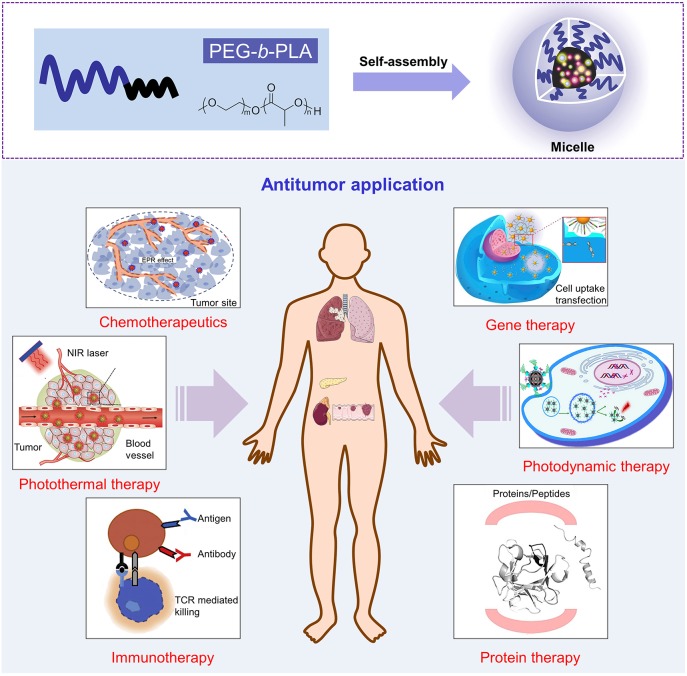
For the treatment of malignancy, many therapeutic agents, including small molecules, photosensitizers, immunomodulators, proteins and genes, and so forth, have been loaded into nanocarriers for controllable cancer therapy. Among these nanocarriers, polymeric micelles have been considered as one of the most promising nanocarriers, some of which have already been applied in different stages of clinical trials. The successful advantages of polymeric micelles from bench to bedside are due to their special core/shell structures, which can carry specific drugs in certain disease conditions. Particularly, poly(ethylene glycol)-polylactide (PEG-PLA) micelles have been considered as one of the most promising platforms for drug delivery. The PEG shell effectively prevents the adsorption of proteins and phagocytes, thereby evidently extending the blood circulation period. Meanwhile, the hydrophobic PLA core can effectively encapsulate many therapeutic agents. This review summarizes recent advances in PEG-PLA micelles for the treatment of malignancy. In addition, future perspectives for the development of PEG-PLA micelles as drug delivery systems are also presented.
Overview
The claims and statistics of this paper haven’t been checked yet.
Run the check — free, no account needed. It reads the open-access text and checks the sources it cites.
Integrity signals
Registry
Cites
Statistics
Figures
Verification
Claims the paper makes
The claims and statistics of this paper haven’t been checked yet.
Run the check — free, no account needed. It reads the open-access text and checks the sources it cites.
Claims other papers make about this one
Each is checked against this paper’s own text: does it say what the citing paper says it does?
The source backs part of the claim, not all of it — or backs it for a different population, condition or comparison.
In the citing paper
“The polymeric nanomicelles possess the merit of the EPR effect due to their small size [92] where they passively diffuse through the endothelial lining and remain at the site of inflammation owing to poor lymphatic drainage, thus releasing their payload at the specific site.”
From Recent Advances in Nanomicelles Delivery Systems. (2020) · cites this paper as [92]
Experimental — accuracy not yet measured
Self-check
Percentages, sums and reported differences re-computed from the paper’s own numbers.
The self-check needs the paper’s full text.
Citations
Cites
Drug Delivery Systems: Entering the Mainstream
Allen, T. M., & Cullis, P. R. (2004) · Science · doi:10.1126/science.1095833 · Cited by 4,552
Nanoparticle therapeutics: an emerging treatment modality for cancer
Davis, M. E., Chen, Z., & Shin, D. M. (2008) · Nature Reviews Drug Discovery · doi:10.1038/nrd2614 · Cited by 4,233
Targeting multidrug resistance in cancer
Szakács, G., Paterson, J. K., Ludwig, J. A., Booth-Genthe, C., & Gottesman, M. M. (2006) · Nature Reviews Drug Discovery · doi:10.1038/nrd1984 · Cited by 3,609
Thermo- and pH-responsive polymers in drug delivery☆
SCHMALJOHANN, D. (2006) · Advanced Drug Delivery Reviews · doi:10.1016/j.addr.2006.09.020 · Cited by 3,023
Magnetic nanoparticles in MR imaging and drug delivery
Sun, C., Lee, J. S. H., & Zhang, M. (2008) · Advanced Drug Delivery Reviews · doi:10.1016/j.addr.2008.03.018 · Cited by 2,642
Progress and problems with the use of viral vectors for gene therapy
Thomas, C. E., Ehrhardt, A., & Kay, M. A. (2003) · Nature Reviews Genetics · doi:10.1038/nrg1066 · Cited by 2,501
Regulation of transport pathways in tumor vessels: Role of tumor type and microenvironment
Hobbs, S. K., Monsky, W. L., Yuan, F., Roberts, W. G., Griffith, L., Torchilin, V. P., & Jain, R. K. (1998) · Proceedings of the National Academy of Sciences · doi:10.1073/pnas.95.8.4607 · Cited by 2,438
Nanoparticle and targeted systems for cancer therapy
Brannon‐Peppas, L., & Blanchette, J. O. (2004) · Advanced Drug Delivery Reviews · doi:10.1016/j.addr.2004.02.014 · Cited by 2,335
Scott, A. M., Wolchok, J. D., & Old, L. J. (2012) · Nature reviews. Cancer · doi:10.1038/nrc3236 · Cited by 2,244
Chemotherapy and the war on cancer
Chabner, B. A., & Roberts, T. G. (2005) · Nature reviews. Cancer · doi:10.1038/nrc1529 · Cited by 2,231
Research works printed but not linked: 2
- Das, 2016, Silencing the disease messengers: progress and prospects in developing nucleic acid based therapeutics, RNAi Technol., 5, 85
- Huang, 2011, Vaccine Delivery Systems Based on Amphiphilic Bioresorbable Polymers and Their Role in Vaccine Immunogenicity
Cited by
Sorted by citations
Lombardo, D., Kiselev, M. A., & Caccamo, M. T. (2019) · Journal of Nanomaterials · doi:10.1155/2019/3702518 · Cited by 864
Shi, D., Beasock, D., Fessler, A., Szebeni, J., Ljubimova, J. Y., Afonin, K. A., & Dobrovolskaia, M. A. (2022) · Advanced Drug Delivery Reviews · doi:10.1016/j.addr.2021.114079 · Cited by 535
Vlachopoulos, A., Karlioti, G., Balla, E., Daniilidis, V., Kalamas, T., Stefanidou, M., Bikiaris, N. D., Christodoulou, E., Koumentakou, I., Karavas, E., et al. (2022) · Pharmaceutics · doi:10.3390/pharmaceutics14020359 · Cited by 277
Lombardo, D., Calandra, P., Pasqua, L., & Magazù, S. (2020) · Materials · doi:10.3390/ma13051048 · Cited by 244
Recent Advances in Nanomicelles Delivery Systems.
Tawfik, S. M., Azizov, S., Elmasry, M. R., Sharipov, M., & Lee, Y.-I. (2020) · Nanomaterials · doi:10.3390/nano11010070 · Cited by 156
“The polymeric nanomicelles possess the merit of the EPR effect due to their small size [92] where they passively diffuse through the endothelial lining and remain at the site of inflammation owing to poor lymphatic drainage, thus releasing their payload at the specific site.”
BackgroundA Recent Review on Cancer Nanomedicine
Giri, P. M., Banerjee, A., & Layek, B. (2023) · Cancers · doi:10.3390/cancers15082256 · Cited by 163
Hurst, P. J., Rakowski, A. M., & Patterson, J. P. (2020) · Nature Communications · doi:10.1038/s41467-020-18460-2 · Cited by 123
Bio-nanocomposite Polymer Hydrogels Containing Nanoparticles for Drug Delivery: a Review
Gholamali, I., & Yadollahi, M. (2021) · Regenerative Engineering and Translational Medicine · doi:10.1007/s40883-021-00207-0 · Cited by 111
Bami, M. S., Raeisi Estabragh, M. A., Khazaeli, P., Ohadi, M., & Dehghannoudeh, G. (2022) · Journal of Drug Delivery Science and Technology · doi:10.1016/j.jddst.2021.102987 · Cited by 101
Zhu, J., Amili, M. A., & Guo, S. (2024) · Biomedicines · doi:10.3390/biomedicines12020417 · Cited by 93
Biomolecules Turn Self-Assembling Amphiphilic Block Co-polymer Platforms Into Biomimetic Interfaces
Avsar, S. Y., Kyropoulou, M., Leone, S. D., Schoenenberger, C., Meier, W. P., & Palivan, C. G. (2019) · Frontiers in Chemistry · doi:10.3389/fchem.2018.00645 · Cited by 78
Nanoparticle-Based Approaches for Treatment of Hematological Malignancies: a Comprehensive Review
Hani, U., Gowda, B. H. J., Haider, N., Ramesh, K. V., Paul, K., Ashique, S., Ahmed, M. G., Narayana, S., Mohanto, S., & Kesharwani, P. (2023) · AAPS PharmSciTech · doi:10.1208/s12249-023-02670-0 · Cited by 75
The Influence of Water on Choline-Based Ionic Liquids
Tanner, E. E. L., Piston, K. M., Ma, H., Ibsen, K. N., Nangia, S., & Mitragotri, S. (2019) · ACS Biomaterials Science & Engineering · doi:10.1021/acsbiomaterials.9b00243 · Cited by 71
Multifunctional Polymeric Micelles for Cancer Therapy
Jin, G., Rejinold, N. S., & Choy, J. (2022) · Polymers · doi:10.3390/polym14224839 · Cited by 70
Mechanisms of immune modulation in the tumor microenvironment and implications for targeted therapy
Czajka‐Francuz, P., Prendes, M. J., Mankan, A. K., Quintana, Á., Pabla, S., Ramkissoon, S. H., Jensen, T. J., Peiró, S., Severson, E. A., Achyut, B. R., et al. (2023) · Frontiers in Oncology · doi:10.3389/fonc.2023.1200646 · Cited by 73
Therapeutic applications of nanobiotechnology
Dutt, Y., Pandey, R. P., Dutt, M., Gupta, A. A., Vibhuti, A., Vidić, J., Raj, V. S., Chang, C.-M., & Priyadarshini, A. (2023) · Journal of Nanobiotechnology · doi:10.1186/s12951-023-01909-z · Cited by 71
Emerging uses of PLA–PEG copolymer in cancer drug delivery
Mundel, R., Thakur, T., & Chatterjee, M. (2022) · 3 Biotech · doi:10.1007/s13205-021-03105-y · Cited by 65
Kwon, N., Kim, K. H., Park, S., Cho, Y., Park, E.-Y., Lim, J., Çetindere, S., Tümay, S. O., Kim, W. J., Li, X., et al. (2022) · Biosensors and Bioelectronics · doi:10.1016/j.bios.2022.114612 · Cited by 60
PEG-Derivatized Dual-Functional Nanomicelles for Improved Cancer Therapy
Li, Y., Zhang, T., Liu, Q., & He, J. (2019) · Frontiers in Pharmacology · doi:10.3389/fphar.2019.00808 · Cited by 59
Polymer-drug conjugates as nanomedicine: a review
Girase, M. L., Patil, P. G., & Ige, P. P. (2019) · International Journal of Polymeric Materials · doi:10.1080/00914037.2019.1655745 · Cited by 56
Kumbhar, P. R., Kumar, P., Lasure, A., Ravichandiran, V., & Mandal, D. (2023) · Discover Nano · doi:10.1186/s11671-023-03913-6 · Cited by 60
Engineering nanosystems to overcome barriers to cancer diagnosis and treatment
Alhaj-Suliman, S. O., Wafa, E. I., & Salem, A. K. (2022) · Advanced Drug Delivery Reviews · doi:10.1016/j.addr.2022.114482 · Cited by 53
Dinakaran, D., Sengupta, J., Pink, D., Raturi, A., Chen, H., Usmani, N., Kumar, P., Lewis, J. D., Narain, R., & Moore, R. B. (2020) · Acta Biomaterialia · doi:10.1016/j.actbio.2020.09.029 · Cited by 50
Nano drug delivery systems in upper gastrointestinal cancer therapy
Salapa, J., Bushman, A., Lowe, K., & Irudayaraj, J. (2020) · Nano Convergence · doi:10.1186/s40580-020-00247-2 · Cited by 45
Targeting COPD with PLGA‐Based Nanoparticles: Current Status and Prospects
Saxena, J., Bisen, M., Misra, A., Kumar, V., Kaushik, S., Siddiqui, A. J., Mishra, N., Singh, A., & Jyoti, A. (2022) · BioMed Research International · doi:10.1155/2022/5058121 · Cited by 45
Sharma, P., Shin, J. B., Park, B. C., Lee, J., Byun, S. W., Jang, N.-Y., Kim, Y. J., Kim, Y., Kim, Y. K., & Cho, N. (2019) · Nanoscale · doi:10.1039/c8nr08704k · Cited by 42
Moulik, S. P., Rakshit, A. K., & Naskar, B. (2024) · Journal of Surfactants and Detergents · doi:10.1002/jsde.12757 · Cited by 41
Advancements in redox-sensitive micelles as nanotheranostics: A new horizon in cancer management
Sikder, A., Vambhurkar, G. B., Amulya, E., Bagasariya, D., Famta, P., Shah, S., Khatri, D. K., Singh, S. B., Sinha, V. R., & Srivastava, S. (2022) · Journal of Controlled Release · doi:10.1016/j.jconrel.2022.08.008 · Cited by 41
Safwat, M. A., Mansour, H. F., Hussein, A. K., Abdelwahab, S., & Soliman, G. M. (2020) · Drug Delivery · doi:10.1080/10717544.2020.1797241 · Cited by 41
Birhan, Y. S., & Tsai, H. (2021) · Journal of Materials Chemistry B · doi:10.1039/d1tb01253c · Cited by 38
Lü, M., Huang, X. P., Cai, X., Sun, J., Liu, X., Weng, L., Zhu, L., Luo, Q., & Chen, Z. (2022) · ACS Applied Materials & Interfaces · doi:10.1021/acsami.1c23737 · Cited by 36
Kesharwani, S. S., Dachineni, R., Bhat, G. J., & Tummala, H. (2019) · Journal of Drug Delivery Science and Technology · doi:10.1016/j.jddst.2019.101254 · Cited by 34
Human Albumin Fragments Nanoparticles as PTX Carrier for Improved Anti-cancer Efficacy
Ge, L., You, X., Huang, J. C., Chen, Y., Chen, L., Zhu, Y., Zhang, Y., Liu, X., Wu, J., & Qian, H. (2018) · Frontiers in Pharmacology · doi:10.3389/fphar.2018.00582 · Cited by 34
Ho, K., Chen, I.-H., Cheng, Y., Liao, T.-Y., Liu, E.-S., Chen, H.-J., Lu, Y.-C., Su, Y.-C., Roffler, S. R., Huang, B., et al. (2021) · Journal of Nanobiotechnology · doi:10.1186/s12951-020-00752-w · Cited by 32
Nanoparticles-based phototherapy systems: molecular mechanisms and clinical applications
Chauhan, D. S., Prasad, R., Dhanka, M., Kaur, N., Vithalani, H., Liyanapathirana, K., Nanjundappa, R. H., Gao, H., & Umeshappa, C. S. (2026) · Signal Transduction and Targeted Therapy · doi:10.1038/s41392-025-02536-w · Cited by 39
Targeted delivery, drug release strategies, and toxicity study of polymeric drug nanocarriers
Abasian, P., Shakibi, S., Maniati, M. S., Khorasani, S. N., & Khalili, S. (2020) · Polymers for Advanced Technologies · doi:10.1002/pat.5168 · Cited by 31
Zafar, A., Alruwaili, N. K., Imam, S. S., Alharbi, K. S., Afzal, M., Alotaibi, N. H., Yasir, M., Elmowafy, M., & Alshehri, S. (2020) · Journal of Drug Delivery Science and Technology · doi:10.1016/j.jddst.2020.102198 · Cited by 29
Stimuli-Responsive Aliphatic Polycarbonate Nanocarriers for Tumor-Targeted Drug Delivery
Domiński, A., Konieczny, T., Duale, K., Krawczyk, M., Pastuch-Gawołek, G., & Kurcok, P. (2020) · Polymers · doi:10.3390/polym12122890 · Cited by 30
Park, S. E., El‐Sayed, N. S., Shamloo, K., Lohan, S., Kumar, S., Sajid, M. I., & Tiwari, R. K. (2021) · Bioconjugate Chemistry · doi:10.1021/acs.bioconjchem.1c00319 · Cited by 27
Nanoparticulate RNA delivery systems in cancer
Sharma, A., Jha, N. K., Dahiya, K., Singh, V. K., Chaurasiya, K., Jha, A. N., Jha, S. K., Mishra, P. C., Dholpuria, S., Astya, R., et al. (2020) · Cancer Reports · doi:10.1002/cnr2.1271 · Cited by 26
Nanotechnology in the arena of cancer immunotherapy
Asadujjaman, M., Cho, K. H., Jang, D.-J., Kim, J.-E., & Jee, J. (2020) · Archives of Pharmacal Research · doi:10.1007/s12272-020-01207-4 · Cited by 27
Cellular Alterations in Carbohydrate and Lipid Metabolism Due to Interactions with Nanomaterials
Martín-Pardillos, A., & Martín‐Duque, P. (2023) · Journal of Functional Biomaterials · doi:10.3390/jfb14050274 · Cited by 27
A review on Stimuli-pH responsive liposomal formulation in cancer therapy
Jayapriya, P., Pardhi, E., Vasave, R., Guru, S. K., Madan, J., & Mehra, N. K. (2023) · Journal of Drug Delivery Science and Technology · doi:10.1016/j.jddst.2023.105172 · Cited by 24
Fluorescent nanoparticles with ultralow chromophore loading for long-term tumor-targeted imaging
Su, Y., Lv, C., Zhang, Y., Liu, S., Xie, Z., & Zheng, M. J. (2020) · Acta Biomaterialia · doi:10.1016/j.actbio.2020.05.013 · Cited by 24
Qiao, Y., Zhan, C., Wang, C., Shi, X., Yang, J., He, X., Ji, E., Yu, Z., Yan, C., & Wu, H. (2020) · Journal of Materials Chemistry B · doi:10.1039/d0tb01682a · Cited by 25
Self-citationHe, M., Zhang, Z., Jiao, Z., Yan, M., Miao, P., Wei, Z., Leng, X., Li, Y., Fan, J., Sun, W. C., et al. (2022) · Chinese Chemical Letters · doi:10.1016/j.cclet.2022.05.088 · Cited by 24
Delving Into Nanoparticle Systems for Enhanced Drug Delivery Technologies
Abaidullah, N., Muhammad, K., & Waheed, Y. (2025) · AAPS PharmSciTech · doi:10.1208/s12249-025-03063-1 · Cited by 26
Zhao, J., Xiong, J., Ning, Y., Zhao, J., Wang, Z., Long, L., He, H., Gou, J., Yin, T., Tang, X., et al. (2023) · European Journal of Pharmaceutics and Biopharmaceutics · doi:10.1016/j.ejpb.2023.02.011 · Cited by 23
Shaikh, M. F., Ansari, M. T., Khatoon, S., Kalam, N., Hasnain, M. S., & Hafiz, A. K. (2021) · Current Molecular Pharmacology · doi:10.2174/1874467214666210922120924 · Cited by 23
Jelonek, K., Zajdel, A., Wilczok, A., Kaczmarczyk, B., Musiał‐Kulik, M., Hercog, A., Foryś, A., Pastusiak, M., & Kasperczyk, J. (2021) · Pharmaceutics · doi:10.3390/pharmaceutics13111881 · Cited by 22
Lü, B., Li, Y., Wang, Z., Wang, B., Pan, X., Zhao, W., Ma, X., & Zhang, J. (2019) · New Journal of Chemistry · doi:10.1039/c9nj02608h · Cited by 21
Controlled Drug Delivery by Polylactide Stereocomplex Micelle for Cervical Cancer Chemotherapy
Niu, K., Yao, Y., Xiu, M., Guo, C., Ge, Y., & Wang, J. (2018) · Frontiers in Pharmacology · doi:10.3389/fphar.2018.00930 · Cited by 20
Self-citationShi, M., Jiang, H., Yin, L., Liu, Y., & Xu, M. (2019) · Journal of Chromatography B · doi:10.1016/j.jchromb.2019.121716 · Cited by 19
Maghak, L., & Larsen, J. (2020) · ACS Biomaterials Science & Engineering · doi:10.1021/acsbiomaterials.0c00680 · Cited by 19
Development of red-light cleavable PEG-PLA nanoparticles as delivery systems for cancer therapy
Dariva, C. G., Figueiredo, J. P., Almeida-Ferreira, C., Laranjo, M., Botelho, M. F., Fonseca, A. C., Coelho, J. F. J., & Serra, A. C. (2020) · Colloids and Surfaces B Biointerfaces · doi:10.1016/j.colsurfb.2020.111354 · Cited by 19
Bhattacharjee, S., & Brayden, D. J. (2020) · Expert Opinion on Drug Discovery · doi:10.1080/17460441.2021.1826434 · Cited by 20
Oligo(Lactic Acid)8-Docetaxel Prodrug-Loaded PEG-b-PLA Micelles for Prostate Cancer
Repp, L., Unterberger, C. J., Ye, Z., Feltenberger, J. B., Swanson, S. M., Marker, P. C., & Kwon, G. S. (2021) · Nanomaterials · doi:10.3390/nano11102745 · Cited by 20
Sarkar, K., Torregrosa‐Allen, S. E., Elzey, B. D., Narayanan, S. K., Langer, M., Durm, G. A., & Won, Y. (2022) · Molecular Pharmaceutics · doi:10.1021/acs.molpharmaceut.2c00148 · Cited by 18
Sadowski, L. P., Singh, A., Luo, D. H., Majcher, M. J., Urosev, I., Rothenbroker, M., Kapishon, V., Smeets, N. M. B., & Hoare, T. R. (2022) · European Polymer Journal · doi:10.1016/j.eurpolymj.2022.111443 · Cited by 18
Sinha, S., Tripathi, A. K., Pandey, A. K., Naik, P., Pandey, A., & Verma, V. S. (2024) · Biocatalysis and Agricultural Biotechnology · doi:10.1016/j.bcab.2024.103296 · Cited by 20
Background to the ANDRILL McMurdo Ice Shelf Project (Antarctica) and Initial Science Volume
Naish, T., Powell, R. D., & Levy, R. (2007) · Lincoln (University of Nebraska) · Cited by 17
Balaș, M., Din, I. M. P., Hermenean, A. O., Cinteză, L. O., & Dinischiotu, A. (2021) · Materials · doi:10.3390/ma14102605 · Cited by 16
Zelenina, O. M., Vlizlo, V., Kozak, М. R., Остапив, Д. Д., Dron, І. A., Дронь, І. А., Stetsko, T. I., Skripka, M. V., Tomchuk, V., Данчук, О. В., et al. (2022) · Journal of Applied Pharmaceutical Science · doi:10.7324/japs.2022.120607 · Cited by 16
Enhanced Endocytic and pH-Sensitive Poly(malic acid) Micelles for Antitumor Drug Delivery
Qiao, Y., Wang, C., Liu, B., Peng, Y., Meng, H., Yang, T., Zhou, Q., Guo, S., & Wu, H. Y. (2018) · Journal of Biomedical Nanotechnology · doi:10.1166/jbn.2019.2673 · Cited by 15
Self-citationNascimento, B. F. O., Pereira, N. A. M., Valente, A. J. M., Melo, T. M. V. D. P. E., & Piñeiro, M. (2019) · Pharmaceutics · doi:10.3390/pharmaceutics11020081 · Cited by 14
Deb, V. K., Chauhan, N., Chandra, R., & Jain, U. (2024) · BioNanoScience · doi:10.1007/s12668-023-01297-6 · Cited by 13
Akib, A. A., Shakil, R., Rumon, M. M. H., Roy, C. K., Chowdhury, E. H., & Chowdhury, A. (2022) · Current Pharmaceutical Design · doi:10.2174/1381612828666220506135301 · Cited by 12
Polylactide/poly(vinyl monomer) block copolymers for specific applications
Bednarek, M., & Grabowski, M. (2024) · Journal of macromolecular science. Part C, Reviews in macromolecular chemistry and physics/Journal of macromolecular science. Reviews in macromolecular chemistry and physics · doi:10.1080/15583724.2024.2310105 · Cited by 13
Nanotechnology in cancer therapeutics, diagnosis, and management
Hazarika, D., Sarma, S., & Shankarishan, P. (2024) · Biotechnologia · doi:10.5114/bta.2024.141807 · Cited by 12
Foryś, A., Chountoulesi, M., Mendrek, B., Konieczny, T., Sentoukas, T., Godzierz, M., Kordyka, A., Demetzos, C., Pispas, S., & Trzebicka, B. (2021) · Polymers · doi:10.3390/polym13162607 · Cited by 12
Bansal, K. K., Ali, A. A., Rahman, M. D., Sjöholm, E., Wilén, C., & Rosenholm, J. M. (2022) · International Journal of Polymeric Materials · doi:10.1080/00914037.2022.2090942 · Cited by 12
Prospects of Delivering Natural Compounds by Polymer-Drug Conjugates in Cancer Therapeutics
Mthimkhulu, N., Mosiane, K. S., Nweke, E. E., Balogun, M. O., & Fru, P. N. (2021) · Anti-Cancer Agents in Medicinal Chemistry · doi:10.2174/1871520621666210419094623 · Cited by 12
He, Z., Bao, K., Jian, J., Zhao, Y., Jian, Z., Hu, C., & Gao, X. (2021) · ACS Applied Polymer Materials · doi:10.1021/acsapm.1c01393 · Cited by 11
Piao, L., Li, Y., Zhang, H., & Jiang, J. (2019) · Journal of Biomaterials Science Polymer Edition · doi:10.1080/09205063.2019.1565612 · Cited by 11
Enhancing the Therapeutic Efficacy of Bortezomib in Cancer Therapy Using Polymeric Nanostructures
Korani, M., Korani, S., Zendedel, E., Nikpoor, A. R., Jaafari, M. R., Orafai, H. M., Johnston, T. P., & Sahebkar, A. (2019) · Current Pharmaceutical Design · doi:10.2174/1381612825666191106150018 · Cited by 11
Synthesis of poly(2-ethyl-2-oxazoline)-b-poly(ε-caprolactone) conjugates by a new modular strategy
Özköse, U. U., Yılmaz, Ö., & Alptürk, O. (2019) · Polymer Bulletin · doi:10.1007/s00289-019-03038-w · Cited by 11
Glucose targeted therapy against liver hepatocellular carcinoma: In vivo study
Mazumder, A., Assawapanumat, W., Dwivedi, A., Reabroi, S., Chairoungdua, A., & Nasongkla, N. (2018) · Journal of Drug Delivery Science and Technology · doi:10.1016/j.jddst.2018.12.036 · Cited by 10
Guo, M., Peng, J., Guo, P., Wang, Q., Zhang, L., Shen, H., Chen, F., Zhang, P., Lin, S., Gao, H., et al. (2024) · Antiviral Research · doi:10.1016/j.antiviral.2024.105880 · Cited by 10
Self-citationMetwaly, A. M., Abd-El-Azim, H., Zewail, M., Alsfouk, A. A., Elkaeed, E. B., & Eissa, I. H. (2024) · Journal of Computational Biophysics and Chemistry · doi:10.1142/s2737416524500716 · Cited by 9
Crosstalk of immunity and metabolism: interaction of toll-like receptors (TLRs) and gut microbiota
Shabana, S., Shahid, S. U., Irfan, U., Hayat, S., & Sarwar, S. (2025) · Acta Diabetologica · doi:10.1007/s00592-025-02532-0 · Cited by 10
Deka, S. R., Verma, P., Singh, R., & Kumar, P. (2021) · Nano-Structures & Nano-Objects · doi:10.1016/j.nanoso.2021.100688 · Cited by 9
Printz, G., Ryzhakov, D., Gourlaouen, C., Jacques, B., Messaoudi, S., Dumas, F., Bideau, F. L., & Dagorne, S. (2023) · ChemCatChem · doi:10.1002/cctc.202301207 · Cited by 9
Polymeric Micelles for Targeted Drug Delivery Systems
Guliy, O. I., Fomin, A. S., Григорьевна, Ж. Е., Kozlov, S., Staroverov, S. A., & Dykman, L. A. (2022) · Nanotechnology in the life sciences · doi:10.1007/978-3-031-12658-1_18 · Cited by 8
Microwave-assisted synthesis of self-assembling bi-functionalizable amphiphilic diblock copolymers
Thauvin, C., Maudens, P., & Allémann, É. (2020) · Journal of Drug Delivery Science and Technology · doi:10.1016/j.jddst.2020.102255 · Cited by 9
Miraj, S., Saeed, H., Iqtedar, M., Albekairi, N. A., Ahmed, N., Danish, M. Z., Islam, M. F., Rasool, M. F., Deen, K. M., & Rathore, H. A. (2023) · Pharmaceuticals · doi:10.3390/ph16111600 · Cited by 8
Singh, A., Lofts, A., Krishnan, R., Campea, M. A., Chen, L., Wan, Y., & Hoare, T. R. (2024) · Nanoscale Advances · doi:10.1039/d3na01156a · Cited by 8
Li, S., Wei, W., Jia, W., Zhao, L., Xu, H., Zhou, F., Zhu, L., Song, Z., Feng, S., & Feng, R. (2018) · Journal of Biomaterials Science Polymer Edition · doi:10.1080/09205063.2018.1544457 · Cited by 8
Self-citationHypoxia-Responsive Polymersomes for Stemness Reduction in Patient-Derived Solid Tumor Spheroids
Edvall, C., Kale, N. R., Tani, S., Ambhore, S., Hossain, R., Ozoude, C., Horsen, K. V., Mohammad, J., Tuvin, D. M., Kalathingal, S., et al. (2025) · ACS Applied Bio Materials · doi:10.1021/acsabm.4c01735 · Cited by 7
Sarisuta, K., Iwami, M., Martín-Vaca, B. M., Chanthaset, N., & Ajiro, H. (2023) · Langmuir · doi:10.1021/acs.langmuir.2c03303 · Cited by 7
Xiao, S., Chen, X., Ye, Q., Chen, K., Xiao, W., Guan, X., Huang, B., Liu, G., Wei, H., & Peng, Y. (2020) · Journal of Coordination Chemistry · doi:10.1080/00958972.2020.1766683 · Cited by 7
Wang, S., Chen, F., Wu, H., Zhang, Y., Sun, K., Yin, Y., Chen, J., Hossain, A. M. S., & Sun, B. (2020) · Nanotechnology · doi:10.1088/1361-6528/abbd71 · Cited by 7
Zajdel, A., Wilczok, A., Jelonek, K., Kaps, A., Musiał‐Kulik, M., & Kasperczyk, J. (2021) · Journal of Biomedical Materials Research Part A · doi:10.1002/jbm.a.37164 · Cited by 7
Li, Y., Tong, A., Niu, P., Guo, W., Jin, Y., Hu, Y., Tao, P., & Miao, W. (2022) · Pharmaceutics · doi:10.3390/pharmaceutics14020253 · Cited by 7
Nanocarriers: The Promising Future to Cancer Diagnostics and Treatment
Tapasya, K., Kumar, A. S., Dharmarajan, A., & Parvathi, V. D. (2022) · Biomedical & Pharmacology Journal · doi:10.13005/bpj/2416 · Cited by 7
Entrapping Instantly‐Cleaved CPT Prodrugs in Polymeric Micelles for CPT Delivery
Liu, F., Li, A., Li, F., Li, J., Lu, Y., Li, F., Luo, J., Huang, Z., & Zheng, Y. (2019) · ChemistrySelect · doi:10.1002/slct.201903035 · Cited by 7
Application of Nanoparticles in Drug Delivery
Chattopadhyay, I. (2020) · Springer eBooks · doi:10.1007/978-981-15-1702-0_3 · Cited by 9
Nagar, L., Gulati, N., Saini, A., Singh, S. K., Gupta, G., MacLoughlin, R. J., Chellappan, D. K., Dua, K., & Dureja, H. (2024) · Current Drug Delivery · doi:10.2174/0115672018289883240226113353 · Cited by 6
Smart Cancer Nanomedicine for Synergetic Therapy
Kanungo, A., Mohanty, C., & Acharya, S. (2024) · Current Medicinal Chemistry · doi:10.2174/0109298673300897240602130258 · Cited by 6
Polymeric Micelles for Targeted Drug Delivery System
Guliy, O. I., Staroverov, S. A., Fomin, A. S., Григорьевна, Ж. Е., Kozlov, S., Lovtsova, L. G., & Dykman, L. A. (2022) · Applied Biochemistry and Microbiology · doi:10.1134/s0003683822060059 · Cited by 7
Trzebicka, B., Wałach, W., Kurcok, P., & Kowalczuk, M. M. (2024) · Polymers for Advanced Technologies · doi:10.1002/pat.6418 · Cited by 6
Metadata
- Authors
- Wang, J., Li, S., Han, Y., Guan, J., Chung, S., Wang, C., & Li, D.
- Affiliations
- Chinese Academy of Sciences (CN)
- Jilin University (CN)
- First Hospital of Jilin University (CN)
- University of Waterloo (CA)
- Corresponding author
- Han, Yuping
- Guan, Jingjing
- Li, Di
- Venue
- Frontiers in Pharmacology
- Publisher
- Frontiers Media SA
- Published
- 2018-03-08
- Volume
- 9
- Pages
- 202-202
- ISSN
- 1663-9812 (ISSN-L)
- PMC
- PMC5890116
- OpenAlex
- W2792803144
- Cited by
- 155
- References
- 115
- Citations by year
- 2026: 7 · 2025: 13 · 2024: 26 · 2023: 21 · 2022: 22 · 2021: 20 · 2020: 24 · 2019: 16 · 2018: 5
- FWCI
- 1.07
- Type
- journal article
- Language
- en
- Open access
- gold
- doi.org
- Locations
- Frontiers in Pharmacology (publishedVersion, cc-by)
- Europe PMC (PubMed Central) (publishedVersion, cc-by)
- PubMed Central (publishedVersion, cc-by)
- PubMed (publishedVersion)
- DOAJ (DOAJ: Directory of Open Access Journals) (submittedVersion, cc-by-sa)
- Funders
- National Natural Science Foundation of China (51673190, 51603204, 51303174, 51473165, 51390484, 51520105004)
- Topics
- Physical Sciences › Materials Science › Biomaterials › Nanoparticle-Based Drug Delivery
- Life Sciences › Pharmacology, Toxicology and Pharmaceutics › Pharmaceutical Science › Advanced Drug Delivery Systems
- Physical Sciences › Materials Science › Polymers and Plastics › Dendrimers and Hyperbranched Polymers
- Keywords
- polymeric micelles, cancer therapy, drug delivery systems, nanocarriers, core-shell structure, PEGylation, blood circulation, protein adsorption resistance, photosensitizers, gene delivery, clinical translation
About these checks
Registry, retraction, Cites and statistics results are computed, not judged, with one exception: a printed reference that no index lists is read once by a model before it counts as a citation error. Claims are extracted by a model and kept only when their quote appears verbatim in the text; each cited source is then checked, with a model’s help, for whether it says what the claim relies on. Those verdicts can be wrong — read the claim’s quote and the cited source before relying on one.
Statistics and arithmetic are recomputed, not judged.
Confidence bands are shown only for fields calibrated on our annotated test set. None is calibrated yet, so no band is shown.
What counts as a claim ›How we measure confidence ›How we check this ›
Are you an author, or do you see a problem with this page? Request a review
