

Integrated Phenotypic and Sequencing-Based Resistome Assessment of Antimicrobial Resistance Determinants in a Sample of Commercial Farm-Animal Probiotic Products
Open accessThe DOI matches its Crossref record; 37 of the 38 references it cites were found in a registry or an index; 40 of the 48 sources its claims cite were checked for support.
Abstract
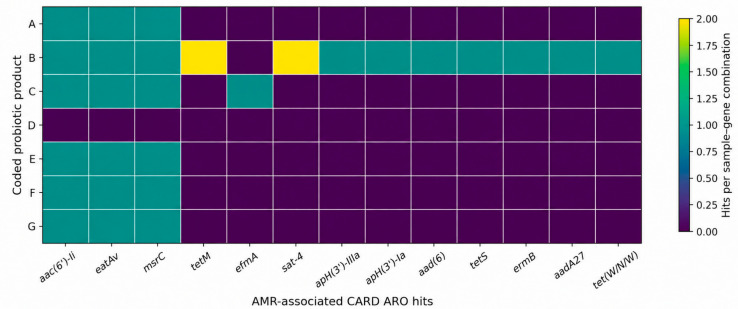
Probiotic feed additives are increasingly used in livestock production as antimicrobial-sparing tools, yet viable microbial products should not introduce clinically relevant antimicrobial resistance genes (ARGs) into the intestinal resistome. This study evaluated farm-animal probiotic products using an integrated phenotypic, metagenomic and mobilome-aware safety framework. Seven commercially available products intended for poultry, pigs, cattle or horses were assessed using product metadata, culture-based recovery, broth microdilution minimum inhibitory concentration (MIC) profiling and Illumina short-read sequencing as a screening-level resistome approach. Sequencing-based resistome screening identified 30 antimicrobial resistance (AMR)-associated CARD antibiotic-resistant organism (ARO) hits belonging to 13 determinants across six ARG-positive codes.
Overview
CoChat Summary
TL;DR
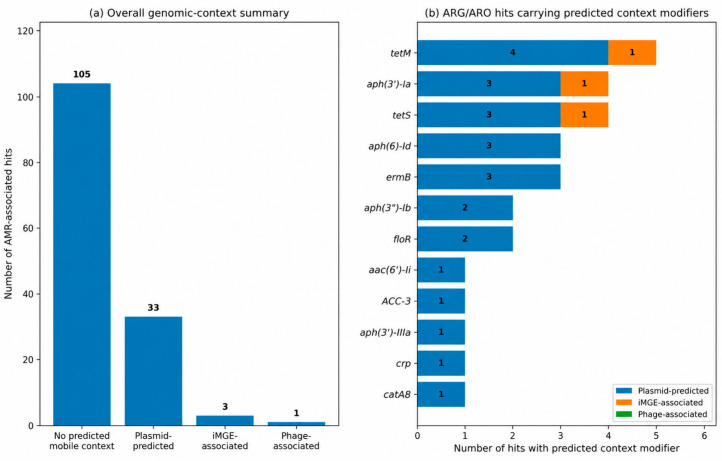
In seven commercial farm-animal probiotic products, integrated MIC and short-read resistome screening found no high-priority mobile ARGs (vanA/vanB, mcr, optrA, poxtA, cfr, ESBL, carbapenemase), but detected 30 CARD ARO hits/13 determinants across six products, dominated by Enterococcus-associated background genes. Plasmid prediction was positive for 5/30 hits and no iMGE- or phage-associated ARG context was detected, supporting screening-level integrated assessment while requiring confirmatory long-read or functional testing for mobile-context findings.
Key findings
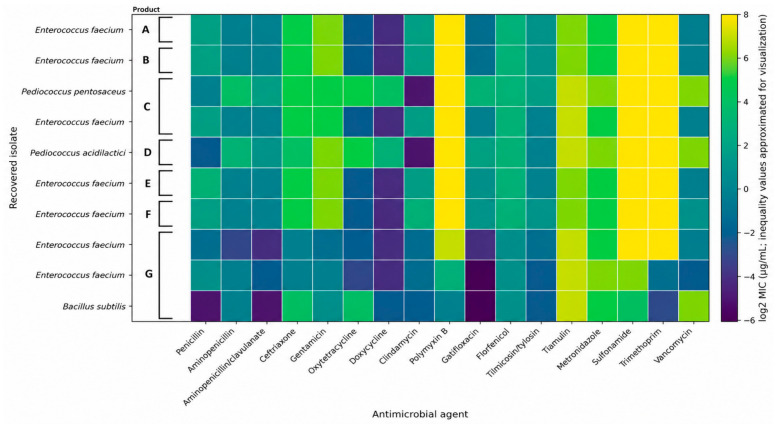
- Seven products marketed for poultry, swine, cattle or horses were assessed; viable isolates included Enterococcus faecium, Pediococcus acidilactici, Pediococcus pentosaceus and Bacillus subtilis. One labelled Lactobacillus plantarum component was not recovered as viable culture, and one labelled P. acidilactici component was recorded as P. pentosaceus.
- Sequencing-based resistome screening identified 30 AMR-associated CARD ARO hits corresponding to 13 determinants across six ARG-positive coded products; Product D had no retained CARD/RGI hit. The most frequent determinants were aac(6′)-Ii, eatAv and msrC, each detected in six products, followed by tetM and sat-4, each detected twice.
- Plasmid prediction was positive for 5/30 hits (16.7%), while no iMGE- or phage-associated ARG context was detected. No vanA/vanB, mcr, optrA, poxtA, cfr, ESBL or carbapenemase gene was detected.
- Phenotypic MIC profiles were taxon-dependent: E. faecium isolates generally showed low aminopenicillin MICs and vancomycin MICs of 1–2 µg/mL, with high MICs for cephalosporins, polymyxins, metronidazole, sulfonamide and trimethoprim; Pediococcus isolates showed elevated MICs for tetracyclines, aminoglycosides and vancomycin.
Methods
- Targeted exploratory safety assessment of seven commercially available farm-animal probiotic products from the Hungarian/EU veterinary market, pseudonymized A–G; products containing only fungal or yeast-based components were excluded from the final bacterial AMR/resistome analysis.
- Culture-based recovery, MALDI-TOF MS species identification, and broth microdilution MIC profiling using two-fold antimicrobial dilutions in 96-well plates, incubated aerobically at 37 °C for 18–24 h, with visual MIC reading; EFSA/FEEDAP cut-off concepts were considered where relevant.
- DNA extraction followed by Illumina NextSeq paired-end short-read sequencing; reads were quality checked with FastQC v0.11.9, filtered with Trim Galore v0.6.6, assembled with MEGAHIT v1.2.9, ORFs predicted with Prodigal v2.6.3, and screened with CARD/RGI v6.0.5 (CARD 4.0.1). Mobilome context was assessed with MobileElementFinder v1.0.3, PlasFlow v1.1 and VirSorter v2.2.2; analyses were descriptive.
Limitations
- Stated: short-read assemblies cannot fully resolve plasmid architecture or prove transferability, so predicted plasmid/mobile context is screening-level and requires long-read sequencing, plasmid closure or conjugation experiments for confirmation. Some CARD/RGI hits were nudged or partial and treated as AMR-associated signals rather than definitive functional resistance determinants.
- Stated: the MIC panel was broader than the EFSA core panel, so some antimicrobials were exploratory profiling markers not directly interpretable through probiotic-specific cut-offs. The dataset is a targeted panel of selected products, not a statistically representative market-wide prevalence survey, and pre-purchase storage/distribution history was not standardized, so culture-negative findings should not be extrapolated to all batches.
- Evident from the text: the sample size is small (seven products), label information, viable recovery and sequencing results showed imperfect agreement, and no functional transferability testing was performed; these factors limit generalizability and risk interpretation.
Model-written summary. Check it against the paper before relying on it.
Integrity signals
Registry
Cites
Statistics
Figures
Verification
Claims the paper makes
15 Valid · 0 Not valid · 5 Not checked · 67 Own results and interpretations
The sources with a verdict support this claim; the rest weren’t checked yet, have no full text we could read, or their verdicts aren’t rated yet.
In the paper
“These observations support our interpretation that recurrent Enterococcus-associated background genes should not be treated as equivalent to acquired mobile ARGs.”
§ Integrated Phenotypic and Sequencing-Based Resistome Assessment of Antimicrobial Resistance Determinants in a Sample of Commercial Farm-Animal Probiotic Products > 3. Discussion
What the sources say
- Supportedcites [23] Kerek Á. Román I. Szabó Á. Pézsa N.P. Jerzsele Á. Antibiotic Resistance Gene Expression in Veterinary Probiotics: Two Sides of the Coin Vet. Sci. 2025 12 217 10.3390/vetsci12030217 40266902 PMC11945515 source
The Results (Genotypic resistance profiles; page unavailable) identify only one ARG predicted to be plasmid-associated in Enterococcus faecium. The Discussion (page unavailable) distinguishes that gene from the mostly chromosomally encoded determinants, which it describes as having low mobility potential. This supports the citing authors’ interpretation without implying that the other genes pose no resistance risk. (LLM, conf=0.86)
- Supportedcites [26] Kerek A. Szabó E. Szabó Á. Papp M. Bányai K. Kardos G. Kaszab E. Bali K. Jerzsele Á. Investigating Antimicrobial Resistance Genes in Probiotic Products for Companion Animals Front. Vet. Sci. 2024 11 1464351 10.3389/fvets.2024.1464351 39502950 PMC11534615 source
The Results (§3.3; page not provided) describe the same four recurrent ARGs as chromosomal and originating from Enterococcus spp., while separately identifying two genes on mobile genetic elements. The Discussion (§4; page not provided) likewise distinguishes chromosomal Enterococcus-associated genes from genes with likely mobility, supporting the claimed distinction. (LLM, conf=0.88)
- Not checked yetcites [27] Urshev Z. Yungareva T. Initial Safety Evaluation of Enterococcus faecium LBB.E81 Biotechnol. Biotechnol. Equip. 2021 35 11 17 10.1080/13102818.2020.1840438 source
Checked before — its earlier verdict is held back until a new check runs.
- Supportedcites [28] Xiao J. Chen C. Fu Z. Wang S. Luo F. Assessment of the Safety and Probiotic Properties of Enterococcus faecium B13 Isolated from Fermented Chili Microorganisms 2024 12 994 10.3390/microorganisms12050994 38792822 PMC11123876 source
Section 3.1 distinguishes the intrinsic E. faecium gene eat(A) from resistance genes located on B13’s plasmids, which it discusses as potentially disseminated or removable by plasmid elimination. This supports treating inherent genes differently from mobile ARGs. Page numbers are not provided in our copy. (LLM, conf=0.86)
plain- Asserted: passes — The authors put it forward as true.
- Checkable: passes — It can be checked against evidence.
- Load-bearing: passes — The paper’s conclusions depend on it.
- Based: passes — The paper gives a reason why it holds.
- Supported
Every source the paper cites for this claim was checked and supports it.
In the paper
“the present farm-animal dataset appears less concerning than several reports on broader probiotic or food-associated bacterial collections, where ARGs were frequently detected together with plasmid or iMGE signals [16,17].”
§ Integrated Phenotypic and Sequencing-Based Resistome Assessment of Antimicrobial Resistance Determinants in a Sample of Commercial Farm-Animal Probiotic Products > 3. Discussion
What the sources say
- Supportedcites [16] Tóth A.G. Csabai I. Judge M.F. Maróti G. Becsei Á. Spisák S. Solymosi N. Mobile Antimicrobial Resistance Genes in Probiotics Antibiotics 2021 10 1287 10.3390/antibiotics10111287 34827225 PMC8614787 source
The Results report ARGs in all 27 metagenomic probiotic samples (section 3.2), ARG-bearing plasmid-associated contigs in multiple samples (section 3.5), and ARGs associated with iMGEs in three bacterial species (section 3.4). The comparison with the citing authors’ farm-animal dataset is their own assessment, not a finding attributed to this source. (LLM, conf=0.89)
- Supportedcites [17] Tóth A.G. Judge M.F. Nagy S.Á. Papp M. Solymosi N. A Survey on Antimicrobial Resistance Genes of Frequently Used Probiotic Bacteria, 1901 to 2022 Eurosurveillance 2023 28 2200272 10.2807/1560-7917.ES.2023.28.14.2200272 37022212 PMC10283461 source
The Results (Mobilome, Table 3) document ARGs linked to plasmids or iMGEs across several probiotic bacterial species. The Conclusions say a considerable proportion of the identified ARGs were mobile. The comparison with the citing authors’ farm-animal dataset is their own framing, not a finding attributed to this source. (LLM, conf=0.90)
hedged- Asserted: passes — The authors put it forward as true.
- Checkable: passes — It can be checked against evidence.
- Load-bearing: passes — The paper’s conclusions depend on it.
- Based: passes — The paper gives a reason why it holds.
- Supported
The cited sources support only part of this claim — read each source’s verdict below.
In the paper
“Intrinsic determinants in Enterococcus faecium, for example, must be interpreted differently from mobile glycopeptide, oxazolidinone, colistin, extended-spectrum β-lactamase (ESBL) or carbapenemase genes [11,12,13,14].”
§ Integrated Phenotypic and Sequencing-Based Resistome Assessment of Antimicrobial Resistance Determinants in a Sample of Commercial Farm-Animal Probiotic Products > 1. Introduction
What the sources say
- Partly supportedcites [11] Partridge S.R. Kwong S.M. Firth N. Jensen S.O. Mobile Genetic Elements Associated with Antimicrobial Resistance Clin. Microbiol. Rev. 2018 31 4 10.1128/CMR.00088-17 PMC6148190 30068738 sourceExperimental — accuracy not yet measured
The Introduction (page unavailable) describes mobile elements spreading vancomycin-resistance genes in enterococci and a plasmid carrying an oxazolidinone-resistance gene; it also identifies mobile elements associated with ESBL and carbapenemase genes. It does not explain how intrinsic determinants in Enterococcus faecium should be interpreted or explicitly make the claimed comparison. (LLM, conf=0.82)
- Partly supportedcites [12] von Wintersdorff C.J.H. Penders J. van Niekerk J.M. Mills N.D. Majumder S. van Alphen L.B. Savelkoul P.H.M. Wolffs P.F.G. Dissemination of Antimicrobial Resistance in Microbial Ecosystems through Horizontal Gene Transfer Front. Microbiol. 2016 7 173 10.3389/fmicb.2016.00173 26925045 PMC4759269 sourceExperimental — accuracy not yet measured
The “Reservoirs of resistance” section describes the spread of ESBL-associated blaCTX-M genes, the origins of OXA-48-type carbapenemase genes, and plasmid-mediated colistin resistance gene mcr-1. It does not discuss intrinsic determinants in Enterococcus faecium or establish the claimed distinction for glycopeptide and oxazolidinone genes. The cited copy provides no page numbers for these passages. (LLM, conf=0.84)
- Partly supportedcites [13] Alcock B.P. Raphenya A.R. Lau T.T.Y. Tsang K.K. Bouchard M. Edalatmand A. Huynh W. Nguyen A.-L.V. Cheng A.A. Liu S. CARD 2020: Antibiotic Resistome Surveillance with the Comprehensive Antibiotic Resistance Database Nucleic Acids Res. 2020 48 D517 D525 10.1093/nar/gkz935 31665441 PMC7145624 sourceExperimental — accuracy not yet measured
In “Expanded and higher resolution AMR detection models” (page not provided), the paper describes different models and interpretive context for resistance genes and variants. Its ARO classifications also distinguish gene families, drug classes and resistance mechanisms. Our copy does not state that intrinsic determinants in Enterococcus faecium must be interpreted differently from the specified mobile genes. (LLM, conf=0.70)
- Partly supportedcites [14] Johansson M.H.K. Bortolaia V. Tansirichaiya S. Aarestrup F.M. Roberts A.P. Petersen T.N. Detection of Mobile Genetic Elements Associated with Antibiotic Resistance in Salmonella enterica Using a Newly Developed Web Tool: MobileElementFinder J. Antimicrob. Chemother. 2021 76 101 109 10.1093/jac/dkaa390 33009809 PMC7729385 sourceExperimental — accuracy not yet measured
The Discussion section, “Association of MGEs and AMR genes” (page unavailable), reports that blaCTX-M-65 was near an insertion sequence likely to have mobilized it, supporting the mobile ESBL-gene part of the sentence. The paper studies Salmonella enterica; it does not discuss intrinsic determinants in Enterococcus faecium, how to interpret them, or the listed glycopeptide, oxazolidinone, colistin and carbapenemase genes. (LLM, conf=0.80)
plain- Asserted: passes — The authors put it forward as true.
- Checkable: passes — It can be checked against evidence.
- Load-bearing: passes — The paper’s conclusions depend on it.
- Based: passes — The paper gives a reason why it holds.
- Partly supported
The cited sources support only part of this claim — read each source’s verdict below.
In the paper
“the mere presence of an AMR-associated database hit does not necessarily imply public-health risk.”
§ Integrated Phenotypic and Sequencing-Based Resistome Assessment of Antimicrobial Resistance Determinants in a Sample of Commercial Farm-Animal Probiotic Products > 1. Introduction
What the sources say
- Partly supportedcites [11] Partridge S.R. Kwong S.M. Firth N. Jensen S.O. Mobile Genetic Elements Associated with Antimicrobial Resistance Clin. Microbiol. Rev. 2018 31 4 10.1128/CMR.00088-17 PMC6148190 30068738 sourceExperimental — accuracy not yet measured
The ‘Gene Cassettes and Antibiotic Resistance’ passage (page unavailable) distinguishes the most clinically relevant resistance-gene cassettes from others and notes that particular mutations affect whether variants confer resistance. This supports caution about interpreting an AMR-associated hit, but the paper does not directly assess whether a database hit implies public-health risk. (LLM, conf=0.78)
- Supportedcites [12] von Wintersdorff C.J.H. Penders J. van Niekerk J.M. Mills N.D. Majumder S. van Alphen L.B. Savelkoul P.H.M. Wolffs P.F.G. Dissemination of Antimicrobial Resistance in Microbial Ecosystems through Horizontal Gene Transfer Front. Microbiol. 2016 7 173 10.3389/fmicb.2016.00173 26925045 PMC4759269 source
The 'Reservoirs of resistance' section says metagenomic databases can be mined for resistance genes, but sequence-based studies may only predict a gene’s function from homology. It also says environmental resistomes differ significantly from those of human pathogens and that their potential to disseminate resistance to pathogens still needs investigation. Together, these points support the qualified claim that a database hit alone does not establish public-health risk. (LLM, conf=0.84)
- Supportedcites [13] Alcock B.P. Raphenya A.R. Lau T.T.Y. Tsang K.K. Bouchard M. Edalatmand A. Huynh W. Nguyen A.-L.V. Cheng A.A. Liu S. CARD 2020: Antibiotic Resistome Surveillance with the Comprehensive Antibiotic Resistance Database Nucleic Acids Res. 2020 48 D517 D525 10.1093/nar/gkz935 31665441 PMC7145624 source
The “Resistance gene identifier version 5” section says Loose database hits can include homologous sequences and spurious partial hits that may have no role in AMR. This supports the claim that a database hit alone does not establish AMR-related public-health risk; the paper does not need to use that exact phrase. (LLM, conf=0.89)
- Could not verifycites [14] Johansson M.H.K. Bortolaia V. Tansirichaiya S. Aarestrup F.M. Roberts A.P. Petersen T.N. Detection of Mobile Genetic Elements Associated with Antibiotic Resistance in Salmonella enterica Using a Newly Developed Web Tool: MobileElementFinder J. Antimicrob. Chemother. 2021 76 101 109 10.1093/jac/dkaa390 33009809 PMC7729385 sourceExperimental — accuracy not yet measured
The Methods section classifies AMR–mobile-element associations as potential mobilization, and the Discussion says experimental verification is needed to establish whether the genes are on translocatable units. I searched for discussion of database hits and public-health risk, but our copy does not address whether an AMR-associated hit, by itself, implies such risk. (LLM, conf=0.72)
hedged- Asserted: passes — The authors put it forward as true.
- Checkable: passes — It can be checked against evidence.
- Load-bearing: passes — The paper’s conclusions depend on it.
- Based: passes — The paper gives a reason why it holds.
- Partly supported
The cited sources support only part of this claim — read each source’s verdict below.
In the paper
“they agree with previous reports that commercial probiotic products may require independent identity verification and strain-level confirmation in addition to ARG screening [18,26]”
§ Integrated Phenotypic and Sequencing-Based Resistome Assessment of Antimicrobial Resistance Determinants in a Sample of Commercial Farm-Animal Probiotic Products > 3. Discussion
What the sources say
- Supportedcites [18] Wang Y. Liang Q. Lu B. Shen H. Liu S. Shi Y. Leptihn S. Li H. Wei J. Liu C. Whole-Genome Analysis of Probiotic Product Isolates Reveals the Presence of Genes Related to Antimicrobial Resistance, Virulence Factors, and Toxic Metabolites, Posing Potential Health Risks BMC Genom. 2021 22 210 10.1186/s12864-021-07539-9 PMC7988973 33761872 source
The Discussion reports that none of the seven commercial products identified their bacterial strains, three had isolates inconsistent with their labels, and whole-genome sequencing should be used for accurate identification. The Background says the study assessed strain-level identity as well as antimicrobial-resistance genes. Together, these support verification beyond ARG screening; the copy provides no page numbers. (LLM, conf=0.90)
- Partly supportedcites [26] Kerek A. Szabó E. Szabó Á. Papp M. Bányai K. Kardos G. Kaszab E. Bali K. Jerzsele Á. Investigating Antimicrobial Resistance Genes in Probiotic Products for Companion Animals Front. Vet. Sci. 2024 11 1464351 10.3389/fvets.2024.1464351 39502950 PMC11534615 sourceExperimental — accuracy not yet measured
Materials and methods §2.1 reports testing purchased probiotic products and checking the species identity of isolates with MALDI-TOF; the Discussion recommends resistance profiling and genetic screening for ARGs. The paper lists strain identifiers but does not report strain-level confirmation or recommend it as an additional requirement. Page numbers are unavailable in our copy. (LLM, conf=0.84)
hedgedstates a possible cause- Asserted: passes — The authors put it forward as true.
- Checkable: unclear — It is unclear whether it could be checked against evidence.
- Load-bearing: passes — The paper’s conclusions depend on it.
- Based: passes — The paper gives a reason why it holds.
- Supported
32 more claims · 1 with their cited sources checked
Create a free account to see all 87 claims and to verify the 4 references still open.
- Probably not a substantial claim. 43
- It may state two separate claims as one. 26
Self-check
Percentages, sums and reported differences re-computed from the paper’s own numbers.
Each contradiction between two passages listed here was confirmed by an independent check.
Rated minor: it would not touch a result — a value no result rests on, a p-value that stays on the same side of the significance level, or a conflict that is clerical, resolved elsewhere in the paper, or outside its own findings.
In the paper
§ Integrated Phenotypic and Sequencing-Based Resistome Assessment of Antimicrobial Resistance Determinants in a Sample of Commercial Farm-Animal Probiotic Products > 4. Materials and Methods > 4.4. Bioinformatic Processing and ARG Detection
“Raw sequencing reads were quality checked using FastQC v0.11.9 [33] and filtered using Trim Galore v0.6.6 [34].”
§ Integrated Phenotypic and Sequencing-Based Resistome Assessment of Antimicrobial Resistance Determinants in a Sample of Commercial Farm-Animal Probiotic Products > References
“34. Krueger F. James F. Ewels P. Afyounian E. Schuster-Boeckler B. FelixKrueger/TrimGalore: V0.6.7-DOI via Zenodo 2021 Zenodo Geneva, Switzerland 2021”
Citations
Cites
Prodigal: prokaryotic gene recognition and translation initiation site identification
Hyatt, D., Chen, G.-L., LoCascio, P. F., Land, M. L., Larimer, F. W., & Hauser, L. J. (2010) · BMC Bioinformatics · doi:10.1186/1471-2105-11-119 · Cited by 12,587
Li, D., Liu, C.-M., Luo, R., Sadakane, K., & Lam, T.-W. (2015) · Bioinformatics · doi:10.1093/bioinformatics/btv033 · Cited by 9,893
Hill (2014) · doi:10.1038/nrgastro.2014.66 · Cited by 9,592 · cited 1×
“Probiotics are generally selected for beneficial effects on host performance, gut stability and pathogen exclusion, but they are living biological products and therefore require safety assessment beyond efficacy alone [6].”
CARD 2020: Antibiotic Resistome Surveillance with the Comprehensive Antibiotic Resistance Database
Alcock, B. P., Raphenya, A. R., Lau, T. T. Y., Tsang, K. K., Bouchard, M., Edalatmand, A., Huynh, W., Nguyen, A.-L. V., Cheng, A. A., Liu, S., et al. (2019) · Nucleic Acids Research · doi:10.1093/nar/gkz935 · Cited by 3,202
Mobile Genetic Elements Associated with Antimicrobial Resistance
Partridge, S. R., Kwong, S. M., Firth, N., & Jensen, S. O. (2018) · Clinical Microbiology Reviews · doi:10.1128/cmr.00088-17 · Cited by 2,751 · cited 2×
“Intrinsic determinants in Enterococcus faecium , for example, must be interpreted differently from mobile glycopeptide, oxazolidinone, colistin, extended-spectrum β -lactamase (ESBL) or carbapenemase genes [11–14].”
Dissemination of Antimicrobial Resistance in Microbial Ecosystems through Horizontal Gene Transfer
von Wintersdorff, C. J. H., Penders, J., van Niekerk, J. M., Mills, N. D., Majumder, S., van Alphen, L. B., Savelkoul, P. H. M., & Wolffs, P. F. G. (2016) · Frontiers in Microbiology · doi:10.3389/fmicb.2016.00173 · Cited by 1,707 · cited 1×
“This framework is consistent with the broader horizontal gene transfer (HGT) literature, which emphasizes that mobility, ecological opportunity and recipient compatibility determine whether an ARG becomes a clinically relevant hazard [11,12,16,17].”
The World Health Organization Global Action Plan for antimicrobial resistance
Mendelson, M., & Matsoso, M. P. (2015) · South African Medical Journal · doi:10.7196/samj.9644 · Cited by 1,155
VirSorter: mining viral signal from microbial genomic data
Roux, S., Enault, F., Hurwitz, B. L., & Sullivan, M. B. (2015) · PeerJ · doi:10.7717/peerj.985 · Cited by 1,106
Guidance on the characterisation of microorganisms used as feed additives or as production organisms
(FEEDAP), E. P. O. A. A. P. O. S. U. I. A. F., Rychen, G., Aquilina, G., Azimonti, G., Bampidis, V., Bastos, M. D. L., Bories, G., Chesson, A., Cocconcelli, P. S., Flachowsky, G., et al. (2018) · EFSA Journal · doi:10.2903/j.efsa.2018.5206 · Cited by 1,009 · cited 2×
“EFSA requires that microbial feed additives should not contribute to the intestinal pool of AMR genes and that antimicrobial susceptibility testing should be interpreted together with whole-genome sequence information where decreased susceptibility is detected [9,10].”
(FEEDAP), E. P. O. A. A. P. O. S. U. I. A. F. (2012) · EFSA Journal · doi:10.2903/j.efsa.2012.2740 · Cited by 904
Metadata
- Authors
- Kerek, Á., Husz, L. H., Szarka, E., Tornyos, G. Á., & Jerzsele, Á.
- Affiliations
- University of Veterinary Medicine (HU)
- Corresponding author
- Kerek, Ádám
- Venue
- Antibiotics
- Publisher
- MDPI AG
- Published
- 2026-05-29
- Volume
- 15
- Issue
- 6
- Pages
- 544
- ISSN
- 2079-6382 (ISSN-L)
- PMC
- PMC13296040
- OpenAlex
- W7163213854
- Cited by
- 0
- References
- 29
- FWCI
- 0.00
- Type
- journal article
- Language
- en
- Open access
- gold
- doi.org
- Licence
- Locations
- Antibiotics (publishedVersion, cc-by)
- PubMed (publishedVersion)
- PubMed Central (publishedVersion, cc-by)
- DOAJ (DOAJ: Directory of Open Access Journals) (submittedVersion)
- Funders
- Recovery and Resilience Facility (RRF-2.3.1-21-2022-00001)
- National Recovery Fund (RRF-2.3.1-21)
- Topics
- Health Sciences › Medicine › Microbiology (medical) › Antibiotic Resistance in Bacteria
- Health Sciences › Medicine › Infectious Diseases › Antibiotic Use and Resistance
- Physical Sciences › Environmental Science › Pollution › Pharmaceutical and Antibiotic Environmental Impacts
- Keywords
- probiotic feed additive, antimicrobial resistance genes, resistome, veterinary probiotics, mobile genetic elements, plasmids, insertion sequences, Enterococcus faecium, Pediococcus acidilactici, Pediococcus pentosaceus, Bacillus subtilis, Lactobacillus plantarum, plasmid prediction
About these checks
Registry, retraction, Cites and statistics results are computed, not judged, with one exception: a printed reference that no index lists is read once by a model before it counts as a citation error. Claims are extracted by a model and kept only when their quote appears verbatim in the text; each cited source is then checked, with a model’s help, for whether it says what the claim relies on. Those verdicts can be wrong — read the claim’s quote and the cited source before relying on one.
The claim verdicts this report counts are experimental: their accuracy is not yet measured.
A language model drew the claims from the paper on 2026-10-10, under version 3 of the claim definition (model deepseek-v4.1-flash, prompt extract-v3).
A second model labelled each claim on 2026-10-10 (model jev-1.13-20260917, definition revision gold-guideline-v0.2).
Cited sources are checked with a language model’s help (gpt-6-sol).
Statistics and arithmetic are recomputed, not judged.
Confidence bands are shown only for fields calibrated on our annotated test set. None is calibrated yet, so no band is shown.
What counts as a claim ›How we measure confidence ›How we check this ›
Are you an author, or do you see a problem with this page? Request a review
How to cite
Cite CoChat for the checks on this page, and the paper for its own findings.
- This page
- CoChat. (2026). Citation check: Integrated Phenotypic and Sequencing-Based Resistome Assessment of Antimicrobial Resistance Determinants in a Sample of Commercial Farm-Animal Probiotic Products. https://app.cochat.ai/papers/10.3390/antibiotics15060544
- The paper
- Kerek, Á., Husz, L. H., Szarka, E., Tornyos, G. Á., & Jerzsele, Á. (2026). Integrated Phenotypic and Sequencing-Based Resistome Assessment of Antimicrobial Resistance Determinants in a Sample of Commercial Farm-Animal Probiotic Products. Antibiotics. https://doi.org/10.3390/antibiotics15060544
Data sources
Bibliographic data: Semantic Scholar, OpenAlex, Crossref.
Contains information from the Semantic Scholar Academic Graph Datasets, made available under the ODC Attribution License (ODC-BY 1.0).
Semantic Scholar’s data is described in: Kinney, R., et al. (2023). The Semantic Scholar Open Data Platform. arXiv:2301.10140.
