

Tumor Cell Dormancy: Threat or Opportunity in the Fight against Cancer
Open accessThe DOI matches its Crossref record; 137 of the 140 references it cites were found in a registry or an index.
Abstract
Tumor dormancy, a clinically undetectable state of cancer, makes a major contribution to the development of multidrug resistance (MDR), minimum residual disease (MRD), tumor outgrowth, cancer relapse, and metastasis. Despite its high incidence, the whole picture of dormancy-regulated molecular programs is far from clear. That is, it is unknown when and which dormant cells will resume proliferation causing late relapse, and which will remain asymptomatic and harmless to their hosts. Thus, identification of dormancy-related culprits and understanding their roles can help predict cancer prognosis and may increase the probability of timely therapeutic intervention for the desired outcome. Here, we provide a comprehensive review of the dormancy-dictated molecular mechanisms, including angiogenic switch, immune escape, cancer stem cells, extracellular matrix (ECM) remodeling, metabolic reprogramming, miRNAs, epigenetic modifications, and stress-induced p38 signaling pathways. Further, we analyze the possibility of leveraging these dormancy-related molecular cues to outmaneuver cancer and discuss the implications of such approaches in cancer treatment.
Overview
The claims and statistics of this paper haven’t been checked yet.
Free: it reads the open-access text and checks the first 5 claims that cite a source we can check. Create a free account to check every claim.
Integrity signals
Registry
Cites
Statistics
Figures
Verification
Claims the paper makes
The claims and statistics of this paper haven’t been checked yet.
Free: it reads the open-access text and checks the first 5 claims that cite a source we can check. Create a free account to check every claim.
Claims other papers make about this one
Each is checked against this paper’s own text: does it say what the citing paper says it does?
The source backs part of the claim, not all of it — or backs it for a different population, condition or comparison.
In the citing paper
“The loss of tissue integrity, carcinogenesis and further progress occurs as a consequence of reciprocal interactions between tumor cells with non-cellular (ECM) and cellular components of the TME [9, 10].”
From Tumor microenvironment complexity and therapeutic implications at a glance (2020) · cites this paper as [9]
Experimental — accuracy not yet measuredThe source backs part of the claim, not all of it — or backs it for a different population, condition or comparison.
In the citing paper
“Furthermore, the ECM of distant organs can be remotely shaped into permissive/restrictive soils by soluble factors/CTCs/exosomes from primary tumors to facilitate the seeding of metastasizing cancer cells (See for review [9]).”
From Tumor microenvironment complexity and therapeutic implications at a glance (2020) · cites this paper as [9]
Experimental — accuracy not yet measuredThe source backs part of the claim, not all of it — or backs it for a different population, condition or comparison.
In the citing paper
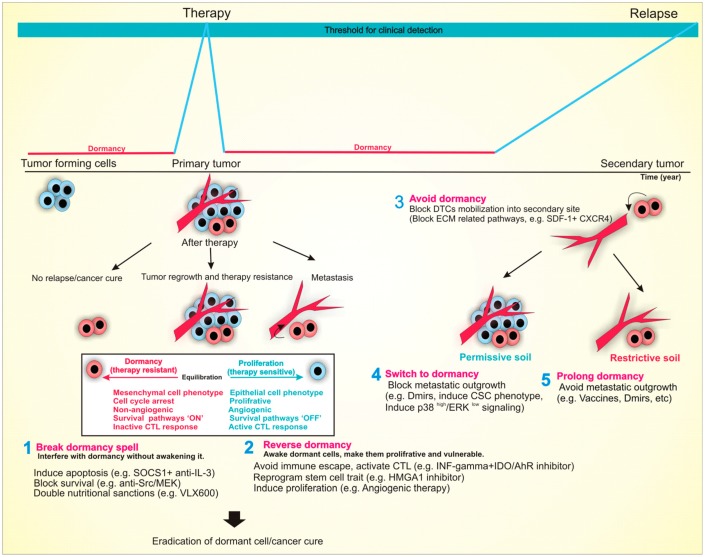
“Thus, they can serve as valuable prognostic, diagnostic, and biosensing tools to detect cancer cells that are clinically undetectable, and to make plans for timely and precise therapeutic interventions (Fig. 2e) [9].”
From Tumor microenvironment complexity and therapeutic implications at a glance (2020) · cites this paper as [9]
Experimental — accuracy not yet measured
Self-check
Percentages, sums and reported differences re-computed from the paper’s own numbers.
The self-check needs the paper’s full text.
Citations
Cites
2 retracted
Liu, Y., Liang, X., Yin, X., Lv, J., Tang, K., Ma, J., Ji, T., Zhang, H., Dong, W., Jin, X., et al. (2017) · Nature Communications · doi:10.1038/ncomms15207 · Cited by 212 · cited 2×
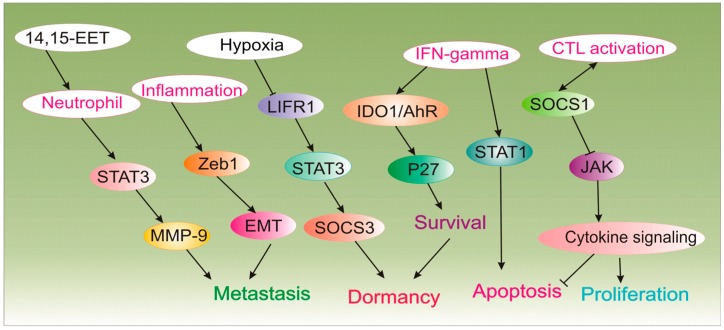
“Blockade of IDO/AhR metabolic circuitry not only nullifies IFN-γ-mediated latency but also promotes amplified tumor cell growth arrest by IFN-γ-dependent killing of TRCs in vitro and in vivo [44,45].”
BackgroundRetractedJavaheri, T., Kazemi, Z., Pencik, J., Pham, H. T., Kauer, M., Noorizadeh, R., Sax, B., Nivarthi, H., Schlederer, M., Maurer, B., et al. (2016) · Cell Death & Disease · doi:10.1038/cddis.2016.268 · Cited by 18 · cited 1×
“cell cycle arrest, apoptosis and persistent BCL1 dormancy in mice [115].”
BackgroundSelf-citationRetractedHolmgren, L., O'Reilly, M. S., & Folkman, J. (1995) · Nature Medicine · doi:10.1038/nm0295-149 · Cited by 1,878 · cited 2×
“Notably, metastatic dormancy can be realized once the proliferation of tumor cell is well-balanced with an equal ratio of tumor cell apoptosis, indicating that anti-angiogenic treatment regulates metastatic outgrowth through increasing of cancer cell death [21].”
BackgroundThe Cancer Stem Cell Niche: How Essential Is the Niche in Regulating Stemness of Tumor Cells?
Plaks, V., Kong, N., & Werb, Z. (2015) · Cell Stem Cell · doi:10.1016/j.stem.2015.02.015 · Cited by 1,557 · cited 2×
“Notably, CSCs can adj t the expression of different surface markers which help them to colonize their desired target organs, in particular, the bone [129].”
BackgroundNeutrophil extracellular traps produced during inflammation awaken dormant cancer cells in mice
Albrengues, J., Shields, M. A., Ng, D., Park, C. G., Ambrico, A., Poindexter, M. E., Upadhyay, P., Uyeminami, D. L., Pommier, A., Küttner, V., et al. (2018) · Science · doi:10.1126/science.aao4227 · Cited by 1,476 · cited 2×
“Meanwhile, one study to recapitulate sustained inflammation in lungs as demonstrated in smoker individuals revealed that neutrophil extracellular traps (NETs) proteases (elastase and MMP9) produced during inflammation can degrade laminin which further induces proliferation of dormant cells through activating αvβ3 inte…”
BackgroundThe perivascular niche regulates breast tumour dormancy
Ghajar, C. M., Peinado, H., Mori, H., Matei, I. R., Evason, K. J., Brazier, H., Almeida, D., Koller, A., Hajjar, K. A., Stainier, D. Y. R., et al. (2013) · Nature Cell Biology · doi:10.1038/ncb2767 · Cited by 1,148 · cited 1×
“Studies on engineered organotypic microvascular niches established that while a Thrombospondin-1 secretion from endothelial cells induces maintained BCC dormancy, bioactive Periostin and TGF-β1 function as tumor-promoting factors in sprouting neovasculature which further sparks micrometastatic outgrowth [33].”
BackgroundKiSS-1, a Novel Human Malignant Melanoma Metastasis-Suppressor Gene
Lee, J.-H., Miele, M. E., Hicks, D. J., Phillips, K. K., Trent, J. M., Weissman, B. E., & Welch, D. R. (1996) · JNCI Journal of the National Cancer Institute · doi:10.1093/jnci/88.23.1731 · Cited by 1,072
The quest to overcome resistance to EGFR-targeted therapies in cancer
Chong, C. R., & Jänne, P. A. (2013) · Nature Medicine · doi:10.1038/nm.3388 · Cited by 1,052 · cited 1×
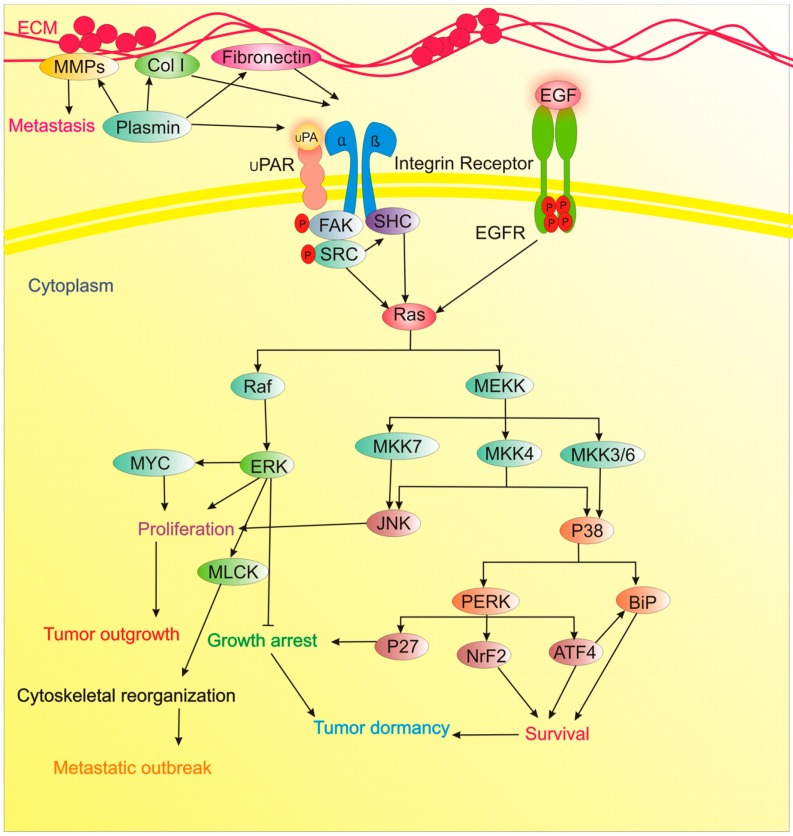
“Meanwhile, EGFR signaling via activation of PI3K/AKT/mTOR and Ras/Raf/ERK axis is another contribution to tumor proliferation [124].”
BackgroundTumorigenic and Immunosuppressive Effects of Endoplasmic Reticulum Stress in Cancer
Cubillos-Ruiz, J. R., Bettigole, S. E., & Glimcher, L. H. (2017) · Cell · doi:10.1016/j.cell.2016.12.004 · Cited by 895
Bragado, P., Estrada, Y., Parikh, F., Krause, S., Capobianco, C., Farina, H. G., Schewe, D. M., & Aguirre-Ghiso, J. A. (2013) · Nature Cell Biology · doi:10.1038/ncb2861 · Cited by 503
Cited by
Tumor microenvironment complexity and therapeutic implications at a glance
Baghban, R., Roshangar, L., Jahanban-Esfahlan, R., Seidi, K., Ebrahimi-Kalan, A., Jaymand, M., Kolahian, S., Javaheri, T., & Zare, P. (2020) · Cell Communication and Signaling · doi:10.1186/s12964-020-0530-4 · Cited by 1,784
“2e) [9] .”
BackgroundSelf-citationThe lingering mysteries of metastatic recurrence in breast cancer
Riggio, A. I., Varley, K. E., & Welm, A. L. (2021) · British Journal of Cancer · doi:10.1038/s41416-020-01161-4 · Cited by 616
“Cellular and tumour mass dormancy Two different models of tumour dormancy—cellular and tumour mass dormancy—have been proposed.(75) Cellular dormancy refers to the presence of solitary or small cell clusters of DTCs that exist in a G0/G1 growth-arrested state(63) and result from quiescence,(84) senescence or different…”
BackgroundAspects of the Tumor Microenvironment Involved in Immune Resistance and Drug Resistance
Khalaf, K., Hana, D., Chou, J. T.-T., Singh, C., Mackiewicz, A., & Kaczmarek, M. (2021) · Frontiers in Immunology · doi:10.3389/fimmu.2021.656364 · Cited by 513
Cancer Stem Cells—Key Players in Tumor Relapse
Marzagalli, M., Fontana, F., Raimondi, M., & Limonta, P. (2021) · Cancers · doi:10.3390/cancers13030376 · Cited by 161
“The dormant state can be acquired by cancer cells not only following the exposure to drugs, but also in order to colonize and adapt to distant organs, and then give rise to metastasis (disseminated tumor cells, DTCs) [68].”
BackgroundGisbert-Garzarán, M., Manzano, M., & Vallet‐Regí, M. (2020) · Pharmaceutics · doi:10.3390/pharmaceutics12010083 · Cited by 149
“These cells are clinically undetectable and, consequently, constitute a major issue for future tumor recurrence and metastases [100].”
BackgroundBuoso, E., Masi, M., Racchi, M., & Corsini, E. (2020) · International Journal of Molecular Sciences · doi:10.3390/ijms21239229 · Cited by 108
Tuning Cancer Fate: Tumor Microenvironment's Role in Cancer Stem Cell Quiescence and Reawakening
Sistigu, A., Musella, M., Galassi, C., Vitale, I., & Maria, R. D. (2020) · Frontiers in Immunology · doi:10.3389/fimmu.2020.02166 · Cited by 111
Advanced Bioresponsive Multitasking Hydrogels in the New Era of Biomedicine
Niazi, M., Alizadeh, E., Zarebkohan, A., Seidi, K., Ayoubi‐Joshaghani, M. H., Azizi, M., Dadashi, H., Mahmudi, H., Javaheri, T., Jaymand, M., et al. (2021) · Advanced Functional Materials · doi:10.1002/adfm.202104123 · Cited by 89
Self-citationTackling tumor microenvironment through epigenetic tools to improve cancer immunotherapy
Lodewijk, I., Nunes, S. P., Henrique, R., Jerónimo, C., Dueñas, M., & Paramio, J. M. (2021) · Clinical Epigenetics · doi:10.1186/s13148-021-01046-0 · Cited by 78
“T cells, IL-12 and interferon (IFN)-γ are needed to maintain tumor dormancy [125, 126].”
BackgroundNovel Insights on Lipid Metabolism Alterations in Drug Resistance in Cancer
Yang, R., Yi, M., & Xiang, B. (2022) · Frontiers in Cell and Developmental Biology · doi:10.3389/fcell.2022.875318 · Cited by 87
Extracellular matrix: unlocking new avenues in cancer treatment
Lee, J. J., Ng, K. Y., & Bakhtiar, A. (2025) · Biomarker Research · doi:10.1186/s40364-025-00757-3 · Cited by 100
“These mediators include soluble factors and materials like cell-free DNA (cfDNA), apoptotic bodies, circulating tumor cells (CTCs), and exosomes [21].”
Doustmihan, A., Fathi, M., Mazloomi, M., Salemi, A., Hamblin, M. R., & Jahanban‐Esfahlan, R. (2023) · Journal of Controlled Release · doi:10.1016/j.jconrel.2023.09.029 · Cited by 70
Self-citationRecent advances in targeted drug delivery systems for resistant colorectal cancer
Sharifi-Azad, M., Fathi, M., Cho, W. C., Barzegari, A., Dadashi, H., Dadashpour, M., & Jahanban-Esfahlan, R. (2022) · Cancer Cell International · doi:10.1186/s12935-022-02605-y · Cited by 65
“Dormancy can be divided into four groups including; primary cancer dormancy, metastatic dormancy, therapy-induced dormancy, immunologic dormancy and their mechanisms are multi-factorial [8].”
BackgroundSelf-citationTumor Dormancy: Implications for Invasion and Metastasis
Gomatou, G., Syrigos, N. K., Vathiotis, I. A., & Kotteas, E. A. (2021) · International Journal of Molecular Sciences · doi:10.3390/ijms22094862 · Cited by 67
“Although it is clear that dormant cells are the predominant origin of disease relapse in many tumor types, it remains elusive whether, when, and how the dormant cells should be treated [7,31,107,108].”
BackgroundLiu, J., Niu, N., Li, X., Zhang, X., & Sood, A. K. (2021) · Seminars in Cancer Biology · doi:10.1016/j.semcancer.2021.10.005 · Cited by 66
New Insights into YAP/TAZ-TEAD-Mediated Gene Regulation and Biological Processes in Cancer
Zhao, Y., Sheldon, M., Sun, Y., & Ma, L. (2023) · Cancers · doi:10.3390/cancers15235497 · Cited by 68
Sauer, S. J., Reed, D. R., Ihnat, M. A., Hurst, R. E., Warshawsky, D., & Barkan, D. (2021) · Frontiers in Oncology · doi:10.3389/fonc.2021.659963 · Cited by 63
Wilczyński, J. R., Wilczyński, M., & Paradowska, E. (2022) · International Journal of Molecular Sciences · doi:10.3390/ijms23052496 · Cited by 65
Tumor-microenvironment-on-a-chip: the construction and application
Xu, H., Wen, J., Yang, J., Zhou, S., Li, Y., Xu, K., Li, W., & Li, S. (2024) · Cell Communication and Signaling · doi:10.1186/s12964-024-01884-4 · Cited by 65
“The study of the tumor microenvironment has also further confirmed that carcinogenesis develops as a result of interactions between tumor cells and the non-cellu-lar (ECM) and cellular components of the TME [53].”
BackgroundZenjanab, M. K., Alimohammadvand, S., Doustmihan, A., Kianian, S., Oskouei, B. S., Mazloomi, M., Akbari, M., & Jahanban‐Esfahlan, R. (2024) · Journal of Drug Delivery Science and Technology · doi:10.1016/j.jddst.2024.105567 · Cited by 70
Self-citationProspects of Curcumin Nanoformulations in Cancer Management
Amekyeh, H., ALKHADER, E. A., Sabra, R., & Billa, N. (2022) · Molecules · doi:10.3390/molecules27020361 · Cited by 54
“Generally speaking, normal cells have a restrained balance between growth upholding and growth opposing signals [59].”
BackgroundMahmudi, H., Adili-Aghdam, M. A., Shahpouri, M., Jaymand, M., Amoozgar, Z., & Jahanban‐Esfahlan, R. (2022) · Frontiers in Oncology · doi:10.3389/fonc.2022.1054029 · Cited by 50
Self-citationIL-1β in breast cancer bone metastasis
Zhou, J., Tulotta, C., & Ottewell, P. D. (2022) · Expert Reviews in Molecular Medicine · doi:10.1017/erm.2022.4 · Cited by 43
Prostate cancer liver metastasis: Dormancy and resistance to therapy
Ma, B., Wells, A. H., Wei, L., & Zheng, J. (2020) · Seminars in Cancer Biology · doi:10.1016/j.semcancer.2020.07.004 · Cited by 40
Role of myeloid-derived suppressor cells in metastasis
Cole, K., Pravoverov, K., & Talmadge, J. E. (2021) · Cancer and Metastasis Reviews · doi:10.1007/s10555-020-09947-x · Cited by 41
Bioengineered models to study tumor dormancy
Rao, S. S., Kondapaneni, R. V., & Narkhede, A. A. (2019) · Journal of Biological Engineering · doi:10.1186/s13036-018-0137-0 · Cited by 39
Intracellular Transport in Cancer Metabolic Reprogramming
Sneeggen, M., Guadagno, N. A., & Progida, C. (2020) · Frontiers in Cell and Developmental Biology · doi:10.3389/fcell.2020.597608 · Cited by 42
“Tumor cell dormancy can be induced by nutrient deprivation (Jahanban-Esfahlan et al., 2019) but the mechanism behind the revival of the dormant cells remains mainly elusive.”
BackgroundDominijanni, A. J., Devarasetty, M., & Söker, S. (2020) · iScience · doi:10.1016/j.isci.2020.101851 · Cited by 34
Flanagan, D. J., Woodcock, S. A., Phillips, C., Eagle, C., & Sansom, O. J. (2022) · Pharmacology & Therapeutics · doi:10.1016/j.pharmthera.2022.108179 · Cited by 37
“Tumor recurrence following chemotherapy occurs through clonal replacement and reactivation of dormant cancer stem cells (CSCs) (Jahanban-Esfahlan et al., 2019).”
BackgroundYang, K., Shen, Z., Zou, Y., & Gao, K. (2020) · Journal of Receptors and Signal Transduction · doi:10.1080/10799893.2020.1808674 · Cited by 35
“Dysregulation of p38 MAPK pathway is involved in regulation of cancer progression, metastasis, and prognosis [37].”
BackgroundRoles of miRNAs in Colorectal Cancer: Therapeutic Implications and Clinical Opportunities
Mehrgou, A., Ebadollahi, S., Seidi, K., Ayoubi‐Joshaghani, M. H., Ahmadieh-Yazdi, A., Zare, P., Jaymand, M., & Jahanban‐Esfahlan, R. (2020) · Advanced Pharmaceutical Bulletin · doi:10.34172/apb.2021.029 · Cited by 43
“In metastasis, cancer cells acquire the appearance and the properties of mesenchymal cells by a phenomenon known as epithelial-mesenchymal transition (EMT) which separates them from the primary tumor tissue.(3) Thereafter, these cells reach the secondary target tissue by overcoming the physiological barriers.”
Self-citationRole of Regular Physical Exercise in Tumor Vasculature: Favorable Modulator of Tumor Milieu
Esteves, M., Monteiro, M. P., & Duarte, J. A. (2020) · International Journal of Sports Medicine · doi:10.1055/a-1308-3476 · Cited by 39
“[44] Jahanban-Esfahlan R, Seidi K, Manjili MH et al.”
BackgroundProgression and dormancy in metastatic thyroid cancer: concepts and clinical implications
Rajan, N., Khanal, T., & Ringel, M. D. (2020) · Endocrine · doi:10.1007/s12020-020-02453-8 · Cited by 34
Epigenetic regulation of breast cancer metastasis
Thakur, C., Qiu, Y., Pawar, A. S., & Chen, F. (2023) · Cancer and Metastasis Reviews · doi:10.1007/s10555-023-10146-7 · Cited by 38
“Built on the specific interactions between different seeds and soils, DTCs can acquire three different fates: cell death, dormancy, or metastatic colonization [64].”
Role of myeloid-derived suppressor cells in tumor recurrence
Cole, K., Al-Kadhimi, Z. S., & Talmadge, J. E. (2023) · Cancer and Metastasis Reviews · doi:10.1007/s10555-023-10079-1 · Cited by 33
“However, many patients with no detectable metastases at diagnosis and curative surgery can later develop overt metastases months, years, or even decades later [12].”
BackgroundLee, J. M., Tsuboi, M., Kim, E. S., Mok, T. S. K., & Garrido, P. (2022) · Future Oncology · doi:10.2217/fon-2021-1567 · Cited by 30
Cancer Immunoediting: Elimination, Equilibrium, and Immune Escape in Solid Tumors
Wilczyński, J. R., & Nowak, M. (2022) · Experientia supplementum · doi:10.1007/978-3-030-91311-3_1 · Cited by 33
The origins of cancer cell dormancy
Morales-Valencia, J., & David, G. (2022) · Current Opinion in Genetics & Development · doi:10.1016/j.gde.2022.101914 · Cited by 25
Chromatin accessibility regulates chemotherapy-induced dormancy and reactivation
Wang, L., Qiu, P., Yin, N., Xie, Y., Xu, J., Chen, A., Yi, J., Tang, J., & Xiang, J. (2021) · Molecular Therapy — Nucleic Acids · doi:10.1016/j.omtn.2021.07.019 · Cited by 30
“Tumor dormancy, which is a clinically undetectable state of cancer for a long period, is essential for cancer cells to become resistant to cancer therapy and to evade immune destruction.(3) Dormant cancer cells cause tumor recurrence and metastatic relapse when they awaken.”
Globig, P., Willumeit‐Römer, R., Martini, F., Mazzoni, E., & Luthringer-Feyerabend, B. (2021) · Bioactive Materials · doi:10.1016/j.bioactmat.2021.12.031 · Cited by 29
“Both are responsible for the maintenance of the dormant phenotype and survival mechanisms [32].”
BackgroundThe premise of personalized immunotherapy for cancer dormancy
Manjili, M. H. (2020) · Oncogene · doi:10.1038/s41388-020-1295-3 · Cited by 28
Self-citationRummun, N., Rondeau, P., Bourdon, E., Pires, E., McCullagh, J., Claridge, T. D. W., Bahorun, T., Li, W., & Neergheen, V. S. (2020) · Pharmaceuticals · doi:10.3390/ph13100303 · Cited by 27
Sun, M., Qiu, S., Xiao, Q., Wang, T., Tian, X., Chen, C., Wang, X., Han, J., Zheng, H., Shou, Y., et al. (2020) · Medical Oncology · doi:10.1007/s12032-020-01426-1 · Cited by 27
“Tumor angiogenesis is a primary condition for tumor growth [3], and tumors larger than 1–2 mm in diameter will not continue to grow without developing blood vessels to provide nutrients [4].”
BackgroundBiglycan and reduced glycolysis are associated with breast cancer cell dormancy in the brain
Sunderland, A., Williams, J. M., Andreou, T., Rippaus, N., Fife, C. M., James, F. R., Kartika, Y. D., Speirs, V., Carr, I., Droop, A., et al. (2023) · Frontiers in Oncology · doi:10.3389/fonc.2023.1191980 · Cited by 25
Beyond chemotherapy: Exploring 5-FU resistance and stemness in colorectal cancer
Singh, U., Kokkanti, R. R., & Patnaik, S. (2025) · European Journal of Pharmacology · doi:10.1016/j.ejphar.2025.177294 · Cited by 31
Transforming cancer cells for long-term living with cancer: An inspiring new approach
Jiang, M., Gu, D.-N., Liu, F.-R., Lin, C.-J., & Tian, L. (2023) · Chinese Journal of Cancer Research · doi:10.21147/j.issn.1000-9604.2023.02.03 · Cited by 22
Playing cancer at its own game: activating mitogenic signaling as a paradoxical intervention
Dias, M. H., & Bernards, R. (2021) · Molecular Oncology · doi:10.1002/1878-0261.12979 · Cited by 23
Zhou, L., Liu, L., Chang, M. A., Ma, C., Chen, W., & Chen, P. (2023) · Biosensors and Bioelectronics · doi:10.1016/j.bios.2023.115064 · Cited by 22
Switching Homes: How Cancer Moves to Bone
Ponzetti, M., & Rucci, N. (2020) · International Journal of Molecular Sciences · doi:10.3390/ijms21114124 · Cited by 22
“This status is akin to what fungi or bacteria do when they become spores, since dormant cancer cells are highly resistant to many external insults: they develop multidrug and radiotherapy resistance, are able to elude classical chemotherapy because they are not proliferating as well as the immune system, and they can…”
BackgroundAqbi, H. F., Coleman, C. L., Zarei, M., Manjili, S. H., Graham, L., Koblinski, J. E., Guo, C., Xie, Y., Guruli, G., Bear, H. D., et al. (2020) · Breast Cancer Research · doi:10.1186/s13058-020-01357-9 · Cited by 21
Self-citationEmerging Perspectives of Bone Metastasis in Hepatocellular Carcinoma
Yuan, X., Zhuang, M., Zhu, X., Cheng, D., Liu, J., Sun, D., Qiu, X., Lu, Y., & Sartorius, K. (2022) · Frontiers in Oncology · doi:10.3389/fonc.2022.943866 · Cited by 27
Harihar, S., & Welch, D. R. (2023) · Cancer and Metastasis Reviews · doi:10.1007/s10555-023-10090-6 · Cited by 19
“High p38 promotes dormancy by inducing G0–G1 arrest while high ERK1/2 permits transition to the S phase and proliferation [73].”
BackgroundTIE2 Induces Breast Cancer Cell Dormancy and Inhibits the Development of Osteolytic Bone Metastases
Drescher, F., Juárez, P., Arellano, D. L., Serafín‐Higuera, N., Olvera-Rodríguez, F., Jiménez, S., Licea-Navarro, A. F., & Fournier, P. G. J. (2020) · Cancers · doi:10.3390/cancers12040868 · Cited by 19
“Therefore, it is likely that dormancy lasting for years to decades in patients is a multifactorial phenomenon, driven by a combination of other additional factors, such as BMP7, GAS6, or JAG1 [44].”
BackgroundInfluentialSeledtsov, V. I., & von Delwig, A. A. (2020) · Expert Opinion on Biological Therapy · doi:10.1080/14712598.2021.1828338 · Cited by 16
Gulia, S., Chandra, P., & Das, A. (2023) · Cell Biochemistry and Biophysics · doi:10.1007/s12013-023-01179-4 · Cited by 17
“In TMEs, the level of cellular composition can vary, particularly between different cancer types and even within speci fi c regions of the same individual tumors [5, 8].”
BackgroundThe Relationship Between Mesenchymal Stem Cells and Tumor Dormancy
Zhao, L., Zhang, K., He, H., Yang, Y., Li, W., Liu, T., & Li, J. (2021) · Frontiers in Cell and Developmental Biology · doi:10.3389/fcell.2021.731393 · Cited by 17
Garimella, S. V., Gampa, S. C., & Chaturvedi, P. (2023) · Stem Cells and Cloning Advances and Applications · doi:10.2147/sccaa.s417842 · Cited by 19
Shahpouri, M., Adili-Aghdam, M. A., Mahmudi, H., Ghiasvand, S., Dadashi, H., Salemi, A., Alimohammadvand, S., Roshangar, L., Barzegari, A., Jaymand, M., et al. (2024) · Advanced Pharmaceutical Bulletin · doi:10.34172/apb.2024.054 · Cited by 20
Self-citationMAGI1 inhibits the AMOTL2/p38 stress pathway and prevents luminal breast tumorigenesis
Kantar, D., Bousquet, E., Mancini, M., Slaninová, V., Salah, Y. B., Costa, L., Forest, E., Lassus, P., Géminard, C., Boissière‐Michot, F., et al. (2021) · Scientific Reports · doi:10.1038/s41598-021-85056-1 · Cited by 16
Advanced drug delivery platforms target cancer stem cells
Mazloomi, M., Doustmihan, A., Alimohammadvand, S., Hamishehkar, H., Hamblin, M. R., & Jahanban‐Esfahlan, R. (2025) · Asian Journal of Pharmaceutical Sciences · doi:10.1016/j.ajps.2025.101036 · Cited by 32
“The final point concerns the pathways implicated in cancer cell death, such as apoptosis, mitophagy, and autophagy, as well as plasticity, MDR, tumor heterogeneity, and tumor dormancy [ 223 ].”
Self-citationNotch Signaling Suppression by Golden Phytochemicals: Potential for Cancer Therapy
Zenjanab, M. K., Hashemzadeh, N., Alimohammadvand, S., Sharifi-Azad, M., Abdolahinia, E. D., & Jahanban‐Esfahlan, R. (2024) · Advanced Pharmaceutical Bulletin · doi:10.34172/apb.2024.035 · Cited by 12
Self-citationMyeloid derived suppressor cells and the release of micro-metastases from dormancy
Khadge, S., Cole, K., & Talmadge, J. E. (2021) · Clinical & Experimental Metastasis · doi:10.1007/s10585-021-10098-8 · Cited by 13
“It is well established that the presence of metastases is prognostic for poor patient outcomes [1]; however, many patients with no detectable (asymptomatic) metastases at diagnosis or following curative surgical resection develop metastases months, years, or even decades later [2].”
BackgroundPan-Cancer Survey of Tumor Mass Dormancy and Underlying Mutational Processes
Wiecek, A. J., Jacobson, D. H., Lason, W., & Secrier, M. (2021) · Frontiers in Cell and Developmental Biology · doi:10.3389/fcell.2021.698659 · Cited by 11
Microenvironmental and Molecular Pathways Driving Dormancy Escape in Bone Metastases
Bakir, M. A., Dabaliz, A., Dawalibi, A., & Mohammad, K. S. (2025) · International Journal of Molecular Sciences · doi:10.3390/ijms262411893 · Cited by 19
Mir, R., Javid, J., Ullah, M. F., Alrdahe, S. S., Albalawi, I. A., Mustafa, S. K., Jalal, M. M., Altayar, M. A., Albalawi, A. D., Abunab, M. K., et al. (2025) · Medical Oncology · doi:10.1007/s12032-025-02945-5 · Cited by 15
“Clinically occult cancer cells can also be unveiled by analyzing CTCs, enhancing the detection and treatment of early-stage disease [77].”
Raftopoulou, C., Roumelioti, F., Dragona, E., Gimelli, S., Béna, F., Gorgoulis, V. G., Antonarakis, S. E., & Gagos, S. (2020) · Cancers · doi:10.3390/cancers12030591 · Cited by 12
Al‐Dhubiab, B. E., Almuqbil, R. M., & Nair, A. B. (2025) · Pharmaceuticals · doi:10.3390/ph18050746 · Cited by 13
“Further progress, carcinogenesis, and loss of tissue integrity take place because of the reciprocal interactions between tumor cells and the cellular as well as non-cellular (ECM) components of TME [51,52].”
Naik, G. A. R. R., Rachana, S. P., Jadhav, S. R., Pokale, R., Hedayat, P., Datta, D., Prajapati, B. G., Mutalik, S., & Dhas, N. L. (2025) · ACS Pharmacology & Translational Science · doi:10.1021/acsptsci.5c00007 · Cited by 16
Targeting Indoleamine 2,3-Dioxygenase 1: Fighting Cancers via Dormancy Regulation
Yang, C., Ng, C. E., Li, D., & Zhang, L. (2021) · Frontiers in Immunology · doi:10.3389/fimmu.2021.725204 · Cited by 10
Özer, M., Goksu, S. Y., Lin, R. Y., Ayasun, R., Kahramangil, D., Rogers, S. C., Fabregas, J. C., Ramnaraign, B. H., George, T. J., Feely, M., et al. (2023) · Journal of Hepatocellular Carcinoma · doi:10.2147/jhc.s417273 · Cited by 13
“The molecular mechanisms, such as the development of the extracellular matrix, stemness, metabolic and epigenetic changes, dysregulated non-coding RNAs, and activation of the p38 stress-induced pathway, have the potential to activate dormant cancer cells and drive their progression towards the formation of micro-metas…”
BackgroundTFF3 facilitates dormancy of anti-estrogen treated ER+ mammary carcinoma
Chen, S., Zhang, X., Basappa, B., Zhu, T., Pandey, V., & Lobie, P. E. (2025) · Communications Medicine · doi:10.1038/s43856-024-00710-9 · Cited by 13
“1a, b, S1c) 34 – 38 .”
InfluentialMetastasis prevention: How to catch metastatic seeds
Gerashchenko, T. S., Schegoleva, A. A., Khozyainova, A. A., Чойнзонов, Е. Л., & Denisov, E. V. (2023) · Biochimica et Biophysica Acta (BBA) - Reviews on Cancer · doi:10.1016/j.bbcan.2023.188867 · Cited by 10
Polyaneuploid Cancer Cell Dormancy: Lessons From Evolutionary Phyla
Kostecka, L. G., Pienta, K. J., & Amend, S. R. (2021) · Frontiers in Ecology and Evolution · doi:10.3389/fevo.2021.660755 · Cited by 9
Microfluidic Applications in Prostate Cancer Research
Szewczyk, K., Jiang, L., Khawaja, H., Miranti, C. K., & Zohar, Y. (2024) · Micromachines · doi:10.3390/mi15101195 · Cited by 9
Rahat, M. A. (2022) · Frontiers in Immunology · doi:10.3389/fimmu.2022.855978 · Cited by 10
Therapeutic targeting of dormant cancer stem cells in solid tumors
Ismaeel, G. L., AbdulHussein, A. H., Qasim, H. M., Abed, N. K., Jalil, A. T., Suleiman, A. A., & Dilfy, S. H. (2022) · Gene Reports · doi:10.1016/j.genrep.2022.101717 · Cited by 10
Faraji-Barhagh, A., Jahandar-Lashaki, S., Jahanban‐Esfahlan, R., & Alizadeh, E. (2025) · Molecular Biology Reports · doi:10.1007/s11033-025-10462-x · Cited by 9
“These components interact with tumor cells, providing a supportive niche for tumor growth, invasion, and metastasis [42–44].”
Self-citationElevated NR2F1 underlies the persistence of invasive disease after treatment of BRAF-mutant melanoma
Tiago, M., Purwin, T. J., Stefanski, C. D., da Silva, R. O., Fane, M. E., Chhabra, Y., Haj, J. I., Teh, J. L. F., Kadamb, R., Cai, W., et al. (2025) · Journal of Clinical Investigation · doi:10.1172/jci178446 · Cited by 6
“BRAFi + MEKi–treated cells that overexpressed NR2F1 exhibited higher EdU staining than MRD following BRAFi + MEKi treatment are associated with progression (16, 17), and several drug tolerance mechanisms have been identified (12, 18).”
Fighting Cancer Resistance: An Overview
Robles‐Flores, M. (2020) · Methods in molecular biology · doi:10.1007/978-1-0716-0759-6_1 · Cited by 5
Prevention of Melanoma Extravasation as a New Treatment Option Exemplified by p38/MK2 Inhibition
Petzelbauer, P. (2020) · International Journal of Molecular Sciences · doi:10.3390/ijms21218344 · Cited by 4
“, the angiogenic switch, immune escape, matrix remodeling [12].”
BackgroundFujita, K., Okubo, A., Nakamura, T., & Takeuchi, N. (2022) · World Journal of Gastrointestinal Oncology · doi:10.4251/wjgo.v14.i10.2077 · Cited by 4
Surviving the siege: A review on the metabolic hallmarks of cancer dormancy
Djelti, F., Hani, M., Chetbani, Y., Belaadi, A., & Ammarullah, M. I. (2026) · Cancer Treatment and Research Communications · doi:10.1016/j.ctarc.2026.101123 · Cited by 6
The Mammary Tumor Microenvironment
Curran, C. S., & Ponik, S. M. (2020) · Advances in experimental medicine and biology · doi:10.1007/978-3-030-59038-3_10 · Cited by 4
Immunotherapy in the complex treatment of tumor diseases
Seledtsov, V. I., Seledtsova, G. V., Баяровна, Д. А., & Ivanova, I. P. (2022) · Siberian Journal of Oncology · doi:10.21294/1814-4861-2022-21-2-118-129 · Cited by 4
Chen, S., Chen, H., Raghavan, V., Huang, J., & Wang, J. (2026) · iMetaMed · doi:10.1002/imm3.70037 · Cited by 2
Regulating the dormancy of cancer stem cells: a novel approach to preventing cancer relapse
Wang, Q., Liang, N., Fang, X., Yang, T., He, X., Wang, G., & Wang, N. (2026) · Cell Death and Disease · doi:10.1038/s41419-026-08707-z · Cited by 6
Althobiti, M. M. (2024) · International Journal of Pharmaceutical Investigation · doi:10.5530/ijpi.20250002 · Cited by 2
Dormancy in Metastatic Colorectal Cancer: Tissue Engineering Opportunities for In Vitro Modeling
VandenHeuvel, S. N., Nash, L. L., & Raghavan, S. A. (2025) · Tissue Engineering Part B Reviews · doi:10.1089/ten.teb.2025.0009 · Cited by 4
“50 This stress response is linked to poor clinical outcomes for patients with CRC when adapted cells prove more resistant to future stresses such as chemotherapy treatment.”
The road of NSCLC stem cells toward bone metastases
Bertolini, G., & Roato, I. (2022) · Bone Reports · doi:10.1016/j.bonr.2022.101619 · Cited by 5
PIEZO2 in tumors: from mechanobiological switches to activity-targeted therapies
Huang, D., Zhou, Q.-Z., Luo, H., Nasb, M., Liu, Y.-Z., Yang, Y., & Chen, H. (2025) · Journal of Experimental & Clinical Cancer Research · doi:10.1186/s13046-025-03598-y · Cited by 3
“The development of chemotherapeutic resistance remains a significant challenge in cancer treatment, particularly in tumors with a strong tendency for dormancy or those shielded by physical barriers [109, 110].”
Doustmihan, A., Jaymand, M., Fathi, M., & Jahanban‐Esfahlan, R. (2025) · Medical Oncology · doi:10.1007/s12032-025-03206-1 · Cited by 1
Self-citationMeng, F., Sharifi, M., Jaragh-Alhadad, L. A., Falahati, M., & Cai, Y. (2026) · Biomedicine & Pharmacotherapy · doi:10.1016/j.biopha.2026.119739 · Cited by 3
Alex, T. S., Lang, D. K., Zakir, F., Mirza, A., & Iqbal, Z. (2022) · Environmental chemistry for a sustainable world · doi:10.1007/978-3-031-14848-4_1 · Cited by 1
Rummun, N., Rondeau, P., Bourdon, E., Pires, E., McClullagh, J., Claridge, T. D. W., Bahorun, T., Li, W., & Neergheen, V. S. (2020) · Preprints.org · doi:10.20944/preprints202009.0094.v1 · Cited by 1
Abikar, A., Mohammad, M. M. S., Athalye, R. R., Nadig, N., Tamboli, N., Babu, V., Keshavamurthy, R., & Ranganathan, P. (2024) · bioRxiv (Cold Spring Harbor Laboratory) · doi:10.1101/2024.12.09.627457 · Cited by 1
The role of vasculature in cancer stem cell niches
Sivan, U., Angelis, J. E. D., Ramasamy, S. K., & Kusumbe, A. P. (2020) · Advances in stem cells and their niches · doi:10.1016/bs.asn.2020.09.003
Marzban, H., Chamani, G., Khaki, F., Amini, P., Pedram, N., Asghari, Z., Boroomand, M., Moradi, S., Yahyaei, A., Boroujerdi, M. S. H., et al. (2021) · Acta veterinaria · doi:10.2478/acve-2021-0026
Михайлович, М. А., Дмитриевич, Щ. А., & Андреевич, С. Н. (2012) · Вестник Удмуртского университета. Серия «Экономика и право»
Alcoser, E. S. C. (2021) · El Servicio de Difusión de la Creación Intelectual (National University of La Plata) · doi:10.35537/10915/136638
Liquid–liquid phase separation and biomolecular condensates in cell quiescence
Uversky, V. N. (2022) · Elsevier eBooks · doi:10.1016/b978-0-12-823967-4.00001-4
Metadata
- Authors
- Jahanban-Esfahlan, R., Seidi, K., Manjili, M. H., Jahanban-Esfahlan, A., Javaheri, T., & Zare, P.
- Affiliations
- Drug Applied Research Center, Tabriz University of Medical Sciences, Tabriz 9841, Iran
- Tabriz University of Medical Sciences (IR)
- Virginia Commonwealth University (US)
- Stem Cell Research Center, Tabriz University of Medical Sciences, Tabriz 9841, Iran
- Ludwig Boltzmann Institute for Cancer Research (AT)
- Faculty of Medicine, Cardinal Stefan Wyszyński University in Warsaw, 01-938 Warsaw, Poland
- Corresponding author
- Javaheri, Tahereh
- Venue
- Cancers
- Publisher
- MDPI AG
- Published
- 2019-08-19
- Volume
- 11
- Issue
- 8
- Pages
- 1207
- ISSN
- 2072-6694 (ISSN-L)
- PMC
- PMC6721805
- OpenAlex
- W2897235350
- Cited by
- 111
- References
- 140
- Citations by year
- 2026: 8 · 2025: 16 · 2024: 7 · 2023: 13 · 2022: 19 · 2021: 21 · 2020: 25 · 2019: 1
- FWCI
- 1.57
- Type
- journal article
- Language
- en
- Open access
- gold
- dx.doi.org
- Licence
- Locations
- Cancers (publishedVersion, cc-by)
- PubMed Central (publishedVersion, cc-by)
- PubMed (publishedVersion)
- DOAJ (DOAJ: Directory of Open Access Journals) (submittedVersion, cc-by-sa)
- Topics
- Health Sciences › Medicine › Oncology › Cancer Cells and Metastasis
- Life Sciences › Biochemistry, Genetics and Molecular Biology › Molecular Biology › Mechanisms of cancer metastasis
- Physical Sciences › Mathematics › Modeling and Simulation › Mathematical Biology Tumor Growth
- Keywords
- tumor dormancy, tumor recurrence, metastasis, multidrug resistance, minimal residual disease, angiogenic switch, immune evasion, cancer stem cells, extracellular matrix remodeling, metabolic reprogramming, microRNA, epigenetic modifications, p38 signaling, cancer prognosis, cancer therapy
About these checks
Registry, retraction, Cites and statistics results are computed, not judged, with one exception: a printed reference that no index lists is read once by a model before it counts as a citation error. Claims are extracted by a model and kept only when their quote appears verbatim in the text; each cited source is then checked, with a model’s help, for whether it says what the claim relies on. Those verdicts can be wrong — read the claim’s quote and the cited source before relying on one.
Statistics and arithmetic are recomputed, not judged.
Confidence bands are shown only for fields calibrated on our annotated test set. None is calibrated yet, so no band is shown.
What counts as a claim ›How we measure confidence ›How we check this ›
Are you an author, or do you see a problem with this page? Request a review
Data sources
Bibliographic data: Semantic Scholar, OpenAlex, Crossref.
Contains information from the Semantic Scholar Academic Graph Datasets, made available under the ODC Attribution License (ODC-BY 1.0).
Semantic Scholar’s data is described in: Kinney, R., et al. (2023). The Semantic Scholar Open Data Platform. arXiv:2301.10140.
