

Colorectal Cancer: A Review of Carcinogenesis, Global Epidemiology, Current Challenges, Risk Factors, Preventive and Treatment Strategies
Open accessThe DOI matches its Crossref record; 156 of the 156 references it cites were found in a registry or an index.
Abstract
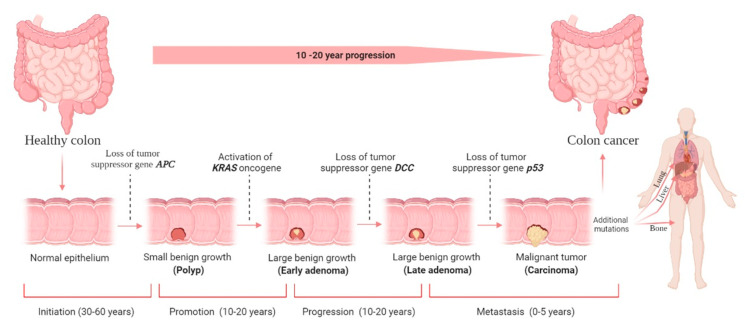
Colorectal cancer (CRC) is the second most deadly cancer. Global incidence and mortality are likely to be increased in the coming decades. Although the deaths associated with CRC are very high in high-income countries, the incidence and fatalities related to CRC are growing in developing countries too. CRC detected early is entirely curable by surgery and subsequent medications. However, the recurrence rate is high, and cancer drug resistance increases the treatment failure rate. Access to early diagnosis and treatment of CRC for survival is somewhat possible in developed countries. However, these facilities are rarely available in developing countries. Highlighting the current status of CRC, its development, risk factors, and management is crucial in creating public awareness. Therefore, in this review, we have comprehensively discussed the current global epidemiology, drug resistance, challenges, risk factors, and preventive and treatment strategies of CRC. Additionally, there is a brief discussion on the CRC development pathways and recommendations for preventing and treating CRC.
Overview
The claims and statistics of this paper haven’t been checked yet.
Free: it reads the open-access text and checks the first 5 claims that cite a source we can check. Create a free account to check every claim.
Integrity signals
Registry
Cites
Statistics
Figures
Verification
Claims the paper makes
The claims and statistics of this paper haven’t been checked yet.
Free: it reads the open-access text and checks the first 5 claims that cite a source we can check. Create a free account to check every claim.
Claims other papers make about this one
Each is checked against this paper’s own text: does it say what the citing paper says it does?
The source backs part of the claim, not all of it — or backs it for a different population, condition or comparison.
In the citing paper
“Despite advancements in these therapeutic modalities, resistance remains a significant challenge, often leading to treatment failure, poor progression-free survival, and cancer recurrence.”
From Mechanisms and Strategies to Overcome Drug Resistance in Colorectal Cancer (2025) · cites this paper as [5]
Experimental — accuracy not yet measuredThe cited source says what the claim attributes to it.
In the citing paper
“While overall survival rates for individuals with advanced CRC has increased in recent decades, drug resistance has been reported to develop in nearly all CRC patients [5].”
From Mechanisms and Strategies to Overcome Drug Resistance in Colorectal Cancer (2025) · cites this paper as [5]
The cited source says what the claim attributes to it.
In the citing paper
“Modifiable factors are associated with the characteristics of a person's lifestyle (obesity, tobacco smoking, alcohol consumption, unhealthy diet)[5-10].”
From Risk factors, prevention and screening of colorectal cancer: A rising problem (2025) · cites this paper as [10]
The cited source says what the claim attributes to it.
In the citing paper
“The development of CRC is associated with the action of non-modifiable and modifiable risk factors.”
From Risk factors, prevention and screening of colorectal cancer: A rising problem (2025) · cites this paper as [10]
Self-check
Percentages, sums and reported differences re-computed from the paper’s own numbers.
The self-check needs the paper’s full text.
Citations
Cites
Sung, H., Ferlay, J., Siegel, R. L., Laversanne, M., Soerjomataram, I., Jemal, A., & Bray, F. (2021) · CA: A Cancer Journal for Clinicians · doi:10.3322/caac.21660 · Cited by 108,699 · cited 5×
“In 2020, CRC was the most diagnosed cancer (out of 36 cancers) among men in 18 of the 186 countries worldwide and women in 6 of the 185 countries [24].”
BackgroundInfluentialBray, F., Ferlay, J., Soerjomataram, I., Siegel, R. L., Torre, L. A., & Jemal, A. (2018) · CA: A Cancer Journal for Clinicians · doi:10.3322/caac.21492 · Cited by 84,109 · cited 2×
“2, which is almost equal to the incidence of 2018 [24,26].”
BackgroundCoussens, L. M., & Werb, Z. (2002) · Nature · doi:10.1038/nature01322 · Cited by 15,111 · cited 1×
“mechanisms herbs and spices exert are the BCL-2, K-ras, and MMP pathways, caspase activation, the extrinsic apoptotic pathway, and the modulation of ER-stress-induced apoptosis chemopreventive effects [162,163].”
BackgroundA genetic model for colorectal tumorigenesis
Fearon, E. R., & Vogelstein, B. (1990) · Cell · doi:10.1016/0092-8674(90)90186-i · Cited by 12,132
Comprehensive molecular characterization of human colon and rectal cancer
The Cancer Genome Atlas Network (2012) · Nature · doi:10.1038/nature11252 · Cited by 8,499
Genetic Alterations during Colorectal-Tumor Development
Vogelstein, B., Fearon, E. R., Hamilton, S. R., Kern, S. E., Preisinger, A. C., Leppert, M., Smits, A. M. M., & Bos, J. L. (1988) · New England Journal of Medicine · doi:10.1056/nejm198809013190901 · Cited by 6,728
Natural products as sources of new drugs from 1981 to 2014
Newman, D. J., & Cragg, G. M. (2016) · Journal of Natural Products · doi:10.1021/acs.jnatprod.5b01055 · Cited by 5,858
Cunningham, D., Humblet, Y., Siena, S., Khayat, D., Bleiberg, H., Santoro, A., Bets, D., Mueser, M., Harstrick, A., Verslype, C., et al. (2004) · New England Journal of Medicine · doi:10.1056/nejmoa033025 · Cited by 5,035 · cited 1×
“Currently, there are clinical studies ongoing on some MAbs for CRC, such as adecatumumab against epithelial cell adhesion molecule (EpCAM), labetuzumab against carcinoembryonic antigen (CEA), and pemtumomab against Mucins [133].”
BackgroundPrevention of Colorectal Cancer by Colonoscopic Polypectomy
Winawer, S. J., Zauber, A. G., Ho, M. N., O'Brien, M. J., Gottlieb, L. S., Sternberg, S. S., Waye, J. D., Schapiro, M., Bond, J. H., Panish, J. F., et al. (1993) · New England Journal of Medicine · doi:10.1056/nejm199312303292701 · Cited by 4,592
Overman, M. J., McDermott, R., Leach, J. L., Lonardi, S., Lenz, H.-J., Morse, M. A., Desai, J., Hill, A., Axelson, M., Moss, R. A., et al. (2017) · The Lancet Oncology · doi:10.1016/s1470-2045(17)30422-9 · Cited by 2,836
Research works printed but not linked: 1
- Urbi, 2014, Grape: A medicinal fruit species in the holy Qur’an and its ethnomedicinal importance, World Appl. Sci. J., 30, 253
Cited by
Items 901–1,000 of 1,001
蔡凌卿, Chen, J., Ke, C., Zhang, B., Xiong, Y., & Fu, H. (2025) · Polish Journal of Pathology · doi:10.5114/pjp.2025.156556
Evidence for a TMAO-HULC-miRNA regulatory axis in colorectal cancer cells.
Alighardashi, Z., Moradzad, M., Najafpour, S., & Vahabzadeh, Z. (2025) · PubMed Central · doi:10.22088/ijmcm.bums.14.3.900
“Despite considerable advances in the diagnosis and treatment of CRC, the overall mortality rate of CRC remains high, because the tumor is often well-advanced and rapidly progressed at the time of diagnosis (4).”
Indirubin‐Loaded CuS Nanoparticles: A Metallo‐Alkaloidal Theranostic Platform for Colorectal Cancer
Soni, K., Parihar, N., & Pemmaraju, D. B. (2025) · Advanced Therapeutics · doi:10.1002/adtp.202500351
Issa, D. A. E., Kassem, Z. A., Staiteieh, S. A., Youssef, A., Nasr, J., Darwiche, N., & Merhi, R. A. (2025) · Bioorganic Chemistry · doi:10.1016/j.bioorg.2025.109335
Mousa, N., Elmetwalli, A., Alzahrani, O. R., Shahin, M. A., Nakib, A. M. E., Abdelkader, E., El-Emam, O., Mansour, M., Abdelsalam, M., Alabbosh, K. F., et al. (2025) · European journal of medical research · doi:10.1186/s40001-025-03348-y
“These results align with Hossain et al. [50], who demonstrated that smoking increases CRC risk through the carcinogenic effects of polycyclic aromatic hydrocarbons and nicotine-induced chronic inflammation.”
Сергеевич, П. В., Reingardt, G. V., Васильевна, К. А., Kolobovnikova, Y. V., & Urazova, O. I. (2025) · Bulletin of Experimental Biology and Medicine · doi:10.1007/s10517-026-06692-z
“The efficacy of current CRC therapies is often limited by intratumoral heterogeneity and chemoresistance [2], highlighting the need for novel molecular targets for mechanism-based interventions.”
Garcia, V. B., da Silva, C. O. G., Gasparotto, L. H. S., Iglesias, C. A. M., da Silva, I. L. G., de Oliveira, E. L., Gomes, R. F., de Paula, R. C. M., Freire, R. S., Bohn, F., et al. (2025) · ACS Omega · doi:10.1021/acsomega.5c06166
MiR-200b-3p is involved in colorectal cancer progression by targeting DDIT4
Liu, Z., Li, Y., Xie, S., Ren, D., & Huang, D. (2025) · Cellular and Molecular Biology · doi:10.14715/cmb/2025.71.11.1
Gu, S., Zhang, Z., Cheng, K., Yeerken, A., Qian, S., Guo, F., Jin, M., & Chen, K. (2025) · Biochemical Genetics · doi:10.1007/s10528-025-11306-w
“Stratified analysis revealed that the A allele acts as a risk factor in most subgroups, except for females, reflecting known sex differences in CRC susceptibility (Hossain et al. 2022 ).”
Watanabe, S., Wada, Y., Nagata, J., Asakawa, T., Hirata, K., & Fujino, Y. (2025) · BMC Complementary Medicine and Therapies · doi:10.1186/s12906-025-05186-1
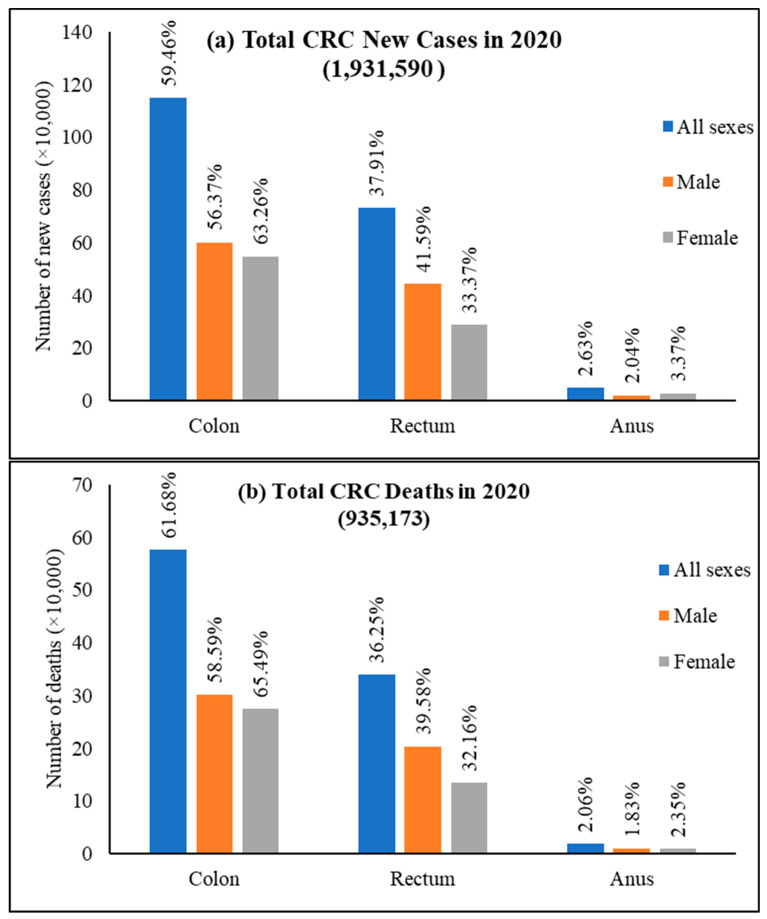
“In 2020, colon cancer had the second highest mortality rate among all cancers, and approximately 60% of new colorectal cancer cases were diagnosed as colon cancer [2, 3].”
COLORECTAL CANCER: NEW SCREENING TECHNOLOGY, TREATMENT PATTERNS AND MEDICAL COST
liu, X. (2024) · Carolina Digital Repository (University of North Carolina at Chapel Hill) · doi:10.17615/xnym-ep65
Michalski, M. (2024) · University of Regensburg Publication Server (University of Regensburg) · doi:10.5283/epub.55499
Anastasio, C., Donisi, I., Vecchio, V. D., Colloca, A., Mele, L. L., Sardu, C., Marfella, R., BALESTRIERI, M. L., & D’Onofrio, N. (2024) · Figshare · doi:10.6084/m9.figshare.25929059
Jiang, H., Tian, H., Wang, Z., Li, B., Chen, R., Luo, K., Lu, S., Nice, E. C., Zhang, W., Huang, C., et al. (2023) · Figshare · doi:10.6084/m9.figshare.24187805
Zanif, U. (2024) · cIRcle (University of British Columbia) · doi:10.14288/1.0440697
Uncover the mechanism of action of new FeCp compounds in colorectal cancer cells
Silva, A. P. P. D. (2023) · Portuguese National Funding Agency for Science, Research and Technology (RCAAP Project by FCT) · doi:10.34626/nvh9-6s02
Intra-clonal gene expression heterogeneity in human colorectal cancer
Kasem, M. H. (2024) · heiDOK (Heidelberg University) · doi:10.11588/heidok.00034798
Metabolic Alterations in Colorectal Polyps and their Role in Carcinogenesis
Rebane-Klemm, E. (2023) · TUTL Collection · doi:10.23658/taltech.27/2023
Xiao, Y., Wang, Y., Gu, H., Xu, Z., Tang, Y., He, H., Peng, L., & Xiang, L. (2024) · Figshare · doi:10.6084/m9.figshare.26605135
Displasia e cancro na doença inflamatória intestinal - vigilância e abordagem
Leão, T. N. B. (2023) · Portuguese National Funding Agency for Science, Research and Technology (RCAAP Project by FCT) · doi:10.34626/nrqh-ec04
Wang, B., Zhang, J., Wang, X., Zhao, L., Wang, Y., Fan, Z., Liu, L., & Gao, W. (2023) · Figshare · doi:10.6084/m9.figshare.22616752
Xiao, Y., Xiang, L., Jiang, Y., Tang, Y., Gu, H., Wang, Y., & Peng, L. (2024) · Figshare · doi:10.6084/m9.figshare.26689448
Gomes, S. M. C. (2022) · Portuguese National Funding Agency for Science, Research and Technology (RCAAP Project by FCT)
Study of drug-resistant colon cancer cells
Morton, J. (2024) · Nottingham ePrints (University of Nottingham)
Loria, M. (2025) · Nova Science Publishers (Nova Science Publishers, Inc.)
Marques, C. (2023) · Portuguese National Funding Agency for Science, Research and Technology (RCAAP Project by FCT)
Transferrin Receptor 1-targeted nanoparticle therapy for Colorectal Cancer
Pina, A. S. (2024) · Portuguese National Funding Agency for Science, Research and Technology (RCAAP Project by FCT)
Emanuele, S., Bucchieri, F., & Celesia, A. (2023) · IRIS UniPA (University of Palermo) · Cited by 1
Zhang, Y. (2024) · University of Malaya Students Repository
Colon polyps. The role of the mediterranean diet in disease progression
Ντούτση, Λ. Γ., & Ντούτση, Λ. Γ. (2025) · University of Thessaly Institutional Repository (University of Thessaly)
Loi, P. (2023) · Digital Access to Scholarship at Harvard (DASH) (Harvard University)
Пархоменко, К. Ю., Фірсик, Т. М., Супліченко, М. В., Паюнов, К. Є., Божко, О. П., Прокопенко, К. А., & Пархоменко, І. К. (2025) · Bulletin of Problems Biology and Medicine · doi:10.29254/2523-4110-2025-4-179/addition-126-128
Tebes, S. T., Estivales, V. H., Bobadilla, J. M., Marmolejo, S. L., & Rojas, C. S. (2025) · Revista Chilena de Estudiantes de Medicina · doi:10.5354/0718-672x.2025.78918
MetaFormer and efficient multiscale CNN hybrid model for polyp image segmentation
Huang, Q., Bai, Z., Zhang, X., Xu, Z., Xu, M., Lin, T., & Ma, H. (2025) · International Conference on Biomedical Imaging, Signal Processing (ICBSP) · doi:10.1117/12.3101372
Huang, L., He, W., Zhou, S.-L., Zhong, R., Zheng, J., & Guo, Y. (2025) · Journal of Gastrointestinal Oncology · doi:10.21037/jgo-2025-557
Helmueller, S., Vafaeinik, F., Song, X., Lee, S., Kim, D., Gangi, A., & Lee, Y. S. (2026) · Biomaterials Research · doi:10.34133/bmr.0311
Rasyid, M. Z. A., Wambrauw, H., Juristiasa, D. P. S., Sentanu, T., & Kusuma, I. B. W. P. (2026) · International Journal Of Scientific Advances · doi:10.51542/ijscia.v6i6.42
“Colorectal cancer is a disorder that occurs in the colon or rectum, and it is caused by abnormal proliferation of glandular epithelial cells in the colon [1].”
InfluentialSevoflurane's Inhibitory Effect On Postoperative Colorectal Cancer Cell Proliferation
Qian, W. U. (2026) · Pakistan Journal of Pharmaceutical Sciences · doi:10.36721/pjps.2026.39.2.reg.13829.1
Akbar, M. D., Mahendra, V., & Setiawan, E. (2025) · Journal of Nutrition and Public Health · doi:10.64780/jnph.v1i2.76
“Colorectal cancer is one of the most common types of cancer, with high incidence rates in both developed and developing countries, including Indonesia (Dwijayanthi et al., n.d.; Hossain et al., 2022; Prihantono et al., 2023) .”
Melo, N. D. O. R. (2023) · LA Referencia (Red Federada de Repositorios Institucionales de Publicaciones Científicas)
de Sousa, V. M. (2025) · LA Referencia (Red Federada de Repositorios Institucionales de Publicaciones Científicas)
Macronutrient quality and colorectal cancer outcomes: evidence from the PLCO screening trial
Feng, D., Xiang, L., Wen, K., Xiao, Y., Gu, H.-T., Peng, L., Luo, Y., Wang, Y., Liu, D., Zhou, Z., et al. (2026) · Frontiers in Nutrition · doi:10.3389/fnut.2025.1656275
MicroRNAs: Innovative Clinical Tools for Diagnosis, Prognosis, and Therapy in Colorectal Cancer
Long, F., Wang, W., Liu, Y., Yang, C., Ren, H., Leng, C., Xiong, P., Tang, X., Hu, L., Liu, L., et al. (2026) · Advances in biochemistry in health and disease · doi:10.1007/978-3-032-08824-6_22
Ma, C., Chen, R., Wang, H., Qiu, K., Xia, Q., Yang, S., Wang, J., Cheng, Z., Cui, W., Lu, J., et al. (2026) · Frontiers in Pharmacology · doi:10.3389/fphar.2026.1724983 · Cited by 1
“Alarmingly, projections indicate that the global incidence of Colorectal cancer is poised to more than double by 2035 (Hossain et al., 2022), underscoring an urgent need for efficient therapeutic strategies.”
McGill, C., Thomson, M. D., Kuno, C. B., Taylor, E. A., Lawrence, K., Patev, A. J., Sutton, A. L., Nyagaka, R., Palesh, O. G., & Keen, L. (2026) · Journal of Cancer Education · doi:10.1007/s13187-025-02811-y
GA inhibits CA9-mediated SMAD pathway to attenuate colon cancer metastasis and progression
Zhang, Z., Cao, G., Liang, L., Guo, J., Cheng, D., & Zhao, Z. (2025) · Letters in Drug Design & Discovery · doi:10.1016/j.lddd.2026.100273
Evaluation of PRSS2 and Telomerase Activity as Serum Biomarkers in Staging of Colorectal Cancer
Jihad, A., Hassan, F., & Abass, A. M. (2025) · BASRA JOURNAL OF SCIENCE · doi:10.29072/basjs.20250301
“Early diagnosis is the keystone to the enhancement of CRC outcomes as survival rates take a dramatic downturn with increasing disease stages[3].”
HSF4 as a Prognostic Predictor and Therapeutic Target in Colorectal Cancer Linked to Immune StatusPreprint
Wan, T., Li, Y., Shen, C., Yang, L., & Liu, J. (2026) · Research Square · doi:10.21203/rs.3.rs-8375517/v1
Colorectal Cancer Patient Survival Prediction Using TabNet Model
Damayanti, R. Y., Wisesty, U. N., & Rismala, R. (2025) · International Conference on Intelligent Cybernetics Technology & Applications (ICICyTA) · doi:10.1109/icicyta68677.2025.11362595
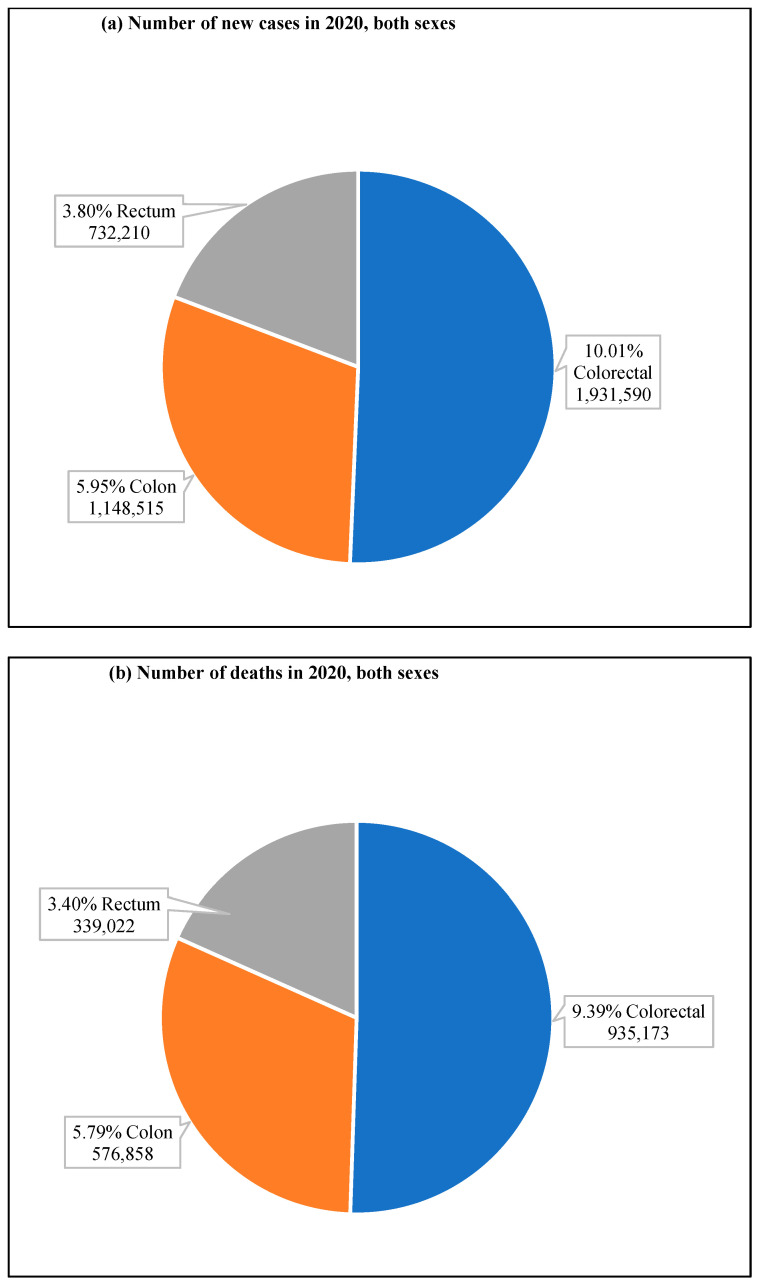
“It accounts for roughly 10% of all diagnosed cancer cases, with over 1.9 million new CRC cases emerging annually [2], making it a major contributor to global cancer-related mortality [4].”
InfluentialAli, T., Jan, I., Bashir, R., & Bader, G. N. (2026) · Elsevier eBooks · doi:10.1016/b978-0-443-23908-3.00002-2
Khosa, N. V., Maimela, E., Mkabela, B. E., Masuku, K., Witbooi, V., Ncitakalo, N., Makola, T. V., Mlonyeni, S., & Sithole, N. (2026) · International Journal of Environmental Research and Public Health · doi:10.3390/ijerph23020211
“Colorectal cancer is the third most common cancer across the world; however, variations in diet, lifestyle, and availability of screening tests may be responsible for the lower figure in this population [44].”
InfluentialEffects of a Benzimidazolium Salt on Colorectal Cancer Cells: Involvement of Apoptosis and Autophagy
Çakır, M., Açıkgöz, E., Kuzu, B., Akar, S., Özkol, H., Dönmez‐Altuntaş, H., & Akkoç, S. (2026) · Molecules · doi:10.3390/molecules31203606
“To overcome these treatment bottlenecks and control resistant cell populations, the discovery of innovative synthetic compounds that simultaneously target cellular survival and adhesion dynamics is an indispensable priority for modern oncology research [19,20].”
INTESTINO EM DIA - RASTREAMENTO E CONSCIENTIZAÇÃO DO CÂNCER COLORRETAL: RELATO DE EXPERIÊNCIA
Andrade, M. S. F., Sandrin, V. C., Mandarino, C. G. P., Lima, N. D. J., Alcântara, A. L. T., Ferreira, J. P., Centurión, N. C., Silva, R. G. A., Costa, V. S. N. D. B., dos Santos, D. M., et al. (2026) · Revista Contemporânea · doi:10.56083/rcv6n2-032
xi, L. I., JIANG, W., Rui, L. U. O., Yu, H. E., Shuli, W. A. N. G., Shan, W. E. I., ZHANG, C., & Zhang, X. (2026) · Research Square · doi:10.21203/rs.3.rs-8606147/v1
Yu, Y., An, Q., Song, Z., Luo, Y., Zuo, D., Bai, Z., Bai, F., Wang, X., & Dong, L. (2026) · Analytica Chimica Acta · doi:10.1016/j.aca.2026.345294
Colorectal cancer segmentation with adaptive augmentation and multiresolution ensemble models
Çağlar, Ü. M., & Temizel, A. (2026) · International Conference on Machine Vision · doi:10.1117/12.3096537
“Early detection through timely diagnosis and polyp removal is crucial for reducing incidence and mortality [2, 6].”
Niskanen, A. (2025) · Tampere University Institutional Repository (Tampere University)
Garcia, L. E., García, D. G., Madrigal‐Santillán, E., Madrigal‐Bujaidar, E., Álvarez‐González, I., Jiménez-Salazar, J. E., Damián‐Matsumura, P., García-Melo, J. A., Carbajal-López, B., Coronel-Hernández, J., et al. (2026) · Journal of Electrochemical Science and Engineering · doi:10.5599/jese.3109
“These genetic alterations happen at various stages of the disease [11,12].”
Dinámica de la atención por cáncer colorrectal en la población peruana
Prudencio-León, W. E., Onofre, R. R., & Changano-Rodríguez, M. V. (2024) · Health Care & Global Health · doi:10.22258/hgh.2024.82.176
Kumar, S. (2025) · International Journal of Pharmacy and Pharmaceutical Science · doi:10.33545/26647222.2025.v7.i2j.316
Hamdani, S. (2024) · Dépôt Institutionnel de lUniversité de Tlemcen
Edwards, G. O., Causi, F. S. L., Castagnola, G., Singh, S., & Amendola, P. G. (2026) · Frontiers in Cell and Developmental Biology · doi:10.3389/fcell.2026.1777400
“Risk is modulated by lifestyle factors such as obesity, physical inactivity, alcohol consumption, tobacco use, diets high in red or processed meat, and chronic inflammation (Hossain et al., 2022; Roshandel et al., 2024).”
Khawaja, G., Shoujaa, A., El-Orfali, Y., Najem, S. A., & Massaad, M. J. (2026) · PLoS ONE · doi:10.1371/journal.pone.0344653
“Colorectal cancer (CRC) is a malignancy that develops in the colon and rectum, primarily arising from the aberrant proliferation of glandular epithelial cells, with adenocarcinoma representing about 96% of cases worldwide [1].”
InfluentialAnticancer potential of Indian propolis against HT29 colon cancer cells
Chatterjee, S., Kundu, T., Ghosh, C., & Roy, P. (2026) · BIO Web of Conferences · doi:10.1051/bioconf/202622807004
Kamal, R., Chauhan, A., Singh, T. G., Dhiman, S., & Awasthi, A. (2026) · Expert Opinion on Drug Delivery · doi:10.1080/17425247.2026.2648023 · Cited by 1
Preparation, properties, and application of hydrogel vaccines: A review
Xue, H., Wang, X., Zhang, S., Yang, J., Liu, H., & Tan, J. (2026) · Colloids and Surfaces B Biointerfaces · doi:10.1016/j.colsurfb.2026.115624 · Cited by 1
Hydrogel modified nanofibers for the delivery of doxorubicin and high dose of curcumin
Dytrych, P., Janoštiak, R., Bajusová, S., Kejík, Z., Abramenko, N., Kučnirová, K., Tatar, A., Paulusova, A., Popelkova, D., Liebl, D., et al. (2026) · Journal of Drug Delivery Science and Technology · doi:10.1016/j.jddst.2026.108255
Larsen, K. M., & Bilal, M. (2026) · Current Treatment Options in Gastroenterology · doi:10.1007/s11938-026-00494-y
Microbiome-based interventions for colorectal cancer prevention and treatment
Abdullah, N. A., Jayasurya, J. V., Shri, M. P. L., Thatcher, R. M., Dalbayrak, B., Arısan, E. D., Ambika, S., & Manojkumar, Y. (2026) · Elsevier eBooks · doi:10.1016/b978-0-443-40483-2.00034-0
Zheng, X., Wang, Q., Song, X., Zhu, J., Dai, C.-Y., Jin, J., Cheng, C., Zhang, H., & Xie, Y. (2026) · Frontiers in Immunology · doi:10.3389/fimmu.2026.1792962 · Cited by 2
“However, currently used chemotherapeutic agents often have serious side effects, such as systemic toxicity and acquired resistance, such as mucositis, cardiotoxicity, and bone marrow suppression with 5-fl uorouracil (4).”
Exploratory Analysis of Gene Expression Patterns in Chemotherapy-Treated Colorectal Cancer Patients
Farooq, M. A., Jumaah, H. M., & Alwan, I. A. (2025) · American Journal of Biology and Natural Sciences · doi:10.51699/ajbns.v2i11.1385
Janeeh, A. S., Rah, B., Shafarin, J., Bajbouj, K., Abu‐Gharbieh, E., & Hamad, M. S. (2026) · Frontiers in Oncology · doi:10.3389/fonc.2026.1800308 · Cited by 1
Zohar, K., Strecker, M., Wartmann, T., Shi, W., Stelter, F., Doelling, M., Andric, M., Kakhlon, O., Täger, C., Schanze, D., et al. (2026) · International Journal of Cancer · doi:10.1002/ijc.70461
A 3D gut on chip to study the peristalsis influence on the physiopathological cellular ecosystem
Bernheim-Dennery, M. (2023) · theses.fr (ABES) · doi:10.70675/c4cc4f3ez501az4b2cz9b30z74012622987e
Sidheekh, D., Savithri, M. C., & Raju, S. (2026) · Annals of Pathology and Laboratory Medicine · doi:10.21276/apalm.3715
Wen, J.-K., Xia, J., Yu, L., Xu, G.-L., Ye, G.-F., & Lin, Y.-H. (2026) · World Journal of Gastrointestinal Oncology · doi:10.4251/wjgo.v18.i4.114567 · Cited by 1
Optimisation de traitements immunothérapeutiques dans le cancer
Chavanton, A. (2024) · theses.fr (ABES) · doi:10.70675/7ea8dbe3z70b3z448fz90cez6a61ae774c59
Makhloufi, H. (2024) · theses.fr (ABES) · doi:10.70675/b432f15ez833fz4fb3z9d3dz2f33f1ee72ff
Impact de dilutions homéopathiques sur la composante immunitaire du microenvironnement
Debasly, S. (2025) · theses.fr (ABES) · doi:10.70675/ae9e62f2ze4f2z4d38z9968z29df335ea7fd
Nicotinamide Derivatives: Synthetic Strategies and their Emerging Role in Anticancer Therapy
Karanjekar, M. M., Chaudhari, V. S., Thombre, K. R., Gupta, K. R., & Umekar, M. J. (2026) · Current Organic Chemistry · doi:10.2174/0113852728424208251128163054
Wong, J.-K., Lin, C.-H., Wu, H., Lin, Y., Chu, C.-J., Hsu, P., & Chang, C.-F. (2026) · ACS Omega · doi:10.1021/acsomega.6c00857
Ziółek, W. Z., Grąt, M., Krasnodębski, M., Patkowski, W., & Potocki, P. M. (2026) · Jagiellonian University Repository (Jagiellonian University) · doi:10.5603/ocp.111367
Parhi, P., Banerjee, A., & Thatoi, H. (2026) · Journal of Chemotherapy · doi:10.1080/1120009x.2026.2653339
PREDISPOSIÇÃO HEREDITÁRIA AO CÂNCER COLORRETAL: UM CASO DE SÍNDROME DE LYNCH
Santi, L. H. P. A., Pereira, G. C., Carvalho, A. B. D. O., da Silva, D. C., Uchiya, T. D. S., Casotti, M. C., Louro, I. D., & Meira, D. D. (2026) · doi:10.22533/at.ed.7552617044
Djaballah-Ider, F. Z., Gouaref, I., Seghirate, A., Touil–Boukoffa, C., & Galleze, A. (2026) · International Journal of Molecular Sciences · doi:10.3390/ijms27093709
“…the molecular level, colorectal carcinogenesis is driven by the accumulation of genetic and epigenetic alterations affecting key signaling pathways, including Wnt/ β -catenin, KRAS, TP53, and DNA mismatch repair mechanisms, ultimately leading to tumor initiation, progression, and metastasis [3–6].”
Breakthroughs in Personalized Treatment of Colorectal Cancer
Shaw, R., Sarkar, S., & Ghosh, M. K. (2026) · Springer eBooks · doi:10.1007/978-981-95-6845-1_13
Cai, W., Ren, Z., Chen, S., Zhang, X., Wu, D., Zhu, X., Hu, T., & Huang, Q. (2026) · Food Science and Human Wellness · doi:10.26599/fshw.2026.9251073
Alvis, J. M. M., & Camacho, S. M. H. (2024) · LA Referencia (Red Federada de Repositorios Institucionales de Publicaciones Científicas)
Amin, Y., Zaki, I. I., Eldaoushy, A. M. M., Hussein, M. A. A., & Elshazly, A. A. A. (2026) · Journal of Coloproctology · doi:10.1055/s-0046-1818566
“7 The isoprenylcysteine carboxyl methyltransferase ( ICMT ) gene produces CircICMT, which is speci fi cally made by the circularization of exons 2 and 3, forming a mature sequence length of 388 base pairs (bp).”
Teppabut, W., Tragoolpua, Y., & Kaewkod, T. (2026) · BIO Web of Conferences · doi:10.1051/bioconf/202623204001
Dong, B., Zhou, B., Zhang, H., Wang, T., Xu, Z., Zhu, L., Li, Q., Niu, B., & Sun, X. (2026) · Human Mutation · doi:10.1155/humu/9971217
Wanitchakool, P., Sirianant, L., Srisarakorn, N., & Muanprasat, C. (2026) · Scientific Reports · doi:10.1038/s41598-026-48098-x
Molecular and immune profiling of colorectal polyps using FTIR microspectroscopy
Vázquez-Zapién, G. J., Martínez-Cuazitl, A., Garibay-Gonzalez, F., Cerda-Reyes, E., Lopez-Barrera, K. M., García-Hernández, J. S., Guerrero-Ruiz, M., & Mata-Miranda, M. M. (2026) · Molecular and Cellular Biochemistry · doi:10.1007/s11010-026-05538-6
“Some studies have demonstrated that endoscopic polypectomy or surgical resection reduces the risk of cancer [6–8].”
Adnan, M., Siddiqui, A. J., Alreshidi, M. M., Surti, M., & Patel, M. (2026) · Chemical Biology & Drug Design · doi:10.1111/cbdd.70302
“It is responsible for approximately 95% of all colon cancer cases (Hossain et al. 2022).”
Kuznetsova, E. A., Karasaeva, L. A., Puzin, S. N., Goryainova, M. V., & Puzin, S. N. (2026) · Medical and Social Expert Evaluation and Rehabilitation · doi:10.17816/mser702333
A Data Analytics Perspective on CD24 Expression in Colorectal Cancer Patients
Nemat, M. A., Mohammed, F. I., & Jabbar, S. (2026) · STEAM-H: Science, Technology, Engineering, Agriculture, Mathematics & Health · doi:10.1007/978-3-032-19130-4_3
Metadata
- Authors
- Hossain, M. S., Karuniawati, H., Jairoun, A. A., Urbi, Z., Ooi, D. J., John, A., Lim, Y. C., Kibria, K. M. K., Mohiuddin, A. K. M., Ming, L. C., Goh, K. W., & Hadi, M. A.
- Affiliations
- International Islamic University Malaysia (MY)
- Universiti Sains Malaysia (MY)
- Universiti Malaysia Pahang Al-Sultan Abdullah (MY)
- Mahsa University (MY)
- Universiti Brunei Darussalam (BN)
- Mawlana Bhashani Science and Technology University (BD)
- INTI International University (MY)
- Qatar University (QA)
- Corresponding author
- Hossain, Md. Sanower
- Ming, Long Chiau
- ORCID
- Venue
- Cancers
- Publisher
- MDPI AG
- Published
- 2022-03-29
- Volume
- 14
- Issue
- 7
- Pages
- 1732
- ISSN
- 2072-6694 (ISSN-L)
- PMC
- PMC8996939
- OpenAlex
- W4220871154
- Semantic Scholar
- a177fa591329da9c54d205f532c08c603177d297
- Cited by
- 920
- References
- 156
- Citations by year
- 2026: 169 · 2025: 307 · 2024: 267 · 2023: 150 · 2022: 23
- FWCI
- 22.82
- Type
- journal article
- Language
- en
- Open access
- gold
- doi.org
- Licence
- Locations
- Cancers (publishedVersion, cc-by)
- PubMed Central (publishedVersion, cc-by)
- PubMed (publishedVersion)
- UMP Institutional Repository (Universiti Malaysia Pahang) (acceptedVersion)
- DOAJ (DOAJ: Directory of Open Access Journals) (submittedVersion, cc-by-sa)
- Qatar University QSpace (Qatar University) (submittedVersion)
- Topics
- Health Sciences › Medicine › Oncology › Colorectal Cancer Treatments and Studies
- Health Sciences › Medicine › Oncology › Colorectal Cancer Screening and Detection
- Health Sciences › Medicine › Oncology › Colorectal Cancer Surgical Treatments
- Keywords
- colorectal cancer, carcinogenesis, global epidemiology, risk factors, cancer prevention, cancer therapy, drug resistance, tumor recurrence, early diagnosis, access to treatment, developing countries
About these checks
Registry, retraction, Cites and statistics results are computed, not judged, with one exception: a printed reference that no index lists is read once by a model before it counts as a citation error. Claims are extracted by a model and kept only when their quote appears verbatim in the text; each cited source is then checked, with a model’s help, for whether it says what the claim relies on. Those verdicts can be wrong — read the claim’s quote and the cited source before relying on one.
Statistics and arithmetic are recomputed, not judged.
Confidence bands are shown only for fields calibrated on our annotated test set. None is calibrated yet, so no band is shown.
What counts as a claim ›How we measure confidence ›How we check this ›
Are you an author, or do you see a problem with this page? Request a review
Data sources
Bibliographic data: Semantic Scholar, OpenAlex, Crossref.
Contains information from the Semantic Scholar Academic Graph Datasets, made available under the ODC Attribution License (ODC-BY 1.0).
Semantic Scholar’s data is described in: Kinney, R., et al. (2023). The Semantic Scholar Open Data Platform. arXiv:2301.10140.
