

Colorectal Cancer: A Review of Carcinogenesis, Global Epidemiology, Current Challenges, Risk Factors, Preventive and Treatment Strategies
Open accessThe DOI matches its Crossref record; 156 of the 156 references it cites were found in a registry or an index.
Abstract
Colorectal cancer (CRC) is the second most deadly cancer. Global incidence and mortality are likely to be increased in the coming decades. Although the deaths associated with CRC are very high in high-income countries, the incidence and fatalities related to CRC are growing in developing countries too. CRC detected early is entirely curable by surgery and subsequent medications. However, the recurrence rate is high, and cancer drug resistance increases the treatment failure rate. Access to early diagnosis and treatment of CRC for survival is somewhat possible in developed countries. However, these facilities are rarely available in developing countries. Highlighting the current status of CRC, its development, risk factors, and management is crucial in creating public awareness. Therefore, in this review, we have comprehensively discussed the current global epidemiology, drug resistance, challenges, risk factors, and preventive and treatment strategies of CRC. Additionally, there is a brief discussion on the CRC development pathways and recommendations for preventing and treating CRC.
Overview
The claims and statistics of this paper haven’t been checked yet.
Free: it reads the open-access text and checks the first 5 claims that cite a source we can check. Create a free account to check every claim.
Integrity signals
Registry
Cites
Statistics
Figures
Verification
Claims the paper makes
The claims and statistics of this paper haven’t been checked yet.
Free: it reads the open-access text and checks the first 5 claims that cite a source we can check. Create a free account to check every claim.
Claims other papers make about this one
Each is checked against this paper’s own text: does it say what the citing paper says it does?
The source backs part of the claim, not all of it — or backs it for a different population, condition or comparison.
In the citing paper
“Despite advancements in these therapeutic modalities, resistance remains a significant challenge, often leading to treatment failure, poor progression-free survival, and cancer recurrence.”
From Mechanisms and Strategies to Overcome Drug Resistance in Colorectal Cancer (2025) · cites this paper as [5]
Experimental — accuracy not yet measuredThe cited source says what the claim attributes to it.
In the citing paper
“While overall survival rates for individuals with advanced CRC has increased in recent decades, drug resistance has been reported to develop in nearly all CRC patients [5].”
From Mechanisms and Strategies to Overcome Drug Resistance in Colorectal Cancer (2025) · cites this paper as [5]
The cited source says what the claim attributes to it.
In the citing paper
“Modifiable factors are associated with the characteristics of a person's lifestyle (obesity, tobacco smoking, alcohol consumption, unhealthy diet)[5-10].”
From Risk factors, prevention and screening of colorectal cancer: A rising problem (2025) · cites this paper as [10]
The cited source says what the claim attributes to it.
In the citing paper
“The development of CRC is associated with the action of non-modifiable and modifiable risk factors.”
From Risk factors, prevention and screening of colorectal cancer: A rising problem (2025) · cites this paper as [10]
Self-check
Percentages, sums and reported differences re-computed from the paper’s own numbers.
The self-check needs the paper’s full text.
Citations
Cites
Sung, H., Ferlay, J., Siegel, R. L., Laversanne, M., Soerjomataram, I., Jemal, A., & Bray, F. (2021) · CA: A Cancer Journal for Clinicians · doi:10.3322/caac.21660 · Cited by 108,699 · cited 5×
“In 2020, CRC was the most diagnosed cancer (out of 36 cancers) among men in 18 of the 186 countries worldwide and women in 6 of the 185 countries [24].”
BackgroundInfluentialBray, F., Ferlay, J., Soerjomataram, I., Siegel, R. L., Torre, L. A., & Jemal, A. (2018) · CA: A Cancer Journal for Clinicians · doi:10.3322/caac.21492 · Cited by 84,109 · cited 2×
“2, which is almost equal to the incidence of 2018 [24,26].”
BackgroundCoussens, L. M., & Werb, Z. (2002) · Nature · doi:10.1038/nature01322 · Cited by 15,111 · cited 1×
“mechanisms herbs and spices exert are the BCL-2, K-ras, and MMP pathways, caspase activation, the extrinsic apoptotic pathway, and the modulation of ER-stress-induced apoptosis chemopreventive effects [162,163].”
BackgroundA genetic model for colorectal tumorigenesis
Fearon, E. R., & Vogelstein, B. (1990) · Cell · doi:10.1016/0092-8674(90)90186-i · Cited by 12,132
Comprehensive molecular characterization of human colon and rectal cancer
The Cancer Genome Atlas Network (2012) · Nature · doi:10.1038/nature11252 · Cited by 8,499
Genetic Alterations during Colorectal-Tumor Development
Vogelstein, B., Fearon, E. R., Hamilton, S. R., Kern, S. E., Preisinger, A. C., Leppert, M., Smits, A. M. M., & Bos, J. L. (1988) · New England Journal of Medicine · doi:10.1056/nejm198809013190901 · Cited by 6,728
Natural products as sources of new drugs from 1981 to 2014
Newman, D. J., & Cragg, G. M. (2016) · Journal of Natural Products · doi:10.1021/acs.jnatprod.5b01055 · Cited by 5,858
Cunningham, D., Humblet, Y., Siena, S., Khayat, D., Bleiberg, H., Santoro, A., Bets, D., Mueser, M., Harstrick, A., Verslype, C., et al. (2004) · New England Journal of Medicine · doi:10.1056/nejmoa033025 · Cited by 5,035 · cited 1×
“Currently, there are clinical studies ongoing on some MAbs for CRC, such as adecatumumab against epithelial cell adhesion molecule (EpCAM), labetuzumab against carcinoembryonic antigen (CEA), and pemtumomab against Mucins [133].”
BackgroundPrevention of Colorectal Cancer by Colonoscopic Polypectomy
Winawer, S. J., Zauber, A. G., Ho, M. N., O'Brien, M. J., Gottlieb, L. S., Sternberg, S. S., Waye, J. D., Schapiro, M., Bond, J. H., Panish, J. F., et al. (1993) · New England Journal of Medicine · doi:10.1056/nejm199312303292701 · Cited by 4,592
Overman, M. J., McDermott, R., Leach, J. L., Lonardi, S., Lenz, H.-J., Morse, M. A., Desai, J., Hill, A., Axelson, M., Moss, R. A., et al. (2017) · The Lancet Oncology · doi:10.1016/s1470-2045(17)30422-9 · Cited by 2,836
Research works printed but not linked: 1
- Urbi, 2014, Grape: A medicinal fruit species in the holy Qur’an and its ethnomedicinal importance, World Appl. Sci. J., 30, 253
Cited by
Signaling pathways involved in colorectal cancer: pathogenesis and targeted therapy
Li, Q., Geng, S., Luo, H., Wang, W., Mo, Y.-Q., Luo, Q., Wang, L., Song, G.-B., Sheng, J.-P., & Xu, B. (2024) · Signal Transduction and Targeted Therapy · doi:10.1038/s41392-024-01953-7 · Cited by 546
Herb and Spices in Colorectal Cancer Prevention and Treatment: A Narrative Review
Hossain, M. S., Kader, M. A., Goh, K. W., Islam, M., Khan, M. S., Harun-Ar Rashid, M., Ooi, D. J., Melo Coutinho, H. D., Al-Worafi, Y. M., Moshawih, S., et al. (2022) · Frontiers in Pharmacology · doi:10.3389/fphar.2022.865801 · Cited by 346
Self-citationHigh-definition spatial transcriptomic profiling of immune cell populations in colorectal cancer
Oliveira, M. F. D., Romero, J. P., Chung, M., Williams, S. R., Gottscho, A. D., Gupta, A., Pilipauskas, S. E., Mohabbat, S., Raman, N., Sukovich, D. J., et al. (2025) · Nature Genetics · doi:10.1038/s41588-025-02193-3 · Cited by 321
“Additionally, comparing these metrics with other high-resolution methods like Stereo-seq or Seq-scope could enhance the manuscript's appeal and provide a clearer benchmark for readers.”
Healthy Lifestyle and Cancer Risk: Modifiable Risk Factors to Prevent Cancer
Marino, P., Mininni, M., Deiana, G., Marino, G., Divella, R., Bochicchio, I., Giuliano, A., Lapadula, S., Lettini, A. R., & Sanseverino, F. (2024) · Nutrients · doi:10.3390/nu16060800 · Cited by 240
“There are several factors responsible for its pathology, including environmental factors, genetic factors such as family history, and chronic inflammation, but also factors that include diet and lifestyle [182,183].”
BackgroundDattilo, M., Patitucci, F., Prete, S., Parisi, O. I., & Puoci, F. (2023) · Journal of Functional Biomaterials · doi:10.3390/jfb14020055 · Cited by 174
“Its global incidence is becoming constantly higher, and it is estimated to reach more than double by 2035, especially in less developed nations, where early diagnosis and treatment are rarely available [132].”
BackgroundThe microbial landscape of colorectal cancer
White, M. T., & Sears, C. L. (2024) · Nature Reviews Microbiology · doi:10.1038/s41579-023-00973-4 · Cited by 161
“…of increased age, genetics, male sex and history of inflammatory bowel disease, many CRC risk factors are based on diet and lifestyle, including obesity, smoking, regular alcohol consumption, and consumption of red and processed meats, while a high-fibre diet is associated with lower risk 180 .”
Colorectal Cancer: Disease Process, Current Treatment Options, and Future Perspectives
Adebayo, A. S., Agbaje, K. O., Adesina, S. K., & Olajubutu, O. (2023) · Pharmaceutics · doi:10.3390/pharmaceutics15112620 · Cited by 158
“CRC arises from the epithelial cells lining the colon or rectum in the gastrointestinal tract due to abnormal growth of glandular epithelial cells [17].”
The Role of Curcumin in Cancer: A Focus on the PI3K/Akt Pathway
Zoi, V., Kyritsis, A. P., Galani, V., Lazari, D. M., Sioka, C., Voulgaris, S., & Alexiou, G. Α. (2024) · Cancers · doi:10.3390/cancers16081554 · Cited by 124
“However, common challenges related to this type of cancer that limit the efficacy of current treatment options include drug resistance and high recurrence rates [131].”
BackgroundUnravelling the potential of mitochondria-targeted liposomes for enhanced cancer treatment
Khan, M. S., Gowda, B. H. J., Almalki, W. H., Singh, T., Sahebkar, A., & Kesharwani, P. (2023) · Drug Discovery Today · doi:10.1016/j.drudis.2023.103819 · Cited by 117
Dey, A., Mitra, A., Pathak, S., Prasad, S. V., Sun-Zhang, A., Zhang, H., Sun, X., & Banerjee, A. (2023) · Technology in Cancer Research & Treatment · doi:10.1177/15330338231178403 · Cited by 125
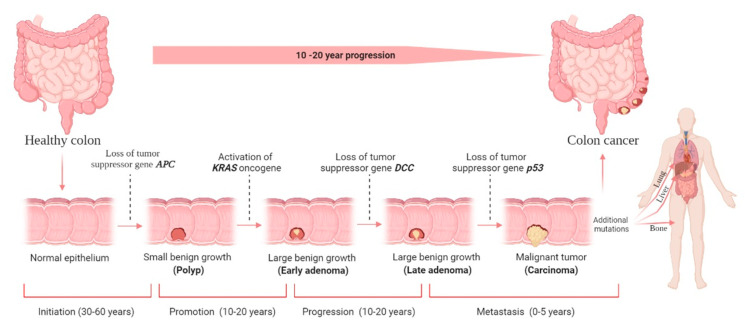
“” The tumor reaches the lymph nodes in stage 3 and forms “carcinoma”; finally, stage 4 has metastasized in the body.(1) The standard treatments available for colon cancer are surgery, chemotherapy, and radiotherapy.”
Oliveira, M. F., Romero, J. P., Chung, M., Williams, S., Gottscho, A. D., Gupta, A., Pilipauskas, S. E., Mohabbat, S., Raman, N., Sukovich, D., et al. (2024) · doi:10.1101/2024.06.04.597233 · Cited by 95
Narayana, S., Gowda, B. H. J., Hani, U., Shimu, S. S., Paul, K., Das, A., Ashique, S., Ahmed, M. G., Tarighat, M. A., & Abdi, G. (2024) · Journal of Nanobiotechnology · doi:10.1186/s12951-024-02701-3 · Cited by 94
“…to determine the duration required for each stage, decades will likely be required to form colorectal cancer, reproduced with permission from [35], copyright 2022, MDPI. in genes such as MLH1 or MSH2, experience a buildup of genomic errors leading to pronounced microsatellite instability…”
BackgroundThe role of deep learning in diagnosing colorectal cancer
Bousis, D., Verras, G., Bouchagier, K., Antzoulas, A., Panagiotopoulos, I. A., Katinioti, A., Kehagias, D., Kaplanis, C., Kotis, K., Anagnostopoulos, C., et al. (2023) · Gastroenterology Review · doi:10.5114/pg.2023.129494 · Cited by 95
“In particular, colon cancer is the third most common malignancy in both men and women [1–5].”
BackgroundMing, T., Lei, J., Peng, Y., Wang, M., Liang, Y., Tang, S., Tao, Q., Wang, M., Tang, X., He, Z., et al. (2024) · Phytotherapy Research · doi:10.1002/ptr.8258 · Cited by 88
“Therefore, it is imperative to conduct intense research on the molecular mechanism underlying CRC development, identify therapeutic targets of CRC, and discover novel drugs to effectively combat this type of malignancy (Hossain et al., 2022; Zhao, Ming, et al., 2022).”
Mechanisms and Strategies to Overcome Drug Resistance in Colorectal Cancer
Haynes, J., & Manogaran, P. (2025) · International Journal of Molecular Sciences · doi:10.3390/ijms26051988 · Cited by 82
“There are many factors that can increase the risk for CRC, including both non-modifiable biological risk factors and modifiable lifestyle risk factors [5].”
InfluentialDzhalilova, D. S., Zolotova, N. A., Fokichev, N., & Makarova, O. V. (2023) · PeerJ · doi:10.7717/peerj.16159 · Cited by 84
Outcomes of Robot-Assisted Surgery in Rectal Cancer Compared with Open and Laparoscopic Surgery
Khajeh, E., Aminizadeh, E., Moghadam, A. D., Nikbakhsh, R., Gonçalves, G., Carvalho, C. T., Parvaiz, A. C., Kulu, Y., & Mehrabi, A. (2023) · Cancers · doi:10.3390/cancers15030839 · Cited by 80
“Colorectal cancer is the third most common cancer worldwide, and up to 35% of colorectal cancer cases are rectal carcinomas [1,2].”
BackgroundInterleukin-6 serves as a critical factor in various cancer progression and therapy
Mohamed, A. H., Ahmed, A. T., Abdulmonem, W. A., Bokov, D. O., Shafie, A., Al‐Hetty, H. R. A. K., Hsu, C., Alissa, M., Nazir, S., Jamali, M. C., et al. (2024) · Medical Oncology · doi:10.1007/s12032-024-02422-5 · Cited by 82
“Treatment advancements, including surgery, chemotherapy, and targeted therapies, have led to better outcomes [71].”
Khan, M. S., Gowda, B. H. J., Hasan, N., Gupta, G., Singh, T., Md, S., & Kesharwani, P. (2024) · European Polymer Journal · doi:10.1016/j.eurpolymj.2024.112800 · Cited by 91
Gomes, S., Rodrigues, A., Pazienza, V., & Preto, A. (2023) · International Journal of Molecular Sciences · doi:10.3390/ijms24065069 · Cited by 83
“Its incidence is related with lifestyle factors, such as a low-fibre diet, smoking, lack of exercise, and obesity [2,3].”
BackgroundHedayati, N., Safari, M. H., Milasi, Y. E., Kahkesh, S., Farahani, N., Khoshnazar, S. M., Dorostgou, Z., Alaei, E., Alimohammadi, M., Rahimzadeh, P., et al. (2025) · Discover Oncology · doi:10.1007/s12672-025-02471-w · Cited by 81
“Conventional therapeutic strategies for CRC include chemotherapy, radiotherapy, surgery, and targeted therapy [123, 124].”
Mitochondrial dynamics and colorectal cancer biology: mechanisms and potential targets
Wu, Z., Xiao, C., Long, J., Huang, W., You, F., & Li, X. (2024) · Cell Communication and Signaling · doi:10.1186/s12964-024-01490-4 · Cited by 80
“However, recurrence and drug resistance hinder successful cancer treatment, resulting in a relatively poor prognosis, with a 5-year survival rate of approximately 60% [4, 5].”
BackgroundThe cubosome-based nanoplatforms in cancer therapy: Seeking new paradigms for cancer theranostics
Gowda, B. H. J., Ahmed, M. G., Alshehri, S. A., Wahab, S., Vora, L. K., Thakur, R. R. S., & Kesharwani, P. (2023) · Environmental Research · doi:10.1016/j.envres.2023.116894 · Cited by 74
Dadgar-Zankbar, L., Elahi, Z., Shariati, A., Khaledi, A., Razavi, S., & Khoshbayan, A. (2024) · Cell Communication and Signaling · doi:10.1186/s12964-024-01909-y · Cited by 71
Verhoef, M. J., Rose, M. S., White, M., & Balneaves, L. G. (2008) · Current Oncology · doi:10.3747/co.v15i0.281 · Cited by 67
Role of pyroptosis in the pathogenesis and treatment of diseases
Jin, X., Ma, Y., Liu, D., & Huang, Y. (2023) · MedComm · doi:10.1002/mco2.249 · Cited by 66
Mohamed, R. A., Ali, S. M., Ahmed, I. S., Rawas‐Qalaji, M., & Hussain, Z. (2025) · Biomaterials Science · doi:10.1039/d5bm01176k · Cited by 80
Herlo, L.-F., Sălcudean, A., Șirli, R., Iurciuc, S., Herlo, A., Twakor, A. N., Alexandrescu, L., & Dumache, R. (2024) · International Journal of Molecular Sciences · doi:10.3390/ijms25147937 · Cited by 64
“Mortality rates have been declining in some high-income countries due to improved screening programs, early detection, and advances in treatment [6].”
BackgroundEpigenetic Alteration in Colorectal Cancer: Potential Diagnostic and Prognostic Implications
Cao, Q., Tian, Y., Deng, Z., Yang, F., & Chen, E. (2024) · International Journal of Molecular Sciences · doi:10.3390/ijms25063358 · Cited by 60
“Environmental factors such as aging, sedentary lifestyle, hypertension, cirrhosis, family history of colon cancer or inflammatory bowel disease, daily alcohol consumption exceeding one bottle (>600 mL), smoking, obesity, and gut microbiota dysbiosis are high-risk inducers of sCRC [19,20].”
BackgroundGharib, E., & Robichaud, G. A. (2024) · International Journal of Molecular Sciences · doi:10.3390/ijms25179463 · Cited by 65
Ungvari, Z., Fekete, M., Varga, P., Lehoczki, A., Munkácsy, G., Fekete, J. T., Bianchini, G., Ocana, A., Buda, A., Ungvari, A., et al. (2025) · GeroScience · doi:10.1007/s11357-025-01646-1 · Cited by 56
Amilo, D., Sadri, K., Kaymakamzade, B., & Hınçal, E. (2023) · Communications in Nonlinear Science and Numerical Simulation · doi:10.1016/j.cnsns.2023.107756 · Cited by 60
Kazakova, E., Rakina, M. A., Sudarskikh, T., Iamshchikov, P. S., Тарасова, А. С., Таширева, Л. А., Afanasiev, S. G., Dobrodeev, А. Y., Zhuikova, L. D., Чердынцева, Н. В., et al. (2023) · Frontiers in Oncology · doi:10.3389/fonc.2023.1058337 · Cited by 56
The effective combination therapies with irinotecan for colorectal cancer
Chai, Y., Liu, J., Zhang, S., Li, N., Xu, D., Liu, W., Fu, R., & Tang, Y. (2024) · Frontiers in Pharmacology · doi:10.3389/fphar.2024.1356708 · Cited by 55
Singh, D. V., & Shukla, G. (2024) · Inflammopharmacology · doi:10.1007/s10787-024-01596-8 · Cited by 58
“In vitro experiments have proved that luteolin reduces cell invasion and migration but shows no impact on the growth of CRC cells.”
InfluentialHu, G., Yao, H., Wei, Z., Li, L., Yu, Z., Li, J., Luo, X., & Guo, Z. (2023) · Scientific Reports · doi:10.1038/s41598-023-39563-y · Cited by 56
Probiotic-Derived Bioactive Compounds in Colorectal Cancer Treatment
Thoda, C., & Touraki, M. (2023) · Microorganisms · doi:10.3390/microorganisms11081898 · Cited by 58
“However, the efficacy of current strategies is usually imperiled, due to drugs’ inadequate capacity to discriminate between healthy and cancer cells, thus causing intensified toxicity and undesirable effects to the human body [2].”
BackgroundTargeting the Gut: A Systematic Review of Specific Drug Nanocarriers
Garbati, P., Picco, C., Magrassi, R., Signorello, P., Cacopardo, L., Serra, M. D., Faticato, M. G., Luca, M. D., Balestra, F., Scavo, M. P., et al. (2024) · Pharmaceutics · doi:10.3390/pharmaceutics16030431 · Cited by 60
“Resection, when feasible, and adjuvant therapy represent the most recurrent treatments [19].”
BackgroundRojas-Villalta, D., Rojas-Rodríguez, D., Villanueva-Ilama, M., Guillén-Watson, R., Murillo-Vega, F., Gómez-Espinoza, O., & Núñez-Montero, K. (2024) · Biology · doi:10.3390/biology13090712 · Cited by 61
“Haematococcus pluvialis is the known organism that naturally produces the highest concentrations of astaxanthin as it can accumulate up to 5% of astaxanthin on a dry weight basis.”
BackgroundBarathan, M., Zulpa, A. K., Ng, S. L., Lokanathan, Y., Ng, M. H., & Law, J. X. (2024) · International Journal of Molecular Sciences · doi:10.3390/ijms25137470 · Cited by 55
“Age, ethnicity, gender, family history of CRC or polyps, inflammatory bowel disease, and inherited syndromes like Lynch syndrome and familial adenomatous polyposis (FAP) also increase the risk [4].”
BackgroundReactive Oxygen Species and Ferroptosis at the Nexus of Inflammation and Colon Cancer
Huang, W., Aabed, N., & Shah, Y. M. (2023) · Antioxidants and Redox Signaling · doi:10.1089/ars.2023.0246 · Cited by 47
“Other risk factors include diets high in PUFAs, smoking, obesity, red meat, and alcohol (Hossain et al., 2022).”
Xu, D., Wang, W., Wang, D., Ding, J., Zhou, Y., & Zhang, W. (2024) · Non-coding RNA Research · doi:10.1016/j.ncrna.2024.01.015 · Cited by 46
“In order to develop precise therapeutic interventions and optimize patient outcomes, it is imperative to gain a comprehensive understanding of the molecular mechanisms underlying the initiation and progression of the condition [68,69].”
BackgroundJunaid, H. H. S., Daneshfar, F., & Mohammad, M. A. (2025) · Biomedical Signal Processing and Control · doi:10.1016/j.bspc.2025.107866 · Cited by 45
Risk factors, prevention and screening of colorectal cancer: A rising problem
Tsukanov, V. V., Vasyutin, A. V., & Tonkikh, J. L. (2025) · World Journal of Gastroenterology · doi:10.3748/wjg.v31.i5.98629 · Cited by 42
Potential anticancer properties and mechanisms of thymoquinone in colorectal cancer
Sheikhnia, F., Rashidi, V., Maghsoudi, H., & Majidinia, M. (2023) · Cancer Cell International · doi:10.1186/s12935-023-03174-4 · Cited by 44
Lu, X., Jin, J., Wu, Y., Lin, J., Zhang, X., Lu, S., Zhang, J., Zhang, C., Ren, M., Chen, H., et al. (2024) · Bioactive Materials · doi:10.1016/j.bioactmat.2024.09.022 · Cited by 60
“Various combination therapy strategies have been widely applied in clinical practice, such as combining immune checkpoint inhibitors with anti-EGFR agents and BRAF inhibitors with MEK inhibitors [5].”
BackgroundSaha, B., Rithi, A. T., Adhikary, S., Banerjee, A., Radhakrishnan, A., Duttaroy, A. K., & Pathak, S. (2024) · Nutrition and Cancer · doi:10.1080/01635581.2024.2367266 · Cited by 41
“Colorectal cancer (CRC) ranks third in terms of incidence and second in fatalities among recognized cancers (1).”
Unlocking the potential of flavonoids: Natural solutions in the fight against colon cancer
Hasibuan, P. A. Z., Simanjuntak, Y., Hey‐Hawkins, E., Lubis, M. F., Rohani, A. S., Park, M. N., Kim, B., & Syahputra, R. A. (2024) · Biomedicine & Pharmacotherapy · doi:10.1016/j.biopha.2024.116827 · Cited by 44
Roy, S., Deka, D., Babu, K. S., Ayyadurai, P., Siripragada, S., Philip, N., Pathak, S., Duttaroy, A. K., & Banerjee, A. (2025) · Epigenetics · doi:10.1080/15592294.2025.2491316 · Cited by 43
“The rise in CRC cases and fatalities is driven by environmental factors, sedentary lifestyles, and dietary changes, along with genetic and epigenetic influences [1,2].”
Nanoparticles for imaging-guided photothermal therapy of colorectal cancer
Farzam, O. R., Mehran, N., Bilan, F., Aghajani, E., Dabbaghipour, R., Shahgoli, G. A., & Baradaran, B. (2023) · Heliyon · doi:10.1016/j.heliyon.2023.e21334 · Cited by 38
“Colorectal cancer (CRC) is a significant public health issue, ranking as the third most prevalent cancer worldwide and one of the most lethal [1].”
BackgroundMahmod, A. I., Haif, S. K., Kamal, A., Al-ataby, I. A., & Talib, W. H. (2022) · Frontiers in Nutrition · doi:10.3389/fnut.2022.924192 · Cited by 44
Thymoquinone: A Promising Therapeutic Agent for the Treatment of Colorectal Cancer
Kurowska, N., Madej, M., & Strzałka‐Mrozik, B. (2023) · Current Issues in Molecular Biology · doi:10.3390/cimb46010010 · Cited by 37
“…often employed at each stage to improve outcomes This stage is associated with a worse prognosis [7]. molecular background of Treatment strategies for CRC vary depending on the stage, with adjuvant therapy often employed at each stage to improve outcomes [7]. carcinogenesis is extremely complex.”
BackgroundInfluentialKwak, A., Kim, W., Lee, S., Yoon, G., Cho, S., Kim, K.-T., Lee, M., Choi, Y. H., Lee, J., Park, J. W., et al. (2023) · Antioxidants · doi:10.3390/antiox12030656 · Cited by 34
Bhirud, D., Bhattacharya, S., Raval, H., Sangave, P. C., Gupta, G. L., Paraskar, G., Jha, M., Sharma, S., Belemkar, S., Kumar, D., et al. (2024) · Carbohydrate Polymers · doi:10.1016/j.carbpol.2024.122935 · Cited by 33
Singh, G., Chaudhry, Z., Boyadzhyan, A., Sasaninia, K., & Rai, V. (2025) · Exploration of Targeted Anti-tumor Therapy · doi:10.37349/etat.2025.1002329 · Cited by 38
Utility of Stool-Based Tests for Colorectal Cancer Detection: A Comprehensive Review
Gómez-Molina, R., Suárez, M., Martínez, R., Chilet, M., Bauçà, J. M., & Mateo, J. (2024) · Healthcare · doi:10.3390/healthcare12161645 · Cited by 35
“Therefore, the increasing prevalence of CRC in industrialized countries can be attributed to an aging population, unhealthy dietary habits, and an increase in risk factors such as smoking, physical inactivity, and obesity [8,9].”
BackgroundSGLT2 inhibitor promotes mitochondrial dysfunction and ER-phagy in colorectal cancer cells
Anastasio, C., Donisi, I., Vecchio, V. D., Colloca, A., Mele, L. L., Sardu, C., Marfella, R., Balestrieri, M. L., & D’Onofrio, N. (2024) · Cellular & Molecular Biology Letters · doi:10.1186/s11658-024-00599-1 · Cited by 33
“Treatment with the iSGLT2 dapagliflozin reduced DPP4 serum levels in patients with type 2 diabetes and non-alcoholic fatty liver disease [85], while the DPP4 inhibitor sitagliptin ameliorated the ischemia/reperfusion-induced injury in cardiomyocytes by mediating SIRT3 upregulation and autophagy…”
BackgroundVilsan, J., Maddineni, S. A., Ahsan, N., Mathew, M., Chilakuri, N., Yadav, N., Munoz, E. J., Nadeem, M., Abbas, K., Razzaq, W., et al. (2023) · Cureus · doi:10.7759/cureus.38956 · Cited by 37
The role of microbiomes in gastrointestinal cancers: new insights
Yarahmadi, A., & Afkhami, H. (2024) · Frontiers in Oncology · doi:10.3389/fonc.2023.1344328 · Cited by 30
Natural Compounds for Preventing Age-Related Diseases and Cancers
Ki, M., Youn, S., Kim, D. H., & Pack, S. P. (2024) · International Journal of Molecular Sciences · doi:10.3390/ijms25147530 · Cited by 33
Zhai, F., Yun, B., Ming, J., Yu, T., Li, B., Liu, X., Wang, X., Chen, Z., Song, C., Zhao, M., et al. (2025) · Advanced Materials · doi:10.1002/adma.202501378 · Cited by 30
Ali, S., Noreen, A., Qamar, A., Zafar, I., Ain, Q., Nafidi, H., Jardan, Y. A. B., Bourhia, M., Rashid, S., & Sharma, R. (2023) · Frontiers in Chemistry · doi:10.3389/fchem.2023.1174363 · Cited by 30
“Cancerous cells are atypical cells that multiply and proliferate in an unbridled fashion (Hossain et al., 2022).”
BackgroundQanash, H., Bazaid, A. S., Binsaleh, N. K., Patel, M. B., Althomali, O. W., & Sheeha, B. H. B. (2023) · Nutrients · doi:10.3390/nu15153448 · Cited by 30
“On the other hand, CRC patients face several side effects associated with these treatment options [15].”
BackgroundCirculating Exosomal miRNAs as a Promising Diagnostic Biomarker in Cancer
Behulová, R., Bugalová, A., Bugala, J., Struhárňanská, E., Šafranek, M., & Juráš, I. (2023) · Physiological Research · doi:10.33549/physiolres.935153 · Cited by 31
Genetics, diet, microbiota, and metabolome: partners in crime for colon carcinogenesis
Vecchia, M. L., Sala, G., Sculco, M., Aspesi, A., & Dianzani, I. (2024) · Clinical and Experimental Medicine · doi:10.1007/s10238-024-01505-x · Cited by 32
Therapeutic Potential of Aspirin Repurposing in Colon Cancer
Iftode, C., Iurciuc, S., Marcovici, I., Macasoi, I. G., Coricovac, D. E., Dehelean, C. A., Ursoniu, S., Rusu, A., & Ardelean, S. (2024) · Pharmaceutical Sciences and Drug Design · doi:10.51847/nydxrap7au · Cited by 29
Resistance to 5-fluorouracil: The molecular mechanisms of development in colon cancer cells
Radenković, N., Nikodijević, D. D., Jovankić, J. V., Blagojević, S., & Milutinović, M. G. (2024) · European Journal of Pharmacology · doi:10.1016/j.ejphar.2024.176979 · Cited by 30
Woźniacki, A., Książek, W., & Mrowczyk, P. (2024) · Cancers · doi:10.3390/cancers16183205 · Cited by 29
“Potential risk factors include having first-degree relatives with colorectal cancer and lifestyle factors such as obesity, physical inactivity, and alcohol consumption [6].”
BackgroundPatharia, P., Sethy, P. K., & Nanthaamornphong, A. (2024) · Cancer Informatics · doi:10.1177/11769351241290608 · Cited by 32
Farhaj, S., Agbotui, T. L., Nirwan, J. S., Mahmood, Q., Yousaf, A. M., Hussain, T., Shahzad, Y., Khan, N., Conway, B. R., & Ghori, M. U. (2022) · Polysaccharides · doi:10.3390/polysaccharides3040040 · Cited by 28
“Schematic illustration showing (a) different stages of colon cancer, [6] reproduced with permission from MDPI and (b) different parts of colon with malignant tumour.”
BackgroundMethodElahi, Z., Shariati, A., Bostanghadiri, N., Dadgar-Zankbar, L., Razavi, S., Norzaee, S., Arasi, S. V., & Darban‐Sarokhalil, D. (2023) · Heliyon · doi:10.1016/j.heliyon.2023.e22602 · Cited by 29
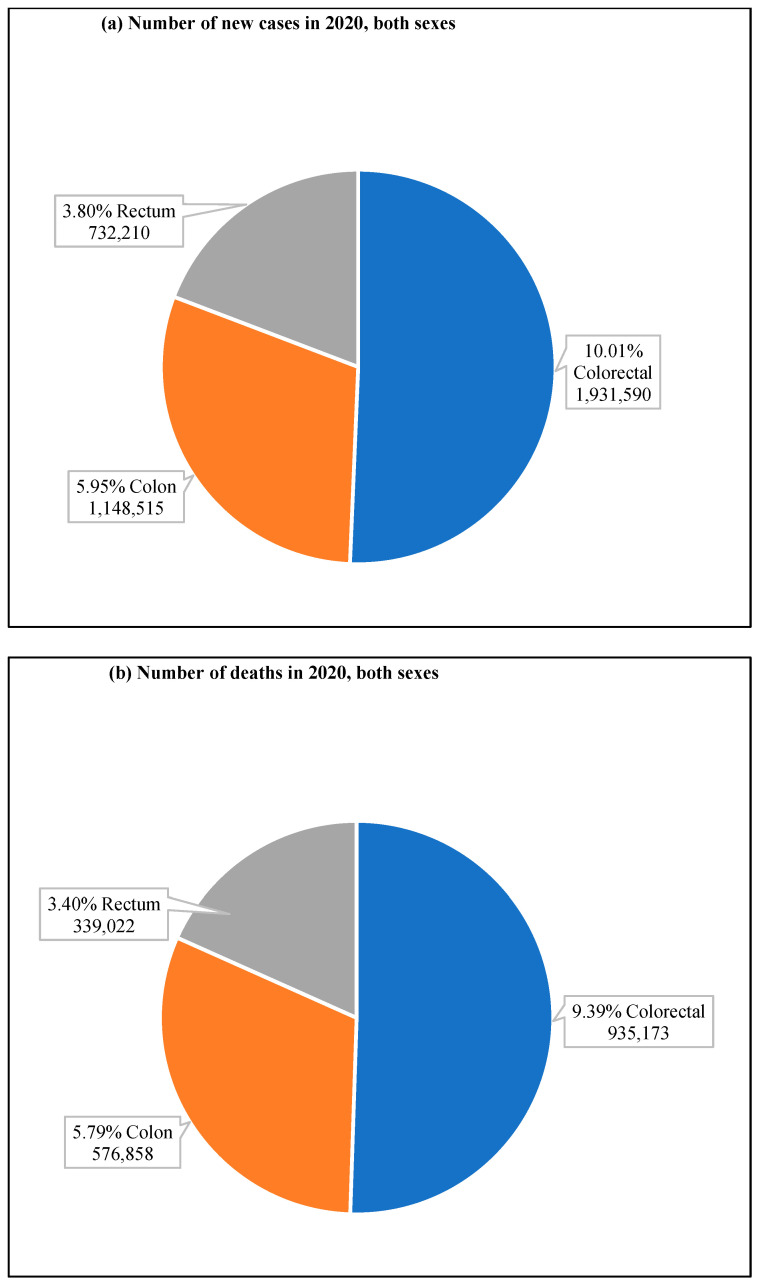
“This critical health problem, which accounts for approximately 9.4 % of cancer-associated deaths in 2020, includes signs and symptoms such as weight loss, changes in bowel movements, fatigue, and the presence of blood in the stool [1,2].”
BackgroundInfluentialZhang, X., Tian, H., Chen, Y., Liang, B., Nice, E. C., Huang, C., Xie, N., & Zheng, S. (2024) · Journal of Nanobiotechnology · doi:10.1186/s12951-024-02836-3 · Cited by 27
“Colorectal cancer (CRC), as the third most common cancer-related death cause [1, 2], is noteworthy for its high incidence rate and poor prognosis.”
BackgroundThe anoikis-related gene signature predicts survival accurately in colon adenocarcinoma
Hu, G., Li, J., Zeng, Y., Liu, L., Yu, Z., Qi, X., Liu, K., & Yao, H. (2023) · Scientific Reports · doi:10.1038/s41598-023-40907-x · Cited by 28
“However, high recurrence rates and anti-cancer drug resistance increase the rate of treatment failure rates 2 .”
BackgroundCurrent understandings of colibactin regulation
Addington, E., Sandalli, S., & Roe, A. J. (2024) · Microbiology · doi:10.1099/mic.0.001427 · Cited by 27
Rapid detection of carcinoembryonic antigen by means of an electrochemical aptasensor
Yunussova, N., Tilegen, M., Pham, T. T., & Kanayeva, D. A. (2024) · iScience · doi:10.1016/j.isci.2024.109637 · Cited by 27
Postwala, H., Shah, Y., Parekh, P. S., & Chorawala, M. R. (2023) · Medical Oncology · doi:10.1007/s12032-023-02201-8 · Cited by 26
CRISPR, CAR-T, and NK: Current applications and future perspectives
Khoshandam, M., Soltaninejad, H., Hamidieh, A. A., & Hosseinkhani, S. (2023) · Genes & Diseases · doi:10.1016/j.gendis.2023.101121 · Cited by 33
Gut microbiota protect against colorectal tumorigenesis through lncRNA Snhg9
Wang, M., Liu, K., Bao, W., Hang, B., Chen, X., Zhu, X., Li, G., Liu, L., Xiang, H., Hu, H., et al. (2025) · Developmental Cell · doi:10.1016/j.devcel.2024.12.013 · Cited by 26
Nobre, J. G., & Costa, D. A. (2022) · Frontiers in Gastroenterology · doi:10.3389/fgstr.2022.1020190 · Cited by 26
A tRF ‐5a fragment that regulates radiation resistance of colorectal cancer cells by targeting MKNK1
Huang, T., Chen, C., Du, J., Zheng, Z., Ye, S., Fang, S., & Liu, K. (2023) · Journal of Cellular and Molecular Medicine · doi:10.1111/jcmm.17982 · Cited by 26
“3,4 Among them, radiotherapy is an essential comprehensive treatment for locally advanced rectal cancer, and it substantially improves patients' quality of life and prognosis.”
BackgroundProspectives and retrospectives of microfluidics devices and lab-on-A-chip emphasis on cancer
Venkatesalu, S., Dilliyappan, S., Kumar, A. S., Palaniyandi, T., Baskar, G., Ravi, M., & Sivaji, A. (2023) · Clinica Chimica Acta · doi:10.1016/j.cca.2023.117646 · Cited by 26
REDIKER, Marcus. O Navio Negreiro. Uma história humana. São Paulo: Companhia das Letras, 2011.
Brito, Ê. J. D. C. (2012) · REVER - Revista de Estudos da Religião · doi:10.21724/rever.v12i1.10497 · Cited by 25
Cell Therapy as Target Therapy against Colon Cancer Stem Cells
Garza Treviño, E. N., Quiroz Reyes, A. G., Rojas Murillo, J. A., de la Garza Kalife, D. A., Delgado Gonzalez, P., Islas, J. F., Estrada Rodriguez, A. E., & Gonzalez Villarreal, C. A. (2023) · International Journal of Molecular Sciences · doi:10.3390/ijms24098163 · Cited by 24
“Available treatment is crucial for advanced CRC to improve prognosis, and it must correlate with the cost of current therapies [138].”
BackgroundMicrofluidic systems for modeling digestive cancer: a review of recent progress
Razavi, Z., Soltani, M., Pazoki-Toroudi, H., & Dabagh, M. (2024) · Biomedical Physics & Engineering Express · doi:10.1088/2057-1976/ad6f15 · Cited by 24
Wang, Y., Zhang, X., Zhang, Y., Shi, F., Du, S., Zhang, Z., Zhao, C., Luo, S., Wang, P., Wu, D., et al. (2025) · Materials Horizons · doi:10.1039/d5mh00108k · Cited by 27
Gervasi, F., & Pojero, F. (2024) · Biomedicines · doi:10.3390/biomedicines12030502 · Cited by 29
“It is characterized by high rates of acquired multidrug resistance, leading to chemotherapy failure, relapse, and development of lethal disease [186,187].”
BackgroundChoi, J. Y., Seok, H. J., Lee, D. H., Kwon, J., Shin, U. S., Shin, I., & Bae, I. H. (2024) · Journal of Translational Medicine · doi:10.1186/s12967-024-05797-1 · Cited by 23
Dynamic spectrum-driven hierarchical learning network for polyp segmentation
Wang, H., Wang, K., Hua, J., Tang, Y., Chen, Y., Zhou, G., & Li, S. (2025) · Medical Image Analysis · doi:10.1016/j.media.2024.103449 · Cited by 23
Zhang, L., Zhang, F., Liang, H., Qin, X., Mo, Y., Chen, S., Xie, J., Hou, X., Deng, J., Hao, E., et al. (2025) · Frontiers in Oncology · doi:10.3389/fonc.2025.1545952 · Cited by 30
Natarajan, S. R., Krishnamoorthy, R., Alshuniaber, M. A., Gatasheh, M. K., Rajagopal, P., Veeraraghavan, V. P., Palanisamy, C. P., & Jayaraman, S. (2025) · The Journal of Gene Medicine · doi:10.1002/jgm.70053 · Cited by 22
Taghavinia, F., Teymouri, F., Farokhrouz, F., Bagherabad, E. H., Farjami, S., Karimi, E., Oskoueian, E., Le, H. H., & Shakeri, M. (2022) · Animals · doi:10.3390/ani12243492 · Cited by 22
“Among these compounds, polyphenols including curcumin, ellagic acid, gallic acid and epigallocatechin-3-gallate offer a wide range of health benefits [4,5] and play a preventive role against colon cancer.”
BackgroundSaha, R., Subramani, K., Dey, S., Sikdar, S., & Incharoensakdi, A. (2023) · Process Biochemistry · doi:10.1016/j.procbio.2023.03.016 · Cited by 22
Singh, V. P., Shirbhate, E., Kore, R., Vishwakarma, S., Parveen, S., Veerasamy, R., Tiwari, A. K., & Rajak, H. (2024) · Mini-Reviews in Medicinal Chemistry · doi:10.2174/0113895575320344240625080555 · Cited by 23
GP73-dependent regulation of exosome biogenesis promotes colorectal cancer liver metastasis
Huang, L., Meng, W., Li, H., Yu, M., Wan, L., Zhao, R., Gao, Q., Sun, L., Hou, X., Mo, Y., et al. (2025) · Molecular Cancer · doi:10.1186/s12943-025-02350-6 · Cited by 21
“Colorectal cancer (CRC) is the third most common malignancy and the second leading cause of cancer-related death worldwide [1–3].”
Janeeh, A. S., Bajbouj, K., Rah, B., Abu‐Gharbieh, E., & Hamad, M. A. (2025) · Frontiers in Immunology · doi:10.3389/fimmu.2025.1587950 · Cited by 21
CD47 mediates the progression of colorectal cancer by inducing tumor cell apoptosis and angiogenesis
Oh, H.-H., Park, Y., Park, S., Myung, E., Im, C.-M., Yu, H.-J., Han, B., Seo, Y.-J., Kim, K.-H., Myung, D., et al. (2022) · Pathology - Research and Practice · doi:10.1016/j.prp.2022.154220 · Cited by 21
Recent Advancement of Colorectal Cancer and Their Herbal Essential Oil Treatment
Kumar, A., Uniyal, Y., & Kumar, R. (2022) · Journal for Research in Applied Sciences and Biotechnology · doi:10.55544/jrasb.1.5.15 · Cited by 21
Tschann, P., Weigl, M. P., Clemens, P., Szeverinski, P., Attenberger, C., Kowatsch, M., Jäger, T., Emmanuel, K., Brock, T., & Königsrainer, I. (2023) · Nutrients · doi:10.3390/nu15112632 · Cited by 21
“9 million new colorectal cancer cases [3].”
Dal, Z., & Aru, B. (2023) · TURKISH JOURNAL OF MEDICAL SCIENCES · doi:10.55730/1300-0144.5652 · Cited by 22
“These data indicate that when considering patients with chronic colitis are more susceptible to developing CRC [4], curcumin can also be beneficial in terms of preventing tumorigenesis by inhibiting the NLRP3 inflammasome complex in macrophages at the inflammation site, and can hamper the inflammation.”
BackgroundZhu, J., Liu, W., Bian, Z., Ma, Y., Kang, Z., Jin, J., Li, X., Ge, S., Hao, Y., Zhang, H., et al. (2023) · Nutrients · doi:10.3390/nu15214512 · Cited by 22
“Compared to traditional chemotherapy drugs [11], new treatments such as gene therapies, immunotherapies, and targeted gene therapies are in the clinical trial stage, and many adverse side effects are difficult to avoid [12].”
Background
Metadata
- Authors
- Hossain, M. S., Karuniawati, H., Jairoun, A. A., Urbi, Z., Ooi, D. J., John, A., Lim, Y. C., Kibria, K. M. K., Mohiuddin, A. K. M., Ming, L. C., Goh, K. W., & Hadi, M. A.
- Affiliations
- International Islamic University Malaysia (MY)
- Universiti Sains Malaysia (MY)
- Universiti Malaysia Pahang Al-Sultan Abdullah (MY)
- Mahsa University (MY)
- Universiti Brunei Darussalam (BN)
- Mawlana Bhashani Science and Technology University (BD)
- INTI International University (MY)
- Qatar University (QA)
- Corresponding author
- Hossain, Md. Sanower
- Ming, Long Chiau
- ORCID
- Venue
- Cancers
- Publisher
- MDPI AG
- Published
- 2022-03-29
- Volume
- 14
- Issue
- 7
- Pages
- 1732
- ISSN
- 2072-6694 (ISSN-L)
- PMC
- PMC8996939
- OpenAlex
- W4220871154
- Semantic Scholar
- a177fa591329da9c54d205f532c08c603177d297
- Cited by
- 920
- References
- 156
- Citations by year
- 2026: 169 · 2025: 307 · 2024: 267 · 2023: 150 · 2022: 23
- FWCI
- 22.82
- Type
- journal article
- Language
- en
- Open access
- gold
- doi.org
- Licence
- Locations
- Cancers (publishedVersion, cc-by)
- PubMed Central (publishedVersion, cc-by)
- PubMed (publishedVersion)
- UMP Institutional Repository (Universiti Malaysia Pahang) (acceptedVersion)
- DOAJ (DOAJ: Directory of Open Access Journals) (submittedVersion, cc-by-sa)
- Qatar University QSpace (Qatar University) (submittedVersion)
- Topics
- Health Sciences › Medicine › Oncology › Colorectal Cancer Treatments and Studies
- Health Sciences › Medicine › Oncology › Colorectal Cancer Screening and Detection
- Health Sciences › Medicine › Oncology › Colorectal Cancer Surgical Treatments
- Keywords
- colorectal cancer, carcinogenesis, global epidemiology, risk factors, cancer prevention, cancer therapy, drug resistance, tumor recurrence, early diagnosis, access to treatment, developing countries
About these checks
Registry, retraction, Cites and statistics results are computed, not judged, with one exception: a printed reference that no index lists is read once by a model before it counts as a citation error. Claims are extracted by a model and kept only when their quote appears verbatim in the text; each cited source is then checked, with a model’s help, for whether it says what the claim relies on. Those verdicts can be wrong — read the claim’s quote and the cited source before relying on one.
Statistics and arithmetic are recomputed, not judged.
Confidence bands are shown only for fields calibrated on our annotated test set. None is calibrated yet, so no band is shown.
What counts as a claim ›How we measure confidence ›How we check this ›
Are you an author, or do you see a problem with this page? Request a review
Data sources
Bibliographic data: Semantic Scholar, OpenAlex, Crossref.
Contains information from the Semantic Scholar Academic Graph Datasets, made available under the ODC Attribution License (ODC-BY 1.0).
Semantic Scholar’s data is described in: Kinney, R., et al. (2023). The Semantic Scholar Open Data Platform. arXiv:2301.10140.
