

Emerging Therapeutic Strategies to Overcome Drug Resistance in Cancer Cells
Open accessThe DOI matches its Crossref record; 129 of the 129 references it cites were found in a registry or an index.
Abstract
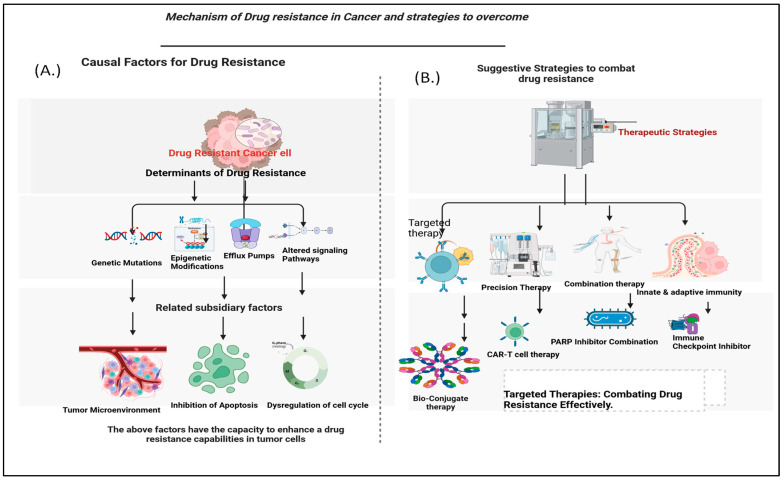
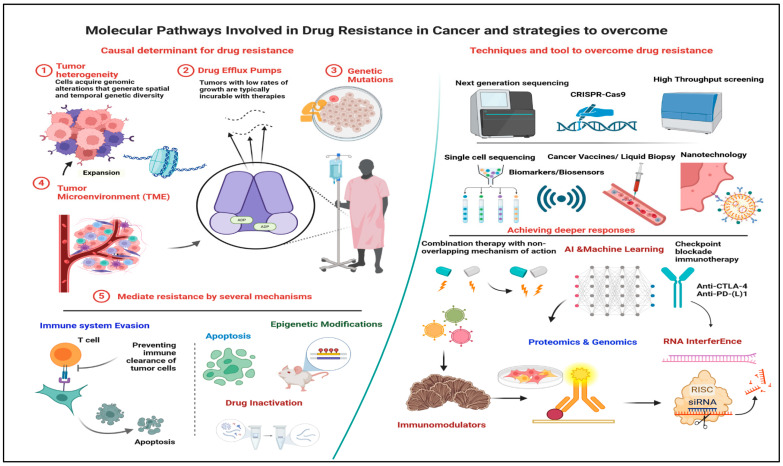
The rise of drug resistance in cancer cells presents a formidable challenge in modern oncology, necessitating the exploration of innovative therapeutic strategies. This review investigates the latest advancements in overcoming drug resistance mechanisms employed by cancer cells, focusing on emerging therapeutic modalities. The intricate molecular insights into drug resistance, including genetic mutations, efflux pumps, altered signaling pathways, and microenvironmental influences, are discussed. Furthermore, the promising avenues offered by targeted therapies, combination treatments, immunotherapies, and precision medicine approaches are highlighted. Specifically, the synergistic effects of combining traditional cytotoxic agents with molecularly targeted inhibitors to circumvent resistance pathways are examined. Additionally, the evolving landscape of immunotherapeutic interventions, including immune checkpoint inhibitors and adoptive cell therapies, is explored in terms of bolstering anti-tumor immune responses and overcoming immune evasion mechanisms. Moreover, the significance of biomarker-driven strategies for predicting and monitoring treatment responses is underscored, thereby optimizing therapeutic outcomes. For insights into the future direction of cancer treatment paradigms, the current review focused on prevailing drug resistance challenges and improving patient outcomes, through an integrative analysis of these emerging therapeutic strategies.
Overview
The claims and statistics of this paper haven’t been checked yet.
Free: it reads the open-access text and checks the first 5 claims that cite a source we can check. Create a free account to check every claim.
Integrity signals
Registry
Cites
Statistics
Figures
Verification
Claims the paper makes
The claims and statistics of this paper haven’t been checked yet.
Free: it reads the open-access text and checks the first 5 claims that cite a source we can check. Create a free account to check every claim.
Claims other papers make about this one
Each is checked against this paper’s own text: does it say what the citing paper says it does?
The source backs part of the claim, not all of it — or backs it for a different population, condition or comparison.
In the citing paper
“Activation of survival pathways can promote cell survival and proliferation in the presence of DNA-damaging agents [49].”
From Mechanisms and Strategies to Overcome Drug Resistance in Colorectal Cancer (2025) · cites this paper as [49]
Experimental — accuracy not yet measuredThe source backs part of the claim, not all of it — or backs it for a different population, condition or comparison.
In the citing paper
“CRC cells often have enhanced DNA damage repair capacity due to upregulation of alternative pathways and can fix DNA damage induced by chemotherapy or radiotherapy [49].”
From Mechanisms and Strategies to Overcome Drug Resistance in Colorectal Cancer (2025) · cites this paper as [49]
Experimental — accuracy not yet measuredThe source backs part of the claim, not all of it — or backs it for a different population, condition or comparison.
In the citing paper
“ICIs like pembrolizumab and nivolumab block the PD-1 receptor, which activates T cells and allows them to better recognize and destroy tumor cells, even those that have become resistant to other treatments [49].”
From Mechanisms and Strategies to Overcome Drug Resistance in Colorectal Cancer (2025) · cites this paper as [49]
Experimental — accuracy not yet measuredThe source backs part of the claim, not all of it — or backs it for a different population, condition or comparison.
In the citing paper
“By inhibiting PARP, these drugs block the repair of single-strand breaks, leading to the accumulation of double-strand breaks and cell death [49].”
From Mechanisms and Strategies to Overcome Drug Resistance in Colorectal Cancer (2025) · cites this paper as [49]
Experimental — accuracy not yet measuredThe cited source says what the claim attributes to it.
In the citing paper
“combining cytotoxic chemotherapy drugs with molecular-targeted inhibitors can have synergistic effects that circumvent resistance pathways [49].”
From Mechanisms and Strategies to Overcome Drug Resistance in Colorectal Cancer (2025) · cites this paper as [49]
5 more claims about this paper
Create a free account to see every claim other papers make about this one.
Self-check
Percentages, sums and reported differences re-computed from the paper’s own numbers.
The self-check needs the paper’s full text.
Citations
Cites
PD-1 and PD-L1 Immune Checkpoint Blockade to Treat Breast Cancer
Hartkopf, A. D., Taran, F.-A., Wallwiener, M., Walter, C. B., Krämer, B., Grischke, E.-M., & Brucker, S. Y. (2016) · Breast Care · doi:10.1159/000453569 · Cited by 30,845
The blockade of immune checkpoints in cancer immunotherapy
Pardoll, D. M. (2012) · Nature Reviews Cancer · doi:10.1038/nrc3239 · Cited by 13,838 · cited 1×
“This binding makes the T cells ineffective, leading to immune evasion and exhaustion [79].”
BackgroundAn overview of clinical decision support systems: Benefits, risks, and strategies for success
Sutton, R. T., Pincock, D., Baumgart, D. C., Sadowski, D. C., Fedorak, R. N., & Kroeker, K. I. (2020) · npj Digital Medicine · doi:10.1038/s41746-020-0221-y · Cited by 3,019 · cited 1×
“Keeping up with the fast pace of cancer research and technology is also a challenge [118].”
BackgroundZhang, Y., & Zhang, Z. (2020) · Cellular & Molecular Immunology · doi:10.1038/s41423-020-0488-6 · Cited by 2,794 · cited 1×
“One major area of progress involves uncovering the molecular pathways linked to drug removal from cells [15].”
BackgroundCombination therapy in combating cancer
Mokhtari, R. B., Homayouni, T. S., Baluch, N., Morgatskaya, E., Kumar, S., Das, B., & Yeger, H. (2017) · Oncotarget · doi:10.18632/oncotarget.16723 · Cited by 2,543 · cited 1×
“Combination therapies enhance anticancer effects and overcome resistance by simultaneously targeting multiple signaling pathways [35].”
BackgroundDrug resistance in cancer: An overview
Housman, G., Byler, S., Heerboth, S., Lapinska, K., Longacre, M., Snyder, N., & Sarkar, S. (2014) · Cancers · doi:10.3390/cancers6031769 · Cited by 2,463 · cited 3×
“This makes it harder to treat or control the growth of tumors [1].”
BackgroundCTLA-4 and PD-1 Pathways: Similarities, Differences, and Implications of Their Inhibition
Buchbinder, E. I., & Desai, A. (2016) · American Journal of Clinical Oncology · doi:10.1097/coc.0000000000000239 · Cited by 2,360 · cited 1×
“Cancer cells can exploit these pathways to evade immune detection and destruction [71].”
BackgroundRoles of the immune system in cancer: From tumor initiation to metastatic progression
Gonzalez, H., Hagerling, C., & Werb, Z. (2018) · Genes & Development · doi:10.1101/gad.314617.118 · Cited by 2,111 · cited 1×
“The immune system’s ability to recognize and target cancer cells is based on the recognition of specific antigens or markers expressed by tumor cells, which distinguishes them from normal cells [67].”
BackgroundMechanisms of DNA damage, repair, and mutagenesis
Chatterjee, N., & Walker, G. C. (2017) · Environmental and Molecular Mutagenesis · doi:10.1002/em.22087 · Cited by 2,039 · cited 1×
“Furthermore, the nucleotide excision repair (NER) pathway and the base excision repair (BER) pathway contribute to rectifying diverse forms of DNA damage induced by chemotherapeutic agents [26].”
BackgroundThe Different Mechanisms of Cancer Drug Resistance: A Brief Review
Mansoori, B., Mohammadi, A., Davudian, S., Shirjang, S., & Baradaran, B. (2017) · Advanced Pharmaceutical Bulletin · doi:10.15171/apb.2017.041 · Cited by 1,883
Cited by
Items 101–200 of 372
Cancer Metabolism and Its Historical & Molecular Foundations: An Overview
Al‐Horani, R. A. (2026) · Drugs and Drug Candidates · doi:10.3390/ddc5010017 · Cited by 5
“Combination therapies, pairing metabolic inhibitors with chemotherapy, radiation, or immunotherapy, hold promise for overcoming resistance and enhancing treatment responses [119,120].”
Gupta, P., Chaudhary, R., & Goel, F. (2026) · Journal of Holistic Integrative Pharmacy · doi:10.1016/j.jhip.2026.02.007 · Cited by 6
Xie, D., Yang, C. C.-K., Gao, S., Li, J., Yang, J., Li, X., Jiang, R., Cao, F., Zhang, S., Wang, L., et al. (2026) · International Journal of Molecular Sciences · doi:10.3390/ijms27073287 · Cited by 6
Soni, M., Ragavendran, C., Imath, M., Manoharadas, S., & Nakouti, I. (2025) · Journal of Cluster Science · doi:10.1007/s10876-025-02852-9 · Cited by 6
“Nanotechnology can help address the growing problem of drug resistance, particularly in cancer and infectious diseases [ 8 ].”
Optimal Pharmaceutical Management Strategies in Cancer Treatment: Novel Approaches
Alishahi, F., Soudmand, N., Goki, T. G., & Rashidoleslami, T. S. (2025) · Asian Pacific Journal of Cancer Nursing · doi:10.31557/apjcn.1740.20250308 · Cited by 5
PLLA Porous Scaffold as a 3D Breast Cancer Model to Investigate Drug Resistance
Carbone, C., Rigogliuso, S., Brucato, V., Cusimano, A., Labbozzetta, M., Carrubba, V. L., Poma, P., Notarbartolo, M., & Pavia, F. C. (2024) · Journal of Biomedical Materials Research Part A · doi:10.1002/jbm.a.37836 · Cited by 5
Reopening Pandora’s box: Is there a role for HDL in breast cancer?
Sawada, M. I., Santana, M. B. S., Vancini, M. G., & Passarelli, M. (2025) · Seminars in Cancer Biology · doi:10.1016/j.semcancer.2025.07.001 · Cited by 4
Biochemical Precision: Enzyme-Responsive Drug Delivery Systems in Cancer Therapy
Narkhede, M., Akanksha, K., & Nilesh, W. (2025) · Current Enzyme Inhibition · doi:10.2174/0115734080363073250723061416 · Cited by 7
Anwar, N., Malik, M. N. H., Atif, M., Alanzi, A. R., Alharbi, H. A., Younis, W., Abbas, M., & Solre, G. F. B. (2025) · Food Science & Nutrition · doi:10.1002/fsn3.71108 · Cited by 4
“This multifaceted mechanism of action is particularly relevant in cancer treatment, where targeting multiple pathways can enhance therapeutic efficacy and reduce the likelihood of resistance (Garg et al. 2024).”
Beltrame, B. M., Weimer, P., Medeiros-Neves, B., Gentil, G. F. S., Stefani, M. A., Velho, M. C., Fachel, F. N. S., Schuh, R. S., Braganhol, E., & Teixeira, H. F. (2025) · Nanomedicine · doi:10.1080/17435889.2025.2574249 · Cited by 5
Laxane, N., & Yadav, K. S. (2025) · Polymers for Advanced Technologies · doi:10.1002/pat.70424 · Cited by 4
“Among the various challenges, MDR remains the most common cause of treatment failure and increased tumor aggressiveness, and it continues to be a major obstacle in cancer therapy research [4].”
Rather, M. A., Rasool, S., Khursheed, A., Ahmed, S. S. S. J., Bashir, F., Shalla, A. H., Dar, B. N., Mir, J. M., & Dangroo, N. A. (2025) · Journal of Chemistry · doi:10.1155/joch/5133015 · Cited by 4
Mafe, A. N., Bappa, L. D., Sharifi‐Rad, J., Setzer, W. N., & Călina, D. C. (2025) · Archiv der Pharmazie · doi:10.1002/ardp.70170 · Cited by 4
“Inves-tigating alantolactone in combination with established chemo-therapeutic agents or other emerging therapies may also enhance its effectiveness and help overcome resistance mechanisms [163].”
Molecular basis of cancer chemoresistance: biochemical insights
Guneidy, R. A. (2026) · Drug Metabolism Reviews · doi:10.1080/03602532.2026.2613955 · Cited by 4
“By focusing on specific genetic mutations, proteins, or signaling pathways, these therapies can effectively overcome certain forms of treat-ment resistance (wang et al. 2019; Garg et al. 2024; liu et al. 2024).”
InfluentialShaaban, S., Hawas, S. S., Elsharif, A. M., Sharaky, M. M., Ba‐Ghazal, H., Alaasar, M. A., Alatawi, F. S., Alomari, K. B., Eissa, M. E., Khatib, A. O. A., et al. (2026) · RSC Advances · doi:10.1039/d5ra09238h · Cited by 4
Reshaping the colorectal cancer immune microenvironment: insights from single-cell and spatial omics
Zhang, S., Fu, Q., Yuan, X., Wang, S., Liu, C., Zhang, C., (70818), B. L., & Gong, Y. (2026) · Cancer Cell International · doi:10.1186/s12935-026-04245-y · Cited by 4
“Spatial transcriptomics provides the potential mechanistic explanation: resistance is sustained by redundant, spatially organized multicellular programs rather than any single suppressive cell type [115].”
Protein-based nanocarriers in the management of hard-to-treat solid tumours
Evtushenko, A. S., Lozano‐Torres, B., & Fruk, L. (2026) · Advanced Drug Delivery Reviews · doi:10.1016/j.addr.2026.115842 · Cited by 4
Next generation approaches in cancer immunotherapy targeting mechanisms beyond PD1 and PDL1
El-Tanani, M., Satyam, S. M., Rabbani, S. A., Rangraze, I. R., Matalka, I. I., Muhana, F., El‐Tanani, Y., Aljabali, A. A. A., Khan, M. A., Parvez, S., et al. (2026) · Discover Oncology · doi:10.1007/s12672-026-04852-1 · Cited by 7
“Biomarker-driven strategies to predict and monitor resistance are being actively investigated, along with novel agents designed to simultaneously target multiple immune evasion pathways [19, 62, 63].”
Alshams, M. A., Nafie, M. S., Ravi, A., Aouad, M. R., Moussa, Z., & Rezki, N. (2026) · Bioorganic Chemistry · doi:10.1016/j.bioorg.2026.109859 · Cited by 4
Lu, H., Hu, X., Chen, Y., & He, J. (2026) · Frontiers in Oncology · doi:10.3389/fonc.2026.1793470 · Cited by 5
“Current international guidelines increasingly recommend risk-adapted surveillance intervals based on individual patient characteristics rather than fi xed schedules (13).”
InfluentialSmart Biomaterials for Targeted Cancer Therapy
Parida, A., & Raheem, A. (2025) · Premier journal of science. · doi:10.70389/pjs.100050 · Cited by 7
Role of Immunotherapy in Ovarian Cancer: Advances, Challenges, and Future Perspectives
Garg, P., Singhal, G., Pareek, S., Khan, A., Tan, T., Wheeler, D. L., & Singhal, S. S. (2025) · Cancer treatment and research · doi:10.1007/978-3-031-97242-3_10 · Cited by 4
Self-citationHou, H.-P., Liu, X., Liu, W., Zhang, P., & Zhou, B. (2025) · Medical Oncology · doi:10.1007/s12032-025-02699-0 · Cited by 3
“Cancer cells employ a variety of strategies to evade therapeutic interventions, but combining therapies that target different molecular pathways or cellular processes has emerged as an effective approach to overcoming drug resistance [2, 3].”
Wang, X., Lama, R., Kelleher, A. D., Rizzo, E., Galster, S. L., Xue, C., Zhang, Y., Wang, J., Qu, J., & Chemler, S. R. (2025) · Molecules · doi:10.3390/molecules30132696 · Cited by 4
“…mediated by tumor cell heterogeneity, differential expression of efflux pump, and tumor microenvironment, while acquired resistance of initial responsive cancer cells can be gained through distinct mechanisms including gene mutation and non-genomic alteration of the targeted signaling pathways [2].”
Exploring pharmacogenomics of medicinal plants for optimising cancer management: a narrative review
Ghazaee, S. P., Lushchyk, U. B., HARNYK, T., Tymchenko, I., Сергіївна, М.-Т. К., Анзіна, К., & Марченко, Ю. (2025) · Fìtoterapìâ · doi:10.32782/2522-9680-2025-2-87 · Cited by 3
An Update on Alkylating Agents in Breast Cancer Therapy
Shaik, R., Gera, N. E., Syeda, F. S., Syeda, S., Mandava, K., Chirumamilla, S., & Bontha, J. (2025) · Cancer Biotherapy and Radiopharmaceuticals · doi:10.1177/10849785251376173 · Cited by 3
Crintea, A., Munteanu, C., Ilyés, T., Silaghi, C. N., & Craciun, A. M. (2025) · Journal of Functional Biomaterials · doi:10.3390/jfb16090352 · Cited by 3
“Cancer cells evade therapies through complex mechanisms, including increased expression of drug efflux pumps (e.g., P-glycoprotein), activation of alternative survival pathways, or target mutations [200,201].”
Peptomer Linkers Enable Kinetic Control over Co‐Delivery of Multiple Chemotherapeutics
Watkins, C. M., Hallam, S., Austin, M. J., & Rosales, A. M. (2025) · Advanced Healthcare Materials · doi:10.1002/adhm.202504277 · Cited by 4
Khorramdelazad, H., Pirsadeghi, A., Amraei, E., Amani, A., Abbasnia, M., Nematzade, F., Shahabinejad, E., Mahabadi, R. N., Ghanizadeh, S., Kouchakzade, F. S., et al. (2026) · Biomedicine & Pharmacotherapy · doi:10.1016/j.biopha.2025.118953 · Cited by 4
Peter, A. S., Kandasamy, I., Ranjith, S., Jeyarajan, S., Chidambaram, P., & Kumarasamy, A. (2026) · Current Microbiology · doi:10.1007/s00284-026-04770-z · Cited by 3
“Combinational drug therapy is the recent effi - cient strategy in modern medicine to combat the multidrug resistance mechanisms [50].”
Sajid, T., Sultan, H. M., Mustaffa, F.-E., & Mujahid, R. (2026) · International Journal of Pharmacy & Integrated Health Sciences · doi:10.56536/ijpihs.v7i1.299 · Cited by 3
Soltau, C. P., Tay, B. Q., Richard, D. J., Bottle, S. E., & Adams, M. N. (2026) · Biomedicine & Pharmacotherapy · doi:10.1016/j.biopha.2026.119348 · Cited by 3
Kumar, S., Jindal, A., Mainuddin, Rastogi, H., & Kumar, A. (2026) · ACS Applied Bio Materials · doi:10.1021/acsabm.5c02297 · Cited by 4
Galoian, K. A., Bilbao, D., Denny, C., Gallego, N. C., Roberts, E. R., Martinez, D., & Temple, H. T. (2024) · Molecular Therapy Oncology · doi:10.1016/j.omton.2024.200905 · Cited by 4
Shirbhate, E., Koch, B., Singh, V., Dubey, A., Yasin, H. K. A., & Rajak, H. (2025) · Pharmaceuticals · doi:10.3390/ph18081148 · Cited by 3
“Current anticancer drugs usually fail due to innate and acquired resistance mechanisms, with multidrug resistance accounting for more than 90% of cancer-related deaths [1,2].”
Peptide-Based Drugs: Emerging Treatment Strategies of Lung Cancer by Overcoming Chemoresistance
Karati, D., Das, S., & Mitra, S. (2025) · International Journal of Peptide Research and Therapeutics · doi:10.1007/s10989-025-10767-2 · Cited by 3
“…like PD-1 and PD-L1, loss of neoantigens, and a highly immunosuppressive tumor microenvironment composed of regulatory T cells, myeloid-derived suppressor cells, and immune suppressive cytokines comprise immune evasion that mediates resistance to immunotherapy (Zhang et al. 2024; Garg et al. 2024).”
El pisco, denominación de origen peruana
Gutiérrez, G. (2003) · Agenda Internacional · doi:10.18800/agenda.200302.014 · Cited by 3
Trivedi, S., Hussain, U., Tammewar, S. S., Agade, R., & Sahu, D. C. (2025) · Next Nanotechnology · doi:10.1016/j.nxnano.2025.100235 · Cited by 3
Rathnayake, P. C., Senavirathna, D. C., Milhan, M. M., Gunawardane, S. D. V., Seneviratne, N. N., Perera, D. N., Rajagopalan, U., Senathilake, K. S., & Samarakoon, S. R. (2025) · Egyptian Journal of Basic and Applied Sciences · doi:10.1080/2314808x.2025.2595845 · Cited by 5
“Natural pharmaceuticals are a treatment option currently being investigated for their favorable properties, such as fewer side effects, diverse modes of action and reduced potential of treat-ment resistance [7–12].”
Advances in Understanding How RhoB Regulates Akt Inhibition Efficacy in NSCLC
Akgun, N., Halıcı, Z., & Çadırcı, E. (2025) · Current Cancer Drug Targets · doi:10.2174/0115680096355061241115113703 · Cited by 2
Qarah, A. F., Alomari, K. B., Almughathawi, R., Siddiq, H. A., Alharbi, H., Alalawy, A. I., Alharbi, A. S., & El‐Metwaly, N. M. (2025) · Journal of Molecular Structure · doi:10.1016/j.molstruc.2025.142570 · Cited by 2
An overview of the relationship between melatonin and drug resistance in cancers
Fazilat, A., Roshani, S., Moghadam, F. M., & Valilo, M. (2025) · Hormone Molecular Biology and Clinical Investigation · doi:10.1515/hmbci-2025-0016 · Cited by 2
“According to reports, there are two types of MDR in tumor cells: in the fi rst type, MDR is inherent to cytotoxic agents, while the second type acquires the chemotherapy resistance phenotype during drug therapy [53, 54].”
Soufiabadi, M. F., Hajihosseini, R., & Lotfi, Z. (2025) · Artificial Cells Nanomedicine and Biotechnology · doi:10.1080/21691401.2025.2507372 · Cited by 2
“Currently, the application of nanomaterials is rapidly expanding, offering promising solutions in various areas such as nano-diagnosis, nanomedicine, antifungal treatments, antioxidants, luminescence, anticancer drug and gene delivery, and photocatalytic application [5].”
Overcoming resistance mechanisms in cancer immunotherapy—novel approaches and combinations
Shaik, R., Yashaswi, B., Anjali, M., Syeda, S., & Khan, H. (2025) · Naunyn-Schmiedeberg s Archives of Pharmacology · doi:10.1007/s00210-025-03963-w · Cited by 2
“Among the emerging immunotherapies, chimeric antigen receptor (CAR) T cell therapy has shown particular promise in treating certain blood cancers (Garg et al. 2024).”
Alkhayl, F. F. A. (2025) · European Journal of Medicinal Chemistry · doi:10.1016/j.ejmech.2025.117870 · Cited by 3
Resistance signatures manifested in early drug response across cancer types and species
Ruoff, C., Mitchell, A. V., Mondal, P., Gopalan, V., Singh, A., Gottesman, M. M., & Hannenhalli, S. S. (2025) · Cancer Drug Resistance · doi:10.20517/cdr.2025.112 · Cited by 4
Skipper, T. S., Dickson, K.-A., Denes, C. E., Waller, M. A., D'Araujo, T. Y., Neely, G. G., Bowden, N. A., Faiz, A., & Marsh, D. J. (2025) · Cellular Oncology · doi:10.1007/s13402-025-01102-4 · Cited by 2
“Acquired chemoresistance occurs when cancer cells undergo various genetic and epigenetic modifications to avoid death from chemotherapeutic agents [ 161 ].”
Mena-Gutiérrez, S., Araúzo-Bravo, M. J., Beobide, G., Bergara-Muguruza, L., Castillo, Ó., Castellanos–Rubio, A., Daniela Gerovska, D., Luque, A., Pascual-Colino, J., & Pérez‐Yáñez, S. (2025) · Journal of Materials Chemistry B · doi:10.1039/d5tb01280e · Cited by 2
Development of novel coumarin–barbituric acid hybrids as a new class of anti-breast cancer agents
Kaur, P., & Sharma, R. (2025) · Biochemical and Biophysical Research Communications · doi:10.1016/j.bbrc.2025.152709 · Cited by 2
Lipid Hybrid Nanoparticles in Cancer Therapy: A Promising Nanotechnology-Based Drug Delivery System
Mujawar, N., & Mulla, J. A. S. (2025) · International Journal of Pharmaceutical Sciences and Drug Research · doi:10.25004/ijpsdr.2025.170408 · Cited by 2
Ghosh, D., Dasgupta, A., Dutta, G., Pramanik, S., Acharya, K., & Chakrabarti, G. (2025) · Colloids and Surfaces B Biointerfaces · doi:10.1016/j.colsurfb.2025.115222 · Cited by 2
Solanki, V. H., Patel, U. P., Baloch, M. M., & Naliapara, Y. T. (2025) · ChemistrySelect · doi:10.1002/slct.202503196 · Cited by 2
Metabolites involvement in the growth and spread of liver cancer
Gautam, A. K., Kumar, V. B., Sonkar, A. B., Singh, A., Yadav, D., Rajan, N., Kumar, P., Singh, S., Saha, S., & Rajamanickam, V. M. (2025) · Liver Research · doi:10.1016/j.livres.2025.10.005 · Cited by 2
“153 A comparative analysis reveals that metabolic therapies are also more amenable to integration with existing treatment modalities.”
Garmabi, H., Matin, M. M., Sabet‐Sarvestani, H., & Eshghi, H. (2025) · ChemistrySelect · doi:10.1002/slct.202503078 · Cited by 2
Nanotechnology-based drug delivery of natural products in cancer
Khan, S. A., Havelikar, U. A., & Godbole, M. (2025) · Elsevier eBooks · doi:10.1016/b978-0-443-40511-2.00010-3 · Cited by 4
Ratiometric Strategies in Oncology: Multifunctional Roles in Chemotherapy, Imaging, and Diagnosis
Khade, P., Gupta, U., Mehra, N. K., & Singh, P. K. (2025) · ACS Applied Bio Materials · doi:10.1021/acsabm.5c02041 · Cited by 3
Khodayari, M., Esfandiari, M., Kamankesh, M., Borooghani, H., Asgharian, H., Esfandiari, B., & Mohajerzadeh, S. (2025) · Materials Today Advances · doi:10.1016/j.mtadv.2025.100635 · Cited by 3
Implementing gut microbiota, ROS, and SCF modulation in cancer care: Research into practice
Jana, K., Ghosh, S., Debnath, B., Rai, V. K., Dash, P., Das, C., Rout, S. K., Kar, B., Ghosh, G., & Rath, G. (2025) · Elsevier eBooks · doi:10.1016/b978-0-443-33459-7.00013-2 · Cited by 2
de Morais, É. F., Oliveira, L., Marques, C. E., Morais, H. G. D. F., Moreira, D. G. L., Albuquerque, L. D. A., Silva, J. R. V., Freitas, R. D. A., & Coletta, R. D. (2026) · Applied Sciences · doi:10.3390/app16010525 · Cited by 5
Kim, M.-A., Nam, J., Shin, H., Kim, J. Y., Jun, A., Cho, H., Han, M.-R., & Kim, J. (2026) · International Journal of Molecular Sciences · doi:10.3390/ijms27020948 · Cited by 3
“Advances in multi-omics approaches have identified therapeutic strategies targeting the TME, such as anti-angiogenic agents (e.g., bevacizumab), TAM-targeted therapies, and immune checkpoint inhibitors (e.g., PD-1/PD-L1 blockade), that show clinical potential [24,35].”
Chen, Y.-S., O’Hagan, S., & Day, P. J. (2026) · Frontiers in Pharmacology · doi:10.3389/fphar.2026.1724989 · Cited by 2
Aboud, H. K., & Mageed, A. H. (2026) · Pure and Applied Chemistry · doi:10.1515/pac-2026-0765 · Cited by 2
“6,7 10 The design of novel heterocyclic sca ff olds with potential anticancer activity has gained considerable attention.”
Mohlongo, M., George, B. P. A., & Abrahamse, H. (2026) · Photochemical & Photobiological Sciences · doi:10.1007/s43630-026-00879-z · Cited by 2
Biniyam, P. D., Aboagye, D., Nkrumah, L. K., Sackitey, S., Buabeng, J. A., Ohene‐Adu, V., Adu-Adjei, K., Klu, S., Ayihi, S. J., Penajah, C. T., et al. (2026) · In Silico Research in Biomedicine · doi:10.1016/j.insi.2026.100340 · Cited by 2
Vikal, A., Maurya, R., Kumar, P., Verma, N., & Mishra, A. K. (2026) · Life Sciences · doi:10.1016/j.lfs.2026.124434 · Cited by 2
Chu, H., & Wang, D. (2026) · Frontiers in Pharmacology · doi:10.3389/fphar.2026.1796656 · Cited by 2
Targeting SLC4A4: A Novel Approach in Colorectal Cancer Drug Repurposing
Pawar, K., Gupta, P. P., Solanki, P. S., Niraj, R. R. K., & Kothari, S. L. (2025) · Current Issues in Molecular Biology · doi:10.3390/cimb47010067 · Cited by 3
Sylvanus, B., Adebanjo, E. A., Fatai, L. O., Muojekwu, E. E., Bakare, K. M., Oseni, V. E., & Matthew, U. O. (2025) · IGI Global eBooks · doi:10.4018/979-8-3693-5400-1.ch008 · Cited by 2
Bawazir, W. A., Tarik El-Sayed, A. L. I., Assiri, M. A., Shati, A. A., Alfaifi, M. Y., Elbehairi, S. E. I., & Al-Amri, H. S. (2025) · Chemistry & Biodiversity · doi:10.1002/cbdv.202501342 · Cited by 2
Barchelouei, N. K., Yazdi, M. H., & Haghighat, S. (2025) · Molecular Biology Reports · doi:10.1007/s11033-025-10873-w · Cited by 3
“These limitations underscore the urgent need for novel complementary strategies that enhance therapeutic efficacy, overcome resistance, and Mohammad Hossein Yazdi mh-yazdi@tums.ac.ir Setareh Haghighat haghighat.s@iau.ac.ir; Setareh_haghighat@yahoo.com mitigate adverse effects [ 4 ].”
Gunawardane, S. D. V., Milhan, M. M., Rathnayaka, P. C., Garusinghe, P. S., Gunaratne, K. S., Kanagasundaram, A., Darshanamala, T. M. D., Senevirathne, D. C., Wijerathne, S. K., Perera, C., et al. (2026) · PLoS ONE · doi:10.1371/journal.pone.0352420 · Cited by 3
Clonal evolution and molecular mechanisms of ovarian cancer: a comprehensive review
Nagasaka, K. (2024) · Academia oncology. · doi:10.20935/acadonco7484 · Cited by 2
Wang, X., Pan, Z., Liu, N., Dai, X., Yang, Y. N., Zhang, C., & Xu, Y. (2025) · BioScience Trends · doi:10.5582/bst.2025.01120 · Cited by 1
Naeeni, B., Asl, B. J., Bavarsad, S. S., Hatami, M., Orak, G., Saki, S., Alizadeh, A., & Shakerian, E. (2025) · Hepatitis Monthly · doi:10.5812/hepatmon-162001 · Cited by 2
Viswalingam, V., & Kumar, D. (2025) · Elsevier eBooks · doi:10.1016/b978-0-443-33653-9.00014-4 · Cited by 2
Decoding RNA therapeutics: Precision approaches in women's health
Far, N. P., Boroujerdi, H. N., Karimi, M. S., Vezvaei, P., Behfar, M., Mirzaei, R., Habibi, R., Varkiani, M. M., Aref, A. R., & Ebrahimi, N. (2025) · European Journal of Pharmacology · doi:10.1016/j.ejphar.2025.178275 · Cited by 2
Peptide-Based Therapeutic Platforms for Addressing Drug Resistance in Breast Cancer
Meur, S., & Karati, D. (2025) · International Journal of Peptide Research and Therapeutics · doi:10.1007/s10989-025-10770-7 · Cited by 1
“Clinically, recent failures in maintaining a durable response further illustrate the need for and benefit from versatile, adaptive therapeutics capable of penetrating this multilayered resistance architecture (Garg et al. 2024).”
Mansouri, R., Heydarpour, F., Yari, K., Naseroleslami, M., & Payandeh, M. (2025) · BMC Cancer · doi:10.1186/s12885-025-15070-3 · Cited by 2
“It was observed that HDAC8 gene expression is higher in the drug-sensitive patient group than in other groups resistance is a complex and multifactorial process that accelerates the progression of the disease, enables evasion of treatment, and reduces the chance of recovery [37, 38].”
Shukla, N., Chanderiya, A., Das, R., Vyas, S., Mukhanova, E., Soldatov, A. V., & Adeloju, S. B. O. (2025) · Advanced NanoBiomed Research · doi:10.1002/anbr.202500154 · Cited by 1
Obeagu, E. I., & Parray, A. R. (2025) · Universal Journal of Pharmaceutical Research · doi:10.22270/ujpr.v10i5.1430 · Cited by 1
Protein Engineering and Drug Discovery: Importance, Methodologies, Challenges, and Prospects
Mohammed, A., Ibrahim, N. A., & Basher, N. S. (2025) · Biomolecules · doi:10.3390/biom15111628 · Cited by 3
“Combination therapies, particularly in oncology, are gaining traction, utilizing engineered proteins alongside other treatments to enhance efficacy and overcome resistance mechanisms [195,196].”
Cytotoxic and Antimicrobial Activity of the Ageratina Genus
Rojas-Jiménez, S., Salinas-Sánchez, D. O., Rodríguez-López, V., Salinas-Marín, R., Avilés-Montes, D., Sotelo-Leyva, C., Figueroa‐Brito, R., BustosRivera-Bahena, G., Abarca-Vargas, R., Arias-Ataide, D. M., et al. (2025) · Molecules · doi:10.3390/molecules30234656 · Cited by 1
Abutaha, N., Farshori, N. N., Al-Sheddi, E. S., Al-Oqail, M. M., Al-Mekhlafi, F. A., & Wadaan, M. A. (2025) · Open Chemistry · doi:10.1515/chem-2025-0205 · Cited by 1
Zarrin, P., Gado, S., Boroujeni, A. F., Gadashli, İ., Bozkurt, F. Z., Cansaran‐Duman, D., Mutlu, P., & Ateş‐Alagöz, Z. (2025) · ACS Omega · doi:10.1021/acsomega.5c07713 · Cited by 1
Sharma, R. R., Sharma, R., Dua, K., Gupta, G., Chellappan, D. K., Singh, S. K., Singh, T., & Negi, P. (2026) · Pathology - Research and Practice · doi:10.1016/j.prp.2026.156351 · Cited by 1
Razavi, Z.-S., Mottaghi, A., Dmitrieva, L., Fallahianshafiei, S., Olfat, E., & Ahmadi, N. (2026) · Annals of Biomedical Engineering · doi:10.1007/s10439-025-03963-0 · Cited by 2
“These nanoparticles can enhance drug delivery, modulate signaling pathways, and overcome resistance [ 136 ] in cancer cells [142].”
Mondal, J., Dasgupta, T., Kumar, C. K., Nandagopal, P. B., Mal, S., Paul, S., Aishwarya, S., Pandya, C., Emerson, I. A., Manickam, V., et al. (2026) · ChemistryOpen · doi:10.1002/open.202500543 · Cited by 2
Nadia, N. A. C., Ngouana, V., Cédric, Y., Djakbé, D. L., Innes, W., Pacome, T. K., Guy-Armand, G. N., Edna, G. D. M., Merveille, T. T., Fuyou, Z., et al. (2026) · Tropical Diseases Travel Medicine and Vaccines · doi:10.1186/s40794-026-00287-2 · Cited by 1
“Importantly, the terms wild-type and mutant should apply only to the N86 codon, since other polymorphic sites within the Pfmdr1 gene (e.g., Y184F, D1246Y) exhibit distinct and independent effects on drug response [12].”
The Role of Mitochondrial Ion Channels in the Evolution of Anticancer Drug Resistance
Pandey, S. K., Kulshreshtha, A., & Mishra, A. (2026) · Current Protein and Peptide Science · doi:10.2174/0113892037410334251021155546 · Cited by 1
Synergistic Antitumor Potential of Propolis With 6‑Mercaptopurine and 5‑Fluorouracil
Majami, A. A., Ali, E. M. M., Kalantan, A. A., Hussien, M. A., Elashkar, A. A., Basabrain, M. A., Sheikh, R. A., Alghazali, S. A., Albishi, H. M., Bawadood, A. S., et al. (2026) · Cell Biochemistry and Function · doi:10.1002/cbf.70177 · Cited by 1
“These novel interventions respond to the urgent need for improved therapeutic options in the management of persistent clinical challenges and represent a significant advance toward safer, more efficacious, and patient‐centered cancer care [3, 4].”
Dutta, P., Middya, S., Shome, S., Gupta, M. K., Dharmalingam, P., & Sudandiradoss, C. (2026) · Molecular and Cellular Probes · doi:10.1016/j.mcp.2026.102063 · Cited by 1
Korkmaz, E., Keskin, T., & Tekin, S. (2026) · Archives of Current Medical Research · doi:10.47482/acmr.1663941 · Cited by 1
Awadh, A. A. A. (2026) · Arabian Journal of Chemistry · doi:10.25259/ajc_1089_2025 · Cited by 1
Boutadghart, T., Nour, H., Chtita, S., & Ghaılane, R. (2026) · Computational Biology and Chemistry · doi:10.1016/j.compbiolchem.2026.108976 · Cited by 1
Wadhwani, B., Chauhan, M., Varshney, M., Dubey, S., Sanduja, M., & Kumar, A. (2026) · Next research. · doi:10.1016/j.nexres.2026.101599 · Cited by 1
Molecular origin, discovery, validation and application of neoantigens
Lyu, Q., & Hu, S. (2026) · Asian Journal of Pharmaceutical Sciences · doi:10.1016/j.ajps.2026.101143 · Cited by 4
“Combining such agents with vaccines targeting the drug-induced neoantigen represents a promising strategy [ 274 ].”
Topoisomerase I/II inhibitors: from established drugs to next-generation therapeutics
Arora, P., Sharma, A., Sharma, S., Arulsamy, S., Mani, N., & Kumar, S. (2026) · Inflammopharmacology · doi:10.1007/s10787-026-02186-6 · Cited by 1
“Although they have proved to be clinically successful, they have a restricted adverse effect due to gastrointestinal toxic - ity, myelosuppression, and resistance to their use through drug efflux and DNA repair pathways (Bianchini et al. 2022; Garg et al. 2024).”
Konika, T. A., Uddin, M. E., Jahan, R., Hasan, M. N., Shamsuzzaman, M., & Shamsudeen, S. M. (2026) · Chemistry & Biodiversity · doi:10.1002/cbdv.202503142 · Cited by 2
Tiwari, M. K., Bakun, P., Forest, E., Bola, J.-M., Murias, M., Kucinska, M., Zgoła-Grześkowiak, A., Cicha, E., Marczak, Ł., Cavalier, J., et al. (2026) · European Journal of Medicinal Chemistry · doi:10.1016/j.ejmech.2026.118826 · Cited by 1
alhashimi, H., Najm, M. A. A., & AL-Salman, H. N. K. (2026) · Farmacja Polska · doi:10.32383/farmpol/218224 · Cited by 1
Metadata
- Authors
- Garg, P., Malhotra, J., Kulkarni, P., Horne, D., Salgia, R., & Singhal, S. S.
- Affiliations
- GLA University (IN)
- City Of Hope National Medical Center (US)
- Corresponding author
- Singhal, Sharad S.
- Venue
- Cancers
- Publisher
- MDPI AG
- Published
- 2024-07-07
- Volume
- 16
- Issue
- 13
- Pages
- 2478
- ISSN
- 2072-6694 (ISSN-L)
- PMC
- PMC11240358
- OpenAlex
- W4400418891
- Cited by
- 339
- References
- 129
- Citations by year
- 2026: 165 · 2025: 167 · 2024: 6
- FWCI
- 57.57
- Type
- journal article
- Language
- en
- Open access
- gold
- doi.org
- Licence
- Locations
- Cancers (publishedVersion, cc-by)
- PubMed Central (publishedVersion, cc-by)
- PubMed (publishedVersion)
- Funders
- National Cancer Institute of the National Institutes of Health (P30CA33572, W81XWH-22-1-0331, HT9425-23-1-0581)
- United States Department of Defense (P30CA33572, W81XWH-22-1-0331, HT9425-23-1-0581)
- City of Hope’s Beckman Research Institute (P30CA33572, W81XWH-22-1-0331, HT9425-23-1-0581)
- Topics
- Health Sciences › Medicine › Oncology › Drug Transport and Resistance Mechanisms
- Health Sciences › Medicine › Oncology › Cancer Cells and Metastasis
- Health Sciences › Medicine › Oncology › Cancer Immunotherapy and Biomarkers
- Keywords
- chemoresistance, efflux pumps, genetic mutations, tumor microenvironment, targeted therapy, combination therapy, immunotherapy, immune checkpoint inhibitors, adoptive immunotherapy, biomarkers, precision medicine, antitumor immunity, immune evasion
About these checks
Registry, retraction, Cites and statistics results are computed, not judged, with one exception: a printed reference that no index lists is read once by a model before it counts as a citation error. Claims are extracted by a model and kept only when their quote appears verbatim in the text; each cited source is then checked, with a model’s help, for whether it says what the claim relies on. Those verdicts can be wrong — read the claim’s quote and the cited source before relying on one.
Statistics and arithmetic are recomputed, not judged.
Confidence bands are shown only for fields calibrated on our annotated test set. None is calibrated yet, so no band is shown.
What counts as a claim ›How we measure confidence ›How we check this ›
Are you an author, or do you see a problem with this page? Request a review
Data sources
Bibliographic data: Semantic Scholar, OpenAlex, Crossref.
Contains information from the Semantic Scholar Academic Graph Datasets, made available under the ODC Attribution License (ODC-BY 1.0).
Semantic Scholar’s data is described in: Kinney, R., et al. (2023). The Semantic Scholar Open Data Platform. arXiv:2301.10140.
