

Emerging Therapeutic Strategies to Overcome Drug Resistance in Cancer Cells
Open accessThe DOI matches its Crossref record; 129 of the 129 references it cites were found in a registry or an index.
Abstract
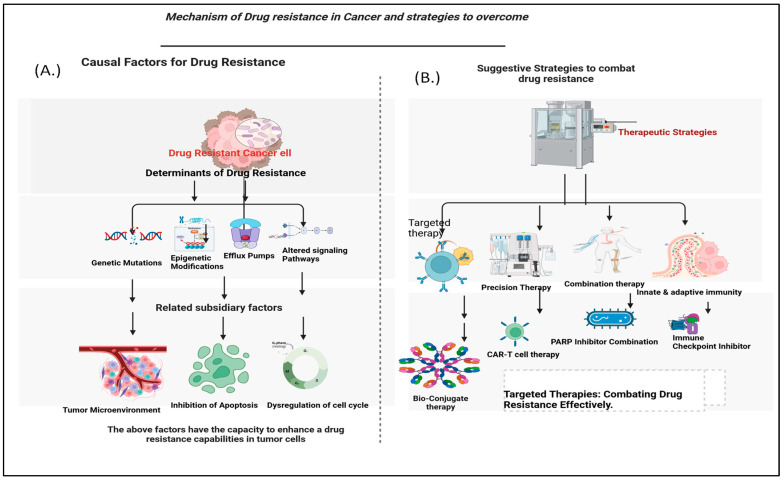
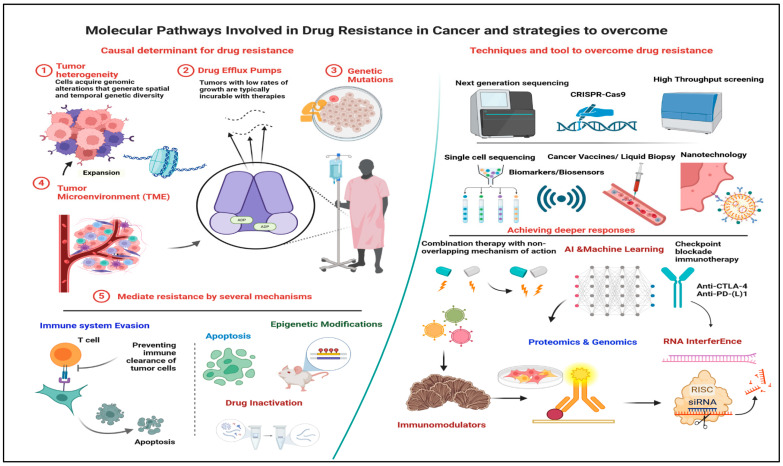
The rise of drug resistance in cancer cells presents a formidable challenge in modern oncology, necessitating the exploration of innovative therapeutic strategies. This review investigates the latest advancements in overcoming drug resistance mechanisms employed by cancer cells, focusing on emerging therapeutic modalities. The intricate molecular insights into drug resistance, including genetic mutations, efflux pumps, altered signaling pathways, and microenvironmental influences, are discussed. Furthermore, the promising avenues offered by targeted therapies, combination treatments, immunotherapies, and precision medicine approaches are highlighted. Specifically, the synergistic effects of combining traditional cytotoxic agents with molecularly targeted inhibitors to circumvent resistance pathways are examined. Additionally, the evolving landscape of immunotherapeutic interventions, including immune checkpoint inhibitors and adoptive cell therapies, is explored in terms of bolstering anti-tumor immune responses and overcoming immune evasion mechanisms. Moreover, the significance of biomarker-driven strategies for predicting and monitoring treatment responses is underscored, thereby optimizing therapeutic outcomes. For insights into the future direction of cancer treatment paradigms, the current review focused on prevailing drug resistance challenges and improving patient outcomes, through an integrative analysis of these emerging therapeutic strategies.
Overview
The claims and statistics of this paper haven’t been checked yet.
Free: it reads the open-access text and checks the first 5 claims that cite a source we can check. Create a free account to check every claim.
Integrity signals
Registry
Cites
Statistics
Figures
Verification
Claims the paper makes
The claims and statistics of this paper haven’t been checked yet.
Free: it reads the open-access text and checks the first 5 claims that cite a source we can check. Create a free account to check every claim.
Claims other papers make about this one
Each is checked against this paper’s own text: does it say what the citing paper says it does?
The source backs part of the claim, not all of it — or backs it for a different population, condition or comparison.
In the citing paper
“Activation of survival pathways can promote cell survival and proliferation in the presence of DNA-damaging agents [49].”
From Mechanisms and Strategies to Overcome Drug Resistance in Colorectal Cancer (2025) · cites this paper as [49]
Experimental — accuracy not yet measuredThe source backs part of the claim, not all of it — or backs it for a different population, condition or comparison.
In the citing paper
“CRC cells often have enhanced DNA damage repair capacity due to upregulation of alternative pathways and can fix DNA damage induced by chemotherapy or radiotherapy [49].”
From Mechanisms and Strategies to Overcome Drug Resistance in Colorectal Cancer (2025) · cites this paper as [49]
Experimental — accuracy not yet measuredThe source backs part of the claim, not all of it — or backs it for a different population, condition or comparison.
In the citing paper
“ICIs like pembrolizumab and nivolumab block the PD-1 receptor, which activates T cells and allows them to better recognize and destroy tumor cells, even those that have become resistant to other treatments [49].”
From Mechanisms and Strategies to Overcome Drug Resistance in Colorectal Cancer (2025) · cites this paper as [49]
Experimental — accuracy not yet measuredThe source backs part of the claim, not all of it — or backs it for a different population, condition or comparison.
In the citing paper
“By inhibiting PARP, these drugs block the repair of single-strand breaks, leading to the accumulation of double-strand breaks and cell death [49].”
From Mechanisms and Strategies to Overcome Drug Resistance in Colorectal Cancer (2025) · cites this paper as [49]
Experimental — accuracy not yet measuredThe cited source says what the claim attributes to it.
In the citing paper
“combining cytotoxic chemotherapy drugs with molecular-targeted inhibitors can have synergistic effects that circumvent resistance pathways [49].”
From Mechanisms and Strategies to Overcome Drug Resistance in Colorectal Cancer (2025) · cites this paper as [49]
5 more claims about this paper
Create a free account to see every claim other papers make about this one.
Self-check
Percentages, sums and reported differences re-computed from the paper’s own numbers.
The self-check needs the paper’s full text.
Citations
Cites
PD-1 and PD-L1 Immune Checkpoint Blockade to Treat Breast Cancer
Hartkopf, A. D., Taran, F.-A., Wallwiener, M., Walter, C. B., Krämer, B., Grischke, E.-M., & Brucker, S. Y. (2016) · Breast Care · doi:10.1159/000453569 · Cited by 30,845
The blockade of immune checkpoints in cancer immunotherapy
Pardoll, D. M. (2012) · Nature Reviews Cancer · doi:10.1038/nrc3239 · Cited by 13,838 · cited 1×
“This binding makes the T cells ineffective, leading to immune evasion and exhaustion [79].”
BackgroundAn overview of clinical decision support systems: Benefits, risks, and strategies for success
Sutton, R. T., Pincock, D., Baumgart, D. C., Sadowski, D. C., Fedorak, R. N., & Kroeker, K. I. (2020) · npj Digital Medicine · doi:10.1038/s41746-020-0221-y · Cited by 3,019 · cited 1×
“Keeping up with the fast pace of cancer research and technology is also a challenge [118].”
BackgroundZhang, Y., & Zhang, Z. (2020) · Cellular & Molecular Immunology · doi:10.1038/s41423-020-0488-6 · Cited by 2,794 · cited 1×
“One major area of progress involves uncovering the molecular pathways linked to drug removal from cells [15].”
BackgroundCombination therapy in combating cancer
Mokhtari, R. B., Homayouni, T. S., Baluch, N., Morgatskaya, E., Kumar, S., Das, B., & Yeger, H. (2017) · Oncotarget · doi:10.18632/oncotarget.16723 · Cited by 2,543 · cited 1×
“Combination therapies enhance anticancer effects and overcome resistance by simultaneously targeting multiple signaling pathways [35].”
BackgroundDrug resistance in cancer: An overview
Housman, G., Byler, S., Heerboth, S., Lapinska, K., Longacre, M., Snyder, N., & Sarkar, S. (2014) · Cancers · doi:10.3390/cancers6031769 · Cited by 2,463 · cited 3×
“This makes it harder to treat or control the growth of tumors [1].”
BackgroundCTLA-4 and PD-1 Pathways: Similarities, Differences, and Implications of Their Inhibition
Buchbinder, E. I., & Desai, A. (2016) · American Journal of Clinical Oncology · doi:10.1097/coc.0000000000000239 · Cited by 2,360 · cited 1×
“Cancer cells can exploit these pathways to evade immune detection and destruction [71].”
BackgroundRoles of the immune system in cancer: From tumor initiation to metastatic progression
Gonzalez, H., Hagerling, C., & Werb, Z. (2018) · Genes & Development · doi:10.1101/gad.314617.118 · Cited by 2,111 · cited 1×
“The immune system’s ability to recognize and target cancer cells is based on the recognition of specific antigens or markers expressed by tumor cells, which distinguishes them from normal cells [67].”
BackgroundMechanisms of DNA damage, repair, and mutagenesis
Chatterjee, N., & Walker, G. C. (2017) · Environmental and Molecular Mutagenesis · doi:10.1002/em.22087 · Cited by 2,039 · cited 1×
“Furthermore, the nucleotide excision repair (NER) pathway and the base excision repair (BER) pathway contribute to rectifying diverse forms of DNA damage induced by chemotherapeutic agents [26].”
BackgroundThe Different Mechanisms of Cancer Drug Resistance: A Brief Review
Mansoori, B., Mohammadi, A., Davudian, S., Shirjang, S., & Baradaran, B. (2017) · Advanced Pharmaceutical Bulletin · doi:10.15171/apb.2017.041 · Cited by 1,883
Cited by
Items 301–372 of 372
Synthesis and characterization of silver nanowires and their promising anticancer effects
Ghann, W., Rahman, S. M. A., Uddin, S. M., Ruhi, R. A., Bhuiya, M. A. K., Parvez, M. S., Kazi, M., Rahman, M. M., Jahangir, Z. S., Shariare, M. H., et al. (2026) · Nanoscale Horizons · doi:10.1039/d6nh00195e
Saini, N., Goel, F., & Rajput, M. S. (2026) · Molecular Biology Reports · doi:10.1007/s11033-026-12081-6
“All in all, these approaches could enhance the anticancer effect, help tackle drug resistance, and reduce side effects [ 95].”
Sanjeevini 3.0: An Enhanced Comprehensive Automated Web Server for Computer-Aided Drug Design
Chaurasia, D. K., Sharma, A., Mishra, M., Kesharwani, A., Anjum, R., Shekhar, S., Mittal, A., & Jayaram, B. (2026) · Medinformatics · doi:10.47852/bonviewmedin62028879
“In response to the growing need for effective strategies to translate molecular insights into viable therapeutic candidates [12], Sanjeevini 3.0 offers a comprehensive pathway for lead molecule development through its integrated modules for virtual screening, active site prediction, docking, and…”
InfluentialCook, N., Li, X., Bowen, N. J., Danaher, A., Thomas, M., Alhassan, S., Arms, B., & Wu, D. (2026) · Frontiers in Oncology · doi:10.3389/fonc.2026.1829405
Arabi, S. P., Scivicco, M., Parisi, V., Rosa, E., Tommasi, N. D., Bader, A., Vecchio, V. D., Cacciola, N. A., & Severino, L. (2026) · International Journal of Molecular Sciences · doi:10.3390/ijms27125535
“Conventional anticancer therapies often show limited selectivity for malignant cells and may be associated with dose-limiting toxicity and the development of resistance, thereby sustaining the search for new agents with improved efficacy and safety profiles [4,5].”
Phetdee, C., Naephrai, S., Pradain, M., Panporm, Y., Ahmad, U., & Prangkio, P. (2026) · PLoS ONE · doi:10.1371/journal.pone.0352312
Kewat, S. C., Goswami, P., Singh, V., Jha, A., Kumar, M., Mishra, B., Singh, A. K., & Koch, B. (2026) · Journal of Drug Delivery Science and Technology · doi:10.1016/j.jddst.2026.108629
Tahiya, E. C. I., Lusikooy, R. E., Patellongi, I., Warsinggih, W., Uwuratuw, J. A., Syarifuddin, E., Labeda, I., Sampetoding, S., Kusuma, M. I., & Faruk, M. (2026) · Asian Pacific Journal of Cancer Prevention · doi:10.31557/apjcp.2026.27.6.2269
“Despite advances in treatment, tumor recurrence and chemotherapy resistance remain formidable challenges [2].”
Future directions and challenges in the field of cancer targeting therapies
Choudhury, S., Tomar, N., Tamang, R., Singh, V., & Saad, R. M. (2026) · Elsevier eBooks · doi:10.1016/b978-0-443-43846-2.00019-2
Singh, R., Yadav, P. Y., Srivastava, D., Lal, N., Tandon, N., Chaurasia, M., & Flora, S. J. S. (2026) · Drug Development and Industrial Pharmacy · doi:10.1080/03639045.2026.2696023
“…concurrently has emerged as an effective strategy to overcome drug resistance, improve response rates and achieve synergistic therapeutic outcomes [13]. ideally, such combination should include agents with distinct mechanism of action, non-overlapping toxicity profiles, and the potential for…”
Sirtuin-targeted therapies: current challenges, clinical trials, and future directions
Barik, B., Badhei, L., & Desimone, M. F. (2026) · Elsevier eBooks · doi:10.1016/b978-0-443-45380-9.00019-5
Zheng, Z., Peng, A., Xi, Z., Ou, H., Liu, J., Ye, A., Shao, J., Li, F., & Liu, Y. (2026) · Translational Oncology · doi:10.1016/j.tranon.2026.102880 · Cited by 1
“Non-small cell lung cancer (NSCLC) is the most common type of lung cancer and has a personalised treatment system guided by staging and molecular characteristics [1,2].”
Foundations of artificial intelligence in biomedical research
Aijaz, A., Ji, A., Iqbal, G., Qayoom, H., & Mir, M. F. (2026) · Elsevier eBooks · doi:10.1016/b978-0-443-49109-2.00004-3
Ranjitha, K. V. B., Satyanarayana, N., Loke, S. K., Tanneeru, K., Alzahrani, A. Y. A., Muddapur, G. V., Kumar, P. S., Kumar, K. A., & Reddy, B. J. M. (2026) · Journal of Molecular Structure · doi:10.1016/j.molstruc.2026.146950
Chauhan, D., Goel, F., & Rajput, M. S. (2026) · Molecular Biology Reports · doi:10.1007/s11033-026-12262-3
“Also, polypharmacology has benefits in terms of addressing drug resistance and enhancing treatment response in complicated diseases [ 68 ].”
Imtiaz, M. S., Persoons, L., Daelemans, D., Jonghe, S. D., & Hameed, S. (2026) · RSC Advances · doi:10.1039/d6ra03835b
Samadder, S. (2026) · Research Square · doi:10.21203/rs.3.rs-10351975/v1
Dihydroergotamine alleviates circadian rhythm disorders through predicted interaction with to CRY1
Cai, L., Sun, Y. W., Wang, S., You, Q., Xie, W., Zhang, J., & 李伯安 (2026) · Molecular Diversity · doi:10.1007/s11030-026-11652-w
Cancer Signaling Pathways and Cancer Biology
Nair, A., Prasad, A. P., Anand, A. V., Shyl, D., & Yesupatham, S. K. (2026) · Studies in Rhythm Engineering · doi:10.1007/978-981-95-8938-8_7
Oncolytic viruses in cancer therapy: Mechanisms, challenges, and emerging clinical applications
Jadhav, S., Patil, C. D., Pawar, A., Sonawane, D. D., & Mahajan, S. K. (2026) · Annales Pharmaceutiques Françaises · doi:10.1016/j.pharma.2026.07.003
Wu, Y., Chen, X.-D., Chen, Z., Liang, Y., Zengin, G., Zhang, Q., Sun, W., & Li, M. (2026) · iMetaMed · doi:10.1002/imm3.70049
Alhamadani, I., & Alzeyadi, M. (2026) · Asian Pacific Journal of Cancer Biology · doi:10.31557/apjcb.2026.11.3.797
“…we know the separate roles of both the Wnt and NF-kappaB pathways, a major research gap remains the lack of direct and comprehensive molecular evidence demonstrating how specific inhibition of LEF1 / Wnt leads to compensatory activation of the NF-kappaB/AP-1 pathway within the same cell model [13].”
Shadab, A., Haider, M. F., & Abohassan, M. (2026) · Naunyn-Schmiedeberg s Archives of Pharmacology · doi:10.1007/s00210-026-05735-6
Bhatia, R. (2026) · Springer eBooks · doi:10.1007/978-981-92-4190-3_19
Cancer cell-platelet interactions: Harnessing therapeutic opportunities in cancer treatment
Jain, S., & Rao, G. S. N. K. (2026) · Elsevier eBooks · doi:10.1016/b978-0-443-27731-3.00013-9
Park, H. E., Kim, J. R., Lee, H., Lee, E., Park, J. H., & Kim, H. S. (2026) · International Journal of Molecular Sciences · doi:10.3390/ijms27157058
“SKOV-3 cells are a cisplatin-resistant ovarian cancer cell line characterized by the absence of functional p53 expression (p53-null phenotype), making them a useful model for investigating therapeutic strategies against treatment-resistant ovarian cancer [28,31,32].”
Lee, C. M., Kwon, Y., Won, J. E., Lee, J. H., Jeong, D. G., Wie, J., Kim, W., Han, H. D., & Park, Y. (2026) · Journal of Nanobiotechnology · doi:10.1186/s12951-026-04892-3
Targeting Multidrug Resistance in Cancer: Advances in Precision Medicine and Exosome Therapeutics
Saeed, M., Shoaib, A., Azmi, L., Arif, Y., Upadhyay, T. K., Gupta, R. C., & Aqil, F. (2026) · Springer eBooks · doi:10.1007/978-981-92-0477-9_20
Synergistic Effects of Combination Therapies Overcoming Drug Resistance
Kumar, R., Karmakar, R., & Zebda, I. (2026) · Springer eBooks · doi:10.1007/978-981-92-0477-9_18
Nanomedicine-based treatment strategies tailored to breast cancer subtypes
Mudgil, U., Singh, P., Bhankar, V., & Kumar, K. (2026) · European Polymer Journal · doi:10.1016/j.eurpolymj.2026.115003
Personalized Medicine in Cancer: Challenges and Future Perspectives
Kumari, S., Gupta, R., Dhurve, G., Jia, X., & Chaudhary, N. (2026) · Springer eBooks · doi:10.1007/978-981-92-0477-9_23
Advances in Small-Molecule Inhibitors for Targeted Cancer Therapy
Husain, A., Singh, N. K., Ahmad, F., Pandey, R. K., & Bala, L. (2026) · Springer eBooks · doi:10.1007/978-981-92-0477-9_6
Functionalized ZnS quantum dots as cancer theranostics: a cornerstone for precision onco-targeting
Bari, D. B., & Pardeshi, C. V. (2026) · Journal of drug targeting · doi:10.1080/1061186x.2026.2718337
Garg, P., & Singhal, S. S. (2026) · Frontiers in Oncology · doi:10.3389/fonc.2026.1904492
“Together, these fi ndings make the point that biological resistance, not just cytotoxicity, is the key to overcoming resistance in a subset of patients and will be critical to future development of ADC therapy in NSCLC (20 – 22).”
Self-citationSynthetic biology strategies for engineering microbial therapeutics in metabolic diseases and cancer
Onoja, B. A., Agada, S. A., Aggad, W. S., Almohaimeed, H. M., Alum, E. U., Abass, K. S., Alum, B. N., & Uti, D. E. (2026) · Microbiological Research · doi:10.1016/j.micres.2026.128682
Multifunctional nanozymes: Revolutionizing chemodynamic therapy in cancer treatment
Ayub, A., Sharma, D. K., Dhanjal, D. S., Kumar, A., Chopra, C., & Singh, R. (2026) · Elsevier eBooks · doi:10.1016/b978-0-443-36692-5.00014-3
Drug Resistance and Heterocyclic Compounds
Armo, R., Singh, D., Paliwal, R., & Kumar, A. (2026) · BENTHAM SCIENCE PUBLISHERS eBooks · doi:10.2174/9798898817084126010011
CDK4/6 inhibitors: drug discovery, development, and classification
Gupta, S., Chahat, Kumar, B., Kumar, M., Wahajuddin, M., & Joshi, G. (2026) · Elsevier eBooks · doi:10.1016/b978-0-443-44611-5.00004-3
Solid lipid nanoparticles: Revolutionizing lung cancer therapy through targeted drug delivery
Chauhan, S. B., Singh, I., & Jain, C. (2026) · Elsevier eBooks · doi:10.1016/b978-0-443-44585-9.00006-8
Resistance and resistance markers of CDK4/6 inhibitors
Karadagatla, S., Tirpude, N. V., Kumari, G. S., Garg, A., & Sharma, A. (2026) · Elsevier eBooks · doi:10.1016/b978-0-443-44611-5.00011-0
Lovely Jacob, A., Joshy, S., Moly, P. P., Jesy, E. J., & Nimisha, M. P. (2026) · International Journal of Technology & Emerging Research · doi:10.64823/ijter.2621028
Ejaz, S., Rehman, A., Ibrahim, A. H., Al-Rawi, S. S., Zafar, M. S., Aziz, S., Manzoor, F., Majeed, A., & Iqbal, M. A. (2026) · ChemistrySelect · doi:10.1002/slct.74209
Dinesh, B. G. H., Kumar, B. S. H., Ganjipete, S., Ramesh, S. H., Ramar, M., Kunjiappan, S., Ammunje, D. N., & Pavadai, P. (2026) · ChemistrySelect · doi:10.1002/slct.74249
Subramanian, S., Guguloth, S. K., Pajaniradje, S., Bhat, S. A., Chandramohan, S., Vishnumaya, A. P., Nair, A. S., Archana, V. K., Subramanian, S., & Rajagopalan, R. (2026) · Histochemistry and Cell Biology · doi:10.1007/s00418-026-02528-z
“…in cancer treatment, such as chemotherapy, radiotherapy, and targeted therapies, constraints including drug resistance and unpleasant side effects necessitate the ongoing quest for innovative therapeutic agents with improved efficacy and safety profiles (Garg et al. 2024; Subramanian et al. 2025).”
Ghorbani, H., Minasyan, A., Sukiasyan, L. M., & Javrushyan, H. (2026) · Journal of Materials Science · doi:10.1007/s10853-026-13598-8
Nano-enabled targeted drug delivery systems in green microbial nanotechnology for biomedical
Iyabo, A.-G. G., Adedayo, L. D., Adegbola, P. I., Wali, C., Ogundolie, F. A., Alabi, T. D., Makolo, D., Muftaudeen, T. K., & Onotu, R. O. (2026) · Elsevier eBooks · doi:10.1016/b978-0-443-36765-6.00009-0
Acridine: A Versatile Scaffold in Medicinal Chemistry (Review article)
Patadiya, N., & Vaghela, V. M. (2026) · Oriental Journal Of Chemistry · doi:10.13005/ojc/420418
Radhamanalan, G. (2026) · Frontiers in Oncology · doi:10.3389/fonc.2026.1899156
“Similarly, microbial metabolites have played a pivotal role in pharmaceutical development, leading to the discovery of compounds with antibacterial, antifungal, immunosuppressive, and anticancer activities (29).”
Targeted Alpha Therapy as a Multiscale Design Problem: From Radioactive Decay to Therapeutic Outcome
Lazić, I., Stanković, A., Todorović, N., Forkapić, S., & Lalic-Popovic, M. N. (2026) · Pharmaceuticals · doi:10.3390/ph19091403
“Cancer remains a major global health burden and a persistent therapeutic challenge, particularly when disease becomes disseminated, heterogeneous, or resistant to conventional treatment [1,2].”
Protease inhibition: breaking the barriers of chemoresistance in cancer
Kurian, G. A. (2026) · Molecular Biology Reports · doi:10.1007/s11033-026-12659-0
Tumor resistance to protein kinase inhibitors
Sengar, M. S., Paliwal, A., Kaushik, N., Singh, S., Kashyap, P., Paliwal, D., & Negi, S. (2026) · Journal of Chemotherapy · doi:10.1080/1120009x.2026.2728432
Chidaushe, W. K., Musora, T., & Mushayabasa, S. (2026) · Research Square · doi:10.21203/rs.3.rs-10991839/v1
Das, S., Dubey, A., Laney, K., Kompala, J., Antony, J., Nayar, R., Khurana, S., Karthik, L., & Banerjee, A. G. (2026) · World Academy of Sciences Journal · doi:10.3892/wasj.2026.507
Mesoporous polydopamine-based nanodrug delivery systems for tumor immunotherapy
Wen, Y., Li, R., Ke, J., Wang, M., Wu, S., Feng, B., Xie, L., Jing, P., Tao, C., Huang, Y., et al. (2026) · Nanoscale Horizons · doi:10.1039/d6nh00175k
Bilosomes: A specialized bile salt based nanocarrier drug delivery system in cancer therapy
Shikalgar, S. R., Veg, N. M., Delekar, A. A., Sangale, S. D., Pawar, V. B., & shinde, S. S. (2026) · Journal of Drug Delivery and Therapeutics · doi:10.22270/jddt.v16i9.7955
Vinay, R., Alegaon, S. G., Basavaraja, H. S., Sutar, N., Gudasi, S., Mathad, V. R., Patel, D. N. C., & Kamble, P. A. (2026) · Bioorganic Chemistry · doi:10.1016/j.bioorg.2026.110579
Chemotherapy agents: Current and emerging options
Kumar, H., Bhattacharyya, A., Gairolla, J., & Sarma, P. (2026) · Elsevier eBooks · doi:10.1016/b978-0-443-38307-6.00005-3
Combination therapies: Synergistic approaches in cancer treatment
Sarma, I. D. (2026) · Elsevier eBooks · doi:10.1016/b978-0-443-38307-6.00002-8
Cold atmospheric plasma therapy for lung cancer: mechanistic and therapeutic approach
Jain, M., Abourehab, M. A. S., Gupta, G., Goh, K. W., & Kesharwani, P. (2026) · International Journal of Pharmaceutics · doi:10.1016/j.ijpharm.2026.127494
Kahraman, E., İnci, T., Kiriş, H., Yıldırım, Y., Göker, E., & Çakar, B. (2026) · Biomedicines · doi:10.3390/biomedicines14102212
“Despite substantial advances in cancer treatment, therapeutic efficacy remains limited in many advanced and metastatic malignancies, while systemic toxicity, off-target effects, and the development of drug resistance continue to pose major challenges to effective treatment [3–5].”
Muñoz, E., Reyes, C., Villena, J., Vergara, R., Bravo, G., & Madrid, A. (2026) · International Journal of Molecular Sciences · doi:10.3390/ijms27198749
Ganatra, D., Rajput, M., & Sanghvi, G. V. (2026) · Frontiers in Artificial Intelligence · doi:10.3389/frai.2026.1974583
“However, many cancers eventually develop resistance, limiting long-term efficacy and leading to treatment failure (Garg et al., 2024; Ge et al., 2025).”
Dianati, A., Dekker, A. L. A. J., Wesselius, A., & Wee, L. (2026) · Medical Oncology · doi:10.1007/s12032-026-03426-z
“Recent research has made substantial progress in identifying predictive biomarkers and dissecting cellular programs that underlie resistance [8].”
Tan, C., Qiao, Y., Zhang, X., Zhang, X., Gao, Y., & Chen, S. (2026) · European Journal of Pharmacology · doi:10.1016/j.ejphar.2026.179391
Hassabou, N. F., Awwad, R. A., & Fathy, I. (2026) · Tissue and Cell · doi:10.1016/j.tice.2026.104040
Manjushree, B. V., Matada, G. S. P., & Pal, R. (2026) · Journal of Molecular Structure · doi:10.1016/j.molstruc.2026.147819
Aljowni, M. A., & Alanzy, A. L. (2026) · Arabian Journal of Chemistry · doi:10.25259/ajc_1434_2025
Multi-Target Computational Analysis of Monacolin X Against Angiogenesis-Associated Receptors
Jayaraman, V., Kumar, A. M., Natesh, N. S., Balachandran, S., Jayaraman, J., Nandhagopal, C., Muruganantham, B., & Gopal, T. (2026) · Physchem · doi:10.3390/physchem6040064
Jangir, J., Patel, P., Shah, D., Shah, A. P., Bhavsar, V., & Patel, A. S. (2026) · ADMET & DMPK · doi:10.5599/admet.3693
Mamizada, E., Kaya, A. Z., Yurttaş, L., Çiftçi, G. A., & Temel, H. E. (2026) · ChemistrySelect · doi:10.1002/slct.75016
Metadata
- Authors
- Garg, P., Malhotra, J., Kulkarni, P., Horne, D., Salgia, R., & Singhal, S. S.
- Affiliations
- GLA University (IN)
- City Of Hope National Medical Center (US)
- Corresponding author
- Singhal, Sharad S.
- Venue
- Cancers
- Publisher
- MDPI AG
- Published
- 2024-07-07
- Volume
- 16
- Issue
- 13
- Pages
- 2478
- ISSN
- 2072-6694 (ISSN-L)
- PMC
- PMC11240358
- OpenAlex
- W4400418891
- Cited by
- 339
- References
- 129
- Citations by year
- 2026: 165 · 2025: 167 · 2024: 6
- FWCI
- 57.57
- Type
- journal article
- Language
- en
- Open access
- gold
- doi.org
- Licence
- Locations
- Cancers (publishedVersion, cc-by)
- PubMed Central (publishedVersion, cc-by)
- PubMed (publishedVersion)
- Funders
- National Cancer Institute of the National Institutes of Health (P30CA33572, W81XWH-22-1-0331, HT9425-23-1-0581)
- United States Department of Defense (P30CA33572, W81XWH-22-1-0331, HT9425-23-1-0581)
- City of Hope’s Beckman Research Institute (P30CA33572, W81XWH-22-1-0331, HT9425-23-1-0581)
- Topics
- Health Sciences › Medicine › Oncology › Drug Transport and Resistance Mechanisms
- Health Sciences › Medicine › Oncology › Cancer Cells and Metastasis
- Health Sciences › Medicine › Oncology › Cancer Immunotherapy and Biomarkers
- Keywords
- chemoresistance, efflux pumps, genetic mutations, tumor microenvironment, targeted therapy, combination therapy, immunotherapy, immune checkpoint inhibitors, adoptive immunotherapy, biomarkers, precision medicine, antitumor immunity, immune evasion
About these checks
Registry, retraction, Cites and statistics results are computed, not judged, with one exception: a printed reference that no index lists is read once by a model before it counts as a citation error. Claims are extracted by a model and kept only when their quote appears verbatim in the text; each cited source is then checked, with a model’s help, for whether it says what the claim relies on. Those verdicts can be wrong — read the claim’s quote and the cited source before relying on one.
Statistics and arithmetic are recomputed, not judged.
Confidence bands are shown only for fields calibrated on our annotated test set. None is calibrated yet, so no band is shown.
What counts as a claim ›How we measure confidence ›How we check this ›
Are you an author, or do you see a problem with this page? Request a review
Data sources
Bibliographic data: Semantic Scholar, OpenAlex, Crossref.
Contains information from the Semantic Scholar Academic Graph Datasets, made available under the ODC Attribution License (ODC-BY 1.0).
Semantic Scholar’s data is described in: Kinney, R., et al. (2023). The Semantic Scholar Open Data Platform. arXiv:2301.10140.
