

Emerging Therapeutic Strategies to Overcome Drug Resistance in Cancer Cells
Open accessThe DOI matches its Crossref record; 129 of the 129 references it cites were found in a registry or an index.
Abstract
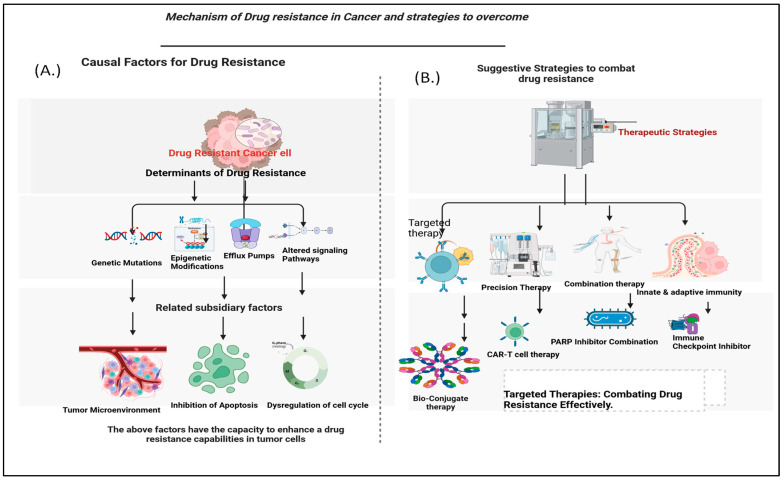
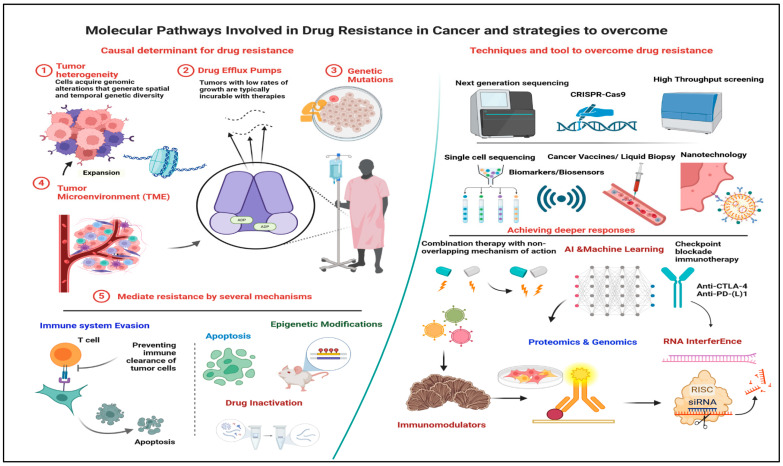
The rise of drug resistance in cancer cells presents a formidable challenge in modern oncology, necessitating the exploration of innovative therapeutic strategies. This review investigates the latest advancements in overcoming drug resistance mechanisms employed by cancer cells, focusing on emerging therapeutic modalities. The intricate molecular insights into drug resistance, including genetic mutations, efflux pumps, altered signaling pathways, and microenvironmental influences, are discussed. Furthermore, the promising avenues offered by targeted therapies, combination treatments, immunotherapies, and precision medicine approaches are highlighted. Specifically, the synergistic effects of combining traditional cytotoxic agents with molecularly targeted inhibitors to circumvent resistance pathways are examined. Additionally, the evolving landscape of immunotherapeutic interventions, including immune checkpoint inhibitors and adoptive cell therapies, is explored in terms of bolstering anti-tumor immune responses and overcoming immune evasion mechanisms. Moreover, the significance of biomarker-driven strategies for predicting and monitoring treatment responses is underscored, thereby optimizing therapeutic outcomes. For insights into the future direction of cancer treatment paradigms, the current review focused on prevailing drug resistance challenges and improving patient outcomes, through an integrative analysis of these emerging therapeutic strategies.
Overview
The claims and statistics of this paper haven’t been checked yet.
Free: it reads the open-access text and checks the first 5 claims that cite a source we can check. Create a free account to check every claim.
Integrity signals
Registry
Cites
Statistics
Figures
Verification
Claims the paper makes
The claims and statistics of this paper haven’t been checked yet.
Free: it reads the open-access text and checks the first 5 claims that cite a source we can check. Create a free account to check every claim.
Claims other papers make about this one
Each is checked against this paper’s own text: does it say what the citing paper says it does?
The source backs part of the claim, not all of it — or backs it for a different population, condition or comparison.
In the citing paper
“Activation of survival pathways can promote cell survival and proliferation in the presence of DNA-damaging agents [49].”
From Mechanisms and Strategies to Overcome Drug Resistance in Colorectal Cancer (2025) · cites this paper as [49]
Experimental — accuracy not yet measuredThe source backs part of the claim, not all of it — or backs it for a different population, condition or comparison.
In the citing paper
“CRC cells often have enhanced DNA damage repair capacity due to upregulation of alternative pathways and can fix DNA damage induced by chemotherapy or radiotherapy [49].”
From Mechanisms and Strategies to Overcome Drug Resistance in Colorectal Cancer (2025) · cites this paper as [49]
Experimental — accuracy not yet measuredThe source backs part of the claim, not all of it — or backs it for a different population, condition or comparison.
In the citing paper
“ICIs like pembrolizumab and nivolumab block the PD-1 receptor, which activates T cells and allows them to better recognize and destroy tumor cells, even those that have become resistant to other treatments [49].”
From Mechanisms and Strategies to Overcome Drug Resistance in Colorectal Cancer (2025) · cites this paper as [49]
Experimental — accuracy not yet measuredThe source backs part of the claim, not all of it — or backs it for a different population, condition or comparison.
In the citing paper
“By inhibiting PARP, these drugs block the repair of single-strand breaks, leading to the accumulation of double-strand breaks and cell death [49].”
From Mechanisms and Strategies to Overcome Drug Resistance in Colorectal Cancer (2025) · cites this paper as [49]
Experimental — accuracy not yet measuredThe cited source says what the claim attributes to it.
In the citing paper
“combining cytotoxic chemotherapy drugs with molecular-targeted inhibitors can have synergistic effects that circumvent resistance pathways [49].”
From Mechanisms and Strategies to Overcome Drug Resistance in Colorectal Cancer (2025) · cites this paper as [49]
5 more claims about this paper
Create a free account to see every claim other papers make about this one.
Self-check
Percentages, sums and reported differences re-computed from the paper’s own numbers.
The self-check needs the paper’s full text.
Citations
Cites
PD-1 and PD-L1 Immune Checkpoint Blockade to Treat Breast Cancer
Hartkopf, A. D., Taran, F.-A., Wallwiener, M., Walter, C. B., Krämer, B., Grischke, E.-M., & Brucker, S. Y. (2016) · Breast Care · doi:10.1159/000453569 · Cited by 30,845
The blockade of immune checkpoints in cancer immunotherapy
Pardoll, D. M. (2012) · Nature Reviews Cancer · doi:10.1038/nrc3239 · Cited by 13,838 · cited 1×
“This binding makes the T cells ineffective, leading to immune evasion and exhaustion [79].”
BackgroundAn overview of clinical decision support systems: Benefits, risks, and strategies for success
Sutton, R. T., Pincock, D., Baumgart, D. C., Sadowski, D. C., Fedorak, R. N., & Kroeker, K. I. (2020) · npj Digital Medicine · doi:10.1038/s41746-020-0221-y · Cited by 3,019 · cited 1×
“Keeping up with the fast pace of cancer research and technology is also a challenge [118].”
BackgroundZhang, Y., & Zhang, Z. (2020) · Cellular & Molecular Immunology · doi:10.1038/s41423-020-0488-6 · Cited by 2,794 · cited 1×
“One major area of progress involves uncovering the molecular pathways linked to drug removal from cells [15].”
BackgroundCombination therapy in combating cancer
Mokhtari, R. B., Homayouni, T. S., Baluch, N., Morgatskaya, E., Kumar, S., Das, B., & Yeger, H. (2017) · Oncotarget · doi:10.18632/oncotarget.16723 · Cited by 2,543 · cited 1×
“Combination therapies enhance anticancer effects and overcome resistance by simultaneously targeting multiple signaling pathways [35].”
BackgroundDrug resistance in cancer: An overview
Housman, G., Byler, S., Heerboth, S., Lapinska, K., Longacre, M., Snyder, N., & Sarkar, S. (2014) · Cancers · doi:10.3390/cancers6031769 · Cited by 2,463 · cited 3×
“This makes it harder to treat or control the growth of tumors [1].”
BackgroundCTLA-4 and PD-1 Pathways: Similarities, Differences, and Implications of Their Inhibition
Buchbinder, E. I., & Desai, A. (2016) · American Journal of Clinical Oncology · doi:10.1097/coc.0000000000000239 · Cited by 2,360 · cited 1×
“Cancer cells can exploit these pathways to evade immune detection and destruction [71].”
BackgroundRoles of the immune system in cancer: From tumor initiation to metastatic progression
Gonzalez, H., Hagerling, C., & Werb, Z. (2018) · Genes & Development · doi:10.1101/gad.314617.118 · Cited by 2,111 · cited 1×
“The immune system’s ability to recognize and target cancer cells is based on the recognition of specific antigens or markers expressed by tumor cells, which distinguishes them from normal cells [67].”
BackgroundMechanisms of DNA damage, repair, and mutagenesis
Chatterjee, N., & Walker, G. C. (2017) · Environmental and Molecular Mutagenesis · doi:10.1002/em.22087 · Cited by 2,039 · cited 1×
“Furthermore, the nucleotide excision repair (NER) pathway and the base excision repair (BER) pathway contribute to rectifying diverse forms of DNA damage induced by chemotherapeutic agents [26].”
BackgroundThe Different Mechanisms of Cancer Drug Resistance: A Brief Review
Mansoori, B., Mohammadi, A., Davudian, S., Shirjang, S., & Baradaran, B. (2017) · Advanced Pharmaceutical Bulletin · doi:10.15171/apb.2017.041 · Cited by 1,883
Cited by
Items 201–300 of 372
Pyrroloquinoline quinone scaffolds: centrality in anticancer drug design
Sen, S., & Karati, D. (2026) · Future Medicinal Chemistry · doi:10.1080/17568919.2026.2658006 · Cited by 1
Samir, S. S., Abdel‐Megid, M., Salem, M. E., Hekal, M. H., Ali, Y. M., Alzahrani, A. Y. A., & Rafat, E.-H. (2026) · Polycyclic aromatic compounds · doi:10.1080/10406638.2026.2653168 · Cited by 1
Namakshenas, P., Crezee, J., & Kok, H. P. (2026) · Drug Delivery · doi:10.1080/10717544.2026.2670077 · Cited by 1
“Although MDR can result from multiple mechanisms, it is often associated with increased efflux mediated by ATP-binding cassette transporters, which reduce intracellular retention and efficacy (Gottesman et al. 2002; McKenna et al. 2017; Garg et al. 2024).”
Tae, I. H., Kang, Y., Lee, J., Lee, J. M., Kim, J., Lee, S.-G., Park, K., Ryu, T. Y., Kim, K., Kim, G., et al. (2026) · Signal Transduction and Targeted Therapy · doi:10.1038/s41392-026-02692-7 · Cited by 2
“To overcome these mechanisms, strategies such as combination therapy, which involves the use of multiple drugs with different mechanisms of action, are being explored 30 .”
Garibay-Manríquez, C., Díaz-Cervantes, E., Chacón-García, L., Martínez‐Mayorga, K., & Cortés-Garcia, C. J. (2026) · ACS Omega · doi:10.1021/acsomega.6c00605 · Cited by 2
Shi, C., Lyu, W., Lu, D., Zhou, J., Chen, Y., Lin, Y., Yan, J., Li, T., Zhang, L., Chi, X., et al. (2026) · Acta Pharmaceutica Sinica B · doi:10.1016/j.apsb.2026.05.024 · Cited by 1
Cellular plasticity as a dynamic regulator of death sensitivity and drug resistance in cancer
Malode, S., Desai, S. A., Mhatre, D., Patel, V. P., Chhajed, F., & Surade, S. (2026) · Cell Death · doi:10.1016/j.celld.2026.100016 · Cited by 2
Mustafa, Y. F. (2026) · Biomedical Journal · doi:10.1016/j.bj.2026.101011 · Cited by 1
“In this regard, emerging preclinical evidence indicates that several natural compounds, including coumarins, can influence cancer cell survival by modulating autophagy and PI3K-dependent signaling [15].”
Du, S., Tang, K., Li, J., Hu, X., & Zhan, P. (2026) · Journal of Medicinal Chemistry · doi:10.1021/acs.jmedchem.6c01234 · Cited by 1
Ogundele, A. V., Nongthombam, G. S., Nwagu, A. D., Silva, H. H., & Fabiyi, O. A. (2026) · Molecules · doi:10.3390/molecules31132398 · Cited by 3
Immunotherapy in cancer: Mechanisms and strategies to overcome resistance
Yang, H., Yang, Z., Wang, X., Patel, H. H., Wu, Z., Ashby, C. R., Wang, W., & Chen, Z. (2026) · Drug Resistance Updates · doi:10.1016/j.drup.2026.101447 · Cited by 1
BERBER, N. (2026) · Journal of Innovative Engineering and Natural Science · doi:10.61112/jiens.1851347 · Cited by 1
Huang, K., Lin, Y., Zheng, W., Fan, X., Ji, Y., & Feng, S. (2026) · Materials Today Bio · doi:10.1016/j.mtbio.2026.103549 · Cited by 1
“…in the central core regions of tumors contribute to inadequate cytoreduction, ultimately fostering tumor recurrence, treatment failure, and the emergence of multidrug resistance [9 – 11] – (see Scheme 1) To overcome these barriers, various nanomedicine delivery systems have been explored [13 – 15].”
Dendrimers in precision oncology: advances in therapy, diagnostics, and translational prospects
Zaeifi, D., Jamialahmadi, K., & Karimi, G. (2026) · Biomaterials Science · doi:10.1039/d6bm00242k · Cited by 1
Deb, V. K., Mukherjee, A., Pathak, S., Paul, S., Duttaroy, A. K., & Adhikari, S. (2026) · Frontiers in Bioengineering and Biotechnology · doi:10.3389/fbioe.2026.1775442 · Cited by 1
Rejili, M., Farahani, N., Alimohammadi, M., & Hushmandi, K. (2026) · Discover Oncology · doi:10.1007/s12672-026-05260-1 · Cited by 3
Kantapan, J., Innuan, P., Kongkarnka, S., Sangthong, P., & Dechsupa, N. (2024) · Pharmaceuticals · doi:10.3390/ph17121729 · Cited by 1
Polymeric Nanocarriers for Advanced Cancer Therapy: Current Developments and Future Prospects
Saraf, A., & Sharma, M. (2025) · BENTHAM SCIENCE PUBLISHERS eBooks · doi:10.2174/9789815305906125010016 · Cited by 2
Odontogenic carcinosarcoma: a comprehensive review of clinical and therapeutic insights
Osama, M., Kocherry, C., Ullah, F., Ubaid, S., Ubaid, M., Ullah, U., Nawaz, A. B., Qasem, H. M., Odat, R. M., Farhan, M., et al. (2025) · Frontiers in Oral Health · doi:10.3389/froh.2025.1544921 · Cited by 1
“Collaborative research, ongoing clinical trials, and a multidisciplinary approach involving oncologists, geneticists, and immunologists are essential for integrating these emerging treatments into clinical practice (66, 67).”
Advancing Prostate Cancer Treatment: Innovations and Challenges in Immunotherapy
Singhal, G., Garg, P., Mohanty, A. R., Kollimuttathuillam, S. V., Wheeler, D. L., Adesunloye, B. A., & Singhal, S. S. (2025) · Cancer treatment and research · doi:10.1007/978-3-031-97242-3_12 · Cited by 5
Self-citationRole of Phages in Past Molecular Biology and Potentially in Future Biomedicine
Serwer, P. (2025) · Encyclopedia · doi:10.3390/encyclopedia5020058 · Cited by 2
Swamy, K., Arakeri, G., Veena, R., Srinivas, A. V., Ram, A., Koushik, A. S. K., Naik, R., Raghavendra, R. M., & Basavalingaiah, A. (2026) · Frontiers in Immunology · doi:10.20944/preprints202411.1830.v2
APPLICATION OF STEM CELLS IN TREATMENT OF ORAL LICHEN PLANUS
Shah, D. A. A., Amanat, D., Qamar, M., Arif, M. A., Hussain, D. A., & Akram, A. (2025) · Journal of medical & health sciences review. · doi:10.62019/5ejb0e91
“Moreover, a significant subset of patients exhibit poor response or develop tolerance to these agents, necessitating the exploration of alternative, targeted, and less toxic therapeutic strategies[7].”
York, J. M., Maeda, M., Lara, G., Kandula, M., & Apparsundaram, S. (2025) · Medical Research Archives · doi:10.18103/mra.v13i4.6224 · Cited by 1
Mata, D. G. D. M. M., Vargas, T. P. A., Carmona, C. A., Al-Humiqani, A., Gehlaut, S., Thawer, A., Lagunes, M. L. R., Doherty, M. K., & Menjak, I. B. (2025) · Therapeutics · doi:10.3390/therapeutics2020007
Hwangbo, H., Ji, S. Y., Kim, M. Y., Hong, S. H., Kim, S. O., Kim, G., & Choi, Y. H. (2025) · Asian Pacific Journal of Tropical Biomedicine · doi:10.4103/apjtb.apjtb_83_25
Shiny, M., & Vedula, G. S. (2025) · Asian Journal of Chemistry · doi:10.14233/ajchem.2025.33781
Muthukumar, J., Chandrasekaran, R., Nakkeeran, E., Punnoose, A. M., & Aasaithambi, K. (2025) · BioNanoScience · doi:10.1007/s12668-025-02029-8
“However, the existence of conventional methods for cancer therapy is a formidable challenge to the cancer cells, and they develop drug resistance [3].”
Wei, B., Verdi, V., Zhang, S., Mock, B. A., Shive, H. R., & Simpson, R. J. (2025) · Cancers · doi:10.3390/cancers17142357
“The mechanisms of resistance are diverse and complex, and include target-specific alterations like second-site mutations, amplification of the target kinase, and activation of alternative signaling pathways [39].”
A Comprehensive Review on the Biological Potential of Mushrooms in Combating Cancer
Pal, R. S., Pal, Y., Sharma, V. V., & Tailor, C. S. (2025) · Current Chemical Biology · doi:10.2174/0122127968372088250629181159
Nanotechnology in Anti-EGFR Treatments: Enhancing Delivery and Minimizing Toxicity in Cancer Therapy
Islam, M. M., Kaur, H., Kaur, H., Singh, S. K., Kalita, J., Kumar, A., & Singh, A. (2025) · Clinical Cancer Drugs · doi:10.2174/012212697x377694250715132428
Novel applications of gene and cell therapies in the treatment of gynecological disorders
He, H., Zhou, C., Xiong, J. P., & Fan, J. (2025) · Frontiers in Medicine · doi:10.3389/fmed.2025.1658357 · Cited by 1
Ogieuhi, I. J., Ajekiigbe, V. O., Agenge, E. T., Akinmoju, O. D., Iyawe, E. P., Ajewole, S. T., Adegbesan, C. A., Ayodeji, K. B., Enyeneokpon, E., & Chidera Stanley Anthony, M. (2025) · SN Comprehensive Clinical Medicine · doi:10.1007/s42399-025-02090-0
“Cancer treatment has extensively relied on traditional oncological therapies such as chemotherapy, radiation, and surgery as its principal approach [2].”
Parate, S. S., Rehas, R., Soyam, G., George, L. S., Nisar, M., Unni, A., Sandra, T., Manuel, S., Shaji, V., Aleena Krishna, S. V., et al. (2025) · bioRxiv (Cold Spring Harbor Laboratory) · doi:10.1101/2025.10.09.681460
“Using a multi-pronged approach by including feasible and affordable combination therapies, targeted therapies, and immunotherapies, may overcome anticancer drug resistance (103,104).”
Polysaccharides-Modified Nanoliposomes Loaded with Anticancer Drugs for Breast Cancer Therapy
Gandidzanwa, S., Ngayeka, M. Z., Ngalo, B., & Alven, S. (2025) · Nanotechnology in the life sciences · doi:10.1007/978-3-032-03288-1_11
Desai, M. K., Parmar, N. B., Raghani, N. R., Patel, R. B., Shah, D. D., Chorawala, M. R., & Prajapati, B. G. (2025) · Elsevier eBooks · doi:10.1016/b978-0-443-33536-5.00018-3
Kharchenko, A., & Balabai, A. A. (2025) · Ukrainian Scientific Medical Youth Journal · doi:10.32345/usmyj.3(157).2025.72-81
Mukherjee, S., Madamsetty, V. S., Reddy, R., Pradhan, L., Yenurkar, D., Manna, S., & Banerjee, D. (2025) · Synthesis lectures on biomedical engineering · doi:10.1007/978-3-032-04133-3_1
Nanodots for overcoming drug resistance in cancer
Patel, R. H., Shah, S., & Prajapati, B. G. (2025) · Elsevier eBooks · doi:10.1016/b978-0-443-27511-1.00012-1
Kanwar, N., Kumar, A. H. S., Gupta, N., Gagneja, G., & Kanwal, A. (2025) · Elsevier eBooks · doi:10.1016/b978-0-443-33343-9.00008-9
Emerging roles of 3D nanofiber scaffold in targeted cancer therapy and diagnosis
Patel, N., Mishra, R., Akram, W., & Haider, T. (2025) · Elsevier eBooks · doi:10.1016/b978-0-443-27745-0.00008-9
Liu, J., Allen, R. C., Stephens, J. T., Huang, H., & Shah, P. H. (2025) · Oncology · doi:10.1159/000549486 · Cited by 1
“Cancer recurrence after resection is frequently driven by residual microscopic disease, yet existing adjuvant therapies lack precision, injure normal tissue, and promote resistance [1–4].”
Kunjiappan, S., Murugesan, S., & Pavadai, P. (2026) · Journal of Polymers and the Environment · doi:10.1007/s10924-026-03820-8
A Review of the Mechanisms of Tumor Drug Resistance and Clinical Strategies
Tie, W. (2025) · International Journal of Public Health and Medical Research · doi:10.62051/ijphmr.v5n2.02
Sevilla-Carrillo, I., Noblejas‐López, M. D. M., Vázquez, J. A., Ocaña, A., Bravo, I., & Alonso‐Moreno, C. (2025) · Scientific Reports · doi:10.1038/s41598-025-30803-x
“However, the concurrent administration of multiple drugs often proves inadequate in vivo due to factors such as short half-life, poor solubility, off-target effects, and rapid clearance of the drugs 37,38 .”
Mechanisms of chemotherapy resistance and strategies to overcome it
Abramenko, R. A., Gasanov, A. R., Babatova, B. M., Abdramanova, D. A., & Abdullatipov, A. D. (2025) · International journal of Innovative Medicine · doi:10.33667/2782-4101-2025-2-16-19
“A meta-analysis of seven randomized trials involving 3012 patients showed that furmonertinib achieved the best relapse-free survival, while osimertinib and lazerti-nib improved overall survival with acceptable toxicity [20].”
Alzahrani, A. R., Rehman, Z. U., Alhuthali, H. M., Gharib, A. F., Alkathiri, A., Alzahrani, A. Y. A., Alquraini, A., & Imran, M. (2025) · ChemistrySelect · doi:10.1002/slct.202502455
Abdulghany, K., & Jabbar, H. (2025) · Health Innovation Reports · doi:10.64048/hir.v1n2.005
An Integrated Framework to Predict the Strength of New SMILE Using Graph Attention Network
Reddy, S. K., & Reddy, S. V. G. (2025) · Journal of Computer Science · doi:10.3844/jcssp.2025.2220.2228
“This increasing resistance highlights the critical need for innovative drug discovery approaches to identify and develop more effective and sustainable drug candidates (Garg et al. , 2024).”
Das, D., Maiti, A., Saha, S., Choudhury, S., Mukherjee, S., Dastidar, D. G., & Sikdar, N. (2025) · Computational Biology and Chemistry · doi:10.1016/j.compbiolchem.2025.108867 · Cited by 1
Wijerathne, S. K., Oshadi, E. A., Gunawardane, S. D. V., Kothalawala, A., Dissanayake, T. L., Ranaweera, G., Murugananthan, A., Galhena, P., Senathilake, K. S., & Samarakoon, S. R. (2025) · bioRxiv (Cold Spring Harbor Laboratory) · doi:10.64898/2025.12.27.696713
Alhebshi, A. M., & Alzahrani, S. (2025) · International Journal of Pharmacology · doi:10.31083/ijp45965
Computer aided drug design as a catalyst for nextgeneration therapies in breast and ovarian cancer
Kawadkar, M., Trivedi, S., Qutub, M., Tatode, A., Premchandani, T., & Hussain, U. (2025) · Journal of Stem Cell Research & Therapeutics · doi:10.15406/jsrt.2025.10.00206 · Cited by 1
Nargis, N., Barua, P., Mohammad, N., Haque, M. A., & Oncology Division, A. L. (2025) · Environmental Contaminants Reviews · doi:10.26480/ecr.02.2025.84.95
Effect of Natural Products in the Prevention and Treatment of Colorectal Cancer
Hassan, E. S., Abdulateef, D. S., Ahmed, F. N., Mohammed, G. A., & Rahman, H. S. (2026) · Indian Journal of Medical and Paediatric Oncology · doi:10.1055/s-0046-1816066
Venugopal, J., Panneerselvam, S., Rajaram, G., & Theivendren, P. (2026) · PharmaNutrition · doi:10.1016/j.phanu.2026.100478
Xu, W., Cui, Y., Yin, C., Liu, J., & Li, F. (2026) · Fitoterapia · doi:10.1016/j.fitote.2026.107122
Applying biotechnology to overcome cancer drug resistance and improve public health outcomes
Adjei, F. A., Frempong, B. K., & Afriyie, A. (2026) · Osong Public Health and Research Perspectives · doi:10.24171/j.phrp.2025.0336
“Novel inhibitors targeting mutant forms of proteins such as EGFR or BRAF have demonstrated promise in overcoming resistance in selected cancer types [43].”
Addressing and overcoming resistance in bladder cancer treatment
Tantray, J., Das, S., Patel, A., Ahmed, D., Kosey, S., & Prajapati, B. G. (2026) · Elsevier eBooks · doi:10.1016/b978-0-443-36632-1.00014-6
Vijukumar, A., Singh, G., Aggarwal, M., Sharma, A., & Sandhu, N. K. (2026) · Springer eBooks · doi:10.1007/978-3-032-11752-6_17
Epigenetic Targets of Polyphenolic Nanoparticles in Cancer: Current Insights
Tomar, M., Shringi, H., & Goyal, M. (2026) · Premier journal of science. · doi:10.70389/pjs.100259
Adekilekun, H. A., Omodamiro, O. D., Aloh, G. S., Achi, N. J., Oyewusi, H. A., Tijani, B. A., & Omodamiro, R. M. (2025) · Bio Research Journal/Bio- Research · doi:10.4314/br.v23i3.2
Ifora, I., Hamidi, D., Susanti, M., & Wahyuni, F. S. (2026) · Tropical Journal of Natural Product Research · doi:10.26538/tjnpr/v10i2.16
Mohammadi, K., Afhami, N., Saniotis, A., Henneberg, M., Bagheri, M., & Kavousi, K. (2026) · bioRxiv (Cold Spring Harbor Laboratory) · doi:10.64898/2026.03.05.709737
Bajpai, P., Chandra, P., & Prakash, O. (2026) · Current pharmacogenomics and personalized medicine (Online)/Current pharmacogenomics and personalized medicine · doi:10.2174/0118756921431925251211062654
Bipasha, M., Vidhate, D., Rajiv, R., Prabal, D., Aalopa, D., & Vidhate, A. A. (2026) · Microvascular Research · doi:10.1016/j.mvr.2026.104932
PGP-miner: An AI and machine learning tool in cancer drug development and immunotherapy
Akermi, S., Dey, A., Li, R., Larzat, N., Idoipe, J. B., & Sharma, A. (2026) · Elsevier eBooks · doi:10.1016/b978-0-443-44415-9.00019-3
Mitochondria-enhancing strategies in cancer treatment
Samson, O. J., Madan, A., Saini, R., Kumar, R., & Onajobı, I. B. (2026) · Elsevier eBooks · doi:10.1016/b978-0-443-40535-8.00020-x
DNA methylation and histone modification in liver cancer
Gouda, G., Gupta, M., & Vadde, R. (2026) · Elsevier eBooks · doi:10.1016/b978-0-443-27765-8.00016-3
Introduction to nanomedicine in cancer treatments
Komal, Porel, P., Gandhi, S. M., & Kapoor, D. U. (2026) · Elsevier eBooks · doi:10.1016/b978-0-443-44579-8.00018-7
Waghamare, S. (2026) · Clinical Cancer Drugs · doi:10.2174/012212697x430993260130043424
Rana, R., & Kumar, D. (2026) · Springer eBooks · doi:10.1007/978-981-95-7358-5_21
Antimicrobial resistance in foodborne Salmonella: Recent trends, mechanisms, and public health risks
Roy, H., Bushra, R., Sarker, P., Datta, T. R., Saha, W., Ferdous, F. B., Rahman, M. S., & Alam, M. M. (2026) · Food and Humanity · doi:10.1016/j.foohum.2026.101167
Nicotinamide Derivatives: Synthetic Strategies and their Emerging Role in Anticancer Therapy
Karanjekar, M. M., Chaudhari, V. S., Thombre, K. R., Gupta, K. R., & Umekar, M. J. (2026) · Current Organic Chemistry · doi:10.2174/0113852728424208251128163054
Overexpression of the Ubiquitin Ligase RNF182 Is Associated with High-Grade Gliomas
Russo, V., Russo, M., Oliva, M. A., Alborghetti, M., Caridi, M., Giangaspero, F., & Arcella, A. (2026) · Cancers · doi:10.3390/cancers18081217
“Alternatively, specifically stopping or changing these altered ligases could be a treatment approach to get around drug resistance [47].”
Marey, M., El-Akhras, B. A., El-Naa, M. M., & Talaat, R. M. (2026) · Next research. · doi:10.1016/j.nexres.2026.101772
Muñoz, E., Silva, V., Vera, W., Villena, J., Vergara, R., Montenegro, I., & Madrid, A. (2026) · Chemico-Biological Interactions · doi:10.1016/j.cbi.2026.112091
Parihar, N., Patil, P., Sen, S., Marak, A., & Pemmaraju, D. B. (2026) · ACS Applied Materials & Interfaces · doi:10.1021/acsami.6c01676
Multiple sclerosis: The role of miRNAs and their implications in cellular pathways
Ellakwa, D. E., Amer, A., Ibrahim, A., Aboeleneen, R., Wadan, A. S., & Ellakwa, T. E. (2026) · Human Gene · doi:10.1016/j.humgen.2026.201562
Esmaeilzadeh, A., Ebrahimi, F., Makoui, M. H., Hadiloo, K., Taremi, S., Esmaeilzadeh, K., Afshari, F., & Yeganeh, P. M. (2026) · Springer eBooks · doi:10.1007/978-981-95-6845-1_3
Maphoso, T. M., Ramali, D. P., Mulaudzi, T. V., Maharaj, V. J., Driver, C. H. S., & Damane, B. P. (2026) · Molecules · doi:10.3390/molecules31091394
“In addition, treatment resistance frequently emerges from altered drug metabolism, enhanced efflux of chemotherapeutic agents, and changes in cellular signaling pathways [2].”
Introduction to immunity in cancer
Vishwakarma, A., Sah, R., Kumar, P., Hasan, F., Mandlik, D., & Ansari, M. D. (2026) · Elsevier eBooks · doi:10.1016/b978-0-443-41551-7.00001-1
Ridnour, L. A., Cheng, R. Y. S., Heinz, W. F., Coutinho, L. L., Palmieri, E. M., Rangel, M. C., Anderson, S. K., McVicar, D. W., Hewitt, S. M., Wong, S. T. C., et al. (2026) · Redox Biology · doi:10.1016/j.redox.2026.104189
Exploring the Role of Probiotics in the Prevention and Treatment of Gastrointestinal Cancer
Zomorodimanesh, S., Razavi, S. H., & Zomorodimanesh, P. (2026) · Probiotics and Antimicrobial Proteins · doi:10.1007/s12602-026-11040-8
Jadhav, R. S., Koparde, A., Kadam, A. B., & Kanaujia, K. A. (2026) · International Journal of Pharmaceutics · doi:10.1016/j.ijpharm.2026.126929
Wang, S., Tian, X., & Li, X. (2026) · Organic & Biomolecular Chemistry · doi:10.1039/d6ob00498a
Tussholiha, N. (2026) · Journal of Chemical Learning Innovation. · doi:10.37251/jocli.v3i1.3170
“Although various therapeutic methods such as chemotherapy, radiotherapy, and immunotherapy have developed rapidly, the effectiveness of cancer treatment is often hampered by high side effects, cancer cell resistance to drugs, and low selectivity of therapeutic compounds for target cells [5], [6].”
Sathyananth, M., Jenifer, C., & Raj, T. L. S. (2026) · Asian Pacific Journal of Cancer Care · doi:10.31557/apjcc.2026.11.2.265-280 · Cited by 1
“Targeted therapies, combination treatments, and immunotherapies have demonstrated significant potential in addressing cancer’s molecular mechanisms [173].”
Xu, J.-J., Ni, C.-X., Wang, P., Qin, L.-D., & Xu, J.-J. (2026) · World Journal of Gastrointestinal Oncology · doi:10.4251/wjgo.v18.i5.116882
Latest Approaches in Cancer Therapy and Remaining Gaps
Eyüpoğlu, H. Ö., Cagsin, H., & Serakıncı, N. (2026) · OBM Genetics · doi:10.21926/obm.genet.2602339
Research on exosomes in cancer multidrug resistance and clinical translation
Zhang, W., He, M., Cheng, X., Chai, Q., Li, A., Li, F., Gu, Y., Fang, K., Rong, R., & Liu, J. (2026) · Extracellular Vesicles and Circulating Nucleic Acids · doi:10.20517/evcna.2025.191
Plasma proteome profiles of standard-risk and high-risk childhood acute lymphoblastic leukemia
Tabassum, N., Khurshid, Y., Syed, B., Ahmed, A., Muhammad, S., Imad, R., & Mirza, T. (2026) · Expert Review of Proteomics · doi:10.1080/14789450.2026.2676596
“DYH5, also known as DNAH5, is a key component of the outer dynein arms [18,19].”
Lillo-Pérez, S., Defranchi, Y., Bernal, G., Martínez, R., & Bernal, C. (2026) · International Journal of Biological Macromolecules · doi:10.1016/j.ijbiomac.2026.152620
Priyadarshi, K., & Rao, T. S. R. B. (2026) · Elsevier eBooks · doi:10.1016/b978-0-443-45717-3.00008-8
In vivo evaluation of the anticancer efficacy of melatonin–selenium nanoparticles in a mouse model
Morad, H. M., Abdel‐Aziz, A. F., & Madkour, M. M. (2026) · Cancer Nanotechnology · doi:10.1186/s12645-026-00389-8
Bichave, A., Daksh, S., Hajatay, S. F., Bubera, N., Patil, S., Patil, A., Bankar, S., & Surve, M. (2026) · International Journal of Drug Delivery Technology · doi:10.25258/ijddt.16.42s.100
The Changing Landscape of Cancer Immunotherapy and Precision Oncology
Salam, M. A., & Al-Amin, M. Y. (2026) · TAJ Journal of Teachers Association · doi:10.70818/taj.v39i2.0710
“26 Rational combination and sequencing strategies are increasingly tailored to each modality’s kinetics, pharmacodynamics, and defined correlative endpoints.”
Garg, P., Horne, D. A., Salgia, R., & Singhal, S. S. (2026) · Cancers · doi:10.3390/cancers18111856
“Thus, the real-world predictive power of novel AI models for resistance-associated patterns, as presented here, when confronted with clinically changing tumor conditions is a space for future investigation [55].”
Self-citationInsights into clinical trials and real-world applications of phytochemicals
Kumar, M., Kumar, S., Bhoi, B., Chakraborty, B., Singh, R., Kumar, U., & Kumar, S. (2026) · Elsevier eBooks · doi:10.1016/b978-0-443-45146-1.00017-5
Rijwan, Arjmand, F., & Tabassum, S. (2026) · Journal of Molecular Structure · doi:10.1016/j.molstruc.2026.146767
Metadata
- Authors
- Garg, P., Malhotra, J., Kulkarni, P., Horne, D., Salgia, R., & Singhal, S. S.
- Affiliations
- GLA University (IN)
- City Of Hope National Medical Center (US)
- Corresponding author
- Singhal, Sharad S.
- Venue
- Cancers
- Publisher
- MDPI AG
- Published
- 2024-07-07
- Volume
- 16
- Issue
- 13
- Pages
- 2478
- ISSN
- 2072-6694 (ISSN-L)
- PMC
- PMC11240358
- OpenAlex
- W4400418891
- Cited by
- 339
- References
- 129
- Citations by year
- 2026: 165 · 2025: 167 · 2024: 6
- FWCI
- 57.57
- Type
- journal article
- Language
- en
- Open access
- gold
- doi.org
- Licence
- Locations
- Cancers (publishedVersion, cc-by)
- PubMed Central (publishedVersion, cc-by)
- PubMed (publishedVersion)
- Funders
- National Cancer Institute of the National Institutes of Health (P30CA33572, W81XWH-22-1-0331, HT9425-23-1-0581)
- United States Department of Defense (P30CA33572, W81XWH-22-1-0331, HT9425-23-1-0581)
- City of Hope’s Beckman Research Institute (P30CA33572, W81XWH-22-1-0331, HT9425-23-1-0581)
- Topics
- Health Sciences › Medicine › Oncology › Drug Transport and Resistance Mechanisms
- Health Sciences › Medicine › Oncology › Cancer Cells and Metastasis
- Health Sciences › Medicine › Oncology › Cancer Immunotherapy and Biomarkers
- Keywords
- chemoresistance, efflux pumps, genetic mutations, tumor microenvironment, targeted therapy, combination therapy, immunotherapy, immune checkpoint inhibitors, adoptive immunotherapy, biomarkers, precision medicine, antitumor immunity, immune evasion
About these checks
Registry, retraction, Cites and statistics results are computed, not judged, with one exception: a printed reference that no index lists is read once by a model before it counts as a citation error. Claims are extracted by a model and kept only when their quote appears verbatim in the text; each cited source is then checked, with a model’s help, for whether it says what the claim relies on. Those verdicts can be wrong — read the claim’s quote and the cited source before relying on one.
Statistics and arithmetic are recomputed, not judged.
Confidence bands are shown only for fields calibrated on our annotated test set. None is calibrated yet, so no band is shown.
What counts as a claim ›How we measure confidence ›How we check this ›
Are you an author, or do you see a problem with this page? Request a review
Data sources
Bibliographic data: Semantic Scholar, OpenAlex, Crossref.
Contains information from the Semantic Scholar Academic Graph Datasets, made available under the ODC Attribution License (ODC-BY 1.0).
Semantic Scholar’s data is described in: Kinney, R., et al. (2023). The Semantic Scholar Open Data Platform. arXiv:2301.10140.
