

The DOI matches its Crossref record; 8 of the 8 references it cites were found in a registry or an index.
Neutrophils and Neutrophil-Based Drug Delivery Systems in Anti-Cancer Therapy
Abstract
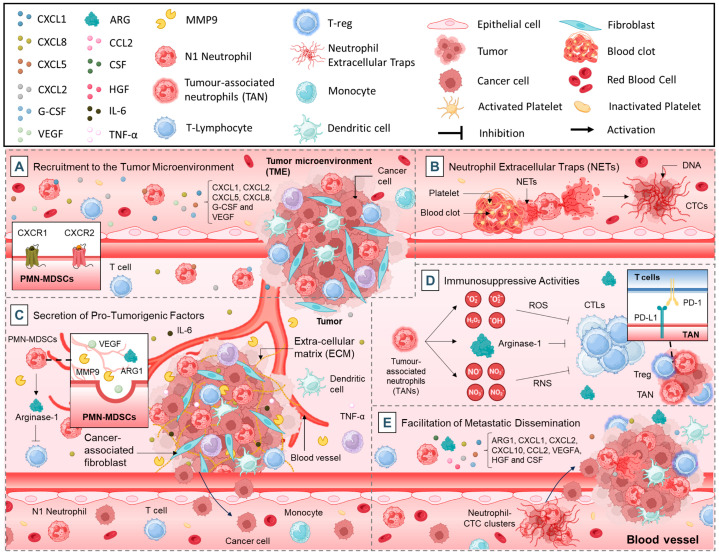
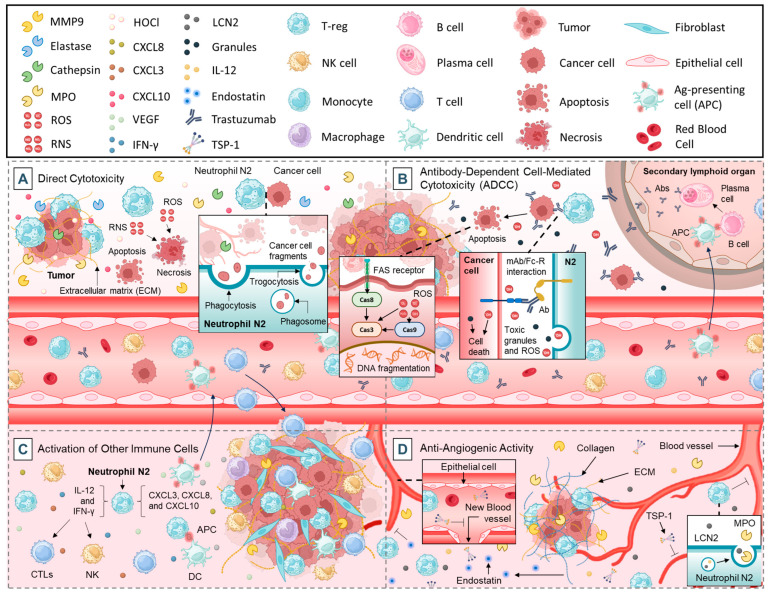
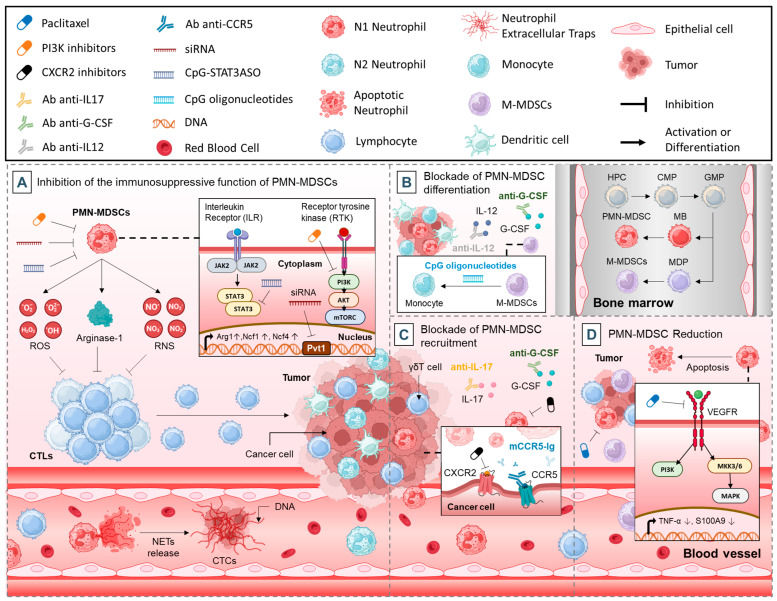
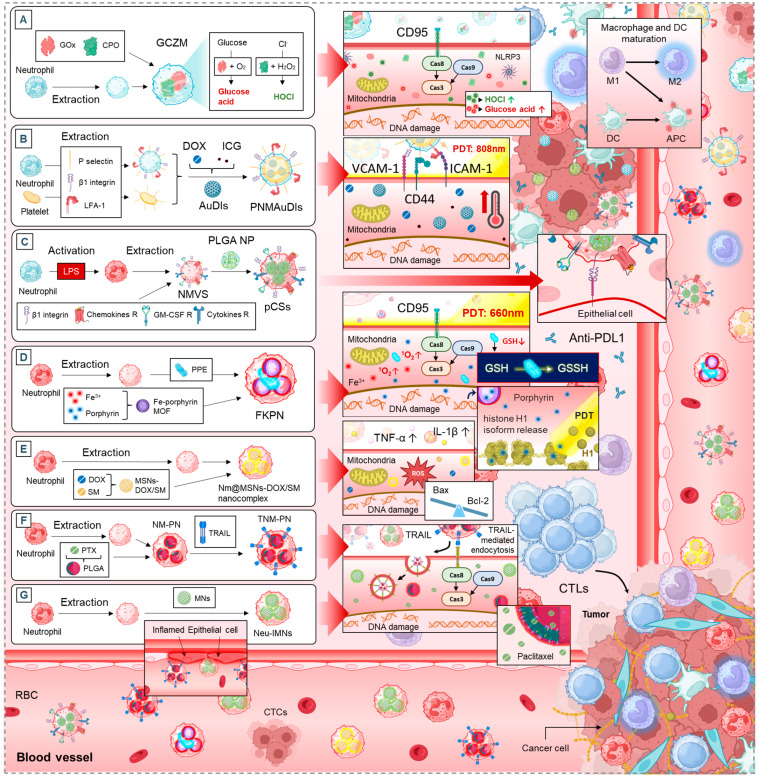
Neutrophils, the most abundant white blood cells, play a dual role in cancer progression. While they can promote tumor growth, metastasis, and immune suppression, they also exhibit anti-tumorigenic properties by attacking cancer cells and enhancing immune responses. This review explores the complex interplay between neutrophils and the tumor microenvironment (TME), highlighting their ability to switch between pro- and anti-tumor phenotypes based on external stimuli. Pro-tumorigenic neutrophils facilitate tumor growth through mechanisms such as neutrophil extracellular traps (NETs), secretion of pro-inflammatory cytokines, and immune evasion strategies. They contribute to angiogenesis, tumor invasion, and metastasis by releasing vascular endothelial growth factor (VEGF) and matrix metalloproteinases (MMPs). Conversely, anti-tumor neutrophils enhance cytotoxicity by generating reactive oxygen species (ROS), promoting antibody-dependent cell-mediated cytotoxicity (ADCC), and activating other immune cells such as cytotoxic T lymphocytes (CTLs) and natural killer (NK) cells. Recent advances in neutrophil-based drug delivery systems have harnessed their tumor-homing capabilities to improve targeted therapy. Neutrophil-mimicking nanoparticles and membrane-coated drug carriers offer enhanced drug accumulation in tumors, reduced systemic toxicity, and improved therapeutic outcomes. Additionally, strategies to modulate neutrophil activity, such as inhibiting their immunosuppressive functions or reprogramming them towards an anti-tumor phenotype, are emerging as promising approaches in cancer immunotherapy. Understanding neutrophil plasticity and their interactions with the TME provides new avenues for therapeutic interventions. Targeting neutrophil-mediated mechanisms could enhance existing cancer treatments and lead to the development of novel immunotherapies, ultimately improving patient survival and clinical outcomes.
Overview
The claims and statistics of this paper haven’t been checked yet.
Run the check — free, no account needed. It reads the open-access text and checks the sources it cites.
Integrity signals
Registry
Cites
Statistics
Figures
Verification
Claims the paper makes
The claims and statistics of this paper haven’t been checked yet.
Run the check — free, no account needed. It reads the open-access text and checks the sources it cites.
Claims other papers make about this one
Each is checked against this paper’s own text: does it say what the citing paper says it does?
In the citing paper
“From a manufacturing perspective, the regulatory pathway more closely resembles cell-based combination products than conventional liposomes: ex vivo neutrophil isolation and loading require stringent controls for source and starting-material variability, identity/purity and functional-state assays, loading consistency, viability, sterility/endotoxin testing, and robust comparability across batches”
From Overcoming tumor microenvironment barriers: transformable and bioinspired nanomedicine strategies for deep tumor penetration (2026) · cites this paper as [74]
Self-check
Percentages, sums and reported differences re-computed from the paper’s own numbers.
The self-check needs the paper’s full text.
Citations
Cites
IL-17-producing γδ T cells and neutrophils conspire to promote breast cancer metastasis
Coffelt, S. B., Kersten, K., Doornebal, C. W., Weiden, J., Vrijland, K., Hau, C.-S., Verstegen, N. J. M., Ciampricotti, M., Hawinkels, L. J. A. C., Jonkers, J., et al. (2015) · Nature · doi:10.1038/nature14282 · Cited by 1,703
Wang, S., Song, R., Wang, Z., Jing, Z., Wang, S., & Ma, J. (2018) · Frontiers in Immunology · doi:10.3389/fimmu.2018.01298 · Cited by 1,450
Neutrophil: A Cell with Many Roles in Inflammation or Several Cell Types?
Rosales, C. (2018) · Frontiers in Physiology · doi:10.3389/fphys.2018.00113 · Cited by 1,334
Cancer cells induce metastasis-supporting neutrophil extracellular DNA traps
Park, J., Wysocki, R. W., Amoozgar, Z., Maiorino, L., Fein, M. R., Jorns, J., Schott, A. F., Kinugasa-Katayama, Y., Lee, Y., Won, N. H., et al. (2016) · Science Translational Medicine · doi:10.1126/scitranslmed.aag1711 · Cited by 984
Contextual Regulation of Inflammation: A Duet by Transforming Growth Factor-β and Interleukin-10
Li, M. O., & Flavell, R. A. (2008) · Immunity · doi:10.1016/j.immuni.2008.03.003 · Cited by 501
Myeloperoxidase-derived oxidation: Mechanisms of biological damage and its prevention
Davies, M. J. (2010) · Journal of Clinical Biochemistry and Nutrition · doi:10.3164/jcbn.11-006fr · Cited by 412
Ghafouri-Fard, S., Abak, A., Tondro Anamag, F., Shoorei, H., Fattahi, F., Javadinia, S. A., Basiri, A., & Taheri, M. (2021) · Frontiers in Oncology · doi:10.3389/fonc.2021.658636 · Cited by 193
Moreira, D., Adamus, T., Zhao, X., Su, Y.-L., Zhang, Z., White, S. V., Swiderski, P., Lu, X., DePinho, R. A., Pal, S. K., et al. (2018) · Clinical Cancer Research · doi:10.1158/1078-0432.ccr-18-1277 · Cited by 80
Research works printed but not linked: 148
- Siegel, 2024, Cancer statistics, 2024, CA A Cancer J. Clin., 74, 12, 10.3322/caac.21820 · DOI · Paper page
- Liu, 2024, Multi-stage mechanisms of tumor metastasis and therapeutic strategies, Signal Transduct. Target. Ther., 9, 270, 10.1038/s41392-024-01955-5 · DOI
- Jackett, 2024, How the bone microenvironment shapes the pre-metastatic niche and metastasis, Nat. Cancer, 5, 1800, 10.1038/s43018-024-00854-6 · DOI
- Glaviano, 2025, Harnessing the tumor microenvironment: Targeted cancer therapies through modulation of epithelial-mesenchymal transition, J. Hematol. Oncol., 18, 6, 10.1186/s13045-024-01634-6 · DOI
- Zhang, Y., Liu, G., Sun, M., and Lu, X. (2020). Targeting and exploitation of tumor-associated neutrophils to enhance immunotherapy and drug delivery for cancer treatment. Cancer Biol. Med., 17. · DOI
- Malech, 2014, The role of neutrophils in the immune system: An overview, Methods Mol. Biol., 1124, 3, 10.1007/978-1-62703-845-4_1 · DOI
- Wahnou, 2024, Artemisia herba-alba: Antioxidant capacity and efficacy in preventing chronic arthritis in vivo, Inflammopharmacology, 32, 1855, 10.1007/s10787-024-01463-6 · DOI
- Latif, 2024, Phytochemical analysis and immunomodulatory activities in vitro and in vivo of Aframomum melegueta K Schum seed extracts, Inflammopharmacology, 32, 1621, 10.1007/s10787-023-01422-7 · DOI
- Bendiar, 2022, Phytochemical characterization and immunomodulatory effects of aqueous, ethanolic extracts and essential oil of Syzygium aromaticum L. on human neutrophils, Sci. Afr., 18, e01395
- Grivennikov, 2010, Immunity, inflammation, and cancer, Cell, 140, 883, 10.1016/j.cell.2010.01.025 · DOI · Paper page
- Dutta, A., Bhagat, S., Paul, S., Katz, J.P., Sengupta, D., and Bhargava, D. (2023). Neutrophils in Cancer and Potential Therapeutic Strategies Using Neutrophil-Derived Exosomes. Vaccines, 11. · DOI
- Yin, 2022, Tumor-associated N1 and N2 neutrophils predict prognosis in patients with resected pancreatic ductal adenocarcinoma: A preliminary study, MedComm, 3, e183, 10.1002/mco2.183 · DOI
- Zhou, 2023, The role of CXCL family members in different diseases, Cell Death Discov., 9, 212, 10.1038/s41420-023-01524-9 · DOI
- Sabroe, 2005, Regulation of human neutrophil chemokine receptor expression and function by activation of Toll-like receptors 2 and 4, Immunology, 115, 90, 10.1111/j.1365-2567.2005.02133.x · DOI
- Ohki, 2005, Granulocyte colony-stimulating factor promotes neovascularization by releasing vascular endothelial growth factor from neutrophils, Faseb J., 19, 2005, 10.1096/fj.04-3496fje · DOI
- SenGupta, S., Hein, L.E., and Parent, C.A. (2021). The Recruitment of Neutrophils to the Tumor Microenvironment Is Regulated by Multiple Mediators. Front. Immunol., 12. · DOI
- Chen, R., and Pan, S. (2022). Increased neutrophil infiltration as a body-wide effect in pancreatic cancer development. EBioMedicine, 81. · DOI
- Zheng, 2022, Neutrophils in the tumor microenvironment and their functional modulation by mesenchymal stromal cells, Cell. Immunol., 379, 104576, 10.1016/j.cellimm.2022.104576 · DOI
- Liu, R., Zhu, G., Sun, Y., Li, M., Hu, Z., Cao, P., Li, X., Song, Z., and Chen, J. (2023). Neutrophil infiltration associated genes on the prognosis and tumor immune microenvironment of lung adenocarcinoma. Front. Immunol., 14. · DOI
- Zheng, W., Wu, J., Peng, Y., Sun, J., Cheng, P., and Huang, Q. (2022). Tumor-Associated Neutrophils in Colorectal Cancer Development, Progression and Immunotherapy. Cancers, 14. · DOI
- Que, H., Fu, Q., Lan, T., Tian, X., and Wei, X. (2022). Tumor-associated neutrophils and neutrophil-targeted cancer therapies. Biochim. Biophys. Acta (BBA)—Rev. Cancer, 1877. · DOI
- Kim, 2016, Tumor-Associated Macrophages and Neutrophils in Tumor Microenvironment, Mediat. Inflamm., 2016, 6058147, 10.1155/2016/6058147 · DOI
- Yan, M., Gu, Y., Sun, H., and Ge, Q. (2023). Neutrophil extracellular traps in tumor progression and immunotherapy. Front. Immunol., 14. · DOI
- Thiam, 2020, Cellular Mechanisms of NETosis, Annu. Rev. Cell Dev. Biol., 36, 191, 10.1146/annurev-cellbio-020520-111016 · DOI
- Nasrollahzadeh, 2020, Pro-tumorigenic functions of macrophages at the primary, invasive and metastatic tumor site, Cancer Immunol. Immunother. CII, 69, 1673, 10.1007/s00262-020-02616-6 · DOI
- Hu, 2023, Neutrophil extracellular traps facilitate cancer metastasis: Cellular mechanisms and therapeutic strategies, J. Cancer Res. Clin. Oncol., 149, 2191, 10.1007/s00432-022-04310-9 · DOI
- Demkow, U. (2021). Neutrophil Extracellular Traps (NETs) in Cancer Invasion, Evasion and Metastasis. Cancers, 13. · DOI
- Wienkamp, A.K., Erpenbeck, L., and Rossaint, J. (2022). Platelets in the NETworks interweaving inflammation and thrombosis. Front. Immunol., 13. · DOI
- Masucci, M.T., Minopoli, M., Del Vecchio, S., and Carriero, M.V. (2020). The Emerging Role of Neutrophil Extracellular Traps (NETs) in Tumor Progression and Metastasis. Front. Immunol., 11. · DOI
- Chamardani, 2022, Inhibition of NETosis for treatment purposes: Friend or foe?, Mol. Cell. Biochem., 477, 673, 10.1007/s11010-021-04315-x · DOI
- Shibuya, 2011, Vascular Endothelial Growth Factor (VEGF) and Its Receptor (VEGFR) Signaling in Angiogenesis: A Crucial Target for Anti- and Pro-Angiogenic Therapies, Genes. Cancer, 2, 1097, 10.1177/1947601911423031 · DOI
- Barillari, G. (2020). The Impact of Matrix Metalloproteinase-9 on the Sequential Steps of the Metastatic Process. Int. J. Mol. Sci., 21. · DOI
- Grzywa, T.M., Sosnowska, A., Matryba, P., Rydzynska, Z., Jasinski, M., Nowis, D., and Golab, J. (2020). Myeloid Cell-Derived Arginase in Cancer Immune Response. Front. Immunol., 11. · DOI
- Popko, 2010, Proinflammatory cytokines Il-6 and TNF-α and the development of inflammation in obese subjects, Eur. J. Med. Res., 15, 120, 10.1186/2047-783X-15-S2-120 · DOI
- Visser, 2002, Relationship of Interleukin-6 and Tumor Necrosis Factor-α with Muscle Mass and Muscle Strength in Elderly Men and Women: The Health ABC Study, J. Gerontol. Ser. A, 57, M326, 10.1093/gerona/57.5.M326 · DOI · Paper page
- Masucci, M.T., Minopoli, M., and Carriero, M.V. (2019). Tumor Associated Neutrophils. Their Role in Tumorigenesis, Metastasis, Prognosis and Therapy. Front. Oncol., 9. · DOI
- Reith, 2021, Arginine-dependent immune responses, Cell. Mol. Life Sci. CMLS, 78, 5303, 10.1007/s00018-021-03828-4 · DOI
- Wang, L., Kuang, Z., Zhang, D., Gao, Y., Ying, M., and Wang, T. (2021). Reactive oxygen species in immune cells: A new antitumor target. Biomed. Pharmacother., 133. · DOI
- Goswami, 2022, Regulatory T cells (Tregs) and their therapeutic potential against autoimmune disorders—Advances and challenges, Hum. Vaccines Immunother., 18, 2035117, 10.1080/21645515.2022.2035117 · DOI
- Ujike, 2002, Impaired dendritic cell maturation and increased T(H)2 responses in PIR-B(-/-) mice, Nat. Immunol., 3, 542, 10.1038/ni801 · DOI
- Hu, 2024, Harnessing innate immune pathways for therapeutic advancement in cancer, Signal Transduct. Target. Ther., 9, 68, 10.1038/s41392-024-01765-9 · DOI
- Zhu, C.L., Xie, J., Zhao, Z.Z., Li, P., Liu, Q., Guo, Y., Meng, Y., Wan, X.J., Bian, J.J., and Deng, X.M. (2022). PD-L1 maintains neutrophil extracellular traps release by inhibiting neutrophil autophagy in endotoxin-induced lung injury. Front. Immunol., 13. · DOI
- Yu, 2022, PD-L1 negatively regulates antifungal immunity by inhibiting neutrophil release from bone marrow, Nat. Commun., 13, 6857, 10.1038/s41467-022-34722-7 · DOI
- Wu, 2022, Improvement of the anticancer efficacy of PD-1/PD-L1 blockade via combination therapy and PD-L1 regulation, J. Hematol. Oncol., 15, 24, 10.1186/s13045-022-01242-2 · DOI
- Wu, M., Ma, M., Tan, Z., Zheng, H., and Liu, X. (2020). Neutrophil: A New Player in Metastatic Cancers. Front. Immunol., 11. · DOI
- Huang, 2024, Neutrophils in Cancer immunotherapy: Friends or foes?, Mol. Cancer, 23, 107, 10.1186/s12943-024-02004-z · DOI
- Szczerba, 2019, Neutrophils escort circulating tumour cells to enable cell cycle progression, Nature, 566, 553, 10.1038/s41586-019-0915-y · DOI
- Rosales, 2015, Neutrophils in Cancer: Two Sides of the Same Coin, J. Immunol. Res., 2015, 983698
- Shi, 2024, Neutrophils in the tumor microenvironment: Role in tumor progression and potential targeted therapeutic strategy, J. Cancer Metastasis Treat., 10, 13
- Mittal, 2014, Reactive oxygen species in inflammation and tissue injury, Antioxid. Redox Signal., 20, 1126, 10.1089/ars.2012.5149 · DOI · Paper page
- Radisky, E.S. (2024). Extracellular proteolysis in cancer: Proteases, substrates, and mechanisms in tumor progression and metastasis. J. Biol. Chem., 300. · DOI
- Matlung, 2018, Neutrophils Kill Antibody-Opsonized Cancer Cells by Trogoptosis, Cell Rep., 23, 3946, 10.1016/j.celrep.2018.05.082 · DOI
- Ustyanovska Avtenyuk, N., Visser, N., Bremer, E., and Wiersma, V.R. (2020). The Neutrophil: The Underdog That Packs a Punch in the Fight against Cancer. Int. J. Mol. Sci., 21. · DOI
- Westman, J., Grinstein, S., and Marques, P.E. (2019). Phagocytosis of Necrotic Debris at Sites of Injury and Inflammation. Front. Immunol., 10. · DOI
- Miyake, K., and Karasuyama, H. (2021). The Role of Trogocytosis in the Modulation of Immune Cell Functions. Cells, 10. · DOI
- Rajgopal, 2023, Beyond the horizon: Neutrophils leading the way in the evolution of immunotherapy, Cancer Med., 12, 21885, 10.1002/cam4.6761 · DOI
- Behrens, 2023, Neutrophils as immune effector cells in antibody therapy in cancer, Immunol. Rev., 314, 280, 10.1111/imr.13159 · DOI
- Treffers, L.W., van Houdt, M., Bruggeman, C.W., Heineke, M.H., Zhao, X.W., van der Heijden, J., Nagelkerke, S.Q., Verkuijlen, P., Geissler, J., and Lissenberg-Thunnissen, S. (2018). FcγRIIIb Restricts Antibody-Dependent Destruction of Cancer Cells by Human Neutrophils. Front. Immunol., 9. · DOI
- Rawat, 2021, Neutrophil-derived granule cargoes: Paving the way for tumor growth and progression, Cancer Metastasis Rev., 40, 221, 10.1007/s10555-020-09951-1 · DOI
- Rivero, 2021, Targeting ADCC: A different approach to HER2 breast cancer in the immunotherapy era, Breast, 60, 15, 10.1016/j.breast.2021.08.007 · DOI
- Weiner, 2010, Rituximab: Mechanism of Action, Semin. Hematol., 47, 115, 10.1053/j.seminhematol.2010.01.011 · DOI
- Irvine, 2024, Fc-engineered antibodies promote neutrophil-dependent control of Mycobacterium tuberculosis, Nat. Microbiol., 9, 2369, 10.1038/s41564-024-01777-9 · DOI
- Gogesch, P., Dudek, S., van Zandbergen, G., Waibler, Z., and Anzaghe, M. (2021). The Role of Fc Receptors on the Effectiveness of Therapeutic Monoclonal Antibodies. Int. J. Mol. Sci., 22. · DOI
- Mata-Molanes, J.J., Rebollo-Liceaga, J., Martínez-Navarro, E.M., Manzano, R.G., Brugarolas, A., Juan, M., and Sureda, M. (2022). Relevance of Fc Gamma Receptor Polymorphisms in Cancer Therapy with Monoclonal Antibodies. Front. Oncol., 12. · DOI
- Gaggero, S., Witt, K., Carlsten, M., and Mitra, S. (2020). Cytokines Orchestrating the Natural Killer-Myeloid Cell Crosstalk in the Tumor Microenvironment: Implications for Natural Killer Cell-Based Cancer Immunotherapy. Front. Immunol., 11. · DOI
- Liu, 2005, Interleukin-12: An update on its immunological activities, signaling and regulation of gene expression, Curr. Immunol. Rev., 1, 119, 10.2174/1573395054065115 · DOI
- Tecchio, 2016, Neutrophil-derived chemokines on the road to immunity, Semin. Immunol., 28, 119, 10.1016/j.smim.2016.04.003 · DOI
- Geijtenbeek, 2005, Neutrophils mediate immune modulation of dendritic cells through glycosylation-dependent interactions between Mac-1 and DC-SIGN, J. Exp. Med., 201, 1281, 10.1084/jem.20041276 · DOI
- Gonzalez, 2018, Roles of the immune system in cancer: From tumor initiation to metastatic progression, Genes. Dev., 32, 1267, 10.1101/gad.314617.118 · DOI · Paper page
- Vono, 2017, Neutrophils acquire the capacity for antigen presentation to memory CD4(+) T cells in vitro and ex vivo, Blood, 129, 1991, 10.1182/blood-2016-10-744441 · DOI
- Lugano, 2020, Tumor angiogenesis: Causes, consequences, challenges and opportunities, Cell. Mol. Life Sci. CMLS, 77, 1745, 10.1007/s00018-019-03351-7 · DOI
- Tazzyman, 2009, Neutrophils: Key mediators of tumour angiogenesis, Int. J. Exp. Pathol., 90, 222, 10.1111/j.1365-2613.2009.00641.x · DOI
- Lawler, 2002, Thrombospondin-1 as an endogenous inhibitor of angiogenesis and tumor growth, J. Cell. Mol. Med., 6, 1, 10.1111/j.1582-4934.2002.tb00307.x · DOI
- Bekes, 2011, Tumor-recruited neutrophils and neutrophil TIMP-free MMP-9 regulate coordinately the levels of tumor angiogenesis and efficiency of malignant cell intravasation, Am. J. Pathol., 179, 1455, 10.1016/j.ajpath.2011.05.031 · DOI
- Walia, 2015, Endostatin’s emerging roles in angiogenesis, lymphangiogenesis, disease, and clinical applications, Biochim. Biophys. Acta, 1850, 2422, 10.1016/j.bbagen.2015.09.007 · DOI
- Chaly, 2000, Neutrophil alpha-defensin human neutrophil peptide modulates cytokine production in human monocytes and adhesion molecule expression in endothelial cells, Eur. Cytokine Netw., 11, 257
- Economopoulou, 2006, Inhibition of Pathologic Retinal Neovascularization by –Defensins, Investig. Ophthalmol. Vis. Sci., 47, 1438
- Williams, 2011, Emerging mechanisms of neutrophil recruitment across endothelium, Trends Immunol., 32, 461, 10.1016/j.it.2011.06.009 · DOI
- Kim, 2014, Oxidative stress in angiogenesis and vascular disease, Blood, 123, 625, 10.1182/blood-2013-09-512749 · DOI
- Guardado, 2021, Comprehensive review of lipocalin 2-mediated effects in lung inflammation, Am. J. Physiol. Lung Cell. Mol. Physiol., 321, L726, 10.1152/ajplung.00080.2021 · DOI
- Okuno, K., Naito, Y., Yasumura, S., Sawada, H., Asakura, M., Masuyama, T., and Ishihara, M. (2019). Haploinsufficiency of Transferrin Receptor 1 Impairs Angiogenesis with Reduced Mitochondrial Complex I in Mice with Limb Ischemia. Sci. Rep., 9. · DOI
- Ozel, I., Duerig, I., Domnich, M., Lang, S., Pylaeva, E., and Jablonska, J. (2022). The Good, the Bad, and the Ugly: Neutrophils, Angiogenesis, and Cancer. Cancers, 14. · DOI
- Raskov, 2022, Neutrophils and polymorphonuclear myeloid-derived suppressor cells: An emerging battleground in cancer therapy, Oncogenesis, 11, 22, 10.1038/s41389-022-00398-3 · DOI
- Zheng, 2019, Long noncoding RNA Pvt1 regulates the immunosuppression activity of granulocytic myeloid-derived suppressor cells in tumor-bearing mice, Mol. Cancer, 18, 61, 10.1186/s12943-019-0978-2 · DOI
- Kusmartsev, 2004, Antigen-specific inhibition of CD8+ T cell response by immature myeloid cells in cancer is mediated by reactive oxygen species, J. Immunol., 172, 989, 10.4049/jimmunol.172.2.989 · DOI
- Nagaraj, 2007, Altered recognition of antigen is a mechanism of CD8+ T cell tolerance in cancer, Nat. Med., 13, 828, 10.1038/nm1609 · DOI
- Canli, 2017, Myeloid Cell-Derived Reactive Oxygen Species Induce Epithelial Mutagenesis, Cancer Cell, 32, 869, 10.1016/j.ccell.2017.11.004 · DOI
- Feng, 2018, Myeloid-derived suppressor cells inhibit T cell activation through nitrating LCK in mouse cancers, Proc. Natl. Acad. Sci. USA, 115, 10094, 10.1073/pnas.1800695115 · DOI
- Nagaraj, 2010, Mechanism of T cell tolerance induced by myeloid-derived suppressor cells, J. Immunol., 184, 3106, 10.4049/jimmunol.0902661 · DOI
- Remijsen, 2011, Dying for a cause: NETosis, mechanisms behind an antimicrobial cell death modality, Cell Death Differ., 18, 581, 10.1038/cdd.2011.1 · DOI
- Lewis, 2015, Inhibition of PAD4 activity is sufficient to disrupt mouse and human NET formation, Nat. Chem. Biol., 11, 189, 10.1038/nchembio.1735 · DOI
- Cedervall, 2016, Tumor-Induced NETosis as a Risk Factor for Metastasis and Organ Failure, Cancer Res., 76, 4311, 10.1158/0008-5472.CAN-15-3051 · DOI · Paper page
- Patnaik, 2017, Cabozantinib Eradicates Advanced Murine Prostate Cancer by Activating Antitumor Innate Immunity, Cancer Discov., 7, 750, 10.1158/2159-8290.CD-16-0778 · DOI
- Lu, 2017, Effective combinatorial immunotherapy for castration-resistant prostate cancer, Nature, 543, 728, 10.1038/nature21676 · DOI
- Davis, 2017, Anti-PD-L1 Efficacy Can Be Enhanced by Inhibition of Myeloid-Derived Suppressor Cells with a Selective Inhibitor of PI3Kδ/γ, Cancer Res., 77, 2607, 10.1158/0008-5472.CAN-16-2534 · DOI
- Peng, 2016, Loss of PTEN Promotes Resistance to T Cell-Mediated Immunotherapy, Cancer Discov., 6, 202, 10.1158/2159-8290.CD-15-0283 · DOI · Paper page
- Xu, 2016, Activated hepatic stellate cells promote liver cancer by induction of myeloid-derived suppressor cells through cyclooxygenase-2, Oncotarget, 7, 8866, 10.18632/oncotarget.6839 · DOI · Paper page
- Mao, 2014, Inhibition of tumor-derived prostaglandin-e2 blocks the induction of myeloid-derived suppressor cells and recovers natural killer cell activity, Clin. Cancer Res., 20, 4096, 10.1158/1078-0432.CCR-14-0635 · DOI
- Fujita, 2011, COX-2 blockade suppresses gliomagenesis by inhibiting myeloid-derived suppressor cells, Cancer Res., 71, 2664, 10.1158/0008-5472.CAN-10-3055 · DOI
- Zelenay, 2015, Cyclooxygenase-Dependent Tumor Growth through Evasion of Immunity, Cell, 162, 1257, 10.1016/j.cell.2015.08.015 · DOI
- Mao, 2013, Melanoma-educated CD14+ cells acquire a myeloid-derived suppressor cell phenotype through COX-2-dependent mechanisms, Cancer Res., 73, 3877, 10.1158/0008-5472.CAN-12-4115 · DOI
- Qin, 2014, Generation of a new therapeutic peptide that depletes myeloid-derived suppressor cells in tumor-bearing mice, Nat. Med., 20, 676, 10.1038/nm.3560 · DOI
- Li, 2021, Myeloid-derived suppressor cells as immunosuppressive regulators and therapeutic targets in cancer, Signal Transduct. Target. Ther., 6, 362, 10.1038/s41392-021-00670-9 · DOI
- He, 2022, G-CSF/GM-CSF-induced hematopoietic dysregulation in the progression of solid tumors, FEBS Open Bio, 12, 1268, 10.1002/2211-5463.13445 · DOI
- Kumar, A., Taghi Khani, A., Sanchez Ortiz, A., and Swaminathan, S. (2022). GM-CSF: A Double-Edged Sword in Cancer Immunotherapy. Front. Immunol., 13. · DOI
- Shirota, 2012, Intratumoral injection of CpG oligonucleotides induces the differentiation and reduces the immunosuppressive activity of myeloid-derived suppressor cells, J. Immunol., 188, 1592, 10.4049/jimmunol.1101304 · DOI
- Michels, 2012, Paclitaxel promotes differentiation of myeloid-derived suppressor cells into dendritic cells in vitro in a TLR4-independent manner, J. Immunotoxicol., 9, 292, 10.3109/1547691X.2011.642418 · DOI · Paper page
- Katoh, 2013, CXCR2-expressing myeloid-derived suppressor cells are essential to promote colitis-associated tumorigenesis, Cancer Cell, 24, 631, 10.1016/j.ccr.2013.10.009 · DOI · Paper page
- Wang, 2016, Targeting YAP-Dependent MDSC Infiltration Impairs Tumor Progression, Cancer Discov., 6, 80, 10.1158/2159-8290.CD-15-0224 · DOI
- Nywening, 2018, Targeting both tumour-associated CXCR2(+) neutrophils and CCR2(+) macrophages disrupts myeloid recruitment and improves chemotherapeutic responses in pancreatic ductal adenocarcinoma, Gut, 67, 1112, 10.1136/gutjnl-2017-313738 · DOI
- Steele, 2016, CXCR2 Inhibition Profoundly Suppresses Metastases and Augments Immunotherapy in Pancreatic Ductal Adenocarcinoma, Cancer Cell, 29, 832, 10.1016/j.ccell.2016.04.014 · DOI
- Blattner, 2018, CCR5(+) Myeloid-Derived Suppressor Cells Are Enriched and Activated in Melanoma Lesions, Cancer Res., 78, 157, 10.1158/0008-5472.CAN-17-0348 · DOI
- Voutsadakis, 2011, Molecular predictors of gemcitabine response in pancreatic cancer, World J. Gastrointest. Oncol., 3, 153, 10.4251/wjgo.v3.i11.153 · DOI
- Eriksson, 2016, Gemcitabine reduces MDSCs, tregs and TGFβ-1 while restoring the teff/treg ratio in patients with pancreatic cancer, J. Transl. Med., 14, 282, 10.1186/s12967-016-1037-z · DOI
- Weaver, 2014, How Taxol/paclitaxel kills cancer cells, Mol. Biol. Cell, 25, 2677, 10.1091/mbc.e14-04-0916 · DOI
- Sevko, 2013, Antitumor effect of paclitaxel is mediated by inhibition of myeloid-derived suppressor cells and chronic inflammation in the spontaneous melanoma model, J. Immunol., 190, 2464, 10.4049/jimmunol.1202781 · DOI
- Vincent, 2010, 5-Fluorouracil selectively kills tumor-associated myeloid-derived suppressor cells resulting in enhanced T cell-dependent antitumor immunity, Cancer Res., 70, 3052, 10.1158/0008-5472.CAN-09-3690 · DOI · Paper page
- Zhang, Q., Wang, Z., Yao, W., Wang, S., Zhang, G., Chen, J., Hou, Q., Li, S., Li, H., and Ye, C. (2024). A randomized, multicenter phase III Study of once-per-cycle administration of efbemalenograstim alfa (F-627), a novel long-acting rhG-CSF, for prophylaxis of chemotherapy-induced neutropenia in patients with breast cancer. BMC Cancer, 24. · DOI
- Goldstein, 2021, A randomized, placebo-controlled phase 2 study of paclitaxel in combination with reparixin compared to paclitaxel alone as front-line therapy for metastatic triple-negative breast cancer (fRida), Breast Cancer Res. Treat., 190, 265, 10.1007/s10549-021-06367-5 · DOI
- Guo, 2022, 454O A phase (Ph) I/II trial of the CXCR2 antagonist AZD5069 in combination with enzalutamide (ENZA) in patients (pts) with metastatic castration resistant prostate cancer (mCRPC), Ann. Oncol., 33, S745, 10.1016/j.annonc.2022.07.583 · DOI
- Shah, 2023, Napabucasin Plus FOLFIRI in Patients with Previously Treated Metastatic Colorectal Cancer: Results From the Open-Label, Randomized Phase III CanStem303C Study, Clin. Color. Cancer, 22, 100, 10.1016/j.clcc.2022.11.002 · DOI
- Yamazaki, 2022, Galunisertib plus neoadjuvant chemoradiotherapy in patients with locally advanced rectal cancer: A single-arm, phase 2 trial, Lancet Oncol., 23, 1189, 10.1016/S1470-2045(22)00446-6 · DOI
- Bennouna, 2022, 15P STELLAR-001: A phase I study of the anti-C5aR avdoralimab in combination with the anti-PD-L1 durvalumab in advanced solid tumors, Ann. Oncol., 33, S9, 10.1016/j.annonc.2022.01.023 · DOI
- Armstrong, 2024, CXCR2 antagonist navarixin in combination with pembrolizumab in select advanced solid tumors: A phase 2 randomized trial, Investig. New Drugs, 42, 145, 10.1007/s10637-023-01410-2 · DOI
- Chu, 2018, Neutrophil-Based Drug Delivery Systems, Adv. Mater., 30, e1706245, 10.1002/adma.201706245 · DOI · Paper page
- Zhang, 2019, Artificial super neutrophils for inflammation targeting and HClO generation against tumors and infections, Adv. Mater., 31, 1901179, 10.1002/adma.201901179 · DOI
- Wu, 2019, Cascade enzymes within self-assembled hybrid nanogel mimicked neutrophil lysosomes for singlet oxygen elevated cancer therapy, Nat. Commun., 10, 240, 10.1038/s41467-018-08234-2 · DOI
- Rao, 2020, Hybrid cellular membrane nanovesicles amplify macrophage immune responses against cancer recurrence and metastasis, Nat. Commun., 11, 4909, 10.1038/s41467-020-18626-y · DOI
- Ye, H., Wang, K., Lu, Q., Zhao, J., Wang, M., Kan, Q., Zhang, H., Wang, Y., He, Z., and Sun, J. (2020). Nanosponges of circulating tumor-derived exosomes for breast cancer metastasis inhibition. Biomaterials, 242. · DOI
- Li, 2020, Pseudoneutrophil Cytokine Sponges Disrupt Myeloid Expansion and Tumor Trafficking to Improve Cancer Immunotherapy, Nano Lett., 20, 242, 10.1021/acs.nanolett.9b03753 · DOI
- Cui, 2023, A neutrophil mimicking metal-porphyrin-based nanodevice loaded with porcine pancreatic elastase for cancer therapy, Nat. Commun., 14, 1974, 10.1038/s41467-023-37580-z · DOI
- Zhao, Q., Jiang, D., Sun, X., Mo, Q., Chen, S., Chen, W., Gui, R., and Ma, X. (2021). Biomimetic nanotherapy: Core-shell structured nanocomplexes based on the neutrophil membrane for targeted therapy of lymphoma. J. Nanobiotechnol., 19. · DOI
- Wang, 2021, Engineering of Neutrophil Membrane Camouflaging Nanoparticles Realizes Targeted Drug Delivery for Amplified Antitumor Therapy, Int. J. Nanomed., 16, 1175, 10.2147/IJN.S288636 · DOI
- Zhang, 2021, Biodegradable Hypocrellin B nanoparticles coated with neutrophil membranes for hepatocellular carcinoma photodynamics therapy effectively via JUNB/ROS signaling, Int. Immunopharmacol., 99, 107624, 10.1016/j.intimp.2021.107624 · DOI
- Kang, 2017, Nanoparticles Coated with Neutrophil Membranes Can Effectively Treat Cancer Metastasis, ACS Nano, 11, 1397, 10.1021/acsnano.6b06477 · DOI
- Wu, X., Lin, Z., Zhao, C., Liu, L., Zhang, K., Lai, J., Meng, Q.F., Yao, G., Huang, Q., and Zhao, X.Z. (2022). Neutrophil membrane-coated immunomagnetic nanoparticles for efficient isolation and analysis of circulating tumor cells. Biosens. Bioelectron., 213. · DOI
- Zheng, 2022, Enzyme Catalysis Biomotor Engineering of Neutrophils for Nanodrug Delivery and Cell-Based Thrombolytic Therapy, ACS Nano, 16, 2330, 10.1021/acsnano.1c08538 · DOI
- Xue, 2017, Neutrophil-mediated anticancer drug delivery for suppression of postoperative malignant glioma recurrence, Nat. Nanotechnol., 12, 692, 10.1038/nnano.2017.54 · DOI
- Ding, 2021, Sialic acid conjugate-modified liposomes enable tumor homing of epirubicin via neutrophil/monocyte infiltration for tumor therapy, Acta Biomater., 134, 702, 10.1016/j.actbio.2021.07.063 · DOI
- Luo, 2023, Neutrophil hitchhiking for drug delivery to the bone marrow, Nat. Nanotechnol., 18, 647, 10.1038/s41565-023-01374-7 · DOI
- Ju, 2019, Neoadjuvant Chemotherapy Based on Abraxane/Human Neutrophils Cytopharmaceuticals with Radiotherapy for Gastric Cancer, Small, 15, e1905688, 10.1002/smll.201905688 · DOI
- Hao, 2023, Sensitizing tumors to immune checkpoint blockage via STING agonists delivered by tumor-penetrating neutrophil cytopharmaceuticals, ACS Nano, 17, 1663, 10.1021/acsnano.2c11764 · DOI
- Chu, 2016, Nanoparticle Targeting of Neutrophils for Improved Cancer Immunotherapy, Adv. Health Mater., 5, 1088, 10.1002/adhm.201500998 · DOI
- Ye, B., Zhao, B., Wang, K., Guo, Y., Lu, Q., Zheng, L., Li, A., and Qiao, J. (2020). Neutrophils mediated multistage nanoparticle delivery for prompting tumor photothermal therapy. J. Nanobiotechnol., 18. · DOI
- Xu, Y., Zhang, X., Hu, G., Wu, X., Nie, Y., Wu, H., Kong, D., and Ning, X. (2021). Multistage targeted “Photoactive neutrophil” for enhancing synergistic photo-chemotherapy. Biomaterials, 279. · DOI
- Wu, 2018, MR imaging tracking of inflammation-activatable engineered neutrophils for targeted therapy of surgically treated glioma, Nat. Commun., 9, 4777, 10.1038/s41467-018-07250-6 · DOI
- Wang, 2021, Dual-targeted and MRI-guided photothermal therapy via iron-based nanoparticles-incorporated neutrophils, Biomater. Sci., 9, 3968, 10.1039/D1BM00127B · DOI
- Sun, 2022, Nanoengineered Neutrophils as a Cellular Sonosensitizer for Visual Sonodynamic Therapy of Malignant Tumors, Adv. Mater., 34, e2109969, 10.1002/adma.202109969 · DOI
Cited by
Sorted by citations
Sheng, J., Yuan, W., Zhang, M., Chen, Z., Qi, Y., Zhao, Y., & Zhang, S. (2026) · Journal of Nanobiotechnology · doi:10.1186/s12951-026-04028-7 · Cited by 35
Metadata
- Authors
- Wahnou, H., El Kebbaj, R., Hba, S., Ouadghiri, Z., El Faqer, O., Pinon, A., Liagre, B., Limami, Y., & Duval, R. E.
- Venue
- Cancers
- Publisher
- MDPI AG
- Published
- 2025-04-05
- Volume
- 17
- Issue
- 7
- Pages
- 1232
- ISSN
- 2072-6694
- PMC
- PMC11988188
- Cited by
- 35
- References
- 8
- Language
- en
About these checks
Registry, retraction, Cites and statistics results are computed, not judged, with one exception: a printed reference that no index lists is read once by a model before it counts as a citation error. Claims are extracted by a model and kept only when their quote appears verbatim in the text; each cited source is then checked, with a model’s help, for whether it says what the claim relies on. Those verdicts can be wrong — read the claim’s quote and the cited source before relying on one.
Statistics and arithmetic are recomputed, not judged.
Confidence bands are shown only for fields calibrated on our annotated test set. None is calibrated yet, so no band is shown.
What counts as a claim ›How we measure confidence ›How we check this ›
Are you an author, or do you see a problem with this page? Request a review
