

Illness-Promoting Psychological Processes in Children and Adolescents with Functional Neurological Disorder
Open accessThe DOI matches its Crossref record; 99 of the 103 references it cites were found in a registry or an index, and 1 are not checked yet; 46 of the 93 sources its claims cite were checked for support.
Abstract
Previous studies suggest that subjective distress in children with functional neurological disorder (FND) is associated with stress-system dysregulation and modulates aberrant changes in neural networks. The current study documents illness-promoting psychological processes in 76 children with FND (60 girls and 16 boys, aged 10.00−17.08 years) admitted to the Mind–Body Program. The children completed a comprehensive family assessment and self-report measures, and they worked with the clinical team to identify psychological processes during their inpatient admission. A total of 47 healthy controls (35 girls and 12 boys, aged 8.58–17.92 years) also completed self-report measures, but were not assessed for illness-promoting psychological processes. Children with FND (vs. controls) reported higher levels of subjective distress (total DASS score, t(104.24) = 12.18; p ˂ 0.001) and more adverse childhood experiences across their lifespans (total ELSQ score, t(88.57) = 9.38; p ˂ 0.001). Illness-promoting psychological processes were identified in all children with FND. Most common were the following: chronic worries about schoolwork, friendships, or parental wellbeing (n = 64; 84.2%); attention to symptoms (n = 61; 80.3%); feeling sad (n = 58; 76.3%); experiencing a low sense of control (helplessness) in relation to symptoms (n = 44; 57.9%); pushing difficult thoughts out of mind (n = 44; 57.9%); self-critical rumination (n = 42; 55.3%); negative/catastrophic-symptom expectations (n = 40; 52.6%); avoidance of activities (n = 38; 50%); intrusive thoughts/feelings/memories associated with adverse events (n = 38, 50%); and pushing difficult feelings out of mind (n = 37; 48.7%). In children with FND—disabled enough to be admitted for inpatient treatment—illness-promoting psychological processes are part of the clinical presentation. They contribute to the child’s ongoing sense of subjective distress, and if not addressed can maintain the illness process. A range of clinical interventions used to address illness-promoting psychological processes are discussed, along with illustrative vignettes. © 2023 by the authors.
Verified 2026-11-22 · 1 reference not checked yet
Overview
CoChat Summary
TL;DR
This study describes illness-promoting psychological processes in 76 children and adolescents with functional neurological disorder (FND) admitted to an inpatient Mind–Body Program, and compares them with 47 healthy controls on distress, adversity, and function. The authors report that all children with FND showed at least one such process, with common patterns involving worries, symptom attention, sadness, avoidance, low control, and intrusive memories, and they frame these as treatment targets.
Key findings
- In the final FND cohort of 76 children (60 girls, 16 boys; mean age 13.75 years), illness-promoting psychological processes were identified in all children, ranging from 1 to 24 per child (mean 12.31, median 12.5).
- The most common processes were worries about schoolwork/friendships/parental wellbeing (64/76; 84.2%), attention to symptoms (61/76; 80.3%), feeling sad (58/76; 76.3%), low sense of control over symptoms (44/76; 57.9%), pushing difficult thoughts out of mind (44/76; 57.9%), and self-critical rumination (42/76; 55.3%).
- Compared with 47 healthy controls, children with FND had significantly higher subjective distress on the DASS (t(104.24) = 12.18; p < 0.001) and more adverse childhood experiences on the ELSQ (t(88.57) = 9.38; p < 0.001); the paper also states they had lower GAF scores and significant functional impairment.
- The cohort was clinically severe: 87% (66/76) had one or more comorbid DSM-5 mental health disorders, 30.3% (23/76) had suicidal ideation at presentation, and 65.8% (50/76) had been ill for less than six months.
Methods
- Prospective inpatient study of 80 children admitted to the Children’s Hospital at Westmead Mind–Body Program (January 2019 to May 2023); the analyzed FND cohort was 76 children after excluding 4 with missing illness-process documentation. A comparison group of 47 healthy controls from the same age bracket and geographical catchment area was included.
- Children with FND had a comprehensive neurology assessment, DSM-5 diagnosis by a paediatric neurologist, biopsychosocial assessment, and self-report measures (DASS-21, ELSQ); controls completed DASS-21, ELSQ, and parent-rated GAF. Illness-promoting psychological processes were identified during the two-week inpatient admission by the mind–body team.
- Analyses used SPSS Statistics 26 with descriptive statistics, chi-square tests, and independent t-tests to compare FND and control groups on categorical and continuous variables.
Limitations
- The paper states the list of illness-promoting psychological processes was developed for clinical use and was not subjected to formal factor analysis; the study is therefore described as exploratory.
- The psychological processes were identified during a two-week inpatient admission in a therapeutic setting; the authors say this context likely elicited richer data than a simple enquiry or questionnaire, so the findings may not generalize to settings without that intensive interaction.
- The cohort was sufficiently ill to require inpatient treatment and had substantial comorbidity; the authors explicitly note the findings may not reflect children who are less ill or have transient FND symptoms.
Model-written summary. Check it against the paper before relying on it.
Integrity signals
Registry
Cites
Statistics
Figures
Verification
Claims the paper makes
24 Valid · 6 Not valid · 15 Not checked · 98 Own results and interpretations
The cited sources support only part of this claim — read each source’s verdict below.
In the paper
“In a different study using the MACI with children with functional seizures (n = 42), no differences between patients and controls were found [64].”
§ Illness-Promoting Psychological Processes in Children and Adolescents with Functional Neurological Disorder > 1. Introduction
What the sources say
- Partly supportedcites [64] Stager L. Morriss S. Szaflarski J.P. Fobian A.D. Psychiatric and personality factors in pediatric functional seizures: A prospective case-control study Seizure 2022 98 105 112 10.1016/j.seizure.2022.04.006 35462300 PMC9081249 sourceExperimental — accuracy not yet measured
The Results report no differences between children with functional seizures and matched controls on MACI self-report subscales. They also specify that the study enrolled 42 children with functional seizures, but the MACI outcome sample was 42 participants total—not 42 children with functional seizures. The quoted sample size is therefore misleading if it refers to those who completed the MACI. (LLM, conf=0.87)
plainn = 42- Asserted: passes — The authors put it forward as true.
- Checkable: passes — It can be checked against evidence.
- Load-bearing: unclear — It is unclear whether the paper’s conclusions depend on it.
- Based: passes — The paper gives a reason why it holds.
- Partly supported
The cited sources support only part of this claim — read each source’s verdict below.
In the paper
“We look at illness-promoting psychological processes that emerge in the minds of children with FND and that function—in a top-down fashion—to activate and modulate the stress system, thereby contributing to the activation or maintenance of the illness process [23,24,25,26,27].”
§ Illness-Promoting Psychological Processes in Children and Adolescents with Functional Neurological Disorder > 1. Introduction
What the sources say
- Not matchedcites [23] Damasio A.R. Of appetites and emotions Looking for Spinoza: Joy, Sorrow, and the Feeling Brain Harcourt Orlando, FL, USA 2003 27 80
We searched by its title and found no matching paper.
- Partly supportedcites [24] Edwards M.J. Adams R.A. Brown H. Parees I. Friston K.J. A Bayesian account of ‘hysteria’ Brain 2012 135 3495 3512 10.1093/brain/aws129 22641838 PMC3501967 sourceExperimental — accuracy not yet measured
The section on abnormal expectations and misdirected attention describes top-down beliefs and attention contributing to functional motor and sensory symptoms; the Conclusions also say psychological stressors may influence expectations and attention. But the paper does not establish the claimed top-down activation or modulation of a stress system in children with FND. Its proposed pathway concerns sensory and motor symptom generation, not that specific pediatric stress-system mechanism. (LLM, conf=0.87)
- Partly supportedcites [25] Gianaros P.J. Wager T.D. Brain-Body Pathways Linking Psychological Stress and Physical Health Curr. Dir. Psychol. Sci. 2015 24 313 321 10.1177/0963721415581476 26279608 PMC4535428 sourceExperimental — accuracy not yet measured
The paper’s “Appraisal Systems and Psychological Stress” section links psychological appraisals to stress-response systems, and “Closing the Loop” describes possible appraisal-based, top-down pathways generating physiological stress responses (page numbers unavailable). It does not address children with FND or show that these pathways activate or maintain FND; its disease discussion focuses chiefly on cardiovascular risk. (LLM, conf=0.87)
- Not checked yetcites [26] Barrett L.F. The theory of constructed emotion: An active inference account of interoception and categorization Soc. Cogn. Affect. Neurosci. 2017 12 1833 10.1093/scan/nsx060 28472391 PMC5691871 source
Checked before — its earlier verdict is held back until a new check runs.
- Partly supportedcites [27] Jungilligens J. Paredes-Echeverri S. Popkirov S. Barrett L.F. Perez D.L. A new science of emotion: Implications for functional neurological disorder Brain 2022 145 2648 2663 10.1093/brain/awac204 35653495 PMC9905015 sourceExperimental — accuracy not yet measured
In “Allostasis and the predictive brain” (page unavailable), the paper describes brain-based concepts guiding bodily regulation through regions connected to autonomic and endocrine systems. “Proposal 1” (page unavailable) suggests that inefficient emotion construction may contribute to the development and maintenance of FND symptoms, and discusses children with FND. It does not specifically establish that psychological processes in children with FND activate a stress system to initiate or maintain illness; it instead frames the mechanism as a proposed account of inefficient allostasis. (LLM, conf=0.83)
plainstates a cause- Asserted: passes — The authors put it forward as true.
- Checkable: passes — It can be checked against evidence.
- Load-bearing: passes — The paper’s conclusions depend on it.
- Based: passes — The paper gives a reason why it holds.
- Not matched
The cited sources support only part of this claim — read each source’s verdict below.
In the paper
“Instead, the more common pattern of presentation is that of cumulative common-place stressors that exceed the child’s adaptive capacities to cope [38,56,66],”
§ Illness-Promoting Psychological Processes in Children and Adolescents with Functional Neurological Disorder > 1. Introduction
What the sources say
- Not checked — no full text of the sourcecites [38] Chung J. Mukerji S. Kozlowska K. Cortisol and alpha-amylase awakening response in children and adolescents with functional neurological (conversion) disorder Aust. N. Z. J. Psychiatry 2022 57 115 129 10.1177/00048674221082520 35297291 source
- Not checked — no full text of the sourcecites [56] Kozlowska K. Scher S. Williams L.M. Patterns of emotional-cognitive functioning in pediatric conversion patients: Implications for the conceptualization of conversion disorders Psychosom. Med. 2011 73 775 788 10.1097/PSY.0b013e3182361e12 22048837 source
- Partly supportedcites [66] Radmanesh M. Jalili M. Kozlowska K. Activation of Functional Brain Networks in Children and Adolescents with Psychogenic Non-epileptic Seizures Front. Hum. Neurosci. 2020 14 339 10.3389/fnhum.2020.00339 33192376 PMC7477327 sourceExperimental — accuracy not yet measured
The Results report more adverse childhood experiences among children with FND than among controls, and the Discussion describes stress-related arousal and the biological cost of prolonged adaptation. But the paper does not establish that cumulative commonplace stressors exceeding a child’s coping capacity are the more common presentation; its Discussion also emphasizes maltreatment among children with PNES. No page numbers are available in our copy. (LLM, conf=0.84)
plainstates a cause- Asserted: passes — The authors put it forward as true.
- Checkable: passes — It can be checked against evidence.
- Load-bearing: passes — The paper’s conclusions depend on it.
- Based: passes — The paper gives a reason why it holds.
The cited sources support only part of this claim — read each source’s verdict below.
In the paper
“In addition, expectations regarding negative or catastrophic symptoms (known as “catastrophic symptom expectations”) and a low sense of control over symptoms have been identified as important factors for maintaining FND symptoms (including functional seizures) [67,68].”
§ Illness-Promoting Psychological Processes in Children and Adolescents with Functional Neurological Disorder > 1. Introduction
What the sources say
- Partly supportedcites [67] Fobian A.D. Long D.M. Szaflarski J.P. Retraining and control therapy for pediatric psychogenic non-epileptic seizures Ann. Clin. Transl. Neurol. 2020 7 1410 1419 10.1002/acn3.51138 32748572 PMC7448150 sourceExperimental — accuracy not yet measured
The Introduction identifies catastrophic symptom expectations and perceived control as risk factors associated with pediatric PNES, and notes impaired perceived control in adults with FND. But the Discussion says further research is needed to determine whether changing these factors explains treatment success. The paper therefore supports their relevance to functional seizures, not the stronger claim that both are established factors maintaining FND symptoms generally. (LLM, conf=0.86)
- Partly supportedcites [68] Fobian A.D. Szaflarski J.P. Identifying and evaluating novel treatment targets for the development of evidence-based interventions for Functional Neurological Disorder Epilepsy Behav. Rep. 2021 16 100479 10.1016/j.ebr.2021.100479 34568805 PMC8449163 sourceExperimental — accuracy not yet measured
The paper identifies beliefs and expectations about illness and decreased sense of control as potential treatment targets for FND (section labeled Abstract; page unavailable). It also reports that a treatment targeting catastrophic symptom expectations and sense of control reduced functional seizures in children. But it says these targets need further investigation and have not been confirmed as the mechanisms of improvement, so it does not establish them as factors maintaining symptoms. (LLM, conf=0.87)
plainstates a cause- Asserted: passes — The authors put it forward as true.
- Checkable: passes — It can be checked against evidence.
- Load-bearing: passes — The paper’s conclusions depend on it.
- Based: passes — The paper gives a reason why it holds.
- Partly supported
The cited sources support only part of this claim — read each source’s verdict below.
In the paper
“symptoms amplify with attention, and they diminish when attention is drawn away from them (and toward something else) [19,51,53].”
§ Illness-Promoting Psychological Processes in Children and Adolescents with Functional Neurological Disorder > 5. Centrally Important Interventions: Used with All Children and Their Families > 5.3. Working with Focus of Attention
What the sources say
- Not checked — no full text of the sourcecites [19] Kozlowska K. Scher S. Helgeland H. Functional Somatic Symptoms in Children and Adolescents: A Stress-System Approach to Assessment and Treatment Palgrave Macmillan London, UK 2020 source
- Partly supportedcites [51] Edwards M.J. Fotopoulou A. Parees I. Neurobiology of functional (psychogenic) movement disorders Curr. Opin. Neurol. 2013 26 442 447 10.1097/WCO.0b013e3283633953 23823467 PMC4196785 sourceExperimental — accuracy not yet measured
The ‘Key concepts’ section says functional movement disorders typically lessen or disappear when attention is distracted, and the ‘Attention’ section describes improvement with distraction. The claim extends that observation to FND symptoms generally; the cited passages establish it specifically for movement symptoms. (LLM, conf=0.84)
- Supportedcites [53] Stone J. Functional neurological disorders: The neurological assessment as treatment Pract. Neurol. 2016 16 7 17 10.1136/practneurol-2015-001241 26715762 source
In “Therapeutic features of the examination—Showing patients their positive signs,” the paper says that positive signs demonstrate the role of attention and the benefit of distraction: movement worsens when the patient attends to the limb and improves when distracted. The passage supports the citing sentence’s account of attention and distraction in FND. (LLM, conf=0.91)
plainstates a cause- Asserted: passes — The authors put it forward as true.
- Checkable: passes — It can be checked against evidence.
- Load-bearing: passes — The paper’s conclusions depend on it.
- Based: passes — The paper gives a reason why it holds.
68 more claims · 7 with their cited sources checked
Create a free account to see all 143 claims and to verify the 3 references still open.
- It may state two separate claims as one. 43
- Probably not a substantial claim. 46
- The quote only partly states this claim. 2
Statistics recomputed
Every reported test result, recomputed from its test statistic and degrees of freedom. A result shows as not adding up only once an independent check has confirmed it.
- Consistentt(75.01) = -0.251reported p = .802 · recomputed p = .803
“t(75.01) = −0.251, p = .802”
Self-check
Percentages, sums and reported differences re-computed from the paper’s own numbers.
Self-check results appear here once an independent check has confirmed them.
Citations
Cites
Diagnostic and Statistical Manual of Mental Disorders
American Psychiatric Association (2013) · doi:10.1176/appi.books.9780890425596 · Cited by 116,369
Child abuse: Adolescent records vs. adult recall
Femina, D. D., Yeager, C. A., & Lewis, D. O. (1990) · Child Abuse & Neglect · doi:10.1016/0145-2134(90)90033-p · Cited by 8,820
MINUCHIN, S. (1974) · Harvard University Press eBooks · doi:10.4159/9780674041127 · Cited by 4,600
Kabat-Zinn, J. (1982) · General Hospital Psychiatry · doi:10.1016/0163-8343(82)90026-3 · Cited by 4,255 · cited 5×
“Felt sense of the body is a skill that originates from Eastern meditative traditions—including bodywork traditions—a form of bottom-up mindfulness [82–85].”
BackgroundInfluentialDoes Rejection Hurt? An fMRI Study of Social Exclusion
Eisenberger, N. I., Lieberman, M. D., & Williams, K. D. (2003) · Science · doi:10.1126/science.1089134 · Cited by 3,849 · cited 1×
“…thoughts and feelings function to activate neural networks that mediate the subjective experience of pain (>2/3 of the current cohort) [110–112] and stress-system activation (autonomic system component) [25], both of which are known to modulate aberrant neural network function in…”
BackgroundHayes, S. C. (2004) · Behavior Therapy · doi:10.1016/s0005-7894(04)80013-3 · Cited by 2,493 · cited 1×
“These interventions have evolved across three distinct waves, with each wave reflecting “dominant assumptions, methods, and goals” (p. 640) [88–90] (see Table 6).”
BackgroundDepression Anxiety Stress Scales
Lovibond, S. H., & Lovibond, P. F. (2011) · PsycTESTS Dataset · doi:10.1037/t01004-000 · Cited by 2,416
The theory of constructed emotion: an active inference account of interoception and categorization
Barrett, L. F. (2016) · Social Cognitive and Affective Neuroscience · doi:10.1093/scan/nsw154 · Cited by 1,426
Why rejection hurts: a common neural alarm system for physical and social pain
Eisenberger, N. I., & Lieberman, M. D. (2004) · Trends in Cognitive Sciences · doi:10.1016/j.tics.2004.05.010 · Cited by 1,246
The theory of constructed emotion: an active inference account of interoception and categorization
Barrett, L. F. (2017) · Social Cognitive and Affective Neuroscience · doi:10.1093/scan/nsx060 · Cited by 1,009 · cited 3×
“Using SPSS Statistics 26, we performed descriptive statistics, chi-square analyses and independent t -tests to describe the clinical characteristics of the FND participants and to calculate differences between the FND and control groups on categorical and continuous variables, respectively.”
BackgroundMethodInfluentialReview: Mental health impacts of the COVID‐19 pandemic on children and youth – a systematic review
Samji, H., Wu, J., Ladak, A., Vossen, C., Stewart, E., Dove, N., Long, D., & Snell, G. (2022) · Child and Adolescent Mental Health · doi:10.1111/camh.12501 · Cited by 953 · cited 2×
“…disorder (FND) is a mind–body disorder involving aberrant between brain, Children (including neurological common [1– stressed pandemic [5,6], and increasing academic pressures, political tensions, and social stressors [7]; presentations with functional somatic symptoms have increased…”
BackgroundA Bayesian account of ‘hysteria’
Edwards, M. J., Adams, R. A., Brown, H., Parees, I., & Friston, K. J. (2012) · Brain · doi:10.1093/brain/aws129 · Cited by 825 · cited 1×
“The child’s expectations will thus be reflected in her body, thoughts, and feelings and can potentially, through a range of mind–brain–body pathways, affect the course of her symptoms [24,25,27,38,39].”
BackgroundHayes, S. C. (2016) · Behavior Therapy · doi:10.1016/j.beth.2016.11.006 · Cited by 785
Stress weakens prefrontal networks: molecular insults to higher cognition
Arnsten, A. F. T. (2015) · Nature Neuroscience · doi:10.1038/nn.4087 · Cited by 752 · cited 1×
“The rationale for this sequence is that cognitive strategies are easier to implement when arousal is settled, and when the prefrontal cortex function is no longer disrupted by the physiology of stress [93].”
BackgroundThe traumatic neuroses of war.
Kardiner, A. (1941) · National Research Council eBooks · doi:10.1037/10581-000 · Cited by 647
Evidence for a large-scale brain system supporting allostasis and interoception in humans
Kleckner, I. R., Zhang, J., Touroutoglou, A., Chanes, L., Xia, C., Simmons, W. K., Quigley, K. S., Dickerson, B. C., & Feldman Barrett, L. (2017) · Nature Human Behaviour · doi:10.1038/s41562-017-0069 · Cited by 641 · cited 2×
“In illness states—including FND—illness-promoting thoughts and feelings generated The stress system maintains energy regulation (allostasis) [45,46], regulates the physiological state of the body (milieu intérieur) [47], and modulates the brain–body stress system in response to threat and the…”
BackgroundDialectical behavior therapy adapted for suicidal adolescents
Rathus, J. H., & Miller, A. L. (2002) · Suicide and Life-Threatening Behavior · doi:10.1521/suli.32.2.146.24399 · Cited by 635
The biological embedding of early experience and its effects on health in adulthood
HERTZMAN, C. (1999) · Annals of the New York Academy of Sciences · doi:10.1111/j.1749-6632.1999.tb08107.x · Cited by 631 · cited 1×
“These processes enable ACEs to be biologically embedded in body and brain, thereby increasing risk for FND and for other functional, medical, and mental health disorders [38,117,118].”
BackgroundAdverse childhood experiences and adult health
Felitti, V. J. (2009) · Academic Pediatrics · doi:10.1016/j.acap.2009.03.001 · Cited by 368 · cited 1×
“These processes enable ACEs to be biologically embedded in body and brain, thereby increasing risk for FND and for other functional, medical, and mental health disorders [38,117,118].”
BackgroundCardiac coherence, self-regulation, autonomic stability, and psychosocial well-being
McCraty, R., & Zayas, M. A. (2014) · Frontiers in Psychology · doi:10.3389/fpsyg.2014.01090 · Cited by 313 · cited 2×
“…as drivers of the illness health and wellbeing, energy regulation is e ffi cient; the biological systems that underpin the physiological state of the body work in synchrony [49,50] and the stress system activates to meet the challenges of daily living and then returns to baseline function [19,45].”
BackgroundDiagnosis and management of functional neurological disorder
Aybek, S., & Perez, D. L. (2022) · BMJ · doi:10.1136/bmj.o64 · Cited by 302 · cited 1×
“[52–55].”
Pick, S., Goldstein, L. H., Perez, D. L., & Nicholson, T. R. (2019) · Journal of Neurology, Neurosurgery & Psychiatry · doi:10.1136/jnnp-2018-319201 · Cited by 296
Brain-Body Pathways Linking Psychological Stress and Physical Health
Gianaros, P. J., & Wager, T. D. (2015) · Current Directions in Psychological Science · doi:10.1177/0963721415581476 · Cited by 290 · cited 3×
“The child’s expectations will thus be reflected in her body, thoughts, and feelings and can potentially, through a range of mind–brain–body pathways, affect the course of her symptoms [24,25,27,38,39].”
BackgroundIncidence of Psychogenic Seizures in Adults: A Population‐Based Study in Iceland
Sigurdardottir, K. R., & Olafsson, E. (1998) · Epilepsia · doi:10.1111/j.1528-1157.1998.tb01161.x · Cited by 237
War Stress and Neurotic Illness.
(1947) · Annals of Internal Medicine · doi:10.7326/0003-4819-27-6-1051_2 · Cited by 226
Pace-Schott, E. F., Amole, M. C., Aue, T., Balconi, M., Bylsma, L. M., Critchley, H., Demaree, H. A., Friedman, B. H., Gooding, A. E. K., Gosseries, O., et al. (2019) · Neuroscience & Biobehavioral Reviews · doi:10.1016/j.neubiorev.2019.05.002 · Cited by 221 · cited 1×
“…behavior in which ideas, images, mental representations, or hypothetical elements of thought are experienced or manipulated” [21]. feelings, the mental of body states (emotions)—including the feeling of physiological states such , and fatigue [22]—reflect a particular subset of cognitions.”
BackgroundSelf-citationConversion Disorder in Australian Pediatric Practice
KOZLOWSKA, K., NUNN, K. P., ROSE, D., MORRIS, A., OUVRIER, R. A., & VARGHESE, J. (2007) · Journal of the American Academy of Child & Adolescent Psychiatry · doi:10.1097/01.chi.0000242235.83140.1f · Cited by 200 · cited 2×
“Because girls with FND present more frequently than boys in [4,28–35], throughout this article, when using pronouns, we generally use The stress-system model is a biopsychosocial (systems) framework for looking diverse, and complex interrelated biological, psychological, family, social, and…”
MethodSelf-citationHypnosis and top-down regulation of consciousness
Terhune, D. B., Cleeremans, A., Raz, A., & Lynn, S. J. (2017) · Neuroscience & Biobehavioral Reviews · doi:10.1016/j.neubiorev.2017.02.002 · Cited by 196 · cited 1×
“…FND—and other functional somatic symptoms—can be considered as incorporating forms of hypnosis, “a unique form of top-down regulation [i.e., information processing] in which verbal suggestions are capable of eliciting pronounced changes” in neurophysiology, perception, and behaviour (p. 59 ) [107].”
BackgroundCOHERENCE: BRIDGING PERSONAL, SOCIAL AND GLOBAL HEALTH
McCraty, R. (2012) · Journal of Nursing, Social Studies, Public Health and Rehabilitation · doi:10.32725/jnss.2012.002 · Cited by 182 · cited 2×
“…as drivers of the illness health and wellbeing, energy regulation is e ffi cient; the biological systems that underpin the physiological state of the body work in synchrony [49,50] and the stress system activates to meet the challenges of daily living and then returns to baseline function [19,45].”
BackgroundHyperventilation: The tip and the iceberg
Lum, L. C. (1975) · Journal of Psychosomatic Research · doi:10.1016/0022-3999(75)90017-3 · Cited by 175
A new science of emotion: implications for functional neurological disorder
Jungilligens, J., Paredes-Echeverri, S., Popkirov, S., Barrett, L. F., & Perez, D. L. (2022) · Brain · doi:10.1093/brain/awac204 · Cited by 164 · cited 3×
“The child’s expectations will thus be reflected in her body, thoughts, and feelings and can potentially, through a range of mind–brain–body pathways, affect the course of her symptoms [24,25,27,38,39].”
BackgroundFunctional neurological disorders: The neurological assessment as treatment
Stone, J. (2016) · Practical Neurology · doi:10.1136/practneurol-2015-001241 · Cited by 157 · cited 1×
“In FND, however, once the medical assessment has been undertaken and a positive diagnosis provided, further attention to the symptoms is unhelpful—symptoms amplify with attention, and they diminish when attention is drawn away from them (and toward something else) [19,51,53].”
BackgroundDecade of progress in motor functional neurological disorder: Continuing the momentum
Perez, D. L., Edwards, M. J., Nielsen, G., Kozlowska, K., Hallett, M., & LaFrance, Jr. (2021) · Journal of Neurology, Neurosurgery & Psychiatry · doi:10.1136/jnnp-2020-323953 · Cited by 149
Self-citationIncidence and 12-Month Outcome of Non-Transient Childhood Conversion Disorder in the Uk and Ireland
Ani, C., Reading, R., Lynn, R., Forlee, S., & Garralda, E. (2013) · British Journal of Psychiatry · doi:10.1192/bjp.bp.112.116707 · Cited by 148
Early Life Stress and Adult Emotional Experience: An International Perspective
Cohen, R. A., Hitsman, B. L., Paul, R. H., McCaffery, J., Stroud, L., Sweet, L., Gunstad, J., Niaura, R., MaCfarlane, A., Bryant, R. A., et al. (2006) · The International Journal of Psychiatry in Medicine · doi:10.2190/5r62-9pqy-0nel-tlpa · Cited by 146 · cited 1×
“The Early Life Stress Questionnaire is a checklist of 19 stress items—and an option for elaboration—based on the Child Abuse and Trauma Scale [77].”
MethodNeurobiology of functional (psychogenic) movement disorders
Edwards, M. J., Fotopoulou, A., & Pareés, I. (2013) · Current Opinion in Neurology · doi:10.1097/wco.0b013e3283633953 · Cited by 137 · cited 2×
“In FND, however, once the medical assessment has been undertaken and a positive diagnosis provided, further attention to the symptoms is unhelpful—symptoms amplify with attention, and they diminish when attention is drawn away from them (and toward something else) [19,51,53].”
BackgroundRapid Onset Functional Tic‐Like Behaviors in Young Females During the COVID‐19 Pandemic
Pringsheim, T., Ganos, C., McGuire, J. F., Hedderly, T., Woods, D., Gilbert, D. L., Piacentini, J., Dale, R. C., & Martino, D. (2021) · Movement Disorders · doi:10.1002/mds.28778 · Cited by 133
COVID-19 related increase in childhood tics and tic-like attacks
Heyman, I., Liang, H., & Hedderly, T. (2021) · Archives of Disease in Childhood · doi:10.1136/archdischild-2021-321748 · Cited by 120 · cited 2×
“…academic pressures, political tensions, and social stressors [7]; presentations with functional somatic symptoms have increased around the globe [8–18]. context of climate change, cumulative natural disasters, the COVID-19 In our own clinical contexts—tertiary care hospitals in Sydney…”
BackgroundStop that! It’s not Tourette’s but a new type of mass sociogenic illness.
Müller-Vahl, K. R., Pisarenko, A., Jakubovski, E., & Fremer, C. (2022) · Brain · doi:10.1093/brain/awab316 · Cited by 114
Depression anxiety stress scale: is it valid for children and adolescents?
Patrick, J., Dyck, M., & Bramston, P. (2010) · Journal of Clinical Psychology · doi:10.1002/jclp.20696 · Cited by 113 · cited 1×
“The Depression Anxiety and Stress Scales are a validated measure of perceived distress in paediatric populations [75,76].”
BackgroundHyperventilation: analysis of clinical symptomatology.
ENGEL, G. L., FERRIS, E. B., & LOGAN, M. (1947) · Annals of Internal Medicine · doi:10.7326/0003-4819-27-5-683 · Cited by 109 · cited 2×
“Vignette: Mariella (using habit reversal to manage functional seizures) Mariella, a 17-year-old adolescent, developed chest pain (see Box 1, [19,20,98–102]) and leg tremor, following a series of viral infections.”
BackgroundMethodTics and TikTok : Functional Tics Spread Through Social Media
Hull, M., & Parnes, M. (2021) · Movement Disorders Clinical Practice · doi:10.1002/mdc3.13267 · Cited by 108
Jungilligens, J., Michaelis, R., & Popkirov, S. (2021) · Journal of Neurology Neurosurgery & Psychiatry · doi:10.1136/jnnp-2021-326443 · Cited by 108
Brown, L. A., Gaudiano, B. A., & Miller, I. W. (2011) · Behavior Modification · doi:10.1177/0145445510393730 · Cited by 103
Diez, I., Larson, A. G., Nakhate, V., Dunn, E. C., Fricchione, G. L., Nicholson, T. R., Sepulcre, J., & Perez, D. L. (2021) · Molecular Psychiatry · doi:10.1038/s41380-020-0665-0 · Cited by 100 · cited 1×
“All of these ACEs implicate stress-system activation—and priming—from early in life, via a complex web of processes (see Chung et al. for a comprehensive discussion pertaining to FND) [38,41,116].”
BackgroundExplaining functional disorders in the neurology clinic: a photo story
Carson, A., Lehn, A., Ludwig, L., & Stone, J. (2016) · Practical Neurology · doi:10.1136/practneurol-2015-001242 · Cited by 91 · cited 1×
“[52–55].”
Retraining and control therapy for pediatric psychogenic non-epileptic seizures
Fobian, A. D., Long, D. M., & Szaflarski, J. P. (2020) · Annals of Clinical and Translational Neurology · doi:10.1002/acn3.51138 · Cited by 90 · cited 5×
“In addition, expectations regarding negative or catastrophic symptoms (known as “catastrophic symptom expectations”) and a low sense of control over symptoms have been identified as important factors for maintaining FND symptoms (including functional seizures) [67,68].”
BackgroundInfluentialConversion Disorder in Childhood–-Diagnosed Too Late, Investigated Too Much?
Leary, P. M. (2003) · Journal of the Royal Society of Medicine · doi:10.1177/014107680309600905 · Cited by 84
Kozlowska, K., Scher, S., & Williams, L. M. (2011) · Psychosomatic Medicine · doi:10.1097/psy.0b013e3182361e12 · Cited by 80 · cited 2×
“Instead, the more common pattern of presentation is that of cumulative common-place stressors that exceed the child’s adaptive capacities to cope [38,56,66], Such stressors include physical stressors (illness, injury, and medical procedures), relational stressors (family stress, parental…”
BackgroundSelf-citationStress and inflammatory biomarkers and symptoms are associated with bioimpedance measures
Tsigos, C., Stefanaki, C., Lambrou, G. I., Boschiero, D., & Chrousos, G. P. (2015) · European Journal of Clinical Investigation · doi:10.1111/eci.12388 · Cited by 80 · cited 2×
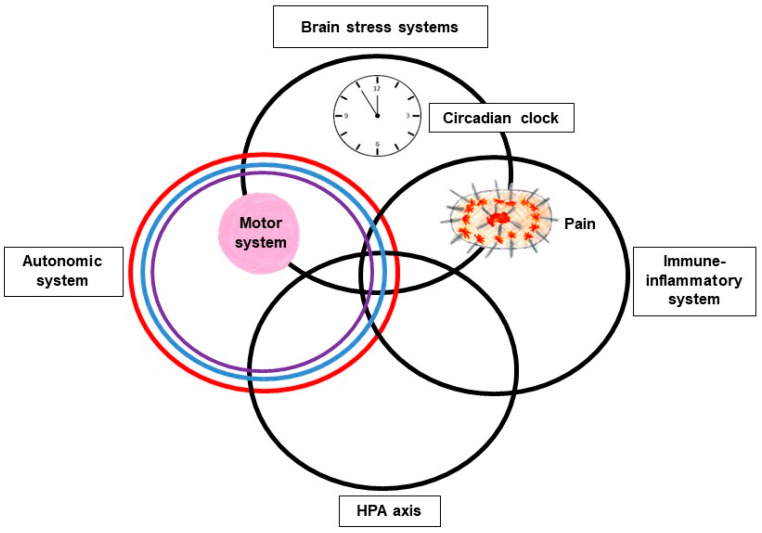
“Some of these The stress system is a key player in the neurobiology of FND (see Figure 2) [37–44].”
BackgroundKozlowska, K., Chudleigh, C., Cruz, C., Lim, M., McClure, G., Savage, B., Shah, U., Cook, A., Scher, S., Carrive, P., et al. (2018) · Clinical Child Psychology and Psychiatry · doi:10.1177/1359104517730116 · Cited by 77 · cited 1×
“Other interventions [63,91] use bottom-up regulation strategies (e.g., slow-breathing techniques, heart rate variability biofeedback, and grounding techniques [similar to those described for retraining and control therapy] [19]) to increase capacity for neuroregulation before implementing other CBT…”
MethodSelf-citationPandemic Tic‐like Behaviors Following Social Media Consumption
Paulus, T., Bäumer, T., Verrel, J., Weissbach, A., Roessner, V., Beste, C., & Münchau, A. (2021) · Movement Disorders · doi:10.1002/mds.28800 · Cited by 73
Rapid onset of functional tic‐like behaviours in young adults during the COVID‐19 pandemic
Pringsheim, T., & Martino, D. (2021) · European Journal of Neurology · doi:10.1111/ene.15034 · Cited by 72
Treatment approaches for functional neurological disorders in children
Vassilopoulos, A., Mohammad, S., Dure, L., Kozlowska, K., & Fobian, A. D. (2022) · Current Treatment Options in Neurology · doi:10.1007/s11940-022-00708-5 · Cited by 70 · cited 1×
“Reproduced from Vassilopoulos and colleagues (2022) with permission [92].”
BackgroundSawchuk, T., & Buchhalter, J. (2015) · Epilepsy & Behavior · doi:10.1016/j.yebeh.2015.08.032 · Cited by 67 · cited 1×
“Shifting focus of attention away from symptoms is also a key element of other interventions for functional seizures [20,62,63].”
BackgroundNguyen, H. D., Azzi, M., White, S., Salter, D., Trieu, T., Morgan, G., Rahman, M., Watt, S., Riley, M., Chang, L. T.-C., et al. (2021) · International Journal of Environmental Research and Public Health · doi:10.3390/ijerph18073538 · Cited by 65 · cited 1×
“And one fifth reported that they had experienced a natural disaster first-hand, reflecting the cumulative natural disasters—drought, floods, storm, and bushfires—that have afflicted the state of New South Wales in recent years [114,115].”
BackgroundYong, K., Chin, R., Shetty, J., Hogg, K. M., Burgess, K., Lindsay, M., McLellan, A. E., Stone, J., KamathTallur, K., & the Edinburgh Paediatric FND Study Group (2023) · Developmental Medicine & Child Neurology · doi:10.1111/dmcn.15538 · Cited by 65
Changing the culture of care for children and adolescents with functional neurological disorder
Kozlowska, K., Sawchuk, T., Waugh, J. L., Helgeland, H., Baker, J., Scher, S., & Fobian, A. D. (2021) · Epilepsy & Behavior Reports · doi:10.1016/j.ebr.2021.100486 · Cited by 63 · cited 3×
“For the original version of this table, see Kozlowska and colleagues (2021) [78].”
BackgroundMethodInfluentialSelf-citationIdentification of biopsychological trait markers in functional neurological disorders
Weber, S., Bühler, J., Vanini, G., Loukas, S., Bruckmaier, R., & Aybek, S. (2023) · Brain · doi:10.1093/brain/awac442 · Cited by 63 · cited 1×
“Taken together, these data suggest that ACEs are broad ranging and that activation and priming of the stress system—leading to subsequent vulnerability to FND—take place across the lifespan [37,38,41,43,119].”
BackgroundParedes-Echeverri, S., Maggio, J., Bègue, I., Pick, S., Nicholson, T. R., & Perez, D. L. (2022) · The Journal of Neuropsychiatry and Clinical Neurosciences · doi:10.1176/appi.neuropsych.21010025 · Cited by 62
Paediatric tic-like presentations during the COVID-19 pandemic
Buts, S., Duncan, M., Owen, T., Martino, D., Pringsheim, T., Byrne, S., McWilliams, A., Murphy, T., Malik, O., Liang, H., et al. (2022) · Archives of Disease in Childhood · doi:10.1136/archdischild-2021-323002 · Cited by 60
Han, V. X., Kozlowska, K., Kothur, K., Lorentzos, M., Wong, W. K., Mohammad, S. S., Savage, B., Chudleigh, C., & Dale, R. C. (2022) · Journal of Paediatrics and Child Health · doi:10.1111/jpc.15932 · Cited by 60
Self-citationThe spectrum of functional tic-like behaviours: data from an international registry
Martino, D., Hedderly, T., Murphy, T., Müller‐Vahl, K. R., Dale, R. C., Gilbert, D. L., Rizzo, R., Hartmann, A., Nagy, P., Anheim, M., et al. (2023) · European Journal of Neurology · doi:10.1111/ene.15611 · Cited by 58
Self-citationPsychogenic nonepileptic seizures in pediatric population: A review
Operto, F. F., Coppola, G., Mazza, R., Pastorino, G. M. G., Campanozzi, S., Margari, L., Roccella, M., Marotta, R., & Carotenuto, M. (2019) · Brain and Behavior · doi:10.1002/brb3.1406 · Cited by 57
Kim, Y.-N., Gray, N., Jones, A., Scher, S., & Kozlowska, K. (2022) · Seminars in Pediatric Neurology · doi:10.1016/j.spen.2021.100947 · Cited by 52 · cited 1×
“Finally, in the physiotherapy component the physiotherapist is always working to shift attention away from the symptoms or the problem area [86,87].”
BackgroundSelf-citationKozlowska, K., Scher, S., & Helgeland, H. (2020) · Palgrave Texts in Counselling and Psychotherapy · doi:10.1007/978-3-030-46184-3 · Cited by 52
Self-citationAttachment, information processing, and psychiatric disorder.
Crittenden, P. M. (2002) · PubMed Central · Cited by 52
Kozlowska, K., Rampersad, R., Cruz, C., Shah, U., Chudleigh, C., Soe, S., Gill, D., Scher, S., & Carrive, P. (2017) · European Child & Adolescent Psychiatry · doi:10.1007/s00787-017-0976-0 · Cited by 48 · cited 1×
“It is common in children and adolescents with functional seizures [101,102].”
BackgroundSelf-citationKozlowska, K., Spooner, C. J., Palmer, D. M., Harris, A., Korgaonkar, M. S., Scher, S., & Williams, L. M. (2018) · NeuroImage: Clinical · doi:10.1016/j.nicl.2018.02.003 · Cited by 47 · cited 1×
“…and feelings function to activate neural networks that mediate the subjective experience of pain (>2/3 of the current cohort) [110–112] and stress-system activation (autonomic system component) [25], both of which are known to modulate aberrant neural network function in paediatric FND [39,113].”
BackgroundSelf-citationSawchuk, T., Buchhalter, J., & Senft, B. (2020) · Epilepsy & Behavior · doi:10.1016/j.yebeh.2020.106971 · Cited by 43 · cited 2×
“Shifting focus of attention away from symptoms is also a key element of other interventions for functional seizures [20,62,63].”
BackgroundMethodIncidence rates and characteristics of pediatric onset psychogenic nonepileptic seizures
Hansen, A. S., Rask, C. U., Rodrigo-Domingo, M., Pristed, S. G., Christensen, J., & Nielsen, R. E. (2020) · Pediatric Research · doi:10.1038/s41390-020-0945-z · Cited by 43
Kozlowska, K. (2013) · Harvard Review of Psychiatry · doi:10.1097/hrp.0000000000000008 · Cited by 40 · cited 5×
“Reproduced with permission © Kasia Kozlowska 2013 [36].”
MethodInfluentialSelf-citationA stress-system model for functional neurological symptoms
Kozlowska, K. (2017) · Journal of the Neurological Sciences · doi:10.1016/j.jns.2017.10.044 · Cited by 37 · cited 4×
“…the stress system—including brain stress systems that underpin salience detection, arousal, pain, and emotional states—and to reflect the biological embedding of experience that makes the child’s brain, body, and mind more likely to respond to future stress with an amplified response [37,38,41,119].”
BackgroundInfluentialSelf-citationCrittenden, P. M., & Heller, M. B. (2017) · Chronic Stress · doi:10.1177/2470547016682965 · Cited by 35
Activation of Functional Brain Networks in Children With Psychogenic Non-epileptic Seizures
Radmanesh, M., Jalili, M., & Kozlowska, K. (2020) · Frontiers in Human Neuroscience · doi:10.3389/fnhum.2020.00339 · Cited by 35 · cited 1×
“…the more common pattern of presentation is that of cumulative common-place stressors that exceed the child’s adaptive capacities to cope [38,56,66], Such stressors include physical stressors (illness, injury, and medical procedures), relational stressors (family stress, parental psychiatric…”
BackgroundSelf-citationPsychiatric Disorders in Children and Adolescents With Psychogenic Nonepileptic Seizures
Hansen, A. S., Rask, C. U., Christensen, A.-E., Rodrigo-Domingo, M., Christensen, J., & Nielsen, R. E. (2021) · Neurology · doi:10.1212/wnl.0000000000012270 · Cited by 35
Panic Disorder and Chest Pain: Mechanisms, Morbidity, and Management
Huffman, J. C., Pollack, M. H., & Stern, T. A. (2002) · The Primary Care Companion For CNS Disorders · doi:10.4088/pcc.v04n0203 · Cited by 35 · cited 1×
“Chest pain is a common functional symptom caused by hyperventilation-related constriction of the coronary arteries [98–100].”
BackgroundRai, S., Foster, S., Griffiths, K. R., Breukelaar, I. A., Kozlowska, K., & Korgaonkar, M. S. (2022) · NeuroImage Clinical · doi:10.1016/j.nicl.2022.103110 · Cited by 35 · cited 6×
“…because subjective distress—which is driven and amplified by illness-promoting psychological processes—contributes to stress-system/neural network dysregulation that maintains FND symptoms [38,39], the psychological component of the treatment intervention is central to the therapeutic process.”
BackgroundMethodInfluentialSelf-citationMartindale, J. M., & Mink, J. W. (2022) · Frontiers in Pediatrics · doi:10.3389/fped.2022.863919 · Cited by 34 · cited 3×
“…academic pressures, political tensions, and social stressors [7]; presentations with functional somatic symptoms have increased around the globe [8–18]. context of climate change, cumulative natural disasters, the COVID-19 In our own clinical contexts—tertiary care hospitals in Sydney (Australia)…”
BackgroundGray, N., Savage, B., Scher, S., & Kozlowska, K. (2020) · The Journal of Neuropsychiatry and Clinical Neurosciences · doi:10.1176/appi.neuropsych.19120355 · Cited by 33 · cited 2×
“Finally, in the physiotherapy component the physiotherapist is always working to shift attention away from the symptoms or the problem area [86,87].”
BackgroundSelf-citationThe recent surge of functional movement disorders: social distress or greater awareness?
Nilles, C., Pringsheim, T. M., & Martino, D. (2022) · Current Opinion in Neurology · doi:10.1097/wco.0000000000001074 · Cited by 32
Kozlowska, K., Chudleigh, C., Savage, B., Hawkes, C., Scher, S., & Nunn, K. P. (2023) · Harvard Review of Psychiatry · doi:10.1097/hrp.0000000000000358 · Cited by 31 · cited 5×
“All of these interactions create a safe therapeutic space [72,86]—a context that supports the process of opening up about inner thoughts and feelings.”
BackgroundMethodInfluentialSelf-citationFørde, S., Herner, L. B., Helland, I. B., & Diseth, T. H. (2022) · Acta Paediatrica · doi:10.1111/apa.16517 · Cited by 30 · cited 1×
“The biopsychosocial assessment and process of co-constructing the formulation have been discussed elsewhere in detail [19,20,36,72,79,80].”
MethodChung, J., Mukerji, S., & Kozlowska, K. (2023) · Australian & New Zealand Journal of Psychiatry · doi:10.1177/00048674221082520 · Cited by 27 · cited 9×
“…difficult transition to high school, high academic expectations exceeding the child’s capacity), high sporting expectations from the self or others (a relentless training schedule), and more recently, exposure to increasing natural disasters and social stress associated with the pandemic [4,18,38].”
BackgroundMethodInfluentialSelf-citationBurkhart, K. M., Agarwal, N., Kim, S., Neudecker, M., & Ievers‐Landis, C. E. (2023) · Children · doi:10.3390/children10061017 · Cited by 27 · cited 1×
“For this group, trauma-specific interventions such as eye movement desensitization and reprocessing (EMDR) [103,104], trauma-focused CBT [104], radical exposure tapping (RET) [105], and accelerated resolution therapy (ART) [106] may be helpful.”
BackgroundAccelerated Resolution Therapy (ART): a Review and Research to Date
Waits, W. M., Marumoto, M., & Weaver, J. J. (2017) · Current Psychiatry Reports · doi:10.1007/s11920-017-0765-y · Cited by 27 · cited 1×
“For this group, trauma-specific interventions such as eye movement desensitization and reprocessing (EMDR) [103,104], trauma-focused CBT [104], radical exposure tapping (RET) [105], and accelerated resolution therapy (ART) [106] may be helpful.”
BackgroundSharma, A. A., & Szaflarski, J. P. (2021) · Epilepsy & Behavior Reports · doi:10.1016/j.ebr.2021.100496 · Cited by 24 · cited 3×
“All of these ACEs implicate stress-system activation—and priming—from early in life, via a complex web of processes (see Chung et al. for a comprehensive discussion pertaining to FND) [38,41,116].”
BackgroundStager, L., Morriss, S., Szaflarski, J. P., & Fobian, A. D. (2022) · Seizure · doi:10.1016/j.seizure.2022.04.006 · Cited by 22
Fobian, A. D., & Szaflarski, J. P. (2021) · Epilepsy & Behavior Reports · doi:10.1016/j.ebr.2021.100479 · Cited by 21 · cited 2×
“In addition, expectations regarding negative or catastrophic symptoms (known as “catastrophic symptom expectations”) and a low sense of control over symptoms have been identified as important factors for maintaining FND symptoms (including functional seizures) [67,68].”
BackgroundStager, L., Morriss, S., McKibben, L., Grant, M., Szaflarski, J. P., & Fobian, A. D. (2022) · Seizure · doi:10.1016/j.seizure.2022.03.021 · Cited by 21 · cited 2×
“…developed by Aaron Fobian and colleagues for the treatment of functional seizures—termed retraining and control therapy (ReACT)—draws on habit reversal and mindfulness to develop competing responses to functional seizure symptoms and catastrophic thoughts and symptom expectations [67,69–71].”
BackgroundMethodPsychogenic non-epileptic seizures in children – psychophysiology & dissociative characteristics
Sawchuk, T., Buchhalter, J., & Senft, B. (2020) · Psychiatry Research · doi:10.1016/j.psychres.2020.113544 · Cited by 19 · cited 2×
“It is common in children and adolescents with functional seizures [101,102].”
BackgroundMethodStager, L., Szaflarski, J. P., & Fobian, A. D. (2021) · Epilepsy & Behavior Reports · doi:10.1016/j.ebr.2021.100503 · Cited by 16 · cited 1×
“The ReACT intervention led to a resolution of functional seizures [67,70,71].”
BackgroundKozlowska, K., Cruz, C., Davies, F., Brown, K. J., Palmer, D. M., McLean, L., Scher, S., & Williams, L. M. (2016) · Australian and New Zealand Journal of Family Therapy · doi:10.1002/anzf.1187 · Cited by 16
Self-citationHelgeland, H., Gjone, I. H., & Diseth, T. H. (2022) · Human Systems Therapy Culture and Attachments · doi:10.1177/26344041221099644 · Cited by 15
Self-citationDeactivating the Buttons: Integrating Radical Exposure Tapping with a Family Therapy Framework
MacKinnon, L. K. (2014) · Australian and New Zealand Journal of Family Therapy · doi:10.1002/anzf.1070 · Cited by 13 · cited 1×
“For this group, trauma-specific interventions such as eye movement desensitization and reprocessing (EMDR) [103,104], trauma-focused CBT [104], radical exposure tapping (RET) [105], and accelerated resolution therapy (ART) [106] may be helpful.”
BackgroundDuc, H. N., Duc, H. N., Azzi, M., et al. (2021) · Preprints.org · doi:10.20944/preprints202103.0243.v1 · Cited by 12
Trancework: An Introduction to the Practice of Clinical Hypnosis
Yapko, M. D. (2018) · Routledge eBooks · doi:10.4324/9781351246309 · Cited by 10 · cited 1×
“…to Michael Yapko, hypnosis involves “a focused experience of attentional absorption”—sometimes referred to as trance —that invites the child to pay “greater attention to the essential skills of using words and gestures in particular ways to achieve specific therapeutic outcomes” (p. 8) [108].”
Stager, L., Mueller, C., Morriss, S., Szaflarski, J. P., & Fobian, A. D. (2023) · Epilepsy & Behavior · doi:10.1016/j.yebeh.2023.109143 · Cited by 9 · cited 2×
“…developed by Aaron Fobian and colleagues for the treatment of functional seizures—termed retraining and control therapy (ReACT)—draws on habit reversal and mindfulness to develop competing responses to functional seizure symptoms and catastrophic thoughts and symptom expectations [67,69–71].”
BackgroundSymptom-Based Approach to Pediatric Neurology
Kamat, D., & Sivaswamy, L. (2022) · Springer eBooks · doi:10.1007/978-3-031-10494-7 · Cited by 7
The place of EMDR in children: a review of the literature
Raissouni, M., Benhammou, S., & Belbachir, S. (2023) · European Psychiatry · doi:10.1192/j.eurpsy.2023.1541 · Cited by 1 · cited 1×
“For this group, trauma-specific interventions such as eye movement desensitization and reprocessing (EMDR) [103,104], trauma-focused CBT [104], radical exposure tapping (RET) [105], and accelerated resolution therapy (ART) [106] may be helpful.”
Background
Research works printed but not linked: 8
- Savage B. Chudleigh C. Hawkes C. Scher S. Kozlowska K. Treatment of Functional Seizures in Children and Adolescents: A Mind-Body Manual for Health Professionals Australian Academic Press Samford, Australia 2022
- Shephard B. A War of Nerves: Soldiers and Psychiatrists in the Twentieth Century Harvard University Press Cambridge, MA, USA 2001
- Sterling P. Eyer J. Allostatis: A new paradigm to explain arousal pathology Handbook of Life Stress, Cognition and Health Fisher S. Reason J. Wiley Chichester, UK 1988 629 649
- Chrousos G.P. Loriaux D.L. Gold P.W. Preface Mechanisms of Physical and Emotional Stress Advances in Experimental Medicine and Biology Plenum Press New York, NY, USA 1988 Volume 245 vii viii
- Benedetti F. The Patient’s Brain Oxford University Press Oxford, UK 2011
- Hayes S.C. Hofmann S.G. Process-Based CBT: The Science and Core Clinical Competencies of Cognitive Behavioral Therapy Context Press Oakland, CA, USA 2018
- Linehan M.M. Cognitive-Behavioral Treatment of Borderline Personality Disorder The Guilford Press New York, NY, USA 2018
- Helgeland H. Savage B. Kozlowska K. Hypnosis in the Treatment of Functional Somatic Symptoms in Children and Adolescents The Routledge International Handbook of Clinical Hypnosis Linden J.H. De Benedittis G. Sugarman L.I. Varga K. Routledge Taylor & Francis Oxfordshire, UK forthcoming
Cited by
Recent advances in understanding the neurobiology of pediatric functional neurological disorder
Kozlowska, K., & Scher, S. (2024) · Expert Review of Neurotherapeutics · doi:10.1080/14737175.2024.2333390 · Cited by 30
“…rumination ( n = 42; 55.3%); negative/cata-strophic-symptom expectations ( n = 40; 52.6%); avoidance of activities ( n = 38; 50%); intrusive thoughts/feelings/memories associated with adverse events ( n = 38, 50%); and pushing difficult feelings out of mind ( n = 37; 48.7%)’ (p. 1) [136].”
BackgroundResultInfluentialSelf-citationNeurometabolic network (NMetNet) for functional neurological disorder in children and adolescents
Lan, Z., Foster, S., Charney, M. F., van Grinsven, M., Breedlove, K. M., Kozlowska, K., & Lin, A. P. (2025) · NeuroImage Clinical · doi:10.1016/j.nicl.2025.103767 · Cited by 10
“%) engaged in catastrophizing related to the self (Kozlowska et al., 2023).”
Self-citationAl‐Beltagi, M., Saeed, N. K., Bediwy, A. S., Bediwy, E. A., & Elbeltagi, R. M. (2025) · World Journal of Clinical Pediatrics · doi:10.5409/wjcp.v14.i3.105290 · Cited by 10
Altered self-processing brain networks in paediatric functional neurological disorder
Walpola, I. C., Mohan, A., Foster, S., & Kozlowska, K. (2025) · NeuroImage Clinical · doi:10.1016/j.nicl.2025.103811 · Cited by 5
“Self-critical and cata-strophic thoughts function to drive the illness process in a top-down fashion (Fobian et al., 2020; Gianaros & Wager, 2015; Kozlowska et al., 2023b; Stager et al., 2022).”
InfluentialSelf-citationJima, S. A., Gerete, T. B., Hailu, F. B., Ayane, G. B., Jatu, M. G., Geta, T., & Tolosa, E. K. (2025) · Frontiers in Pediatrics · doi:10.3389/fped.2025.1485334 · Cited by 6
Metadata
- Authors
- Kozlowska, K., Schollar-Root, O., Savage, B., Hawkes, C., Chudleigh, C., Raghunandan, J., Scher, S., & Helgeland, H.
- Affiliations
- The University of Sydney (AU)
- Department of Psychological Medicine, The Children’s Hospital at Westmead, Westmead, NSW 2145, Australia
- Children's Hospital at Westmead (AU)
- Oslo University Hospital (NO)
- Corresponding author
- Kozlowska, Kasia
- Venue
- Children
- Publisher
- MDPI AG
- Published
- 2023-10-24
- Volume
- 10
- Issue
- 11
- Pages
- 1724
- ISSN
- 2227-9067 (ISSN-L)
- PMC
- PMC10670544
- OpenAlex
- W4387908113
- Semantic Scholar
- fbf5ad36aaa2c2ea7fda972295e3840538a8d902
- Cited by
- 14
- References
- 103
- Citations by year
- 2026: 5 · 2025: 8 · 2024: 1
- FWCI
- 2.84
- Type
- journal article
- Language
- en
- Open access
- gold
- doi.org
- Licence
- Locations
- Children (publishedVersion, cc-by)
- PubMed Central (publishedVersion, cc-by)
- PubMed (publishedVersion)
- DOAJ (DOAJ: Directory of Open Access Journals) (submittedVersion, cc-by-sa)
- Topics
- Health Sciences › Medicine › Psychiatry and Mental health › Psychosomatic Disorders and Their Treatments
- Health Sciences › Medicine › Psychiatry and Mental health › Fibromyalgia and Chronic Fatigue Syndrome Research
- Social Sciences › Psychology › Clinical Psychology › Child Abuse and Trauma
- Keywords
- conversion disorder, subjective distress, adverse childhood experiences, rumination, helplessness, intrusive thoughts, children and adolescents, inpatient care, family assessment, self-criticism, avoidance, catastrophizing, obsessive-compulsive symptoms, somatic symptoms
About these checks
Registry, retraction, Cites and statistics results are computed, not judged, with one exception: a printed reference that no index lists is read once by a model before it counts as a citation error. Claims are extracted by a model and kept only when their quote appears verbatim in the text; each cited source is then checked, with a model’s help, for whether it says what the claim relies on. Those verdicts can be wrong — read the claim’s quote and the cited source before relying on one.
The claim verdicts this report counts are experimental: their accuracy is not yet measured.
A language model drew the claims from the paper on 2026-10-11, under version 3 of the claim definition (model deepseek-v4.1-flash, prompt extract-v3).
A second model labelled each claim on 2026-10-11 (model jev-1.13-20260917, definition revision gold-guideline-v0.2).
Cited sources are checked with a language model’s help (gpt-6-sol).
Statistics and arithmetic are recomputed, not judged.
Confidence bands are shown only for fields calibrated on our annotated test set. None is calibrated yet, so no band is shown.
What counts as a claim ›How we measure confidence ›How we check this ›
Are you an author, or do you see a problem with this page? Request a review
Data sources
Bibliographic data: Semantic Scholar, OpenAlex, Crossref.
Contains information from the Semantic Scholar Academic Graph Datasets, made available under the ODC Attribution License (ODC-BY 1.0).
Semantic Scholar’s data is described in: Kinney, R., et al. (2023). The Semantic Scholar Open Data Platform. arXiv:2301.10140.
