

Metagenomic Insights into the Microbiome and Resistance Genes of Traditional Fermented Foods in Arabia
Open accessThe DOI matches its Crossref record; 55 of the 57 references it cites were found in a registry or an index.
Abstract
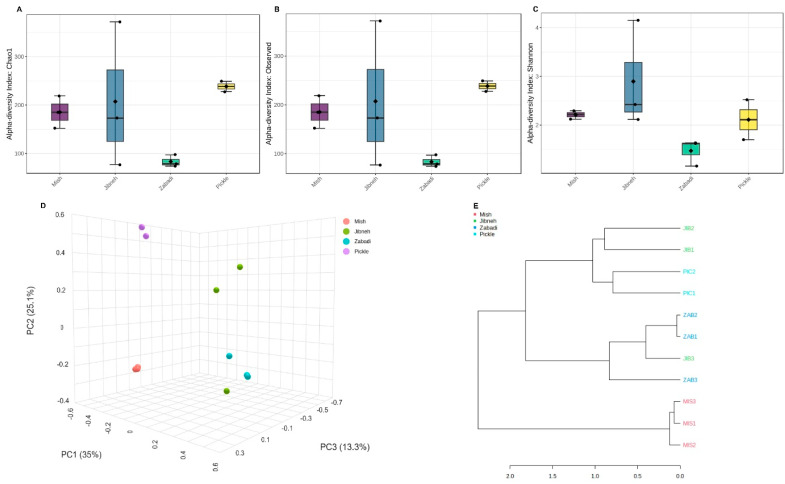
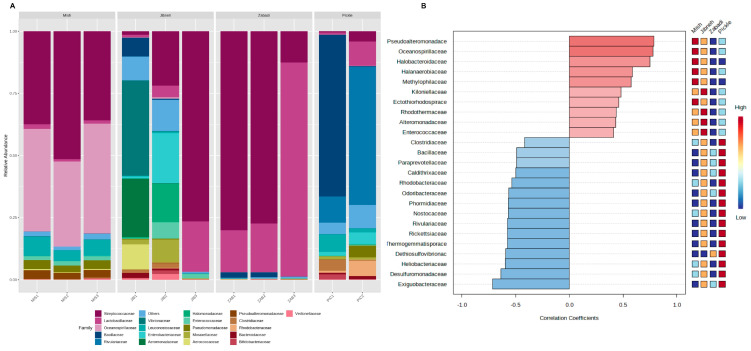
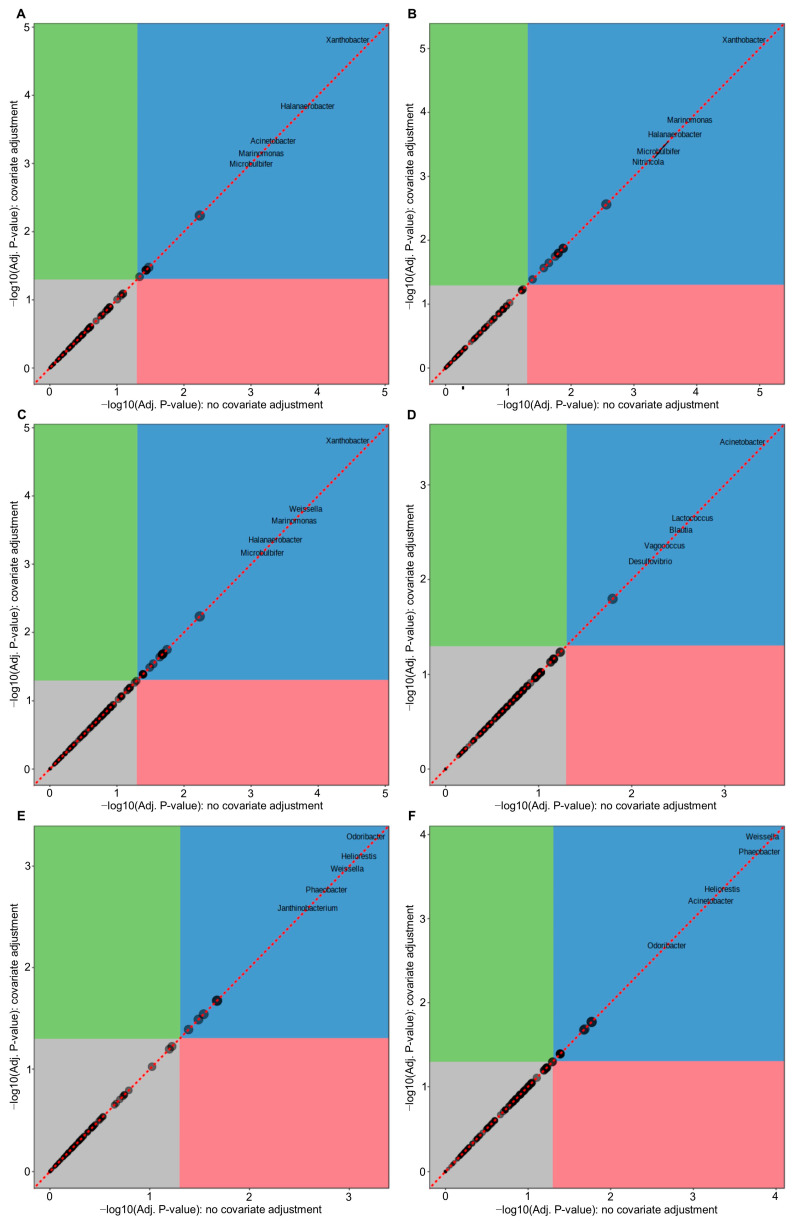
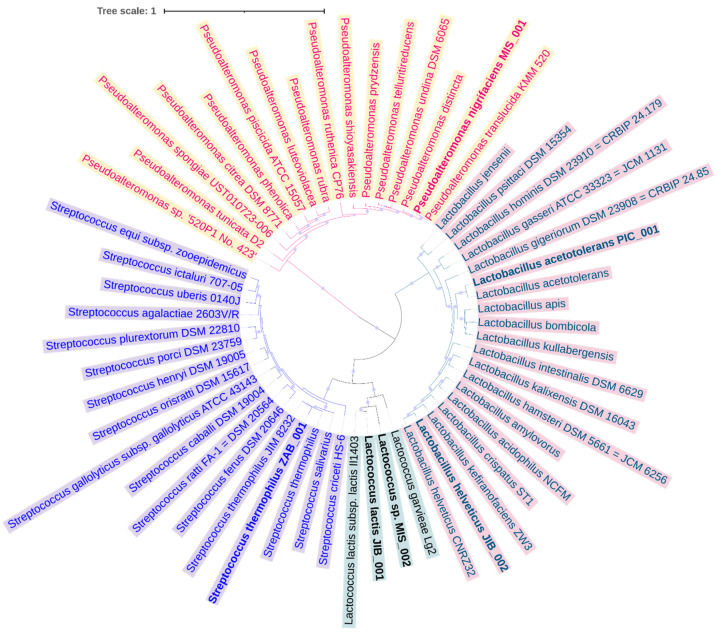
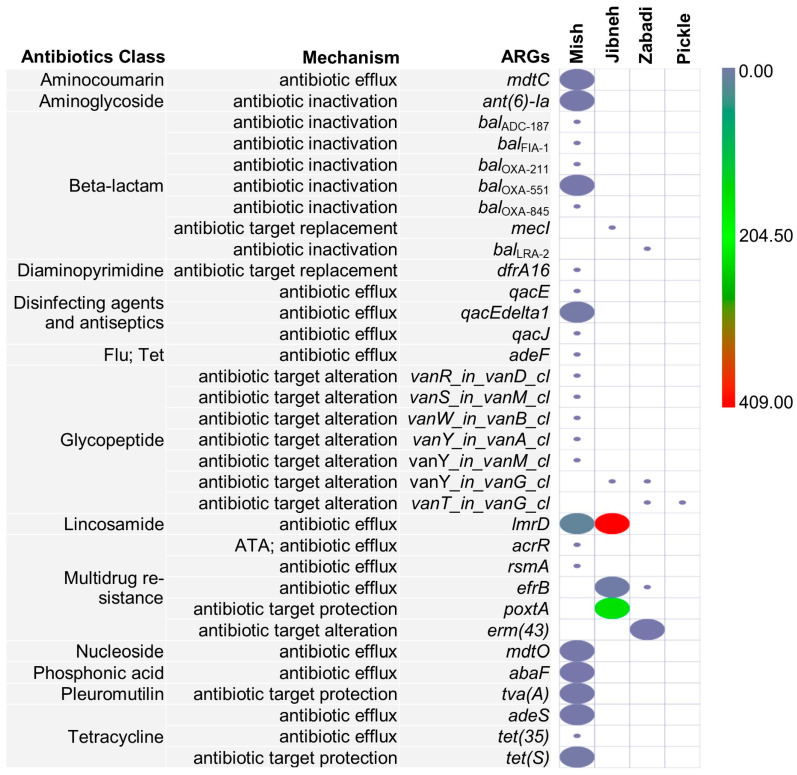
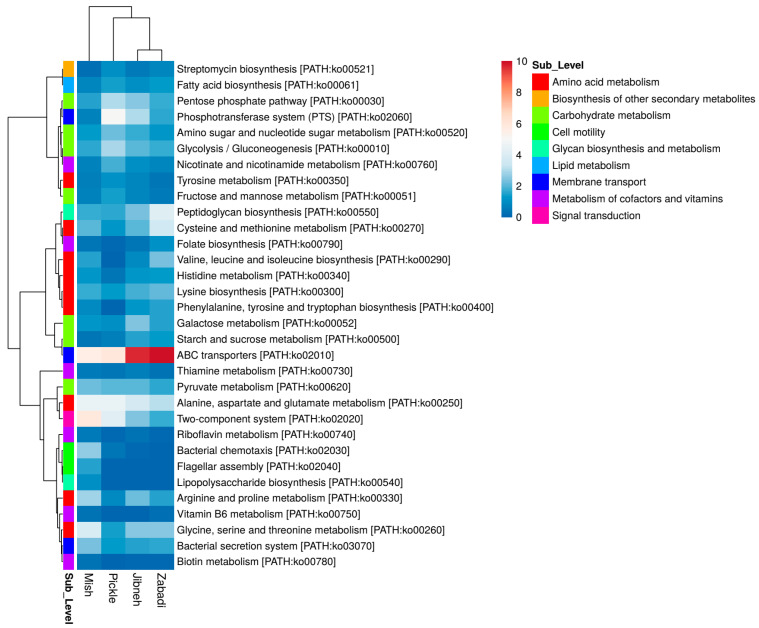
This study uncovered microbial communities and evaluated the microbiological safety of traditional fermented foods consumed in the Arab region. Samples of dairy and non-dairy fermented foods—mish, jibneh, zabadi, and pickles—were collected from local markets in Saudi Arabia. Using the MiSeq system, samples were sequenced using 16S amplicons and shotgun metagenomics. Alpha and beta diversity indicated inter- and intra-variation in the studied fermented foods’ bacterial communities. In the case of mish, the replicates were clustered. Twenty-one genera were found to be significantly different (FDR < 0.05) in abundance in pairwise comparison of fermented foods. Five high-quality, metagenome-assembled genomes (MAGs) of Lactococcus lactis, Lactobacillus helveticus, Pseudoalteromonas nigrifaciens, Streptococcus thermophiles, and Lactobacillus acetotolerans were retrieved from the shotgun sequencing representing the dominant taxa in the studied fermented foods. Additionally, 33 genes that cause antimicrobial resistance (ARGs) against ten different antibiotic classes were detected. Metabolic pathways were abundant in the studied metagenomes, such as amino acid metabolism, carbohydrate metabolism, cofactors, and vitamin biosynthesis. Metagenomic evaluation of Arabian fermented foods, including the identification of probiotics, pathogenic bacteria, and ARGs, illustrates the importance of microbiological analysis in evaluating their health effects.
Overview
The claims and statistics of this paper haven’t been checked yet.
Free: it reads the open-access text and checks the first 5 claims that cite a source we can check. Create a free account to check every claim.
Integrity signals
Registry
Cites
Statistics
Figures
Verification
Claims the paper makes
The claims and statistics of this paper haven’t been checked yet.
Free: it reads the open-access text and checks the first 5 claims that cite a source we can check. Create a free account to check every claim.
Claims other papers make about this one
Each is checked against this paper’s own text: does it say what the citing paper says it does?
The source backs part of the claim, not all of it — or backs it for a different population, condition or comparison.
In the citing paper
“However, none of them were identical to the 14 most abundant genes from our study ( tetU, blaACC-3, Inu(B), Isa(E) , etc.).”
From Exploring the resistome of probiotics, starter cultures, and cheeses via metagenomic analysis (2025) · cites this paper as Yasir et al., 2023
Experimental — accuracy not yet measuredThe cited source says what the claim attributes to it.
In the citing paper
“In a recent study on traditional fer mented foods in Arabia, the clpL gene was detected in the metagenomes of fermented milk mish, on a contig carrying IS30 (Yasir, Alkhaldy, Soliman, Turkistani, & Azhar, 2023).”
From Exploring the resistome of probiotics, starter cultures, and cheeses via metagenomic analysis (2025) · cites this paper as Yasir, Alkhaldy, Soliman, Turkistani, & Azhar, 2023
The cited source says what the claim attributes to it.
In the citing paper
“Several ARGs from ten different antibiotic classes were also identified in the resistomes of the traditional Arabic fermented dairy products mish (fermented milk), jibneh (cheese) and zabadi (yogurt) (Yasir et al., 2023).”
From Exploring the resistome of probiotics, starter cultures, and cheeses via metagenomic analysis (2025) · cites this paper as Yasir et al., 2023
Self-check
Percentages, sums and reported differences re-computed from the paper’s own numbers.
The self-check needs the paper’s full text.
Citations
Cites
Trimmomatic: a flexible trimmer for Illumina sequence data
Bolger, A. M., Lohse, M., & Usadel, B. (2014) · Bioinformatics · doi:10.1093/bioinformatics/btu170 · Cited by 65,548
Naïve Bayesian Classifier for Rapid Assignment of rRNA Sequences into the New Bacterial Taxonomy
Wang, Q., Garrity, G. M., Tiedje, J. M., & Cole, J. R. (2007) · Applied and Environmental Microbiology · doi:10.1128/aem.00062-07 · Cited by 19,885 · cited 1×
“) that used the GreenGenes SQL taxonomic database curated by Illumina and RefSeq RDP 16S v3 database with the ribosomal database project classifier algorithm [25].”
MethodMeyer, F., Paarmann, D., D'Souza, M., Olson, R., Glass, E., Kubal, M., Paczian, T., Rodriguez, A., Stevens, R., Wilke, A., et al. (2008) · BMC Bioinformatics · doi:10.1186/1471-2105-9-386 · Cited by 3,565 · cited 1×
“To conduct functional analysis, we mapped the open reading frames to the Kyoto Encyclopedia of Genes and Genomes (KEGG) orthology (KO) databases using the MGRAST platform with default settings [31].”
MethodSingh, N., Gurav, A., Sivaprakasam, S., Brady, E., Padia, R., Shi, H., Thangaraju, M., Prasad, P. D., Manicassamy, S., Munn, D. H., et al. (2014) · Immunity · doi:10.1016/j.immuni.2013.12.007 · Cited by 2,368 · cited 1×
“Microbes residing in the large intestine rely on the host’s undigested leftover dietary substrates, which undergo saccharolytic bacterial fermentation to produce the bacterial metabolites, mainly SCFAs (acetate, butyrate, and propionate) [52].”
BackgroundFast and sensitive taxonomic classification for metagenomics with Kaiju
Menzel, P., Ng, K. L., & Krogh, A. (2016) · Nature Communications · doi:10.1038/ncomms11257 · Cited by 2,118 · cited 1×
“The microbial community was elucidated from unassembled sequence reads using the Kaiju program [29].”
MethodChong, J., Liu, P., Zhou, G., & Xia, J. (2020) · Nature Protocols · doi:10.1038/s41596-019-0264-1 · Cited by 1,702
KBase: The United States Department of Energy Systems Biology Knowledgebase
(2018) · doi:10.1038/nbt.4163 · Cited by 1,624 · cited 1×
“Metagenomic analysis was performed using the Metagenomic Rapid Annotations using Subsystems Technology (MG-RAST) and the KBase platform [27,28].”
MethodBacteria as vitamin suppliers to their host: A gut microbiota perspective
LeBlanc, J. G., Milani, C., de Giori, G. S., Sesma, F., van Sinderen, D., & Ventura, M. (2013) · Current Opinion in Biotechnology · doi:10.1016/j.copbio.2012.08.005 · Cited by 1,613 · cited 2×
“Humans fail to synthesize several metabolites, including SCFAs and vitamins, whereas an exogenous supply is needed for the overall development [18,50,51].”
BackgroundDimidi, E., Cox, S., Rossi, M., & Whelan, K. (2019) · Nutrients · doi:10.3390/nu11081806 · Cited by 801 · cited 1×
“An increasing number of studies have marked the role of food in shaping the composition of gut flora, particularly of Firmicutes and Bacteroidetes composition, the two dominant phyla residing in the gastrointestinal tract [12,17].”
BackgroundMicrobial production of vitamin B 12
Martens, H. B. (2002) · Applied Microbiology and Biotechnology · doi:10.1007/s00253-001-0902-7 · Cited by 722
The role of the gut microbiome in systemic inflammatory disease
Clemente, J. C., Manasson, J., & Scher, J. U. (2018) · BMJ · doi:10.1136/bmj.j5145 · Cited by 568
Intestinal flora and endogenous vitamin synthesis
Hill, M. J. (1997) · European Journal of Cancer Prevention · doi:10.1097/00008469-199703001-00009 · Cited by 551 · cited 1×
“Humans fail to synthesize several metabolites, including SCFAs and vitamins, whereas an exogenous supply is needed for the overall development [18,50,51].”
BackgroundFermented Foods, Health and the Gut Microbiome
Leeuwendaal, N. K., Stanton, C., O’Toole, P. W., & Beresford, T. P. (2022) · Nutrients · doi:10.3390/nu14071527 · Cited by 496
MG-RAST, a Metagenomics Service for Analysis of Microbial Community Structure and Function
Keegan, K. P., Glass, E. M., & Meyer, F. (2016) · Methods in Molecular Biology · doi:10.1007/978-1-4939-3369-3_13 · Cited by 477 · cited 1×
“Metagenomic analysis was performed using the Metagenomic Rapid Annotations using Subsystems Technology (MG-RAST) and the KBase platform [27,28].”
MethodKalantar, K. L., Carvalho, T., de Bourcy, C. F. A., Dimitrov, B., Dingle, G., Egger, R., Han, J., Holmes, O. B., Juan, Y.-F., King, R., et al. (2020) · GigaScience · doi:10.1093/gigascience/giaa111 · Cited by 406
Folate Production by Bifidobacteria as a Potential Probiotic Property
Pompei, A., Cordisco, L., Amaretti, A., Zanoni, S., Matteuzzi, D., & Rossi, M. (2007) · Applied and Environmental Microbiology · doi:10.1128/aem.01763-06 · Cited by 354
Kleerebezem, M., & Vaughan, E. E. (2009) · Annual Review of Microbiology · doi:10.1146/annurev.micro.091208.073341 · Cited by 314 · cited 1×
“An increasing number of studies have marked the role of food in shaping the composition of gut flora, particularly of Firmicutes and Bacteroidetes composition, the two dominant phyla residing in the gastrointestinal tract [12,17].”
BackgroundChanges of the human gut microbiome induced by a fermented milk product
Veiga, P., Pons, N., Agrawal, A., Oozeer, R., Guyonnet, D., Brazeilles, R., Faurie, J.-M., van Hylckama Vlieg, J. E. T., Houghton, L. A., Whorwell, P. J., et al. (2014) · Scientific Reports · doi:10.1038/srep06328 · Cited by 259
Quigley, L., O'Sullivan, O., Beresford, T. P., Ross, R. P., Fitzgerald, G. F., & Cotter, P. D. (2012) · Applied and Environmental Microbiology · doi:10.1128/aem.00918-12 · Cited by 258
Commercial bacterial starter cultures for fermented foods of the future
Hansen, E. B. (2002) · International Journal of Food Microbiology · doi:10.1016/s0168-1605(02)00238-6 · Cited by 216 · cited 1×
“The dairy and agro-food industries use commercial mixtures of specific strains for fermentation, and the microbiological profile of those products is more standardized [8].”
BackgroundLeveraging diet to engineer the gut microbiome
Wolter, M., Grant, E. T., Boudaud, M., Steimle, A., Pereira, G. V., Martens, E. C., & Desai, M. S. (2021) · Nature Reviews Gastroenterology & Hepatology · doi:10.1038/s41575-021-00512-7 · Cited by 211 · cited 1×
“The microbiome of the human digestive tract comprises a complex and heterogeneous community of 100 trillion microbial cells classified in over 1000 species, many of which stay with their hosts in symbiotic relationships [14].”
BackgroundLeech, J., Cabrera-Rubio, R., Walsh, A. M., Macori, G., Walsh, C. J., Barton, W., Finnegan, L., Crispie, F., O’Sullivan, O., Claesson, M. J., et al. (2020) · mSystems · doi:10.1128/msystems.00522-20 · Cited by 200 · cited 8×
“Brine-type food contained tetracycline resistance genes [6].”
BackgroundResultInfluentialMetagenomic analysis of a Mexican ripened cheese reveals a unique complex microbiota
Escobar-Zepeda, A., Sanchez-Flores, A., & Quirasco Baruch, M. (2016) · Food Microbiology · doi:10.1016/j.fm.2016.02.004 · Cited by 174
Novel insights into the microbiology of fermented dairy foods
Macori, G., & Cotter, P. D. (2018) · Current Opinion in Biotechnology · doi:10.1016/j.copbio.2017.09.002 · Cited by 169 · cited 2×
“Fermented foods typically contain beneficial probiotic bacteria, such as Lactobacillus delbrueckii and Streptococcus thermophilus, but may also harbor harmful pathogens, including Salmonella, Listeria monocytogenes, and Staphylococcus aureus [2,4,11].”
BackgroundRuzzo, E. K., Capo-Chichi, J.-M., Ben-Zeev, B., Chitayat, D., Mao, H., Pappas, A. L., Hitomi, Y., Lu, Y.-F., Yao, X., Hamdan, F. F., et al. (2013) · Neuron · doi:10.1016/j.neuron.2013.08.013 · Cited by 164 · cited 1×
“The role of asparagine synthetase expression was reportedly crucial in healthy neuronal development [58].”
BackgroundShotgun Metagenomics and Volatilome Profile of the Microbiota of Fermented Sausages
Ferrocino, I., Bellio, A., Giordano, M., Macori, G., Romano, A., Rantsiou, K., Decastelli, L., & Cocolin, L. (2018) · Applied and Environmental Microbiology · doi:10.1128/aem.02120-17 · Cited by 143
High-throughput sequencing of microbial communities in Poro cheese, an artisanal Mexican cheese
Aldrete-Tapia, A., Escobar-Ramírez, M. C., Tamplin, M. L., & Hernández-Iturriaga, M. (2014) · Food Microbiology · doi:10.1016/j.fm.2014.05.022 · Cited by 133
Effect of atorvastatin on the gut microbiota of high fat diet-induced hypercholesterolemic rats
Khan, T. J., Ahmed, Y. M., Zamzami, M. A., Mohamed, S. A., Khan, I., Baothman, O. A. S., Mehanna, M. G., & Yasir, M. (2018) · Scientific Reports · doi:10.1038/s41598-017-19013-2 · Cited by 124 · cited 1×
“, San Diego, CA, USA) was used to conduct next generation sequencing, utilizing a 2 × 300 bp paired end chemistry of a 600 cycle kit, as previously described [24].”
MethodSelf-citationBin Masalam, M. S., Bahieldin, A., Alharbi, M. G., Al-Masaudi, S., Al-Jaouni, S. K., Harakeh, S. M., & Al-Hindi, R. R. (2018) · Evidence-Based Complementary and Alternative Medicine · doi:10.1155/2018/7970463 · Cited by 108
Zhang, J., Wang, X., Huo, D., Li, W., Hu, Q., Xu, C., Liu, S., & Li, C. (2016) · Scientific Reports · doi:10.1038/srep32524 · Cited by 102 · cited 1×
“Other studies have also reported the abundance of probiotic bacteria such as Lactobacilli species in dairy and non-dairy fermented foods and encoding the genes for vitamin biosynthesis, fermentation, and secondary metabolites production [2,7,53].”
BackgroundImmunomodulatory effect of Lactococcus lactis JCM5805 on human plasmacytoid dendritic cells
Sugimura, T., Jounai, K., Ohshio, K., Tanaka, T., Suwa, M., & Fujiwara, D. (2013) · Clinical Immunology · doi:10.1016/j.clim.2013.10.007 · Cited by 82
Giello, M., Storia, A. L., Filippis, F. D., Ercolini, D., & Villani, F. (2017) · Food Microbiology · doi:10.1016/j.fm.2017.11.003 · Cited by 67 · cited 1×
“Humans fail to synthesize several metabolites, including SCFAs and vitamins, whereas an exogenous supply is needed for the overall development [18,50,51].”
BackgroundIdentification and Characterization of a Novel Biotin Biosynthesis Gene in Saccharomyces cerevisiae
Wu, H., Ito, K., & Shimoi, H. (2005) · Applied and Environmental Microbiology · doi:10.1128/aem.71.11.6845-6855.2005 · Cited by 63 · cited 1×
“Similarly, biotin was commonly found in the MAGs retrieved from the studied dairy fermented is a cofactor of many enzymes that participate in gluconeogenesis, amino acid, and fatty acid biosynthesis [57].”
BackgroundLiu, X., Kuda, T., Takahashi, H., & Kimura, B. (2018) · Food Microbiology · doi:10.1016/j.fm.2017.11.014 · Cited by 60 · cited 1×
“Fermented foods typically contain beneficial probiotic bacteria, such as Lactobacillus delbrueckii and Streptococcus thermophilus, but may also harbor harmful pathogens, including Salmonella, Listeria monocytogenes, and Staphylococcus aureus [2,4,11].”
BackgroundYasir, M., Al-Zahrani, I. A., Bibi, F., Abd El Ghany, M., & Azhar, E. I. (2022) · Food Research International · doi:10.1016/j.foodres.2022.111190 · Cited by 60 · cited 5×
“However, genera of Bacillus, Calothrix, Weissella, and Lactobacillus were abundantly found in pickle samples indicates variation in bacterial community composition among different fermented food types as observed in previous studies and could be linked to the fermented foods substrates, production recipes, environment…”
BackgroundMethodResultInfluentialSelf-citationStreptococcus thermophilus Attenuates Inflammation in Septic Mice Mediated by Gut Microbiota
Han, F., Wu, G., Zhang, Y., Zheng, H., Han, S., Li, X., Cai, W., Liu, J., Zhang, W., Zhang, X., et al. (2020) · Frontiers in Microbiology · doi:10.3389/fmicb.2020.598010 · Cited by 53
A glimpse of antimicrobial resistance gene diversity in kefir and yoghurt
Tóth, A. G., Csabai, I., Maróti, G., Jerzsele, Á., Dubecz, A., Patai, Á. V., Judge, M. F., Nagy, S. Á., Makrai, L., Bányai, K., et al. (2020) · Scientific Reports · doi:10.1038/s41598-020-80444-5 · Cited by 48 · cited 1×
“ARGs have been found in fermented vegetables and dairy products at varying levels, reducing the effectiveness of clinically important antibiotics such as aminoglycosides, fluoroquinolones, beta-lactams, tetracycline, lincosamides, fosfomycin, nitrofurans, nitroimidazoles, phenicols, macrolides, and rifamycin [6,47,48].”
BackgroundKothe, C. I., Bolotin, A., Kraïem, B.-F., Dridi, B., & Renault, P. (2021) · International Journal of Food Microbiology · doi:10.1016/j.ijfoodmicro.2021.109312 · Cited by 46 · cited 1×
“nigrifaciens from the cheese sample using a metagenomic approach [42].”
MethodBiotin Production by Bifidobacteria.
NODA, H., AKASAKA, N., & OHSUGI, M. (1994) · Journal of Nutritional Science and Vitaminology · doi:10.3177/jnsv.40.181 · Cited by 45
Implication of Gut Microbiota in Human Health
Khan, I., Yasir, M., Azhar, E. I., Kumosani, T. A., Barbour, E. K., Bibi, F., & Kamal, M. A. (2014) · CNS & Neurological Disorders - Drug Targets · doi:10.2174/1871527313666141023153506 · Cited by 43
Self-citationLi, J., Zheng, Y., Xu, H., Xi, X., Hou, Q., Feng, S., Wuri, L., Bian, Y., Yu, Z., Kwok, L. Y., et al. (2017) · BMC Microbiology · doi:10.1186/s12866-016-0911-4 · Cited by 39
Functional Properties of Food Origin Lactobacillus in the Gastrointestinal Ecosystem—In Vitro Study
Zielińska, D., Długosz, E., & Zawistowska-Deniziak, A. (2019) · Probiotics and Antimicrobial Proteins · doi:10.1007/s12602-018-9458-z · Cited by 36
Chemical composition of fermented milk (roub and mish) in Sudan
Zubeir, I. E. M. E., Abdalla, W. M., & Owni, O. A. O. E. (2004) · Food Control · doi:10.1016/j.foodcont.2004.07.003 · Cited by 33
Indigenous fermented foods: nutritional and safety aspects
Ramos, C. L., Bressani, A. P. P., Batista, N. N., Martinez, S. J., Dias, D. R., & Schwan, R. F. (2023) · Current Opinion in Food Science · doi:10.1016/j.cofs.2023.101075 · Cited by 33 · cited 1×
“to a wide range of molecules that provide a distinctive composition to the final fermented products [4,5].”
BackgroundAntibiotics and Resistance Genes: Influencing the Microbial Ecosystem in the Gut
Kazimierczak, K. A., & Scott, K. P. (2007) · Advances in applied microbiology · doi:10.1016/s0065-2164(07)62009-7 · Cited by 27 · cited 1×
“The antibiotic resistant strains and resistance genes pool in fermented products increased the risk of ARGs transfer to human pathogens which might be present within the gut, reviewed in detail previously [23].”
BackgroundFurtado, D. N., Todorov, S. D., Landgraf, M., Destro, M. T., & Franco, B. D. G. D. M. (2014) · Brazilian Journal of Microbiology · doi:10.1590/s1517-83822014000300038 · Cited by 27
Antimicrobial resistance of Lactobacillus spp. from fermented foods and human gut
Ma, Q., Fu, Y., Sun, H., Huang, Y. C., Li, L., Yu, Q., Dinnyés, A., & Sun, Q. (2017) · LWT · doi:10.1016/j.lwt.2017.07.059 · Cited by 26 · cited 1×
“As a result of food-borne ARGs entering the body, the gut microbiome can absorb them and cause adverse health effects [49].”
BackgroundPakwan, C., Chitov, T., Chantawannakul, P., Manasam, M., Bovonsombut, S., & Disayathanoowat, T. (2020) · PLoS ONE · doi:10.1371/journal.pone.0242560 · Cited by 24 · cited 1×
“Bacillus, Lactobacillus, Clostridium, and Streptococcus were the most prevalent taxa in pickles, and our findings were consistent with the studies from fermented soybeans and vegetables [40,41].”
ResultSCREENING OF LACTIC ACID BACTERIA FROM SUDANESE FERMENTED FOODS FOR BACTERIOCIN PRODUCTION
Elyas, Y. Y. A., Yousif, N. M. E., & Ahmed, I. A. M. (2015) · Journal of Microbiology Biotechnology and Food Sciences · doi:10.15414/jmbfs.2015.4.5.373-378 · Cited by 20 · cited 2×
“Limited studies have evaluated the microbiology of mish, and the available culture analysis reported Staphylococcus aureus , psychotropic bacteria, yeast, and lactobacilli from mish samples mainly conducted in Sudan [36,37].”
BackgroundSamelis, J., Doulgeraki, A. I., Bikouli, V. C., Pappas, D., & Kakouri, A. (2021) · Fermentation · doi:10.3390/fermentation7020067 · Cited by 18 · cited 1×
“A recent study from Greece identified lactic acid bacteria, followed by yeasts, Enterobacteria, pseudomonads, and staphylococci in the cheese samples using culture-dependent and 16S rRNA gene sequence analysis [39].”
BackgroundYasir, M., Bibi, F., Hashem, A. M., & Azhar, E. I. (2020) · Food Research International · doi:10.1016/j.foodres.2020.109639 · Cited by 16 · cited 6×
“However, genera of Bacillus, Calothrix, Weissella, and Lactobacillus were abundantly found in pickle samples indicates variation in bacterial community composition among different fermented food types as observed in previous studies and could be linked to the fermented foods substrates, production recipes, environment…”
BackgroundResultInfluentialSelf-citationTraditional milk processing and value‐added dairy products in selected Arab countries
Wilson, R. T. (2017) · International Journal of Dairy Technology · doi:10.1111/1471-0307.12399 · Cited by 14 · cited 1×
“Their daily meals consist of fermented milk products such as laban, mish, cheese, and yogurt, as well as non-dairy, traditional vegetable pickles [1,2].”
BackgroundMicrobiome of root vegetables—a source of gluten-degrading bacteria
Köiv, V., Adamberg, K., Adamberg, S., Sumeri, I., Kasvandik, S., Kisand, V., Maiväli, Ü., & Tenson, T. (2020) · Applied Microbiology and Biotechnology · doi:10.1007/s00253-020-10852-0 · Cited by 14
Microbial Hazards Associated with Fermented Milk (Roub and Mish) Processing in Sudan
Ab, W. M., & Zu, I. E. M. E. (2005) · International Journal of Dairy Science · doi:10.3923/ijds.2006.21.26 · Cited by 14
Microbial Hazards Associated with Fermented Milk (Roub and Mish) Processing in Sudan*
Ab, W. M., ., I., & Zubeir, E. M. E. (2010) · International Journal of Dairy Science · doi:10.3923/ijds.2010.162.167 · Cited by 9 · cited 1×
“in a study of characterizing microbial hazards associated with mish and other fermented milk [38].”
Background
Research works printed but not linked: 2
- Abd Elkader Mahmoud Abd El latif R. El Sherbini El-sayed Ali M. Abdelkhalek A. Prevalence and Characterization of Some Pathogenic Bacteria in Fermented Milk Products and Mish Cheese in Dakahalia Governorate, Egypt J. Adv. Vet. Res. 2022 12 446 450
- Ahmed N. Evaluation of Microbiological Quality of Sudanese Fermented Dairy Product ‘Mish’ During Storage Adv. J. Food Sci. Technol 2010 2 155 158
Cited by
Ecological factors that drive microbial communities in culturally diverse fermented foods
Gautam, A., Poopalarajah, R., Ahmad, A. R., Rana, B., Denekew, T. W., Anh, N., Utenova, L., Kunwor, Y. S., Bhandari, N. N., & Jha, A. R. (2025) · BMC Microbiology · doi:10.1186/s12866-025-04413-6 · Cited by 27
“Our results reveal several important aspects of fermented food microbiomes that are crucial for future studies.”
Probiotic and Bioactive Compounds in Foods: From Antioxidant Properties to Gut Microbiota Modulation
Gonçalves, B. C., Vilela, A., Aires, A., Oliveira, I. V., Gonçalves, C., Pinto, T. C., & Cosme, F. (2026) · Molecules · doi:10.3390/molecules31020345 · Cited by 22
Yasir, M., Alzahrani, I., Khan, R., Soliman, S. A., Turkistani, S. A., Alawi, M., & Azhar, E. I. (2024) · Saudi Journal of Biological Sciences · doi:10.1016/j.sjbs.2024.103957 · Cited by 15
“Genomic DNA from the collected colostrum samples was extracted using bead-beating method, as previously described (Yasir et al., 2023).”
MethodSelf-citationExploring the resistome of probiotics, starter cultures, and cheeses via metagenomic analysis
Rozman, V., Stopnišek, N., Lorbeg, P. M., Obermajer, T., Kušar, D., & Matijašić, B. B. (2025) · Food Control · doi:10.1016/j.foodcont.2025.111173 · Cited by 12
“Several ARGs from ten different antibiotic classes were also identified in the resistomes of the traditional Arabic fermented dairy products mish (fermented milk), jibneh (cheese) and zabadi (yogurt) (Yasir et al., 2023).”
Wani, A. K., Bashir, S. M., Elboughdiri, N., Kriaa, K., Maatki, C., Hadrich, B., Singh, J., & Singh, R. (2026) · Trends in Food Science & Technology · doi:10.1016/j.tifs.2026.105566 · Cited by 16
Metadata
- Authors
- Yasir, M., Alkhaldy, A. A., Soliman, S. A., Turkistani, S. A., & Azhar, E. I.
- Affiliations
- King Abdulaziz University (SA)
- Soliman Fakeeh Hospital (SA)
- Fakeeh College for Medical Sciences (SA)
- Corresponding author
- Yasir, Muhammad
- Venue
- Foods
- Publisher
- MDPI AG
- Published
- 2023-09-06
- Volume
- 12
- Issue
- 18
- Pages
- 3342
- ISSN
- 2304-8158 (ISSN-L)
- PMC
- PMC10528461
- OpenAlex
- W4386475473
- Semantic Scholar
- df7df0143ffbc9888367a210db492dc0076a0af0
- Cited by
- 16
- References
- 57
- Citations by year
- 2026: 8 · 2025: 6 · 2024: 2
- FWCI
- 2.31
- Type
- journal article
- Language
- en
- Open access
- gold
- doi.org
- Licence
- Locations
- Foods (publishedVersion, cc-by)
- PubMed Central (publishedVersion, cc-by)
- PubMed (publishedVersion)
- DOAJ (DOAJ: Directory of Open Access Journals) (submittedVersion, cc-by-sa)
- Funders
- Deputyship for Research & Innovation, Ministry of Education in Saudi Arabia (IFPRC-014-290-2020)
- King Abdulaziz University, DSR, Jeddah, Saudi Arabia (IFPRC-014-290-2020)
- Topics
- Life Sciences › Agricultural and Biological Sciences › Food Science › Probiotics and Fermented Foods
- Life Sciences › Biochemistry, Genetics and Molecular Biology › Molecular Biology › Gut microbiota and health
- Life Sciences › Biochemistry, Genetics and Molecular Biology › Molecular Biology › Genomics and Phylogenetic Studies
- Keywords
- traditional fermented foods, microbiome, antimicrobial resistance genes, pickles, Lactococcus lactis, Lactobacillus helveticus, Streptococcus thermophilus, Lactobacillus acetotolerans, metagenome-assembled genomes, bacterial diversity, probiotics, pathogenic bacteria, metabolic pathways, microbiological safety, Saudi Arabia
About these checks
Registry, retraction, Cites and statistics results are computed, not judged, with one exception: a printed reference that no index lists is read once by a model before it counts as a citation error. Claims are extracted by a model and kept only when their quote appears verbatim in the text; each cited source is then checked, with a model’s help, for whether it says what the claim relies on. Those verdicts can be wrong — read the claim’s quote and the cited source before relying on one.
Statistics and arithmetic are recomputed, not judged.
Confidence bands are shown only for fields calibrated on our annotated test set. None is calibrated yet, so no band is shown.
What counts as a claim ›How we measure confidence ›How we check this ›
Are you an author, or do you see a problem with this page? Request a review
Data sources
Bibliographic data: Semantic Scholar, OpenAlex, Crossref.
Contains information from the Semantic Scholar Academic Graph Datasets, made available under the ODC Attribution License (ODC-BY 1.0).
Semantic Scholar’s data is described in: Kinney, R., et al. (2023). The Semantic Scholar Open Data Platform. arXiv:2301.10140.
