

Understanding Food Loss and Waste—Why Are We Losing and Wasting Food?
Open accessThe DOI matches its Crossref record; 78 of the 82 references it cites were found in a registry or an index, and 1 are not checked yet; 10 of the 74 sources its claims cite were checked for support.
Abstract
The Food and Agricultural Organization (FAO) reported that approximately one-third of all produced foods (1.3 billion tons of edible food) for human consumption is lost and wasted every year across the entire supply chain. Significant impacts of food loss and waste (FLW) have increased interest in establishing prevention programs around the world. This paper aims to provide an overview of FLW occurrence and prevention. Economic, political, cultural, and socio-demographic drivers of FLW are described, highlighting the global variation. This approach might be particularly helpful for scientists, governors, and policy makers to identify the global variation and to focus on future implications. The main focus here was to identify the cause of the FLW occurrence throughout the food supply chain. We have created a framework for FLW occurrence at each stage of the food supply chain. Several feasible solutions are provided based on the framework.
Verified 2026-11-22 · 1 reference not checked yet
Overview
CoChat Summary
## TL;DR
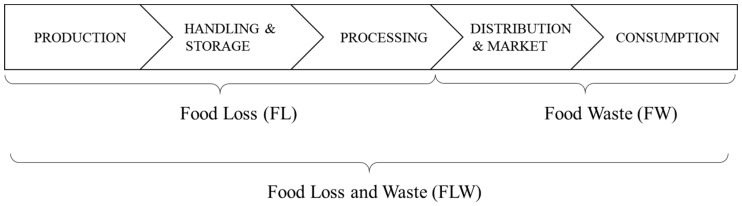
This paper is a systematic review of food loss and waste (FLW) that maps where losses occur along the food supply chain, why they happen, and what kinds of policies and practices can reduce them. It argues that FLW is driven by different factors at production, storage, distribution, and consumption stages, and that prevention requires stage-specific, coordinated action.
## Key findings
- The paper states that about one-third of all produced food is lost and wasted every year, equal to 1.3 billion tons of edible food; its monetary value is estimated at about USD $936 billion.
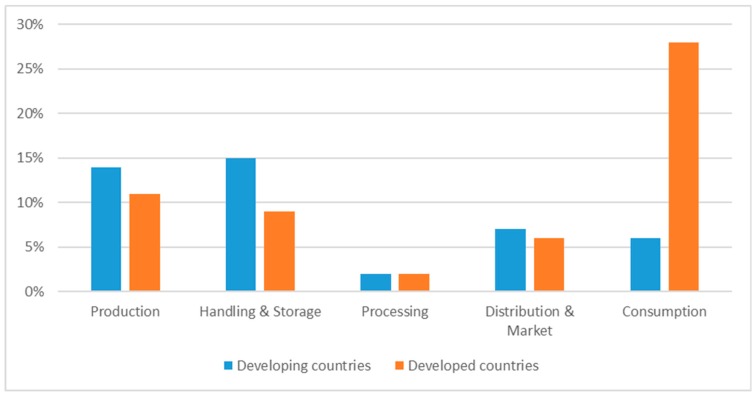
- It reports that in less-developed countries, FLW occurs mainly in the post-harvest and processing stages, which account for approximately 44% of global FLW, while in developed countries 40% of FLW occurs at the consumption stage.
- The review cites specific consumption-side figures: 15.8 million U.S. households were considered food insecure, and reducing FLW by 15% would feed all insecure U.S. households; reducing FLW by 50% could feed an additional one billion people.
- The paper highlights one intervention result: the UK “Love Food, Hate Waste” campaign was associated with a 15% reduction in household food waste and a 21% reduction in avoidable waste from 2007 to 2012; France’s 2015 supermarket law is also described as contributing to France reaching first rank in the 2017 Food Sustainability Index.
## Methods
- The study is a systematic review structured according to PRISMA.
- It reviewed literature from 2001–2018 using Scopus, Science Direct, Jstor, and Google Scholar, plus government and international organization websites; the initial database search returned 82,730 articles.
- After screening, 264 articles remained after title/abstract review, 145 technical-only articles were excluded, and 119 articles were included in the final review.
## Limitations
- The paper states that no commonly agreed-upon definition of FLW exists, which makes FLW difficult to measure, compare, and use for policy design.
- It states that quantification methods are heterogeneous and have weaknesses, and that estimates are difficult to compare across countries and studies because different criteria are used.
- Evident from the text: this is a narrative/systematic review of prior studies rather than original empirical data collection, so its conclusions depend on the quality and comparability of the included literature.
Model-written summary. Check it against the paper before relying on it.
Integrity signals
Registry
Cites
Statistics
Figures
Verification
Claims the paper makes
8 Valid · 1 Not valid · 45 Not checked · 8 Own results and interpretations
The cited sources support only part of this claim — read each source’s verdict below.
In the paper
“However, perishing of the fresh-cut products is accelerated by poor temperature and packaging management [66,84].”
§ Understanding Food Loss and Waste—Why Are We Losing and Wasting Food? > 3. FLW in the Supply Chain > 3.4. FW on Distribution and Marketing Stage
What the sources say
- Partly supportedcites [66] Papargyropoulou E. Lozano R. Steinberger J.K. Wright N. bin Ujang Z. The food waste hierarchy as a framework for the management of food surplus and food waste J. Clean. Prod. 2014 76 106 115 10.1016/j.jclepro.2014.04.020 sourceExperimental — accuracy not yet measured
The table of food losses (Accepted Manuscript, p. 10) lists inappropriate packaging as damaging produce and lack of cooling or cold storage as causing losses. It does not specifically address fresh-cut products or establish that poor management accelerates their perishing. (LLM, conf=0.86)
- Could not verifycites [84] Plazzotta S. Manzocco L. Nicoli M.C. Fruit and vegetable waste management and the challenge of fresh-cut salad Trends Food Sci. Technol. 2017 63 51 59 10.1016/j.tifs.2017.02.013 sourceExperimental — accuracy not yet measured
The discussion of fresh-cut salad (p. 10) says cutting damages tissue and increases the rate of quality depletion during storage. It does not attribute accelerated perishing to poor temperature or packaging management; searches for those terms found no passage making that connection. (LLM, conf=0.76)
plainstates a cause- Asserted: passes — The authors put it forward as true.
- Checkable: passes — It can be checked against evidence.
- Load-bearing: unclear — It is unclear whether the paper’s conclusions depend on it.
- Based: passes — The paper gives a reason why it holds.
- Partly supported
The cited sources support only part of this claim — read each source’s verdict below.
In the paper
“The contamination in a processing line that occurs due to improperly cleaned processing units not sanitized from previous processes is also one of main causes of FL occurrence, especially for animal products [43,66].”
§ Understanding Food Loss and Waste—Why Are We Losing and Wasting Food? > 3. FLW in the Supply Chain > 3.3. Processing and Packaging Stage FL
What the sources say
- Not checked — no full text of the sourcecites [43] Beretta C. Stoessel F. Baier U. Hellweg S. Quantifying food losses and the potential for reduction in Switzerland Waste Manag. 2013 33 764 773 10.1016/j.wasman.2012.11.007 23270687 source
- Partly supportedcites [66] Papargyropoulou E. Lozano R. Steinberger J.K. Wright N. bin Ujang Z. The food waste hierarchy as a framework for the management of food surplus and food waste J. Clean. Prod. 2014 76 106 115 10.1016/j.jclepro.2014.04.020 sourceExperimental — accuracy not yet measured
Table 1 (accepted manuscript, pp. 9–10; also p. 32) lists contamination during processing as causing loss of quality. It does not identify improperly cleaned or unsanitized equipment as the cause, describe contamination as a main cause of food loss, or single out animal products. (LLM, conf=0.86)
plainstates a cause- Asserted: passes — The authors put it forward as true.
- Checkable: passes — It can be checked against evidence.
- Load-bearing: unclear — It is unclear whether the paper’s conclusions depend on it.
- Based: passes — The paper gives a reason why it holds.
The cited sources support only part of this claim — read each source’s verdict below.
In the paper
“Commercial pressure in the marketing stage is also a major cause of food waste [66,85].”
§ Understanding Food Loss and Waste—Why Are We Losing and Wasting Food? > 3. FLW in the Supply Chain > 3.4. FW on Distribution and Marketing Stage
What the sources say
- Partly supportedcites [66] Papargyropoulou E. Lozano R. Steinberger J.K. Wright N. bin Ujang Z. The food waste hierarchy as a framework for the management of food surplus and food waste J. Clean. Prod. 2014 76 106 115 10.1016/j.jclepro.2014.04.020 sourceExperimental — accuracy not yet measured
The food-supply-chain table (Accepted Manuscript, p. 10) identifies losses at the marketing stage, including transport spoilage, poor handling and inadequate cooling. It does not identify commercial pressure as a cause or say it is a major cause of food waste. (LLM, conf=0.79)
- Not checked — no full text of the sourcecites [85] Godfray H.C.J. Beddington J.R. Crute I.R. Haddad L. Lawrence D. Muir J.F. Pretty J. Robinson S. Thomas S.M. Toulmin C. Food security: The challenge of feeding 9 billion people Science 2010 327 812 818 10.1126/science.1185383 20110467 source
plainstates a cause- Asserted: passes — The authors put it forward as true.
- Checkable: passes — It can be checked against evidence.
- Load-bearing: unclear — It is unclear whether the paper’s conclusions depend on it.
- Based: passes — The paper gives a reason why it holds.
- Partly supported
Every source the paper cites for this claim was checked and supports it.
In the paper
“The impact of attitudes and behaviors of individuals on FLW prevention could be limited, as attitudes are not entirely consistent with the actual behaviors (i.e., the attitude–behavior gap, [97]).”
§ Understanding Food Loss and Waste—Why Are We Losing and Wasting Food? > 3. FLW in the Supply Chain > 3.5. Consumption Stage FW
What the sources say
- Supportedcites [97] Schanes K. Dobernig K. Gӧzet B. Food Waste Matters—A Systematic review of household food waste practices and their policy implications J. Clean. Prod. 2018 182 978 991 10.1016/j.jclepro.2018.02.030 source
Section 3.1 (page not provided) explicitly describes an attitude–behaviour gap: intentions to reduce food waste often do not translate into action, and attitudes are not always good indicators of less food being wasted. This supports the citing sentence’s hedged point about the limits of relying on individual attitudes for prevention. (LLM, conf=0.90)
hedged- Asserted: passes — The authors put it forward as true.
- Checkable: passes — It can be checked against evidence.
- Load-bearing: unclear — It is unclear whether the paper’s conclusions depend on it.
- Based: passes — The paper gives a reason why it holds.
- Supported
Every source the paper cites for this claim was checked and supports it.
In the paper
“Jörissen et al. [87] also reported that single-person households generate the most FW per capita.”
§ Understanding Food Loss and Waste—Why Are We Losing and Wasting Food? > 3. FLW in the Supply Chain > 3.5. Consumption Stage FW
What the sources say
- Supportedcites [87] Jörissen J. Priefer C. Bräutigam K.R. Food waste generation at household level: Results of a survey among employees of two European research centers in Italy and Germany Sustainability 2015 7 2695 2715 10.3390/su7032695 source
The Results (section 4.3, p. 8) report that one-person households wasted the most food per capita in both surveyed locations. The Discussion (p. 13) repeats the finding for single-person households. (LLM, conf=0.95)
plainstates an association- Asserted: passes — The authors put it forward as true.
- Checkable: passes — It can be checked against evidence.
- Load-bearing: unclear — It is unclear whether the paper’s conclusions depend on it.
- Based: passes — The paper gives a reason why it holds.
- Supported
34 more claims · 1 with their cited sources checked
Create a free account to see all 62 claims and to verify the 7 references still open.
- It may state two separate claims as one. 15
- Probably not a substantial claim. 9
Claims other papers make about this one
Each is checked against this paper’s own text: does it say what the citing paper says it does?
In the citing paper
“In industrialized countries, food waste, which accounts for approximately 56% of global food waste, is obtained via the latter stages of the supply chain, particularly during processing and consumption [12].”
From From Industrial Food Waste to Bioactive Ingredients: A Review on the Sustainable Management and Transformation of Plant-Derived Food Waste (2023) · cites this paper as [12]
Citations
Cites
Preferred Reporting Items for Systematic Reviews and Meta-Analyses: the PRISMA statement
Moher, D., Liberati, A., Tetzlaff, J., Altman, D. G., & for the PRISMA Group (2009) · BMJ · doi:10.1136/bmj.b2535 · Cited by 83,823
Preferred Reporting Items for Systematic Reviews and Meta-Analyses: The PRISMA Statement
Moher, D., Liberati, A., Tetzlaff, J., Altman, D. G., & The PRISMA Group (2009) · PLoS Medicine · doi:10.1371/journal.pmed.1000097 · Cited by 64,042
Wang, G., Ma, R., Qiao, G., Wada, K., Aizawa, Y., & Satoh, T. (2015) · Integrative Medicine International · doi:10.1159/000368408 · Cited by 18,657
Food Security: The Challenge of Feeding 9 Billion People
Godfray, H. C. J., Beddington, J. R., Crute, I. R., Haddad, L., Lawrence, D., Muir, J. F., Pretty, J., Robinson, S., Thomas, S. M., & Toulmin, C. (2010) · Science · doi:10.1126/science.1185383 · Cited by 11,943
Food waste within food supply chains: quantification and potential for change to 2050
Parfitt, J., Barthel, M., & Macnaughton, S. (2010) · Philosophical Transactions of the Royal Society B: Biological Sciences · doi:10.1098/rstb.2010.0126 · Cited by 3,197 · cited 4×
“However, the absence of an exact quantification method leads to a data problem [24].”
BackgroundInfluentialThe Omnivore's Dilemma: A Natural History of Four Meals
Pollán, M. (2006) · Cited by 2,015
The food waste hierarchy as a framework for the management of food surplus and food waste
Papargyropoulou, E., Lozano, R., K. Steinberger, J., Wright, N., & Ujang, Z. B. (2014) · Journal of Cleaner Production · doi:10.1016/j.jclepro.2014.04.020 · Cited by 1,711 · cited 8×
“Processing and Packaging Stage - Unavoidable losses [2,43,66] - Technical inefficiencies and malfunctions [21,43,78,79] - Methods and changes in processing lines [43] - Contamination in processing lines [21,43,66] - Legislation restrictions [2,66,72,80] - Packaging system [2,65,78,81] - Overproduction [63,82]”
BackgroundInfluentialSchanes, K., Dobernig, K., & Gözet, B. (2018) · Journal of Cleaner Production · doi:10.1016/j.jclepro.2018.02.030 · Cited by 1,365
By-products of plant food processing as a source of functional compounds—Recent developments
Schieber, A., Stintzing, F. C., & Carle, R. (2001) · Trends in Food Science & Technology · doi:10.1016/s0924-2244(02)00012-2 · Cited by 1,334 · cited 2×
“Processing and Packaging Stage - Unavoidable losses [2,43,66] - Technical inefficiencies and malfunctions [21,43,78,79] - Methods and changes in processing lines [43] - Contamination in processing lines [21,43,66] - Legislation restrictions [2,66,72,80] - Packaging system [2,65,78,81] - Overproduction [63,82]”
BackgroundKummu, M., de Moel, H., Porkka, M., Siebert, S., Varis, O., & Ward, P. J. (2012) · Science of The Total Environment · doi:10.1016/j.scitotenv.2012.08.092 · Cited by 1,300 · cited 2×
“The waste of resources caused by global FLW has been estimated to account for 24% of the total usage of freshwater resources and 23% of the global fertilizer use [27].”
Background
Research works printed but not linked: 5
- Bond M. Meacham T. Bhunnoo R. Benton T. Food Waste within Global Food Systems Global Food Security Elsevier Amsterdam, The Netherlands 2013
- Parry M. Parry M.L. Canziani O. Palutikof J. Van der Linden P. Hanson C. Climate Change 2007-Impacts, Adaptation and Vulnerability: Working Group II Contribution to the Fourth Assessment Report of the IPCC Cambridge University Press Cambridge, UK 2007 Volume 4
- Pärn A. Designing a Solution for Food Waste Reduction Master’s Thesis MSc Integrated Food Studies, Aalborg University Aalborg, Denmark 2016
- Farag D. Aflatoxins: Awareness and control Proceedings of the Third Dubai International Food Safety Conference, Organized by Dubai Municipality Dubai, UAE 23–27 February 2008
- Rathje W.L. Murphy C. Rubbish! The Archaeology of Garbage University of Arizona Press Tucson, AZ, USA 2001
Cited by
Items 101–200 of 582
Soil is a major contributor to global greenhouse gas emissions and climate change
Kopittke, P. M., Dalal, R. C., McKenna, B. A., Smith, P., Wang, P., Weng, Z. H., van der Bom, F. J. T., & Menzies, N. W. (2024) · SOIL · doi:10.5194/soil-10-873-2024 · Cited by 61
Aghajanzadeh, S., Fayaz, G., Soleimanian, Y., Ziaiifar, A. M., Turgeon, S. L., & Khalloufi, S. (2022) · Comprehensive Reviews in Food Science and Food Safety · doi:10.1111/1541-4337.13047 · Cited by 46
Seier, M., Archodoulaki, V., & Koch, T. (2023) · Resources Conservation and Recycling · doi:10.1016/j.resconrec.2023.107388 · Cited by 49
Food waste and associated carbon footprint: evidence from Chinese universities
Qian, L., Rao, Q., Liu, H., McCarthy, B., Liu, L. X., & Wang, L. (2022) · Ecosystem Health and Sustainability · doi:10.1080/20964129.2022.2130094 · Cited by 44
Umar, M. F., Ahmad, F., Saeed, H., Usmani, S. Z., Owais, M., & Rafatullah, M. (2020) · Nanomaterials · doi:10.3390/nano10061096 · Cited by 39
Bühlmann, C. H., Mickan, B. S., Tait, S., Batstone, D. J., Mercer, G. D., & Bahri, P. A. (2022) · Journal of Cleaner Production · doi:10.1016/j.jclepro.2022.133716 · Cited by 47
Goryńska‐Goldmann, E., Gazdecki, M., Rejman, K., Łaba, S., Kobus‐Cisowska, J., & Szczepański, K. (2021) · Agriculture · doi:10.3390/agriculture11100936 · Cited by 43
From plate to palate: Sustainable solutions for upcycling food waste in restaurants and catering
Kanwal, N., Zhang, M., Zeb, M., Batool, U., Khan, I. R., & Rui, L. (2024) · Trends in Food Science & Technology · doi:10.1016/j.tifs.2024.104687 · Cited by 49
Mešić, A., Jurić, M., Donsì, F., Bandić, L. M., & Jurić, S. (2024) · Discover Sustainability · doi:10.1007/s43621-024-00581-z · Cited by 54
Blockchain revolution in food supply chains: A positive impact on global food loss and waste
Shiraishi, C. S. H., Roriz, C. L., Carocho, M., Prieto, M. A., Abreu, R. M. V., Barros, L., & Heleno, S. A. (2024) · Food Chemistry · doi:10.1016/j.foodchem.2024.142331 · Cited by 35
Blanchard, C., Harris, P. W., Pocock, C., & McCabe, B. K. (2023) · Sustainability · doi:10.3390/su15139901 · Cited by 35
Antasouras, G., Vasios, G. K., Kontogiorgis, C. A., Ioannou, Z., Poulios, E., Deligiannidou, G.-E., Troumbis, A. Y., & Giaginis, C. (2022) · The International Journal of Health Planning and Management · doi:10.1002/hpm.3586 · Cited by 46
Methods Used for Extraction of Plant Volatiles Have Potential to Preserve Truffle Aroma: A Review
Phong, W. N., Gibberd, M. R., Payne, A. D., Dykes, G. A., & Coorey, R. (2022) · Comprehensive Reviews in Food Science and Food Safety · doi:10.1111/1541-4337.12927 · Cited by 29
Chaher, N. E. H., Nassour, A., & Nelles, M. (2024) · Trends in Food Science & Technology · doi:10.1016/j.tifs.2024.104788 · Cited by 39
Jahanbin, P., Wingreen, S. C., Sharma, R., Ijadi, B., & dos Reis, M. M. (2023) · International Journal of Innovation Studies · doi:10.1016/j.ijis.2023.08.001 · Cited by 48
Mustafa, A., Brtnický, M., Hammerschmiedt, T., Kučerík, J., Kintl, A., Chorazy, T., Naveed, M., Škarpa, P., Baltazár, T., Malíček, O., et al. (2022) · Frontiers in Plant Science · doi:10.3389/fpls.2022.1028101 · Cited by 48
Progress of Carrageenan‐Based Films and Coatings for Food Packaging Applications
Wang, X., Guo, C., & Guo, H. (2024) · Packaging Technology and Science · doi:10.1002/pts.2806 · Cited by 35
Pacheco, A. B., Evangelista-Osorio, A., Muchaypiña-Flores, K. G., Marzano-Barreda, L. A., Paredes-Concepción, P., Palacin-Baldeón, H., dos Santos, M. S. N., Tres, M. V., Zabot, G. L., & Montenegro, L. O. (2023) · Polymers · doi:10.3390/polym15204046 · Cited by 37
Bouhzam, I., Cantero, R., Balcells, M., Margallo, M., García, R. A., Bala, A., Fullana–i–Palmer, P., & Puig, R. (2023) · Foods · doi:10.3390/foods12040779 · Cited by 45
Tackling salmonellosis: A comprehensive exploration of risks factors, impacts, and solutions
Ayuti, S. R., Khairullah, A. R., Arif, M. A. A., Lamid, M., Warsito, S. H., Moses, I. B., Hermawan, I. P., Silaen, O. S. M., Lokapirnasari, W., Aryaloka, S., et al. (2024) · Open Veterinary Journal · doi:10.5455/ovj.2024.v14.i6.1 · Cited by 47
Taufek, N. M., Zulkifli, N. F. N. M., & Nazri, H. A. (2023) · Journal of Environmental Management · doi:10.1016/j.jenvman.2023.119467 · Cited by 39
Morales‐Rabanales, Q. N., Coyotl‐Pérez, W. A., Rubio, E., Cortes-Ramírez, G. S., Ramírez, J. F. S., & Villa‐Ruano, N. (2021) · Food Control · doi:10.1016/j.foodcont.2021.108766 · Cited by 33
Gustafson, D. I., Asseng, S., Kruse, J., Thoma, G. J., Guan, K., Hoogenboom, G., Matlock, M. D., McLean, M. A., Parajuli, R., Rajagopalan, K., et al. (2021) · Nature Food · doi:10.1038/s43016-021-00383-w · Cited by 32
Analysis of Promotion Policies for the Valorization of Food Waste from Industrial Sources in Taiwan
Tsai, W., & Lin, Y.-Q. (2021) · Fermentation · doi:10.3390/fermentation7020051 · Cited by 29
Kashyap, A., Yadav, D., Shukla, O. J., & Kumar, R. (2023) · Environment Development and Sustainability · doi:10.1007/s10668-023-03754-4 · Cited by 37
The role of collaboration in tackling food loss and waste: Salient stakeholder perspective
Surucu-Balci, E., & Tuna, O. (2022) · Journal of Cleaner Production · doi:10.1016/j.jclepro.2022.133126 · Cited by 34
Serter, B., Önen, A., & Ilhak, O. İ. (2024) · Annals of Animal Science · doi:10.2478/aoas-2023-0081 · Cited by 36
Metabolomics as a Tool to Study Underused Soy Parts: In Search of Bioactive Compounds
Bragagnolo, F. S., Funari, C. S., Ibáñez, E., & Cifuentes, A. (2021) · Foods · doi:10.3390/foods10061308 · Cited by 29
Sustainable production and consumption of animal products
Pulina, G., Lunesu, M. F., Pirlo, G., Ellies‐Oury, M., Chriki, S., & Hocquette, J.-F. J.-F. (2022) · Current Opinion in Environmental Science & Health · doi:10.1016/j.coesh.2022.100404 · Cited by 28
Physicochemical properties and combustion kinetics of food waste derived hydrochars
Khan, M. A., Hameed, B. H., Siddiqui, M. R., ALOthman, Z. A., & Alsohaimi, I. H. (2022) · Journal of King Saud University - Science · doi:10.1016/j.jksus.2022.101941 · Cited by 27
Morgan, P. T., Witard, O. C., Højfeldt, G. W., Church, D. D., & Breen, L. (2023) · Proceedings of The Nutrition Society · doi:10.1017/s0029665123003750 · Cited by 35
Lisciani, S., Camilli, E., & Marconi, S. (2024) · Sustainability · doi:10.3390/su16051726 · Cited by 42
Rivero, M. J., Lopez-Villalobos, N., Evans, A. C. O., Berndt, A., Cartmill, A. D., Neal, A. L., McLaren, A., Farruggia, A. A., Mignolet, C., Chadwick, D. R., et al. (2021) · Reproduction Fertility and Development · doi:10.1071/rd20205 · Cited by 31
Davoudi, S., Stasinopoulos, P., & Shiwakoti, N. (2024) · Sustainability · doi:10.3390/su16166986 · Cited by 45
Food waste measurement in a chain of industrial restaurants in Brazil
Pontes, T. D. O., César, A. D. S., Conejero, M. A., Deliberador, L. R., & Batalha, M. O. (2022) · Journal of Cleaner Production · doi:10.1016/j.jclepro.2022.133351 · Cited by 39
Food Waste Causes in Fruit and Vegetables Supply Chains
Bartezzaghi, G., Cattani, A., Garrone, P., Melacini, M., & Perego, A. (2022) · Transportation research procedia · doi:10.1016/j.trpro.2022.12.042 · Cited by 34
Why do we waste so much food? Understanding household food waste through a theoretical framework
Deliberador, L. R., Batalha, M. O., César, A. D. S., Azeem, M. M., Lane, J. L., & Carrijo, P. R. S. (2023) · Journal of Cleaner Production · doi:10.1016/j.jclepro.2023.137974 · Cited by 31
Iqbal, M. A., Gohar, S., Zhu, C., Gopiraman, M., & Kim, I. S. (2024) · International Journal of Biological Macromolecules · doi:10.1016/j.ijbiomac.2024.131089 · Cited by 28
Utilization of by-products for preparation of Pickering particles
Muiz, A., Klojdová, I., & Stathopoulos, C. (2023) · European Food Research and Technology · doi:10.1007/s00217-023-04349-z · Cited by 24
Begum, S., Das, T., Anupoju, G. R., & Eshtiaghi, N. (2021) · Journal of Cleaner Production · doi:10.1016/j.jclepro.2020.125775 · Cited by 23
Skawińska, E., & Zalewski, R. I. (2022) · Energies · doi:10.3390/en15165866 · Cited by 33
Yan, H., Song, M.-J., & Lee, H. (2021) · Sustainability · doi:10.3390/su132011374 · Cited by 34
A Review on Replacing Food Packaging Plastics with Nature-Inspired Bio-Based Materials
Hu, S., Han, L., Yu, C., Pan, L., & Tu, K. (2025) · Foods · doi:10.3390/foods14101661 · Cited by 28
Chakraborty, N., & Mondal, S. (2022) · Materials Horizons · doi:10.1039/d2mh00236a · Cited by 23
Friedman-Heiman, A., & Miller, S. A. (2024) · Environmental Research Letters · doi:10.1088/1748-9326/ad4c7b · Cited by 25
Ajmera, D., Kharub, M., Krishna, A., & Gupta, H. (2024) · The International Journal of Logistics Management · doi:10.1108/ijlm-09-2023-0408 · Cited by 31
Vardopoulos, I., Abeliotis, K., & Lasaridi, K. (2024) · Sustainability · doi:10.3390/su17010103 · Cited by 35
Technology adoption to reduce the harvesting losses and wastes in agriculture
Mishra, D., & Satapathy, S. (2021) · Clean Technologies and Environmental Policy · doi:10.1007/s10098-021-02075-2 · Cited by 29
AI-Driven Precision Fermentation: From Restaurant Food Waste to Sustainable Protein Production
Kanwal, N., Zhang, M., Khan, S., & Batool, U. (2025) · Food and Bioprocess Technology · doi:10.1007/s11947-025-03981-9 · Cited by 28
Gupta, A. K., Boruah, T., Ghosh, P., Ikram, A., Rana, S., Shanker, M. A., Bachetti, A., Jha, A. K., Naik, B., Kumar, V., et al. (2024) · Sustainable Chemistry and Pharmacy · doi:10.1016/j.scp.2024.101774 · Cited by 30
Life Cycle Assessment Tool for Food Supply Chain Environmental Evaluation
da Costa, T. P., Gillespie, J. B., Pelc, K., Adefisan, A., Adefisan, M., Ramanathan, R., & Murphy, F. (2022) · Sustainability · doi:10.3390/su15010718 · Cited by 32
REDUCING FOOD WASTE THROUGH LEAN AND SUSTAINABLE OPERATIONS: A CASE STUDY FROM THE POULTRY INDUSTRY
Kazançoğlu, Y., Ekinci, E., Özkan-Özen, Y. D., & Pala, M. Ö. (2021) · Revista de Administração de Empresas · doi:10.1590/s0034-759020210503 · Cited by 34
Plate Food Waste in Food Services: A Systematic Review and Meta-Analysis
Guimarães, N. S., Reis, M. G., Fontes, L. D. A., Zandonadi, R. P., Botelho, R. B. A., Alturki, H. A., Saraiva, A., & Raposo, A. (2024) · Nutrients · doi:10.3390/nu16101429 · Cited by 33
Deep eutectic solvents in the extraction of bioactive compounds in agri-food industry
Julshahril, N. H., Phuah, E., & Rambli, M. M. (2024) · Food and Humanity · doi:10.1016/j.foohum.2024.100468 · Cited by 25
Dyjakon, A., Sobol, Ł., Noszczyk, T., & Mitręga, J. (2022) · Energies · doi:10.3390/en15020612 · Cited by 24
Mihalčová, B., Korauš, A., Prokopenko, O. V., Hvastová, J., Freňáková, M., Gallo, P., & Balogová, B. (2021) · Energies · doi:10.3390/en14144245 · Cited by 21
Lopes, C. V. A., Mihrshahi, S., Ronto, R., & Hunter, J. F. M. (2023) · Sustainability · doi:10.3390/su151511569 · Cited by 25
Hasan, Z., & Lateef, M. (2023) · Environmental Science and Pollution Research · doi:10.1007/s11356-023-30152-0 · Cited by 34
Arhin, S. G., Cesaro, A., Capua, F. D., & Esposito, G. (2023) · Journal of Environmental Management · doi:10.1016/j.jenvman.2023.119379 · Cited by 26
Shoffe, Y. A., & Johnson, L. K. (2024) · Sustainability · doi:10.3390/su16177803 · Cited by 30
do Nascimento, F. V., Lemes, A. C., de Castro, A. M., Secchi, A. R., & Coelho, M. A. Z. (2022) · Processes · doi:10.3390/pr10020381 · Cited by 24
Bhatia, L., Kaladhar, D. S., Sarkar, T., Jha, H., & Kumar, B. (2024) · Energy Ecology and Environment · doi:10.1007/s40974-024-00321-z · Cited by 26
Plate Waste in School Catering in Rezekne, Latvia
Lonska, J., Zvaigzne, A., Kotāne, I., Silicka, I., Litavniece, L., Kodors, S., Dekšne, J., & Vonoga, A. (2022) · Sustainability · doi:10.3390/su14074046 · Cited by 21
Social Innovation for Food Security and Tourism Poverty Alleviation: Some Examples From China
Huang, G., & Tsai, F.-S. (2021) · Frontiers in Psychology · doi:10.3389/fpsyg.2021.614469 · Cited by 18
Circular economy and food waste in supply chains: a literature review
Viscardi, S., Colicchia, C., & Creazza, A. (2022) · International Journal of Logistics Research and Applications · doi:10.1080/13675567.2022.2128095 · Cited by 28
Aljohani, K. (2023) · Sustainability · doi:10.3390/su15043654 · Cited by 19
Schiebel, C. S., Bueno, L. R., Pargas, R. B., Braga, L. L. V. D. M., da Silva, K. S., Fernandes, A. C. V. U., Maia, M. H. D. S., de Oliveira, N. M. T., Bach, C., & Ferreira, D. M. (2024) · The Science of The Total Environment · doi:10.1016/j.scitotenv.2024.175317 · Cited by 21
Feeding the Globe Nutritious Food in 2050: Obligations and Ethical Choices
Nadathur, S., Wanasundara, J. P. D., & Scanlin, L. (2024) · Elsevier eBooks · doi:10.1016/b978-0-323-91652-3.00032-0 · Cited by 31
Chaudhary, S. (2023) · Journal of Food Measurement & Characterization · doi:10.1007/s11694-023-02293-w · Cited by 20
Ortiz‐Sanchez, M., Solarte‐Toro, J. C., & Álzate, C. A. C. (2023) · Biochemical Engineering Journal · doi:10.1016/j.bej.2023.108864 · Cited by 18
The future in the litter bin – bioconversion of food waste as driver of a circular bioeconomy
Razouk, A., Tiganescu, E., von Glahn, A. J., Abdin, A. Y., Nasim, M. J., & Jacob, C. (2024) · Frontiers in Nutrition · doi:10.3389/fnut.2024.1325190 · Cited by 22
Food waste management: an example from university refectory
Börühan, G., & Pala, M. Ö. (2021) · British Food Journal · doi:10.1108/bfj-09-2020-0802 · Cited by 23
Household Food Waste Intervention Is Feasible, Acceptable, and Effective
Laila, A., Gallant, M., Bain, M., Alexander, C., Reis, L., Welboren, A. C., von Massow, M., Parizeau, K., Walton, K., David, W. L., et al. (2024) · Journal of Nutrition Education and Behavior · doi:10.1016/j.jneb.2023.11.004 · Cited by 22
Food losses, food waste, and beyond in food supply chains: Retaining optimum nutrient density
Eastham, J. F., & Creedon, A. (2023) · Food Frontiers · doi:10.1002/fft2.271 · Cited by 21
Alsbua, R. A. S., Yarlagadda, P. K. D. V., & Karim, A. (2023) · Processes · doi:10.3390/pr11041154 · Cited by 23
Lakhani, K. G., Salimi, M., Idrissi, A. E., Hamid, R., & Motamedi, E. (2025) · International Journal of Biological Macromolecules · doi:10.1016/j.ijbiomac.2025.143081 · Cited by 22
Agri-Food Waste Reduction and Utilization: A Sustainability Perspective
Adedeji, A. A. (2022) · Journal of the ASABE · doi:10.13031/ja.14797 · Cited by 20
The impact of microplastics on yield and economic losses in selected agricultural food commodities
Sutanto, A., Widodo, W. E., Rahayu, I. D., Sustiyana, S., Nazizah, F., Iswahyudi, I., & Bakhtiar, A. (2024) · Environmental Quality Management · doi:10.1002/tqem.22188 · Cited by 21
Rifna, E. J., Dwivedi, M., Seth, D., Pradhan, R. C., Sarangi, P. K., & Tiwari, B. K. (2024) · Sustainable Chemistry and Pharmacy · doi:10.1016/j.scp.2024.101515 · Cited by 28
Patient Satisfaction and Food Waste in Obstetrics And Gynaecology Wards
Schiavone, S. C., Pistone, M. T., Finale, E., Guala, A., & Attena, F. (2020) · Patient Preference and Adherence · doi:10.2147/ppa.s256314 · Cited by 20
Plant compounds for the potential reduction of food waste – a focus on antimicrobial peptides
Shwaiki, L. N., Arendt, E. K., & Lynch, K. M. (2021) · Critical Reviews in Food Science and Nutrition · doi:10.1080/10408398.2021.1873733 · Cited by 22
Rösler, F., Kreyenschmidt, J., & Ritter, G. (2021) · Sustainability · doi:10.3390/su13179569 · Cited by 18
Portable food diagnostic devices and methods: A review
(2022) · doi:10.1111/jfpe.14159 · Cited by 15
Tackling Food Waste: Impact of German Consumer Behaviour on Food in Chilled Storage
Wucher, H., Klingshirn, A., Brugger, L., Stamminger, R., Geppert, J., Kölzer, B. S., Engstler, A., & Härlen, J. (2020) · Foods · doi:10.3390/foods9101462 · Cited by 19
Cadaverine as a Potential Spoilage Indicator in Skin-Packed Beef and Modified-Atmosphere-Packed Beef
Thamsborg, K. K. M., Lund, B. W., Byrne, D. V., Leisner, J. J., & Alexi, N. (2023) · Foods · doi:10.3390/foods12244489 · Cited by 19
Morgan, P. T., Carson, B. P., & Witard, O. C. (2024) · BMC Musculoskeletal Disorders · doi:10.1186/s12891-024-07945-6 · Cited by 22
Travičić, V., Cvanić, T., Vidović, S. S., Pezo, L. L., Hidalgo, A., Šovljanski, O., & Ćetković, G. (2024) · Foods · doi:10.3390/foods13182863 · Cited by 14
Organic waste utilization and urban food waste composting strategies in China - A review
Sun, W., Shahrajabian, M. H., & Cheng, Q. (2021) · Notulae Scientia Biologicae · doi:10.15835/nsb13210881 · Cited by 23
Food Loss and Food Waste Along the Food Supply Chain – An International Perspective
Jeremić, M., Matkovski, B., Đokić, D., & Jurjević, Ž. (2024) · Problemy Ekorozwoju · doi:10.35784/preko.5991 · Cited by 21
Exploring barriers and motivations in the adoption of food waste mobile applications
Hong, J., Kafa, N., & Jaegler, A. (2024) · International Transactions in Operational Research · doi:10.1111/itor.13587 · Cited by 18
Metadata
- Authors
- Ishangulyyev, R., Kim, S., & Lee, S.
- Affiliations
- Department of Information, Turkmen Agricultural Institute, Dashoguz 746300, Turkmenistan
- Korea Rural Economic Institute (KR)
- Kangwon National University (KR)
- Corresponding author
- Lee, Sang
- Venue
- Foods
- Publisher
- MDPI AG
- Published
- 2019-07-29
- Volume
- 8
- Issue
- 8
- Pages
- 297
- ISSN
- 2304-8158 (ISSN-L)
- PMC
- PMC6723314
- OpenAlex
- W2965917027
- Semantic Scholar
- 3e99fc9fdc50d5317aa7ccfd8f3fd4bf3f96c91f
- Cited by
- 586
- References
- 82
- Citations by year
- 2026: 75 · 2025: 109 · 2024: 139 · 2023: 105 · 2022: 71 · 2021: 61 · 2020: 25 · 2019: 1
- FWCI
- 3.55
- Type
- journal article
- Language
- en
- Open access
- gold
- dx.doi.org
- Licence
- Locations
- Foods (publishedVersion, cc-by)
- Europe PMC (PubMed Central) (publishedVersion, cc-by)
- PubMed Central (publishedVersion, cc-by)
- PubMed (publishedVersion)
- DOAJ (DOAJ: Directory of Open Access Journals) (submittedVersion)
- Funders
- U.S. Environmental Protection Agency
- Kangwon National University
- Topics
- Life Sciences › Agricultural and Biological Sciences › Food Science › Food Waste Reduction and Sustainability
- Physical Sciences › Environmental Science › Ecology › Agriculture Sustainability and Environmental Impact
- Life Sciences › Agricultural and Biological Sciences › General Agricultural and Biological Sciences › Food Security and Socioeconomic Dynamics
- Keywords
- food loss, food waste, food supply chain, food waste prevention, sociodemographic factors, political and economic factors, cultural factors, global variation
About these checks
Registry, retraction, Cites and statistics results are computed, not judged, with one exception: a printed reference that no index lists is read once by a model before it counts as a citation error. Claims are extracted by a model and kept only when their quote appears verbatim in the text; each cited source is then checked, with a model’s help, for whether it says what the claim relies on. Those verdicts can be wrong — read the claim’s quote and the cited source before relying on one.
The claim verdicts this report counts are experimental: their accuracy is not yet measured.
A language model drew the claims from the paper on 2026-10-10, under version 3 of the claim definition (model deepseek-v4.1-flash, prompt extract-v3).
A second model labelled each claim on 2026-10-10 (model jev-1.13-20260917, definition revision gold-guideline-v0.2).
Cited sources are checked with a language model’s help (gpt-6-sol).
Statistics and arithmetic are recomputed, not judged.
Confidence bands are shown only for fields calibrated on our annotated test set. None is calibrated yet, so no band is shown.
What counts as a claim ›How we measure confidence ›How we check this ›
Are you an author, or do you see a problem with this page? Request a review
Data sources
Bibliographic data: Semantic Scholar, OpenAlex, Crossref.
Contains information from the Semantic Scholar Academic Graph Datasets, made available under the ODC Attribution License (ODC-BY 1.0).
Semantic Scholar’s data is described in: Kinney, R., et al. (2023). The Semantic Scholar Open Data Platform. arXiv:2301.10140.
